


 Скачать презентацию Improving Colon Cancer Screening Rates July 31 2013
a1802c02ea83b65f13f6b49ea183b44f.ppt
- Количество слайдов: 39
 Improving Colon Cancer Screening Rates July 31, 2013
 Presenters • Matt Flory Health Care Partnerships Director Midwest Division American Cancer Society (ACS) • Beverly Annis, RN Community Quality Improvement Consultant Former member of MNCM’s Measurement and Reporting Committee • Sue Schneider, HIM Clinic Coder, Health Information Management Department Renville County Hospital and Clinics • Jerri Hiniker, RN, BSN, CPHER Program Manager Stratis Health
 This webinar is sponsored by: • • Stratis Health American Cancer Society Minnesota Community Measurement Aligning Forces for Quality Improvement
 Objectives • Describe cancer screening measures and procedures • Identify tools and resources to help improve screening rates • Develop a plan to increase screening rates in your clinic
 SCREENING MEASURES/TESTS
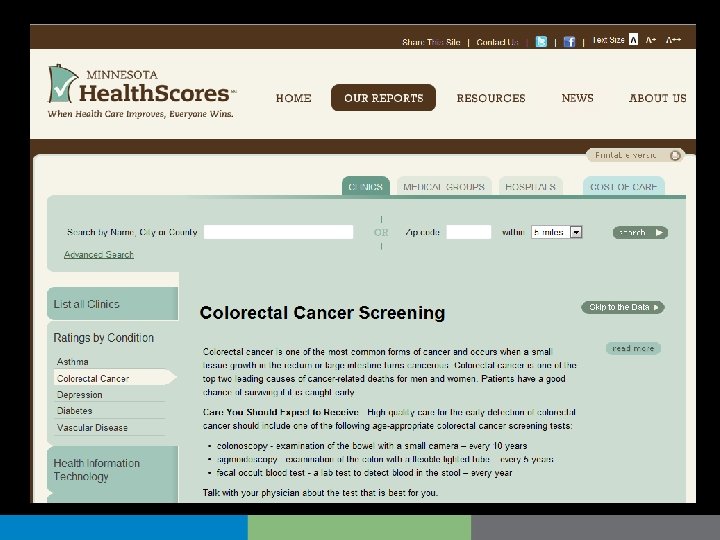
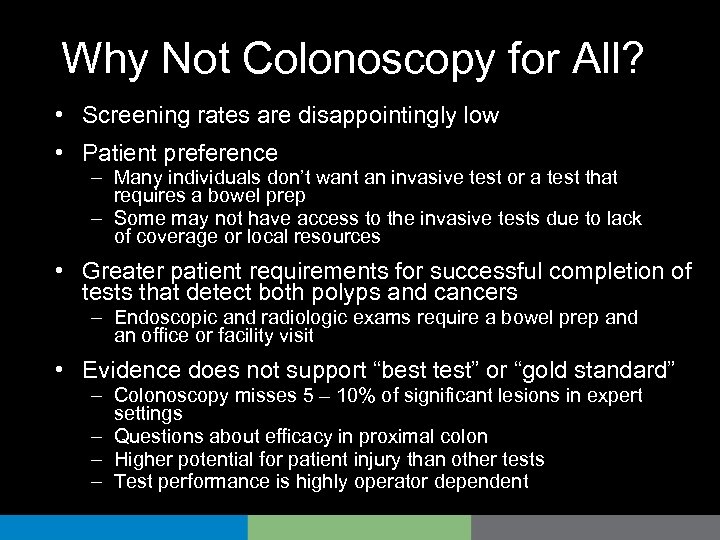 Why Not Colonoscopy for All? • Screening rates are disappointingly low • Patient preference – Many individuals don’t want an invasive test or a test that requires a bowel prep – Some may not have access to the invasive tests due to lack of coverage or local resources • Greater patient requirements for successful completion of tests that detect both polyps and cancers – Endoscopic and radiologic exams require a bowel prep and an office or facility visit • Evidence does not support “best test” or “gold standard” – Colonoscopy misses 5 – 10% of significant lesions in expert settings – Questions about efficacy in proximal colon – Higher potential for patient injury than other tests – Test performance is highly operator dependent
 Fecal Occult Blood Tests • Rationale – Detect blood in the stool – Cancers tend to bleed – Large polyps also may bleed (although less likely to bleed than cancers) • Two methods: – Guaiac (g. FOBT) – Immunochemical (FIT)
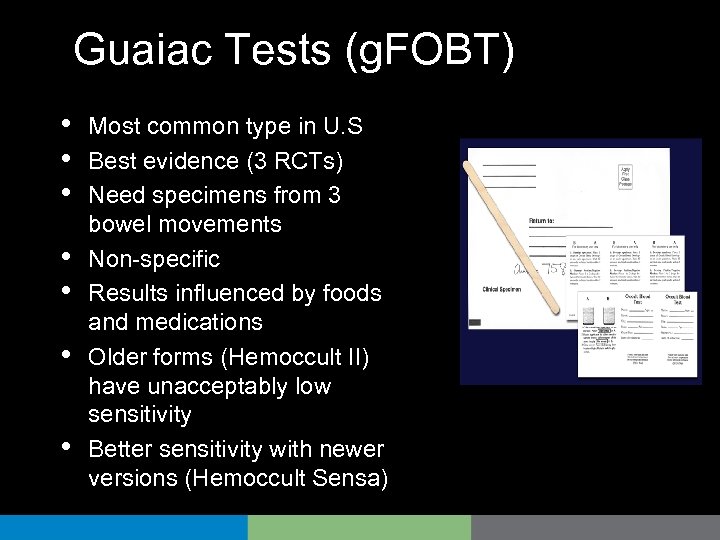 Guaiac Tests (g. FOBT) • • Most common type in U. S Best evidence (3 RCTs) Need specimens from 3 bowel movements Non-specific Results influenced by foods and medications Older forms (Hemoccult II) have unacceptably low sensitivity Better sensitivity with newer versions (Hemoccult Sensa)
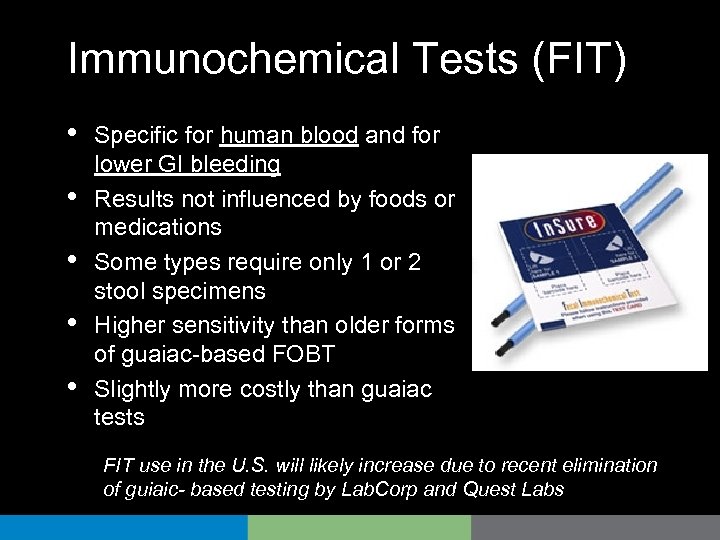 Immunochemical Tests (FIT) • • • Specific for human blood and for lower GI bleeding Results not influenced by foods or medications Some types require only 1 or 2 stool specimens Higher sensitivity than older forms of guaiac-based FOBT Slightly more costly than guaiac tests FIT use in the U. S. will likely increase due to recent elimination of guiaic- based testing by Lab. Corp and Quest Labs
 High Quality Stool Testing • CRC screening by FOBT should be performed with high-sensitivity FOBT – either FIT or a highly sensitive g. FOBT (such as Hemoccult SENSA) – Older, less sensitive guiaic tests (such as Hemoccult II) should not be used for CRC screening • Tests should be repeated yearly • In-house FOBT is essentially worthless as a screening tool for CRC and should be strongly discouraged • All positive screening tests should be evaluated by colonoscopy
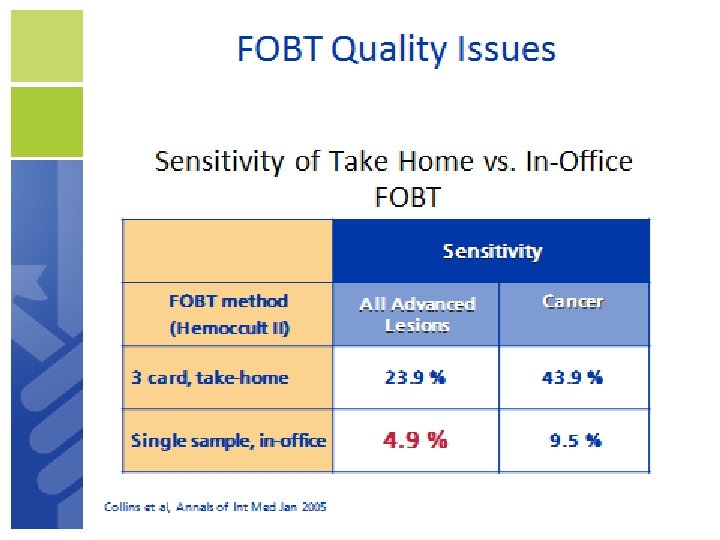
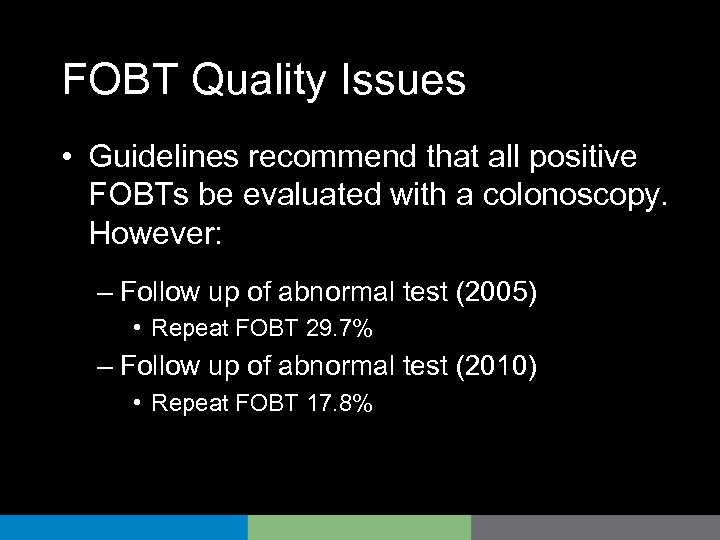 FOBT Quality Issues • Guidelines recommend that all positive FOBTs be evaluated with a colonoscopy. However: – Follow up of abnormal test (2005) • Repeat FOBT 29. 7% – Follow up of abnormal test (2010) • Repeat FOBT 17. 8%
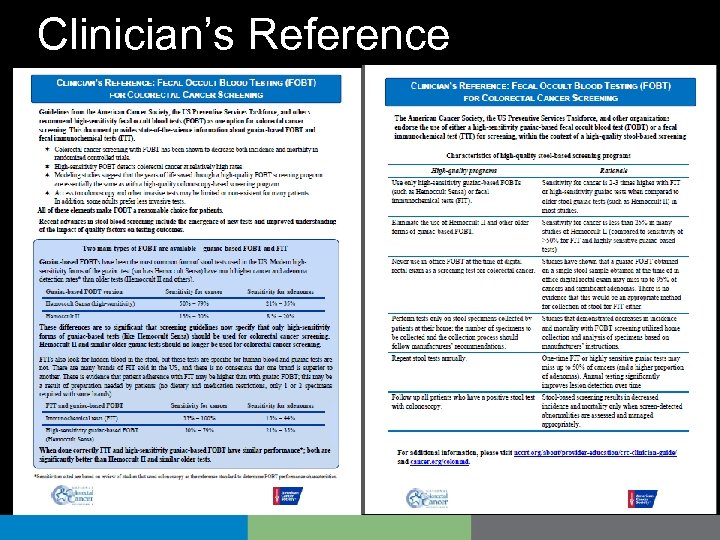 Clinician’s Reference
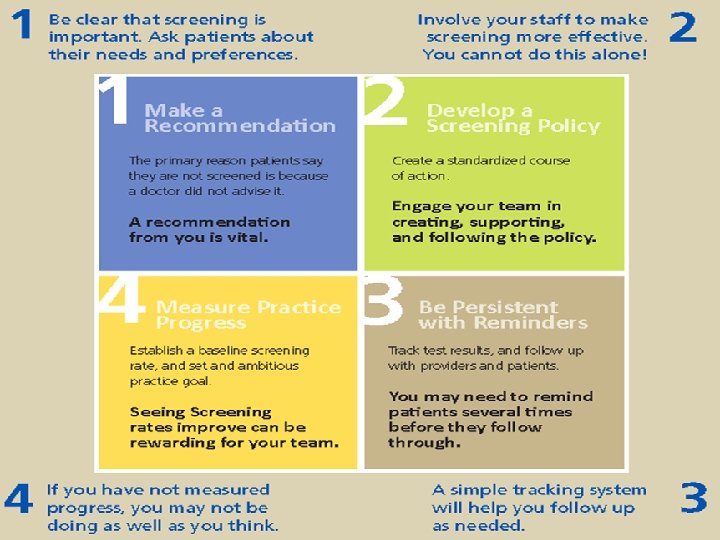
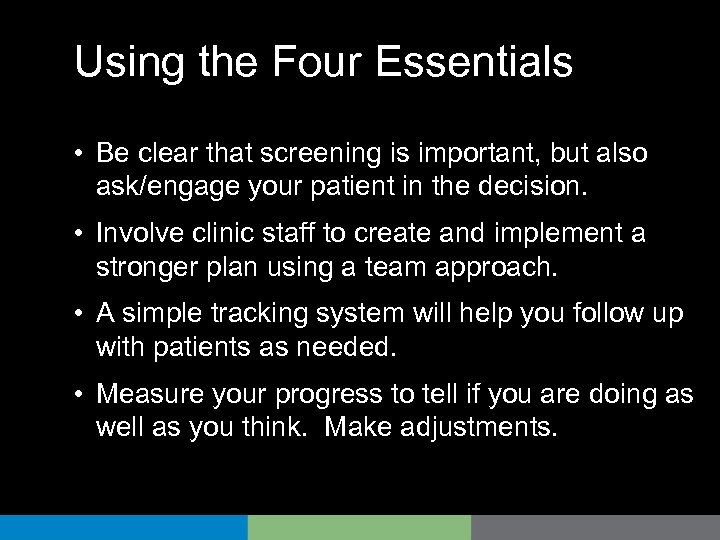 Using the Four Essentials • Be clear that screening is important, but also ask/engage your patient in the decision. • Involve clinic staff to create and implement a stronger plan using a team approach. • A simple tracking system will help you follow up with patients as needed. • Measure your progress to tell if you are doing as well as you think. Make adjustments.
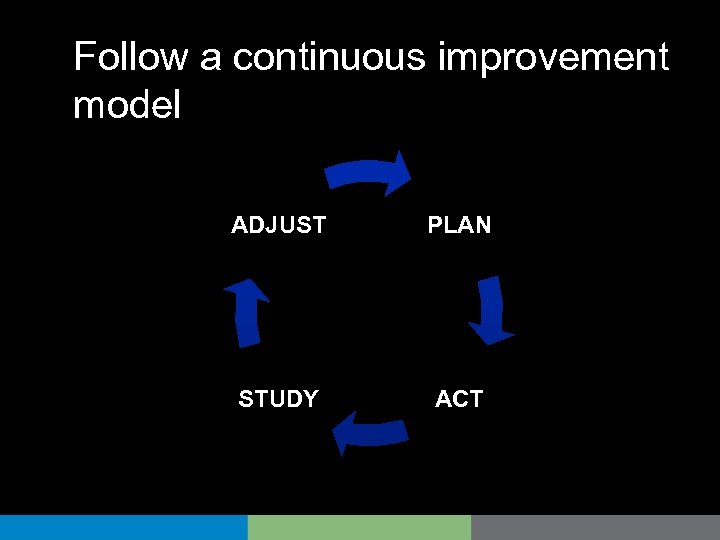 Follow a continuous improvement model ADJUST PLAN STUDY ACT
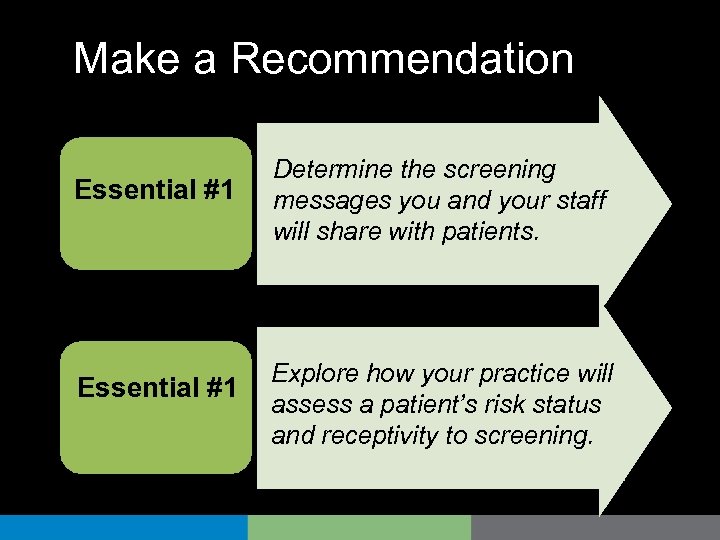 Make a Recommendation Essential #1 Determine the screening messages you and your staff will share with patients. Explore how your practice will assess a patient’s risk status and receptivity to screening.
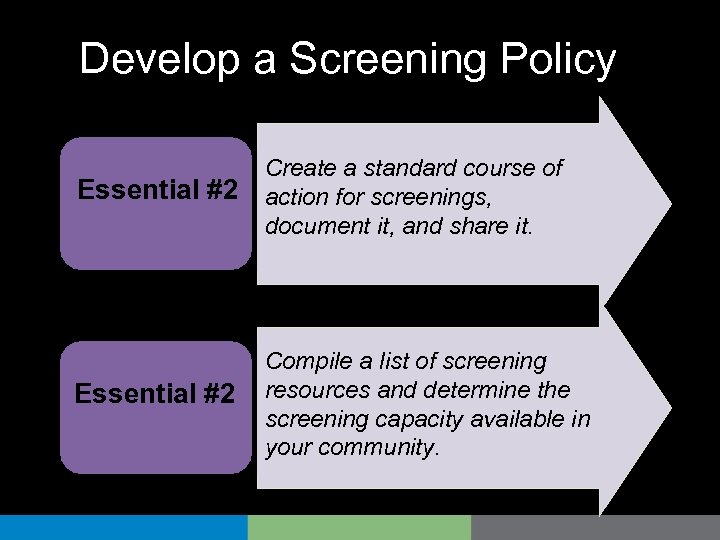 Develop a Screening Policy Essential #2 Create a standard course of action for screenings, document it, and share it. Essential #2 Compile a list of screening resources and determine the screening capacity available in your community.
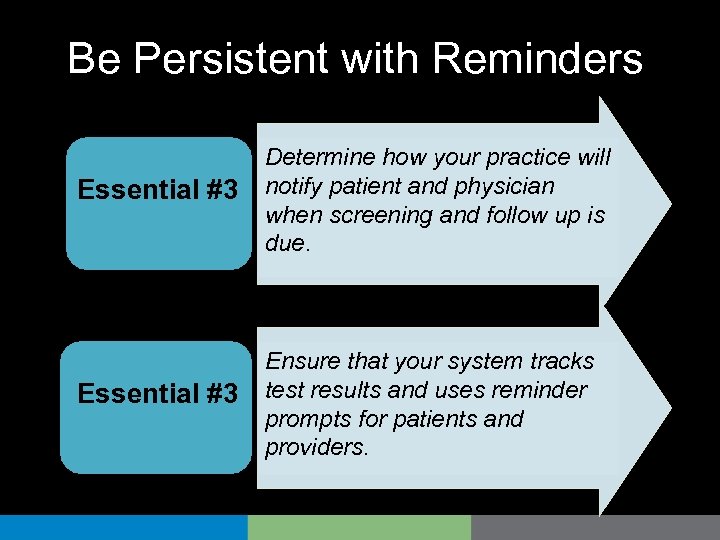 Be Persistent with Reminders Essential #3 Determine how your practice will notify patient and physician when screening and follow up is due. Essential #3 Ensure that your system tracks test results and uses reminder prompts for patients and providers.
 Measure Practice Progress Essential #4 Discuss how your screening system is working during regular staff meetings, and make adjustments as needed. Essential #4 Have staff conduct a screening audit, or contact a local company that can perform such a service.
 Communication • How are the members of your team communicating with each other throughout your process? • How are the members of your team communicating with other healthcare professionals? (i. e. , medical specialists) • How are your team members communicating with the patient?
 CASE STUDIES/ INTERVENTIONS
 Renville County Hospitals and Clinics • Located in the city of Olivia, Minnesota, in Renville County • Critical Access Hospital with three rural health clinics in: – Hector – Renville – Olivia • Providers include: – – 5 family practice physicians 3 physician assistants 2 nurse practitioners multiple consultants in many different specialties
 Improve Data Entry • Ensure that data reflects services rendered – At check-in ask patient if they have had tests ordered or completed by other providers • Capture data in appropriate data location – Health Maintenance section of EHR = Good – Free text in progress note = Bad • Ensure that scanned reports are “filed” or results are entered in discrete data fields • Perform data clean-up as appropriate
 Improve Data Entry (cont. ) • Consider: – Is the information available to providers and staff that will be doing future screening? – Is the information available within the EHR to generate reminders? – Is the information available to report on overall clinic performance and queries of patients due for screening?
 Integrating Reminders • Reminders and alerts – Must be timely – Examples from within EHR • Pop-up alert • Color-coded alert – Examples generated through EHR reports • Phone reminders • Letters • Emails
 Integrating Tracking • Electronic flow sheets – Examples: health maintenance, immunization, chronic disease • Registries – Allows a clinic to maintain a list of patients with a specific condition or finding
 Reduce Barriers • Redesign workflows – Example: EHR alert prompts staff rooming patient to offer information sheet on CRC screening • Use standing orders when appropriate – Obtain provider consensus – Adopt related policies and procedures
 Increase Patient Follow-through • Develop scripted messages for staff – Link screening to staying healthy for family • Provide educational materials with screening information and timeframes
 Increase Staff Engagement • Provide data to care teams on a regular basis • Recognize teams with high and improved performance • Provide missed opportunity reports • Hold periodic meetings of staff to generate ideas for process changes
 LESSONS LEARNED DISCUSSION
 GETTING STARTED
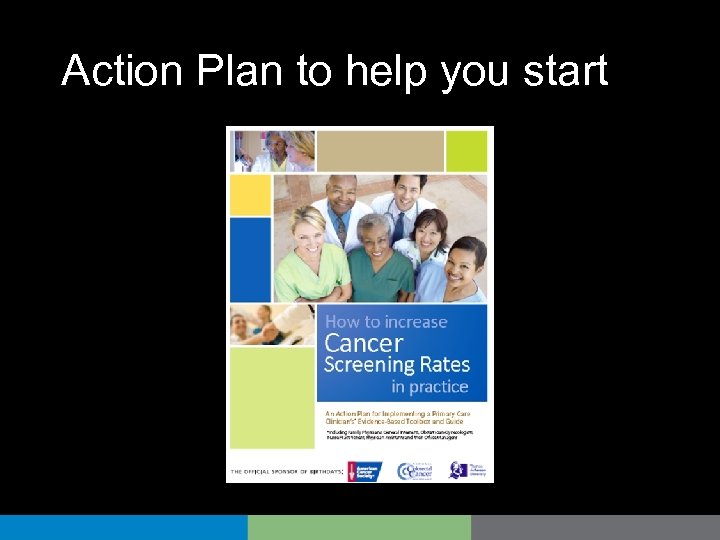 Action Plan to help you start
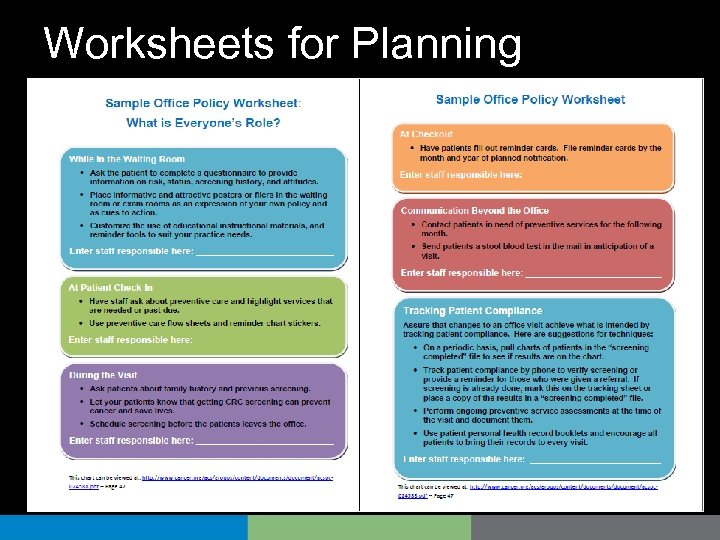 Worksheets for Planning
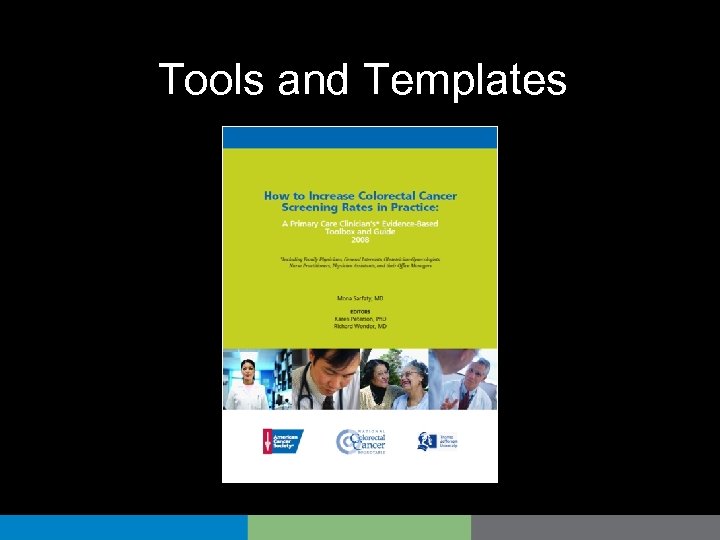 Tools and Templates
 QUESTIONS?
 Thank You! • Matt Flory Matt. Flory@cancer. org • Beverly Annis matzkeannis@hickorytech. net • Jerri Hiniker jhiniker@stratishealth. org
 This material was prepared by Stratis Health, the Minnesota Medicare Quality Improvement Organization, under contract with the Centers for Medicare & Medicaid Services (CMS), an agency of the U. S. Department of Health and Human Services. The materials do not necessarily reflect CMS policy. 10 SOW-MN-C 9 -13 -17 073013