


 Скачать презентацию Implementing The Leadership Theory in Geriatric Teams For
6d006090056f90b8403ed95948fb14cd.ppt
- Количество слайдов: 9
 Implementing The Leadership Theory in Geriatric Teams For Treating a Patients with Severe Disfiguration D. Garfinkel, M. D. , T. Sinai, J. Ben-Israel, M. D. , The Shoham Geriatric Medical Center ISRAEL
 Leadership Theory (Bass 1982) • Widely used in industrial organizations, much less in medical settings Main Concepts: 1. Group Empowerment 2. Reframing 3. Leadership Modeling (personal example)
 The Patient A 62 year old man with Squamous Cell Carcinoma (SCC) - a malignant skin cancer. The SCC was Neglected so that large parts of the face were destroyed resulting in Severe Disfiguration. Admited after Suicide Attempt Moderate- Severe Congestive Heart Failure Chronic Anemia (Serum Hemoglobin 4. 5 g/d. L)
 The Task v Preparing a Multi-Disciplinary Team for a deviate procedure v Overcoming Total Refusal of the Staff to Treat a Patient v Leading a Group Process in the Ward
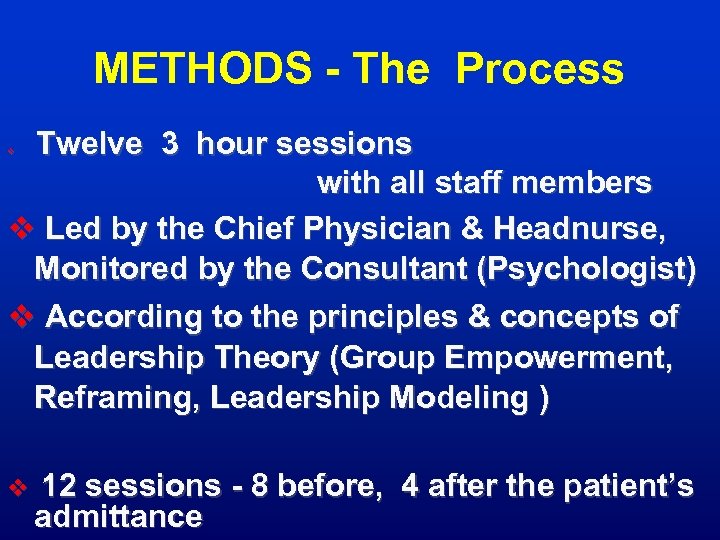 METHODS - The Process Twelve 3 hour sessions with all staff members v Led by the Chief Physician & Headnurse, Monitored by the Consultant (Psychologist) v According to the principles & concepts of Leadership Theory (Group Empowerment, Reframing, Leadership Modeling ) v v 12 sessions - 8 before, 4 after the patient’s admittance
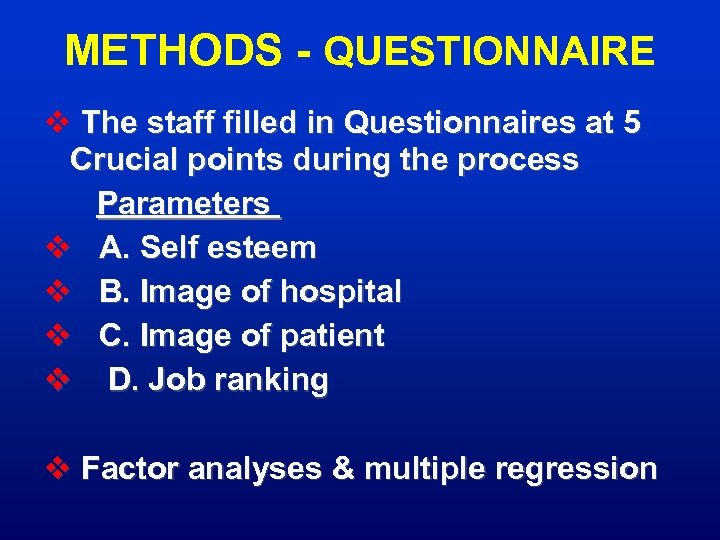 METHODS - QUESTIONNAIRE v The staff filled in Questionnaires at 5 Crucial points during the process Parameters v A. Self esteem v B. Image of hospital v C. Image of patient v D. Job ranking v Factor analyses & multiple regression
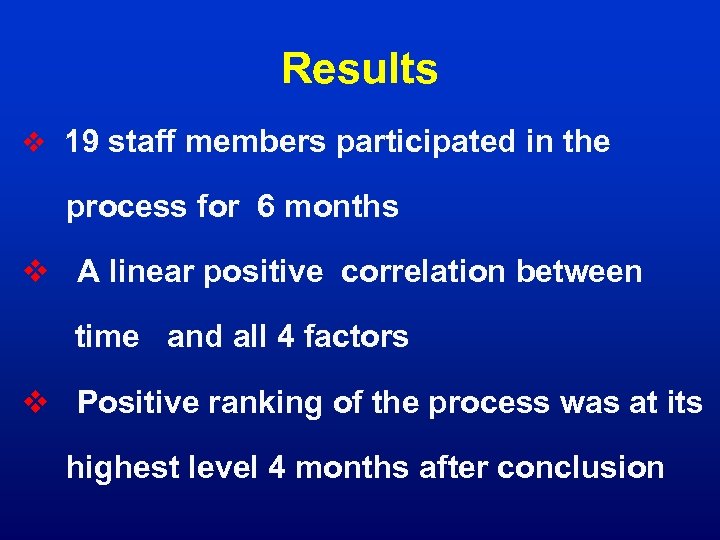 Results v 19 staff members participated in the process for 6 months v A linear positive correlation between time and all 4 factors v Positive ranking of the process was at its highest level 4 months after conclusion
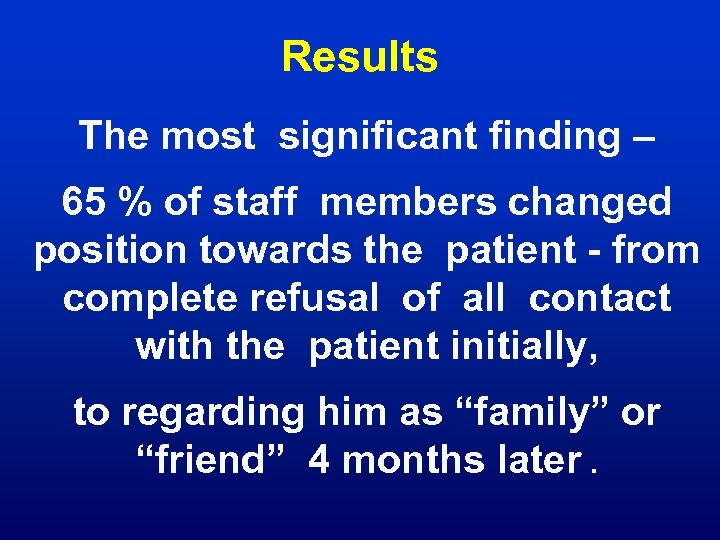 Results The most significant finding – 65 % of staff members changed position towards the patient - from complete refusal of all contact with the patient initially, to regarding him as “family” or “friend” 4 months later.
 Conclusions Ø Leadership theory models may serve as effective tools for preparing multidisciplinary teams in long-term care facilities, to cope with difficult patients. Ø Through a group process, team members can significantly improve their attitude towards “difficult to treat” patient, while contributing to increase their own self esteem, job ranking and image of their institute.