


 Скачать презентацию Imperialism a policy of conquering and ruling
6996a99a7c547a329a8da79564987f8b.ppt
- Количество слайдов: 87
 Imperialism = a policy of conquering and ruling other lands
 Imperialism = a policy of conquering and ruling other lands
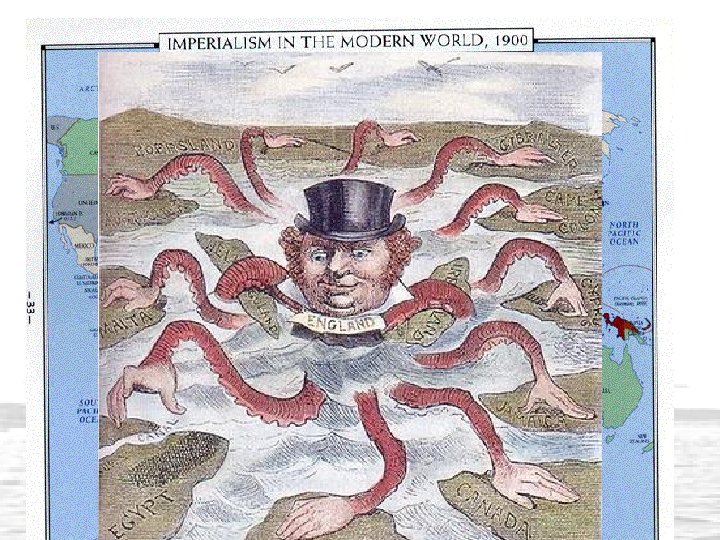
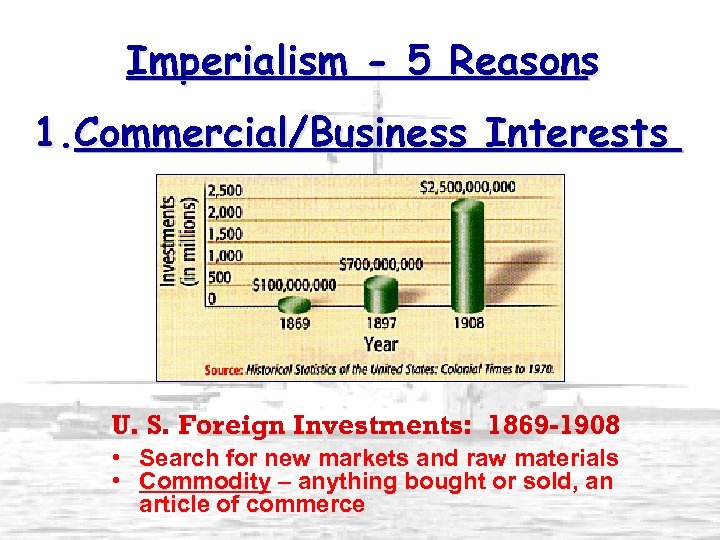 Imperialism - 5 Reasons 1. Commercial/Business Interests U. S. Foreign Investments: 1869 -1908 • Search for new markets and raw materials • Commodity – anything bought or sold, an article of commerce
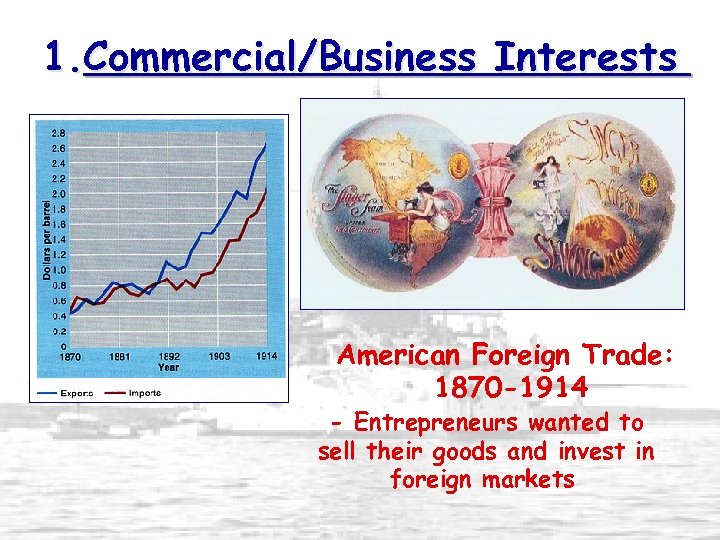 1. Commercial/Business Interests American Foreign Trade: 1870 -1914 - Entrepreneurs wanted to sell their goods and invest in foreign markets
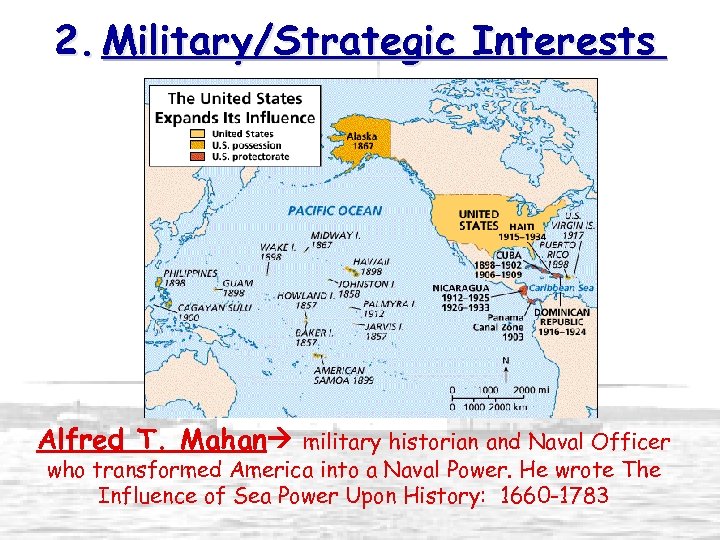 2. Military/Strategic Interests Alfred T. Mahan military historian and Naval Officer who transformed America into a Naval Power. He wrote The Influence of Sea Power Upon History: 1660 -1783
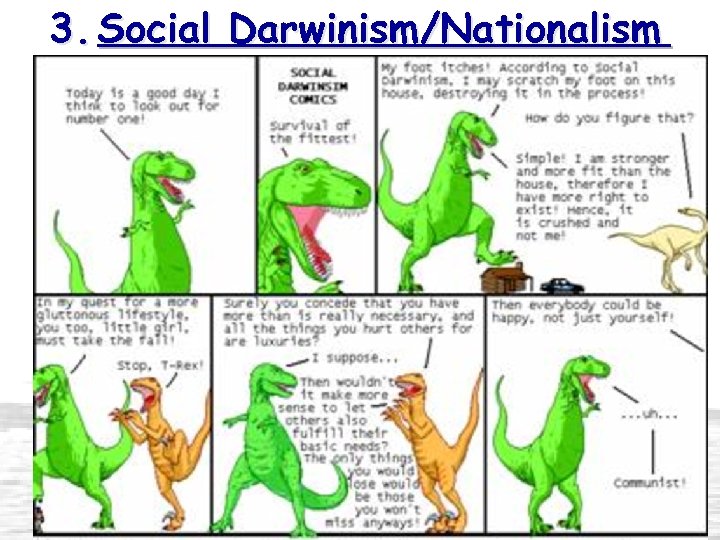 3. Social Darwinism/Nationalism "White Man's Burden": racist patronizing that preached that the “superior” Westerners had an obligation to bring their culture to “uncivilized” peoples in other parts of the world - Poem by Rudyard Kipling Social Darwinism - Certain races and nations are superior to others!
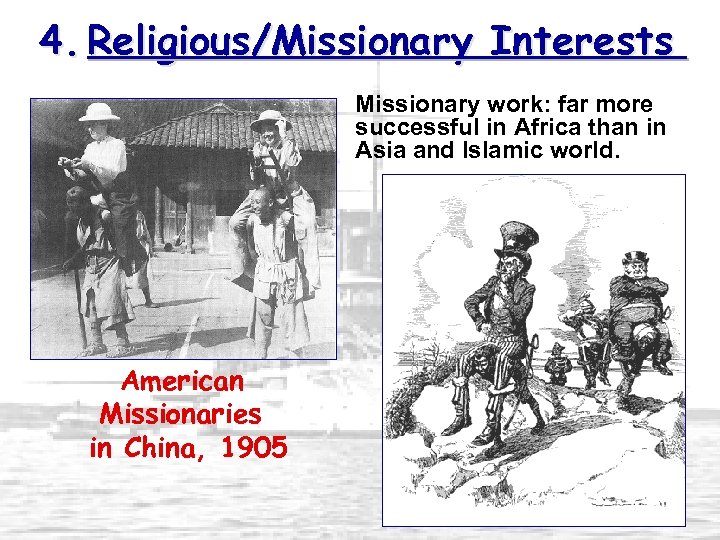 4. Religious/Missionary Interests Missionary work: far more successful in Africa than in Asia and Islamic world. American Missionaries in China, 1905
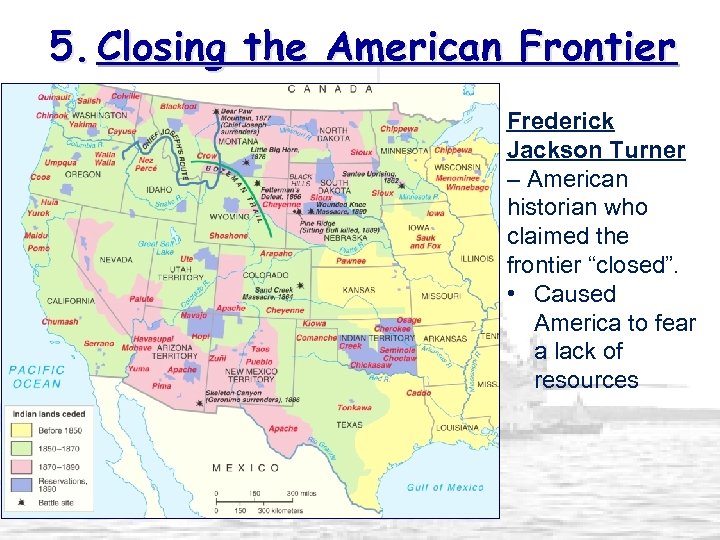 5. Closing the American Frontier Frederick Jackson Turner – American historian who claimed the frontier “closed”. • Caused America to fear a lack of resources
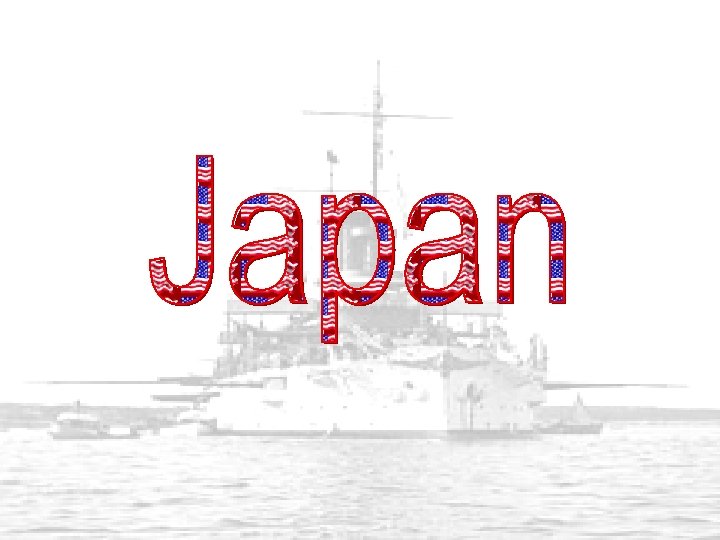
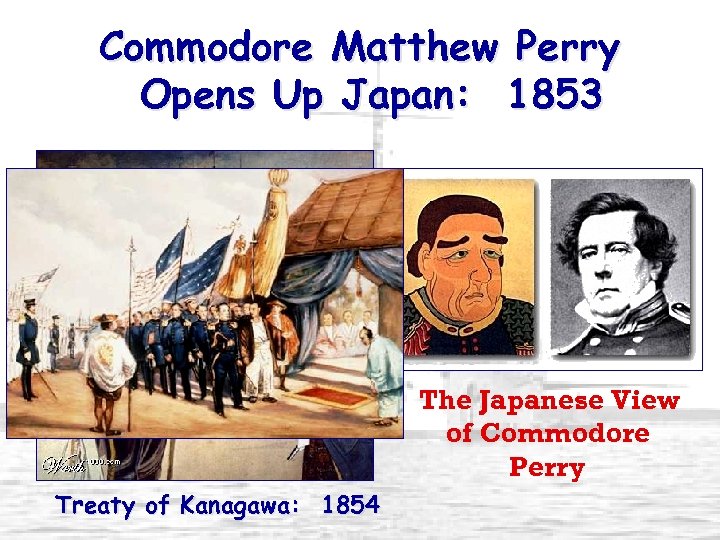 Commodore Matthew Perry Opens Up Japan: 1853 The Japanese View of Commodore Perry Treaty of Kanagawa: 1854
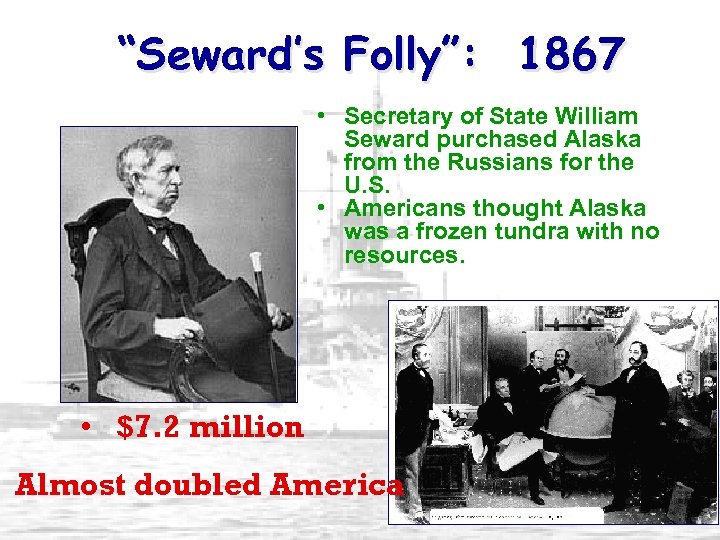 “Seward’s Folly”: 1867 • Secretary of State William Seward purchased Alaska from the Russians for the U. S. • Americans thought Alaska was a frozen tundra with no resources. • $7. 2 million Almost doubled America
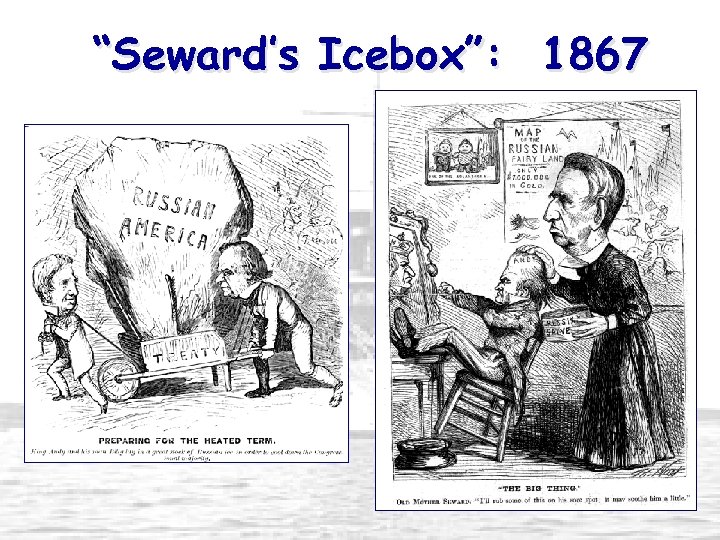 “Seward’s Icebox”: 1867
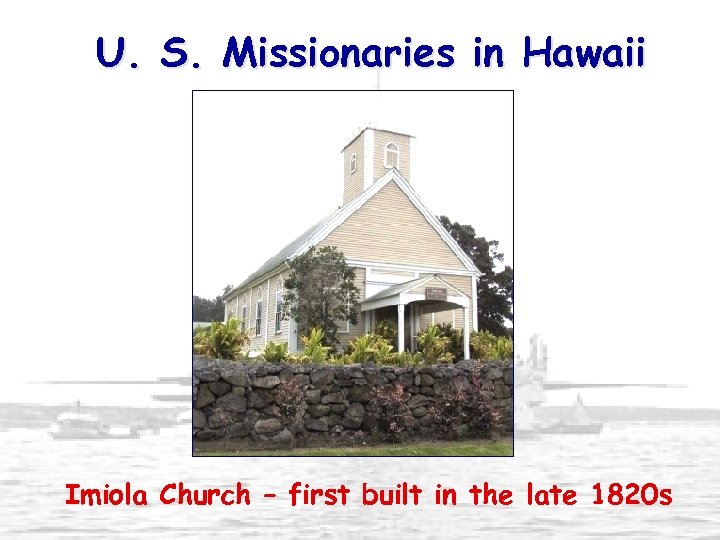 U. S. Missionaries in Hawaii Imiola Church – first built in the late 1820 s
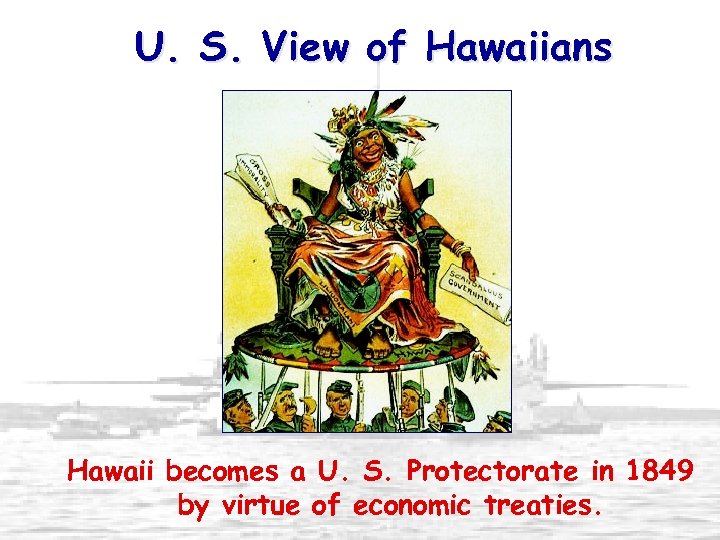 U. S. View of Hawaiians Hawaii becomes a U. S. Protectorate in 1849 by virtue of economic treaties.
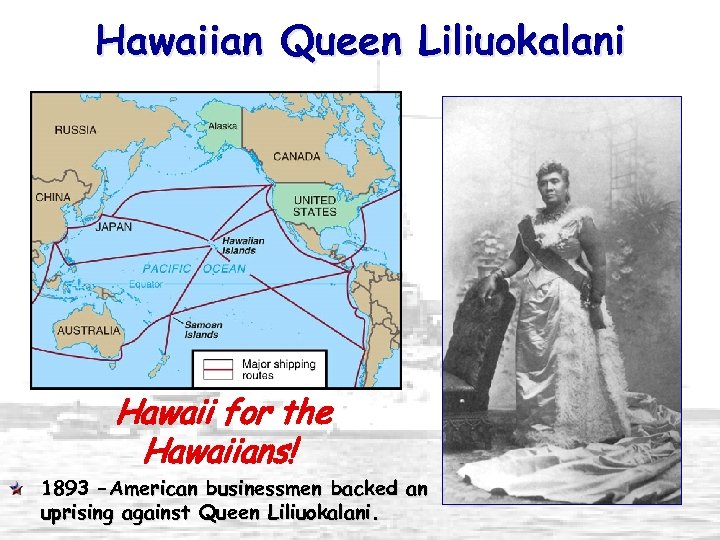 Hawaiian Queen Liliuokalani Hawaii for the Hawaiians! 1893 – American businessmen backed an uprising against Queen Liliuokalani.
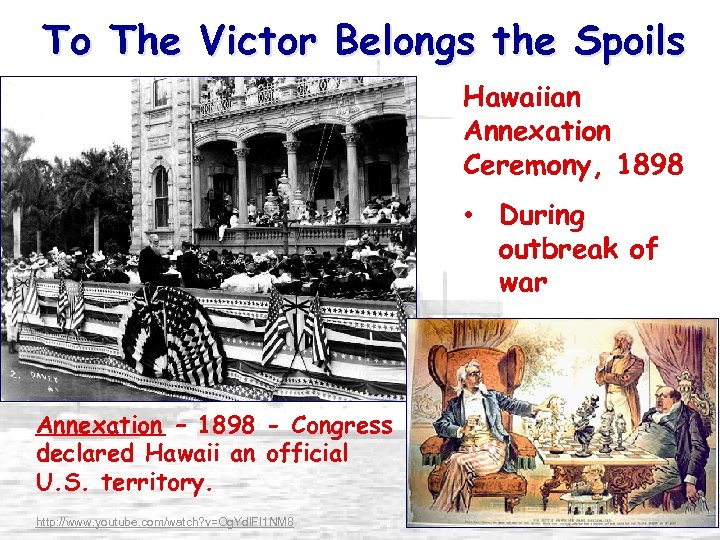 To The Victor Belongs the Spoils Hawaiian Annexation Ceremony, 1898 • During outbreak of war Annexation – 1898 - Congress declared Hawaii an official U. S. territory. http: //www. youtube. com/watch? v=Og. Ydl. FI 1 NM 8
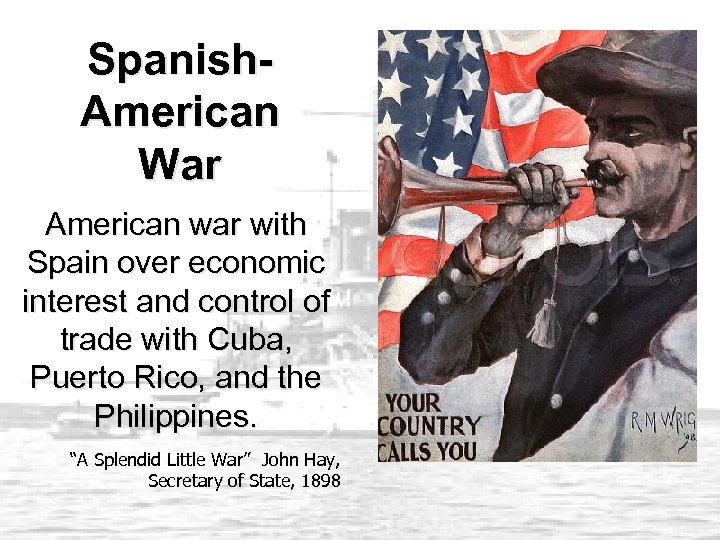 Spanish. American War American war with Spain over economic interest and control of trade with Cuba, Puerto Rico, and the Philippines. “A Splendid Little War” John Hay, Secretary of State, 1898
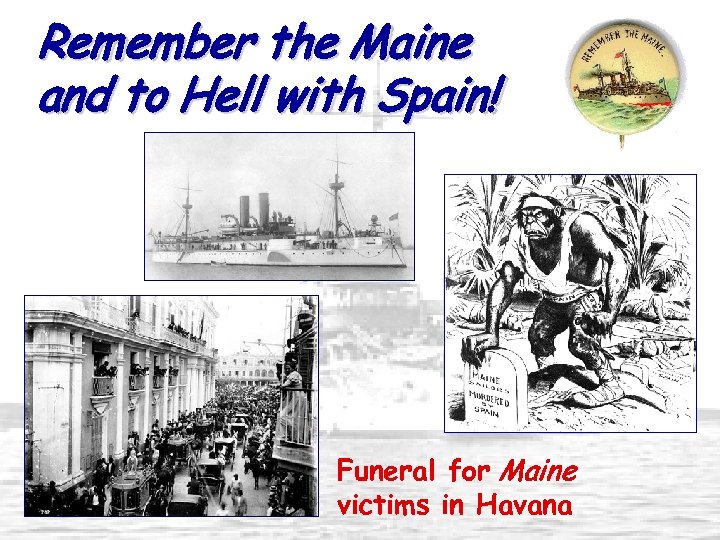 Remember the Maine and to Hell with Spain! Funeral for Maine victims in Havana
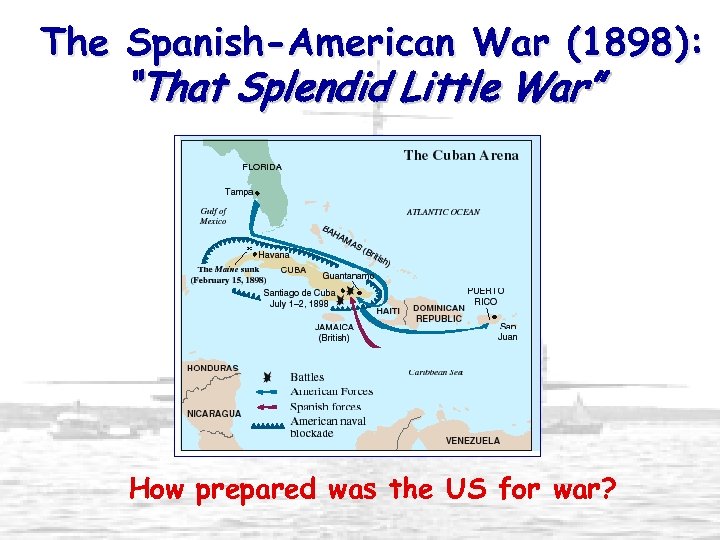 The Spanish-American War (1898): “That Splendid Little War” How prepared was the US for war?
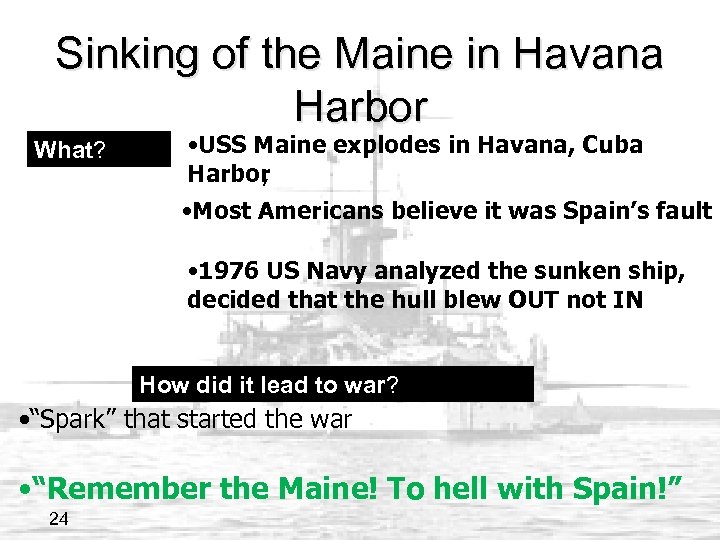 Sinking of the Maine in Havana Harbor What? • USS Maine explodes in Havana, Cuba Harbor , • Most Americans believe it was Spain’s fault • 1976 US Navy analyzed the sunken ship, decided that the hull blew OUT not IN How did it lead to war? • “Spark” that started the war • “Remember the Maine! To hell with Spain!” 24
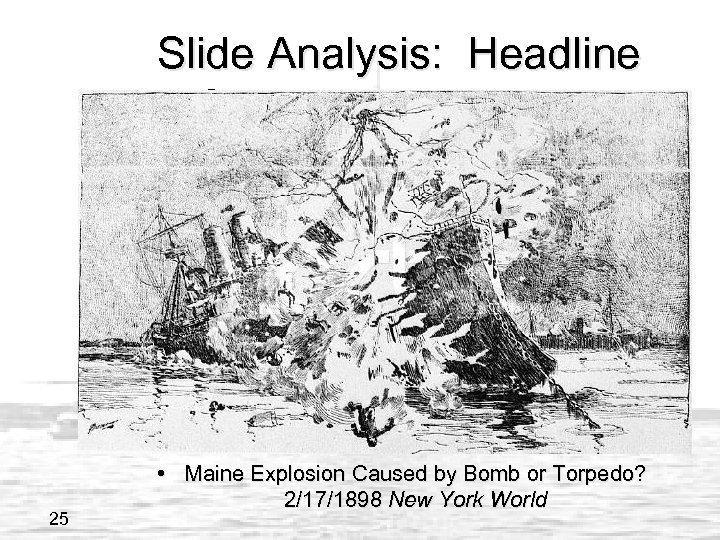 Slide Analysis: Headline of the Maine Explosion 25 • Maine Explosion Caused by Bomb or Torpedo? 2/17/1898 New York World
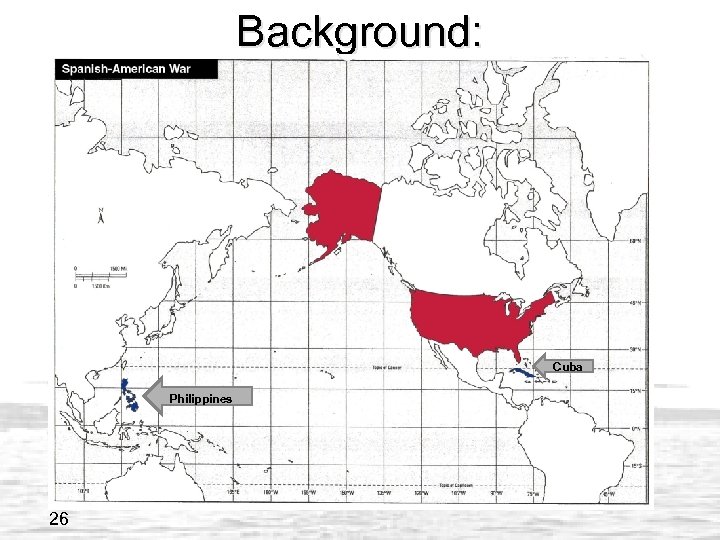 Background: • Who? • Spain vs. America Where? • Phillipines, Cuba (Spain’s Colonies) Cuba Philippines 26
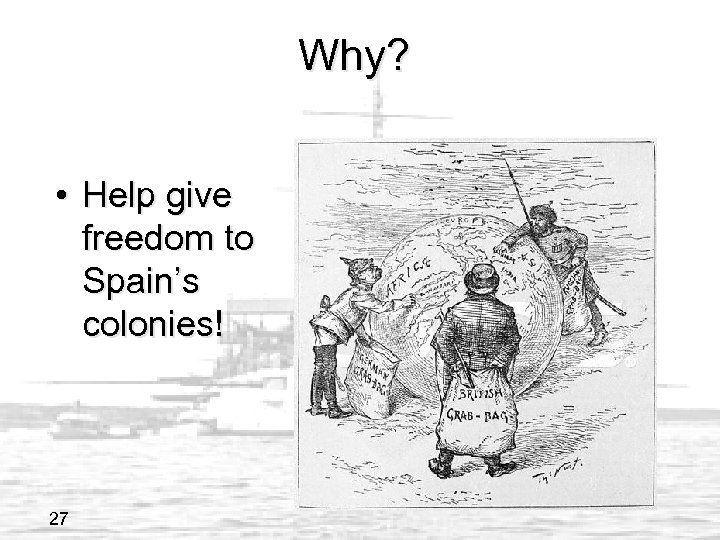 Why? • Help give freedom to Spain’s colonies! 27
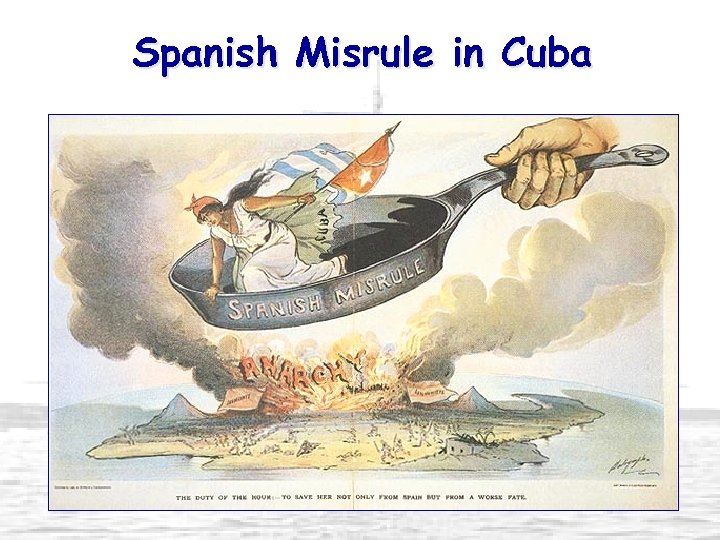 Spanish Misrule in Cuba
 Spain’s Reconcentration Policy What? • Civilians were forced into government run camps (with bad conditions) Why? • Spain was fighting a guerilla war and needed to separate “good” from “bad guys” • Jose Marti – Cuban patriot who launched a war for independence from Spain How did it lead to war? • Made Spain look bad in American eyes 29
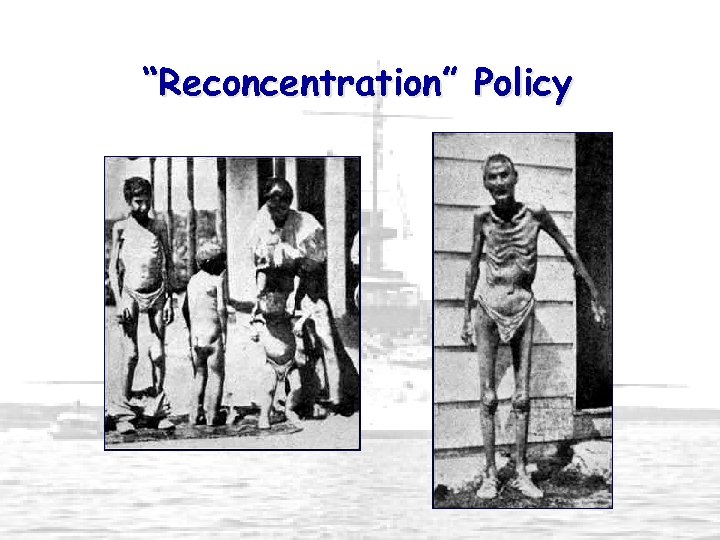 “Reconcentration” Policy
 American Economic Interests What? • Many of Cuba’s sugar plantations were owned by Americans Why? • Protecting their economic interests How did it lead to war? • Made Americans more likely to help out Cuba 31
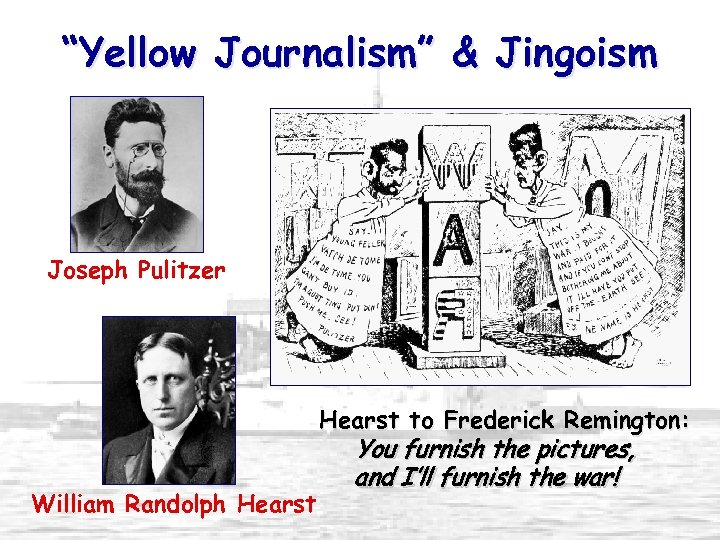 “Yellow Journalism” & Jingoism Joseph Pulitzer Hearst to Frederick Remington: William Randolph Hearst You furnish the pictures, and I’ll furnish the war!
 “Yellow Journalists” What? • Goal: Newspaper created highly exaggerated stories/propaganda • Jingoism – aggressive nationalism of Americans Why? • Goal - Make more $ if they keep you(reader) scared and interested How did it lead to war? • Newspaper publishers Joseph Pulitzer and William Randolph Hearst heightened the public’s dislike of the Spanish government. 33 • Made Americans want war!
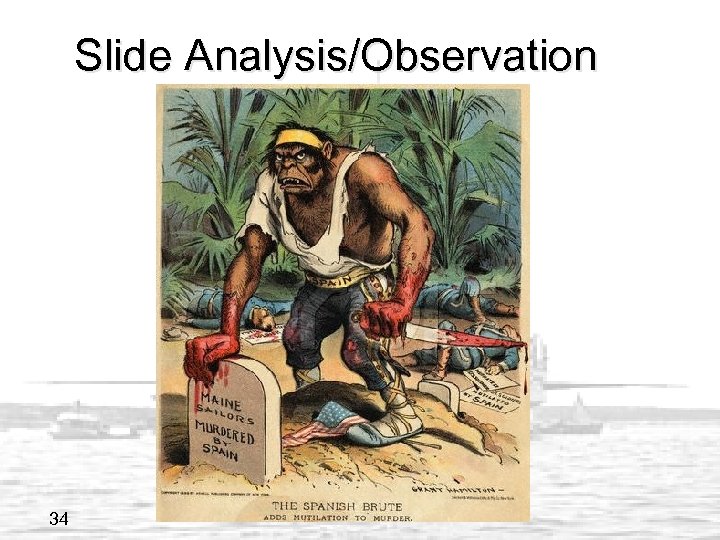 Slide Analysis/Observation Cartoon 34
 Declaration of War • Fear gripped the Nation • Mc. Kinley – 1989 – asked congress for authority to use force again Spain to protect Cuba • Congress passed 4 resolutions – Declaring War! • Teller Amendment – 4 th resolution that stipulated that the U. S. had no intention of annexing Cuba.
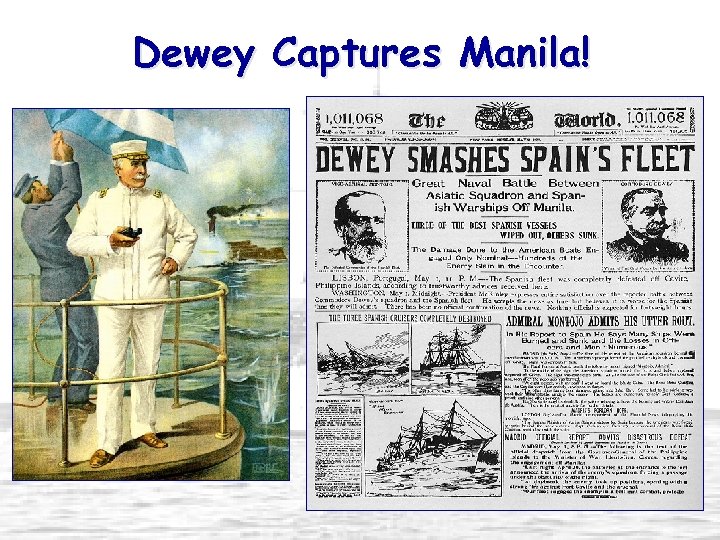 Dewey Captures Manila!
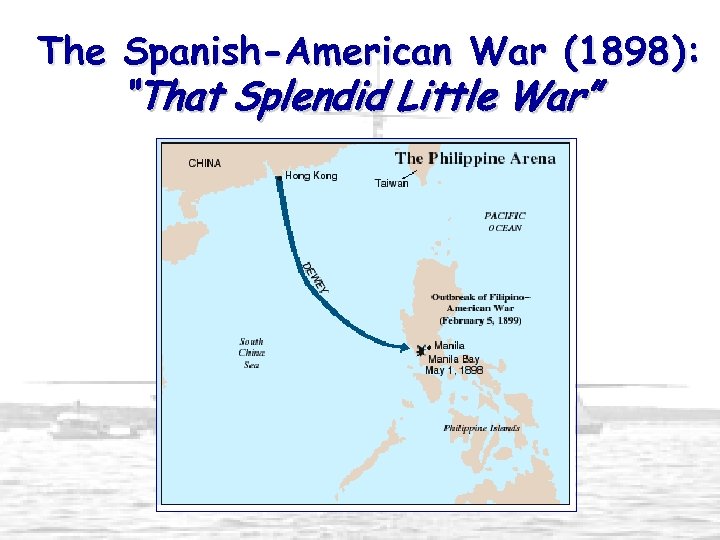 The Spanish-American War (1898): “That Splendid Little War”
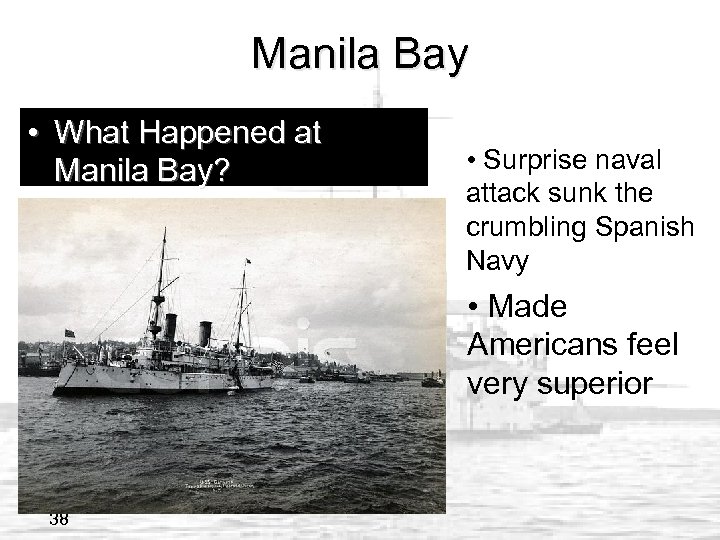 Manila Bay • What Happened at Manila Bay? • Surprise naval attack sunk the crumbling Spanish Navy • Made Americans feel very superior 38
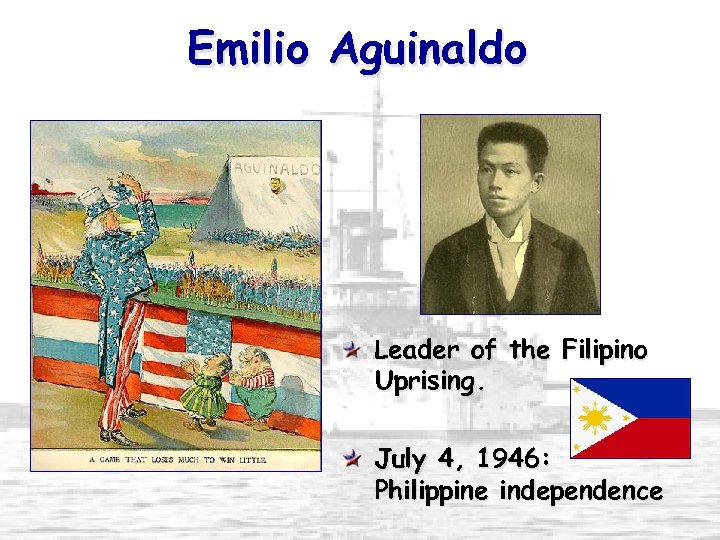 Emilio Aguinaldo Leader of the Filipino Uprising. July 4, 1946: Philippine independence
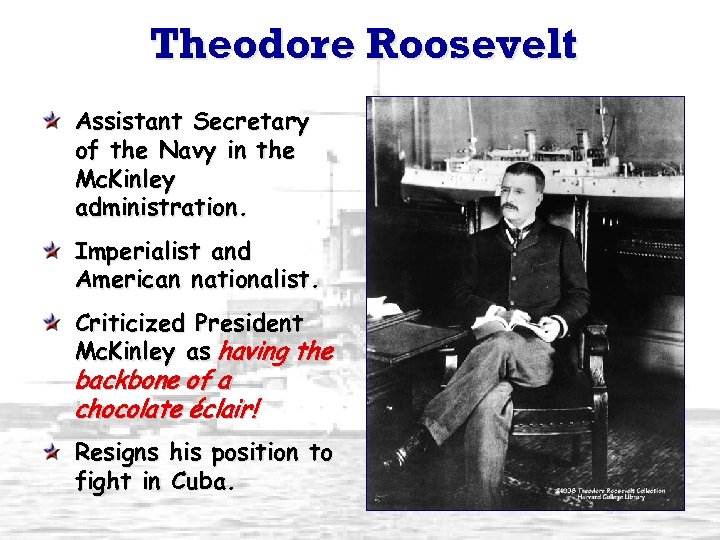 Theodore Roosevelt Assistant Secretary of the Navy in the Mc. Kinley administration. Imperialist and American nationalist. Criticized President Mc. Kinley as having the backbone of a chocolate éclair! Resigns his position to fight in Cuba.
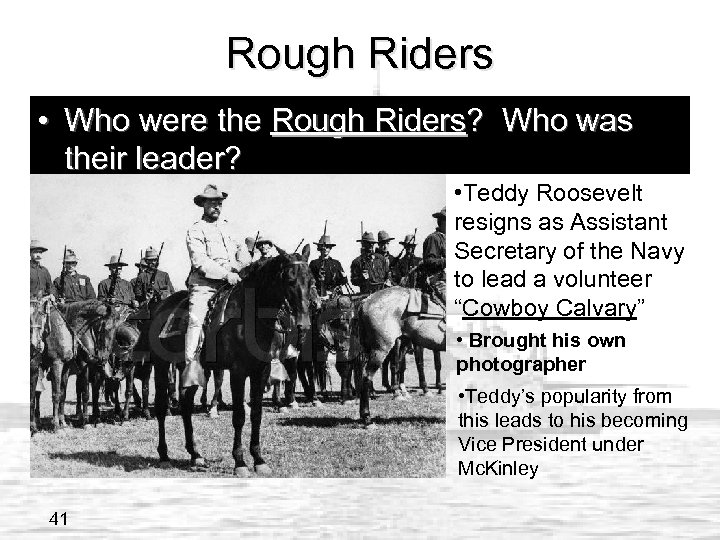 Rough Riders • Who were the Rough Riders? Who was their leader? • Teddy Roosevelt resigns as Assistant Secretary of the Navy to lead a volunteer “Cowboy Calvary” • Brought his own photographer • Teddy’s popularity from this leads to his becoming Vice President under Mc. Kinley 41
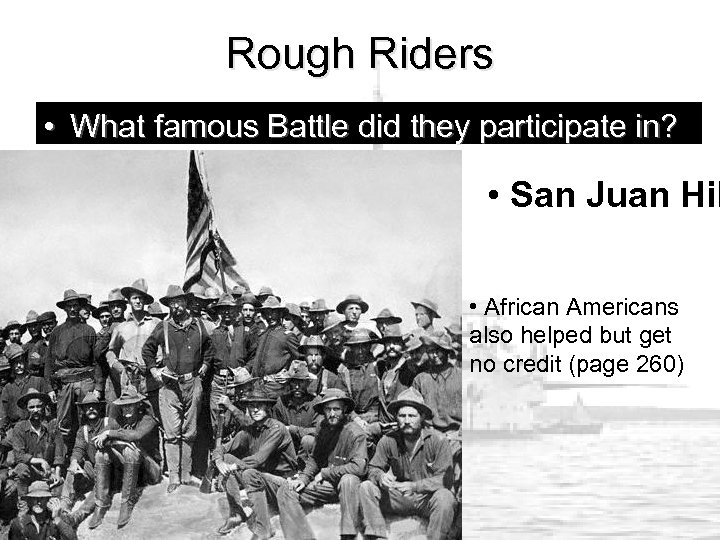 Rough Riders • What famous Battle did they participate in? • San Juan Hil • African Americans also helped but get no credit (page 260) 42
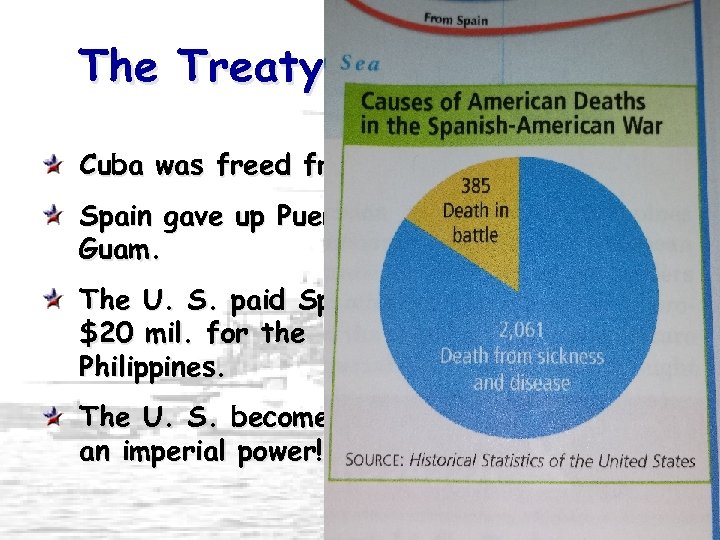 The Treaty of Paris: 1898 Cuba was freed from Spanish rule. Spain gave up Puerto Rico and the island of Guam. The U. S. paid Spain $20 mil. for the Philippines. The U. S. becomes an imperial power!
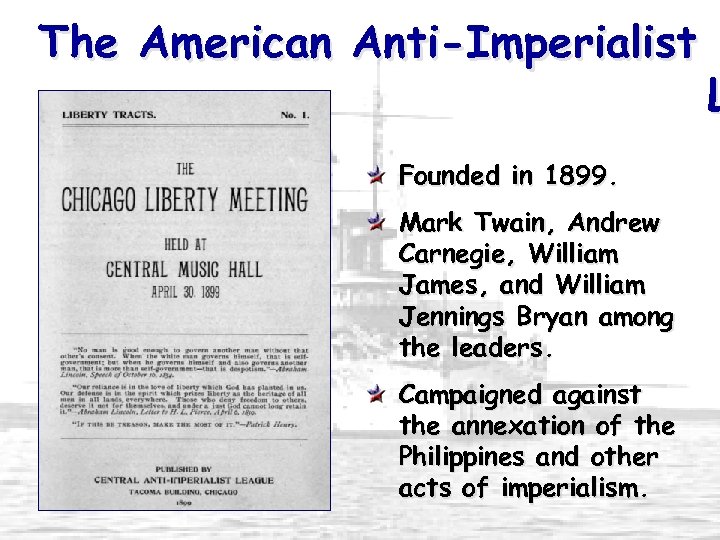 The American Anti-Imperialist Founded in 1899. Mark Twain, Andrew Carnegie, William James, and William Jennings Bryan among the leaders. Campaigned against the annexation of the Philippines and other acts of imperialism. L
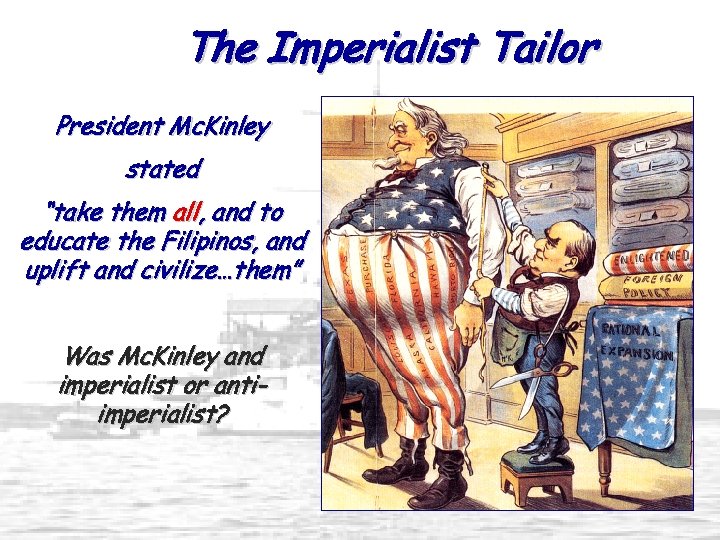 The Imperialist Tailor President Mc. Kinley stated “take them all, and to educate the Filipinos, and uplift and civilize…them” Was Mc. Kinley and imperialist or antiimperialist?
 Thinking Slide Are you pro Imperialism or Anti-imperialism? Explain! Class Debate! https: //www. youtube. com/watch? v=inm 8 U 8 p. DDXE 46
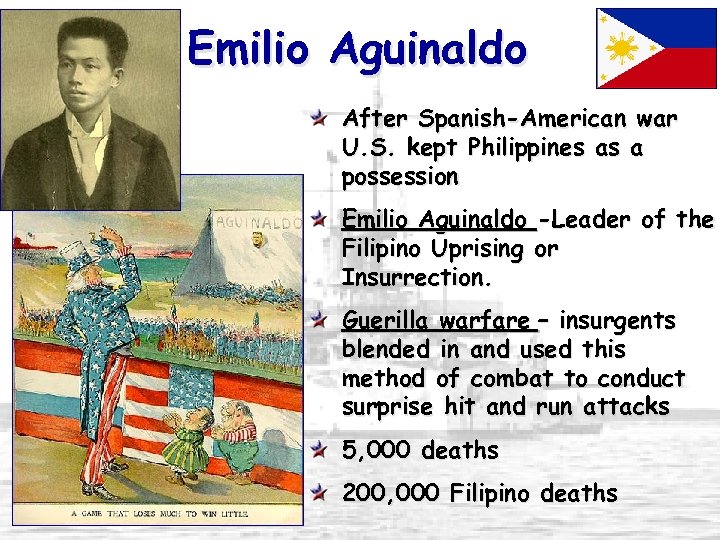 Emilio Aguinaldo After Spanish-American war U. S. kept Philippines as a possession Emilio Aguinaldo -Leader of the Filipino Uprising or Insurrection. Guerilla warfare – insurgents blended in and used this method of combat to conduct surprise hit and run attacks 5, 000 deaths 200, 000 Filipino deaths
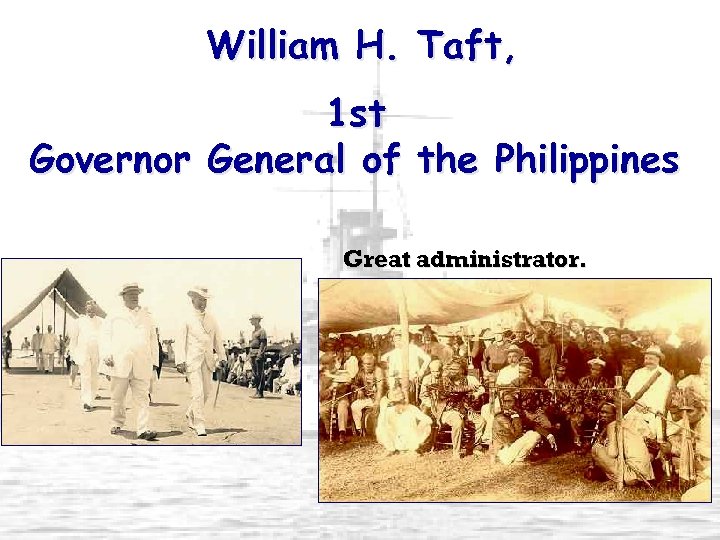 William H. Taft, 1 st Governor General of the Philippines Great administrator.
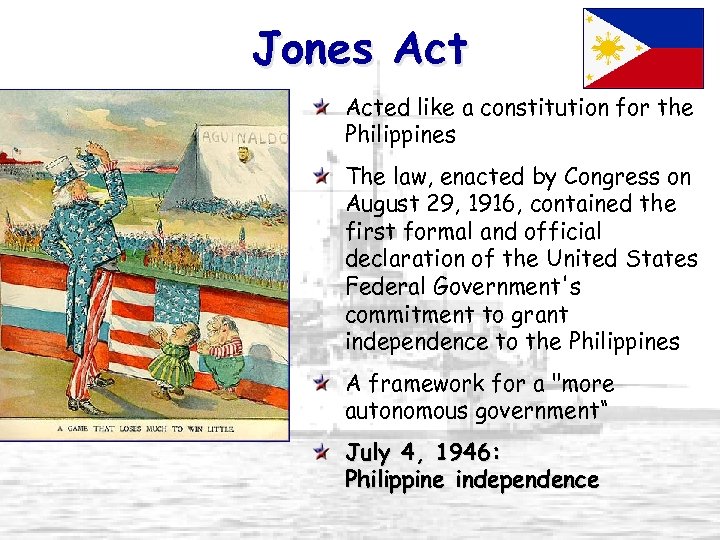 Jones Acted like a constitution for the Philippines The law, enacted by Congress on August 29, 1916, contained the first formal and official declaration of the United States Federal Government's commitment to grant independence to the Philippines A framework for a "more autonomous government“ July 4, 1946: Philippine independence
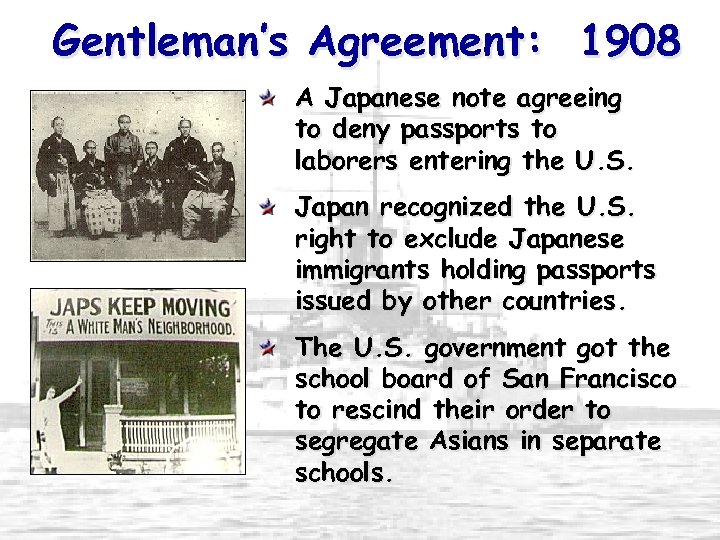 Gentleman’s Agreement: 1908 A Japanese note agreeing to deny passports to laborers entering the U. S. Japan recognized the U. S. right to exclude Japanese immigrants holding passports issued by other countries. The U. S. government got the school board of San Francisco to rescind their order to segregate Asians in separate schools.
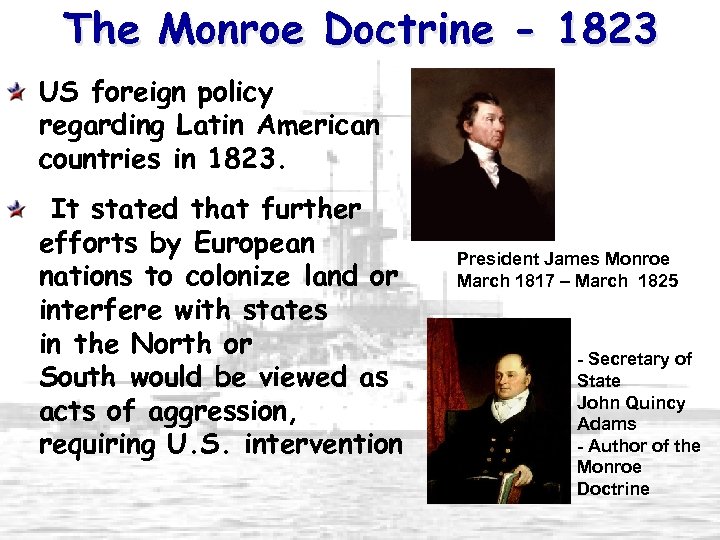 The Monroe Doctrine - 1823 US foreign policy regarding Latin American countries in 1823. It stated that further efforts by European nations to colonize land or interfere with states in the North or South would be viewed as acts of aggression, requiring U. S. intervention President James Monroe March 1817 – March 1825 - Secretary of State John Quincy Adams - Author of the Monroe Doctrine
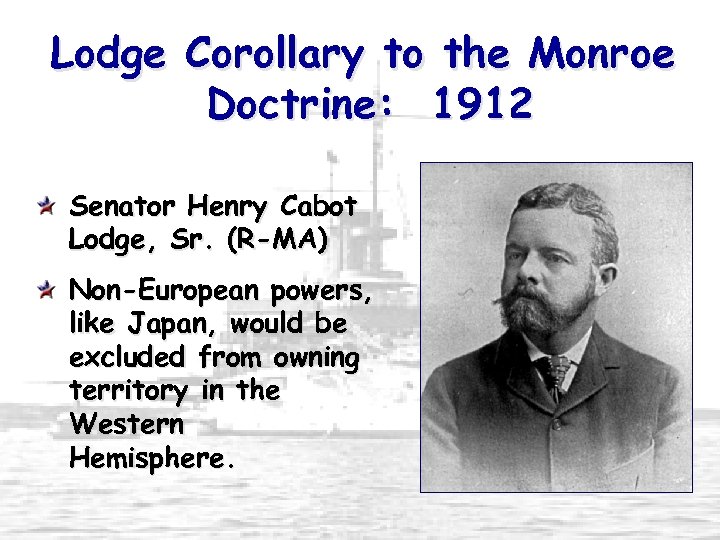 Lodge Corollary to the Monroe Doctrine: 1912 Senator Henry Cabot Lodge, Sr. (R-MA) Non-European powers, like Japan, would be excluded from owning territory in the Western Hemisphere.
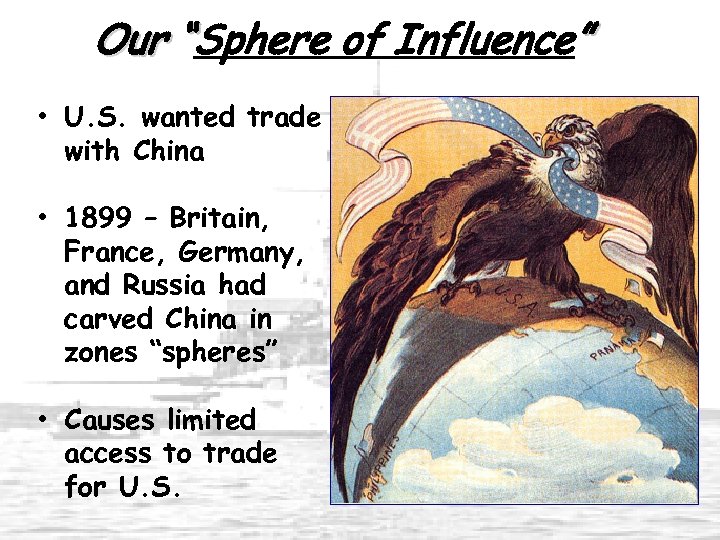 Our “Sphere of Influence” “ • U. S. wanted trade with China • 1899 – Britain, France, Germany, and Russia had carved China in zones “spheres” • Causes limited access to trade for U. S.
![Stereotypes of the Chinese Immigrant Oriental [Chinese] Exclusion Act, 1887](https://present5.com/presentation/6996a99a7c547a329a8da79564987f8b/image-58.jpg "Stereotypes of the Chinese Immigrant Oriental [Chinese] Exclusion Act, 1887") Stereotypes of the Chinese Immigrant Oriental [Chinese] Exclusion Act, 1887
Stereotypes of the Chinese Immigrant Oriental [Chinese] Exclusion Act, 1887
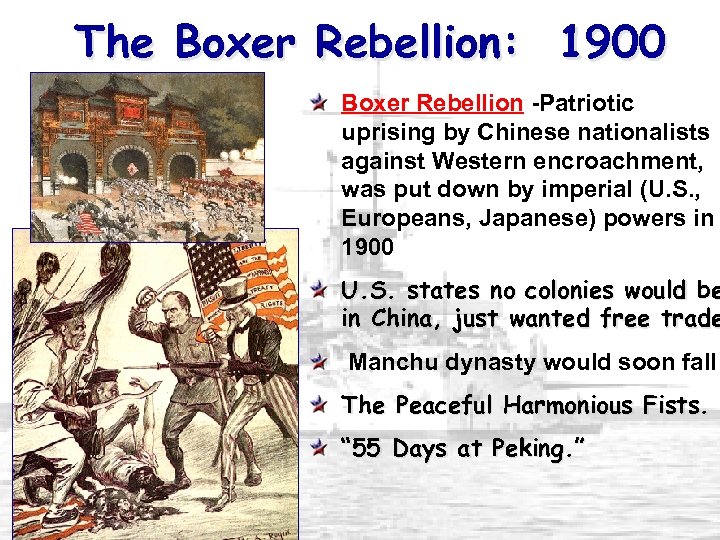 The Boxer Rebellion: 1900 Boxer Rebellion -Patriotic uprising by Chinese nationalists against Western encroachment, was put down by imperial (U. S. , Europeans, Japanese) powers in 1900 U. S. states no colonies would be in China, just wanted free trade Manchu dynasty would soon fall The Peaceful Harmonious Fists. “ 55 Days at Peking. ”
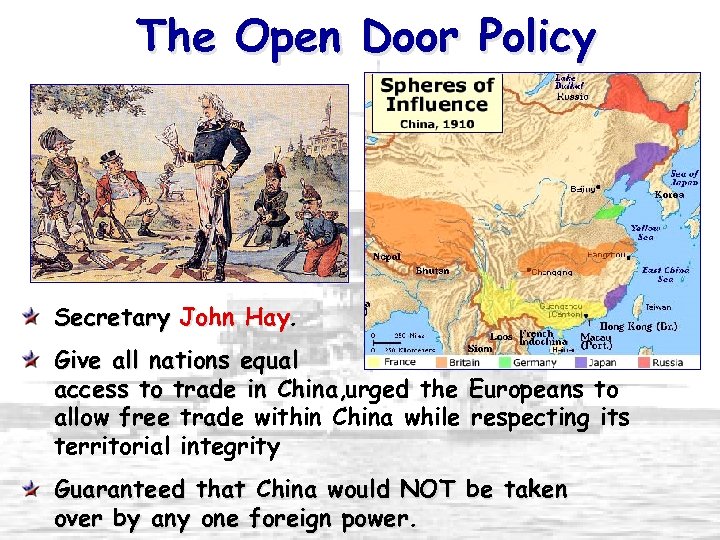 The Open Door Policy Secretary John Hay. Give all nations equal access to trade in China, urged the Europeans to allow free trade within China while respecting its territorial integrity Guaranteed that China would NOT be taken over by any one foreign power.
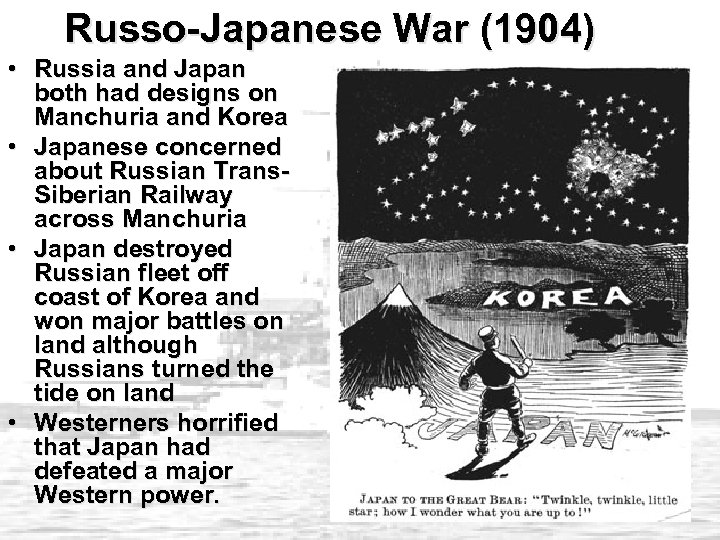 Russo-Japanese War (1904) • Russia and Japan both had designs on Manchuria and Korea • Japanese concerned about Russian Trans. Siberian Railway across Manchuria • Japan destroyed Russian fleet off coast of Korea and won major battles on land although Russians turned the tide on land • Westerners horrified that Japan had defeated a major Western power.
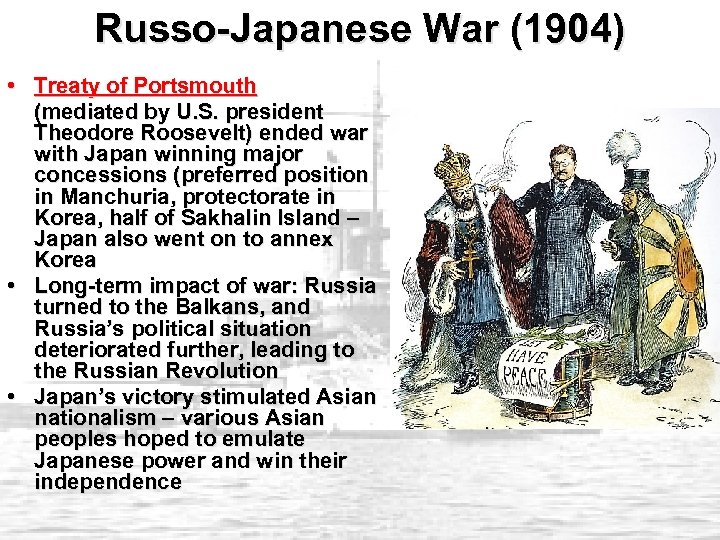 Russo-Japanese War (1904) • Treaty of Portsmouth (mediated by U. S. president Theodore Roosevelt) ended war with Japan winning major concessions (preferred position in Manchuria, protectorate in Korea, half of Sakhalin Island – Japan also went on to annex Korea • Long-term impact of war: Russia turned to the Balkans, and Russia’s political situation deteriorated further, leading to the Russian Revolution • Japan’s victory stimulated Asian nationalism – various Asian peoples hoped to emulate Japanese power and win their independence
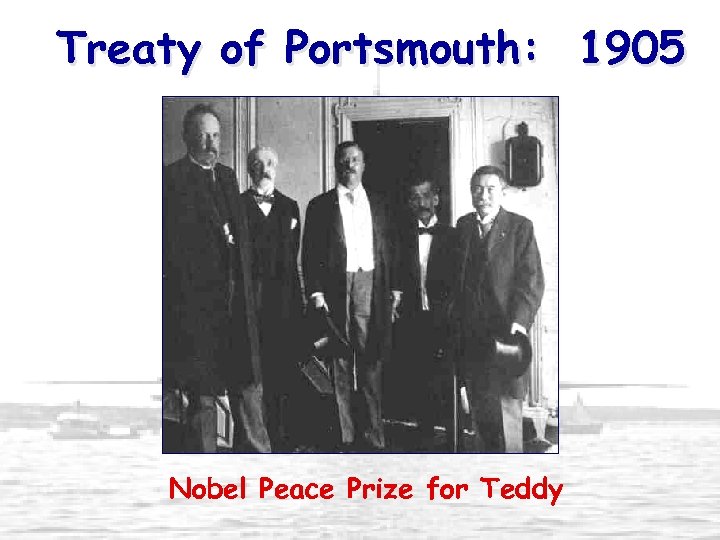 Treaty of Portsmouth: 1905 Nobel Peace Prize for Teddy
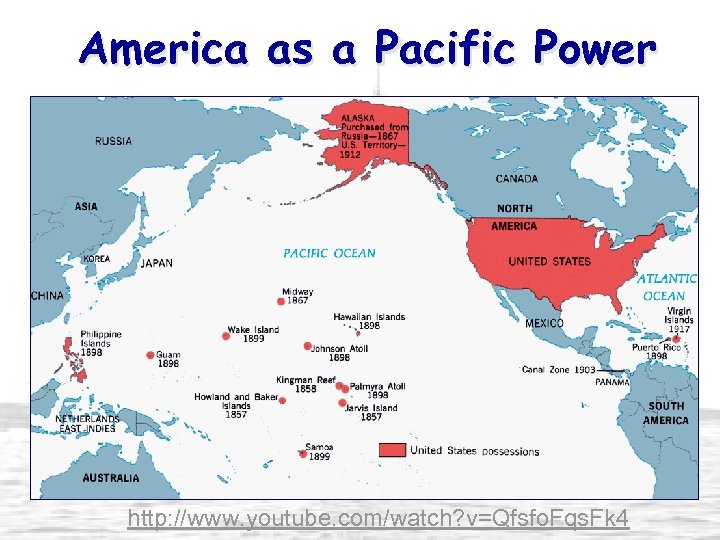 America as a Pacific Power http: //www. youtube. com/watch? v=Qfsfo. Fqs. Fk 4
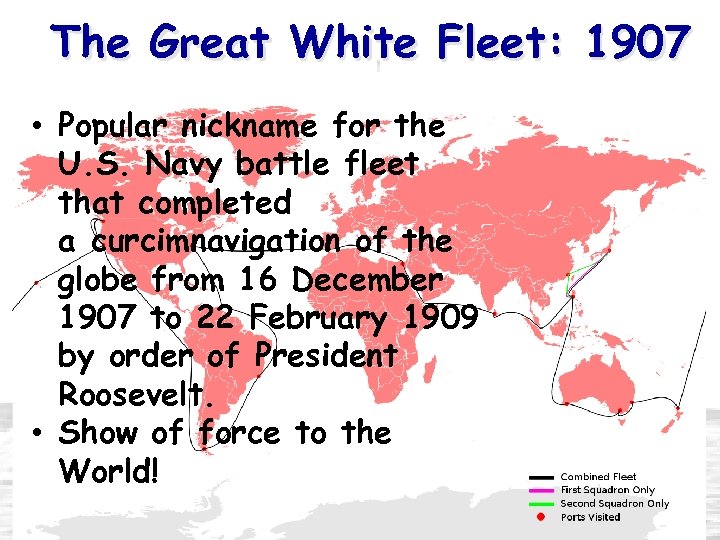 The Great White Fleet: 1907 • Popular nickname for the U. S. Navy battle fleet that completed a curcimnavigation of the globe from 16 December 1907 to 22 February 1909 by order of President Roosevelt. • Show of force to the World!
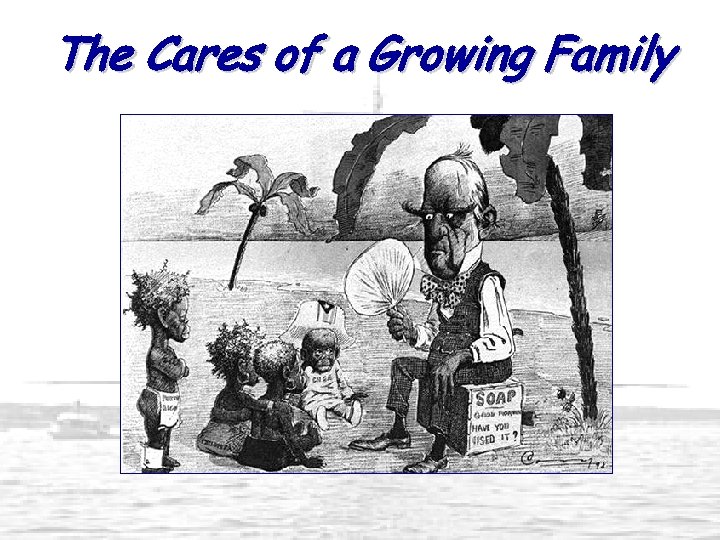 The Cares of a Growing Family
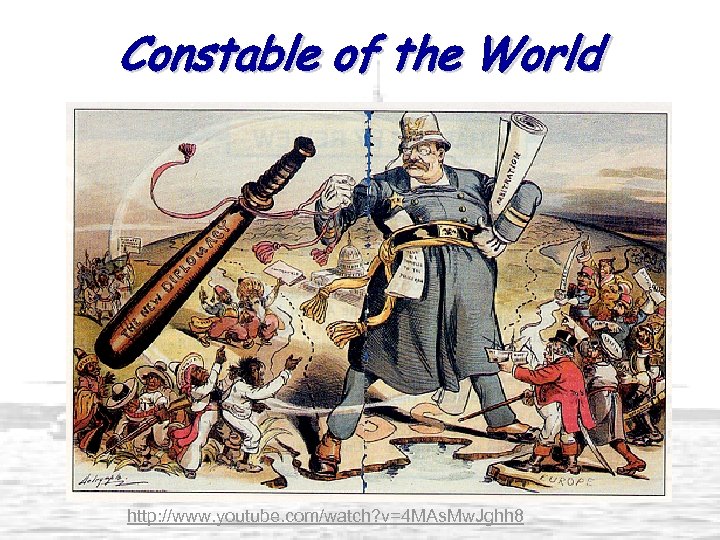 Constable of the World http: //www. youtube. com/watch? v=4 MAs. Mw. Jghh 8
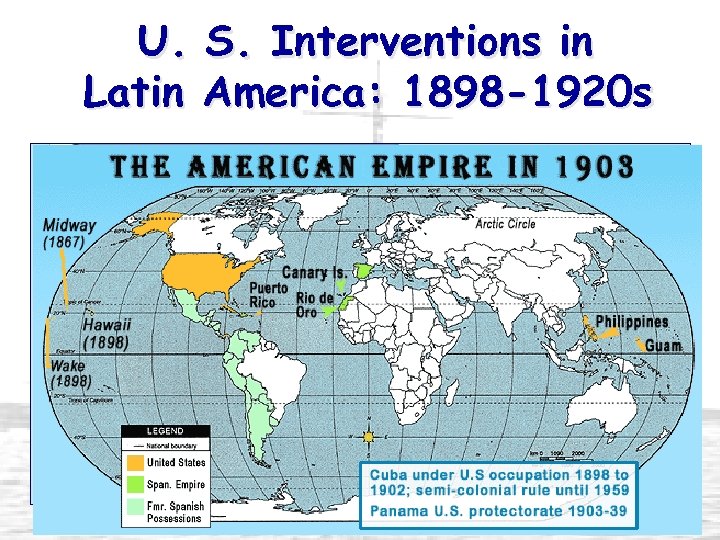
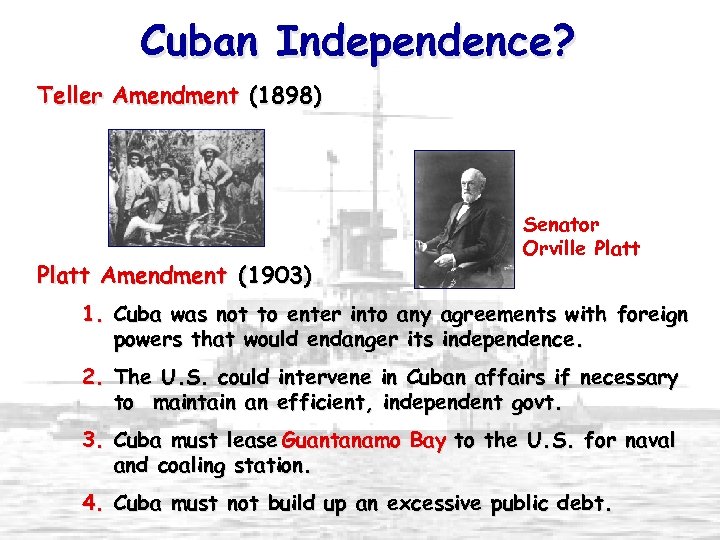 Cuban Independence? Teller Amendment (1898) Platt Amendment (1903) Senator Orville Platt 1. Cuba was not to enter into any agreements with foreign powers that would endanger its independence. 2. The U. S. could intervene in Cuban affairs if necessary to maintain an efficient, independent govt. 3. Cuba must lease Guantanamo Bay to the U. S. for naval and coaling station. 4. Cuba must not build up an excessive public debt.
 Puerto Rico: 1898 1900 -Foraker Act. § § § PR became an “unincorporated territory. ” Citizens of PR, not of the US. Import duties on PR goods 1901 -1903 the Insular Cases. § Constitutional rights were not automatically extended to territorial possessions. § Congress had the power to decide these rights. § Import duties laid down by the Foraker Act were legal!
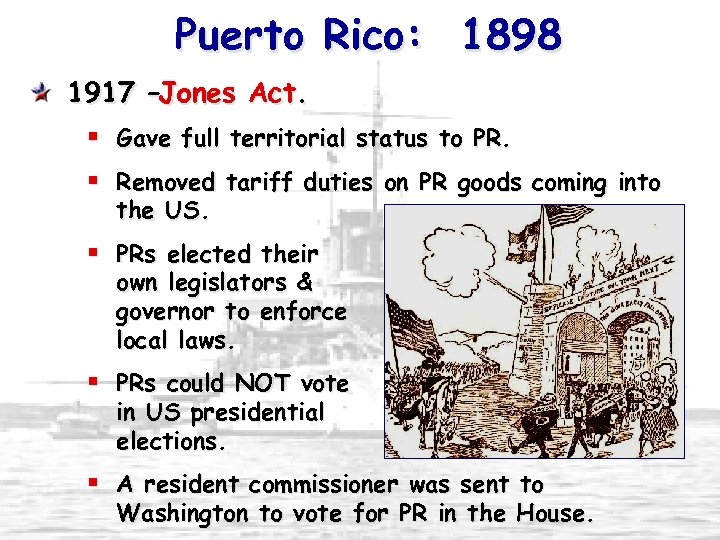 Puerto Rico: 1898 1917 –Jones Act. § Gave full territorial status to PR. § Removed tariff duties on PR goods coming into the US. § PRs elected their own legislators & governor to enforce local laws. § PRs could NOT vote in US presidential elections. § A resident commissioner was sent to Washington to vote for PR in the House.
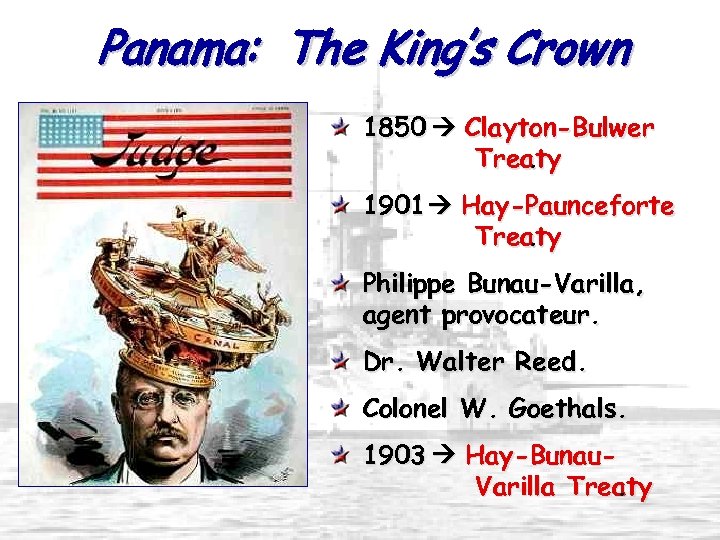 Panama: The King’s Crown 1850 Clayton-Bulwer Treaty. 1901 Hay-Paunceforte Treaty. Philippe Bunau-Varilla, agent provocateur. Dr. Walter Reed. Colonel W. Goethals. 1903 Hay-Bunau. Varilla Treaty.
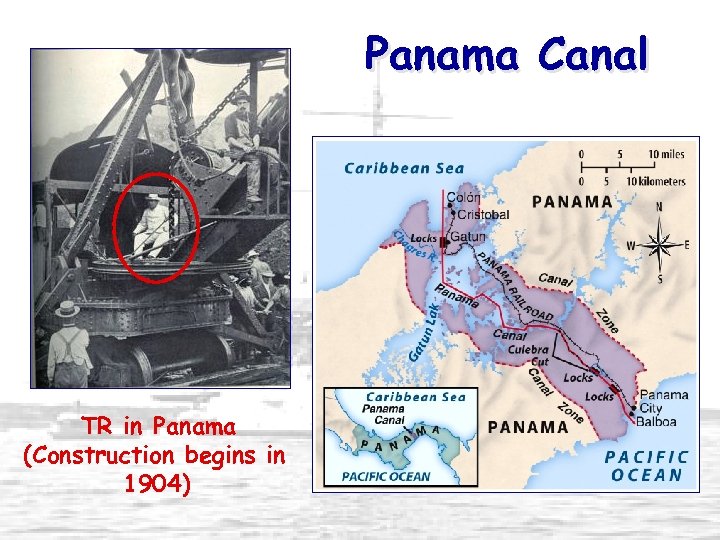 Panama Canal TR in Panama (Construction begins in 1904)
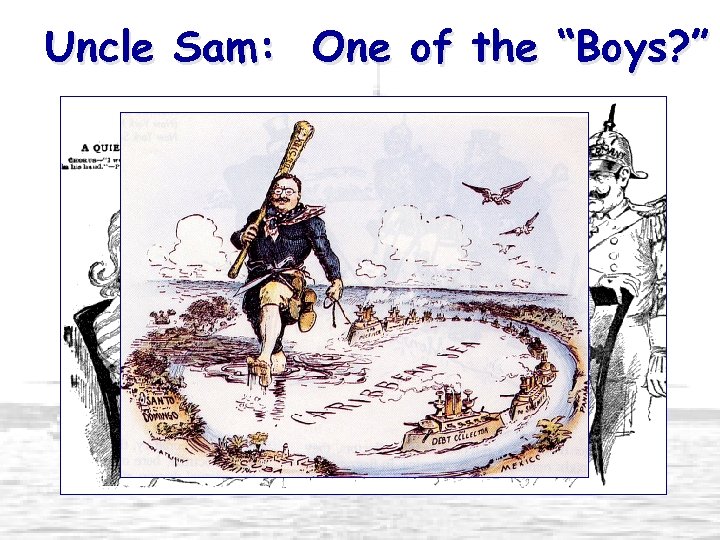
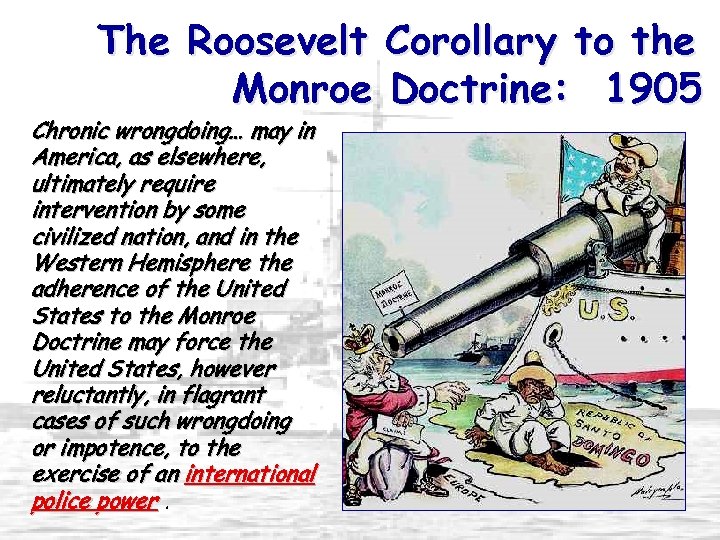 The Roosevelt Corollary to the Monroe Doctrine: 1905 Chronic wrongdoing… may in America, as elsewhere, ultimately require intervention by some civilized nation, and in the Western Hemisphere the adherence of the United States to the Monroe Doctrine may force the United States, however reluctantly, in flagrant cases of such wrongdoing or impotence, to the exercise of an international police power.
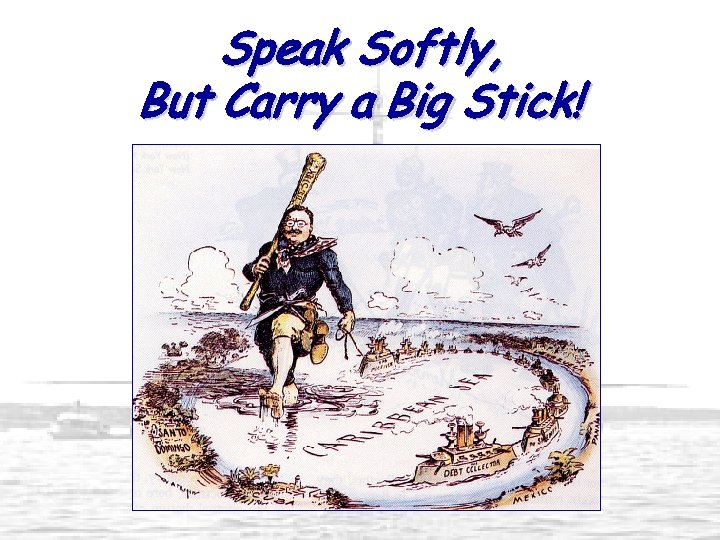 Speak Softly, But Carry a Big Stick!
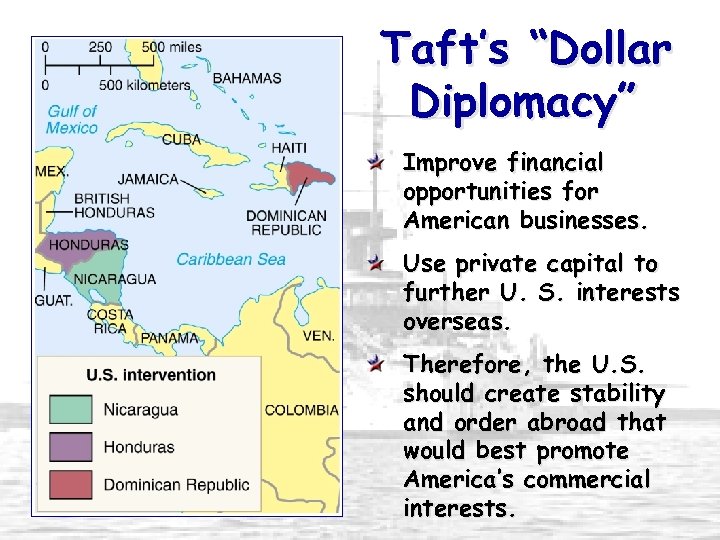 Taft’s “Dollar Diplomacy” Improve financial opportunities for American businesses. Use private capital to further U. S. interests overseas. Therefore, the U. S. should create stability and order abroad that would best promote America’s commercial interests.
 The Mexican Revolution: 1910 s Victoriano Huerta seizes control of Mexico and puts Madero in prison where he was murdered. Venustiano Carranza, Pancho Villa, Emiliano Zapata, and Alvaro Obregon fought against Huerta. The U. S. also got involved by occupying Veracruz and Huerta fled the country. Eventually Carranza would gain power in Mexico.
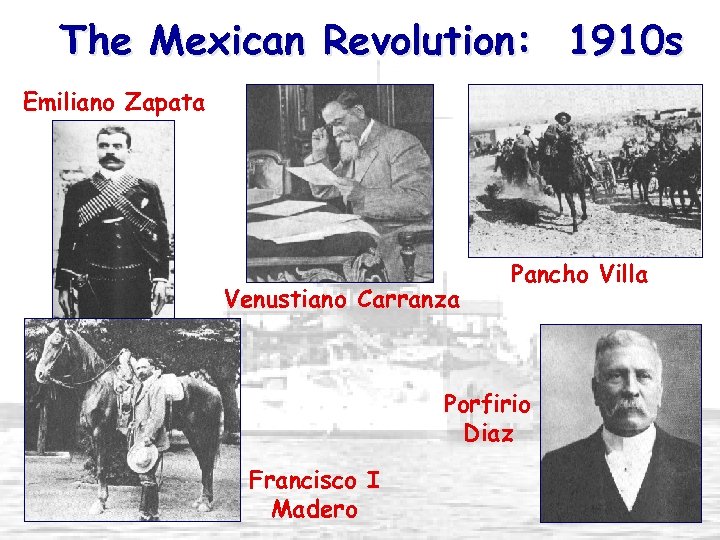 The Mexican Revolution: 1910 s Emiliano Zapata Venustiano Carranza Pancho Villa Porfirio Diaz Francisco I Madero
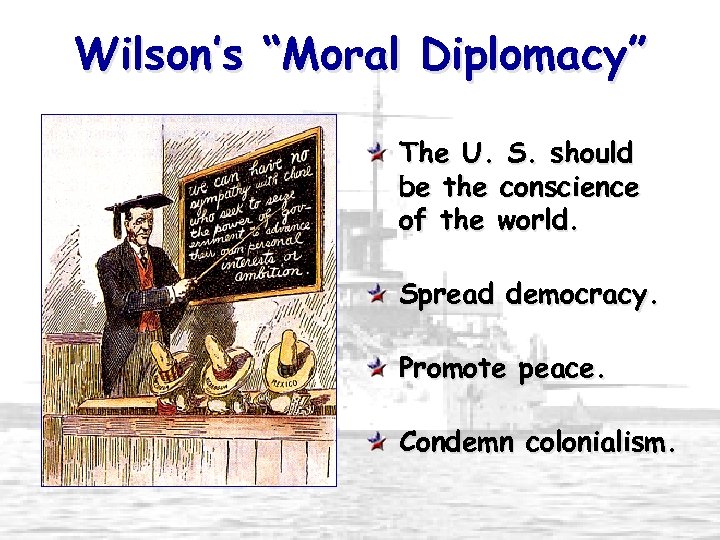 Wilson’s “Moral Diplomacy” The U. S. should be the conscience of the world. Spread democracy. Promote peace. Condemn colonialism.
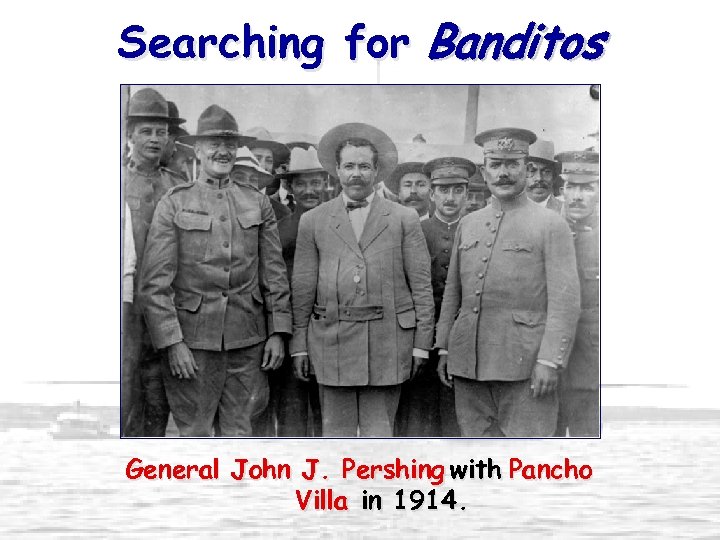 Searching for Banditos General John J. Pershing with Pancho Villa in 1914.
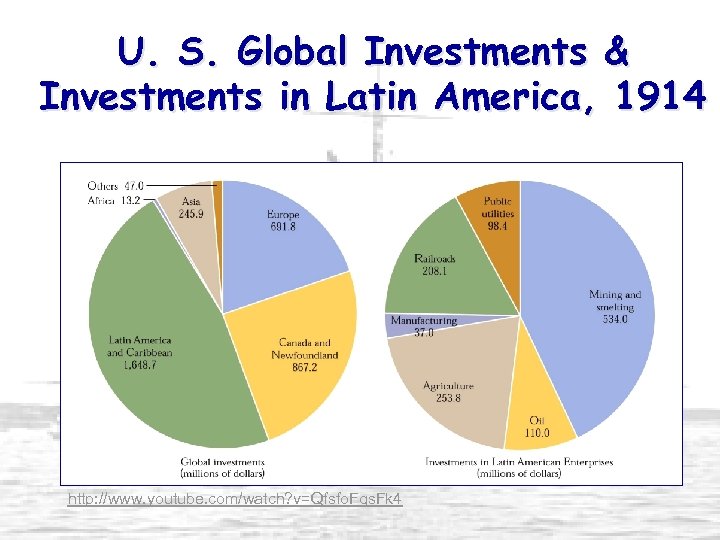 U. S. Global Investments & Investments in Latin America, 1914 http: //www. youtube. com/watch? v=Qfsfo. Fqs. Fk 4
 U. S. Interventions in Latin America: 1898 -1920 s
 Uncle Sam: One of the “Boys? ”