 Скачать презентацию Impacts on Stakeholders komobile stadtland Consequences for
5b0d17848968e9a5ba14002494c74a73.ppt
- Количество слайдов: 24




Impacts on Stakeholders komobile stadtland
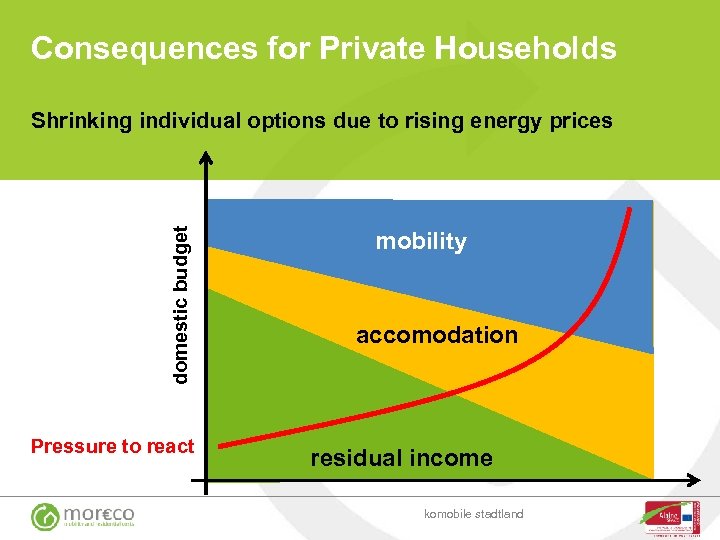
Consequences for Private Households domestic budget Shrinking individual options due to rising energy prices Pressure to react mobility accomodation residual income komobile stadtland
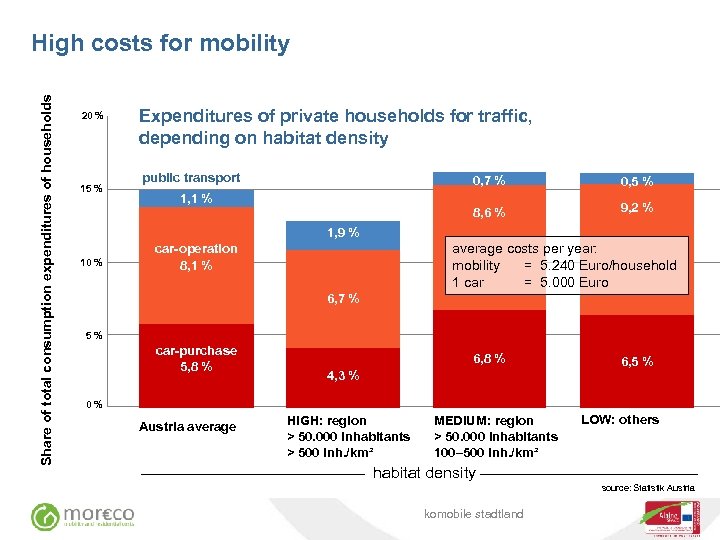
Share of total consumption expenditures of households High costs for mobility 20 % 15 % Expenditures of private households for traffic, depending on habitat density public transport 0, 7 % 8, 6 % 1, 1 % 0, 5 % 9, 2 % 1, 9 % 10 % average costs per year: mobility = 5. 240 Euro/household 1 car = 5. 000 Euro car-operation 8, 1 % 6, 7 % 5% car-purchase 5, 8 % 6, 5 % 4, 3 % 0% Austria average HIGH: region > 50. 000 inhabitants > 500 inh. /km² MEDIUM: region > 50. 000 inhabitants 100– 500 inh. /km² LOW: others habitat density source: Statistik Austria komobile stadtland
![Level of motorisation [passenger cars / 1. 000 inhabitants] Level of motorisation depending on](https://present5.com/presentation/5b0d17848968e9a5ba14002494c74a73/image-4.jpg "Level of motorisation [passenger cars / 1. 000 inhabitants] Level of motorisation depending on")
Level of motorisation [passenger cars / 1. 000 inhabitants] Level of motorisation depending on density [inhabitants / inhabited hectares] source: Schweizer Bundesamt für Raumentwicklung ( 2006): Raumstruktur und Mobilität von Personen komobile stadtland
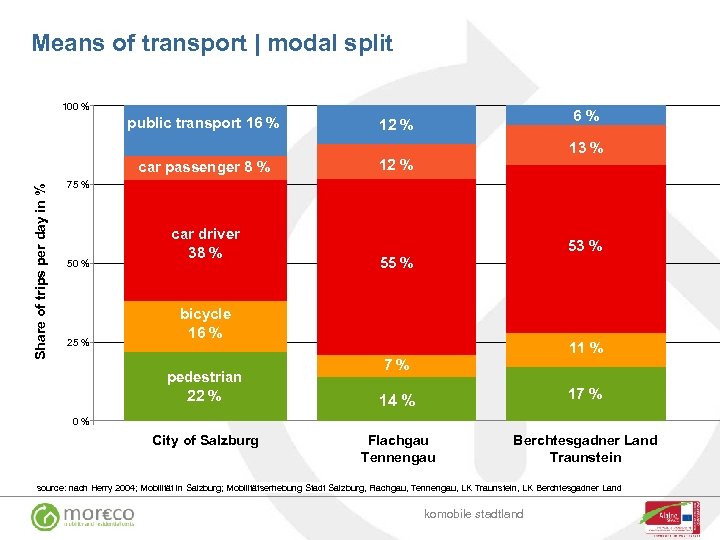
Means of transport | modal split 100 % public transport 16 % 6% 12 % 13 % Share of trips per day in % car passenger 8 % 12 % 75 % 50 % 25 % car driver 38 % 53 % 55 % bicycle 16 % pedestrian 22 % 11 % 7% 14 % 17 % Flachgau Tennengau Berchtesgadner Land Traunstein 0% City of Salzburg source: nach Herry 2004; Mobilität in Salzburg; Mobilitätserhebung Stadt Salzburg, Flachgau, Tennengau, LK Traunstein, LK Berchtesgadner Land komobile stadtland
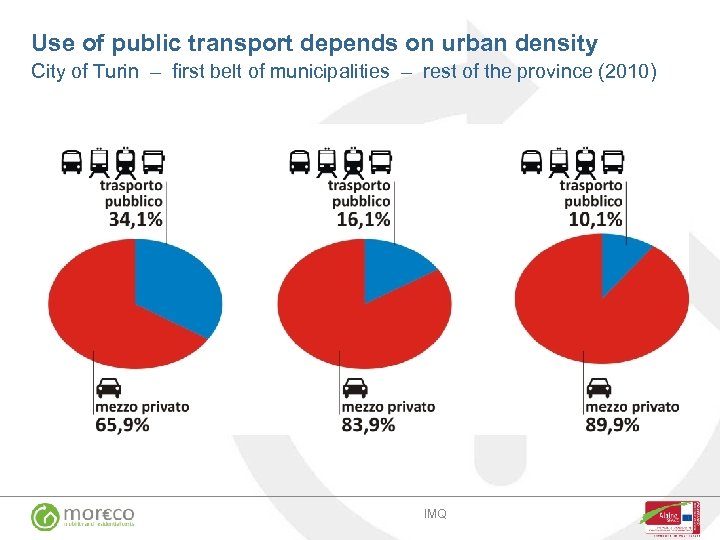
Use of public transport depends on urban density City of Turin – first belt of municipalities – rest of the province (2010) IMQ
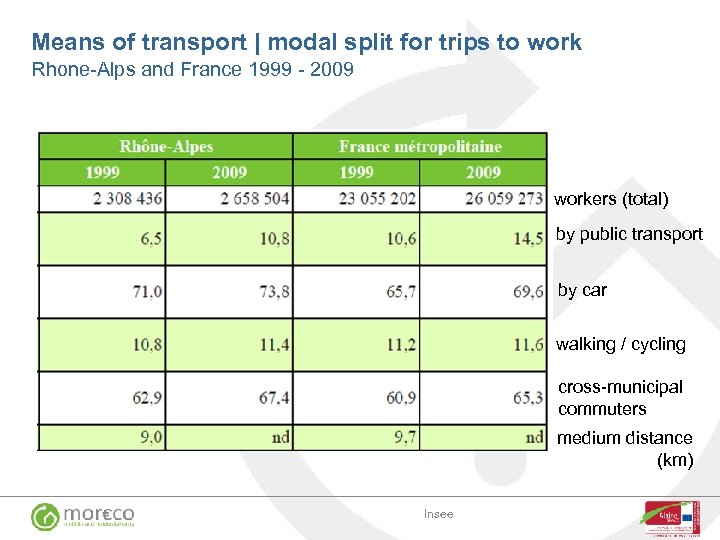
Means of transport | modal split for trips to work Rhone-Alps and France 1999 - 2009 workers (total) by public transport by car walking / cycling cross-municipal commuters medium distance (km) Insee
![Individual motor car traffic – energy consumption per year [kilowatt hours] energy consumption in](https://present5.com/presentation/5b0d17848968e9a5ba14002494c74a73/image-8.jpg "Individual motor car traffic – energy consumption per year [kilowatt hours] energy consumption in")
Individual motor car traffic – energy consumption per year [kilowatt hours] energy consumption in private households traffic ordinary house with car heating hot water ordinary house without car appliances low energy house with car light low energy house without car source: VCÖ 2010: Energiewende - Schlüsselfaktor Verkehr; Schriftenreihe Mobilität mit Zukunft 3/2010; Wien 2010 komobile stadtland
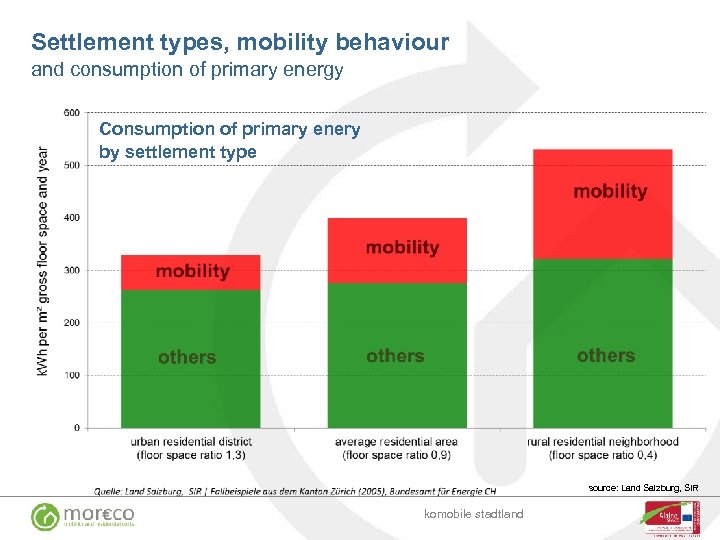
Settlement types, mobility behaviour and consumption of primary energy Consumption of primary enery by settlement type source: Land Salzburg, SIR komobile stadtland
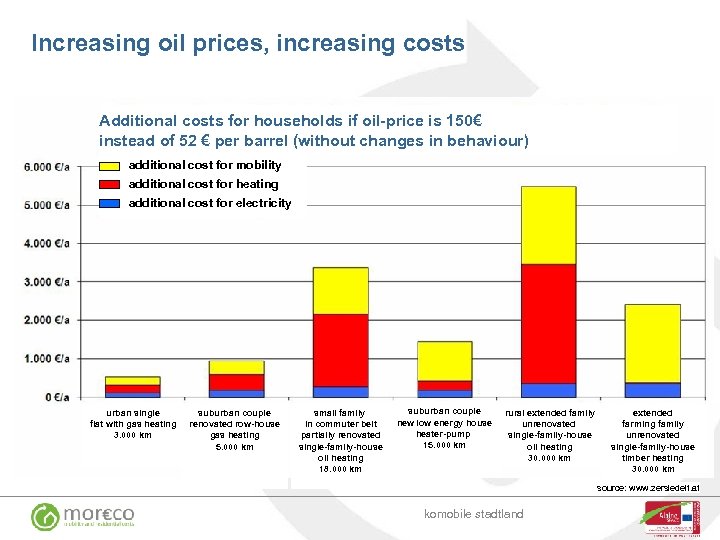
Increasing oil prices, increasing costs Additional costs for households if oil-price is 150€ instead of 52 € per barrel (without changes in behaviour) additional cost for mobility additional cost for heating additional cost for electricity urban single flat with gas heating 3. 000 km suburban couple renovated row-house gas heating 5. 000 km small family in commuter belt partially renovated single-family-house oil heating 18. 000 km suburban couple new low energy house heater-pump 15. 000 km rural extended family unrenovated single-family-house oil heating 30. 000 km extended farming family unrenovated single-family-house timber heating 30. 000 km source: www. zersiedelt. at komobile stadtland
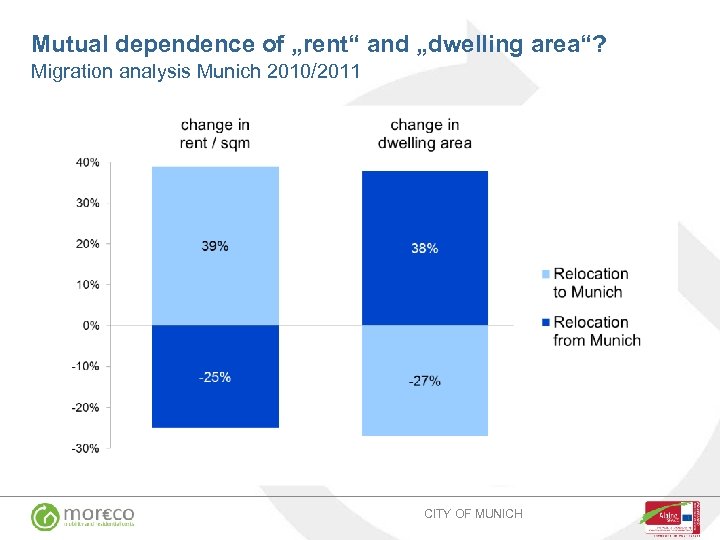
Mutual dependence of „rent“ and „dwelling area“? Migration analysis Munich 2010/2011 CITY OF MUNICH
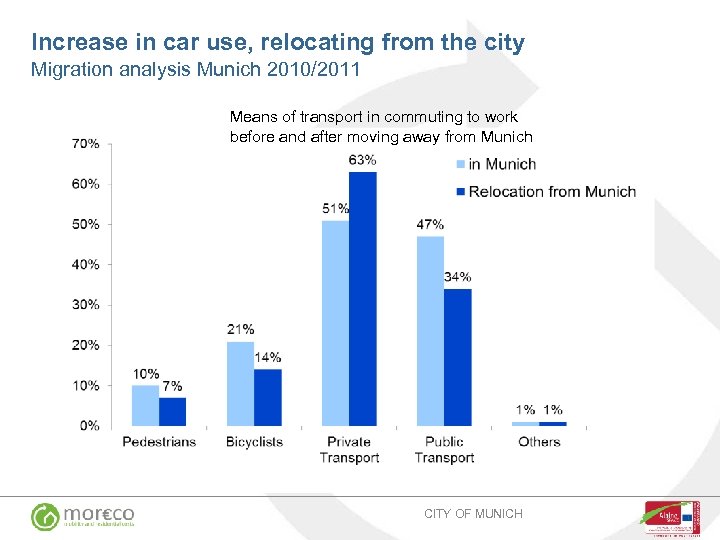
Increase in car use, relocating from the city Migration analysis Munich 2010/2011 Means of transport in commuting to work before and after moving away from Munich CITY OF MUNICH
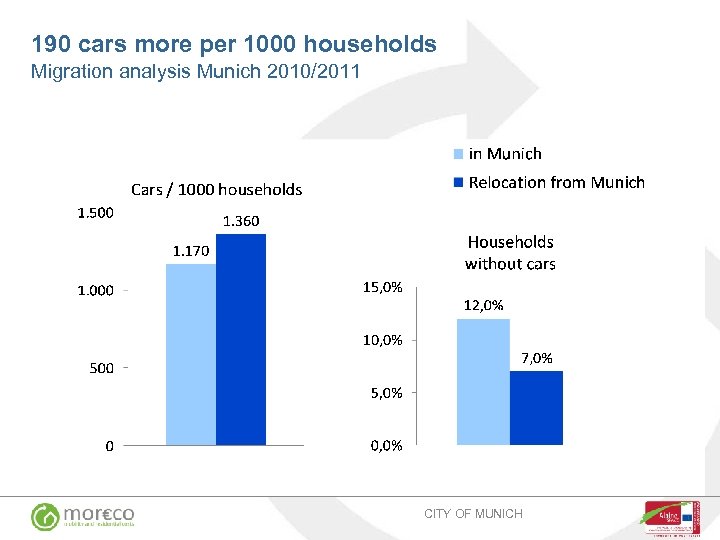
190 cars more per 1000 households Migration analysis Munich 2010/2011 CITY OF MUNICH
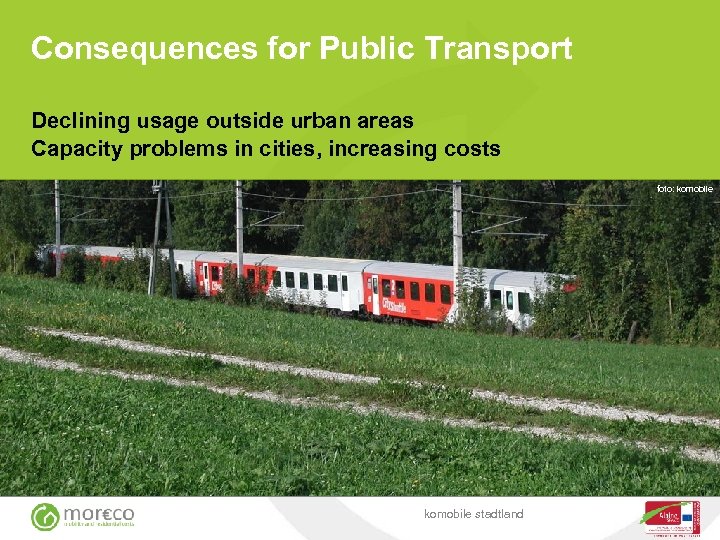
Consequences for Public Transport Declining usage outside urban areas Capacity problems in cities, increasing costs foto: komobile stadtland
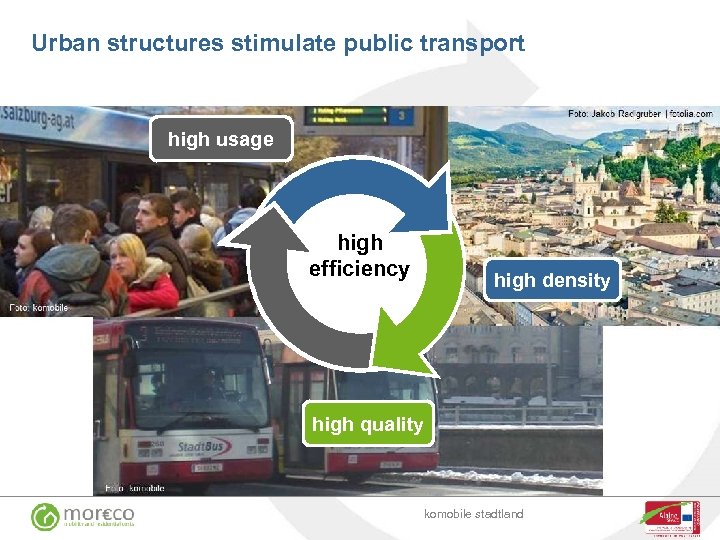
Urban structures stimulate public transport high usage high efficiency high density high quality komobile stadtland
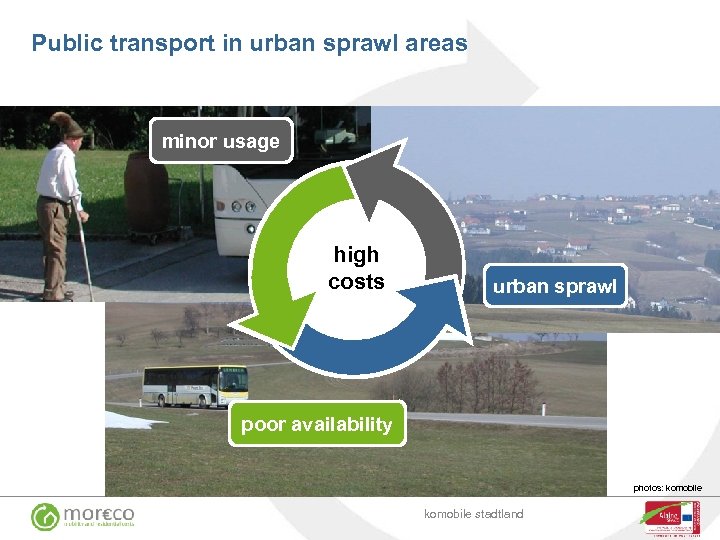
Public transport in urban sprawl areas minor usage high costs urban sprawl poor availability photos: komobile stadtland
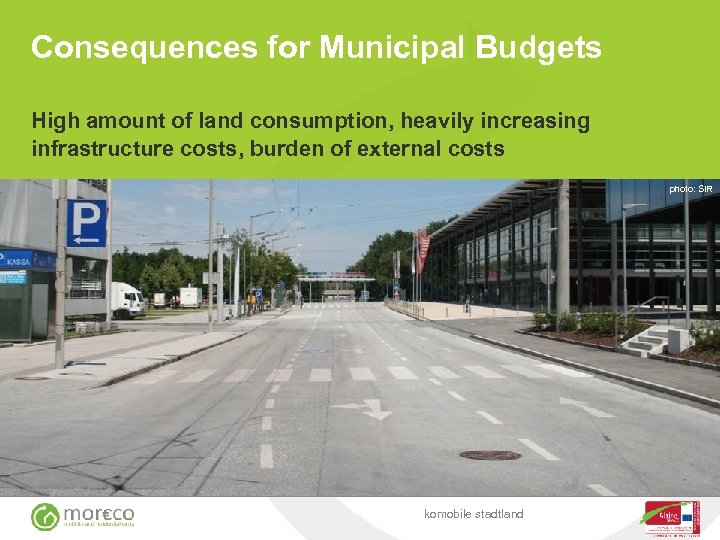
Consequences for Municipal Budgets High amount of land consumption, heavily increasing infrastructure costs, burden of external costs photo: SIR komobile stadtland
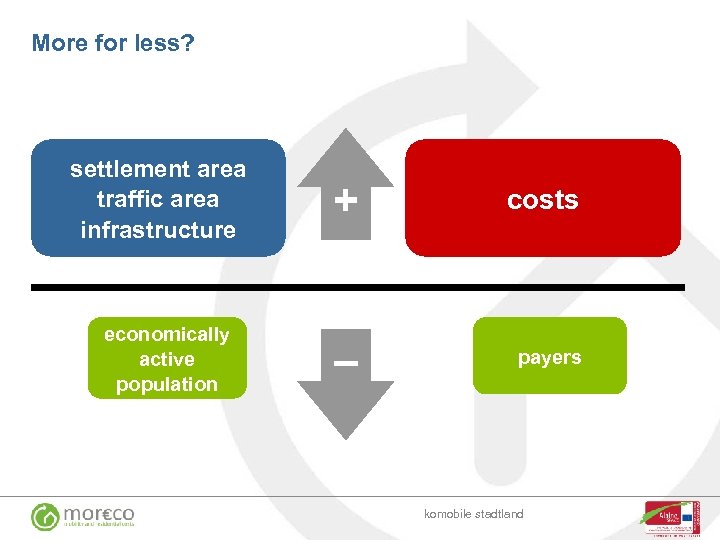
More for less? economically active population + costs – settlement area traffic area infrastructure payers komobile stadtland
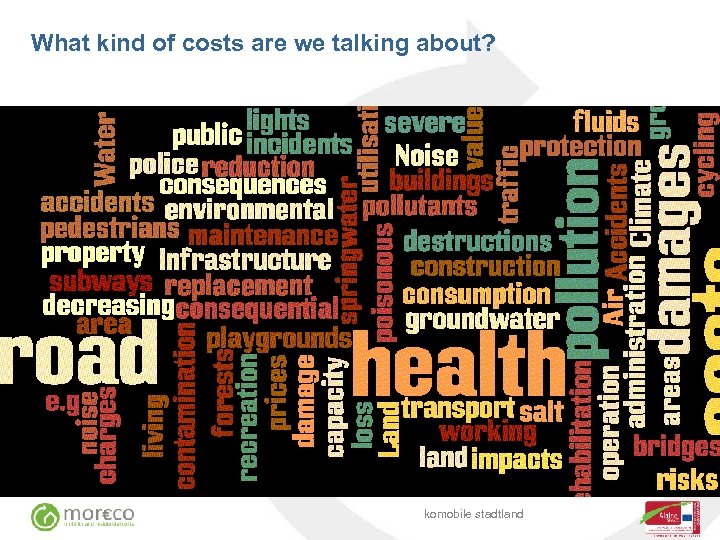
What kind of costs are we talking about? komobile stadtland
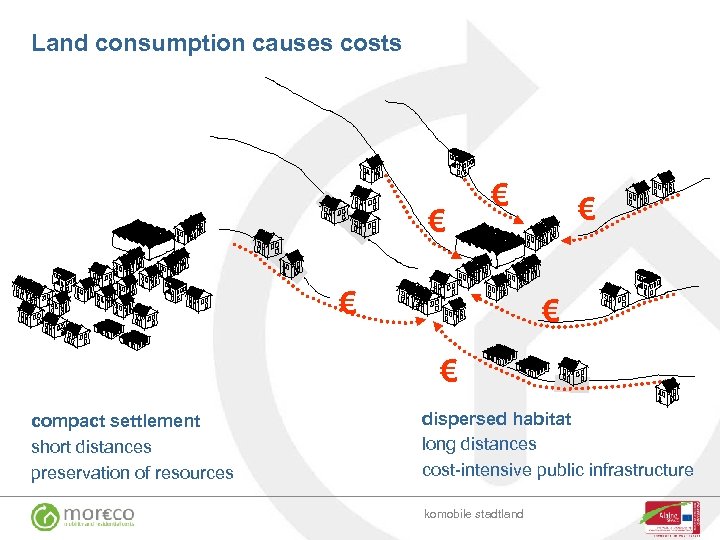
Land consumption causes costs € € € compact settlement short distances preservation of resources dispersed habitat long distances cost-intensive public infrastructure komobile stadtland
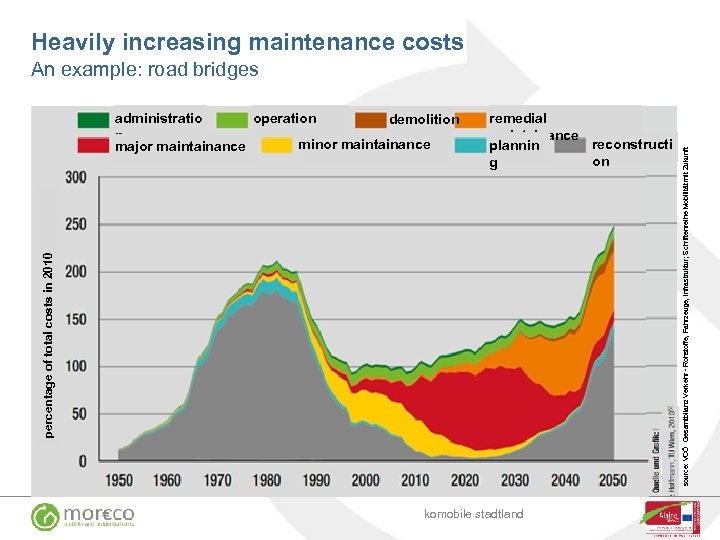
Heavily increasing maintenance costs remedial maintainance reconstructi plannin on g percentage of total costs in 2010 administratio operation demolition n minor maintainance major maintainance komobile stadtland source: VCÖ Gesamtbilanz Verkehr - Rohstoffe, Fahrzeuge, Infrastruktur; Schriftenreihe Mobilität mit Zukunft An example: road bridges
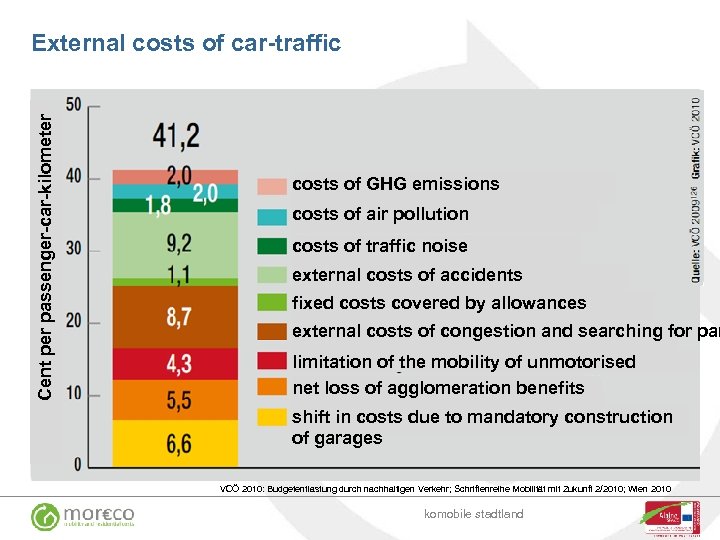
Cent per passenger-car-kilometer External costs of car-traffic costs of GHG emissions costs of air pollution costs of traffic noise external costs of accidents fixed costs covered by allowances external costs of congestion and searching for par limitation of the mobility of unmotorised persons of agglomeration benefits net loss shift in costs due to mandatory construction of garages VCÖ 2010: Budgetentlastung durch nachhaltigen Verkehr; Schriftenreihe Mobilität mit Zukunft 2/2010; Wien 2010 komobile stadtland
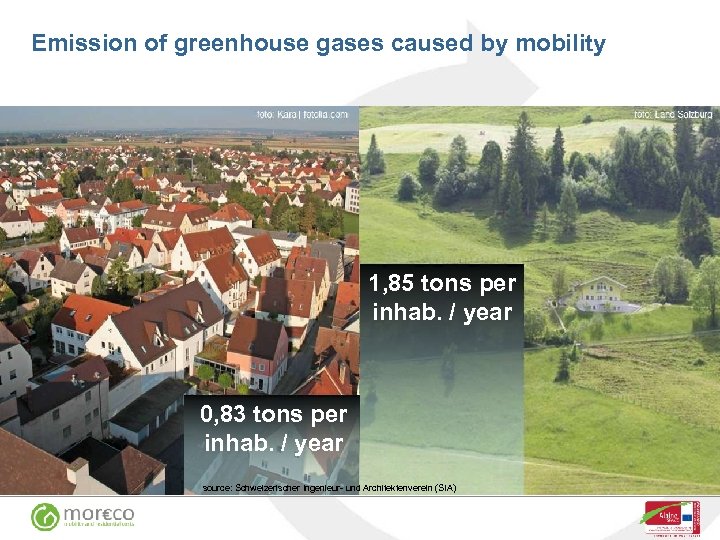
Emission of greenhouse gases caused by mobility 1, 85 tons per inhab. / year 0, 83 tons per inhab. / year source: Schweizerischer Ingenieur- und Architektenverein (SIA)
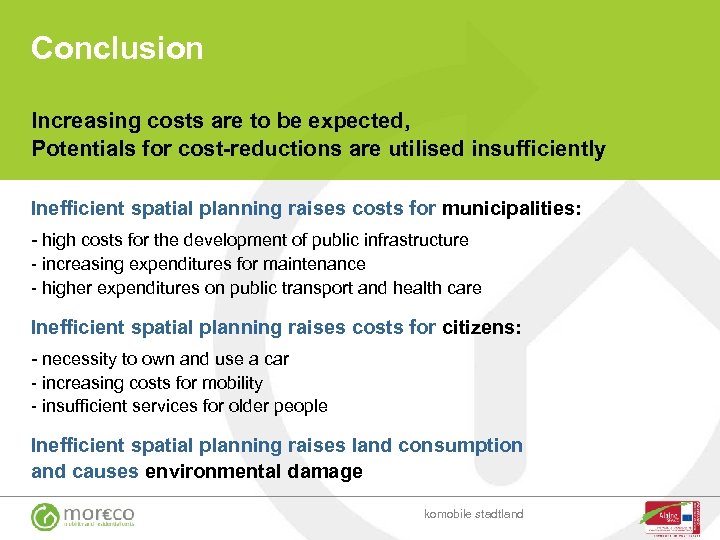
Conclusion Increasing costs are to be expected, Potentials for cost-reductions are utilised insufficiently Inefficient spatial planning raises costs for municipalities: - high costs for the development of public infrastructure - increasing expenditures for maintenance - higher expenditures on public transport and health care Inefficient spatial planning raises costs for citizens: - necessity to own and use a car - increasing costs for mobility - insufficient services for older people Inefficient spatial planning raises land consumption and causes environmental damage komobile stadtland
Скачать презентацию Impacts on Stakeholders komobile stadtland Consequences for
5b0d17848968e9a5ba14002494c74a73.ppt