Скачать презентацию Impacts of Climate on Eco Systems and Chemistry
81adfa1c56409c1877b7638c04020287.ppt
- Количество слайдов: 34
 Impacts of Climate on Eco. Systems and Chemistry of the Arctic Pacific Environment (ICESCAPE) Kevin R. Arrigo Stanford University
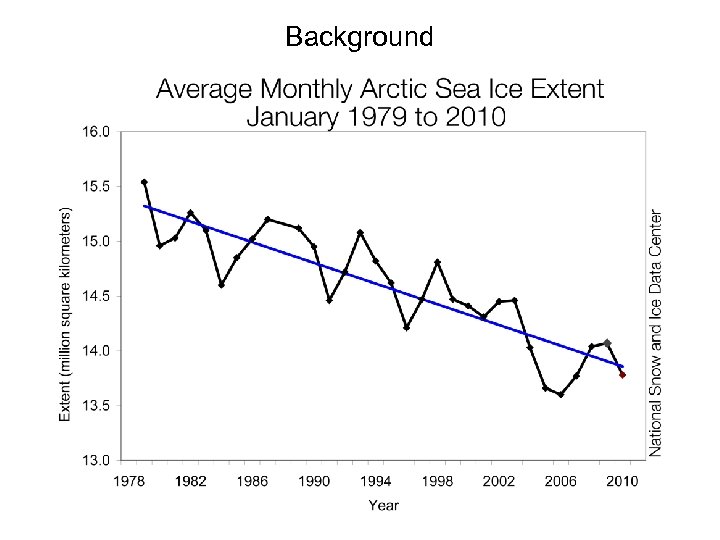 Background
 Given ongoing changes in the Arctic Ocean… How has primary production changed in recent years?
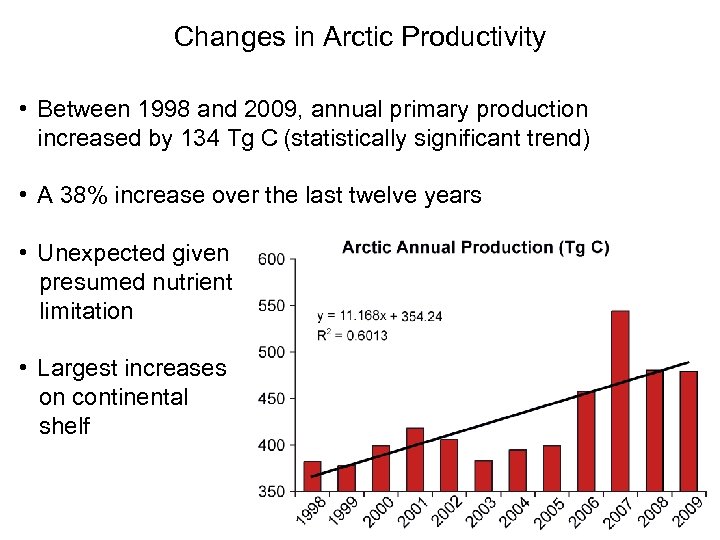 Changes in Arctic Productivity • Between 1998 and 2009, annual primary production increased by 134 Tg C (statistically significant trend) • A 38% increase over the last twelve years • Unexpected given presumed nutrient limitation • Largest increases on continental shelf
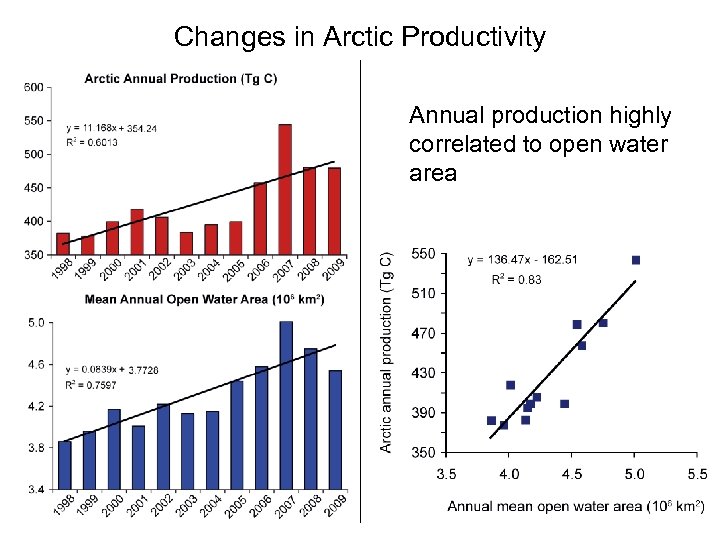 Changes in Arctic Productivity Annual production highly correlated to open water area
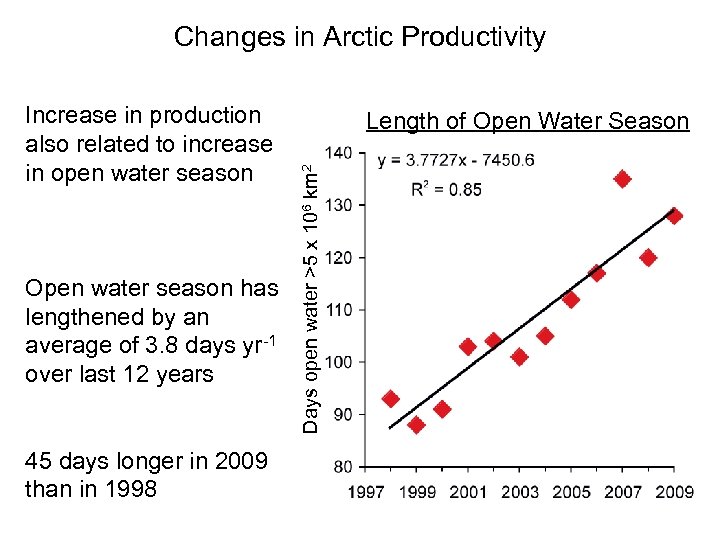 Changes in Arctic Productivity Open water season has lengthened by an average of 3. 8 days yr-1 over last 12 years 45 days longer in 2009 than in 1998 Length of Open Water Season Days open water >5 x 10⁶ km 2 Increase in production also related to increase in open water season
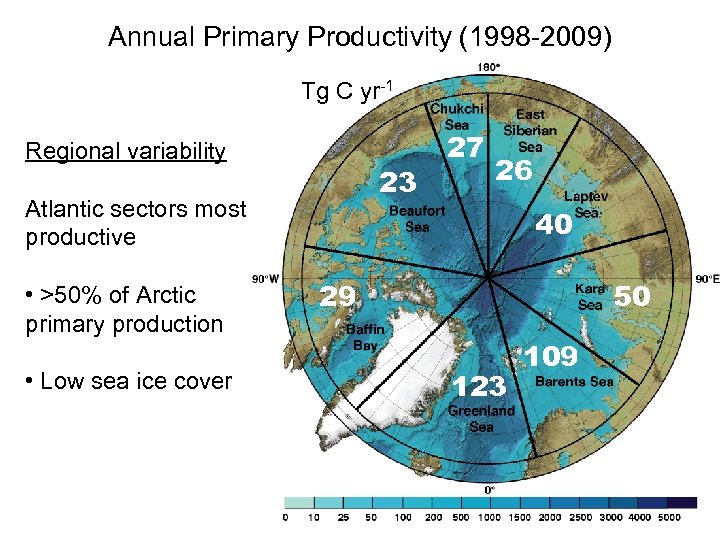 Annual Primary Productivity (1998 -2009) Tg C yr-1 Regional variability 23 Atlantic sectors most productive • >50% of Arctic primary production • Low sea ice cover 27 26 40 29 50 123 109
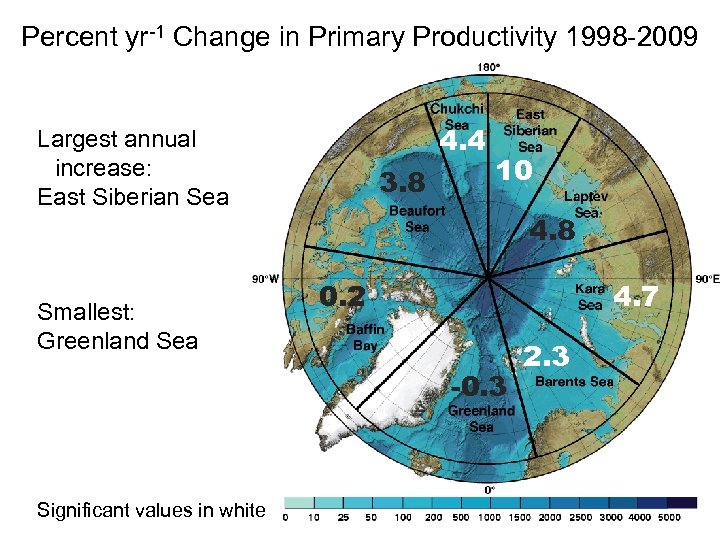 Percent yr-1 Change in Primary Productivity 1998 -2009 4. 4 Largest annual increase: East Siberian Sea Smallest: Greenland Sea 3. 8 10 4. 8 0. 2 4. 7 -0. 3 Significant values in white 2. 3
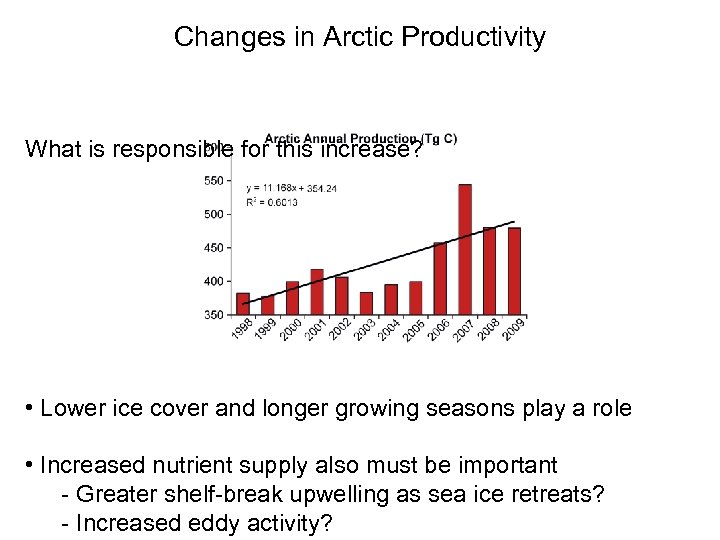 Changes in Arctic Productivity What is responsible for this increase? • Lower ice cover and longer growing seasons play a role • Increased nutrient supply also must be important - Greater shelf-break upwelling as sea ice retreats? - Increased eddy activity?
 ICESCAPE Central science question: What is the impact of climate change (natural and anthropogenic) on the biogeochemistry and ecology of the Chukchi and Beaufort seas?
 ICESCAPE
 ICESCAPE
 ICESCAPE
 ICESCAPE
 ICESCAPE
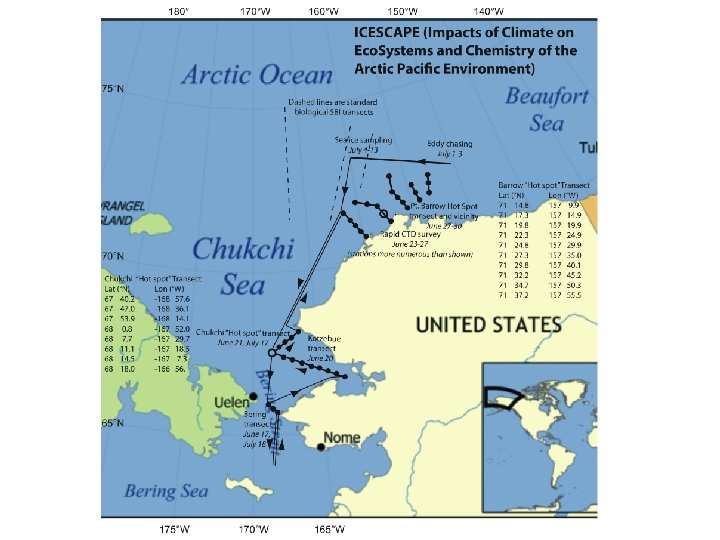
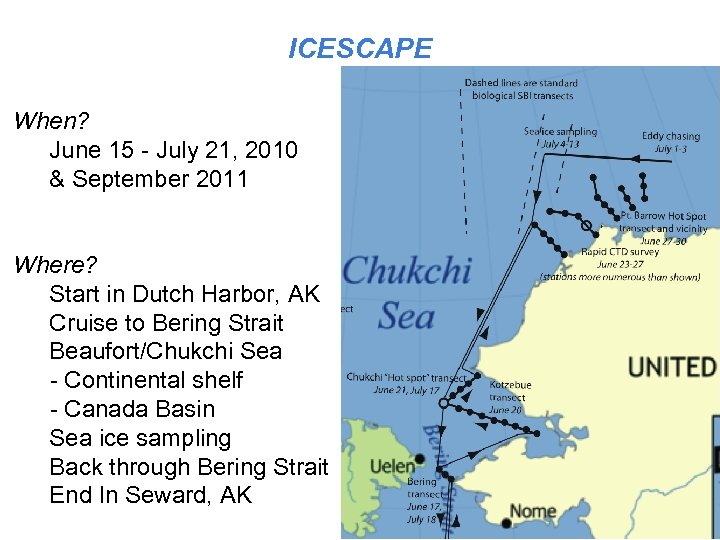 ICESCAPE When? June 15 - July 21, 2010 & September 2011 Where? Start in Dutch Harbor, AK Cruise to Bering Strait Beaufort/Chukchi Sea - Continental shelf - Canada Basin Sea ice sampling Back through Bering Strait End In Seward, AK
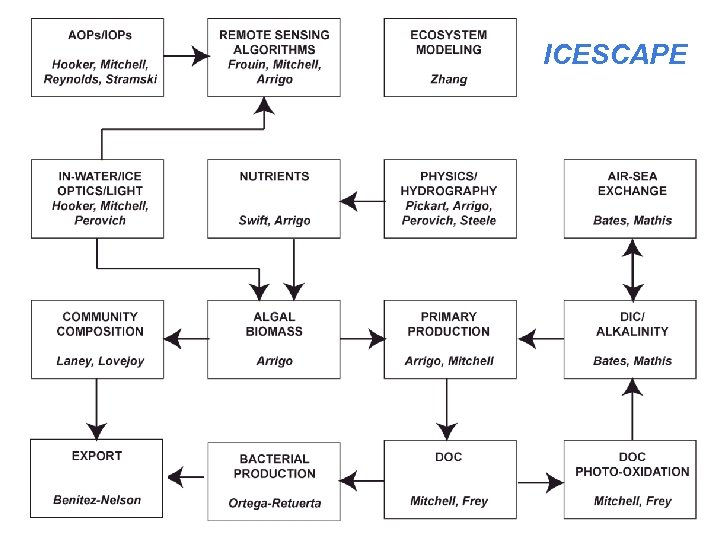
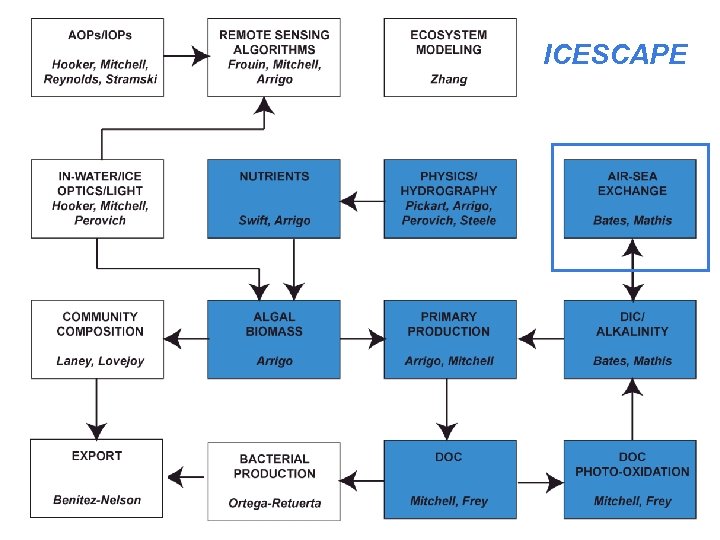
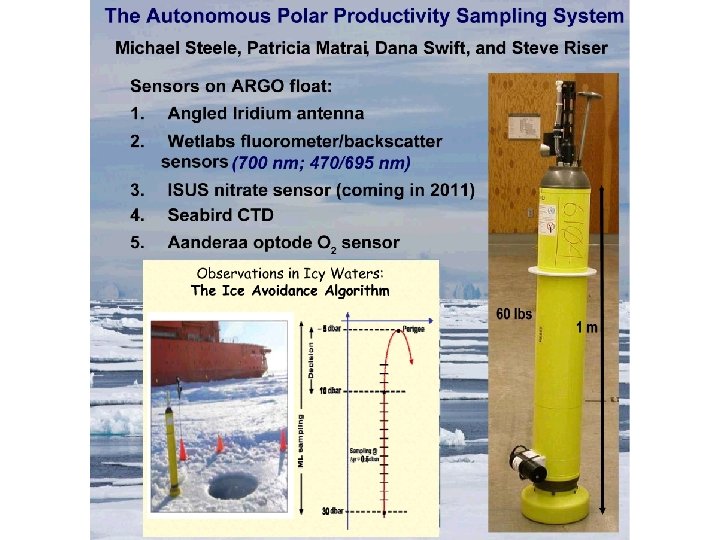
 ICESCAPE Physical Oceanography: Bob Pickart – XBTs, ADCP, eddies Jim Swift – CTD, O 2, salinity Mike Steele – ARGO floats Jinlun Zhang – 3 D coupled physical-chemical-biological iceocean modeling
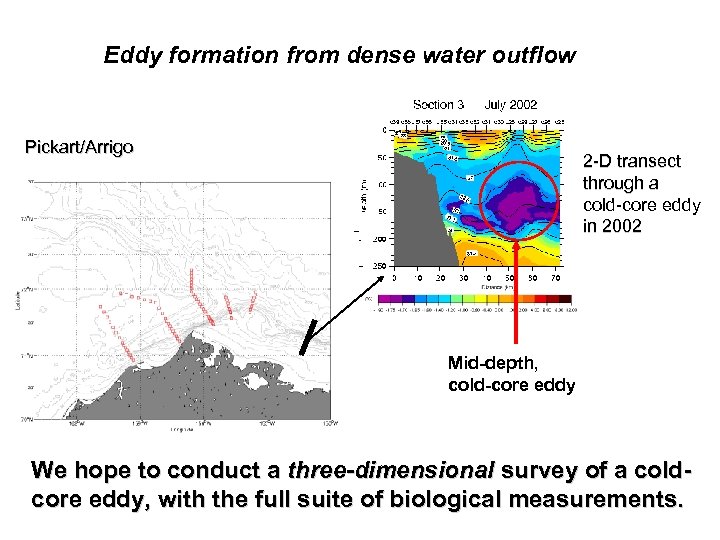 Eddy formation from dense water outflow Pickart/Arrigo 2 -D transect through a cold-core eddy in 2002 Mid-depth, cold-core eddy We hope to conduct a three-dimensional survey of a coldcore eddy, with the full suite of biological measurements.
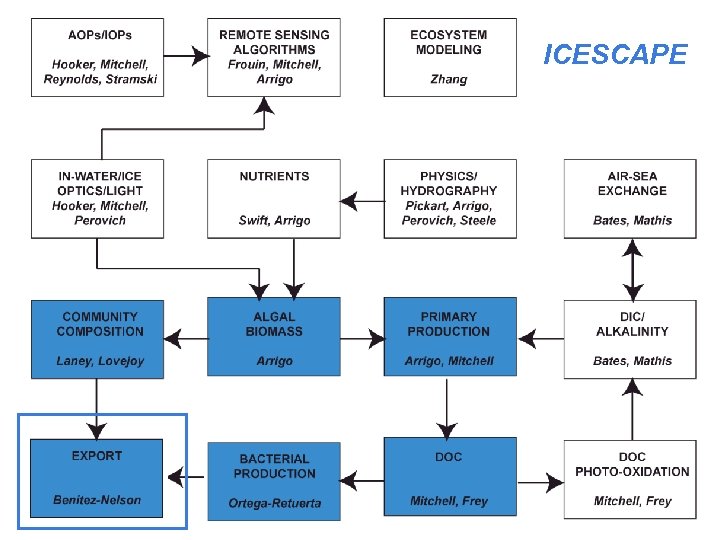
 ICESCAPE Biological Oceanography: Kevin Arrigo and Greg Mitchell – Primary production, microalgal abundance (ice and water column) and physiology Sam Laney – Phytoplankton community composition Eva Ortega-Retuerta - Bacterial production Jinlun Zhang – 3 D coupled physical-chemical-biological iceocean modeling
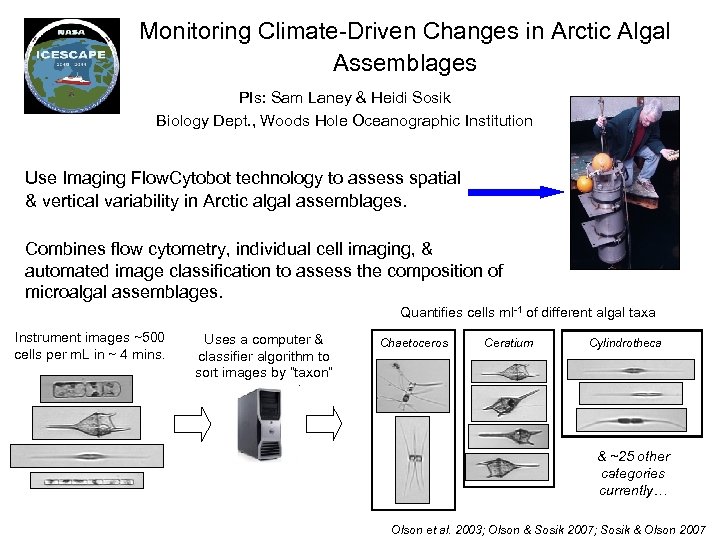 Monitoring Climate-Driven Changes in Arctic Algal Assemblages PIs: Sam Laney & Heidi Sosik Biology Dept. , Woods Hole Oceanographic Institution Use Imaging Flow. Cytobot technology to assess spatial & vertical variability in Arctic algal assemblages. Combines flow cytometry, individual cell imaging, & automated image classification to assess the composition of microalgal assemblages. Quantifies cells ml-1 of different algal taxa Instrument images ~500 cells per m. L in ~ 4 mins. Uses a computer & classifier algorithm to sort images by “taxon” Chaetoceros Ceratium Cylindrotheca & ~25 other categories currently… Olson et al. 2003; Olson & Sosik 2007; Sosik & Olson 2007
 ICESCAPE Chemical Oceanography: Nick Bates – Carbon cycle measurements (e. g. DIC, alkalinity) Jim Swift – Nutrients (e. g. NO 3, NO 2, NH 4, PO 4 , Si. O 3), O 2, salinity Jinlun Zhang – 3 D coupled physical-chemical-biological iceocean modeling
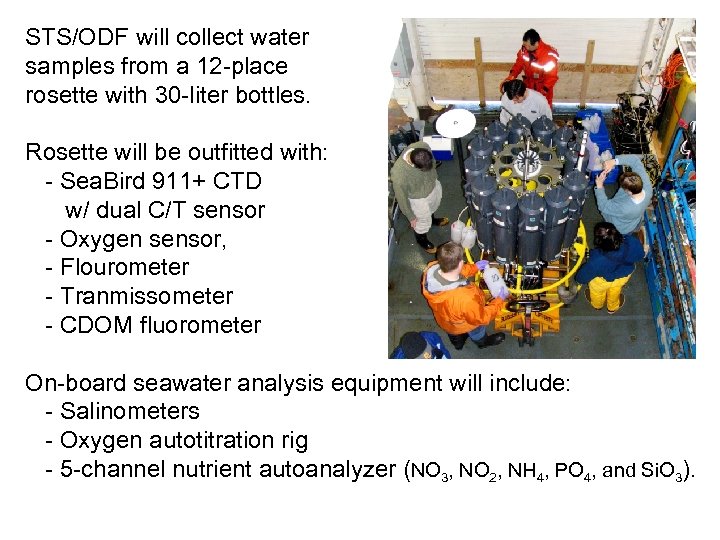 STS/ODF will collect water samples from a 12 -place rosette with 30 -liter bottles. Rosette will be outfitted with: - Sea. Bird 911+ CTD w/ dual C/T sensor - Oxygen sensor, - Flourometer - Tranmissometer - CDOM fluorometer On-board seawater analysis equipment will include: - Salinometers - Oxygen autotitration rig - 5 -channel nutrient autoanalyzer (NO 3, NO 2, NH 4, PO 4, and Si. O 3).
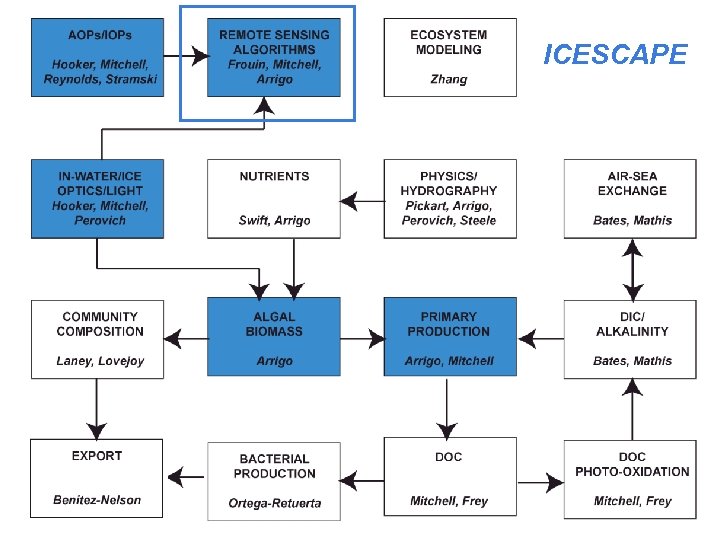
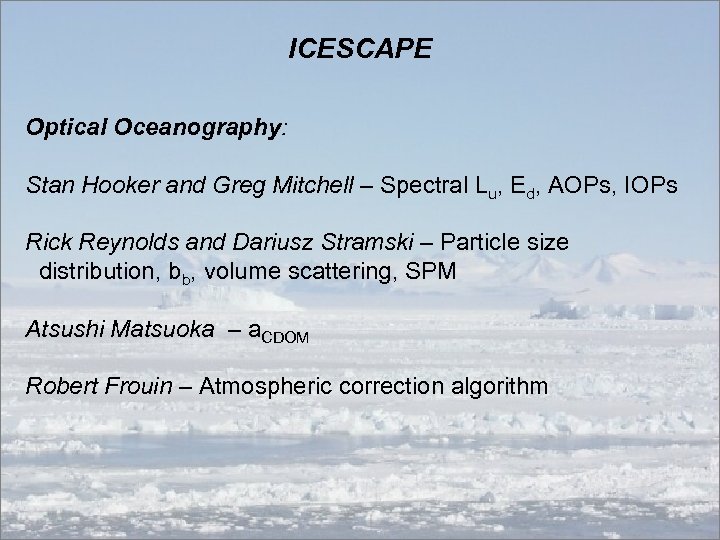 ICESCAPE Optical Oceanography: Stan Hooker and Greg Mitchell – Spectral Lu, Ed, AOPs, IOPs Rick Reynolds and Dariusz Stramski – Particle size distribution, bb, volume scattering, SPM Atsushi Matsuoka – a. CDOM Robert Frouin – Atmospheric correction algorithm
 Chl a (mg m-3) Mitchell Group Southern Ocean High latitudes are unique In polar regions, standard NASA algorithms based on low latitude data underestimate Chl a (Mitchell 1992, Arrigo et al. 1998). Make detailed measurements of ap, ad, CDOM and backscatter to better understand Arctic Ocean bio-optical properties to Will collect data to determine relationships between reflectance, Chl a and IOPs. Improve Chl a and productivity algorithms required for ecological modeling.
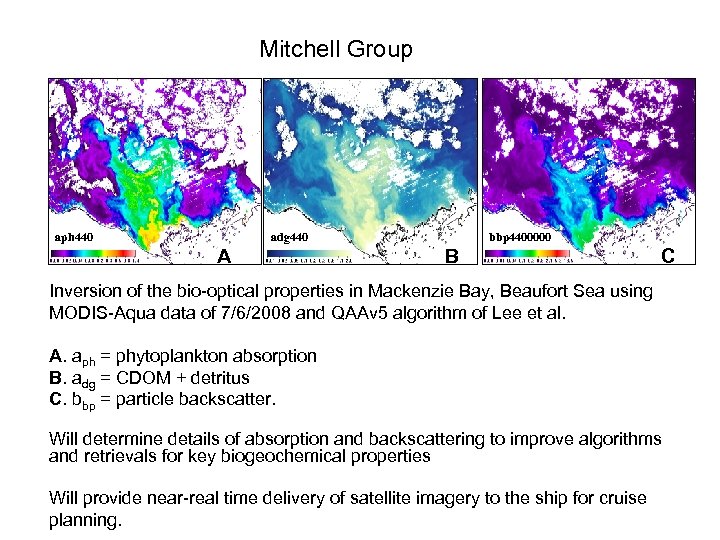 Mitchell Group aph 440 bbp 4400000 adg 440 A B C Inversion of the bio-optical properties in Mackenzie Bay, Beaufort Sea using MODIS-Aqua data of 7/6/2008 and QAAv 5 algorithm of Lee et al. A. aph = phytoplankton absorption B. adg = CDOM + detritus C. bbp = particle backscatter. Will determine details of absorption and backscattering to improve algorithms and retrievals for key biogeochemical properties Will provide near-real time delivery of satellite imagery to the ship for cruise planning.
 Improving Existing Satellite Color Observations of the Chukchi and Beaufort Seas for Biogeochemical Modeling PI: Robert Frouin, SIO/UCSD; Co-I: P. -Y. Deschamps, LOA/U. Lille; Co-I: B. Pelletier, I 3 M/U. Montpellier Theme Improved atmospheric correction of satellite ocean-color imagery in the presence of snow/ice and clouds. Objective Generate, for the Chukchi and Beaufort seas, a daily time series of satellite-derived marine reflectance and chlorophyll concentration at 4. 63 km resolution. Approach - Use of multiple ocean-color sensors (MERIS, Sea. Wi. FS, MODIS). - Use of appropriate atmospheric correction algorithm (POLYMER). - Reconstruction of missing data.
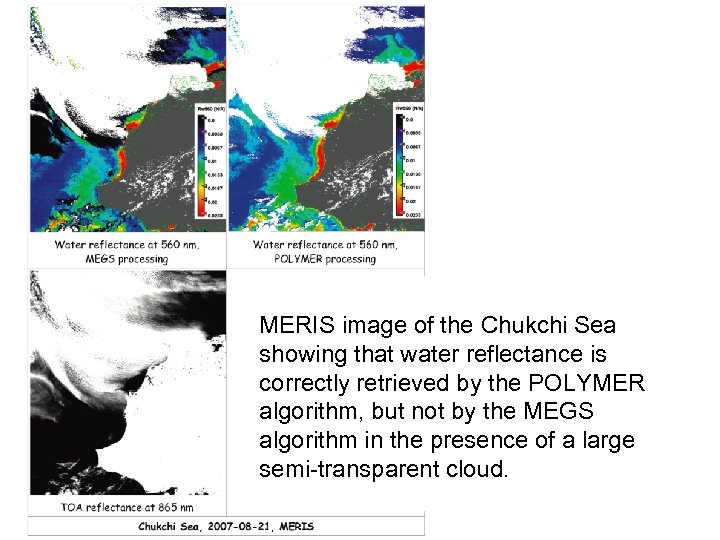 MERIS image of the Chukchi Sea showing that water reflectance is correctly retrieved by the POLYMER algorithm, but not by the MEGS algorithm in the presence of a large semi-transparent cloud.
 ICESCAPE Sea Ice: Don Perovich – Concentration, thickness, salinity, snow cover, optical properties Kevin Arrigo – Primary production, microalgal abundance, and physiology Karen Frey – CDOM, DOC, O 2 isotopes Jinlun Zhang – 3 D coupled physical-chemical-biological iceocean modeling
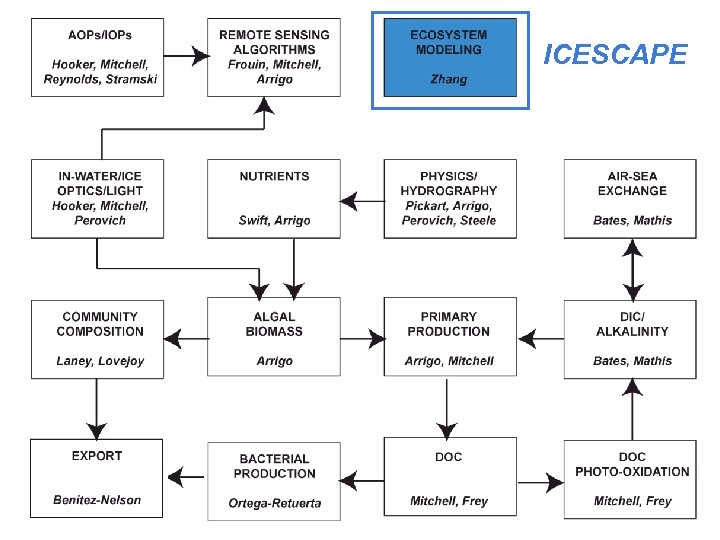
 Planktonic Ecosystem Response to Changing Sea Ice and Upper Ocean Physics in the Chukchi and Beaufort Seas: Modeling, Satellite and In Situ Observations Jinlun Zhang, Carin Ashjian, Robert Campbell, Victoria Hill, Yvette Spitz, and Mike Steele Biology/Ice/Ocean Modeling and Assimilation System (BIOMAS) Synthesis and modeling of the integrated system of sea ice, the upper ocean, and the plankton ecosystem in the Chukchi and Beaufort seas
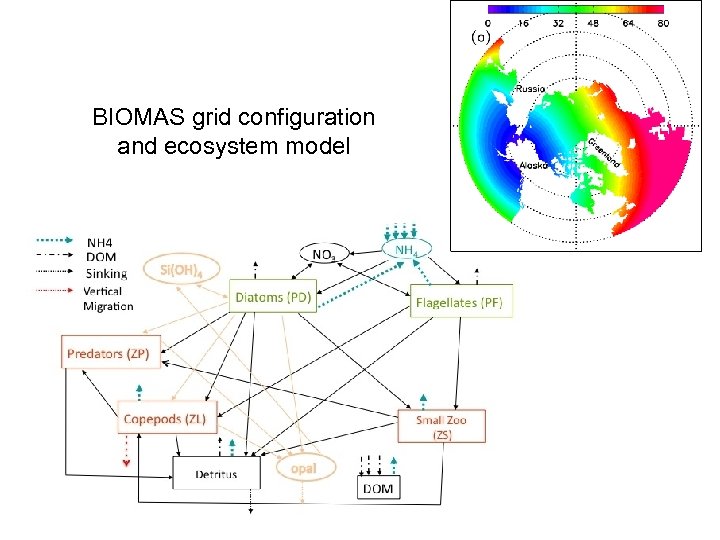 BIOMAS grid configuration and ecosystem model
 ICESCAPE Data Policy: • Preliminary data will be staged at an ftp site at Stanford http: //ocean. stanford. edu/ICECAPS • All data collected will be subject to the standard NASA Earth Science data policy (http: //nasascience. nasa. gov/earthscience/earth-science-data-centers/data-and-informationpolicy/). • Data collected are required to be submitted to the NASA Sea. BASS archive (http: //seabass. gsfc. nasa. gov/) within one year of collection.
 ICESCAPE Thank You