


 Скачать презентацию Impact of TRIPS and Traditional Knowledge agreements on
11d3923535a8f386b0127692c57c19df.ppt
- Количество слайдов: 24
 Impact of TRIPS and Traditional Knowledge agreements on research for Traditional Medicines CC Maponga University of Zimbabwe School of Pharmacy; Traditional Medical Practitioners Council Domestication of Trips Flexibilities in National IP Legislation for Strengthening Access to Medicines In Zimbabwe: National Workshop, Holiday Inn Hotel, Harare 22 -23 January 2014
 Outline of this Presentation • Where does ATM fit into this workshop? • How much is happening regarding IKS, IP and ATM in Zimbabwe?
 Increased Local Focus on IKS • Indigenous Knowledge Systems (IKS), included in key recent documents in Zimbabwe – New Constitution – Ruling Party’s resolutions – Zim-Asset
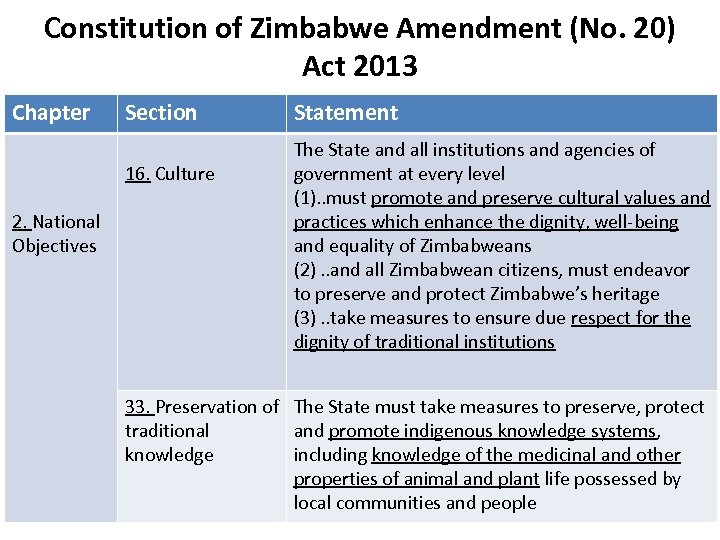 Constitution of Zimbabwe Amendment (No. 20) Act 2013 Chapter Section 16. Culture 2. National Objectives Statement The State and all institutions and agencies of government at every level (1). . must promote and preserve cultural values and practices which enhance the dignity, well-being and equality of Zimbabweans (2). . and all Zimbabwean citizens, must endeavor to preserve and protect Zimbabwe’s heritage (3). . take measures to ensure due respect for the dignity of traditional institutions 33. Preservation of The State must take measures to preserve, protect traditional and promote indigenous knowledge systems, knowledge including knowledge of the medicinal and other properties of animal and plant life possessed by local communities and people
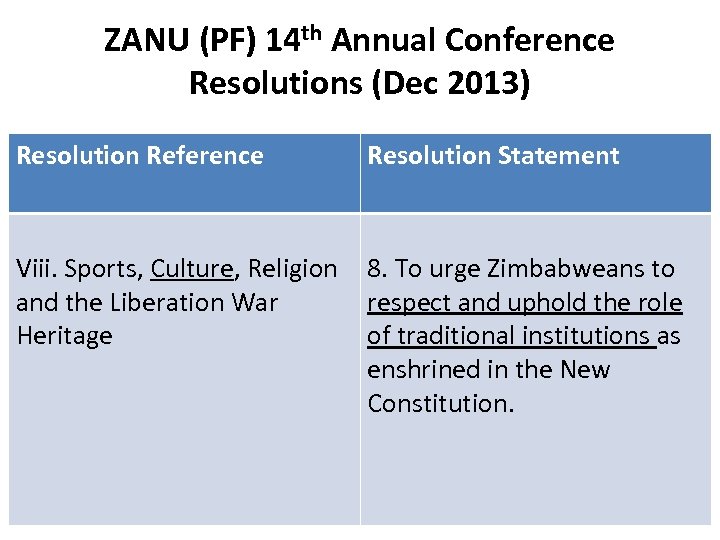 ZANU (PF) 14 th Annual Conference Resolutions (Dec 2013) Resolution Reference Resolution Statement Viii. Sports, Culture, Religion 8. To urge Zimbabweans to and the Liberation War respect and uphold the role Heritage of traditional institutions as enshrined in the New Constitution.
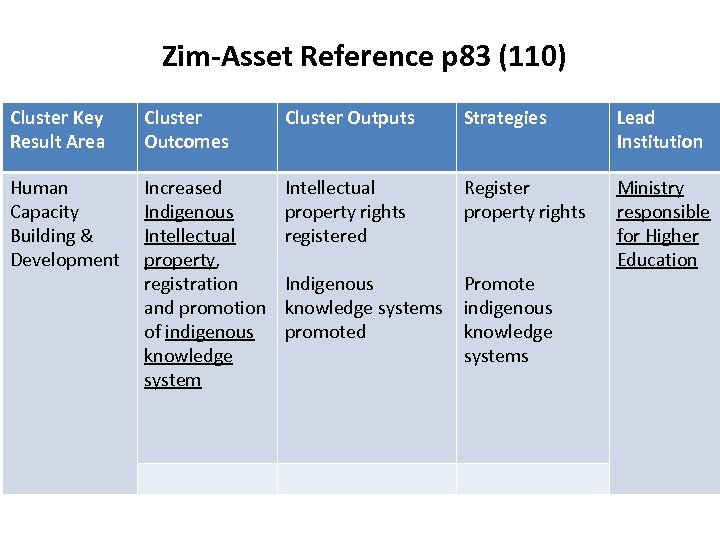 Zim-Asset Reference p 83 (110) Cluster Key Result Area Cluster Outcomes Cluster Outputs Strategies Lead Institution Human Capacity Building & Development Increased Indigenous Intellectual property, registration and promotion of indigenous knowledge system Intellectual property rights registered Register property rights Ministry responsible for Higher Education Indigenous Promote knowledge systems indigenous promoted knowledge systems
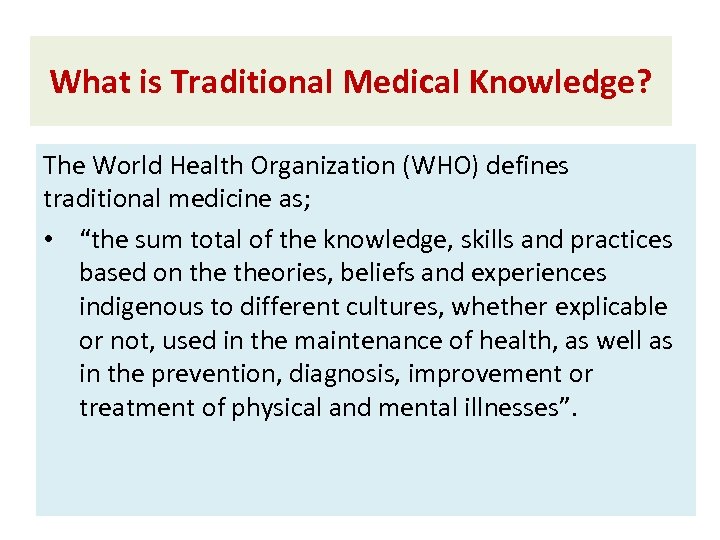 What is Traditional Medical Knowledge? The World Health Organization (WHO) defines traditional medicine as; • “the sum total of the knowledge, skills and practices based on theories, beliefs and experiences indigenous to different cultures, whether explicable or not, used in the maintenance of health, as well as in the prevention, diagnosis, improvement or treatment of physical and mental illnesses”.
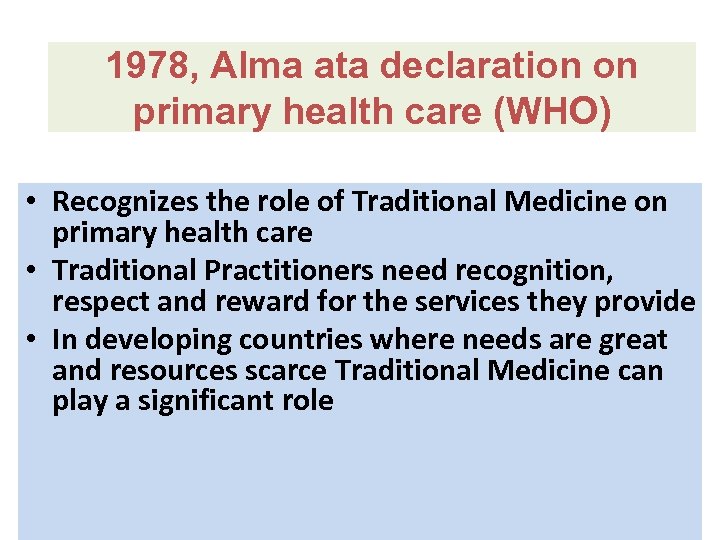 1978, Alma ata declaration on primary health care (WHO) • Recognizes the role of Traditional Medicine on primary health care • Traditional Practitioners need recognition, respect and reward for the services they provide • In developing countries where needs are great and resources scarce Traditional Medicine can play a significant role
 Increasing use and popularity of Traditional Medicines • In Ghana, Mali, Nigeria and Zambia first line treatment for 60% of children Malaria fever use of herbal medicines at home • In China, traditional herbal preparations account for 30% - 50% of the total medicinal consumption • In Europe, North America and other industrialized regions, over 50% of the population use complementary or alternative medicines • The global market for herbal medicines currently stands at over US $60 billion annually and is growing steadily
 Biodiversity and efficacy issues • Growing herbal market and its great commercial benefits poses a threat to biodiversity • If not controlled may lead to extinction of endangered species and the destruction of natural habitats • Current patency laws are inadequate to protect traditional knowledge and biodiversity
 Conclusion of the assessment of Access to Health Care Services in Zimbabwe by D. Makuto and V. James, April 2008 – “ resilience of the communities surveyed allows them to continue to thrive even under the difficult economic environment – this attests to the fact that they have coping mechanisms that remain largely unexplored – decision might find a lot to learn from them to come up with better custom made solutions to challenges found at the community level”
 Conclusion • Traditional Medicine is good • Conventional Medicine is good • But the combination is better
 Integration of Traditional Medicine into primary health care This means; • Increase of health care coverage through collaboration, communication, harmonization • Partnership building between conventional and traditional systems of medicine • Ensuring intellectual property rights and protection of indigenous knowledge • Formalized research and training for THPs
 Agreements • Trade Related Aspects of Intellectual Property Rights Agreement (TRIPS) o today’s workshop theme • Convention on Biological Diversity (signed in Rio in 1992) o enforces protection of the rights of local people and local knowledge • The World Intellectual Property Organization (WIPO) o primarily concerned with “protection” of traditional medical knowledge in the IP sense o protection against unauthorized use by third parties
 Traditional Medical (TM) practitioners Act 1981 • This is one of the comprehensive pieces of legislation on the practice of TM medicine that has been enacted in the region • Section 3 establishes the council which consists of 12 members who are appointed by the Minister from among TM practitioners and professionals with knowledge and interest in TM
 Traditional Medical Practitioners Act 27: 14 • Section 3 (2) The function and purpose of the Council shall be— (a) to supervise and control the practice of traditional medical practitioners; (b) to promote the practice of traditional medical practitioners and to foster research into, and develop the knowledge of, such practice; • This section inspires both Training and Continuing Education of THPs in Zimbabwe
 UNIVERSITY OF ZIMBABWE College of Health Sciences School of Pharmacy (Skills Development and Training Unit) in collaboration with the International Pharmacotherapy Education and Research Initiative (IPERI) Certificate Course for Traditional Health Practitioners
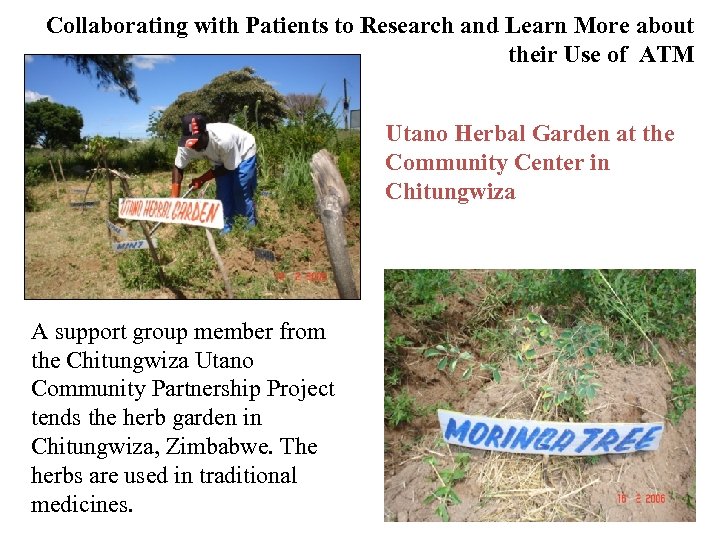 Collaborating with Patients to Research and Learn More about their Use of ATM Utano Herbal Garden at the Community Center in Chitungwiza A support group member from the Chitungwiza Utano Community Partnership Project tends the herb garden in Chitungwiza, Zimbabwe. The herbs are used in traditional medicines.
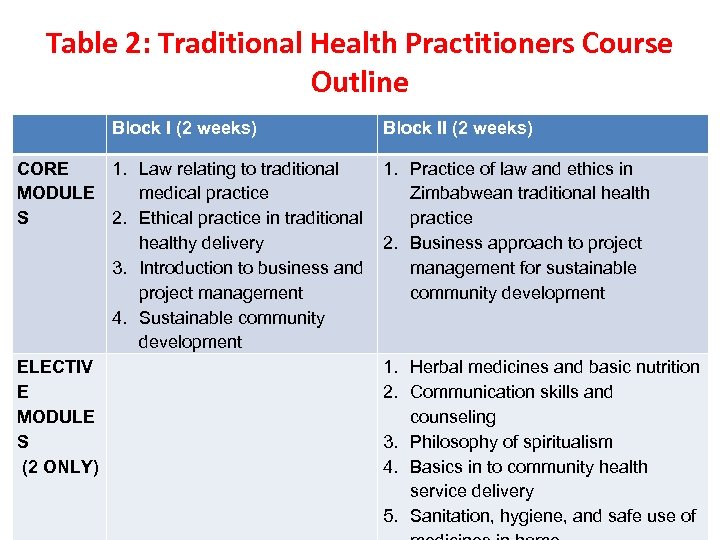 Table 2: Traditional Health Practitioners Course Outline Block I (2 weeks) CORE 1. Law relating to traditional MODULE medical practice S 2. Ethical practice in traditional healthy delivery 3. Introduction to business and project management 4. Sustainable community development ELECTIV E MODULE S (2 ONLY) Block II (2 weeks) 1. Practice of law and ethics in Zimbabwean traditional health practice 2. Business approach to project management for sustainable community development 1. Herbal medicines and basic nutrition 2. Communication skills and counseling 3. Philosophy of spiritualism 4. Basics in to community health service delivery 5. Sanitation, hygiene, and safe use of
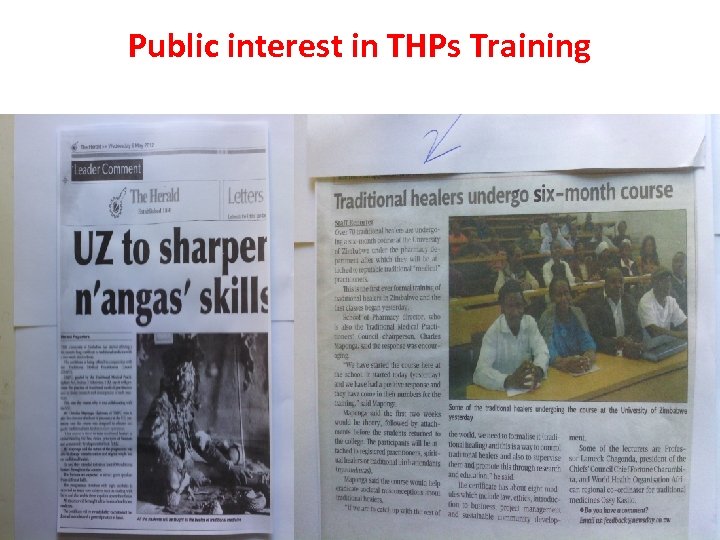 Public interest in THPs Training
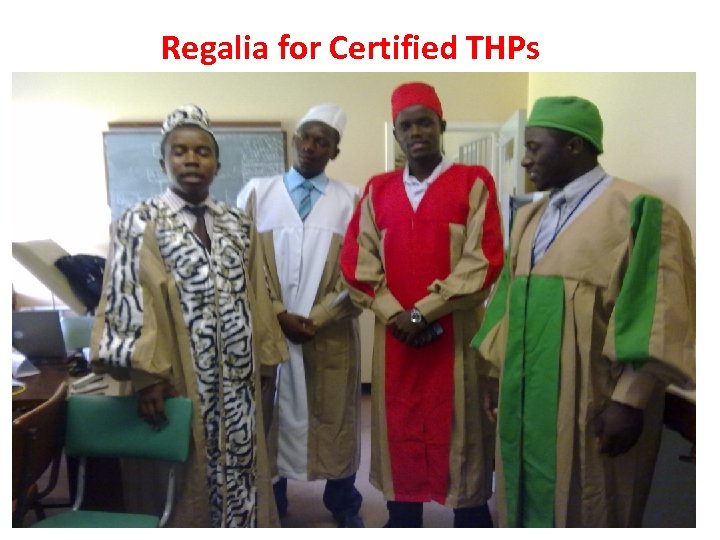 Regalia for Certified THPs
 TMPC’s priorities Promote research on efficacy, quality and safety of TM • Conduct an inventory of research institutions carrying out TM research • Identify priorities for TM research and develop national research plan for TM • Facilitate training of scientists on TM research methodology • Identify and document commonly used herbal and other natural medicines • Develop national guidelines on Intellectual Property Rights
 Summary of challenges • Need a regulatory framework on – intellectual property rights – traditional medicine research – the manufacture and distribution of traditional medicines despite the availability of generic guidelines from WHO • Need policies and legal framework (SI for 27: 14) • Need for a census of THPs in the country for planning purposes
 Thank you!