


 Скачать презентацию Impact of the Deficit Reduction Act DRA on
c450bfdd82767ccc06d5e396a3c51f82.ppt
- Количество слайдов: 30
 Impact of the Deficit Reduction Act (DRA) on Maternal and Child Health (MCH) Programs and Populations James A. Resnick, MHS Public Health Analyst Health Resources and Services Administration Maternal and Child Health Bureau/ Office of Data and Program Development 1
 Linkages Between Public Health (MCH) and Medicaid 2
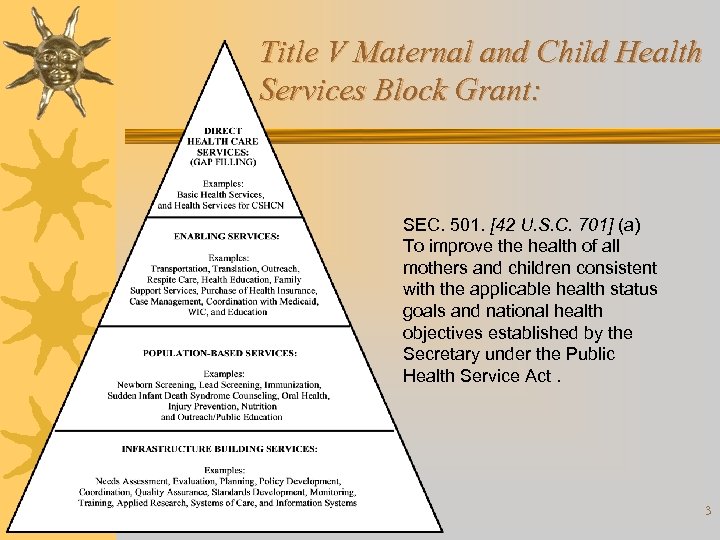 Title V Maternal and Child Health Services Block Grant: SEC. 501. [42 U. S. C. 701] (a) To improve the health of all mothers and children consistent with the applicable health status goals and national health objectives established by the Secretary under the Public Health Service Act. 3
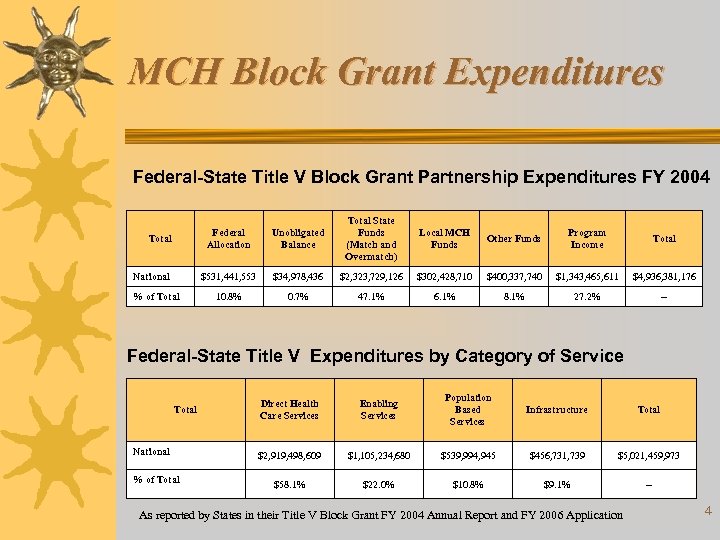 MCH Block Grant Expenditures Federal-State Title V Block Grant Partnership Expenditures FY 2004 Federal Allocation National % of Total State Funds (Match and Overmatch) Local MCH Funds Other Funds Program Income Total $531, 441, 553 Total Unobligated Balance $34, 978, 436 $2, 323, 729, 126 $302, 428, 710 $400, 337, 740 $1, 343, 465, 611 $4, 936, 381, 176 10. 8% 0. 7% 47. 1% 6. 1% 8. 1% 27. 2% -- Federal-State Title V Expenditures by Category of Service Total National % of Total Direct Health Care Services Enabling Services Population Based Services Infrastructure Total $2, 919, 498, 609 $1, 105, 234, 680 $539, 994, 945 $456, 731, 739 $5, 021, 459, 973 $58. 1% $22. 0% $10. 8% $9. 1% -- As reported by States in their Title V Block Grant FY 2004 Annual Report and FY 2006 Application 4
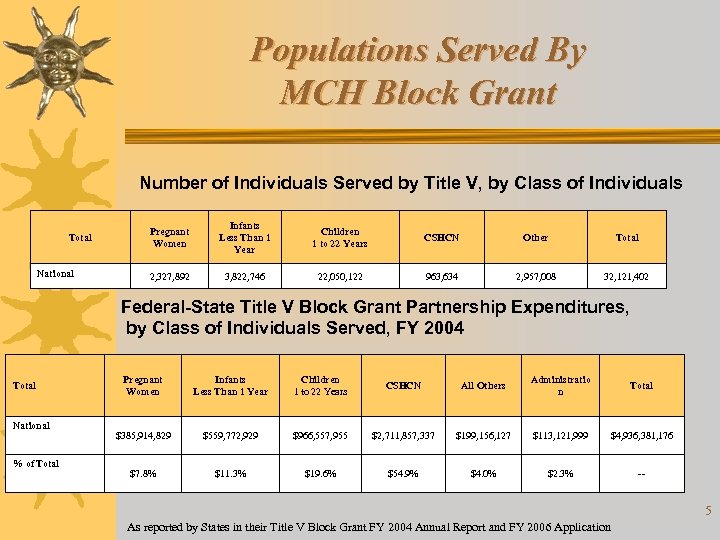 Populations Served By MCH Block Grant Number of Individuals Served by Title V, by Class of Individuals Total National Pregnant Women Infants Less Than 1 Year Children 1 to 22 Years CSHCN Other Total 2, 327, 892 3, 822, 746 22, 050, 122 963, 634 2, 957, 008 32, 121, 402 Federal-State Title V Block Grant Partnership Expenditures, by Class of Individuals Served, FY 2004 Total National % of Total Pregnant Women Infants Less Than 1 Year Children 1 to 22 Years CSHCN All Others Administratio n Total $385, 914, 829 $559, 772, 929 $966, 557, 955 $2, 711, 857, 337 $199, 156, 127 $113, 121, 999 $4, 936, 381, 176 $7. 8% $11. 3% $19. 6% $54. 9% $4. 0% $2. 3% -- As reported by States in their Title V Block Grant FY 2004 Annual Report and FY 2006 Application 5
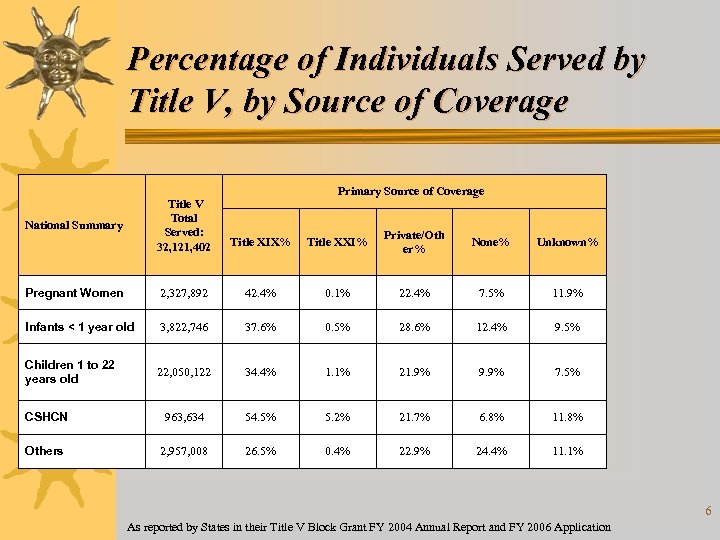 Percentage of Individuals Served by Title V, by Source of Coverage Primary Source of Coverage Title V Total Served: 32, 121, 402 Title XIX% Title XXI% Private/Oth er% None% Unknown% Pregnant Women 2, 327, 892 42. 4% 0. 1% 22. 4% 7. 5% 11. 9% Infants < 1 year old 3, 822, 746 37. 6% 0. 5% 28. 6% 12. 4% 9. 5% Children 1 to 22 years old 22, 050, 122 34. 4% 1. 1% 21. 9% 9. 9% 7. 5% CSHCN 963, 634 54. 5% 5. 2% 21. 7% 6. 8% 11. 8% Others 2, 957, 008 26. 5% 0. 4% 22. 9% 24. 4% 11. 1% National Summary As reported by States in their Title V Block Grant FY 2004 Annual Report and FY 2006 Application 6
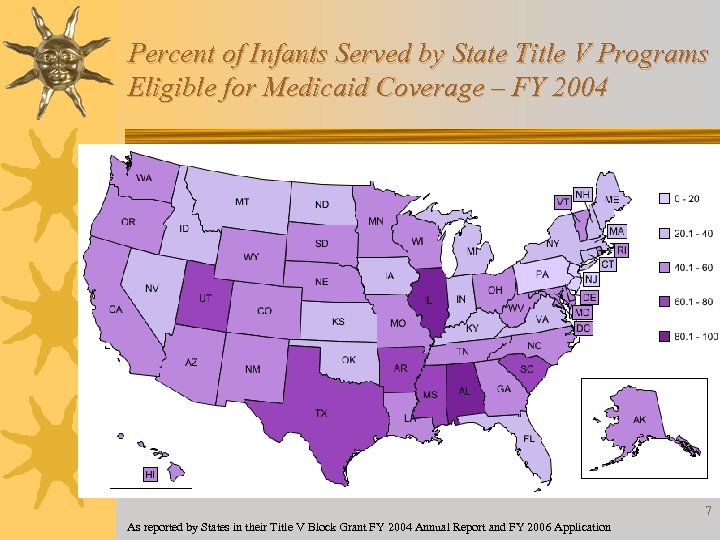 Percent of Infants Served by State Title V Programs Eligible for Medicaid Coverage – FY 2004 As reported by States in their Title V Block Grant FY 2004 Annual Report and FY 2006 Application 7
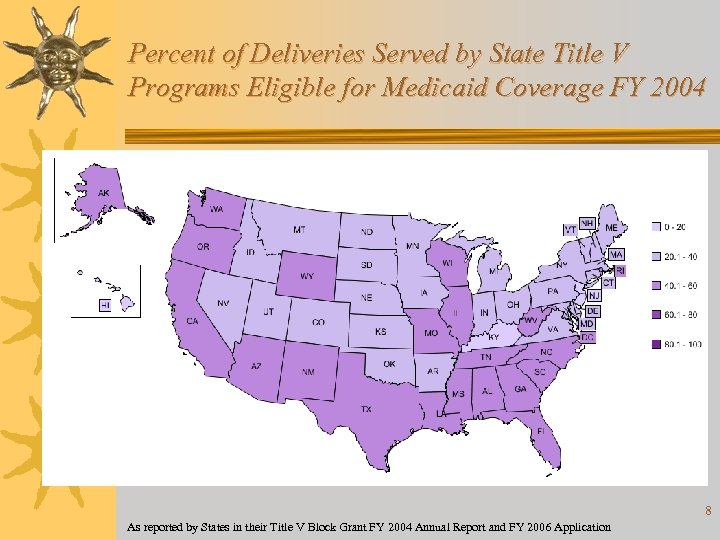 Percent of Deliveries Served by State Title V Programs Eligible for Medicaid Coverage FY 2004 As reported by States in their Title V Block Grant FY 2004 Annual Report and FY 2006 Application 8
 Additional Information ¬DRA appropriates funds to support Family-to-Family Health Information Centers ¬Family-Opportunity Act ¬DRA changes SCHIP adult coverage requirements 9
 DRA Impact on Maternal and Child Health Programs and Populations (Clear) (Not-So-Clear) 10
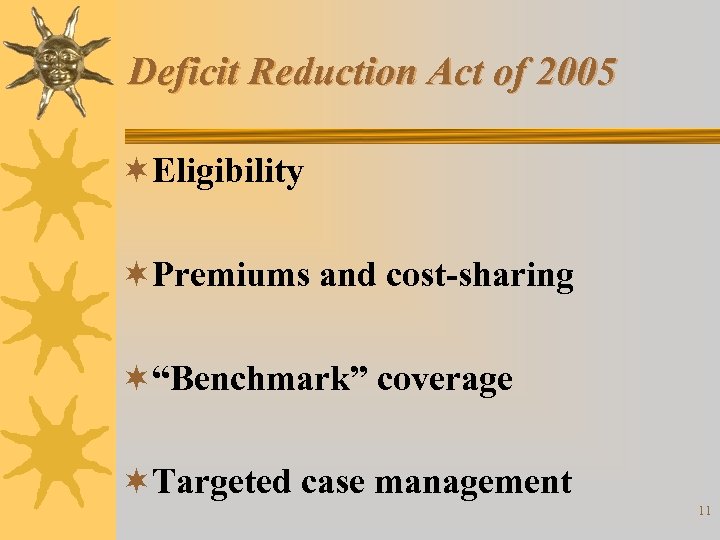 Deficit Reduction Act of 2005 ¬Eligibility ¬Premiums and cost-sharing ¬“Benchmark” coverage ¬Targeted case management 11
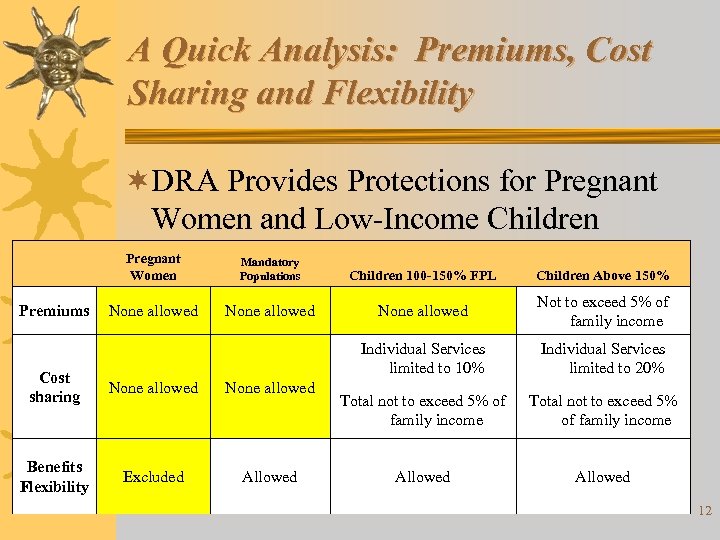 A Quick Analysis: Premiums, Cost Sharing and Flexibility ¬DRA Provides Protections for Pregnant Women and Low-Income Children Pregnant Women Premiums Mandatory Populations Children 100 -150% FPL Children Above 150% None allowed Not to exceed 5% of family income Individual Services limited to 10% Cost sharing None allowed Benefits Flexibility Excluded Allowed Individual Services limited to 20% Total not to exceed 5% of family income Allowed 12
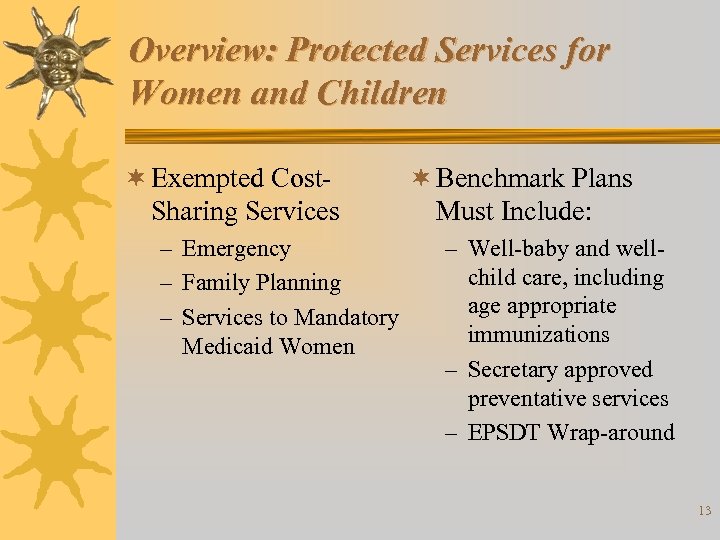 Overview: Protected Services for Women and Children ¬ Exempted Cost. Sharing Services – Emergency – Family Planning – Services to Mandatory Medicaid Women ¬ Benchmark Plans Must Include: – Well-baby and wellchild care, including age appropriate immunizations – Secretary approved preventative services – EPSDT Wrap-around 13
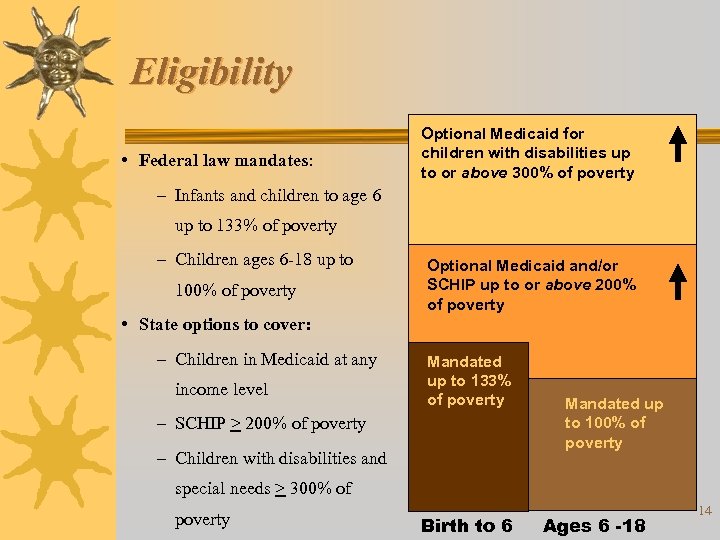 Eligibility • Federal law mandates: Optional Medicaid for children with disabilities up to or above 300% of poverty – Infants and children to age 6 up to 133% of poverty – Children ages 6 -18 up to 100% of poverty Optional Medicaid and/or SCHIP up to or above 200% of poverty • State options to cover: – Children in Medicaid at any income level Mandated up to 133% of poverty – SCHIP > 200% of poverty – Children with disabilities and Mandated up to 100% of poverty special needs > 300% of poverty Birth to 6 Ages 6 -18 14
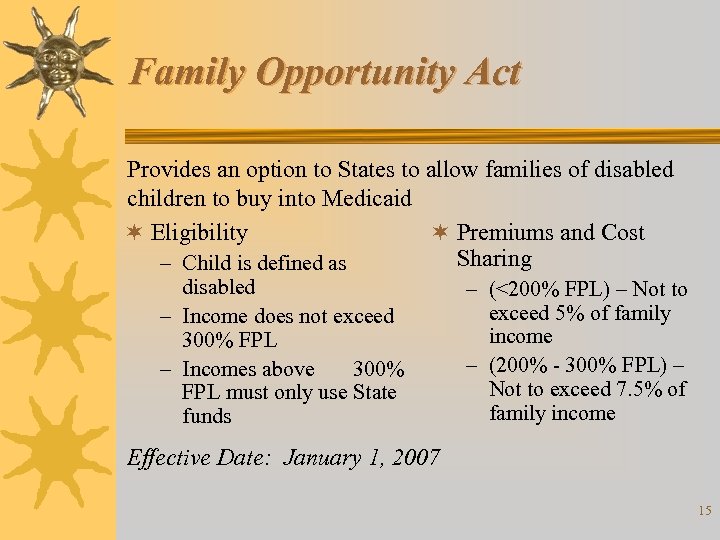 Family Opportunity Act Provides an option to States to allow families of disabled children to buy into Medicaid ¬ Eligibility ¬ Premiums and Cost Sharing – Child is defined as disabled – Income does not exceed 300% FPL – Incomes above 300% FPL must only use State funds – (<200% FPL) – Not to exceed 5% of family income – (200% - 300% FPL) – Not to exceed 7. 5% of family income Effective Date: January 1, 2007 15
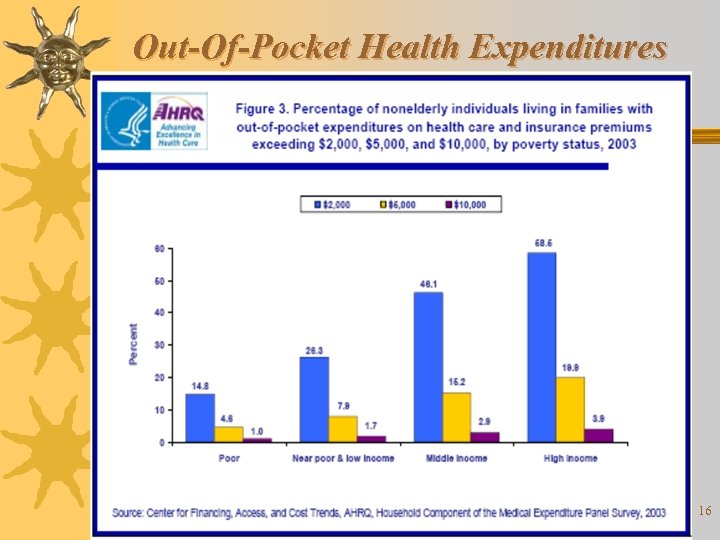 Out-Of-Pocket Health Expenditures 16
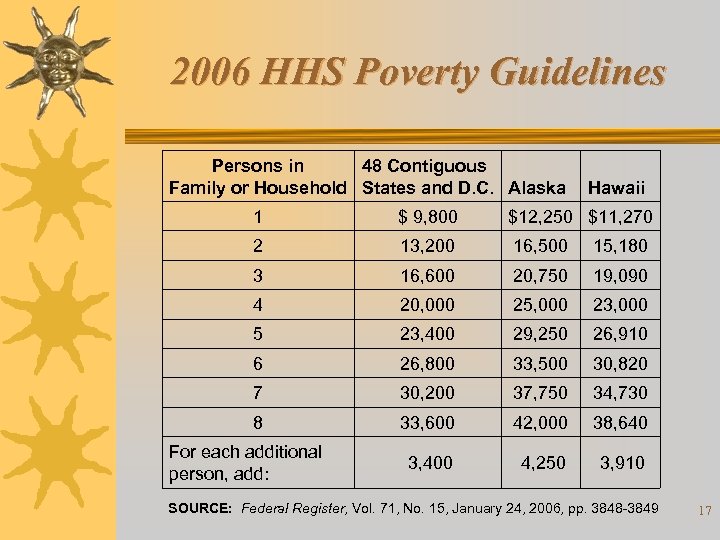 2006 HHS Poverty Guidelines Persons in 48 Contiguous Family or Household States and D. C. Alaska Hawaii 1 $ 9, 800 $12, 250 $11, 270 2 13, 200 16, 500 15, 180 3 16, 600 20, 750 19, 090 4 20, 000 25, 000 23, 000 5 23, 400 29, 250 26, 910 6 26, 800 33, 500 30, 820 7 30, 200 37, 750 34, 730 8 33, 600 42, 000 38, 640 3, 400 4, 250 3, 910 For each additional person, add: SOURCE: Federal Register, Vol. 71, No. 15, January 24, 2006, pp. 3848 -3849 17
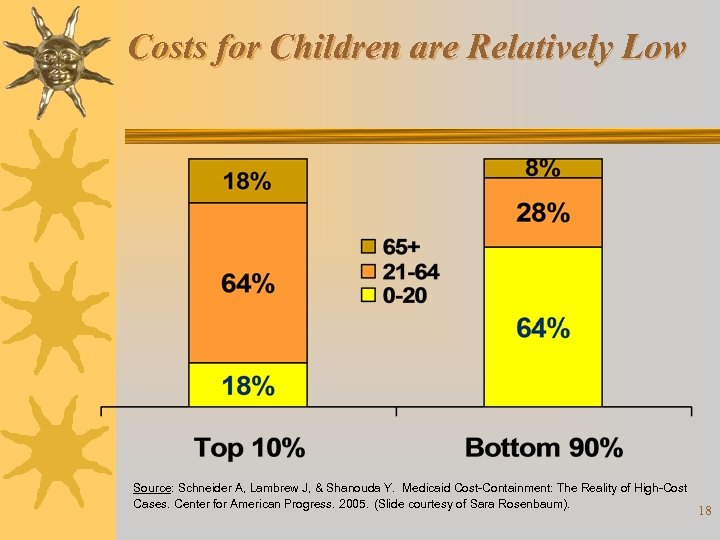 Costs for Children are Relatively Low Source: Schneider A, Lambrew J, & Shanouda Y. Medicaid Cost-Containment: The Reality of High-Cost Cases. Center for American Progress. 2005. (Slide courtesy of Sara Rosenbaum). 18
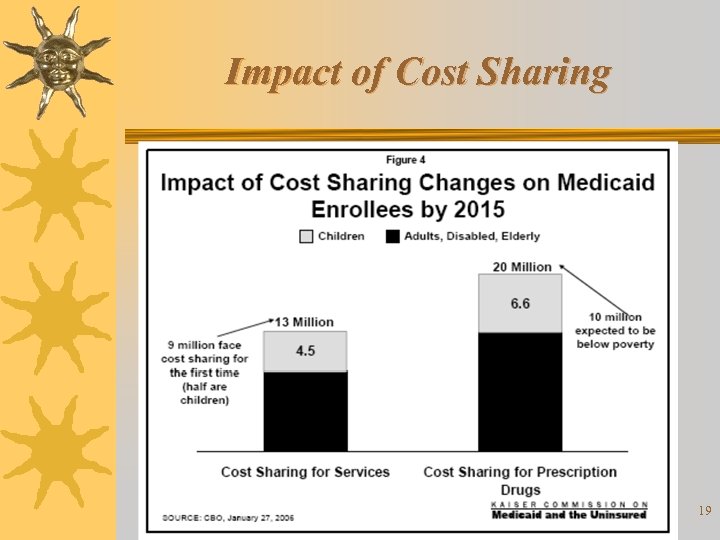 Impact of Cost Sharing 19
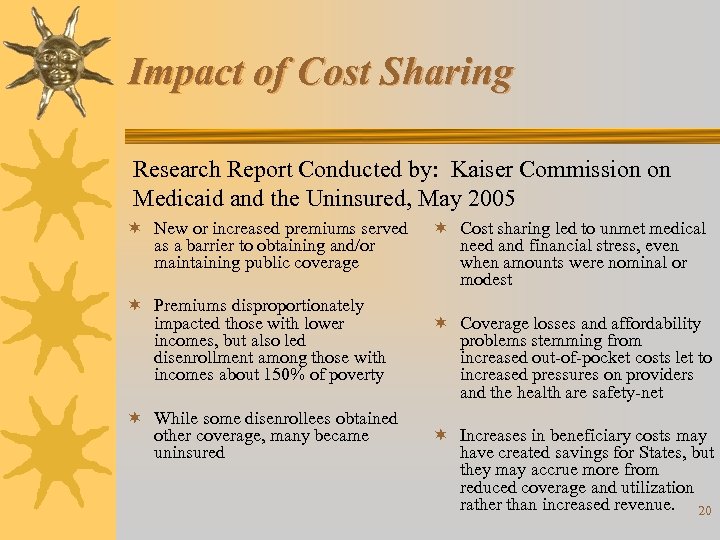 Impact of Cost Sharing Research Report Conducted by: Kaiser Commission on Medicaid and the Uninsured, May 2005 ¬ New or increased premiums served as a barrier to obtaining and/or maintaining public coverage ¬ Premiums disproportionately impacted those with lower incomes, but also led disenrollment among those with incomes about 150% of poverty ¬ While some disenrollees obtained other coverage, many became uninsured ¬ Cost sharing led to unmet medical need and financial stress, even when amounts were nominal or modest ¬ Coverage losses and affordability problems stemming from increased out-of-pocket costs let to increased pressures on providers and the health are safety-net ¬ Increases in beneficiary costs may have created savings for States, but they may accrue more from reduced coverage and utilization rather than increased revenue. 20
 Post-DRA: Coverage Rules (Effective 3/31/2006) ¬States have the option to use a “benchmark” benefit package and require enrollment for certain groups. – No need for waiver; State Plan Amendment suffices – This is similar to what is used for State (non-Medicaid) SCHIP programs – EPSDT wraparound required 21
 Impact of Benefits Flexibility-Unclear ¬Family Planning ¬Duration and scope of services – Hearing, Vision, Mental/Behavioral Services – Services for Children with Special Health Care Needs (CSHCN) ¬EPSDT – Coordination of wrap-around services 22
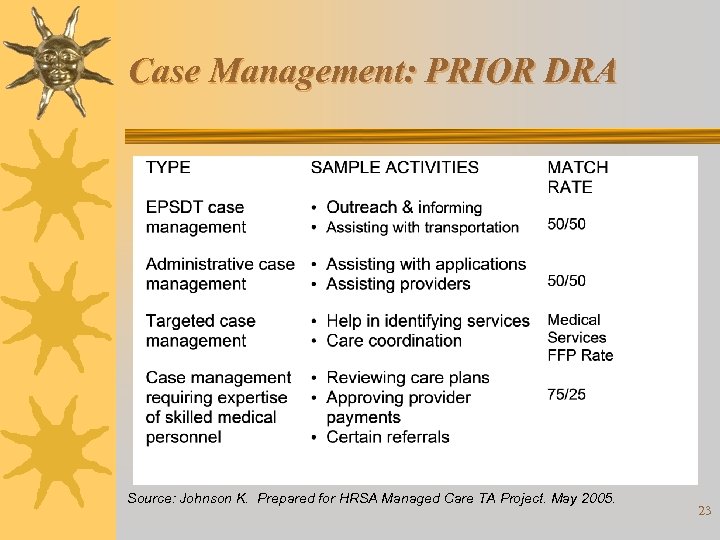 Case Management: PRIOR DRA Source: Johnson K. Prepared for HRSA Managed Care TA Project. May 2005. 23
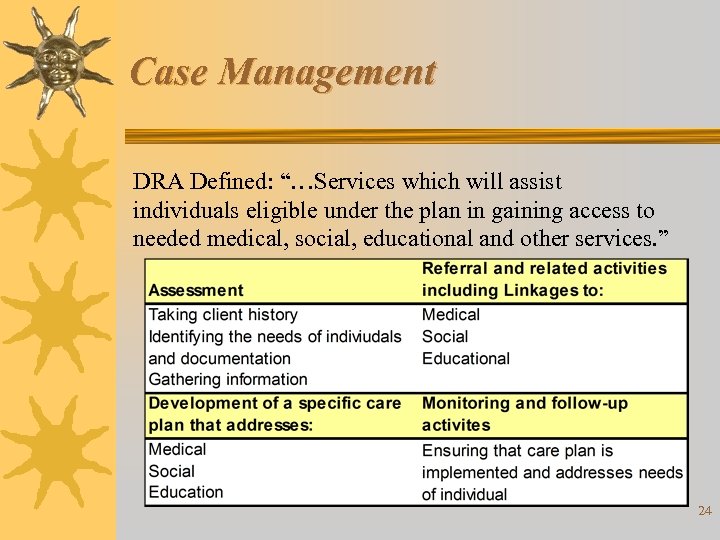 Case Management DRA Defined: “…Services which will assist individuals eligible under the plan in gaining access to needed medical, social, educational and other services. ” 24
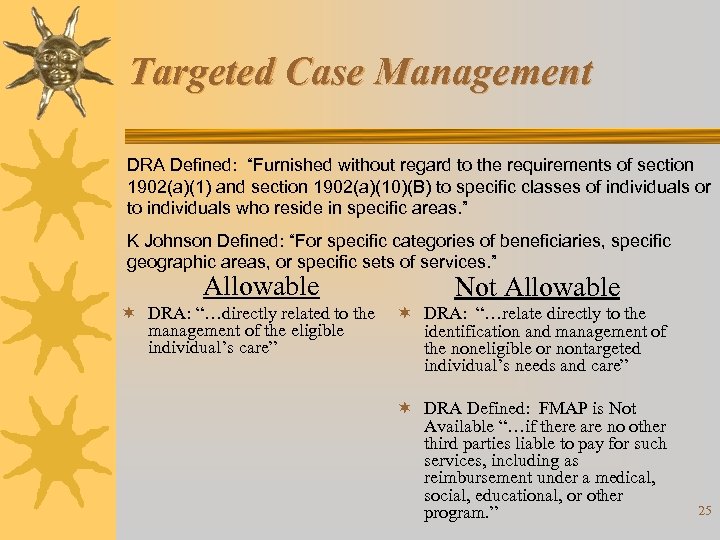 Targeted Case Management DRA Defined: “Furnished without regard to the requirements of section 1902(a)(1) and section 1902(a)(10)(B) to specific classes of individuals or to individuals who reside in specific areas. ” K Johnson Defined: “For specific categories of beneficiaries, specific geographic areas, or specific sets of services. ” Allowable ¬ DRA: “…directly related to the management of the eligible individual’s care” Not Allowable ¬ DRA: “…relate directly to the identification and management of the noneligible or nontargeted individual’s needs and care” ¬ DRA Defined: FMAP is Not Available “…if there are no other third parties liable to pay for such services, including as reimbursement under a medical, social, educational, or other program. ” 25
 Impact of Medicaid Case Management Changes ¬ Examples of Title V MCH case management services – – Outreach for pregnant women Home visiting programs for CSHCN Prenatal education services Medical coordination for individuals with severe medical conditions – Care coordination to support the medical home ¬ It is unclear if changes to Medicaid law will impact reimbursement of services performed by MCH programs 26
 Conclusion: Increased flexibility ¬ States have multiple options to change Medicaid programs. – Impact will only be known once changes are implemented by States – Many policy decisions affecting MCH populations and programs will be made in the near future • Update of Medicaid regulation • Revision of Medicaid manual • Review of CMS approved Medicaid State Plan Amendments 27
 Conclusion: Title V Monitoring Role ¬ Monitoring the impact of these changes on public health/ MCH programs at the national, state and local levels – Does the number of individuals requesting services and assistance from MCH public health programs increase? – Do higher co-payments/premiums cause individuals to seek care from safety-net providers? – Will costs shift to public health programs? – Analysis of TVIS data to determine if States have shifted funds from Infrastructure, Enabling and Population services to Direct health services 28
 Conclusion: Title V Coordination ¬ Title V MCH programs lead in coordination, infrastructure, and enabling services – How can state and local MCH programs provide information to families when benefit, cost-sharing, and case management rules change? • Toll-free hotline updates • Outreach & informational materials – Engage families, providers, and other agency partners in designing approaches to continue care coordination for children with special health care needs (CSHCN). – Study impact on systems of care (perinatal, early childhood, CSHCN, genetics, mental health, etc. ) 29
 For More Information James A. Resnick MHS (301) 443 -3222 JResnick@hrsa. gov 30