


 Скачать презентацию Imp EE THE Improving Engineering Education PROJECT Domestic
0e2f64e55ce0ce57a45240ea835c6b45.ppt
- Количество слайдов: 26
 Imp. EE THE Improving Engineering Education PROJECT Domestic Energy Use and Sustainability
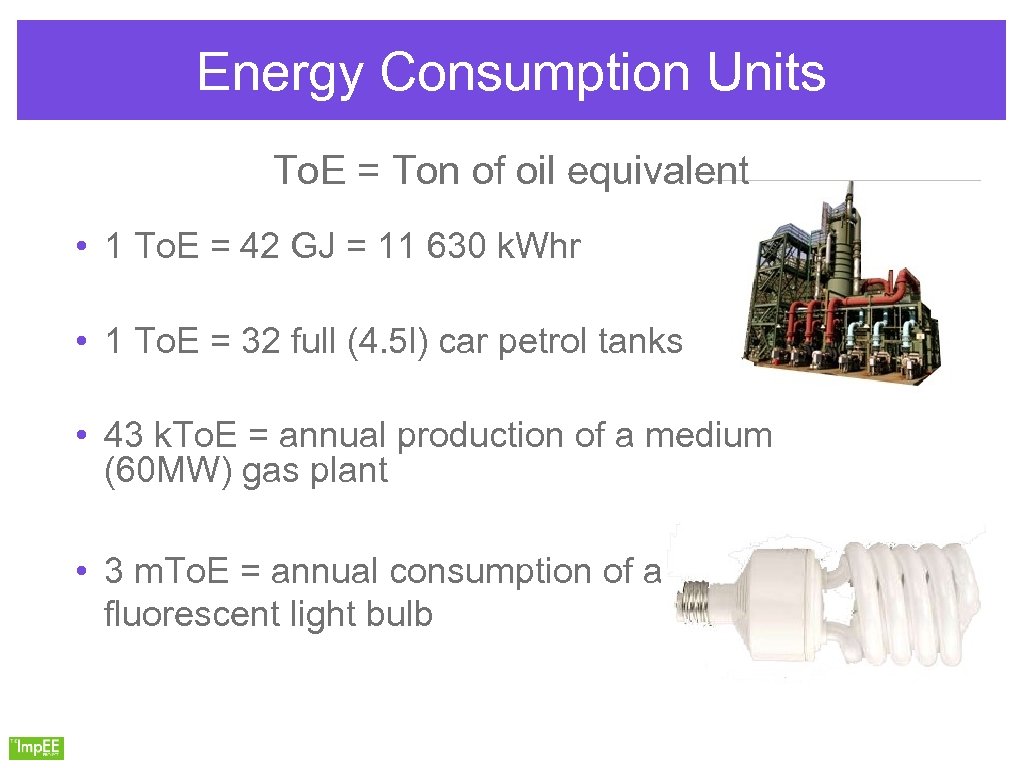 Energy Consumption Units To. E = Ton of oil equivalent • 1 To. E = 42 GJ = 11 630 k. Whr • 1 To. E = 32 full (4. 5 l) car petrol tanks • 43 k. To. E = annual production of a medium (60 MW) gas plant • 3 m. To. E = annual consumption of a fluorescent light bulb
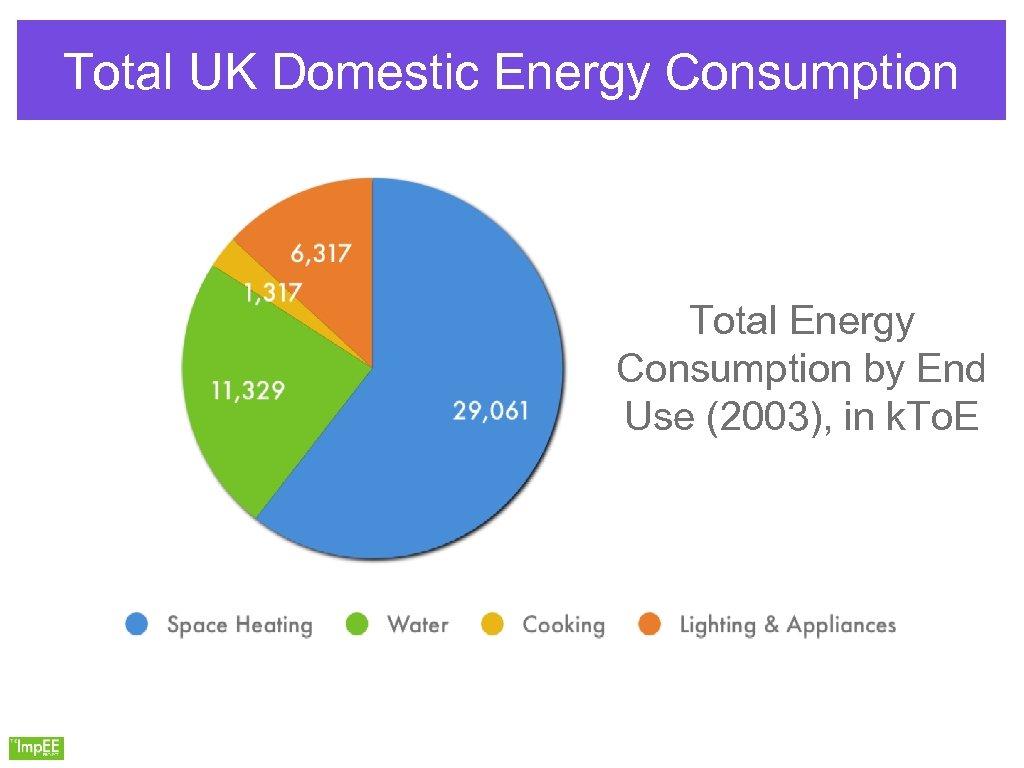 Total UK Domestic Energy Consumption Total Energy Consumption by End Use (2003), in k. To. E
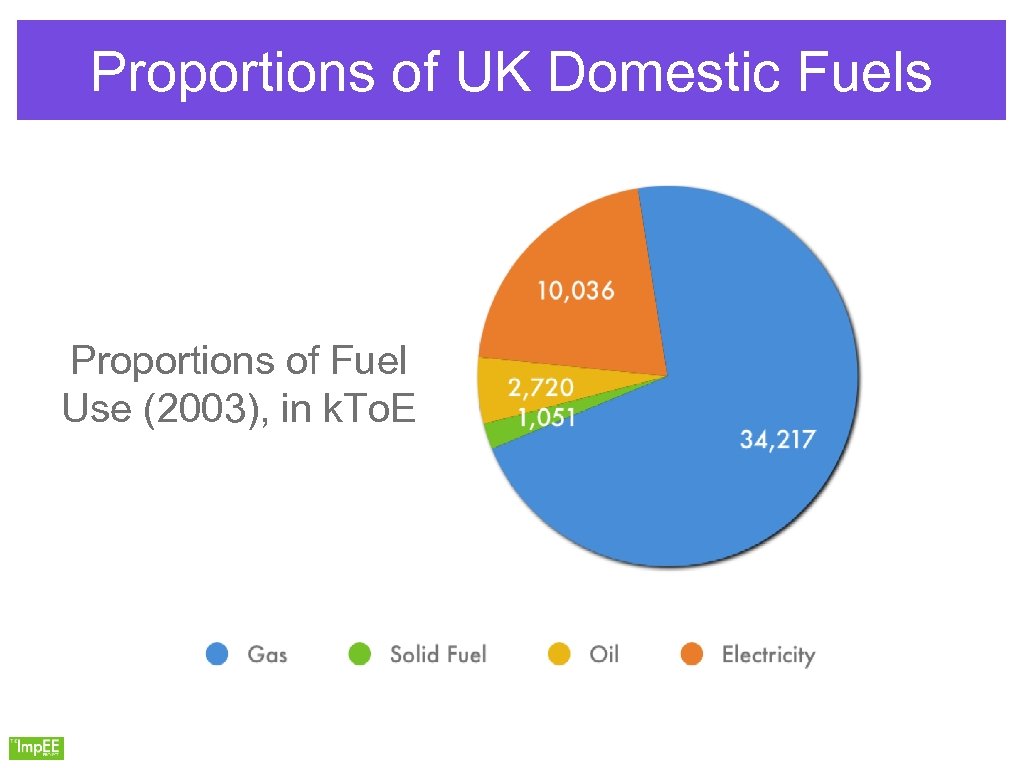 Proportions of UK Domestic Fuels Proportions of Fuel Use (2003), in k. To. E
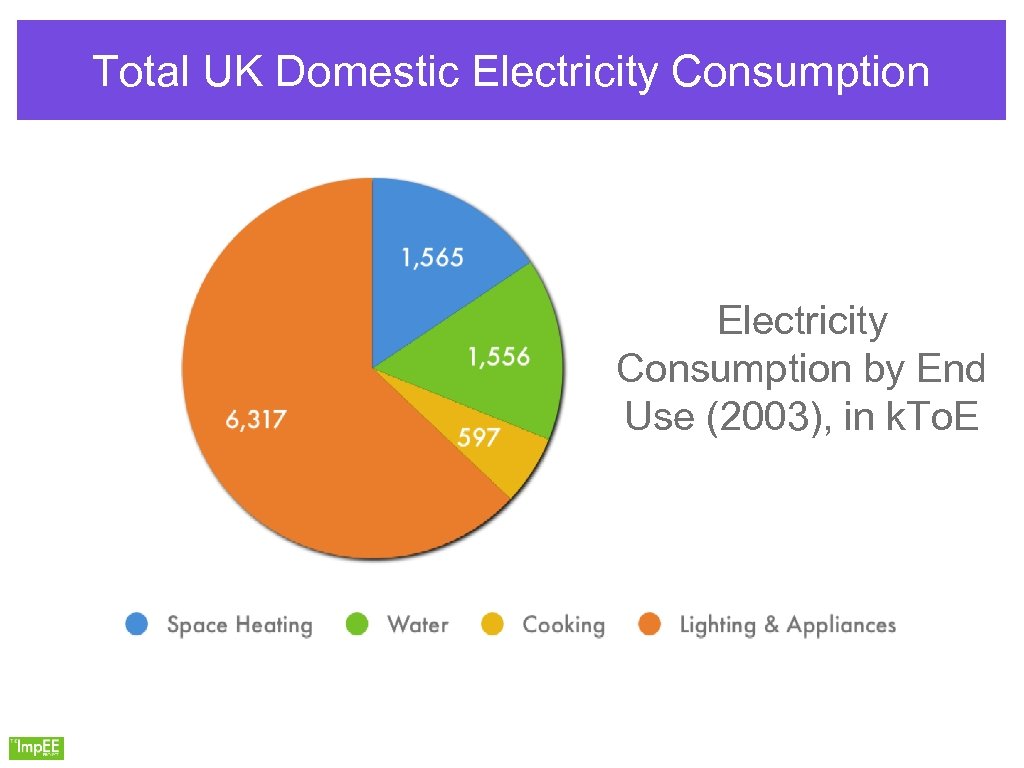 Total UK Domestic Electricity Consumption by End Use (2003), in k. To. E
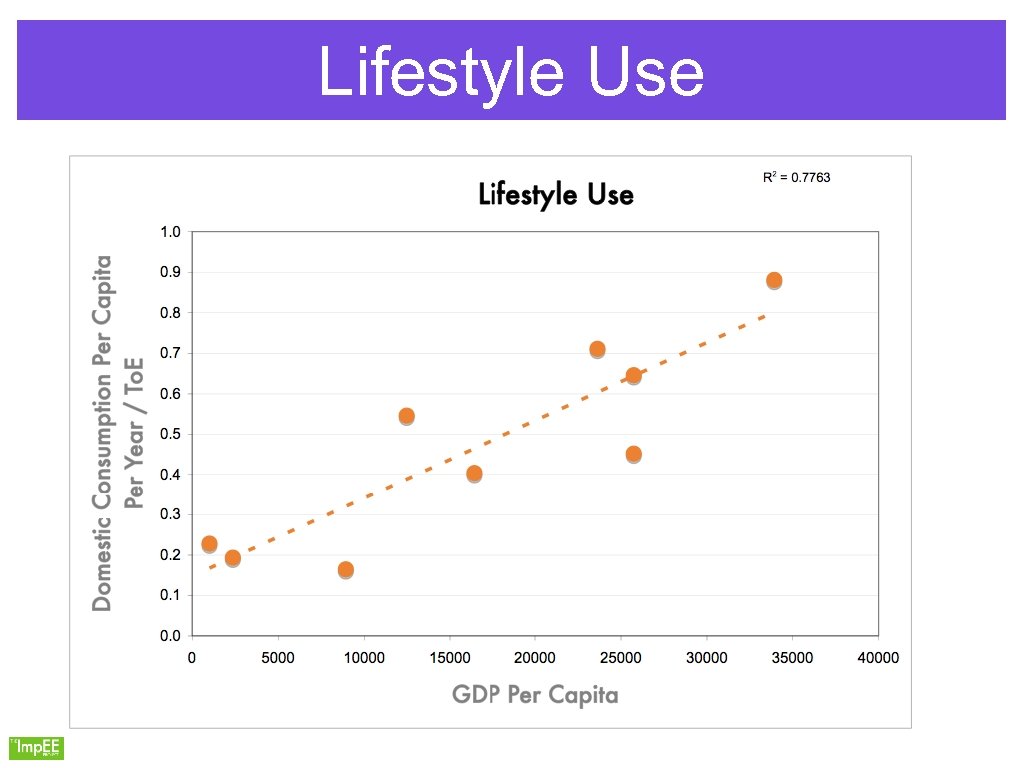 Lifestyle Use
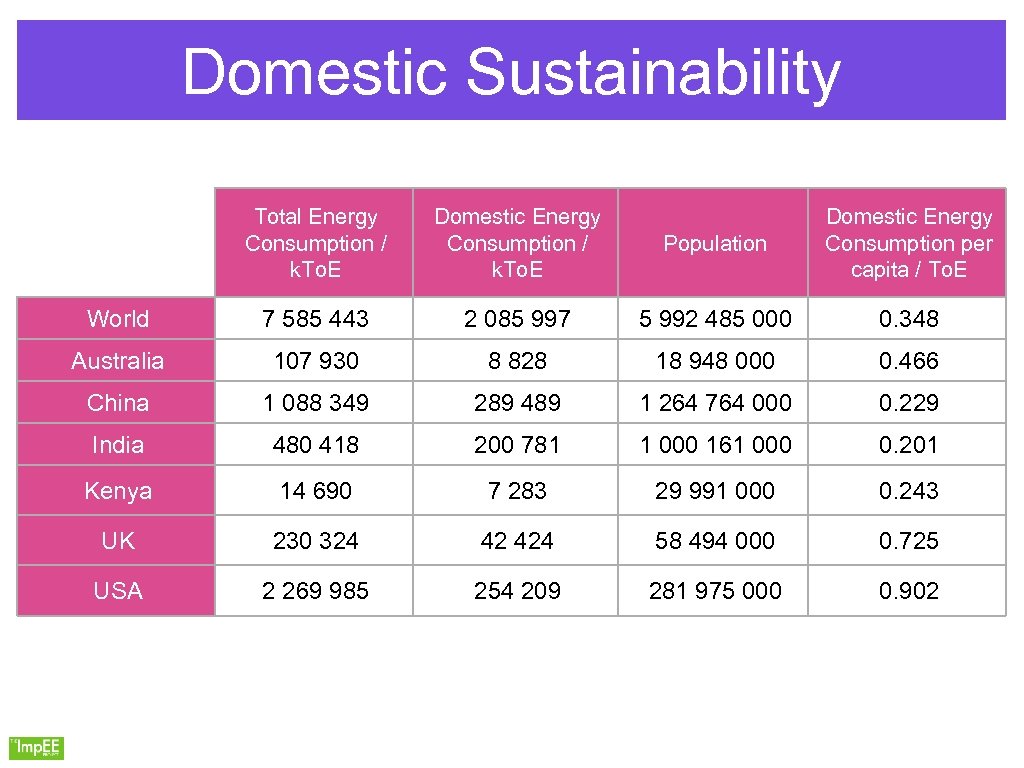 Domestic Sustainability Total Energy Consumption / k. To. E Domestic Energy Consumption / k. To. E Population Domestic Energy Consumption per capita / To. E World 7 585 443 2 085 997 5 992 485 000 0. 348 Australia 107 930 8 828 18 948 000 0. 466 China 1 088 349 289 489 1 264 764 000 0. 229 India 480 418 200 781 1 000 161 000 0. 201 Kenya 14 690 7 283 29 991 000 0. 243 UK 230 324 42 424 58 494 000 0. 725 USA 2 269 985 254 209 281 975 000 0. 902
 Domestic Sustainability • 750 billion tonnes carbon dioxide in the atmosphere • If a billion people – e. g. in developing China and India – adopt Western lifestyles, an extra 500 MTo. E/yr will be consumed. • Using existing coal, oil, electricity and gas sources, this corresponds to 1. 43 billion extra tonnes carbon dioxide released – just from the domestic sector! • MUST tackle domestic energy issues before powerhungry technology and inefficient building and heating become available and are implemented worldwide
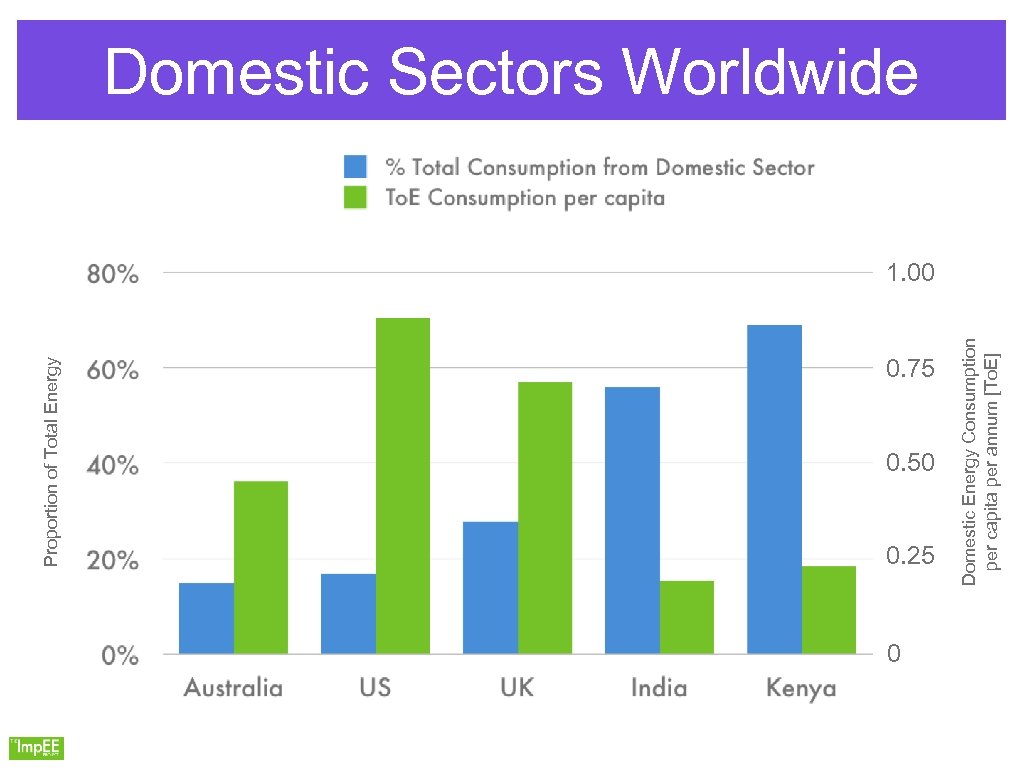 Proportion of Total Energy 0. 75 0. 50 0. 25 0 Domestic Energy Consumption per capita per annum [To. E] Domestic Sectors Worldwide 1. 00
 Example 1: ZED Housing • Bed. ZED, a development of around 100 apartments in south London which emits no net carbon. • A bottom-up approach to the problem of domestic energy consumption • Design which maximises solar gain - the urban block is shaped to allow direct solar radiation in any season • Thermal mass for internal heat retention in winter and external heat exclusion in summer. • Passive ventilation with outgoing heat capture. • Use of photovoltaic cells to generate zero emission power. • A distributed heating system fired by carbon-neutral biomass (landscaping waste). • Designed as a complete system, so all elements contributed to the zero emission performance.
 Standby Power Wastage • Also known as “vampire power”… arises from “always-on” components like clock displays, memory, remote sensing etc. • Power converters, e. g. phone chargers, employ transformers that consume energy even when not charging. • Inefficient technology like linear converters often couple with e. g. remote control sensing to increase impact. • Entertainment and security appliances are particularly strong vampires.
![Power Consumer [W] Standby Power Usage](https://present5.com/presentation/0e2f64e55ce0ce57a45240ea835c6b45/image-12.jpg "Power Consumer [W] Standby Power Usage") Power Consumer [W] Standby Power Usage
Power Consumer [W] Standby Power Usage
![Standby Power [W] Selected Standby Power Data Appliance](https://present5.com/presentation/0e2f64e55ce0ce57a45240ea835c6b45/image-13.jpg "Standby Power [W] Selected Standby Power Data Appliance") Standby Power [W] Selected Standby Power Data Appliance
Standby Power [W] Selected Standby Power Data Appliance
 Case Study: Set-Top Vampire • Standby power wastage or “vampire power” causes a significant impact on the environment from the domestic sector • Average passive standby consumption of a digital set-top box is 7. 5 W, with highs of over 20 W – active standby even higher. • If this mode is used 70% of the time… 5000 hrs/yr… 38 k. Wh are used annually. • Corresponds to 25 kg CO 2… just to avoid flicking the switch. • …enough to fill the living room with the GHG.
 Appliance Efficiency • Legislation and rating systems have made appliances like refrigerators much greener in the last decade • BUT the lifetime of an appliance is > 10 years: inefficient appliances are still abundant • And CHEAPER to buy second-hand
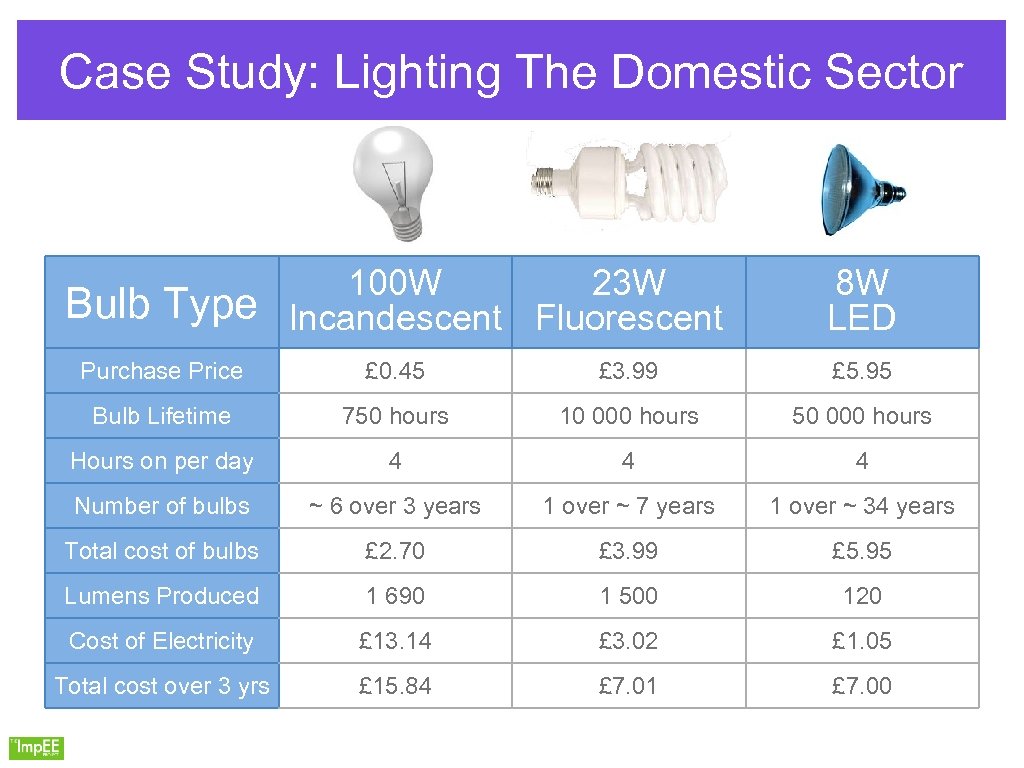 Case Study: Lighting The Domestic Sector 100 W 23 W Bulb Type Incandescent Fluorescent 8 W LED Purchase Price £ 0. 45 £ 3. 99 £ 5. 95 Bulb Lifetime 750 hours 10 000 hours 50 000 hours Hours on per day 4 4 4 Number of bulbs ~ 6 over 3 years 1 over ~ 7 years 1 over ~ 34 years Total cost of bulbs £ 2. 70 £ 3. 99 £ 5. 95 Lumens Produced 1 690 1 500 120 Cost of Electricity £ 13. 14 £ 3. 02 £ 1. 05 Total cost over 3 yrs £ 15. 84 £ 7. 01 £ 7. 00
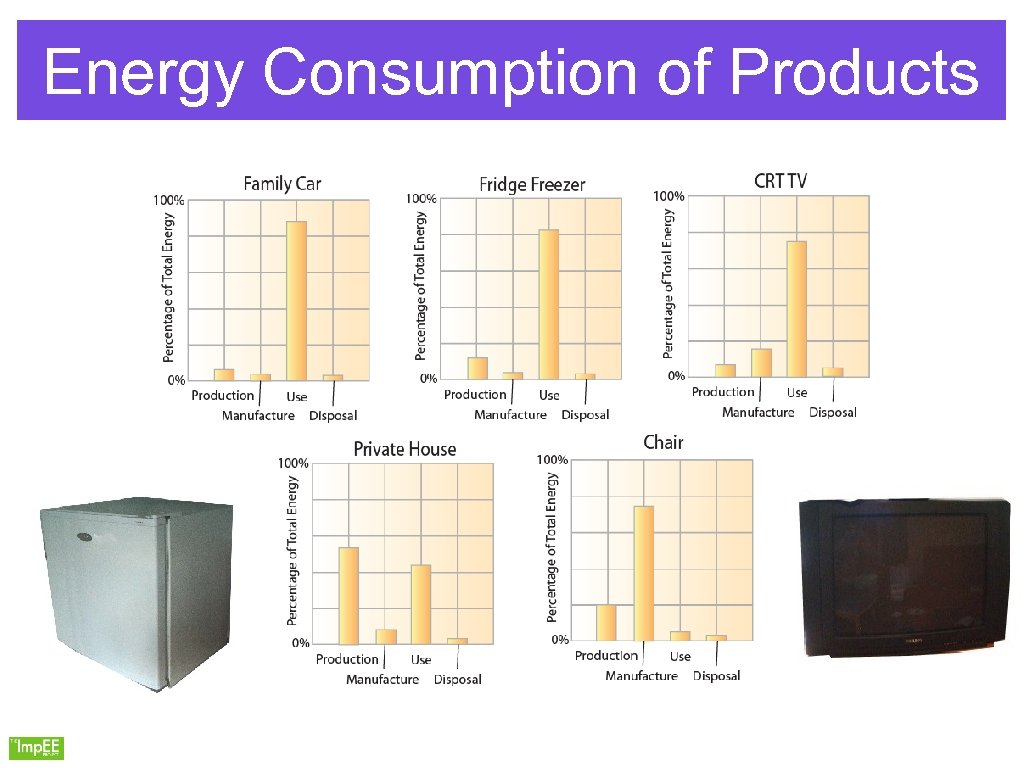 Energy Consumption of Products
 Case Study: Televisions • LCD displays consume less power than CRTs and are generally regarded as the “greener” option. • BUT construction of an LCD screen and set require a significant release of greenhouse gases… 320 kg compared to 220 kg for a CRT…which forms a significant proportion of the overall appliance lifespan emission (~30%). • Plasma screens are even worse: 430 kg, and less efficient in the Use life phase than a CRT • Also, although LCD screens are more efficient in the Use phase, they are considerably larger… very similar power consumption figures.
![Television Consumption Annual Consumption per year [k. Wh] All TVs 32 -inch screen size.](https://present5.com/presentation/0e2f64e55ce0ce57a45240ea835c6b45/image-19.jpg "Television Consumption Annual Consumption per year [k. Wh] All TVs 32 -inch screen size.") Television Consumption Annual Consumption per year [k. Wh] All TVs 32 -inch screen size. (annual production, manufacture and disposal figures = total divided by product’s lifetime in years)
Television Consumption Annual Consumption per year [k. Wh] All TVs 32 -inch screen size. (annual production, manufacture and disposal figures = total divided by product’s lifetime in years)
 Television Consumption by Size
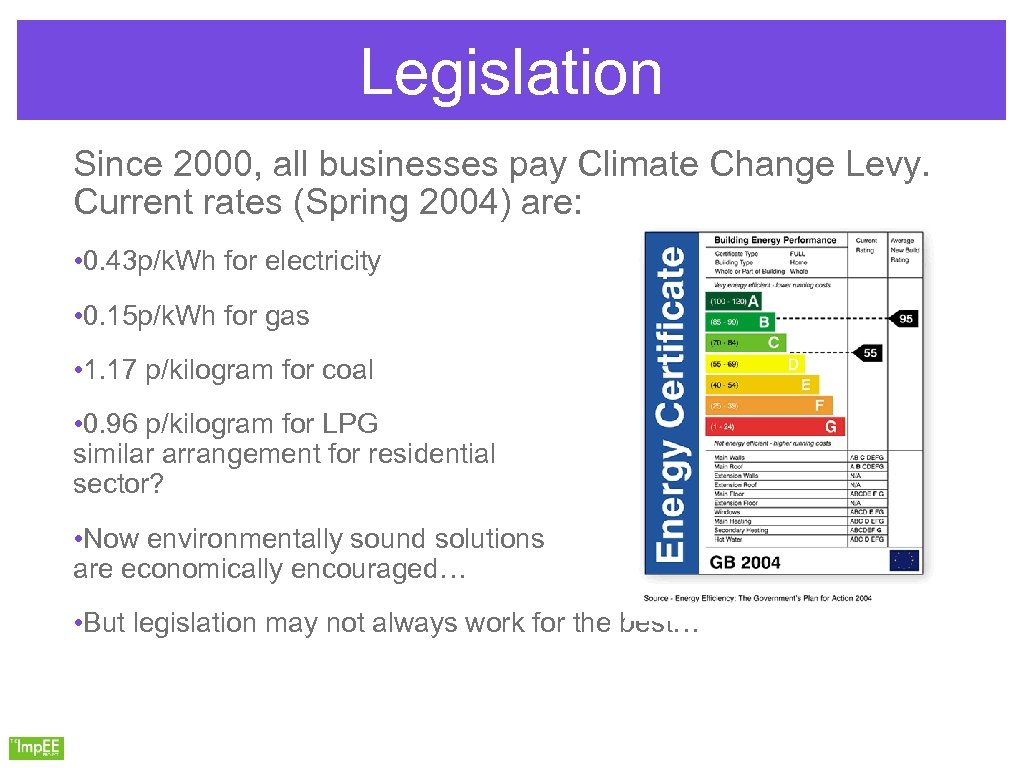 Legislation Since 2000, all businesses pay Climate Change Levy. Current rates (Spring 2004) are: • 0. 43 p/k. Wh for electricity • 0. 15 p/k. Wh for gas • 1. 17 p/kilogram for coal • 0. 96 p/kilogram for LPG similar arrangement for residential sector? • Now environmentally sound solutions are economically encouraged… • But legislation may not always work for the best…
 Example 2: Non-linear Switching • Linear low-dropout regulators (LDOs) frequently used in electronics • Efficiency > 85% for e. g. 3. 3 V audio power amp supply from 3. 6 V single cell Li battery • Efficiency < 25% when generating a sub-1 V processor core voltage: energy dissipated as heat • Non-linear switching involves using switch-mode dc/dc converters that exhibit high conversion efficiency. • Recent advances in IC process and packaging technology now allow integration of dc/dc controllers with FETs into small chip-sized packages. • Increased switching frequencies drive down inductor size and cost, a key factor for small price-sensitive applications.
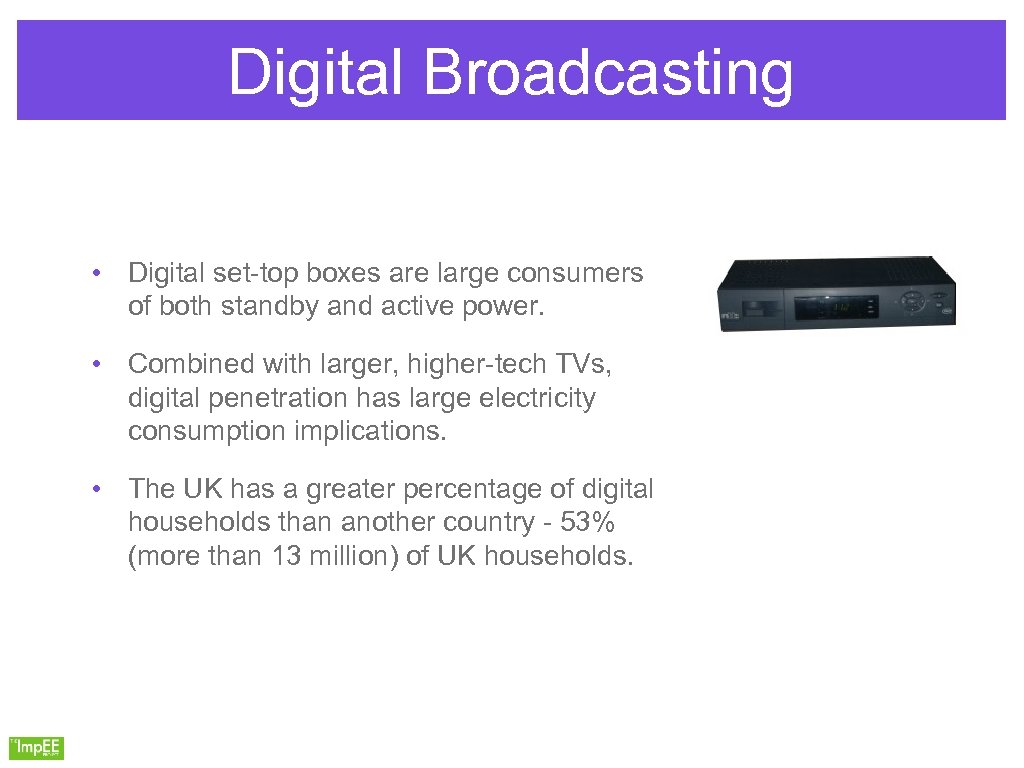 Digital Broadcasting • Digital set-top boxes are large consumers of both standby and active power. • Combined with larger, higher-tech TVs, digital penetration has large electricity consumption implications. • The UK has a greater percentage of digital households than another country - 53% (more than 13 million) of UK households.
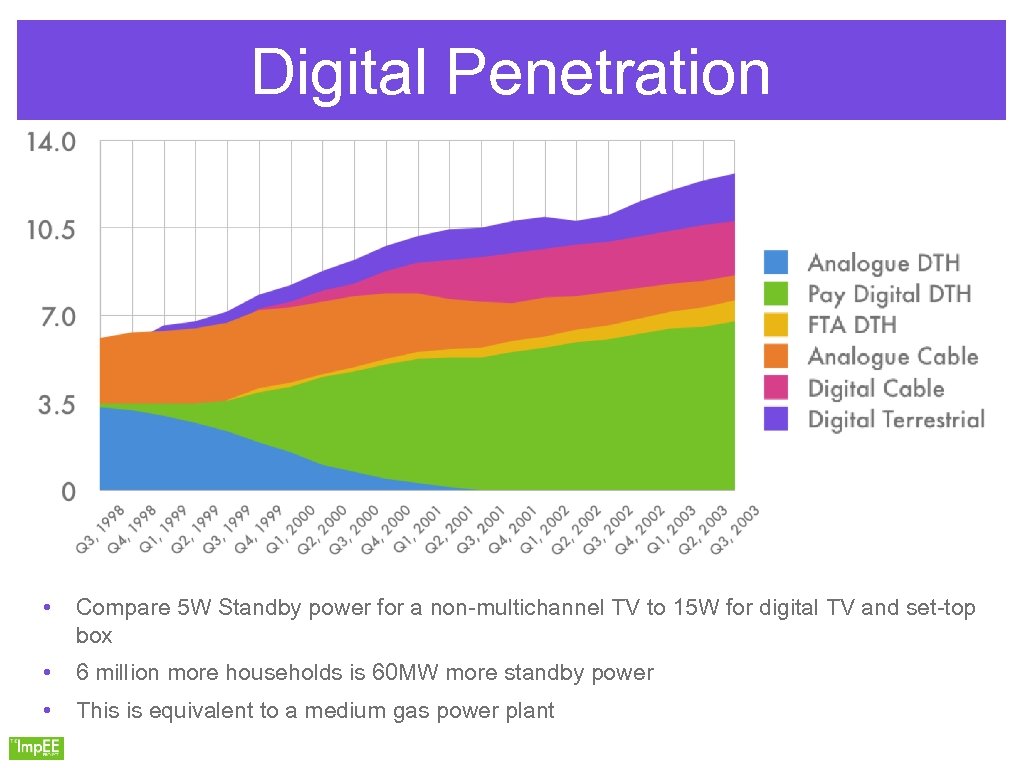 Digital Penetration • Compare 5 W Standby power for a non-multichannel TV to 15 W for digital TV and set-top box • 6 million more households is 60 MW more standby power • This is equivalent to a medium gas power plant
 Perspective • The USA uses standby power equivalent to 26 power plant’s outputs. • $1 million were spent in the US keeping “Exit” lights turned on last year. • The UK uses enough standby power to power 400 000 homes. • Tumble-dryers can use 38% of their power waiting at the end of a cycle. • Turning lights off when not in use would save 375 000 tons CO 2 or £ 55 m costs.
 © University of Cambridge, 2005 This material was produced as a part of the Imp. EE Project at the University of Cambridge. It may be reproduced, modified and used freely for educational purposes. Imp. EE is based at the Department of Engineering at the University of Cambridge and is funded by the CMI Institute.