


 Скачать презентацию Immigration to the USA Laws patterns volume and
Immigration-school.pptx
- Количество слайдов: 61
 Immigration to the USA Laws, patterns, volume and tendencies
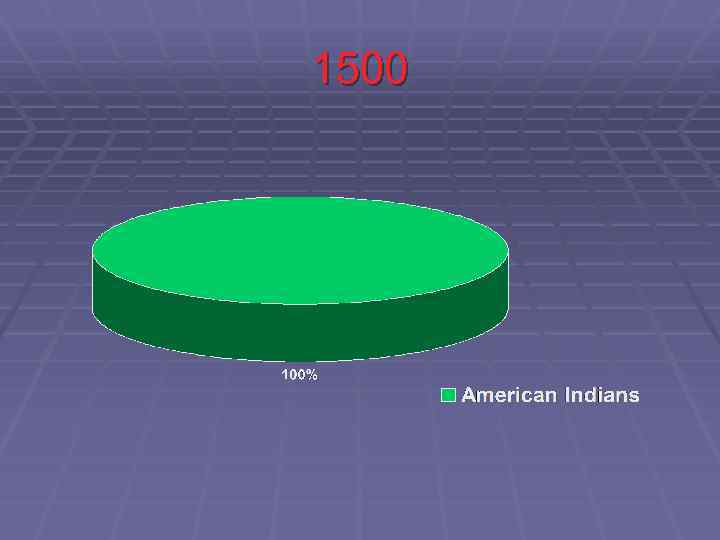 1500
1500
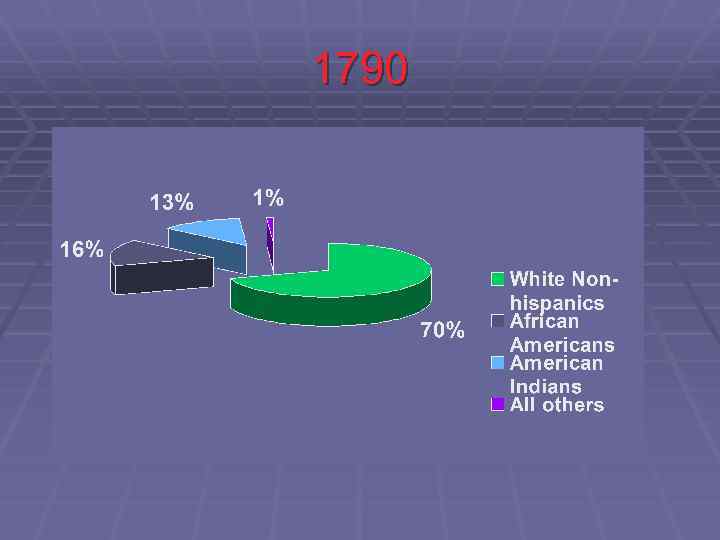 1790
1790
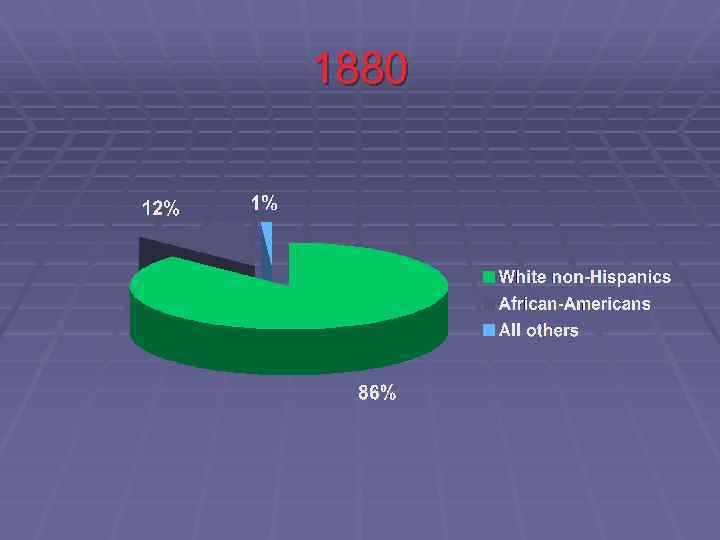 1880
1880
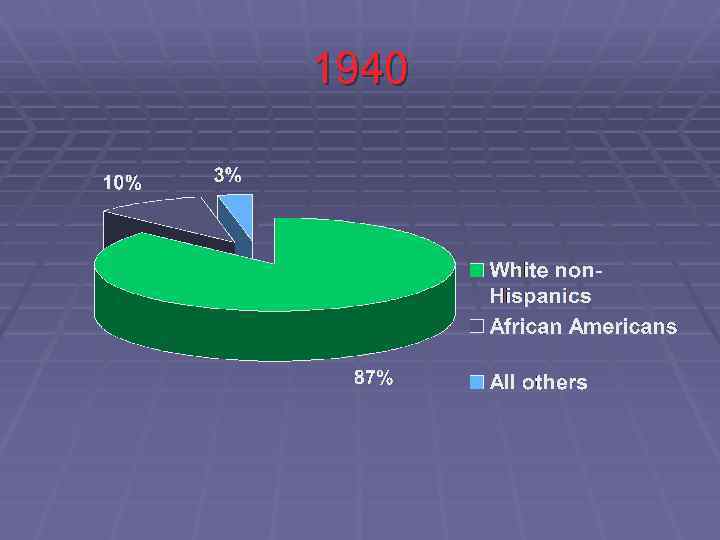 1940
1940
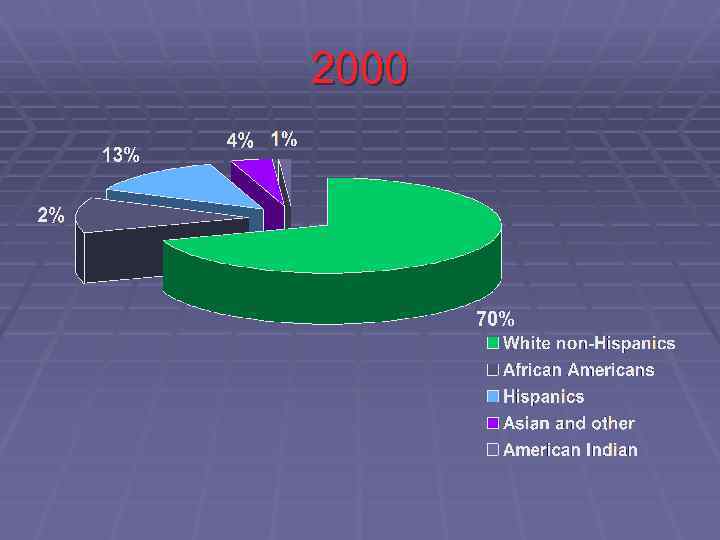 2000
2000
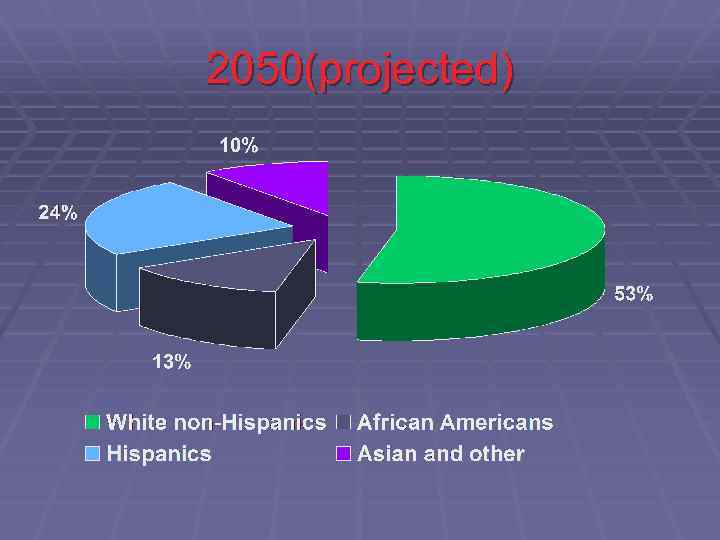 2050(projected)
 Migration § Patterns of migration: migration takes place within well-defined streams (Pennsylvania “Dutch”, Italians) § Volume (efficiency) of migration = stream – counterstream. Efficiency is higher for immigrants who were pushed rather than pulled. The Great Depression: 260, 000 left when 120, 000 admitted.
 1790 America § 1790 – first modern census. § 3, 929, 214 persons, out of whom - 3. 1 mln whites and 750, 000 blacks § No attempt was made to count Indians, who was excluded from the constitutional mandate § By 1820 – 899, 000 black males and 873, 000 black females
 Immigration Laws § 1795 - Naturalization Act restricts citizenship to "free white persons" who reside in the United States for five years and renounce their allegiance to their former country. § 1798 - The Alien and Sedition Acts permit the President to deport any foreigner deemed to be dangerous. A revised Naturalization Act imposes a 14 -year residency requirement for prospective citizens.
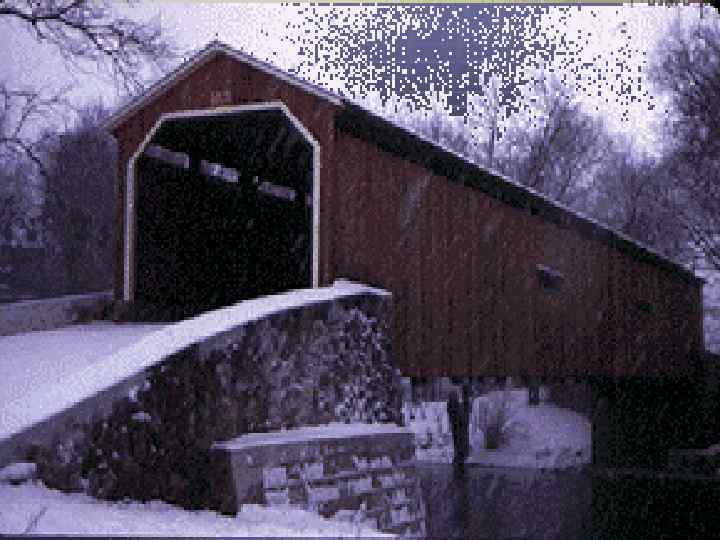
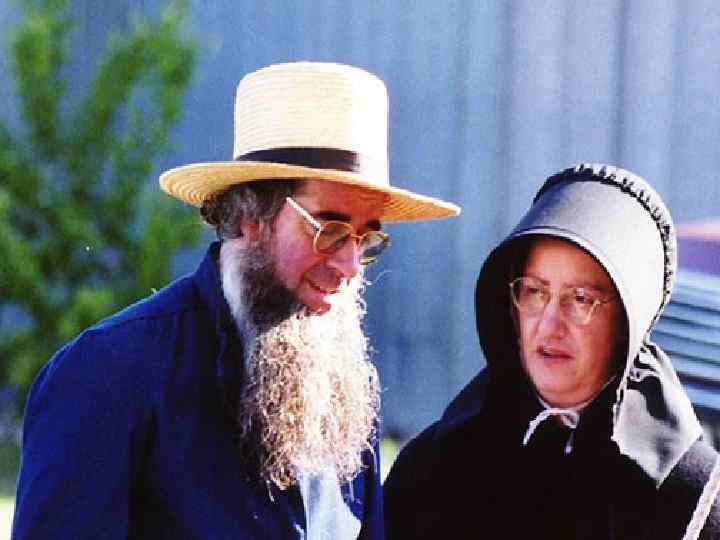
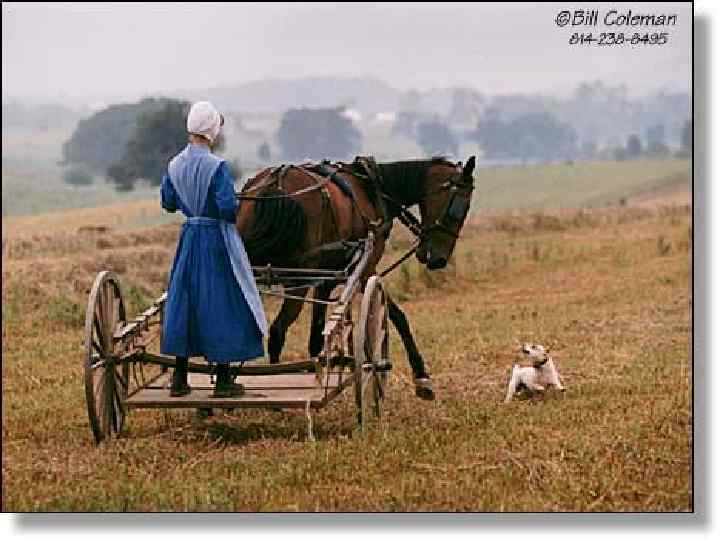
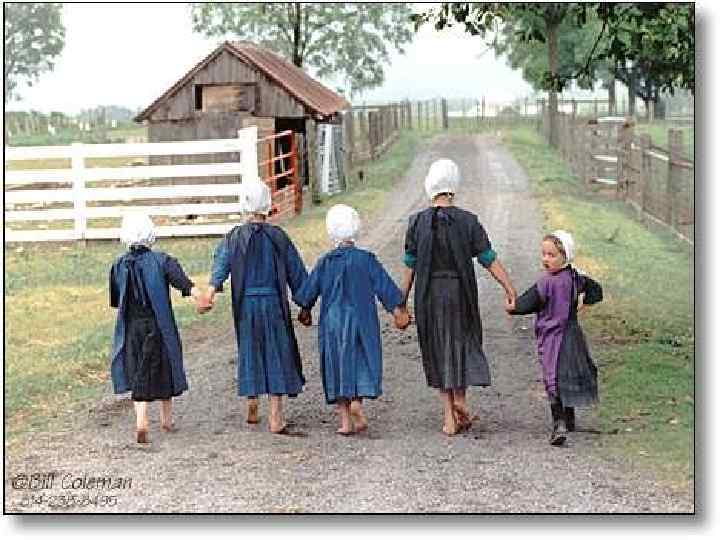
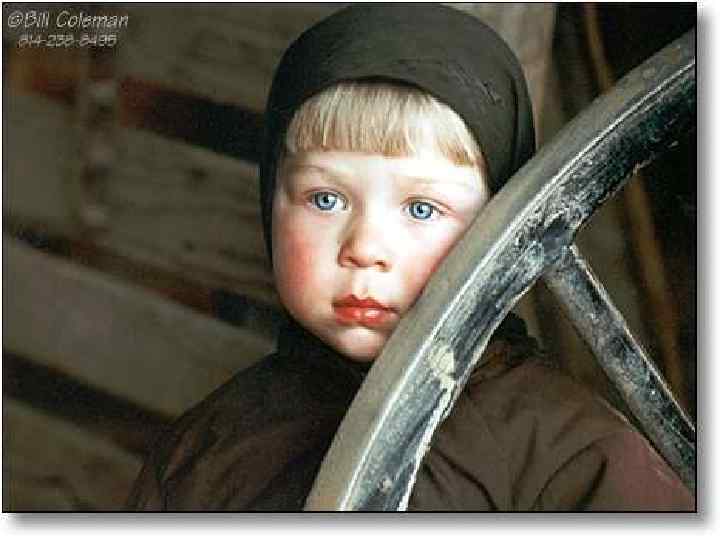
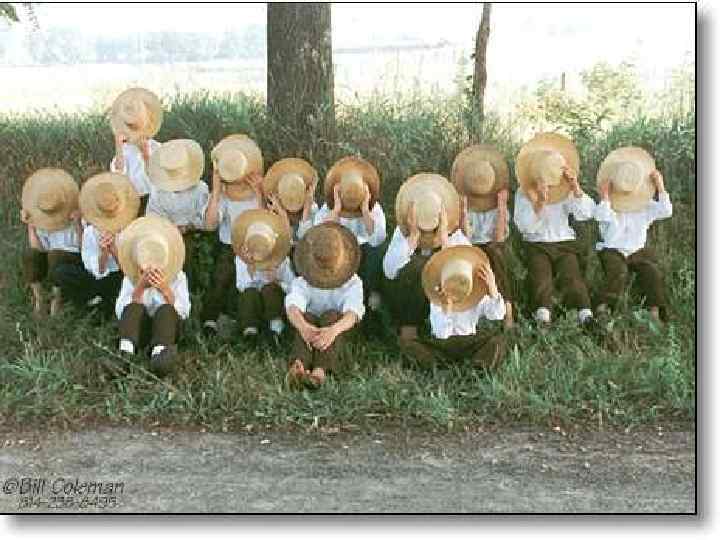
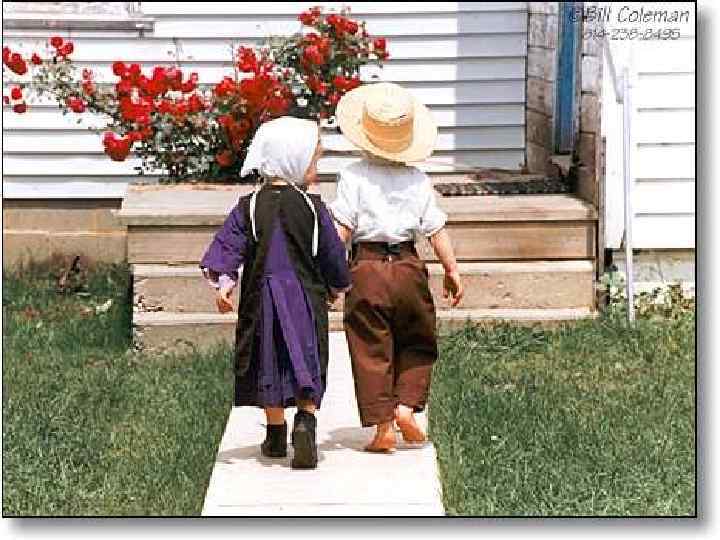
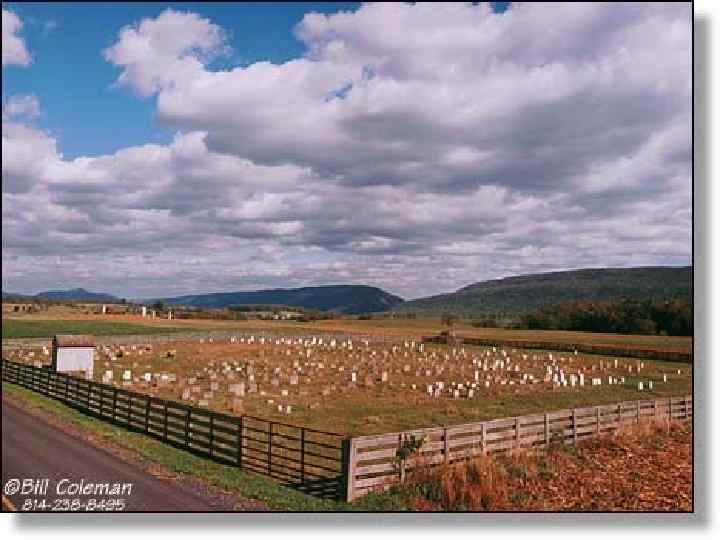
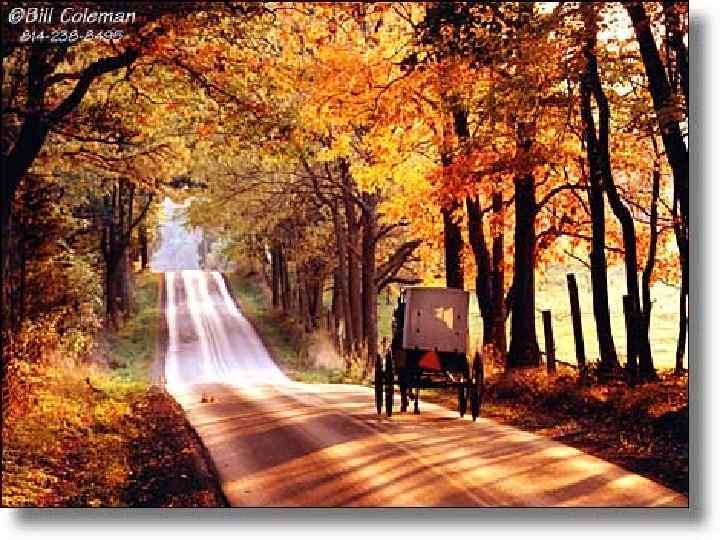
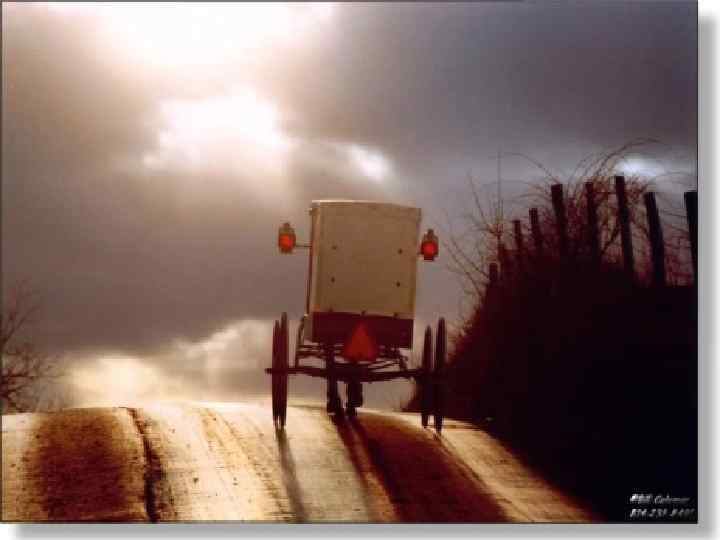
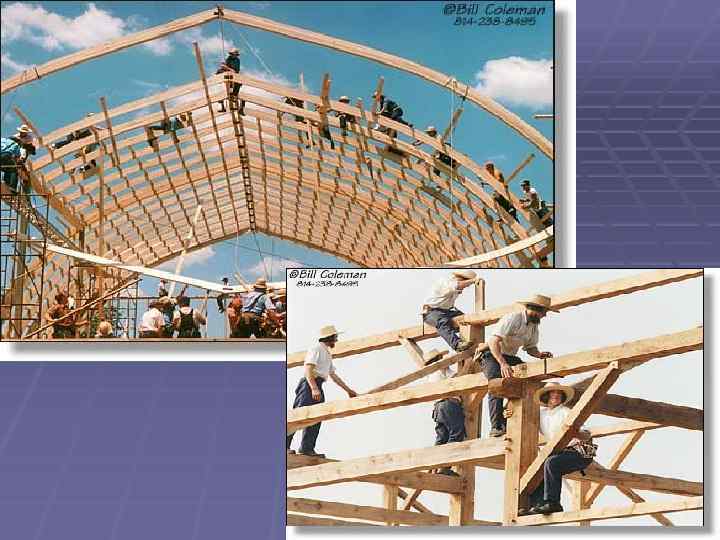
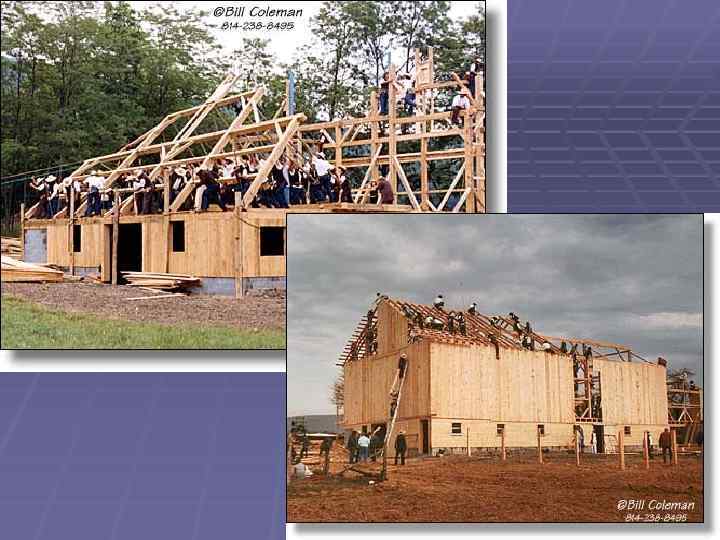
 Immigration – Amish people § The Amish are a religious group who live in § § settlements in 22 states and Ontario, Canada. The oldest group of Old Order Amish, about 1618, 000 people live in Lancaster County, Pennsylvania. The Amish stress humility, family and community, and separation from the world. The first sizable group of Amish got a grant of some ten thousand acres and arrived in Lancaster County in the 1720's or 1730's.
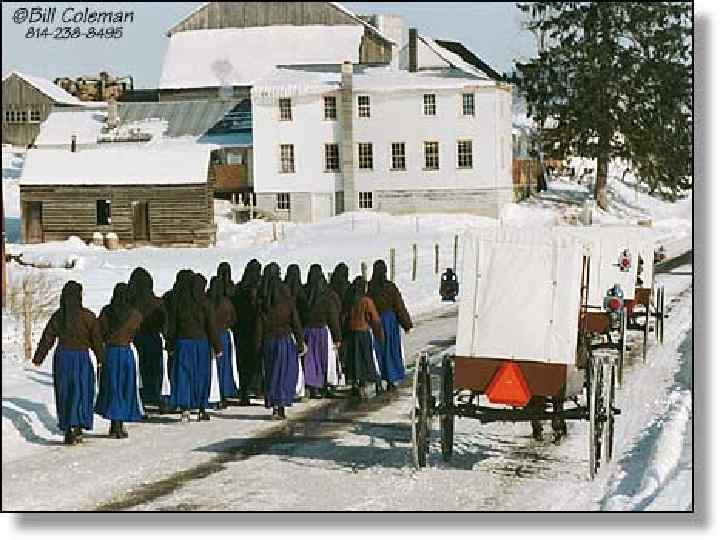
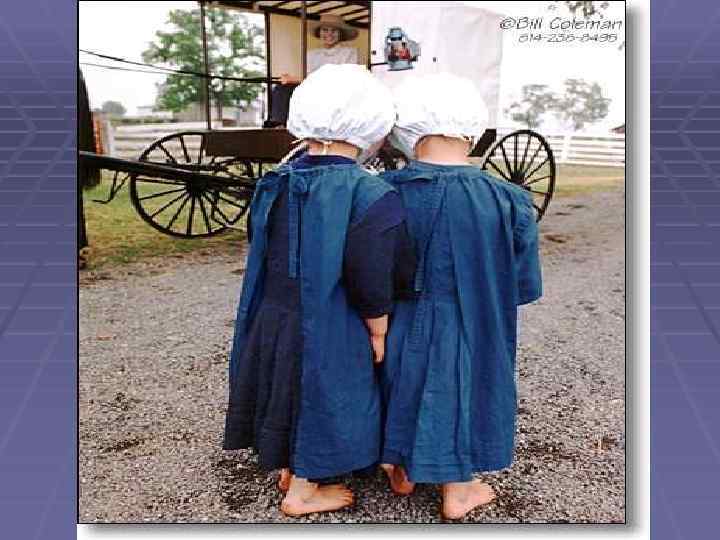
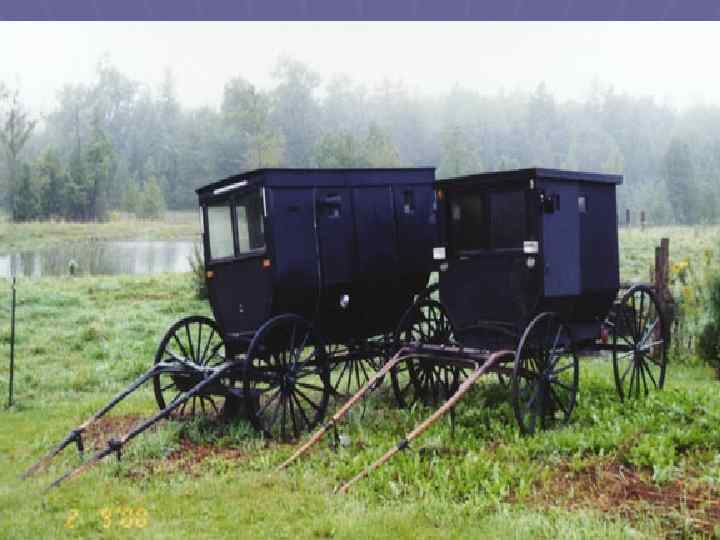
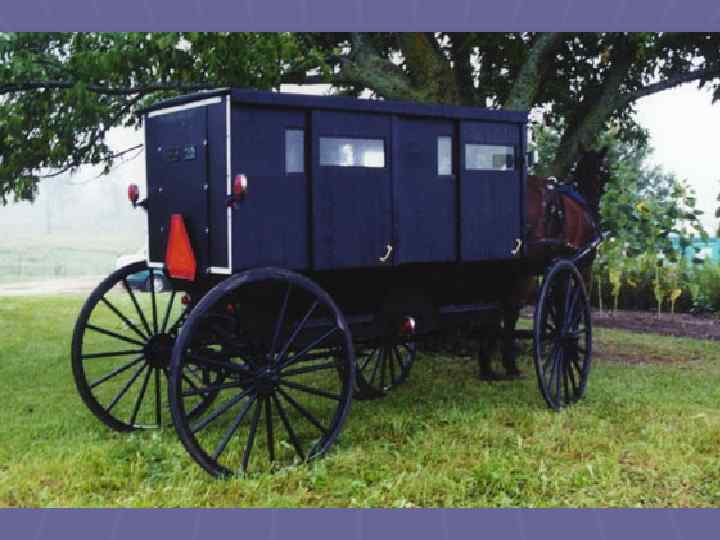
 Amish people § Amish groups all drive horses and buggies rather than cars, don’t have electricity in their homes, and send children to private, one-room schoolhouses. § Most Amish are trilingual. § The Amish are a private people who believe God has kept them together despite pressure to change from the modern world.
 Amish people § The Amish feel these distinctive clothes encourage humility and separation from the world. Their clothing is not a costume; it is an expression of their faith. § Self-employed Amish do not pay Social Security tax. Those employed by non-Amish employers do pay Social Security tax. The Amish do pay real estate, state and federal income taxes, county taxes, sales tax, etc § Self sufficiency is the Amish community's answer to government aid programs.





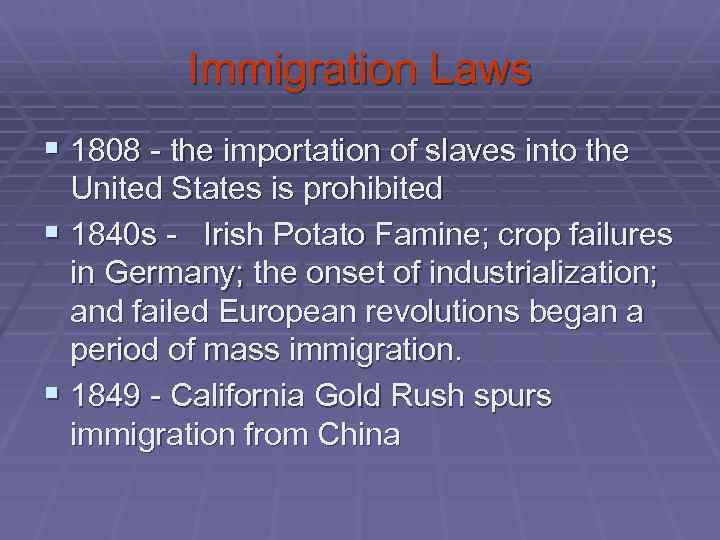 Immigration Laws § 1808 - the importation of slaves into the United States is prohibited § 1840 s - Irish Potato Famine; crop failures in Germany; the onset of industrialization; and failed European revolutions began a period of mass immigration. § 1849 - California Gold Rush spurs immigration from China
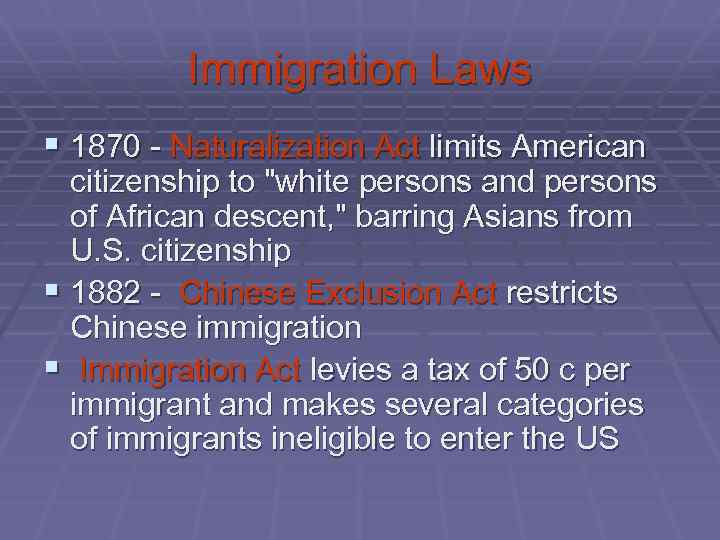 Immigration Laws § 1870 - Naturalization Act limits American citizenship to "white persons and persons of African descent, " barring Asians from U. S. citizenship § 1882 - Chinese Exclusion Act restricts Chinese immigration § Immigration Act levies a tax of 50 c per immigrant and makes several categories of immigrants ineligible to enter the US
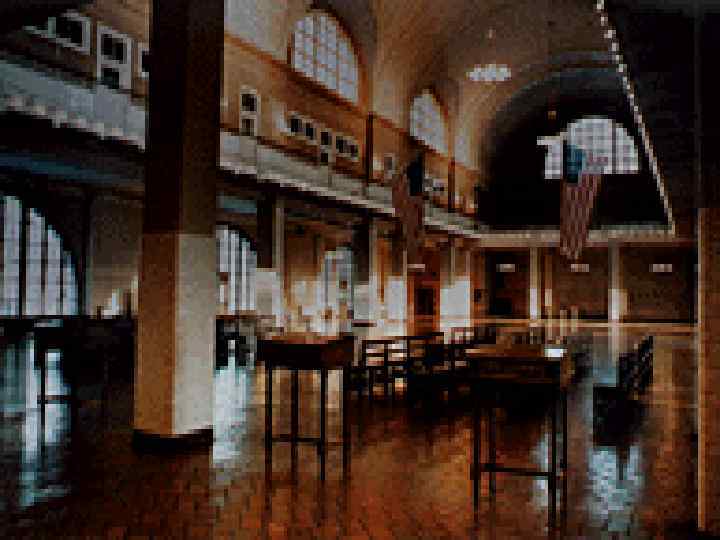
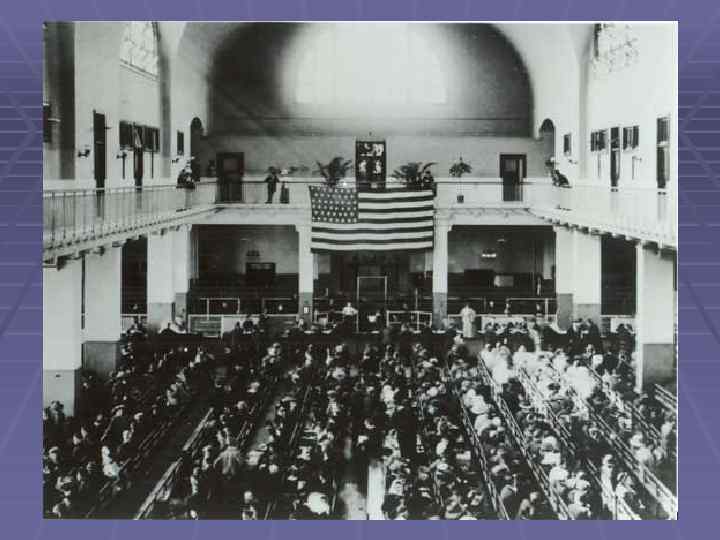
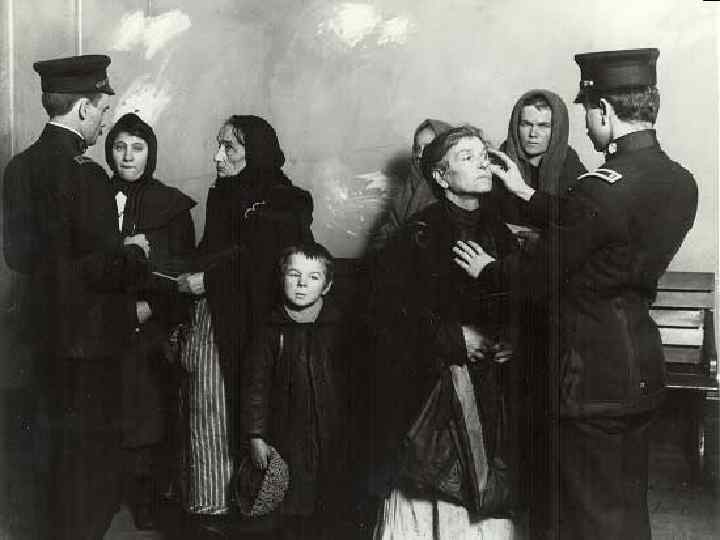
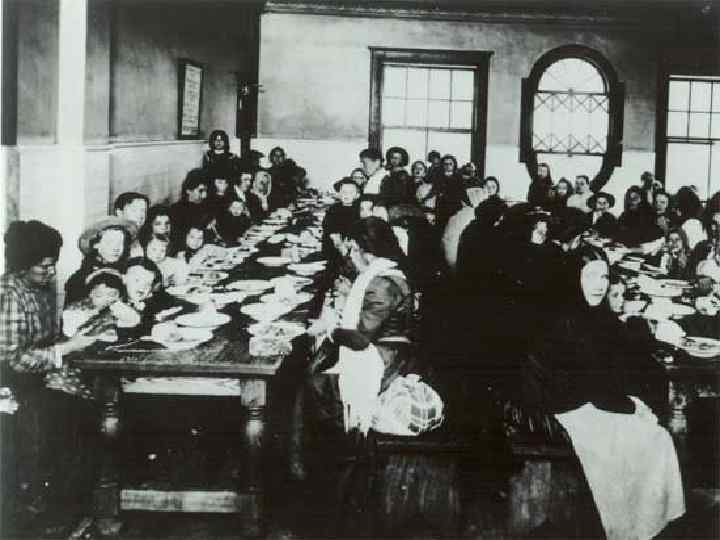
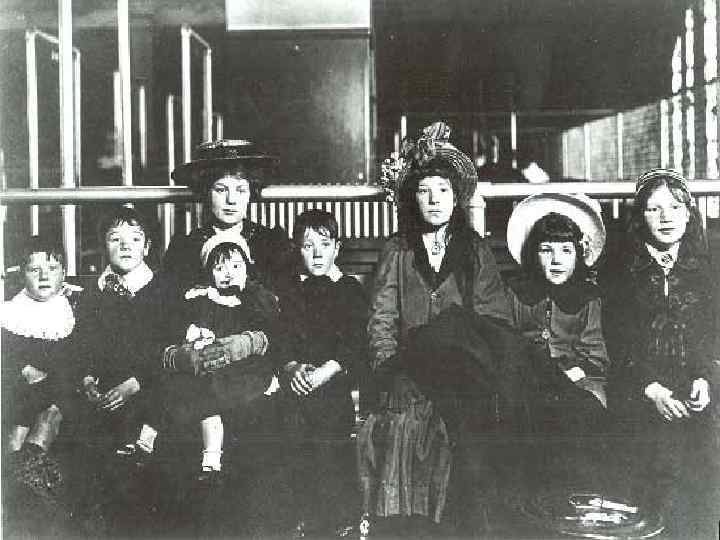
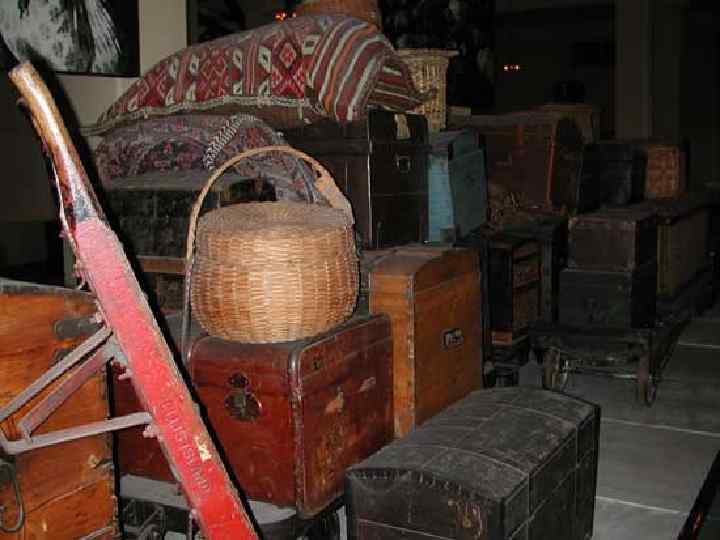
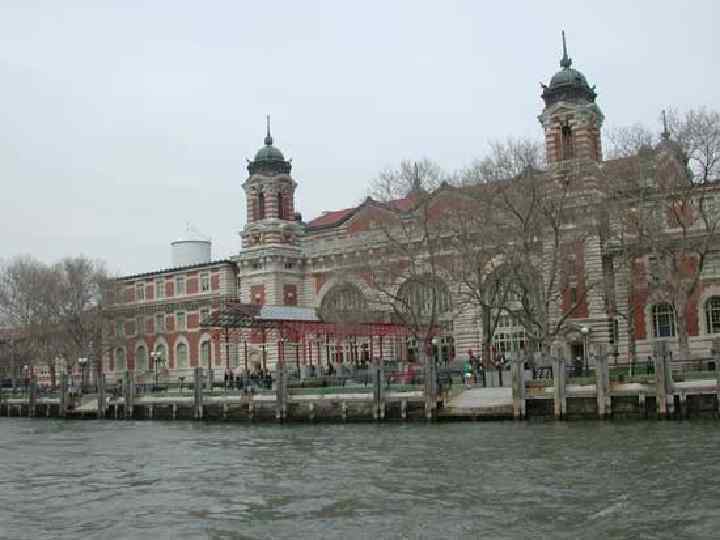
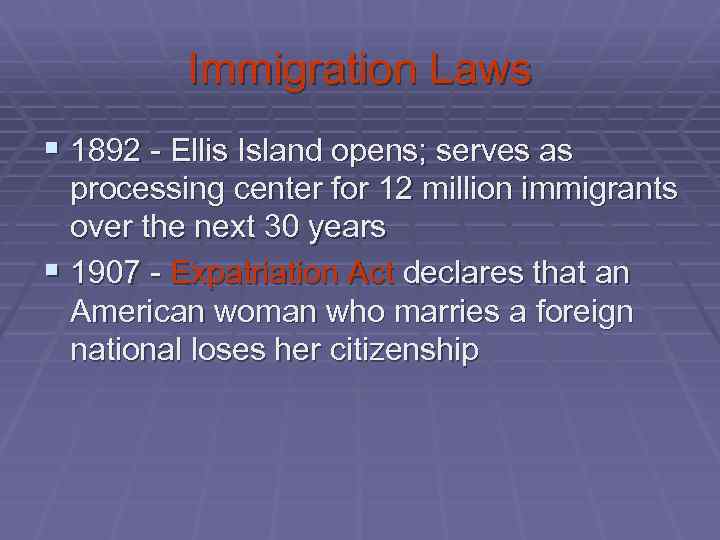 Immigration Laws § 1892 - Ellis Island opens; serves as processing center for 12 million immigrants over the next 30 years § 1907 - Expatriation Act declares that an American woman who marries a foreign national loses her citizenship
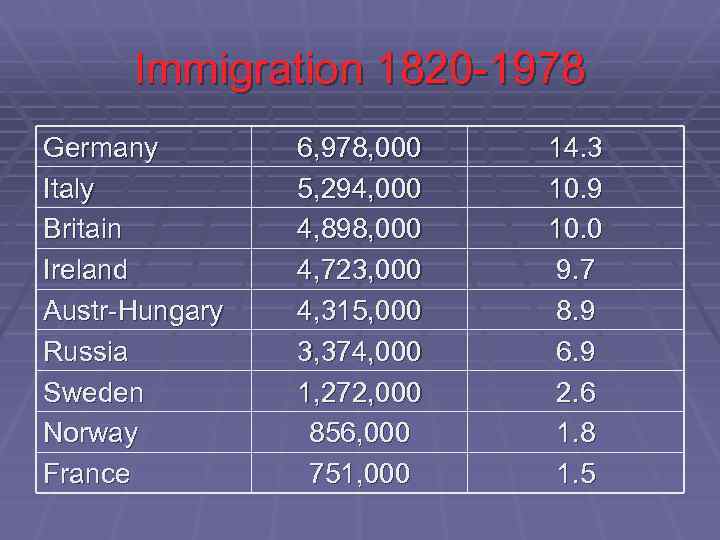 Immigration 1820 -1978 Germany Italy Britain Ireland Austr-Hungary Russia Sweden Norway France 6, 978, 000 5, 294, 000 4, 898, 000 4, 723, 000 4, 315, 000 3, 374, 000 1, 272, 000 856, 000 751, 000 14. 3 10. 9 10. 0 9. 7 8. 9 6. 9 2. 6 1. 8 1. 5
 Immigration § The International Channel
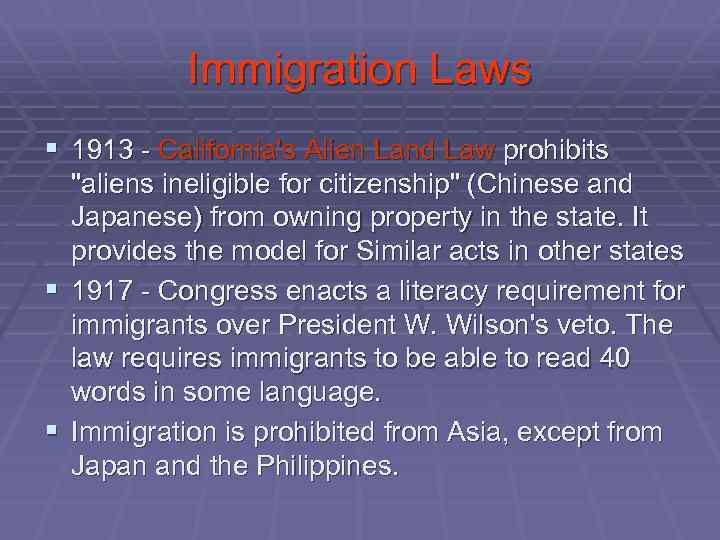 Immigration Laws § 1913 - California's Alien Land Law prohibits "aliens ineligible for citizenship" (Chinese and Japanese) from owning property in the state. It provides the model for Similar acts in other states § 1917 - Congress enacts a literacy requirement for immigrants over President W. Wilson's veto. The law requires immigrants to be able to read 40 words in some language. § Immigration is prohibited from Asia, except from Japan and the Philippines.
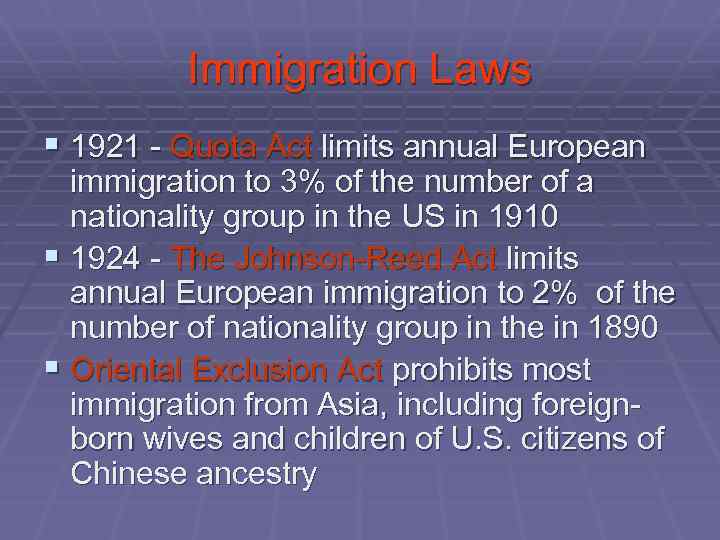 Immigration Laws § 1921 - Quota Act limits annual European immigration to 3% of the number of a nationality group in the US in 1910 § 1924 - The Johnson-Reed Act limits annual European immigration to 2% of the number of nationality group in the in 1890 § Oriental Exclusion Act prohibits most immigration from Asia, including foreignborn wives and children of U. S. citizens of Chinese ancestry
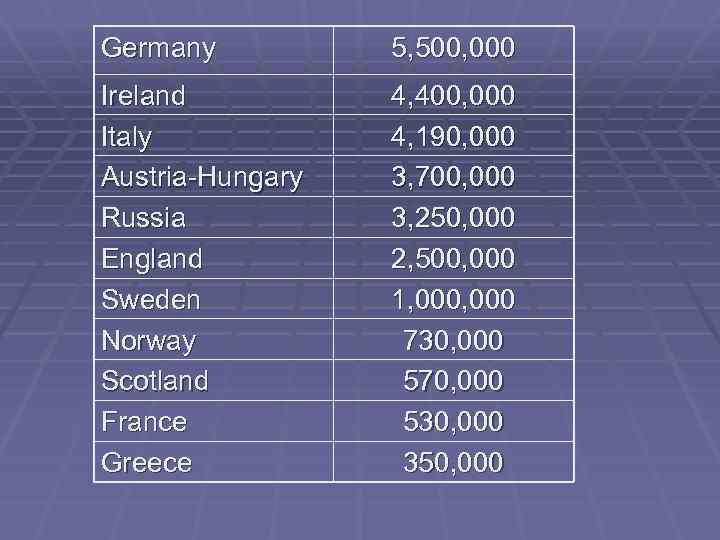 Germany 5, 500, 000 Ireland Italy Austria-Hungary Russia England Sweden Norway Scotland France Greece 4, 400, 000 4, 190, 000 3, 700, 000 3, 250, 000 2, 500, 000 1, 000 730, 000 570, 000 530, 000 350, 000
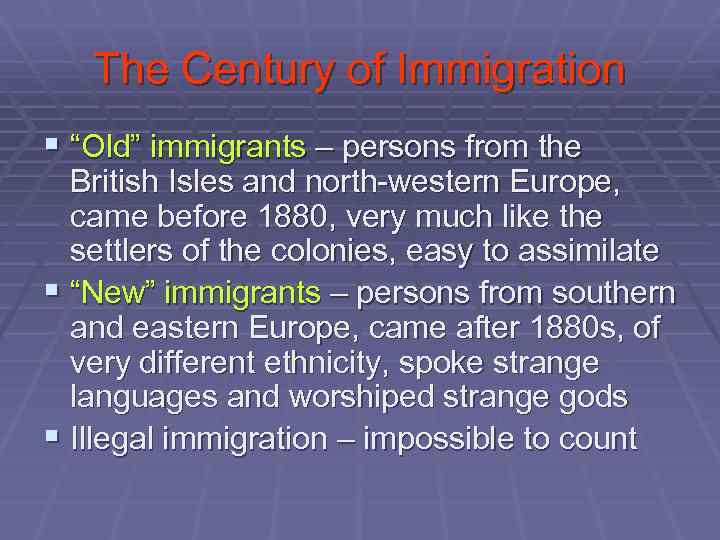 The Century of Immigration § “Old” immigrants – persons from the British Isles and north-western Europe, came before 1880, very much like the settlers of the colonies, easy to assimilate § “New” immigrants – persons from southern and eastern Europe, came after 1880 s, of very different ethnicity, spoke strange languages and worshiped strange gods § Illegal immigration – impossible to count
 The USA: 1860 - 1920 § The USA grew from 30 mln to 195 mln § Changed from an agricultural nation to a basically industrial one; § from a rural to an urban nation; § From a relatively isolated nation concerned with its own affairs to a world power deeply engaged in Europe and Asia
 The National Origin System § The measures were drawn up to block the growing immigration from southern Europe § Congress severely restricted entry privileges not only of Chinese and Japanese but of Europeans as well. § Remained the basis of immigration policy until 1965 § The quotas were deliberately weighted in favor of northern Europe
 The National Origin System § The quota for each nation was set at 3% of the number of people descended from each nationality recorded in the 1920 census. § Almost 70% of the quota for the Eastern Hemisphere went to Great Britain, Ireland Germany § Most of 65, 000 British quota went unfilled
 The National Origin System § Italian quota – 6, 000 people; wanted to enter – 200, 000 people § Greek quota – 305 people; wanted to enter – about 100, 000 people § By the end of the 1920 s immigration dropped to ¼ of its pre-war level; economic depression and the war ended transatlantic immigration. § European immigration had been legislated out of existence.
 Immigration and Naturalization Act § 1965 – signed by Pr Lyndon B. Johnson § The primary goals – to reunite families and protect the American labor market § Also initiated restrictions on immigration from Latin America § The Act’s influence was on the composition rather than the size of immigration
 Immigration and Naturalization Act § The Act set down the rules for becoming a citizen. § Naturalization is the conferring of citizenship on a person after birth. § The general rules: § 18 years of age; continuous residence for at least 5 years; good moral character, absence of convictions
 General rules (naturalization) § Ability to read, write, and speak and understand words of ordinary usage in English; § Ability to pass a test in U. S. government and history § In the late 1990 s apprxm 700, 000 people were legally admitted annually
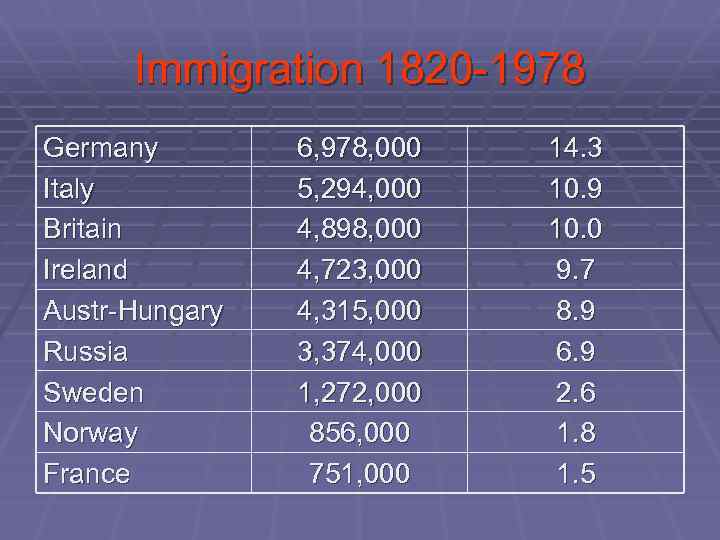 Immigration 1820 -1978 Germany Italy Britain Ireland Austr-Hungary Russia Sweden Norway France 6, 978, 000 5, 294, 000 4, 898, 000 4, 723, 000 4, 315, 000 3, 374, 000 1, 272, 000 856, 000 751, 000 14. 3 10. 9 10. 0 9. 7 8. 9 6. 9 2. 6 1. 8 1. 5
 You Want to Be a Citizen? § 1. What do the stripes on the flag represent? § 2. How many changes, or amendments, are § § § there to the Constitution? 3. Who is the chief justice of the Supreme Court? 4. What are some of the requirements to be eligible to become president? 5. In what year was the Constitution written?
 You Want to Be a Citizen? § 6. What is the introduction to the Constitution called? § 7. Name one right or freedom guaranteed by the first amendment. § 8. What kind of government does the United States have?