 Скачать презентацию Immigration and Industrialization in the City of Brotherly
2ea09a4508f7f9c006d13bb504cd67f9.ppt
- Количество слайдов: 26




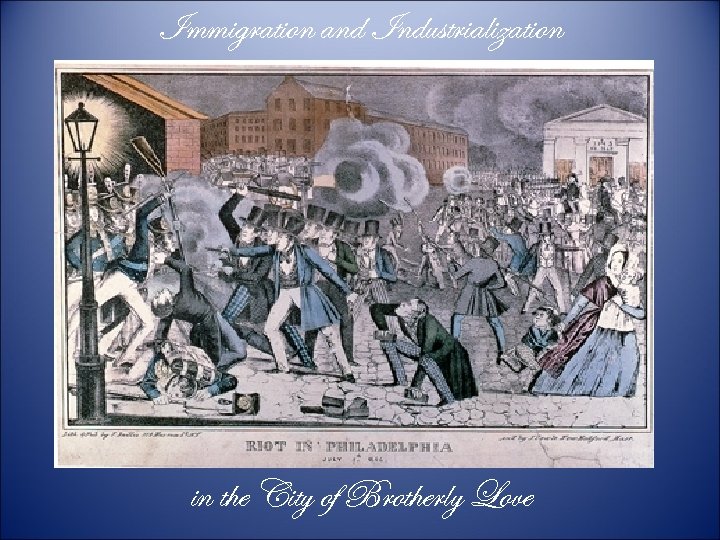
Immigration and Industrialization in the City of Brotherly Love
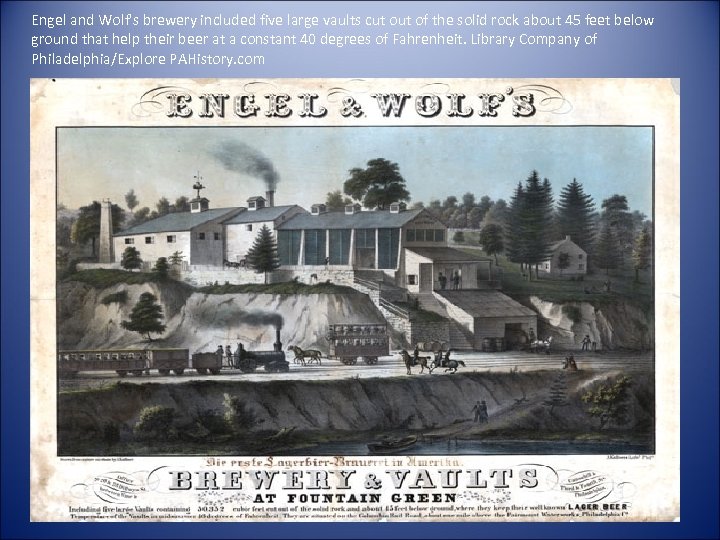
Engel and Wolf's brewery included five large vaults cut of the solid rock about 45 feet below ground that help their beer at a constant 40 degrees of Fahrenheit. Library Company of Philadelphia/Explore PAHistory. com
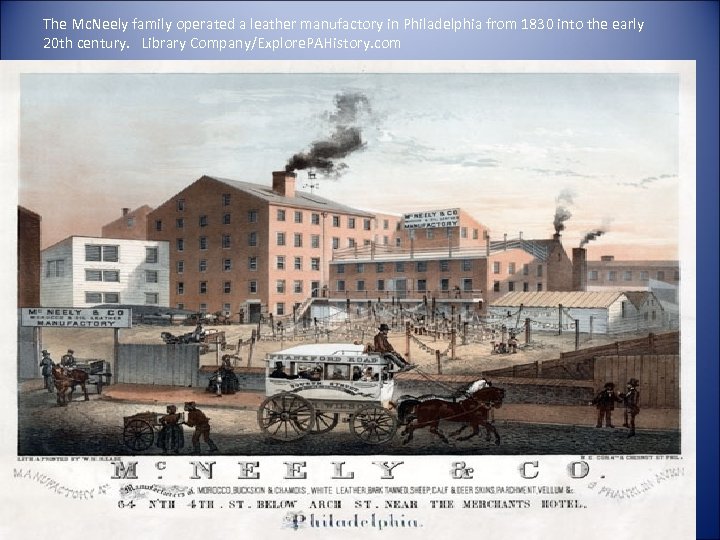
The Mc. Neely family operated a leather manufactory in Philadelphia from 1830 into the early 20 th century. Library Company/Explore. PAHistory. com
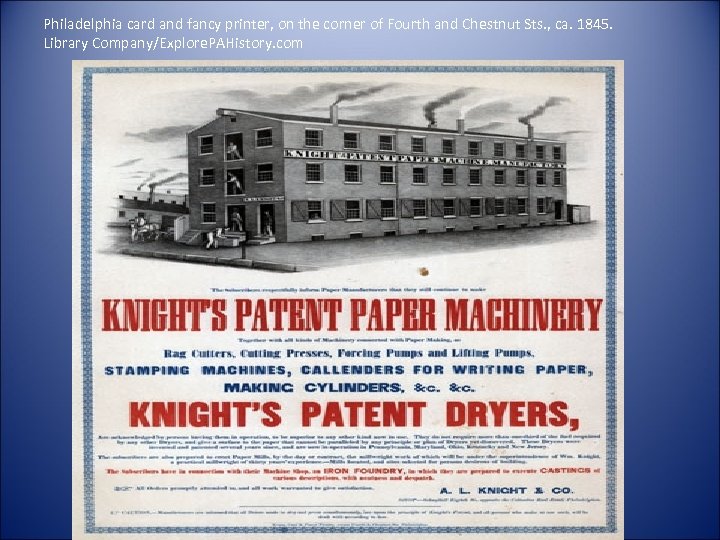
Philadelphia card and fancy printer, on the corner of Fourth and Chestnut Sts. , ca. 1845. Library Company/Explore. PAHistory. com
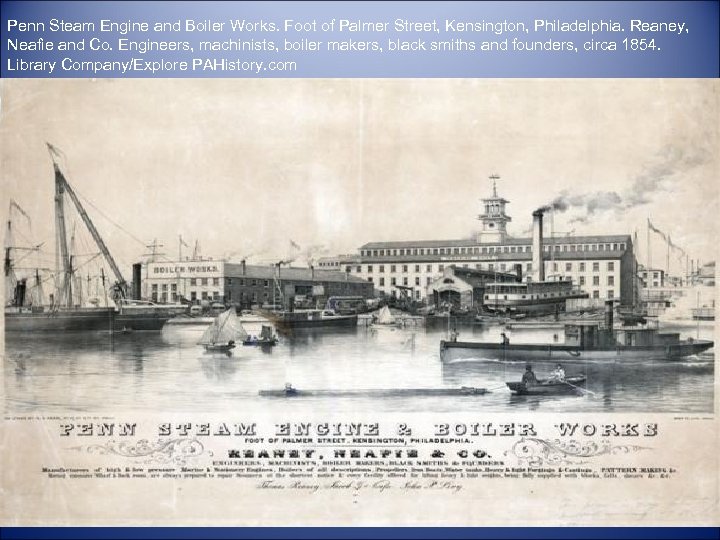
Penn Steam Engine and Boiler Works. Foot of Palmer Street, Kensington, Philadelphia. Reaney, Neafie and Co. Engineers, machinists, boiler makers, black smiths and founders, circa 1854. Library Company/Explore PAHistory. com
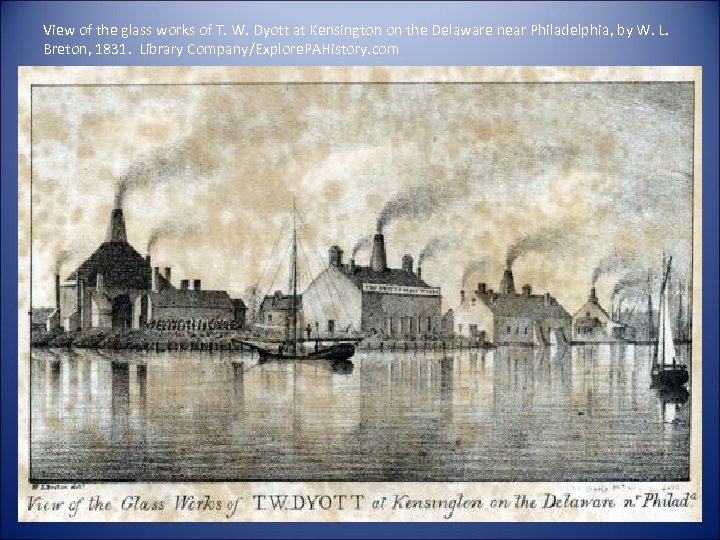
View of the glass works of T. W. Dyott at Kensington on the Delaware near Philadelphia, by W. L. Breton, 1831. Library Company/Explore. PAHistory. com
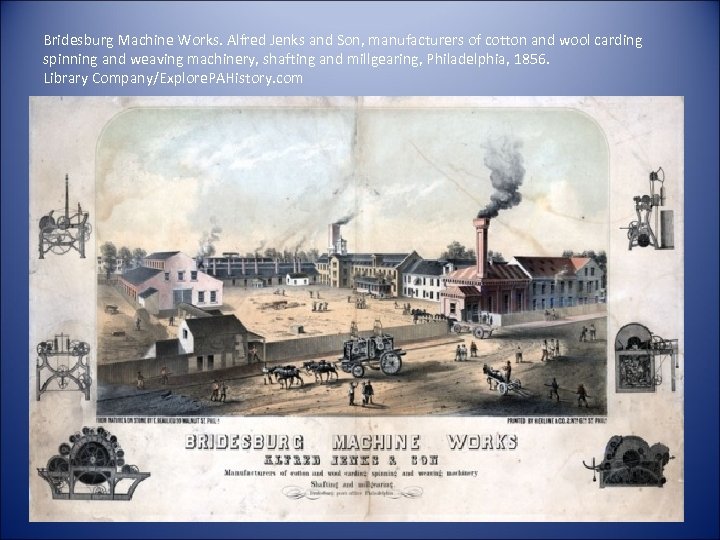
Bridesburg Machine Works. Alfred Jenks and Son, manufacturers of cotton and wool carding spinning and weaving machinery, shafting and millgearing, Philadelphia, 1856. Library Company/Explore. PAHistory. com
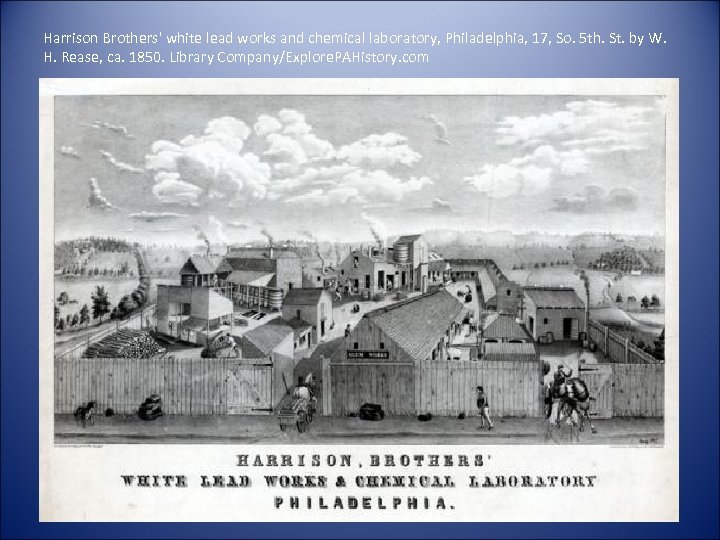
Harrison Brothers' white lead works and chemical laboratory, Philadelphia, 17, So. 5 th. St. by W. H. Rease, ca. 1850. Library Company/Explore. PAHistory. com
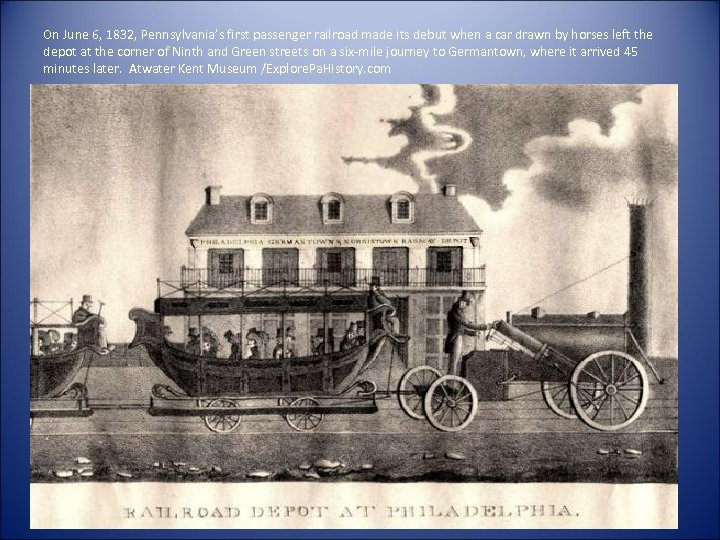
On June 6, 1832, Pennsylvania’s first passenger railroad made its debut when a car drawn by horses left the depot at the corner of Ninth and Green streets on a six-mile journey to Germantown, where it arrived 45 minutes later. Atwater Kent Museum /Explore. Pa. History. com
• • • • • • Making Sense of Maps David Stephens (from the Making Sense of Evidence series on History Matters: The U. S. Survey on the Web, located at http: //historymatters. gmu. edu) Making Sense of Maps offers a place for students and teachers to begin working with maps as historical evidence. Written by David Stephens, this guide offers an overview of the history of maps and how historians use them, a breakdown of the elements of a map, tips on what questions to ask when analyzing maps, an annotated bibliography, and a guide to finding and using maps online. David Stephens is professor of geography at Youngstown State University. He holds a Ph. D. in geography from the University of Nebraska. His recent research interests have focused on the use of primary documents to understand the processes of early settlement in the northeastern Ohio and western Pennsylvania. What is a Map? Maps can be an important source of primary information for historic investigation. But what is a map? This is a deceptively simple question, until you’re asked to provide an answer—you may find it far more difficult than you think. Yet we encounter maps on a daily basis. The media uses them to pinpoint the location of the latest international crisis, many textbooks include them as illustrations, and we consult maps to help us navigate from place to place. Maps are so commonplace; we tend to take them for granted. Yet sometimes the familiar is far more complex than it appears. “What is a map? ” has more than one answer.
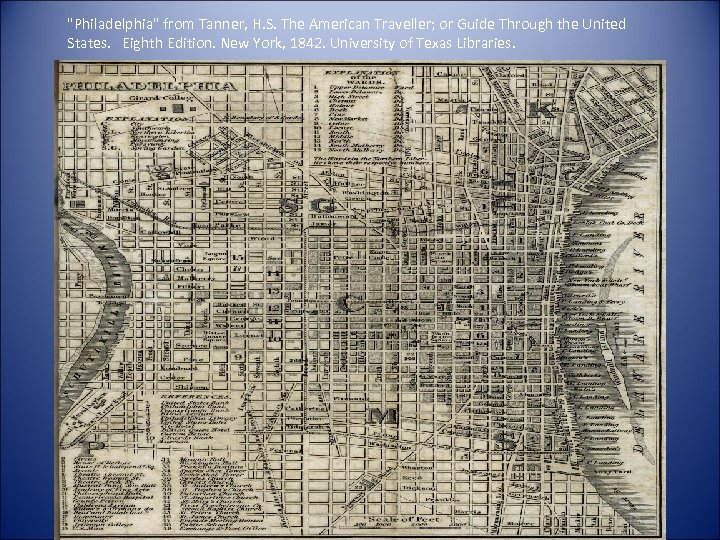
"Philadelphia" from Tanner, H. S. The American Traveller; or Guide Through the United States. Eighth Edition. New York, 1842. University of Texas Libraries.
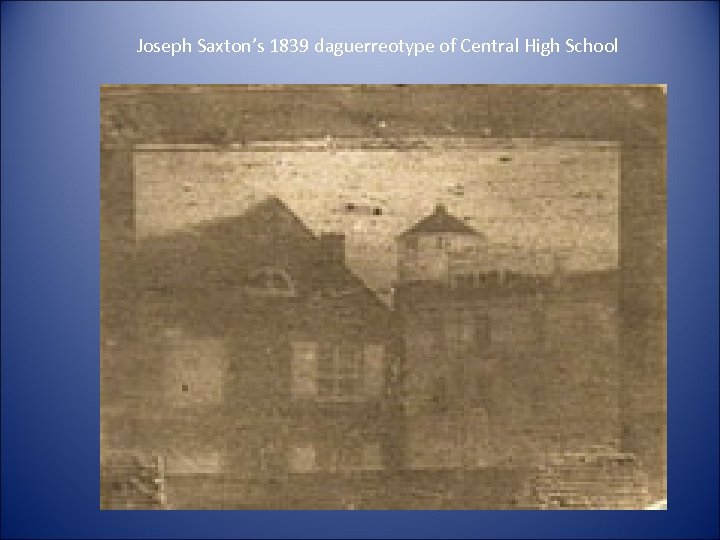
Joseph Saxton’s 1839 daguerreotype of Central High School
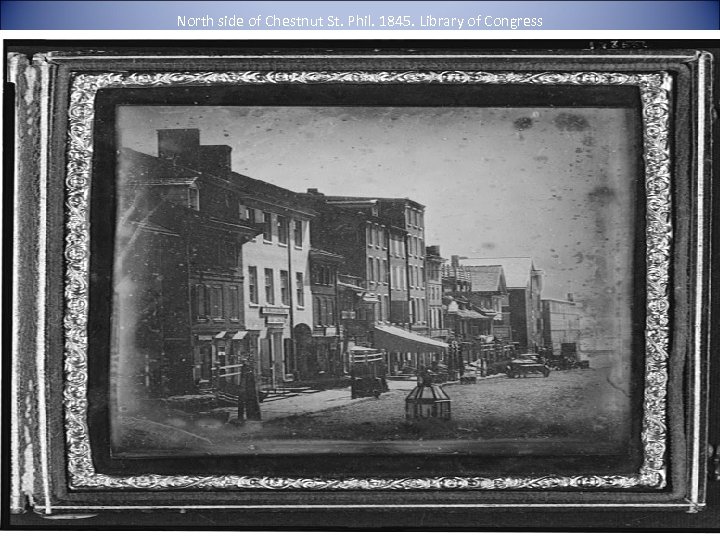
North side of Chestnut St. Phil. 1845. Library of Congress
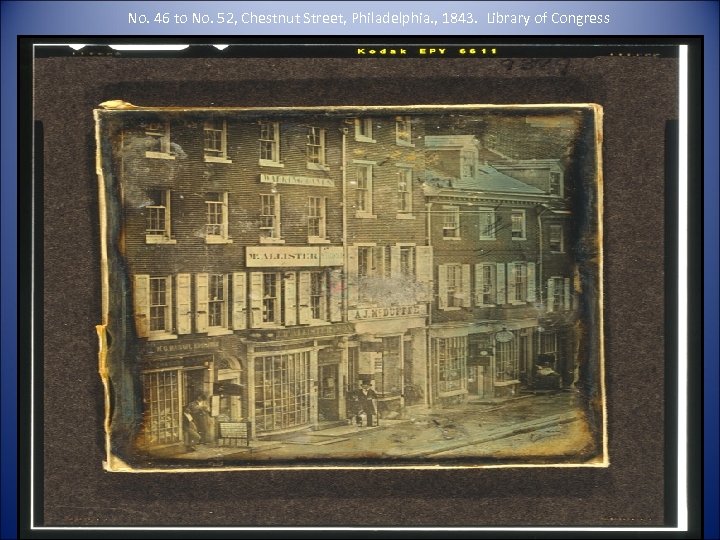
No. 46 to No. 52, Chestnut Street, Philadelphia. , 1843. Library of Congress
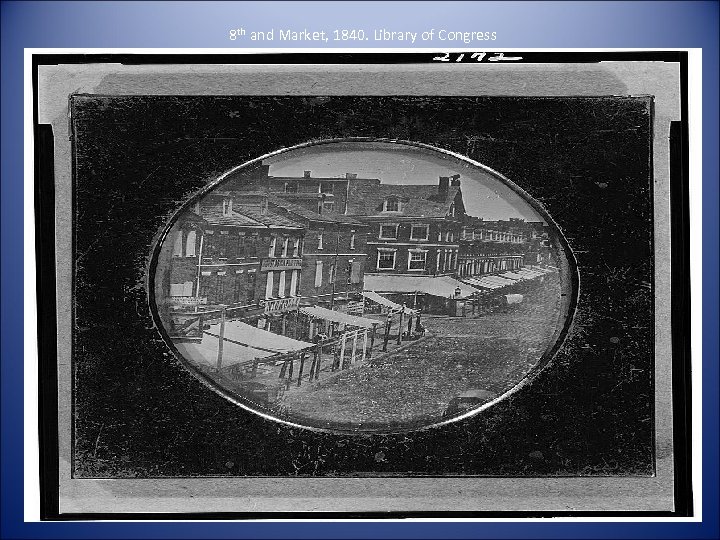
8 th and Market, 1840. Library of Congress
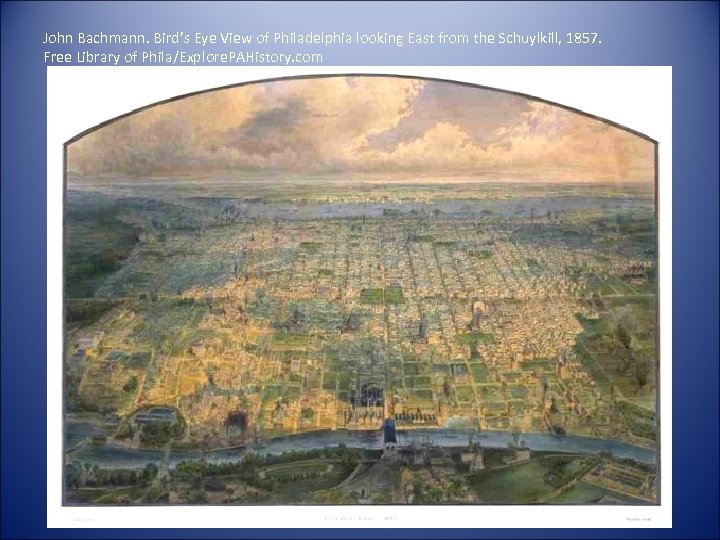
John Bachmann. Bird’s Eye View of Philadelphia looking East from the Schuylkill, 1857. Free Library of Phila/Explore. PAHistory. com
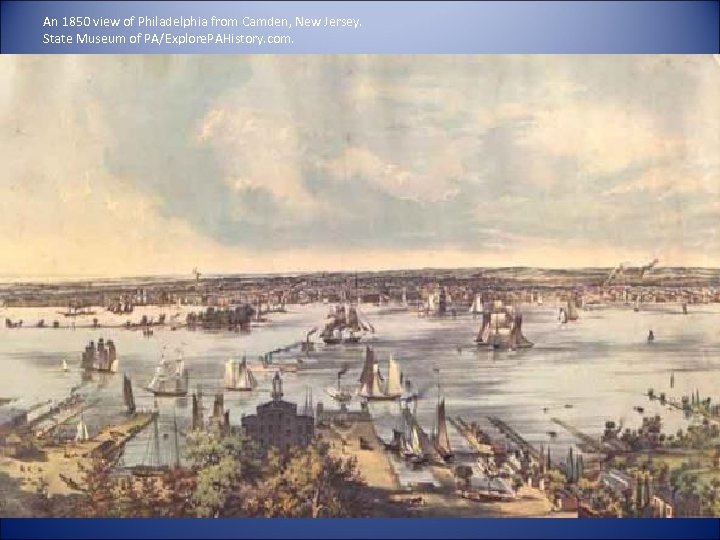
An 1850 view of Philadelphia from Camden, New Jersey. State Museum of PA/Explore. PAHistory. com.
• • • • • • Making Sense of Letters and Diaries Steven Stowe (From the Making Sense of Evidence series on History Matters: The U. S. Survey on the Web located at http: //historymatters. gmu. edu) In an attic or an online archive, coming across personal correspondence and diaries can open a tantalizing window into past lives. This guide offers an overview of letters and diaries as historical sources and how historians use them, tips on what questions to ask when reading these personal texts, an annotated bibliography, and a guide to finding and using letters and diaries online. Steven Stowe teaches history at Indiana University, Bloomington. He is the author of Intimacy and Power in the Old South (Johns Hopkins University Press, 1987) and, most recently, editor of A Southern Practice: The Diary and Autobiography of Charles A. Hentz, M. D. (University Press of Virginia, 2000). Getting Started: What Kind Of Source Are Historical Letters and Diaries? Few historical texts seem as familiar – or as compelling to read – as personal letters and diaries. They are plain-spoken, lively, and full of details. Both letters and diaries seem to emerge directly from the writer, fresh and intimate, bringing us close to who that person was. Both satisfy us by showing how people in the past shared many of our hopes, worries, and common sense. At the same time, both fascinate us by revealing differences between times past and our own time. They make us curious to explore differences in language and expressive styles, in what people felt needed saying and what did not. These differences in turn point to historical changes and continuities in self, social relations, work, and values, which personal letters and diaries capture with special
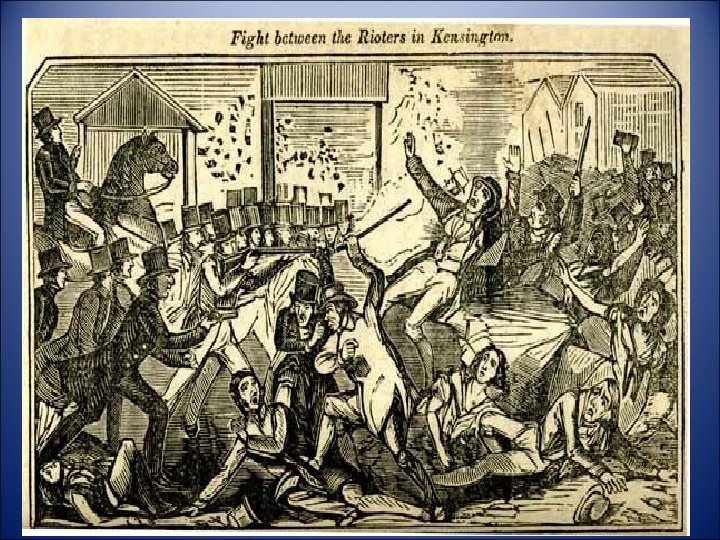
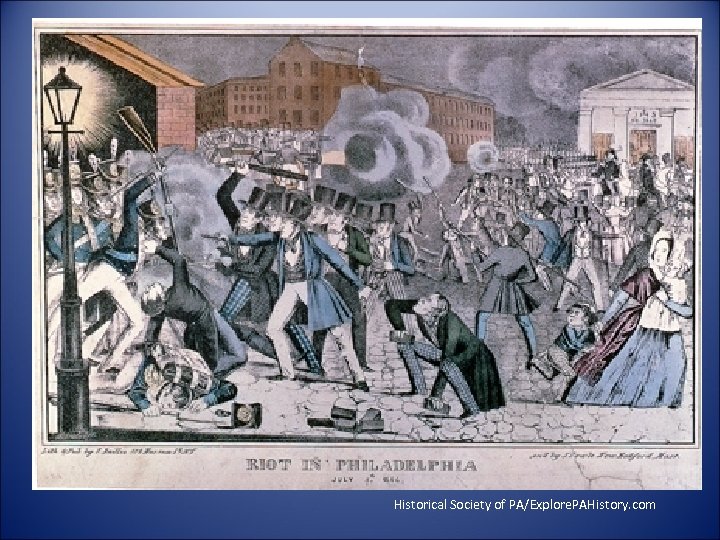
Historical Society of PA/Explore. PAHistory. com
Скачать презентацию Immigration and Industrialization in the City of Brotherly
2ea09a4508f7f9c006d13bb504cd67f9.ppt