


 Скачать презентацию IMIN 372 Experiment 3 Immunization and the Immune
a9bccbc2eb912a7e49e573973fc4f696.ppt
- Количество слайдов: 27
 IMIN 372 Experiment 3 Immunization and the Immune Response as a Function of Time Dr. James Stafford CW 319 -A Biological Sciences Building 492 -9258 stafford@ualberta. ca
 HEMAGGLUTINATION & HEMOLYSIS ASSAYS MONITORING THE PRIMARY HUMORAL IMMUNE RESPONSE 1. Overview of antigens and antibodies. 2. Humoral immune response kinetics. 3. Application of agglutination assays. 4. Applications of hemolysis, including Complement assays.
 ANTIGENS / ADJUVANTS DEFINITIONS -Antigens are molecules that elicit an immune response in the body. -Antigens can be: Proteins Polysaccharides - sugars such as mannose. Lipoproteins - conjugates of lipids (fats) with proteins. -Adjuvants are agents that may stimulate the immune system and increase the response to a vaccine, without having any specific antigenic effect on its own. -Adjuvants can be: Oils Aluminum salts Virosomes
 TYPES OF ANTIGENS EXOGNEOUS ANTIGENS Antigens that enter the body from the environment Inhaled Antigens -Proteins on cat hairs -Dust -Pollen ASTHMA ATTACK Ingested Antigens -Shellfish proteins -Peanuts ALLERGIC RESPONSES Antigens Introduced Beneath Skin -Splinter -Injected vaccine IMMUNIZATION
 TYPES OF ANTIGENS ENDOGENOUS ANTIGENS Antigens that are generated within cells of the body Proteins encoded by the genes of viruses (foreign) Abnormal or altered proteins -Encoded by mutant genes (e. g. mutated proteins produced by cancer cells)
 ANTIBODIES Also referred to as Immunoglobulins (or Ig) -Proteins produced by plasma cells (activated B-cells). -One of the major proteins found in the serum. -Antibodies are used by the immune system to identify and neutralize foreign objects like bacteria and viruses. -Five different classes of antibodies in mammals; -Ig. A, Ig. D, Ig. E, Ig. G and Ig. M -also subclasses of antibodies; Ig. G 1, Ig. G 2, Ig. G 3, Ig. G 4 -Antibodies can be found at mucosal sites and in milk. -Secretory antibodies (Ig. A and Ig. M)
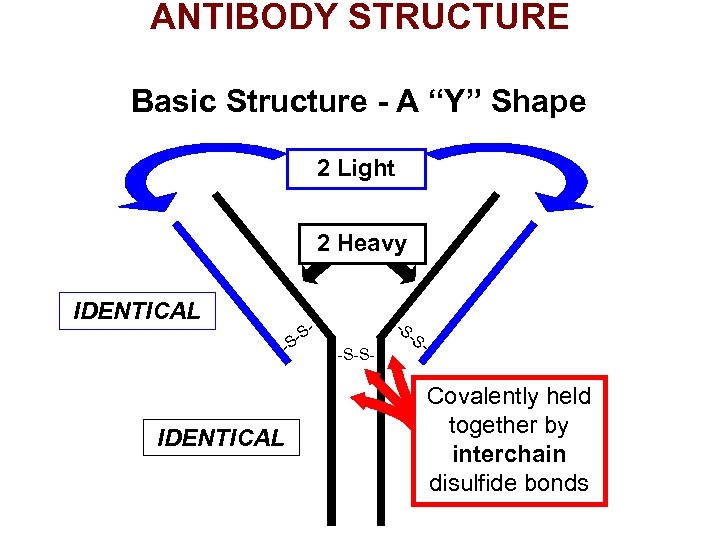 ANTIBODY STRUCTURE Basic Structure - A “Y” Shape 2 Light 2 Heavy IDENTICAL -S - S S- -S-S- -S - Covalently held together by interchain disulfide bonds
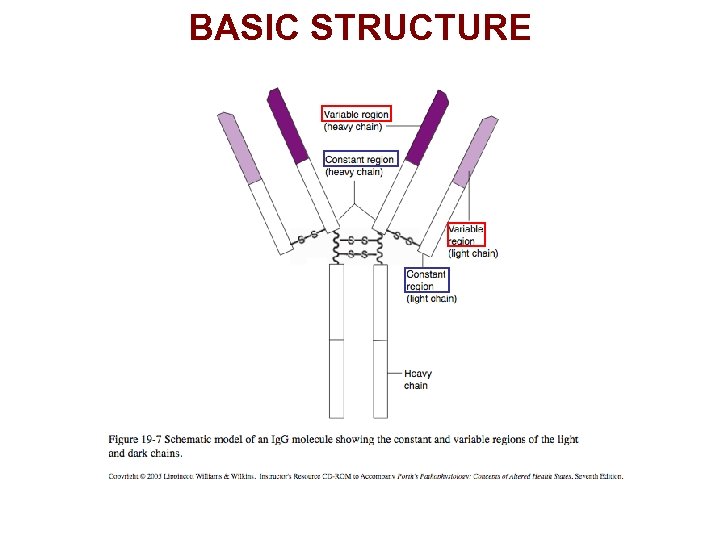 BASIC STRUCTURE
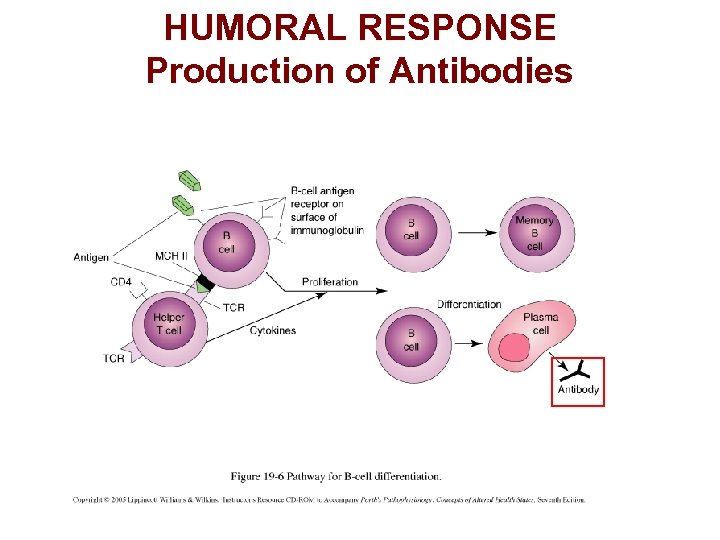 HUMORAL RESPONSE Production of Antibodies
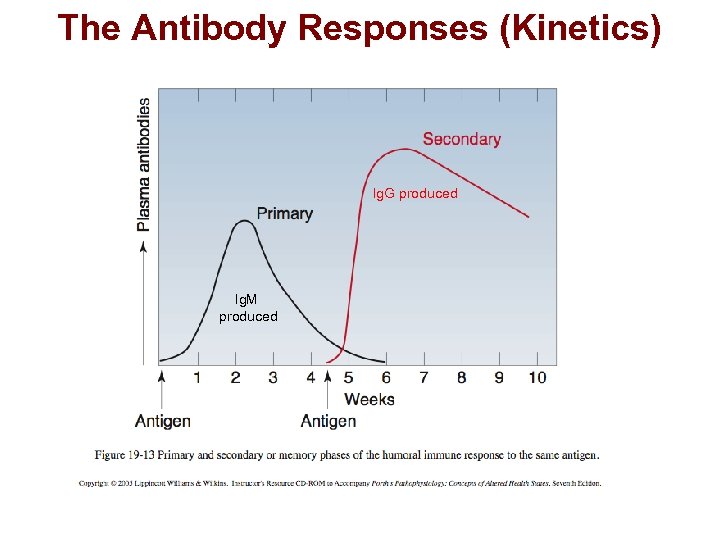 The Antibody Responses (Kinetics) Ig. G produced Ig. M produced
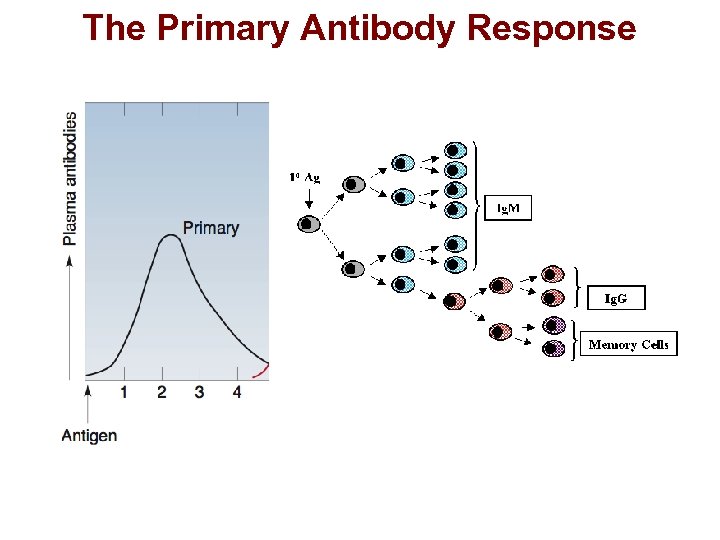 The Primary Antibody Response
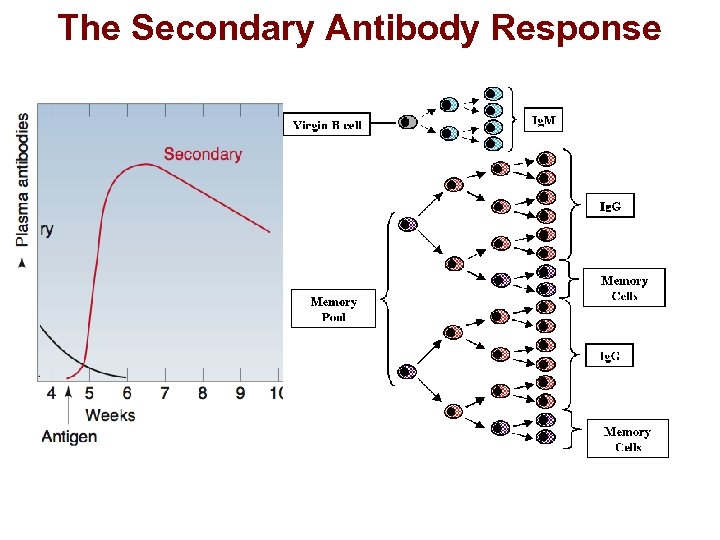 The Secondary Antibody Response
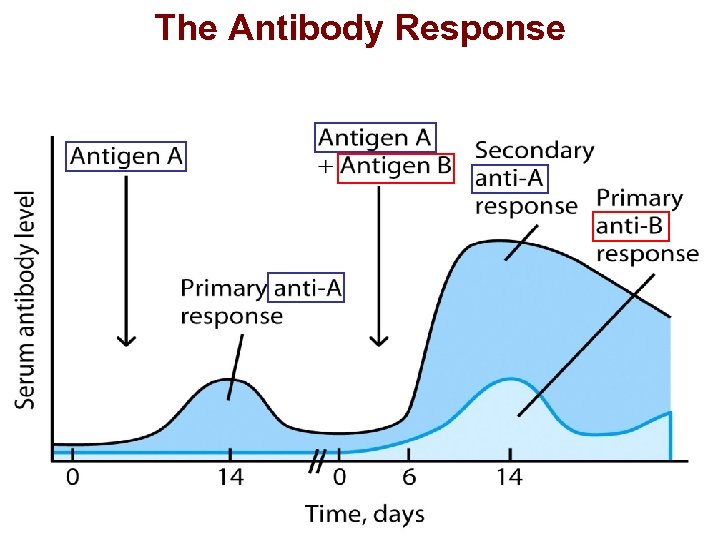 The Antibody Response
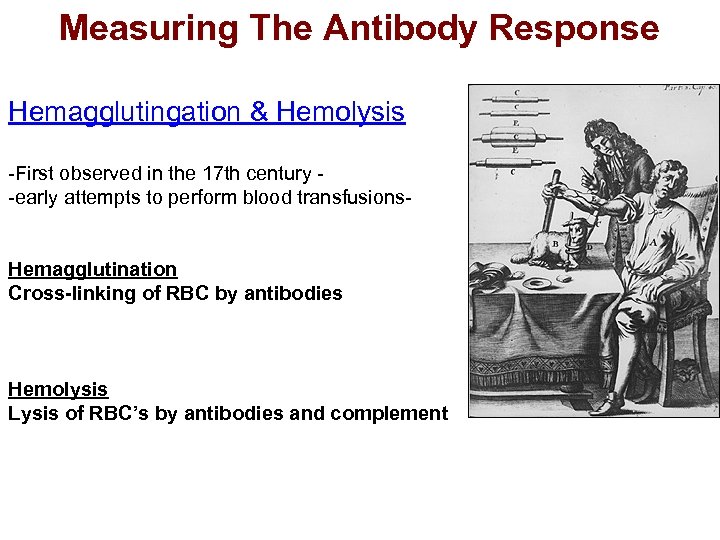 Measuring The Antibody Response Hemagglutingation & Hemolysis -First observed in the 17 th century -early attempts to perform blood transfusions. Hemagglutination Cross-linking of RBC by antibodies Hemolysis Lysis of RBC’s by antibodies and complement
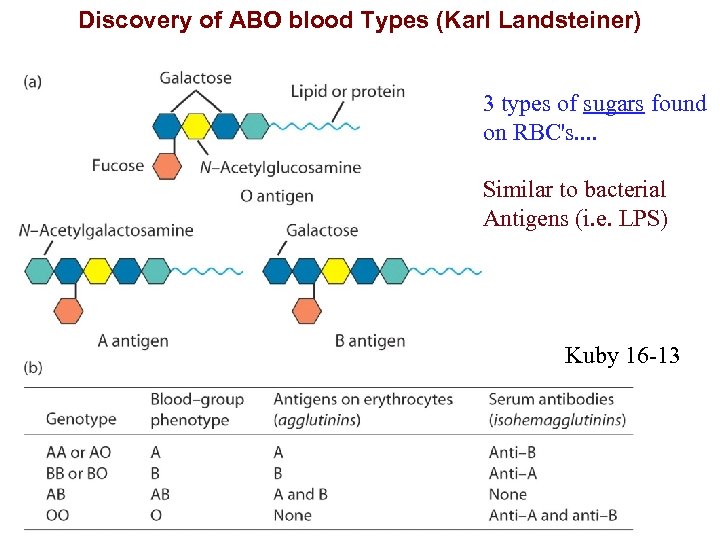 Discovery of ABO blood Types (Karl Landsteiner) 3 types of sugars found on RBC's. . Similar to bacterial Antigens (i. e. LPS) Kuby 16 -13
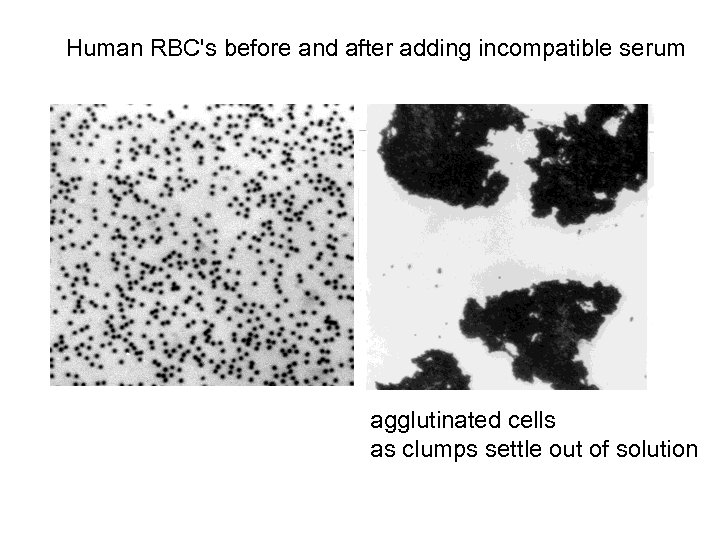 Human RBC's before and after adding incompatible serum agglutinated cells as clumps settle out of solution
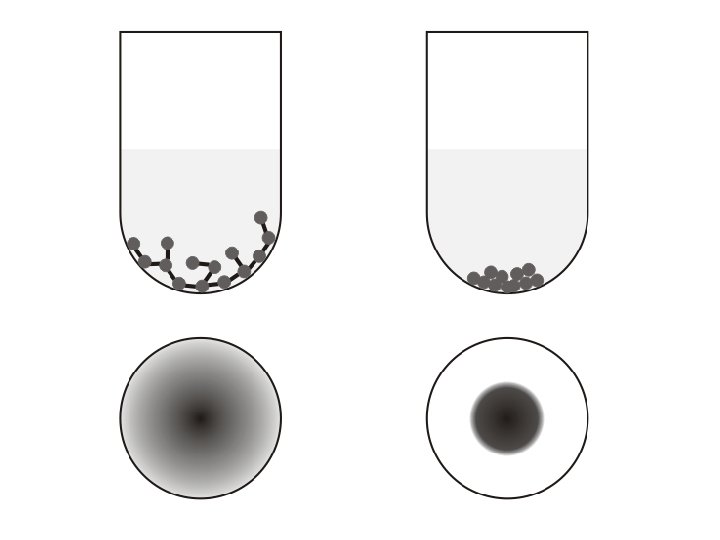
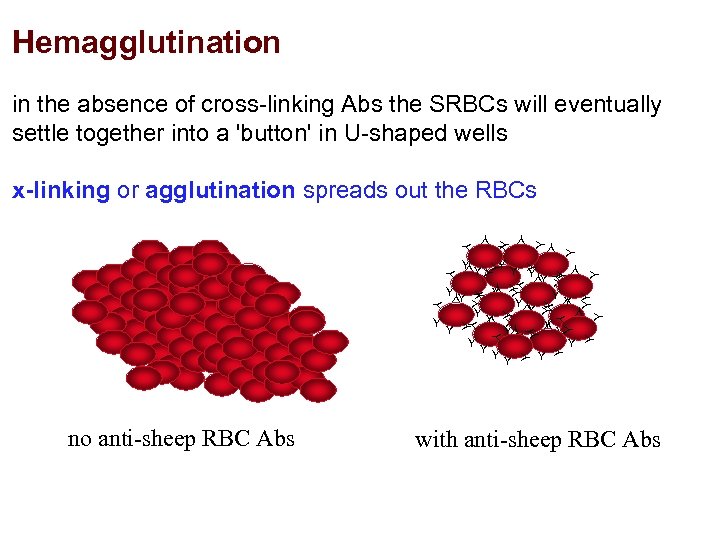 Hemagglutination in the absence of cross-linking Abs the SRBCs will eventually settle together into a 'button' in U-shaped wells x-linking or agglutination spreads out the RBCs Y YY Y Y Y Y Y Y YY Y Y Y Y YY Y Y Y no anti-sheep RBC Abs Y Y Y Y with anti-sheep RBC Abs
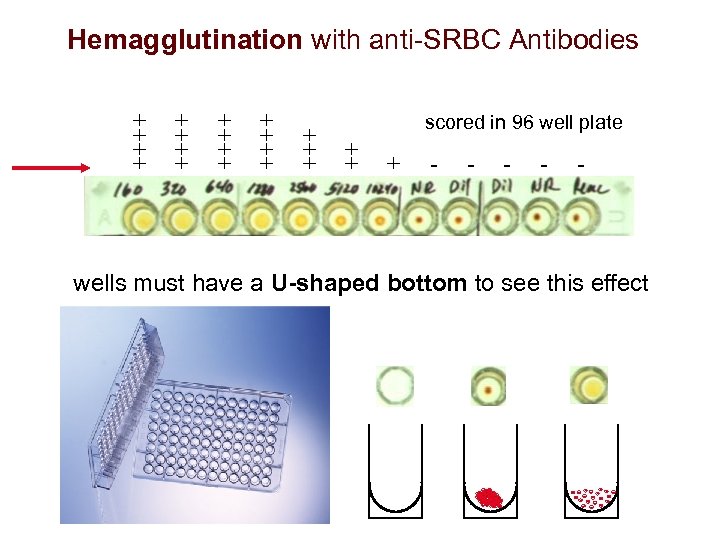 Hemagglutination with anti-SRBC Antibodies + + + + + scored in 96 well plate + + + - - - wells must have a U-shaped bottom to see this effect
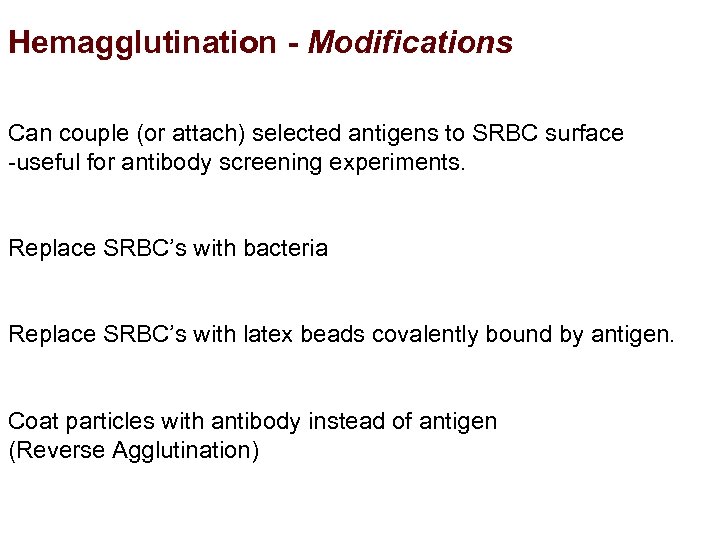 Hemagglutination - Modifications Can couple (or attach) selected antigens to SRBC surface -useful for antibody screening experiments. Replace SRBC’s with bacteria Replace SRBC’s with latex beads covalently bound by antigen. Coat particles with antibody instead of antigen (Reverse Agglutination)
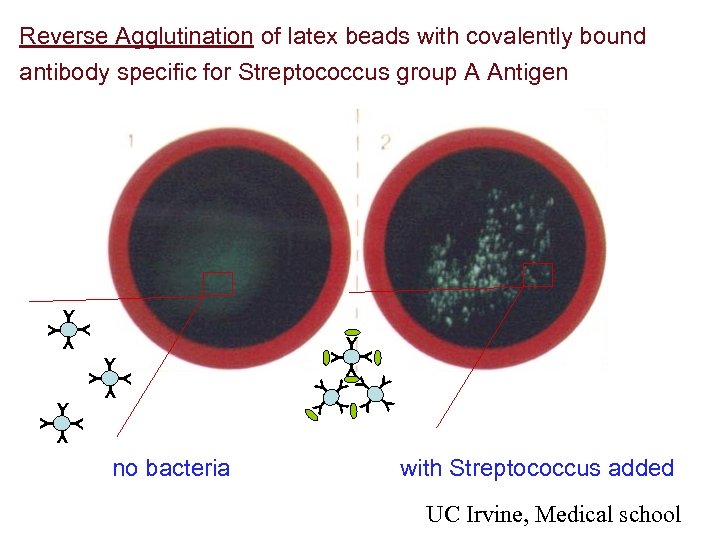 Reverse Agglutination of latex beads with covalently bound antibody specific for Streptococcus group A Antigen Y Y Y Y Y Y no bacteria with Streptococcus added UC Irvine, Medical school
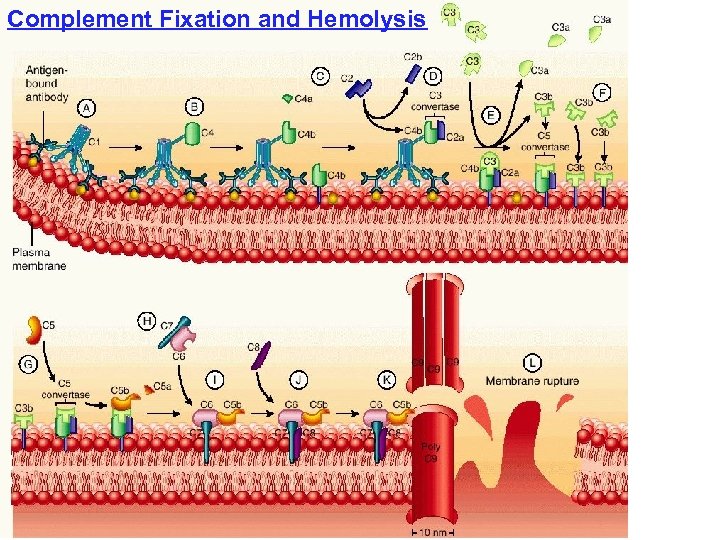 Complement Fixation and Hemolysis
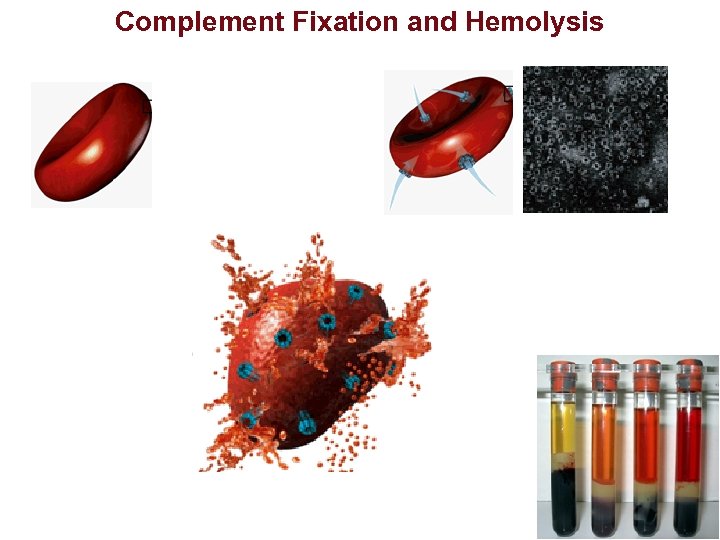 Complement Fixation and Hemolysis
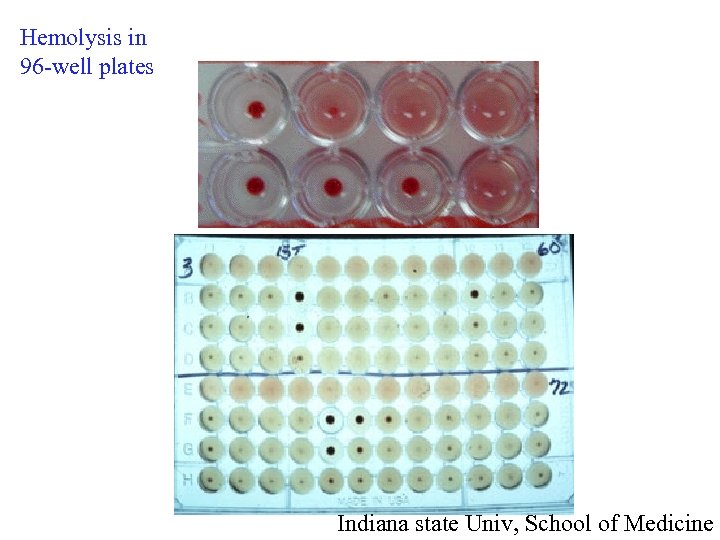 Hemolysis in 96 -well plates Indiana state Univ, School of Medicine
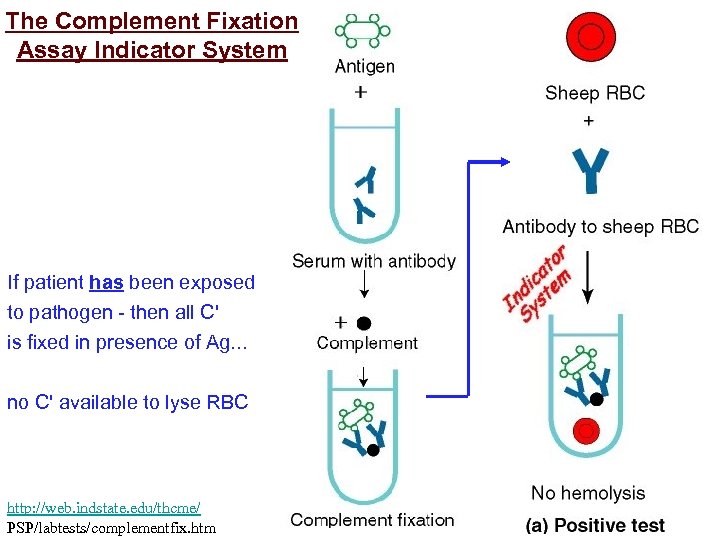 The Complement Fixation Assay Indicator System If patient has been exposed to pathogen - then all C' is fixed in presence of Ag. . . no C' available to lyse RBC http: //web. indstate. edu/thcme/ PSP/labtests/complementfix. htm
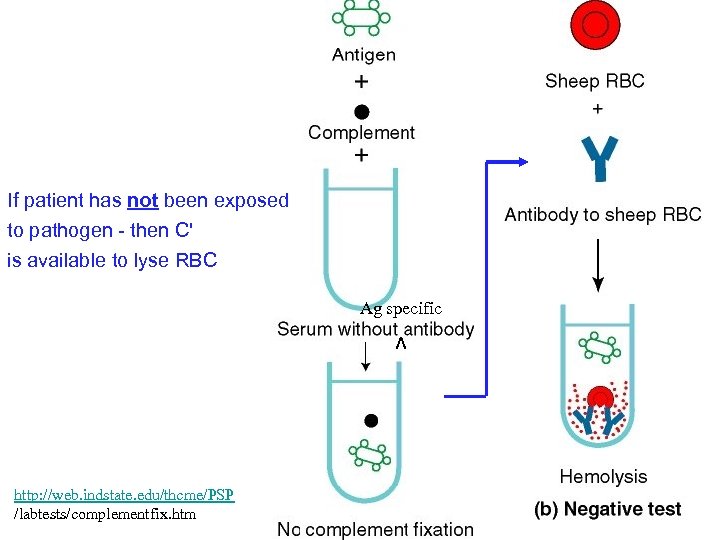 If patient has not been exposed to pathogen - then C' is available to lyse RBC Ag specific v http: //web. indstate. edu/thcme/PSP /labtests/complementfix. htm
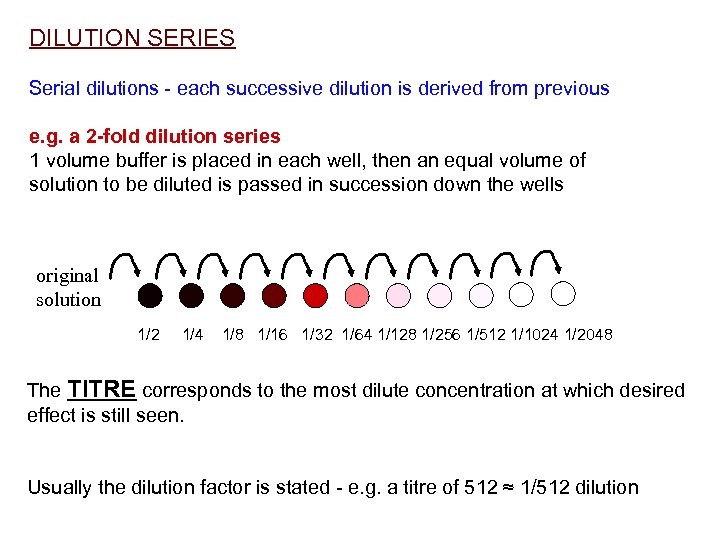 DILUTION SERIES Serial dilutions - each successive dilution is derived from previous e. g. a 2 -fold dilution series 1 volume buffer is placed in each well, then an equal volume of solution to be diluted is passed in succession down the wells original solution 1/2 1/4 1/8 1/16 1/32 1/64 1/128 1/256 1/512 1/1024 1/2048 The TITRE corresponds to the most dilute concentration at which desired effect is still seen. Usually the dilution factor is stated - e. g. a titre of 512 ≈ 1/512 dilution