 Скачать презентацию Imaging the Alba Reservoir with Converted Waves from
5d006fe77a52277ca0e6076292f31bee.ppt
- Количество слайдов: 40



Imaging the Alba Reservoir with Converted Waves from OBC data and AVO processing of Pz and P-P data Peter Nevill, Adrian Manighetti. Chevron. Texaco, Upstream Europe, Seafield House, Aberdeen, UK. Oleg Mikhailov, Peter Mitchell, David Wilkinson. Chevron. Texaco, Energy Technology Co. San Ramon, California, USA.
Acknowledgements • Alba partners (Chevron, Conoco, Total. Fina. Elf, BP, Statoil, Unilon Baytrust and Petrobras) for the permission to present the OBC data • Veritas DGC Limited for permission to show the 2002 streamer data. • Scott Leany (Schlumberger) for the analysis of the walk-away VSP data • Mark Mac. Leod, Rex Hanson, Mike Hadley, Leila Farmer, Sheila Groves, Wil Jones, Ming Zhao, Lin Zhang, Robert Polzer, John Toldi, Joe Stefani, Ray Ergas, Clint Frasier and Fred Herkenhoff
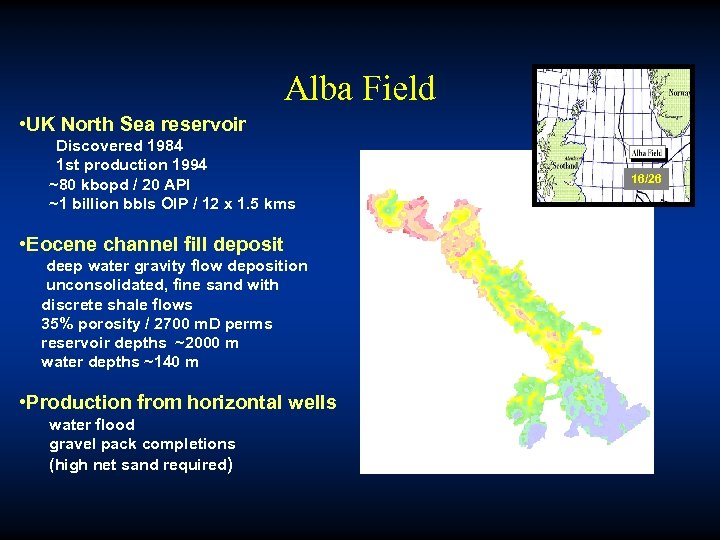
Alba Field • UK North Sea reservoir Discovered 1984 1 st production 1994 ~80 kbopd / 20 API ~1 billion bbls OIP / 12 x 1. 5 kms • Eocene channel fill deposit deep water gravity flow deposition unconsolidated, fine sand with discrete shale flows 35% porosity / 2700 m. D perms reservoir depths ~2000 m water depths ~140 m • Production from horizontal wells water flood gravel pack completions (high net sand required) 16/26
Seismic over Alba • 1989: Alba 3 D - streamer survey (reprocessed 1996) • 1992: Britannia 3 D - streamer survey (reprocessed 2002) • 1998: Alba 3 D - 4 C/OBC survey –post-stack migrated PZ, PS: reflectivity - inversion –pre-stack migrated PZ, PS : AVO inversion - inversion • 2002: survey Veritas: Britannia long-offset streamer (processing in-progress)
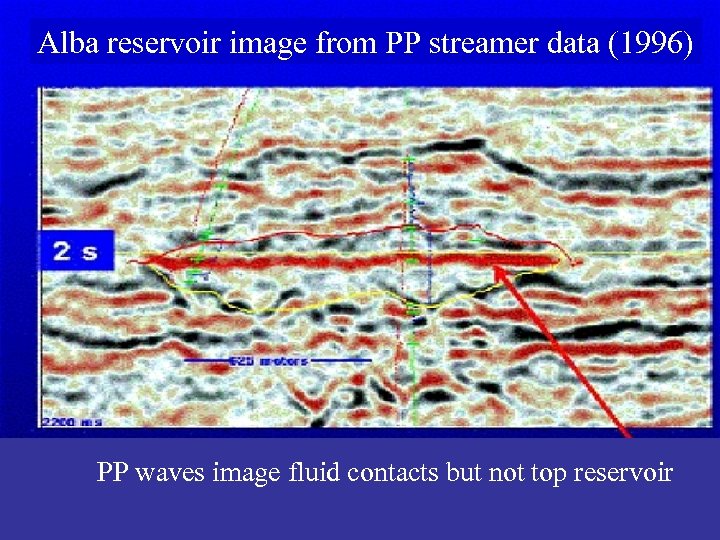
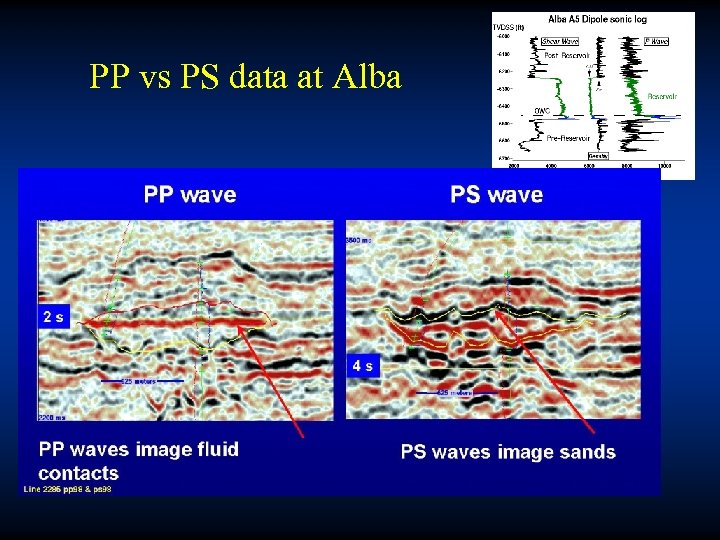
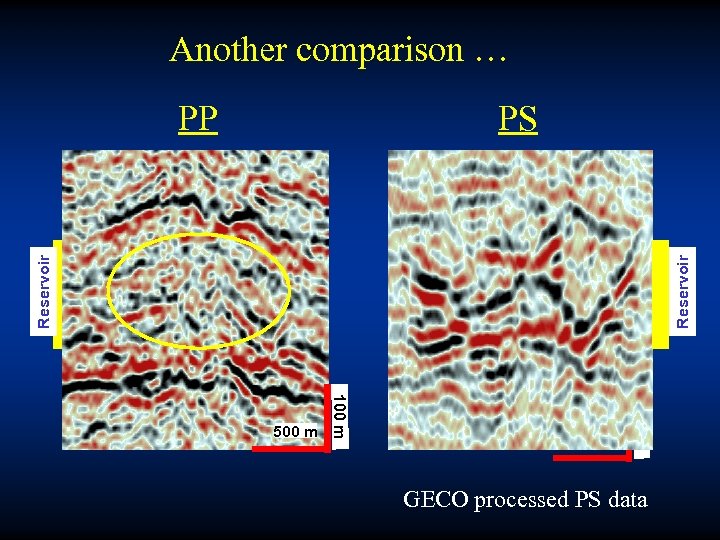
Alba reservoir image from PP streamer data (1996) PP waves image fluid contacts but not top reservoir
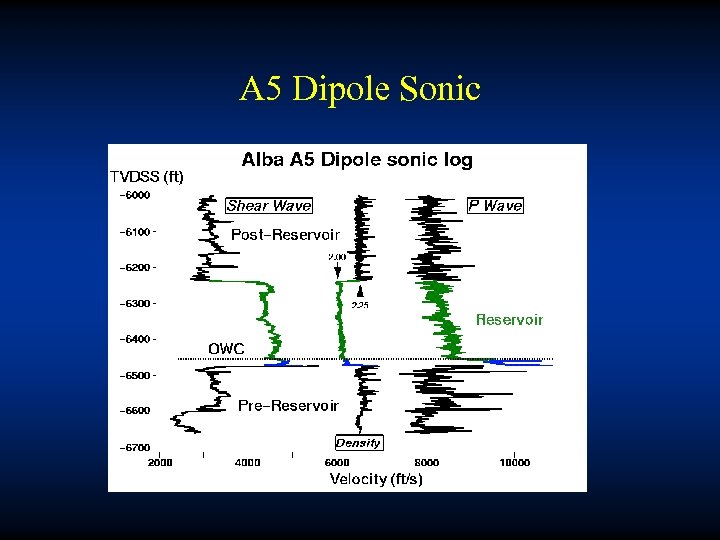
A 5 Dipole Sonic
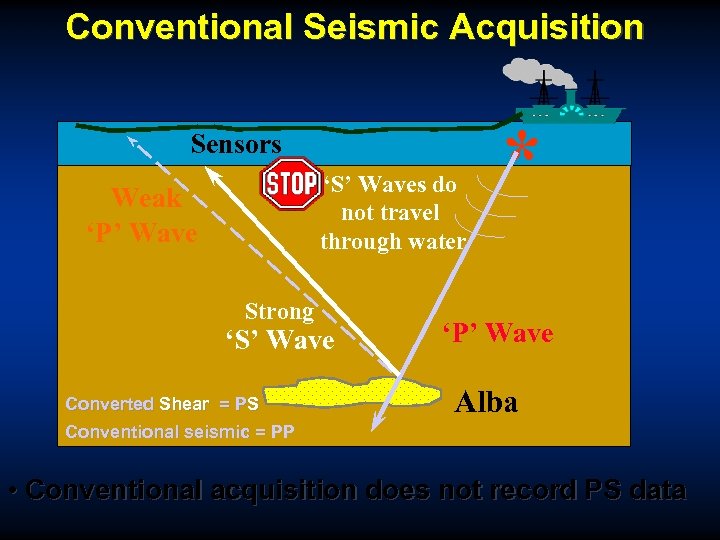
Conventional Seismic Acquisition Sensors ‘S’ Waves do not travel through water Weak ‘P’ Wave Strong ‘S’ Wave Converted Shear = PS Conventional seismic = PP * ‘P’ Wave Alba • Conventional acquisition does not record PS data
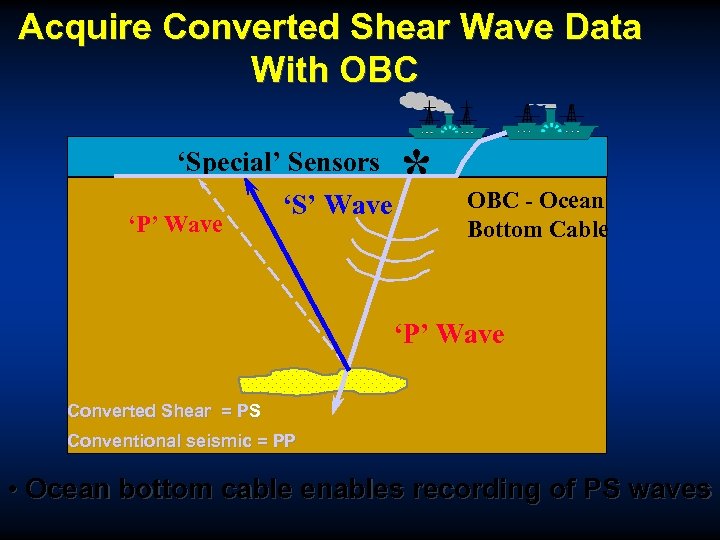
Acquire Converted Shear Wave Data With OBC * ‘S’ Wave ‘Special’ Sensors ‘P’ Wave OBC - Ocean Bottom Cable ‘P’ Wave Converted Shear = PS Conventional seismic = PP • Ocean bottom cable enables recording of PS waves
PP vs PS data at Alba
Another comparison … PS Reservoir PP 500 m 100 m 500 m GECO processed PS data
Alba - stratigraphy vs structure Model: “lens” changed to “wing” Base Oligocene -6000 ft Blue Marker (E 1) -7000 ft
Imaging of 4 C data is not a standard procedure …… Develop internal 4 C imaging capability
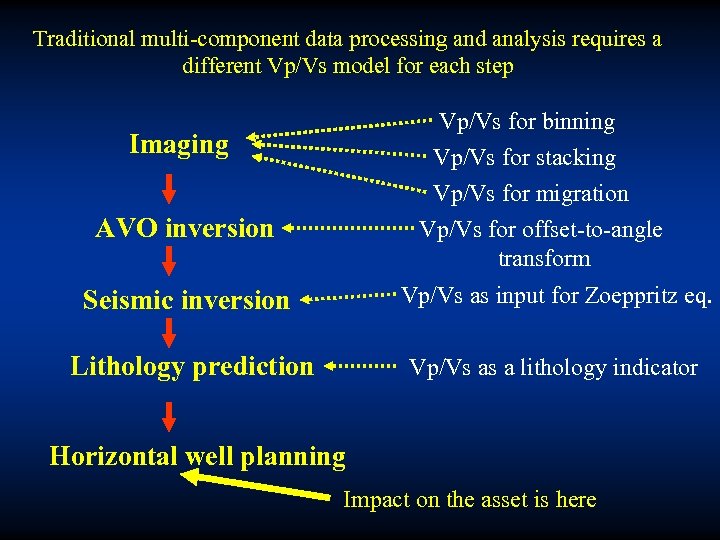
Traditional multi-component data processing and analysis requires a different Vp/Vs model for each step Vp/Vs for binning Imaging Vp/Vs for stacking Vp/Vs for migration Vp/Vs for offset-to-angle transform AVO inversion Seismic inversion Vp/Vs as input for Zoeppritz eq. Lithology prediction Vp/Vs as a lithology indicator Horizontal well planning Impact on the asset is here
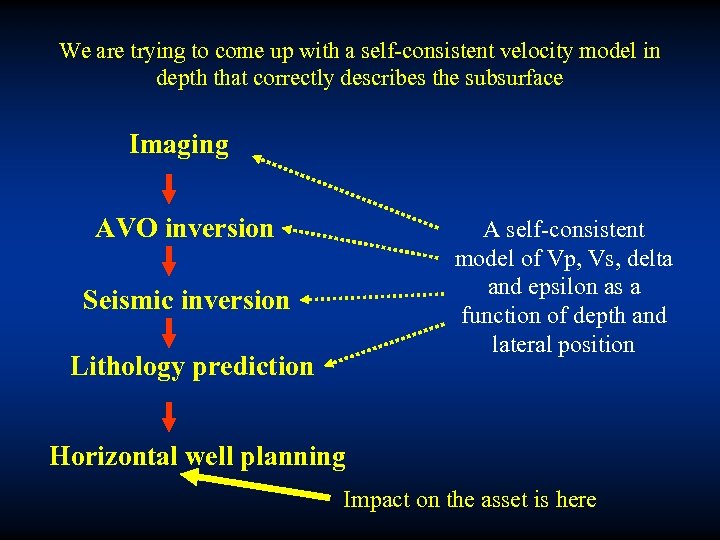
We are trying to come up with a self-consistent velocity model in depth that correctly describes the subsurface Imaging AVO inversion A self-consistent model of Vp, Vs, delta and epsilon as a function of depth and lateral position Seismic inversion Lithology prediction Horizontal well planning Impact on the asset is here
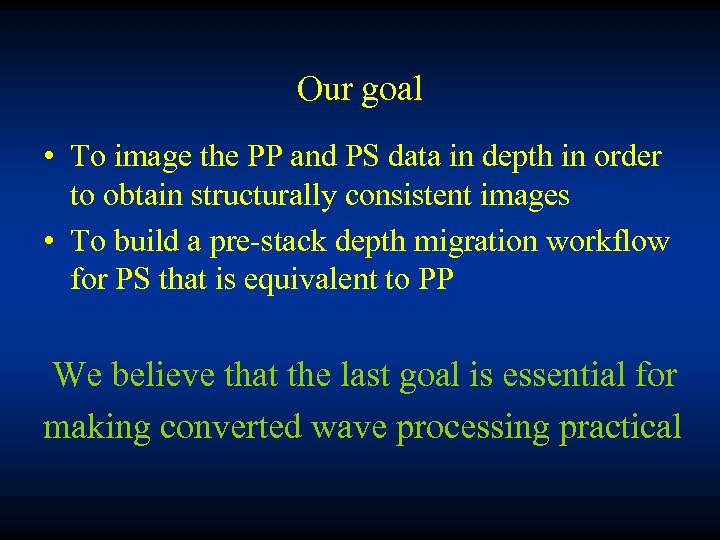
Our goal • To image the PP and PS data in depth in order to obtain structurally consistent images • To build a pre-stack depth migration workflow for PS that is equivalent to PP We believe that the last goal is essential for making converted wave processing practical
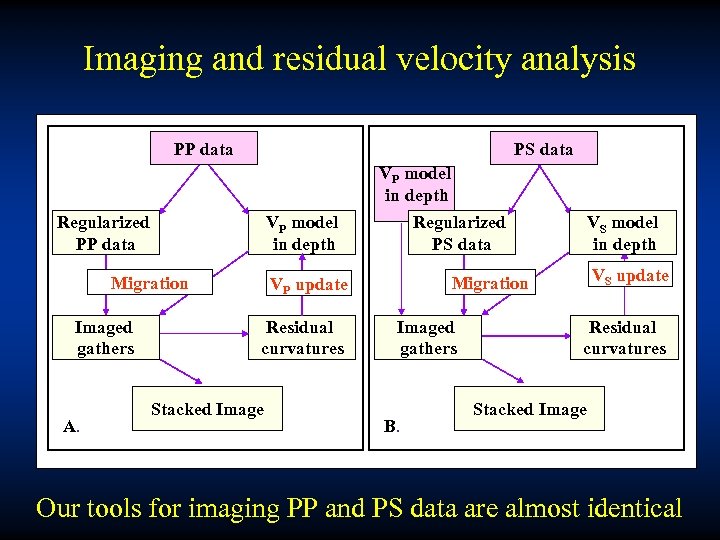
Imaging and residual velocity analysis PP data PS data VP model in depth Regularized PP data VP model in depth Migration Imaged gathers A. Regularized PS data Stacked Image VS update Migration VP update Residual curvatures VS model in depth Imaged gathers B. Residual curvatures Stacked Image Our tools for imaging PP and PS data are almost identical
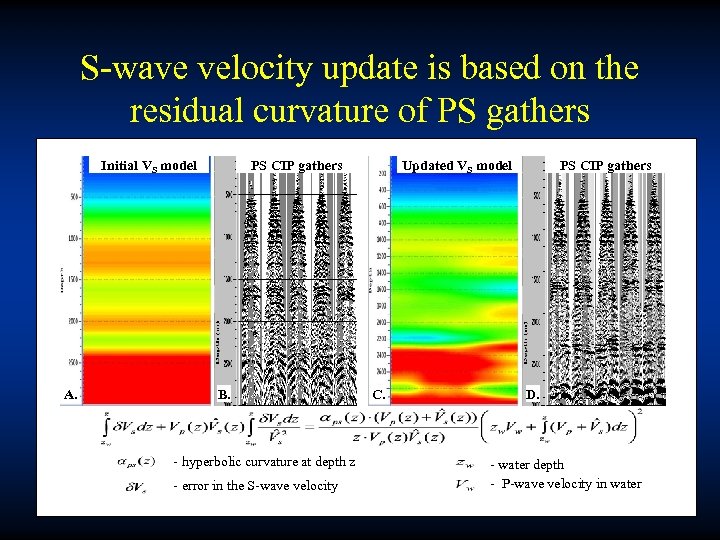
S-wave velocity update is based on the residual curvature of PS gathers Initial VS model A. PS CIP gathers B. - hyperbolic curvature at depth z - error in the S-wave velocity Updated VS model C. PS CIP gathers D. - water depth - P-wave velocity in water
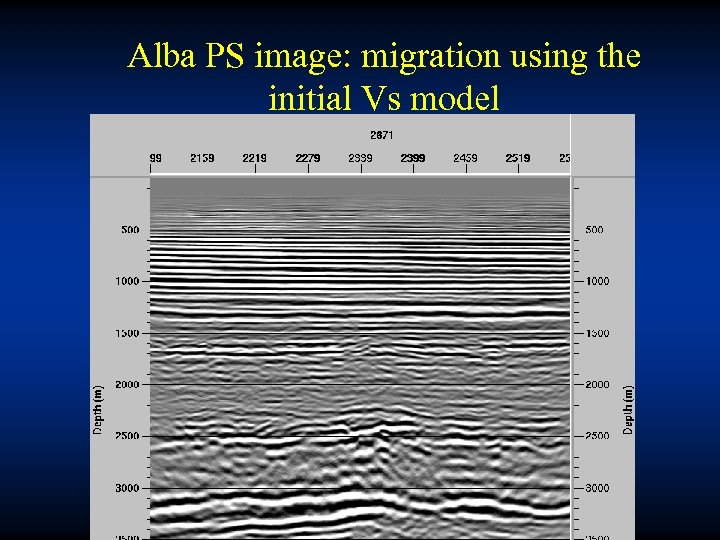
Alba PS image: migration using the initial Vs model
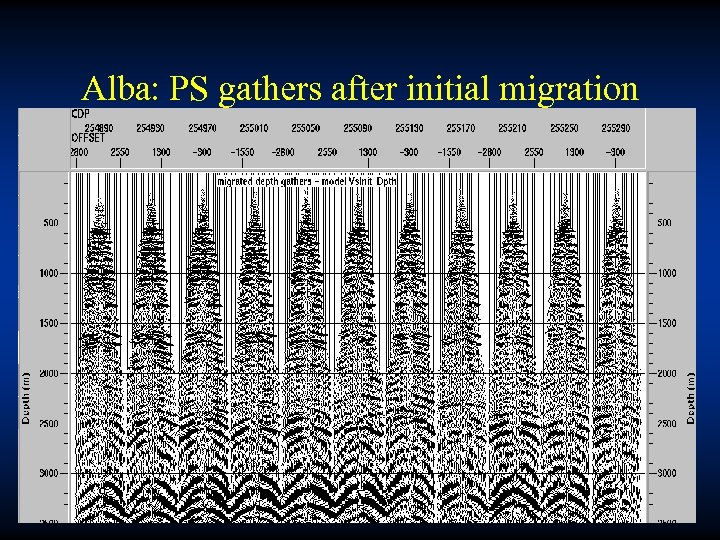
Alba: PS gathers after initial migration
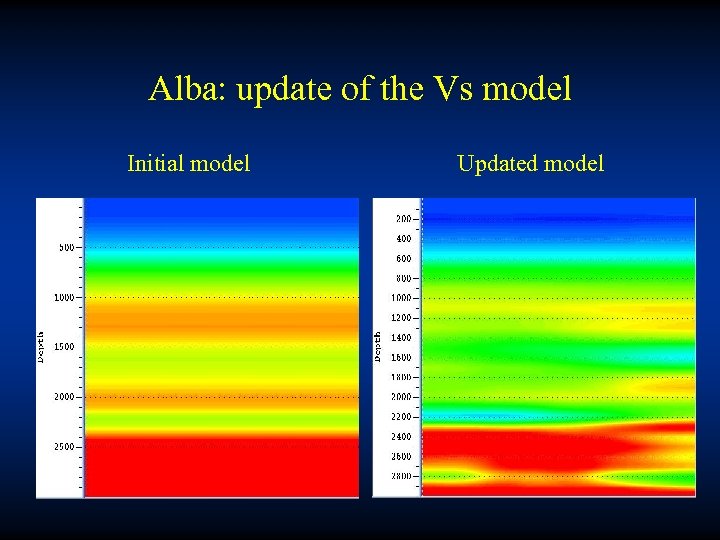
Alba: update of the Vs model Initial model Updated model
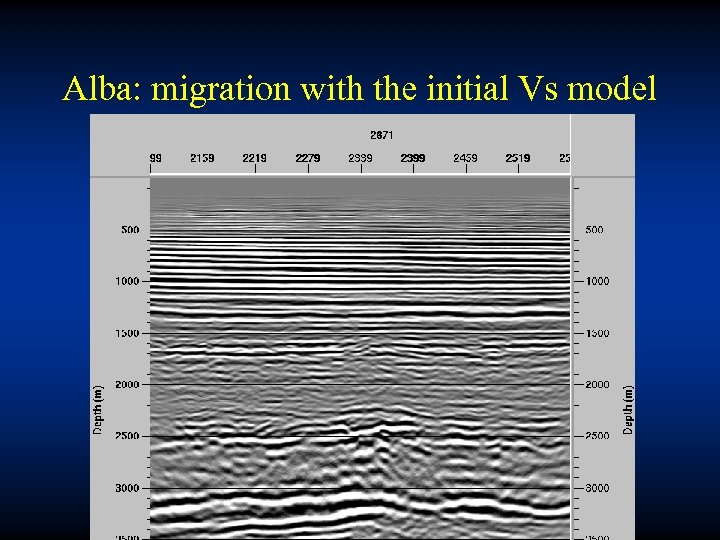
Alba: migration with the initial Vs model
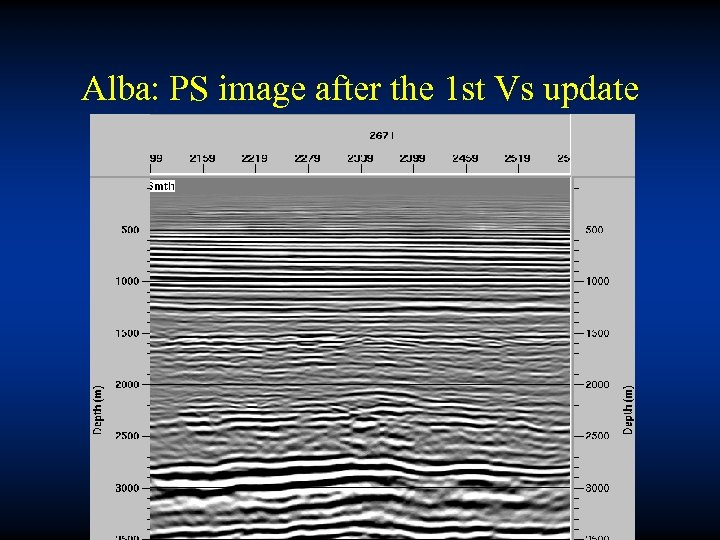
Alba: PS image after the 1 st Vs update
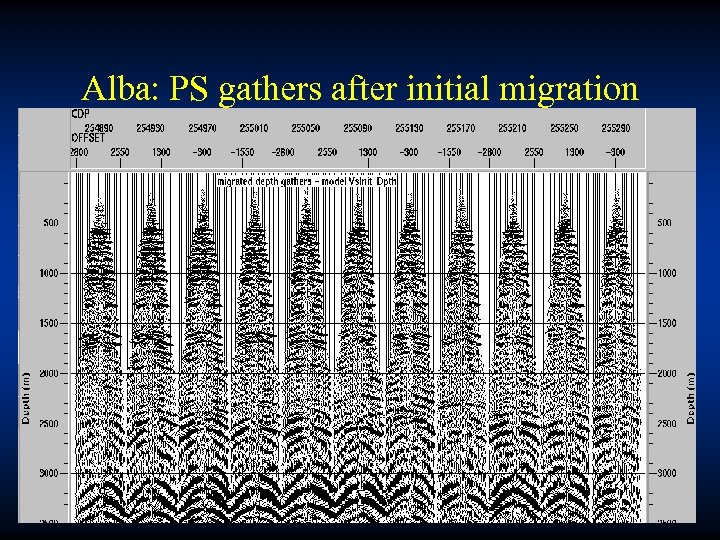
Alba: PS gathers after initial migration
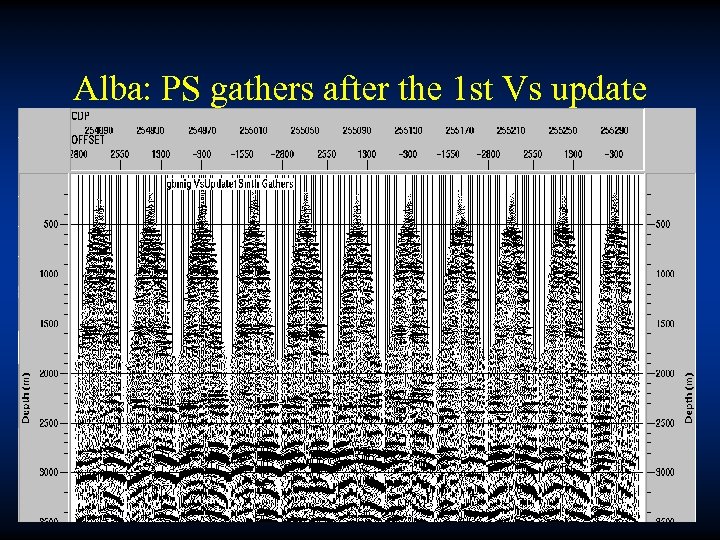
Alba: PS gathers after the 1 st Vs update
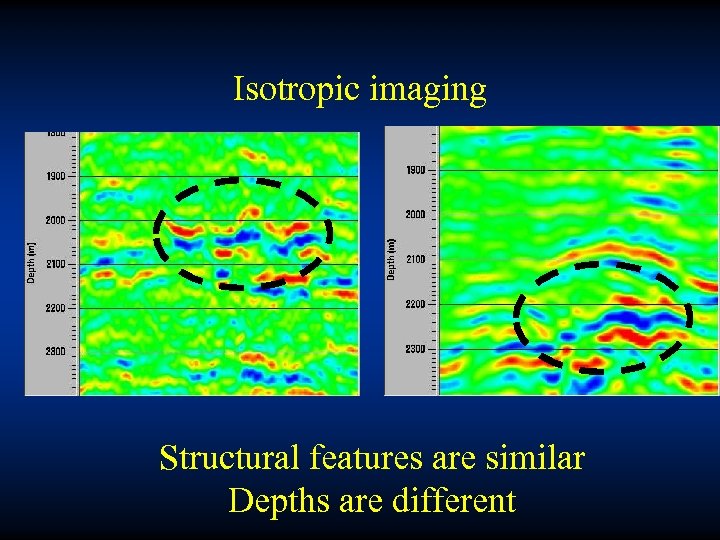
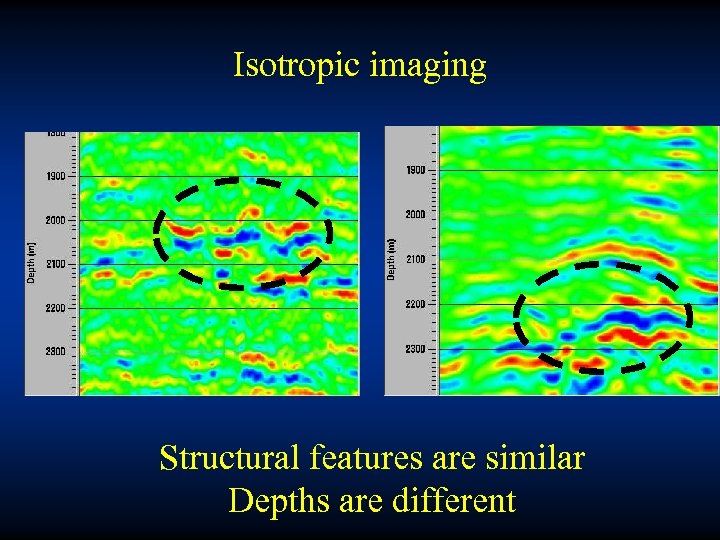
Isotropic imaging Structural features are similar Depths are different
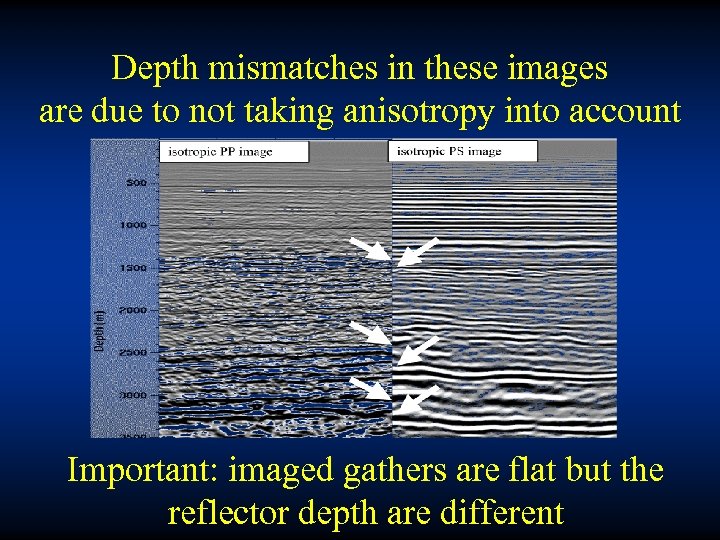
Depth mismatches in these images are due to not taking anisotropy into account Important: imaged gathers are flat but the reflector depth are different
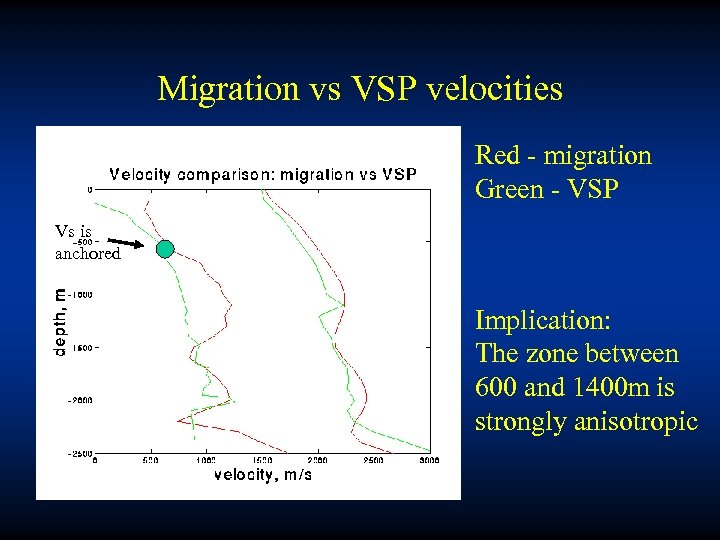
Migration vs VSP velocities Red - migration Green - VSP Vs is anchored Implication: The zone between 600 and 1400 m is strongly anisotropic
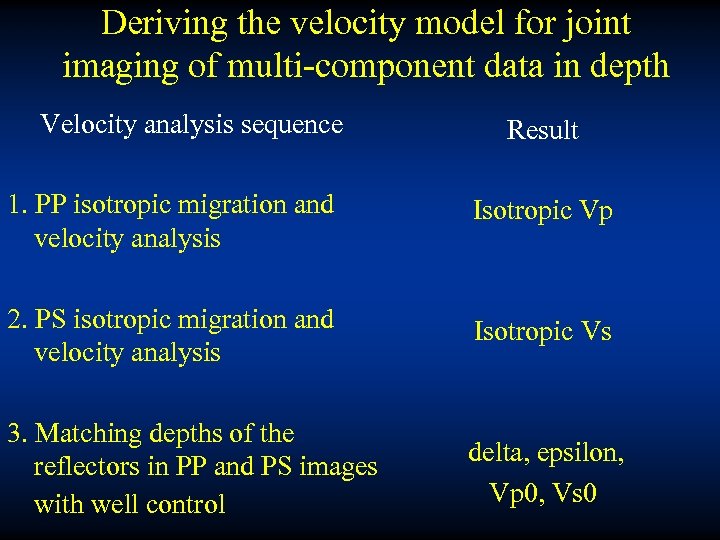
Deriving the velocity model for joint imaging of multi-component data in depth Velocity analysis sequence Result 1. PP isotropic migration and velocity analysis Isotropic Vp 2. PS isotropic migration and velocity analysis Isotropic Vs 3. Matching depths of the reflectors in PP and PS images with well control delta, epsilon, Vp 0, Vs 0
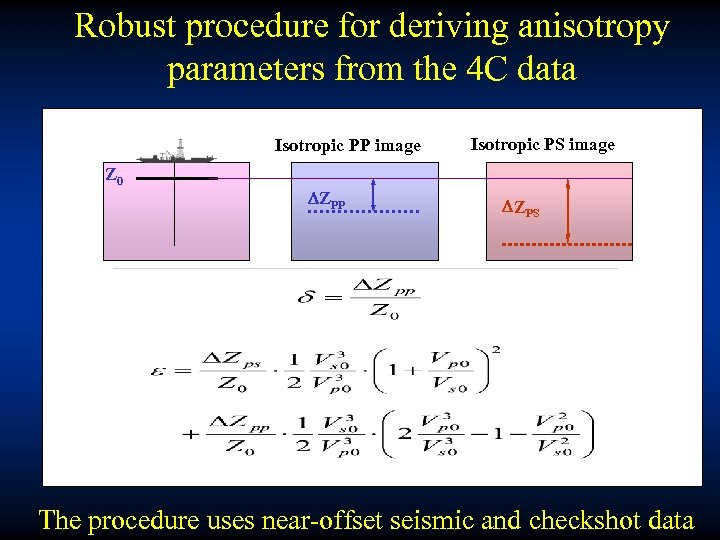
Robust procedure for deriving anisotropy parameters from the 4 C data Isotropic PP image Z 0 DZPP Isotropic PS image DZPS The procedure uses near-offset seismic and checkshot data
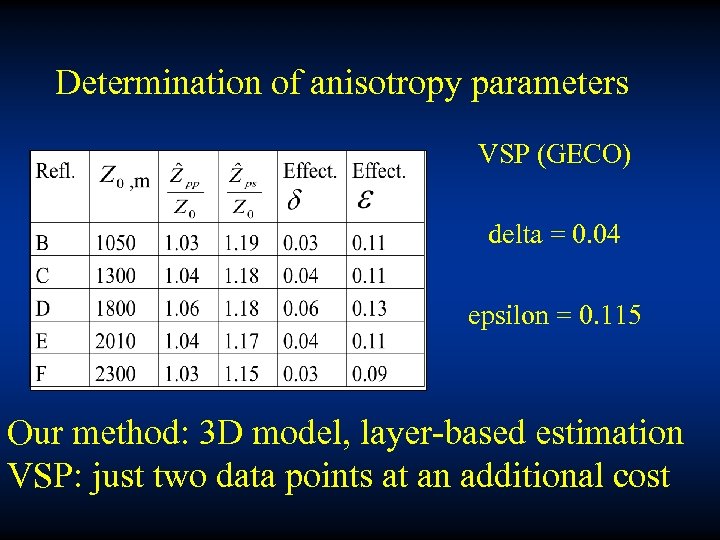
Determination of anisotropy parameters VSP (GECO) delta = 0. 04 epsilon = 0. 115 Our method: 3 D model, layer-based estimation VSP: just two data points at an additional cost
Isotropic imaging Structural features are similar Depths are different
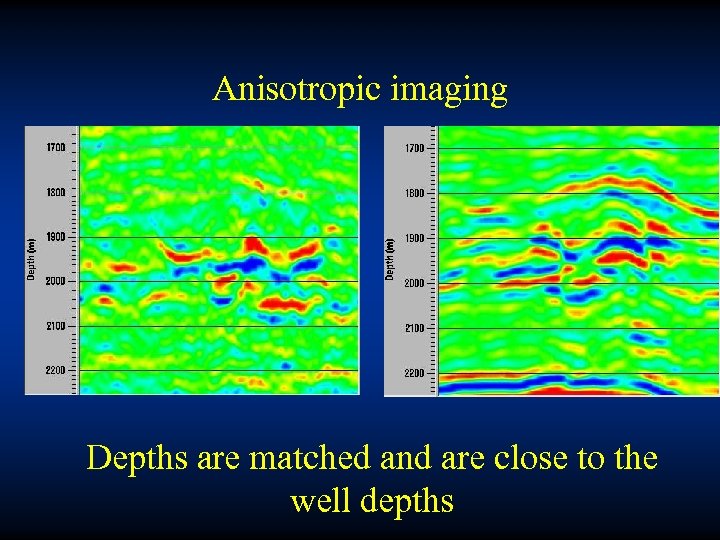
Anisotropic imaging Depths are matched and are close to the well depths
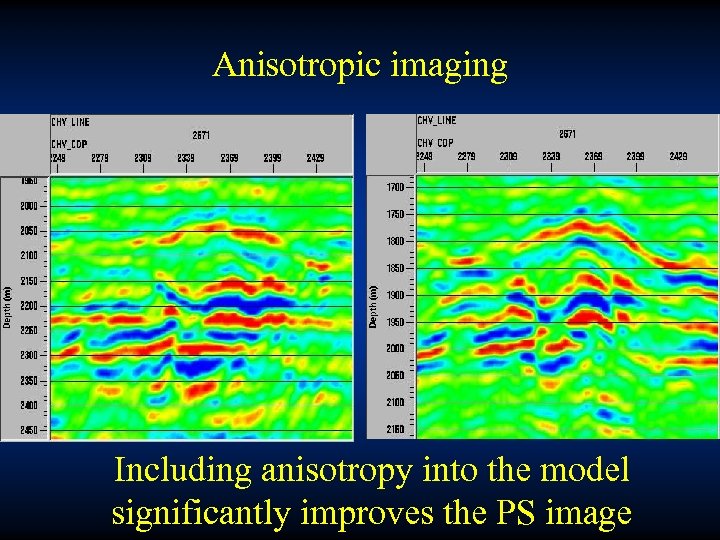
Anisotropic imaging Including anisotropy into the model significantly improves the PS image
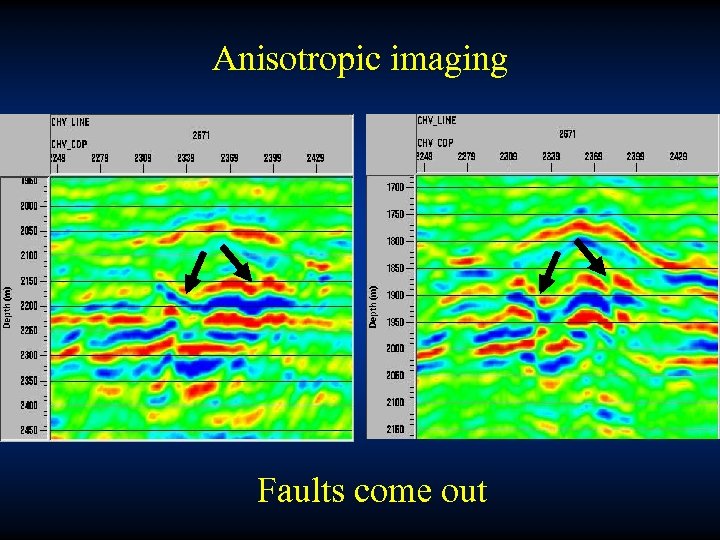
Anisotropic imaging Faults come out
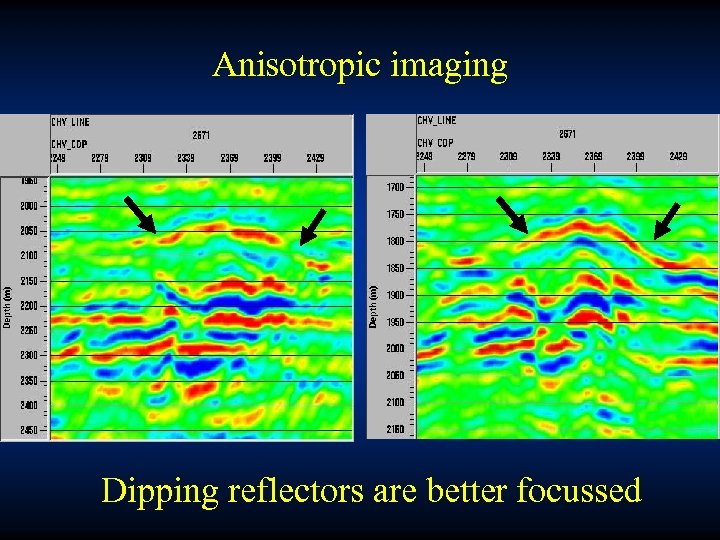
Anisotropic imaging Dipping reflectors are better focussed
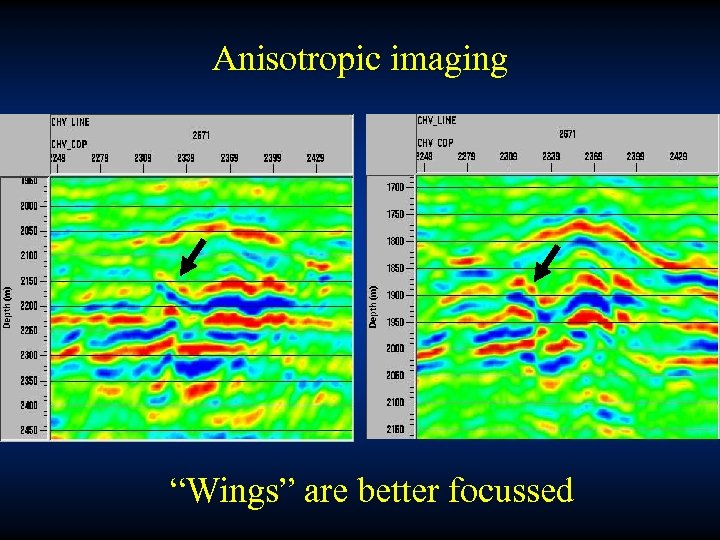
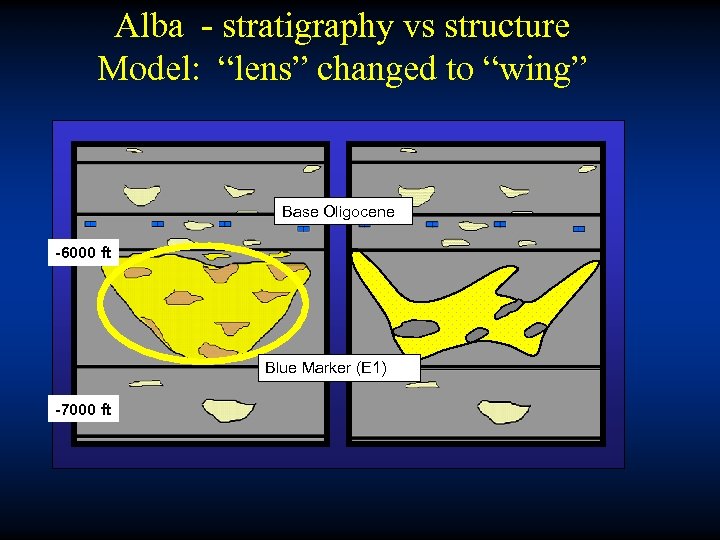
Anisotropic imaging “Wings” are better focussed
4 C Imaging Conclusions • We have developed a procedure for joint imaging of multi-component data in depth • Our imaging workflow for PS data is almost identical to the one for PP • We can derive a complete velocity model from near-offset seismic data and checkshot information • We successfully tested this procedure on synthetic data and applied it to the Alba dataset.

Some comparisons of the anisotropic prestack depth migrated PS images and the contractor post-stack imaging
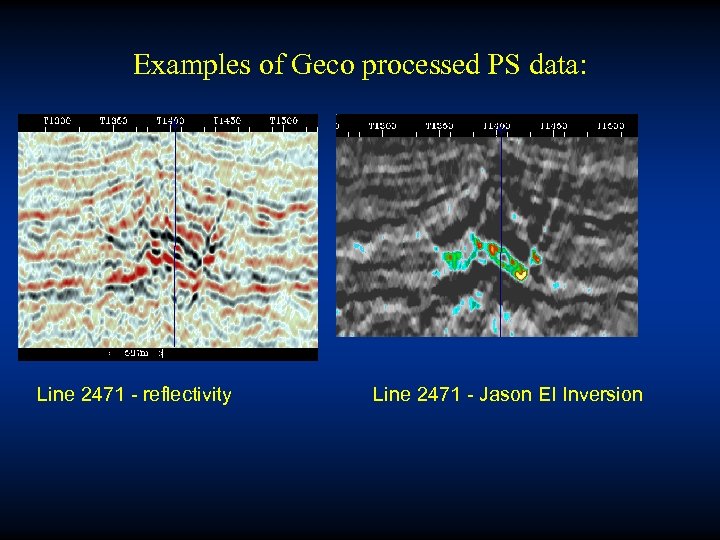
Examples of Geco processed PS data: Line 2471 - reflectivity Line 2471 - Jason EI Inversion
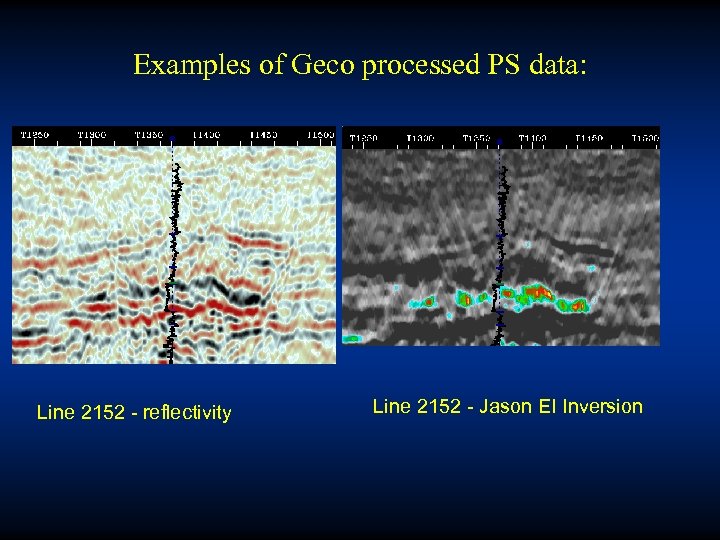
Examples of Geco processed PS data: Line 2152 - reflectivity Line 2152 - Jason EI Inversion
Скачать презентацию Imaging the Alba Reservoir with Converted Waves from
5d006fe77a52277ca0e6076292f31bee.ppt