


 Скачать презентацию Image Reconstruction from Projections J Anthony Parker MD
05cc028859cc48090c49fab7bda8e306.ppt
- Количество слайдов: 57

 Image Reconstruction from Projections J. Anthony Parker, MD Ph. D Beth Israel Deaconess Medical Center Boston, Massachusetts Caveat Lector Tony_Parker@BIDMC. Harvard. edu
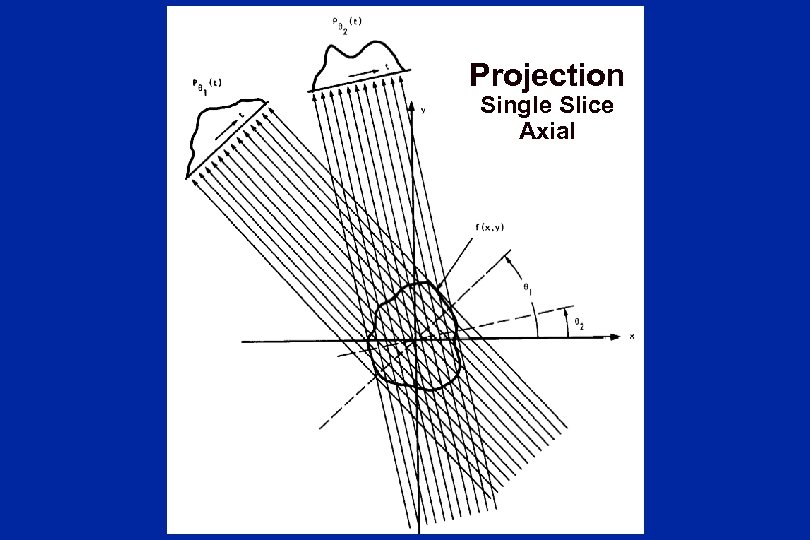 Projection Single Slice Axial
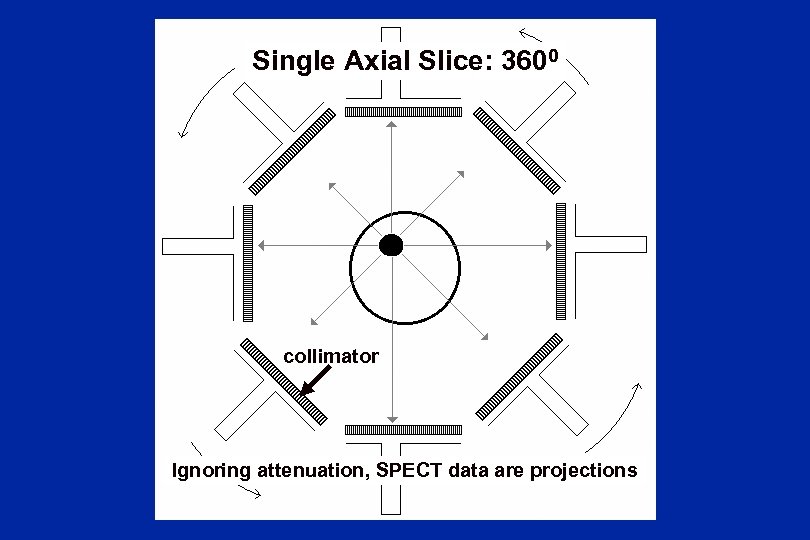 Single Axial Slice: 3600 collimator Ignoring attenuation, SPECT data are projections
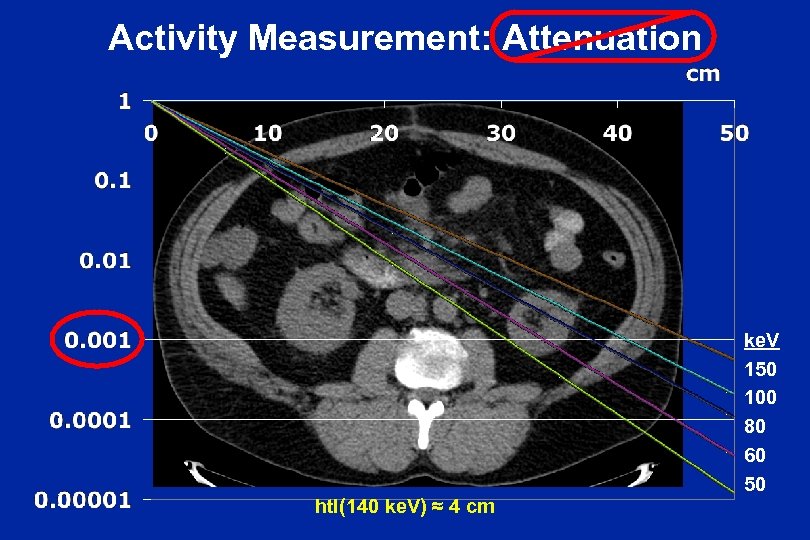
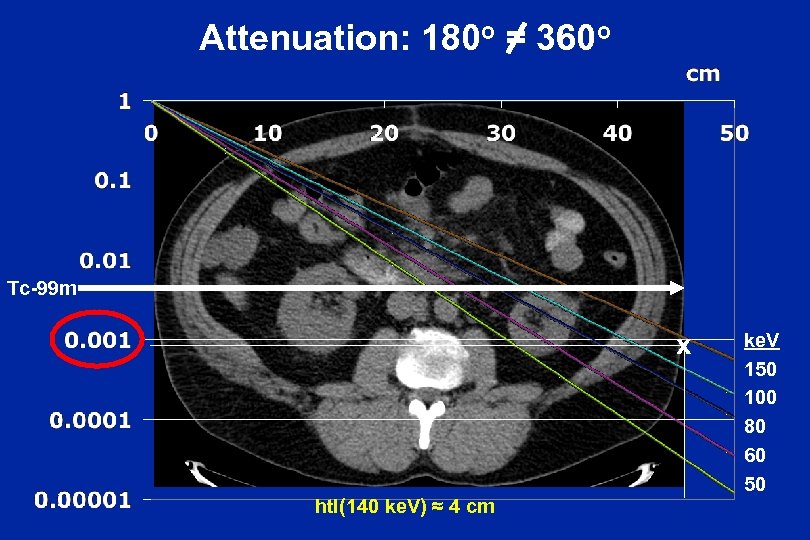 Attenuation: 180 o = 360 o Tc-99 m x htl(140 ke. V) ≈ 4 cm ke. V 150 100 80 60 50
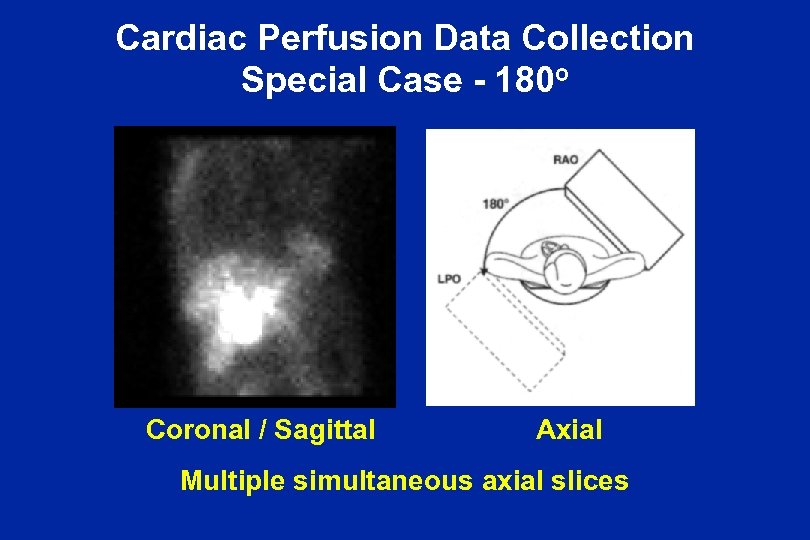 Cardiac Perfusion Data Collection Special Case - 180 o Coronal / Sagittal Axial Multiple simultaneous axial slices
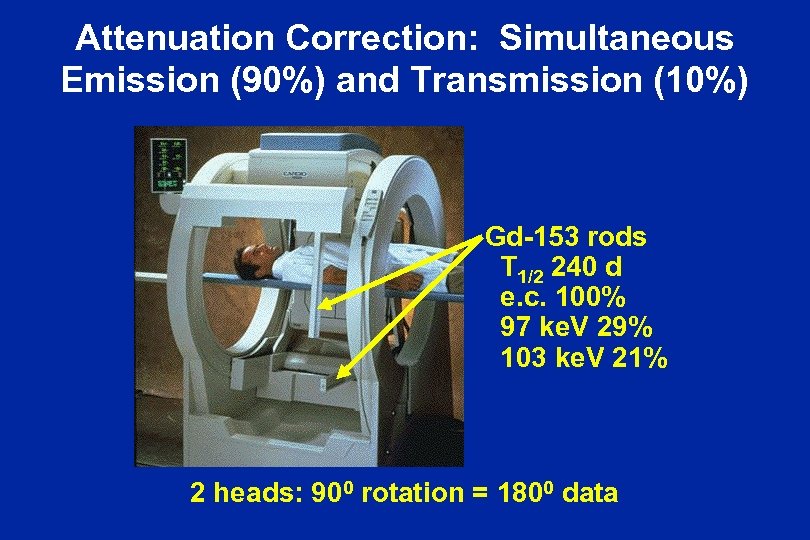
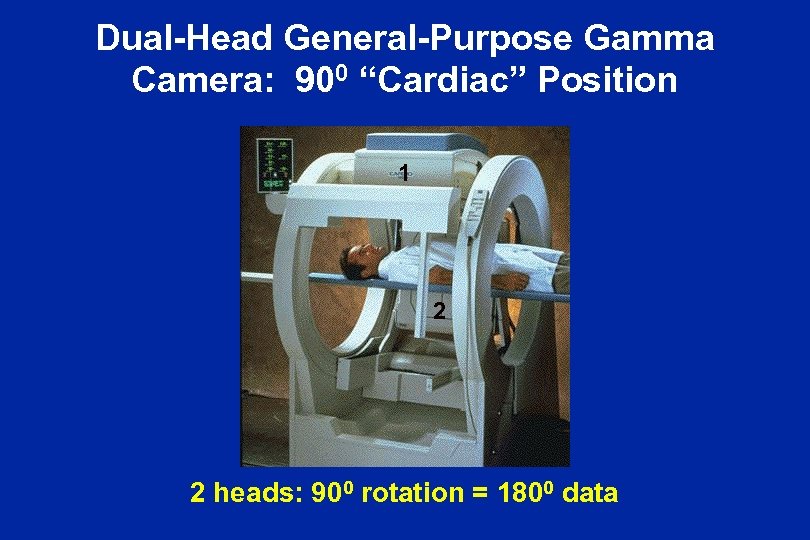 Dual-Head General-Purpose Gamma Camera: 900 “Cardiac” Position 1 2 2 heads: 900 rotation = 1800 data
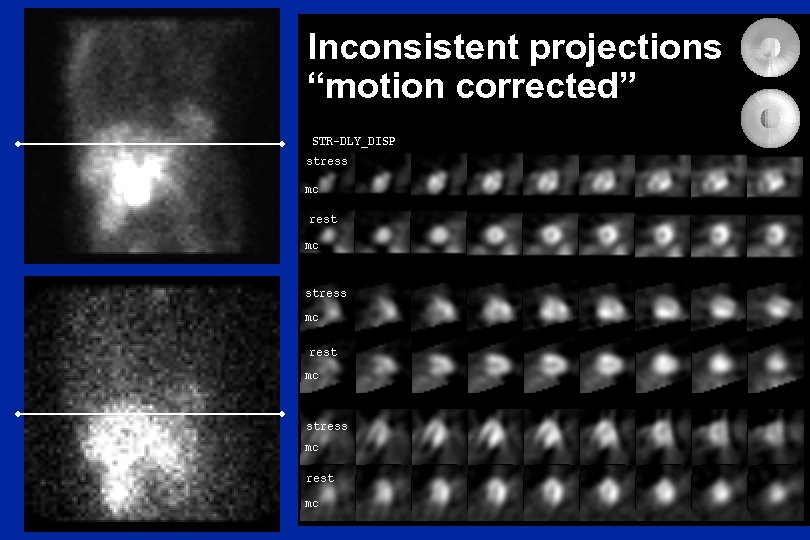 Inconsistent projections “motion corrected”
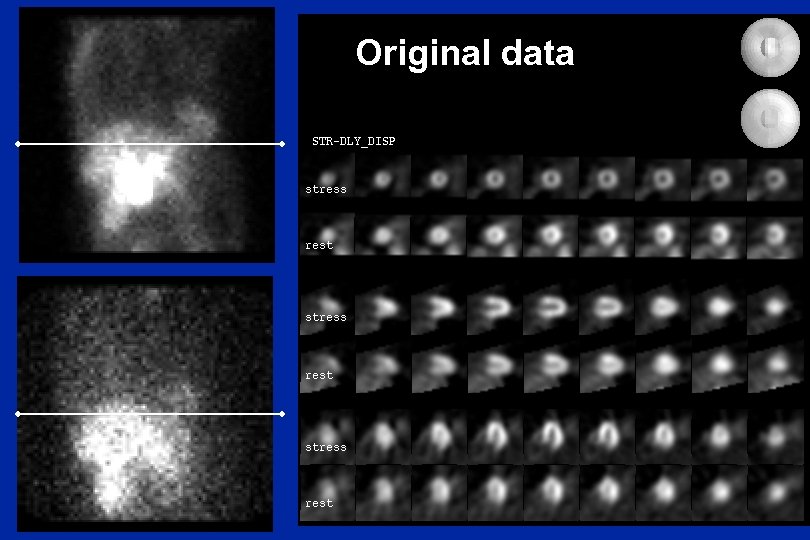 Original data
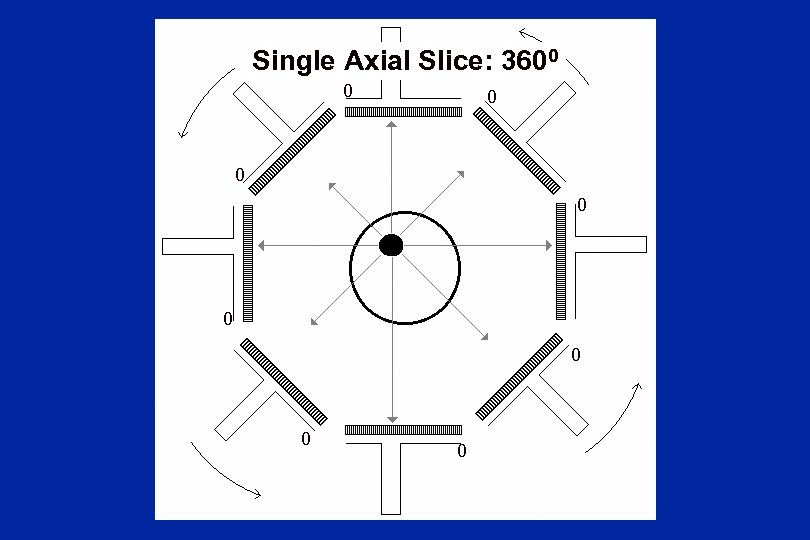 Single Axial Slice: 3600 0 0 0 0
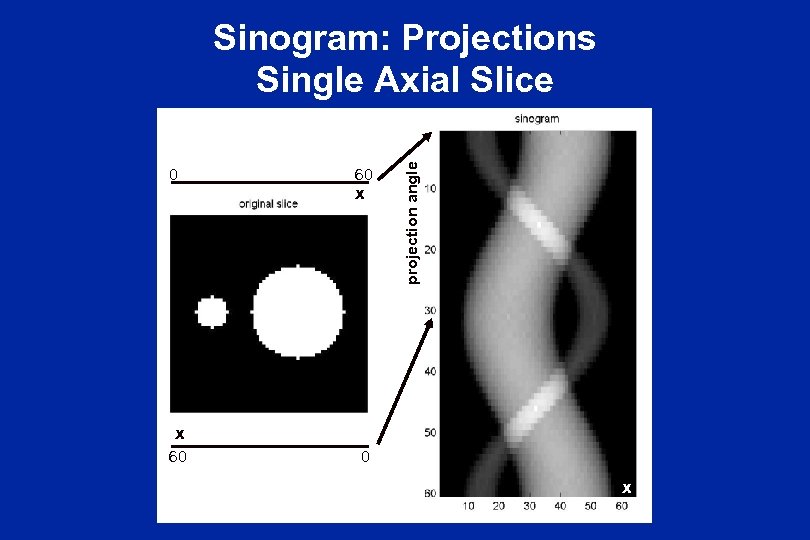 0 60 x projection angle Sinogram: Projections Single Axial Slice x 60 0 x
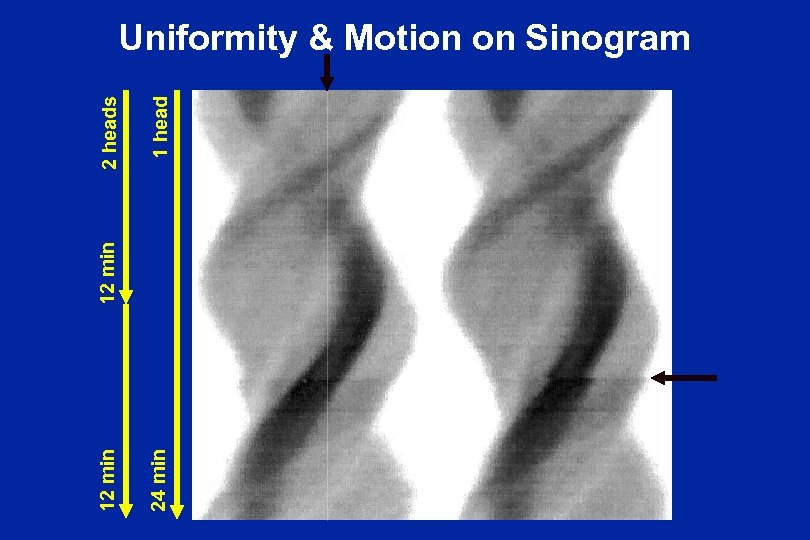 1 head 24 min 12 min 2 heads Uniformity & Motion on Sinogram
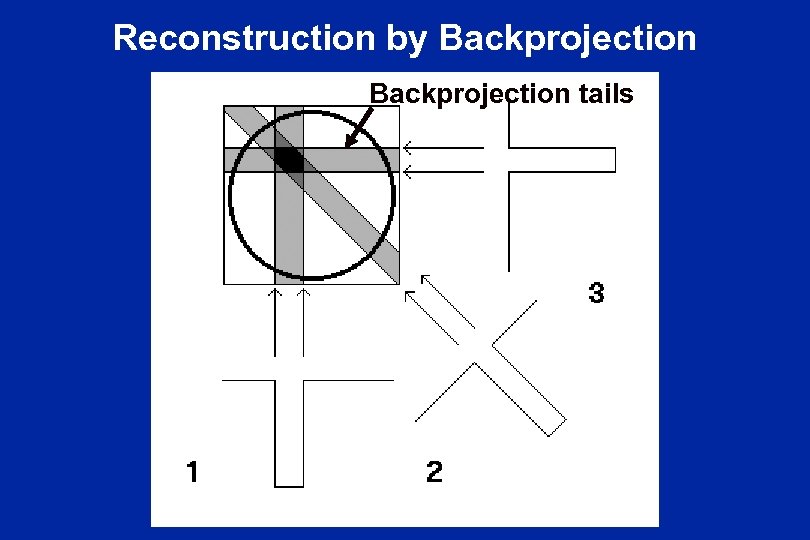 Reconstruction by Backprojection tails
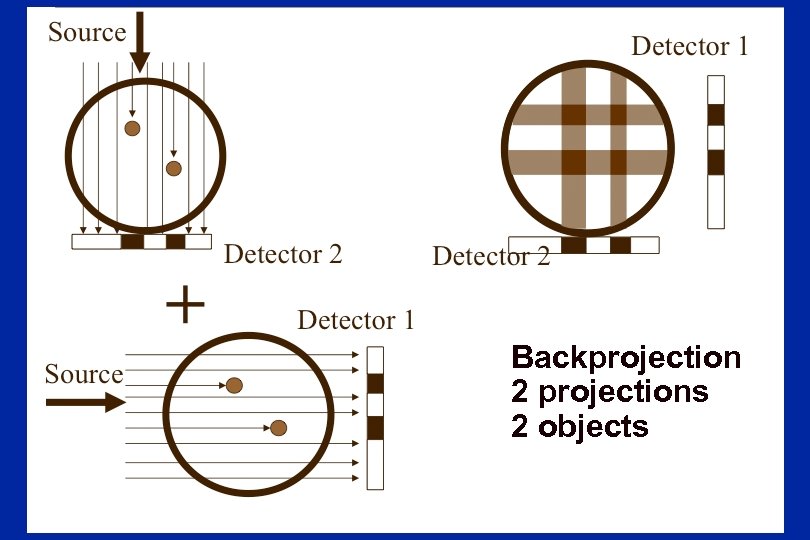 Backprojection 2 projections 2 objects
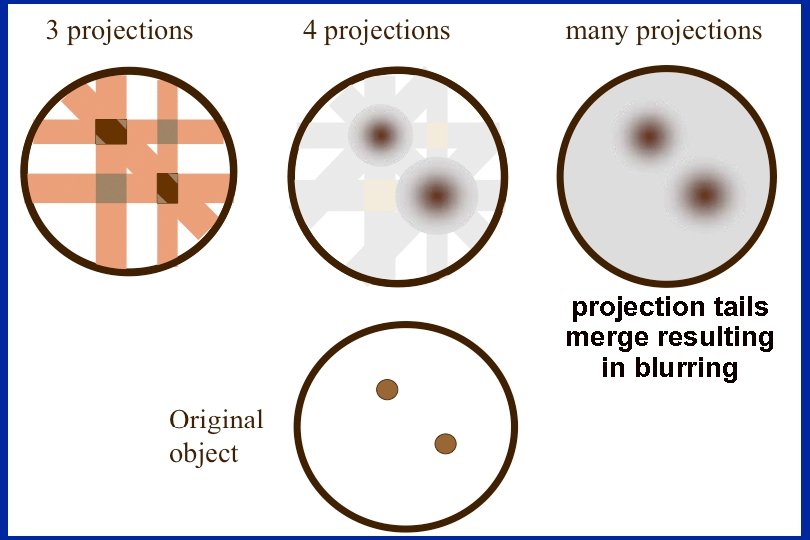 projection tails merge resulting in blurring
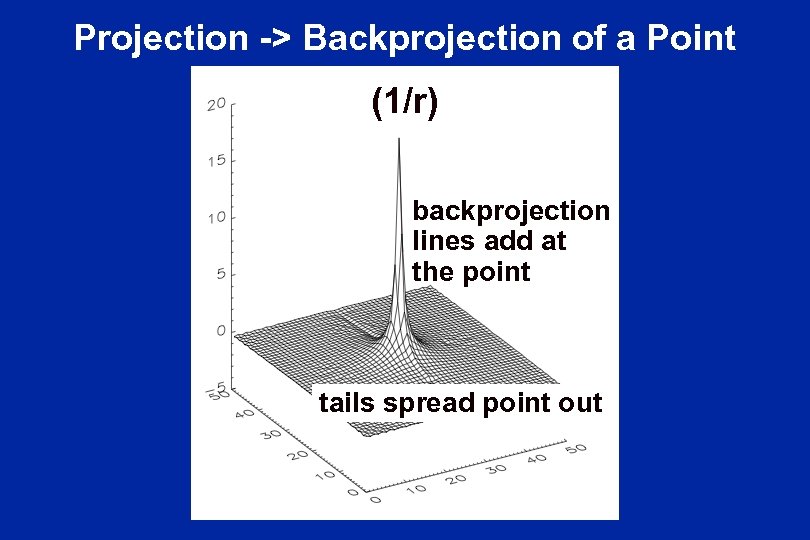 Projection -> Backprojection of a Point (1/r) backprojection lines add at the point tails spread point out
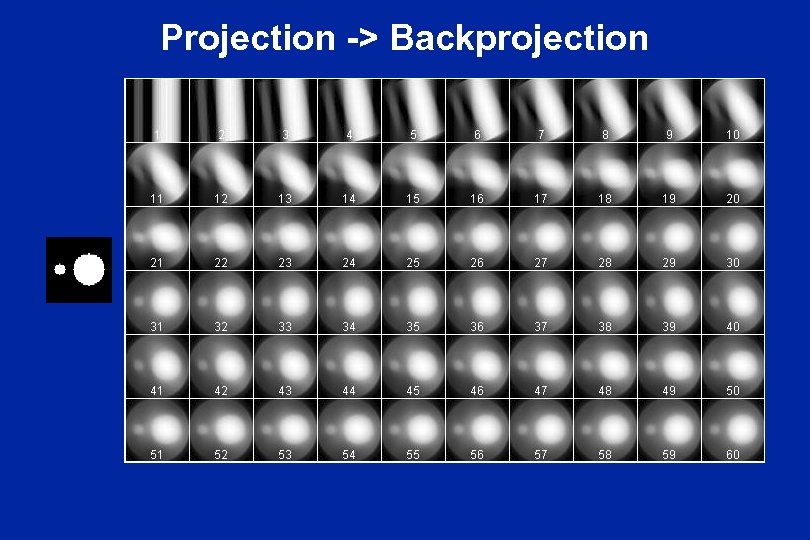 Projection -> Backprojection
 Projection->Backprojection Smooths or “blurs” the image (Low pass filter) ((Convolution with 1/r)) Nuclear Medicine physics Square law detector adds pixels -> always blurs Different from MRI (phase)
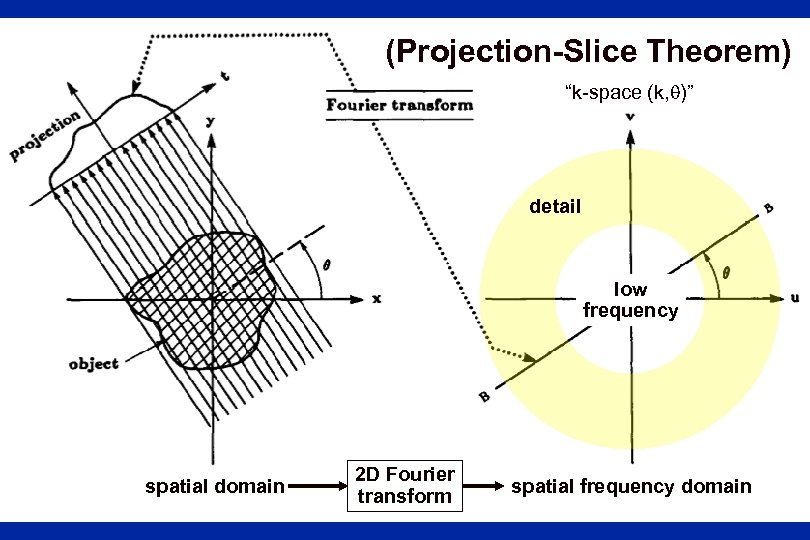 (Projection-Slice Theorem) “k-space (k, )” detail low frequency spatial domain 2 D Fourier transform spatial frequency domain
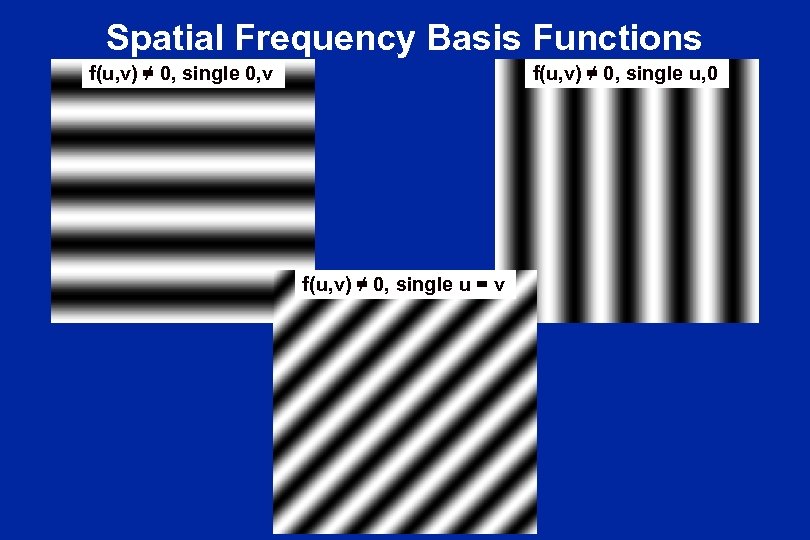 Spatial Frequency Basis Functions f(u, v) ≠ 0, single 0, v f(u, v) ≠ 0, single u, 0 f(u, v) ≠ 0, single u = v
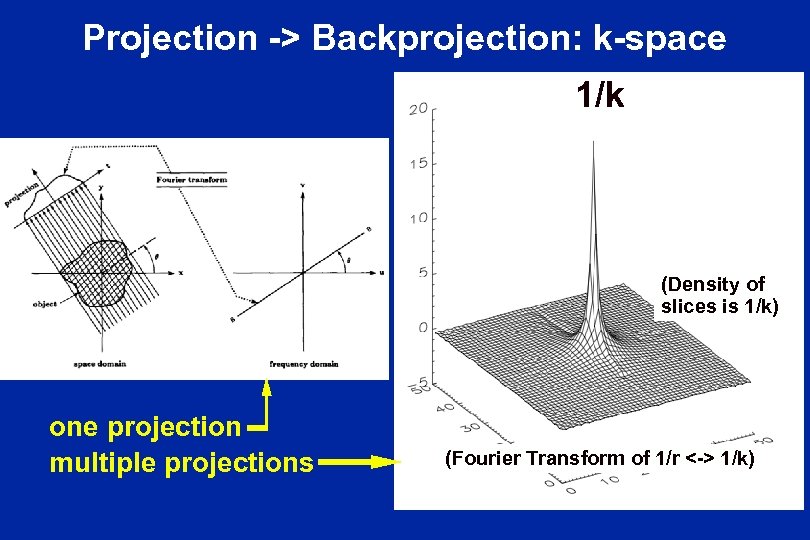 Projection -> Backprojection: k-space 1/k (Density of slices is 1/k) one projection multiple projections (Fourier Transform of 1/r <-> 1/k)
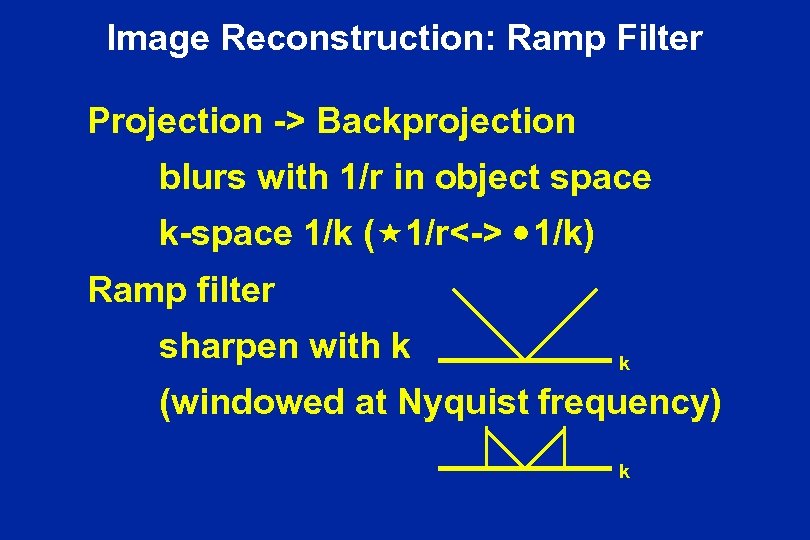 Image Reconstruction: Ramp Filter Projection -> Backprojection blurs with 1/r in object space k-space 1/k ( 1/r<-> 1/k) Ramp filter sharpen with k k (windowed at Nyquist frequency) k
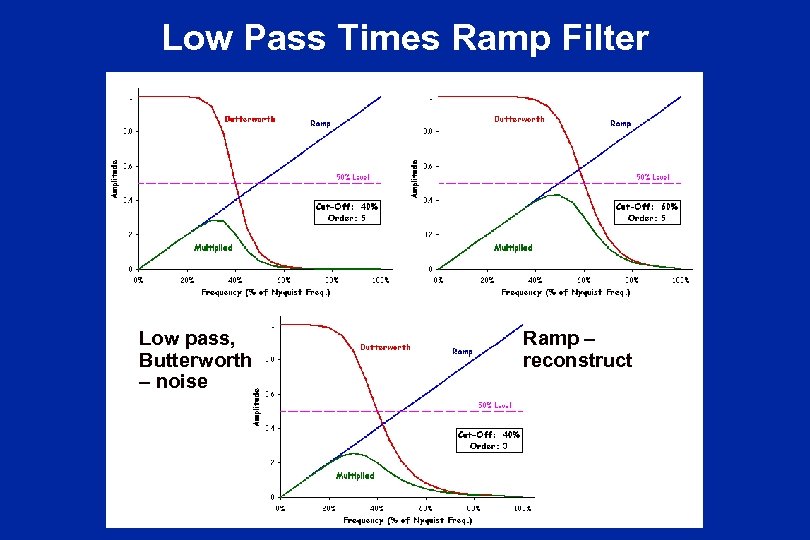 Low Pass Times Ramp Filter Low pass, Butterworth – noise Ramp – reconstruct
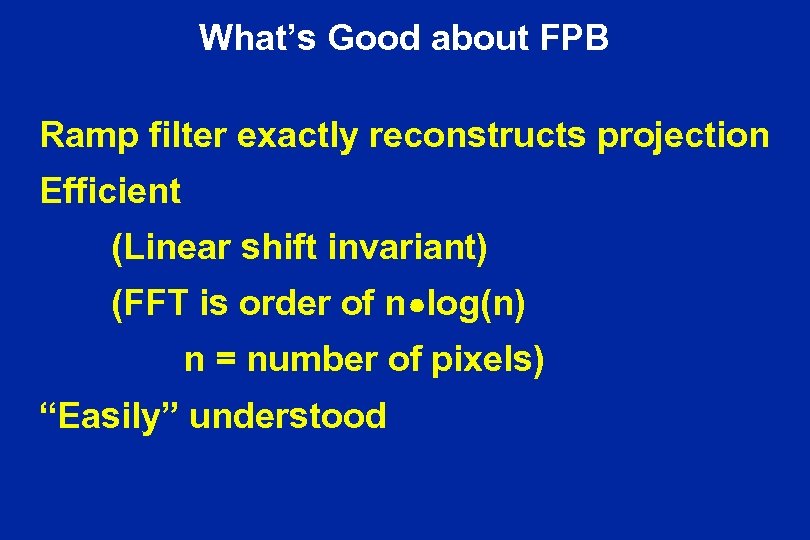 What’s Good about FPB Ramp filter exactly reconstructs projection Efficient (Linear shift invariant) (FFT is order of n log(n) n = number of pixels) “Easily” understood
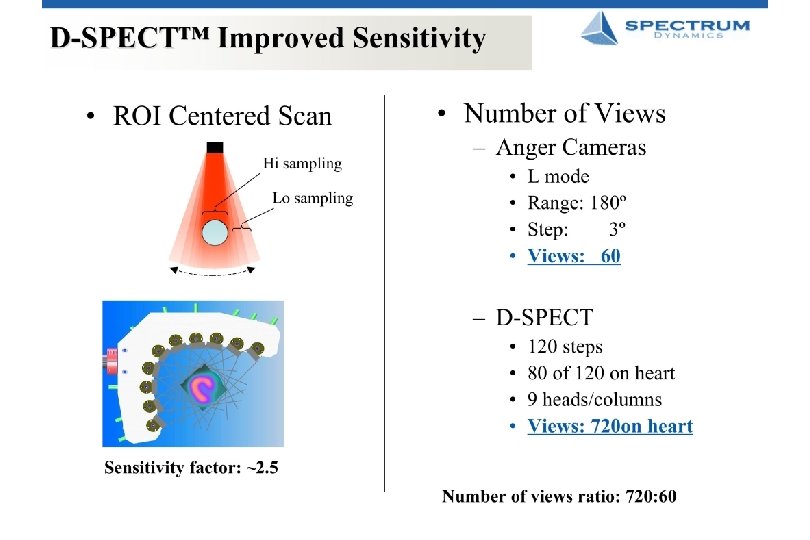
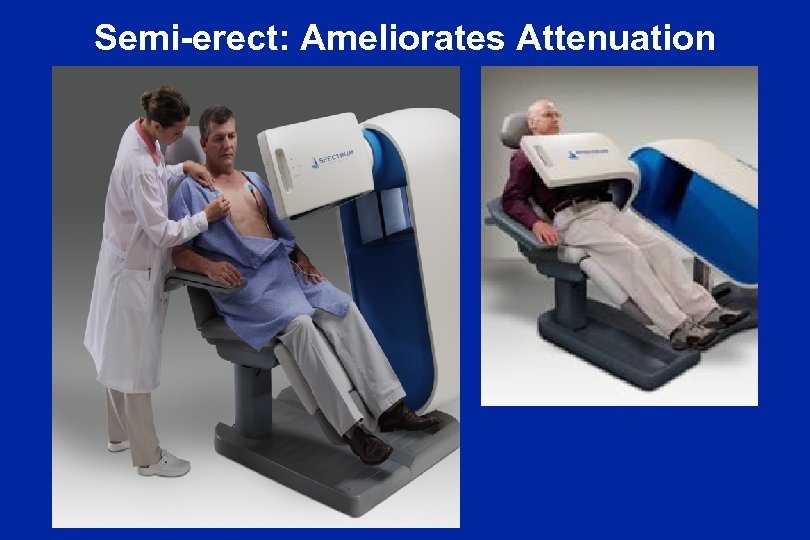
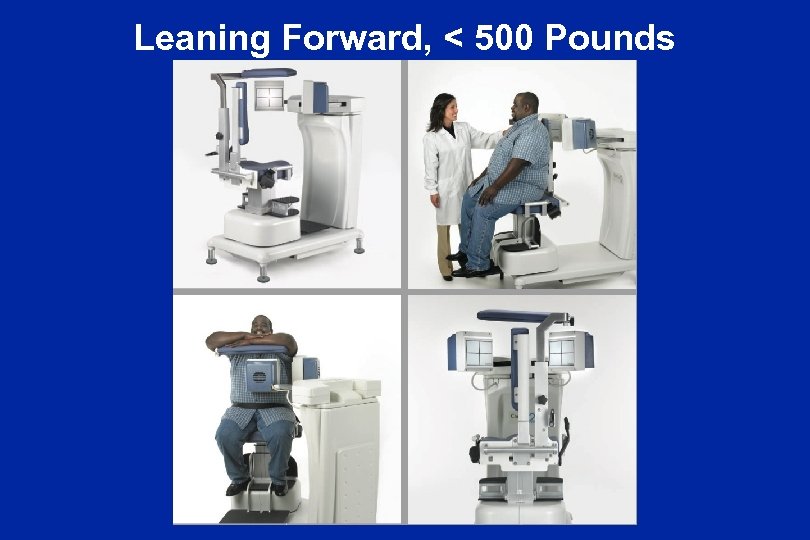
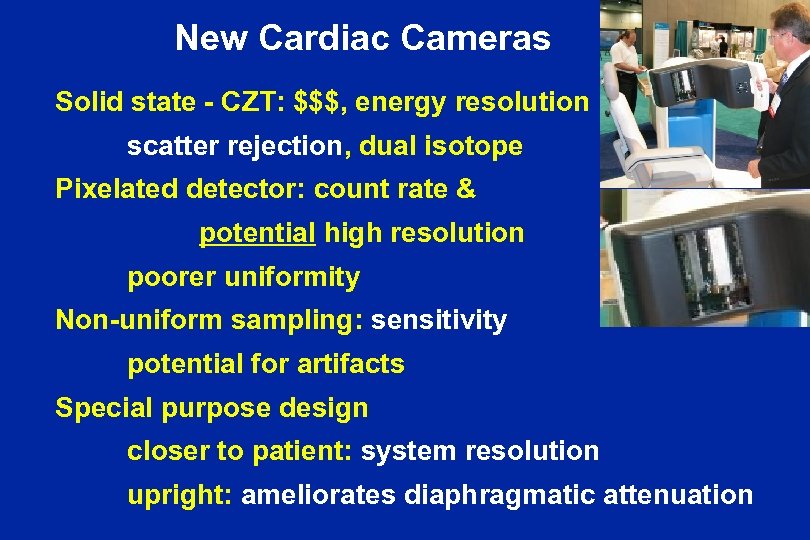 New Cardiac Cameras Solid state - CZT: $$$, energy resolution scatter rejection, dual isotope Pixelated detector: count rate & potential high resolution poorer uniformity Non-uniform sampling: sensitivity potential for artifacts Special purpose design closer to patient: system resolution upright: ameliorates diaphragmatic attenuation
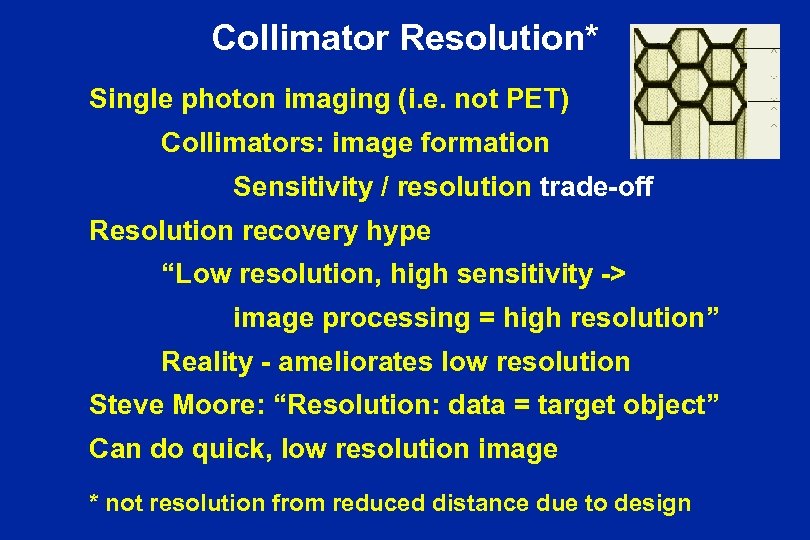 Collimator Resolution* Single photon imaging (i. e. not PET) Collimators: image formation Sensitivity / resolution trade-off Resolution recovery hype “Low resolution, high sensitivity -> image processing = high resolution” Reality - ameliorates low resolution Steve Moore: “Resolution: data = target object” Can do quick, low resolution image * not resolution from reduced distance due to design
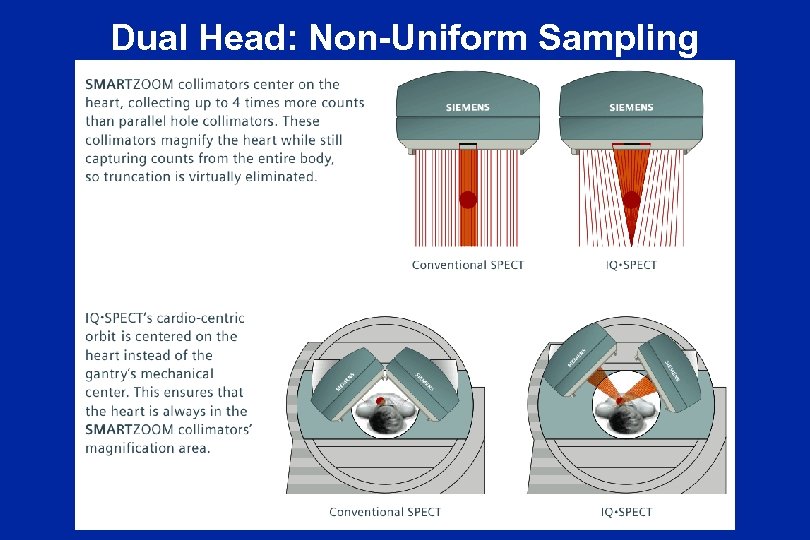 Dual Head: Non-Uniform Sampling
 Activity Measurement: Attenuation htl(140 ke. V) ≈ 4 cm ke. V 150 100 80 60 50
 Attenuation Correction: Simultaneous Emission (90%) and Transmission (10%) Gd-153 rods T 1/2 240 d e. c. 100% 97 ke. V 29% 103 ke. V 21% 2 heads: 900 rotation = 1800 data
 Semi-erect: Ameliorates Attenuation
 Leaning Forward, < 500 Pounds
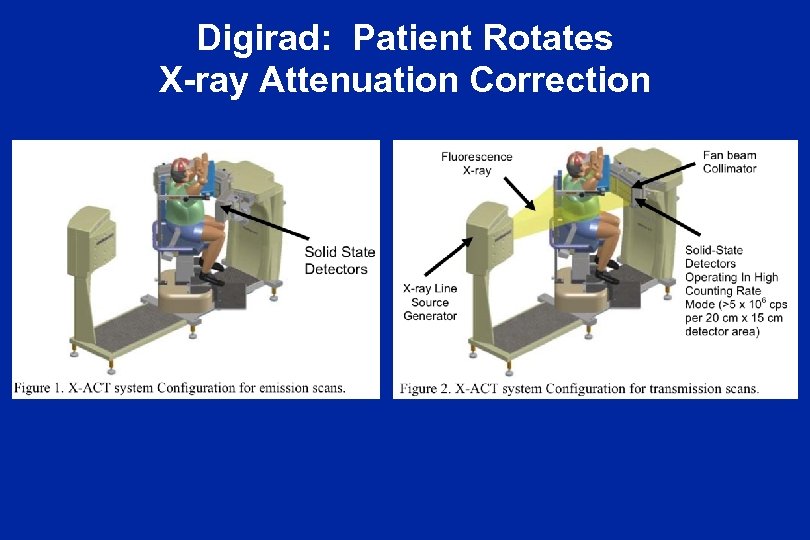 Digirad: Patient Rotates X-ray Attenuation Correction
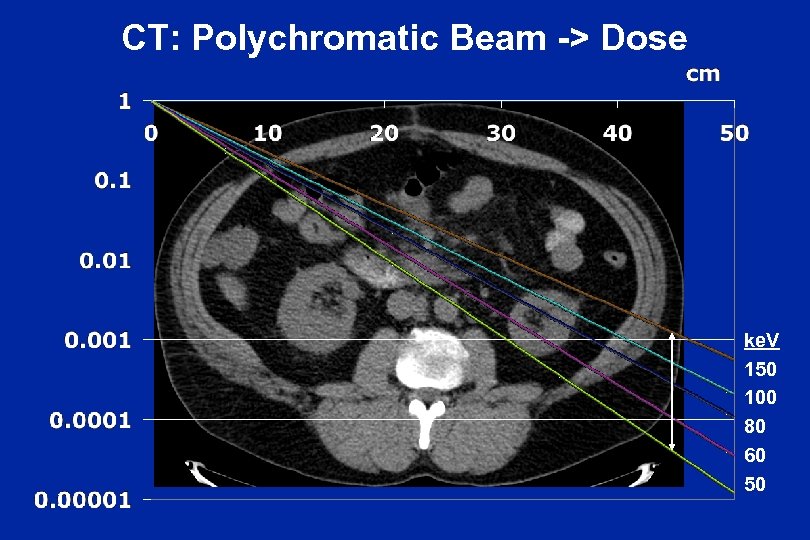 CT: Polychromatic Beam -> Dose ke. V 150 100 80 60 50
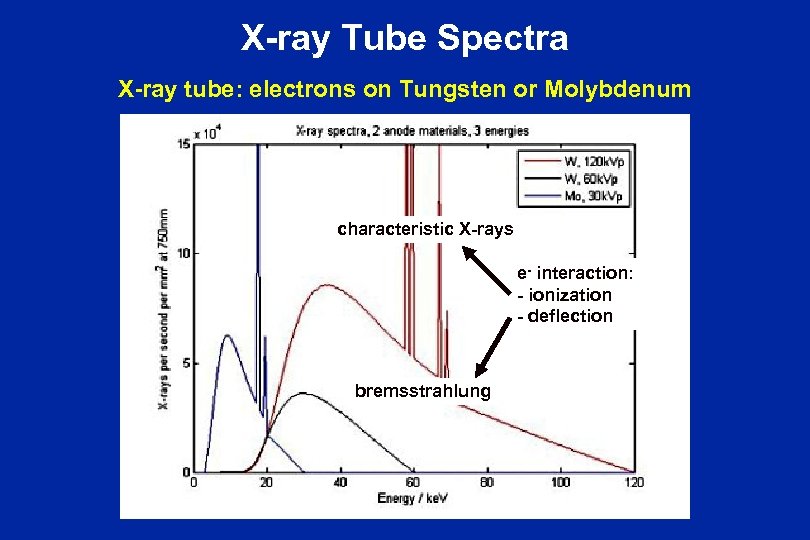 X-ray Tube Spectra X-ray tube: electrons on Tungsten or Molybdenum characteristic X-rays e- interaction: - ionization - deflection bremsstrahlung
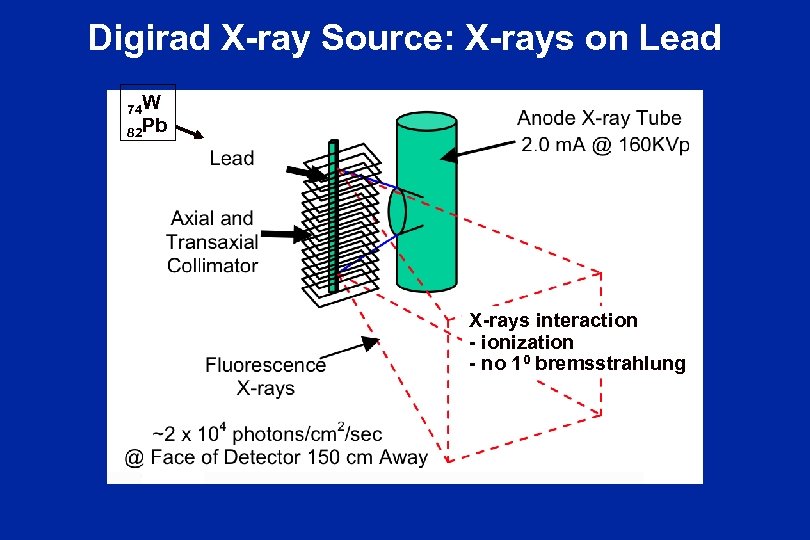 Digirad X-ray Source: X-rays on Lead 74 W 82 Pb X-rays interaction - ionization - no 10 bremsstrahlung
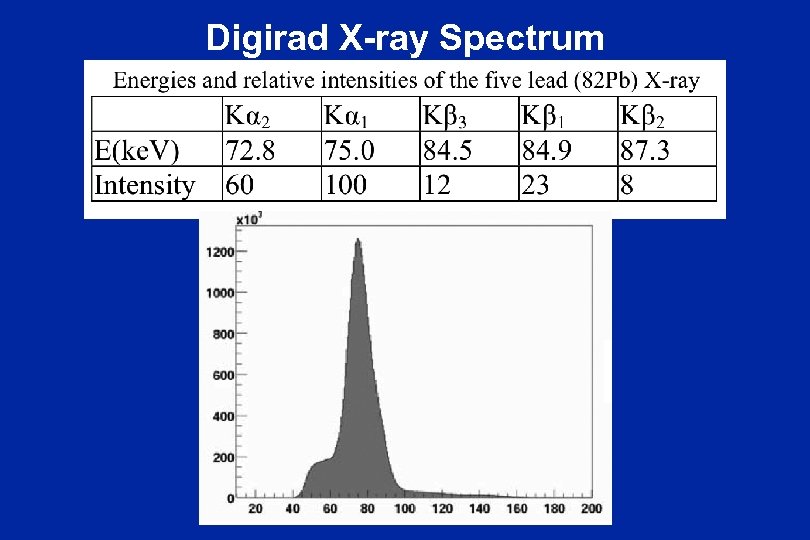 Digirad X-ray Spectrum
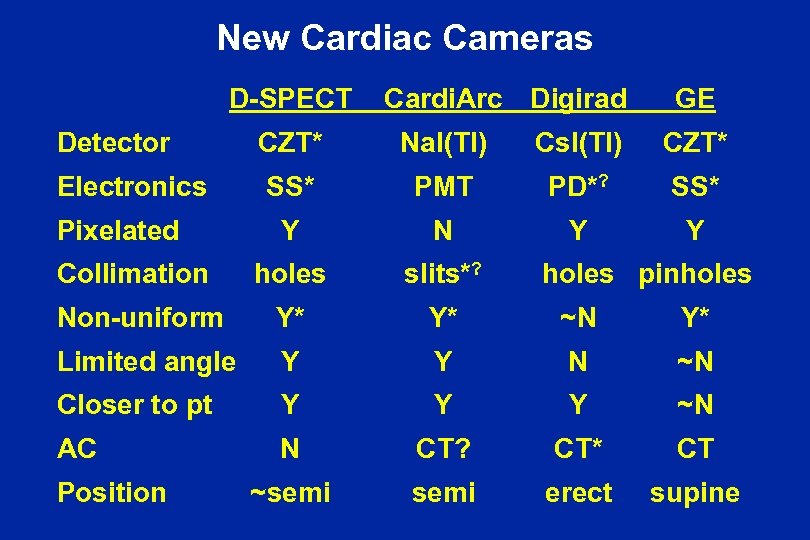 New Cardiac Cameras D-SPECT Detector Cardi. Arc Digirad GE CZT* Na. I(Tl) Cs. I(Tl) CZT* SS* PMT PD*? SS* Y N Y Y Collimation holes slits*? Non-uniform Y* Y* ~N Y* Limited angle Y Y N ~N Closer to pt Y Y Y ~N AC N CT? CT* CT ~semi erect supine Electronics Pixelated Position holes pinholes
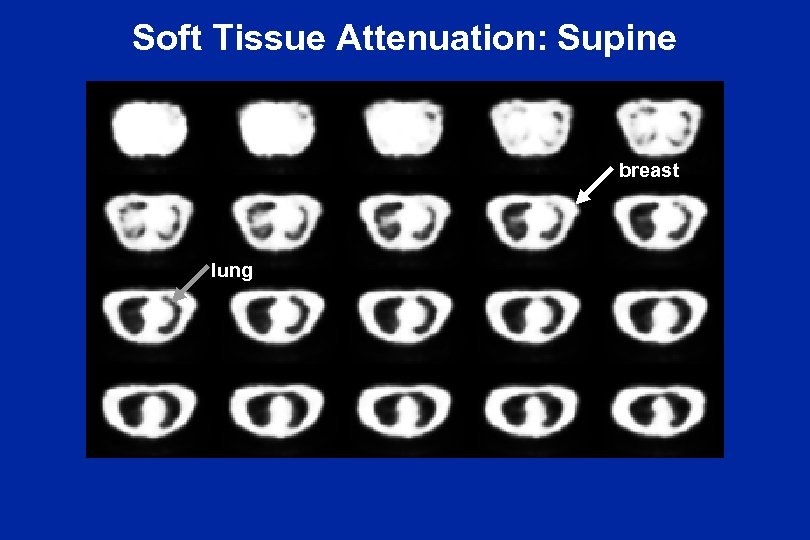 Soft Tissue Attenuation: Supine breast lung
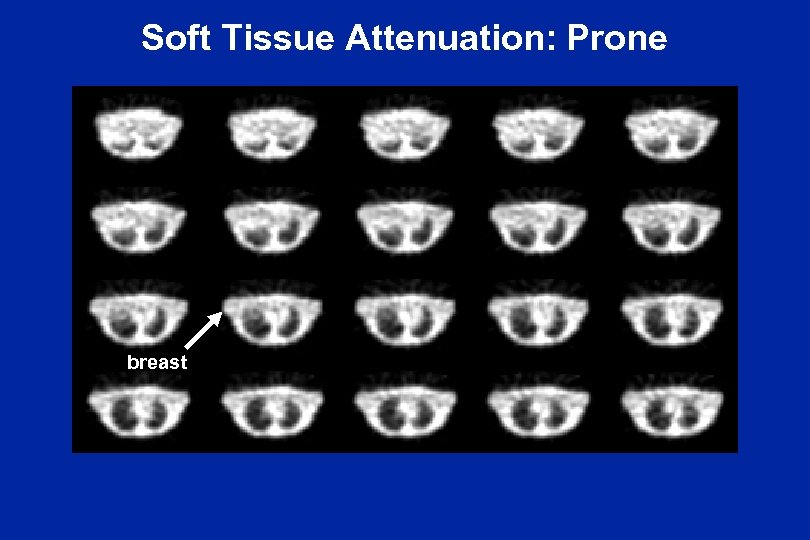 Soft Tissue Attenuation: Prone breast
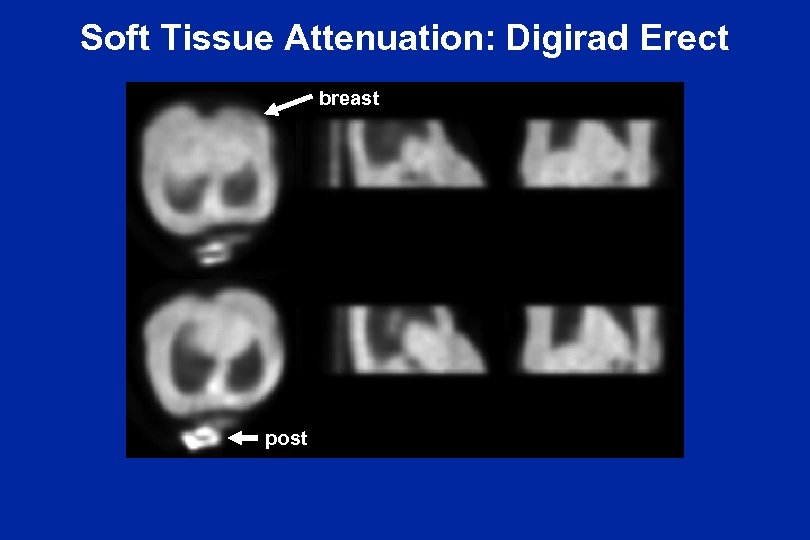 Soft Tissue Attenuation: Digirad Erect breast post
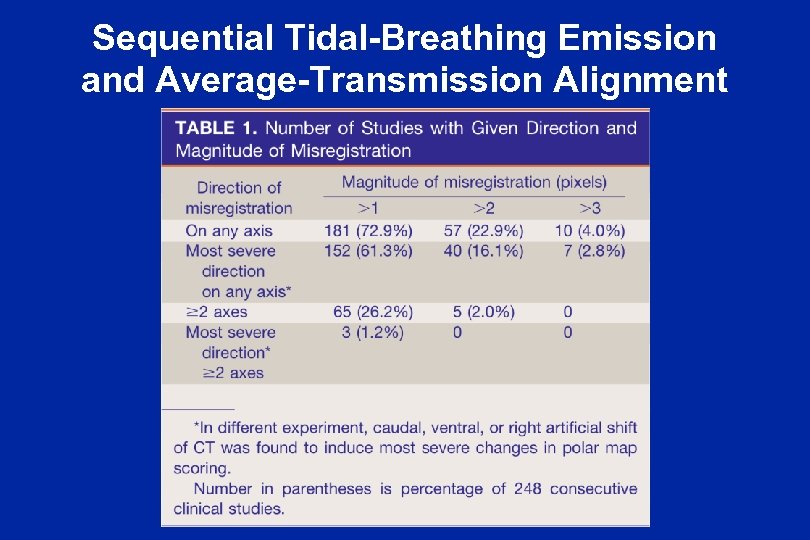 Sequential Tidal-Breathing Emission and Average-Transmission Alignment
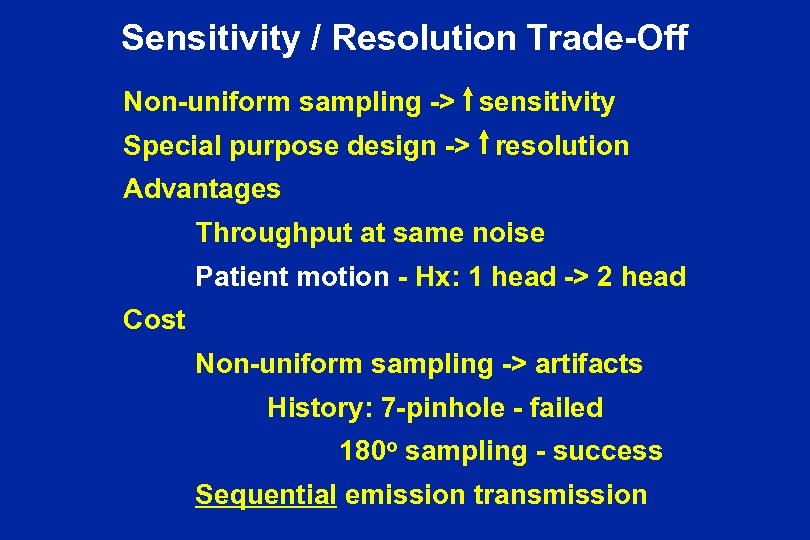 Sensitivity / Resolution Trade-Off Non-uniform sampling -> sensitivity Special purpose design -> resolution Advantages Throughput at same noise Patient motion - Hx: 1 head -> 2 head Cost Non-uniform sampling -> artifacts History: 7 -pinhole - failed 180 o sampling - success Sequential emission transmission
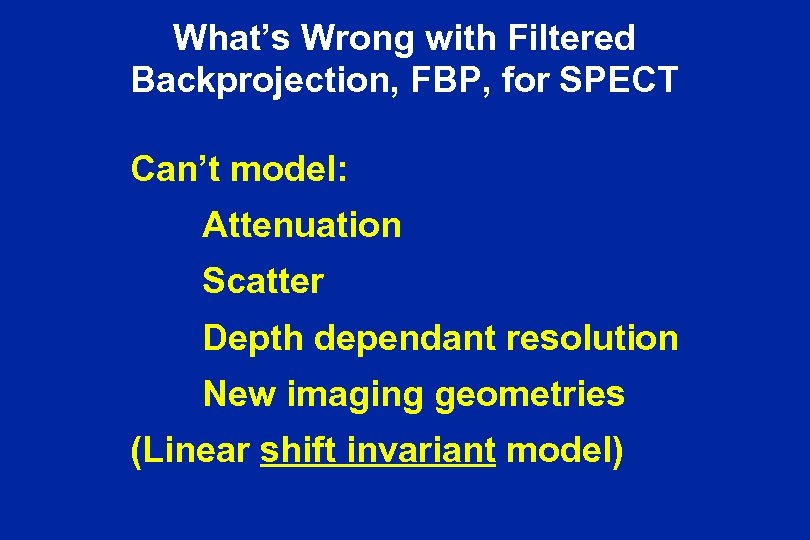 What’s Wrong with Filtered Backprojection, FBP, for SPECT Can’t model: Attenuation Scatter Depth dependant resolution New imaging geometries (Linear shift invariant model)
 Solution Iterative reconstruction Uses: Simultaneous linear equations Matrix algebra Can model image physics (Linear model)
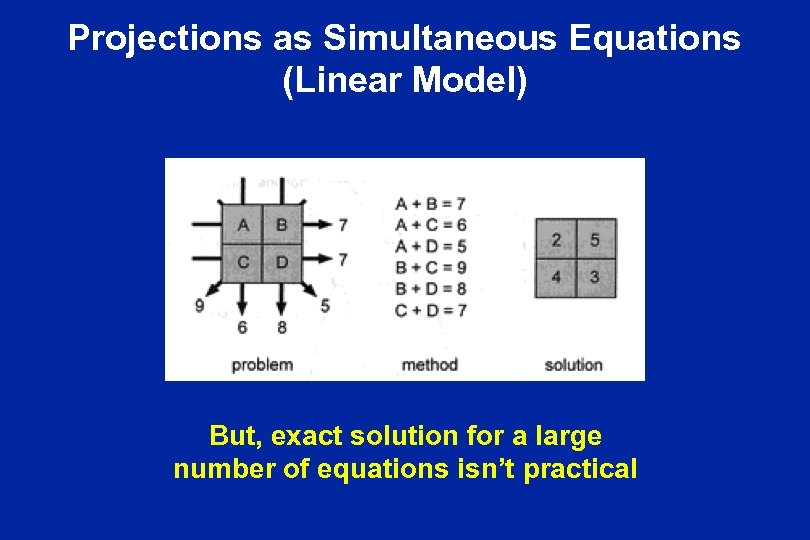 Projections as Simultaneous Equations (Linear Model) But, exact solution for a large number of equations isn’t practical
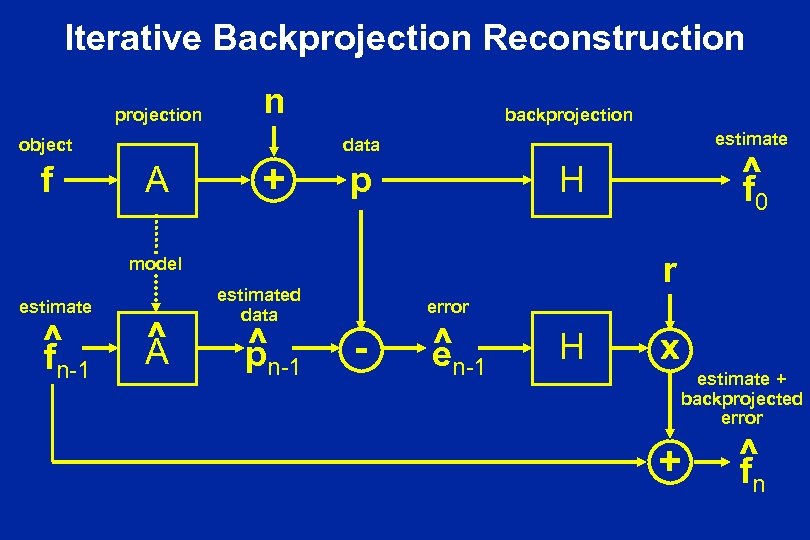 Iterative Backprojection Reconstruction projection n object f backprojection estimate data A + p ^ f n-1 ^ A estimated data ^ pn-1 0 r model estimate ^ f H error - ^n-1 e H x estimate + backprojected error + ^ f n
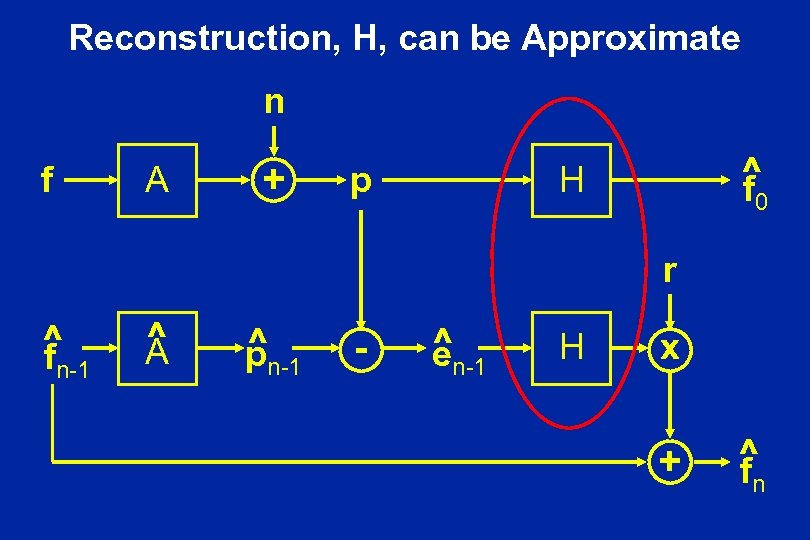 Reconstruction, H, can be Approximate n f A + p ^ f H 0 r ^ f n-1 ^ A ^ pn-1 - ^n-1 e H x + ^ f n
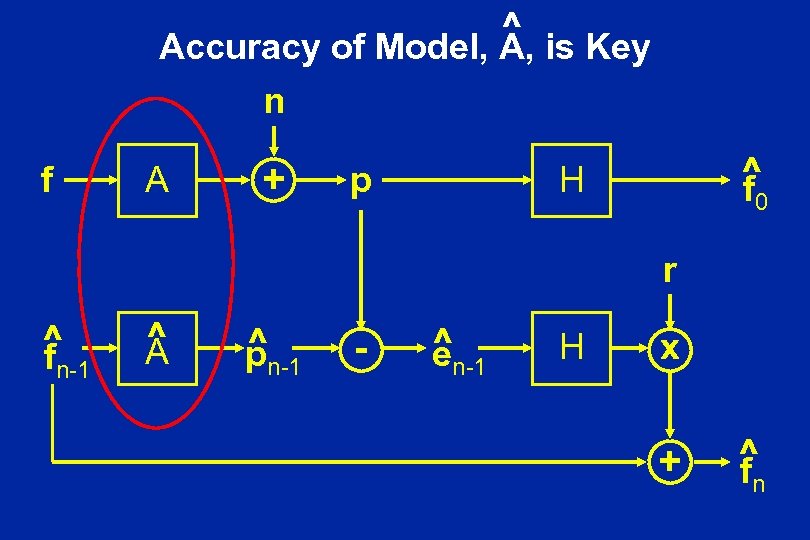 ^ is Key Accuracy of Model, A, n f A + p ^ f H 0 r ^ f n-1 ^ A ^ pn-1 - ^n-1 e H x + ^ f n
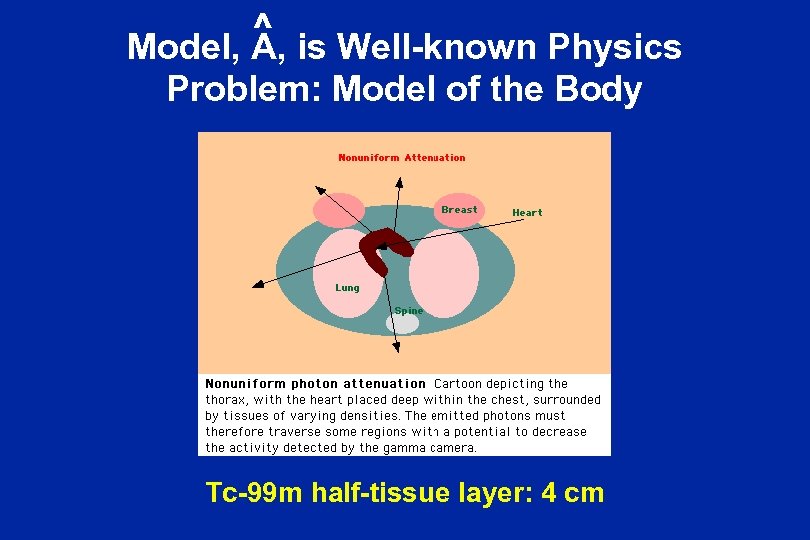 ^ is Well-known Physics Model, A, Problem: Model of the Body Tc-99 m half-tissue layer: 4 cm
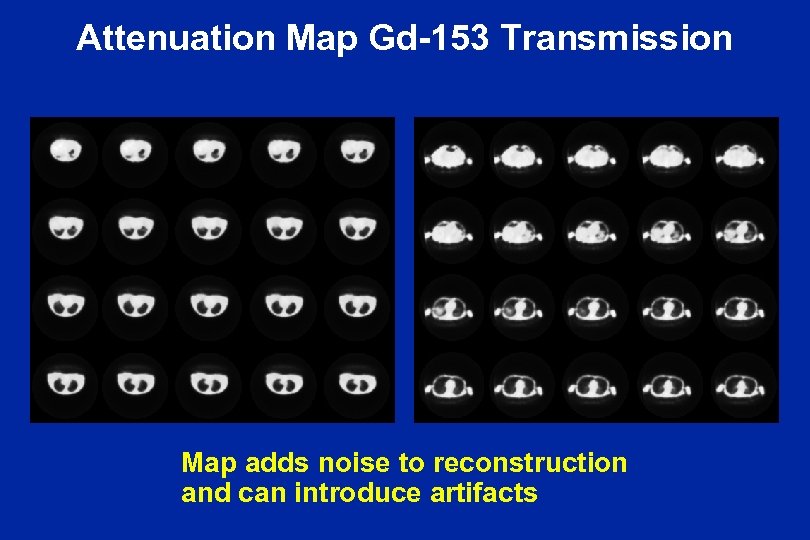 Attenuation Map Gd-153 Transmission Map adds noise to reconstruction and can introduce artifacts
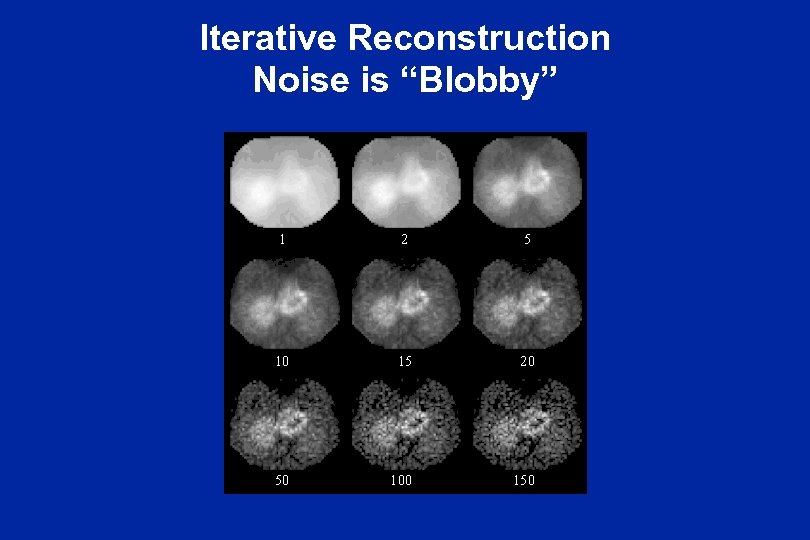 Iterative Reconstruction Noise is “Blobby”
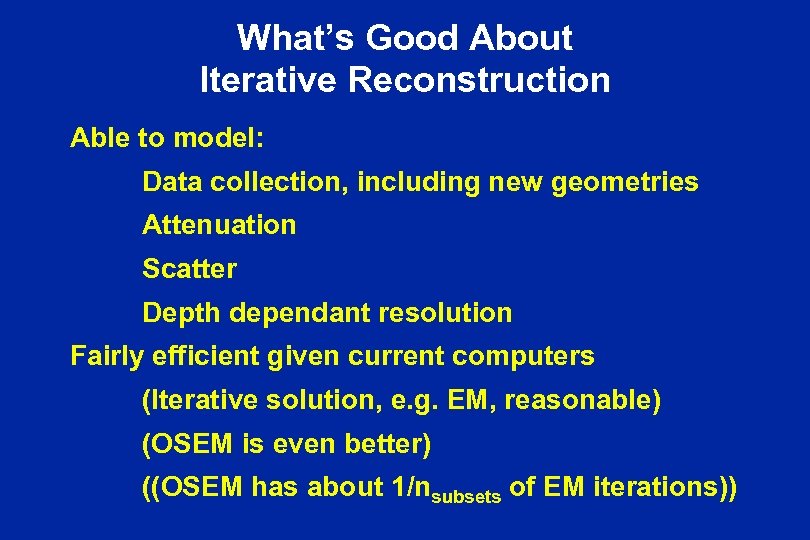 What’s Good About Iterative Reconstruction Able to model: Data collection, including new geometries Attenuation Scatter Depth dependant resolution Fairly efficient given current computers (Iterative solution, e. g. EM, reasonable) (OSEM is even better) ((OSEM has about 1/nsubsets of EM iterations))
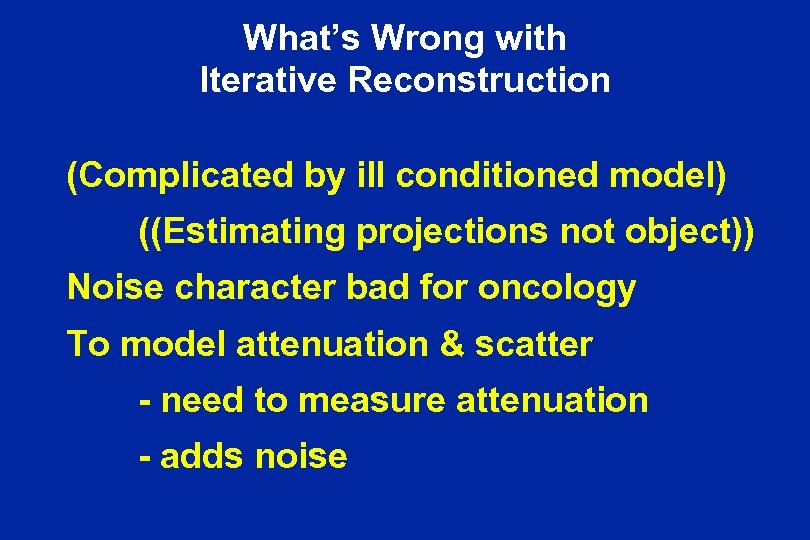 What’s Wrong with Iterative Reconstruction (Complicated by ill conditioned model) ((Estimating projections not object)) Noise character bad for oncology To model attenuation & scatter - need to measure attenuation - adds noise
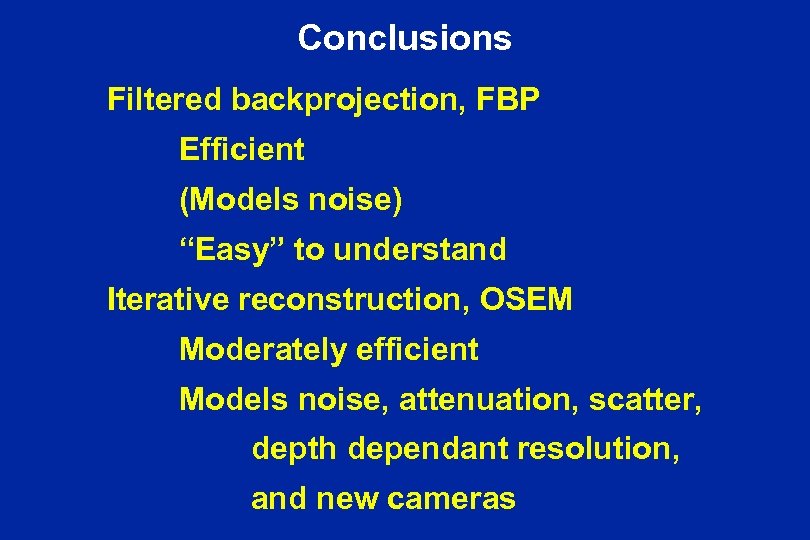 Conclusions Filtered backprojection, FBP Efficient (Models noise) “Easy” to understand Iterative reconstruction, OSEM Moderately efficient Models noise, attenuation, scatter, depth dependant resolution, and new cameras
 Applause