


 Скачать презентацию Image Correction for Immersive Visualization Systems Alex Timchenko
aaf59f387e3389ddf80c8fa00d311811.ppt
- Количество слайдов: 23
 Image Correction for Immersive Visualization Systems Alex Timchenko 02/03/2006
 Project Background ¢ Immersive Visualization System TAMU TITF Grant 2002 - 2005 l NSF Grant - Ongoing l ¢ Principle Investigators Dr. Frederic Parke l Dr. Donald House l
 Project Purpose ¢ Development of a modular low-cost immersive environment l l l Visuals consists of a set of projectors backprojecting images on polygonal facets Have to utilize readily available technology and materials Powerful programming API to facilitate development of new applications for the system
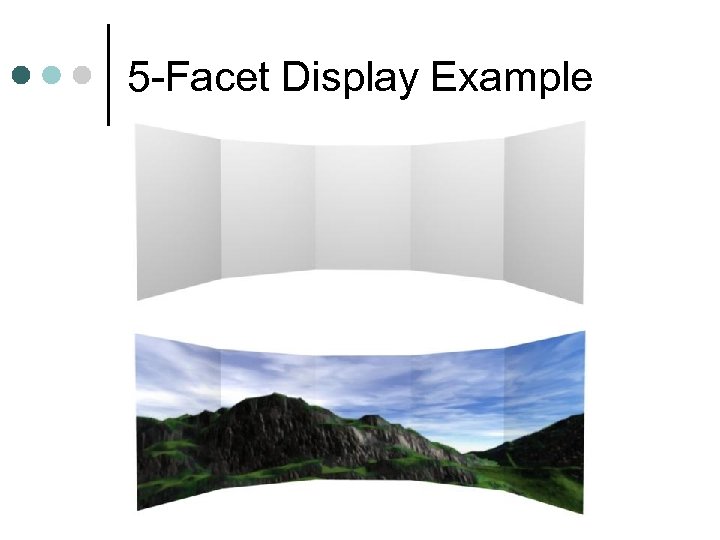 5 -Facet Display Example
 Need for Coherency ¢ Temporal coherency Each display must project a part of the world in-sync with the other projectors l Achieved through network protocols l ¢ Spatial coherency l Two adjacent facets must display adjacent information with as little of a seam as possible
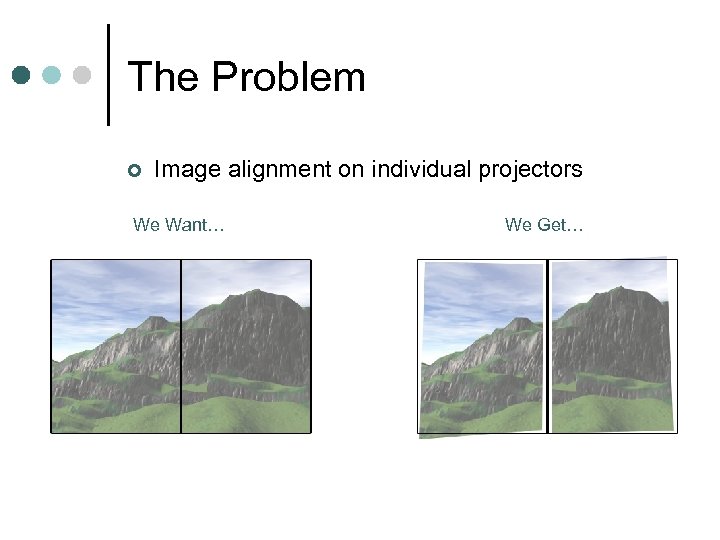 The Problem ¢ Image alignment on individual projectors We Want… We Get…
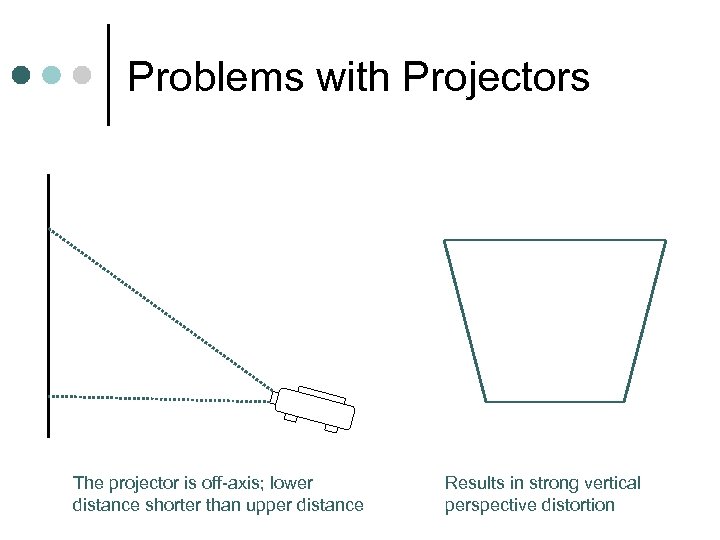 Problems with Projectors The projector is off-axis; lower distance shorter than upper distance Results in strong vertical perspective distortion
 Problems with Projectors ¢ Perspective distortion l Vertical distortion • Keystone l Horizontal distortion • Keystone correction not as common • More expensive Keystoning reduces image quality l Difficult to manually align projector l
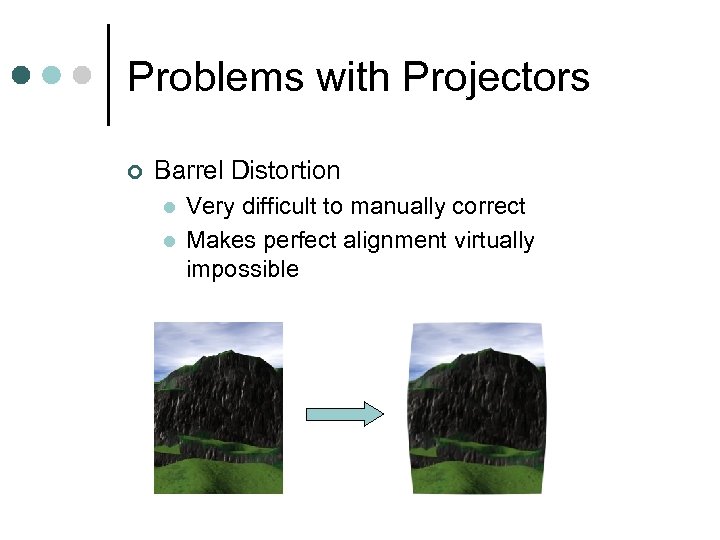 Problems with Projectors ¢ Barrel Distortion l l Very difficult to manually correct Makes perfect alignment virtually impossible
 Problems with Projectors ¢ Other Problems Non-uniform Intensity l Non-uniform Color l Color difference between projectors l
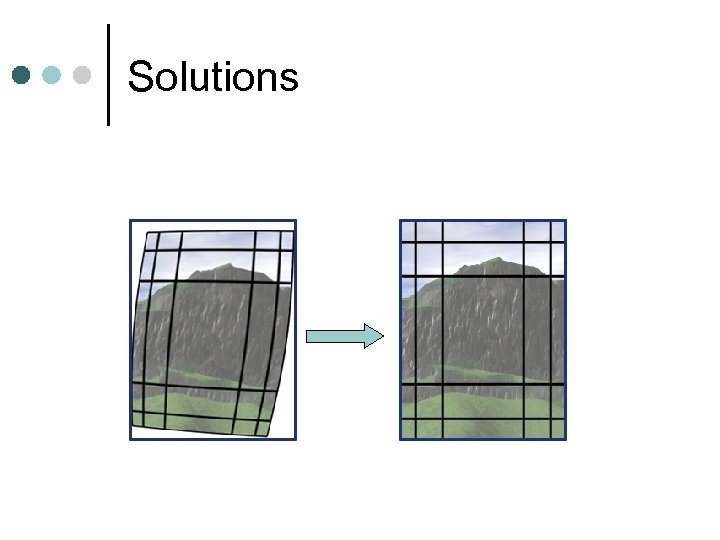
 Solutions ¢ Manual/Mechanical Solution Very difficult to precisely align l No way to correct barrel distortion l ¢ Software based solution l Apply a real-time warp to the projected image, allowing the user to control the corners and midpoints of the polygon
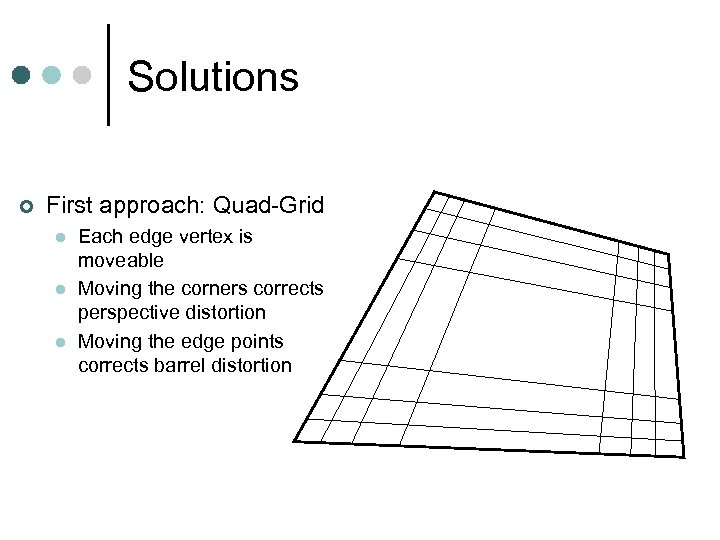 Solutions ¢ First approach: Quad-Grid l l l Each edge vertex is moveable Moving the corners corrects perspective distortion Moving the edge points corrects barrel distortion
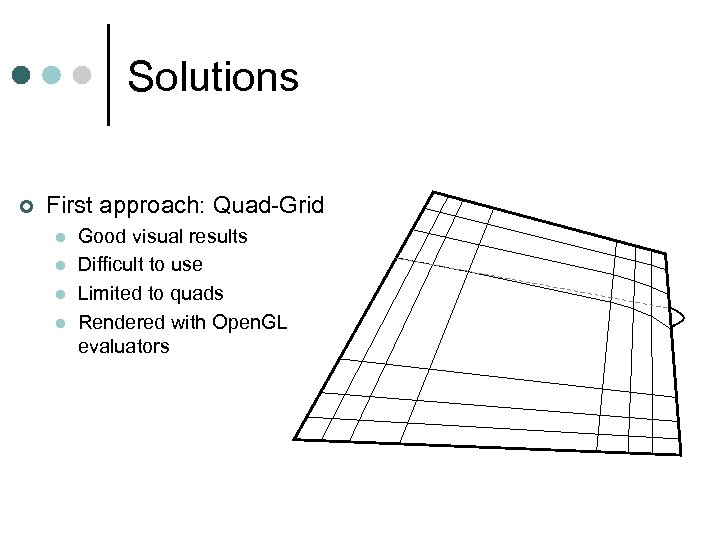 Solutions ¢ First approach: Quad-Grid l l Good visual results Difficult to use Limited to quads Rendered with Open. GL evaluators
 Solutions
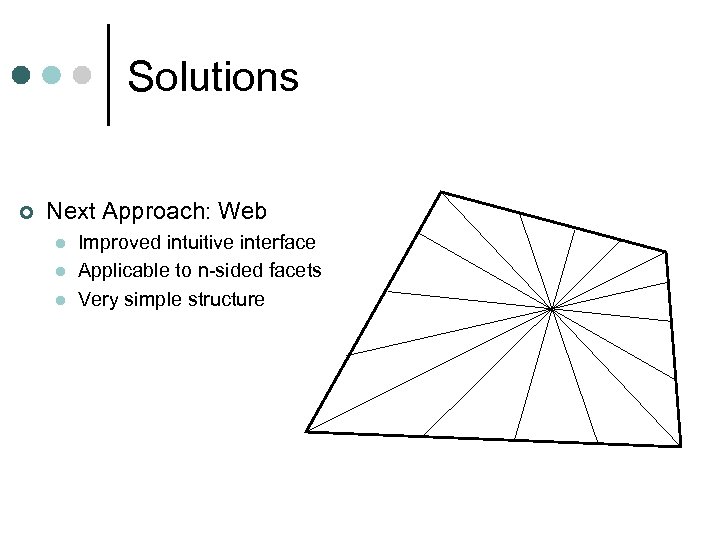 Solutions ¢ Next Approach: Web l l l Improved intuitive interface Applicable to n-sided facets Very simple structure
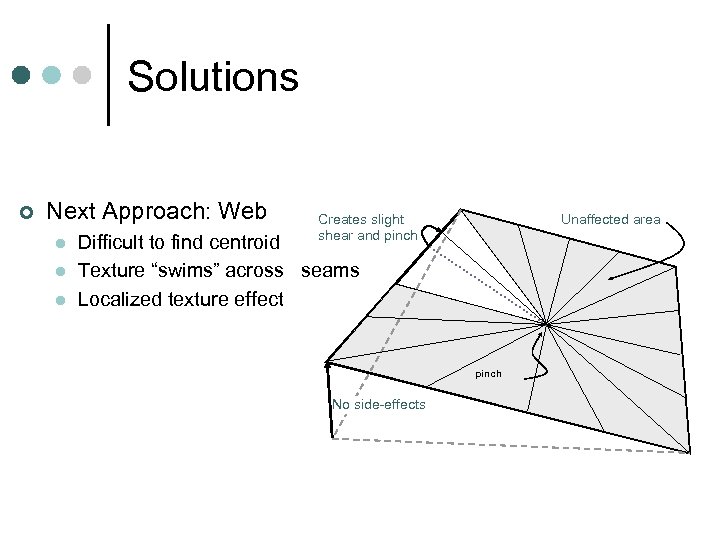 Solutions ¢ Next Approach: Web l l l Creates slight shear and pinch Unaffected area Difficult to find centroid Texture “swims” across seams Localized texture effect pinch No side-effects
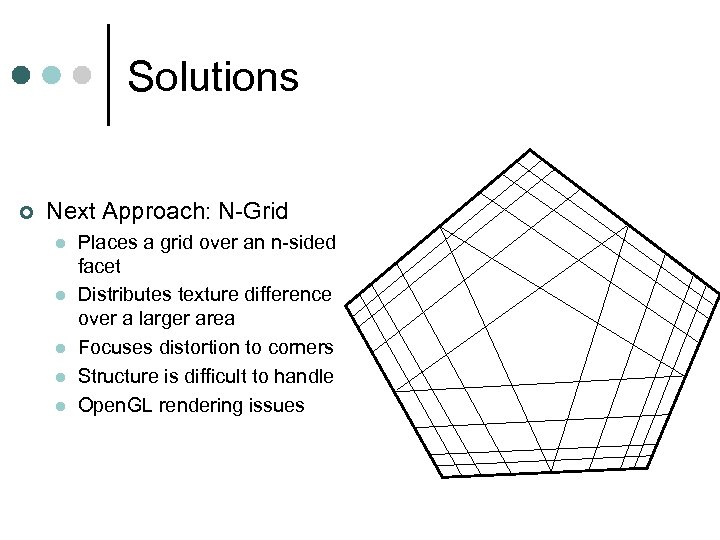 Solutions ¢ Next Approach: N-Grid l l l Places a grid over an n-sided facet Distributes texture difference over a larger area Focuses distortion to corners Structure is difficult to handle Open. GL rendering issues
 Solutions ¢ Other approaches? l Spring-based meshes • • Treat interior points as particles Treat edges as springs Spring Stability Return to initial state
 GPU Rendering Instead of relying on Open. GL default texturing, control the warping through the GPU ¢ Create a 2 D displacement texture ¢ Access the displacement texture to get an offset, then access the image with the UV coordinates and the offset ¢
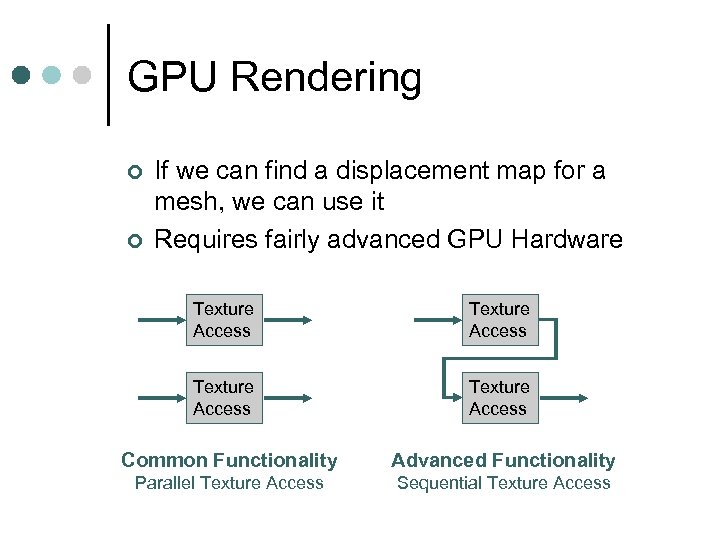 GPU Rendering ¢ ¢ If we can find a displacement map for a mesh, we can use it Requires fairly advanced GPU Hardware Texture Access Common Functionality Advanced Functionality Parallel Texture Access Sequential Texture Access
 GPU Rendering ¢ Other advantages l Color correction • Easy to hue/color shift texel values l Brightness correction • Easy to adjust the brightness of texels • Intensity falloff correction by altering brightness based on some grayscale image
 Conclusion Image correction critical to immersive display systems ¢ Commodity projectors introduce problems ¢ Perspective and barrel distortion are difficult to correct manually ¢ Software solutions based on grid structures and real-time image warping produces best results ¢
 Thank you for listening!