 Скачать презентацию Il Presente Present Tense Verbi Regolari are Regular
2e84c4b58f41612b615b61714759032f.ppt
- Количество слайдов: 27



Il Presente (Present Tense) Verbi Regolari –are (Regular –are verbs)
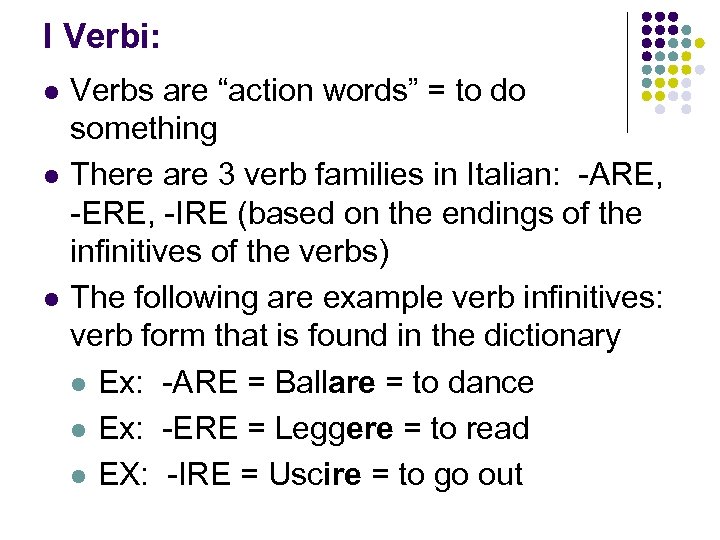
I Verbi: l l l Verbs are “action words” = to do something There are 3 verb families in Italian: -ARE, -ERE, -IRE (based on the endings of the infinitives of the verbs) The following are example verb infinitives: verb form that is found in the dictionary l Ex: -ARE = Ballare = to dance l Ex: -ERE = Leggere = to read l EX: -IRE = Uscire = to go out
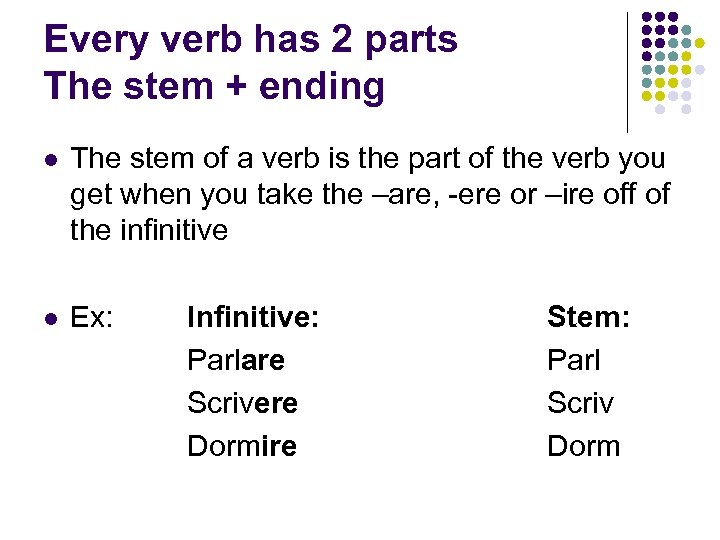
Every verb has 2 parts The stem + ending l The stem of a verb is the part of the verb you get when you take the –are, -ere or –ire off of the infinitive l Ex: Infinitive: Parlare Scrivere Dormire Stem: Parl Scriv Dorm
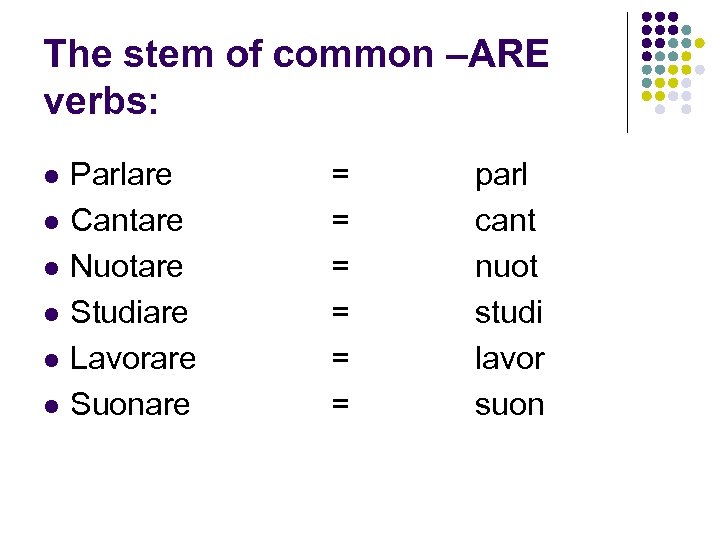
The stem of common –ARE verbs: l l l Parlare Cantare Nuotare Studiare Lavorare Suonare = = = parl cant nuot studi lavor suon
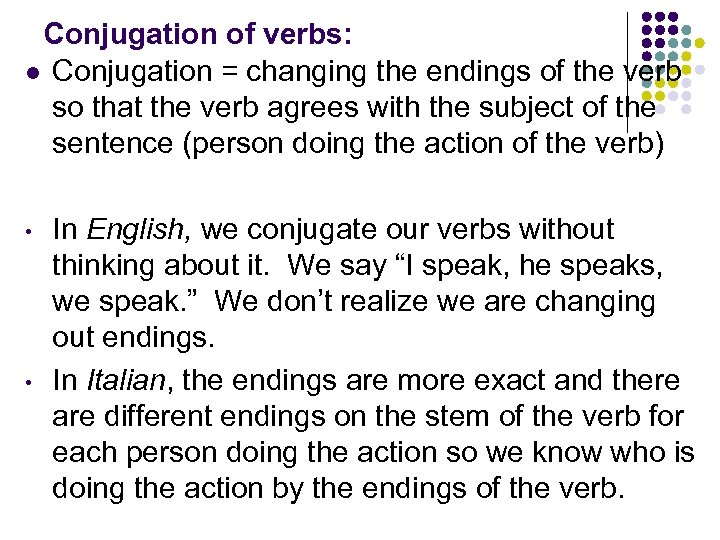
Conjugation of verbs: l Conjugation = changing the endings of the verb so that the verb agrees with the subject of the sentence (person doing the action of the verb) • • In English, we conjugate our verbs without thinking about it. We say “I speak, he speaks, we speak. ” We don’t realize we are changing out endings. In Italian, the endings are more exact and there are different endings on the stem of the verb for each person doing the action so we know who is doing the action by the endings of the verb.
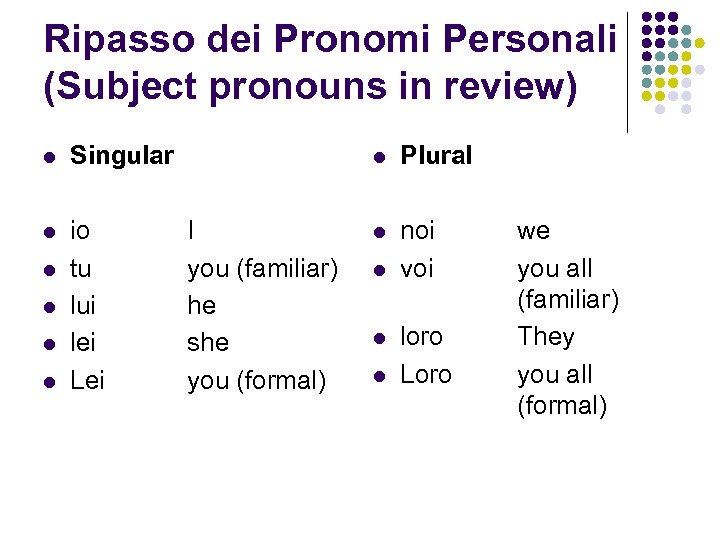
Ripasso dei Pronomi Personali (Subject pronouns in review) l Singular l io tu lui lei Lei l l l I you (familiar) he she you (formal) Plural l noi voi l loro Loro we you all (familiar) They you all (formal)
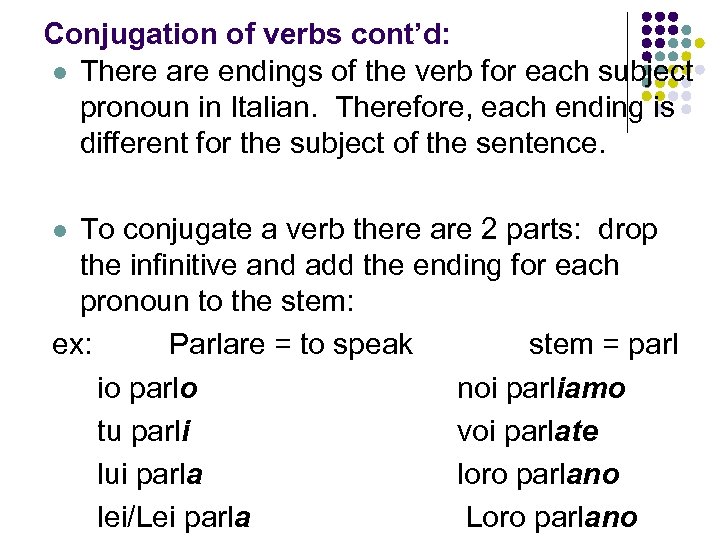
Conjugation of verbs cont’d: l There are endings of the verb for each subject pronoun in Italian. Therefore, each ending is different for the subject of the sentence. To conjugate a verb there are 2 parts: drop the infinitive and add the ending for each pronoun to the stem: ex: Parlare = to speak stem = parl io parlo noi parliamo tu parli voi parlate lui parla loro parlano lei/Lei parla Loro parlano l
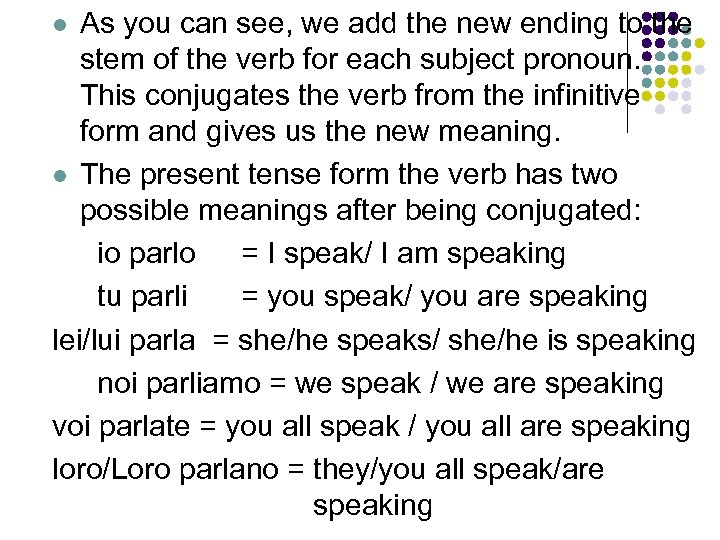
As you can see, we add the new ending to the stem of the verb for each subject pronoun. This conjugates the verb from the infinitive form and gives us the new meaning. l The present tense form the verb has two possible meanings after being conjugated: io parlo = I speak/ I am speaking tu parli = you speak/ you are speaking lei/lui parla = she/he speaks/ she/he is speaking noi parliamo = we speak / we are speaking voi parlate = you all speak / you all are speaking loro/Loro parlano = they/you all speak/are speaking l
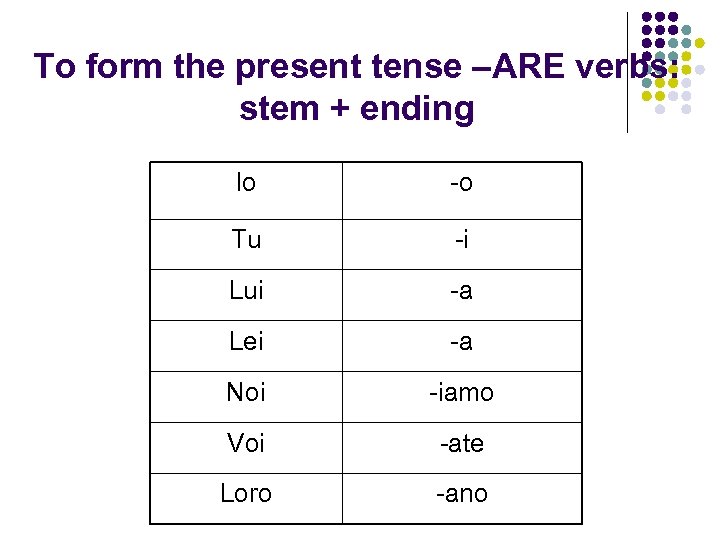
To form the present tense –ARE verbs: stem + ending Io -o Tu -i Lui -a Lei -a Noi -iamo Voi -ate Loro -ano
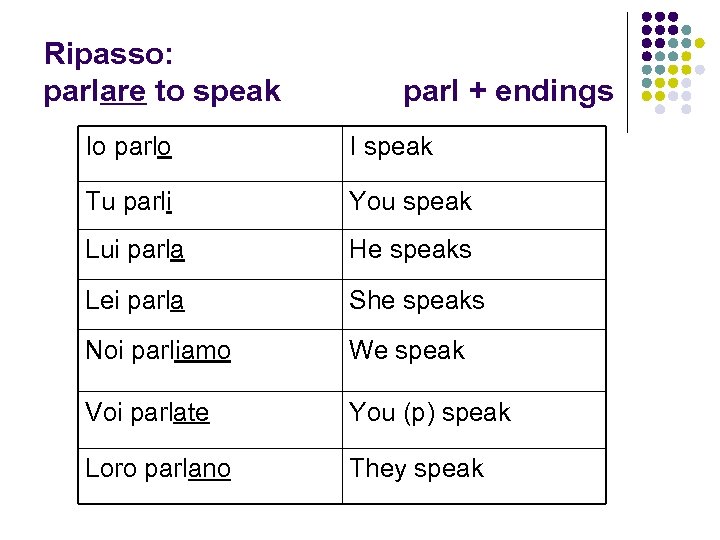
Ripasso: parlare to speak parl + endings Io parlo I speak Tu parli You speak Lui parla He speaks Lei parla She speaks Noi parliamo We speak Voi parlate You (p) speak Loro parlano They speak
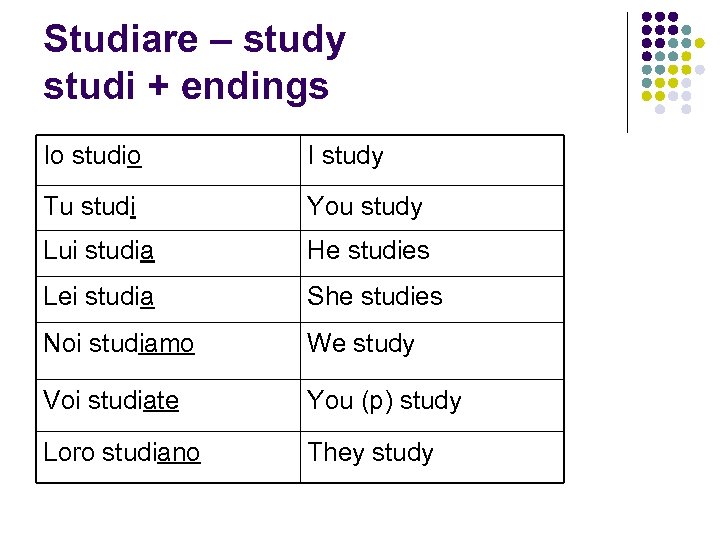
Studiare – study studi + endings Io studio I study Tu studi You study Lui studia He studies Lei studia She studies Noi studiamo We study Voi studiate You (p) study Loro studiano They study
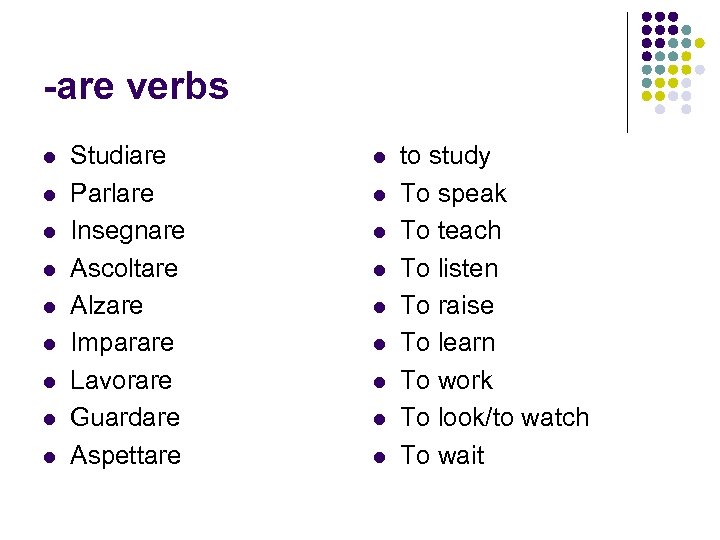
-are verbs l l l l l Studiare Parlare Insegnare Ascoltare Alzare Imparare Lavorare Guardare Aspettare l l l l l to study To speak To teach To listen To raise To learn To work To look/to watch To wait
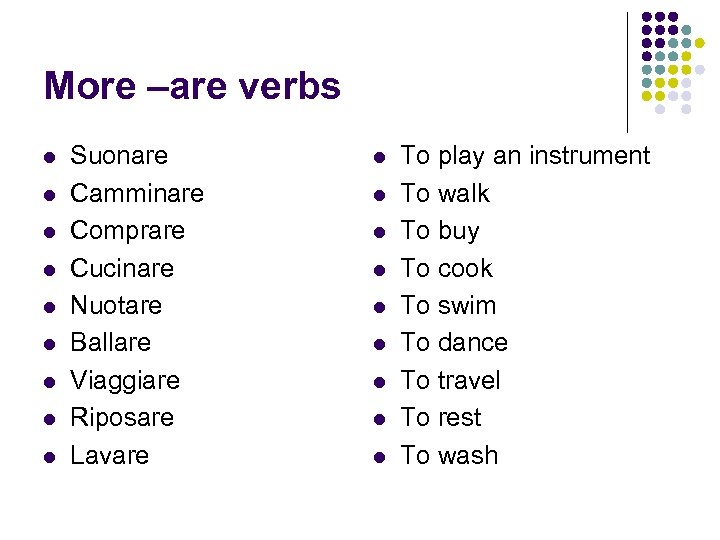
More –are verbs l l l l l Suonare Camminare Comprare Cucinare Nuotare Ballare Viaggiare Riposare Lavare l l l l l To play an instrument To walk To buy To cook To swim To dance To travel To rest To wash
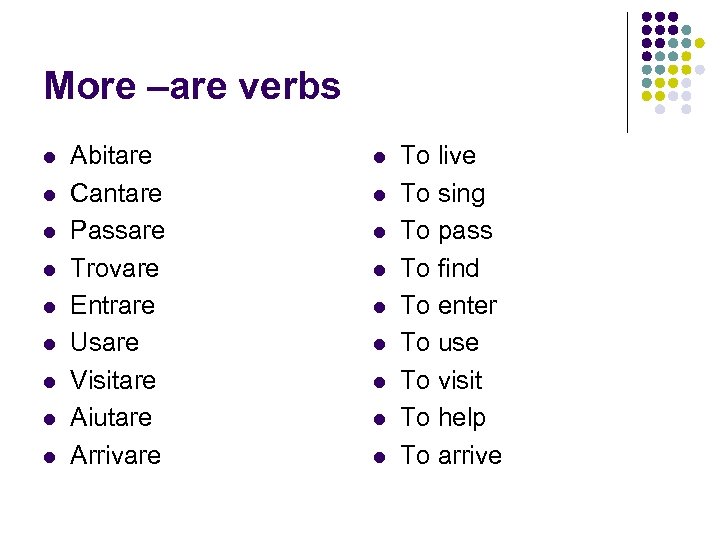
More –are verbs l l l l l Abitare Cantare Passare Trovare Entrare Usare Visitare Aiutare Arrivare l l l l l To live To sing To pass To find To enter To use To visit To help To arrive
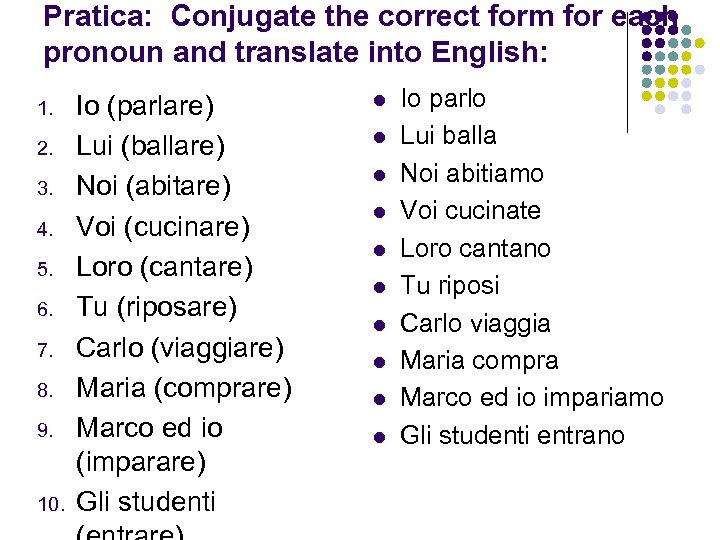
Pratica: Conjugate the correct form for each pronoun and translate into English: 1. 2. 3. 4. 5. 6. 7. 8. 9. 10. Io (parlare) Lui (ballare) Noi (abitare) Voi (cucinare) Loro (cantare) Tu (riposare) Carlo (viaggiare) Maria (comprare) Marco ed io (imparare) Gli studenti l l l l l Io parlo Lui balla Noi abitiamo Voi cucinate Loro cantano Tu riposi Carlo viaggia Maria compra Marco ed io impariamo Gli studenti entrano
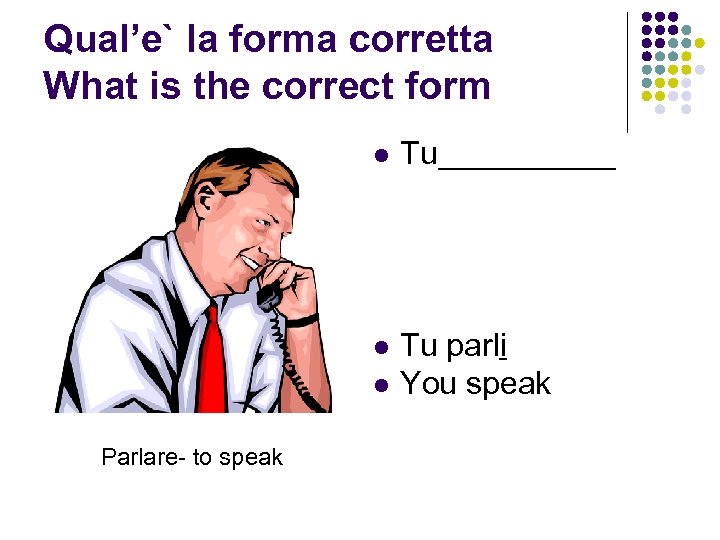
Qual’e` la forma corretta What is the correct form l Tu_____ l Tu parli You speak l Parlare- to speak
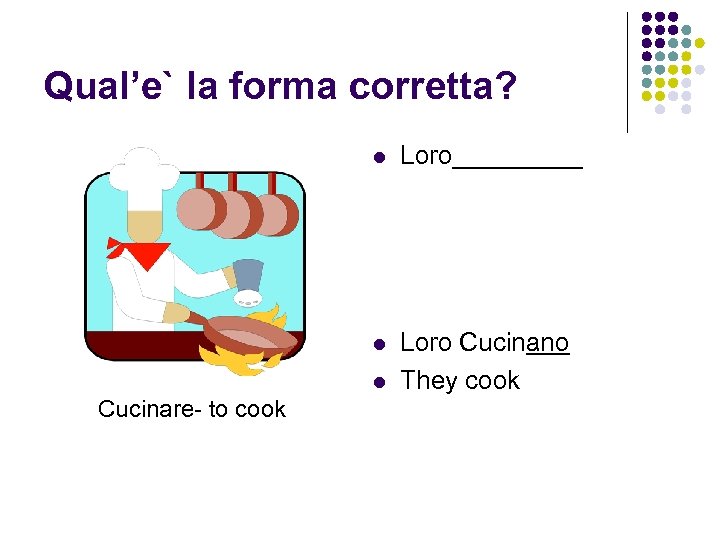
Qual’e` la forma corretta? l Loro_____ l Loro Cucinano They cook l Cucinare- to cook
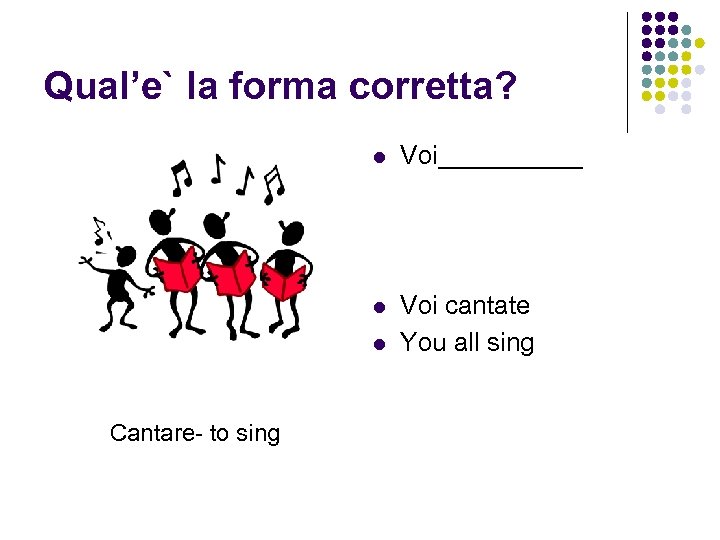
Qual’e` la forma corretta? l Voi_____ l Voi cantate You all sing l Cantare- to sing
l Making a verb negative: Place the word “non” before the verb to make it negative = to not do something (don’t do) ex: io ballo = I dance vs. Io non ballo = I don’t dance. Ex: Diana non lavora = Diana doesn’t work Ex: Gli studenti non studiano = The students don’t study Ex: Non canti tu? Don’t you sing? Ex: Noi non suoniamo la chitarra. = we don’t play the guitar.
Questions with verbs in Italian: When asking a question in Italian there is no trasnlation for “do you. ” Just reverse the subject and the verb with a question mark. Ex: Lui parla bene. = he speaks well. Ex: Parla lui bene? = Does he speak well. Ex: Tu canti = you sing. Ex: Canti tu? = Do you sing?
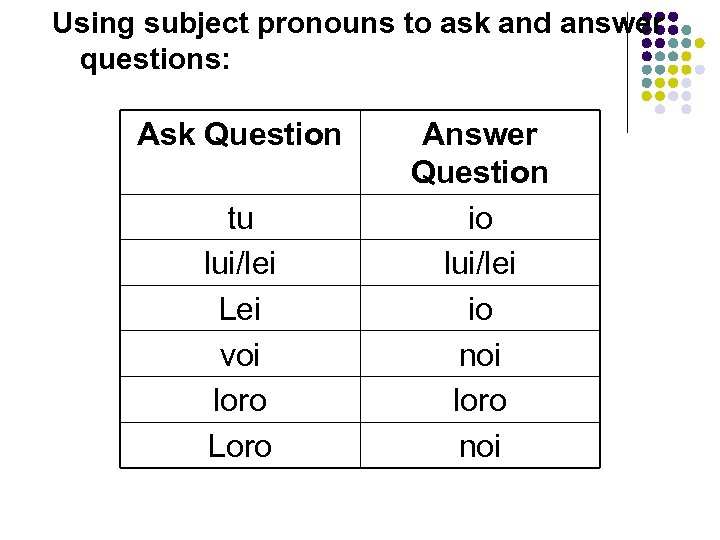
Using subject pronouns to ask and answer questions: Ask Question tu lui/lei Lei voi loro Loro Answer Question io lui/lei io noi loro noi
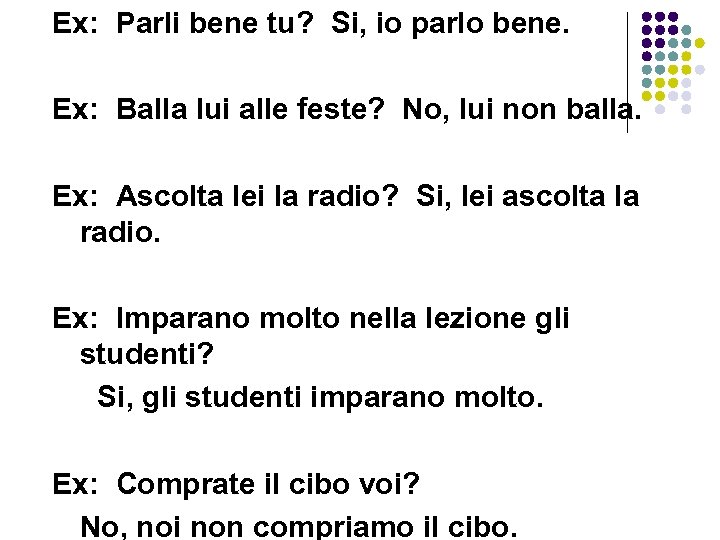
Ex: Parli bene tu? Si, io parlo bene. Ex: Balla lui alle feste? No, lui non balla. Ex: Ascolta lei la radio? Si, lei ascolta la radio. Ex: Imparano molto nella lezione gli studenti? Si, gli studenti imparano molto. Ex: Comprate il cibo voi? No, noi non compriamo il cibo.
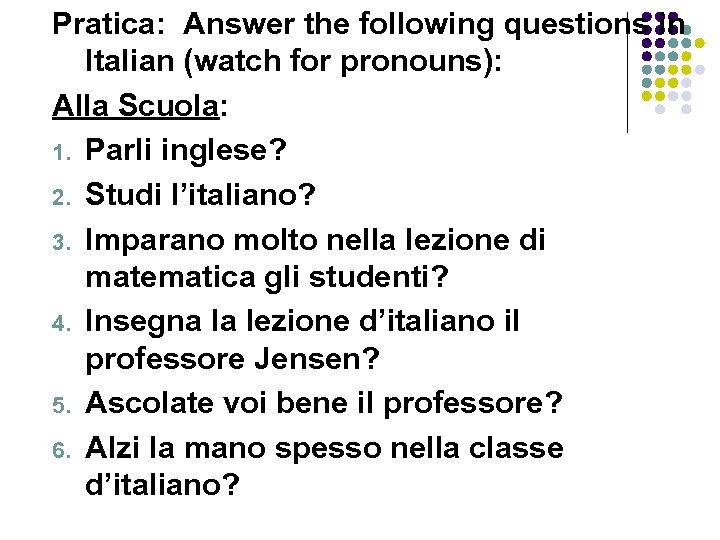
Pratica: Answer the following questions in Italian (watch for pronouns): Alla Scuola: 1. Parli inglese? 2. Studi l’italiano? 3. Imparano molto nella lezione di matematica gli studenti? 4. Insegna la lezione d’italiano il professore Jensen? 5. Ascolate voi bene il professore? 6. Alzi la mano spesso nella classe d’italiano?
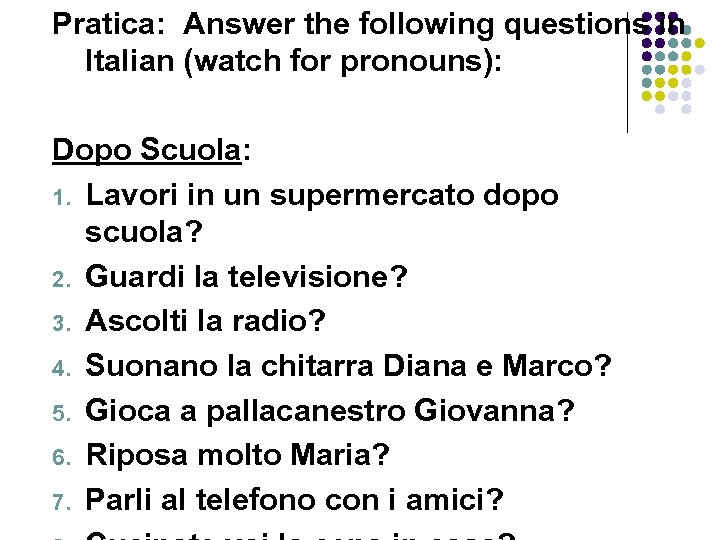
Pratica: Answer the following questions in Italian (watch for pronouns): Dopo Scuola: 1. Lavori in un supermercato dopo scuola? 2. Guardi la televisione? 3. Ascolti la radio? 4. Suonano la chitarra Diana e Marco? 5. Gioca a pallacanestro Giovanna? 6. Riposa molto Maria? 7. Parli al telefono con i amici?
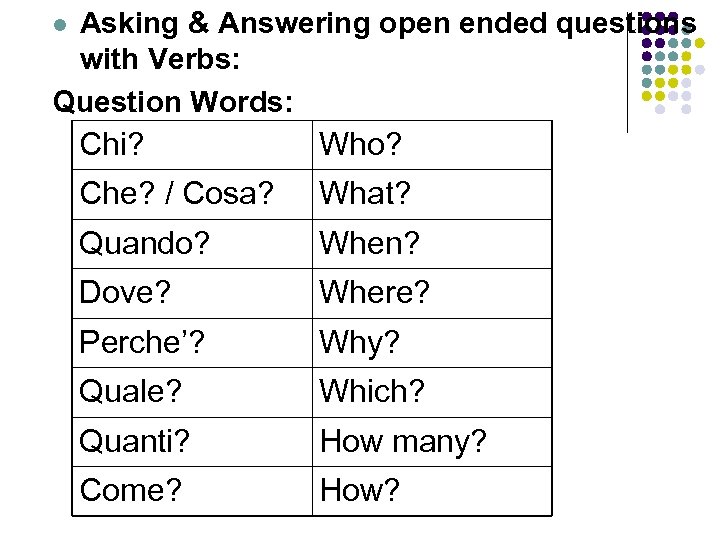
Asking & Answering open ended questions with Verbs: Question Words: l Chi? Who? Che? / Cosa? What? Quando? When? Dove? Where? Perche’? Why? Quale? Which? Quanti? How many? Come? How?
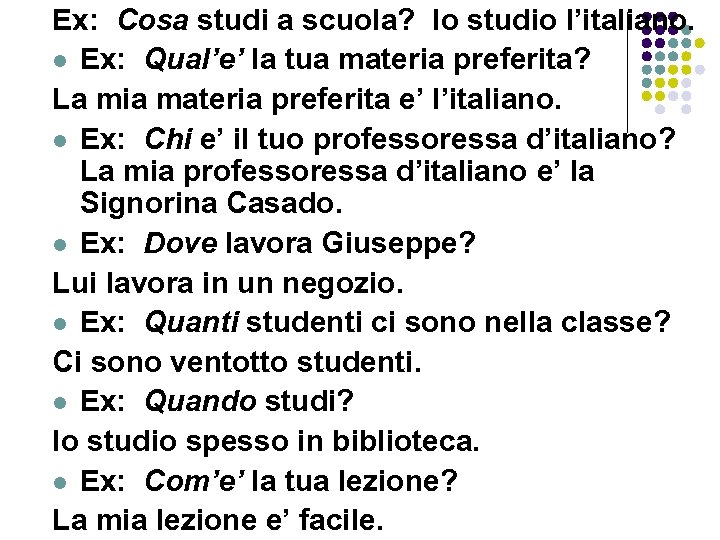
Ex: Cosa studi a scuola? Io studio l’italiano. l Ex: Qual’e’ la tua materia preferita? La mia materia preferita e’ l’italiano. l Ex: Chi e’ il tuo professoressa d’italiano? La mia professoressa d’italiano e’ la Signorina Casado. l Ex: Dove lavora Giuseppe? Lui lavora in un negozio. l Ex: Quanti studenti ci sono nella classe? Ci sono ventotto studenti. l Ex: Quando studi? Io studio spesso in biblioteca. l Ex: Com’e’ la tua lezione? La mia lezione e’ facile.
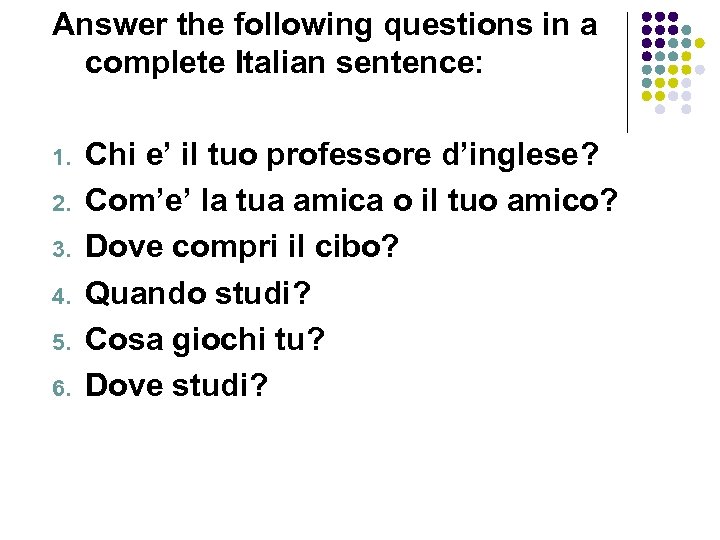
Answer the following questions in a complete Italian sentence: 1. 2. 3. 4. 5. 6. Chi e’ il tuo professore d’inglese? Com’e’ la tua amica o il tuo amico? Dove compri il cibo? Quando studi? Cosa giochi tu? Dove studi?
Скачать презентацию Il Presente Present Tense Verbi Regolari are Regular
2e84c4b58f41612b615b61714759032f.ppt