 Скачать презентацию If you take this person and their contribution
f5302dce5ec5a3bc3d1bef98f821a13f.ppt
- Количество слайдов: 36



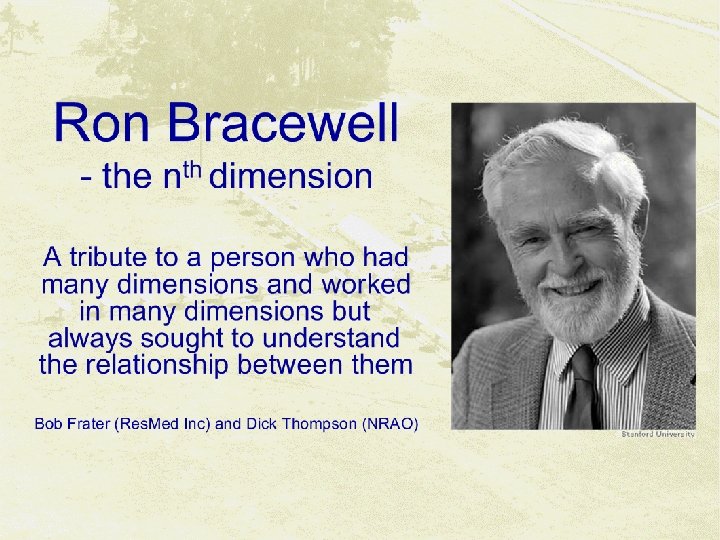
If you take this person and their contribution away, what’s different? • Ron was a scholar of great breadth – he kept asking questions • He was indisputably a great promoter and teacher of the Fourier transform and the Convolution Theorem and their importance in imaging • Ron contributed to our base knowledge across the imaging arena in a fundamental way • Ron built instruments that contributed both to science and to training • Those who trained with him have gone forth and multiplied (or transformed and convolved) • He made lasting contributions to science
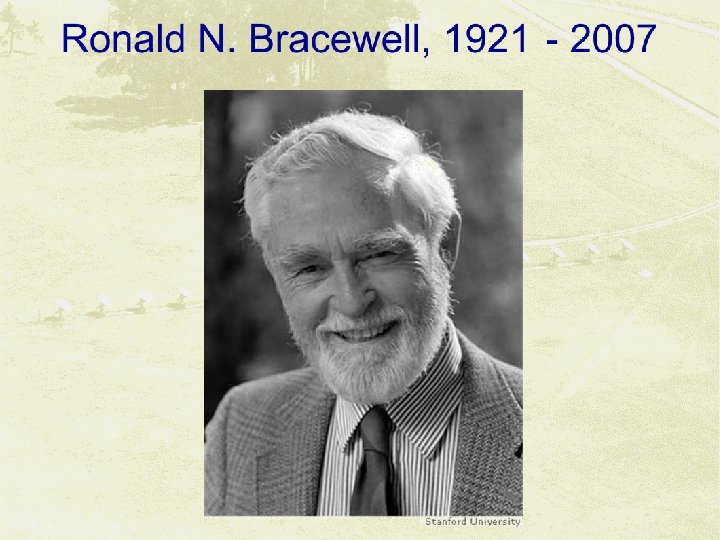
Brief Outline of Career • University of Sydney, bachelor’s degrees in Science (Maths & Physics) and Electrical Eng. • CSIR Radiophysics, Australia, 1941 -46 • Cambridge Univ. U. K. , Ph. D. Ionospheric Studies, J. A. Ratcliffe, 1946 -49 • CSIRO Radiophysics, Australia, 1949 -55 • Stanford U. 1955 -91, Lewis M. Terman Prof. of Electrical Engineering. • Author of 9 books, including The Fourier Transform and its Applications
So, which activities had the most profound effect? • When I ask people what, of Ron’s contributions, influenced them most, three things come up: – The 1965/78 book “The Fourier Transform and its Applications” – The 1954 Bracewell and Roberts paper “Aerial Smoothing in Radio Astronomy” – The 1956 paper “Strip integration in Radio Astronomy” • Then some of them say – “Didn’t the Swarup and Yang” phasing come from Ron’s group?
A personal viewpoint • I attended a brief course Ron gave in the physics Department at Sydney University on a visit in the early sixties • For me that course was a Fourier Transform implant – it gave me a picture approach that stays with me even now • When I read those other papers after I started work on the Fleurs Telescope, the picture approach came alive even more.
But there is a lot more! • Ron died exactly 100 years after Lord Kelvin, an early fan of Fourier’s theorem. Ron liked to quote him: “Fourier's theorem is not only one of the most beautiful results of modern analysis, but it may be said to furnish an indispensable instrument in the treatment of nearly every recondite question in modern physics” • We just don’t recognize the extent to which all the things we do in imaging in radioastronomy have been influenced by the thinking, the development of terminology and the approaches initiated by Ron Bracewell
Ron as a Mentor This comes from a note I received from Craig Barrett, now CEO of Atheros: “Ron was not only brilliant, broad and vivacious but also very kind and generous with his time and had a great sense of humor. He invited me to his house on Xmas day during my initial 3 months in silicon valley and was a mentor and resource for the many Australians at Stanford. I think he took satisfaction that the top two Syd Uni Elec Eng graduates (myself and Peter Webb) in 1984 also placed in the top 2 in the 1986 Stanford EE Ph. D qualifying exam. ”
Early Influences
Early influences • “I had a good grounding in mathematics at Sydney University. T. G. Room had just taken over from H. S. Carslaw, whose book Fourier Series and Integrals was studied like the Bible. . . . In physics I was much influenced by V. A. Bailey, a mathematically powerful Oxford experimentalist. ” • “Joseph L. Pawsey. . . in a course of lectures on transmission lines and aerials in 1942. . introduced me to the marvelous duality of physical vis-àvis mathematical thinking” • “After the 1952 URSI meeting Pawsey decided that the time was ripe for a textbook on radio astronomy (Pawsey & Bracewell 1955) and that he should strike while the iron was hot. He invited me to join him on the grounds that my work had been disrupted by preparations for URSI”
Early influences - 2 • “I had the occasion to edit the manuscript of van der Pol and Bremmer. . around 1948 and was struck by the attention given to questions of notation. ” • “J. C. Jaeger, in his 1944 lectures on the Laplace transform, also discussed minutiae of notation. Since then I have always regarded symbology, terminology and graphical presentation as worthy of close attention. ” • “The immediate inspiration to write my book on the Fourier transform came from Pawsey, who wanted to see a Pictorial Dictionary of transforms. ” • “Pawsey’s Sausage Theorem: “If the error bars on the visibility measurements fit inside a certain sausage then the calculated source distribution runs down the middle of another sausage. ” Pawsey very reasonably wanted to know how fat this other sausage was and my job was to find out. It is a very good question. “
Some Important Early Publications • Bracewell, R. N. and J. A. Roberts, Aerial Smoothing in Radio Astronomy, Aust. J. Phys. 7, 615 -640, 1954. • Bracewell, R. N. , Strip Integration in Radio Astronomy, Aust J. Phys 9, p. 198 1956 • Bracewell, R. N. , Radio Interferometry of Discrete Sources, Proc. IRE, 46, 97105, 1958.
144 astronomical publications. • These include RA observations, interferometry, antennas and arrays, sunspot statistics, and data analysis and imaging specific to radio astronomy. • 44 papers on Fourier analysis, the Hartley transform, and imaging in general. • 39 of these were from the later years 1979 -1996. • 14 papers on the ionosphere. These are in the early years 1948 -1961, largely as a result of his doctoral work at Cambridge. • 24 papers on aspects of extraterrestrial intelligence. • 4 papers on tomography.
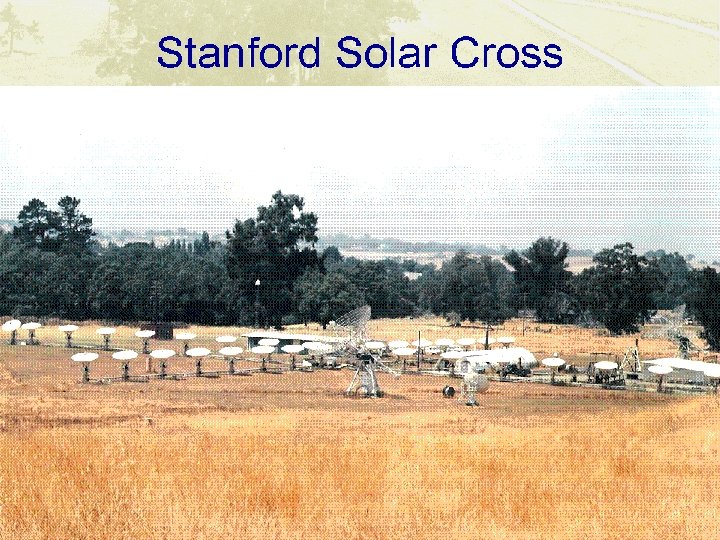
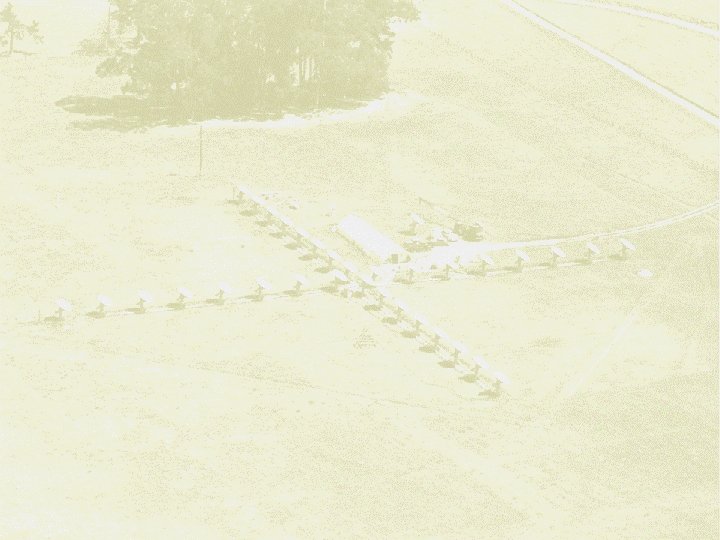
The Instruments at Stanford
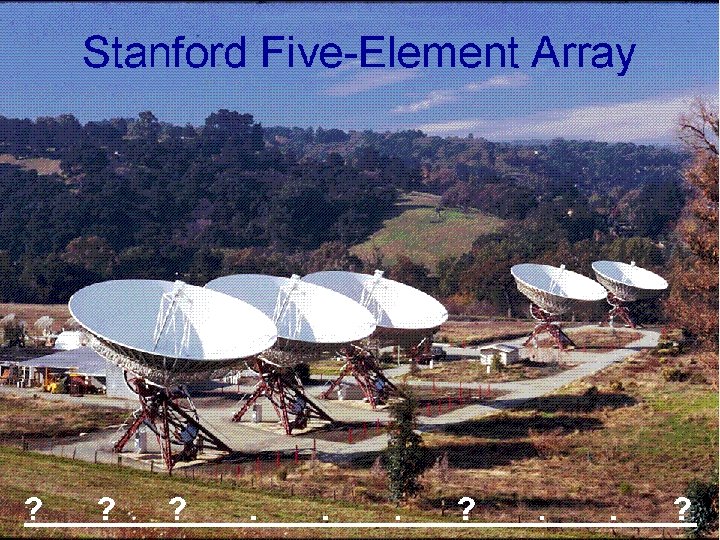
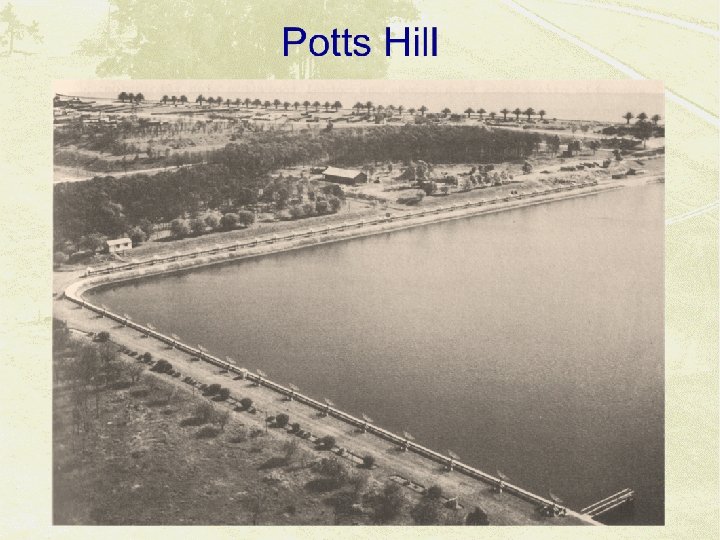
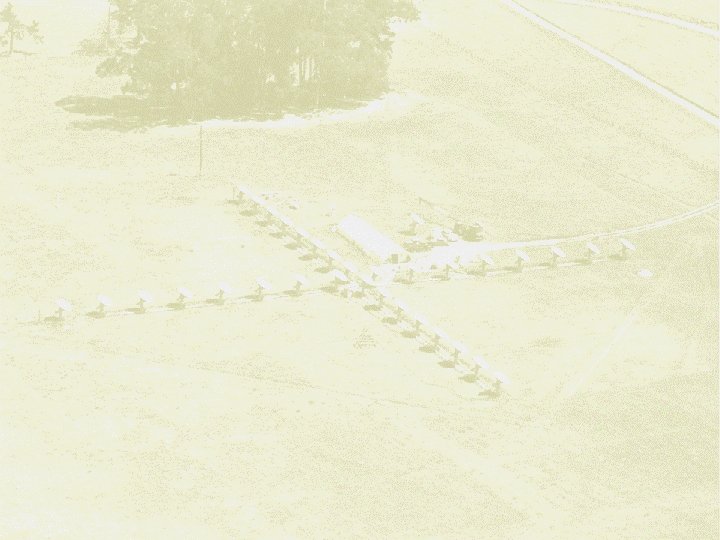
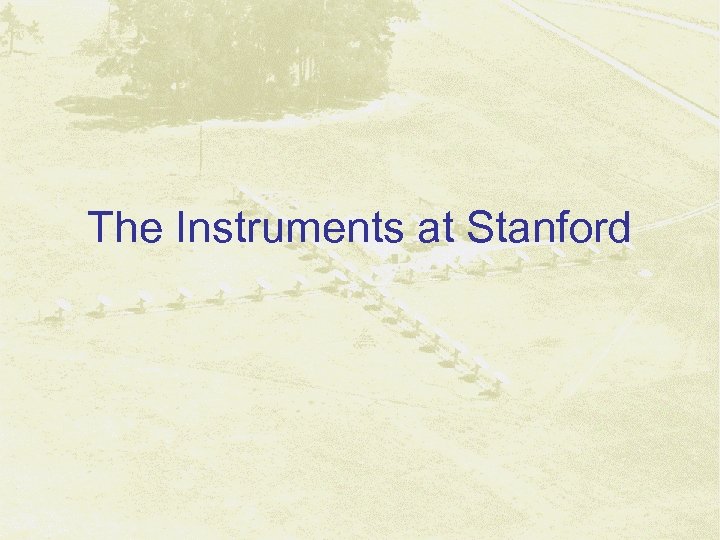
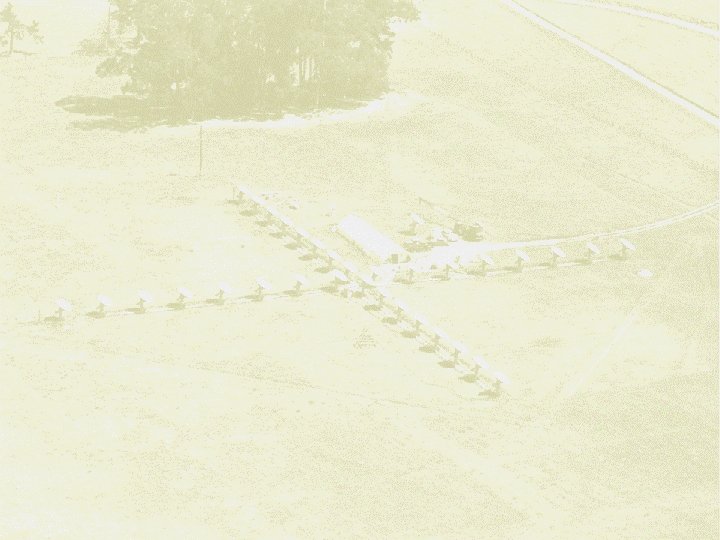
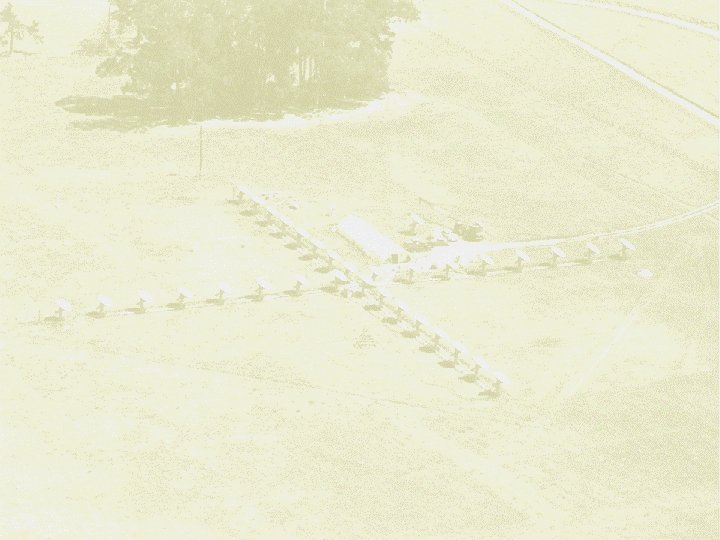
Five-Element Array Papers from observations with the array during the period 1972 -9 include: – Structure of Cygnus X-3, – Structure and polarization of extragalactic sources, particularly Centaurus A, – Fine structure in HII regions, – Brightness fluctuations in the solar chromosphere.
Cosmic background Radiation • Bracewell, R. N. and E. K. Conklin, An Observer Moving in the 3° K Radiation Field, Nature, 219, 1343 -1344, 1969. • Conklin, E. K. , Velocity of the Earth with Respect to the Cosmic Background Radiation, Nature, 222, 971 -972, 1969. • Measurements made with two small horn antennas at 8. 0 GHz and uncooled front end. Location: White Mountains 3800 metres.
Sunspot numbers and the Solar Cycle • Paper on 22 -year sunspot cycle, 1953 • Nine more papers 1985 -9. • Investigated theory 1986 onward, included analysis of cyclic variation in the Elatina varves (an indicator of solar emission levels in the late precambian? ~6. 8 x 10⁸ years ago). • Varve data cover 1, 337 laminae, and show cycles in groups of 24, similar to present 22 -year solar cycle.
Tomography • Inversion of Fan Beam Scans in Radio Astronomy, R. N. Bracewell and A. C. Riddle, Ap. J. , 150, 427 -434, 1967. • Technique of analysis developed for solar program and later found to be applicable tomography. • R. N. B. wrote 2 further papers on imaging in tomography. • Elected to Institute of Medicine of US National Academy of Sciences.
Other Dimensions • Hartley Transform • Detection of non-solar planets – Place a null on a star with Infrared Interferometry • ETI and Space communication – The Galactic Club • History of Astronomy and engineering – Planetary observations effect on the development of Electrical Engineering • Solar Power collectors • Trees (including his passion for Eucalypts) • Sundials
Books by R. N. B. (1) • Radio Astronomy, J. L. Pawsey and R. N. Bracewell, Clarendon Press, Oxford, 1955. Translated into Russian 1958. • Paris Symposium on Radio Astronomy, IAU Symp. No. 9 and URSI Symp. No. 1, R. N. Bracewell, editor, Stanford University Press, 1959. Translated into Russian 1961. • Radio Astronomy, J. L. Steinberg and J. Lequeux, Dunod, Paris, 1960, Translation by R. N. Bracewell, Mc. Graw-Hill, New York, 1963.
Books by R. N. B. (3) • The Galactic Club, Stanford Alumni Association, 1974. Reprinted 1976, W. H. Freeman, San Francisco and Scribners, New York. Reprinted 1979, W. W. Norton, New York. Translated into Japanese, Dutch, and Italian. • Trees on the Stanford Campus, Stanford, Samizdat, 1973. • Trees of Stanford and Environs, Stanford Historical Society, Stanford, 2005.
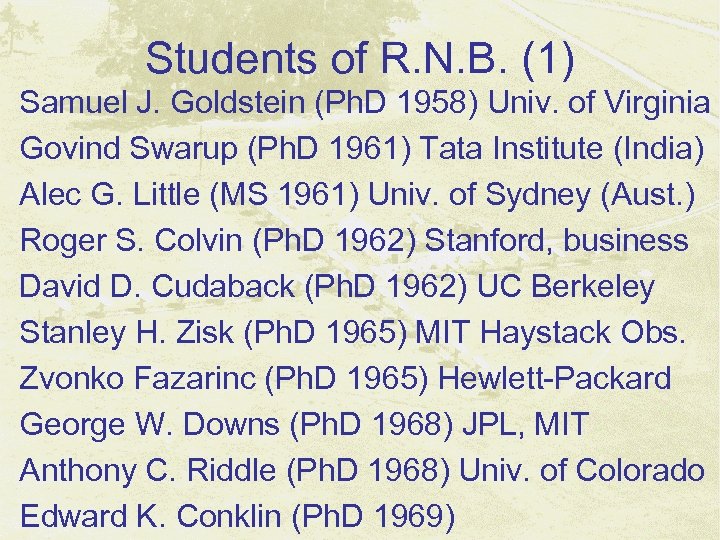
Students of R. N. B. (1) Samuel J. Goldstein (Ph. D 1958) Univ. of Virginia Govind Swarup (Ph. D 1961) Tata Institute (India) Alec G. Little (MS 1961) Univ. of Sydney (Aust. ) Roger S. Colvin (Ph. D 1962) Stanford, business David D. Cudaback (Ph. D 1962) UC Berkeley Stanley H. Zisk (Ph. D 1965) MIT Haystack Obs. Zvonko Fazarinc (Ph. D 1965) Hewlett-Packard George W. Downs (Ph. D 1968) JPL, MIT Anthony C. Riddle (Ph. D 1968) Univ. of Colorado Edward K. Conklin (Ph. D 1969)
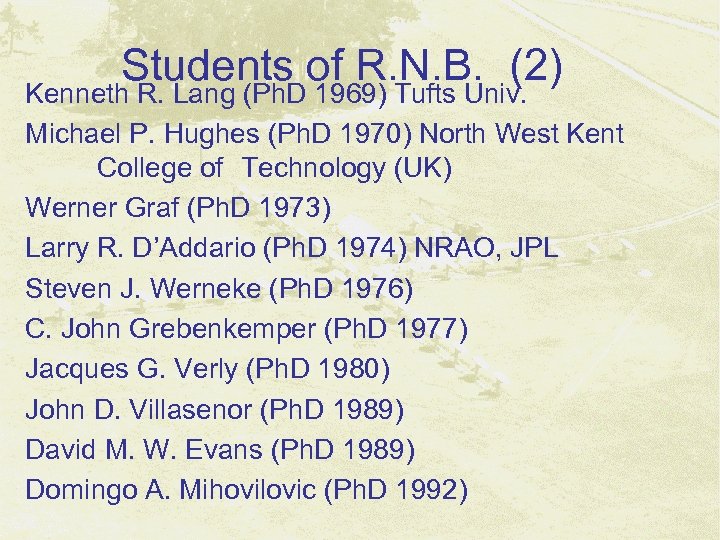
Students of R. N. B. (2) Kenneth R. Lang (Ph. D 1969) Tufts Univ. Michael P. Hughes (Ph. D 1970) North West Kent College of Technology (UK) Werner Graf (Ph. D 1973) Larry R. D’Addario (Ph. D 1974) NRAO, JPL Steven J. Werneke (Ph. D 1976) C. John Grebenkemper (Ph. D 1977) Jacques G. Verly (Ph. D 1980) John D. Villasenor (Ph. D 1989) David M. W. Evans (Ph. D 1989) Domingo A. Mihovilovic (Ph. D 1992)
R. N. B. - Honors and Awards • • • Lewis M. Terman Prof. of E. E. , Stanford U. Officer of the Order of Australia Hertz Medal of the IEEE Duddel Premium of the IEE, London Associate Member, Institute of Medicine, U. S. Nat. Academy of Sciences • Fellow of the IEEE
R. N. Bracewell – the legacy • The concept of “invisible distributions” • The concept of complex visibility and the definition of the (u, v) plane • The introduction of direction cosines for space variables (eliminating the small angle approximation) • A rigorous approach to the Fourier Transform and to Convolution • User-friendly books on Transform Theory
. . . and the many, many people, students and others, who were influenced by his teaching, his lectures and talks, his books, his papers and his demand for attention to detail.
 Скачать презентацию If you take this person and their contribution
f5302dce5ec5a3bc3d1bef98f821a13f.ppt