Скачать презентацию If you could travel at the speed of
333ee676353106f6e0cda20550f21cf6.ppt
- Количество слайдов: 47

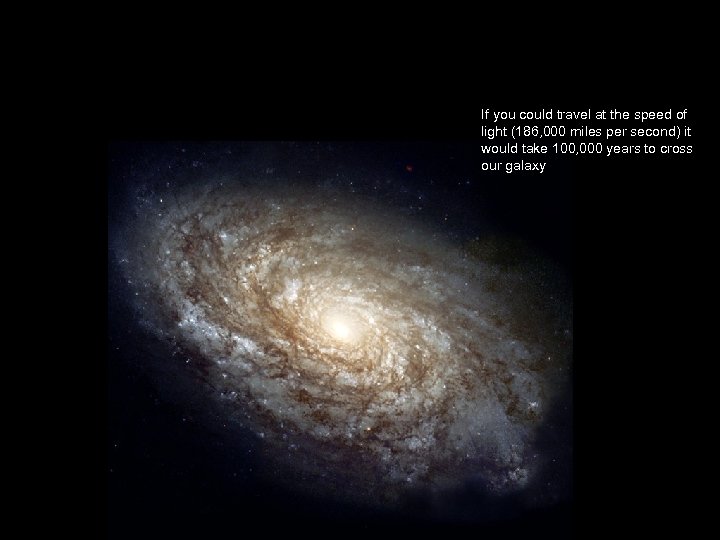 If you could travel at the speed of light (186, 000 miles per second) it would take 100, 000 years to cross our galaxy
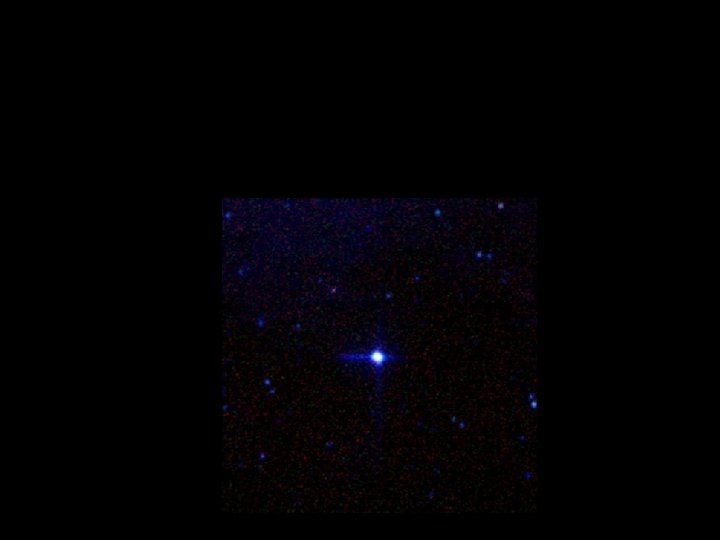
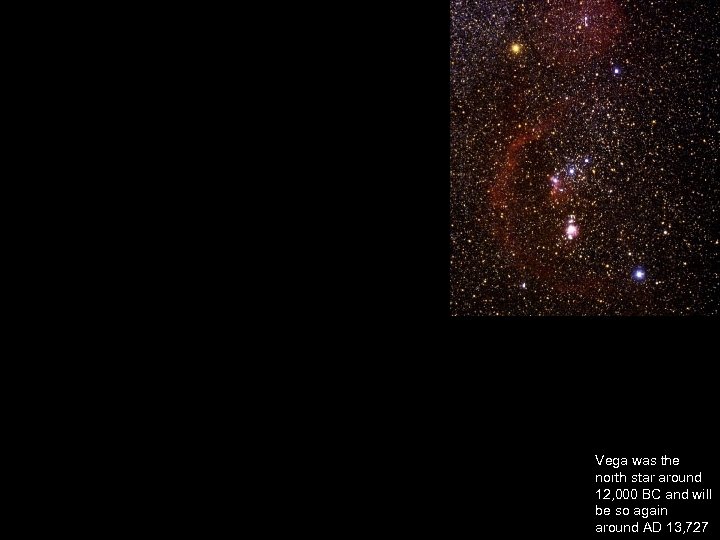 Vega was the north star around 12, 000 BC and will be so again around AD 13, 727
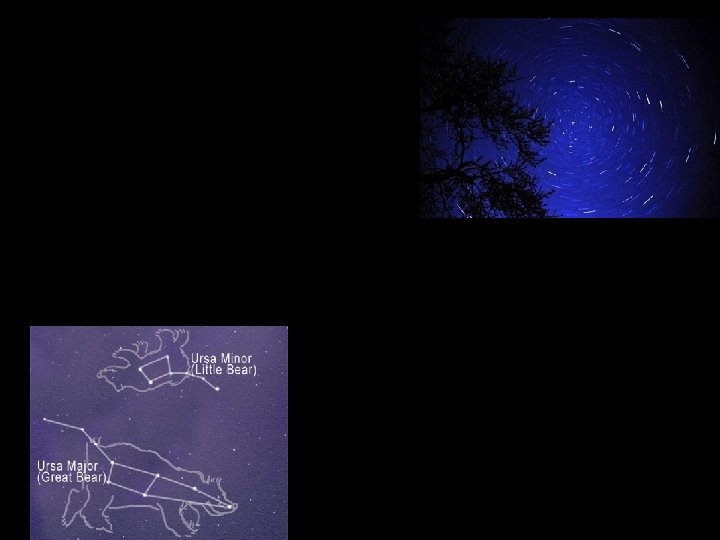
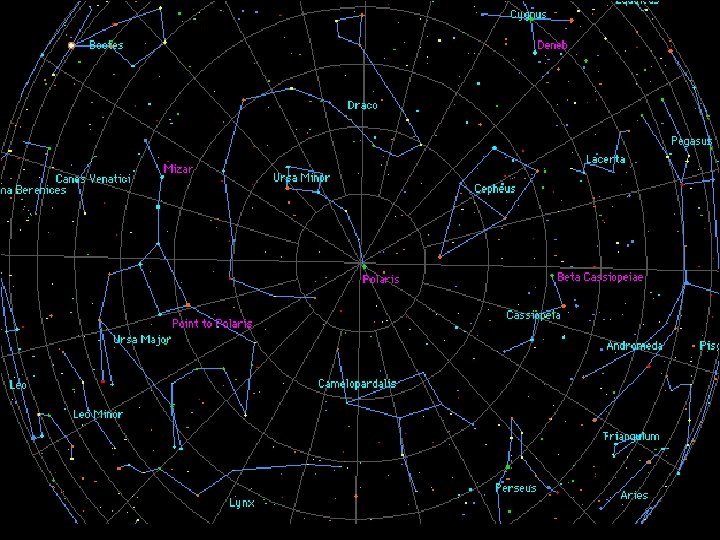
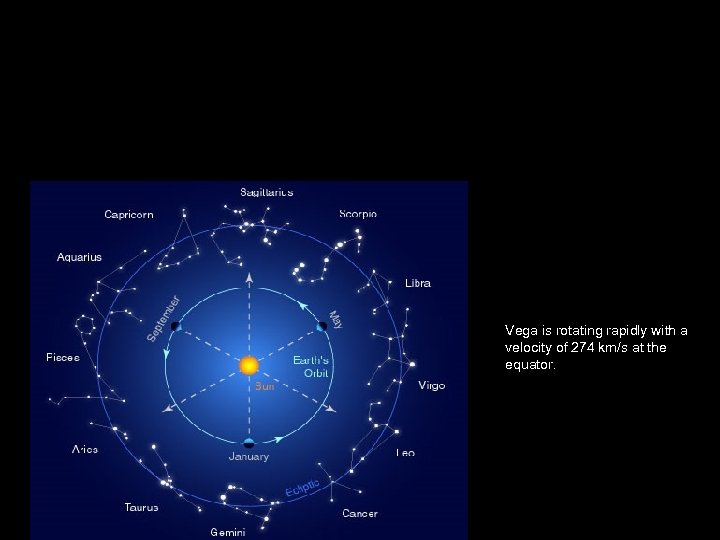 Vega is rotating rapidly with a velocity of 274 km/s at the equator.
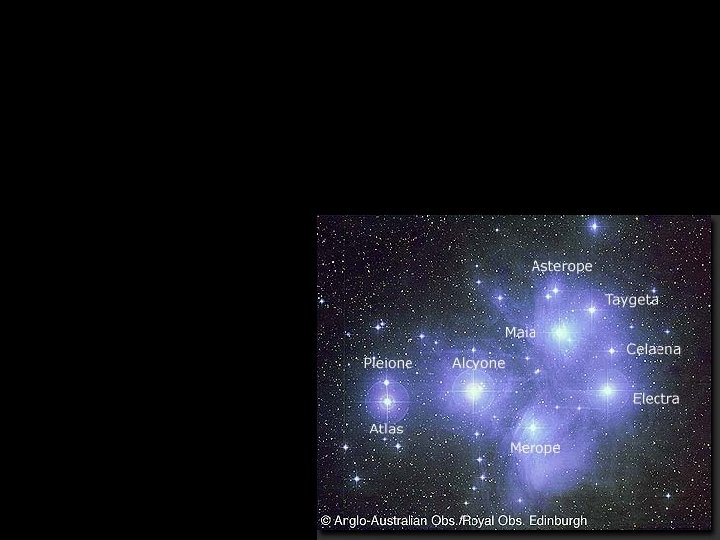
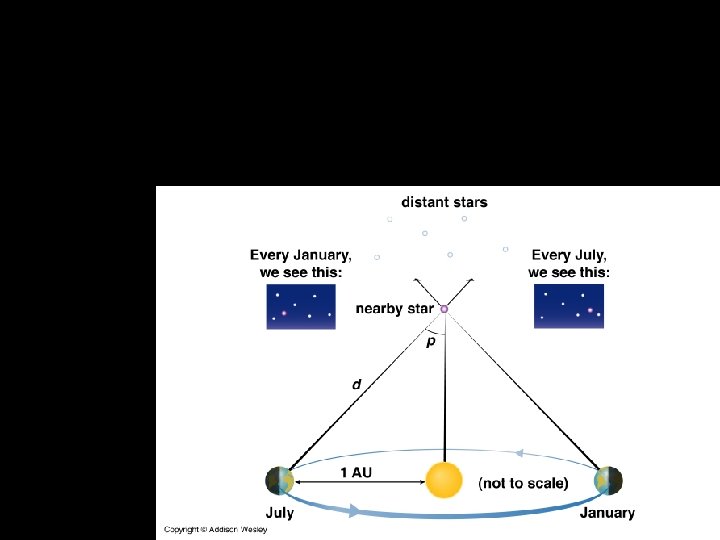

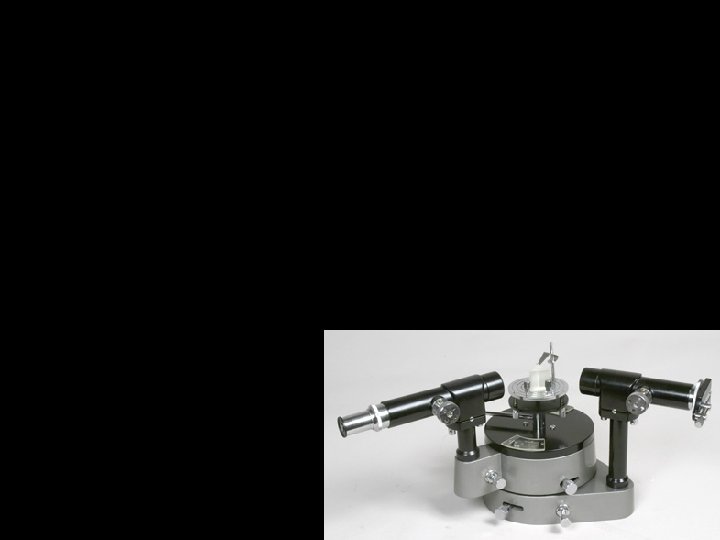
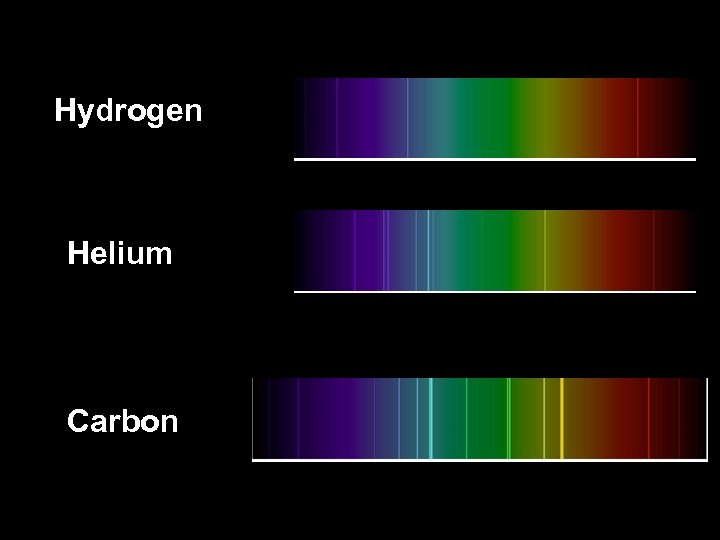 Hydrogen Helium Carbon
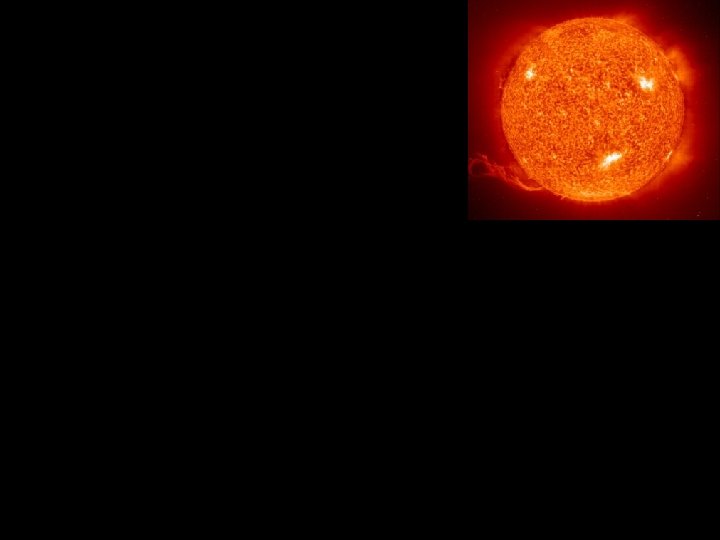
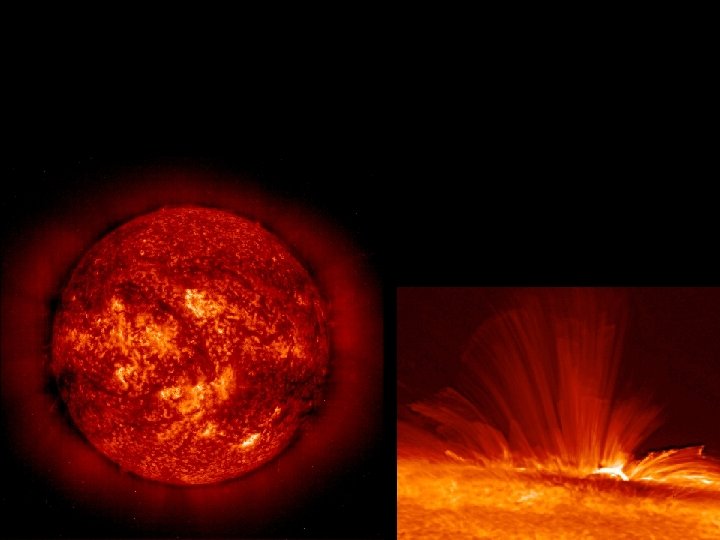
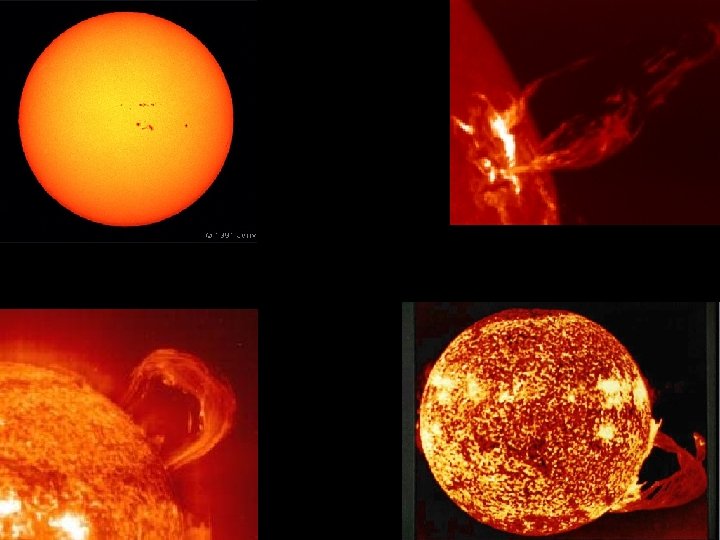
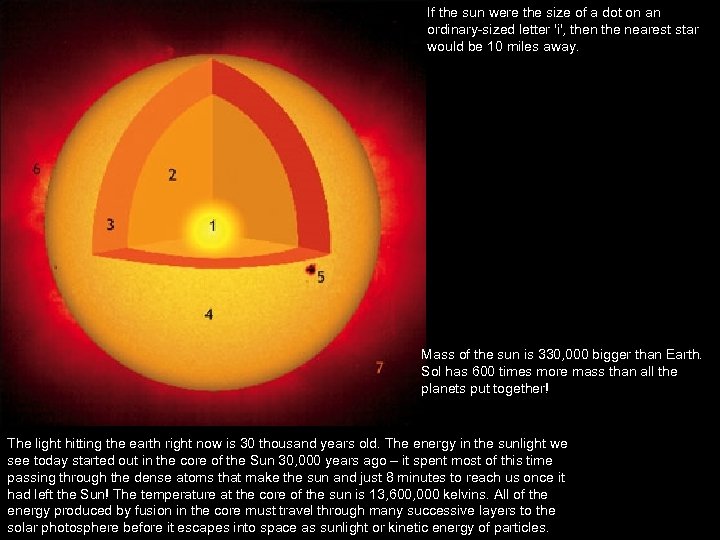 If the sun were the size of a dot on an ordinary-sized letter 'i', then the nearest star would be 10 miles away. Mass of the sun is 330, 000 bigger than Earth. Sol has 600 times more mass than all the planets put together! The light hitting the earth right now is 30 thousand years old. The energy in the sunlight we see today started out in the core of the Sun 30, 000 years ago – it spent most of this time passing through the dense atoms that make the sun and just 8 minutes to reach us once it had left the Sun! The temperature at the core of the sun is 13, 600, 000 kelvins. All of the energy produced by fusion in the core must travel through many successive layers to the solar photosphere before it escapes into space as sunlight or kinetic energy of particles.


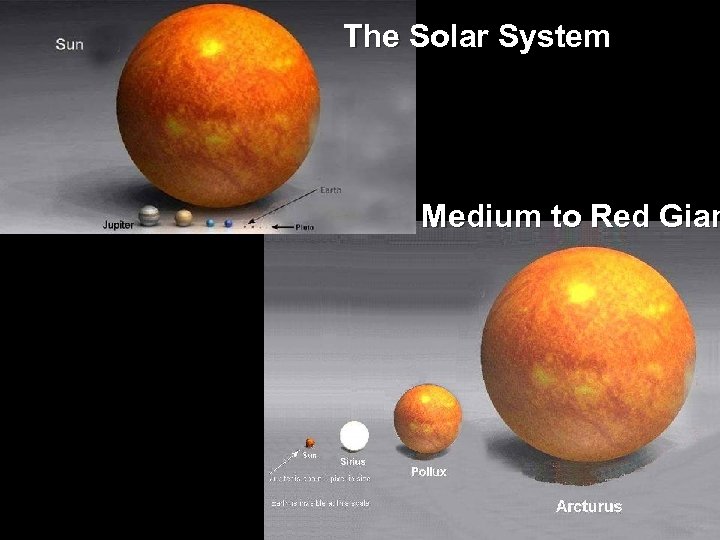 The Solar System Medium to Red Gian
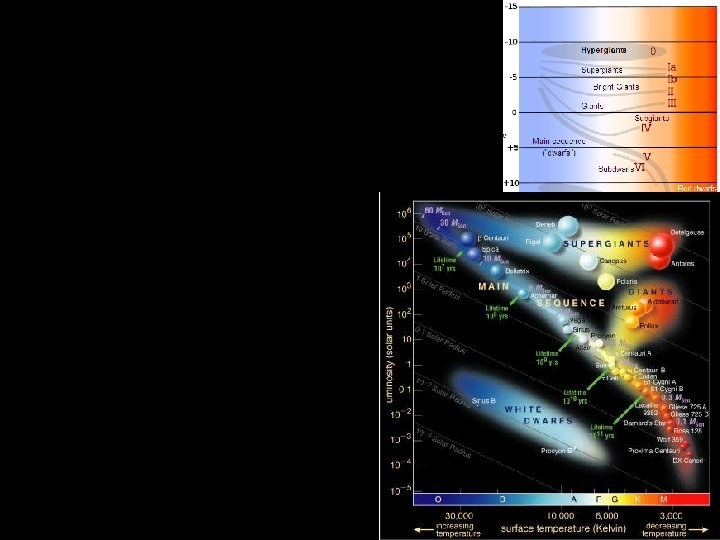
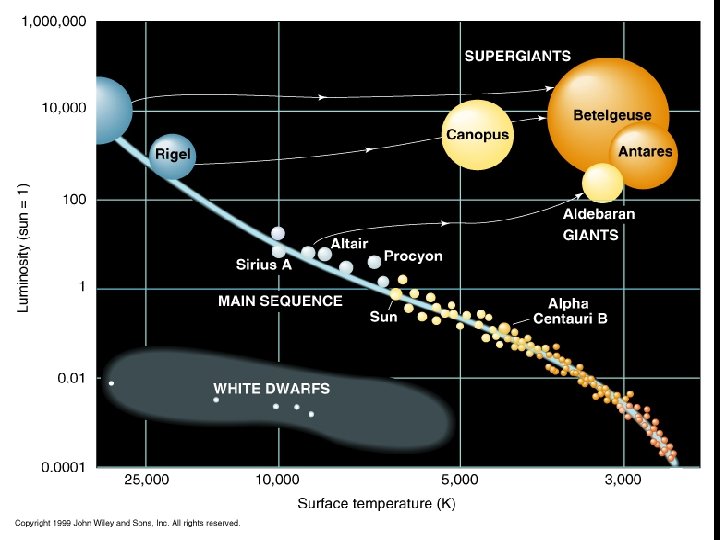
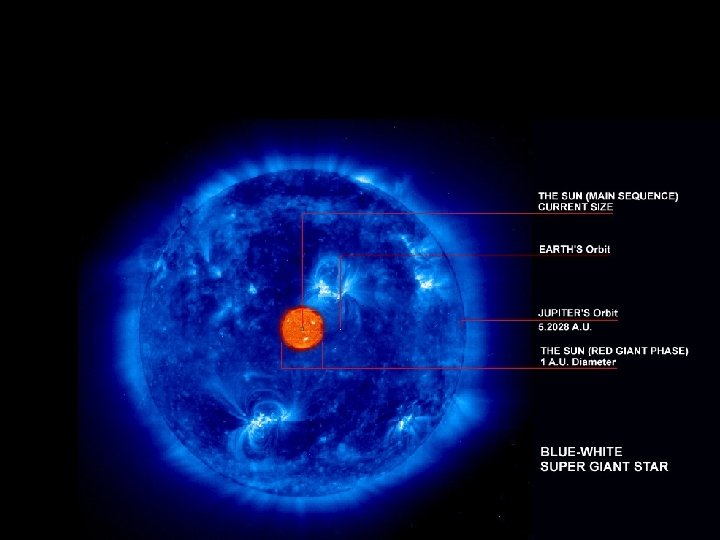
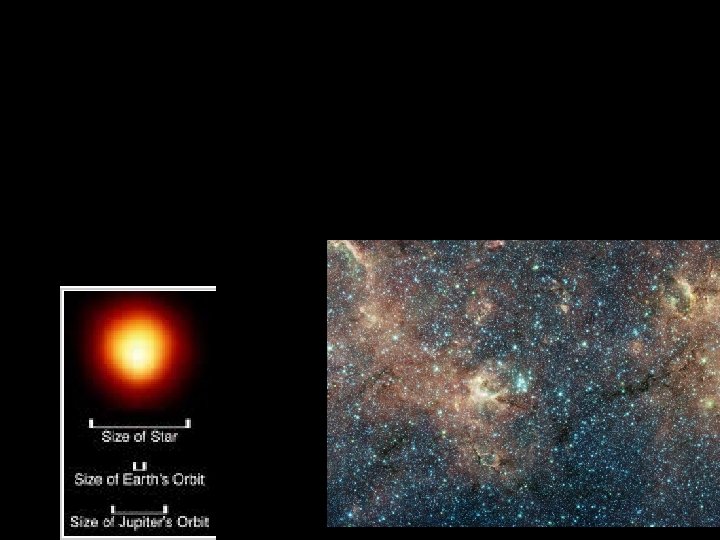
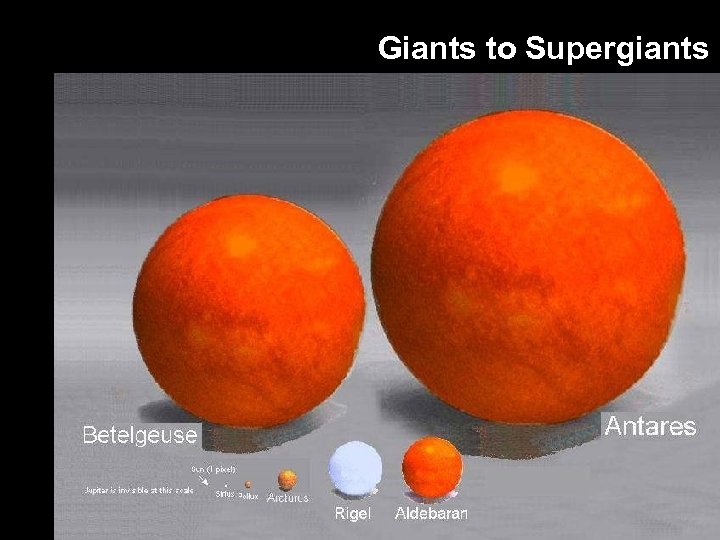 Giants to Supergiants
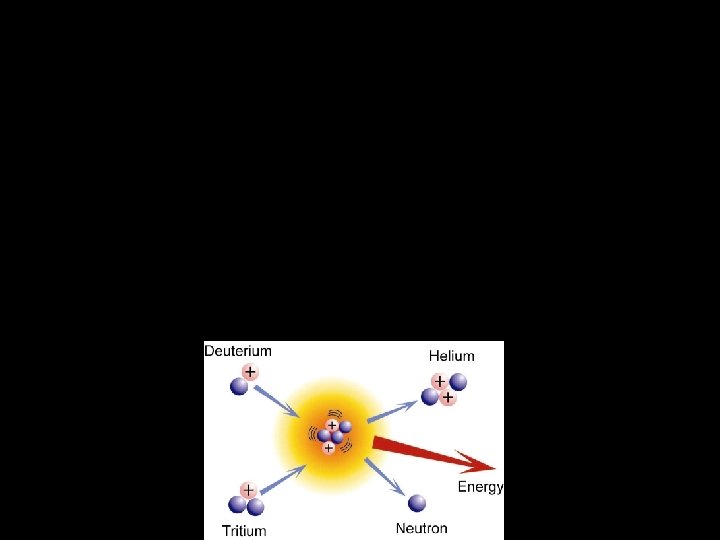
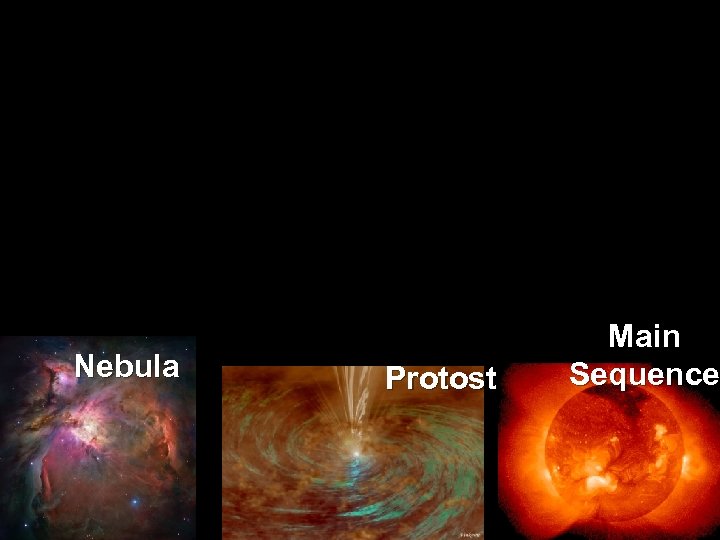 Nebula Protostar Main Sequence
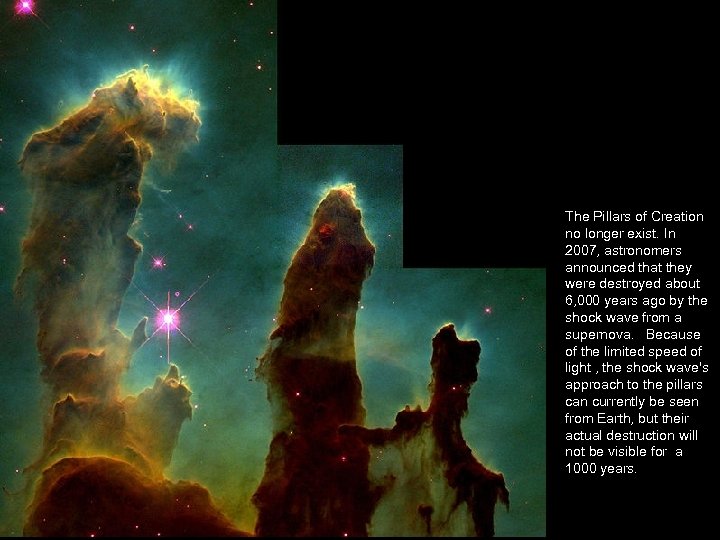 The Pillars of Creation no longer exist. In 2007, astronomers announced that they were destroyed about 6, 000 years ago by the shock wave from a supernova. Because of the limited speed of light , the shock wave's approach to the pillars can currently be seen from Earth, but their actual destruction will not be visible for a 1000 years.
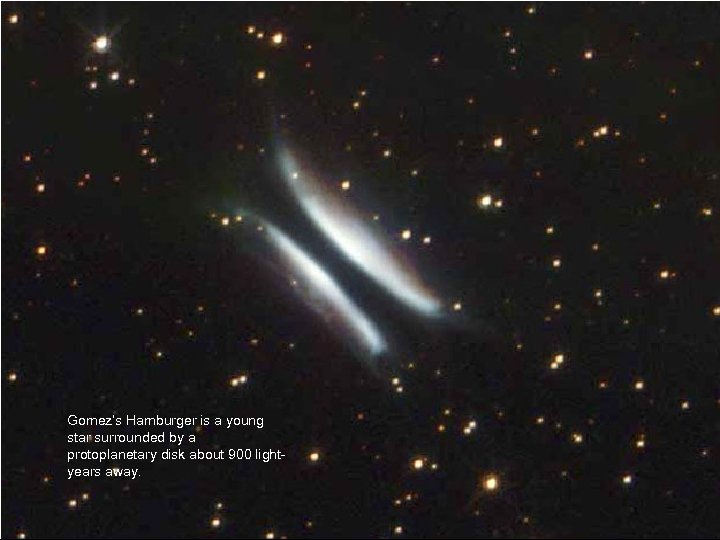 Gomez’s Hamburger is a young star surrounded by a protoplanetary disk about 900 lightyears away.
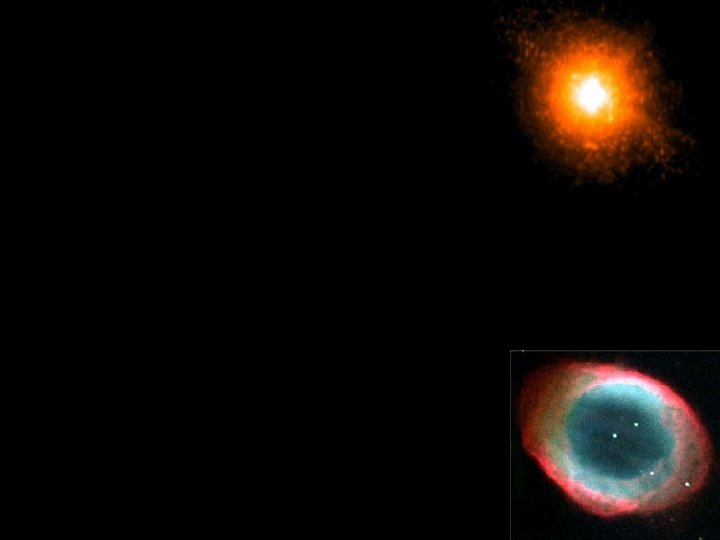

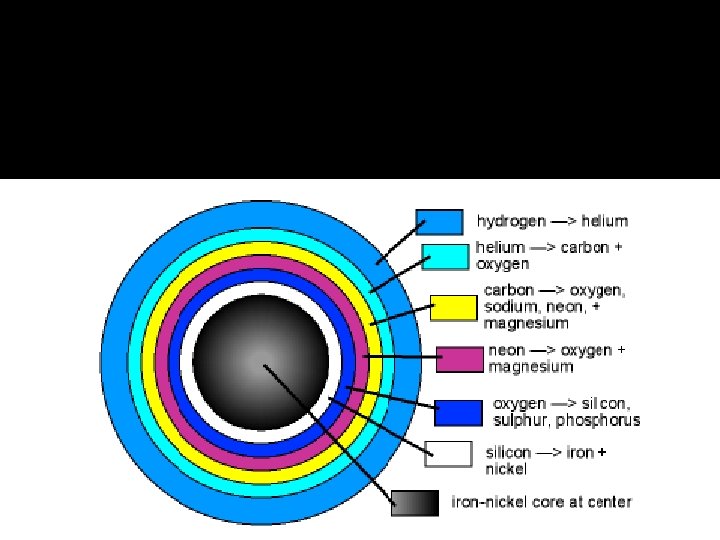
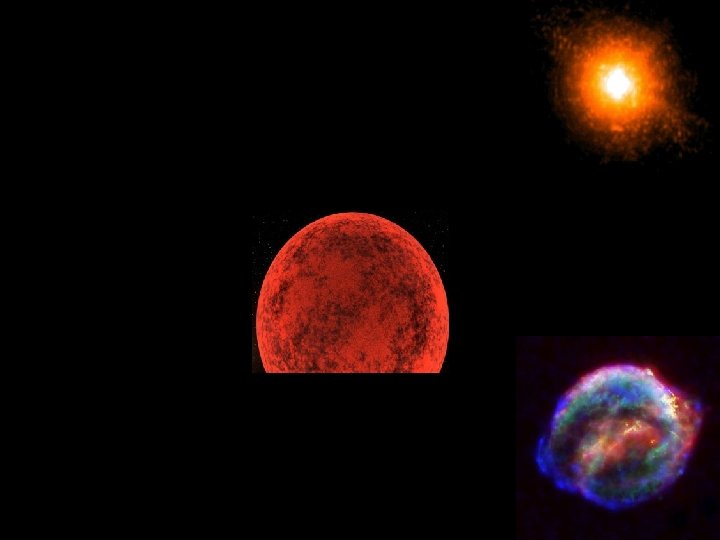
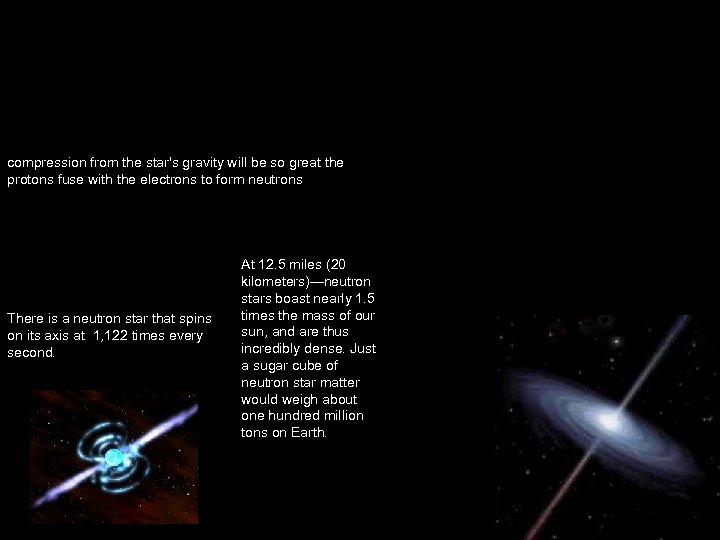 compression from the star's gravity will be so great the protons fuse with the electrons to form neutrons There is a neutron star that spins on its axis at 1, 122 times every second. At 12. 5 miles (20 kilometers)—neutron stars boast nearly 1. 5 times the mass of our sun, and are thus incredibly dense. Just a sugar cube of neutron star matter would weigh about one hundred million tons on Earth.

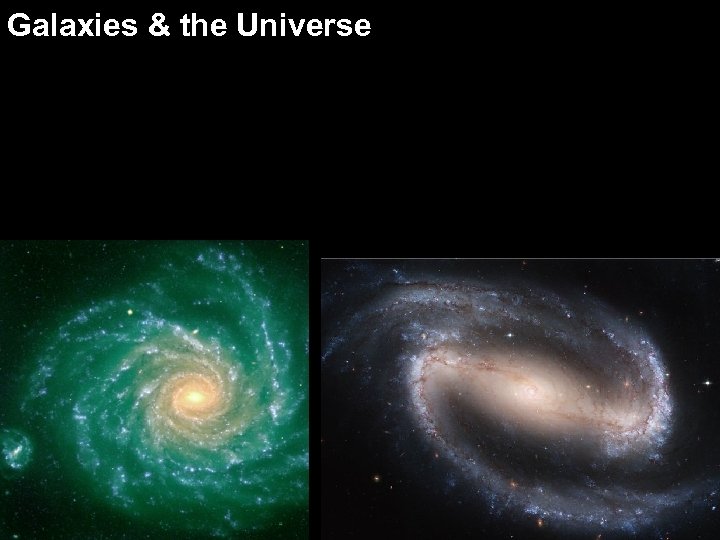 Galaxies & the Universe
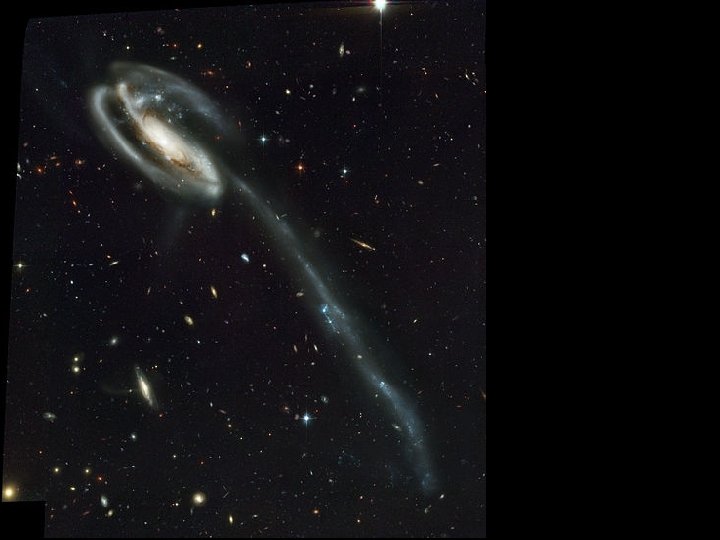
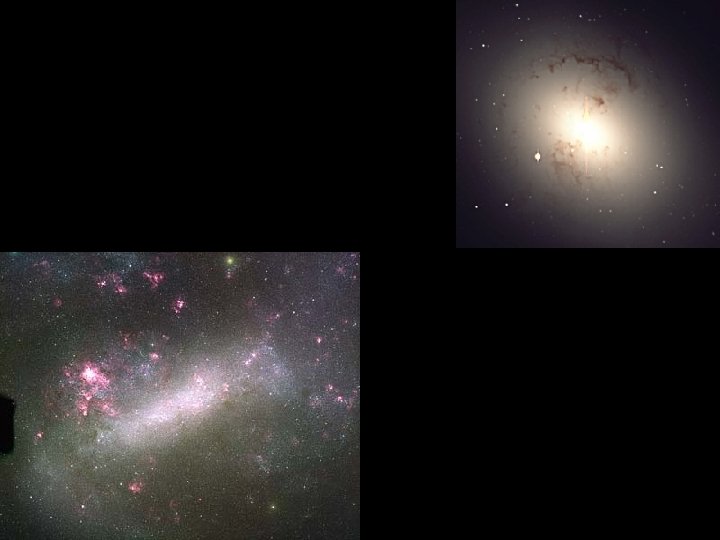
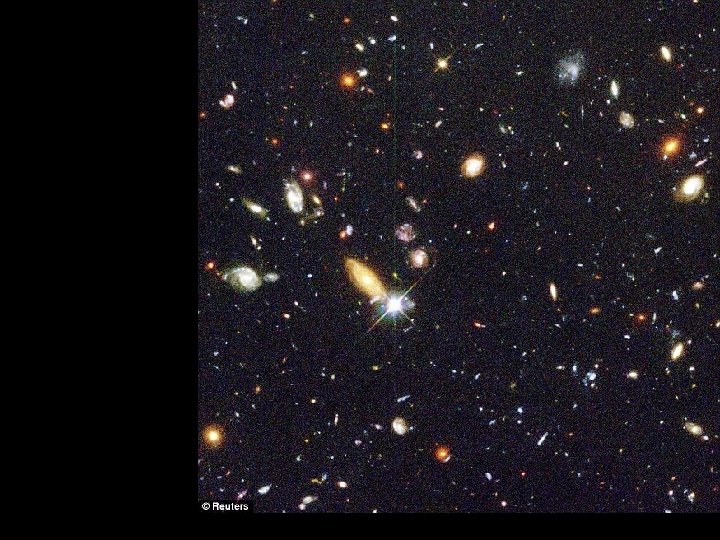
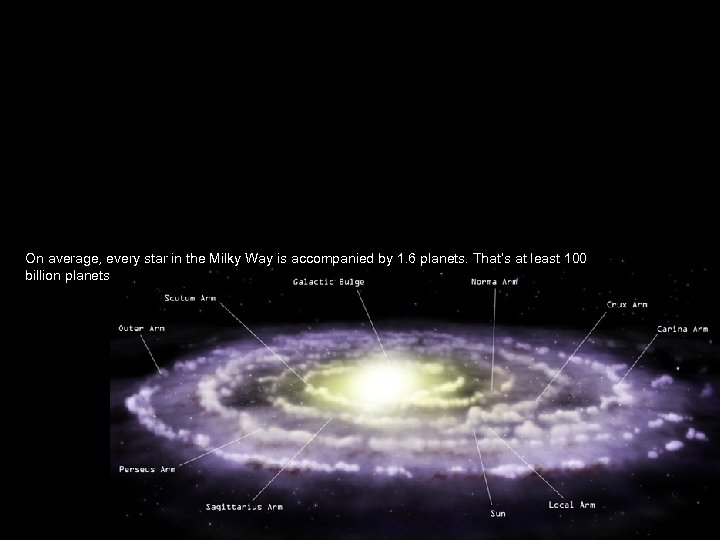 On average, every star in the Milky Way is accompanied by 1. 6 planets. That’s at least 100 billion planets
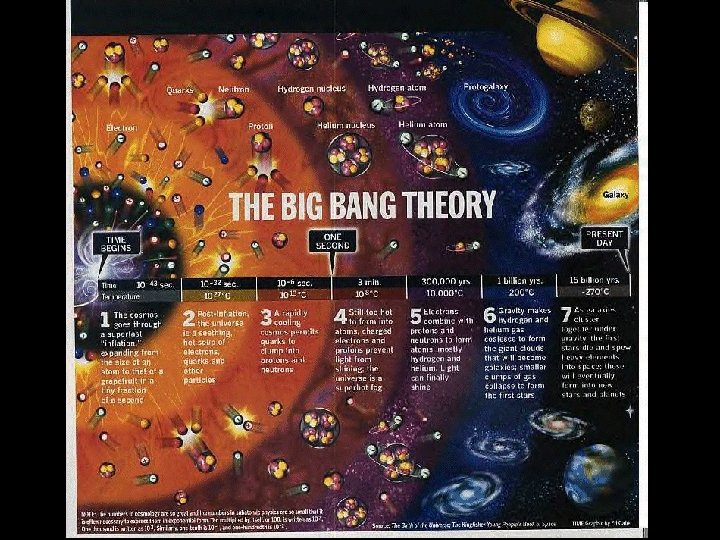
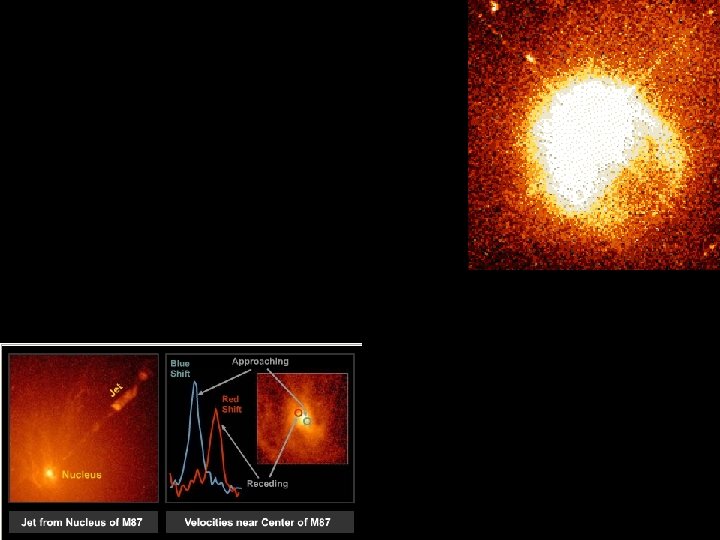
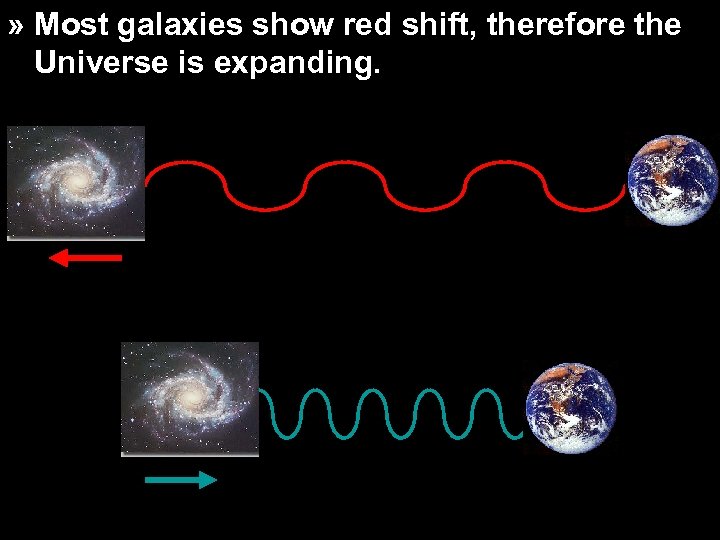 » Most galaxies show red shift, therefore the Universe is expanding.