 Скачать презентацию IETF P 2 P efforts Testbeds Salman
e39415289d306cc2ff1422296051241b.ppt
- Количество слайдов: 37




IETF P 2 P efforts & Testbeds Salman Abdul Baset, Gaurav Gupta, Jae Woo Lee and Henning Schulzrinne Columbia University SIP 2009 (Paris, January 2009)
Outline • What is a peer-to-peer Vo. IP and IM system? • P 2 P in a LAN m. DNS • Why P 2 P? – Why not Skype or Open. DHT? • • Design challenges P 2 PP Open. Vo. IP architecture and design RELOAD
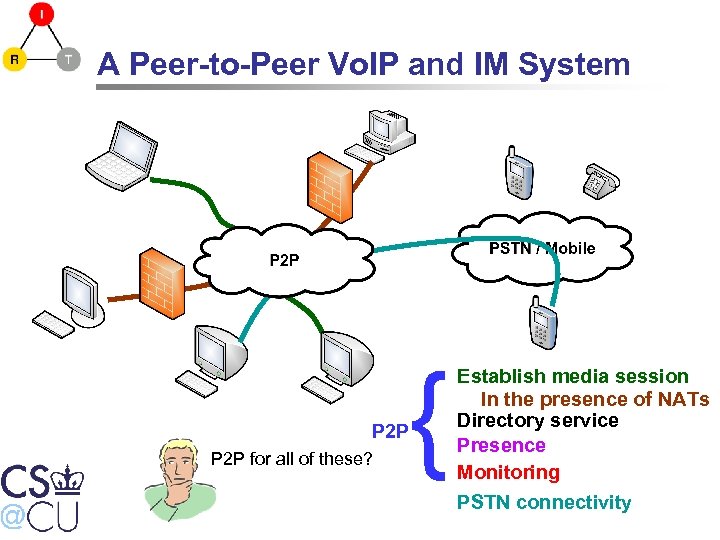
A Peer-to-Peer Vo. IP and IM System { P 2 P for all of these? Establish media session In the presence of NATs Directory service Presence Monitoring PSTN connectivity
Why P 2 P? • Cost • Scale – 14 million Skype online users (Nov 19, 2008) – 23 million MSN online users (comscore) • Media session load – 100, 000 calls per minute (1, 666 calls per second) – 106 Mb/s (64 kb/s voice) 426 Mb/s (256 kb/s video) • Presence load – 1000 notifications per second (500 B per notification) – 4 Mb/s • Monitoring load – Call minutes – Number of online users
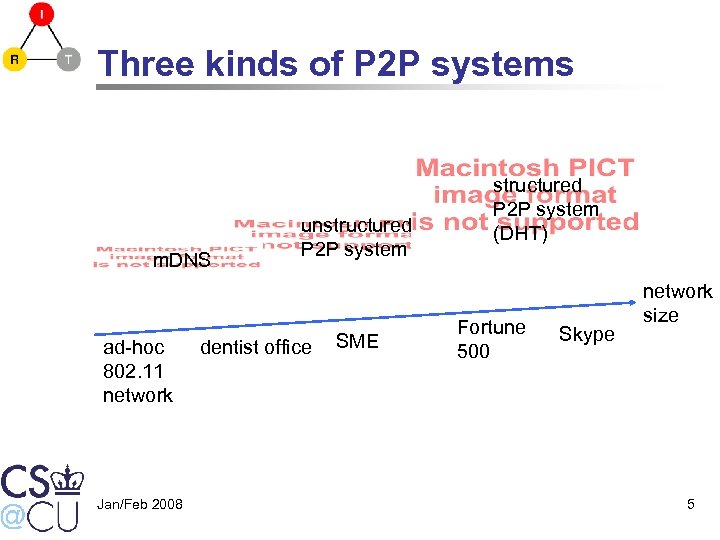
Three kinds of P 2 P systems m. DNS ad-hoc 802. 11 network Jan/Feb 2008 unstructured P 2 P system dentist office SME structured P 2 P system (DHT) Fortune 500 Skype network size 5
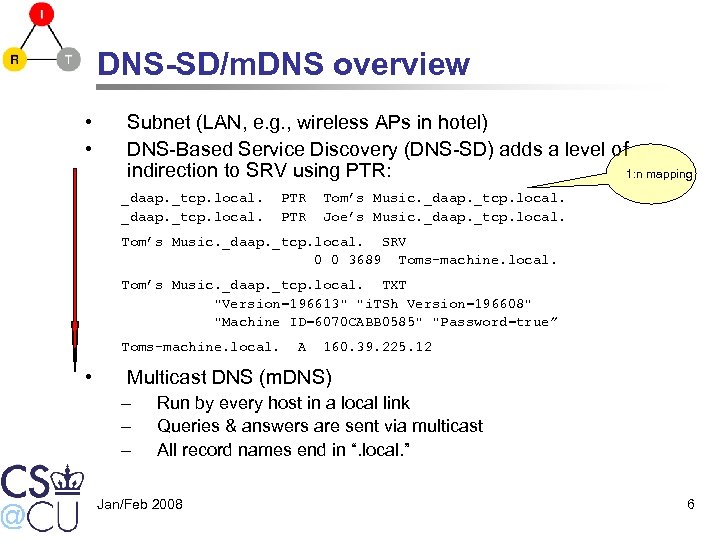
DNS-SD/m. DNS overview • • Subnet (LAN, e. g. , wireless APs in hotel) DNS-Based Service Discovery (DNS-SD) adds a level of indirection to SRV using PTR: 1: n mapping _daap. _tcp. local. PTR Tom’s Music. _daap. _tcp. local. Joe’s Music. _daap. _tcp. local. Tom’s Music. _daap. _tcp. local. SRV 0 0 3689 Toms-machine. local. Tom’s Music. _daap. _tcp. local. TXT "Version=196613" "i. TSh Version=196608" "Machine ID=6070 CABB 0585" "Password=true” Toms-machine. local. • A 160. 39. 225. 12 Multicast DNS (m. DNS) – – – Run by every host in a local link Queries & answers are sent via multicast All record names end in “. local. ” Jan/Feb 2008 6
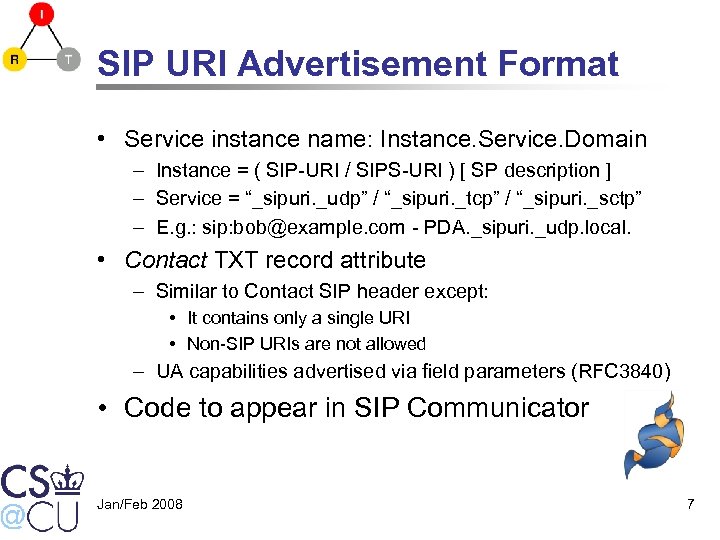
SIP URI Advertisement Format • Service instance name: Instance. Service. Domain – Instance = ( SIP-URI / SIPS-URI ) [ SP description ] – Service = “_sipuri. _udp” / “_sipuri. _tcp” / “_sipuri. _sctp” – E. g. : sip: bob@example. com - PDA. _sipuri. _udp. local. • Contact TXT record attribute – Similar to Contact SIP header except: • It contains only a single URI • Non-SIP URIs are not allowed – UA capabilities advertised via field parameters (RFC 3840) • Code to appear in SIP Communicator Jan/Feb 2008 7
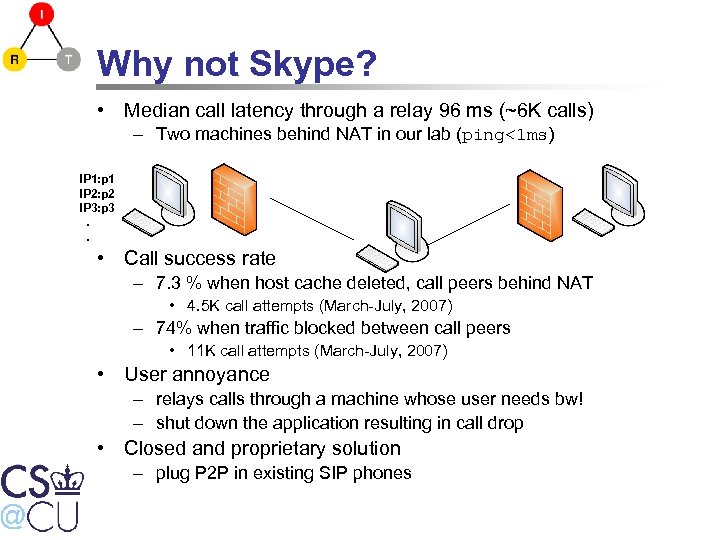
Why not Skype? • Median call latency through a relay 96 ms (~6 K calls) – Two machines behind NAT in our lab (ping<1 ms) IP 1: p 1 IP 2: p 2 IP 3: p 3. . • Call success rate – 7. 3 % when host cache deleted, call peers behind NAT • 4. 5 K call attempts (March-July, 2007) – 74% when traffic blocked between call peers • 11 K call attempts (March-July, 2007) • User annoyance – relays calls through a machine whose user needs bw! – shut down the application resulting in call drop • Closed and proprietary solution – plug P 2 P in existing SIP phones
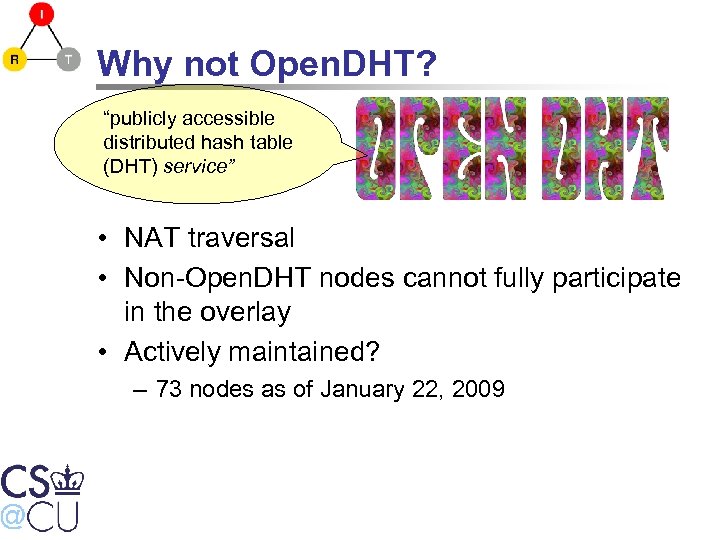
Why not Open. DHT? “publicly accessible distributed hash table (DHT) service” • NAT traversal • Non-Open. DHT nodes cannot fully participate in the overlay • Actively maintained? – 73 nodes as of January 22, 2009
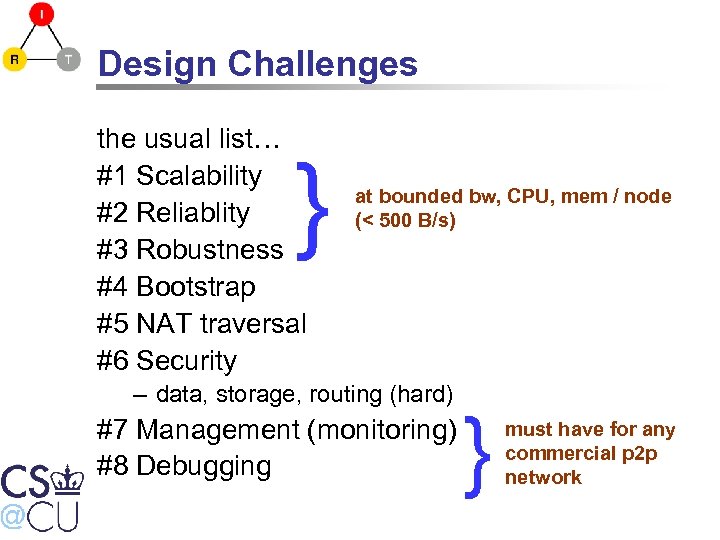
Design Challenges the usual list… #1 Scalability #2 Reliablity #3 Robustness #4 Bootstrap #5 NAT traversal #6 Security } at bounded bw, CPU, mem / node (< 500 B/s) – data, storage, routing (hard) #7 Management (monitoring) #8 Debugging } must have for any commercial p 2 p network
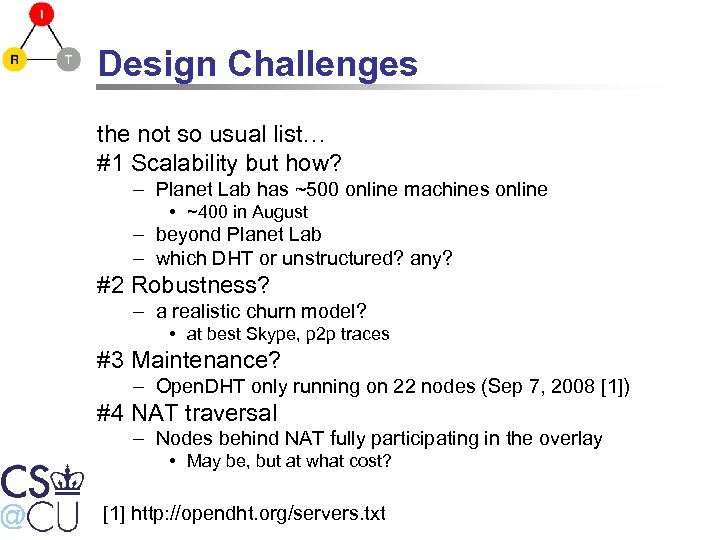
Design Challenges the not so usual list… #1 Scalability but how? – Planet Lab has ~500 online machines online • ~400 in August – beyond Planet Lab – which DHT or unstructured? any? #2 Robustness? – a realistic churn model? • at best Skype, p 2 p traces #3 Maintenance? – Open. DHT only running on 22 nodes (Sep 7, 2008 [1]) #4 NAT traversal – Nodes behind NAT fully participating in the overlay • May be, but at what cost? [1] http: //opendht. org/servers. txt
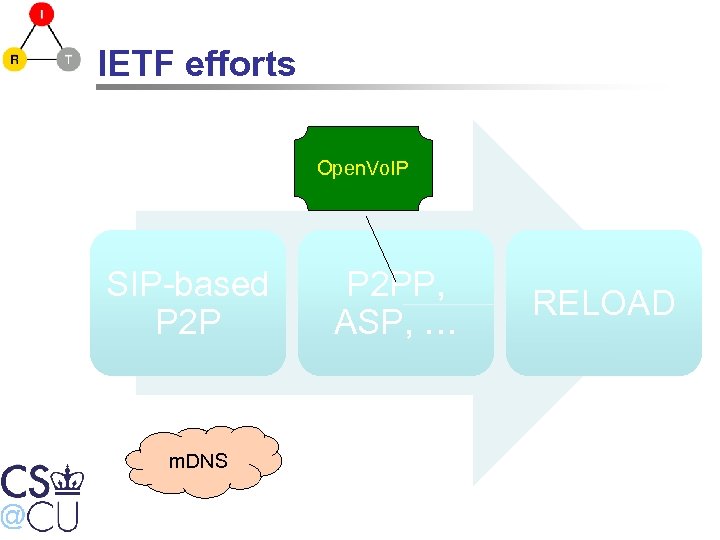
IETF efforts Open. Vo. IP SIP-based P 2 P m. DNS P 2 PP, ASP, … RELOAD
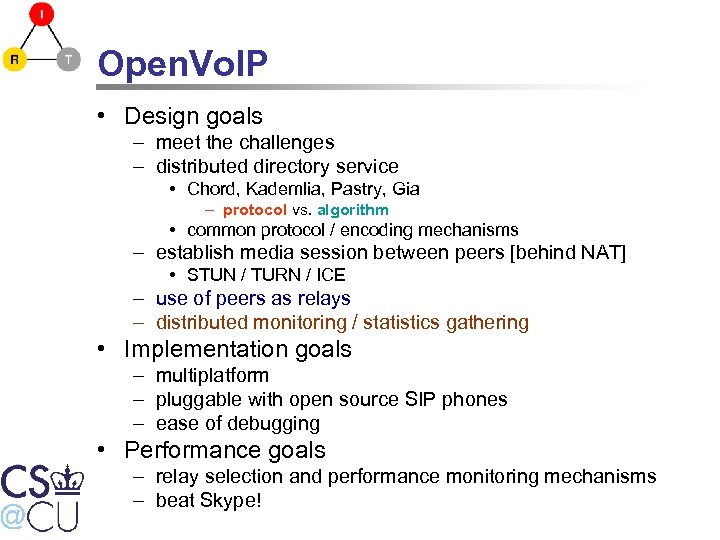
Open. Vo. IP • Design goals – meet the challenges – distributed directory service • Chord, Kademlia, Pastry, Gia – protocol vs. algorithm • common protocol / encoding mechanisms – establish media session between peers [behind NAT] • STUN / TURN / ICE – use of peers as relays – distributed monitoring / statistics gathering • Implementation goals – multiplatform – pluggable with open source SIP phones – ease of debugging • Performance goals – relay selection and performance monitoring mechanisms – beat Skype!
![Open. Vo. IP architecture [ Bootstrap / authentication ] [ monitoring server / Google](https://present5.com/presentation/e39415289d306cc2ff1422296051241b/image-14.jpg "Open. Vo. IP architecture [ Bootstrap / authentication ] [ monitoring server / Google")
Open. Vo. IP architecture [ Bootstrap / authentication ] [ monitoring server / Google Maps ] Overlay 2 SIP NAT P 2 P Overlay 1 STUN TLS / SSL Protocol stack of a peer bob@example. com NAT alice@domain. com A peer in P 2 PSIP A client
Peer-to-Peer Protocol (P 2 PP) • A binary protocol • Geared towards IP telephony but equally applicable to file sharing and streaming • Multiple DHT and unstructured p 2 p protocol support • Application API • NAT traversal – using STUN, TURN and ICE • Request routing – recursive, iterative, parallel • Supports hierarchy (super nodes [peers], ordinary nodes [clients]) • Multiple hash function support – SHA 1, SHA 256, MD 4, MD 5, . . . • TCP or UDP
Peer-to-Peer Protocol (P 2 PP) • Reliable or unreliable transport (TCP/TLS or UDP/DTLS) • Security – DTLS, storage security • Multiple hash function support – SHA 1, SHA 256, MD 4, MD 5 • Monitoring – ewma_bytes_sent [rcvd], CPU utilization, routing table
Peer-to-Peer Protocol (P 2 PP) • A binary protocol • Geared towards IP telephony but equally applicable to file sharing, streaming, and p 2 p-Vo. D • Multiple DHT and unstructured p 2 p protocol support • Application API • NAT traversal – using STUN, TURN and ICE • Request routing – recursive, iterative, parallel – per message • Supports hierarchy (super nodes [peers], ordinary nodes [clients]) • Central entities (e. g. , authentication server)
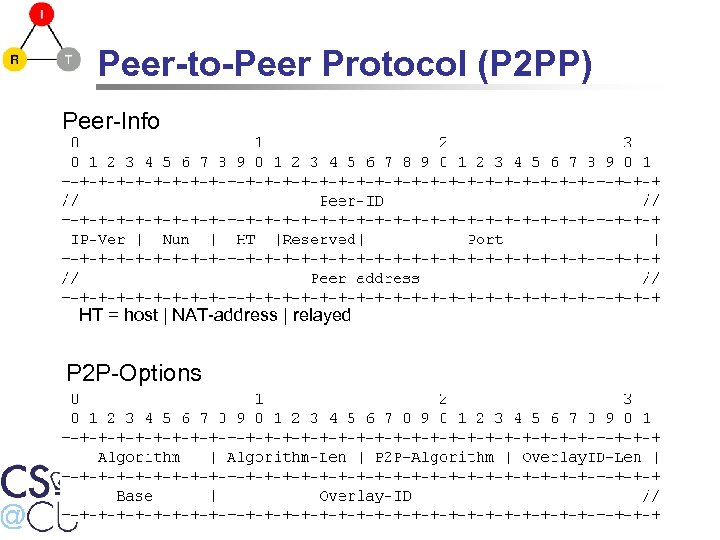
Peer-to-Peer Protocol (P 2 PP) Peer-Info HT = host | NAT-address | relayed P 2 P-Options
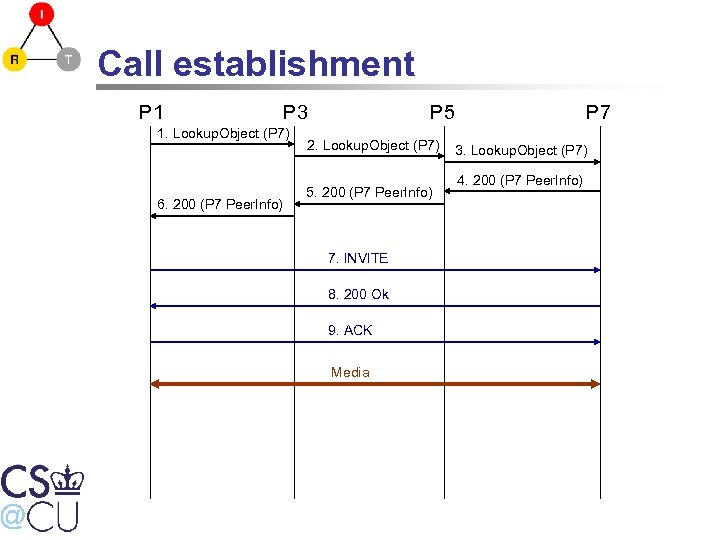
Call establishment P 1 P 3 1. Lookup. Object (P 7) 6. 200 (P 7 Peer. Info) P 5 2. Lookup. Object (P 7) 5. 200 (P 7 Peer. Info) 7. INVITE 8. 200 Ok 9. ACK Media P 7 3. Lookup. Object (P 7) 4. 200 (P 7 Peer. Info)
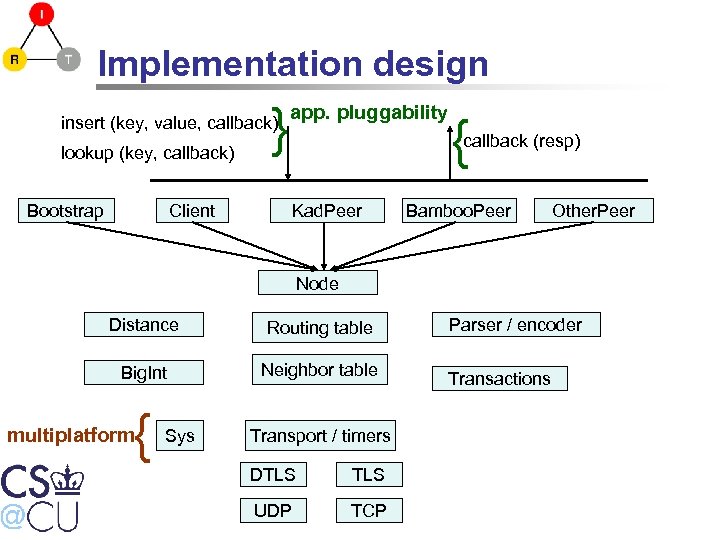
Implementation design } insert (key, value, callback) lookup (key, callback) Bootstrap Client app. pluggability { callback (resp) Kad. Peer Bamboo. Peer Other. Peer Node Distance Routing table Big. Int Neighbor table { Transport / timers multiplatform Sys DTLS UDP TCP Parser / encoder Transactions
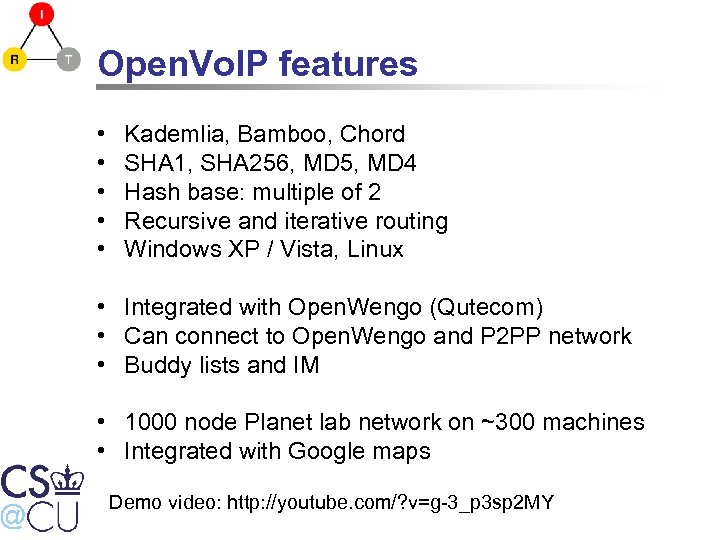
Open. Vo. IP features • • • Kademlia, Bamboo, Chord SHA 1, SHA 256, MD 5, MD 4 Hash base: multiple of 2 Recursive and iterative routing Windows XP / Vista, Linux • Integrated with Open. Wengo (Qutecom) • Can connect to Open. Wengo and P 2 PP network • Buddy lists and IM • 1000 node Planet lab network on ~300 machines • Integrated with Google maps Demo video: http: //youtube. com/? v=g-3_p 3 sp 2 MY
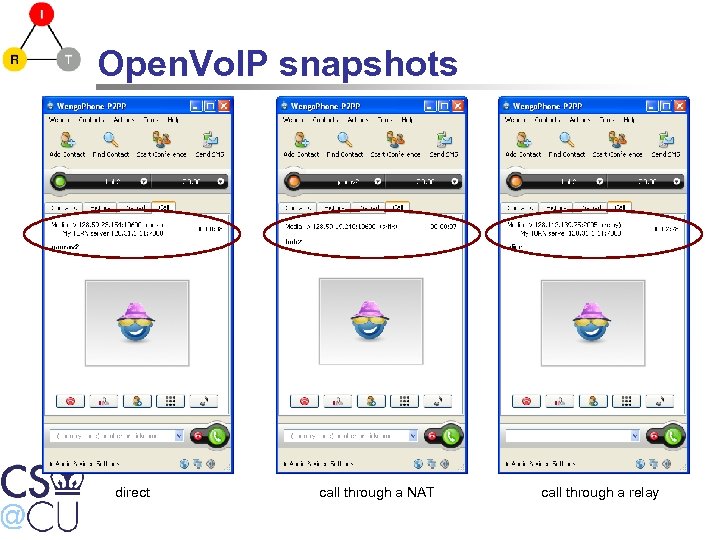
Open. Vo. IP snapshots direct call through a NAT call through a relay
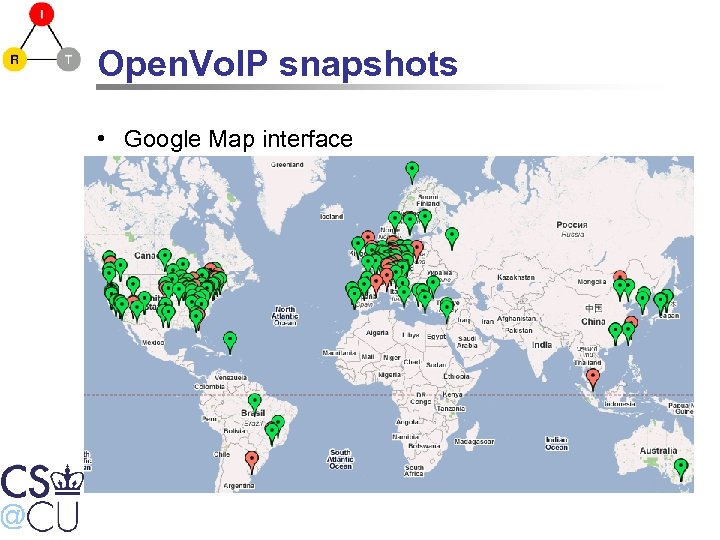
Open. Vo. IP snapshots • Google Map interface
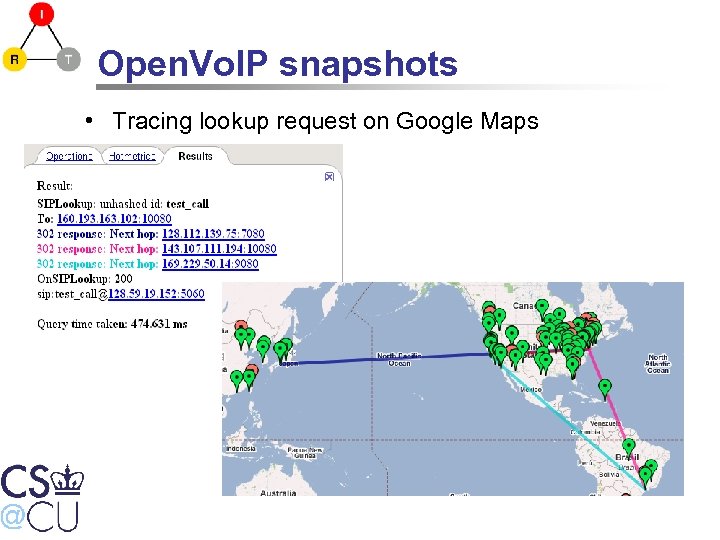
Open. Vo. IP snapshots • Tracing lookup request on Google Maps
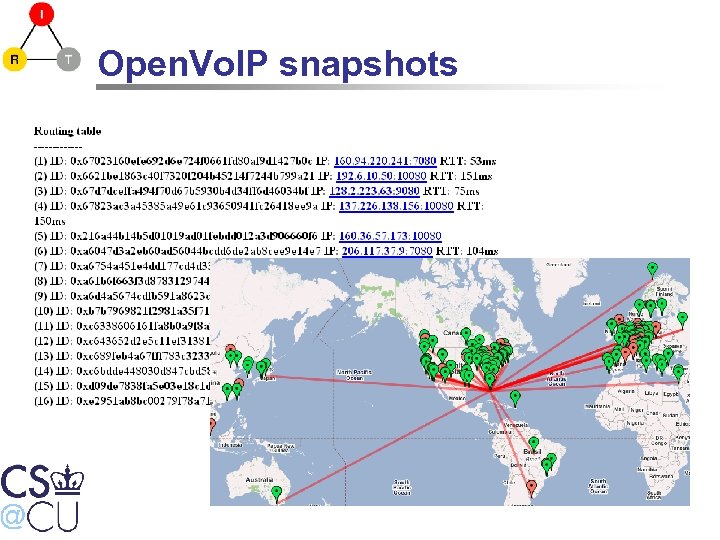
Open. Vo. IP snapshots
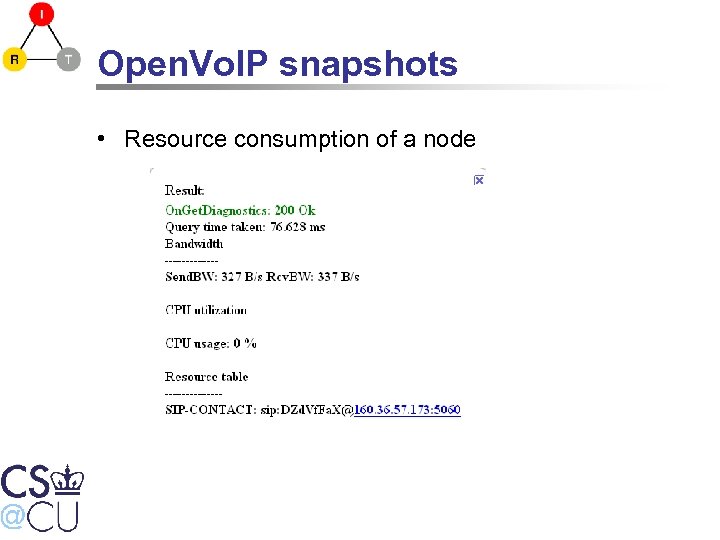
Open. Vo. IP snapshots • Resource consumption of a node
Relay selection • User annoyance • Use heuristics that operate on a routing table of a node – – – random minimum delay maximum spare bandwidth minimum number of jobs threshold based (<200 ms, maximum spare, longest uptime)
Why calls may fail in Open. Vo. IP? • Cannot find a user – user is online, but p 2 p cannot find it. • NAT and firewall issues – SIP messages – call succeeds but media? – relay • Relay – failure in finding a suitable relay – relay fails during call • 2 -3 relays System reliability – (user search + NAT traversal + relay)
Facts of Peer-to-Peer Life • • • Routing loops happen Byzantine failures arise Nodes become disconnected System does not always scale! Automated maintenance does not always work • Planet Lab quirks – cleans the directory – Do. S attacks on open ports • Bootstrap server is attacked
Open. Vo. IP: Key techniques • Randomization is our best friend! – send the maintenance messages within a bounded random time • Churn recovery – is on demand periodic • Insert a new entry in routing table after checking liveness • Periodically republish SIP records – not feasible for large records • Avoid overly complex mechanisms – can backfire!
Open. Vo. IP: Debugging • Black-box – Lookup request for a random key • State acquisition – Remotely obtain the resource and storage utilization of a node • Set and Unset a data-value on a node – such as BW, CPU utilization – to test a relay selection algorithm • Remotely enable and disable logging • Control log size • Find a faulty node – hard – centralized vs. distributed approach
Open. Vo. IP – releasing an update Three step process 1) Check in a local network (10 -15 nodes) 2) Deploy the update on a managed node that fully participates in the overlay – test its functionality 3) Release the update • Planet Lab deployment – churn one quarter of the network – deploy the update – continue until done
RELOAD • A binary protocol • Pluggable overlay algorithms – potentially any DHT or unstructured algorithm – base DHT • Two tier architecture – peers and clients • • Security Data storage Message routing Usages
Security • Certificates – public key certificates – shared key certificates • Storage security – stored data is signed • Message security – each message is signed • Channel security – TLS, DTLS • Not covered – Routing security • managed by the overlay instance
Data storage • Storage unit – resource object (with an ID) – stores multiple ‘kinds’ (or data types) – stored data is signed • Data types – single value, array, dictionary
Message routing • Recursive – hop-by-hop reliability • framing still an open issue for unreliable transports – e 2 e retransmission • Iterative • Relay • Direct response
Conclusion • P 2 P systems as tool, not miracle cure – will not fix broken business model – software more complicated than client-server – trust issues much harder • Use as autonomic self-adaptive server scaling mechanism – with server virtualization – fully self-deploying infrastructure • IETF efforts in progress – not SIP specific – see DYSWIS for other uses
Скачать презентацию IETF P 2 P efforts Testbeds Salman
e39415289d306cc2ff1422296051241b.ppt