


 Скачать презентацию IEE ECOLISH Improvement of Energy Efficiency of Low
0ea1982be14c8809f399b179b7aed457.ppt
- Количество слайдов: 32
 IEE ECOLISH Improvement of Energy Efficiency of Low Income Housing Zoltán MAGYAR Hungary
 The problem - general • Energy use in residential buildings in EU is 9500 PJ (= 23% of total use) > largest proportion • Measures on existing residential buildings will make major contribution in energy and CO 2 reduction But large number of barriers: • • Technologies are available (more based on new buildings) Financial constraints Social constraints Organisation
 The problem - specific • Social housing and (extreme) low incomes – Often high energy consumption (poor thermal and building physical quality, building services) – In combination with poor IAQ and Thermal Comfort – Increasing energy prices (>> inflation rates), leading to fuel poverty • Problematic spread ownership – how to organise – who is interested/responsible • Allocation and risk of revenues of investments – Investors do often not have repays of investments – How to allocate the repays?
 Objectives of ECOLISH Objective: investigate and demonstrate the feasibility and the potential of instruments like Energy Performance Contracting Target groups: occupants with low income Means: organising ESCO companies and EPC, involving occupants
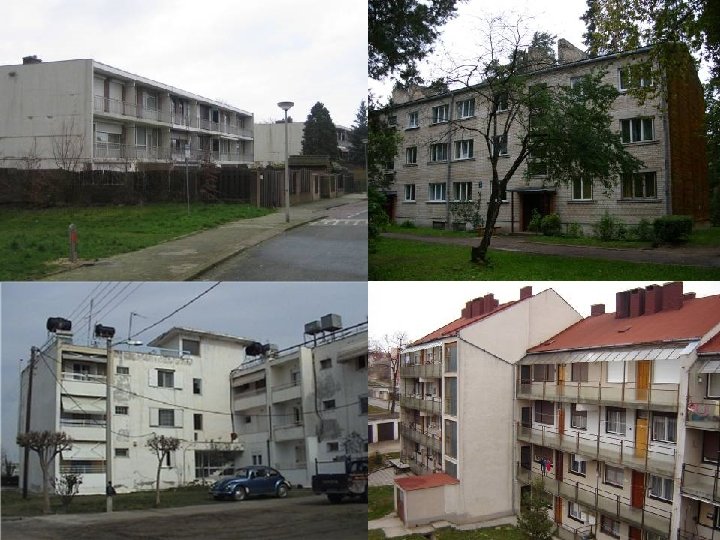 … organised on 4 pilot locations Heerlen - the Netherlands Ogre- Latvia Pieria – Greece Pécsvárad – Hungary Representing 4 different Regions, cultures and climate zones (moderate, cold, mild, continental)
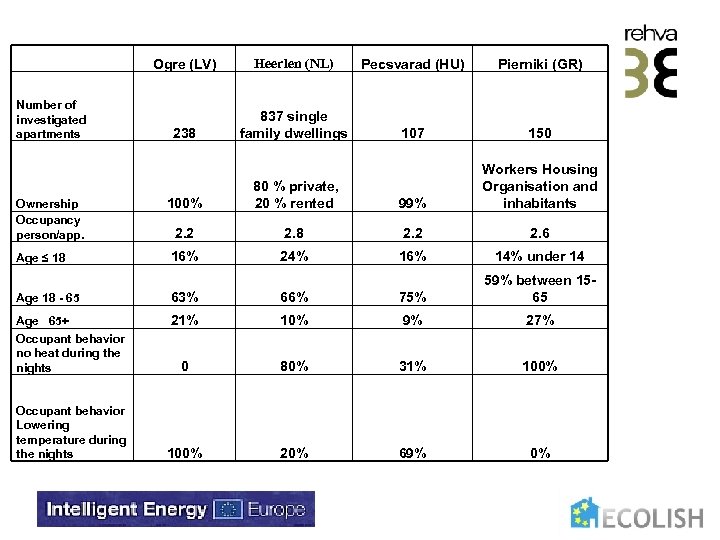 Number of investigated apartments Ownership Occupancy person/app. Age ≤ 18 Ogre (LV) Heerlen (NL) Pecsvarad (HU) Pierniki (GR) 238 837 single family dwellings 107 150 100% 80 % private, 20 % rented 99% Workers Housing Organisation and inhabitants 2. 2 2. 8 2. 2 2. 6 16% 24% 16% 14% under 14 Age 18 - 65 63% 66% 75% 59% between 1565 Age 65+ Occupant behavior no heat during the nights 21% 10% 9% 27% 0 80% 31% 100% 20% 69% 0% Occupant behavior Lowering temperature during the nights
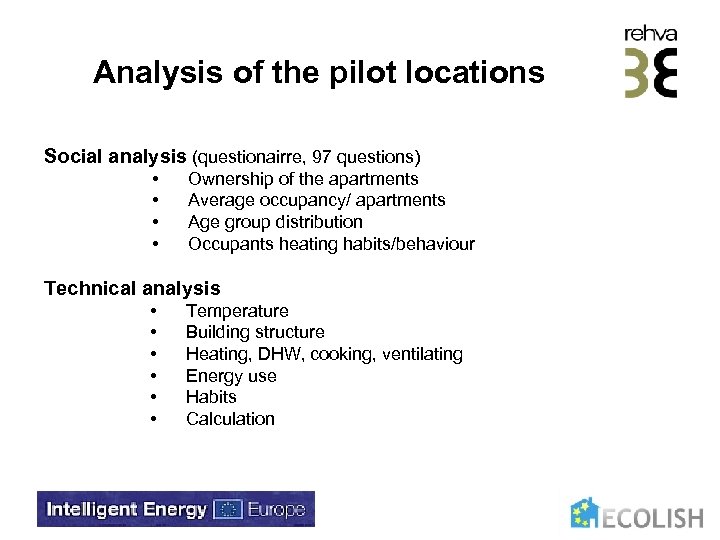 Analysis of the pilot locations Social analysis (questionairre, 97 questions) • • Ownership of the apartments Average occupancy/ apartments Age group distribution Occupants heating habits/behaviour Technical analysis • • • Temperature Building structure Heating, DHW, cooking, ventilating Energy use Habits Calculation
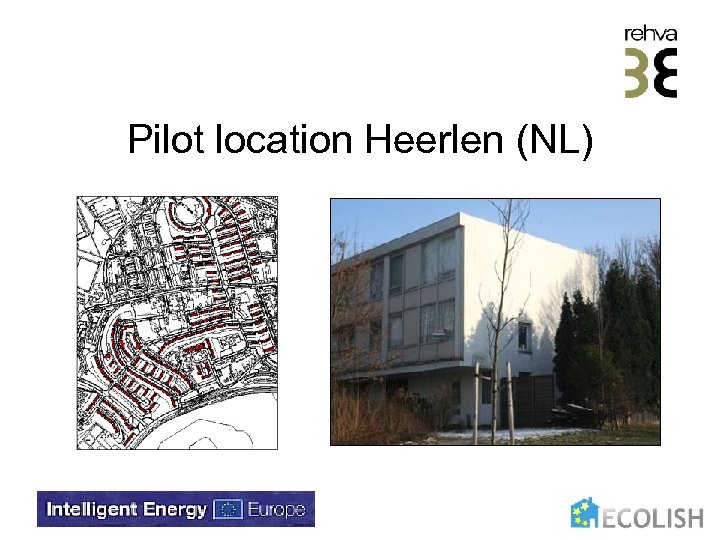 Pilot location Heerlen (NL)
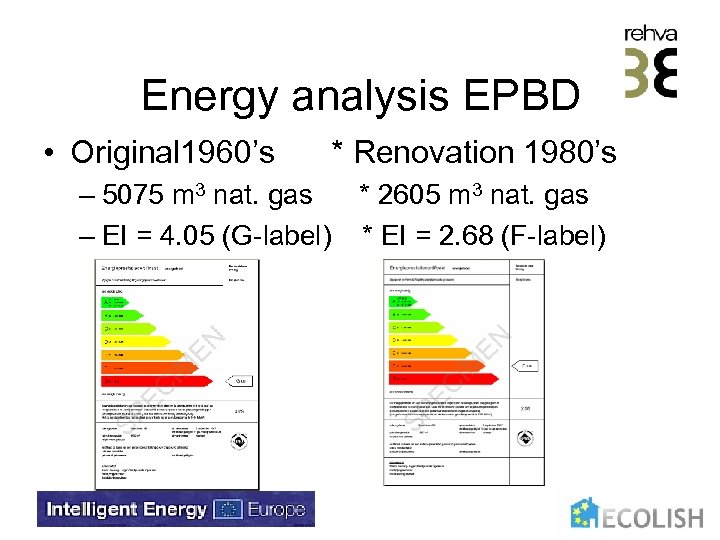 Energy analysis EPBD • Original 1960’s * Renovation 1980’s – 5075 m 3 nat. gas * 2605 m 3 nat. gas – EI = 4. 05 (G-label) * EI = 2. 68 (F-label)
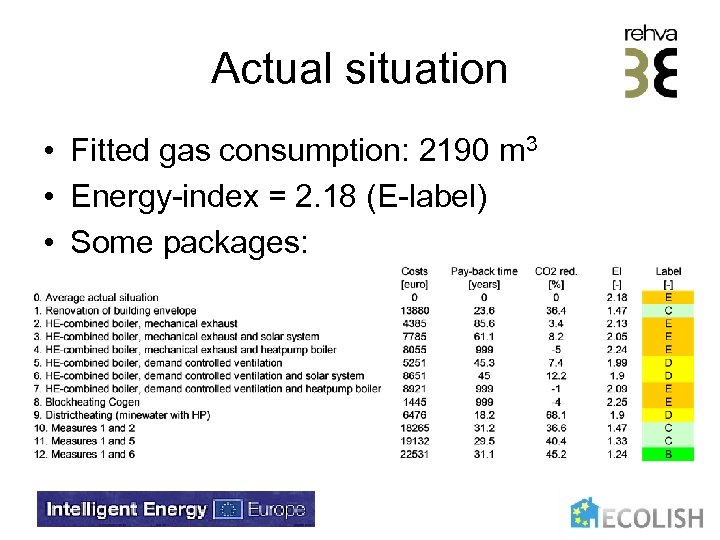 Actual situation • Fitted gas consumption: 2190 m 3 • Energy-index = 2. 18 (E-label) • Some packages:
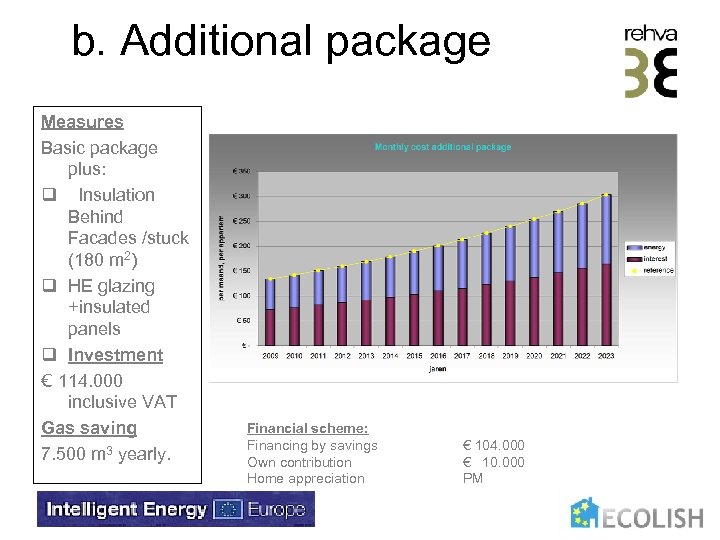 b. Additional package Measures Basic package plus: q Insulation Behind Facades /stuck (180 m 2) q HE glazing +insulated panels q Investment € 114. 000 inclusive VAT Gas saving 7. 500 m 3 yearly. Financial scheme: Financing by savings Own contribution Home appreciation € 104. 000 € 10. 000 PM
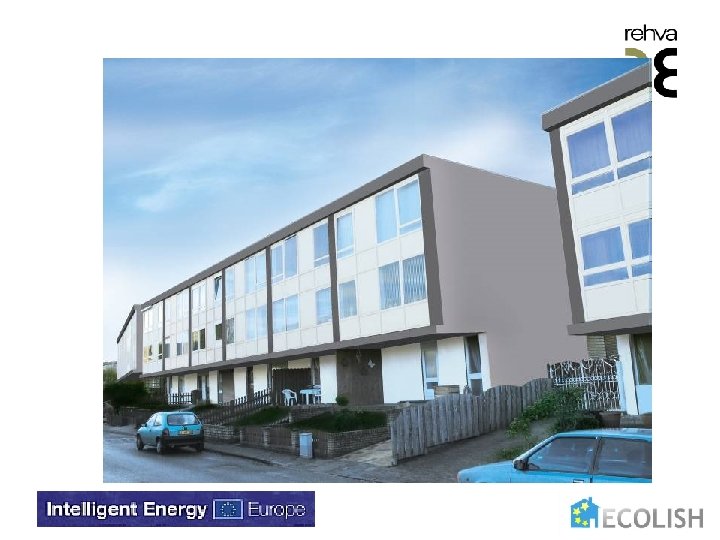
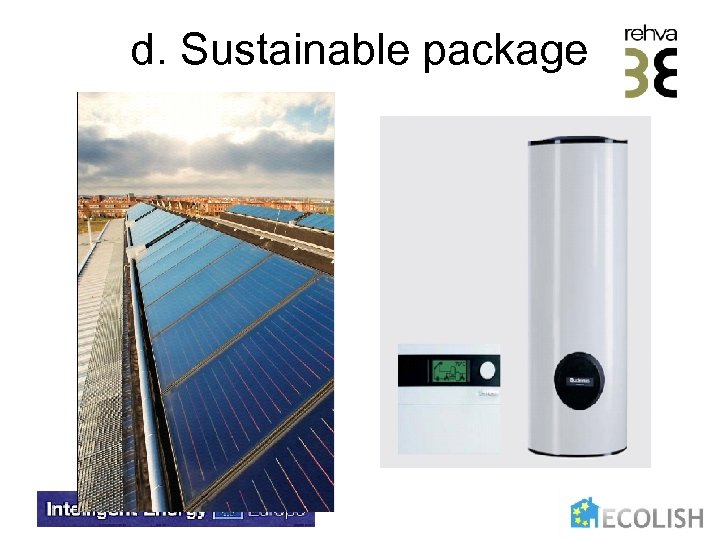 d. Sustainable package
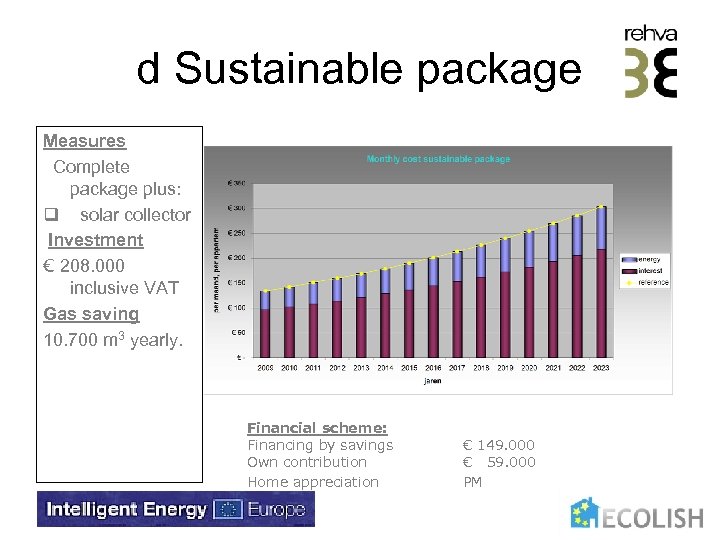 d Sustainable package Measures Complete package plus: q solar collector Investment € 208. 000 inclusive VAT Gas saving 10. 700 m 3 yearly. Financial scheme: Financing by savings Own contribution Home appreciation € 149. 000 € 59. 000 PM
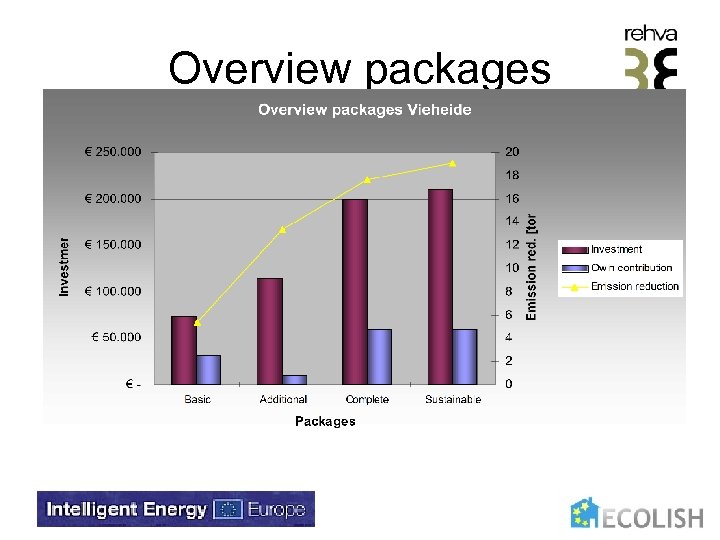 Overview packages
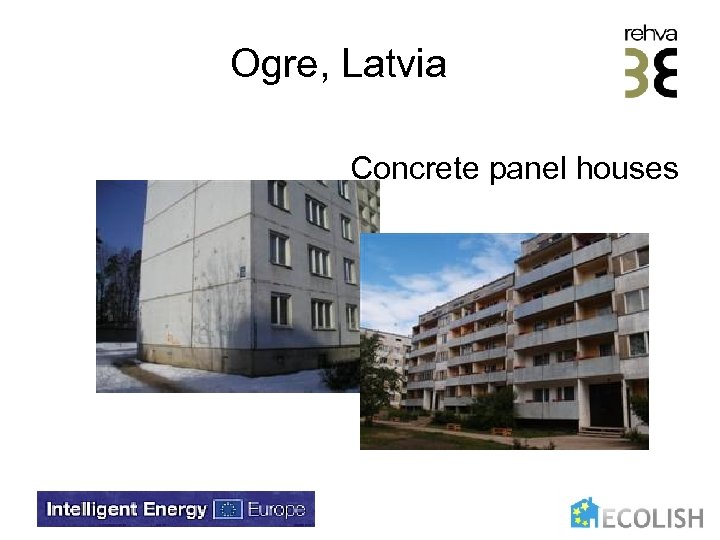 Ogre, Latvia Concrete panel houses
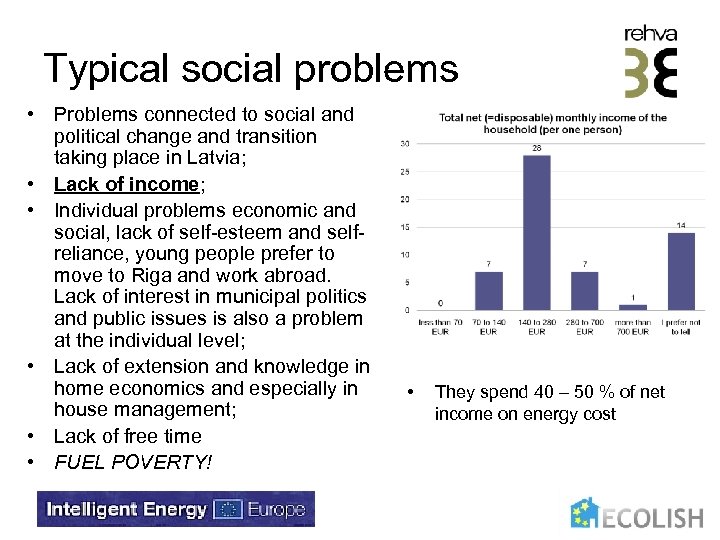 Typical social problems • Problems connected to social and political change and transition taking place in Latvia; • Lack of income; • Individual problems economic and social, lack of self-esteem and selfreliance, young people prefer to move to Riga and work abroad. Lack of interest in municipal politics and public issues is also a problem at the individual level; • Lack of extension and knowledge in home economics and especially in house management; • Lack of free time • FUEL POVERTY! • They spend 40 – 50 % of net income on energy cost
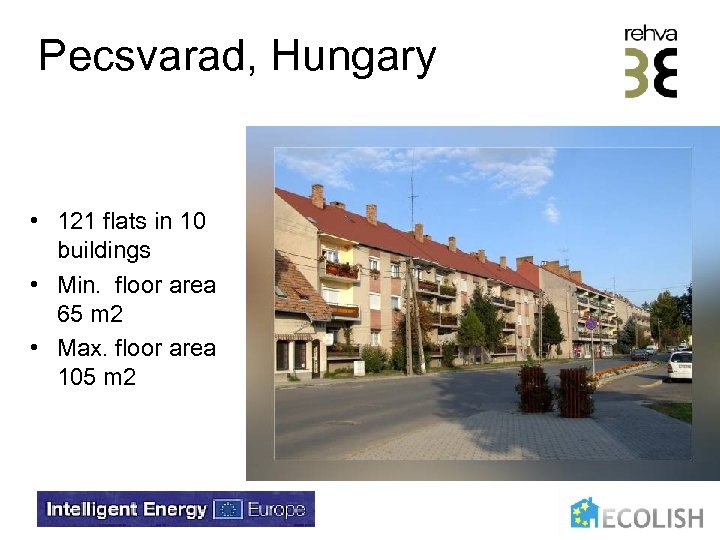 Pecsvarad, Hungary • 121 flats in 10 buildings • Min. floor area 65 m 2 • Max. floor area 105 m 2
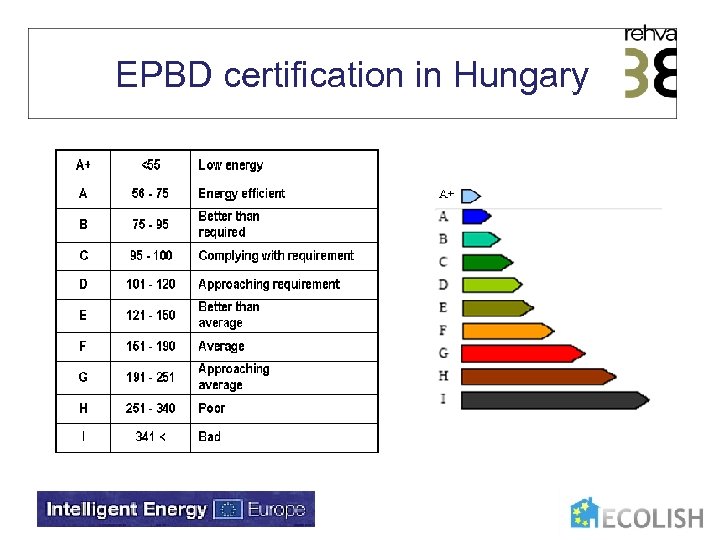
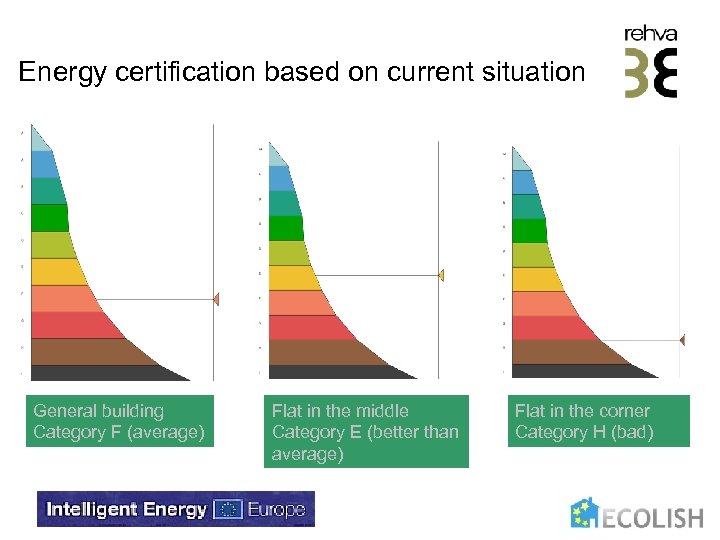 Energy certification based on current situation General building Category F (average) Flat in the middle Category E (better than average) Flat in the corner Category H (bad)
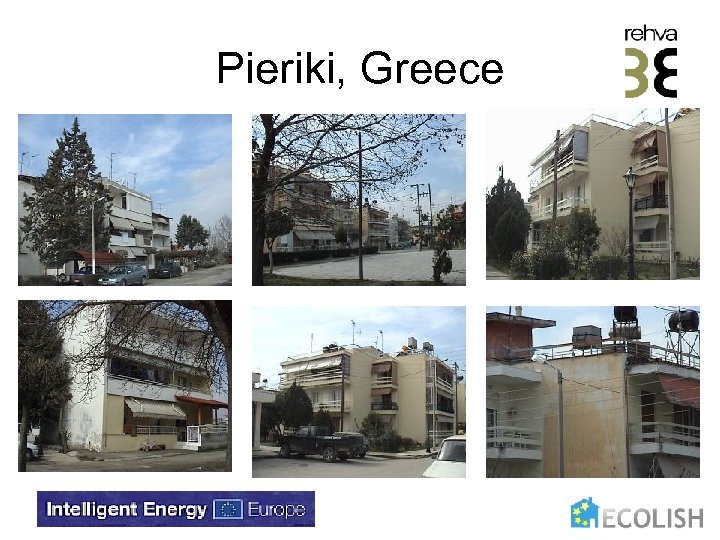 Pieriki, Greece
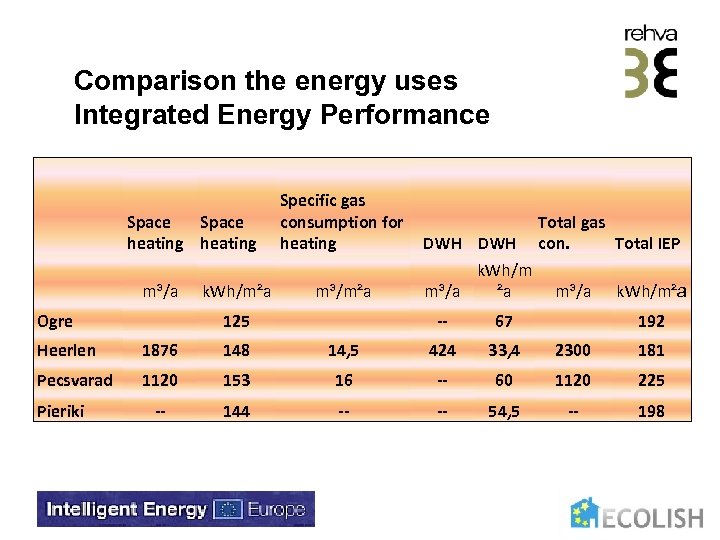 Comparison the energy uses Integrated Energy Performance Specific gas Space consumption for Total gas heating DWH con. Total IEP k. Wh/m m³/a k. Wh/m²a m³/a k. Wh/m²a Ogre 125 -- 67 192 Heerlen 1876 148 14, 5 424 33, 4 2300 181 Pecsvarad 1120 153 16 -- 60 1120 225 -- 144 -- -- 54, 5 -- 198 Pieriki
 EPBD certification in Hungary
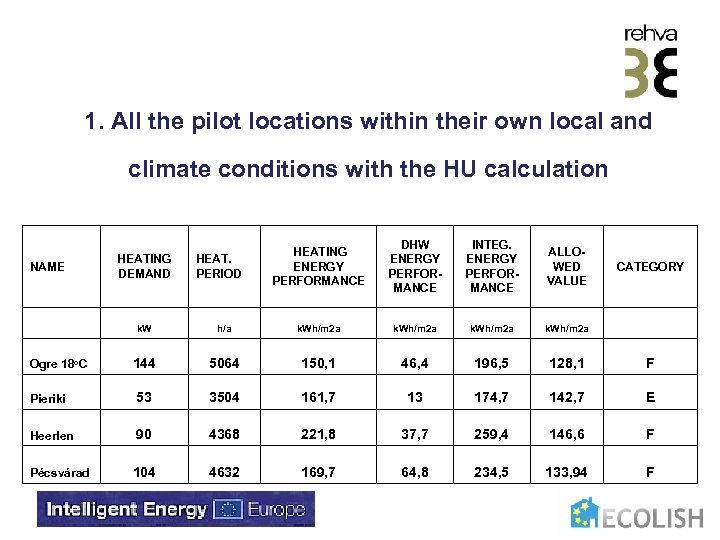 1. All the pilot locations within their own local and climate conditions with the HU calculation NAME HEATING DEMAND HEAT. PERIOD HEATING ENERGY PERFORMANCE DHW ENERGY PERFORMANCE INTEG. ENERGY PERFORMANCE ALLOWED VALUE CATEGORY k. W h/a k. Wh/m 2 a 144 5064 150, 1 46, 4 196, 5 128, 1 F Pieriki 53 3504 161, 7 13 174, 7 142, 7 E Heerlen 90 4368 221, 8 37, 7 259, 4 146, 6 F 104 4632 169, 7 64, 8 234, 5 133, 94 F Ogre 18 o. C Pécsvárad
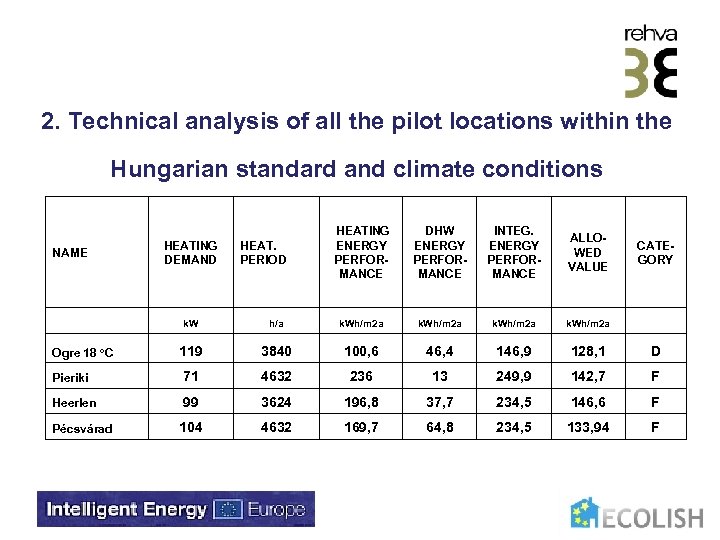 2. Technical analysis of all the pilot locations within the Hungarian standard and climate conditions NAME HEATING DEMAND HEAT. PERIOD HEATING ENERGY PERFORMANCE DHW ENERGY PERFORMANCE INTEG. ENERGY PERFORMANCE ALLOWED VALUE CATEGORY k. W h/a k. Wh/m 2 a 119 3840 100, 6 46, 4 146, 9 128, 1 D Pieriki 71 4632 236 13 249, 9 142, 7 F Heerlen 99 3624 196, 8 37, 7 234, 5 146, 6 F 104 4632 169, 7 64, 8 234, 5 133, 94 F Ogre 18 o. C Pécsvárad
 3. Comparision of the insulation and retrofitting measures for all the pilot locations within their own local and climate conditions with HU calculation • Measures • Thermal insulation of the external walls, roofs, and basement • Retrofitting of the installation (condensin boilers, TRV and in case of Heerlen heat recovering ventilation)
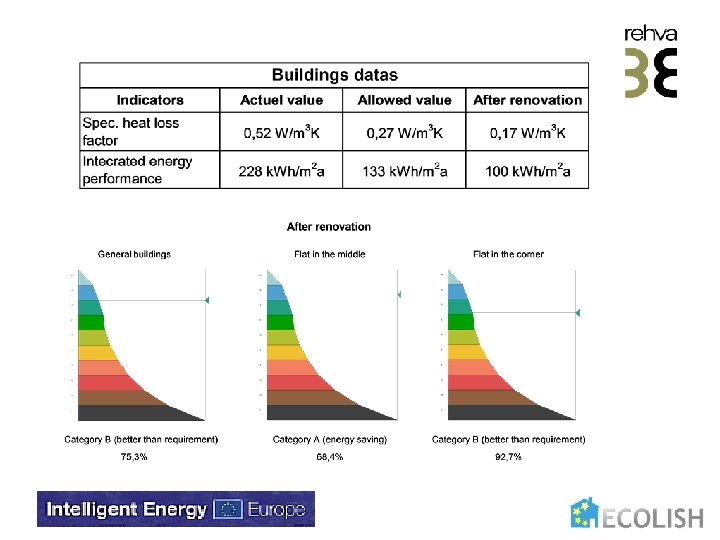
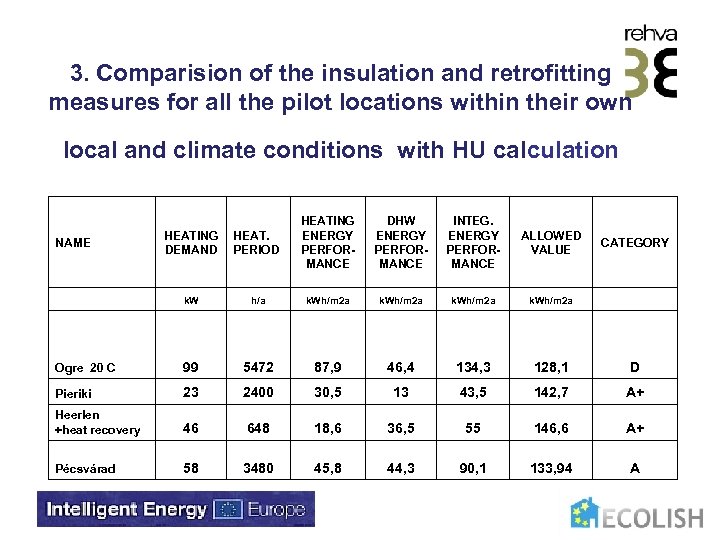 3. Comparision of the insulation and retrofitting measures for all the pilot locations within their own local and climate conditions with HU calculation HEATING DEMAND HEAT. PERIOD HEATING ENERGY PERFORMANCE DHW ENERGY PERFORMANCE INTEG. ENERGY PERFORMANCE ALLOWED VALUE CATEGORY k. W h/a k. Wh/m 2 a Ogre 20 C 99 5472 87, 9 46, 4 134, 3 128, 1 D Pieriki 23 2400 30, 5 13 43, 5 142, 7 A+ Heerlen +heat recovery 46 648 18, 6 36, 5 55 146, 6 A+ Pécsvárad 58 3480 45, 8 44, 3 90, 1 133, 94 A NAME
 4. Comparision of thermo-insulation measures for all the pilot locations within the Hungarian standard and climate conditions (in Pecsvarad) • Measures • Thermal-insulation of the external walls, roofs, and basement • Retrofitting of the installations (condensing boilers, TRV, and in case of Heerlen heat recovering ventilation)
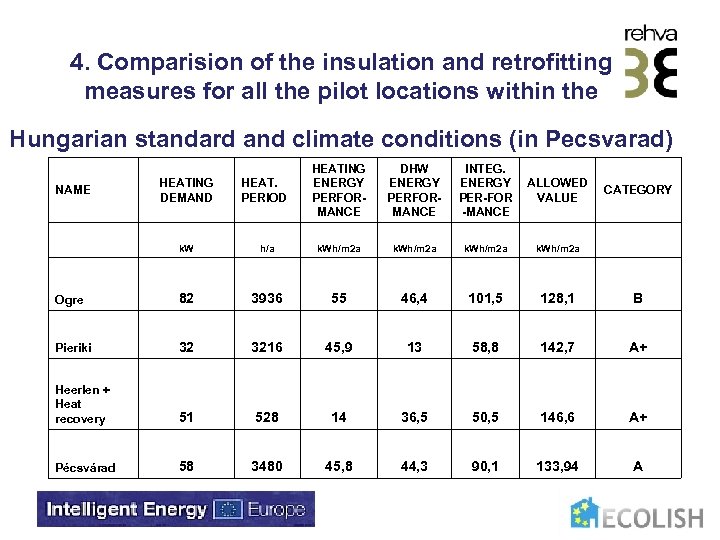 4. Comparision of the insulation and retrofitting measures for all the pilot locations within the Hungarian standard and climate conditions (in Pecsvarad) HEATING DEMAND HEAT. PERIOD HEATING ENERGY PERFORMANCE DHW ENERGY PERFORMANCE INTEG. ENERGY PER-FOR -MANCE ALLOWED VALUE CATEGORY k. W h/a k. Wh/m 2 a Ogre 82 3936 55 46, 4 101, 5 128, 1 B Pieriki 32 3216 45, 9 13 58, 8 142, 7 A+ Heerlen + Heat recovery 51 528 14 36, 5 50, 5 146, 6 A+ Pécsvárad 58 3480 45, 8 44, 3 90, 1 133, 94 A NAME
 Conclusions • In social housing energy costs are high in combination with poor thermal comfort and indoor air quality • Saving potential and benefits are high • Benefits can be allocated to investments • Specific problem is spread ownership: to be solved by organising occupants and forming legal entities; very important to achieve any results and commitment. • Important to provide a balanced set of energy saving measures, measures to improve IAQ and thermal comfort, in combination with ways how to finance this for these groups of housings that normally don’t have possibilities for this. • Many buildings are at the end of their technical and economical lifetime • Risk allocation in energy exploitation is still a big problem
 Recommendations • Role of municipalities can be important, different political interest can be a threat • ESCOs could play a new and important role. Residential sector can be a new and interesting business area • We started with pilots, considered as „hopeless cases", but these cases appeared to be not so hopeless after all ……
 www. ecolish. com