 Скачать презентацию Idiopathic Immune Thrombocytopenic Purpura Name Sumit Kumar
ITP Abhinav Sumit kumar 1527.ppt
- Количество слайдов: 28



Idiopathic (Immune) Thrombocytopenic Purpura Name – Sumit Kumar Abhinav Group - 1527
Idiopathic (Immune) Thrombocytopenic Purpura n Thrombocytopenia in the absence of other blood cell abnormalities (normal RBC & WBC, normal peripheral smear) n No clinically apparent conditions or medications that can account for thrombocytopenia
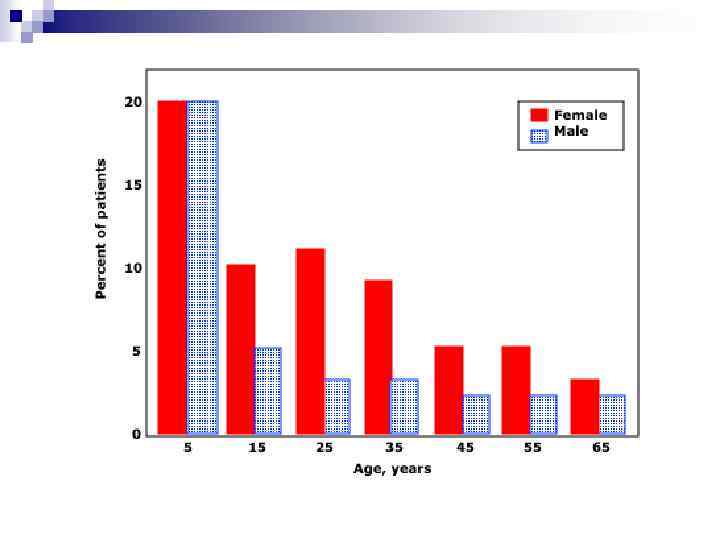
Statistics of ITP n Incidence of 22 million/year in one study n Prevalence greater as often chronic *Segal et al 100 million/year *age-adjusted prevalence 9. 5/100, 000 *1. 9 : 1 females / males
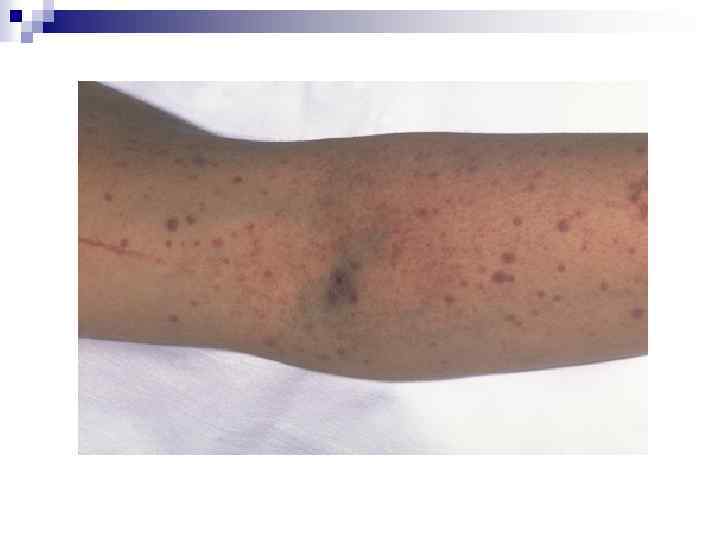
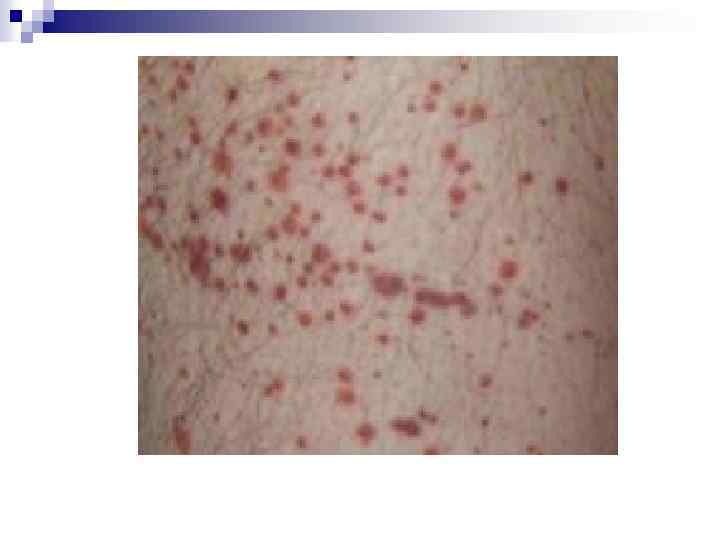
Clinical Manifestations May be acute or insidious onset n Mucocutaneous Bleeding *petechiae, purpura, ecchymosis *epistaxis, gum bleeding *menorrhagia *GI bleed, CNS bleed = RARE n
Etiology of ITP : Children n Often after infection (viral or bacterial) n Theories: *antibody cross-reactivity *H. pylori *bacterial lipopolysaccharides
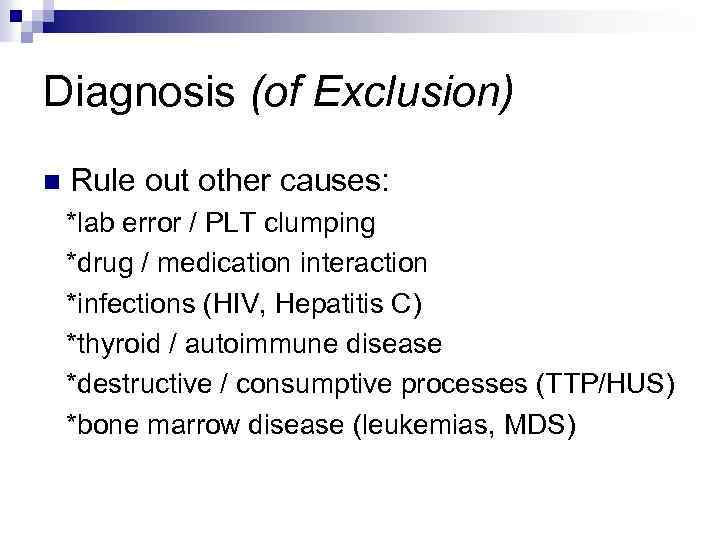
Diagnosis (of Exclusion) n Rule out other causes: *lab error / PLT clumping *drug / medication interaction *infections (HIV, Hepatitis C) *thyroid / autoimmune disease *destructive / consumptive processes (TTP/HUS) *bone marrow disease (leukemias, MDS)
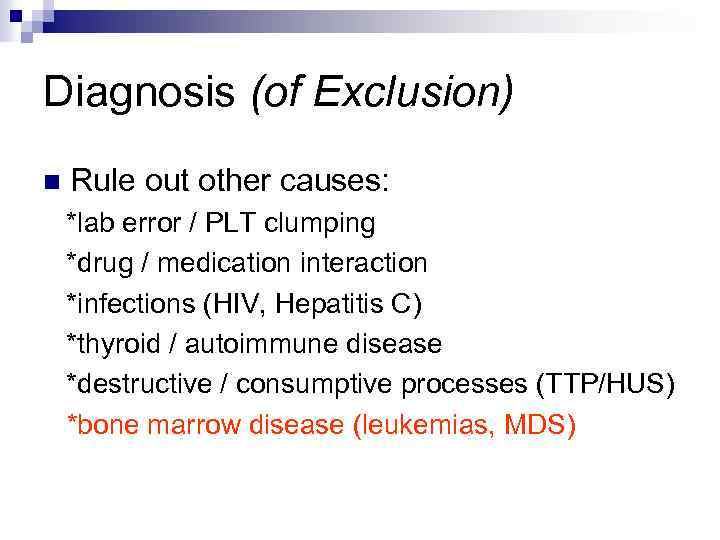
Diagnosis (of Exclusion) n Rule out other causes: *lab error / PLT clumping *drug / medication interaction *infections (HIV, Hepatitis C) *thyroid / autoimmune disease *destructive / consumptive processes (TTP/HUS) *bone marrow disease (leukemias, MDS)
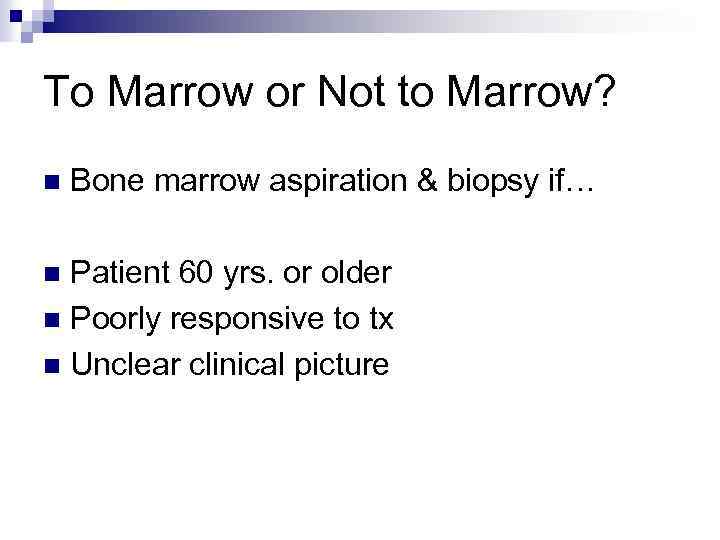
To Marrow or Not to Marrow? n Bone marrow aspiration & biopsy if… Patient 60 yrs. or older n Poorly responsive to tx n Unclear clinical picture n
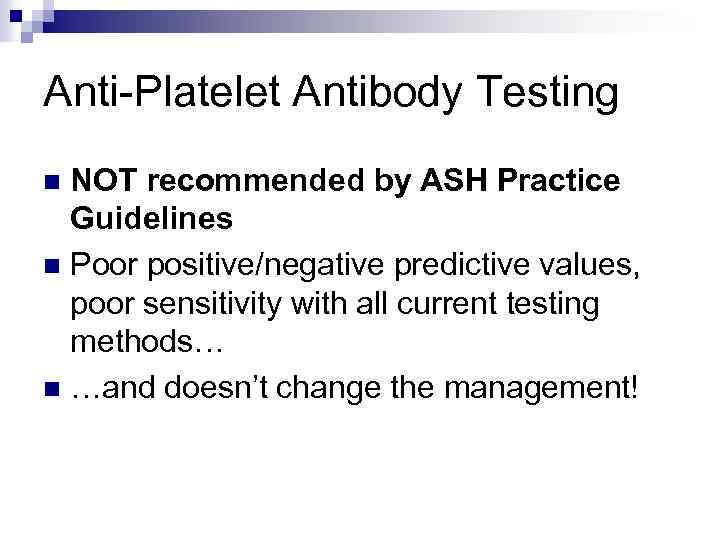
Anti-Platelet Antibody Testing NOT recommended by ASH Practice Guidelines n Poor positive/negative predictive values, poor sensitivity with all current testing methods… n …and doesn’t change the management! n
Management of ITP n Goal = prevention of bleeding, NOT cure!
General Principles of Therapy n Major bleeding rare if PLT > 10, 000 n Goal = get PLT count to safe level to prevent bleeding… n …not to specifically cure the ITP!
“Safe” Platelet Counts n “moderately” t-penic = 30 -50, 000 n Probably safe if asymptomatic n Caution with elderly (CNS bleeds)
When Planning Therapy… n Tailor therapy and decision to treat to the individual patient n Weigh bleeding vs. therapy risks
Initial Therapy n Prednisone 1 mg/kg/day *usually response within 2 weeks n Taper off after PLT response n Duration of use = controversial
Second-Line Therapy n IV Immune Globulin (IVIg) 1 gram/kg/day x 2 days n Win. Rho (anti-D) – if pt is Rh+ 50 -75 mcg/kg/day
Treatment Side-Effects n Steroids *bone density loss *muscle weakness n *GI effects *weight gain IVIG/anti-D *hypersensitivity *headache *renal failure *nausea/vomiting *alloimmune hemolysis
Splenectomy n Usually reserved for treatment failure n Consider risk of bleeding, pt lifestyle n RISKS *surgical procedure *loss of immune function vaccinations
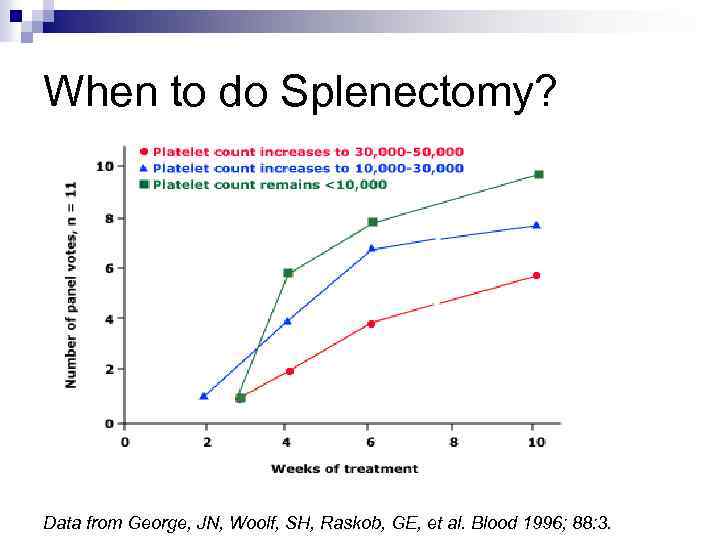
When to do Splenectomy? Data from George, JN, Woolf, SH, Raskob, GE, et al. Blood 1996; 88: 3.
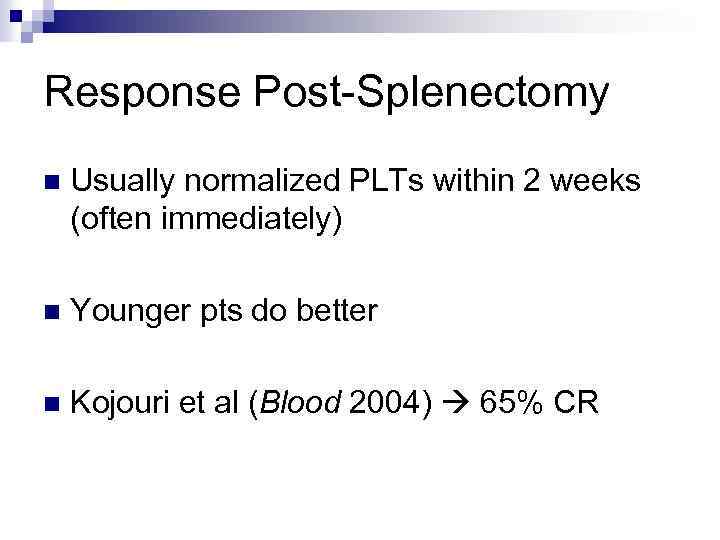
Response Post-Splenectomy n Usually normalized PLTs within 2 weeks (often immediately) n Younger pts do better n Kojouri et al (Blood 2004) 65% CR
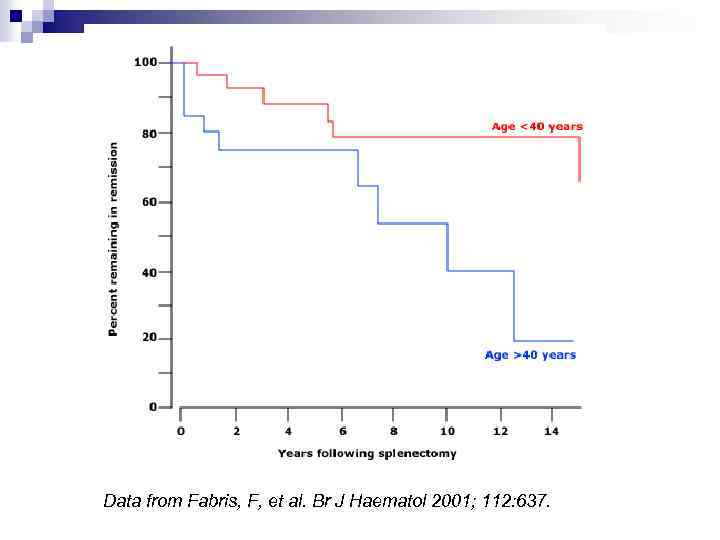
Data from Fabris, F, et al. Br J Haematol 2001; 112: 637.
Chronic Refractory ITP Persistent > 3 months n PLT < 50, 000 n Failure to respond to splenectomy n
When all else fails… Steroids n IVIg / anti-D n Rituximab (anti-CD 20) n Cyclophosphamide n Danazol n Accessory splenectomy n H. pylori eradication n
Wrapping it up… ITP is often a chronic disease in adults n Multiple therapies may be needed over time n Goal = prevention of complications n Therapy needs to be tailored to the individual patient n


n Return to Main
Скачать презентацию Idiopathic Immune Thrombocytopenic Purpura Name Sumit Kumar
ITP Abhinav Sumit kumar 1527.ppt