


 Скачать презентацию Identification of Gifted and Talented Students The Why
9ef1acf3b531da5ae9cae512c54abe82.ppt
- Количество слайдов: 46
 Identification of Gifted and Talented Students: The Why? The What? The How? Joseph S. Renzulli The University of Connecticut Issues and Considerations Related to Conceptions of Giftedness A Multi-criteria Approach Based On The Schoolwide Enrichment Model The National Research Center on the Gifted and Talented www. gifted. uconn. edu
 ? The Why Question
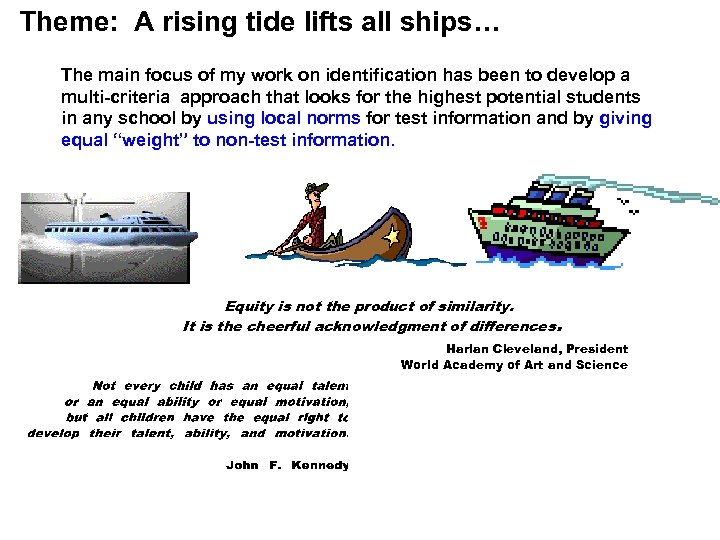 Theme: A rising tide lifts all ships… The main focus of my work on identification has been to develop a multi-criteria approach that looks for the highest potential students in any school by using local norms for test information and by giving equal “weight” to non-test information. Equity is not the product of similarity. It is the cheerful acknowledgment of differences. Harlan Cleveland, President World Academy of Art and Science
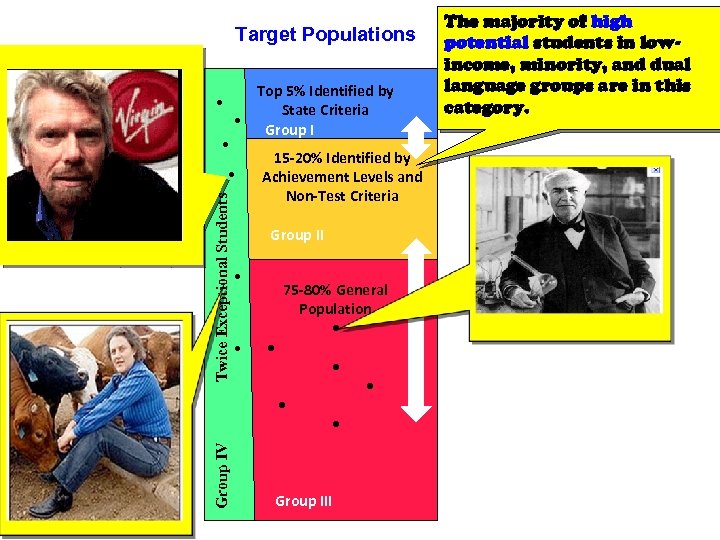 Target Populations • • • Twice Exceptional Students • Top 5% Identified by State Criteria Group I 15 -20% Identified by Achievement Levels and Non-Test Criteria Group II • • • 75 -80% General Population • • Group IV • • Group III • The majority of high potential students in lowincome, minority, and dual language groups are in this category.
 Practically every day someone at the restaurant asks its 66 -year-old owner if she always knew that he was a genius. “when he was growing up, ” Leah replies, I didn’t know what the hell he was. I’m really ashamed, but I didn’t recognize the symptoms of talent. For one thing – and he’ll probably take away my charge account for saying this – he was never a good student. Once, his teacher told me he was “special”- and I wondered how she meant it. “He wasn’t exactly cuddly, ” Leah adds. “He was scary. When he woke up from a nap I shook all over. ” He was a master at creating terror. He practiced on his three sisters. “He used to stand outside their windows at night, howling, “I am the moon!” says Leah. ”They’re still scared of the moon to this day. And he cut off the head of his sister Nancy’s doll and served it to her on a bed of lettuce. ” “His room was such a mess, you could grow mushrooms on the floor. ” “Once his lizard got out of it’s cage, and we found it – living – three years later. He had a parakeet he refused to keep in a cage. It was disgusting. Once a week, I would stick my head in his room, grab his dirty laundry and slam the door. ” If I had known better, I would have listened to his teachers and taken him to a psychiatrist, and there probably never would have been an E. T. ”
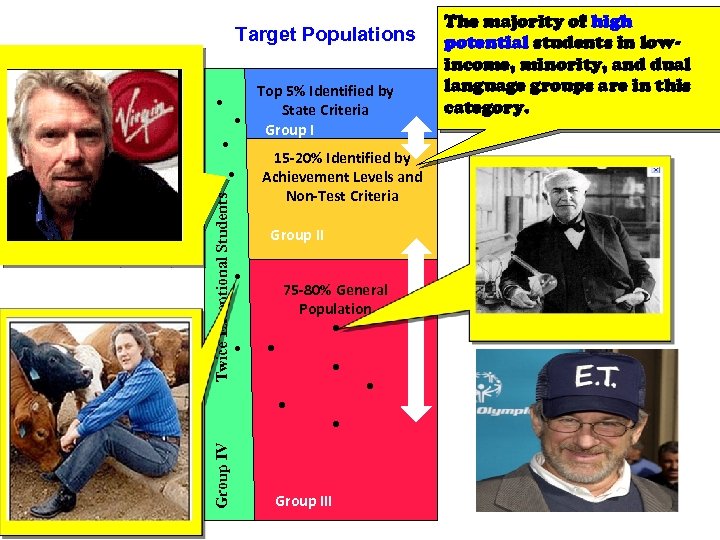 Target Populations • • • Twice Exceptional Students • Top 5% Identified by State Criteria Group I 15 -20% Identified by Achievement Levels and Non-Test Criteria Group II • • • 75 -80% General Population • • Group IV • • Group III • The majority of high potential students in lowincome, minority, and dual language groups are in this category.
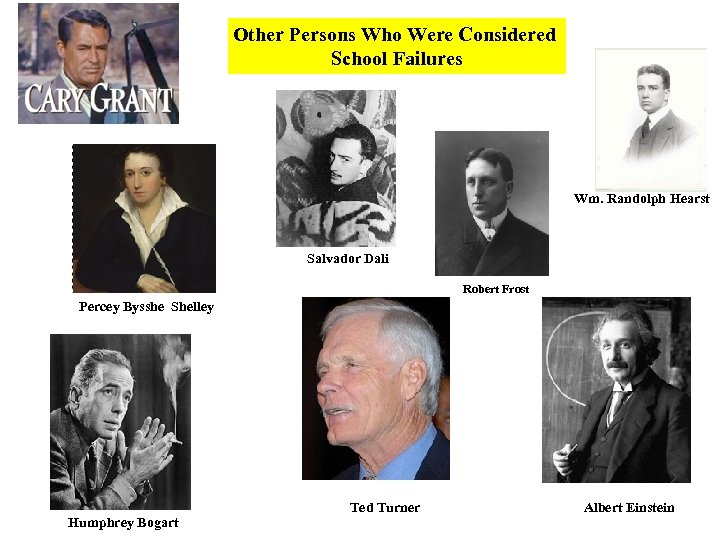 Other Persons Who Were Considered School Failures Wm. Randolph Hearst Salvador Dali Robert Frost Percey Bysshe Shelley Humphrey Bogart Ted Turner Albert Einstein
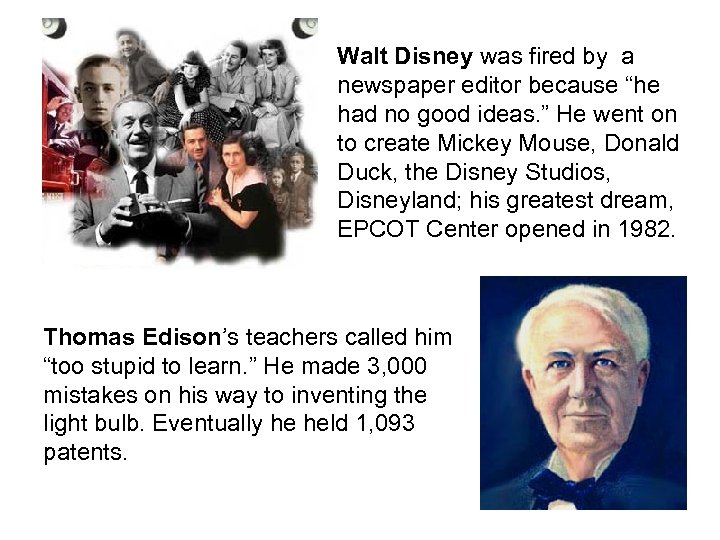 Walt Disney was fired by a newspaper editor because “he had no good ideas. ” He went on to create Mickey Mouse, Donald Duck, the Disney Studios, Disneyland; his greatest dream, EPCOT Center opened in 1982. Thomas Edison’s teachers called him “too stupid to learn. ” He made 3, 000 mistakes on his way to inventing the light bulb. Eventually he held 1, 093 patents.
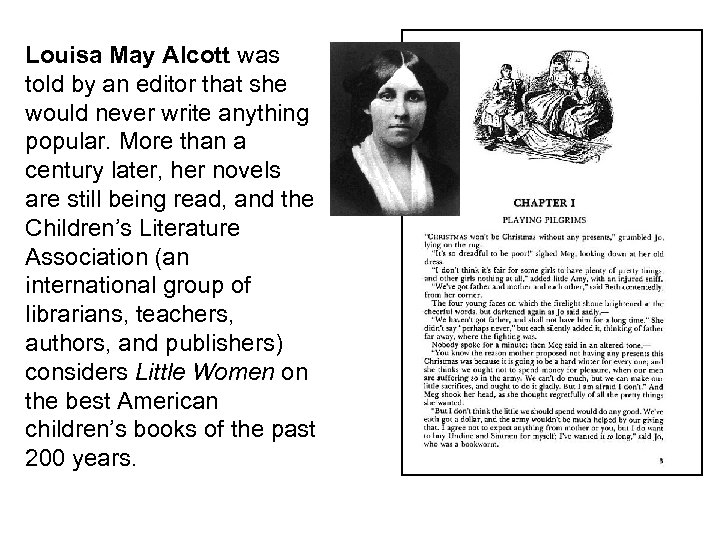 Louisa May Alcott was told by an editor that she would never write anything popular. More than a century later, her novels are still being read, and the Children’s Literature Association (an international group of librarians, teachers, authors, and publishers) considers Little Women on the best American children’s books of the past 200 years.
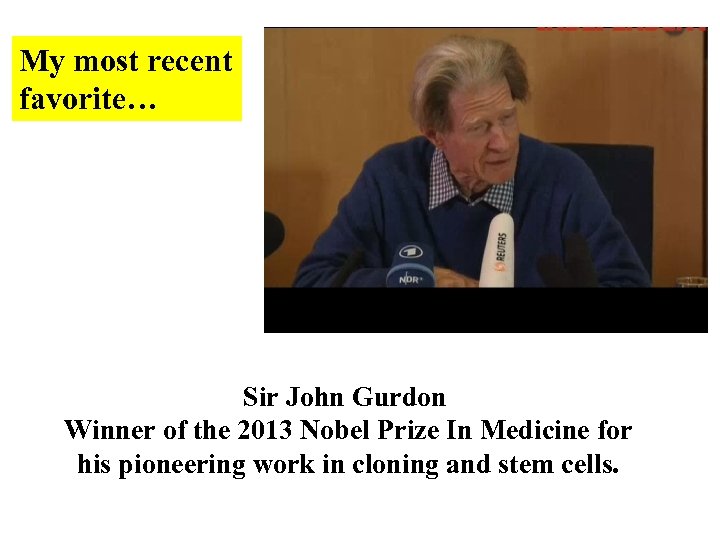 My most recent favorite… Sir John Gurdon Winner of the 2013 Nobel Prize In Medicine for his pioneering work in cloning and stem cells.
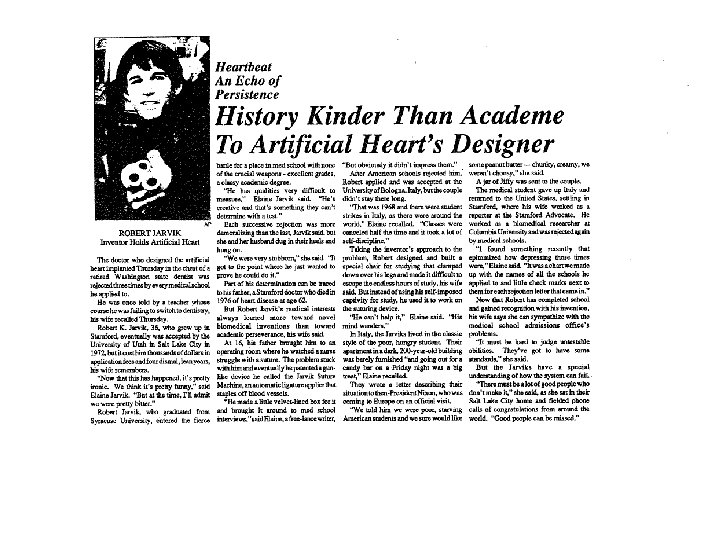
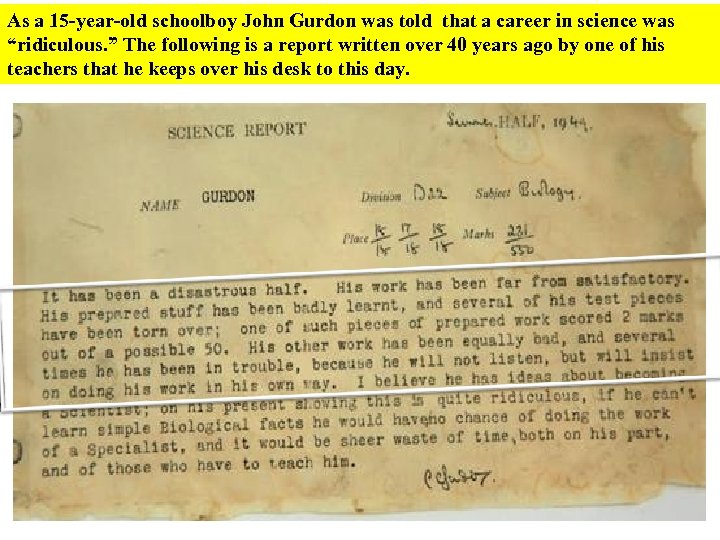 As a 15 -year-old schoolboy John Gurdon was told that a career in science was “ridiculous. ” The following is a report written over 40 years ago by one of his teachers that he keeps over his desk to this day.
 ? The What Question
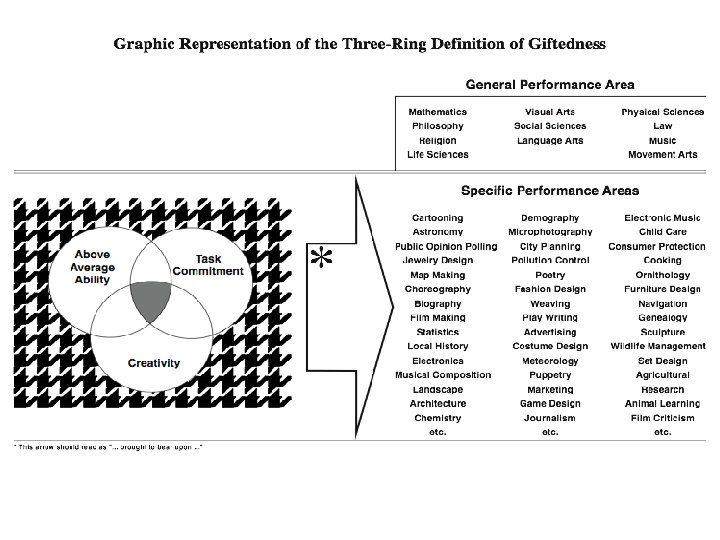
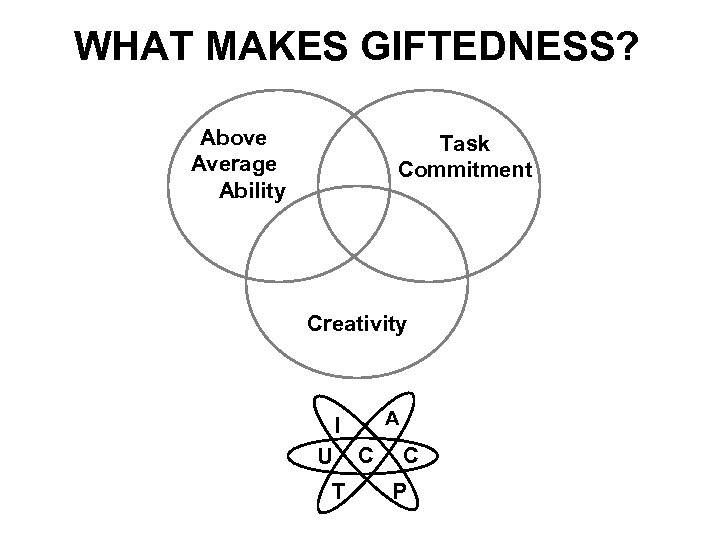 WHAT MAKES GIFTEDNESS? Above Average Ability Task Commitment Creativity A I U T C C P
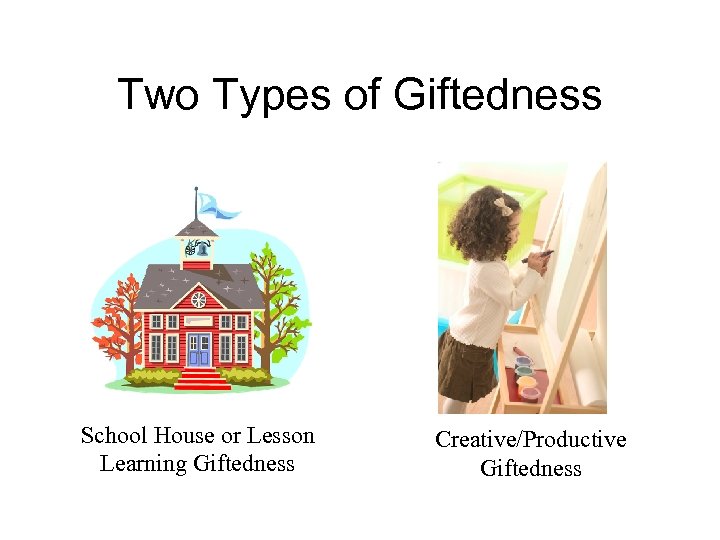 Two Types of Giftedness School House or Lesson Learning Giftedness Creative/Productive Giftedness
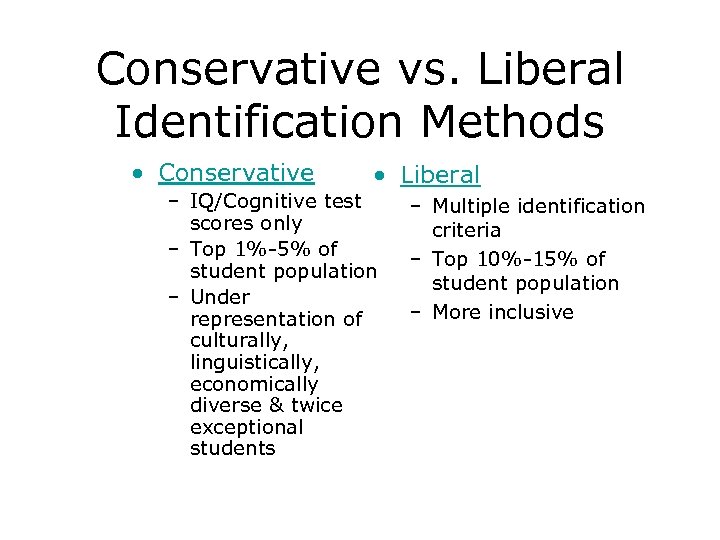 Conservative vs. Liberal Identification Methods • Conservative • Liberal – IQ/Cognitive test scores only – Top 1%-5% of student population – Under representation of culturally, linguistically, economically diverse & twice exceptional students – Multiple identification criteria – Top 10%-15% of student population – More inclusive
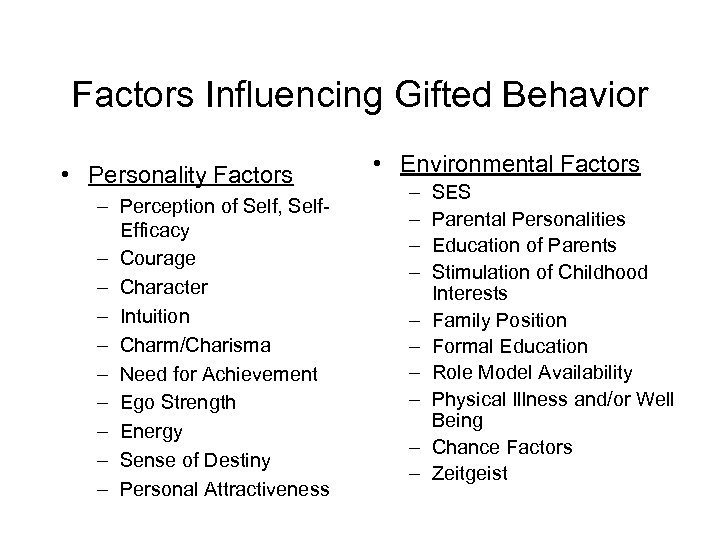 Factors Influencing Gifted Behavior • Personality Factors – Perception of Self, Self. Efficacy – Courage – Character – Intuition – Charm/Charisma – Need for Achievement – Ego Strength – Energy – Sense of Destiny – Personal Attractiveness • Environmental Factors – – – – – SES Parental Personalities Education of Parents Stimulation of Childhood Interests Family Position Formal Education Role Model Availability Physical Illness and/or Well Being Chance Factors Zeitgeist
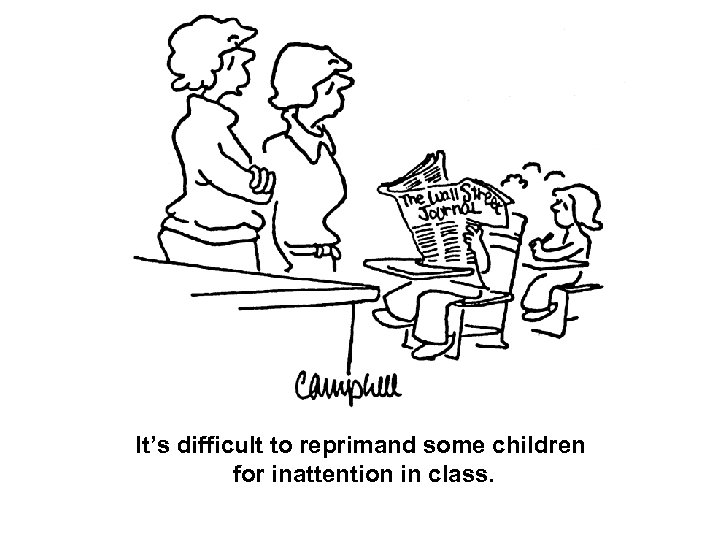 It’s difficult to reprimand some children for inattention in class.
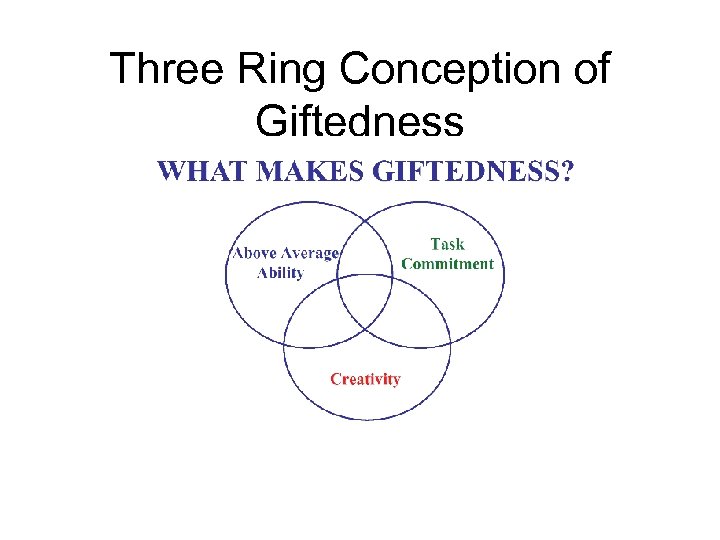 Three Ring Conception of Giftedness
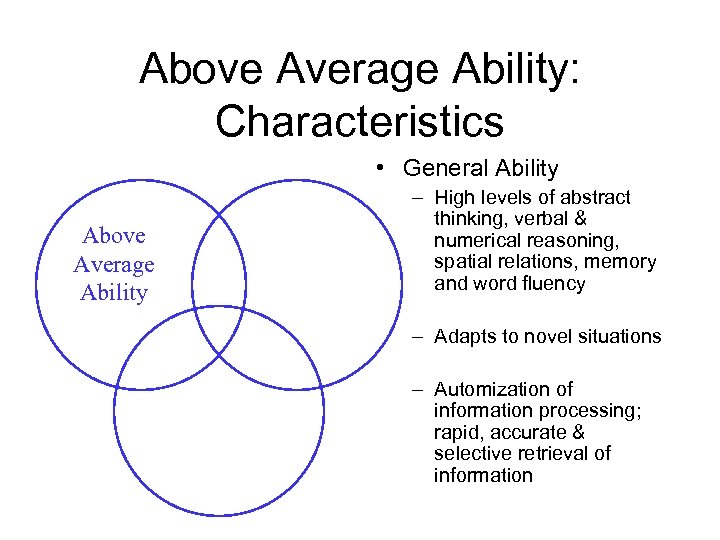 Above Average Ability: Characteristics • General Ability Above Average Ability – High levels of abstract thinking, verbal & numerical reasoning, spatial relations, memory and word fluency – Adapts to novel situations – Automization of information processing; rapid, accurate & selective retrieval of information
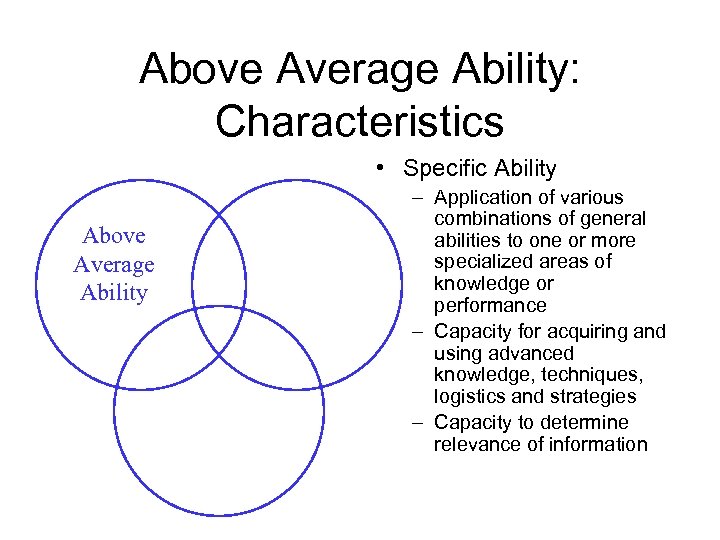 Above Average Ability: Characteristics • Specific Ability Above Average Ability – Application of various combinations of general abilities to one or more specialized areas of knowledge or performance – Capacity for acquiring and using advanced knowledge, techniques, logistics and strategies – Capacity to determine relevance of information
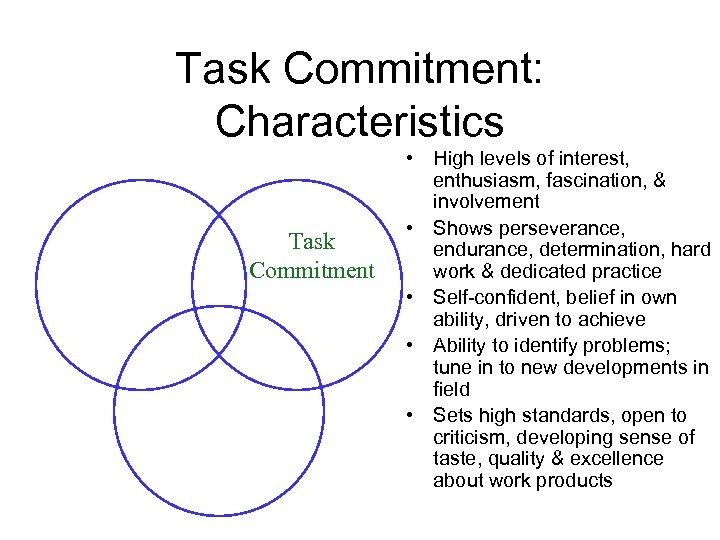 Task Commitment: Characteristics Task Commitment • High levels of interest, enthusiasm, fascination, & involvement • Shows perseverance, endurance, determination, hard work & dedicated practice • Self-confident, belief in own ability, driven to achieve • Ability to identify problems; tune in to new developments in field • Sets high standards, open to criticism, developing sense of taste, quality & excellence about work products
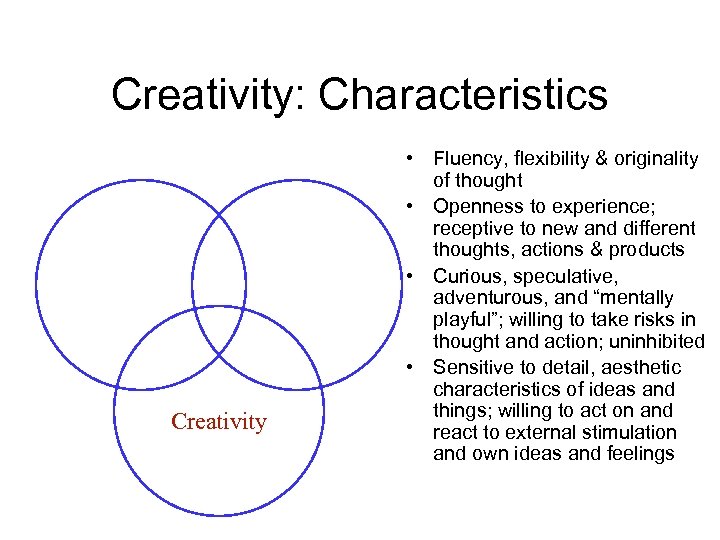 Creativity: Characteristics Creativity • Fluency, flexibility & originality of thought • Openness to experience; receptive to new and different thoughts, actions & products • Curious, speculative, adventurous, and “mentally playful”; willing to take risks in thought and action; uninhibited • Sensitive to detail, aesthetic characteristics of ideas and things; willing to act on and react to external stimulation and own ideas and feelings
 Three Ring Conception of Giftedness Is Evident
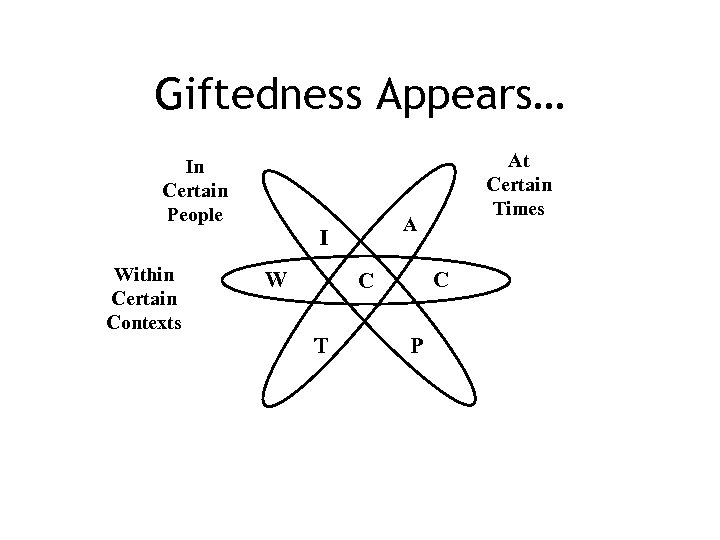 Giftedness Appears… In Certain People A I Within Certain Contexts W C C T At Certain Times P
 Identifying Talent Pool Students • What are we looking for? – Learning Profile? – Personality Traits? – IQ?
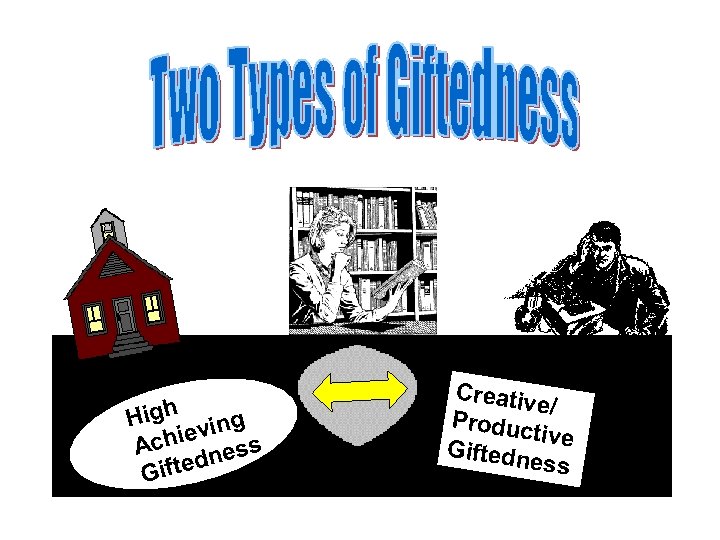 High ving e Achi ness d Gifte Creativ e/ Produc tiv Giftedn e ess
 What is creative productive giftedness and how do we develop it? “By their deeds ye shall know them. ” F. Paul Brandwein
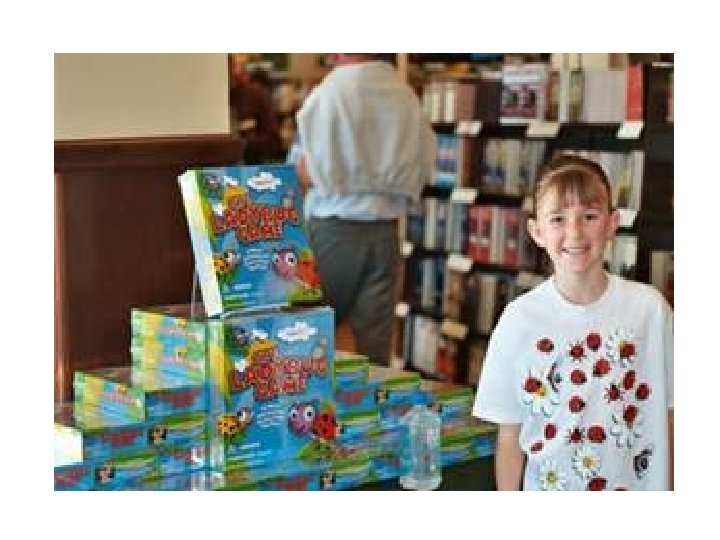
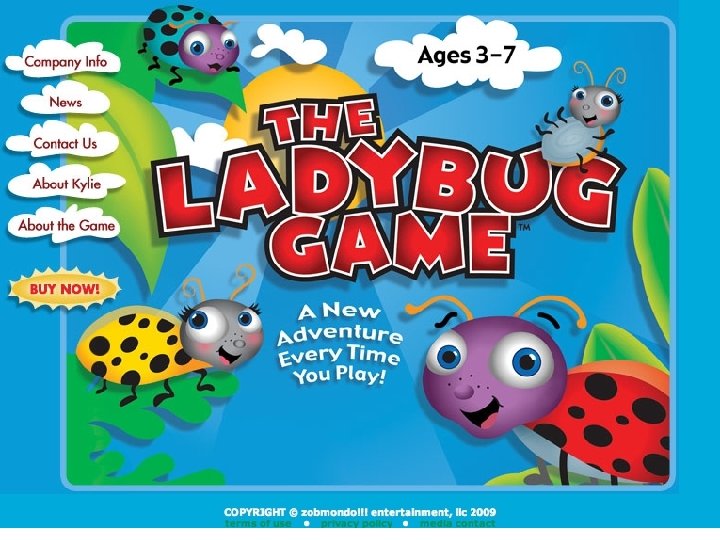
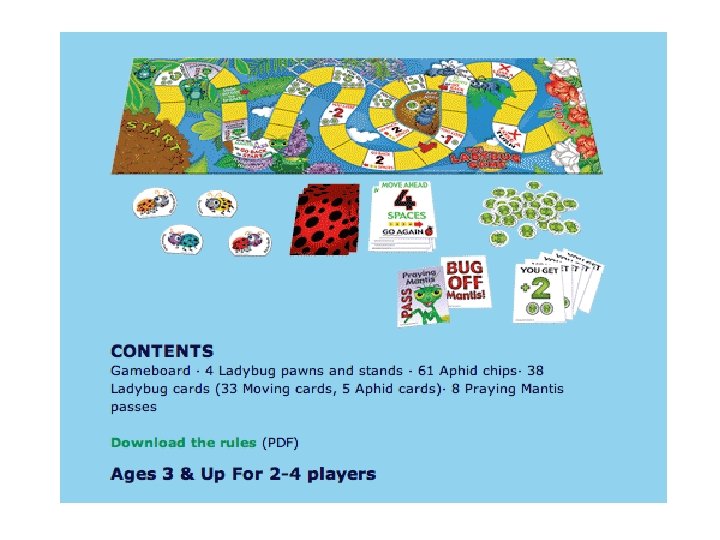
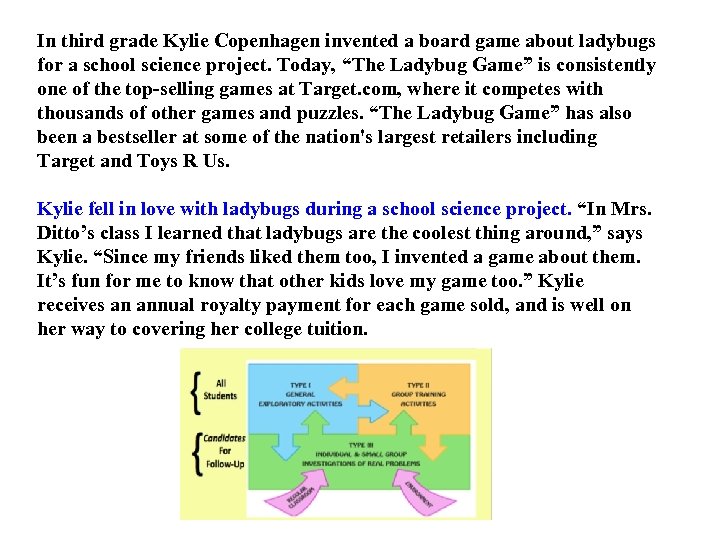 In third grade Kylie Copenhagen invented a board game about ladybugs for a school science project. Today, “The Ladybug Game” is consistently one of the top-selling games at Target. com, where it competes with thousands of other games and puzzles. “The Ladybug Game” has also been a bestseller at some of the nation's largest retailers including Target and Toys R Us. Kylie fell in love with ladybugs during a school science project. “In Mrs. Ditto’s class I learned that ladybugs are the coolest thing around, ” says Kylie. “Since my friends liked them too, I invented a game about them. It’s fun for me to know that other kids love my game too. ” Kylie receives an annual royalty payment for each game sold, and is well on her way to covering her college tuition.
 Kylie Copenhagen https: //www. youtube. com/watch? v=9 ezv. J 3 Lmtn. U
 ? The How Question
 A Multicriteria Approach Based On The Schoolwide Enrichment Model
![Non-Test Criteria Test Score Criteria [Approximately 50% of The Talent Pool] Test Score Nominations](https://present5.com/presentation/9ef1acf3b531da5ae9cae512c54abe82/image-37.jpg "Non-Test Criteria Test Score Criteria [Approximately 50% of The Talent Pool] Test Score Nominations") Non-Test Criteria Test Score Criteria [Approximately 50% of The Talent Pool] Test Score Nominations [Automatic, and Based on Local Norms] Step 1 92 nd %ile Teacher Nominations Step 2 Step 3 [Automatic Except in Cases of Teachers Who Are Over or Under Nominators] Alternative Pathways Step 4 Special Nominations Step 5 Case Study Notification of Parents Step 6 Action Information Nominations Renzulli Identification System Total Talent Pool Consists of Approximately 15% of the General Population 99 th %ile
Non-Test Criteria Test Score Criteria [Approximately 50% of The Talent Pool] Test Score Nominations [Automatic, and Based on Local Norms] Step 1 92 nd %ile Teacher Nominations Step 2 Step 3 [Automatic Except in Cases of Teachers Who Are Over or Under Nominators] Alternative Pathways Step 4 Special Nominations Step 5 Case Study Notification of Parents Step 6 Action Information Nominations Renzulli Identification System Total Talent Pool Consists of Approximately 15% of the General Population 99 th %ile
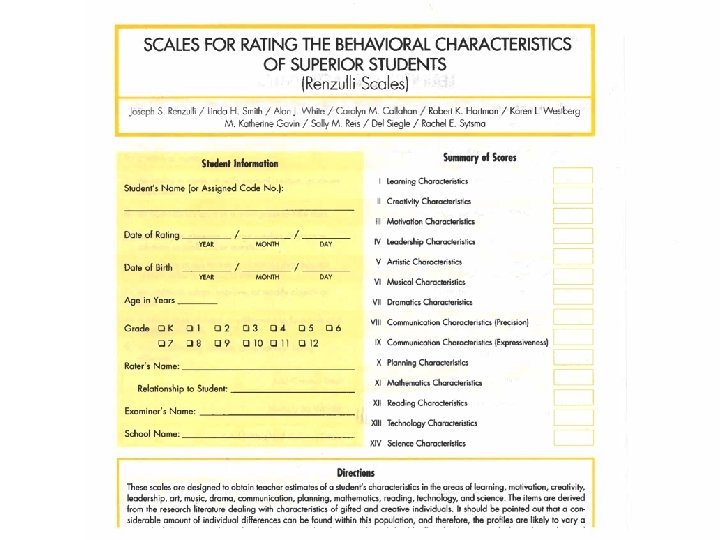
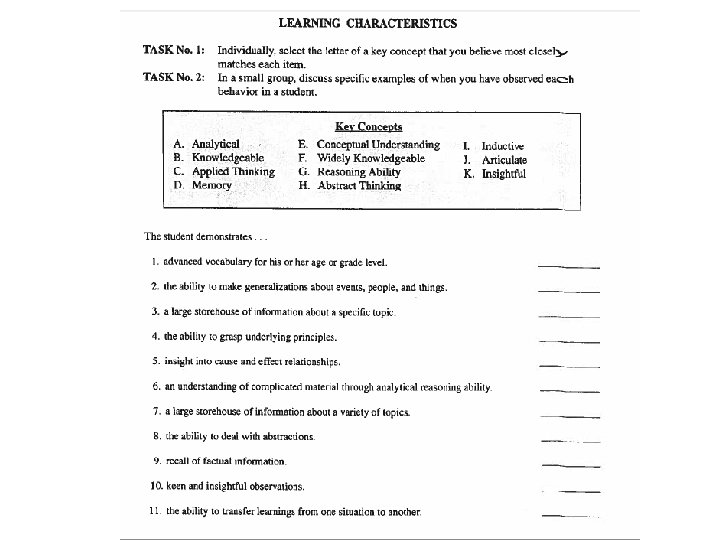
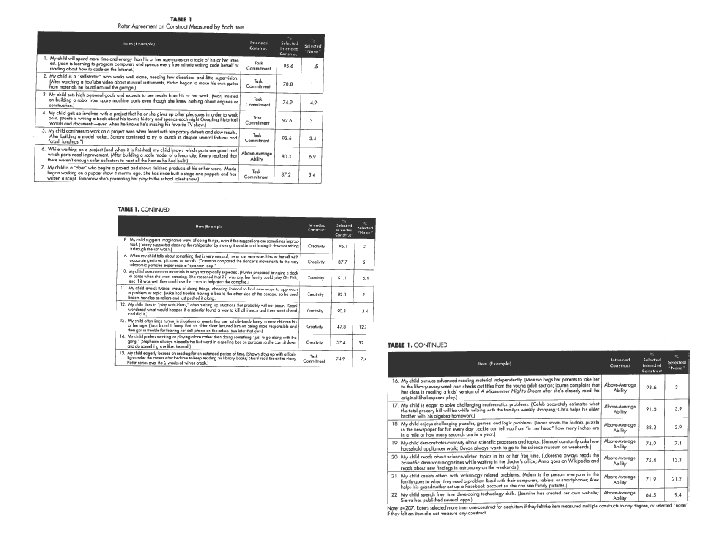
 ? Additional Sources of Valuable Information That Can Be Used To Identify Strengths And Talents That Can Be Developed
 Summary ? Nine guidelines to consider when building any kind of identification system
 1. There is no perfect identification system! 2. There should be a direct relationship between identification criteria and the services being provided to develop students’ gifts and talents (the Golden Rule). 3. The system should not determine whether or not a student is “gifted” or “not gifted!” Rather, it should determine which students and in what ways he or she will benefit the any supplementary services you can provide to develop their academic strengths and creative talents.
 4. It is essential to understand the difference between high performance and high potential; and that high potential students will sometimes require different kinds of identification considerations and programming options than high performance students. 5. Local norms (by grade level and similarity of learning opportunities and background characteristics) rather than national or state norms should be used for all instruments in the identification process.
 6. Target specific behaviors and potentials rather than using generic labels (e. g. , Moderately Gifted, Highly Gifted, Severely and Profoundly Gifted!) 7. Label the services -- not the students! 8. The program should have “Visibility of Effect” that reflects a relationship between the identification criteria you have used and the special services provided to individual students.
 ? Your Questions