 Скачать презентацию Ideal City Urbino Gallery Italy Urban Future 1
d45a155297aaa817c093f50ee32eea60.ppt
- Количество слайдов: 24



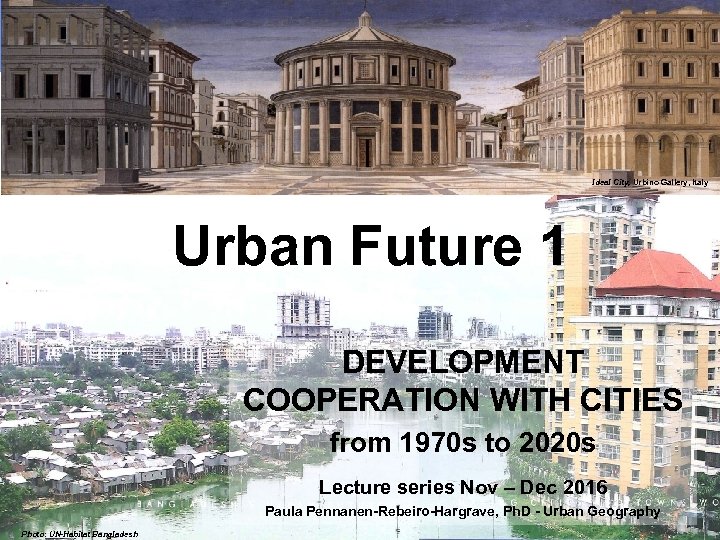
Ideal City, Urbino Gallery, Italy Urban Future 1 DEVELOPMENT COOPERATION WITH CITIES from 1970 s to 2020 s Lecture series Nov – Dec 2016 Paula Pennanen-Rebeiro-Hargrave, Ph. D - Urban Geography Photo: UN-Habitat Bangladesh
The focus Global urbanisation discourse analysis: - How is world’s urbanisation managed towards more sustainable cities (and the planet)? How has this evolved? - Who are the key actors in the scene? - What are the targets and means? What kind of processes define these? - What is the current picture of urbanisation? The global context in a nutshell Cities today occupy approximately only 0. 5% of the total land…however: 2
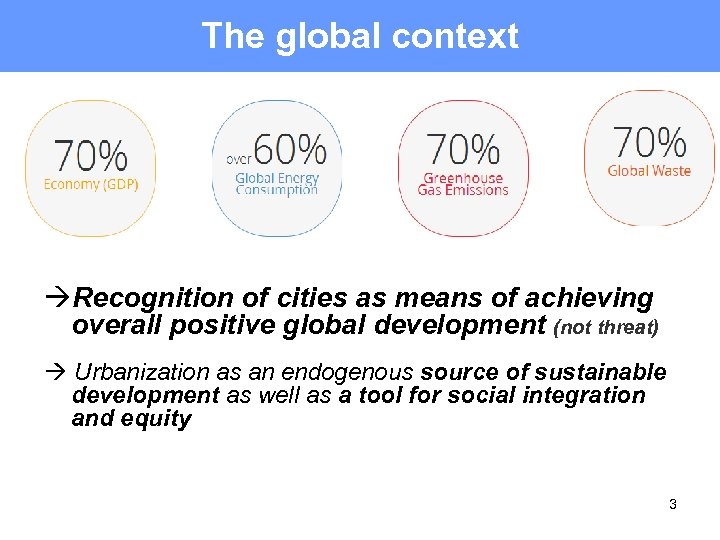
The global context Recognition of cities as means of achieving overall positive global development (not threat) Urbanization as an endogenous source of sustainable development as well as a tool for social integration and equity 3
The Urban Millennium - Globally, more people live in urban than in rural areas now: 54 % of the world’s population resided in urban areas in 2014…and increasing - The number of urban residents growing by nearly 70 million every year - Density, proximity and economies of urbanization and agglomeration constitute the transformative power of 4 urbanization…
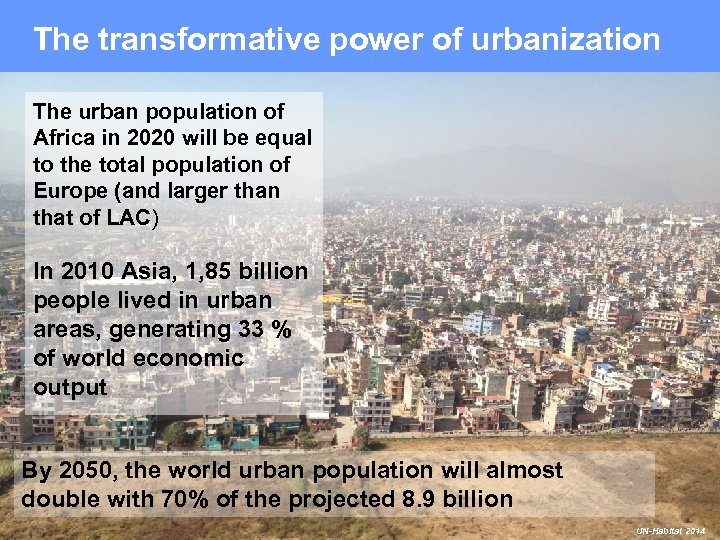
The transformative power of urbanization The urban population of Africa in 2020 will be equal to the total population of Europe (and larger than that of LAC) In 2010 Asia, 1, 85 billion people lived in urban areas, generating 33 % of world economic output By 2050, the world urban population will almost double with 70% of the projected 8. 9 billion 5 UN-Habitat 2014
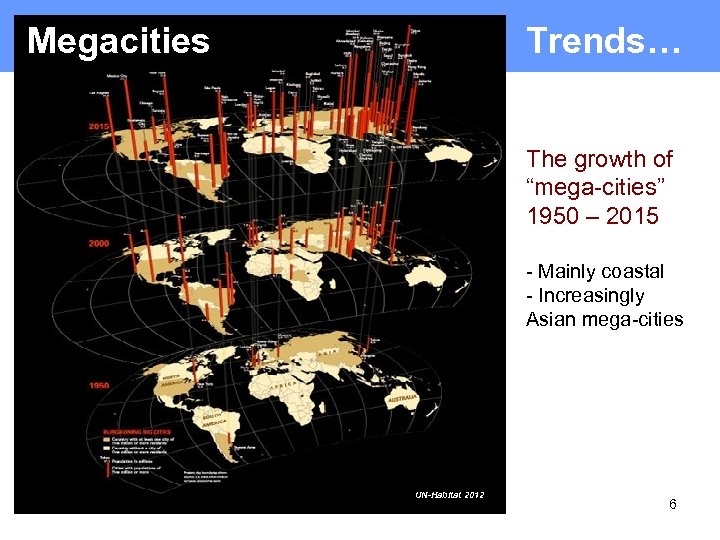
Megacities Trends… The growth of “mega-cities” 1950 – 2015 - Mainly coastal - Increasingly Asian mega-cities UN-Habitat 2012 6
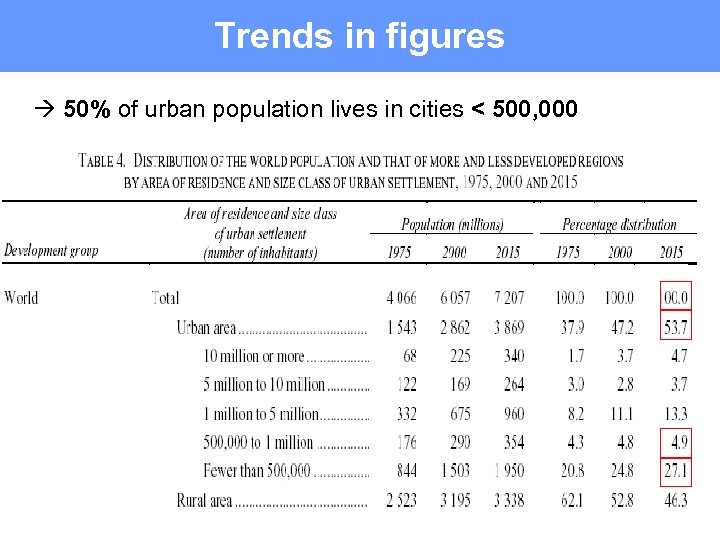
Trends in figures 50% of urban population lives in cities < 500, 000 7
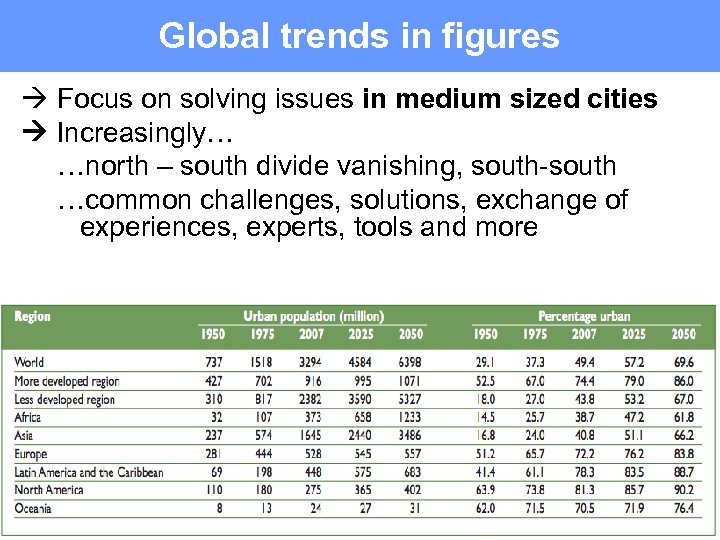
Global trends in figures Focus on solving issues in medium sized cities Increasingly… …north – south divide vanishing, south-south …common challenges, solutions, exchange of experiences, experts, tools and more 8
The new urban paradigm 2016 The debate during 2015 -2016 called for - a review of the global urban agenda and - Revision of urban paradigm to address the persistence of an unsustainable model of urbanisation … taking into consideration - The need to reduce inequalities, marginalization and slums - The need to oppose urban sprawl and the unnecessary loss of agricultural land - The need to reduce urban vulnerability and risks to disaster and climate change - The need to promote local economic development based on safeguarded natural and cultural assets (‘green growth’) - […as well as local priorities!] 9 UN-Habitat 2014
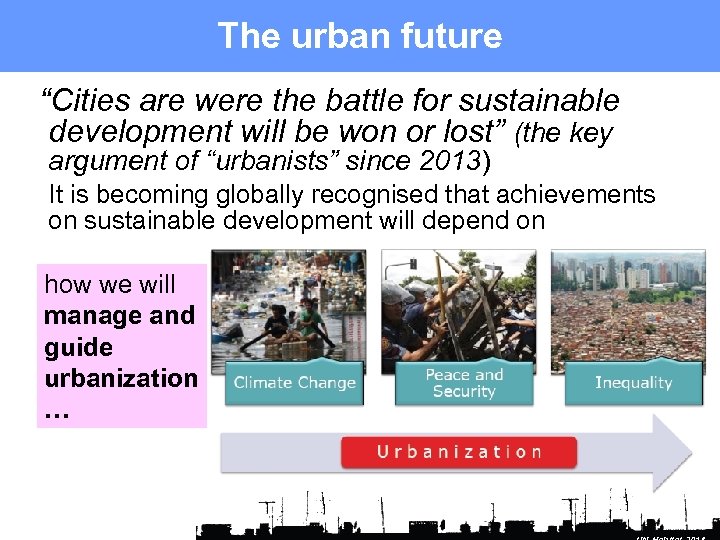
The urban future “Cities are were the battle for sustainable development will be won or lost” (the key argument of “urbanists” since 2013) It is becoming globally recognised that achievements on sustainable development will depend on how we will manage and guide urbanization … 10
Why this lecture, why now? Realisation of the Urban Millennium: …SDGs 2015 -2030 in Oct 2015 specific target on cities …Climate compact in Dec 2015 cities as major stakeholders … 3 rd UN conference on Housing and Sustainable Urban Development (“Habitat III”) in 17 -20 Oct 2016 signed the final New Urban Agenda Defining conventions on the new paradigm in urban development …. towards social, economic and environmental sustainability 11

12
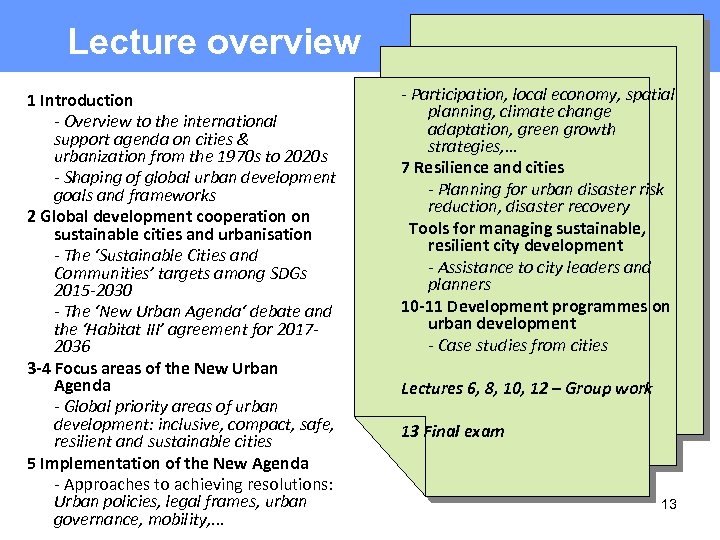
Lecture overview 1 Introduction - Overview to the international support agenda on cities & urbanization from the 1970 s to 2020 s - Shaping of global urban development goals and frameworks 2 Global development cooperation on sustainable cities and urbanisation - The ‘Sustainable Cities and Communities’ targets among SDGs 2015 -2030 - The ‘New Urban Agenda‘ debate and the ‘Habitat III’ agreement for 20172036 3 -4 Focus areas of the New Urban Agenda - Global priority areas of urban development: inclusive, compact, safe, resilient and sustainable cities 5 Implementation of the New Agenda - Approaches to achieving resolutions: Urban policies, legal frames, urban governance, mobility, . . . - Participation, local economy, spatial planning, climate change adaptation, green growth strategies, … 7 Resilience and cities - Planning for urban disaster risk reduction, disaster recovery Tools for managing sustainable, resilient city development - Assistance to city leaders and planners 10 -11 Development programmes on urban development - Case studies from cities Lectures 6, 8, 10, 12 – Group work 13 Final exam 13
Course credits & assessment For 2 study points: • participation in minimum 10 out of 13 course meetings (no lecture on 6 Dec) • reading materials provided in ‘Matskut’ prior to the meetings • brief written work (0. 5 -1 page) prepared individually for discussion/group work sessions on selected themes (on Thu 17/11, 24/11, 1/12, 8/12, tentatively) • Final course exam on Thu 15 Dec • exam marks by Dec 20 • queries, suggestions? Please ask/write 14

15
education University of Helsinki MSc in Regional Planning / Geography, 1996 Minors • Political Science/ International Relations • Development Studies • Urban Planning King’s College, Univ. of London: Ph. D in Urban Studies, 2003 Thesis: Post-industrial urban regeneration policies & projects) (in Liverpool Univ. ) 16
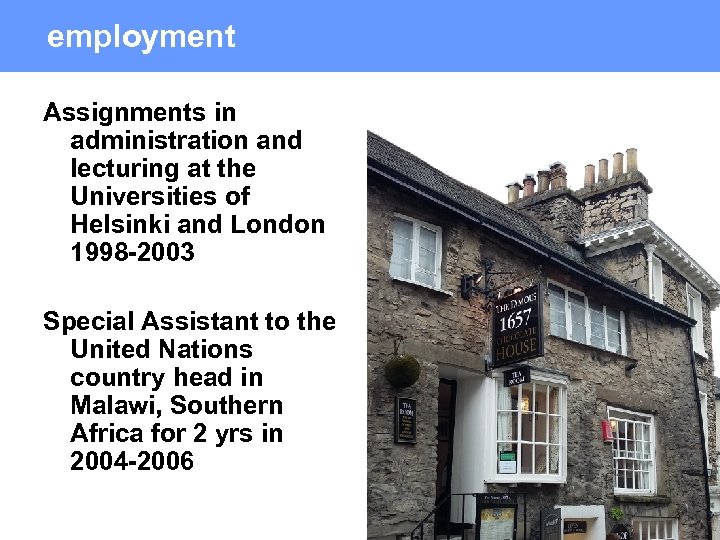
employment Assignments in administration and lecturing at the Universities of Helsinki and London 1998 -2003 Special Assistant to the United Nations country head in Malawi, Southern Africa for 2 yrs in 2004 -2006 17
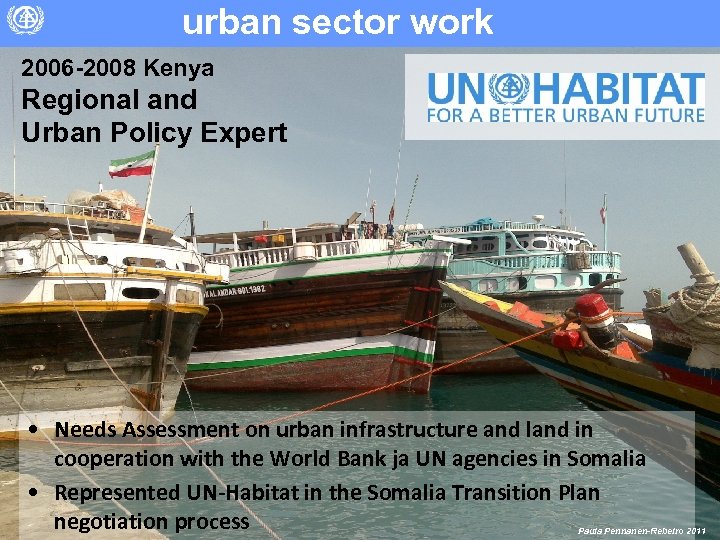
urban sector work 2006 -2008 Kenya Regional and Urban Policy Expert • Needs Assessment on urban infrastructure and land in cooperation with the World Bank ja UN agencies in Somalia • Represented UN-Habitat in the Somalia Transition Plan negotiation process 18 Paula Pennanen-Rebeiro 2011
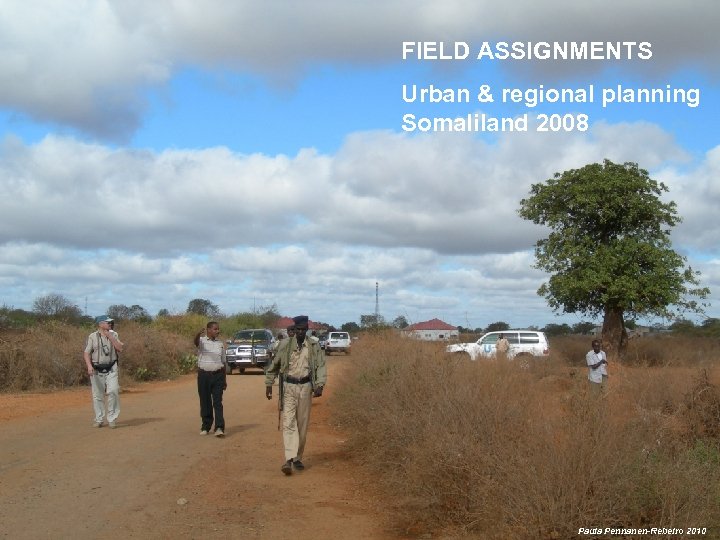
FIELD ASSIGNMENTS Urban & regional planning Somaliland 2008 19 Paula Pennanen-Rebeiro 2010
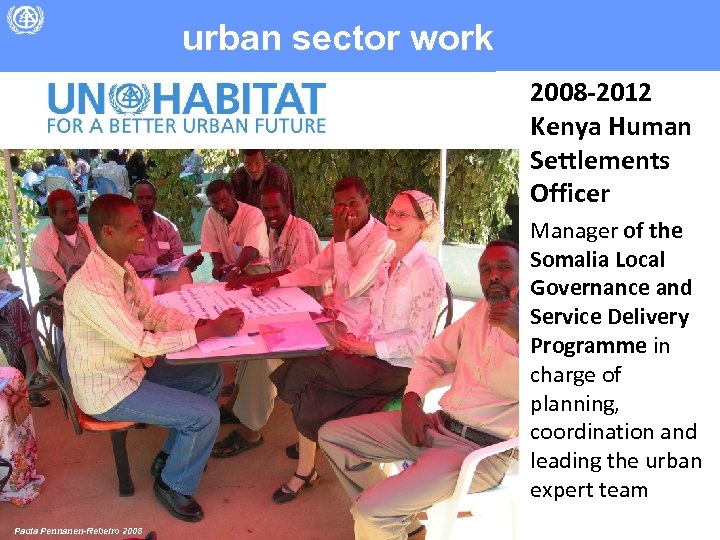
urban sector work 2008 -2012 Kenya Human Settlements Officer Manager of the Somalia Local Governance and Service Delivery Programme in charge of planning, coordination and leading the urban expert team 20 Paula Pennanen-Rebeiro 2008
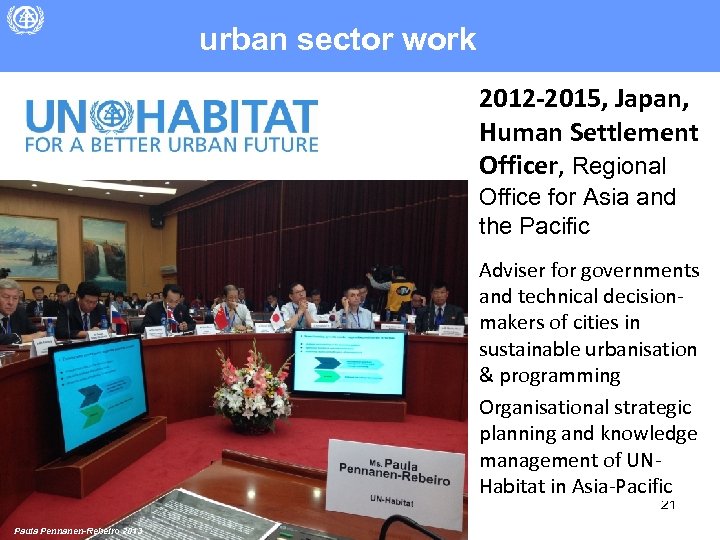
urban sector work 2012 -2015, Japan, Human Settlement Officer, Regional Office for Asia and the Pacific • Adviser for governments and technical decisionmakers of cities in sustainable urbanisation & programming • Organisational strategic planning and knowledge management of UNHabitat in Asia-Pacific 21 Paula Pennanen-Rebeiro 2013
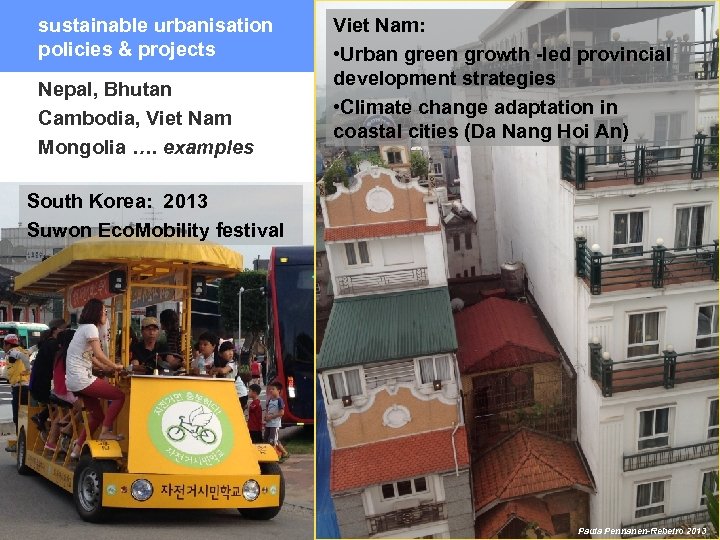
sustainable urbanisation policies & projects Nepal, Bhutan Cambodia, Viet Nam Mongolia …. examples Viet Nam: • Urban green growth -led provincial development strategies • Climate change adaptation in coastal cities (Da Nang Hoi An) South Korea: 2013 Suwon Eco. Mobility festival 22 Paula Pennanen-Rebeiro 2013
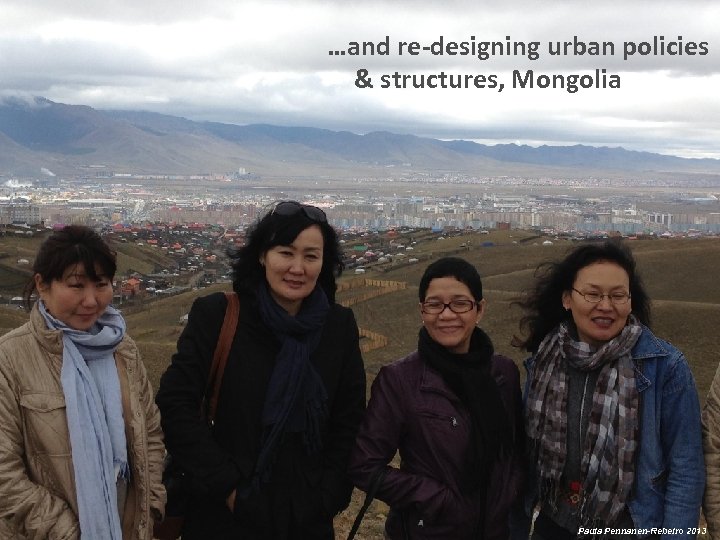
…and re-designing urban policies & structures, Mongolia 23 Paula Pennanen-Rebeiro 2013

24
Скачать презентацию Ideal City Urbino Gallery Italy Urban Future 1
d45a155297aaa817c093f50ee32eea60.ppt