


ICT and Human Health Prepared by: 1. Tanashev M. 2. Surauov A. 3. Ulykpanov D. 4. Zhamalbek N. 5. Beisen S. Verified by: Nurmukhanbetova G. A.
Introduction • ICT consists of IT as well as telecommunication, broadcast media, all types of audio and video processing and transmission and network based control and monitoring functions. • Human health is the general condition of a person's mind, body and spirit, usually meaning to be free from illness, injury or pain. • Our aim is show to you relationship between these two terms.
World meetings about health Rio-de-Janeiro World Summit and Agenda 21 Action items under Agenda 21 must address the primary health needs of the world's population, since they are integral to the achievement of the goals of sustainable development and primary environmental care. Millennium declaration -Reduce child mortality -Improve Maternal Health -Combat HIV / AIDS, malaria and other diseases
World meetings about health JWS THE Environmental Health sub-directorate is headed by Peter Manganye and is responsible for all municipal health services as defined in the National Health Act, No 61 of 2003. These include complaints investigation, compliance monitoring, law enforcement activities and health promotion and training. WSIS The World Summit on the Information Society’s Action Line C 7 on e-Health calls for collaborative efforts of governments, the private sector and international organizations in improving health care and health information systems through the use of ICTs. It further calls for promoting medical training, education and research while respecting and protecting citizens’ right to privacy. The session reviewed progress and challenges. Speakers and participants discussed the range and scope of ICTs for health, progress made in countries, and innovations in the field. Key challenges and barriers, and approaches to solving them were also covered.
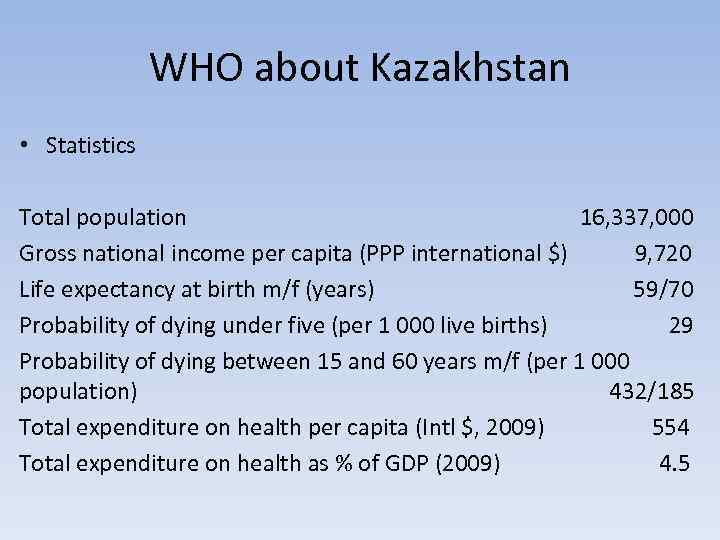
WHO about Kazakhstan • Statistics Total population 16, 337, 000 Gross national income per capita (PPP international $) 9, 720 Life expectancy at birth m/f (years) 59/70 Probability of dying under five (per 1 000 live births) 29 Probability of dying between 15 and 60 years m/f (per 1 000 population) 432/185 Total expenditure on health per capita (Intl $, 2009) 554 Total expenditure on health as % of GDP (2009) 4. 5
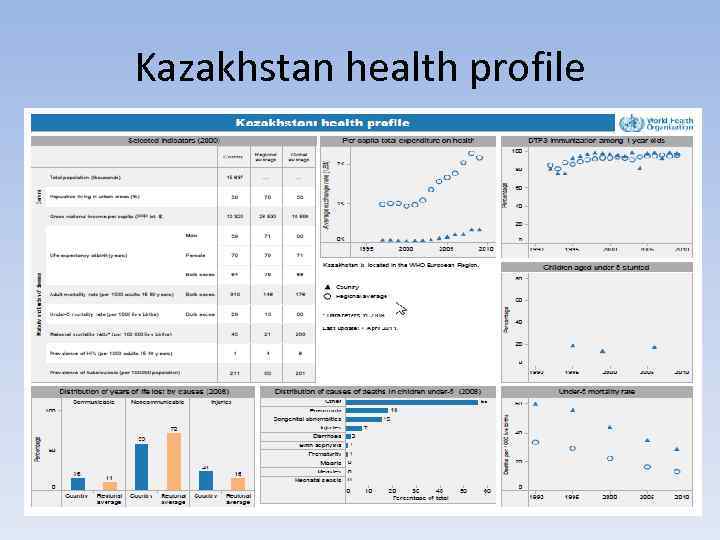
Kazakhstan health profile
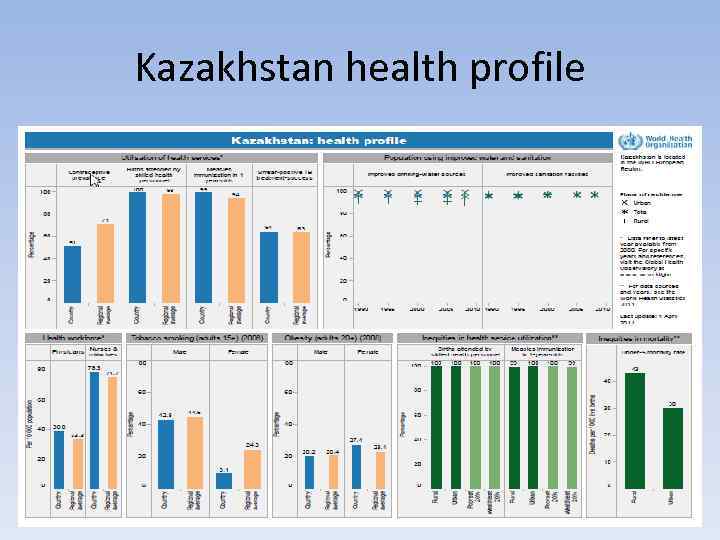
Kazakhstan health profile
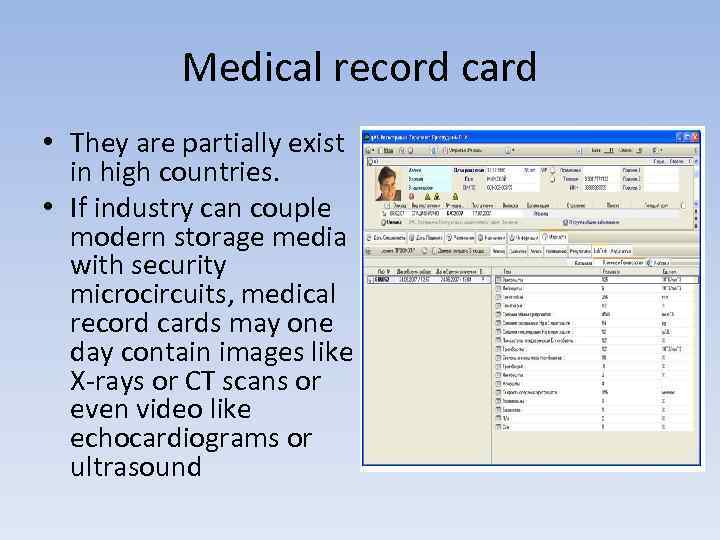
Medical record card • They are partially exist in high countries. • If industry can couple modern storage media with security microcircuits, medical record cards may one day contain images like X-rays or CT scans or even video like echocardiograms or ultrasound
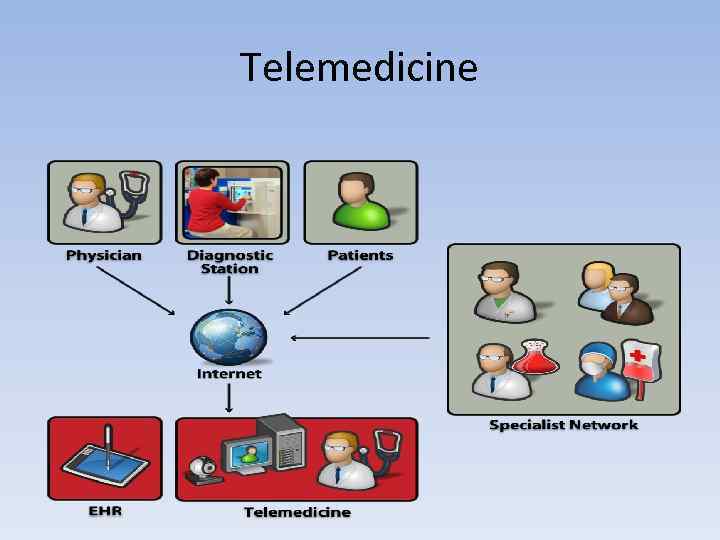
Telemedicine • Telemedicine is the provision of medical care at a distance through ICT, to promote global health surveillance and the provision of medical care. The object of telemedicine consultations can be a clinical case of an individual patient or the individual clinical examination. The system enables entry and accumulation of information about the patient's condition required for the full tele-specialist in a particular area of medicine. With the use of new IT, due to clinical telemedicine program any person can get quality medical care in order to improve their health, regardless of residence.
Telemedicine
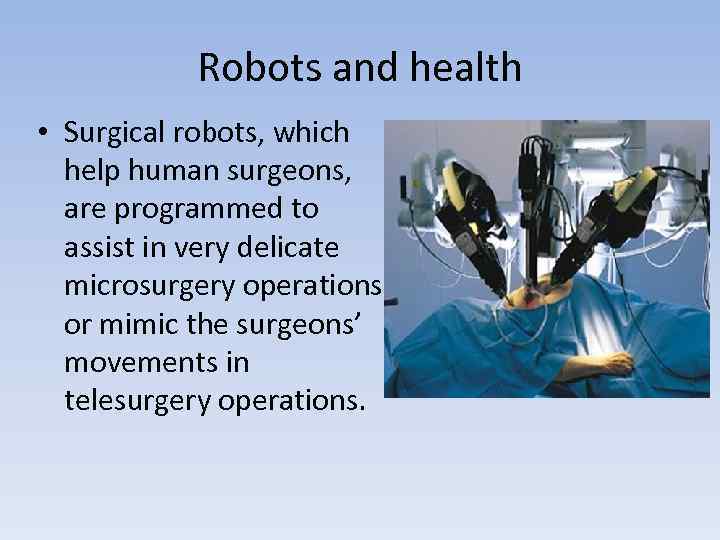
Robots and health • Surgical robots, which help human surgeons, are programmed to assist in very delicate microsurgery operations or mimic the surgeons’ movements in telesurgery operations.
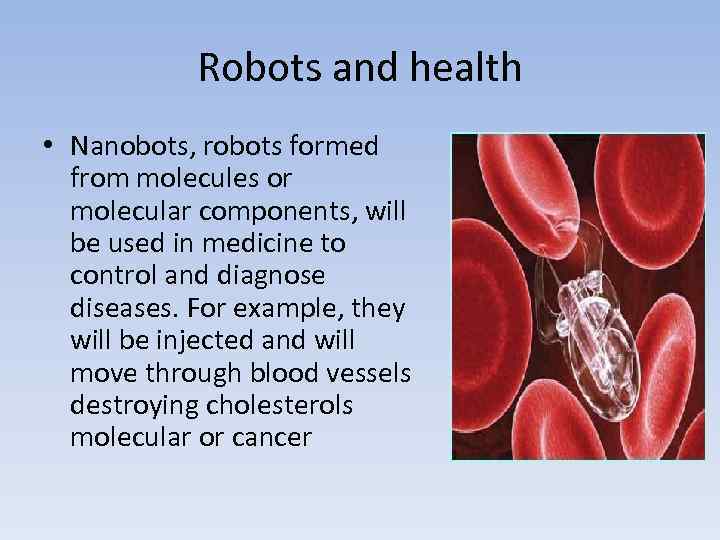
Robots and health • Nanobots, robots formed from molecules or molecular components, will be used in medicine to control and diagnose diseases. For example, they will be injected and will move through blood vessels destroying cholesterols molecular or cancer
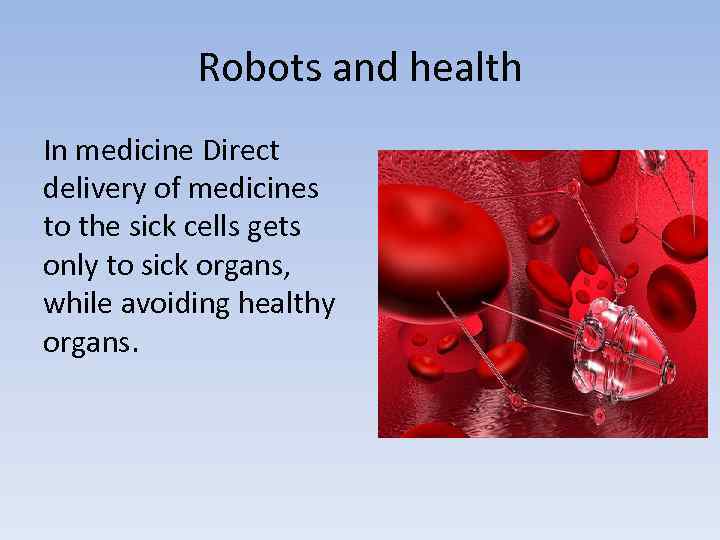
Robots and health In medicine Direct delivery of medicines to the sick cells gets only to sick organs, while avoiding healthy organs.
Challenges • • • Lack of equipment Low level of service Child mortality Maternal Health HIV / AIDS, malaria and other diseases
Solutions • Increase availability of primary health care • Increase the degree examinations of pregnant with qualified specialists • Reduce by two thirds the mortality rate among children under 5 years • Reduce by three quarters the maternal mortality ratio • Stop the spread of HIV / AIDS • Stop the spread of malaria and other major diseases, and begun to reverse the incidence • Involvement of IT companies in the health sphere
Recommendations to government • Providing medications in patients with rare diseases. • Increase the budget in health sphere until 10% • Implementation of electronic health records and distance recording for doctors • A new level of accounting provided medical services to the public; • Reducing health care costs; • Automation of the structures of compulsory health insurance; • Creation of a unified database of health.
Social point • We are dealing with a billion visits to hospitals each year. For each visit to perform operations associated with the fixation, the mapping of the visit. That is, chores on paper, which is then difficult to handle. The average head of the department from 5 to 15% of their time spent on processing various kinds of documents, looking up from the doctor's time. Computerization of Health will perform several tasks at different levels - for government, medical institutions and ordinary people.
Economic point • Spending on information technology in healthcare is shooting up like a teenager in a growth spurt. According to Marc Holland, program director at IDC’s Health Industry Insights, almost $22 billion will be spent in the United States alone on healthcare IT in the private sector in 2008, and the compound annual growth rate (CAGR) for that spending is more than seven percent.
Conclusion Information and Communications Technologies have a growing importance in public health and are becoming more widely used for communication and the exchange of information between public health professionals. There are numerous benefits to professionals from using ICTs in their work, including the ability to manage information and network with other professionals more effectively. A huge range of public health resources are now available online, a number of which are of great value to professionals. However, finding appropriate resources can often be time consuming and information overload can cause important documents to get lost among the mass of other information that public health professionals encounter on a daily basis.

THANKS FOR YOUR ATTENTION
