


 Скачать презентацию Iconic Hotels Meet Historic Wineries The Effects of
2a205392d702e60dda6b104a161711bf.ppt
- Количество слайдов: 15
 Iconic Hotels Meet Historic Wineries: The Effects of “Starchitecture” on Wine Tourism, Brand Perception, and Consumer Behavior Robin Back, Diego Bufquin & Jeong-Yeol Park University of Central Florida
 What is Starchitecture? • “Unusual buildings designed by celebrity architects” – Ponzini, 2014 • The architecture becomes a landmark and the “star attraction. ” • The “Bilbao Effect” – the rejuvenation of the city due, in part, to the Frank Gehry designed Guggenheim Bilbao using his characteristic deconstructivist style. • Iconic buildings become part of a city’s brand.
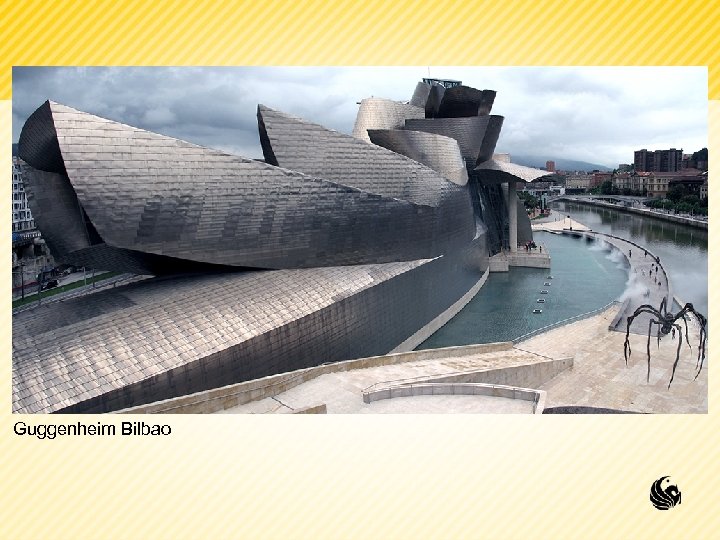 Guggenheim Bilbao
 Architourism “A process in which built environments serve as marketable destinations to lure visitors, investments and media attention” - Ockman & Frausto, 2005
 Wine Tourism • Wine tourists desire more from their winery experience than simply the tasting and purchasing of wine. • They may also seek dining options, recreational activities, cultural attractions, a pleasing rural landscape, etc. • New Zealand study – only 23% of winery visitors identified wine as their main motivation for a winery visit – Mitchell 2004
 Why visit a particular winery? • How does the incorporation of particular innovative products and experiences affect wine tourists’ decision making processes? • Does the incorporation of starchitecture into a winery’s product mix affect visitation, brand perception and consumer behavior?
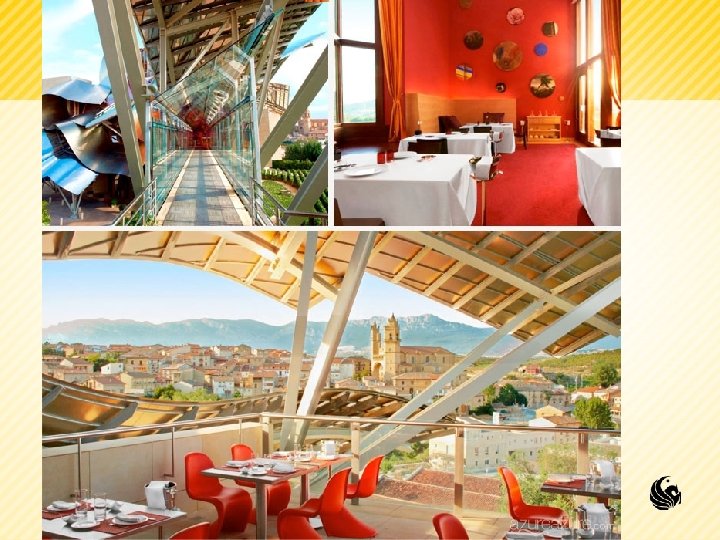
 Marqués de Riscal • Founded in 1858, one of Rioja’s oldest wineries. • Inaugurated its “City of Wine” in 2006 at a cost of € 70 m, a complete departure from the traditional Spanish winery. – Original renovated winery – Unique Gehry designed hotel – Michelin starred restaurant – Wine therapy spa – Conference/banqueting facilities – 2 shops
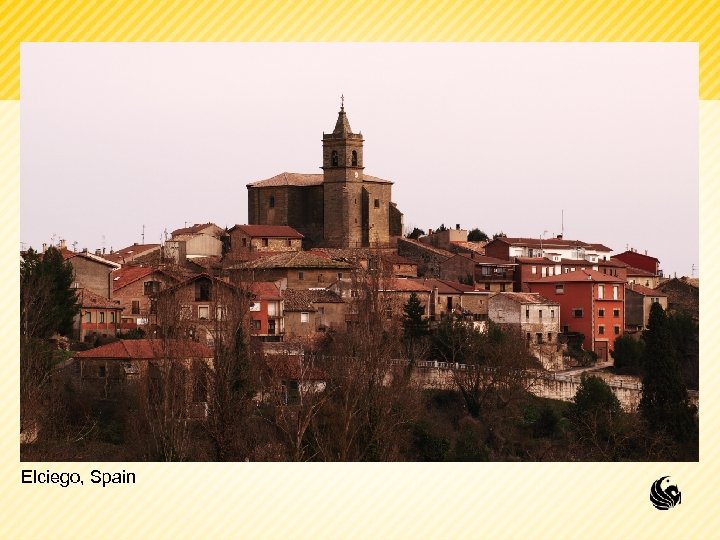 Elciego, Spain
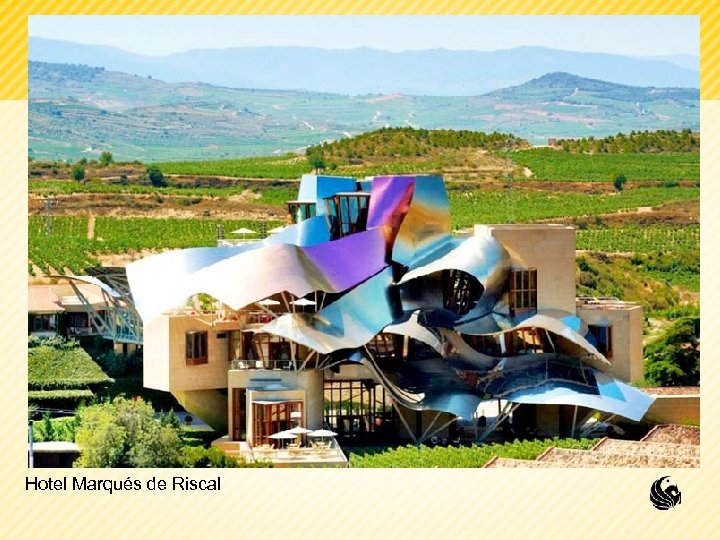 Hotel Marqués de Riscal
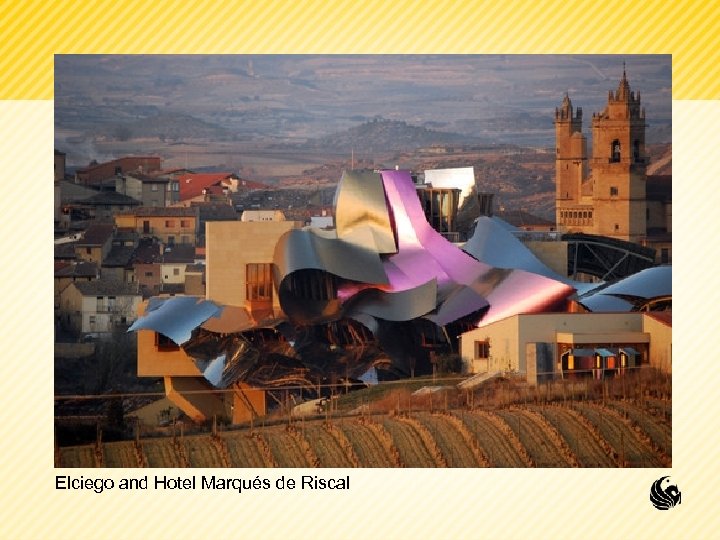 Elciego and Hotel Marqués de Riscal
 Effects • Visitors to the Rioja region rose by 68% in the City of Wine’s first year of operation - Vila, Enz & Costa, 2012 • Marqués de Riscal receives 70, 000 visitors annually, ± 50% international • Many new hotels to cope with influx to the region
 Methodology • Online survey that includes measurement items related to perceived congruence, positive emotions, and behavioral intentions. sent to 6, 000 former visitors to Marqués de Riscal’s City of Wine. SEM is performed to analyze the data. • A qualitative, exploratory framework utilizing netnographic observations of user generated comment threads from social media websites.
 Preliminary Results • Starchitecture acts as a primary motivator to visit both the winery and the region – the “Bilbao Effect” • The architecture is found to be incongruous with both the surroundings and the brand, but this incongruity is deemed positive • Starchitecture has a positive effect on brand perception, and both attitudinal and behavioral brand loyalty
 Preliminary Results • Cognitive and emotional responses to the starchitecture are overwhelmingly positive • Poor service negatively moderates both attitudinal and behavioral brand loyalty • Lack of updates to furnishings and technology negatively moderates both attitudinal and behavioral brand loyalty