


 Скачать презентацию Ice Age Caves in Devon and Yorkshire Dr
336090bdee51eb61fd62585a1f157ccd.ppt
- Количество слайдов: 15
 Ice Age Caves in Devon and Yorkshire Dr Paul Pettit Department of Archaeology, University of Sheffield
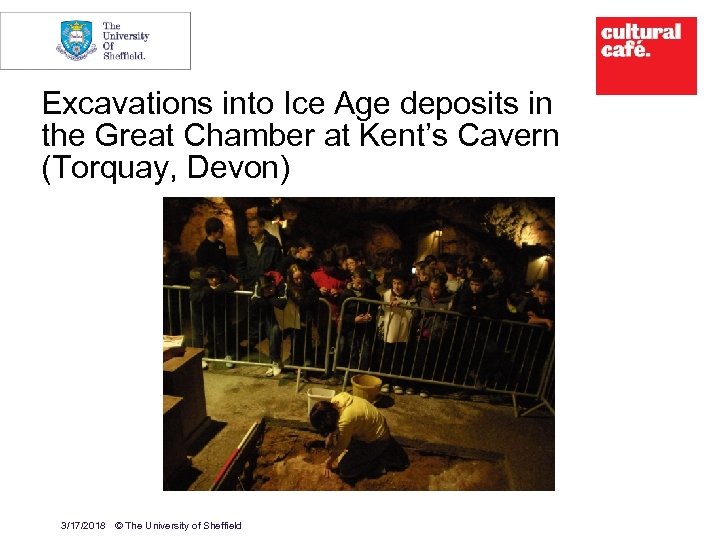 2 Excavations into Ice Age deposits in the Great Chamber at Kent’s Cavern (Torquay, Devon) 3/17/2018 © The University of Sheffield
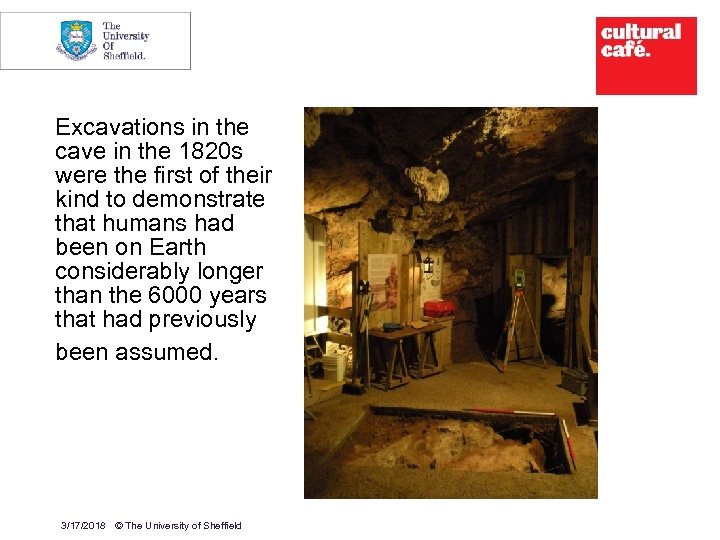 3 Excavations in the cave in the 1820 s were the first of their kind to demonstrate that humans had been on Earth considerably longer than the 6000 years that had previously been assumed. 3/17/2018 © The University of Sheffield
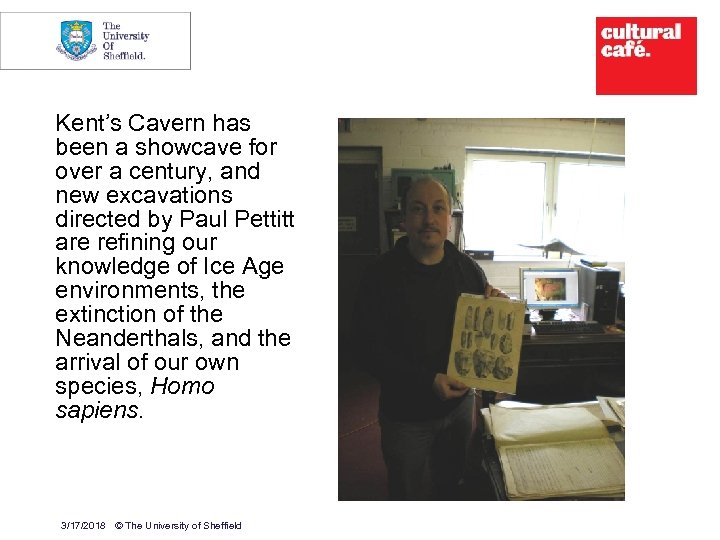 4 Kent’s Cavern has been a showcave for over a century, and new excavations directed by Paul Pettitt are refining our knowledge of Ice Age environments, the extinction of the Neanderthals, and the arrival of our own species, Homo sapiens. 3/17/2018 © The University of Sheffield
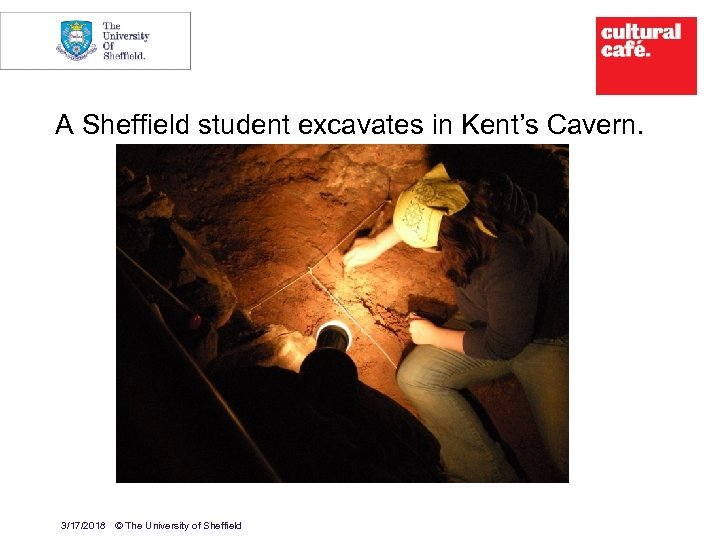 5 A Sheffield student excavates in Kent’s Cavern. 3/17/2018 © The University of Sheffield
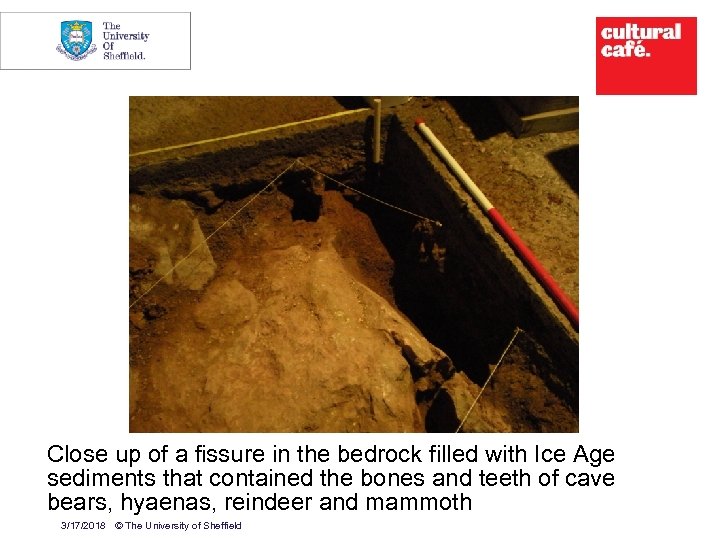 6 Close up of a fissure in the bedrock filled with Ice Age sediments that contained the bones and teeth of cave bears, hyaenas, reindeer and mammoth 3/17/2018 © The University of Sheffield
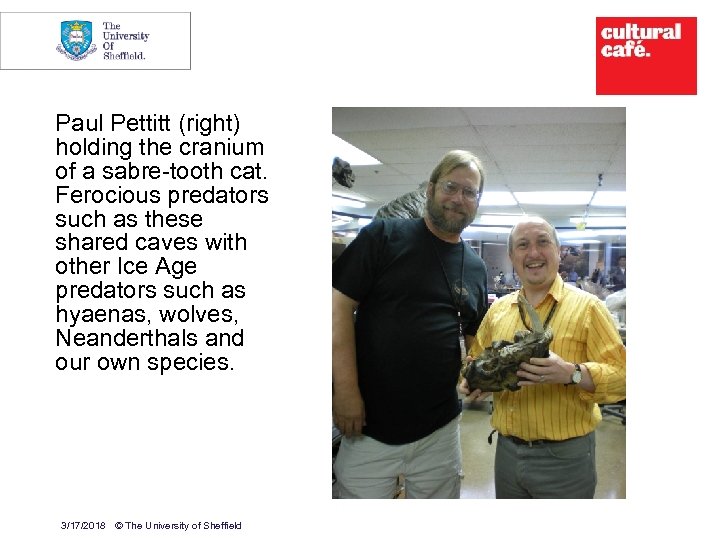 7 Paul Pettitt (right) holding the cranium of a sabre-tooth cat. Ferocious predators such as these shared caves with other Ice Age predators such as hyaenas, wolves, Neanderthals and our own species. 3/17/2018 © The University of Sheffield
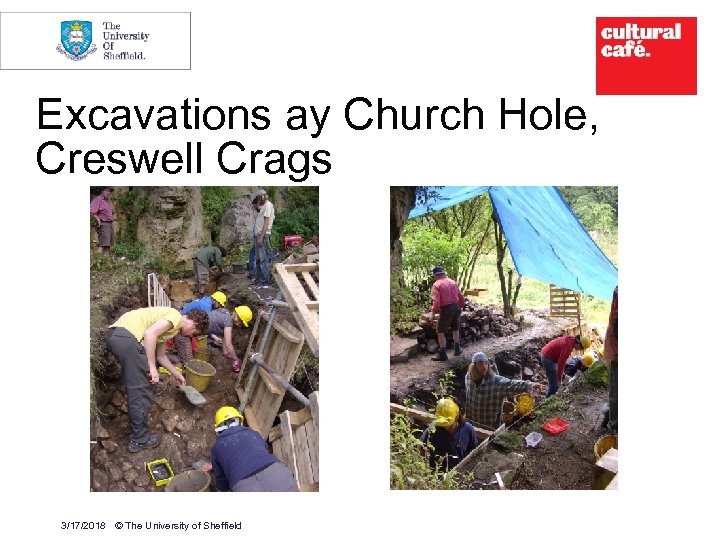 8 Excavations ay Church Hole, Creswell Crags 3/17/2018 © The University of Sheffield
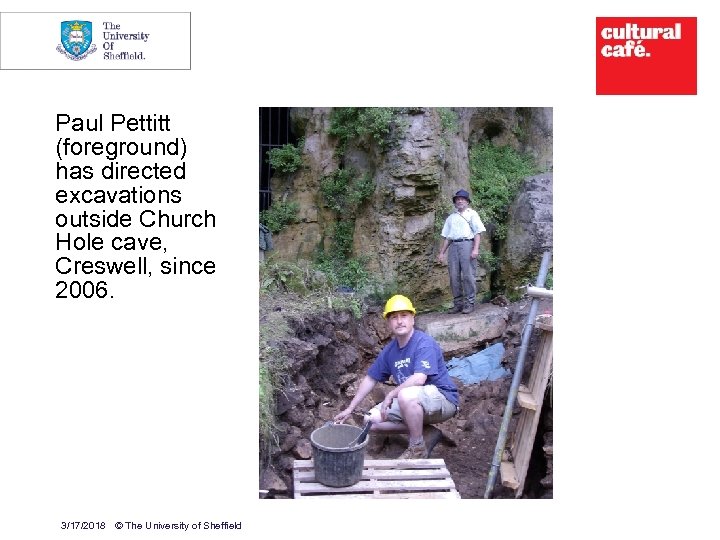 9 Paul Pettitt (foreground) has directed excavations outside Church Hole cave, Creswell, since 2006. 3/17/2018 © The University of Sheffield
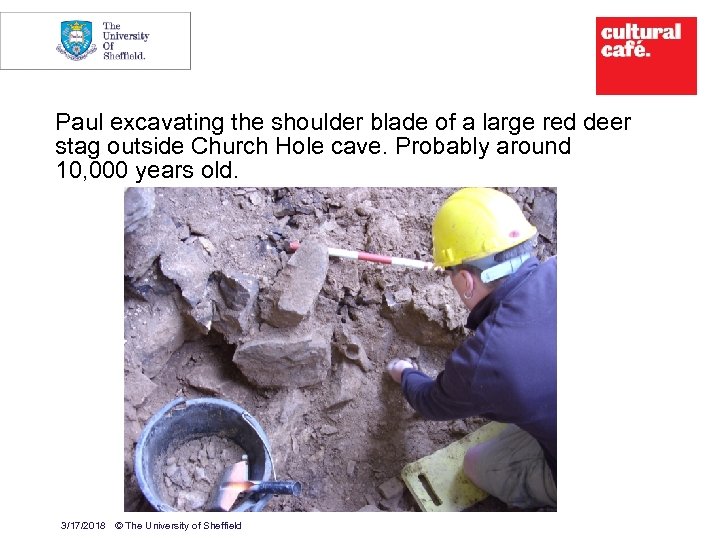 10 Paul excavating the shoulder blade of a large red deer stag outside Church Hole cave. Probably around 10, 000 years old. 3/17/2018 © The University of Sheffield
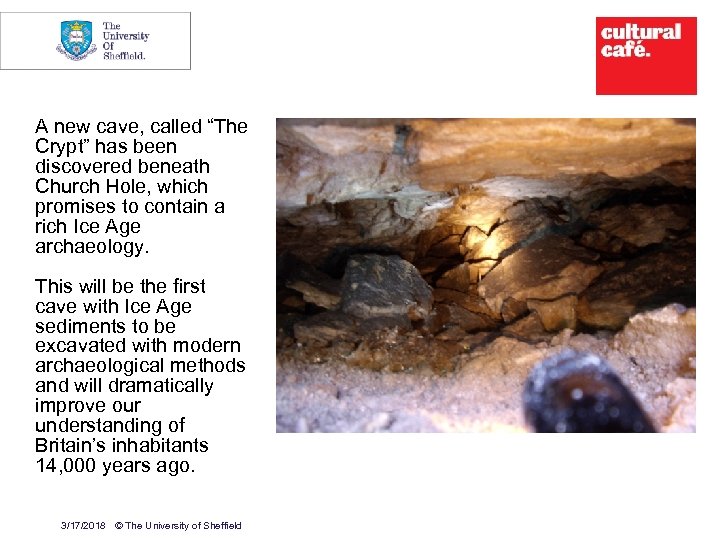 11 A new cave, called “The Crypt” has been discovered beneath Church Hole, which promises to contain a rich Ice Age archaeology. This will be the first cave with Ice Age sediments to be excavated with modern archaeological methods and will dramatically improve our understanding of Britain’s inhabitants 14, 000 years ago. 3/17/2018 © The University of Sheffield
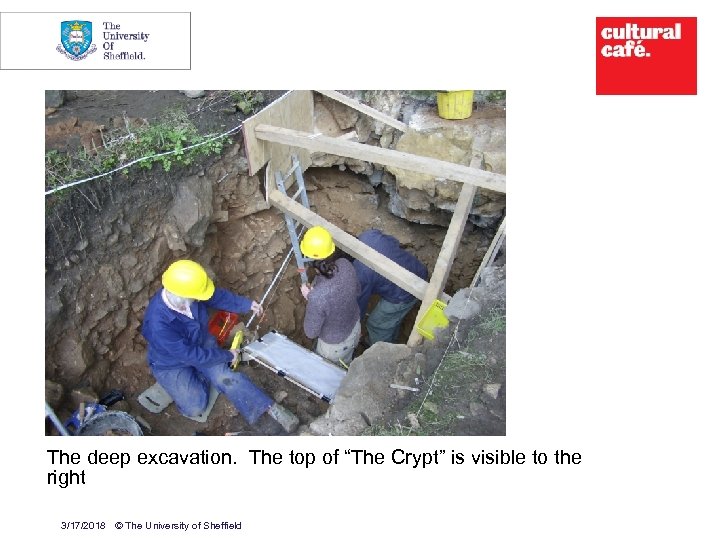 12 The deep excavation. The top of “The Crypt” is visible to the right 3/17/2018 © The University of Sheffield
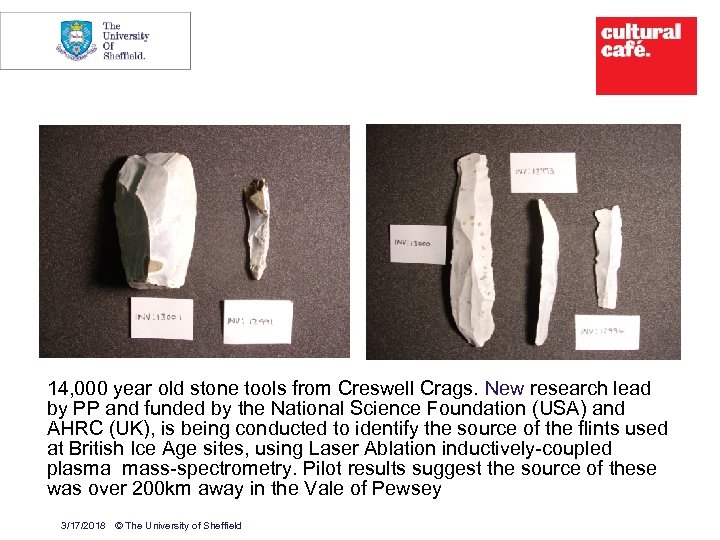 13 14, 000 year old stone tools from Creswell Crags. New research lead by PP and funded by the National Science Foundation (USA) and AHRC (UK), is being conducted to identify the source of the flints used at British Ice Age sites, using Laser Ablation inductively-coupled plasma mass-spectrometry. Pilot results suggest the source of these was over 200 km away in the Vale of Pewsey 3/17/2018 © The University of Sheffield
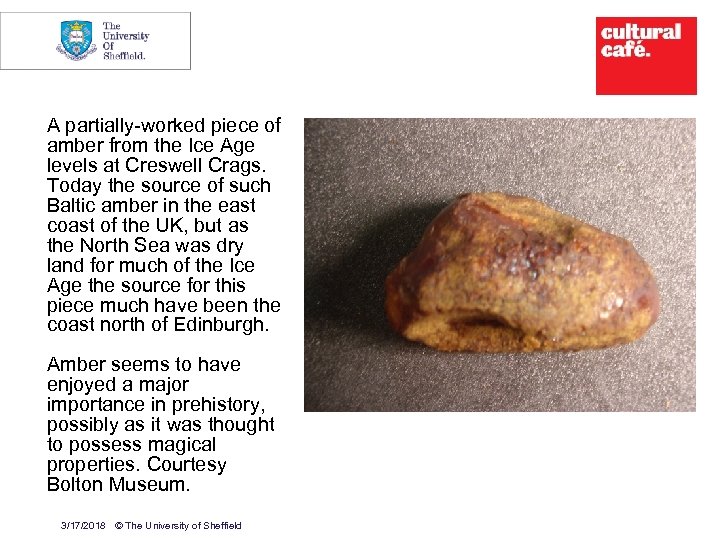 14 A partially-worked piece of amber from the Ice Age levels at Creswell Crags. Today the source of such Baltic amber in the east coast of the UK, but as the North Sea was dry land for much of the Ice Age the source for this piece much have been the coast north of Edinburgh. Amber seems to have enjoyed a major importance in prehistory, possibly as it was thought to possess magical properties. Courtesy Bolton Museum. 3/17/2018 © The University of Sheffield
 • For further information about these projects, please contact: • Dr Paul Pettitt Department of Archaeology University of Sheffield Northgate House West Street S 1 4 ET p. pettitt@sheffield. ac. uk