 Скачать презентацию IC G Palombini Rome School year 2012 -2013
79af462003380ce2e506083d0367b993.ppt
- Количество слайдов: 27



IC “G. Palombini” Rome School year 2012 -2013 Primary school Secondary school RESPECT AND TOLERANCE TOWARDS THE OTHER AND TROUGH THE OTHER Comenius project “A rainbow of frienship” Istanbul 5 -6 -7 -November 2012
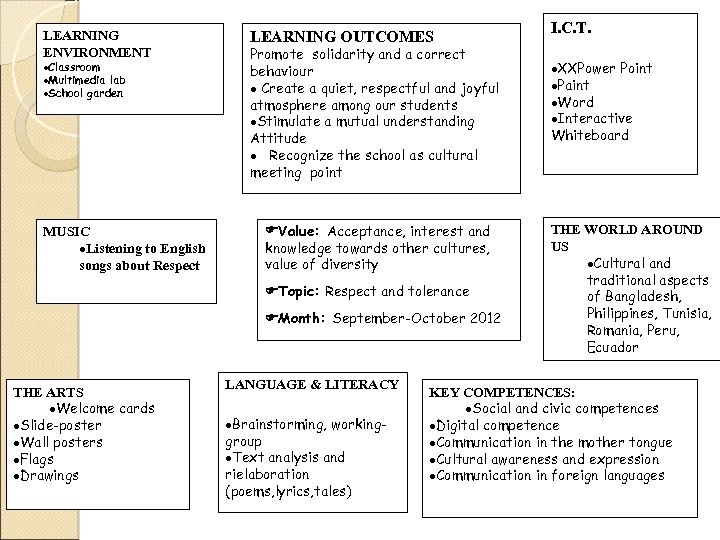
LEARNING ENVIRONMENT ·Classroom ·Multimedia lab ·School garden MUSIC ·Listening to English songs about Respect LEARNING OUTCOMES Promote solidarity and a correct behaviour · Create a quiet, respectful and joyful atmosphere among our students ·Stimulate a mutual understanding Attitude · Recognize the school as cultural meeting point Value: Acceptance, interest and knowledge towards other cultures, value of diversity Topic: Respect and tolerance Month: September-October 2012 THE ARTS ·Welcome cards ·Slide-poster ·Wall posters ·Flags ·Drawings LANGUAGE & LITERACY ·Brainstorming, workinggroup ·Text analysis and rielaboration (poems, lyrics, tales) I. C. T. ·XXPower Point ·Paint ·Word ·Interactive Whiteboard THE WORLD AROUND US ·Cultural and traditional aspects of Bangladesh, Philippines, Tunisia, Romania, Peru, Ecuador KEY COMPETENCES: ·Social and civic competences ·Digital competence ·Communication in the mother tongue ·Cultural awareness and expression ·Communication in foreign languages
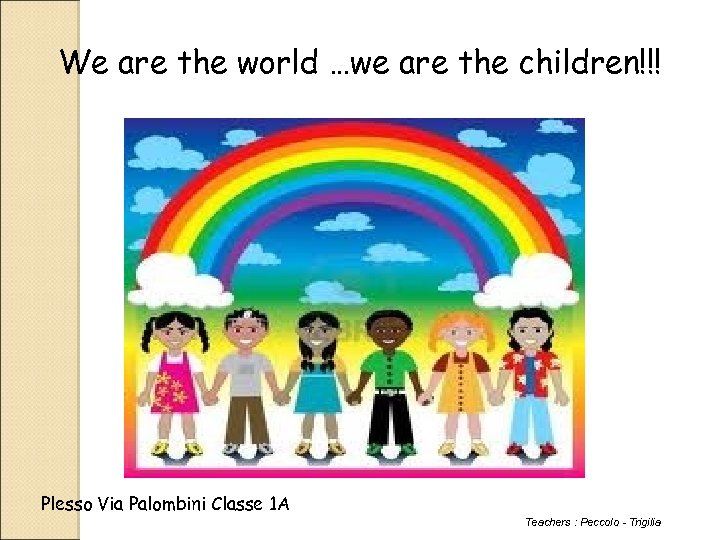
We are the world …we are the children!!! Plesso Via Palombini Classe 1 A Teachers : Peccolo - Trigilia
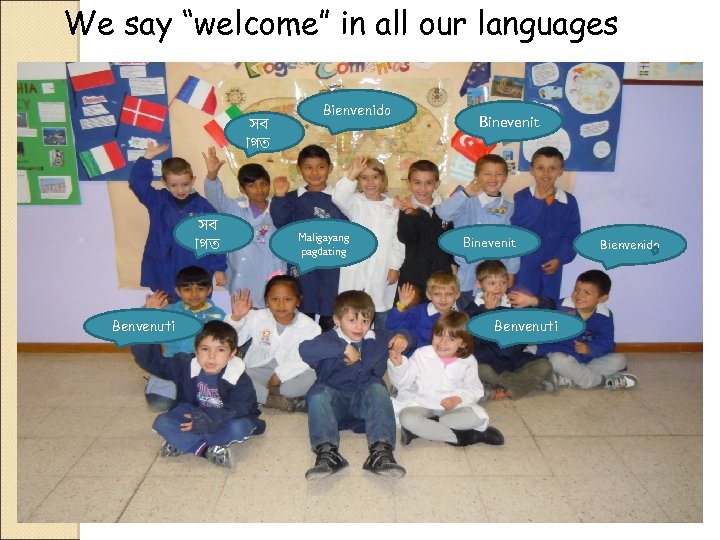
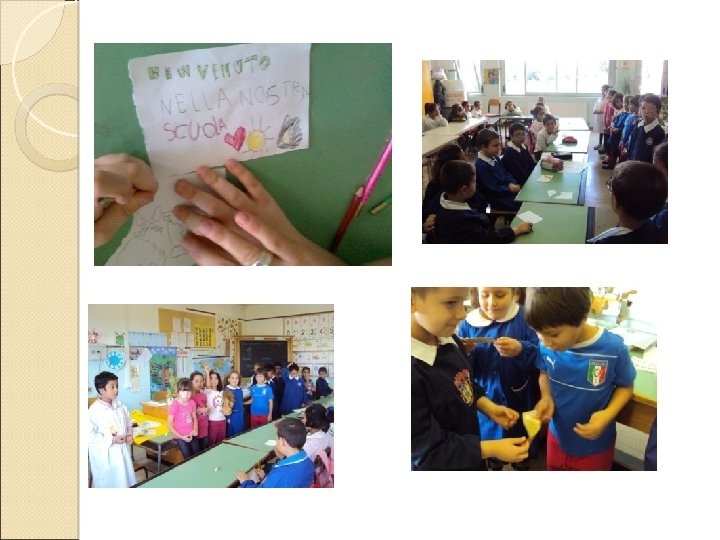
We say “welcome” in all our languages সব গত Benvenuti Bienvenido Maligayang pagdating Binevenit Benvenuti Bienvenido
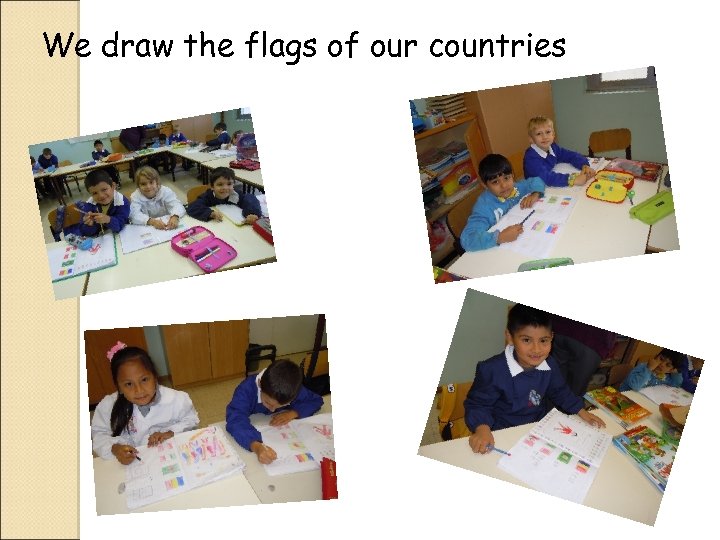
We draw the flags of our countries
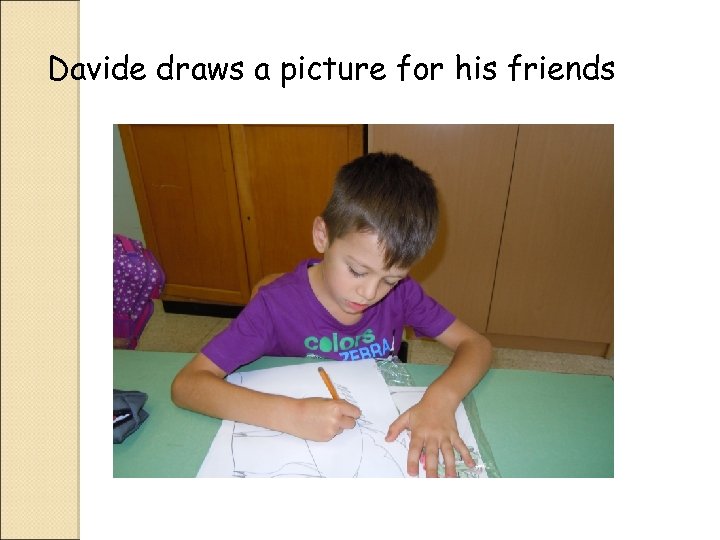
Davide draws a picture for his friends
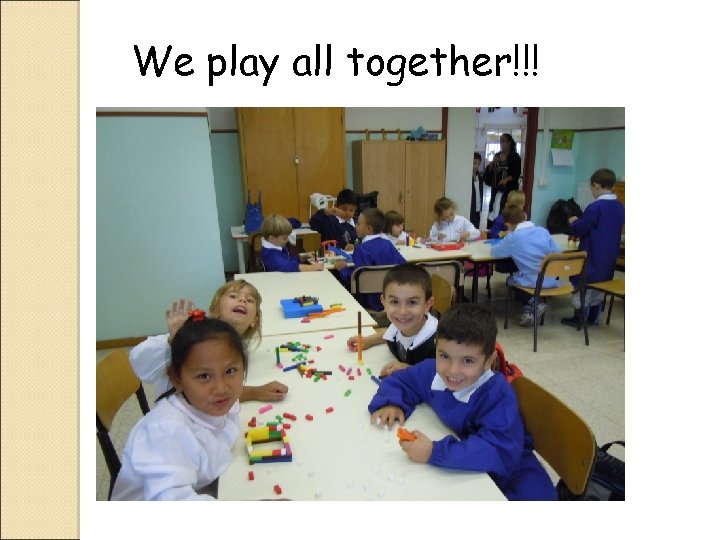
We play all together!!!
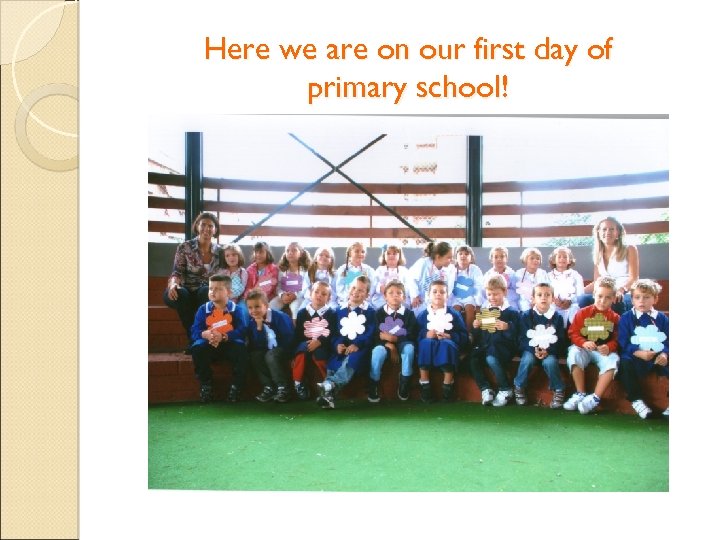
Here we are on our first day of primary school!
We have experienced from our first days the meaning of: RESPECT, ENRICHMENT AND DIVERSITY All the pupils have been welcomed, together with their families, and introduced one an other! All of us are a different and beautiful flower, who enriches our school garden ……. .
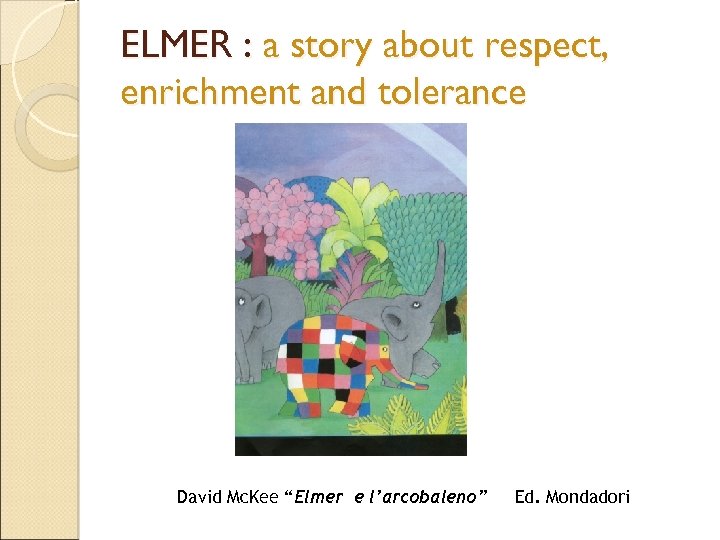
ELMER : a story about respect, enrichment and tolerance David Mc. Kee “Elmer e l’arcobaleno” Ed. Mondadori
ELMER STORY Elmer is a multicolor elephant, who feels its diversity among grey elephants. At last everybody realizes its diversity and accepts him. Elmer diversity represents an enrichment for all the elephants!!!. . .
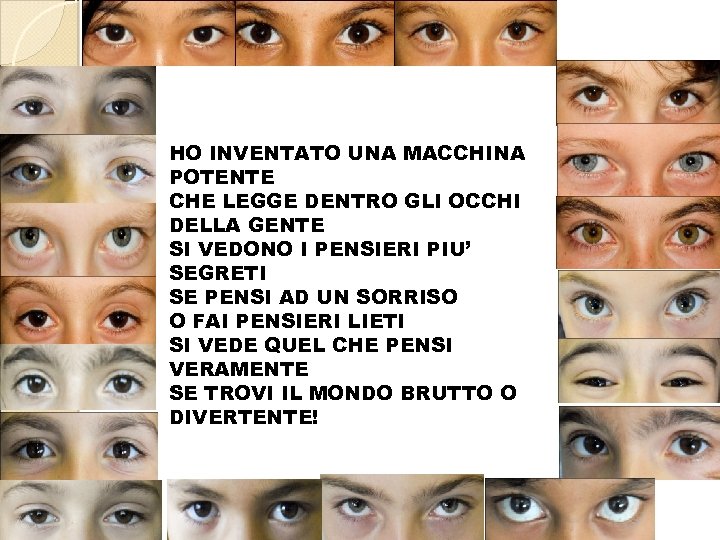
HO INVENTATO UNA MACCHINA POTENTE CHE LEGGE DENTRO GLI OCCHI DELLA GENTE SI VEDONO I PENSIERI PIU’ SEGRETI SE PENSI AD UN SORRISO O FAI PENSIERI LIETI SI VEDE QUEL CHE PENSI VERAMENTE SE TROVI IL MONDO BRUTTO O DIVERTENTE!
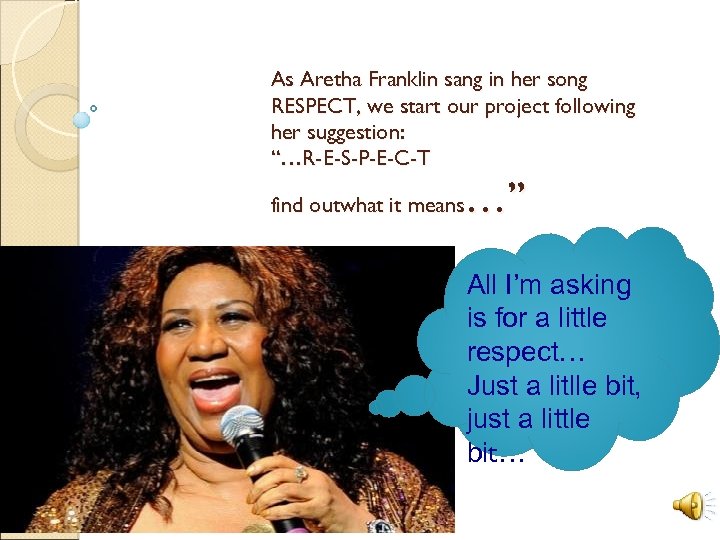
As Aretha Franklin sang in her song RESPECT, we start our project following her suggestion: “…R-E-S-P-E-C-T …” find outwhat it means All I’m asking is for a little respect… Just a litlle bit, just a little bit…
Tolerance and respect mean magnanimity and patience. Tolerance is sign of respect and consideration for others. It is a virtue. Tolerance and respect make a person develop wider vision. Indeed, developing tolerance is not easy but worth trying. Once you have learnt the art of loving and giving, you can easily be tolerant and respectful. Never discriminate people for reasons of religion, caste and creed, better…

…NEVER DISCRIMINATE FOR ANY REASONS!
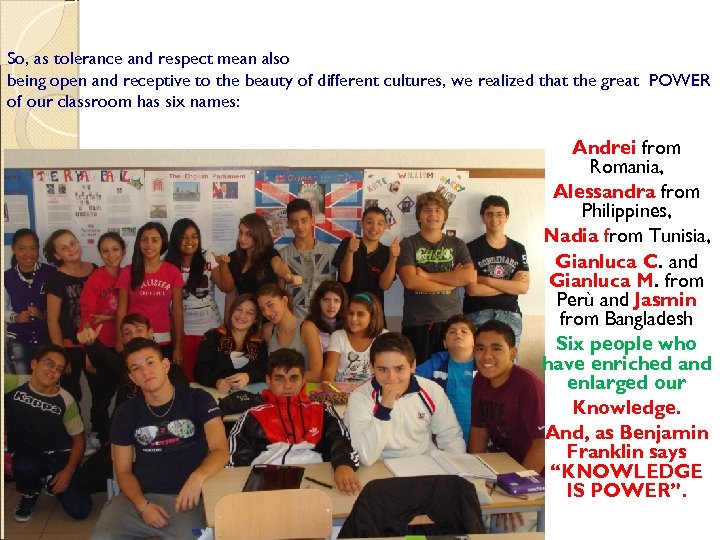
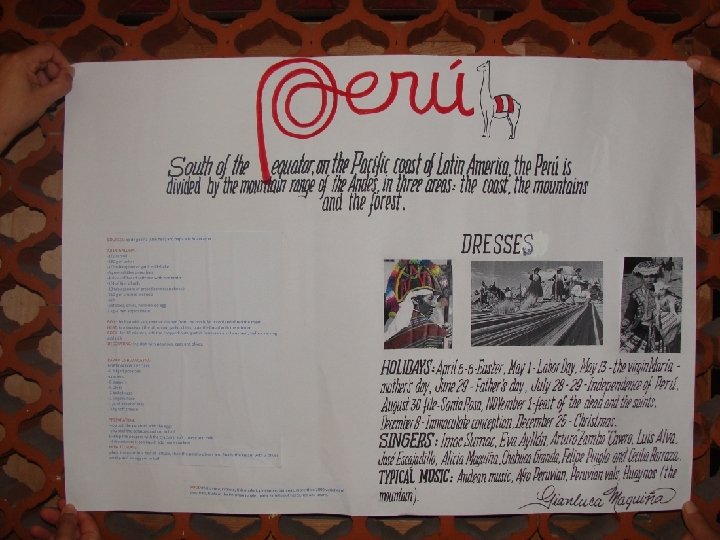
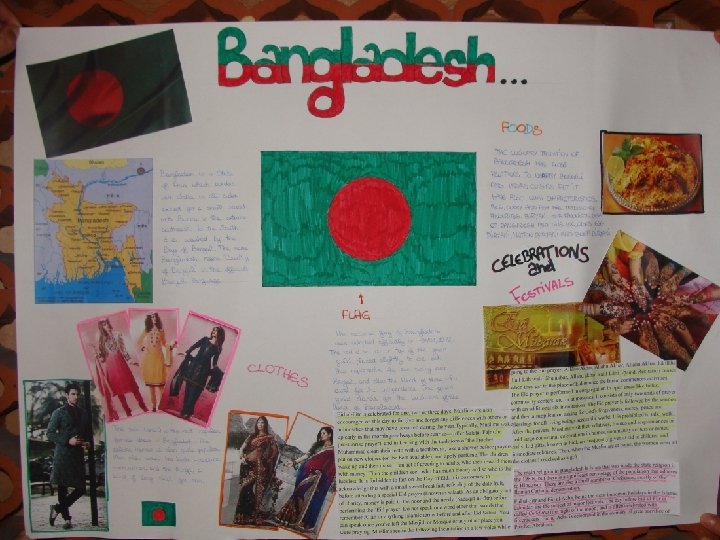
So, as tolerance and respect mean also being open and receptive to the beauty of different cultures, we realized that the great POWER of our classroom has six names: Andrei from Romania, Alessandra from Philippines, Nadia from Tunisia, Gianluca C. and Gianluca M. from Perù and Jasmin from Bangladesh Six people who have enriched and enlarged our Knowledge. And, as Benjamin Franklin says “KNOWLEDGE IS POWER”.
We talked about different celebrations, food, clothes, music and… …that’s the result! We created our “slide-poster”
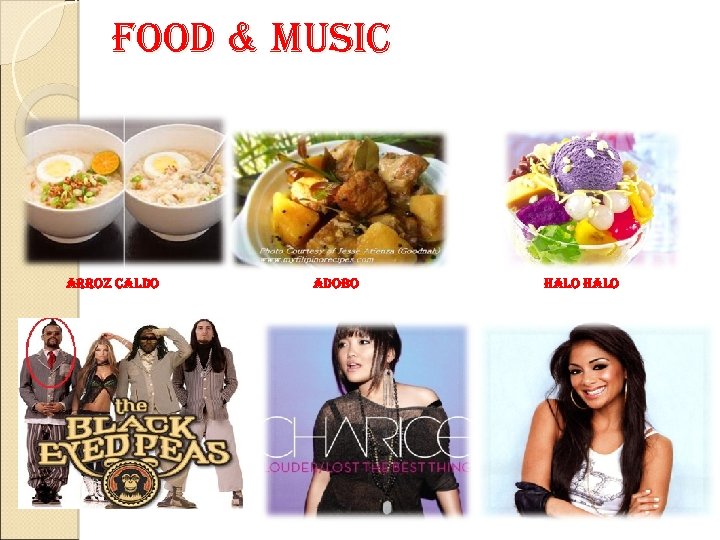
FOOD & MUSIC arroz Caldo adobo halo
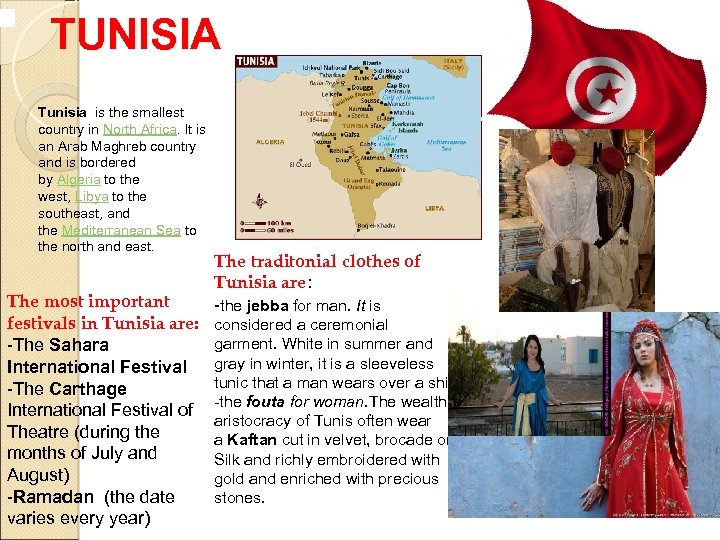
TUNISIA Tunisia is the smallest country in North Africa. It is an Arab Maghreb country and is bordered by Algeria to the west, Libya to the southeast, and the Mediterranean Sea to the north and east. The most important festivals in Tunisia are: -The Sahara International Festival -The Carthage International Festival of Theatre (during the months of July and August) -Ramadan (the date varies every year) The traditonial clothes of Tunisia are: -the jebba for man. It is considered a ceremonial garment. White in summer and gray in winter, it is a sleeveless tunic that a man wears over a shirt. -the fouta for woman. The wealthy aristocracy of Tunis often wear a Kaftan cut in velvet, brocade or Silk and richly embroidered with gold and enriched with precious stones.
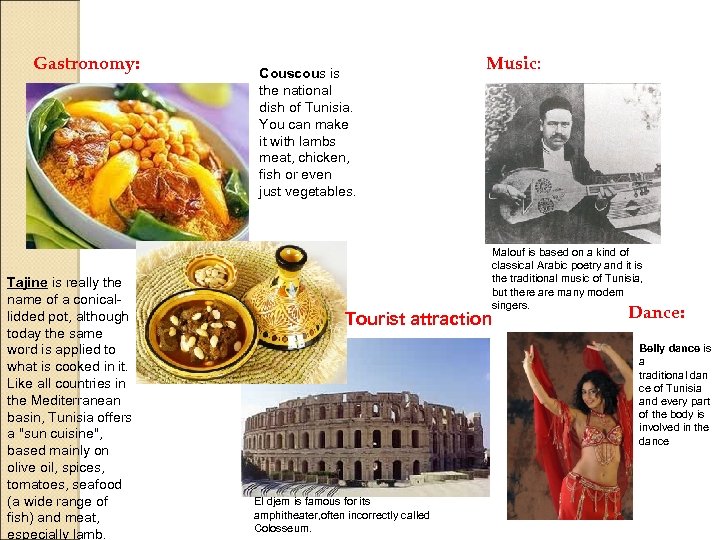
Gastronomy: Tajine is really the name of a conicallidded pot, although today the same word is applied to what is cooked in it. Like all countries in the Mediterranean basin, Tunisia offers a "sun cuisine", based mainly on olive oil, spices, tomatoes, seafood (a wide range of fish) and meat, especially lamb. Couscous is the national dish of Tunisia. You can make it with lambs meat, chicken, fish or even just vegetables. Music: Malouf is based on a kind of classical Arabic poetry and it is the traditional music of Tunisia, but there are many modern singers. Tourist attraction El djem is famous for its amphitheater, often incorrectly called Colosseum. Dance: Belly dance is a traditional dan ce of Tunisia and every part of the body is involved in the dance
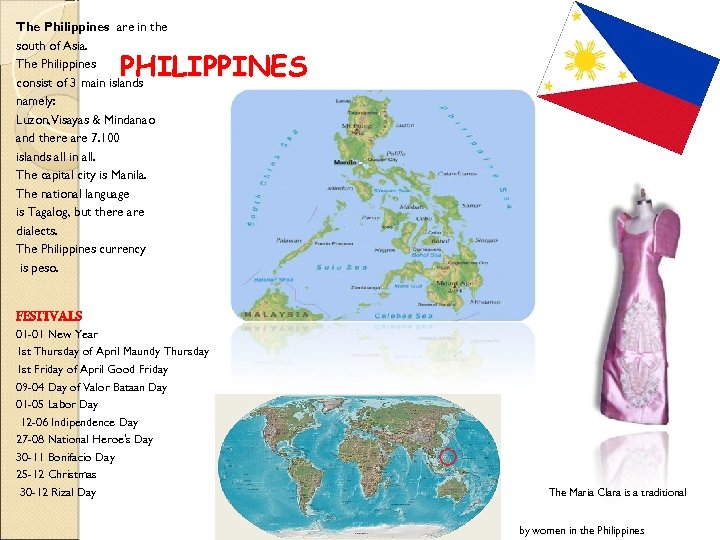
The Philippines are in the south of Asia. The Philippines consist of 3 main islands namely: Luzon, Visayas & Mindanao and there are 7. 100 islands all in all. The capital city is Manila. The national language is Tagalog, but there are dialects. The Philippines currency is peso. PHILIPPINES FESTIVALS 01 -01 New Year 1 st Thursday of April Maundy Thursday 1 st Friday of April Good Friday 09 -04 Day of Valor Bataan Day 01 -05 Labor Day 12 -06 Indipendence Day 27 -08 National Heroe's Day 30 -11 Bonifacio Day 25 -12 Christmas 30 -12 Rizal Day The Maria Clara is a traditional gown worn by women in the Philippines
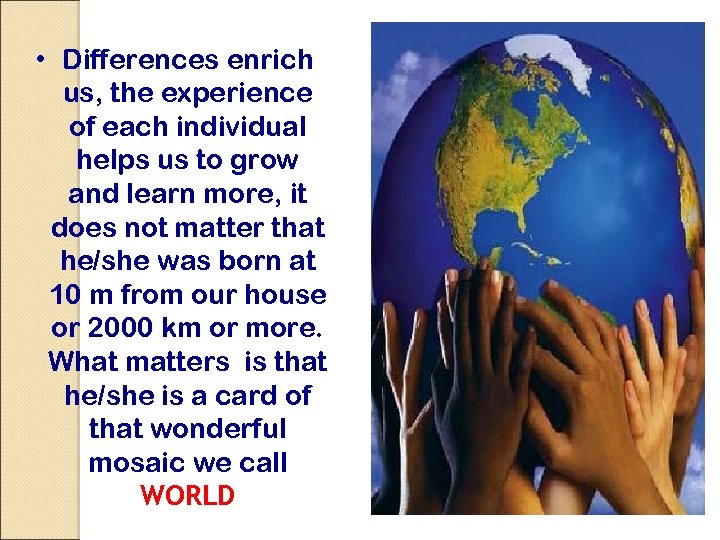
• Differences enrich us, the experience of each individual helps us to grow and learn more, it does not matter that he/she was born at 10 m from our house or 2000 km or more. What matters is that he/she is a card of that wonderful mosaic we call WORLD
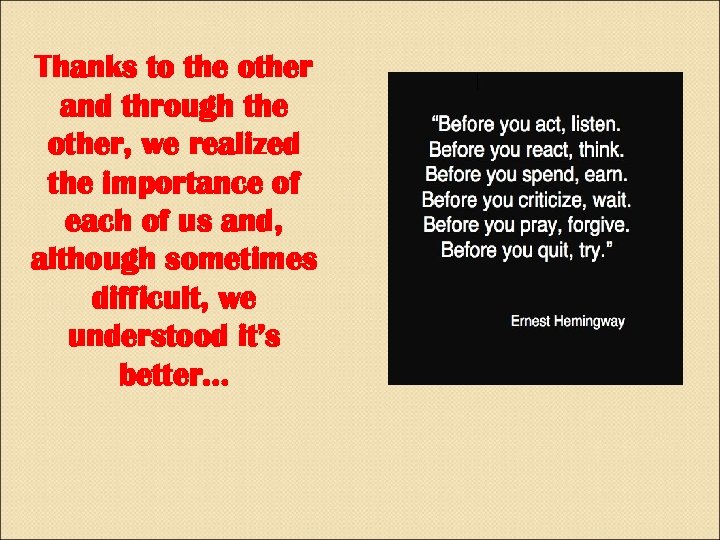
Thanks to the other and through the other, we realized the importance of each of us and, although sometimes difficult, we understood it’s better…
Thank you so much COMENIUS because you gave us the opportunity to think it over! See you next time! Love, I. C. “G. Palombini”
Скачать презентацию IC G Palombini Rome School year 2012 -2013
79af462003380ce2e506083d0367b993.ppt