


 Скачать презентацию IAMZ — CIHEAM CIHEAM Intergovernmental Organisation Mission
1a93c1a0c7343a465eab803e72cdf2c5.ppt
- Количество слайдов: 39
 IAMZ - CIHEAM
 CIHEAM Intergovernmental Organisation Mission: To develop cooperation between Mediterranean countries through post-graduate training and promotion of cooperative research in the field of agriculture and natural resources. 13 Mediterranean countries Albania, Algeria, Egypt, France, Greece, Italy, Lebanon, Malta, Morocco, Portugal, Spain, Tunisia and Turkey (Syria, Croatia, Cyprus) 4 Institutes to develop activities Bari (IT); Chania (GR); Montpellier (FR); Zaragoza (ES) - IAMZ
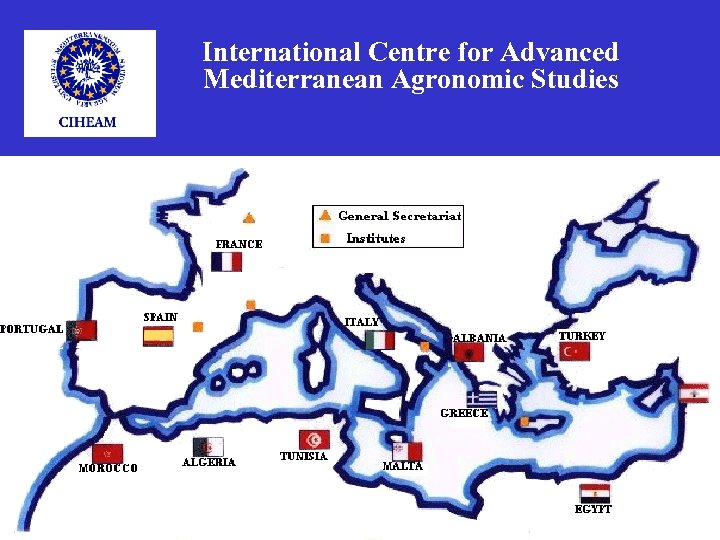 International Centre for Advanced Mediterranean Agronomic Studies
 Maditerranean Agronomic Institute of Zaragoza IAMZ
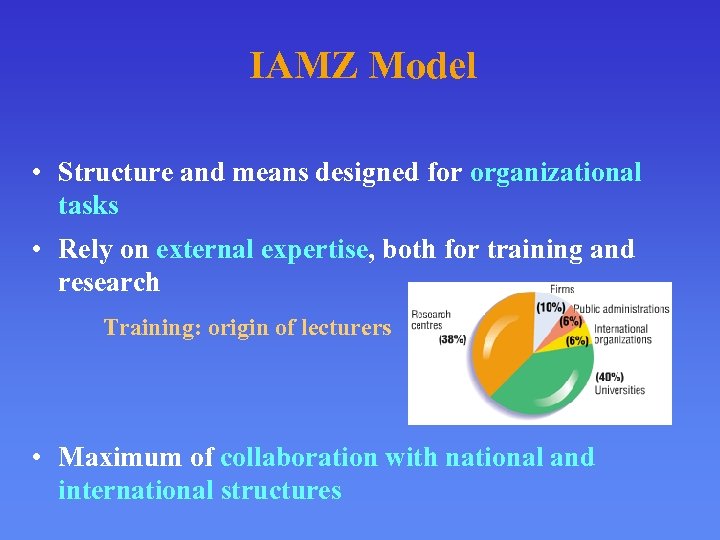 IAMZ Model • Structure and means designed for organizational tasks • Rely on external expertise, both for training and research Training: origin of lecturers • Maximum of collaboration with national and international structures
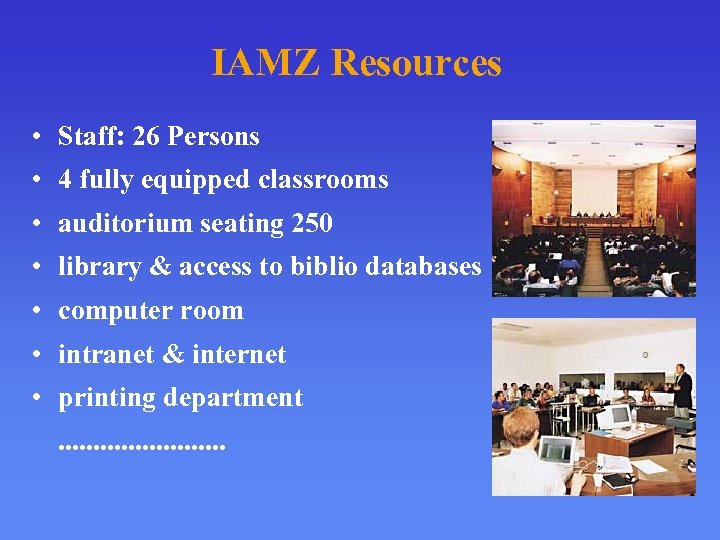 IAMZ Resources • Staff: 26 Persons • 4 fully equipped classrooms • auditorium seating 250 • library & access to biblio databases • computer room • intranet & internet • printing department. . .
 Thematic Orientations (i) Improvement of the efficiency of Mediterranean production systems and markets, and valuation of products (ii) Sustainable management of the Mediterranean agricultural and natural resources
 Functional Areas • • • Plant production Animal production Environment Agro-food marketing Fisheries and aquaculture
 TRAINING PROGRAMME
 Two main objectives Offer of programmes of importance and impact for the Mediterranean region Joint offer with Mediterranean national institutions and international institutions in the region
 Types of course • POSTGRADUATE SPECIALISATION COURSES - MASTER OF SCIENCE PROGRAMME 7 different courses, each one programmed every two years 3 -4 courses per year • ADVANCED SPECIALISED COURSES Aimed at professionals (1 to 2 weeks) 16 courses per year (average)
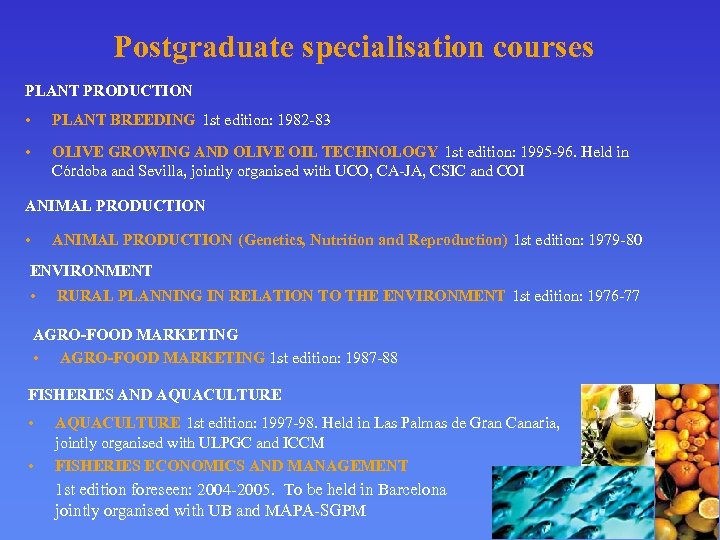 Postgraduate specialisation courses PLANT PRODUCTION • PLANT BREEDING 1 st edition: 1982 -83 • OLIVE GROWING AND OLIVE OIL TECHNOLOGY 1 st edition: 1995 -96. Held in Córdoba and Sevilla, jointly organised with UCO, CA-JA, CSIC and COI ANIMAL PRODUCTION (Genetics, Nutrition and Reproduction) 1 st edition: 1979 -80 • ENVIRONMENT • RURAL PLANNING IN RELATION TO THE ENVIRONMENT 1 st edition: 1976 -77 AGRO-FOOD MARKETING • AGRO-FOOD MARKETING 1 st edition: 1987 -88 FISHERIES AND AQUACULTURE • • AQUACULTURE 1 st edition: 1997 -98. Held in Las Palmas de Gran Canaria, jointly organised with ULPGC and ICCM FISHERIES ECONOMICS AND MANAGEMENT 1 st edition foreseen: 2004 -2005. To be held in Barcelona jointly organised with UB and MAPA-SGPM
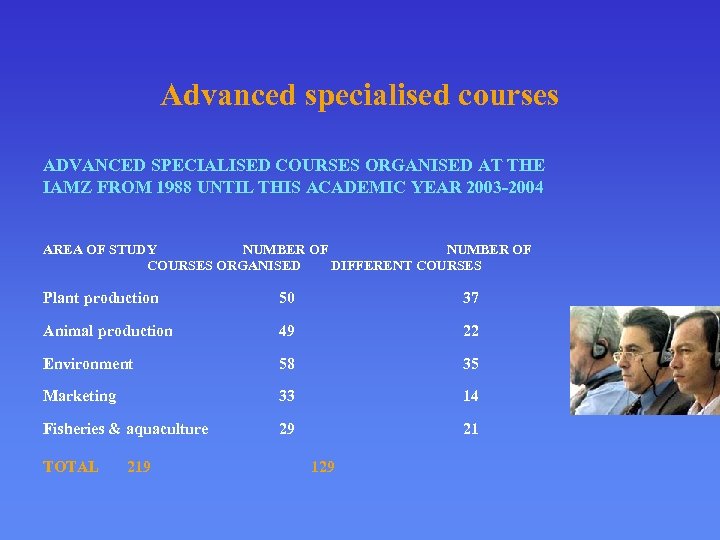 Advanced specialised courses ADVANCED SPECIALISED COURSES ORGANISED AT THE IAMZ FROM 1988 UNTIL THIS ACADEMIC YEAR 2003 -2004 AREA OF STUDY NUMBER OF COURSES ORGANISED DIFFERENT COURSES Plant production 50 37 Animal production 49 22 Environment 58 35 Marketing 33 14 Fisheries & aquaculture 29 21 TOTAL 129 219
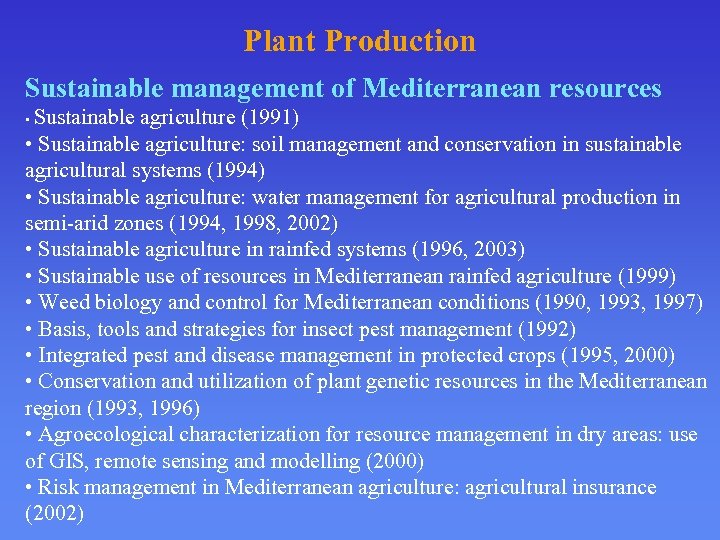 Plant Production Sustainable management of Mediterranean resources • Sustainable agriculture (1991) • Sustainable agriculture: soil management and conservation in sustainable agricultural systems (1994) • Sustainable agriculture: water management for agricultural production in semi-arid zones (1994, 1998, 2002) • Sustainable agriculture in rainfed systems (1996, 2003) • Sustainable use of resources in Mediterranean rainfed agriculture (1999) • Weed biology and control for Mediterranean conditions (1990, 1993, 1997) • Basis, tools and strategies for insect pest management (1992) • Integrated pest and disease management in protected crops (1995, 2000) • Conservation and utilization of plant genetic resources in the Mediterranean region (1993, 1996) • Agroecological characterization for resource management in dry areas: use of GIS, remote sensing and modelling (2000) • Risk management in Mediterranean agriculture: agricultural insurance (2002)
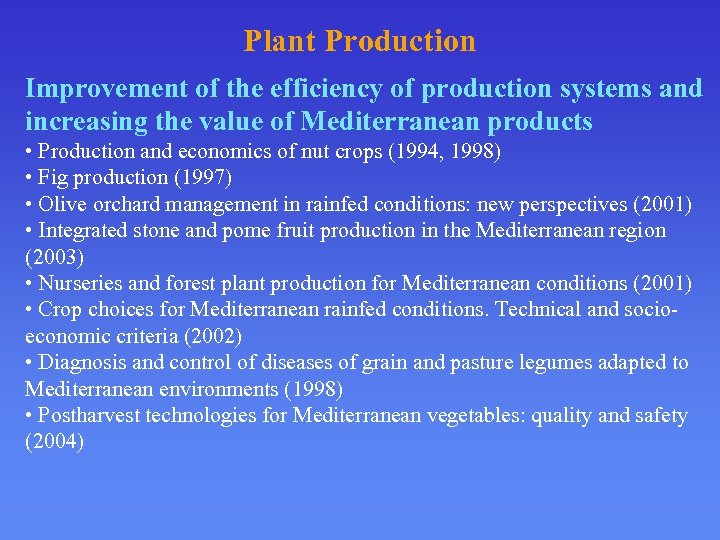 Plant Production Improvement of the efficiency of production systems and increasing the value of Mediterranean products • Production and economics of nut crops (1994, 1998) • Fig production (1997) • Olive orchard management in rainfed conditions: new perspectives (2001) • Integrated stone and pome fruit production in the Mediterranean region (2003) • Nurseries and forest plant production for Mediterranean conditions (2001) • Crop choices for Mediterranean rainfed conditions. Technical and socioeconomic criteria (2002) • Diagnosis and control of diseases of grain and pasture legumes adapted to Mediterranean environments (1998) • Postharvest technologies for Mediterranean vegetables: quality and safety (2004)
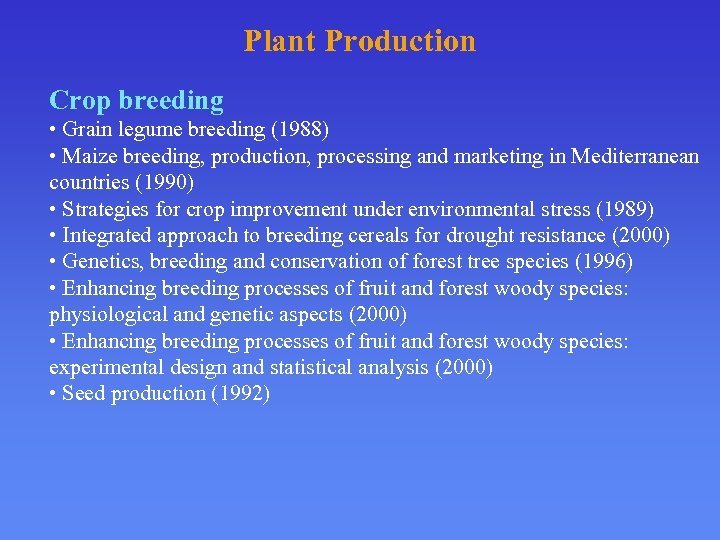 Plant Production Crop breeding • Grain legume breeding (1988) • Maize breeding, production, processing and marketing in Mediterranean countries (1990) • Strategies for crop improvement under environmental stress (1989) • Integrated approach to breeding cereals for drought resistance (2000) • Genetics, breeding and conservation of forest tree species (1996) • Enhancing breeding processes of fruit and forest woody species: physiological and genetic aspects (2000) • Enhancing breeding processes of fruit and forest woody species: experimental design and statistical analysis (2000) • Seed production (1992)
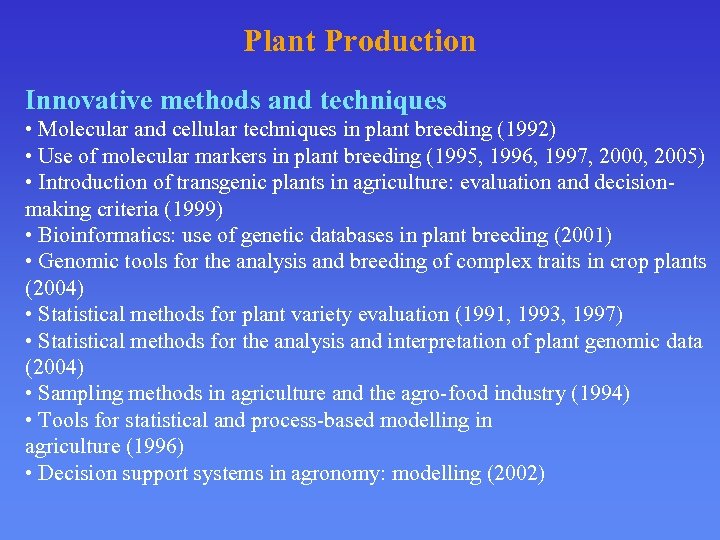 Plant Production Innovative methods and techniques • Molecular and cellular techniques in plant breeding (1992) • Use of molecular markers in plant breeding (1995, 1996, 1997, 2000, 2005) • Introduction of transgenic plants in agriculture: evaluation and decisionmaking criteria (1999) • Bioinformatics: use of genetic databases in plant breeding (2001) • Genomic tools for the analysis and breeding of complex traits in crop plants (2004) • Statistical methods for plant variety evaluation (1991, 1993, 1997) • Statistical methods for the analysis and interpretation of plant genomic data (2004) • Sampling methods in agriculture and the agro-food industry (1994) • Tools for statistical and process-based modelling in agriculture (1996) • Decision support systems in agronomy: modelling (2002)
 Plant Production Innovative methods and techniques Design and analysis of multi-environment trials: conventional and qtl-based methods (September 2005) • Characterizing spatial-temporal variability for agricultural planning and site-specific crop management in mediterranean conditions (March 2006)
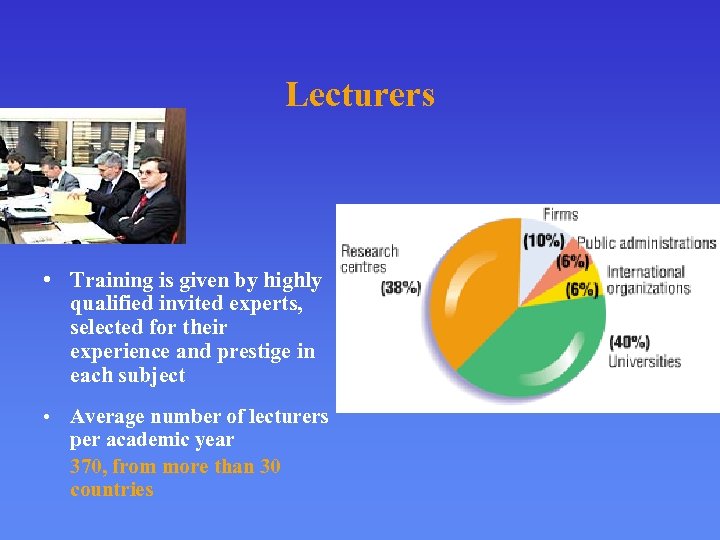 Lecturers • Training is given by highly qualified invited experts, selected for their experience and prestige in each subject • Average number of lecturers per academic year 370, from more than 30 countries
 Participants last 9 academic years • AVERAGE NUMBER OF APPLICATIONS PER ACADEMIC YEAR ………………… 1800 • AVERAGE NUMBER OF PARTICIPANTS PER ACADEMIC YEAR – Postgraduate specialisation courses ………. 75 – Advanced specialised courses …………… 392 …………………. . 467
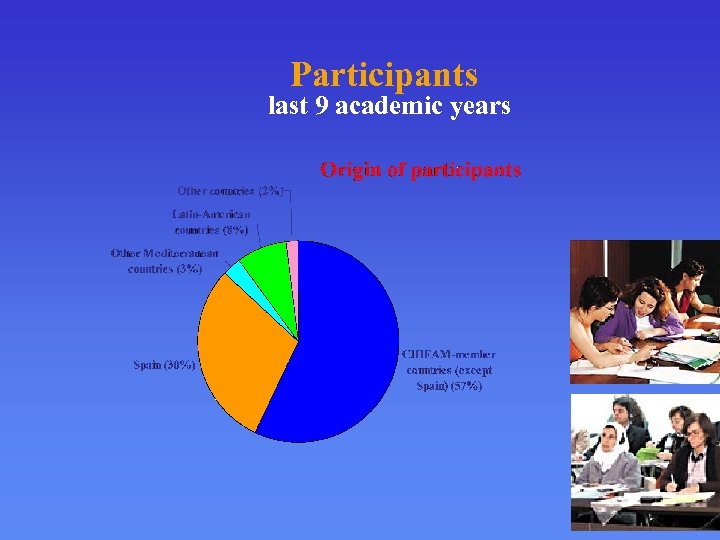 Participants last 9 academic years
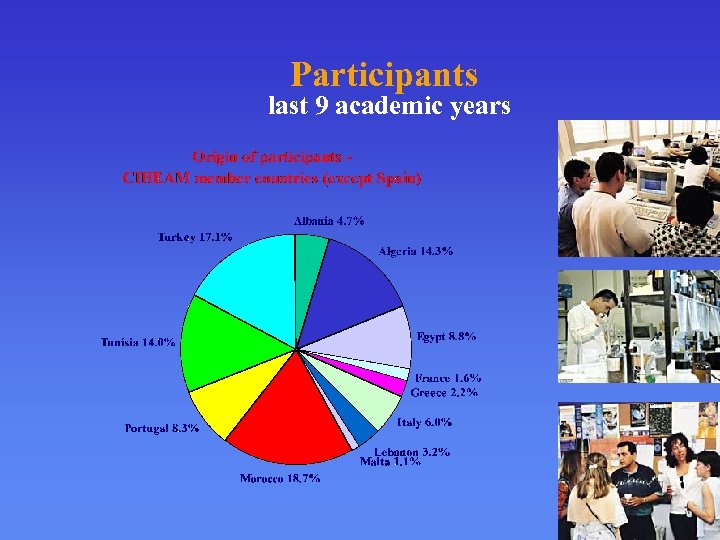 Participants last 9 academic years
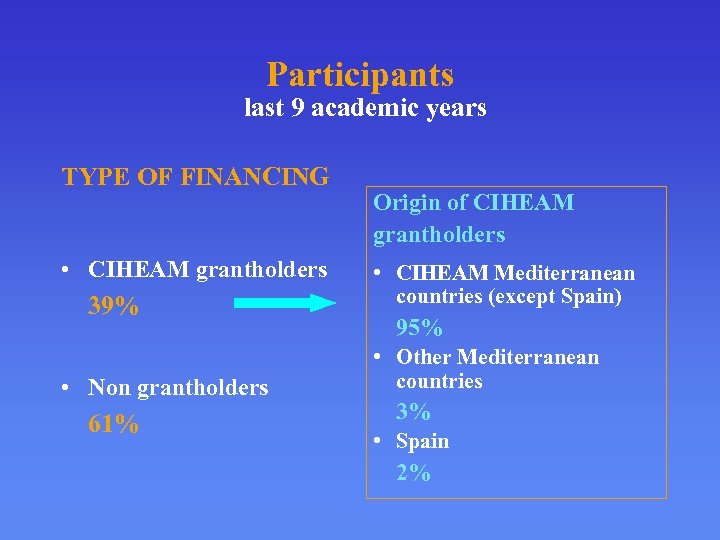 Participants last 9 academic years TYPE OF FINANCING • CIHEAM grantholders 39% • Non grantholders 61% Origin of CIHEAM grantholders • CIHEAM Mediterranean countries (except Spain) 95% • Other Mediterranean countries 3% • Spain 2%
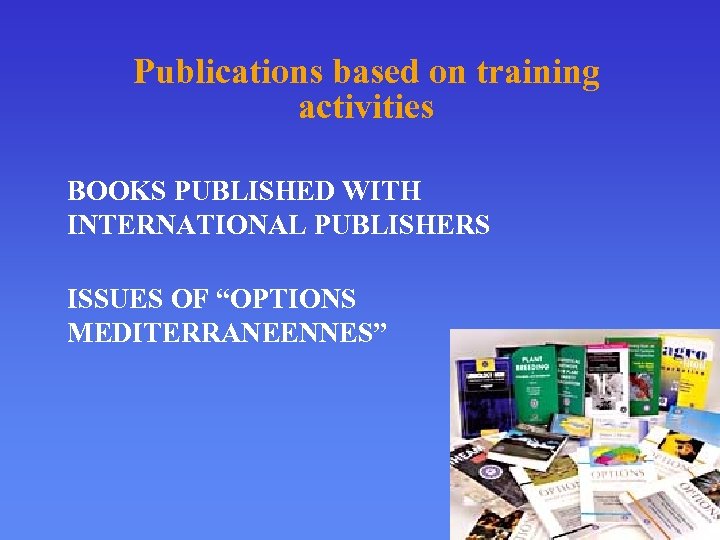 Publications based on training activities BOOKS PUBLISHED WITH INTERNATIONAL PUBLISHERS ISSUES OF “OPTIONS MEDITERRANEENNES”
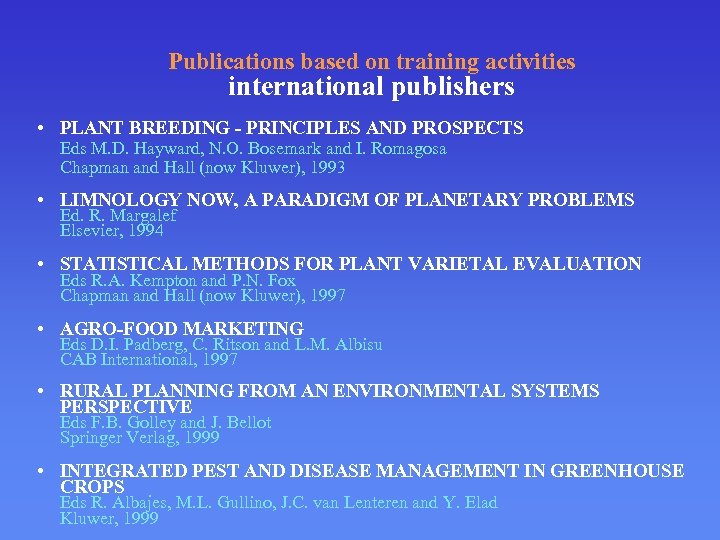 Publications based on training activities international publishers • PLANT BREEDING - PRINCIPLES AND PROSPECTS Eds M. D. Hayward, N. O. Bosemark and I. Romagosa Chapman and Hall (now Kluwer), 1993 • LIMNOLOGY NOW, A PARADIGM OF PLANETARY PROBLEMS Ed. R. Margalef Elsevier, 1994 • STATISTICAL METHODS FOR PLANT VARIETAL EVALUATION Eds R. A. Kempton and P. N. Fox Chapman and Hall (now Kluwer), 1997 • AGRO-FOOD MARKETING Eds D. I. Padberg, C. Ritson and L. M. Albisu CAB International, 1997 • RURAL PLANNING FROM AN ENVIRONMENTAL SYSTEMS PERSPECTIVE Eds F. B. Golley and J. Bellot Springer Verlag, 1999 • INTEGRATED PEST AND DISEASE MANAGEMENT IN GREENHOUSE CROPS Eds R. Albajes, M. L. Gullino, J. C. van Lenteren and Y. Elad Kluwer, 1999
 COOPERATIVE RESEARCH
 Cooperative research General objective To promote, coordinate and develop cooperation among experts and national and international institutions in the Mediterranean countries
 Cooperative research Specific objectives • To exchange information and/or (mainly genetic) material • To develop scientific work with common objectives and methodologies • To prepare and implement joint research projects • To organise seminars and courses • To publish relevant results
 Cooperative research Tools (1) • Cooperative Research Networks and Working Groups • Research Projects • Other temporary structures In the same way as in our Training Programmes, Relying on the expertise of National and International Organizations
 Cooperative research Tools (2) • More than 80 Mediterranean institutions and about 400 experts participate regularly in IAMZ coordinated activities • More than 800 persons participate each year in activities in whose organisation IAMZ is directly involved
 (i) Improvement of the efficiency of Mediterranean production systems and valuation of products • Plant genetic resources adapted to Mediterranean conditions Breeding of typically Mediterranean fruit species FAO/CIHEAM Network on nuts Working group on the apricot Working group on underutilised fruit species Legumes and cereals Mycorrhisation of forest plants • Improvement of sheep and goat production systems FAO/CIHEAM Network on Sheep and Goats FAO/CIHEAM Network on Pastures and Fodder Crops • Mediterranean aquaculture (in close collaboration with FAO) • Marketing of Mediterranean products
 (ii) Sustainable management of the Mediterranean agricultural and natural resources • Forestoration and fight against desertification • Climatic change: Effects on agriculture and environment • Drought preparedness and mitigation • Mediterranean fisheries resources
 Activities and participants • 30 -35 meetings and seminars per year • ~ 300 participants managed directly by us per year • From 2 to 8 Research Projects (CAMAR, AIR, FAIR, INCO-DC, INCO-MED and MEDA) to coordinate simultaneously • 20 Project Proposals submitted to the INCO, MEDA & GEF-WB Programmes in recent years. 6 funded • 37 issues of Options Méditerranéennes and 8 other international publications in the last 5 years • Web page on Med. Rabbit Genetic Resources
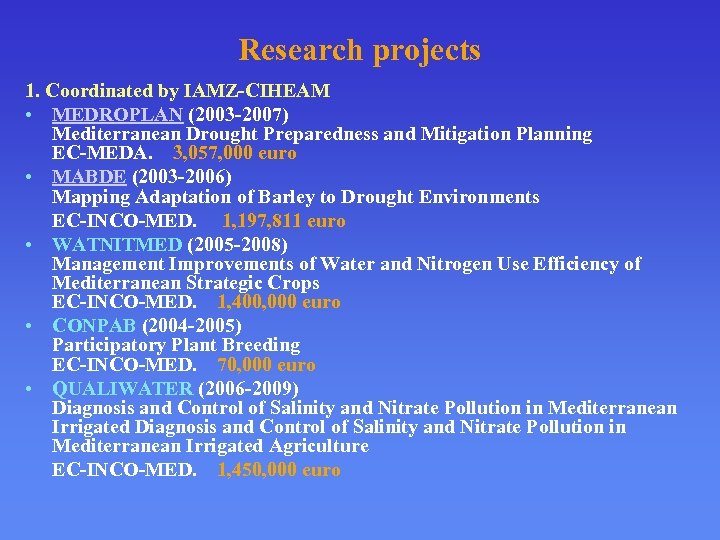 Research projects 1. Coordinated by IAMZ-CIHEAM • MEDROPLAN (2003 -2007) Mediterranean Drought Preparedness and Mitigation Planning EC-MEDA. 3, 057, 000 euro • MABDE (2003 -2006) Mapping Adaptation of Barley to Drought Environments EC-INCO-MED. 1, 197, 811 euro • WATNITMED (2005 -2008) Management Improvements of Water and Nitrogen Use Efficiency of Mediterranean Strategic Crops EC-INCO-MED. 1, 400, 000 euro • CONPAB (2004 -2005) Participatory Plant Breeding EC-INCO-MED. 70, 000 euro • QUALIWATER (2006 -2009) Diagnosis and Control of Salinity and Nitrate Pollution in Mediterranean Irrigated Agriculture EC-INCO-MED. 1, 450, 000 euro
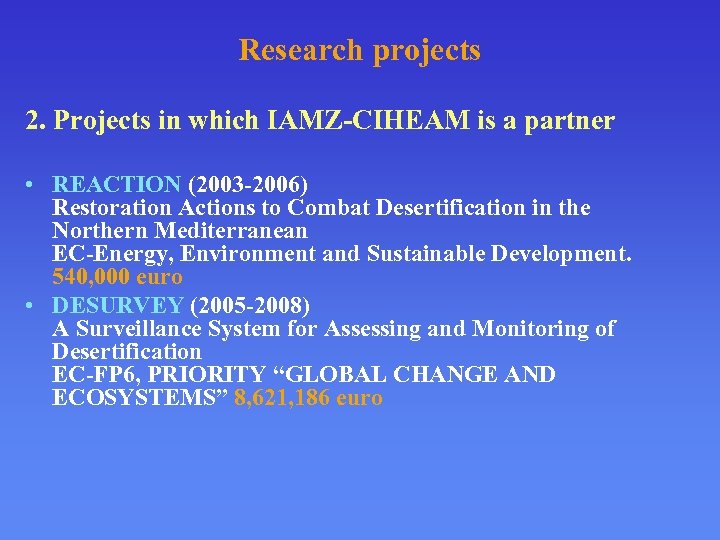 Research projects 2. Projects in which IAMZ-CIHEAM is a partner • REACTION (2003 -2006) Restoration Actions to Combat Desertification in the Northern Mediterranean EC-Energy, Environment and Sustainable Development. 540, 000 euro • DESURVEY (2005 -2008) A Surveillance System for Assessing and Monitoring of Desertification EC-FP 6, PRIORITY “GLOBAL CHANGE AND ECOSYSTEMS” 8, 621, 186 euro
 Similarities between Cooperative Selections Schemes in Animal Breeding and Participatory Plant Breeding
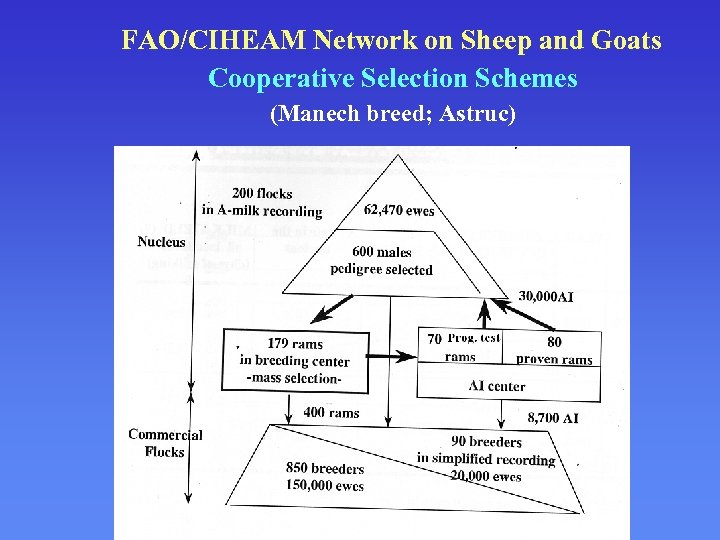 FAO/CIHEAM Network on Sheep and Goats Cooperative Selection Schemes (Manech breed; Astruc)
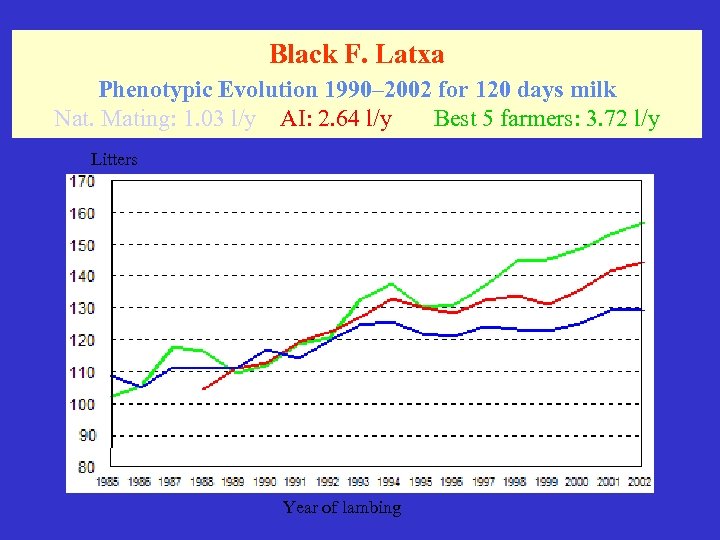 Black F. Latxa Phenotypic Evolution 1990– 2002 for 120 days milk Nat. Mating: 1. 03 l/y AI: 2. 64 l/y Best 5 farmers: 3. 72 l/y Litters Year of lambing
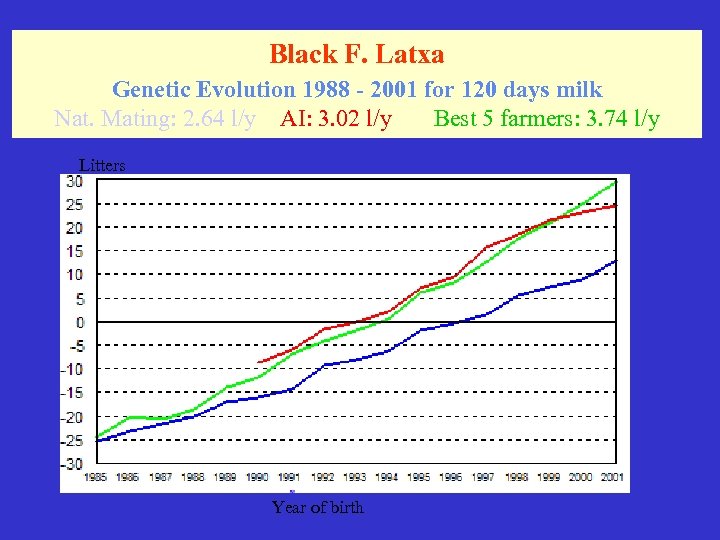 Black F. Latxa Genetic Evolution 1988 - 2001 for 120 days milk Nat. Mating: 2. 64 l/y AI: 3. 02 l/y Best 5 farmers: 3. 74 l/y Litters Year of birth