 Скачать презентацию IAEA the BSS and DRLs Regional Meeting on
bf905cf2d97a11f353a7eb47510a1809.ppt
- Количество слайдов: 49



IAEA, the BSS and DRLs Regional Meeting on the Establishment and Utilization of Diagnostic Reference Levels Kampala, Uganda, 14 -18 February, 2013 John Le Heron Radiation Protection of Patients Unit Radiation Safety and Monitoring Section Division for Radiation, Transport and Waste Safety IAEA International Atomic Energy Agency
Outline • Background & current issues • The BSS and radiation protection in medical exposures • IAEA activities & resources in TSA 3 • DRLs and the BSS IAEA
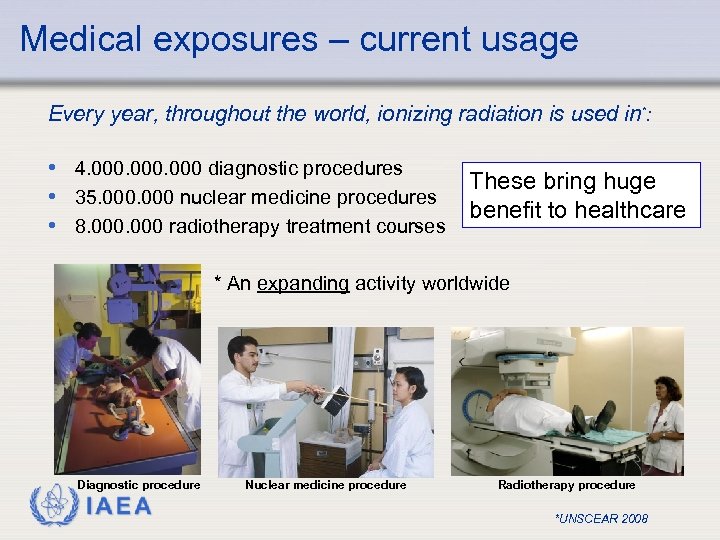
Medical exposures – current usage Every year, throughout the world, ionizing radiation is used in*: • 4. 000 diagnostic procedures • 35. 000 nuclear medicine procedures • 8. 000 radiotherapy treatment courses These bring huge benefit to healthcare * An expanding activity worldwide Diagnostic procedure IAEA Nuclear medicine procedure Radiotherapy procedure *UNSCEAR 2008
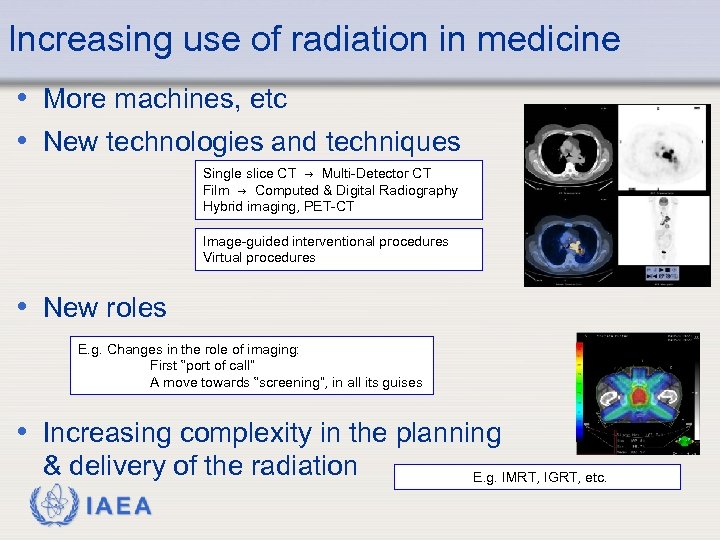
Increasing use of radiation in medicine • More machines, etc • New technologies and techniques Single slice CT → Multi-Detector CT Film → Computed & Digital Radiography Hybrid imaging, PET-CT Image-guided interventional procedures Virtual procedures • New roles E. g. Changes in the role of imaging: First “port of call” A move towards “screening”, in all its guises • Increasing complexity in the planning & delivery of the radiation IAEA E. g. IMRT, IGRT, etc.
Is this increasing use of radiation in medicine cause for concern? What are some of the current issues in imaging? IAEA
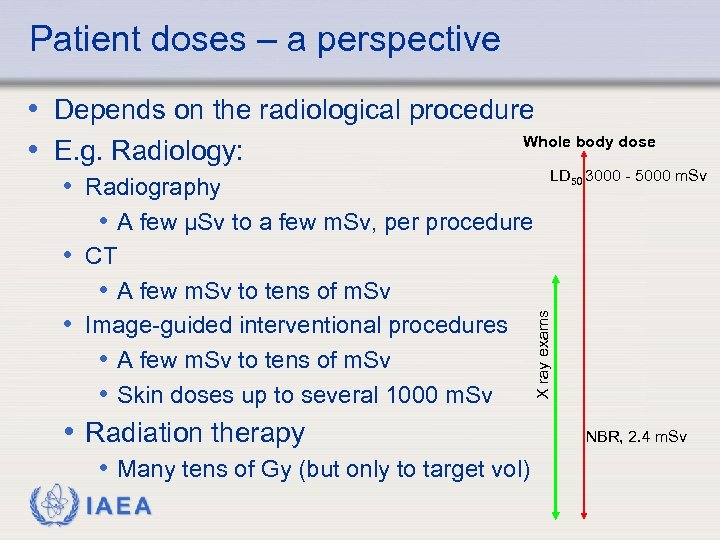
Patient doses – a perspective • Depends on the radiological procedure Whole body dose • E. g. Radiology: IAEA LD 50 3000 - 5000 m. Sv X ray exams • Radiography • A few μSv to a few m. Sv, per procedure • CT • A few m. Sv to tens of m. Sv • Image-guided interventional procedures • A few m. Sv to tens of m. Sv • Skin doses up to several 1000 m. Sv • Radiation therapy • Many tens of Gy (but only to target vol) NBR, 2. 4 m. Sv
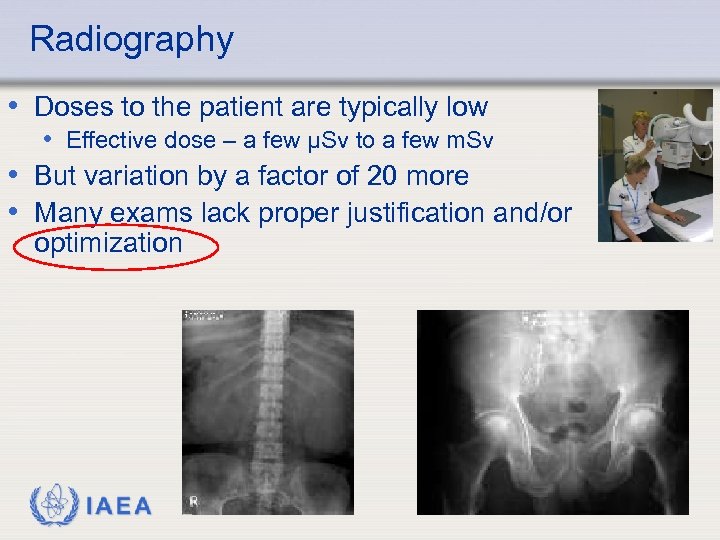
Radiography • Doses to the patient are typically low • Effective dose – a few μSv to a few m. Sv • But variation by a factor of 20 more • Many exams lack proper justification and/or optimization IAEA
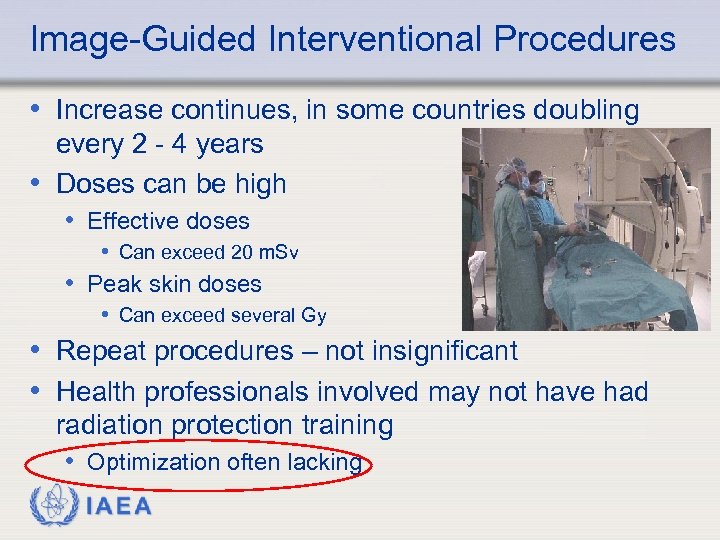
Image-Guided Interventional Procedures • Increase continues, in some countries doubling every 2 - 4 years • Doses can be high • Effective doses • Can exceed 20 m. Sv • Peak skin doses • Can exceed several Gy • Repeat procedures – not insignificant • Health professionals involved may not have had radiation protection training • Optimization often lacking IAEA
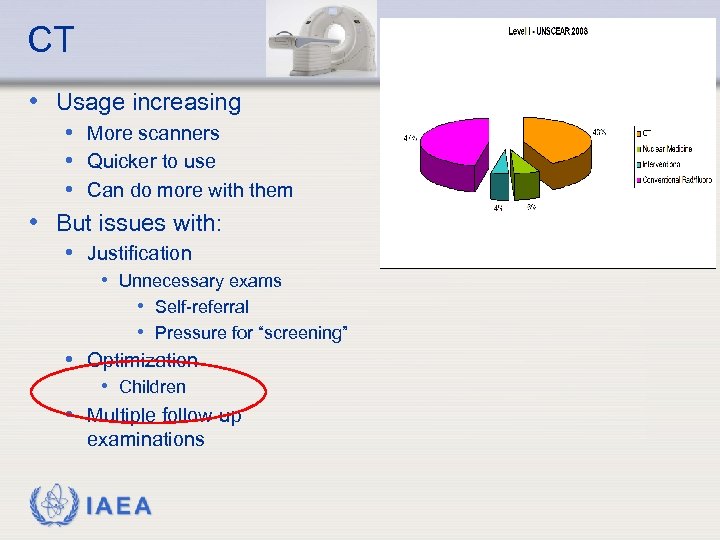
CT • Usage increasing • More scanners • Quicker to use • Can do more with them • But issues with: • Justification • Unnecessary exams • Self-referral • Pressure for “screening” • Optimization • Children • Multiple follow-up examinations IAEA
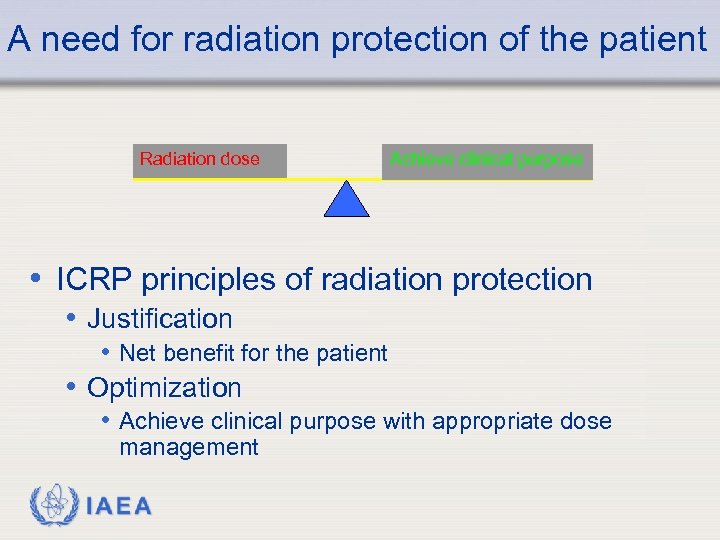
A need for radiation protection of the patient Radiation dose Achieve clinical purpose • ICRP principles of radiation protection • Justification • Net benefit for the patient • Optimization • Achieve clinical purpose with appropriate dose management IAEA
RP regulatory framework for medical exposure • The old BSS and the new BSS • The BSS sets out the requirements for Medical Exposure • Medical Exposure often called “TSA 3” in IAEA projects • Thematic Safety Area 3 IAEA
IAEA projects and TSA 3 • Directed at end-users – medical radiation facilities • All hospitals and medical centres in a Member State where radiation is used in medical applications • i. e. From large teaching hospitals to small rural units • All modalities, as applicable • Diagnostic radiology • Radiography, fluoroscopy, CT, mammography, dental, DEXA • Image guided interventional procedures • Nuclear medicine • Radiation therapy IAEA
TSA 3 – for each medical radiation facility: • Appropriate persons are in place to take the relevant responsibilities • Radiological medical practitioners • Medical radiation technologists • Medical physicists IAEA
TSA 3 – for each medical radiation facility: • The radiation protection principle of justification is being applied • In particular, “Level 3” for individual justification IAEA
TSA 3 – for each medical radiation facility: • The principle of optimization of protection is being applied to every exposure • Design considerations for equipment • Operational considerations • Calibration • Dosimetry of patients • DRLs • Quality assurance for medical exposures • Dose constraints IAEA
TSA 3 – for each medical radiation facility: • Unintended and accidental medical exposures are being addressed • Means for minimizing their likelihood • If they occur: • Appropriate investigations • Appropriate corrective actions • Written records IAEA
Some IAEA activities to help Member States with radiation protection of the patient IAEA
Dedicated website IAEA
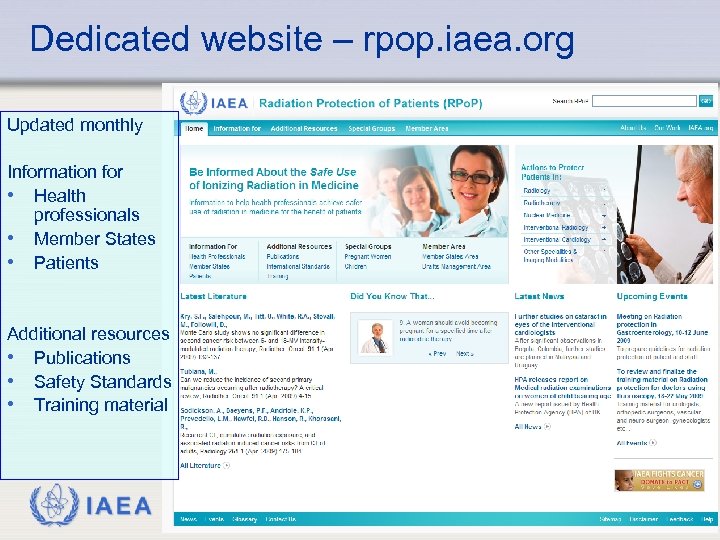
Dedicated website – rpop. iaea. org Updated monthly Information for • Health professionals • Member States • Patients Additional resources • Publications • Safety Standards • Training material IAEA
Developing Standards IAEA
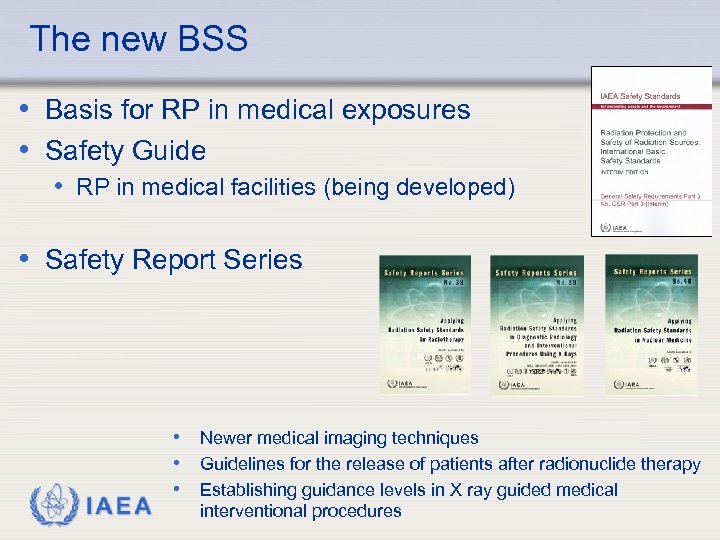
The new BSS • Basis for RP in medical exposures • Safety Guide • RP in medical facilities (being developed) • Safety Report Series IAEA • Newer medical imaging techniques • Guidelines for the release of patients after radionuclide therapy • Establishing guidance levels in X ray guided medical interventional procedures
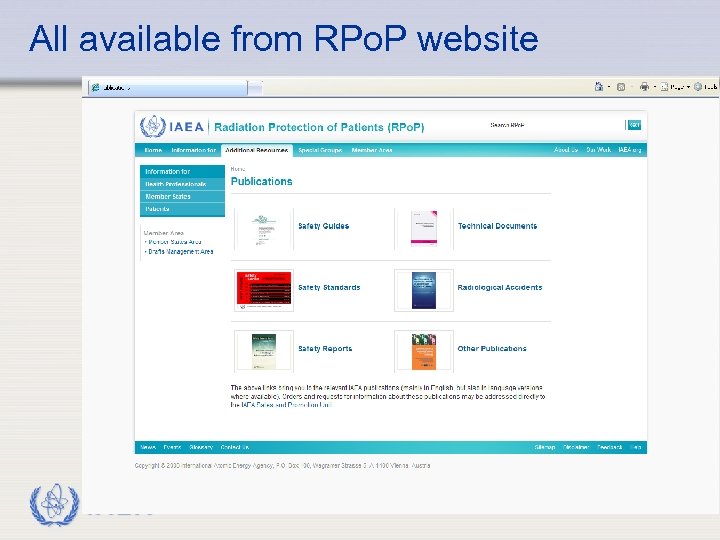
All available from RPo. P website IAEA
Promoting Education and Training IAEA
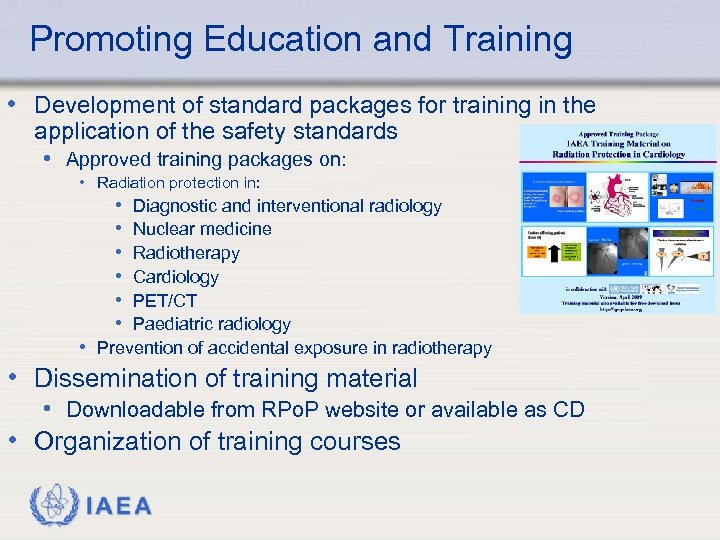
Promoting Education and Training • Development of standard packages for training in the application of the safety standards • Approved training packages on: • Radiation protection in: • Diagnostic and interventional radiology • Nuclear medicine • Radiotherapy • Cardiology • PET/CT • Paediatric radiology • Prevention of accidental exposure in radiotherapy • Dissemination of training material • Downloadable from RPo. P website or available as CD • Organization of training courses IAEA
Technical Assistance IAEA
Technical Cooperation • Through regional and national projects: • Procurement for Member States • QC kits, phantoms, dosimeters, publications, etc • Fellowships & Scientific Visits • Expert missions • Regional & national training courses IAEA
Diagnostic Reference Levels & the BSS IAEA
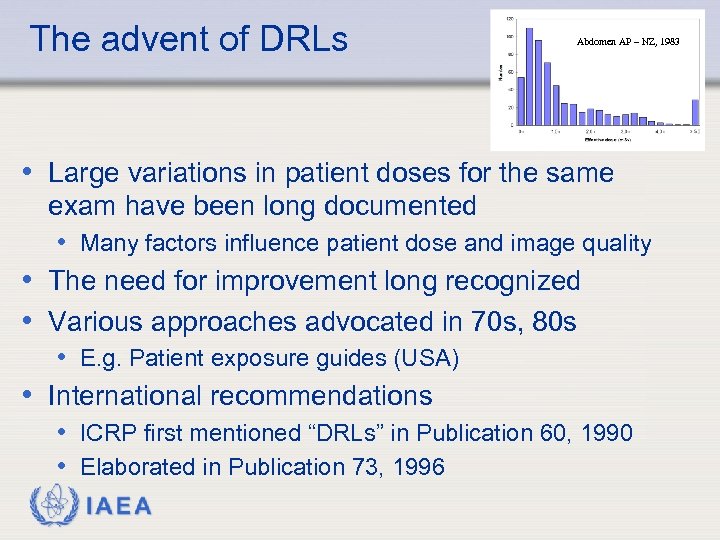
The advent of DRLs Abdomen AP – NZ, 1983 • Large variations in patient doses for the same exam have been long documented • Many factors influence patient dose and image quality • The need for improvement long recognized • Various approaches advocated in 70 s, 80 s • E. g. Patient exposure guides (USA) • International recommendations • ICRP first mentioned “DRLs” in Publication 60, 1990 • Elaborated in Publication 73, 1996 IAEA
The IAEA and DRLs • The International BSS, 1996 • Introduced Guidance Levels for medical exposure • Concept same as DRLs • Revised International BSS, 2011 • DRLs continue as an important tool for optimization of patient radiation protection in imaging IAEA
What does the new BSS require? • 2 aspects • Establishing (national) DRLs • Using the DRLs IAEA
Establishing national DRLs - BSS • Who? • Government as the facilitator • Health Authority • Professional Bodies • Regulatory Body IAEA
Establishing national DRLs - BSS • For what procedures? • Medical imaging • Including image guided interventional procedures IAEA
Using national DRLs - BSS • The (radiation protection) Regulatory Body mandates the use of the nationally established DRLs IAEA
Using national DRLs - BSS • At each medical radiation facility • Local assessments of typical doses for common procedures • Results compared with relevant DRLs, and if: • Exceed the relevant DRLs; or • Substantially below the relevant DRL and images not of diagnostic quality • Review of adequacy of optimization of patient radiation protection • Corrective action, if indicated IAEA
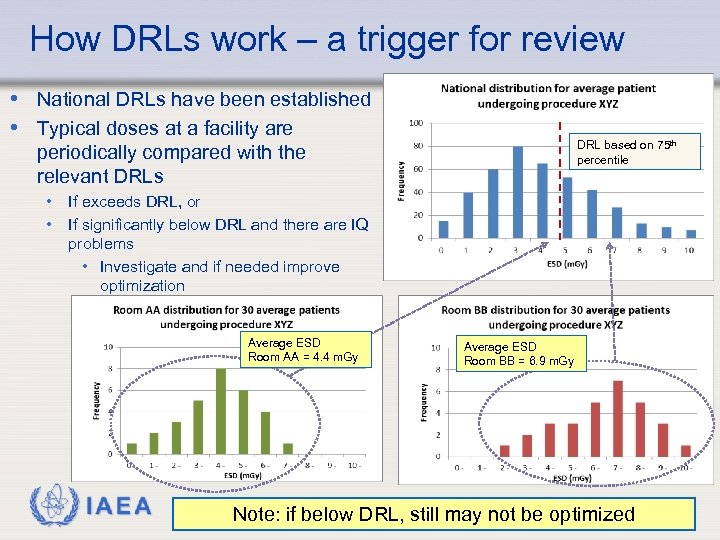
How DRLs work – a trigger for review • National DRLs have been established • Typical doses at a facility are DRL based on 75 th percentile periodically compared with the relevant DRLs • If exceeds DRL, or • If significantly below DRL and there are IQ problems • Investigate and if needed improve optimization Average ESD Room AA = 4. 4 m. Gy IAEA Average ESD Room BB = 6. 9 m. Gy Note: if below DRL, still may not be optimized
What are the features of DRLs? • Applicable to a country or region within a country • Values established, in consultation, by • Professional bodies, Health Authority, RP Regulatory Body • For common examinations • In setting values, the following must be considered • • • Clinical requirements – general or specific Adequate image quality Use of easily measured dose quantities Data from wide-spread surveys Standardised patient or phantom Need for revision as technology and techniques improve All of these will be discussed many times this week IAEA
In setting DRLs • Adequate image quality IAEA
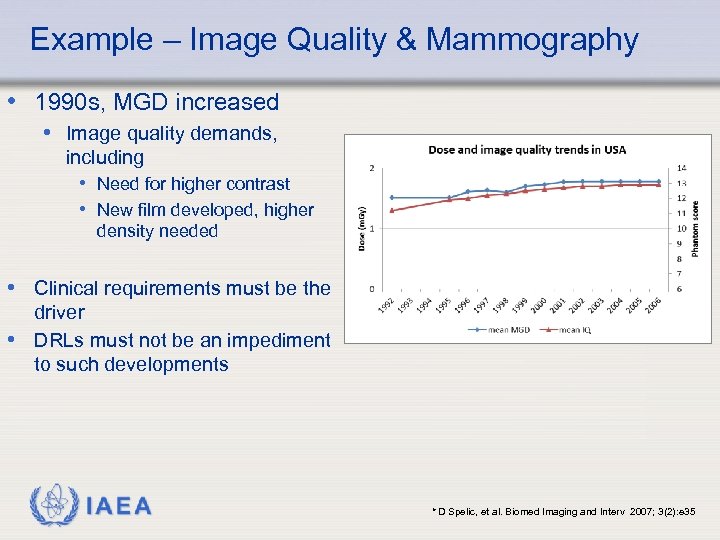
Example – Image Quality & Mammography • 1990 s, MGD increased • Image quality demands, including • Need for higher contrast • New film developed, higher density needed • Clinical requirements must be the driver • DRLs must not be an impediment to such developments IAEA * D Spelic, et al. Biomed Imaging and Interv 2007; 3(2): e 35
Setting a DRL value for a procedure performed with different technologies and techniques IAEA
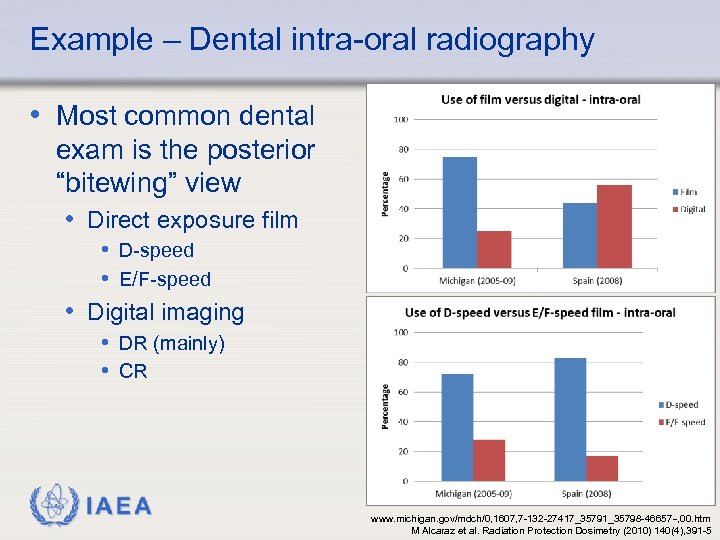
Example – Dental intra-oral radiography • Most common dental exam is the posterior “bitewing” view • Direct exposure film • D-speed • E/F-speed • Digital imaging • DR (mainly) • CR IAEA www. michigan. gov/mdch/0, 1607, 7 -132 -27417_35791_35798 -46657 -, 00. htm M Alcaraz et al. Radiation Protection Dosimetry (2010) 140(4), 391 -5
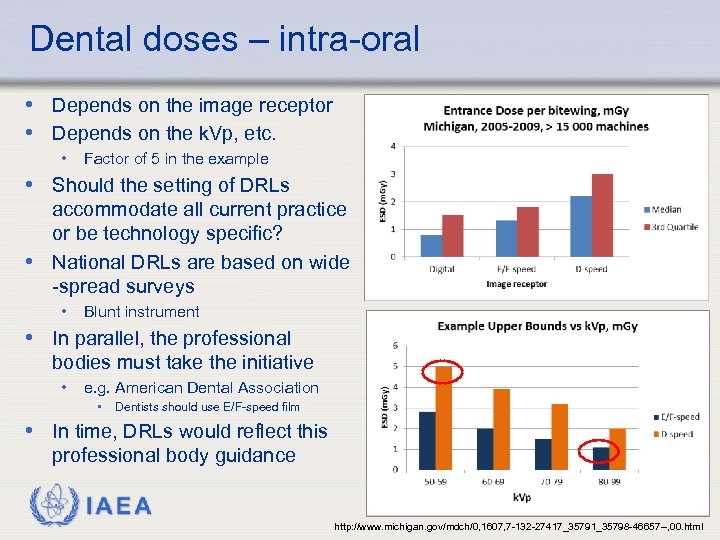
Dental doses – intra-oral • Depends on the image receptor • Depends on the k. Vp, etc. • Factor of 5 in the example • Should the setting of DRLs accommodate all current practice or be technology specific? • National DRLs are based on wide -spread surveys • Blunt instrument • In parallel, the professional bodies must take the initiative • e. g. American Dental Association • Dentists should use E/F-speed film • In time, DRLs would reflect this professional body guidance IAEA http: //www. michigan. gov/mdch/0, 1607, 7 -132 -27417_35791_35798 -46657 --, 00. html
• DRLs reflect immediate-past practice in a given country, “warts and all”, applied prospectively • Therefore, the periodic review of DRLs is very important IAEA
Patient size • The concept of a DRL is based on a typical patient, either: • A phantom, or • Patients selected on basis of some criteria • Does “looking after” this standardised patient ensure that all patients are ok? • Does an adult DRL help ensure optimization for a child? • Experience has shown that the answer is “No” • There is a need for a range of “standardised patients” • E. g. several paediatric sizes IAEA
Setting DRL values – not all exams are equal • DRLs for projection radiography are relatively easy • But with other modalities it is more difficult • Image Guided Interventional Procedures (IGIPs) • Factors include • • • Operator skill and experience Patient size and anatomy Complexity of the task Equipment Routine versus emergency • DRLs for IGIPs need to reflect the overall system • DRLs for IGIPs are not appropriate for deterministic effects • DRLs are not used for individual patients IAEA
DRL values and the new BSS • The new BSS gives no values • The old BSS did (Schedule III) • The new Safety Guide will discuss values of DRLs in use • Preference is for each country (or region in a country) to have their own • Based on the practice in their country IAEA
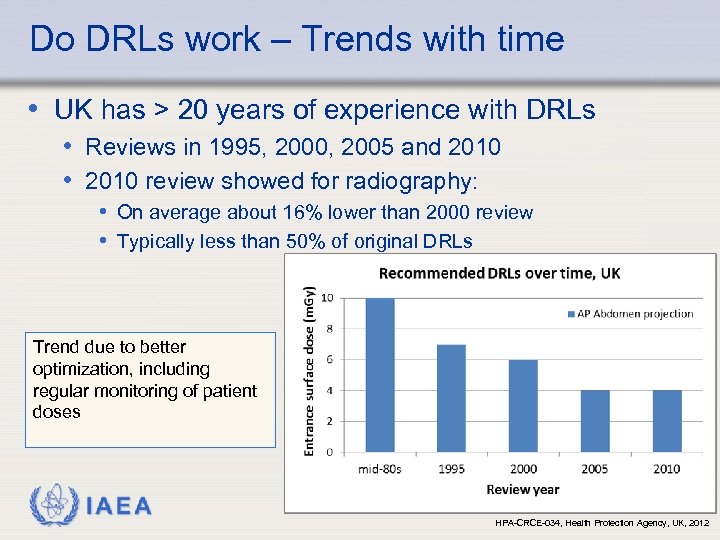
Do DRLs work – Trends with time • UK has > 20 years of experience with DRLs • Reviews in 1995, 2000, 2005 and 2010 • 2010 review showed for radiography: • On average about 16% lower than 2000 review • Typically less than 50% of original DRLs Trend due to better optimization, including regular monitoring of patient doses IAEA HPA-CRCE-034, Health Protection Agency, UK, 2012
Implementation around the world • Still a long way to go • Many countries have introduced DRLs, but the level of utilization varies widely • Between countries, and within countries • IAEA regional projects in patient protection • Developing Member States in: • Africa, Asia, Europe, Latin America • Includes setting up DRLs • Level of achievement to date is low At RAF 9044 RCM, DRLs were identified as the number 1 priority IAEA
Regional meeting, Kampala, 18 -22 Feb • Aim • To describe, using teaching, practical work and group discussion, the concepts and methodologies that will enable participants to facilitate in their own countries the: • Establishment (and periodic review) of national DRLs, and • Application and use of DRLs in their country’s hospitals IAEA
Summary • BSS sets out the requirements for patient radiation protection • Optimization of protection is a cornerstone of patient radiation protection • DRLs are an important tool for optimization • Need to be established • Need to be used • Need to be reviewed periodically IAEA
Скачать презентацию IAEA the BSS and DRLs Regional Meeting on
bf905cf2d97a11f353a7eb47510a1809.ppt