


 Скачать презентацию IA-DMM Measures and Results for Year 1
8937f5cf6da34f79dc38c10e636a8ee9.ppt
- Количество слайдов: 12
 IA-DMM Measures and Results for Year 1
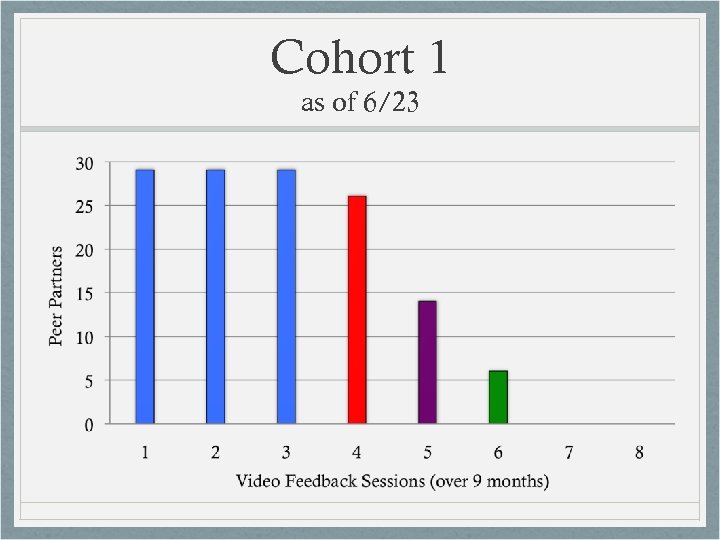 Cohort 1 as of 6/23
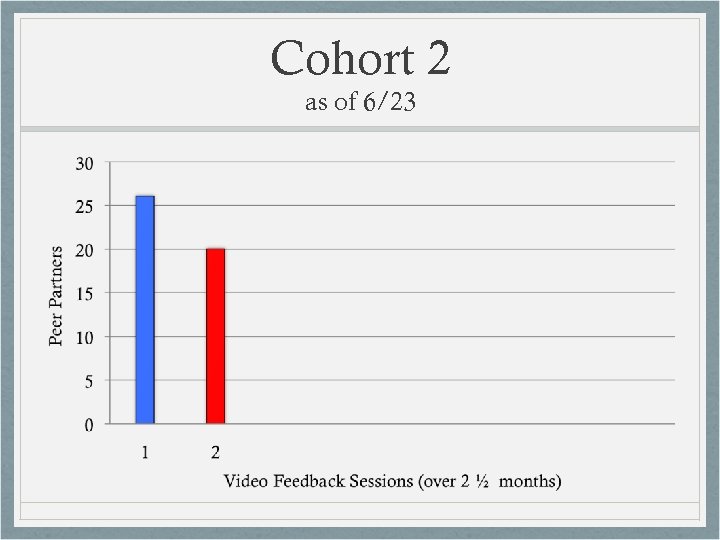 Cohort 2 as of 6/23
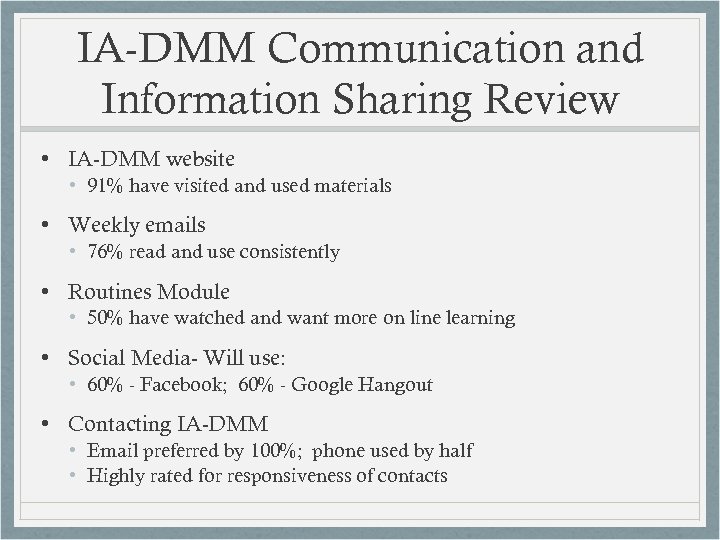 IA-DMM Communication and Information Sharing Review • IA-DMM website • 91% have visited and used materials • Weekly emails • 76% read and use consistently • Routines Module • 50% have watched and want more on line learning • Social Media- Will use: • 60% - Facebook; 60% - Google Hangout • Contacting IA-DMM • Email preferred by 100%; phone used by half • Highly rated for responsiveness of contacts
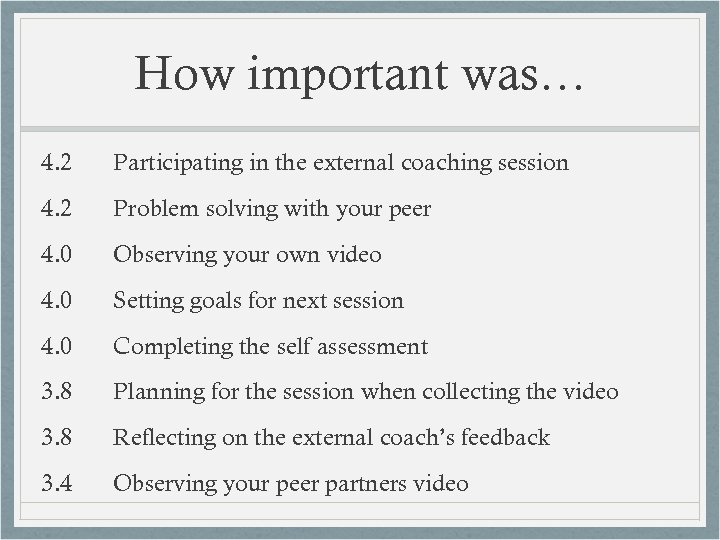 How important was… 4. 2 Participating in the external coaching session 4. 2 Problem solving with your peer 4. 0 Observing your own video 4. 0 Setting goals for next session 4. 0 Completing the self assessment 3. 8 Planning for the session when collecting the video 3. 8 Reflecting on the external coach’s feedback 3. 4 Observing your peer partners video
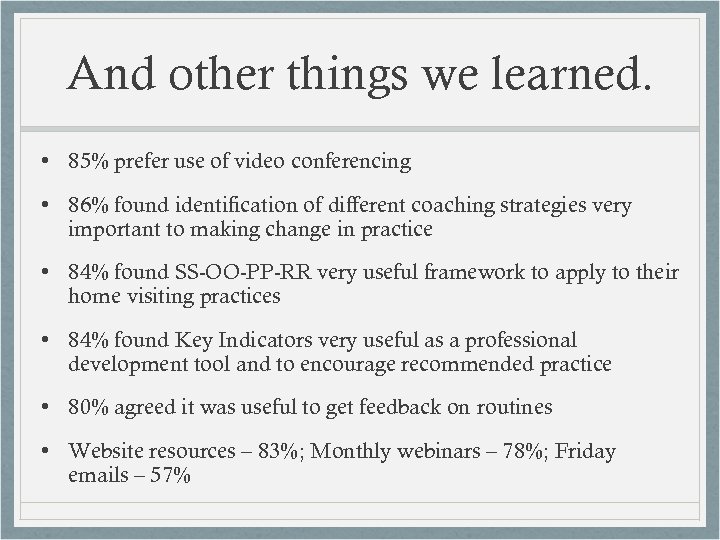 And other things we learned. • 85% prefer use of video conferencing • 86% found identification of different coaching strategies very important to making change in practice • 84% found SS-OO-PP-RR very useful framework to apply to their home visiting practices • 84% found Key Indicators very useful as a professional development tool and to encourage recommended practice • 80% agreed it was useful to get feedback on routines • Website resources – 83%; Monthly webinars – 78%; Friday emails – 57%
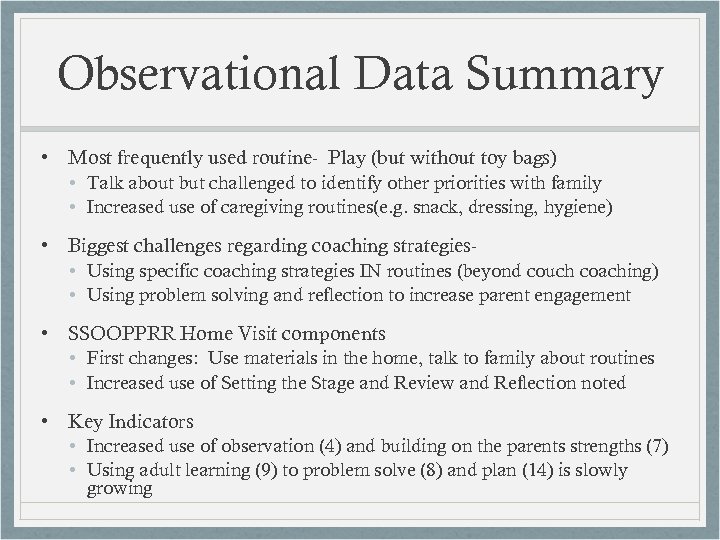 Observational Data Summary • Most frequently used routine- Play (but without toy bags) • Talk about but challenged to identify other priorities with family • Increased use of caregiving routines(e. g. snack, dressing, hygiene) • Biggest challenges regarding coaching strategies • Using specific coaching strategies IN routines (beyond couch coaching) • Using problem solving and reflection to increase parent engagement • SSOOPPRR Home Visit components • First changes: Use materials in the home, talk to family about routines • Increased use of Setting the Stage and Review and Reflection noted • Key Indicators • Increased use of observation (4) and building on the parents strengths (7) • Using adult learning (9) to problem solve (8) and plan (14) is slowly growing
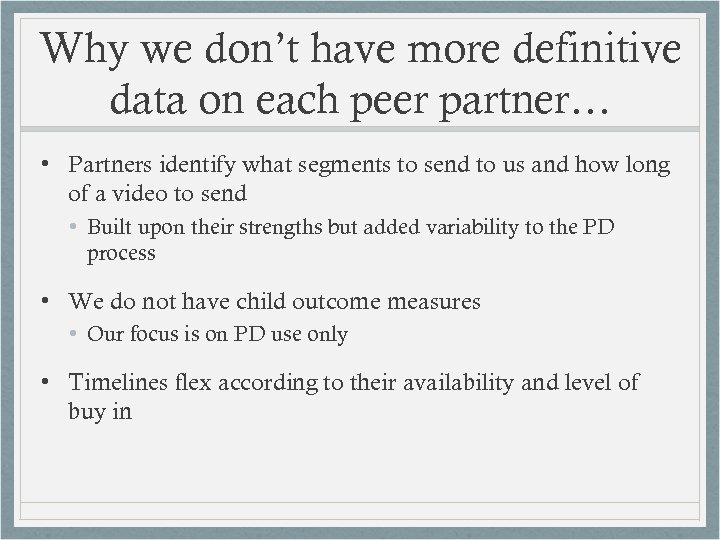 Why we don’t have more definitive data on each peer partner… • Partners identify what segments to send to us and how long of a video to send • Built upon their strengths but added variability to the PD process • We do not have child outcome measures • Our focus is on PD use only • Timelines flex according to their availability and level of buy in
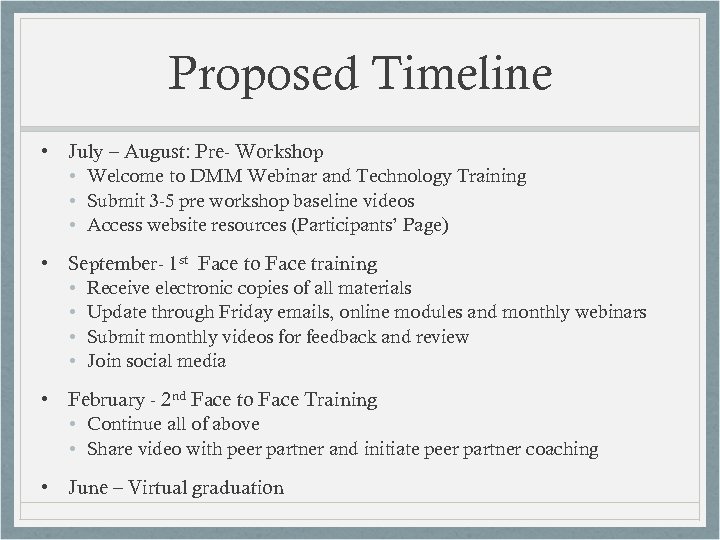 Proposed Timeline • July – August: Pre- Workshop • Welcome to DMM Webinar and Technology Training • Submit 3 -5 pre workshop baseline videos • Access website resources (Participants’ Page) • September- 1 st Face to Face training • Receive electronic copies of all materials • Update through Friday emails, online modules and monthly webinars • Submit monthly videos for feedback and review • Join social media • February - 2 nd Face to Face Training • Continue all of above • Share video with peer partner and initiate peer partner coaching • June – Virtual graduation
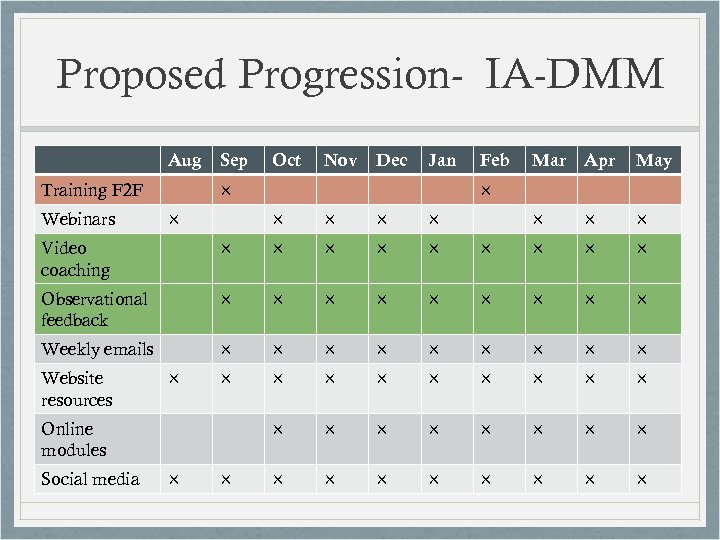 Proposed Progression- IA-DMM Aug Training F 2 F Webinars Sep Oct Nov Dec Jan × × Feb Mar Apr May × × × × Video coaching × × × × × Observational feedback × × × × × Weekly emails × × × × × × × × × Website resources × Online modules Social media × ×
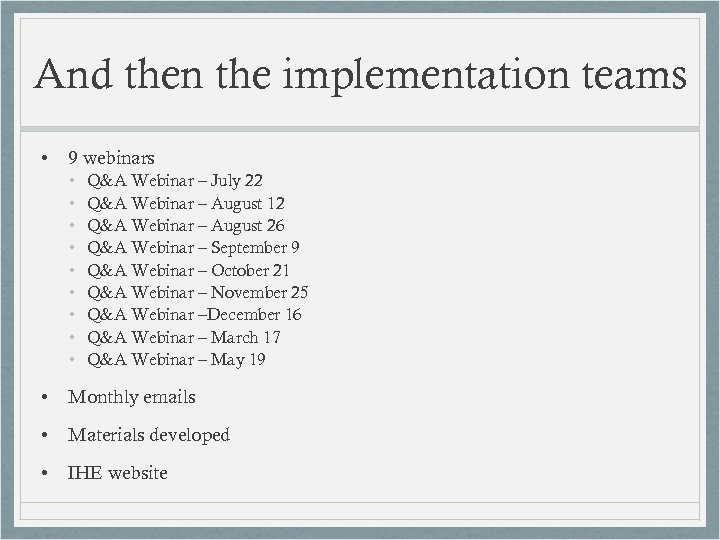 And then the implementation teams • 9 webinars • • • Q&A Webinar – July 22 Q&A Webinar – August 12 Q&A Webinar – August 26 Q&A Webinar – September 9 Q&A Webinar – October 21 Q&A Webinar – November 25 Q&A Webinar –December 16 Q&A Webinar – March 17 Q&A Webinar – May 19 • Monthly emails • Materials developed • IHE website
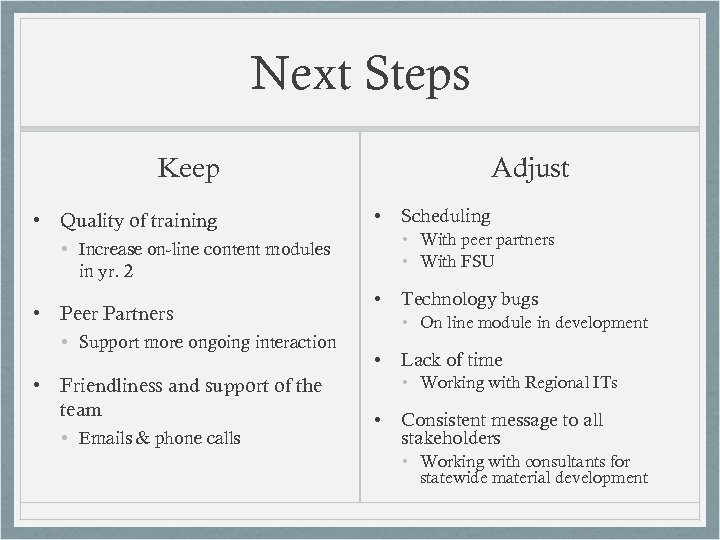 Next Steps Keep • Quality of training Adjust • • With peer partners • With FSU • Increase on-line content modules in yr. 2 • Peer Partners • Support more ongoing interaction • Friendliness and support of the team • Emails & phone calls Scheduling • Technology bugs • On line module in development • Lack of time • Working with Regional ITs • Consistent message to all stakeholders • Working with consultants for statewide material development