Скачать презентацию I What is Theatre I can take
d5c75099c503c46d628f99806170a10c.ppt
- Количество слайдов: 68

 I. What is Theatre?
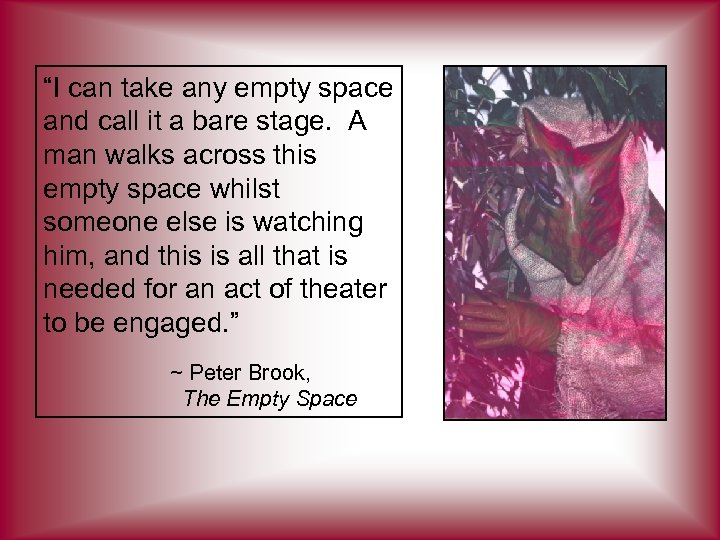 “I can take any empty space and call it a bare stage. A man walks across this empty space whilst someone else is watching him, and this is all that is needed for an act of theater to be engaged. ” ~ Peter Brook, The Empty Space
 What is a work of art? “Any work of art is an aesthetic address (in some form) by an individual to another individual, where there are TWO levels of meaning -the surface, apparent meaning, which in some way symbolizes the deeper, represented meaning. ” ~ Richard Southern The Seven Ages of Theatre
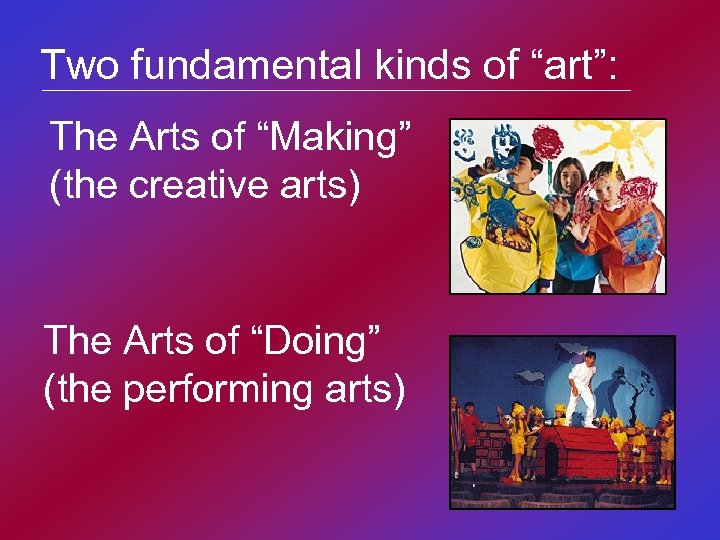 Two fundamental kinds of “art”: The Arts of “Making” (the creative arts) The Arts of “Doing” (the performing arts)
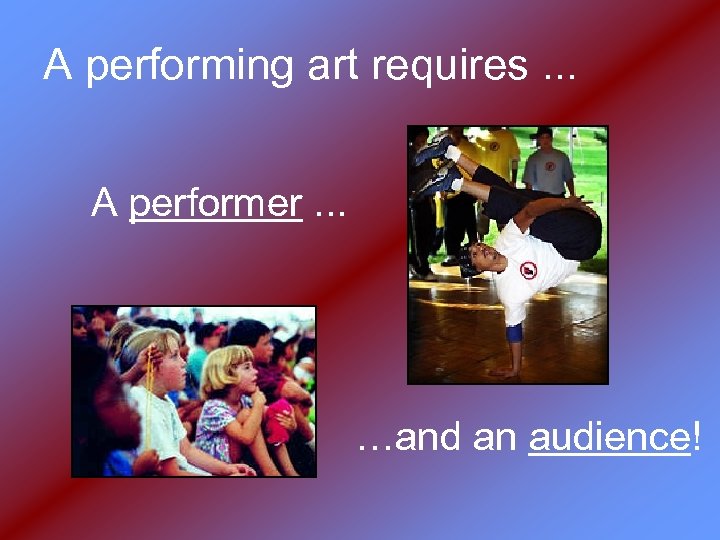 A performing art requires. . . A performer. . . …and an audience!
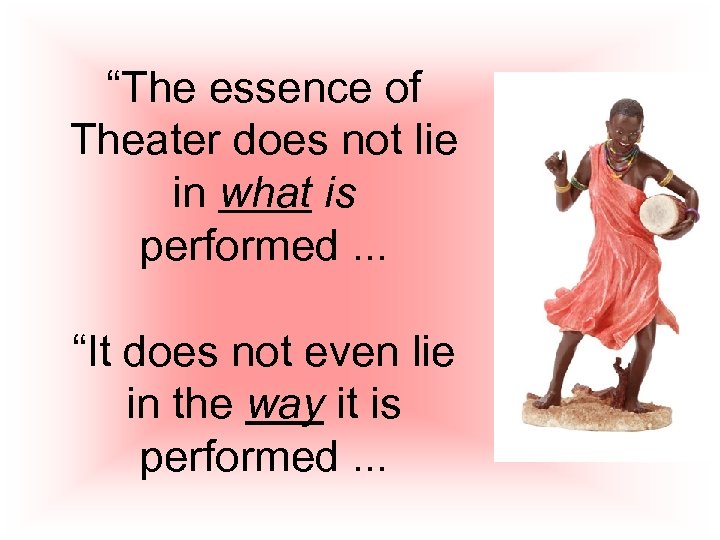 “The essence of Theater does not lie in what is performed. . . “It does not even lie in the way it is performed. . .
 “The essence of theater lies in the impression made on the audience by the manner in which you perform. “The essence of Theater is not what is enacted, but how it is received -- its effect on the audience. ” ~ Richard Southern, The Seven Ages of the Theatre
 So what is that effect we’re talking about? ?
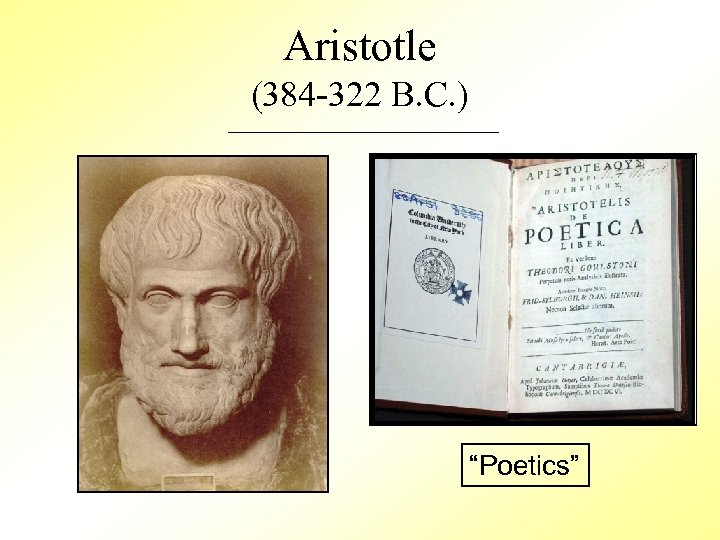 Aristotle (384 -322 B. C. ) “Poetics”
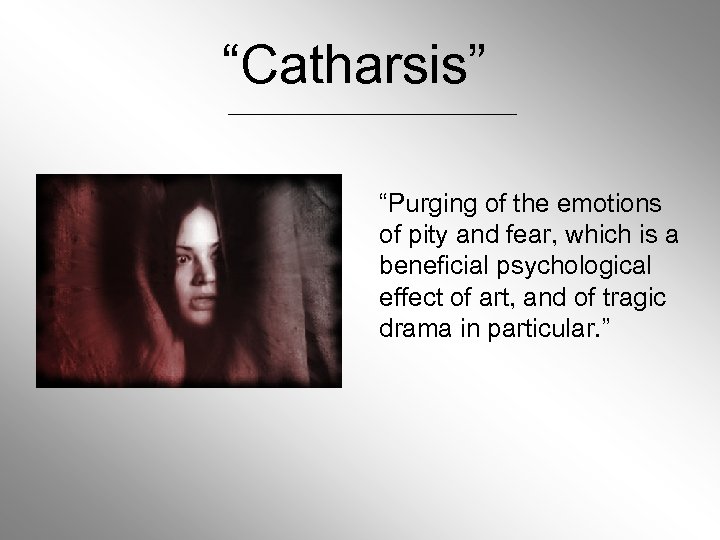 “Catharsis” “Purging of the emotions of pity and fear, which is a beneficial psychological effect of art, and of tragic drama in particular. ”
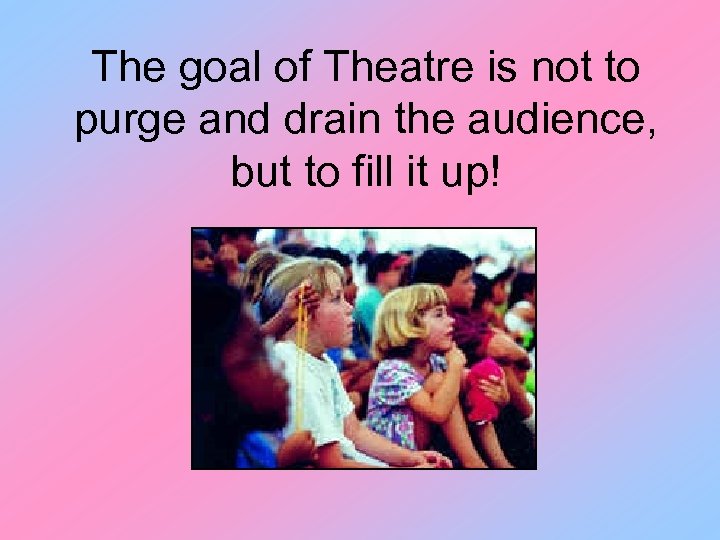 The goal of Theatre is not to purge and drain the audience, but to fill it up!

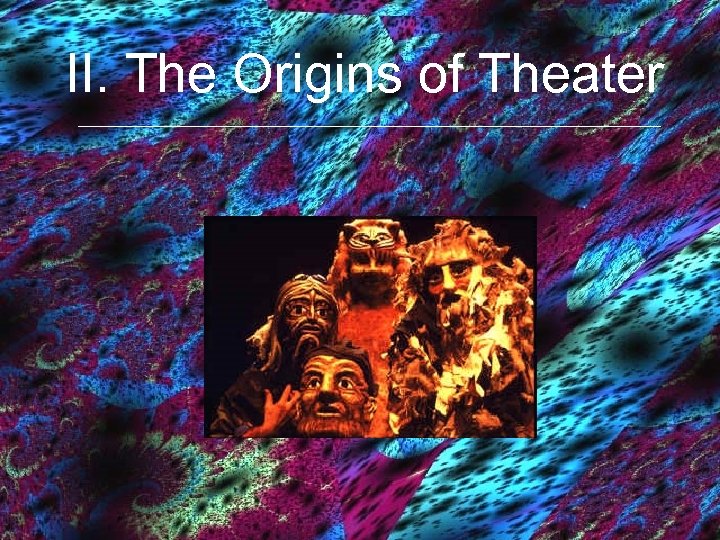 II. The Origins of Theater
 Where does Theater begin?
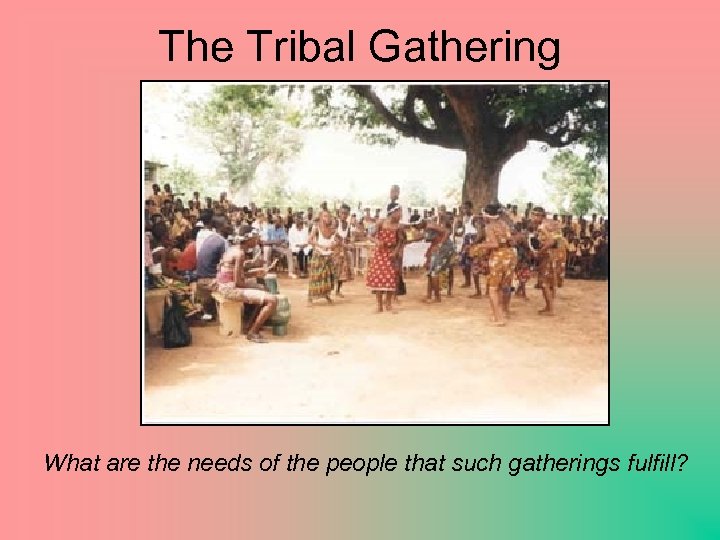 The Tribal Gathering What are the needs of the people that such gatherings fulfill?
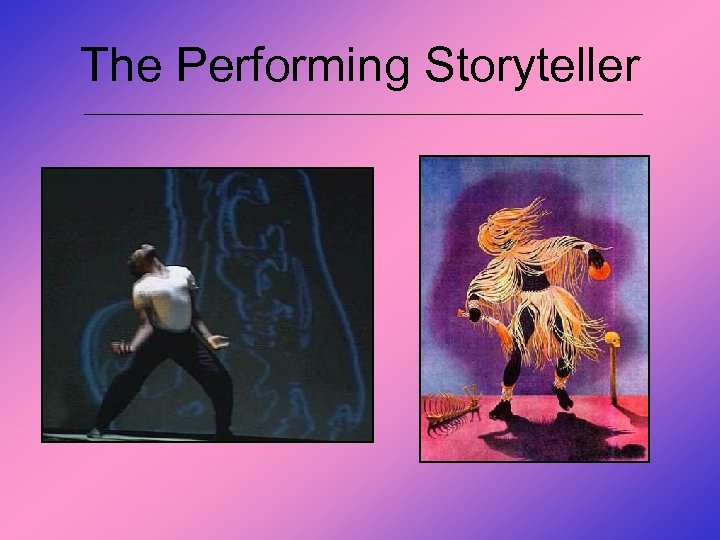 The Performing Storyteller
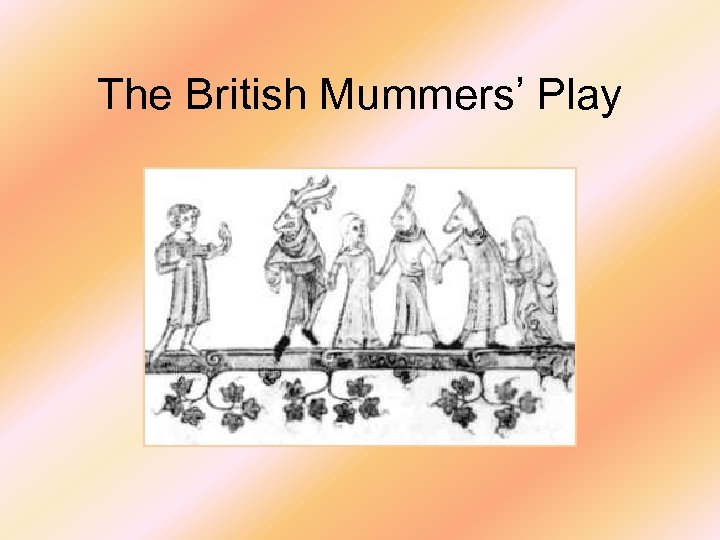
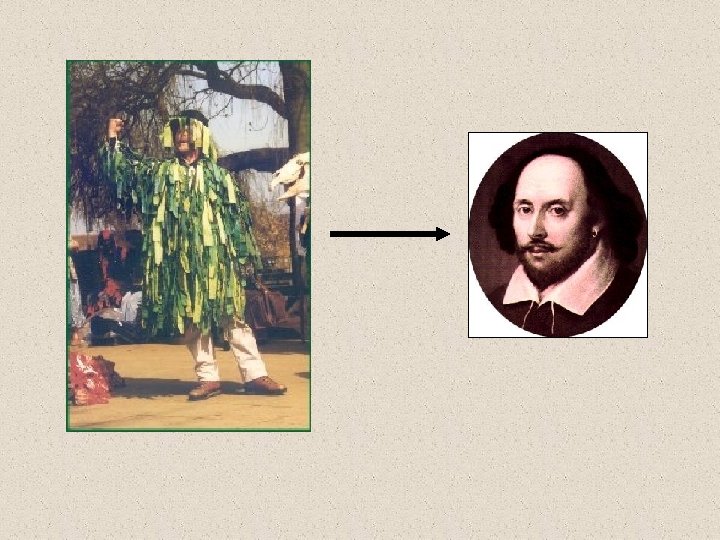
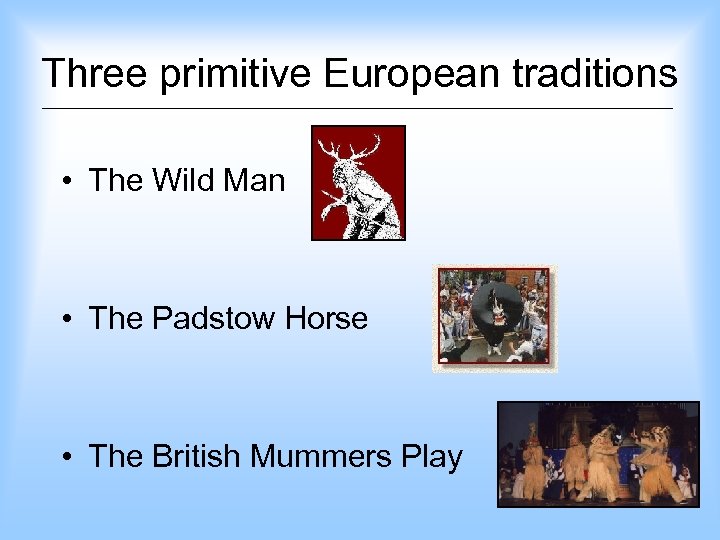 Three primitive European traditions • The Wild Man • The Padstow Horse • The British Mummers Play
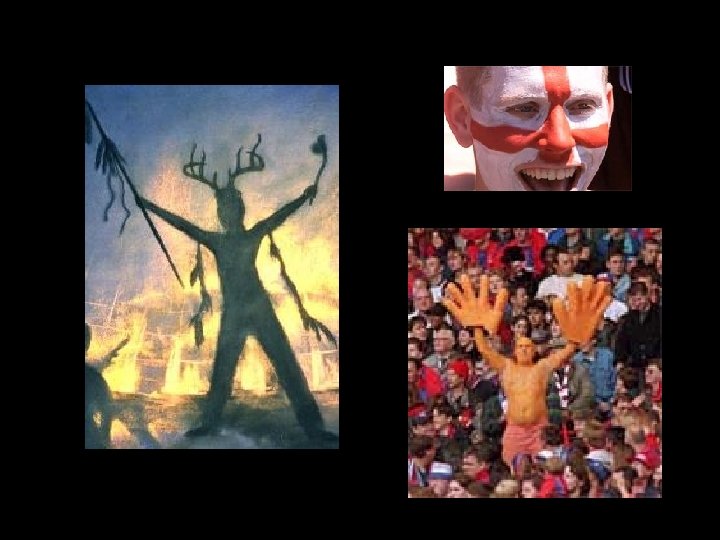
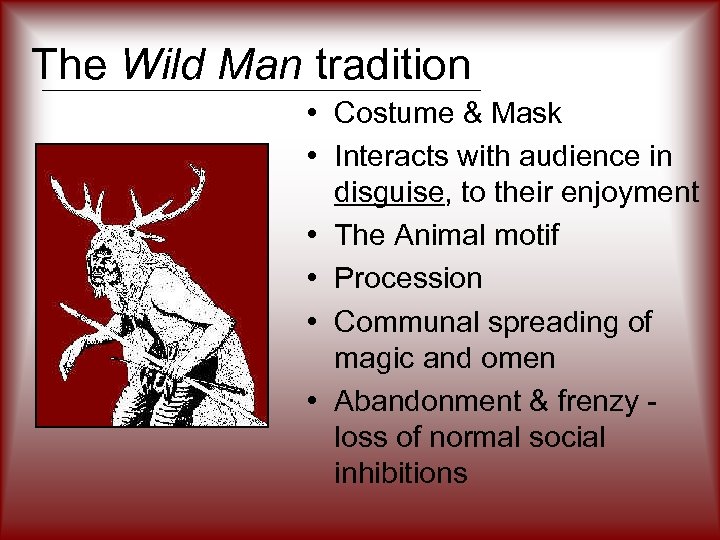 The Wild Man tradition • Costume & Mask • Interacts with audience in disguise, to their enjoyment • The Animal motif • Procession • Communal spreading of magic and omen • Abandonment & frenzy loss of normal social inhibitions

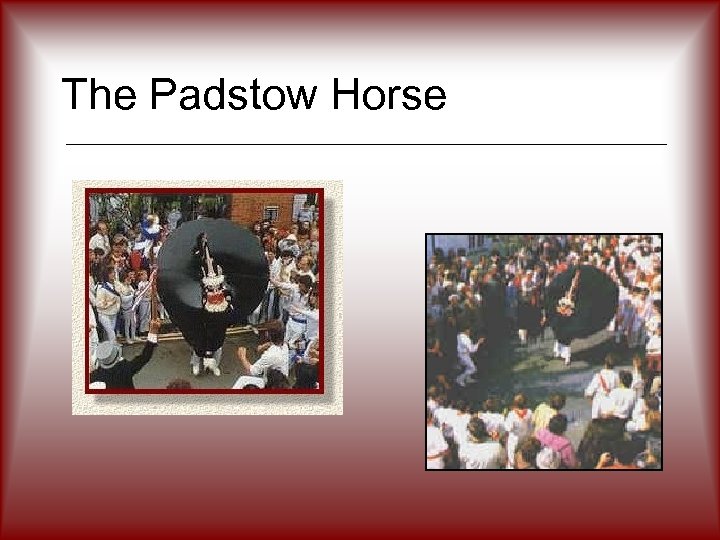 The Padstow Horse
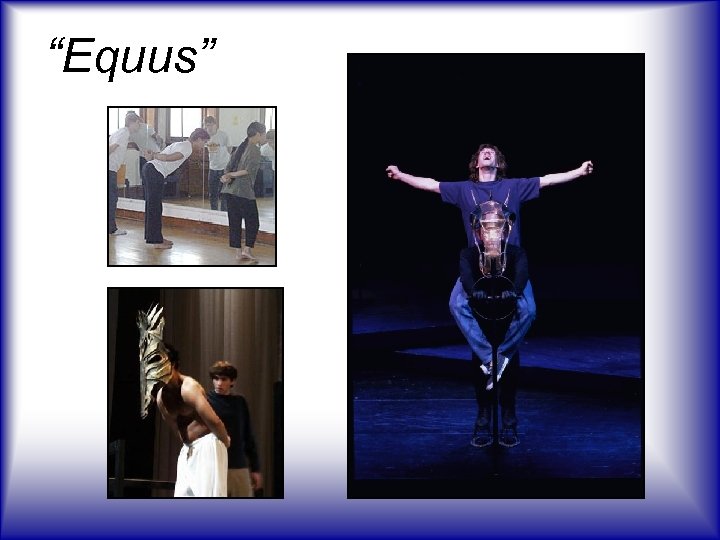
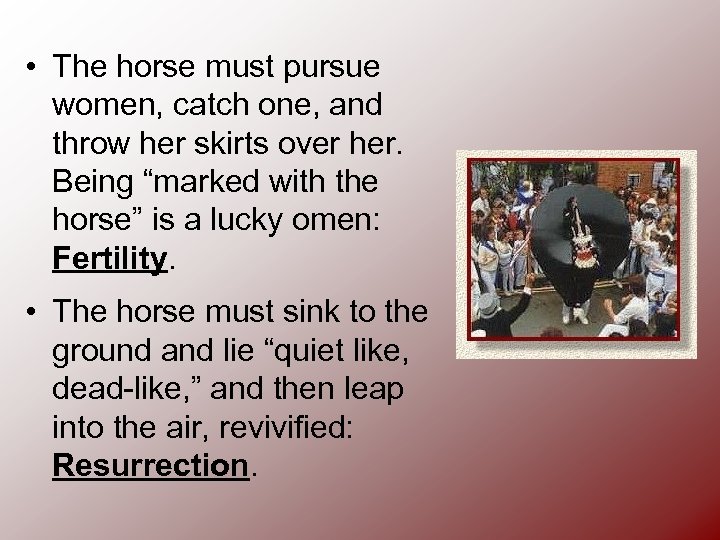 • The horse must pursue women, catch one, and throw her skirts over her. Being “marked with the horse” is a lucky omen: Fertility. • The horse must sink to the ground and lie “quiet like, dead-like, ” and then leap into the air, revivified: Resurrection.
 “Equus”

 The British Mummers’ Play
 “St. George Plays” - many versions
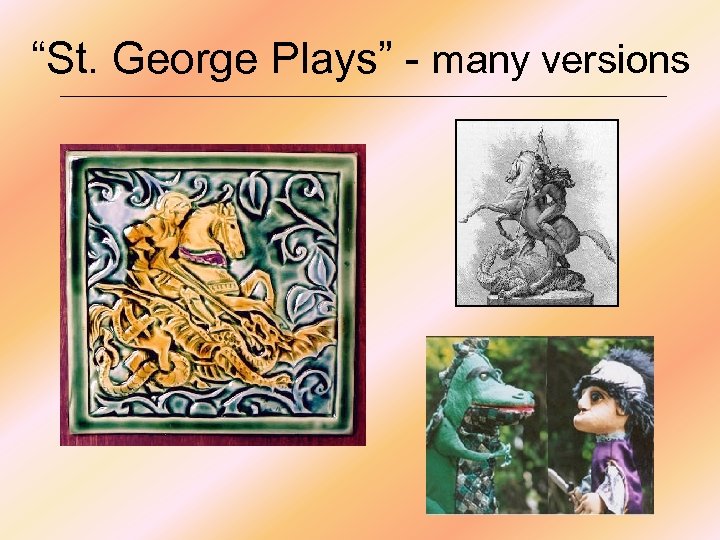
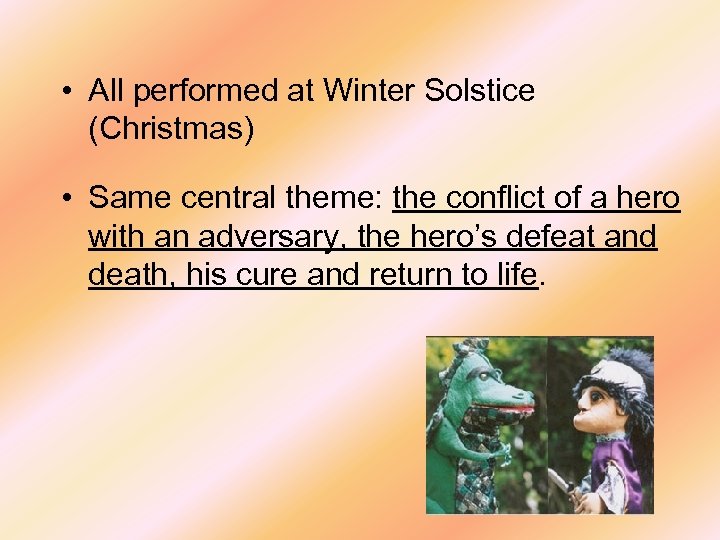 • All performed at Winter Solstice (Christmas) • Same central theme: the conflict of a hero with an adversary, the hero’s defeat and death, his cure and return to life.
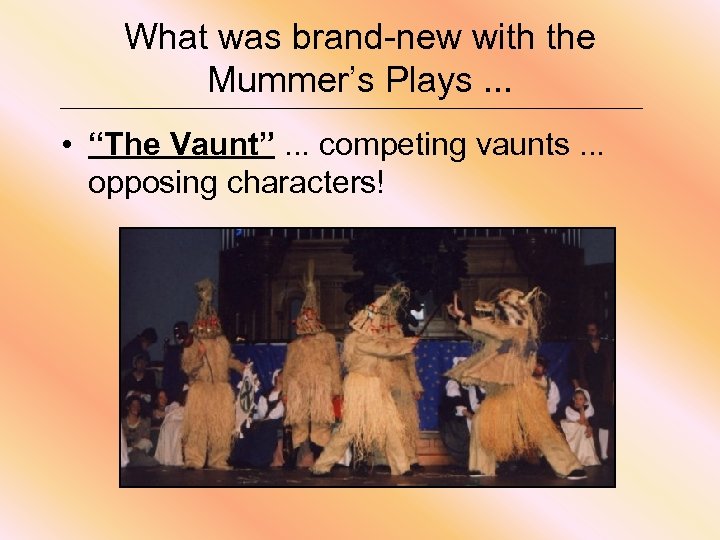 What was brand-new with the Mummer’s Plays. . . • “The Vaunt”. . . competing vaunts. . . opposing characters!
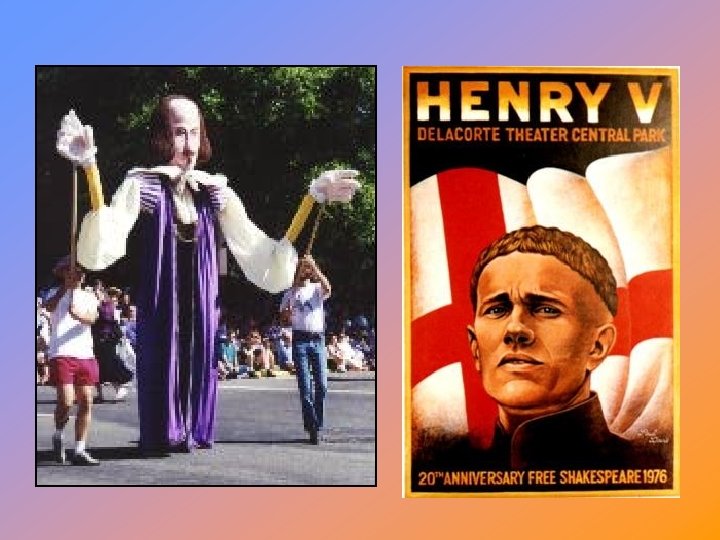
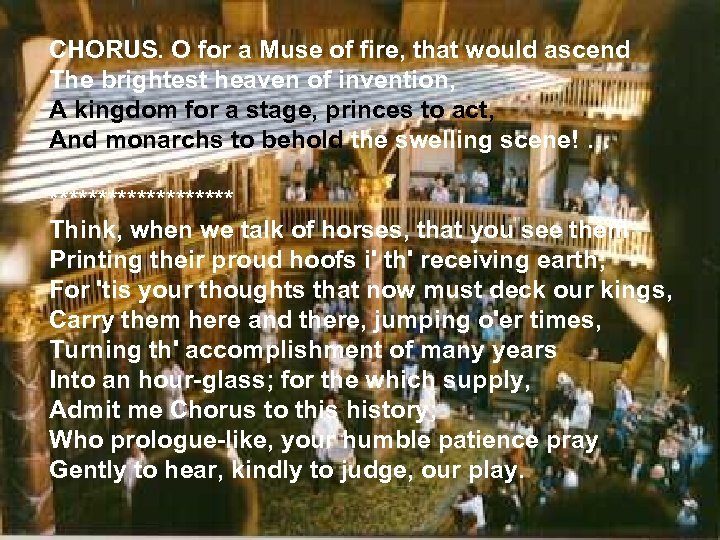 CHORUS. O for a Muse of fire, that would ascend The brightest heaven of invention, A kingdom for a stage, princes to act, And monarchs to behold the swelling scene! … ********** Think, when we talk of horses, that you see them Printing their proud hoofs i' th' receiving earth; For 'tis your thoughts that now must deck our kings, Carry them here and there, jumping o'er times, Turning th' accomplishment of many years Into an hour-glass; for the which supply, Admit me Chorus to this history; Who prologue-like, your humble patience pray Gently to hear, kindly to judge, our play.
 Other additions to the tradition • Set lines of Dialogue • Complex Episodes and Scenes • A Company of Players • Pre-planning … Rehearsal!

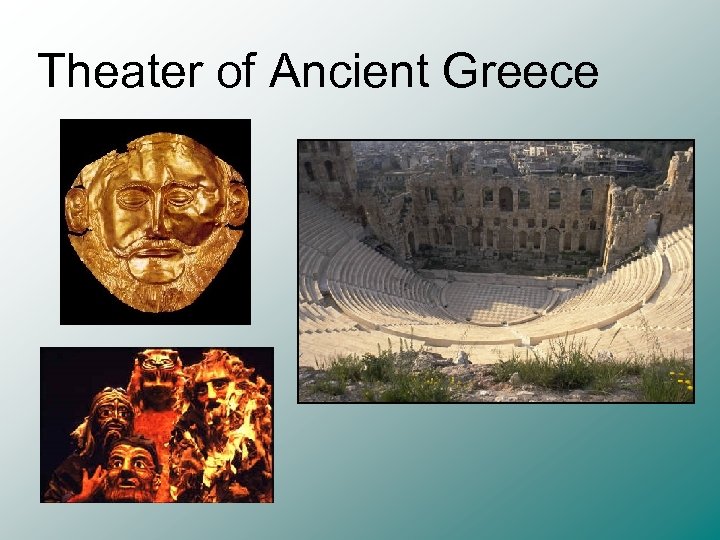 Theater of Ancient Greece
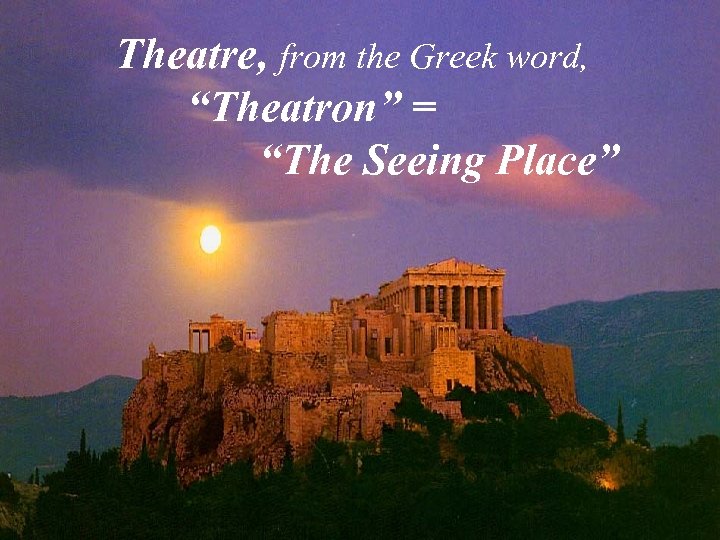 Theatre, from the Greek word, “Theatron” = “The Seeing Place”
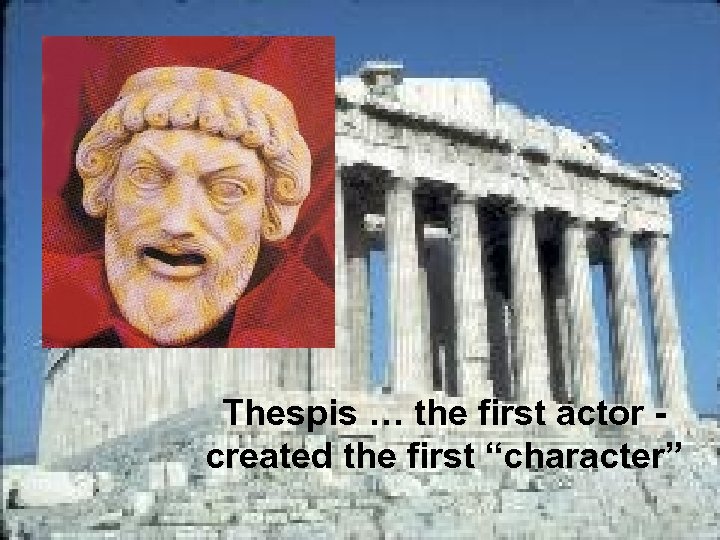 Thespis … the first actor created the first “character”
 “Thespians”
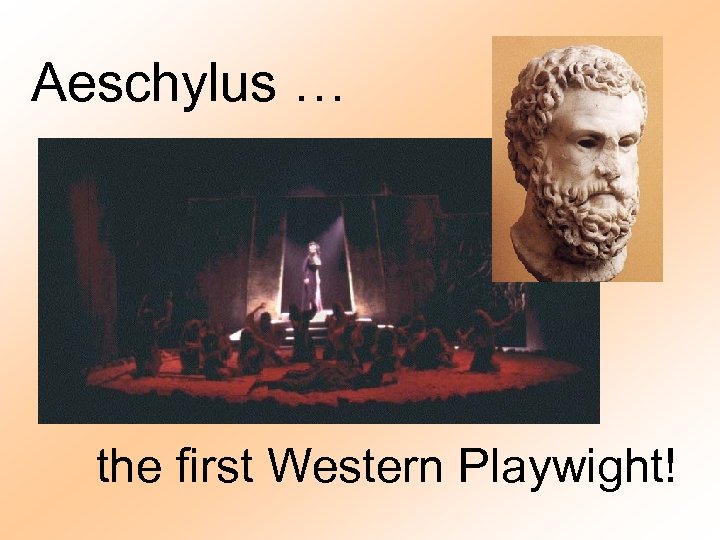 Aeschylus … the first Western Playwight!
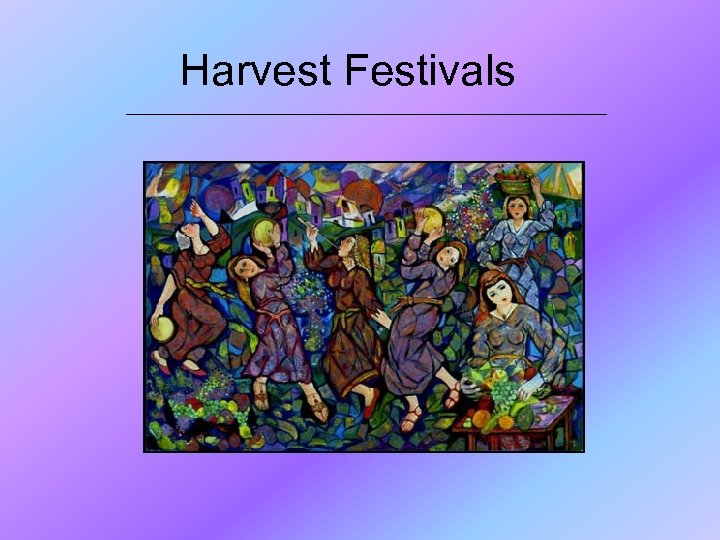 Harvest Festivals
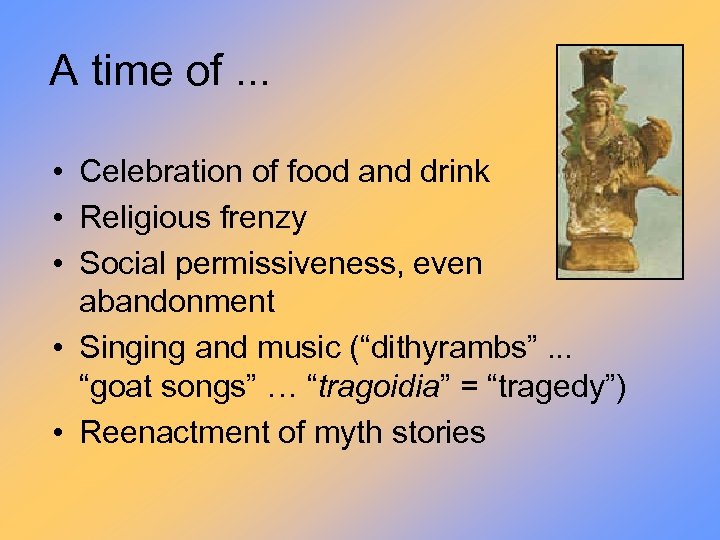 A time of. . . • Celebration of food and drink • Religious frenzy • Social permissiveness, even abandonment • Singing and music (“dithyrambs”. . . “goat songs” … “tragoidia” = “tragedy”) • Reenactment of myth stories
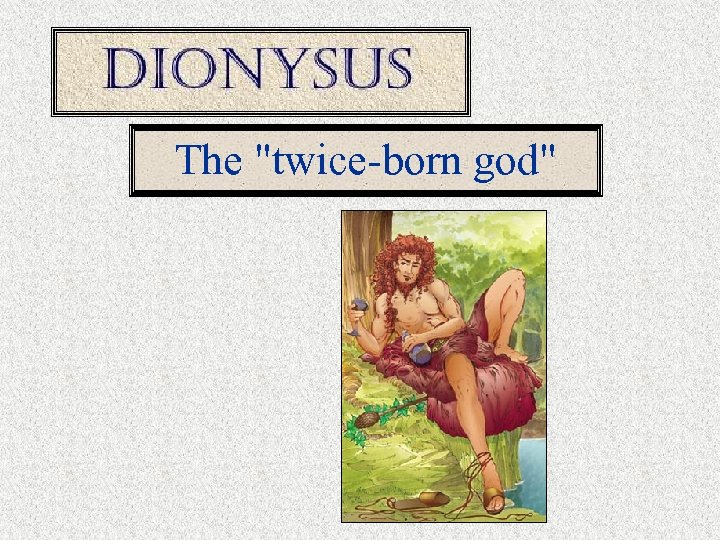 The "twice-born god"
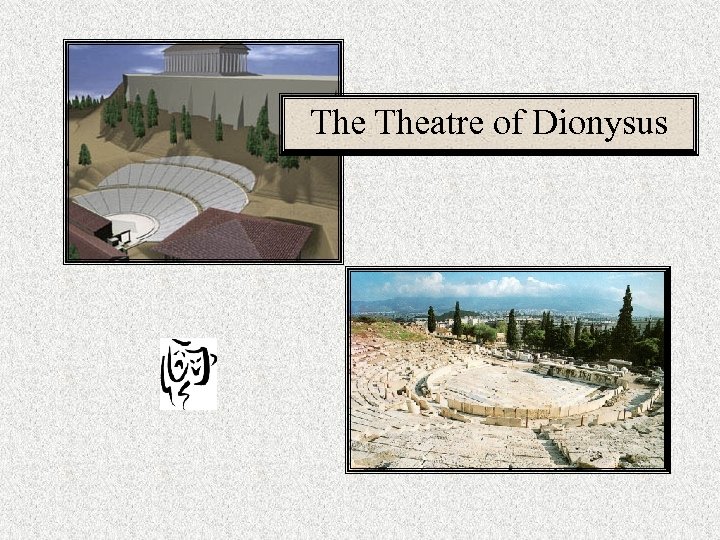 The Theatre of Dionysus

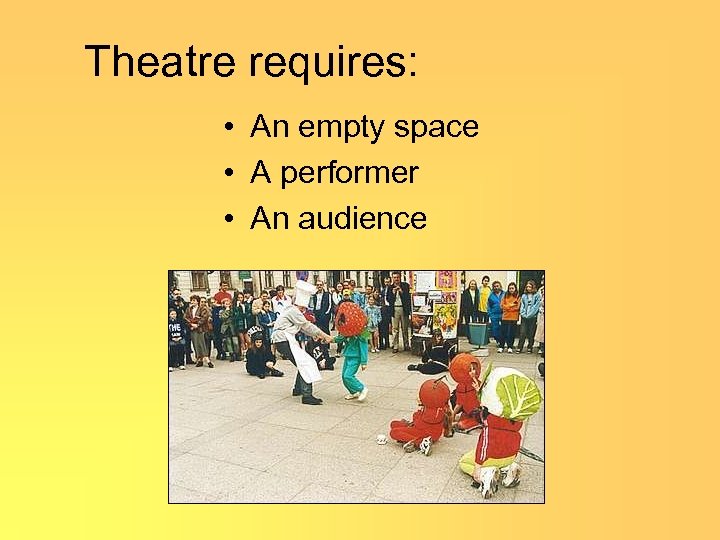 Theatre requires: • An empty space • A performer • An audience
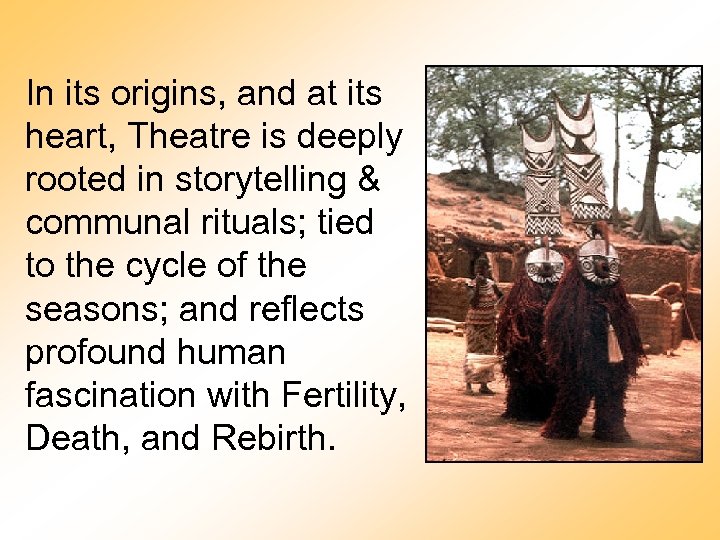 In its origins, and at its heart, Theatre is deeply rooted in storytelling & communal rituals; tied to the cycle of the seasons; and reflects profound human fascination with Fertility, Death, and Rebirth.
 End of Part II

 Part III: What is a play, and how do you read one?
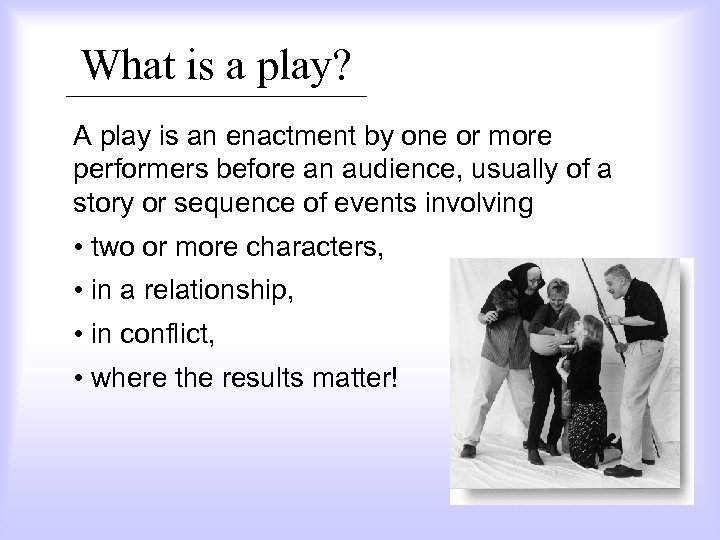 What is a play? A play is an enactment by one or more performers before an audience, usually of a story or sequence of events involving • two or more characters, • in a relationship, • in conflict, • where the results matter!
 “Theatre” = “Drama”
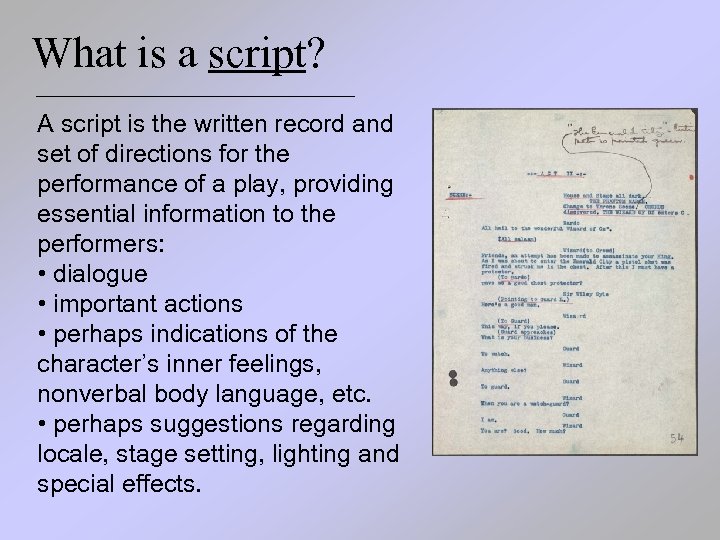 What is a script? A script is the written record and set of directions for the performance of a play, providing essential information to the performers: • dialogue • important actions • perhaps indications of the character’s inner feelings, nonverbal body language, etc. • perhaps suggestions regarding locale, stage setting, lighting and special effects.
 Reading a play is not like reading prose fiction! Plays are deceptive. What is on the page of a script is mostly bits of opinionated dialogue by characters with many different voices. There is no single narrative voice.
 A play-reader must be a detective! • Who speaks for the author? • Who makes sure all readers are following the same course of action? • Who tells us what the characters are really thinking? • Who tells us how to think about the characters, and interpret their actions? No one!
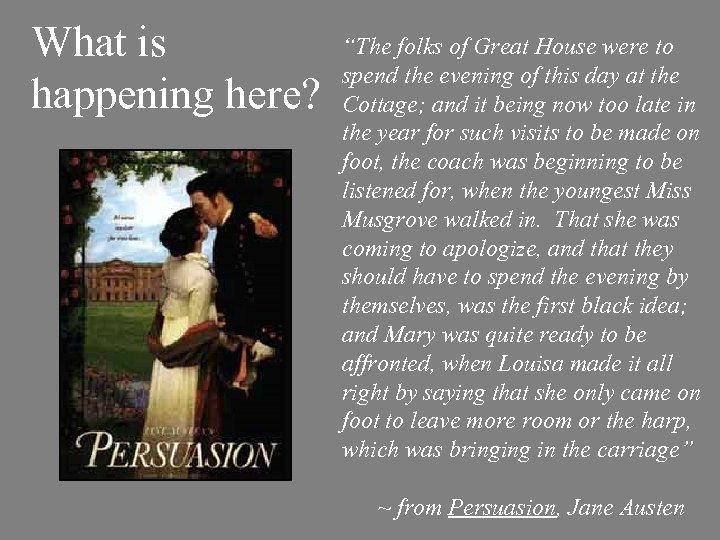 What is happening here? “The folks of Great House were to spend the evening of this day at the Cottage; and it being now too late in the year for such visits to be made on foot, the coach was beginning to be listened for, when the youngest Miss Musgrove walked in. That she was coming to apologize, and that they should have to spend the evening by themselves, was the first black idea; and Mary was quite ready to be affronted, when Louisa made it all right by saying that she only came on foot to leave more room or the harp, which was bringing in the carriage” ~ from Persuasion, Jane Austen
 What is happening here? JOHN: (picks up paper) Here: Please: Sit down. (pause) Sit down. (Reads from her paper. ) “I think that the ideas contained in this work express the author’s feelings in a way that he intended, based on his results. ” What can that mean? Do you see? What? CAROL: I, the best that I … JOHN: I’m saying that perhaps this course … CAROL: No, no, you can’t … I have to …. JOHN: … how … CAROL: … I have to pass it …. JOHN: Carol, I: CAROL: I have to pass this course, I … JOHN: Well
 CAROL: … don’t you … JOHN: Either the … CAROL: … I … JOHN: …either the, I … either the criteria for judging progress in the class are. . CAROL: No, no, no, I have to pass it. JOHN: Now, look: I’m a human being, I … CAROL: I did what you told me. I did, I did everything that, I read your book, you told me to buy your book and read it. Everything you say I …(She gestures to the notebook. ) (The phone rings. ) I do. … Ev … JOHN: … look: CAROL: … everything I’m told … JOHN: Look. I’m not your father. (Pause)I CAROL: What? JOHN: I’m.
 CAROL: Did I say you were my father? JOHN: … no … CAROL: Why did you say that …? JOHN: I … CAROL: … why. . . ? JOHN: . . in class I … (He picks up the phone. ) (Into phone) Hello. I can ‘t talk now. What just happened here?

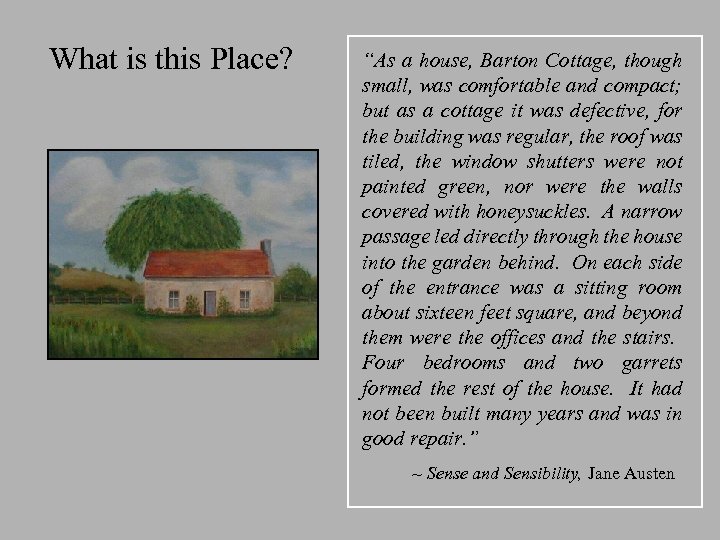 What is this Place? “As a house, Barton Cottage, though small, was comfortable and compact; but as a cottage it was defective, for the building was regular, the roof was tiled, the window shutters were not painted green, nor were the walls covered with honeysuckles. A narrow passage led directly through the house into the garden behind. On each side of the entrance was a sitting room about sixteen feet square, and beyond them were the offices and the stairs. Four bedrooms and two garrets formed the rest of the house. It had not been built many years and was in good repair. ” ~ Sense and Sensibility, Jane Austen
 “The play takes place in John’s office. “JOHN is talking on the phone. CAROL is seated across the desk from him. ”

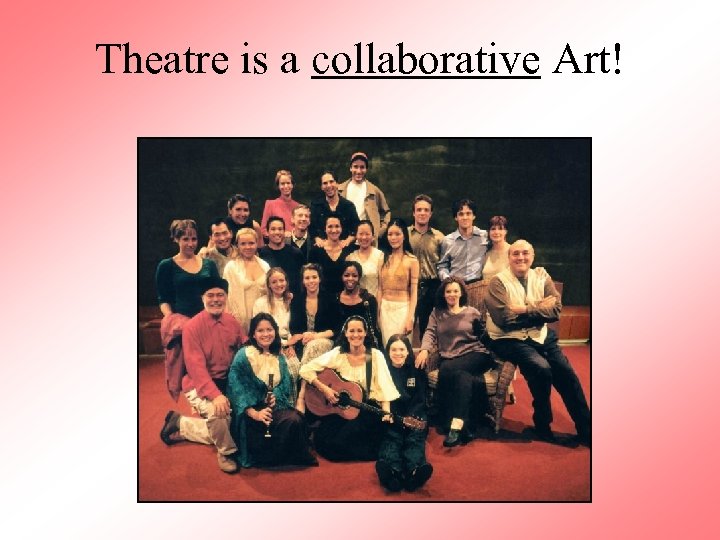 Theatre is a collaborative Art!

 … Now I want spirits to enforce, art to enchant…” “