


 Скачать презентацию I want it now Why discount rates for
b5ea19ef9d58fb720dc4c8b1290cbd9e.ppt
- Количество слайдов: 72
 I want it now! Why discount rates for losses show reverse direction and reverse magnitude effects David Hardisty, Kirstin Appelt, & Elke Weber Columbia University NSF SES-0345840 & SES-0820496 NIA 5 R 01 AG 027934 -02 1
 Co-Authors Kirstin Appelt Elke Weber 2
 Why study discounting? • Insufficient savings (Thaler & Benartzi, 2004) • Unhealthy behavior (Bickel et al. , 1999) • Depletion of environmental resources (Hendrickx et al. , 2001) • All involve myopic tradeoffs between immediate and future costs and benefits • Discounting the future means we want gains now and losses later 3
 Discounting “Anomalies” • Sign effect: losses discounted less (Thaler, 1981; Hardisty & Weber, 2009) • Magnitude effect: large outcomes discounted less (Thaler, 1981) • Direction effect: more discounting when you delay than when you accelerate (Loewenstein, 1988; Weber et al. , 2007) 4
 Reversals • Direction and magnitude effects are eliminated or reversed for losses (Benzion et al. , 1989; Shelley, 1993) Unfortunately, forgotten. Why? • Don’t fit standard models • No process data 5
 Reconceptualizing Impatience • Impatience is “irrational” disutility of waiting – for gaining $100: I want it now – for losing $100: I want to get it out of the way now (Loewenstein, 1987) • Impatience is relatively insensitive to outcome magnitude (Benhabib et al. , 2007) • This explains the sign effect, magnitude effect, direction effect, and their interactions 6
 Implications • For gains, impatience means more discounting • For losses, impatience means less discounting 7
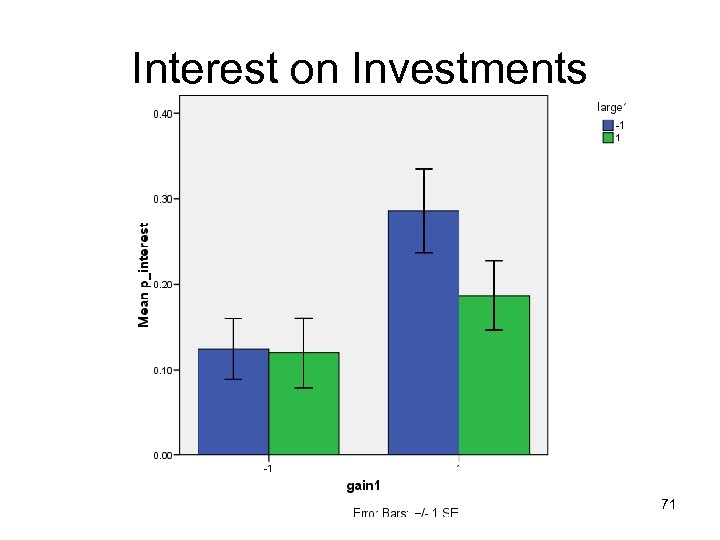
 Explaining the Sign Effect • Get $1, 000 now or $1, 000 next year? + uncertainty (Weber & Chapman, 2005; Epper et al. , 2009) + resource slack (Zauberman & Lynch, 2005) + interest on investment (e. g. , Franklin, 1784; Samuelson, 1937) + impatience (Laibson, 1997) high discount rate • Pay $1, 000 now or $1, 000 next year? +++ other factors - impatience lower discount rate 8
 Outline • Study 1: Sign, Magnitude, and Sign X Magnitude • Study 2: Sign, Direction, and Sign X Direction • Thought listings • National samples • Between-subjects designs 9
 Study 1 Sign X Magnitude 10
 Study 1: Participants • 199 US residents, recruited and run online – 76% female – Range of ages, education, & income • $8 compensation 11
 Study 1: Gain Scenario • Imagine there was a legitimate error on your back taxes in your favor, and you will immediately receive $10 [$10, 000] from the government. • However, they are also giving you the option of receiving a different amount one year from now, instead. How much would the future amount need to be for you to choose it? 12
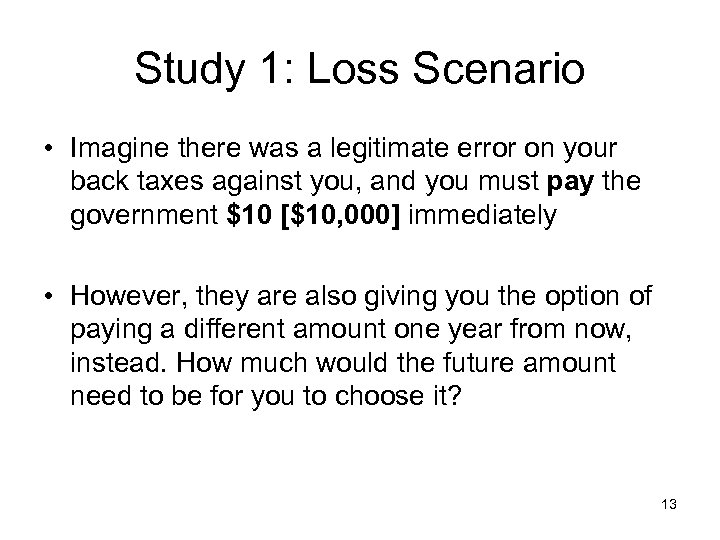 Study 1: Loss Scenario • Imagine there was a legitimate error on your back taxes against you, and you must pay the government $10 [$10, 000] immediately • However, they are also giving you the option of paying a different amount one year from now, instead. How much would the future amount need to be for you to choose it? 13
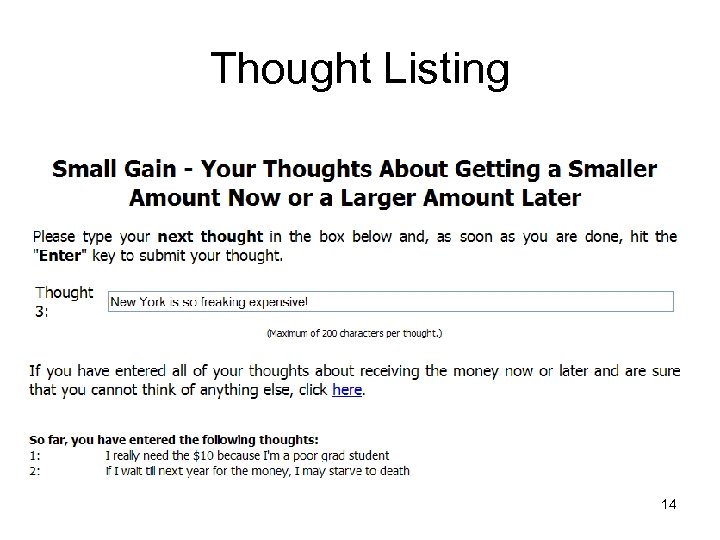 Thought Listing 14
![Study 1: Choices [x] receive $10. 00 now [ ] receive $9. 00 one](https://present5.com/presentation/b5ea19ef9d58fb720dc4c8b1290cbd9e/image-15.jpg "Study 1: Choices [x] receive $10. 00 now [ ] receive $9. 00 one") Study 1: Choices [x] receive $10. 00 now [ ] receive $9. 00 one year from now [x] receive $10. 00 now [ ] receive $10. 00 one year from now . . . [ ] receive $10. 00 now [x] receive $35. 00 one year from now 15
Study 1: Choices [x] receive $10. 00 now [ ] receive $9. 00 one year from now [x] receive $10. 00 now [ ] receive $10. 00 one year from now . . . [ ] receive $10. 00 now [x] receive $35. 00 one year from now 15
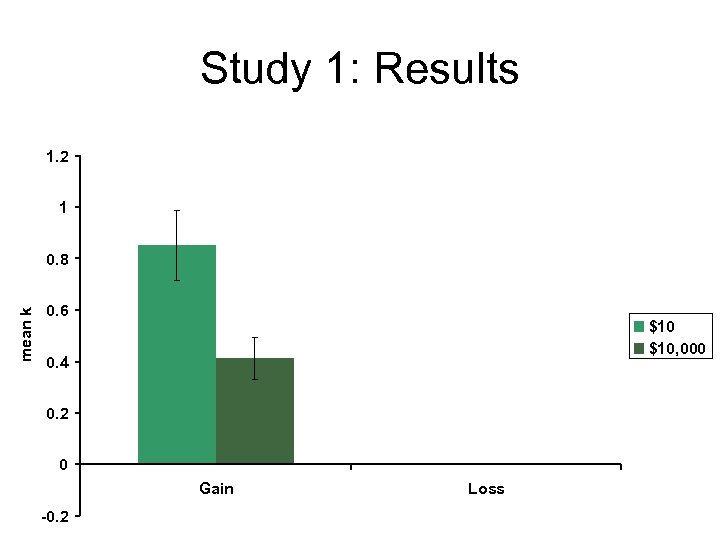
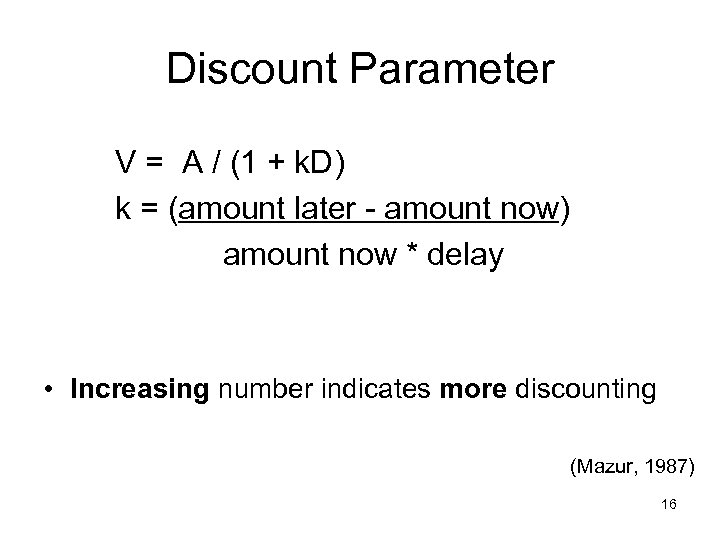 Discount Parameter V = A / (1 + k. D) k = (amount later - amount now) amount now * delay • Increasing number indicates more discounting (Mazur, 1987) 16
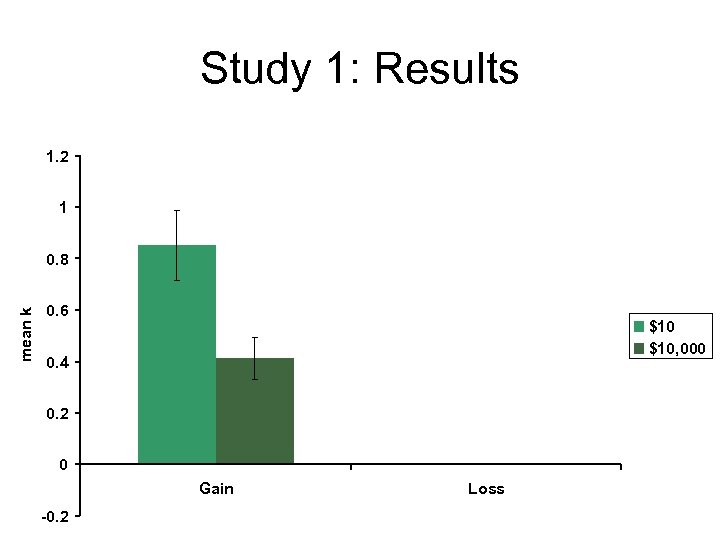 Study 1: Results 1. 2 1 mean k 0. 8 0. 6 $10, 000 0. 4 0. 2 0 Gain -0. 2 Loss
 Explaining the Magnitude Effect for Gains • Impatience is insensitive to magnitude • Therefore, impatience has relatively less influence on large magnitude outcomes • Lower discount rates for larger magnitudes 18
 Study 1: Results 1. 2 1 mean k 0. 8 0. 6 $10, 000 0. 4 0. 2 0 Gain -0. 2 Loss
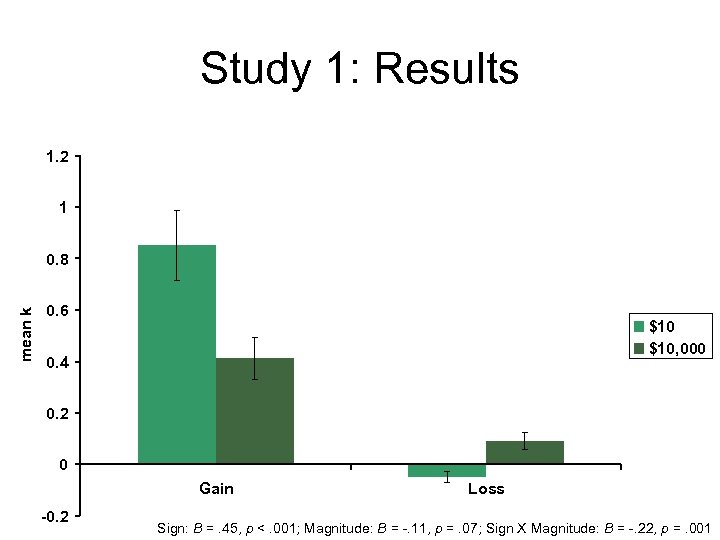 Study 1: Results 1. 2 1 mean k 0. 8 0. 6 $10, 000 0. 4 0. 2 0 Gain -0. 2 Loss Sign: B =. 45, p <. 001; Magnitude: B = -. 11, p =. 07; Sign X Magnitude: B = -. 22, p =. 001
 Explaining the Magnitude Effect for Losses • Impatience (to get it out of the way) is insensitive to magnitude • Therefore, impatience has relatively less influence on large magnitude outcomes • Higher discount rates for larger magnitudes 21
 Thought Coding Six categories: • Future uncertainty • Expecting the money will be more useful now than in the future • Earning interest on investments • Other: what you ought to do (for example, “I should wait”) • Other: what you want (for example, “I want it now to get it over with”) • None of the above 22
 Thought Coding Six categories: • Future uncertainty • Expecting the money will be more useful now than in the future • Earning interest on investments • Other: what you ought to do (for example, “I should wait”) • Other: what you want (for example, “I want it now to get it over with”) • None of the above 23
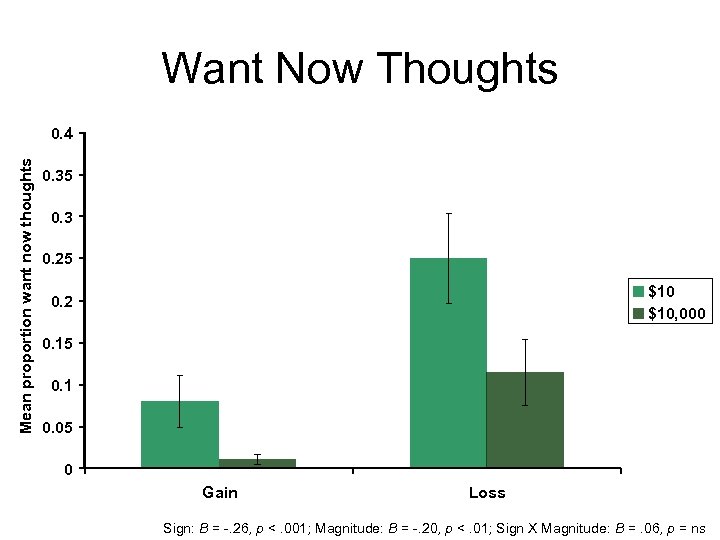 Want Now Thoughts Mean proportion want now thoughts 0. 4 0. 35 0. 3 0. 25 $10, 000 0. 2 0. 15 0. 1 0. 05 0 Gain Loss Sign: B = -. 26, p <. 001; Magnitude: B = -. 20, p <. 01; Sign X Magnitude: B =. 06, p = ns
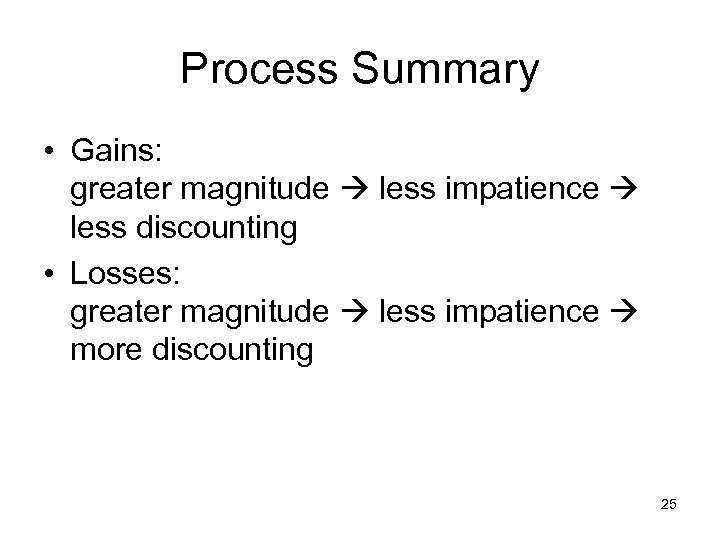 Process Summary • Gains: greater magnitude less impatience less discounting • Losses: greater magnitude less impatience more discounting 25
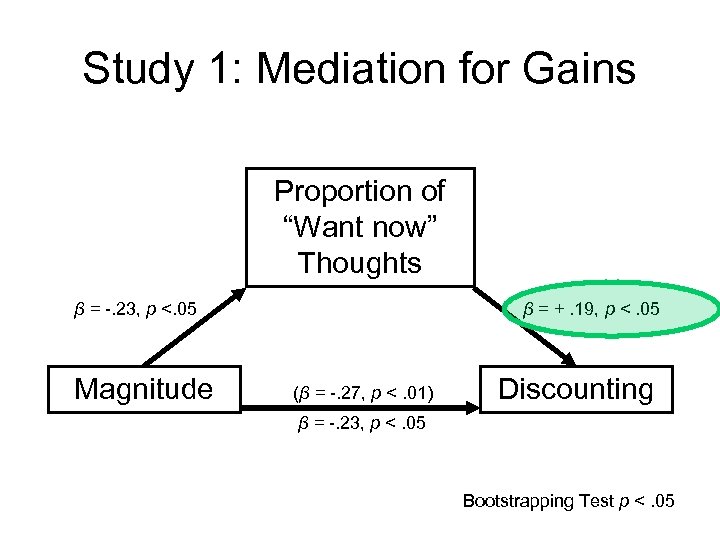 Study 1: Mediation for Gains Proportion of “Want now” Thoughts β = -. 23, p <. 05 Magnitude β = +. 19, p <. 05 (β = -. 27, p <. 01) Discounting β = -. 23, p <. 05 Bootstrapping Test p <. 05
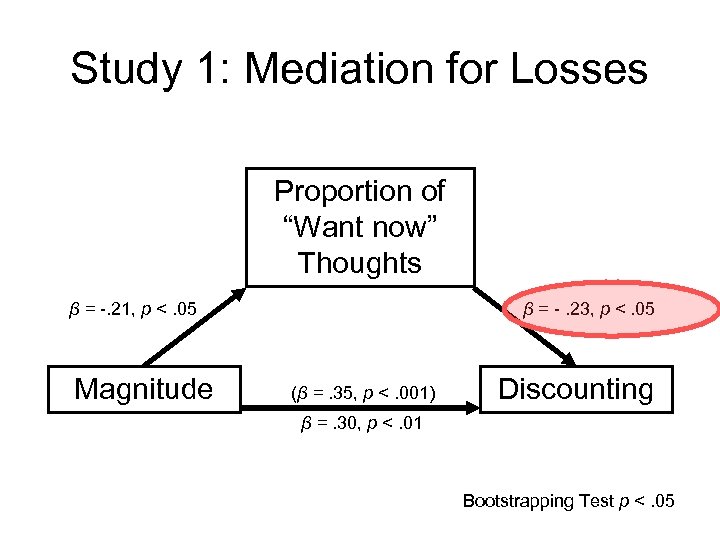 Study 1: Mediation for Losses Proportion of “Want now” Thoughts β = -. 21, p <. 05 Magnitude β = -. 23, p <. 05 (β =. 35, p <. 001) Discounting β =. 30, p <. 01 Bootstrapping Test p <. 05
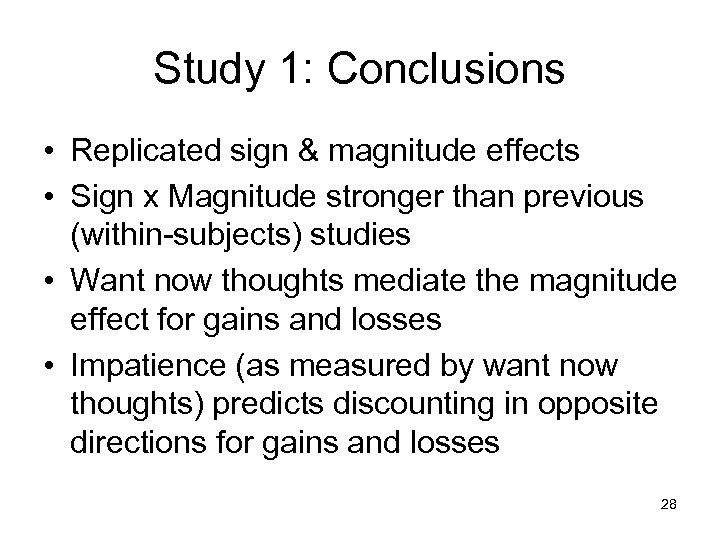 Study 1: Conclusions • Replicated sign & magnitude effects • Sign x Magnitude stronger than previous (within-subjects) studies • Want now thoughts mediate the magnitude effect for gains and losses • Impatience (as measured by want now thoughts) predicts discounting in opposite directions for gains and losses 28
 Study 2 Sign x Direction
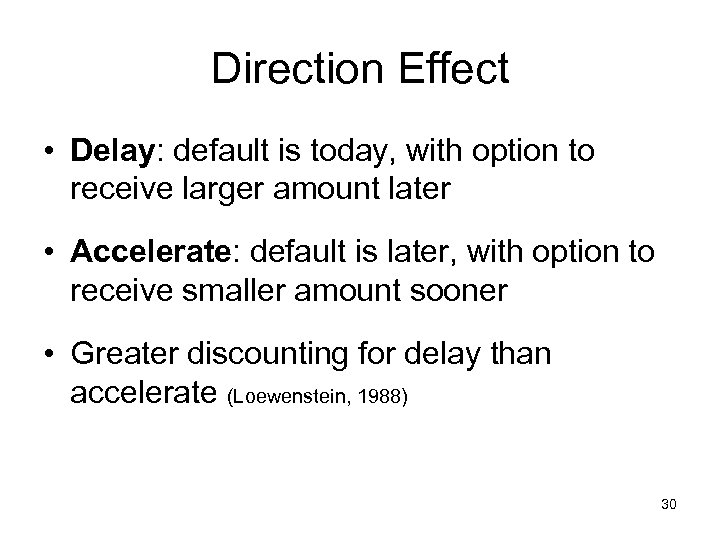 Direction Effect • Delay: default is today, with option to receive larger amount later • Accelerate: default is later, with option to receive smaller amount sooner • Greater discounting for delay than accelerate (Loewenstein, 1988) 30
 Explaining the Direction Effect • Creates a default for now or for later • People are initially biased in favor of the default option (Query Theory, Weber et al. , 2007) • Subsequent thoughts are influenced by this bias • Default predicts the order and balance of thoughts, which predict choices (Query Theory, Weber et al. , 2007) 31
 Explaining the Direction Effect • Creates a default for now or for later • People are initially biased in favor of the default option (Query Theory, Weber et al. , 2007) • Subsequent thoughts are influenced by this bias • Default predicts the order and balance of thoughts, which predict choices (Query Theory, Weber et al. , 2007) 32
 Explaining the Direction Effect • Creates a default for now or for later • People are initially biased in favor of the default option (Query Theory, Weber et al. , 2007) • Subsequent thoughts are influenced by this bias • Default predicts the order and balance of thoughts, which predict choices (Query Theory, Weber et al. , 2007) 33
 Reminder • For gains, impatience means greater discounting • For losses, impatience means lower discounting 34
 Study 2: Participants • 607 US residents – 75% women – Range of ages, education, & income • Same method as Study 1 35
 Study 2: Gain Scenarios • delay Imagine you have been selected to receive a $50 prize today. However, you also have the option of receiving a larger amount 3 months from now. • accelerate Imagine you have been selected to receive a $75 prize 3 months from today. However, you also have the option of receiving a smaller amount today. 36
 Study 2: Gain Scenarios • delay Imagine you have been selected to receive a $50 prize today. However, you also have the option of receiving a larger amount 3 months from now. • accelerate Imagine you have been selected to receive a $75 prize 3 months from today. However, you also have the option of receiving a smaller amount today. 37
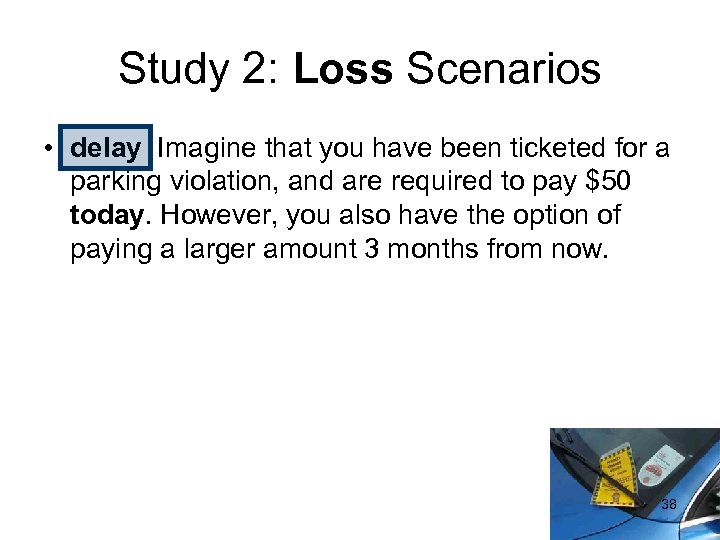 Study 2: Loss Scenarios • delay Imagine that you have been ticketed for a parking violation, and are required to pay $50 today. However, you also have the option of paying a larger amount 3 months from now. • accelerate Imagine that you have been ticketed for a parking violation, and are required to pay $75 3 months from today. However, you also have the option of paying a smaller amount today. 38
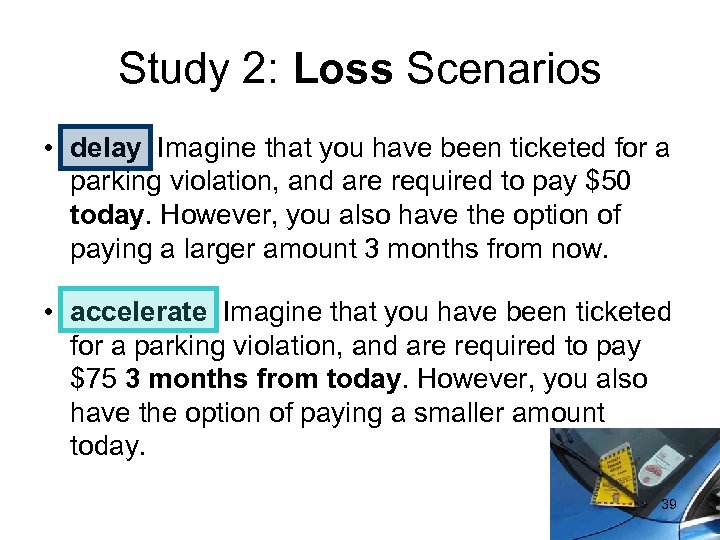 Study 2: Loss Scenarios • delay Imagine that you have been ticketed for a parking violation, and are required to pay $50 today. However, you also have the option of paying a larger amount 3 months from now. • accelerate Imagine that you have been ticketed for a parking violation, and are required to pay $75 3 months from today. However, you also have the option of paying a smaller amount today. 39
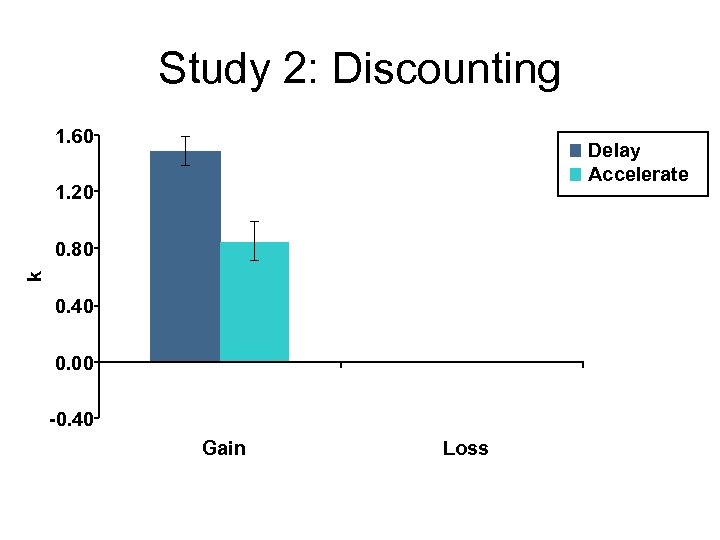 Study 2: Discounting 1. 60 Delay Accelerate 1. 20 k 0. 80 0. 40 0. 00 -0. 40 Gain Loss
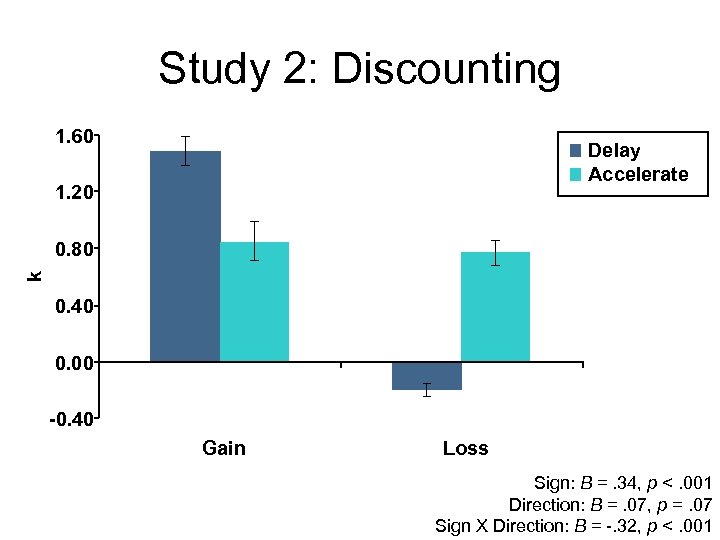 Study 2: Discounting 1. 60 Delay Accelerate 1. 20 k 0. 80 0. 40 0. 00 -0. 40 Gain Loss Sign: B =. 34, p <. 001 Direction: B =. 07, p =. 07 Sign X Direction: B = -. 32, p <. 001
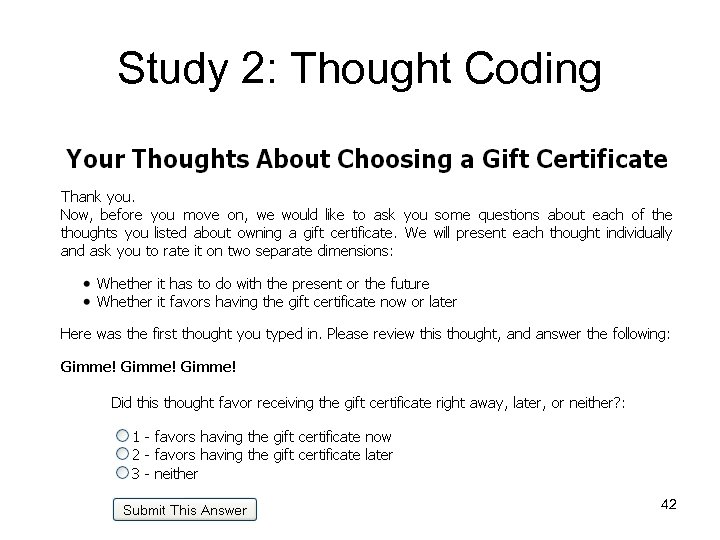 Study 2: Thought Coding 42
 Study 2: Thought Measure • Prominence of Now Thoughts (Cronbach’s α = 0. 91) – Proportion of now thoughts – Proportion of later thoughts (reverse scored) – Order of thoughts Increasing number indicates more impatience 43
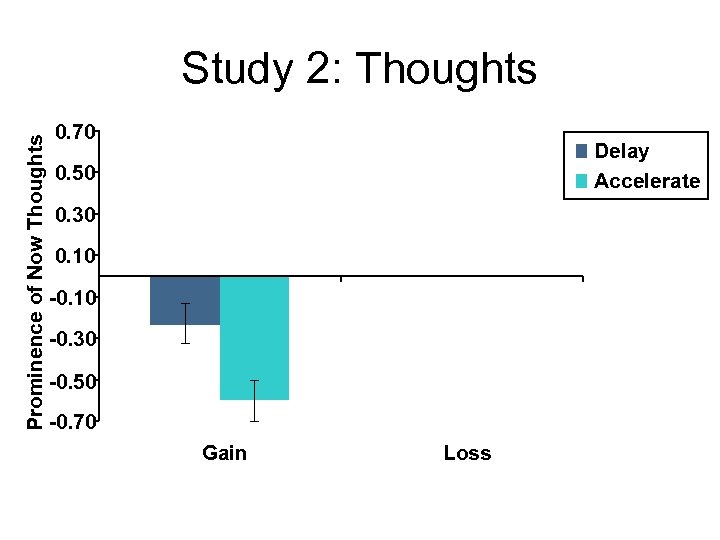 Prominence of Now Thoughts Study 2: Thoughts 0. 70 Delay Accelerate 0. 50 0. 30 0. 10 -0. 30 -0. 50 -0. 70 Gain Loss
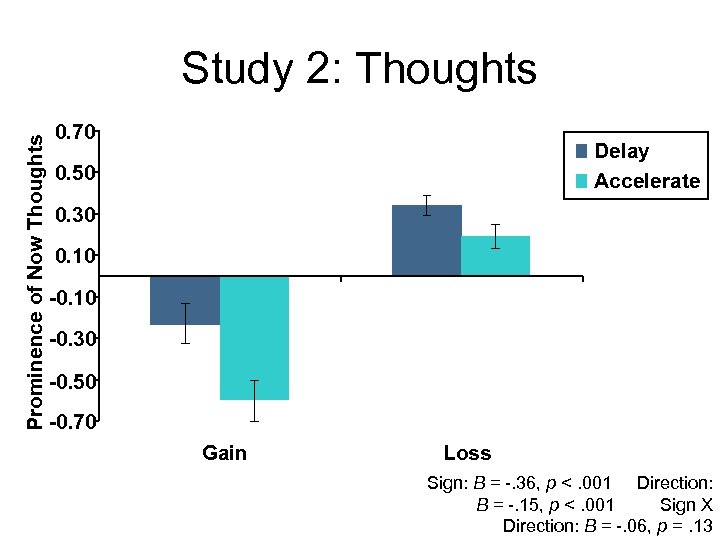 Prominence of Now Thoughts Study 2: Thoughts 0. 70 Delay Accelerate 0. 50 0. 30 0. 10 -0. 30 -0. 50 -0. 70 Gain Loss Sign: B = -. 36, p <. 001 Direction: B = -. 15, p <. 001 Sign X Direction: B = -. 06, p =. 13
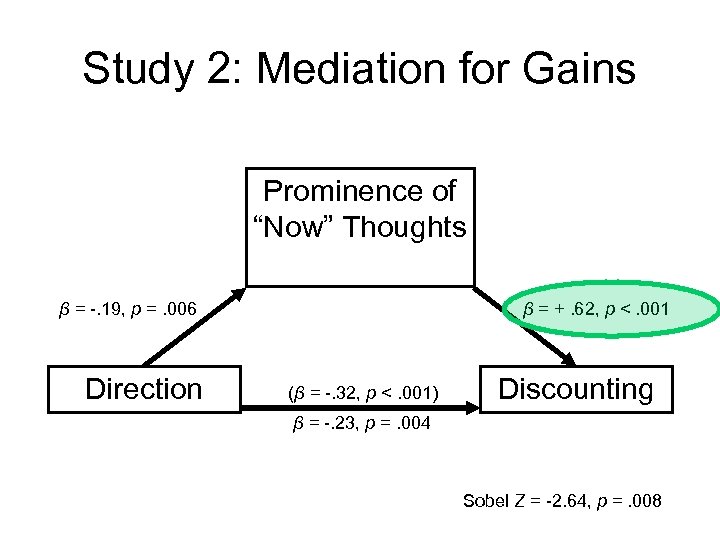 Study 2: Mediation for Gains Prominence of “Now” Thoughts β = -. 19, p =. 006 Direction β = +. 62, p <. 001 (β = -. 32, p <. 001) Discounting β = -. 23, p =. 004 Sobel Z = -2. 64, p =. 008
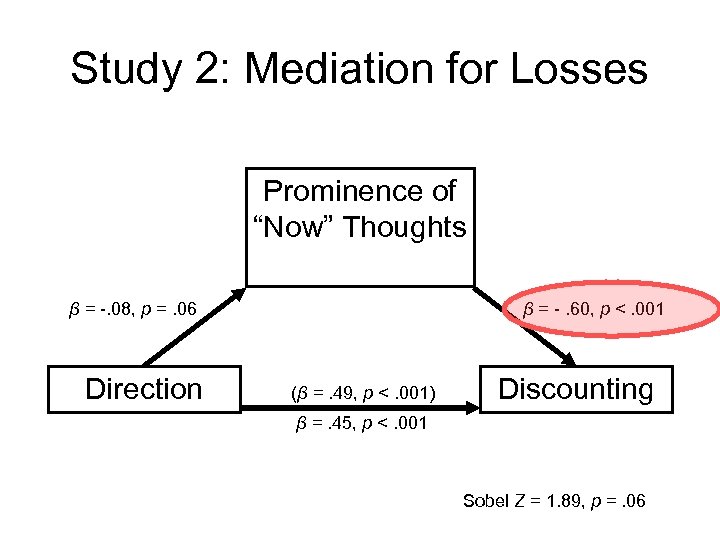 Study 2: Mediation for Losses Prominence of “Now” Thoughts β = -. 08, p =. 06 Direction β = -. 60, p <. 001 (β =. 49, p <. 001) Discounting β =. 45, p <. 001 Sobel Z = 1. 89, p =. 06
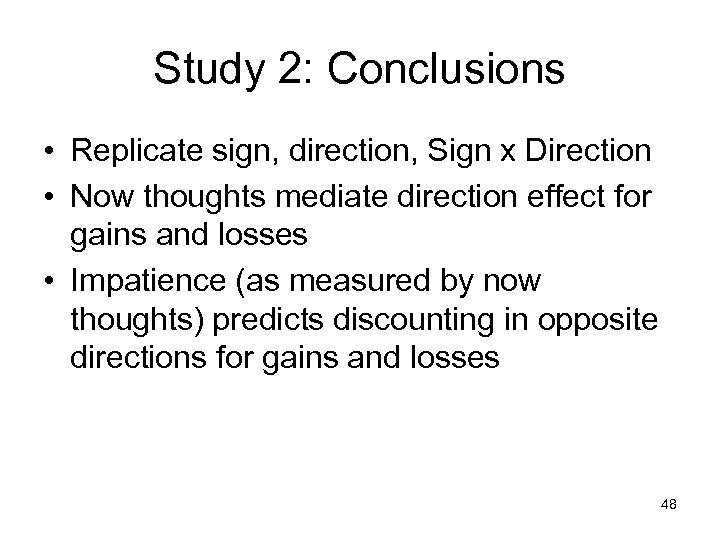 Study 2: Conclusions • Replicate sign, direction, Sign x Direction • Now thoughts mediate direction effect for gains and losses • Impatience (as measured by now thoughts) predicts discounting in opposite directions for gains and losses 48
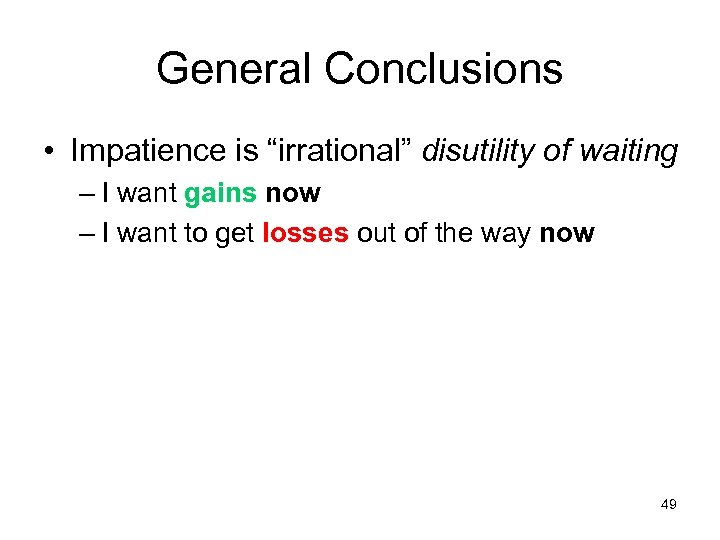 General Conclusions • Impatience is “irrational” disutility of waiting – I want gains now – I want to get losses out of the way now 49
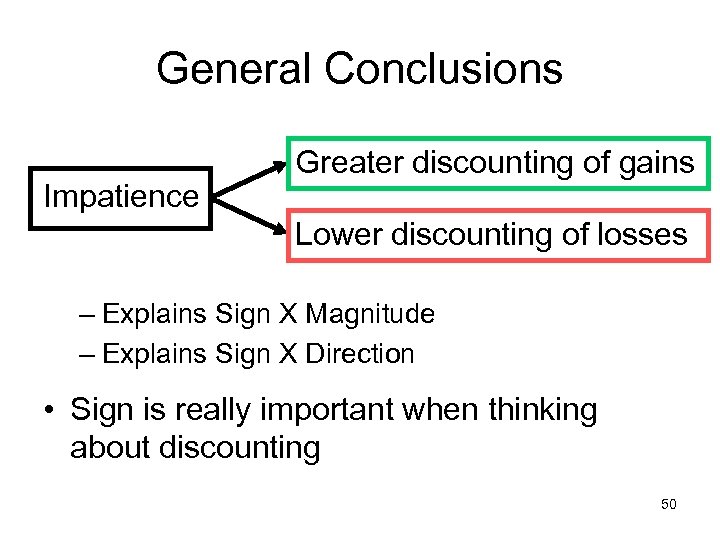 General Conclusions Impatience Greater discounting of gains Lower discounting of losses – Explains Sign X Magnitude – Explains Sign X Direction • Sign is really important when thinking about discounting 50
 Thanks to. . . • The National Science Foundation: -03455840 & SES-0352062 SES • The National Institute on Aging: 5 R 01 AG 027934 -02 • The CRED and PAM labs 51
 Thank You! www. davidhardisty. info www. kirstinappelt. com 52
 References (1) Benhabib, J. , Bisin, A. , & Schotter, A. (2007). Present-bias, quasi-hyperbolic discounting, and fixed costs. Working paper. New York University. Benzion, U. , Rapoport, A. , & Yagil, J. (1989). Discount rates inferred from decisions: An experimental study. Management Science, 35(3), 270 -284. Bickel, W. K. , Odum, A. L. , & Madden, G. J. (1999). Impulsivity and cigarette smoking: Delay discounting in current, never-, and ex-smokers. Psychopharmacology (Berlin), 146, 447 -454 Franklin, B. (1748). Advice to a young tradesman. Hardisty, D. J. , & Weber, E. U. (2009). Discounting future green: Money vs the environment. Journal of Experimental Psychology: General, 138(3), 329 -340. Hendrickx, L. , Poortinga, W. , van der Kooij, R. (2001). Temporal factors in resource dilemmas. Acta Psychologica, 108, 137 -154 Johnson, E. J. , Häubl, G. , & Keinan, A. (2007). Aspects of endowment: A query theory of value construction. Journal of Experimental Social Psychology: Learning, Memory and Cognition, 33(3), 461 -474. Laibson, D. (1997). Golden eggs and hyperbolic discounting. The Quarterly Journal of Economics, 112(2), 443 -477. Loewenstein, G. (1987). Anticipation and the valuation of delayed consumption. The Economic Journal, 97, 666 -684. Loewenstein, G. F. (1988). Frames of mind in intertemporal choice. Management 53 Science, 34(2), 200 -214.
 References (2) Samuelson, P. A. (1937). A note on the measurement of utility. A note on measurement of utility. The Review of Economic Studies, 4, 155 -161. Shelley, M. K. (1993). Outcome signs, questions frames and discount rates. Management Science, 39(7), 806 -815. Thaler, R. H. (1981). Some empirical evidence on dynamic inconsistency. Economics Letters, 8, 201 -207. Thaler, R. H. , & Benartzi, S. (2004). Save More Tomorrow™: Using behavioral economics to increase employee saving. Journal of Political Economy, 112, S 164 S 187. Weber, B. J. , & Chapman, G. B. (2005). The combined effects of risk and time on choice: Does uncertainty eliminate the immediacy effect? Does delay eliminate the certainty effect? Organizational Behavior and Human Decision Processes, 96, 104118. Weber, E. U. , Johnson, E. J. , Milch, K. F. , Chang, H. , Brodscholl, J. C. , & Goldstein, D. G. (2007). Asymmetric discounting in intertemporal choice: A Query Theory account. Psychological Science, 18(6), 516 -523. Zauberman, G. , & Lynch, J. J. G. (2005). Resource slack and propensity to discount delayed investments of time versus money. Journal of Experimental Psychology: General, 134(1), 23 -37. 54
 Bonus Slides! 55
 Standardized Median Rank Difference SMRD = 2 (MRl – MRn) / N MRl = median rank of thoughts favoring later MRn = median rank of thoughts favoring now N = total number of now & later thoughts • Higher number indicates more “now” bias 56
![Study 2: Delay Titration [ ] $50 gift certificate today [ ] $45 gift](https://present5.com/presentation/b5ea19ef9d58fb720dc4c8b1290cbd9e/image-57.jpg "Study 2: Delay Titration [ ] $50 gift certificate today [ ] $45 gift") Study 2: Delay Titration [ ] $50 gift certificate today [ ] $45 gift certificate 3 months from today [ ] $50 gift certificate today [ ] $55 gift certificate 3 months from today [ ] $50 gift certificate today [ ] $60 gift certificate 3 months from today . . . [ ] $50 gift certificate today [ ] $90 gift certificate 3 months from today 57
Study 2: Delay Titration [ ] $50 gift certificate today [ ] $45 gift certificate 3 months from today [ ] $50 gift certificate today [ ] $55 gift certificate 3 months from today [ ] $50 gift certificate today [ ] $60 gift certificate 3 months from today . . . [ ] $50 gift certificate today [ ] $90 gift certificate 3 months from today 57
![Study 2: Accelerate Titration [ ] $75 gift certificate 3 months from today [](https://present5.com/presentation/b5ea19ef9d58fb720dc4c8b1290cbd9e/image-58.jpg "Study 2: Accelerate Titration [ ] $75 gift certificate 3 months from today [") Study 2: Accelerate Titration [ ] $75 gift certificate 3 months from today [ ] $85 gift certificate today [ ] $75 gift certificate 3 months from today [ ] $80 gift certificate today [ ] $75 gift certificate 3 months from today [ ] $70 gift certificate today … … [ ] $75 gift certificate 3 months from today [ ] $35 gift certificate today 58
Study 2: Accelerate Titration [ ] $75 gift certificate 3 months from today [ ] $85 gift certificate today [ ] $75 gift certificate 3 months from today [ ] $80 gift certificate today [ ] $75 gift certificate 3 months from today [ ] $70 gift certificate today … … [ ] $75 gift certificate 3 months from today [ ] $35 gift certificate today 58
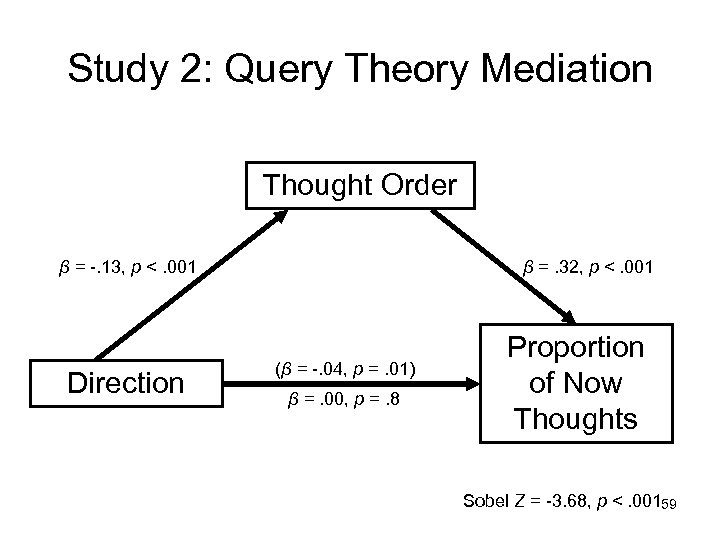 Study 2: Query Theory Mediation Thought Order β = -. 13, p <. 001 Direction β =. 32, p <. 001 (β = -. 04, p =. 01) β =. 00, p =. 8 Proportion of Now Thoughts Sobel Z = -3. 68, p <. 00159
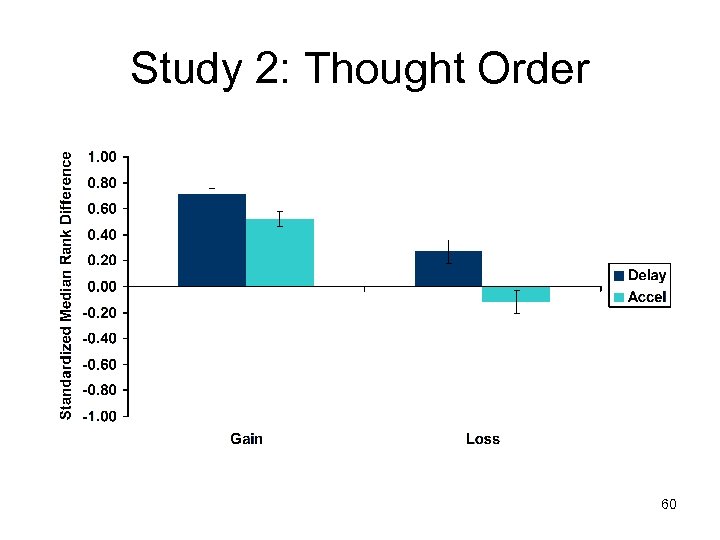 Study 2: Thought Order 60
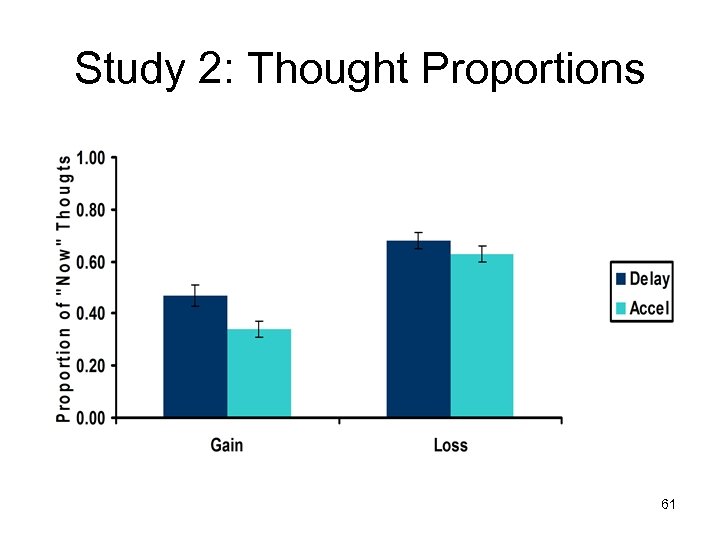 Study 2: Thought Proportions 61
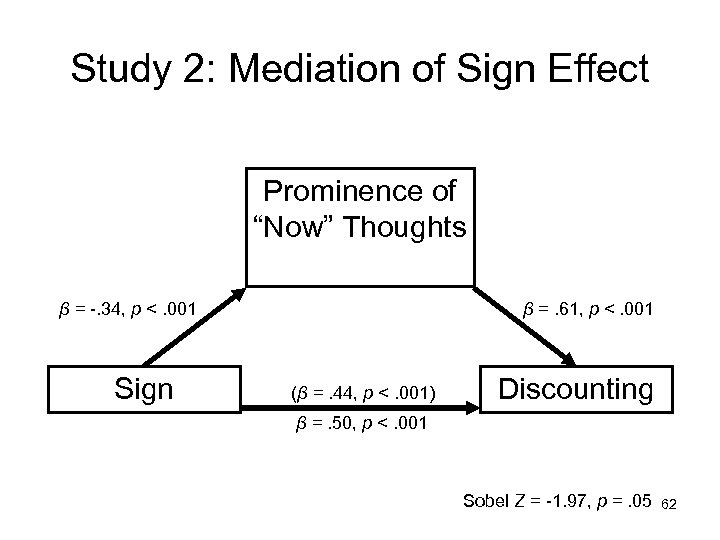 Study 2: Mediation of Sign Effect Prominence of “Now” Thoughts β = -. 34, p <. 001 Sign β =. 61, p <. 001 (β =. 44, p <. 001) Discounting β =. 50, p <. 001 Sobel Z = -1. 97, p =. 05 62
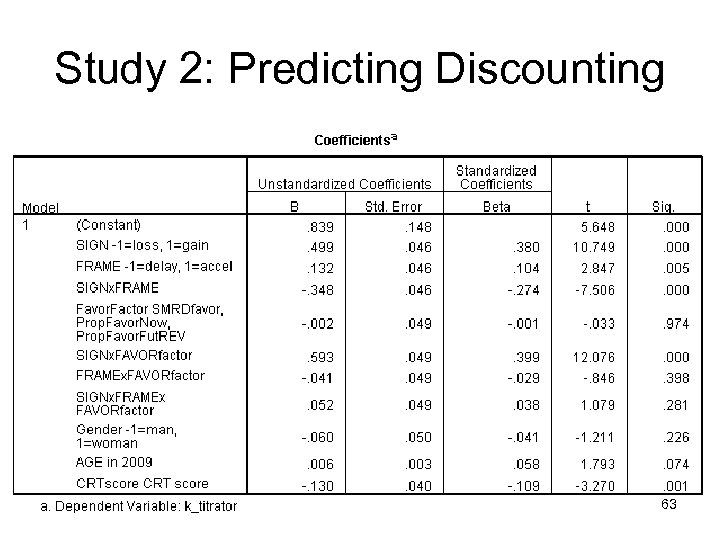 Study 2: Predicting Discounting 63
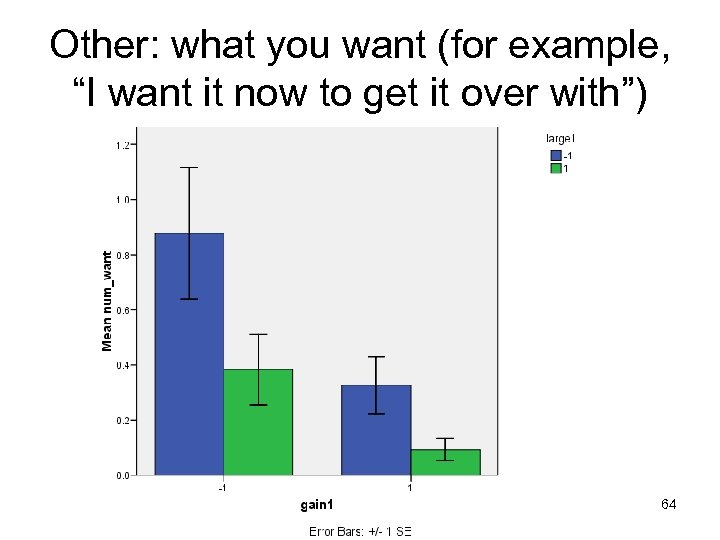 Other: what you want (for example, “I want it now to get it over with”) 64
![Study 1: Small Gain Titration [ ] receive $10. 00 now [ ] receive](https://present5.com/presentation/b5ea19ef9d58fb720dc4c8b1290cbd9e/image-65.jpg "Study 1: Small Gain Titration [ ] receive $10. 00 now [ ] receive") Study 1: Small Gain Titration [ ] receive $10. 00 now [ ] receive $9. 00 one year from now [ ] receive $10. 00 now [ ] receive $10. 50 one year from now [ ] receive $10. 00 now [ ] receive $11. 00 one year from now . . . [ ] receive $10. 00 now [ ] receive $35. 00 one year from now 65
Study 1: Small Gain Titration [ ] receive $10. 00 now [ ] receive $9. 00 one year from now [ ] receive $10. 00 now [ ] receive $10. 50 one year from now [ ] receive $10. 00 now [ ] receive $11. 00 one year from now . . . [ ] receive $10. 00 now [ ] receive $35. 00 one year from now 65
![Study 1: Choices [x] receive $10. 00 now [ ] receive $9. 00 one](https://present5.com/presentation/b5ea19ef9d58fb720dc4c8b1290cbd9e/image-66.jpg "Study 1: Choices [x] receive $10. 00 now [ ] receive $9. 00 one") Study 1: Choices [x] receive $10. 00 now [ ] receive $9. 00 one year from now [x] receive $10. 00 now [ ] receive $10. 50 one year from now [ ] receive $10. 00 now [x] receive $11. 00 one year from now . . . [ ] receive $10. 00 now [x] receive $35. 00 one year from now Indifference point: $10 today = $10. 75 one year from today 66
Study 1: Choices [x] receive $10. 00 now [ ] receive $9. 00 one year from now [x] receive $10. 00 now [ ] receive $10. 50 one year from now [ ] receive $10. 00 now [x] receive $11. 00 one year from now . . . [ ] receive $10. 00 now [x] receive $35. 00 one year from now Indifference point: $10 today = $10. 75 one year from today 66
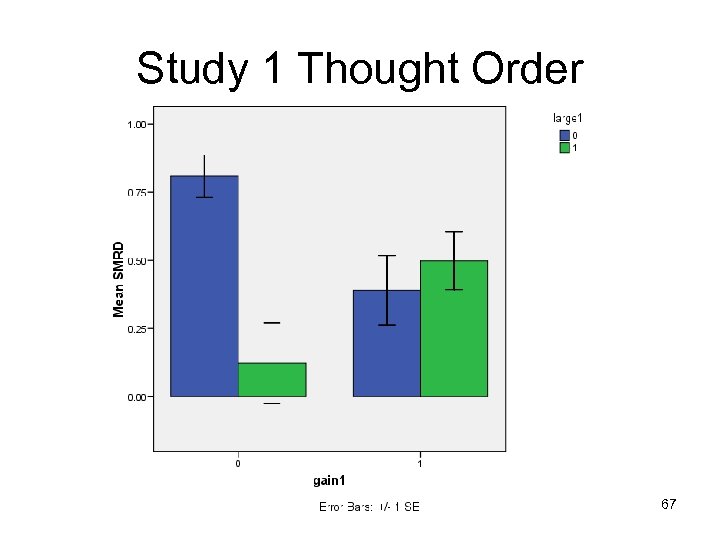 Study 1 Thought Order 67
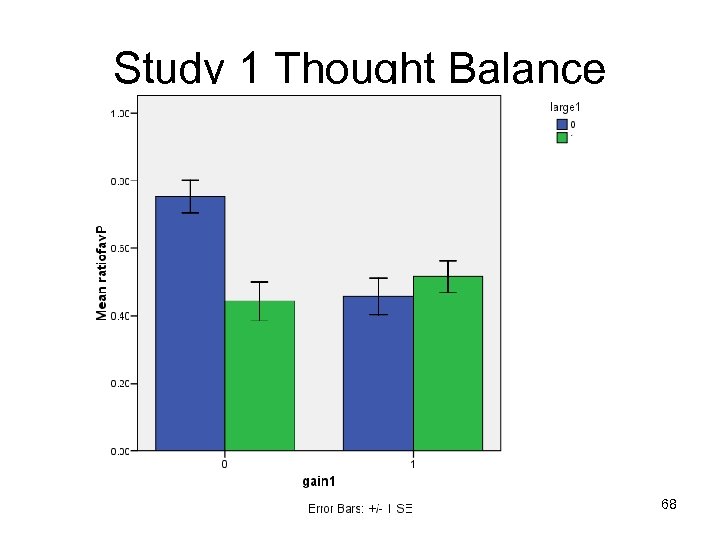 Study 1 Thought Balance 68
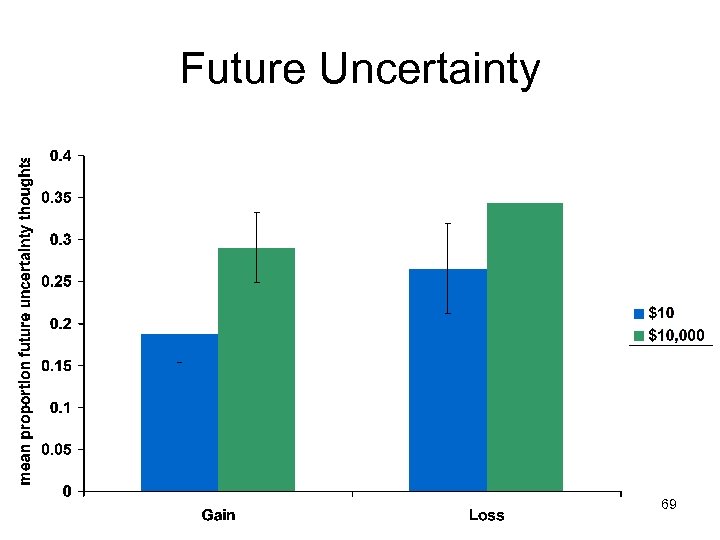 Future Uncertainty 69
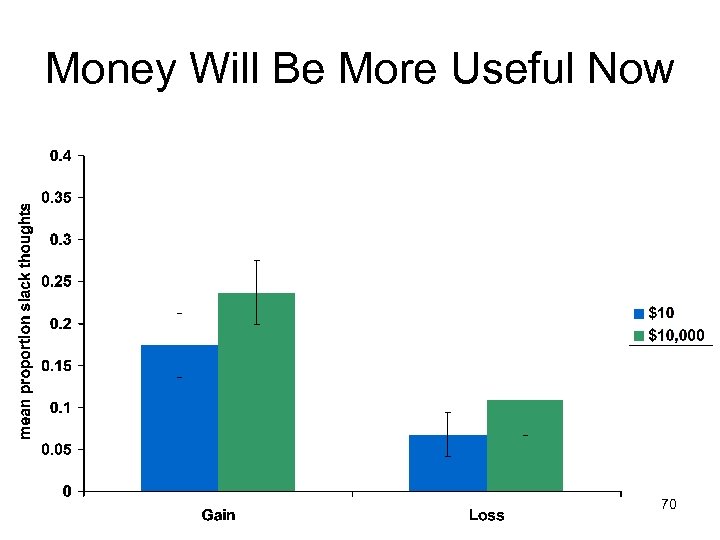 Money Will Be More Useful Now 70
 Interest on Investments 71
 Supporting evidence that losses are different • In both studies, CRT & age predicted discounting of delay framed gains, but not delay framed losses 72