


 Скачать презентацию I measured my Ecological Footprint Ecological Footprint
5f9a5dfcc6fcc91ff863525dab6443cb.ppt
- Количество слайдов: 23
 I measured my Ecological Footprint!
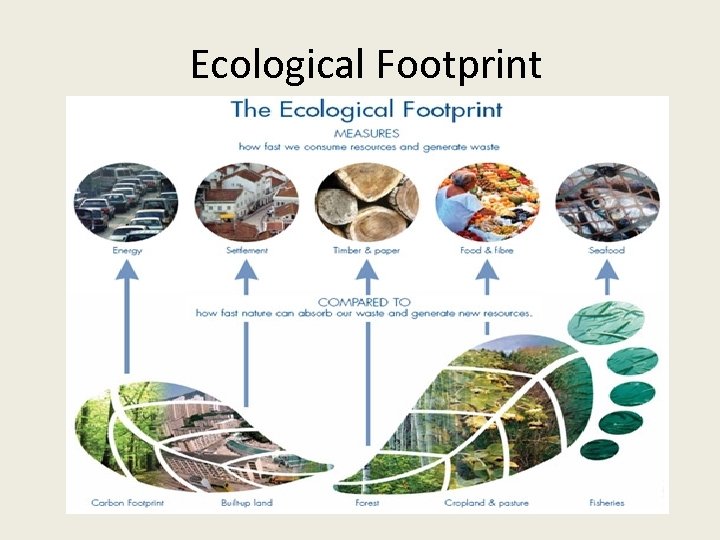 Ecological Footprint
 If the world were an apple, how much would be available to produce the food and resources we need? ¾? ½? More? Less?
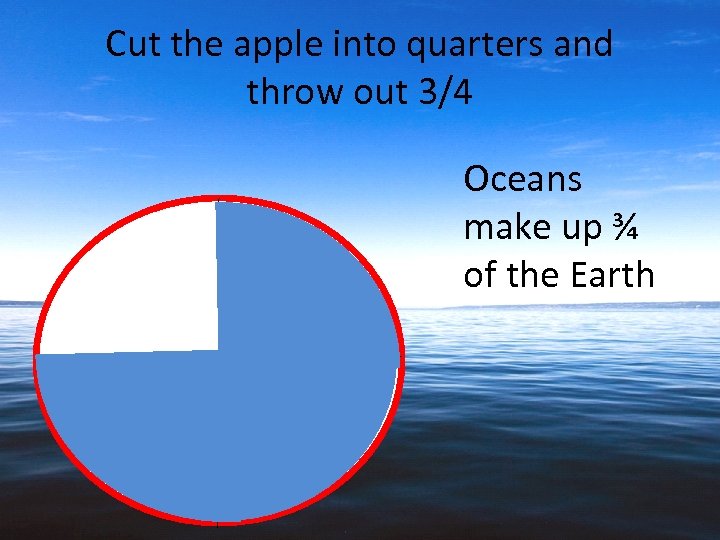 Cut the apple into quarters and throw out 3/4 Oceans make up ¾ of the Earth
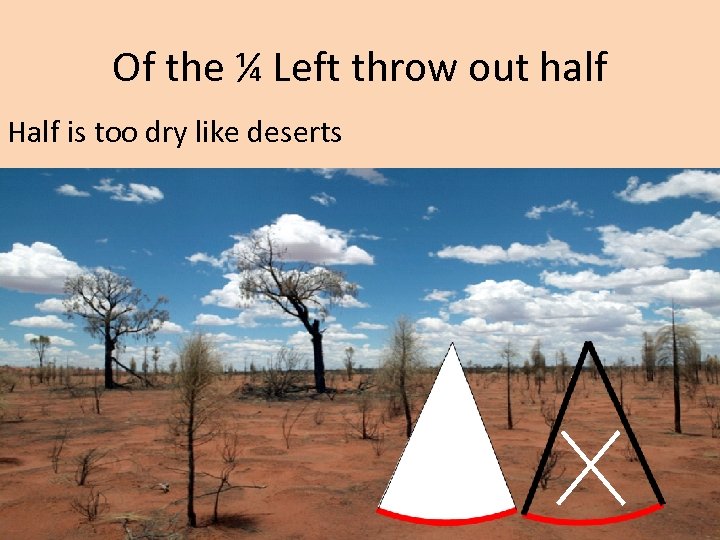 Of the ¼ Left throw out half Half is too dry like deserts
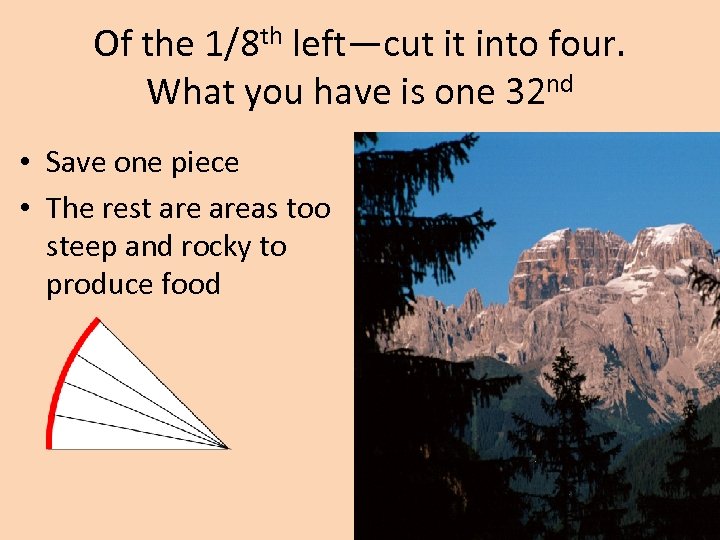 Of the 1/8 th left—cut it into four. What you have is one 32 nd • Save one piece • The rest areas too steep and rocky to produce food
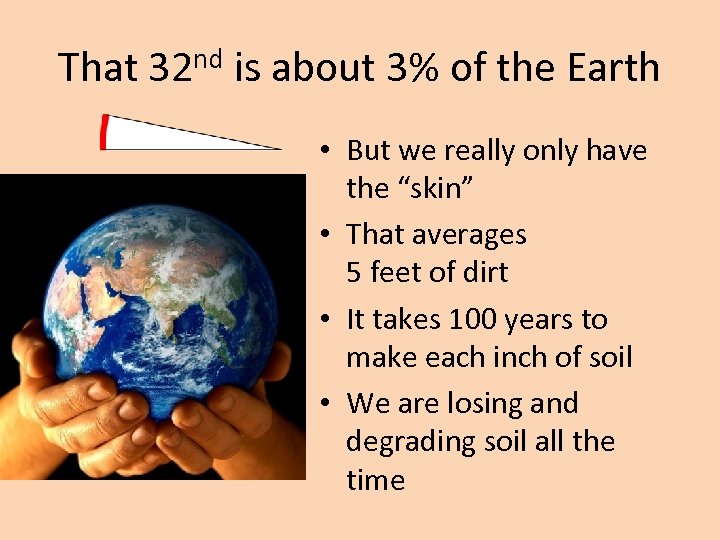 That 32 nd is about 3% of the Earth • But we really only have the “skin” • That averages 5 feet of dirt • It takes 100 years to make each inch of soil • We are losing and degrading soil all the time
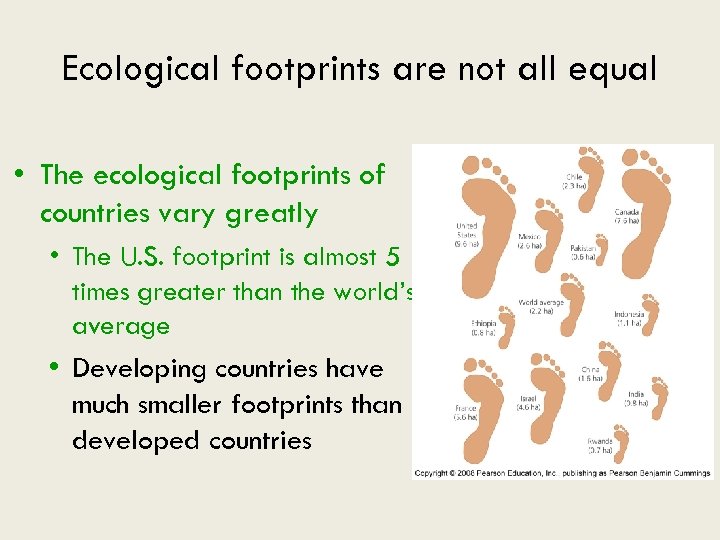 Ecological footprints are not all equal • The ecological footprints of countries vary greatly • The U. S. footprint is almost 5 times greater than the world’s average • Developing countries have much smaller footprints than developed countries
 Water Use
 Water Use Cutting your shower time Cut back 3 minutes to reduce carbon dioxide by up to 715 lbs each year! Save about 5, 500 gallons and $73 in water heating costs. Cutting back 5 to save 1, 191 lbs CO 2 each year, 9, 125 gallons of water and $122 in water heating costs • Low Flow Toilets • Turn off while you brush • Measure your faucet flow
 Food Use
 Food Use Eat less meat Cut your meat consumption by half and save 1600 lbs CO 2 Go vegan to save 4, 000 lbs CO 2 a year! • Buy locally grown foods • Start a garden • Choose foods in season
 Transportation Use
 Transportation Use Travel Smarter The average vehicle drives about 12, 000 miles. At 22 mpg it would use 545 gallons of gas and create 10, 000 lbs/CO 2 per year. Reduce your car trips and carpool when possible to save gas and emissions. • Take the bus • Eliminate curbside idling • Consider carbon emissions when choosing mode • Buy carbon offsets
 Shelter Use
 Shelter Use How Big is Your Home? The average US home in 1950 was 983 sq ft. In 2004 it was 2, 349 sq ft, while family sizes have shrunk. (www. realestatemsn. com) • How many rooms do we really need? • What resources does my home use?
 Energy Use
 Energy Use What is plugged in at your house? In Connecticut you can choose to have your electricity come from 50% - 100% renewable sources. You can also choose your energy supplier. Visit www. ctcleanenergyoptions. com and www. ctenergyinfo. com for more information. • Line dry laundry • Unplug energy “vampires” • Replace your most used light bulbs with CFLs • Buy Energy Star appliances
 Clothing Use
 Clothing Use What’s in your closet? 60% of the energy associated with a piece of clothing is spent in washing and drying it. Over its lifetime, a T shirt can account for 9 lbs. of carbon dioxide emissions. (Cambridge University's Institute of Manufacturing) • Does it really need to be washed? • Choose washables rather than dry cleaning • Visit the thrift store! • The average American throws out 86 lb. of clothes each year.
 Stuff!
 How much stuff do you have? Home electronics; Computers, televisions, electronic equipment and chargers all use electricity when they are plugged in, even when turned off. By attaching these devices to a power strip and turning it off when not in use, you will save “parasitic or vampire power loss” – the power these items use even when turned off. Stuff! • Reduce, reuse, recycle, refuse! • Choose LESS • Join the “simple life”
 For more information about the footprint visit www. ctenergyeducation. com For topic information, watch www. ctclimatechange. com for upcoming additions