



 I mean Hello ; ) How’s everything?
 Let’s revise the future tenses
 Future Simple - ?
 Future Simple -Definite future arrangements Quick question: what will your life be like in the future? - -Spontaneous (on-the-spot) decisions Example: Someone’s stealing our bike! I will run after this man! -
 Present Tenses (I am doing) for the future -for future arrangements = I have already decided and arranged to do it Example: I’m getting married this summer NOT I will marry this summer
 Present Tenses (I do) for the future -timetables, programmes, etc. -fixed plans as a timetable Example: I start to work in this office on Monday
 The continuous is more usual for personal future arrangements
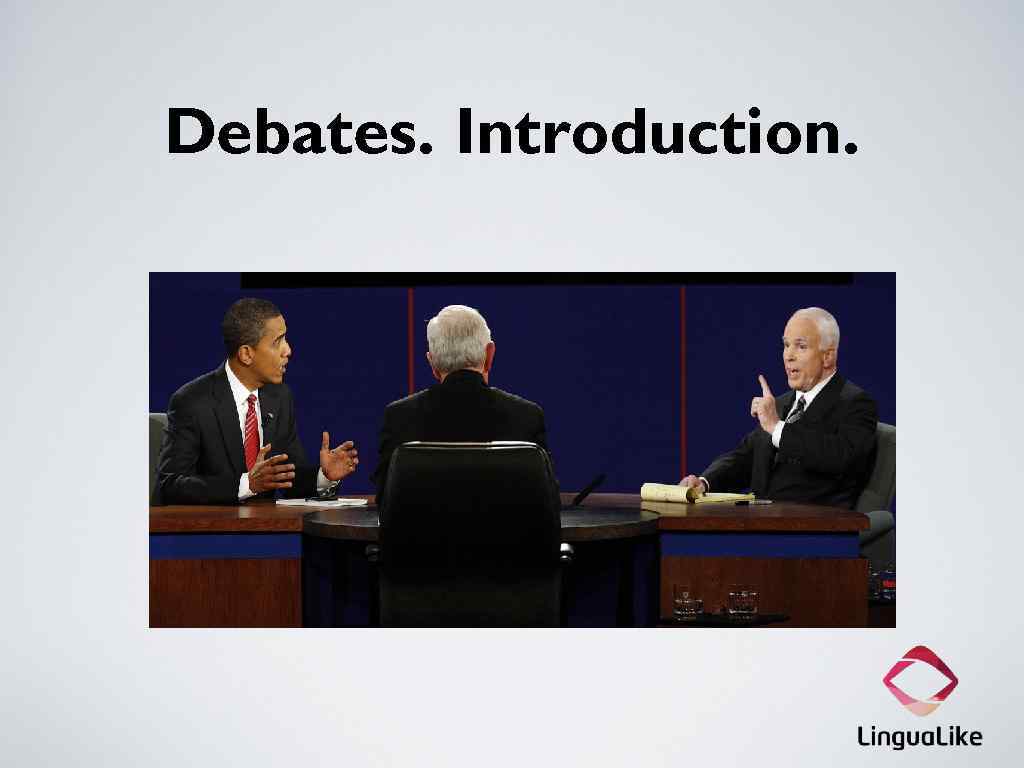 Debates. Introduction.
 French moralist and essayist Joseph Joubert once said, "It is better to debate a question without settling it than to settle a question without debating it. " He was not alone in thinking this. For centuries debate has been an accepted, and often encouraged, form of communication and discussion.
 Debate is often seen not only as a means of reaching conclusions, but as a practice to expand one's mind and develop tolerance. Throughout history, democratic civilizations have used debate as a means to reach decisions on issues and ponder greater intellectual issues.
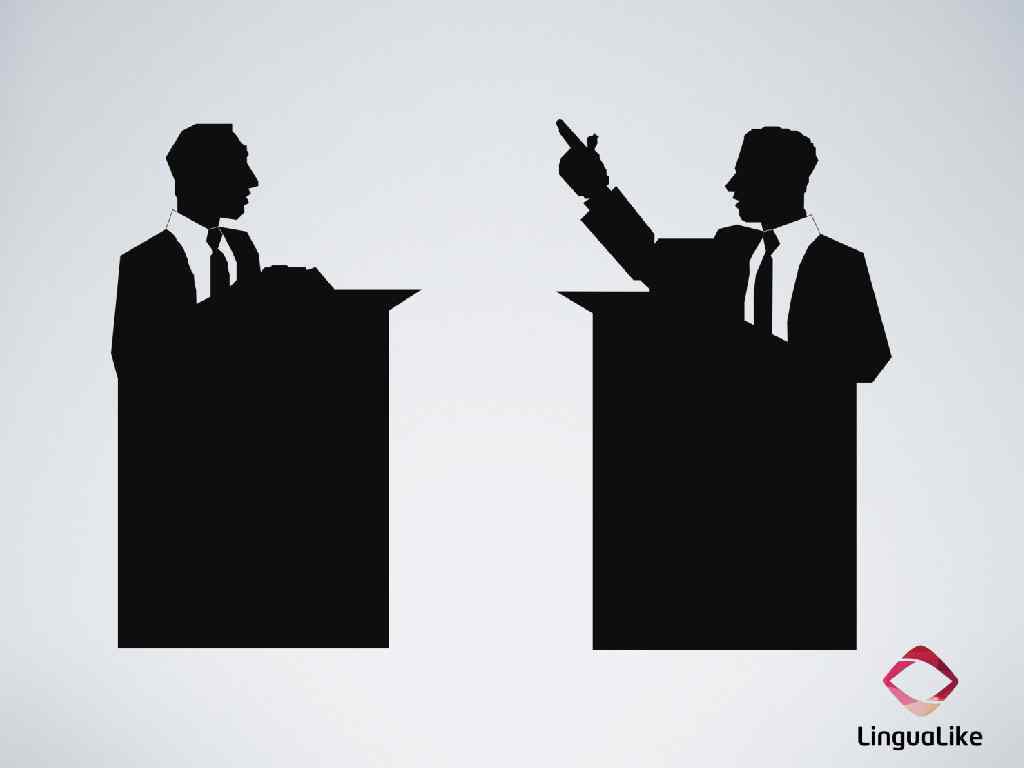
 Debate, in an academic sense, is a disciplined form of arguing toward a person or team of people. A debater must provide a logically structured and reasoned argument concerning a topic with a clear conclusion. The purpose is to persuade the audience that your insight on the topic is the correct way to analyze the topic.
 Basic Rules The team represents the opinion they are for or against. A speaker is chosen in the debate team who will lead much of the debate. The speaker from one team starts out the debate, usually speaking from the affirmative viewpoint. The affirmative has the advantage of saying what the topic is and then expressing the team opinion. The opposing team speaker, called the negative, then rejects the way the first team presented the topic to the audience and presents its side of the argument.
 Openings A debate begins with an opening statement from the speaker arguing the affirmative. This person has several duties he or she must meet during this portion of the debate. The speaker must first define the topic, which consists of explaining what the topic means. Next the speaker must present her team’s position on the topic and give a brief summary of the points.
 First Rebuttals After the opening statement, the next members on each team present the first rebuttals. This is followed by the second speaker on the negative team. This person also begins with a restatement of his team’s position. He then rebuts the main points presented by the second affirmative speaker and presents the second half of his team’s case.
 Question, Answer and Vote After each team offers a closing, the audience and judges are given the opportunity to ask questions of each team pertaining to the debate topic and their positions. These questions are typically given to the debate moderator, who then reads them aloud to the teams. After this portion, the judges or audience vote to determine which team wins.
 Let's make our own structure of debates and make sure we understand it all!
 Now we divide into teams. . .
 And prepare for next lesson's debates! Your statement is. .
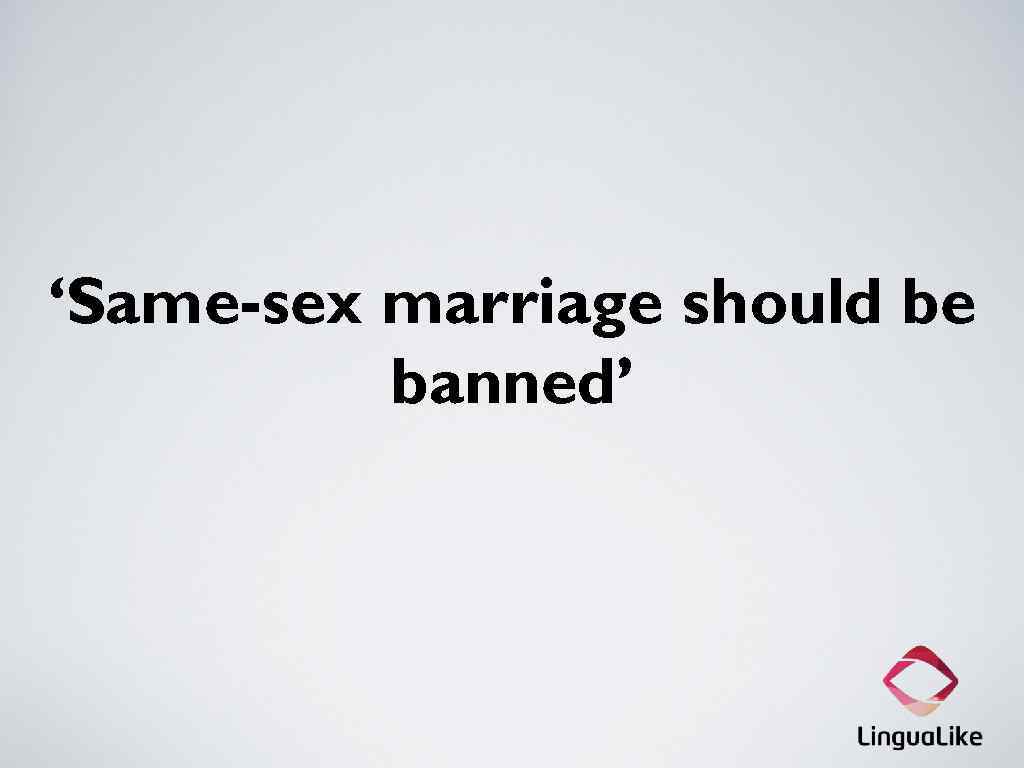 ‘Same-sex marriage should be banned’
 Great job! Don't forget to prepare for debates! Thank you for the lesson!