Скачать презентацию I came to the farm to see how
ba355fa20c3882666558b112ecd15693.ppt
- Количество слайдов: 28
 I came to the farm to see how things grow And I learned some things I didn't know Plants can grow high Plants can grow low Some grow above the ground Some grow below sung by Ernie with help from the veggies
 Nano-to-meter-scale Building concepts & requirements Danijel Rebolj University of Maribor Faculty of Civil Engineering Construction IT Centre
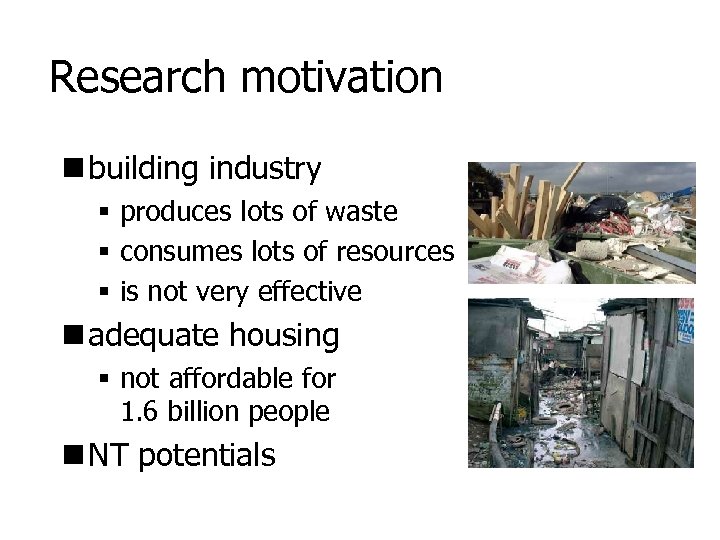 Research motivation n building industry § produces lots of waste § consumes lots of resources § is not very effective n adequate housing § not affordable for 1. 6 billion people n NT potentials
 Research goals n design top-down NT based production concepts n further explore relevant NT areas § nanorobotics § bioengineering and synthetic biology § nanomaterials (3 D Carbon Nano Tubes) n formulate requirements for the NT bottom-up research & start cooperation
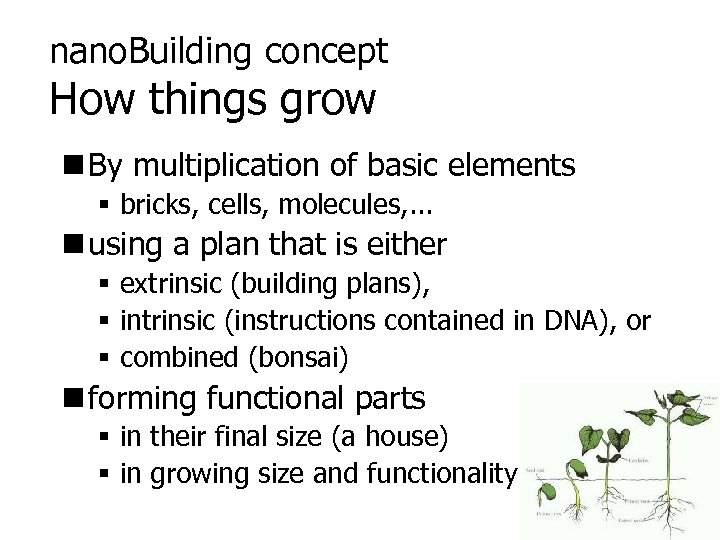 nano. Building concept How things grow n By multiplication of basic elements § bricks, cells, molecules, . . . n using a plan that is either § extrinsic (building plans), § intrinsic (instructions contained in DNA), or § combined (bonsai) n forming functional parts § in their final size (a house) § in growing size and functionality
 nano. Building concept Growing facilities n Common practice of construction is by § sequential multiplication and composition § of a variety of macro-level building elements, § produced by traditional ways of material treatment n our goal: to mimic the natural way using nano-level building elements
 nano. Building concept Growing facilities n Extrinsic plan § nanotechnology devices to produce building material at nano scale on site § physics & chemistry laws n Intrinsic & combined plan § bionanotechnology / synthetic biology to program living particles to grow systems at the higher level § biology laws
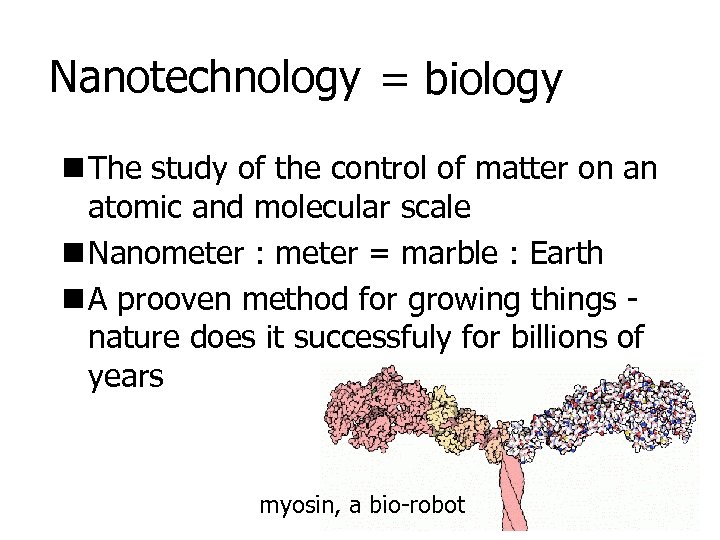 Nanotechnology = biology n The study of the control of matter on an atomic and molecular scale n Nanometer : meter = marble : Earth n A prooven method for growing things - nature does it successfuly for billions of years myosin, a bio-robot
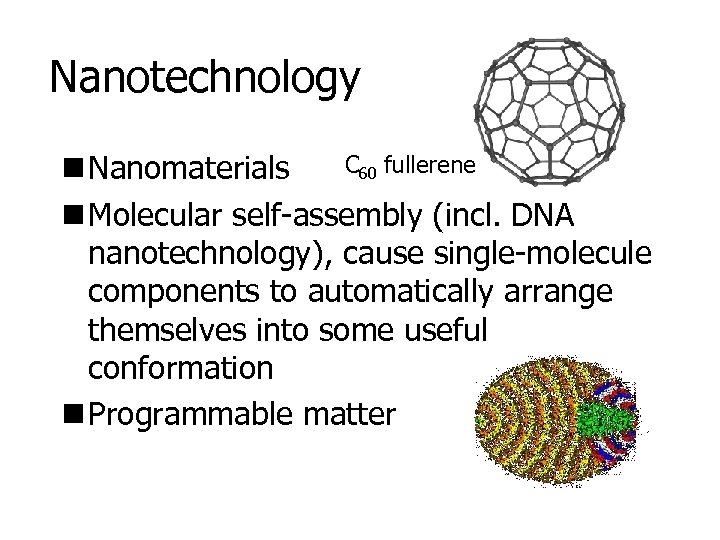 Nanotechnology C 60 fullerene n Nanomaterials n Molecular self-assembly (incl. DNA nanotechnology), cause single-molecule components to automatically arrange themselves into some useful conformation n Programmable matter
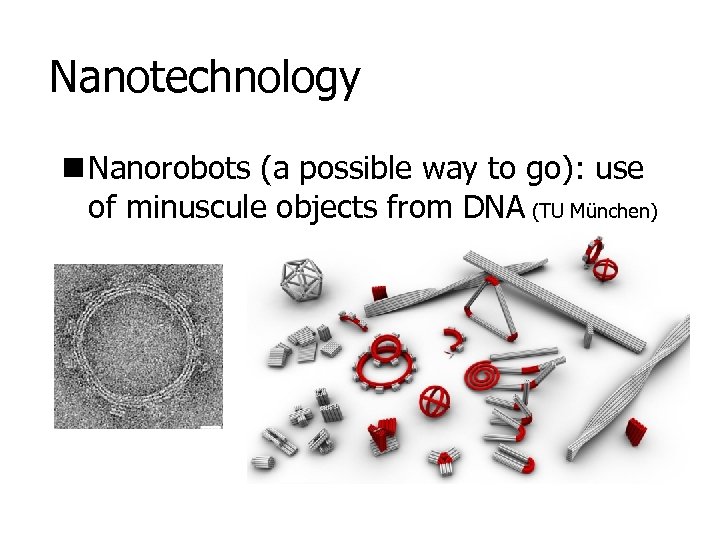 Nanotechnology n Nanorobots (a possible way to go): use of minuscule objects from DNA (TU München)
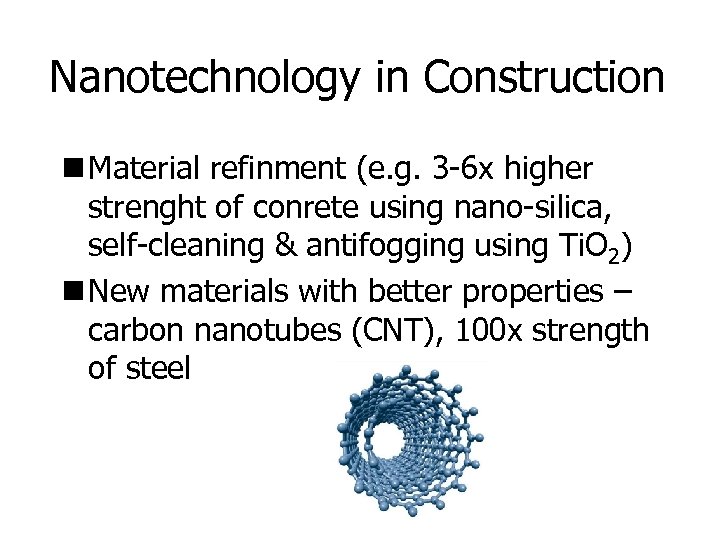 Nanotechnology in Construction n Material refinment (e. g. 3 -6 x higher strenght of conrete using nano-silica, self-cleaning & antifogging using Ti. O 2) n New materials with better properties – carbon nanotubes (CNT), 100 x strength of steel
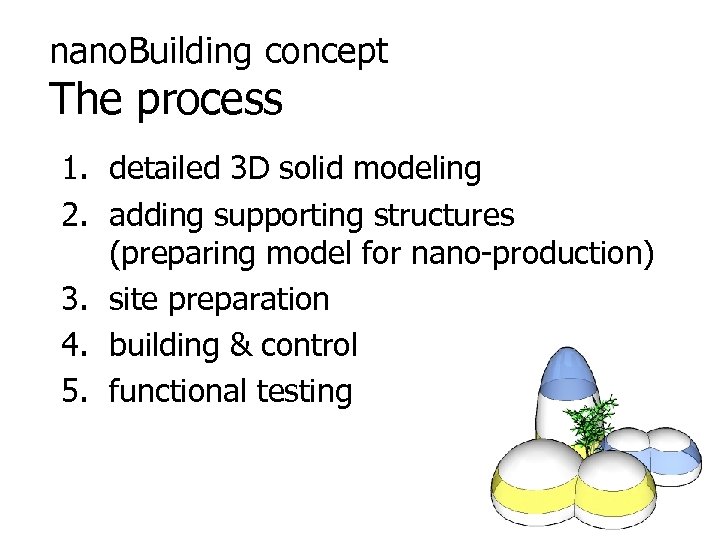 nano. Building concept The process 1. detailed 3 D solid modeling 2. adding supporting structures (preparing model for nano-production) 3. site preparation 4. building & control 5. functional testing
 nano. Building concept The process 1. 3 D solid modeling n define detailed solid geometry n define parts of the model (3 D areas), with specific material properties (strength, friction, conductivity) to form utility systems (like water system, sewer system, electrical instalations, communication system etc. )
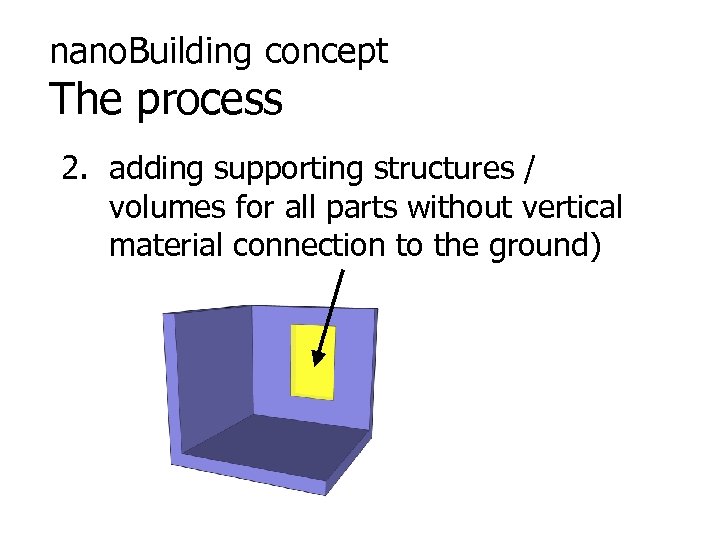 nano. Building concept The process 2. adding supporting structures / volumes for all parts without vertical material connection to the ground)
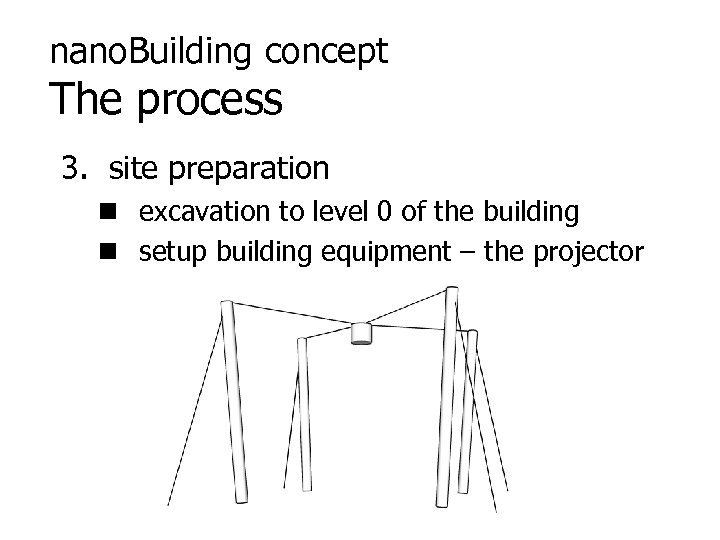 nano. Building concept The process 3. site preparation n excavation to level 0 of the building n setup building equipment – the projector
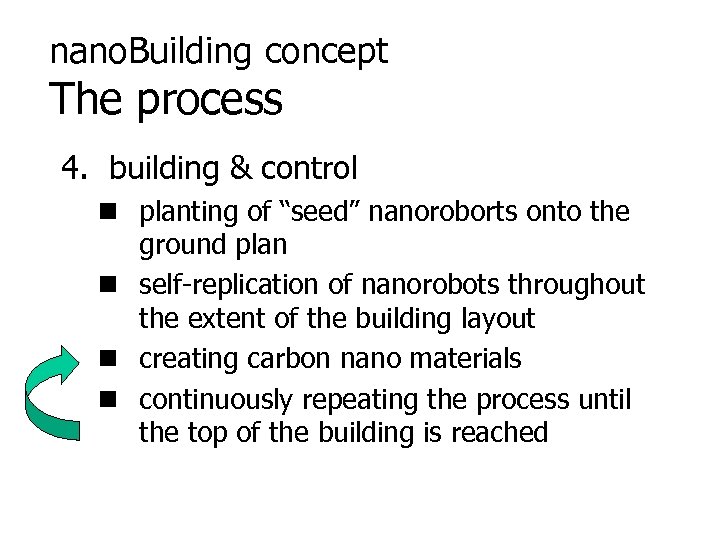 nano. Building concept The process 4. building & control n planting of “seed” nanoroborts onto the ground plan n self-replication of nanorobots throughout the extent of the building layout n creating carbon nano materials n continuously repeating the process until the top of the building is reached
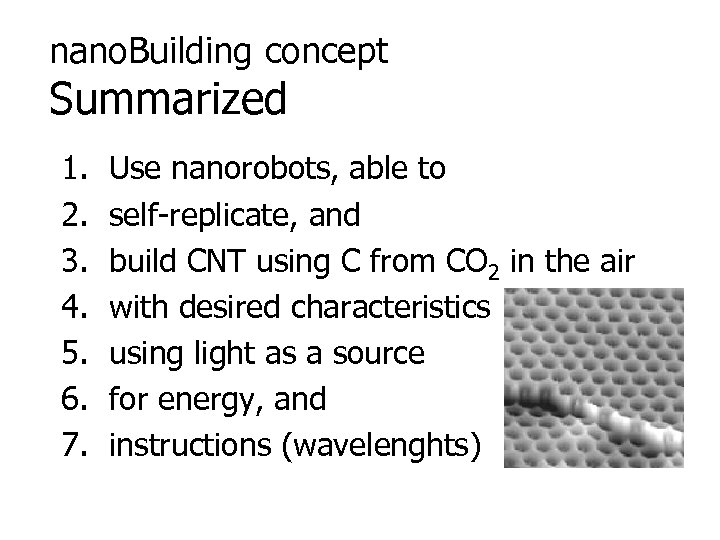 nano. Building concept Summarized 1. 2. 3. 4. 5. 6. 7. Use nanorobots, able to self-replicate, and build CNT using C from CO 2 in the air with desired characteristics using light as a source for energy, and instructions (wavelenghts)
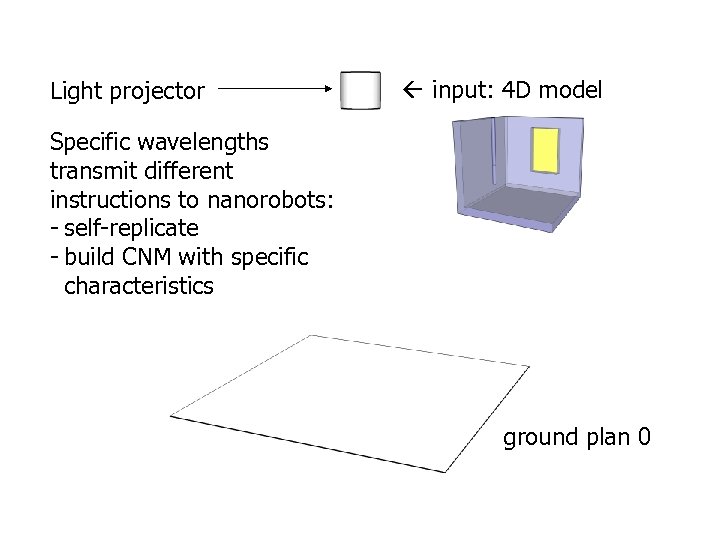 Light projector input: 4 D model Specific wavelengths transmit different instructions to nanorobots: - self-replicate - build CNM with specific characteristics ground plan 0
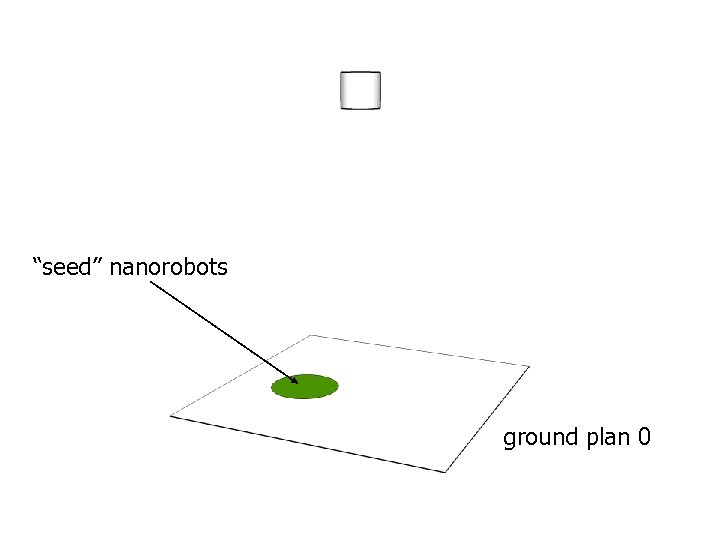 “seed” nanorobots ground plan 0
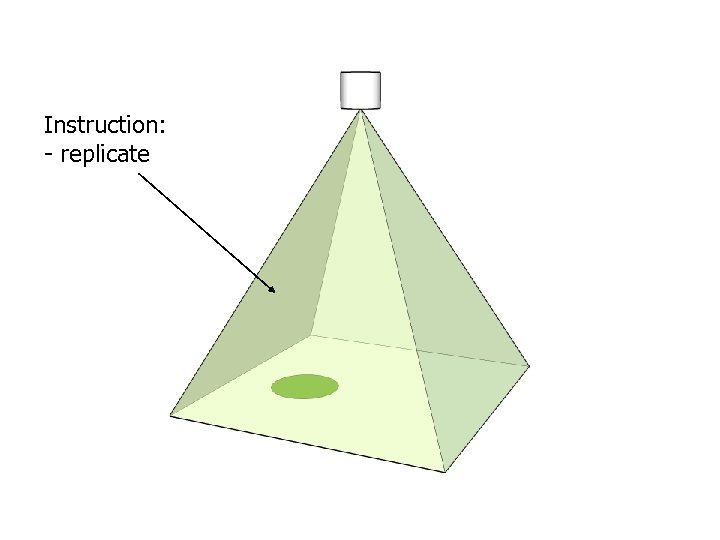 Instruction: - replicate
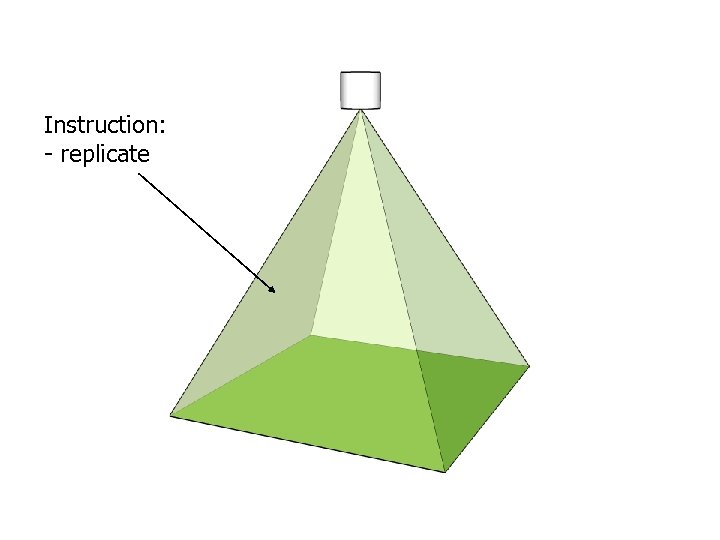 Instruction: - replicate
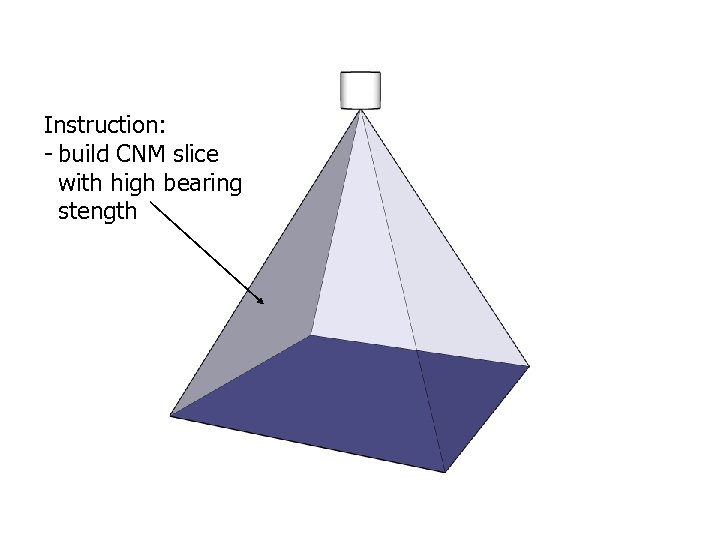 Instruction: - build CNM slice with high bearing stength
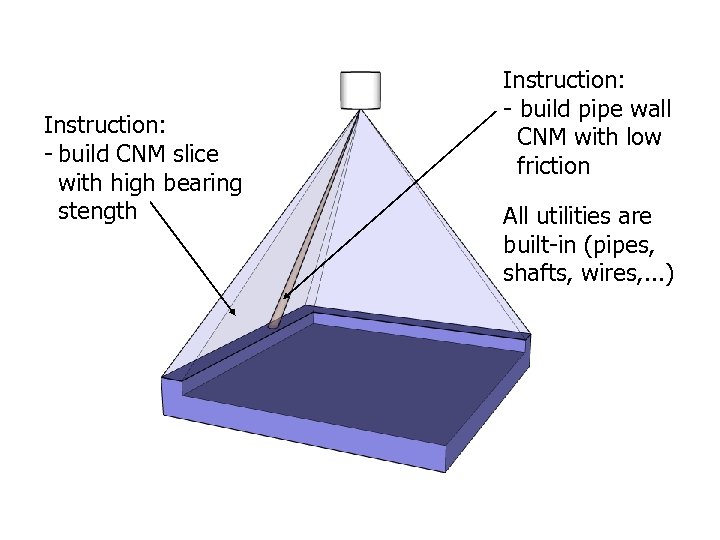 Instruction: - build CNM slice with high bearing stength Instruction: - build pipe wall CNM with low friction All utilities are built-in (pipes, shafts, wires, . . . )
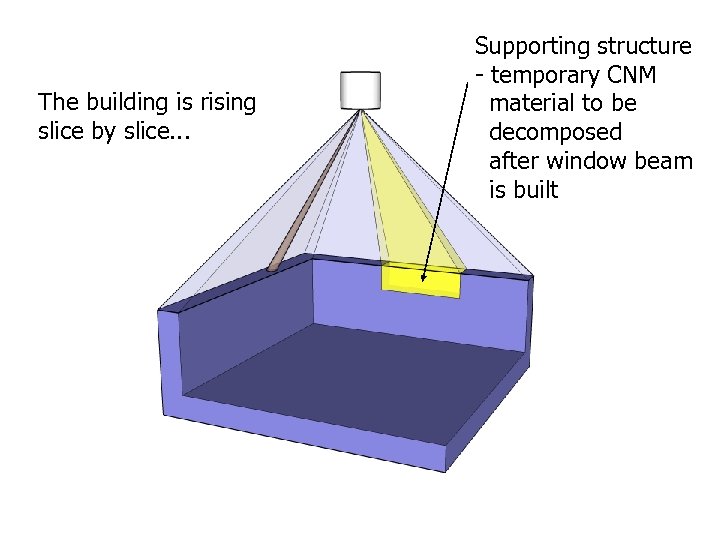 The building is rising slice by slice. . . Supporting structure - temporary CNM material to be decomposed after window beam is built
 nano. Building Requirements n Nanorobots powered by light, able to n recognize different wavelengths and compiling them into instructions n compose CNM with required characteristics (strength, conductivity) n using C from CO 2 from the air n able to self-replicate (option)
 nano. Building The future
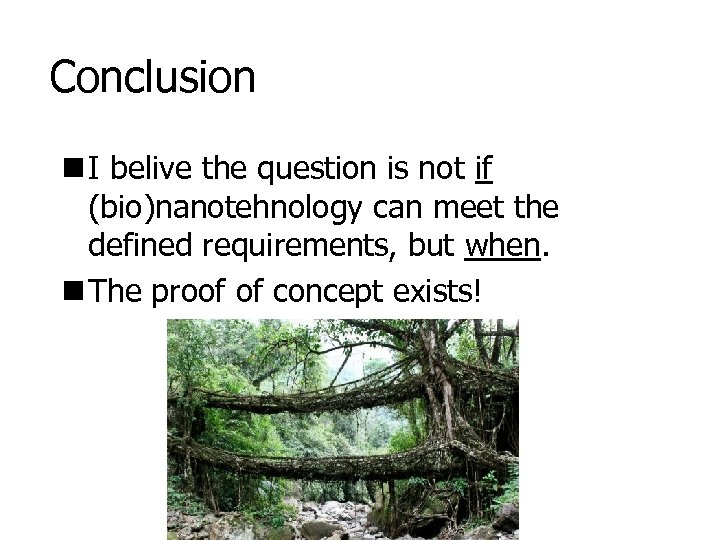 Conclusion n I belive the question is not if (bio)nanotehnology can meet the defined requirements, but when. n The proof of concept exists!