


 Скачать презентацию Hypochromic Microcytic Anemias NORMO HYPOCHROMIC or NORMO MICROCYTIC ANEMIAS 1
47e664f5bde82ed1390a165c486fbf8d.ppt
- Количество слайдов: 21
 Hypochromic/Microcytic Anemias
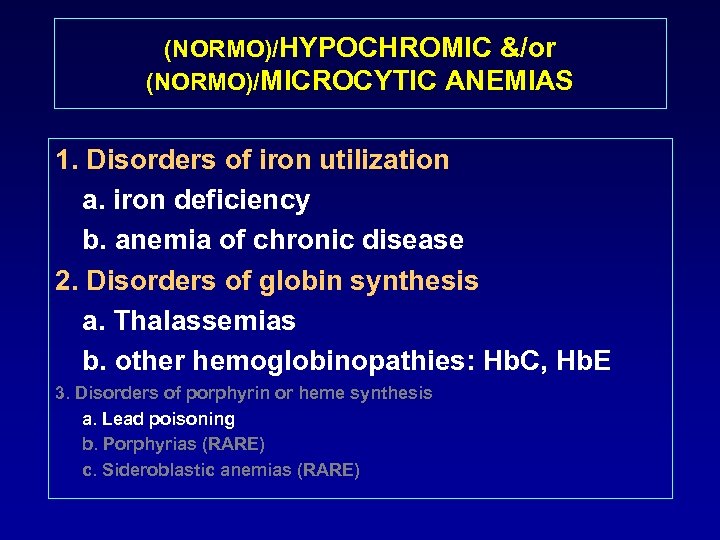 (NORMO)/HYPOCHROMIC &/or (NORMO)/MICROCYTIC ANEMIAS 1. Disorders of iron utilization a. iron deficiency b. anemia of chronic disease 2. Disorders of globin synthesis a. Thalassemias b. other hemoglobinopathies: Hb. C, Hb. E 3. Disorders of porphyrin or heme synthesis a. Lead poisoning b. Porphyrias (RARE) c. Sideroblastic anemias (RARE)
 NORMAL IRON METABOLISM: what goes in must come out (#1) 1. Ideally, normal iron balance: amount absorbed = amount lost from the body. 2. No mechanism for iron excretion exists; it is extensively recycled. 3. Absorption takes place in proximal small intestine. Only a small fraction of ingested iron is absorbed. Regulation of absorption is tightly controlled.
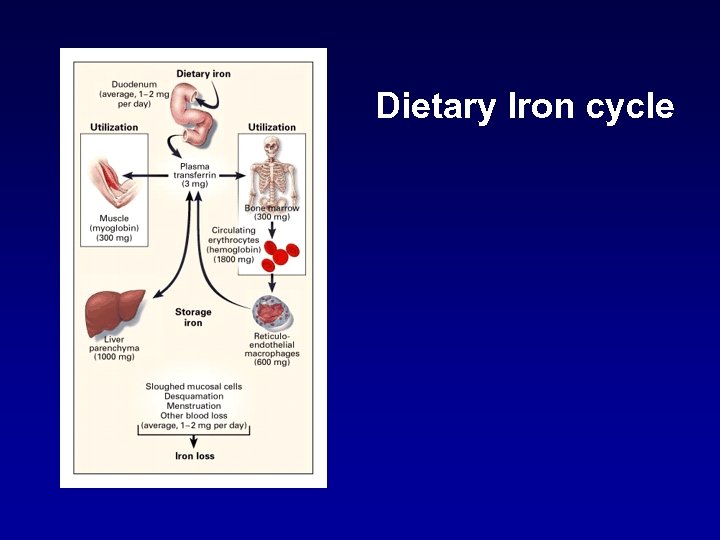 Dietary Iron cycle
 NORMAL IRON METABOLISM: what came in must go out (#2) 4. Normal iron losses: a. Males & Females: desquamated GI/urinary epithelial cells (1 mg/d) b. Females: Menstrual iron loss (30 mg/month) 5. Senescent RBC ingested by splenic macrophages, and the iron is reused.
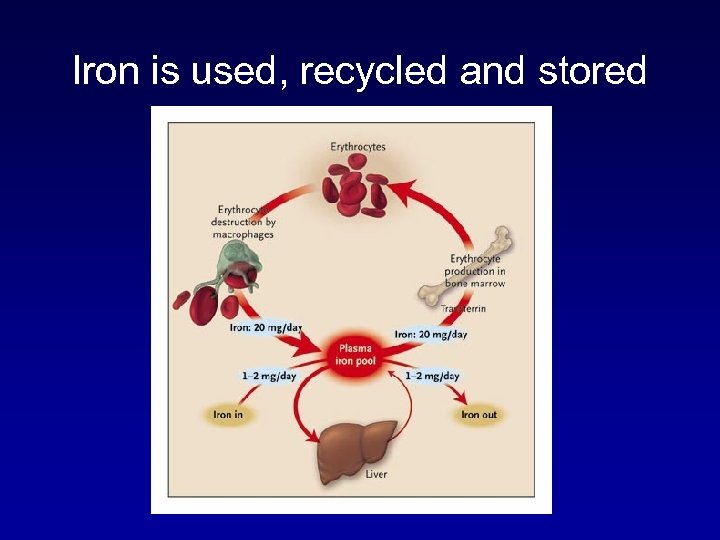 Iron is used, recycled and stored
 FOOD IRON ABSORPTION 1. 2. 3. 4. 5. Heme and nonheme iron are absorbed differently Heme iron (from animal products) is absorbed directly from food via special receptor. Nonheme iron (vegetable forms) exists as ferric salts, and must be converted to ferrous form (2+) to be absorbed. This depends on luminal factors in intestine (p. H, food, etc). Stomach acid is required for vegetable iron absorption. Calcium inhibits iron absorption (dairy products), also tea (tannin).
 IRON DEFICIENCY IS A PROGRESSIVE, INSIDIOUS DISORDER 1. First, lose storage iron (asymptomatic) 2. Next, lose transport iron, then lose iron in hemoglobin (asymptomatic) 3. At this point, there is normochromic, normocytic anemia. 4. After a period of time in which there is iron deficient erythropoiesis, hypochromic, microcytic anemia develops. 5. Low MCV is a LATE sign of iron deficiency! (Different from B 12/Folate deficiency where high MCV is an early sign).
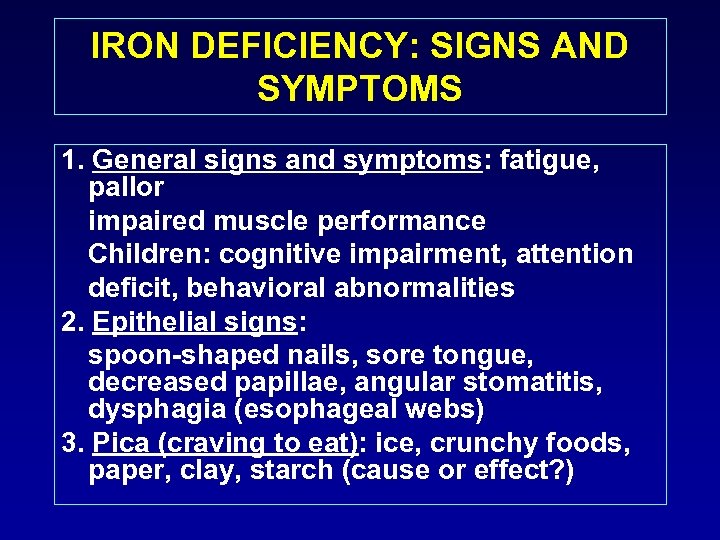 IRON DEFICIENCY: SIGNS AND SYMPTOMS 1. General signs and symptoms: fatigue, pallor impaired muscle performance Children: cognitive impairment, attention deficit, behavioral abnormalities 2. Epithelial signs: spoon-shaped nails, sore tongue, decreased papillae, angular stomatitis, dysphagia (esophageal webs) 3. Pica (craving to eat): ice, crunchy foods, paper, clay, starch (cause or effect? )
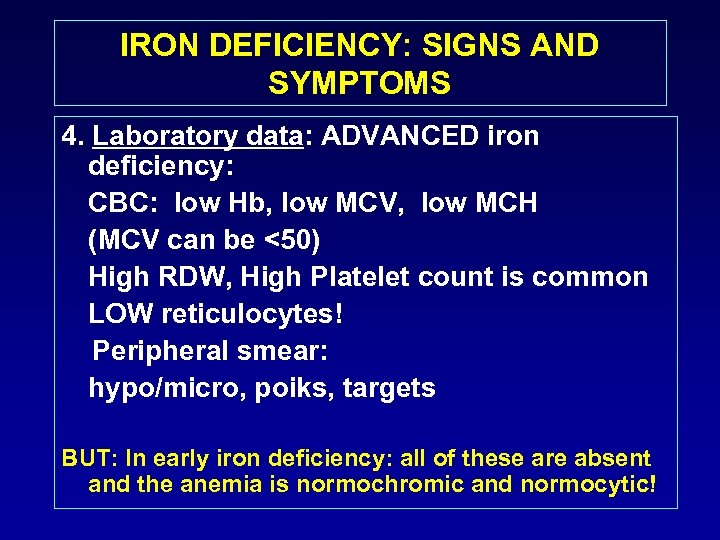 IRON DEFICIENCY: SIGNS AND SYMPTOMS 4. Laboratory data: ADVANCED iron deficiency: CBC: low Hb, low MCV, low MCH (MCV can be <50) High RDW, High Platelet count is common LOW reticulocytes! Peripheral smear: hypo/micro, poiks, targets BUT: In early iron deficiency: all of these are absent and the anemia is normochromic and normocytic!
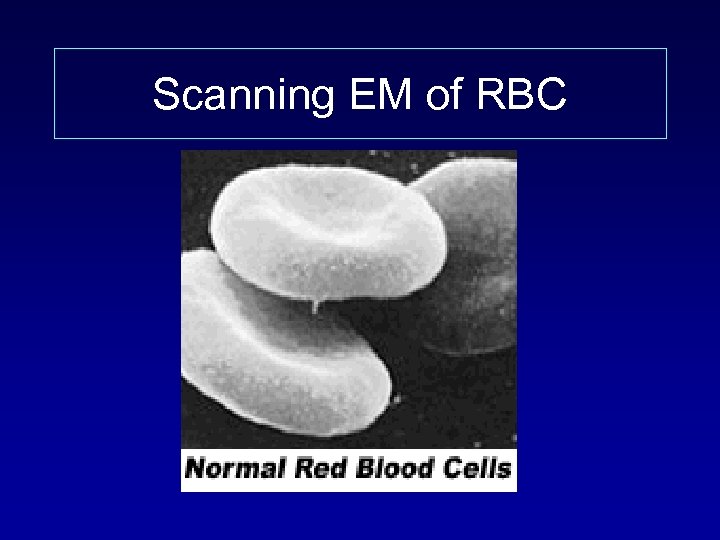 Scanning EM of RBC
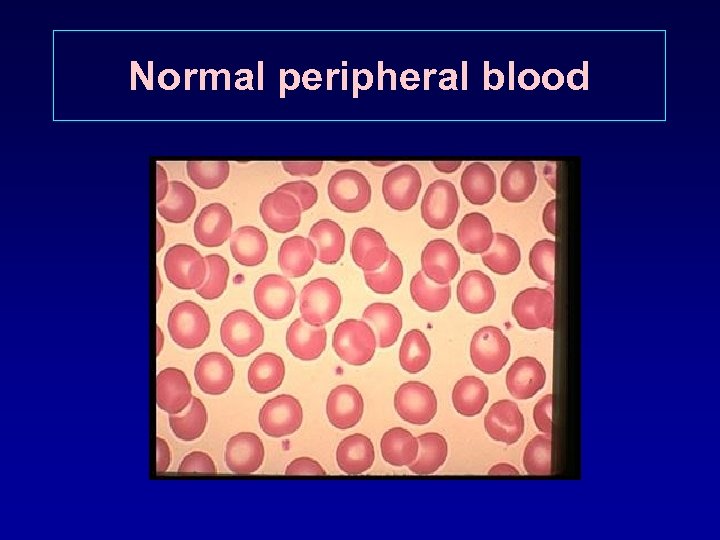 Normal peripheral blood
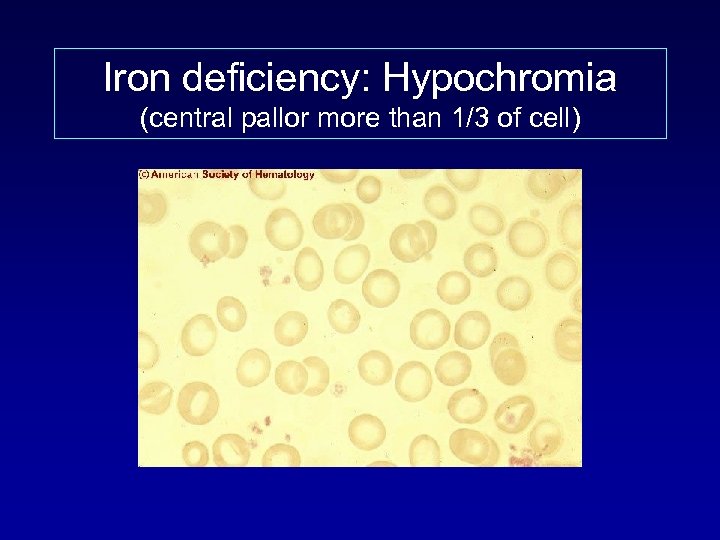 Iron deficiency: Hypochromia (central pallor more than 1/3 of cell)
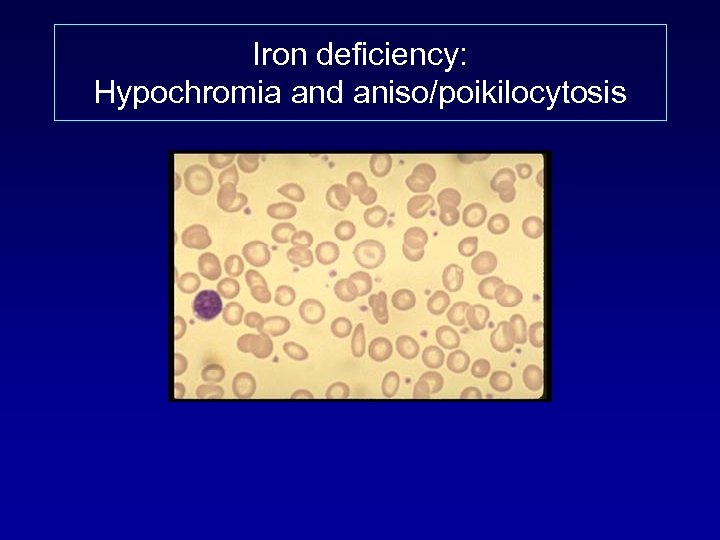 Iron deficiency: Hypochromia and aniso/poikilocytosis
 Serum Ferritin • Ferritin is a good test for body iron stores. In iron deficiency: low ferritin=iron deficiency • However: Ferritin is also an “acute phase reactant”, and rises in response to fever, inflammation, etc. : unreliable in many clinical settings!
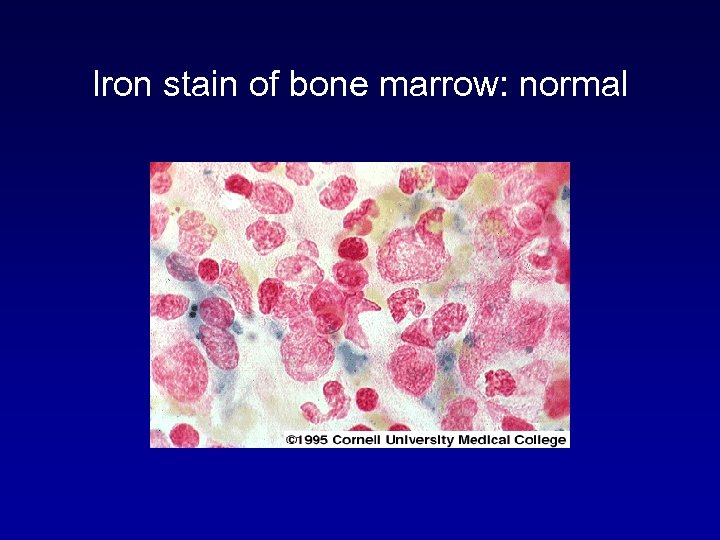 Iron stain of bone marrow: normal
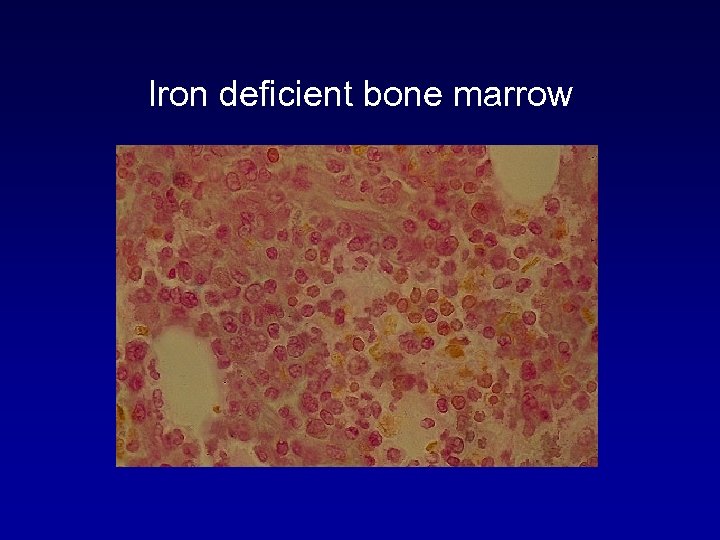 Iron deficient bone marrow
 ETIOLOGY OF IRON DEFICIENCY 1. Iron deficiency is not a disease, it is a symptom of an underlying illness. Essential to identify the cause! 2. Adult women: most prone due to menstrual blood loss. Israeli postpartum women: 17 -49% iron deficient! New female recruits to army: 49% iron deficient!
 ETIOLOGY OF IRON DEFICIENCY 3. Infants and Children: iron stores depleted by 4 -6 months. Formula is a poor source of iron (poor absorption) Mother’s milk: better absorption but poor source. Israel: A few years ago, up to 70% of children age 12 years have iron deficiency -> Iron supplementation is now recommended up to 2 yrs! 4. Postmenopausal women or Adult men: iron deficiency is rare, usually a sign of BLOOD LOSS (gastrointestinal, cancer? ) malabsorption of iron? ?
 TREATMENT OF IRON DEFICIENCY 1. Oral iron almost always effective if taken properly: a. on an empty stomach or with meat meal b. not with dairy products, tea c. with Vitamin C or food containing Vit C (acid) 2. Oral iron often causes symptoms: a. gastrointestinal: diarrhea, constipation, nausea b. dark stools (false positive test for occult blood)
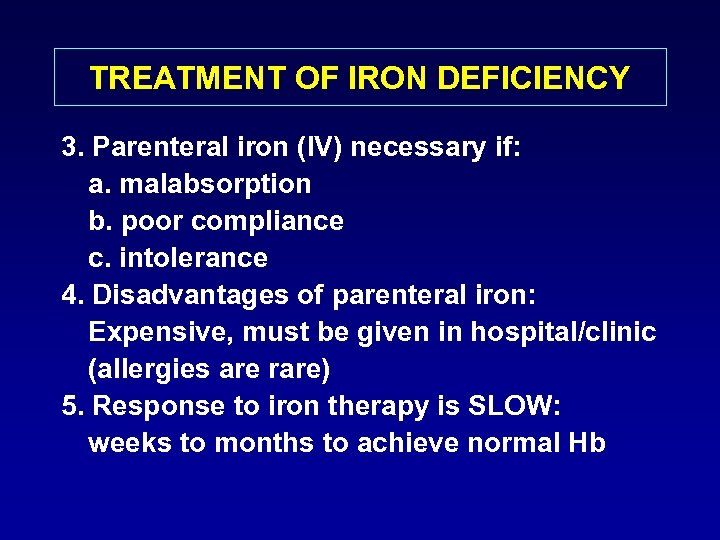 TREATMENT OF IRON DEFICIENCY 3. Parenteral iron (IV) necessary if: a. malabsorption b. poor compliance c. intolerance 4. Disadvantages of parenteral iron: Expensive, must be given in hospital/clinic (allergies are rare) 5. Response to iron therapy is SLOW: weeks to months to achieve normal Hb