 Скачать презентацию HYPERTENSION SYAIFUL AZMI Subdivision of Nephrology Faculty of
9c562b583d373cd42e999cd67360508f.ppt
- Количество слайдов: 42



HYPERTENSION SYAIFUL AZMI Subdivision of Nephrology, Faculty of Medicine Andalas University Padang
Buku pegangan. • HARRISON : INTERNAL MEDICINE • SUPARTONDO : ILMU OENYAKIT DALAM • NORMAN KAPLAN : CLINICAL HYPERTENSION
Section 1: Definition and Classification of Hypertension
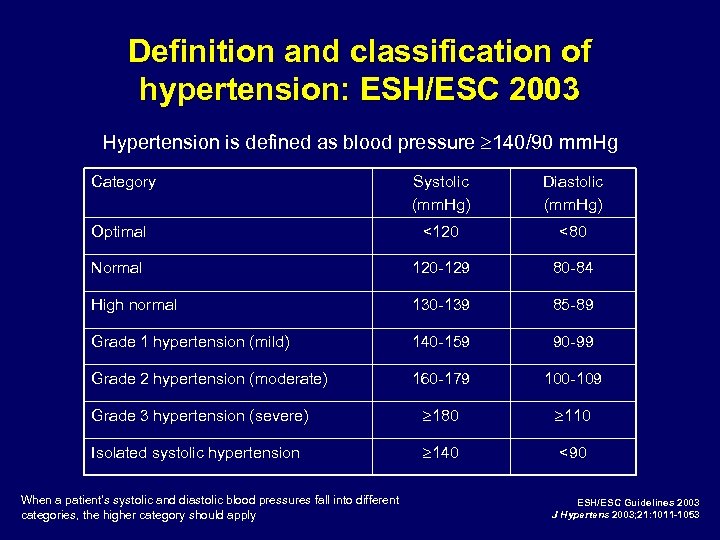
Definition and classification of hypertension: ESH/ESC 2003 Hypertension is defined as blood pressure 140/90 mm. Hg Category Systolic (mm. Hg) Diastolic (mm. Hg) Optimal <120 <80 Normal 120 -129 80 -84 High normal 130 -139 85 -89 Grade 1 hypertension (mild) 140 -159 90 -99 Grade 2 hypertension (moderate) 160 -179 100 -109 Grade 3 hypertension (severe) 180 110 Isolated systolic hypertension 140 <90 When a patient’s systolic and diastolic blood pressures fall into different categories, the higher category should apply ESH/ESC Guidelines 2003 J Hypertens 2003; 21: 1011 -1053
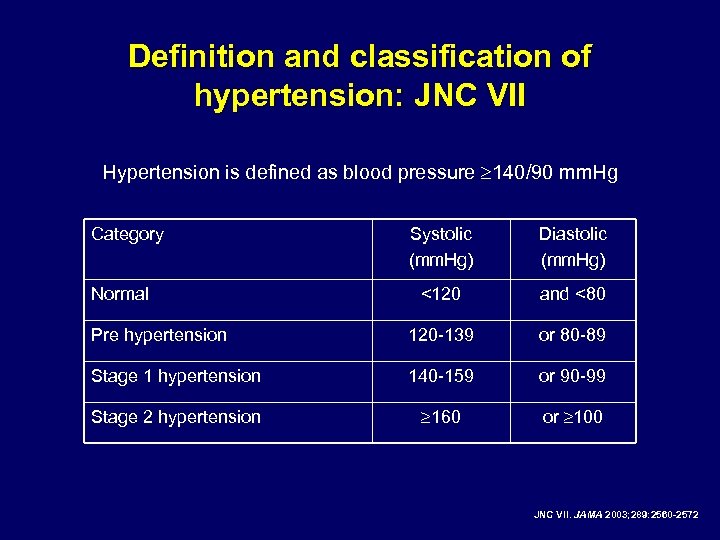
Definition and classification of hypertension: JNC VII Hypertension is defined as blood pressure 140/90 mm. Hg Category Systolic (mm. Hg) Diastolic (mm. Hg) <120 and <80 Pre hypertension 120 -139 or 80 -89 Stage 1 hypertension 140 -159 or 90 -99 Stage 2 hypertension 160 or 100 Normal JNC VII. JAMA 2003; 289: 2560 -2572
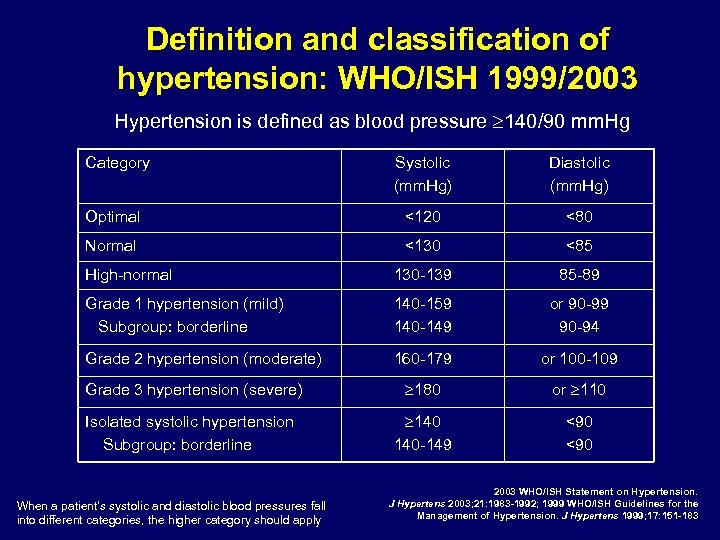
Definition and classification of hypertension: WHO/ISH 1999/2003 Hypertension is defined as blood pressure 140/90 mm. Hg Category Systolic (mm. Hg) Diastolic (mm. Hg) Optimal <120 <80 Normal <130 <85 High-normal 130 -139 85 -89 Grade 1 hypertension (mild) Subgroup: borderline 140 -159 140 -149 or 90 -99 90 -94 Grade 2 hypertension (moderate) 160 -179 or 100 -109 Grade 3 hypertension (severe) 180 or 110 Isolated systolic hypertension Subgroup: borderline 140 -149 <90 When a patient’s systolic and diastolic blood pressures fall into different categories, the higher category should apply 2003 WHO/ISH Statement on Hypertension. J Hypertens 2003; 21: 1983 -1992; 1999 WHO/ISH Guidelines for the Management of Hypertension. J Hypertens 1999; 17: 151 -183
Section 2: Prevalence of Hypertension
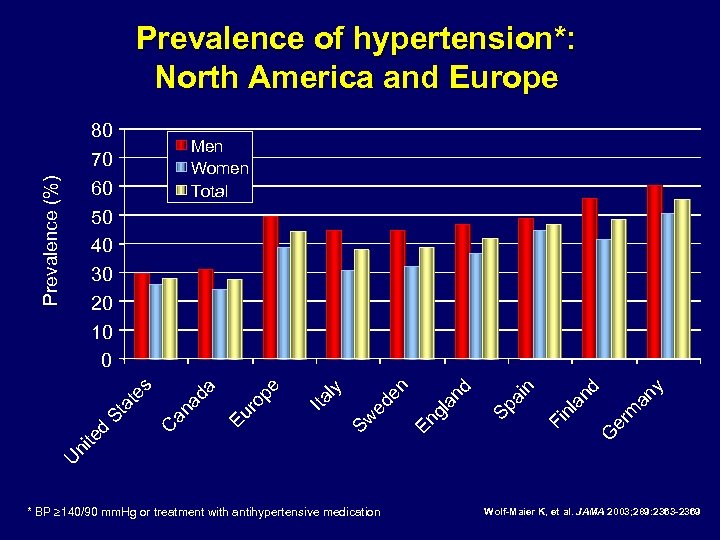
Prevalence of hypertension*: North America and Europe 80 Men Women Total Prevalence (%) 70 60 50 40 30 20 10 G er m an y nl an d Fi ai n Sp gl an d En en ed Sw Ita ly pe ro Eu a an ad C U ni te d St at es 0 * BP 140/90 mm. Hg or treatment with antihypertensive medication Wolf-Maier K, et al. JAMA 2003; 289: 2363 -2369
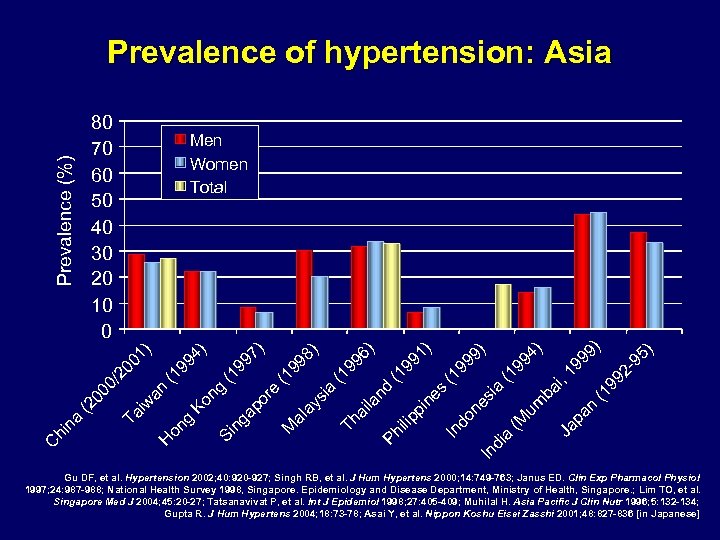
80 70 60 50 40 30 20 10 0 99 4) Ko ng Si H on g iw an (1 /2 0 Ta 00 0 (2 na hi C (1 ng 99 ap 7) or e (1 M 99 al 8) ay si a (1 Th 99 ai 6) la nd Ph (1 ilip 99 pi 1) ne s (1 In 99 do 9) ne In si di a a (1 (M 99 um 4) ba i, Ja 19 pa 99 n ) (1 99 295 ) Men Women Total 01 ) Prevalence (%) Prevalence of hypertension: Asia Gu DF, et al. Hypertension 2002; 40: 920 -927; Singh RB, et al. J Hum Hypertens 2000; 14: 749 -763; Janus ED. Clin Exp Pharmacol Physiol 1997; 24: 987 -988; National Health Survey 1998, Singapore. Epidemiology and Disease Department, Ministry of Health, Singapore. ; Lim TO, et al. Singapore Med J 2004; 45: 20 -27; Tatsanavivat P, et al. Int J Epidemiol 1998; 27: 405 -409; Muhilal H. Asia Pacific J Clin Nutr 1996; 5: 132 -134; Gupta R. J Hum Hypertens 2004; 18: 73 -78; Asai Y, et al. Nippon Koshu Eisei Zasshi 2001; 48: 827 -836 [in Japanese]
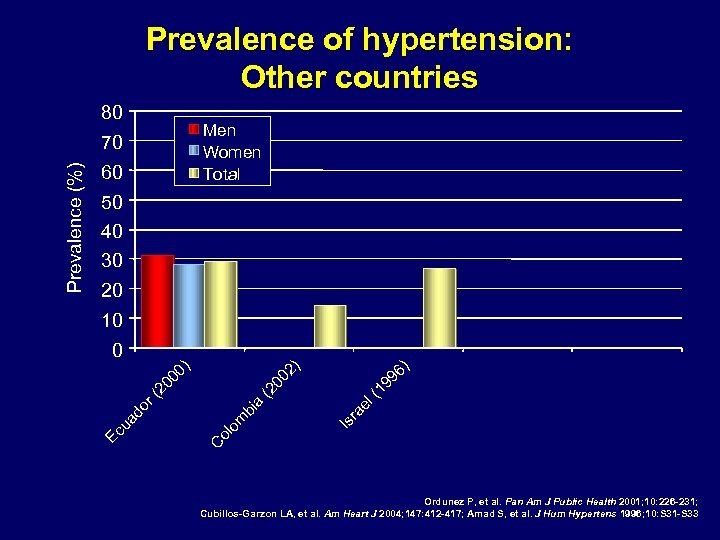
Prevalence of hypertension: Other countries 80 Men Women Total 60 50 40 30 20 10 6) el Is ra C ol o m do r bi a (2 (2 (1 99 00 2 00 0) ) 0 Ec ua Prevalence (%) 70 Ordunez P, et al. Pan Am J Public Health 2001; 10: 226 -231; Cubillos-Garzon LA, et al. Am Heart J 2004; 147: 412 -417; Amad S, et al. J Hum Hypertens 1996; 10: S 31 -S 33
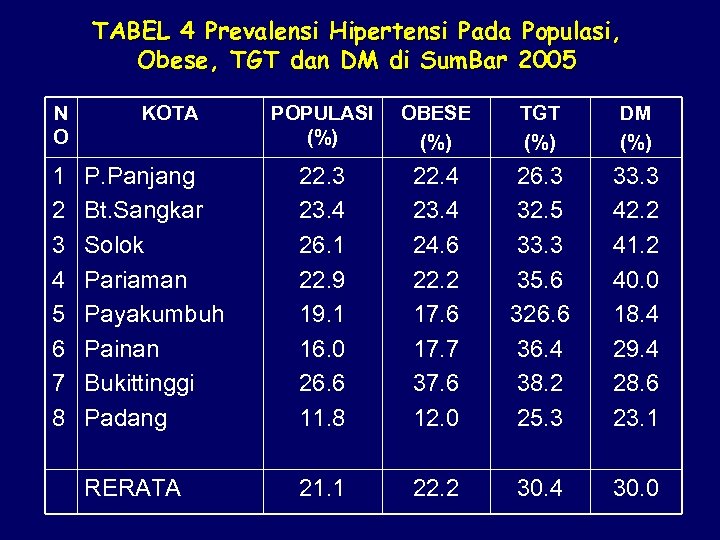
TABEL 4 Prevalensi Hipertensi Pada Populasi, Obese, TGT dan DM di Sum. Bar 2005 N O 1 2 3 4 5 6 7 8 KOTA POPULASI (%) OBESE (%) TGT (%) DM (%) P. Panjang Bt. Sangkar Solok Pariaman Payakumbuh Painan Bukittinggi Padang 22. 3 23. 4 26. 1 22. 9 19. 1 16. 0 26. 6 11. 8 22. 4 23. 4 24. 6 22. 2 17. 6 17. 7 37. 6 12. 0 26. 3 32. 5 33. 3 35. 6 326. 6 36. 4 38. 2 25. 3 33. 3 42. 2 41. 2 40. 0 18. 4 29. 4 28. 6 23. 1 RERATA 21. 1 22. 2 30. 4 30. 0
Section 3 : Classification of hypertension
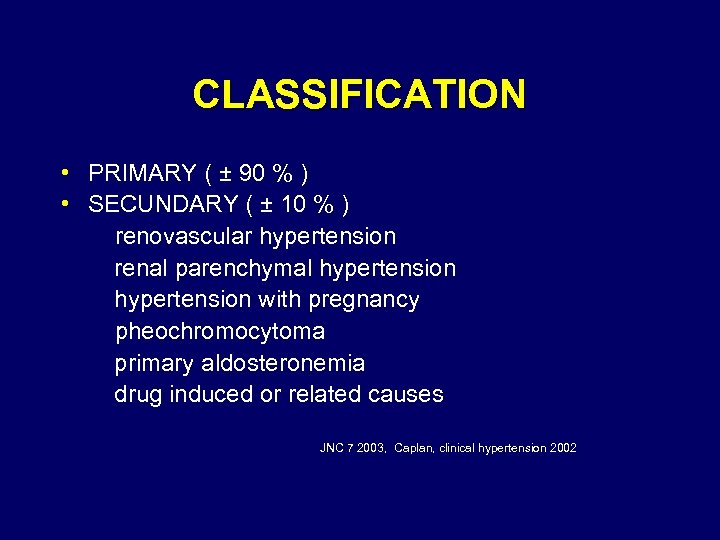
CLASSIFICATION • PRIMARY ( ± 90 % ) • SECUNDARY ( ± 10 % ) renovascular hypertension renal parenchymal hypertension with pregnancy pheochromocytoma primary aldosteronemia drug induced or related causes JNC 7 2003, Caplan, clinical hypertension 2002
Section 4 : Risk factors of Hypertension
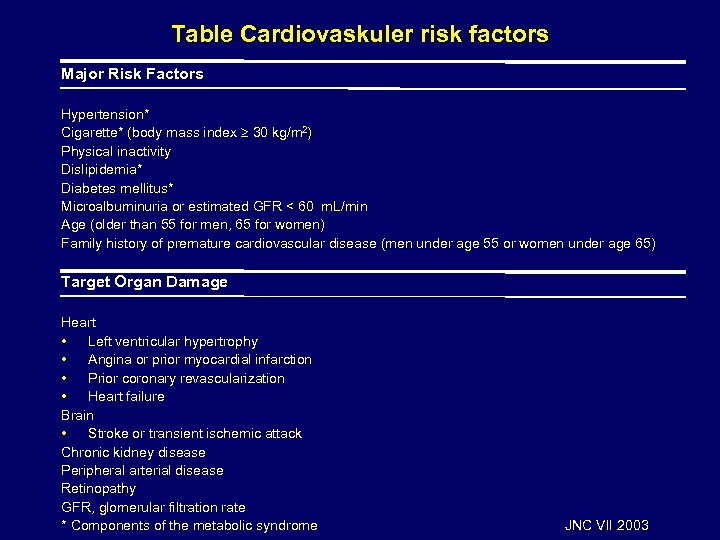
Table Cardiovaskuler risk factors Major Risk Factors Hypertension* Cigarette* (body mass index 30 kg/m 2) Physical inactivity Dislipidemia* Diabetes mellitus* Microalbuminuria or estimated GFR < 60 m. L/min Age (older than 55 for men, 65 for women) Family history of premature cardiovascular disease (men under age 55 or women under age 65) Target Organ Damage Heart • Left ventricular hypertrophy • Angina or prior myocardial infarction • Prior coronary revascularization • Heart failure Brain • Stroke or transient ischemic attack Chronic kidney disease Peripheral arterial disease Retinopathy GFR, glomerular filtration rate * Components of the metabolic syndrome JNC VII 2003
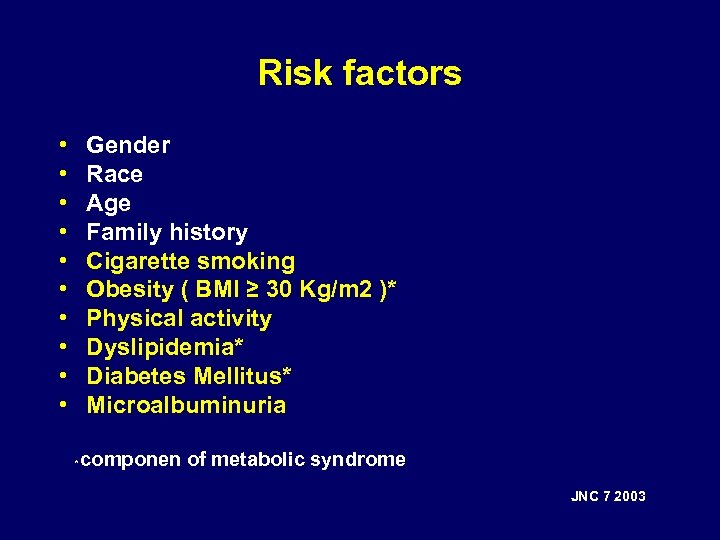
Risk factors • • • Gender Race Age Family history Cigarette smoking Obesity ( BMI ≥ 30 Kg/m 2 )* Physical activity Dyslipidemia* Diabetes Mellitus* Microalbuminuria * componen of metabolic syndrome JNC 7 2003
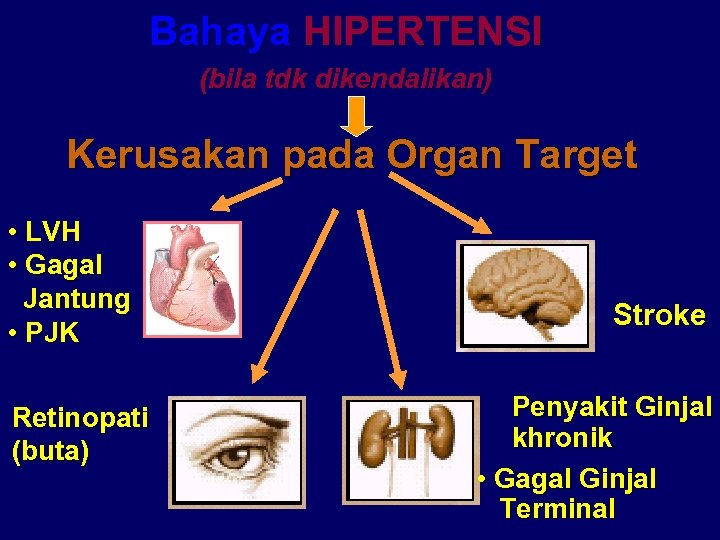
Bahaya HIPERTENSI (bila tdk dikendalikan) Kerusakan pada Organ Target • LVH • Gagal Jantung • PJK Retinopati (buta) Stroke Penyakit Ginjal khronik • Gagal Ginjal Terminal
Section 5 : Pathophysiology and Pathogenesis of Hypertension
PATHOPHYSIOLOGY OF HYPERTENSION Several hypothesis exists of the original pathogenesis of hypertension - Excess Na intake - Renal Na retention - RAS - Stress & sympathetic activity - Peripheral resistance - Endothelial dysfunction - Obesity - Insulin resistance
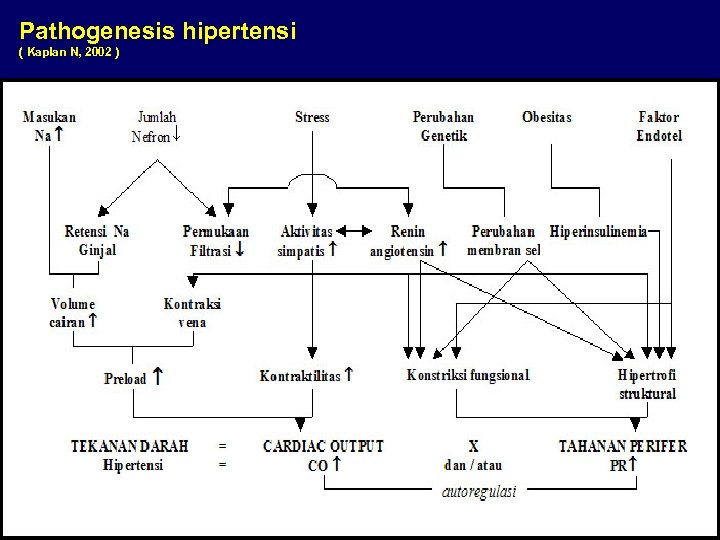
Pathogenesis hipertensi ( Kaplan N, 2002 )
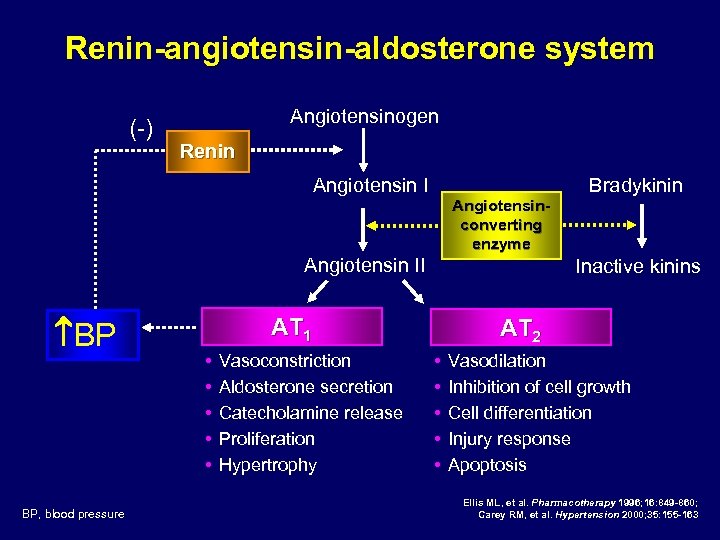
Renin-angiotensin-aldosterone system (-) Angiotensinogen Renin Bradykinin Angiotensin I Angiotensinconverting enzyme Angiotensin II BP BP, blood pressure Inactive kinins AT 1 • • • Vasoconstriction Aldosterone secretion Catecholamine release Proliferation Hypertrophy AT 2 • • • Vasodilation Inhibition of cell growth Cell differentiation Injury response Apoptosis Ellis ML, et al. Pharmacotherapy 1996; 16: 849 -860; Carey RM, et al. Hypertension 2000; 35: 155 -163
Section 6 : Diagnosis of Hypertension
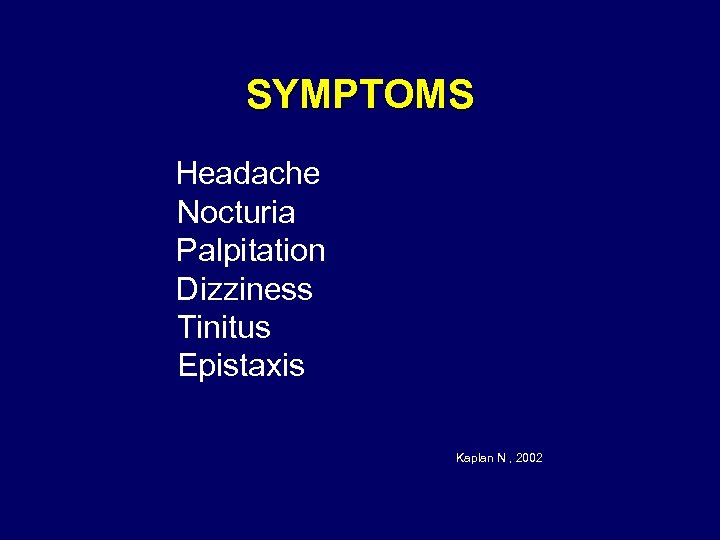
SYMPTOMS Headache Nocturia Palpitation Dizziness Tinitus Epistaxis Kaplan N , 2002

PHYSICAL EXAMINATION
25
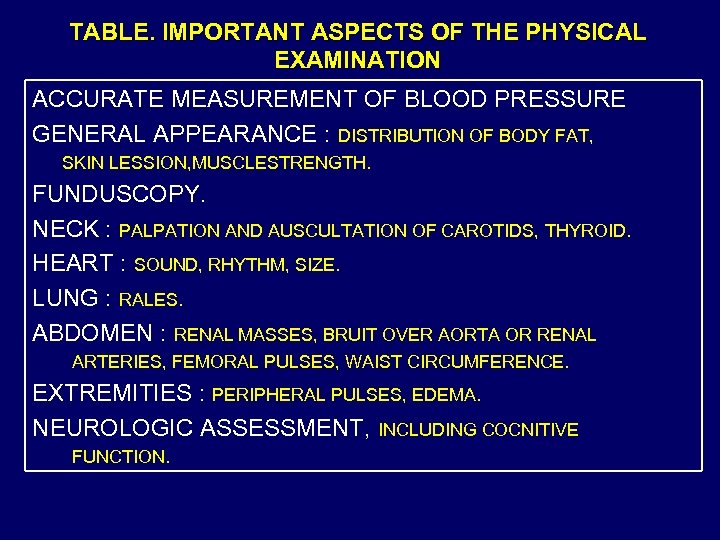
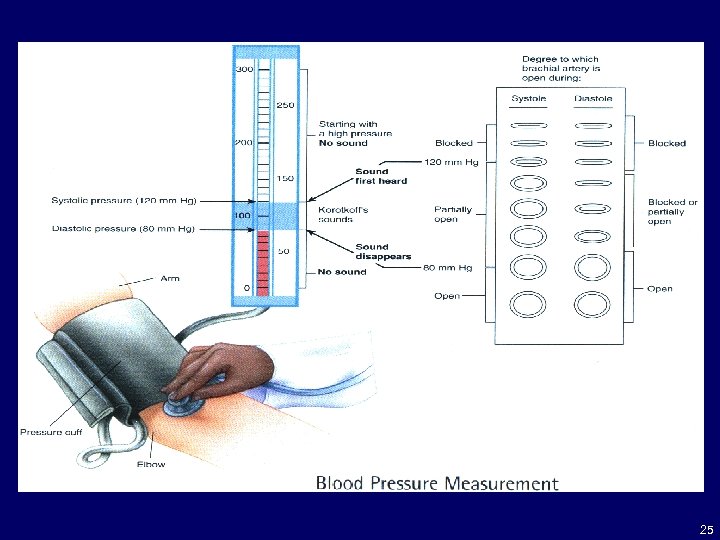
TABLE. IMPORTANT ASPECTS OF THE PHYSICAL EXAMINATION ACCURATE MEASUREMENT OF BLOOD PRESSURE GENERAL APPEARANCE : DISTRIBUTION OF BODY FAT, SKIN LESSION, MUSCLESTRENGTH. FUNDUSCOPY. NECK : PALPATION AND AUSCULTATION OF CAROTIDS, THYROID. HEART : SOUND, RHYTHM, SIZE. LUNG : RALES. ABDOMEN : RENAL MASSES, BRUIT OVER AORTA OR RENAL ARTERIES, FEMORAL PULSES, WAIST CIRCUMFERENCE. EXTREMITIES : PERIPHERAL PULSES, EDEMA. NEUROLOGIC ASSESSMENT, INCLUDING COCNITIVE FUNCTION.
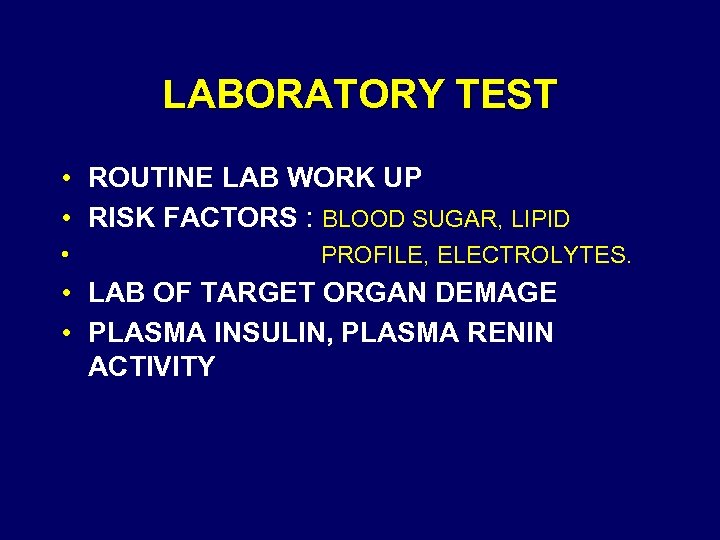
LABORATORY TEST • ROUTINE LAB WORK UP • RISK FACTORS : BLOOD SUGAR, LIPID • PROFILE, ELECTROLYTES. • LAB OF TARGET ORGAN DEMAGE • PLASMA INSULIN, PLASMA RENIN ACTIVITY
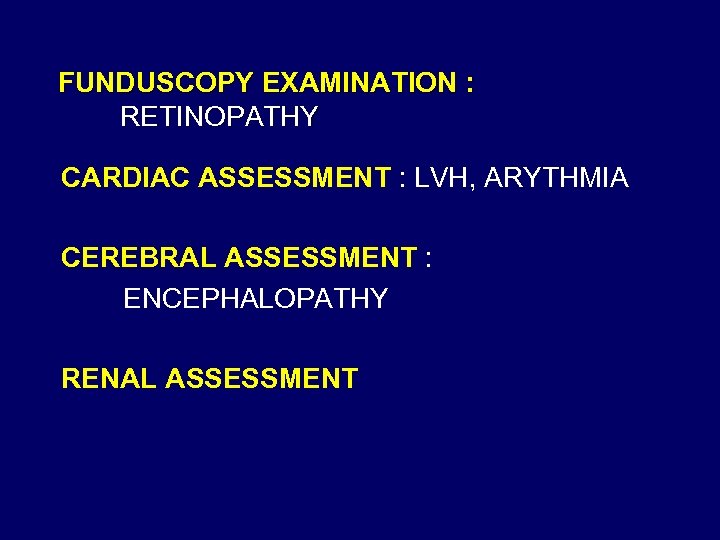
FUNDUSCOPY EXAMINATION : RETINOPATHY CARDIAC ASSESSMENT : LVH, ARYTHMIA CEREBRAL ASSESSMENT : ENCEPHALOPATHY RENAL ASSESSMENT

Section 7 : Treatment Guidelines
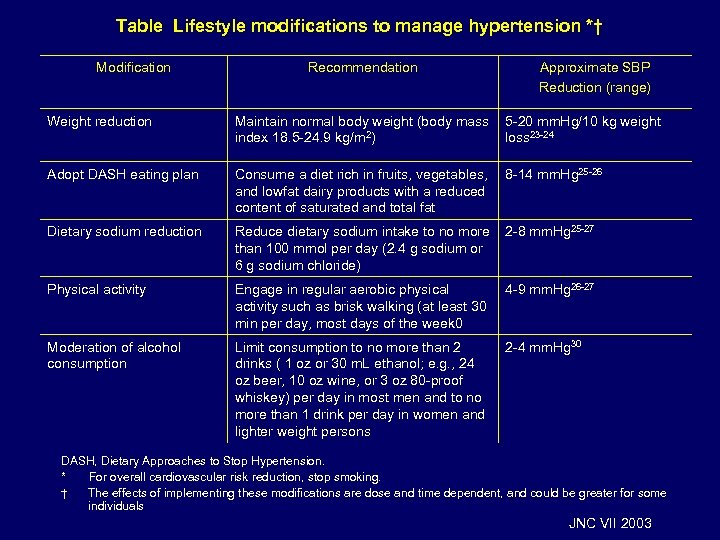
Table Lifestyle modifications to manage hypertension *† Modification Recommendation Approximate SBP Reduction (range) Weight reduction Maintain normal body weight (body mass index 18. 5 -24. 9 kg/m 2) 5 -20 mm. Hg/10 kg weight loss 23 -24 Adopt DASH eating plan Consume a diet rich in fruits, vegetables, and lowfat dairy products with a reduced content of saturated and total fat 8 -14 mm. Hg 25 -26 Dietary sodium reduction Reduce dietary sodium intake to no more than 100 mmol per day (2. 4 g sodium or 6 g sodium chloride) 2 -8 mm. Hg 25 -27 Physical activity Engage in regular aerobic physical activity such as brisk walking (at least 30 min per day, most days of the week 0 4 -9 mm. Hg 26 -27 Moderation of alcohol consumption Limit consumption to no more than 2 drinks ( 1 oz or 30 m. L ethanol; e. g. , 24 oz beer, 10 oz wine, or 3 oz 80 -proof whiskey) per day in most men and to no more than 1 drink per day in women and lighter weight persons 2 -4 mm. Hg 30 DASH, Dietary Approaches to Stop Hypertension. * For overall cardiovascular risk reduction, stop smoking. † The effects of implementing these modifications are dose and time dependent, and could be greater for some individuals JNC VII 2003
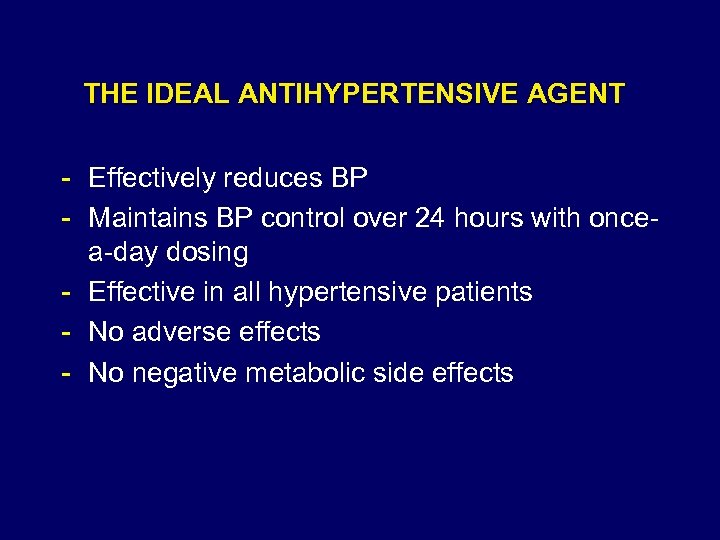
THE IDEAL ANTIHYPERTENSIVE AGENT - Effectively reduces BP - Maintains BP control over 24 hours with oncea-day dosing - Effective in all hypertensive patients - No adverse effects - No negative metabolic side effects
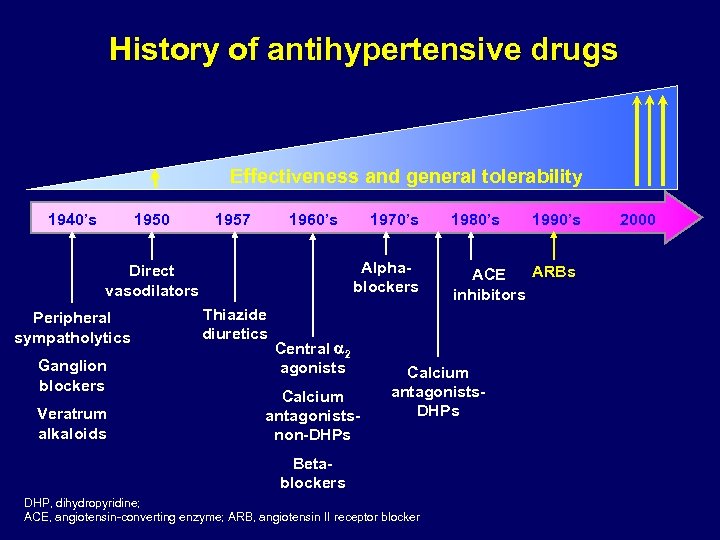
History of antihypertensive drugs Effectiveness and general tolerability 1940’s 1950 1957 1960’s Alphablockers Direct vasodilators Peripheral sympatholytics Ganglion blockers Veratrum alkaloids 1970’s Thiazide diuretics Central 2 agonists Calcium antagonistsnon-DHPs 1980’s ARBs ACE inhibitors Calcium antagonists. DHPs Betablockers DHP, dihydropyridine; ACE, angiotensin-converting enzyme; ARB, angiotensin II receptor blocker 1990’s 2000
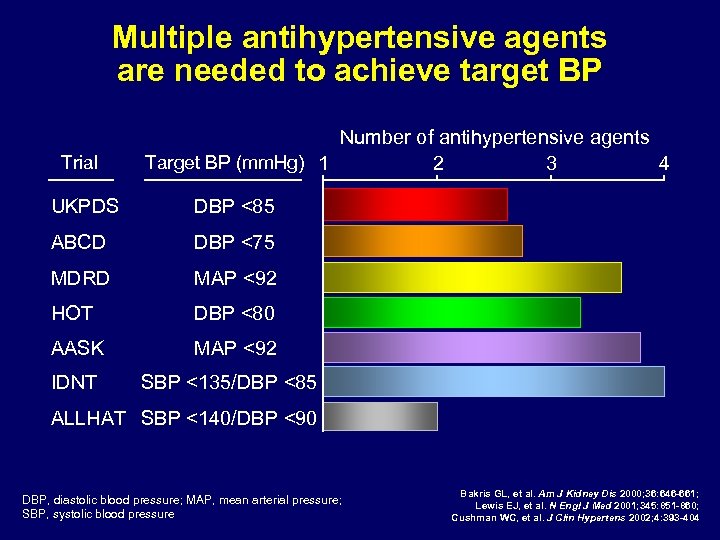
Multiple antihypertensive agents are needed to achieve target BP Trial Number of antihypertensive agents Target BP (mm. Hg) 1 2 3 4 UKPDS DBP <85 ABCD DBP <75 MDRD MAP <92 HOT DBP <80 AASK MAP <92 IDNT SBP <135/DBP <85 ALLHAT SBP <140/DBP <90 DBP, diastolic blood pressure; MAP, mean arterial pressure; SBP, systolic blood pressure Bakris GL, et al. Am J Kidney Dis 2000; 36: 646 -661; Lewis EJ, et al. N Engl J Med 2001; 345: 851 -860; Cushman WC, et al. J Clin Hypertens 2002; 4: 393 -404
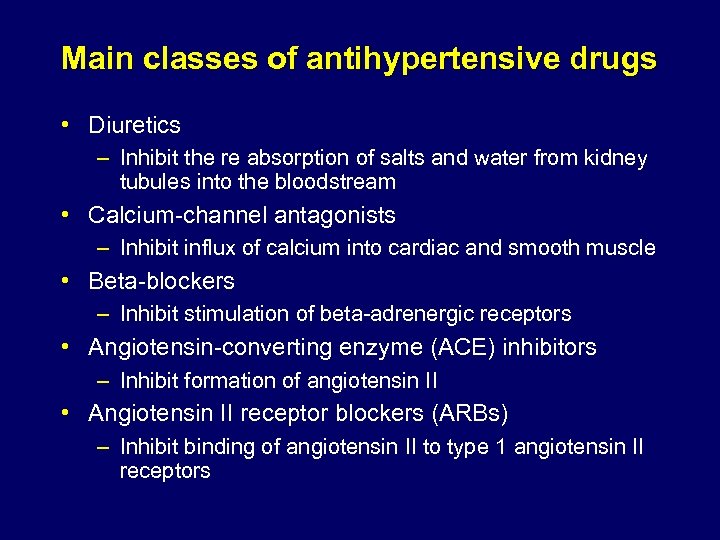
Main classes of antihypertensive drugs • Diuretics – Inhibit the re absorption of salts and water from kidney tubules into the bloodstream • Calcium-channel antagonists – Inhibit influx of calcium into cardiac and smooth muscle • Beta-blockers – Inhibit stimulation of beta-adrenergic receptors • Angiotensin-converting enzyme (ACE) inhibitors – Inhibit formation of angiotensin II • Angiotensin II receptor blockers (ARBs) – Inhibit binding of angiotensin II to type 1 angiotensin II receptors
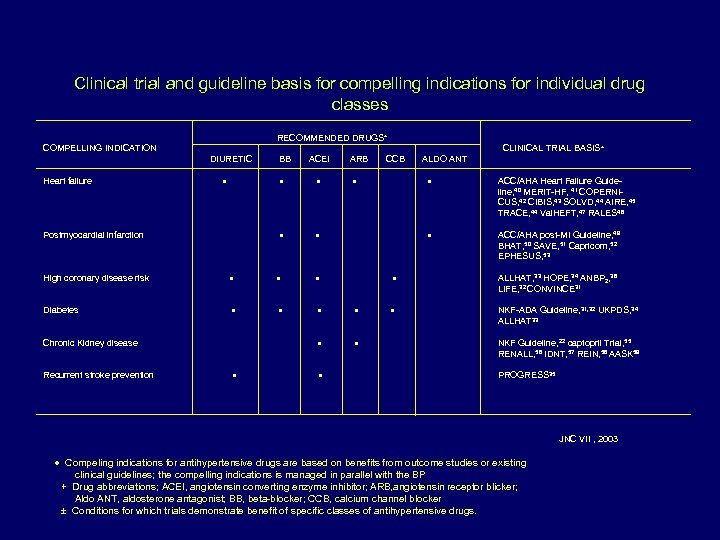
Clinical trial and guideline basis for compelling indications for individual drug classes RECOMMENDED DRUGS+ COMPELLING INDICATION CLINICAL TRIAL BASIS + DIURETIC Heart failure BB ACEI Postmyocardial infarction ARB Diabetes Recurrent stroke prevention ALDO ANT ACC/AHA Heart Failure Guideline, 40 MERIT-HF, 41 COPERNICUS, 42 CIBIS, 43 SOLVD, 44 AIRE, 45 TRACE, 44 Val. HEFT, 47 RALES 48 High coronary disease risk Chronic Kidney disease CCB ACC/AHA post-MI Guideline, 49 BHAT, 50 SAVE, 51 Capricorn, 52 EPHESUS, 53 ALLHAT, 33 HOPE, 34 ANBP 2, 36 LIFE, 32 CONVINCE 31 NKF-ADA Guideline, 31, 32 UKPDS, 34 ALLHAT 33 NKF Guideline, 22 captopril Trial, 55 RENALL, 56 IDNT, 57 REIN, 58 AASK 59 PROGRESS 35 JNC VII , 2003 Compeling indications for antihypertensive drugs are based on benefits from outcome studies or existing clinical guidelines; the compelling indications is managed in parallel with the BP + Drug abbreviations; ACEI, angiotensin converting enzyme inhibitor; ARB, angiotensin receptor blicker; Aldo ANT, aldosterone antagonist; BB, beta-blocker; CCB, calcium channel blocker ± Conditions for which trials demonstrate benefit of specific classes of antihypertensive drugs.
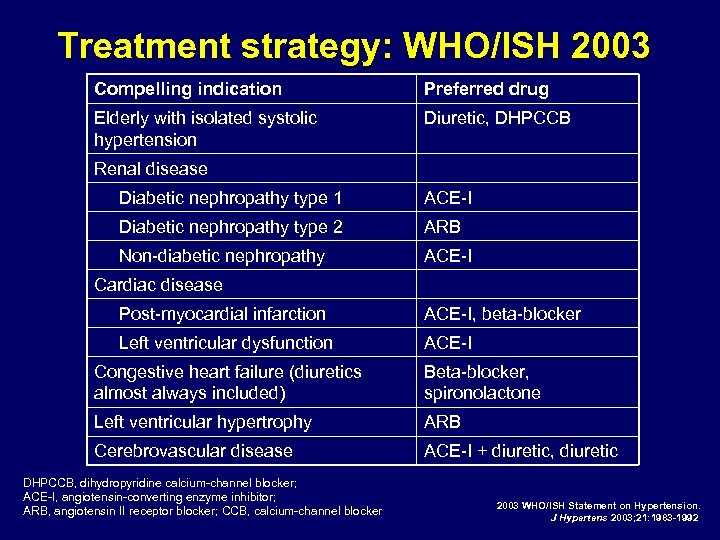
Treatment strategy: WHO/ISH 2003 Compelling indication Preferred drug Elderly with isolated systolic hypertension Diuretic, DHPCCB Renal disease Diabetic nephropathy type 1 ACE-I Diabetic nephropathy type 2 ARB Non-diabetic nephropathy ACE-I Cardiac disease Post-myocardial infarction ACE-I, beta-blocker Left ventricular dysfunction ACE-I Congestive heart failure (diuretics almost always included) Beta-blocker, spironolactone Left ventricular hypertrophy ARB Cerebrovascular disease ACE-I + diuretic, diuretic DHPCCB, dihydropyridine calcium-channel blocker; ACE-I, angiotensin-converting enzyme inhibitor; ARB, angiotensin II receptor blocker; CCB, calcium-channel blocker 2003 WHO/ISH Statement on Hypertension. J Hypertens 2003; 21: 1983 -1992
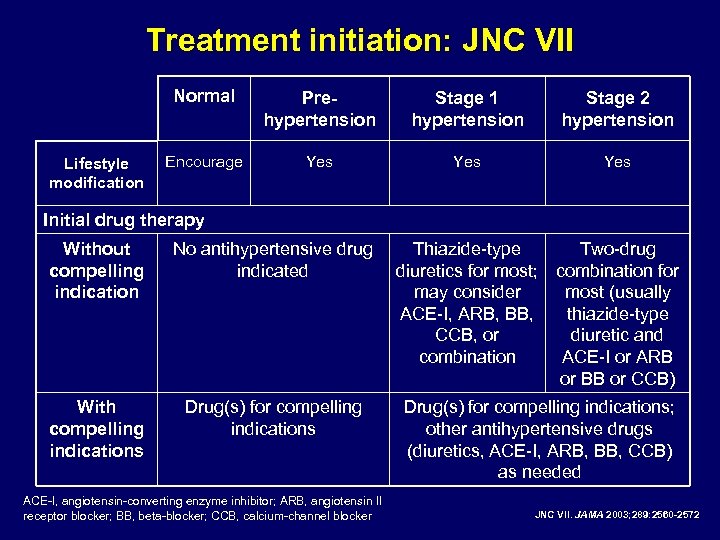
Treatment initiation: JNC VII Normal Lifestyle modification Prehypertension Stage 1 hypertension Stage 2 hypertension Encourage Yes Yes Initial drug therapy Without compelling indication No antihypertensive drug indicated Thiazide-type Two-drug diuretics for most; combination for may consider most (usually ACE-I, ARB, BB, thiazide-type CCB, or diuretic and combination ACE-I or ARB or BB or CCB) With compelling indications Drug(s) for compelling indications; other antihypertensive drugs (diuretics, ACE-I, ARB, BB, CCB) as needed ACE-I, angiotensin-converting enzyme inhibitor; ARB, angiotensin II receptor blocker; BB, beta-blocker; CCB, calcium-channel blocker JNC VII. JAMA 2003; 289: 2560 -2572
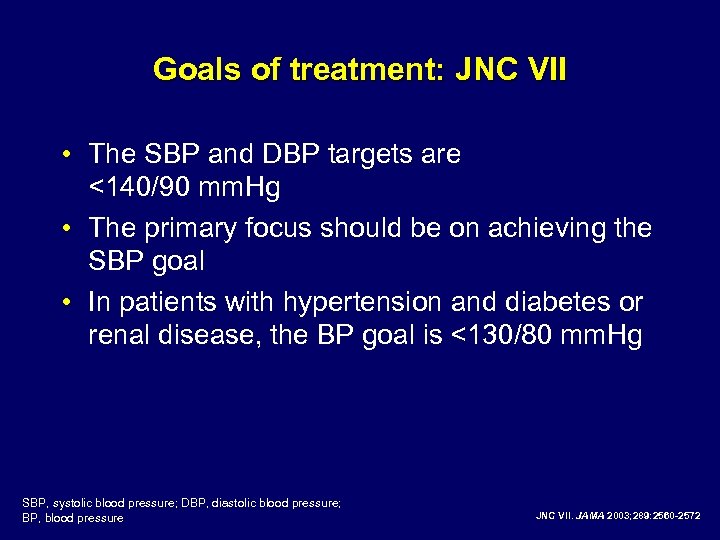
Goals of treatment: JNC VII • The SBP and DBP targets are <140/90 mm. Hg • The primary focus should be on achieving the SBP goal • In patients with hypertension and diabetes or renal disease, the BP goal is <130/80 mm. Hg SBP, systolic blood pressure; DBP, diastolic blood pressure; BP, blood pressure JNC VII. JAMA 2003; 289: 2560 -2572
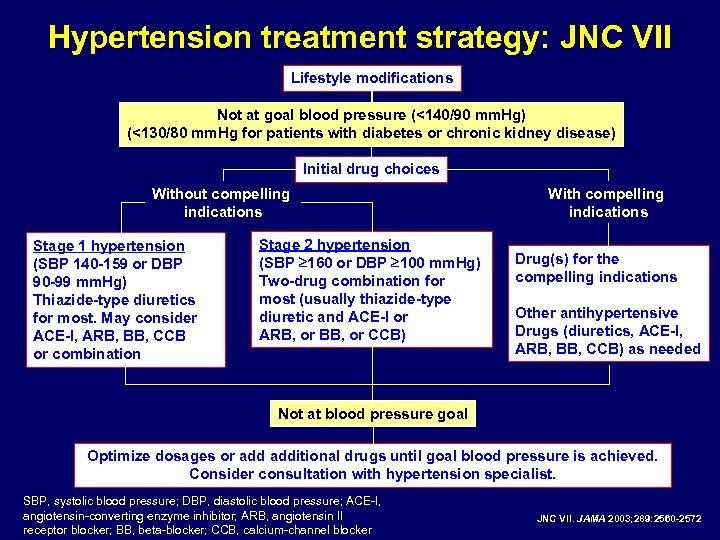
Hypertension treatment strategy: JNC VII Lifestyle modifications Not at goal blood pressure (<140/90 mm. Hg) (<130/80 mm. Hg for patients with diabetes or chronic kidney disease) Initial drug choices Without compelling indications Stage 1 hypertension (SBP 140 -159 or DBP 90 -99 mm. Hg) Thiazide-type diuretics for most. May consider ACE-I, ARB, BB, CCB or combination Stage 2 hypertension (SBP 160 or DBP 100 mm. Hg) Two-drug combination for most (usually thiazide-type diuretic and ACE-I or ARB, or BB, or CCB) With compelling indications Drug(s) for the compelling indications Other antihypertensive Drugs (diuretics, ACE-I, ARB, BB, CCB) as needed Not at blood pressure goal Optimize dosages or additional drugs until goal blood pressure is achieved. Consider consultation with hypertension specialist. SBP, systolic blood pressure; DBP, diastolic blood pressure; ACE-I, angiotensin-converting enzyme inhibitor; ARB, angiotensin II receptor blocker; BB, beta-blocker; CCB, calcium-channel blocker JNC VII. JAMA 2003; 289: 2560 -2572
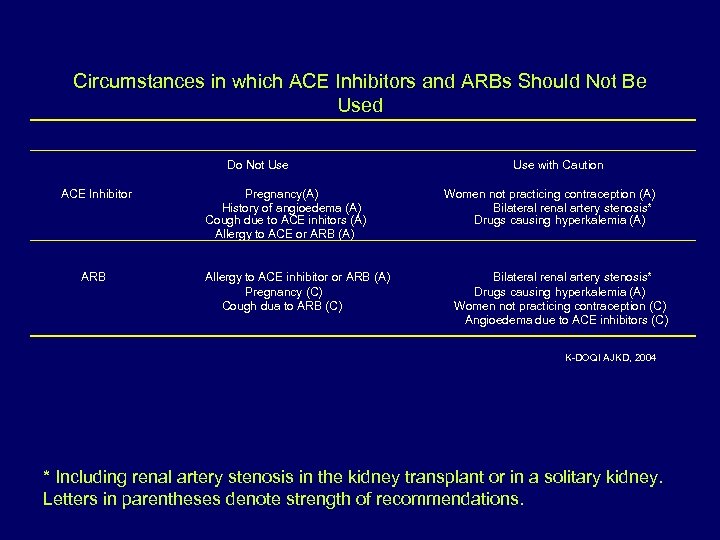
Circumstances in which ACE Inhibitors and ARBs Should Not Be Used Do Not Use ACE Inhibitor ARB Pregnancy(A) History of angioedema (A) Cough due to ACE inhitors (A) Allergy to ACE or ARB (A) Allergy to ACE inhibitor or ARB (A) Pregnancy (C) Cough dua to ARB (C) Use with Caution Women not practicing contraception (A) Bilateral renal artery stenosis* Drugs causing hyperkalemia (A) Women not practicing contraception (C) Angioedema due to ACE inhibitors (C) K-DOQI AJKD, 2004 * Including renal artery stenosis in the kidney transplant or in a solitary kidney. Letters in parentheses denote strength of recommendations.
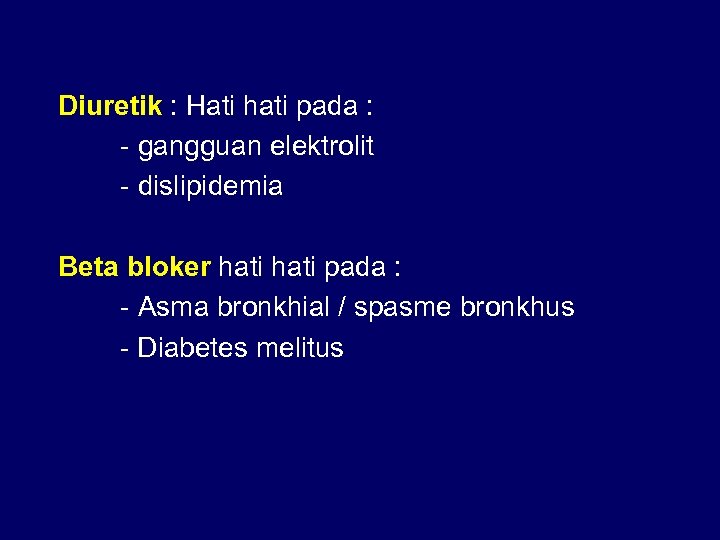
Diuretik : Hati hati pada : - gangguan elektrolit - dislipidemia Beta bloker hati pada : - Asma bronkhial / spasme bronkhus - Diabetes melitus
 Скачать презентацию HYPERTENSION SYAIFUL AZMI Subdivision of Nephrology Faculty of
9c562b583d373cd42e999cd67360508f.ppt