


 Скачать презентацию Hungary in the heart of Europe Hungary
9cef24f41c683e8a087970e81fe3213b.ppt
- Количество слайдов: 39
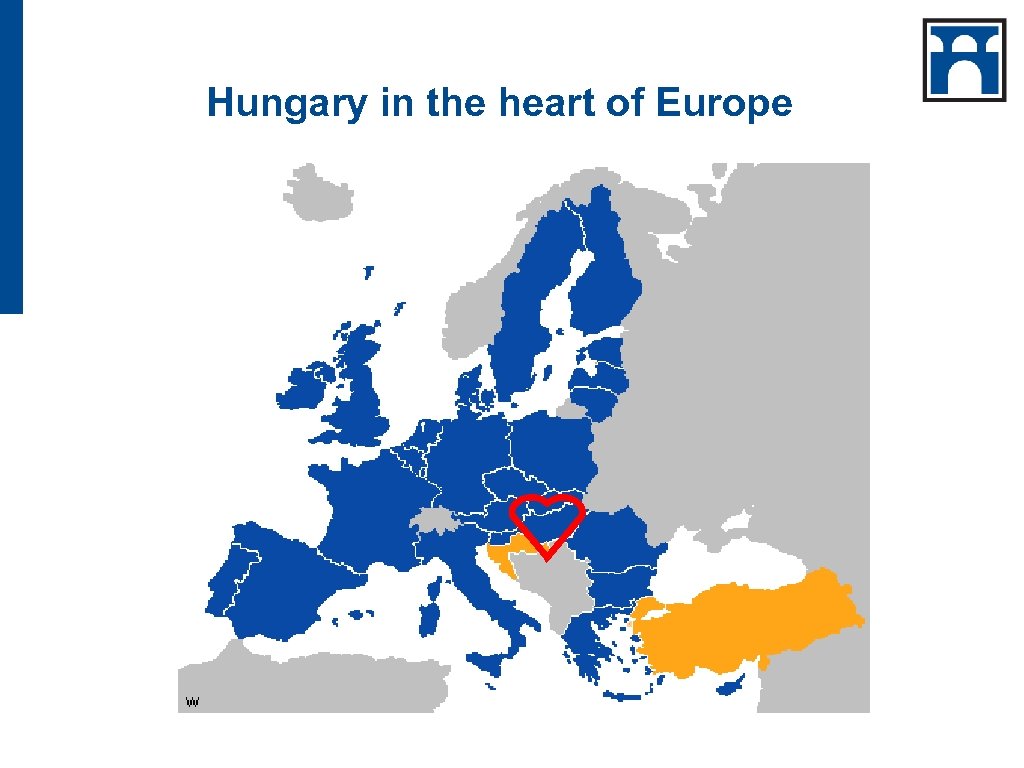 Hungary in the heart of Europe
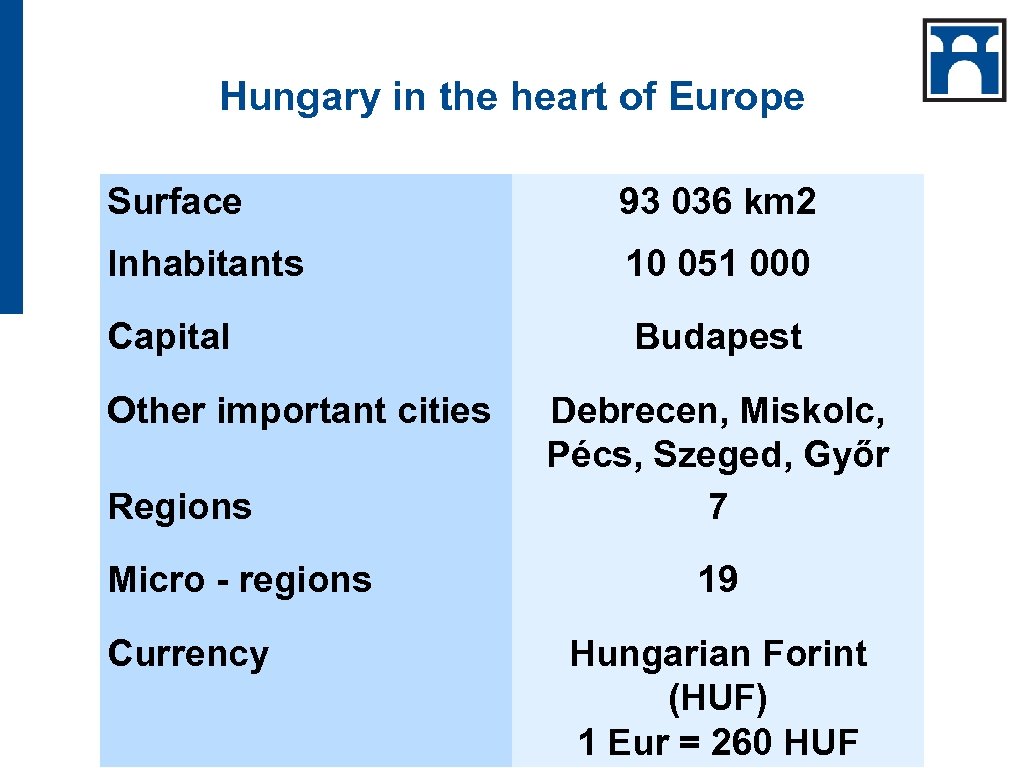 Hungary in the heart of Europe Surface 93 036 km 2 Inhabitants 10 051 000 Capital Budapest Other important cities Regions Micro - regions Currency Debrecen, Miskolc, Pécs, Szeged, Győr 7 19 Hungarian Forint (HUF) 1 Eur = 260 HUF
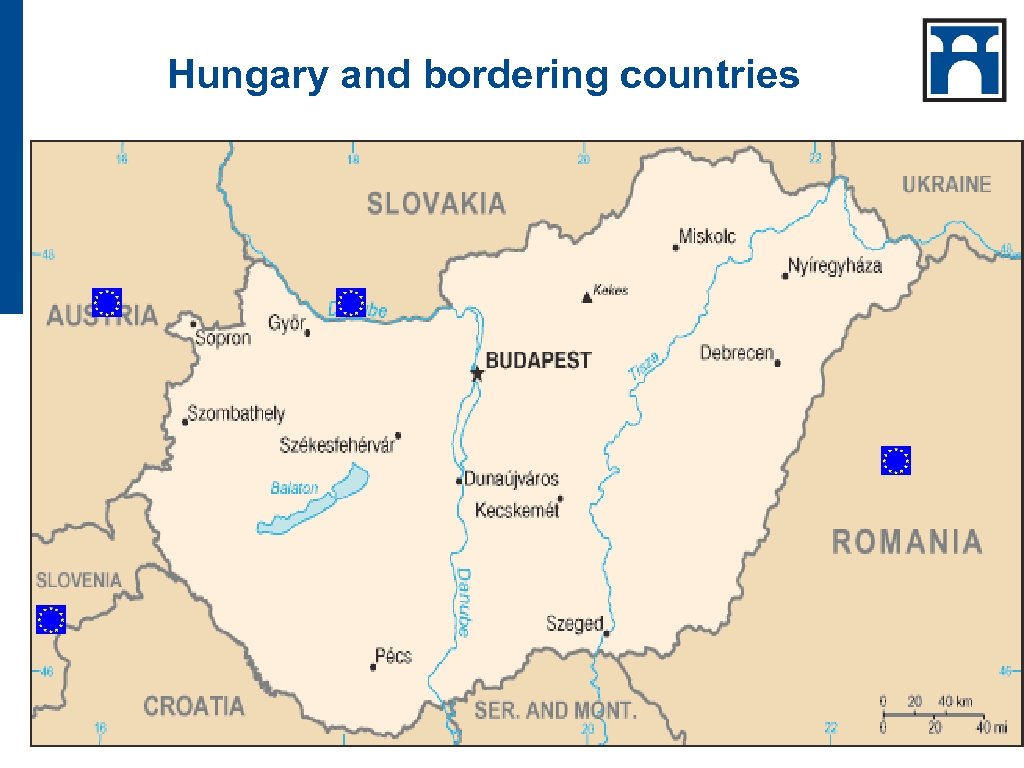 Hungary and bordering countries
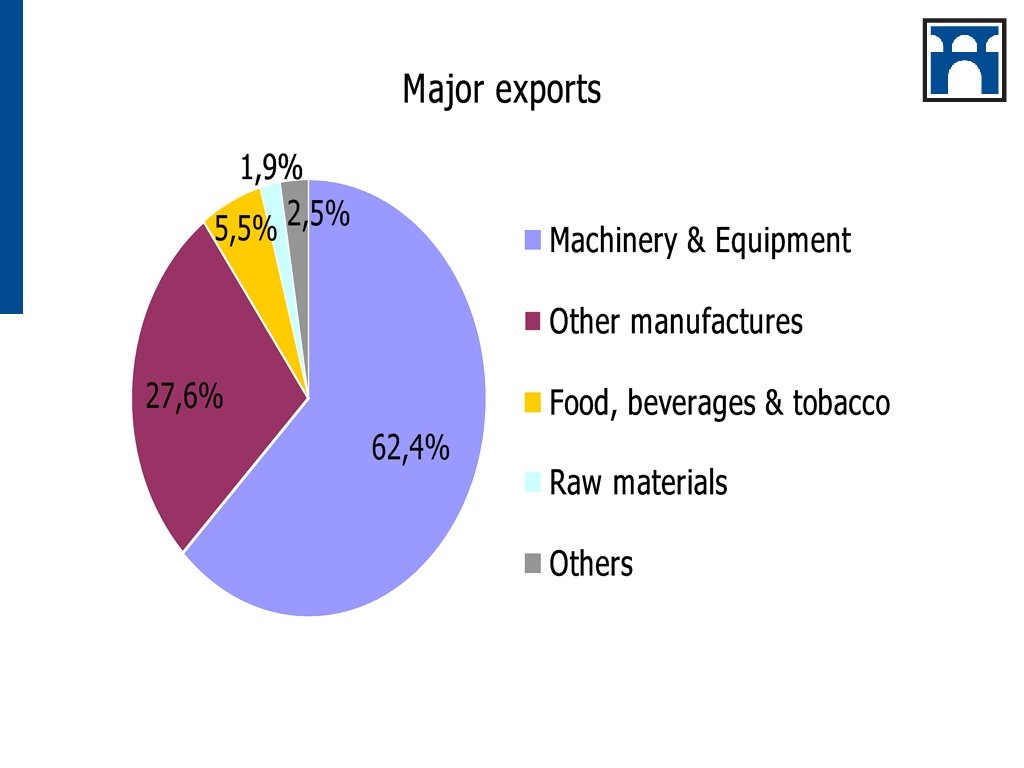
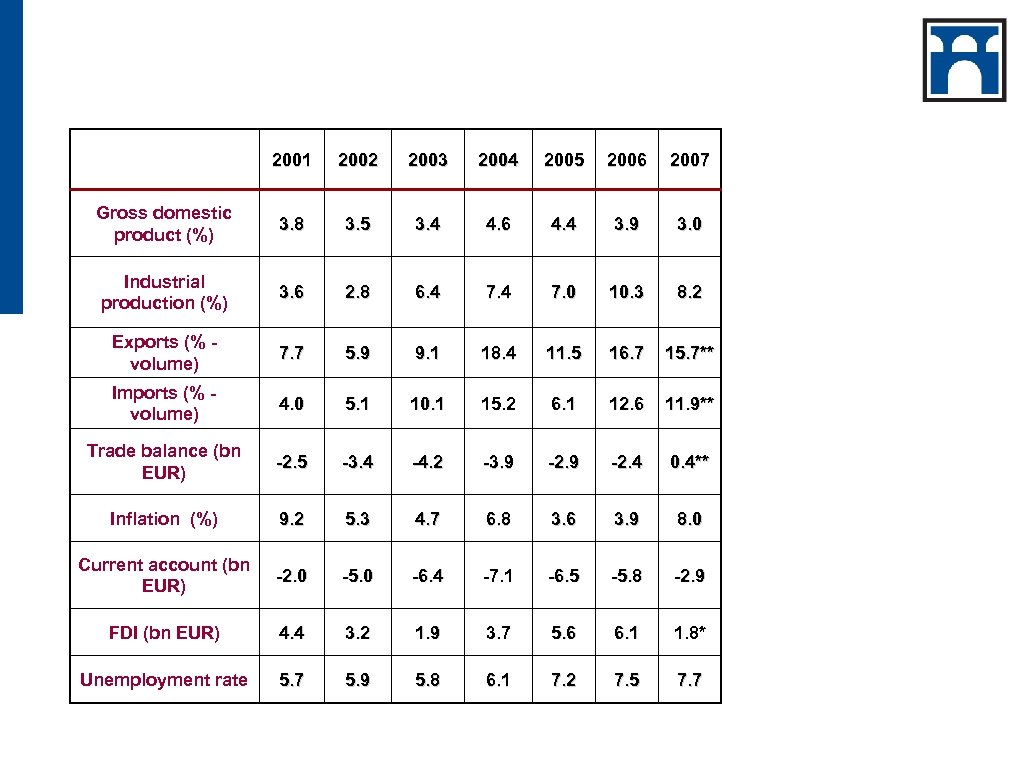 2001 2002 2003 2004 2005 2006 2007 Gross domestic product (%) 3. 8 3. 5 3. 4 4. 6 4. 4 3. 9 3. 0 Industrial production (%) 3. 6 2. 8 6. 4 7. 0 10. 3 8. 2 Exports (% volume) 7. 7 5. 9 9. 1 18. 4 11. 5 16. 7 15. 7** Imports (% volume) 4. 0 5. 1 10. 1 15. 2 6. 1 12. 6 11. 9** Trade balance (bn EUR) -2. 5 -3. 4 -4. 2 -3. 9 -2. 4 0. 4** Inflation (%) 9. 2 5. 3 4. 7 6. 8 3. 6 3. 9 8. 0 Current account (bn EUR) -2. 0 -5. 0 -6. 4 -7. 1 -6. 5 -5. 8 -2. 9 FDI (bn EUR) 4. 4 3. 2 1. 9 3. 7 5. 6 6. 1 1. 8* Unemployment rate 5. 7 5. 9 5. 8 6. 1 7. 2 7. 5 7. 7
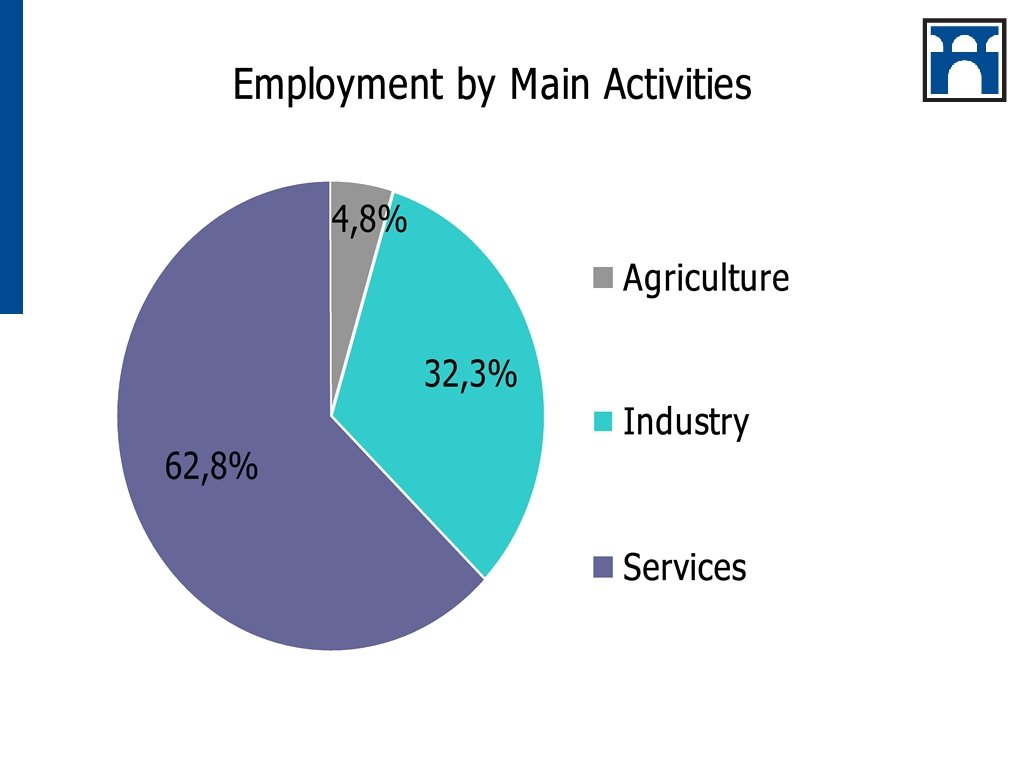
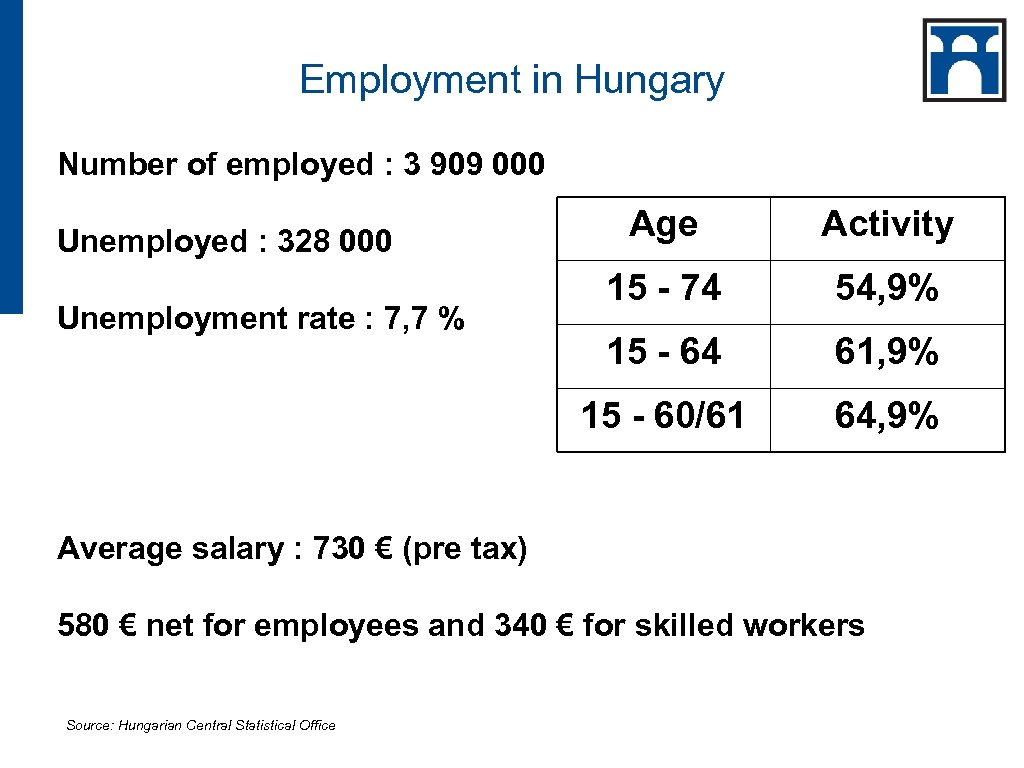 Employment in Hungary Number of employed : 3 909 000 Unemployment rate : 7, 7 % Activity 15 - 74 54, 9% 15 - 64 61, 9% 15 - 60/61 Unemployed : 328 000 Age 64, 9% Average salary : 730 € (pre tax) 580 € net for employees and 340 € for skilled workers Source: Hungarian Central Statistical Office
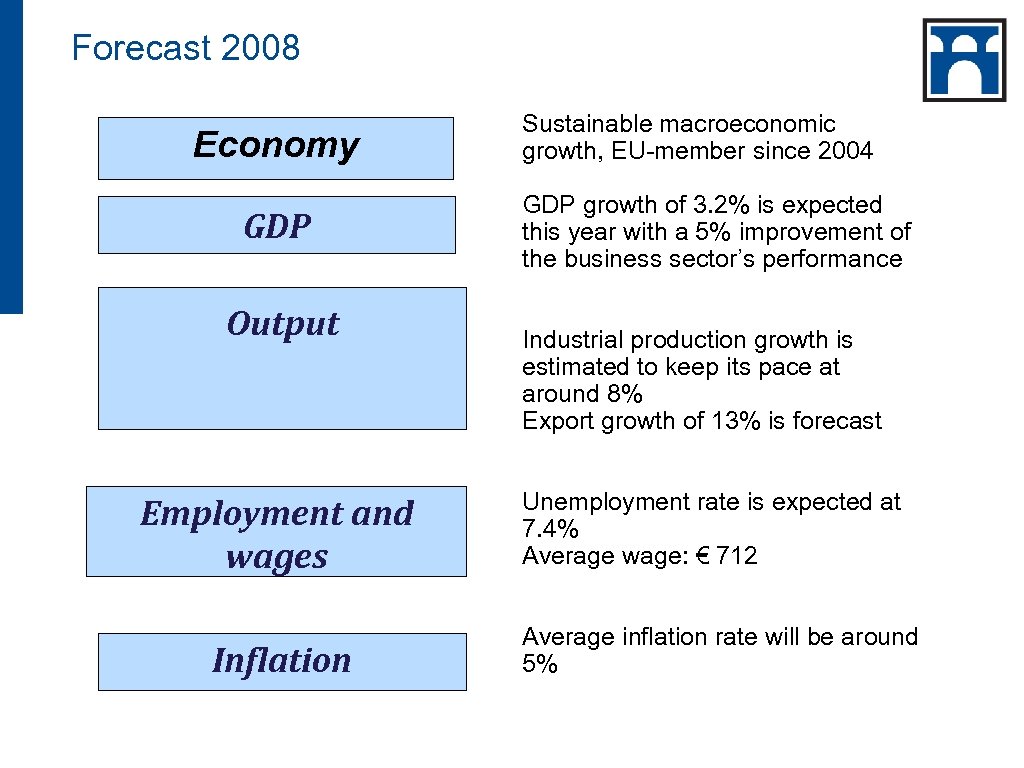 Forecast 2008 Economy GDP Output Employment and wages Inflation Sustainable macroeconomic growth, EU-member since 2004 GDP growth of 3. 2% is expected this year with a 5% improvement of the business sector’s performance Industrial production growth is estimated to keep its pace at around 8% Export growth of 13% is forecast Unemployment rate is expected at 7. 4% Average wage: € 712 Average inflation rate will be around 5%
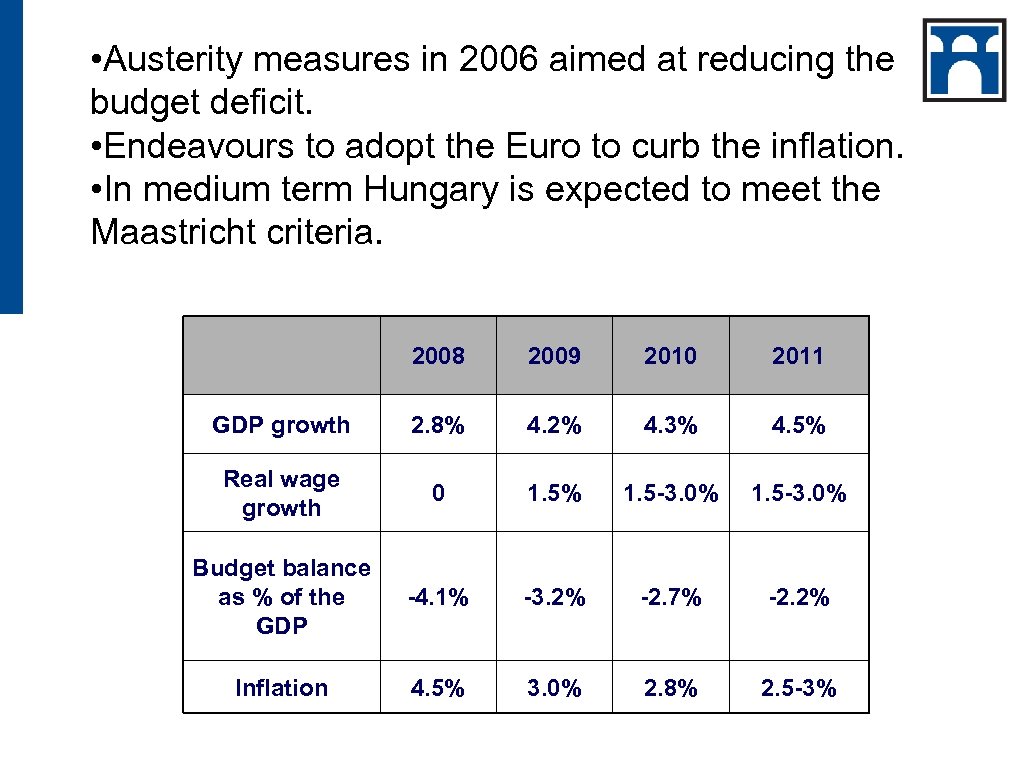 • Austerity measures in 2006 aimed at reducing the budget deficit. • Endeavours to adopt the Euro to curb the inflation. • In medium term Hungary is expected to meet the Maastricht criteria. 2008 2009 2010 2011 GDP growth 2. 8% 4. 2% 4. 3% 4. 5% Real wage growth 0 1. 5% 1. 5 -3. 0% Budget balance as % of the GDP -4. 1% -3. 2% -2. 7% -2. 2% Inflation 4. 5% 3. 0% 2. 8% 2. 5 -3%
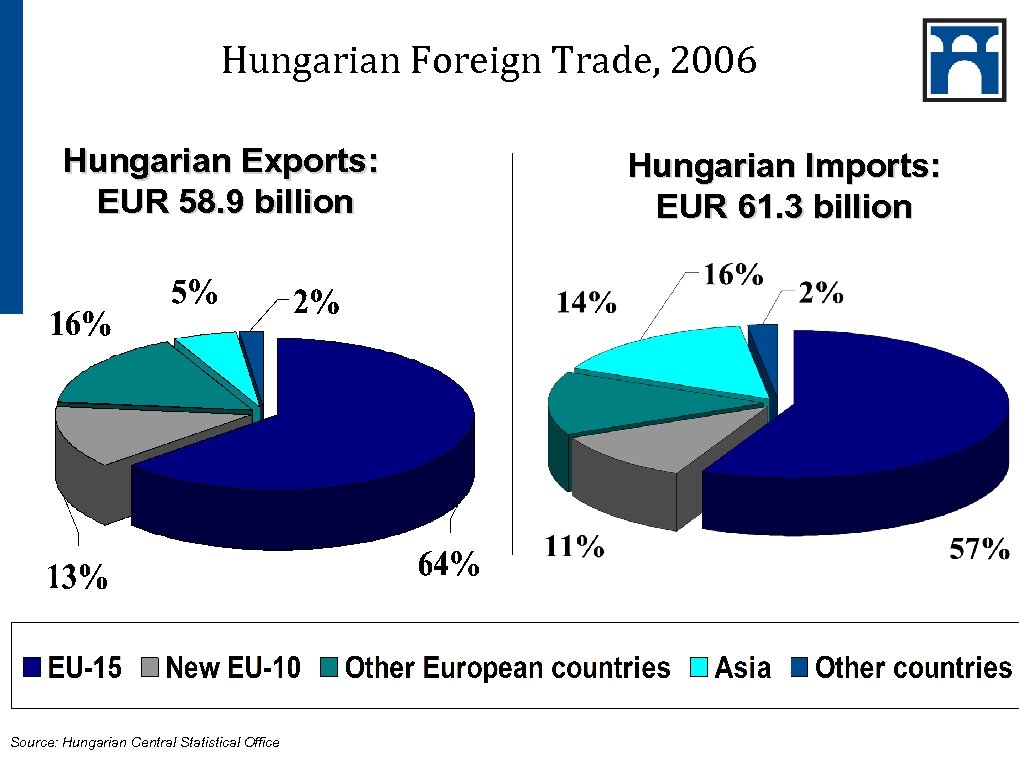 Hungarian Foreign Trade, 2006 Hungarian Exports: EUR 58. 9 billion Source: Hungarian Central Statistical Office Hungarian Imports: EUR 61. 3 billion
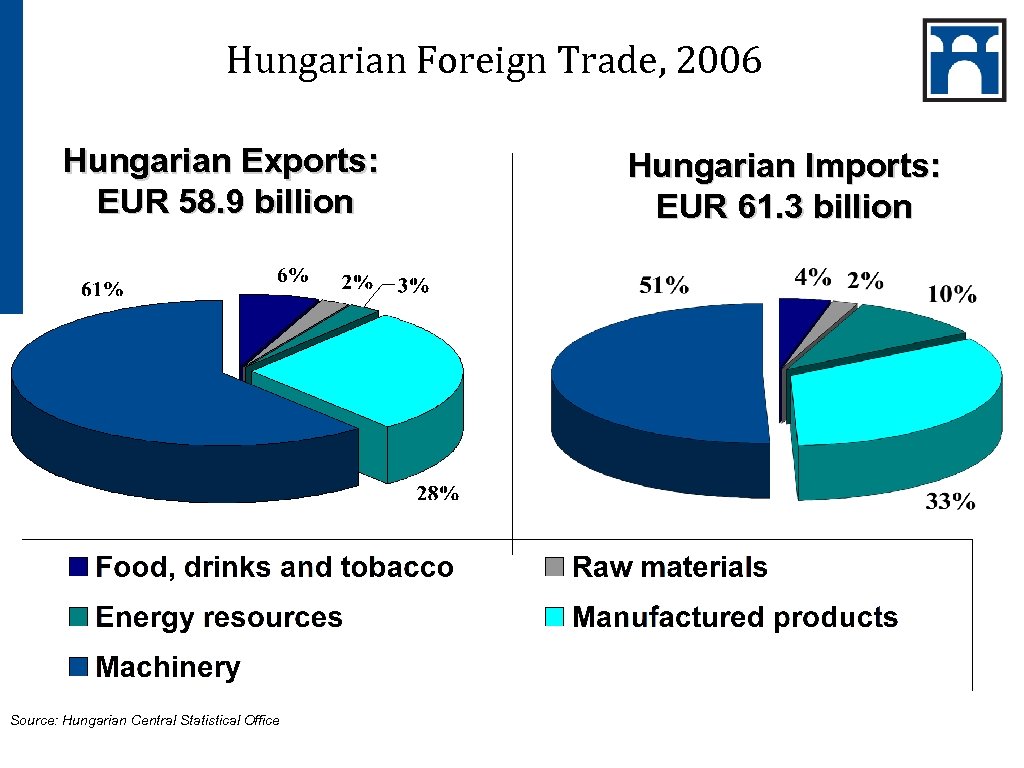 Hungarian Foreign Trade, 2006 Hungarian Exports: EUR 58. 9 billion Source: Hungarian Central Statistical Office Hungarian Imports: EUR 61. 3 billion
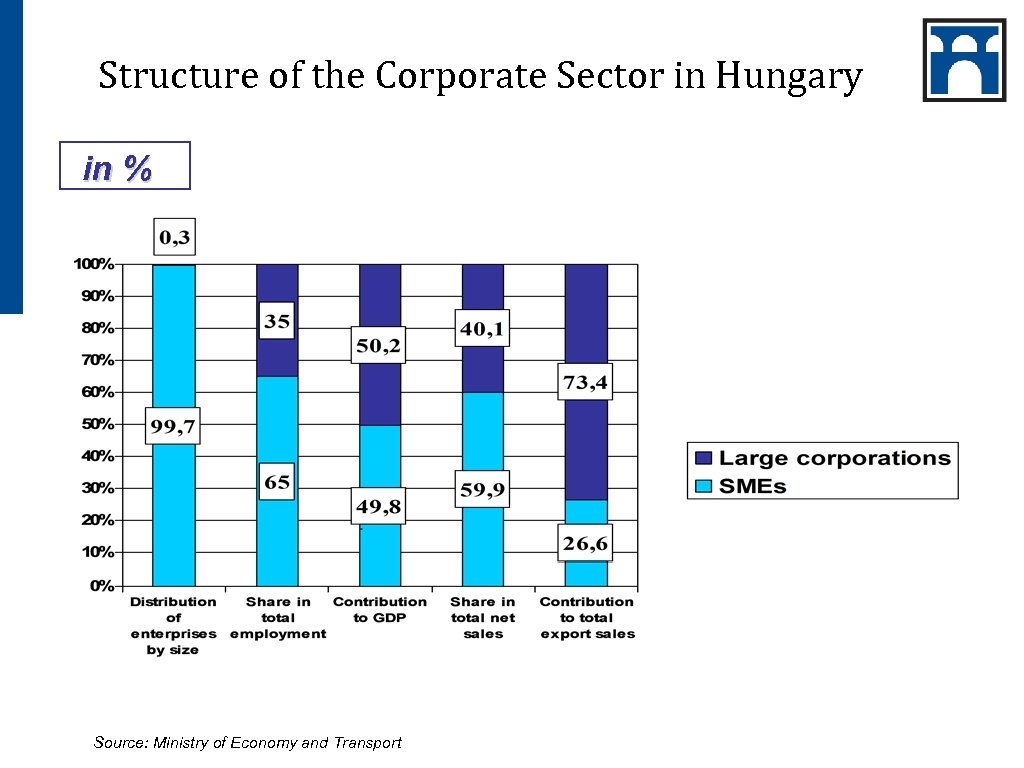 Structure of the Corporate Sector in Hungary in % Source: Ministry of Economy and Transport
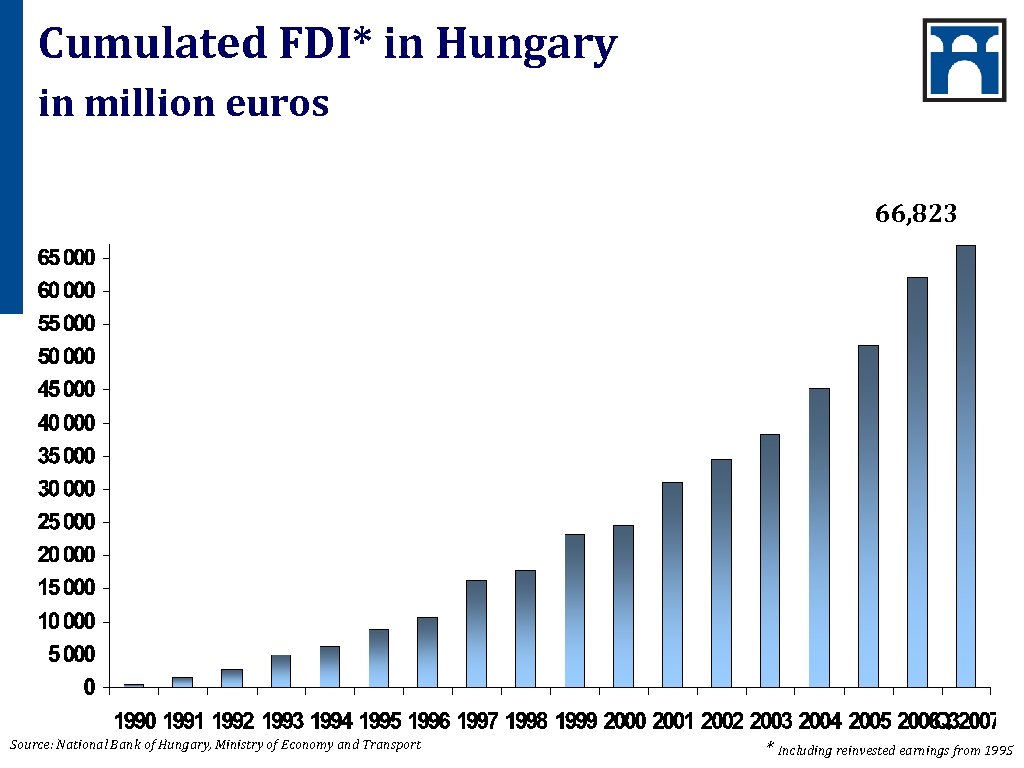 Cumulated FDI* in Hungary in million euros 66, 823 Source: National Bank of Hungary, Ministry of Economy and Transport * Including reinvested earnings from 1995
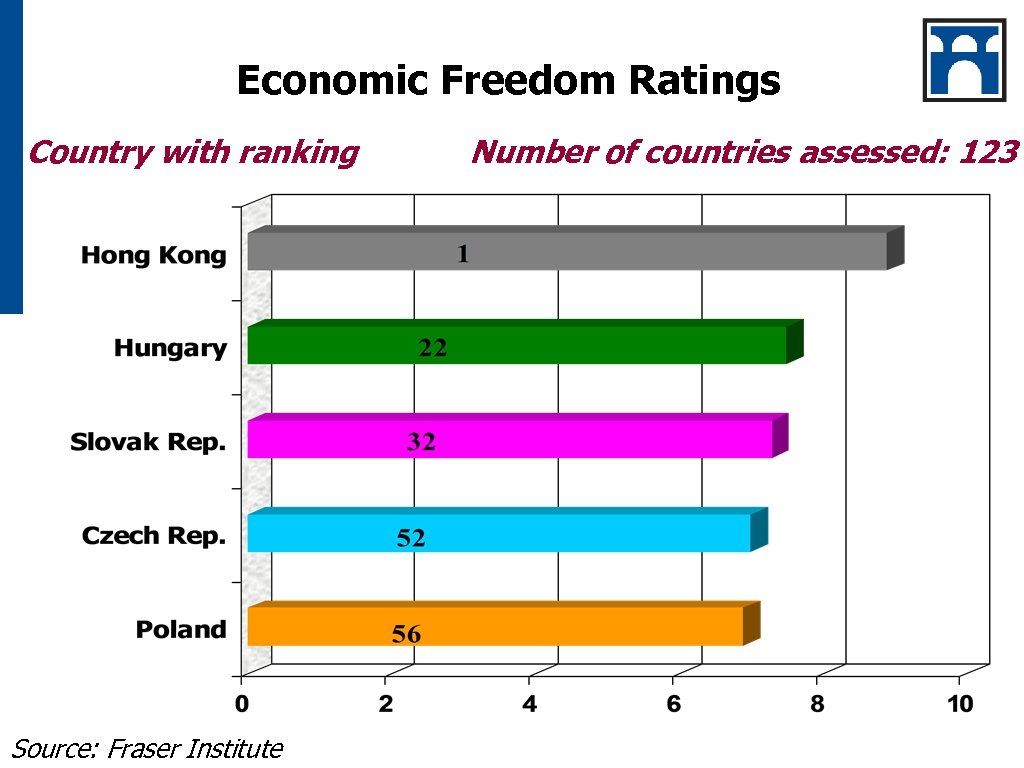 Economic Freedom Ratings Country with ranking Source: Fraser Institute Number of countries assessed: 123
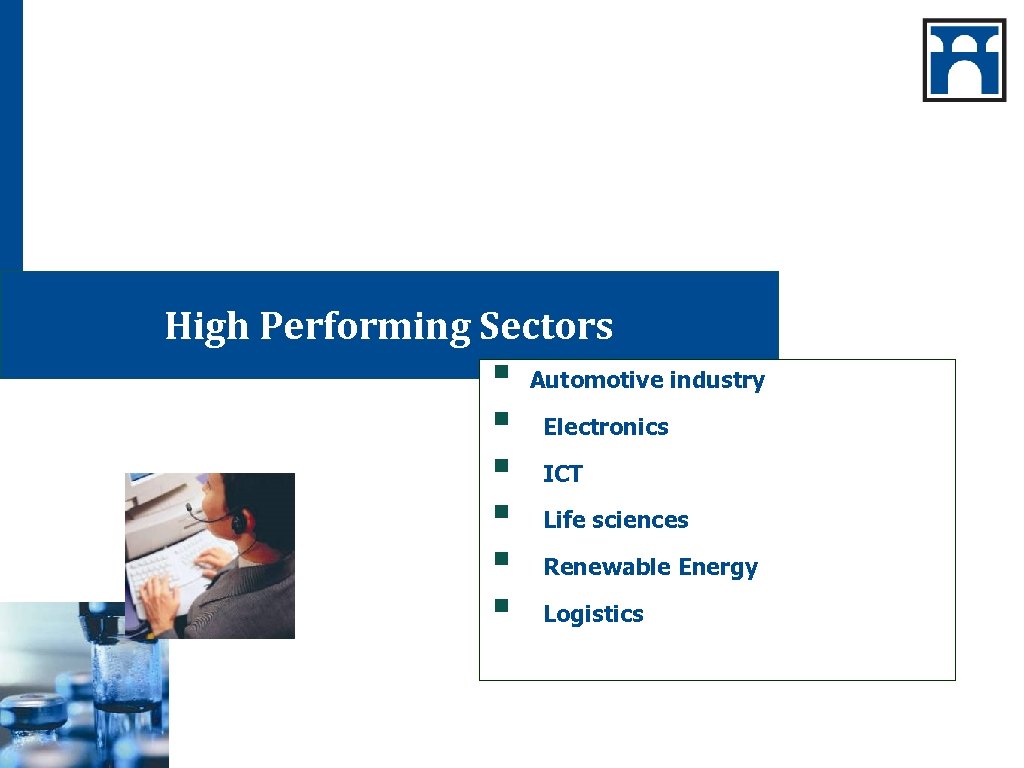 High Performing Sectors § § § Automotive industry Electronics ICT Life sciences Renewable Energy Logistics
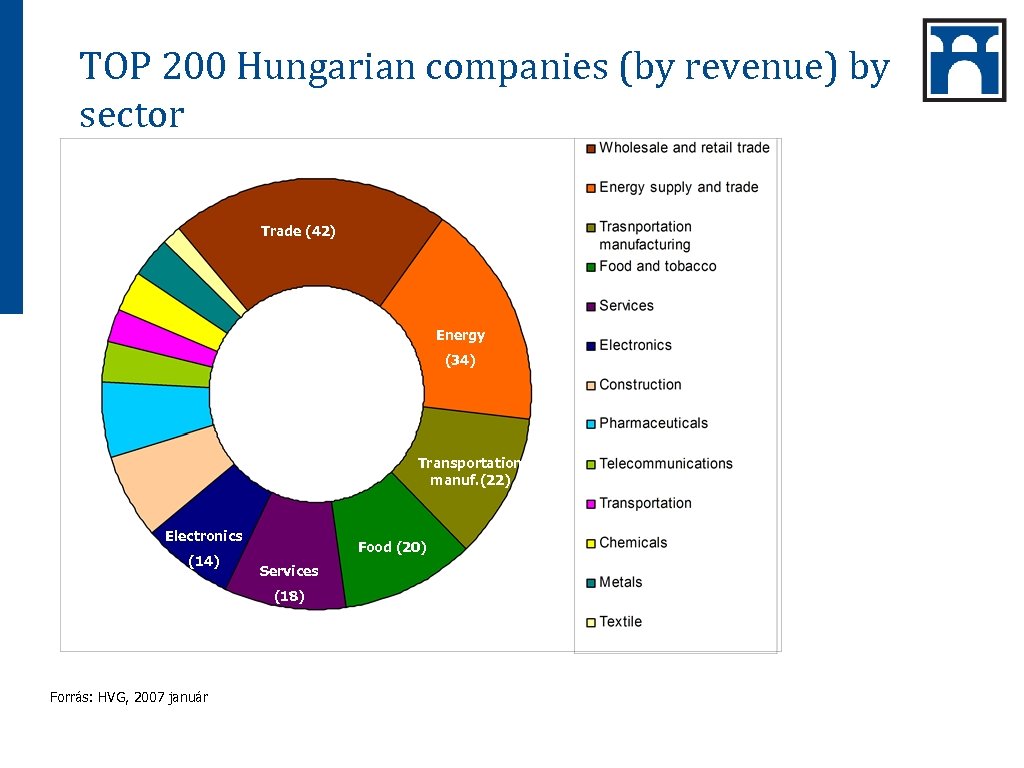 TOP 200 Hungarian companies (by revenue) by sector Trade (42) Energy (34) Transportation manuf. (22) Electronics (14) Food (20) Services (18) Forrás: HVG, 2007 január
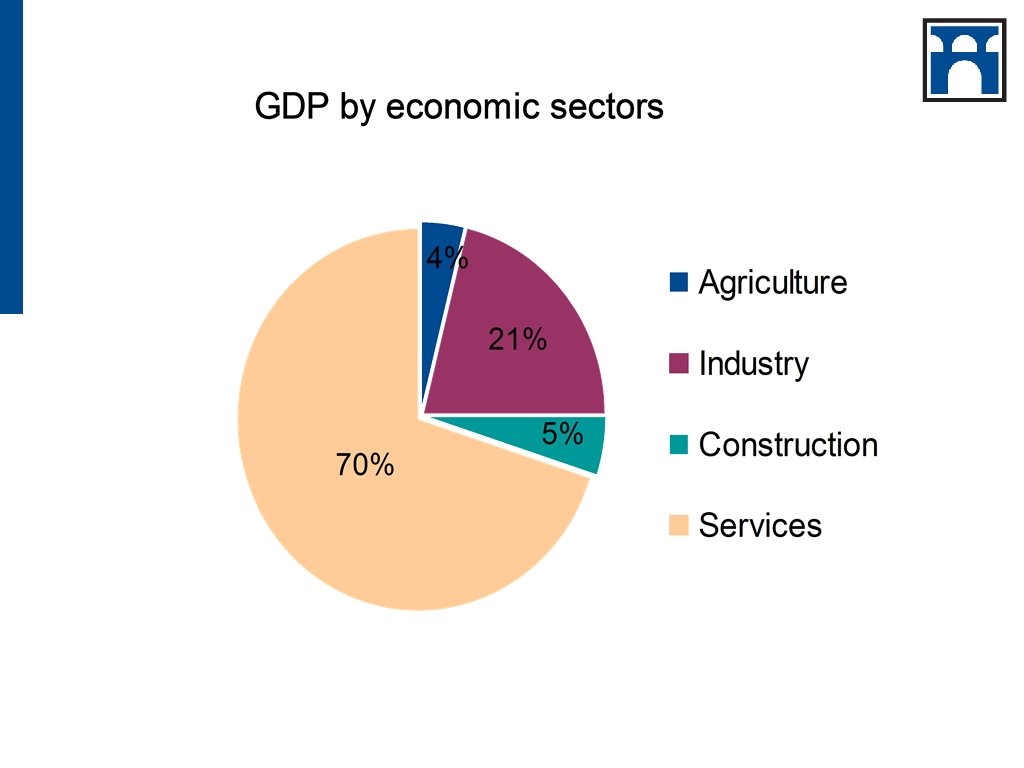
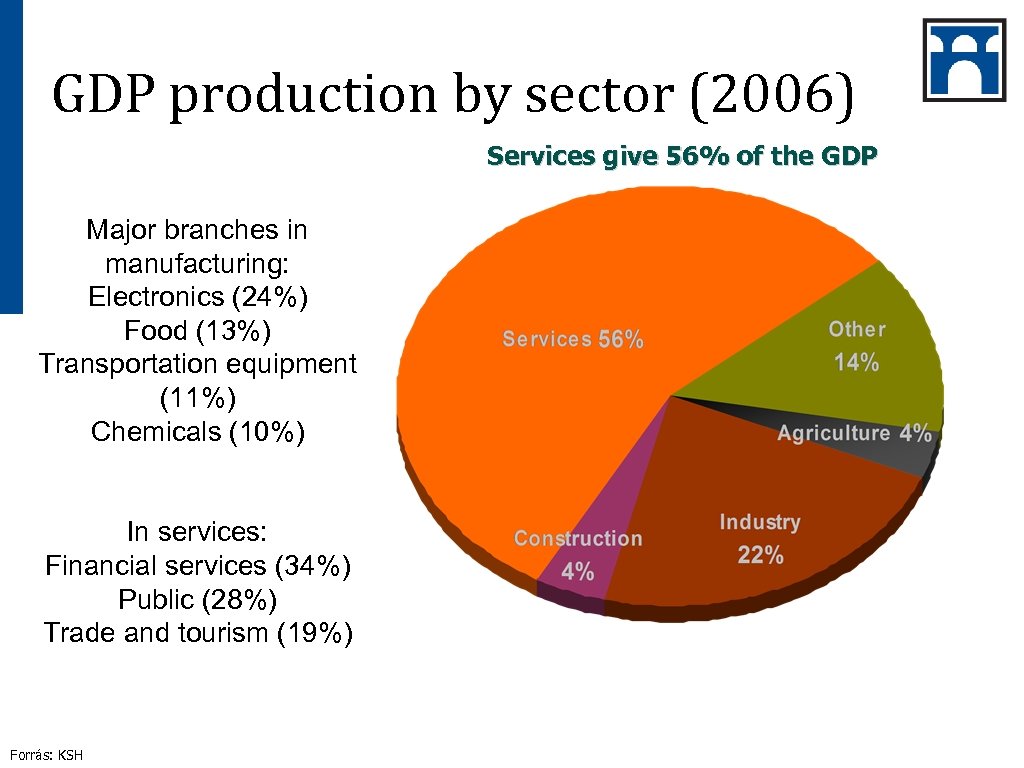 GDP production by sector (2006) Services give 56% of the GDP Major branches in manufacturing: Electronics (24%) Food (13%) Transportation equipment (11%) Chemicals (10%) In services: Financial services (34%) Public (28%) Trade and tourism (19%) Forrás: KSH
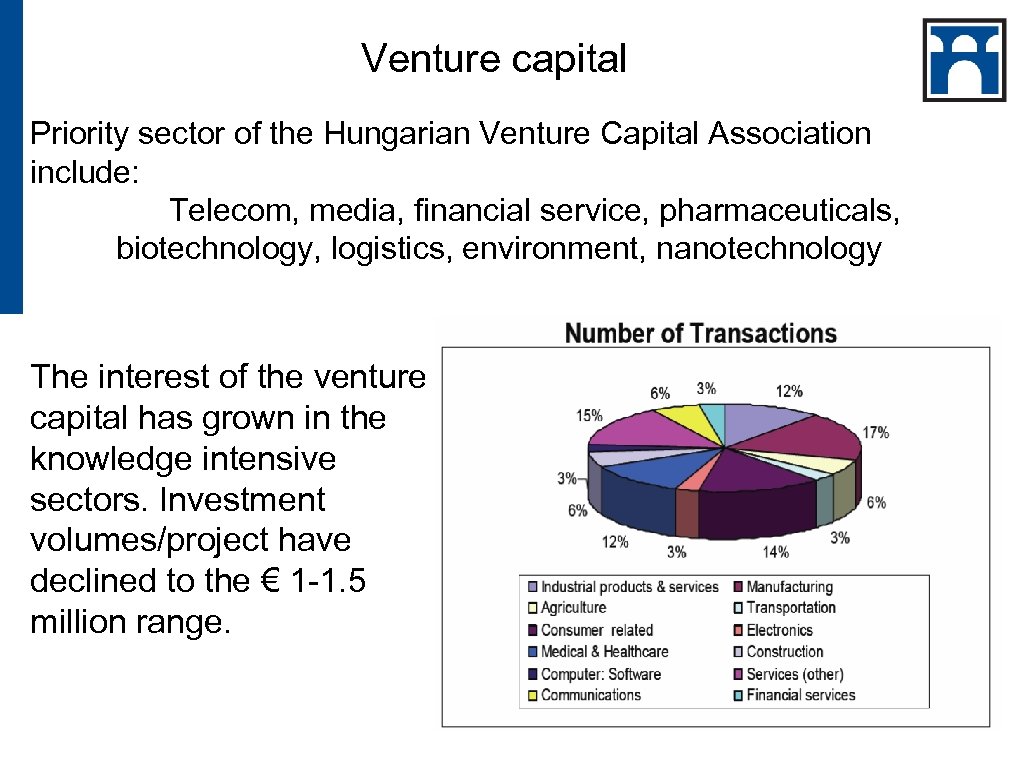 Venture capital Priority sector of the Hungarian Venture Capital Association include: Telecom, media, financial service, pharmaceuticals, biotechnology, logistics, environment, nanotechnology The interest of the venture capital has grown in the knowledge intensive sectors. Investment volumes/project have declined to the € 1 -1. 5 million range.
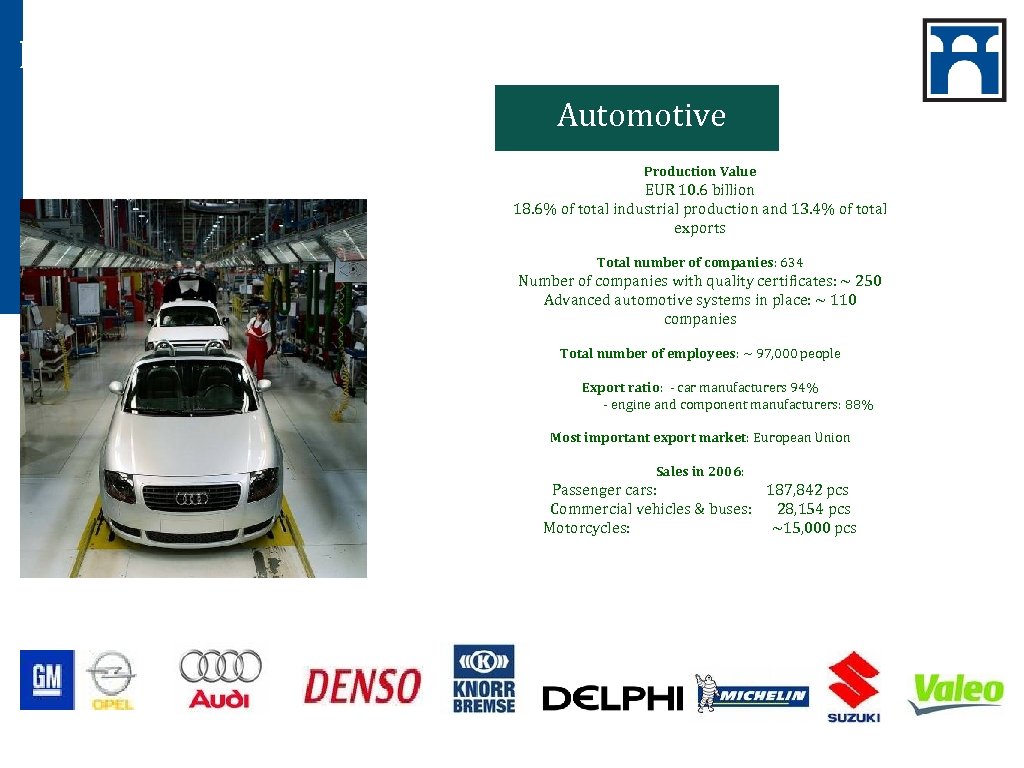 High Performing Sectors Automotive Production Value EUR 10. 6 billion 18. 6% of total industrial production and 13. 4% of total exports Total number of companies: 634 Number of companies with quality certificates: ~ 250 Advanced automotive systems in place: ~ 110 companies Total number of employees: ~ 97, 000 people Export ratio: - car manufacturers 94% - engine and component manufacturers: 88% Most important export market: European Union Sales in 2006: Passenger cars: 187, 842 pcs Commercial vehicles & buses: 28, 154 pcs Motorcycles: ~15, 000 pcs
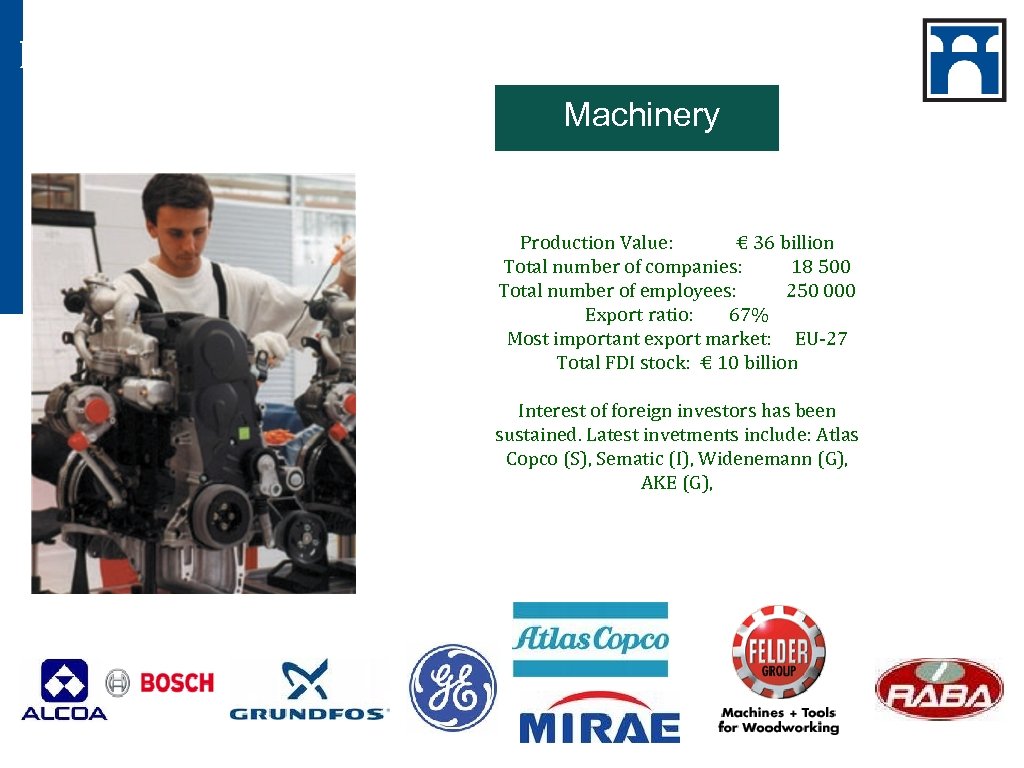 High Performing Sectors Machinery Production Value: € 36 billion Total number of companies: 18 500 Total number of employees: 250 000 Export ratio: 67% Most important export market: EU-27 Total FDI stock: € 10 billion Interest of foreign investors has been sustained. Latest invetments include: Atlas Copco (S), Sematic (I), Widenemann (G), AKE (G),
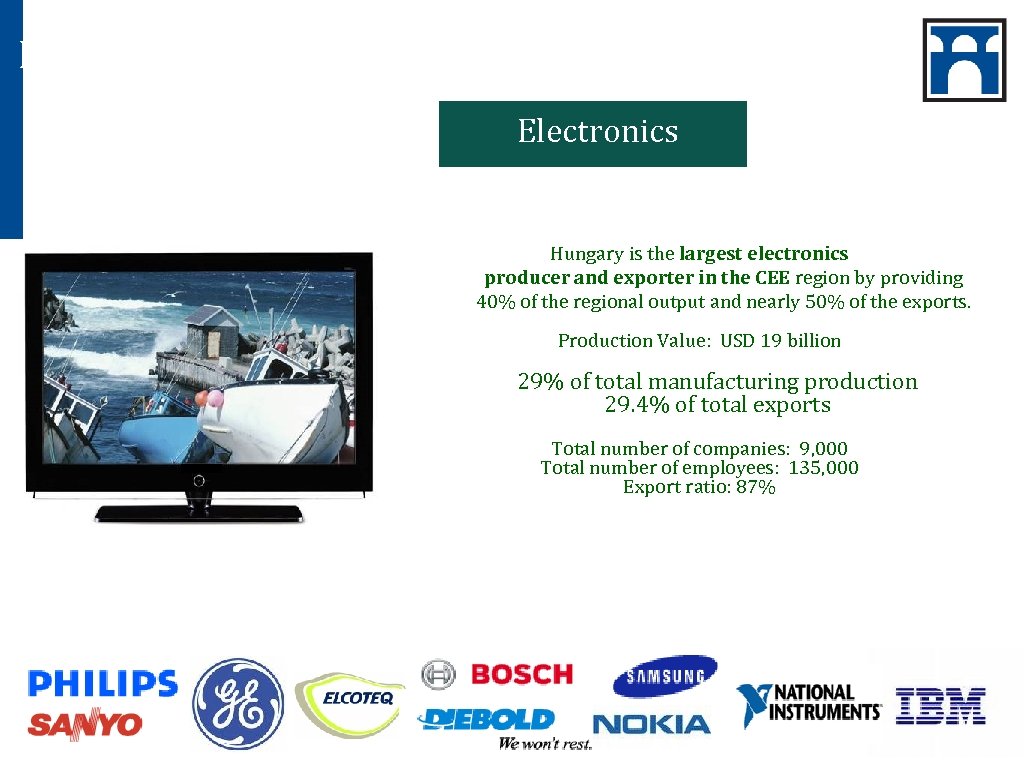 High Performing Sectors Electronics Hungary is the largest electronics producer and exporter in the CEE region by providing 40% of the regional output and nearly 50% of the exports. Production Value: USD 19 billion 29% of total manufacturing production 29. 4% of total exports Total number of companies: 9, 000 Total number of employees: 135, 000 Export ratio: 87%
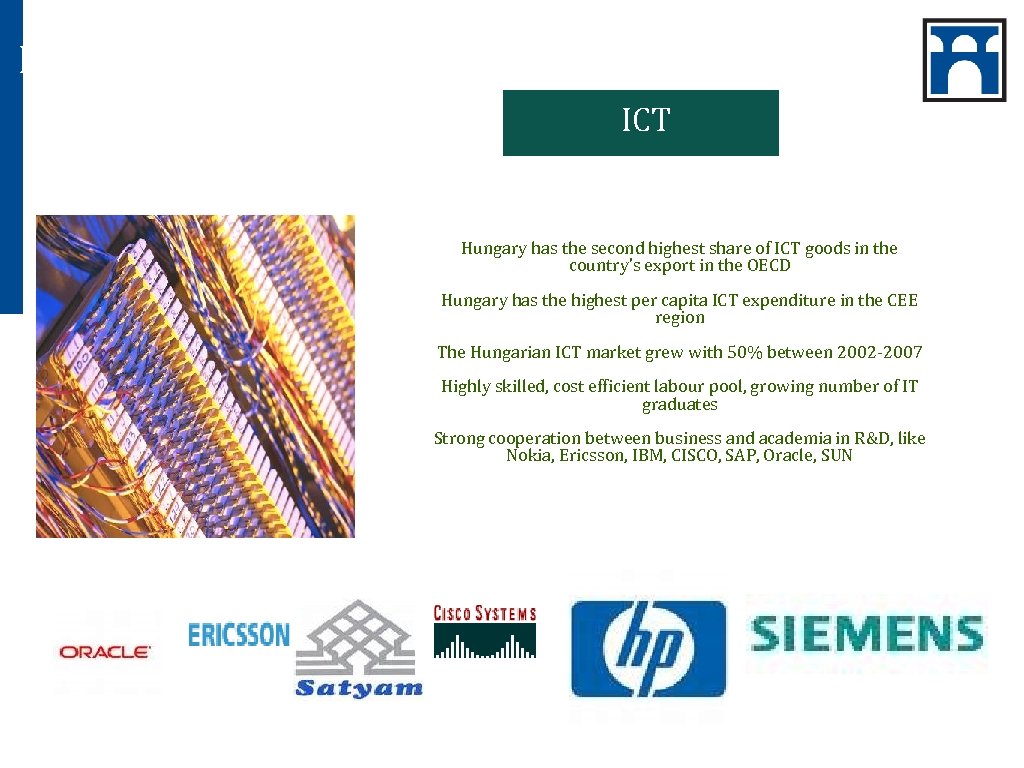 High Performing Sectors Electronics ICT Hungary has the second highest share of ICT goods in the country’s export in the OECD Hungary has the highest per capita ICT expenditure in the CEE region The Hungarian ICT market grew with 50% between 2002 -2007 Highly skilled, cost efficient labour pool, growing number of IT graduates Strong cooperation between business and academia in R&D, like Nokia, Ericsson, IBM, CISCO, SAP, Oracle, SUN
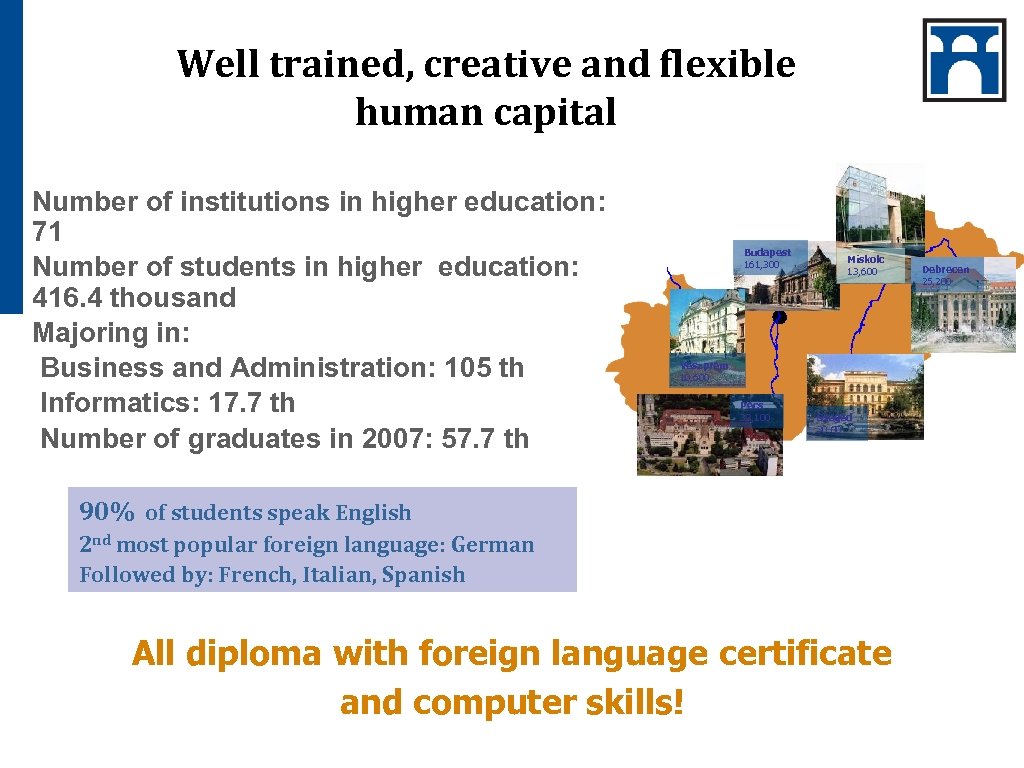 Well trained, creative and flexible human capital Number of institutions in higher education: 71 Number of students in higher education: 416. 4 thousand Majoring in: Business and Administration: 105 th Informatics: 17. 7 th Number of graduates in 2007: 57. 7 th Budapest 161, 300 Miskolc 13, 600 Veszprém 10, 600 Pécs 33, 100 Pécs Szeged 30, 00 90% of students speak English 2 nd most popular foreign language: German Followed by: French, Italian, Spanish All diploma with foreign language certificate and computer skills! Debrecen 25, 200
 Training in Hungarian enterprises Professional trainings appeared after 1989 as a request by international and multinational companies Diffusion of trainings development of economy by 2004 similar to the Open trainings are much less diffused than company trainings Average time : 4 -5 / person / year
 Training in Hungarian enterprises Most of the trainings for : • middle managers • sales and customer service • top managers • low level managers and employees
 Training in Hungarian enterprises Interactive training solutions (distant training and e-learning) are slowly diffusing E-learning has gained territory in public institutions and among big companies : telecommunication and information technology Effective : high number of participants regular trainings short units Multinational companies use existing e-learning curricula in English without adapting it to local circumstances and are still trying to select the suitable solutions
 Training in Hungarian enterprises According to experts e-learning is used mainly in the following fields : • new employees • management trainings • sales • labour safety and fire prevention • language • IT
 Training in Hungarian enterprises SMEs are still not open (lack of funds and interest) On the training market traditional methods are prevailing (offline) Lack of expertise In Hungary self-education does not have tardition Human factor is very important
 Training in Hungarian enterprises Increasing effectiveness by mixing electronic curricula with traditional training methods Hungarian companies do not possess necessary expertise to introduce blended learning systems Some examples (IQ Consulting) : British-American Tobacco Hungary : Actions against smoking, restrictions in advertising change management Training for a high number of employees to support change in mentality / attitude in a fast, practical and cost-effective way
 Training in Hungarian enterprises me-Learning : Change Management course to integrate existing training Simulation + 2 workshops Positive feedback, positive results Hungarian Post One of the largest employers in Central Europe Liberalization of the market changes in organization and culture Training for 1000 medium managers me-Learning : Change Management course Electronic simulation + opening and closing workshops
 Founded in 2002 Supporting SMEs to increase competitiveness in Europe Activities : • Consulting to SMEs on European funds, project planning and project management • Organization of trainings, conferences • Realization of projects on innovation for SMEs • Market research
 Projects 2005 – 2007 : EQUAL : reintegration of women with small children in the labour market http: //www. eselybolcsodeje. org Leonardo Program – ISI : Innovation through Services in Industry ESF Art. 6 – SAM : Senior Age Management
 Leonardo Program - E-district CIPRO : European Distant Training Interactive and Collaborative Tools for Civil Protection Projects 2008 – 2009 : EQUAL : Dissemination and mainstreaming of results Asia Invest : supporting business relations between Asian and European enterprises in the food processing sector
 Projects 2008 – 2009 : Leonardo Innovation Transfer Projects Leonardo SILVER : toolbox for age management Leonardo METAL : development of the European Qualification Framework Leonardo BELT : Blended learning transfer
 Kopernikusz Association 1056 Budapest, Váci u. 81. Tel : +36 1 4113356 or 4113357 Fax : +36 1 2695625 E-mail : info@kopernikusz. hu a. medgyesi@kopernikusz. hu Web : www. kopernikusz. hu