 Скачать презентацию HUMAN RIGHTS of IMMIGRANTS in TURKEY Ayşen Üstübici
33e0e985193d92ebc1f14482ec8d756f.ppt
- Количество слайдов: 52



HUMAN RIGHTS of IMMIGRANTS in TURKEY Ayşen Üstübici Ph. D Candidate, Koç University austubici@ku. edu. tr www. mirekoc. com
Overview n n n Historical overview of international migration in Turkey- from emigration to transit country, to country of immigration? Raising awareness Turkish asylum and immigration policies ¨ Asylum – sığınma ¨ Human smuggling- insan kaçakçılığı ¨ Human trafficking –insan ticareti ¨ Deportation – sınırdışı etme ¨ Residence/ work permit - oturma/çalışma izinleri ¨ naturalization – vatandaşlığa geçma
1. Historical background Nation-building period 1923 -1960 n Turkey as a country of emigration: Guestworker experience and beyond 1961 -1974 (and onwards) n Turkey as a country of transit migration and immigration 1979 -onwards n
Foreigner vs Migrant Who is a migrant? n n n In the Turkish law, the term “migrant” is a legal category, defined in the Settlement law (İskan Kanunu), enacted in 1934. The term mainly refers to ethnic kins who are admitted to Turkey and they are conceived as eventual, future citizens. The Turkish word is “muhacir” or “göçmen” and terminology indicates an ethnic or at its best “cultural” affiliation.
Foreigner vs Migrant Who is a foreigner? n Although, in post-1980 period; especially after 1990 s; the terms such as “migrants”, “illegal migration”; “migrant labor” increasingly circulate in popular discourse and media coverage; all these labels actually refers to the term “foreigner” as defined in Turkish laws.
Emigration- guest worker experience n n Post-1960 migration history of Turkey, is initially characterized by labor emigration to Western European countries from 1961 until mid-1970 s. With the aim of national development, Turkey signed the first bilateral labor recruitment agreement with Federal Germany followed by bilateral agreements with Austria, the Netherlands and Belgium in 1964, France in 1965, Sweden and Australia in 1967. Less comprehensive agreements were made with the United Kingdom in 1961, Switzerland in 1971, Denmark in 1973, and Norway in 1981.
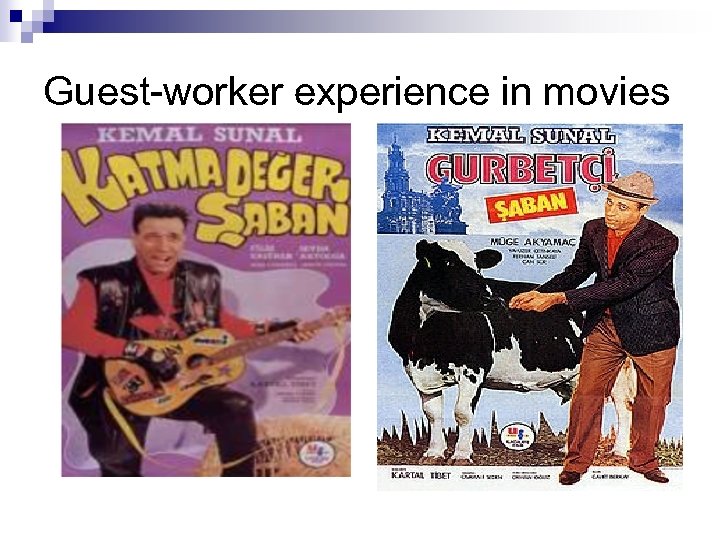
Guest-worker experience in movies
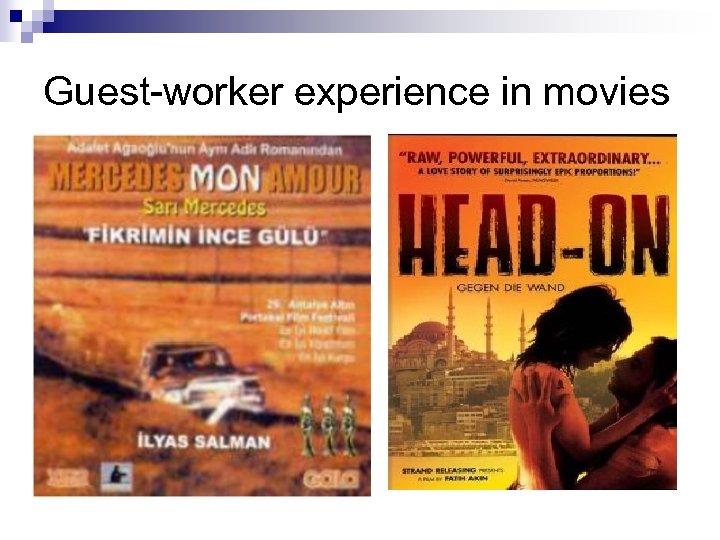
Guest-worker experience in movies
Immigration and Turkey (1979 onwards) After 1980 s, Turkey has become a country of immigration and a transit migration country as well as an emigration country. Within this period, the country experienced sizable asylum seekers flows from Iran, Iraq and Afghanistan as well as flows of asylum from African countries. These movements are coupled with clandestine transit migration oriented to Europe and irregular and circular labor migration from neighboring and post-Soviet countries into Turkey.
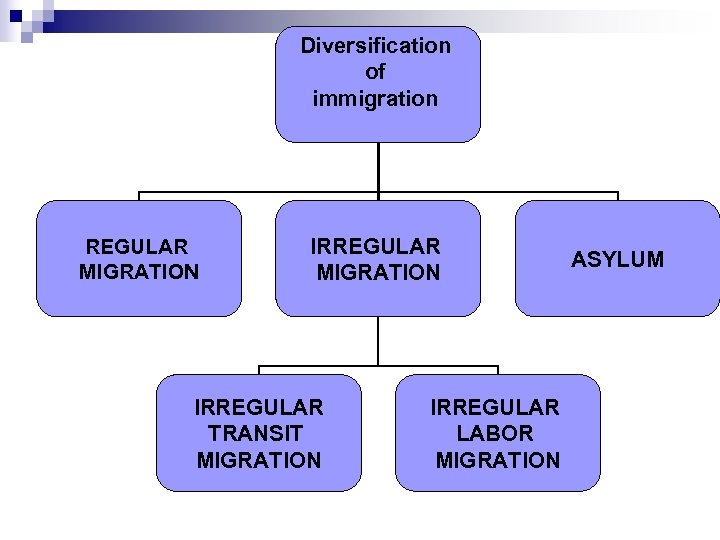
Diversification of immigration REGULAR MIGRATION IRREGULAR TRANSIT MIGRATION IRREGULAR LABOR MIGRATION ASYLUM
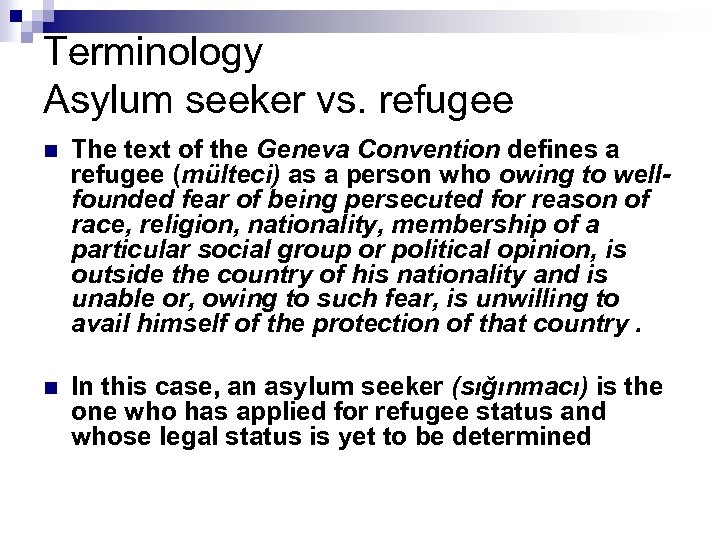
Terminology Asylum seeker vs. refugee n The text of the Geneva Convention defines a refugee (mülteci) as a person who owing to wellfounded fear of being persecuted for reason of race, religion, nationality, membership of a particular social group or political opinion, is outside the country of his nationality and is unable or, owing to such fear, is unwilling to avail himself of the protection of that country. n In this case, an asylum seeker (sığınmacı) is the one who has applied for refugee status and whose legal status is yet to be determined
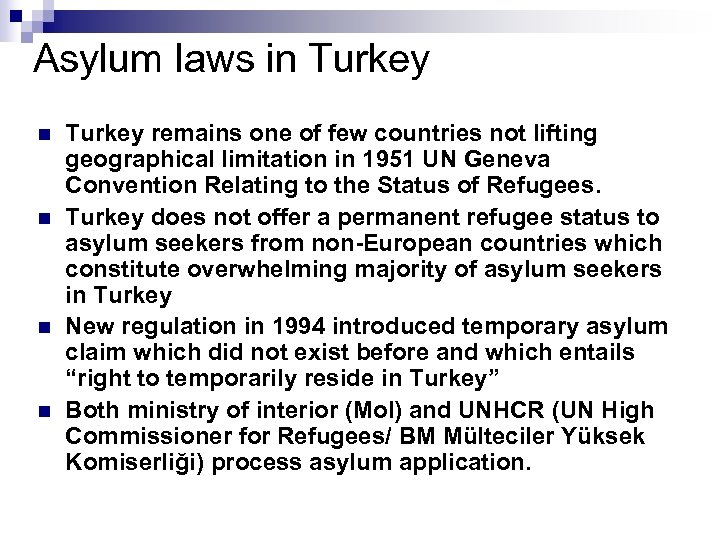
Asylum laws in Turkey n n Turkey remains one of few countries not lifting geographical limitation in 1951 UN Geneva Convention Relating to the Status of Refugees. Turkey does not offer a permanent refugee status to asylum seekers from non-European countries which constitute overwhelming majority of asylum seekers in Turkey New regulation in 1994 introduced temporary asylum claim which did not exist before and which entails “right to temporarily reside in Turkey” Both ministry of interior (Mo. I) and UNHCR (UN High Commissioner for Refugees/ BM Mülteciler Yüksek Komiserliği) process asylum application.
Turkish law n n This means that persons having acquired asylum seeker status in Turkey wait to to resettled to third countries. The procedure of status determination and the process of re-settlement can take years.
Asylum seekers in Turkey n n After applying for refugee status to Ministry of Interior and/or to UNCHR, applicants are obliged to settle in certain provinces while their application is processed. These provinces are generally far from EU borders. There 28 satellite cities: Afyon, Ağrı, Aksaray, Amasya, Bilecik, Burdur, Çankırı, Çorum, Eskişehir, Hakkari, Isparta, Karaman, Kastamonu, Kayseri, Kırıkkale, Kırşehir, Konya, Kütahya, Nevşehir, Niğde, Silopi, Sivas, Tokat, Van, Yozgat.
Satellite cities- the case of Van n n The majority of Afghan asylum seekers who were forced to stay in Van. After the earthquake, the refugees’ access to aid was mostly denied. Their shelter was inhabitable. They were given a place in the social center and TEV and then, asked to leave the center. At the end, asylum seekers were moved to other satellite cities.
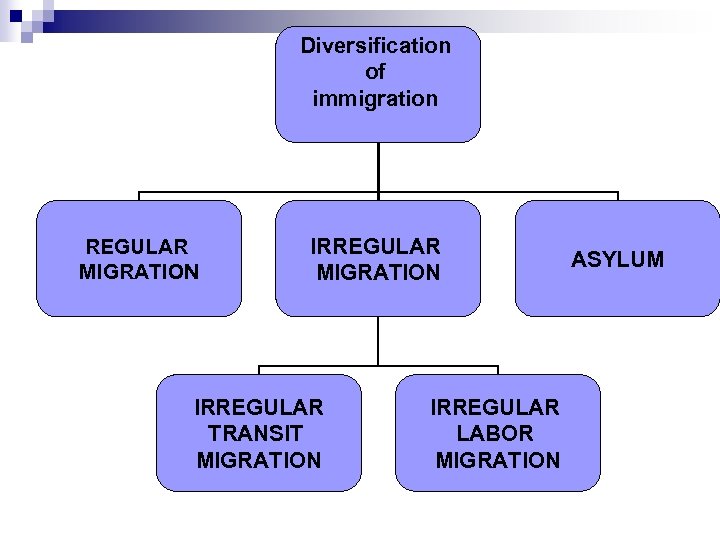
Diversification of immigration REGULAR MIGRATION IRREGULAR TRANSIT MIGRATION IRREGULAR LABOR MIGRATION ASYLUM
Terminology “irregular” vs. “illegal” migrant? A person cannot be illegal. n İllegal is the political term, irregular more the academic term n There can be no illegal immigration without immigration policy, n
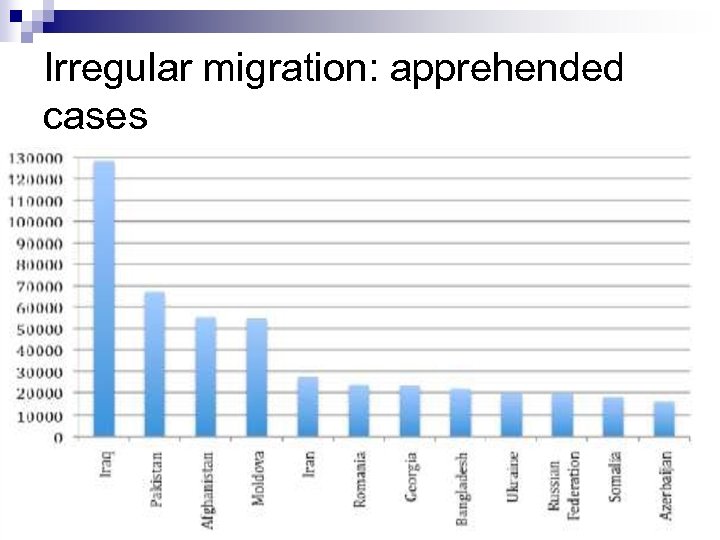
Irregular migration: apprehended cases
Transit migration: irregular transit migrants and asylum seekers n International migratory flows directed to the European countries tend to include a significant proportion of migrants who come to the peripheral zones of Europe, such as Eastern Europe, Western Asia or Northern Africa intending to enter Europe from those areas. , n Turkey is one of the entry points to Schengen area. n Turkey has become a transit country because of political turmoil in its periphery (such as regime change in Iran; Iran-Iraq Wars; Gulf war, Afghanistan, now Syria)
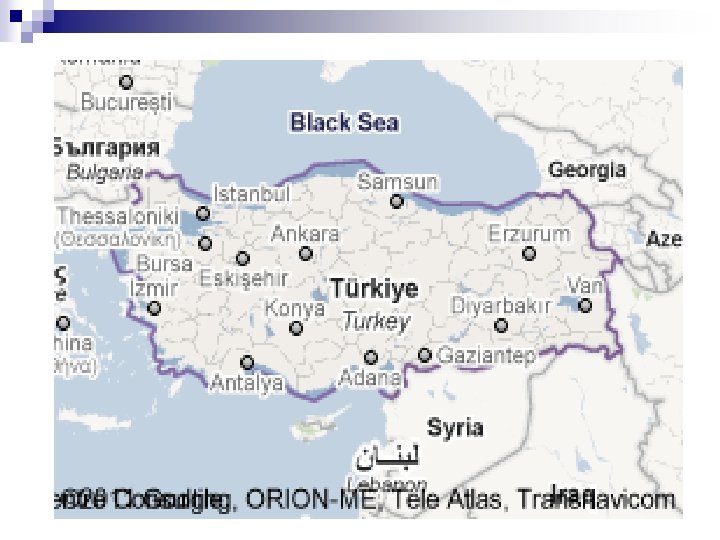
Terminology human trafficking vs. human smuggling Human smuggling refers to the illegal crossing of borders through the agency of third persons who facilitate border crossing in exchange of remunerations n Most visible provinces: İstanbul, Ankara; Border cities: İzmir, Van, Edirne n
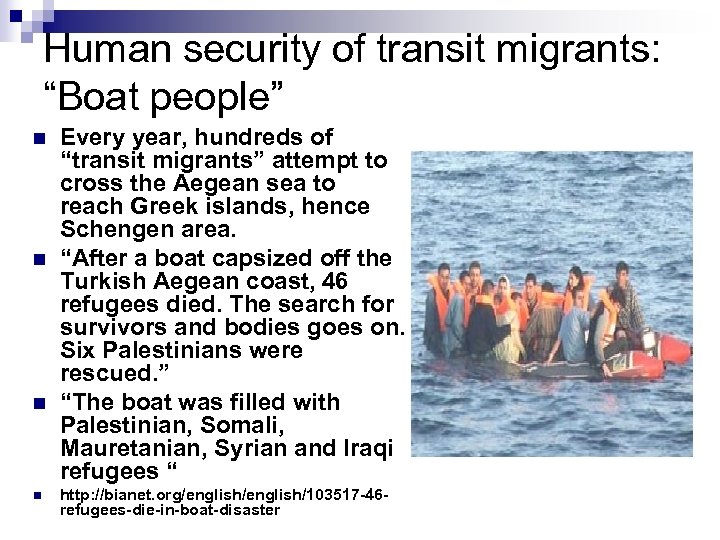
Human security of transit migrants: “Boat people” n n Every year, hundreds of “transit migrants” attempt to cross the Aegean sea to reach Greek islands, hence Schengen area. “After a boat capsized off the Turkish Aegean coast, 46 refugees died. The search for survivors and bodies goes on. Six Palestinians were rescued. ” “The boat was filled with Palestinian, Somali, Mauretanian, Syrian and Iraqi refugees “ http: //bianet. org/english/103517 -46 refugees-die-in-boat-disaster
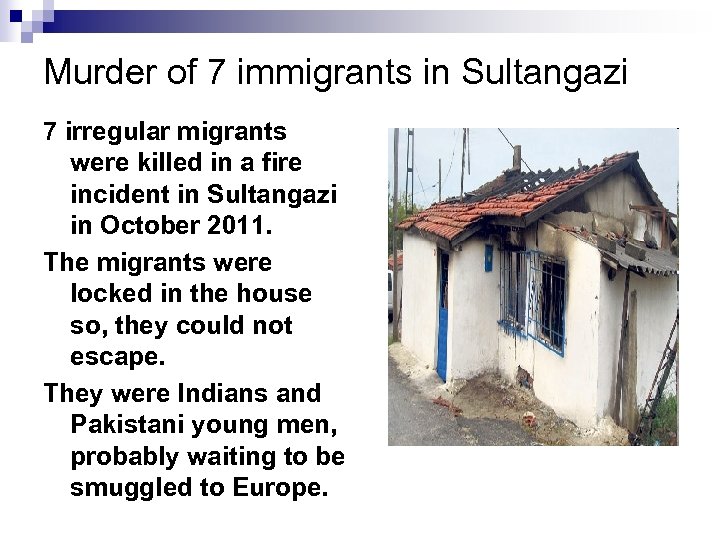
Murder of 7 immigrants in Sultangazi 7 irregular migrants were killed in a fire incident in Sultangazi in October 2011. The migrants were locked in the house so, they could not escape. They were Indians and Pakistani young men, probably waiting to be smuggled to Europe.
Human smuggling and human rights violations The capacity of detention centers for apprehended migrants is limited. n They have right to a lawyer (generally not implemented), n They have right to apply for asylum after being arrested (generally not implemented) n Return procedures n
Detention and deportation There are detention centers in 37 provinces in Turkey. n The capacity is around 3000 people. n Edirne is about to open a brand new detention center. n http: //fotogaleri. hurriyet. com. tr/galeridetay. aspx? cid=52199&rid=2&p=1 n
Human trafficking n n n Human trafficking is defined as “the transfer of people from a place to another by deception or force” and constitutes a criminal act. The emphasis is on the victimhood of migrants –usually women and young children- rather than illegal border crossing or work. In line with the Palermo Protocol against Trafficking in Persons, the definition of trafficking and smuggling in human beings was introduced into the Turkish Penal Code in 2006 and the act of trafficking was criminalized
Human Trafficking n n n International Organization for Migration (IOM) is the major international organization dealing with victims of human trafficking and their voluntary return. They support assistance to those trafficked for sexual exploitation. They also support persons trafficked for other forms of exploitation such as forced labour. IOM secures shelter for victims of human trafficking, provide them options of safe return and or/re-integration to their home countries.
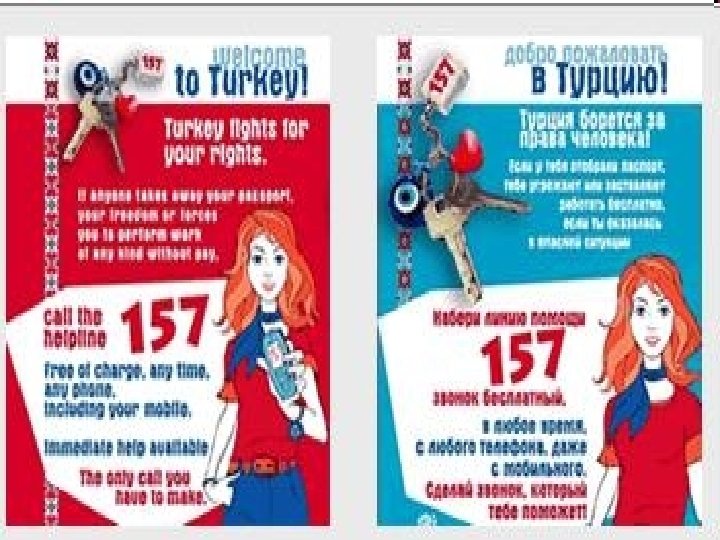
Activities of IOM in Turkey Since 2004, IOM assisted return of 792 trafficked persons. n The people were mostly from Moldova, Ukraine, Kyrgyzstan, Uzbekistan, Turkmenistan n Main provinces where trafficked persons are caught are Istanbul, Antalya, Trabzon. n IOM manages 157 Helpline, since May 2005, the Helpline rescued 166 identified victims of trafficking. n
NGOs dealing with human rights issues of immigrants IOM- International Organization for Migration n UNHCR n Helsinki Citizens’ Assumbly n ASAM- Association for solidarity with asylum seekers and migrants n Mazlum-Der n Göçmen Dayanışma Ağı- Migrants’ Solidarity Network n
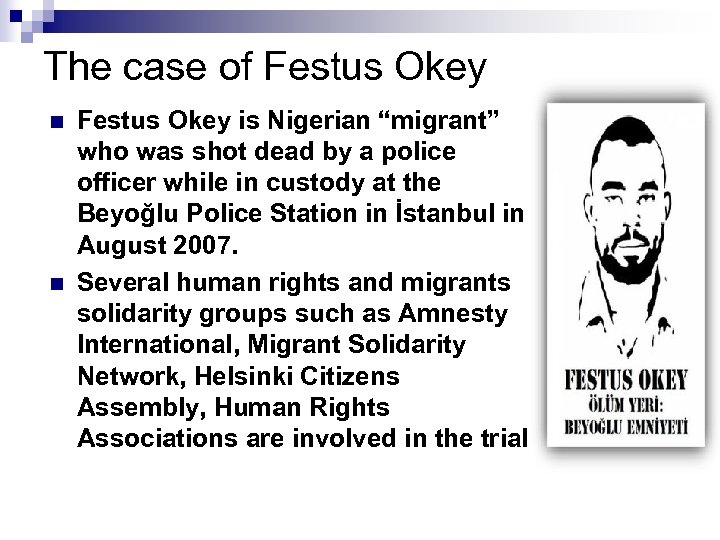
The case of Festus Okey n n Festus Okey is Nigerian “migrant” who was shot dead by a police officer while in custody at the Beyoğlu Police Station in İstanbul in August 2007. Several human rights and migrants solidarity groups such as Amnesty International, Migrant Solidarity Network, Helsinki Citizens Assembly, Human Rights Associations are involved in the trial.
Updates on Festus Okey EU 2011 Progress Report on Turkey also mentioned that there was no progress in the case on the murder of a Nigerian asylum seeker by a police office, as a criticism to human rights issues in Turkey. n GDA brought the issue to the parliament and the deputy Sırrı Süreyya Önder made a press release to publicize the case. n http: //www. radikal. com. tr/Radikal. aspx? a. T ype=Radikal. Detay. V 3&Article. ID=1072364& Date=13. 12. 2011&Category. ID=77 n
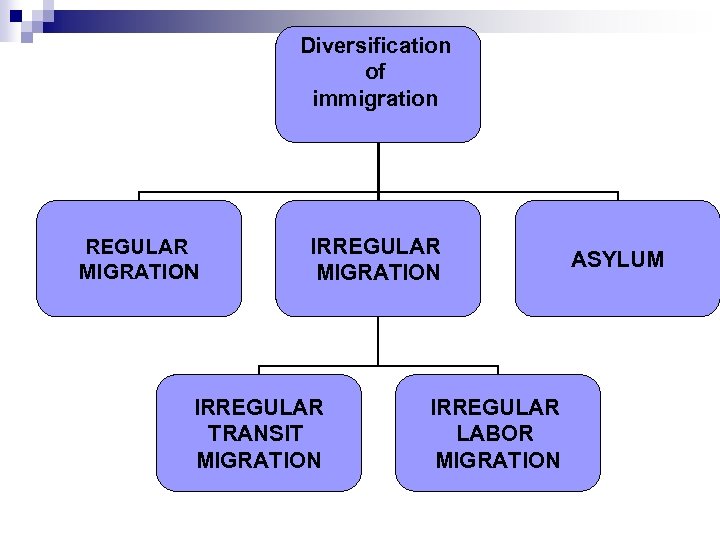
Diversification of immigration REGULAR MIGRATION IRREGULAR TRANSIT MIGRATION IRREGULAR LABOR MIGRATION ASYLUM
Irregular labour migration 1 n n n It is impossible to estimate the number of irregular migrants. 3 groups of labor migrants can be distinguished: First group involves circular labour migrants coming from post-Soviet countries such as Bulgaria, Rumania, Azerbaijan, Georgia, Ukraine and Russia. They mostly engage in shuttle trade or work in the service sector. They enter on tourist visas and most of the time overstay in Turkey before they go back to their country and come back again in the future.
Irregular labour migration 2 n n Second category of irregular labour migration refers to transit migrants form countries such Iraq, Iran, Afganistan –to a smaller extent from African countries- with the aim of moving to third countries through Turkey The third group entails labour migrants from Bulgaria, Greece, Azerbaijan, Iran. They also enter the country on tourist visas as other groups however, they are more likely to acquire residence permits and work permits, therefore to be included within the regular migration because of their Turkish descent.
Irregular labour migration 3 n n n Migrants are differentiated in the labour market. While Moldovan women dominate domestic work, textile sector is more likely to employ Rumanian and Moldovan migrants. Women from Moldova, Russia, Rumania, Ukraine and Belarus also work in entertainment and engage in sex work. Male migrants from Iran, Iraq, Azerbaijan, Rumania, Moldova concentrate on construction sector, while good sector and some restaurants are likely to employ irregular migrants from Pakistan, Ukraine, Bulgaria.
Human Rights of migrant workers n n n Migrant labor are in Turkey on voluntary basis. However, they are denied access to basic human rights. They are prone to exploitation by emloyers. They do not have access to health services. Their children cannot go to school. The option to become legal is very costly for them.
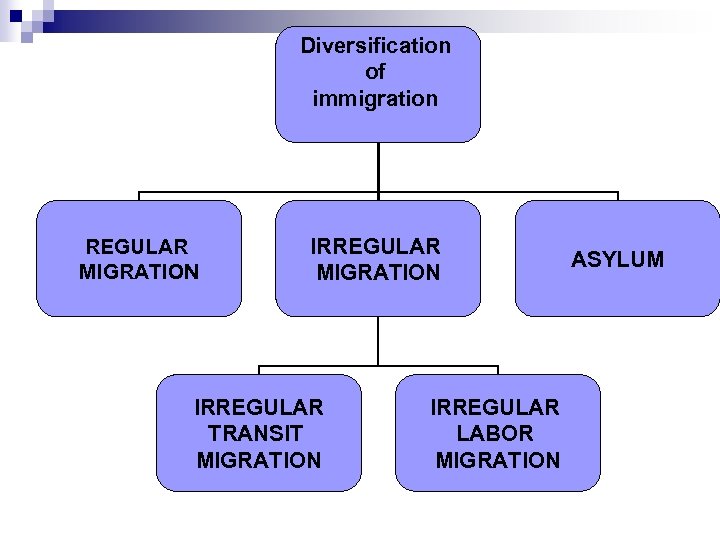
Diversification of immigration REGULAR MIGRATION IRREGULAR TRANSIT MIGRATION IRREGULAR LABOR MIGRATION ASYLUM
Regular migration n n The term „regular migrants‟ refers to those entering, residing in or departing from the country with valid documents. Regular migrants are in a better situation than irregular migrants. However, they have to face with complex bureaucratic procedures. They can easily fall into irregular and lose human rights granted to them.
Who are “regular migrants”? n n n A considerable portion is made up of ethnic. Turkish foreign nationals most of whom come to study, work or join relatives or friends based on the 1934 Law on Settlement that encourages Turkish speaking populations to come to Turkey. EU citizens of Turkish origin who gave up their Turkish citizenship US and EU nationals who receive residence permits in Turkey, foreign students coming to Turkey the retirees, mostly from the EU, who buy property in Turkey
Legal regulations regarding Immigration to Turkey n n Passport Law regarding foreigners’ residence and visit The Turkish Law on Work Permits for Foreigners and its Regulations Draft law foreigners and international protection. This new law is drafted by the Ministry of Interior. The intention of this draft law is to re-shape and bring together in a coherent way; formerly fragmented laws and regulations in Turkey concerning foreigners and asylum seekers. This law is expected to be enacted in 2012.
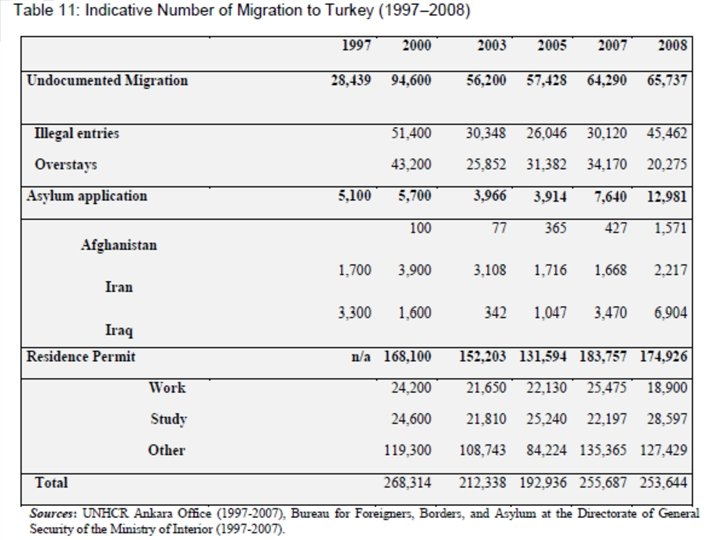
Residence Permits n n n In 2008, there were over 174, 000 foreigners who reside in Turkey with residence permit. While nearly 11% of them were people with work permit and 16% were those who are studying, the remaining proportion of foreigners with residence permits were mostly people who are the dependants of working and studying foreigners. To give a general idea about major foreign citizen groups, legally residing in Turkey; 2008 records indicate 26, 000 Bulgarians; 15, 000 Azebaijanis , 11, 000 Russian citizens, almost 10, 000 German citizens, 6, 000 US citizens, residing in Turkey. Other major countries are Iraq, UK, Iran, Kazakhstan, Kyrgyzstan, Moldova, Ukraine.
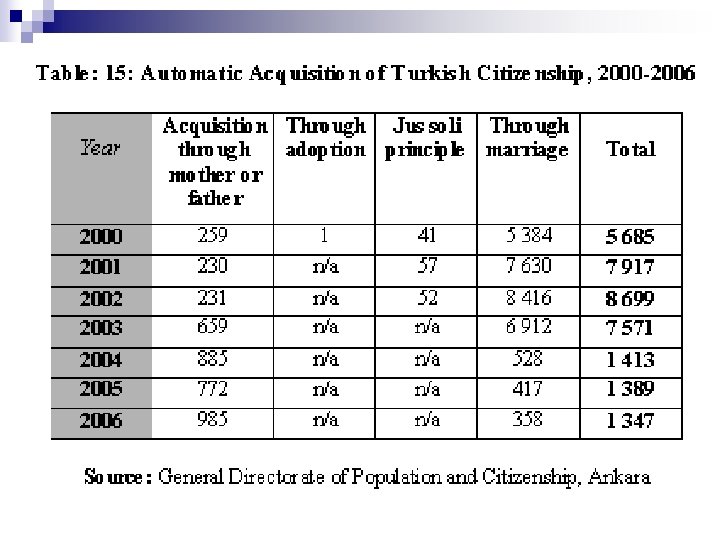
Residence Permits n n There is no legal clause with restricts the length of stay in the country. However, in Turkey, we do not have permanent settlement status either. Permanent settlement is only possible through naturalization, (acquiring citizenship through marriage or other legal means).
Work permit n n n Issues related to foreigners’ working in the country is regulated by The Turkish Law on Work Permits for Foreigners and its accompanying Regulations (enacted in 2003). The earlier regulation was fragmented and did not allow for individual application. Legal changes in 2003 facilitated the procedure for acquiring a work permit has been simplified.
Naturalization n n Naturalization means acquiring citizenship of a foreign country. There are general rules and conditions for the naturalization of so called “real foreigners”. authorities have discretionary rights in every case, confirmation of ministry of interior is necessary.
Useful Websites Mi. Re. Koc www. mirekoc. com n CARIM http: //www. carim. org/ n Focus Migration http: //www. focusmigration. de/ n IOM Turkey http: //www. turkey. iom. int/ n

THANK YOU FOR YOUR PATIENCE QUESTIONS and COMMENTS?
Скачать презентацию HUMAN RIGHTS of IMMIGRANTS in TURKEY Ayşen Üstübici
33e0e985193d92ebc1f14482ec8d756f.ppt