


 Скачать презентацию Human Impact 2 NEGATIVE HUMAN IMPACT
9dff2fb99cd9262f305fabba336e53ff.ppt
- Количество слайдов: 21
 Human Impact #2
 NEGATIVE HUMAN IMPACT
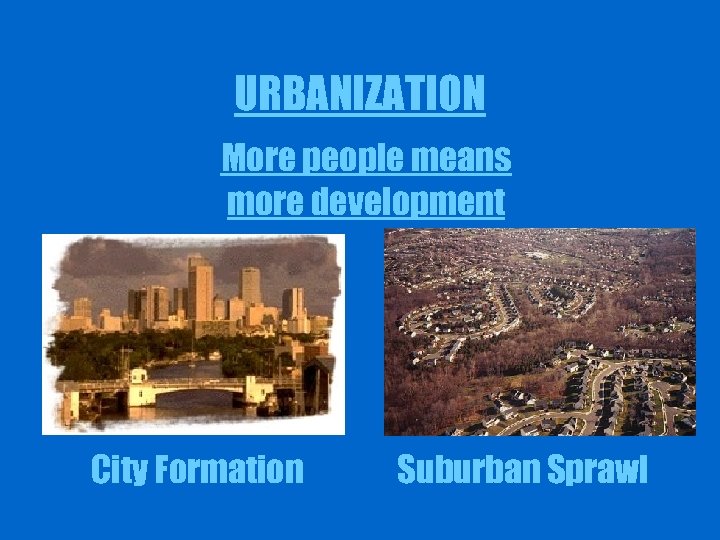 URBANIZATION More people means more development City Formation Suburban Sprawl
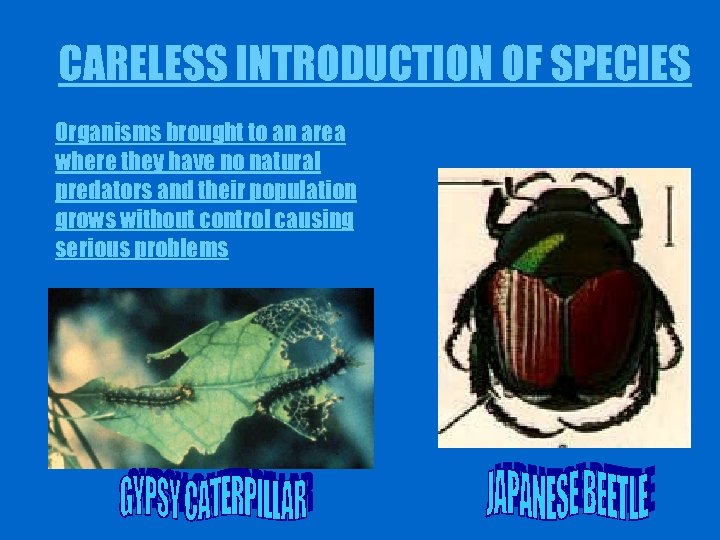 CARELESS INTRODUCTION OF SPECIES Organisms brought to an area where they have no natural predators and their population grows without control causing serious problems
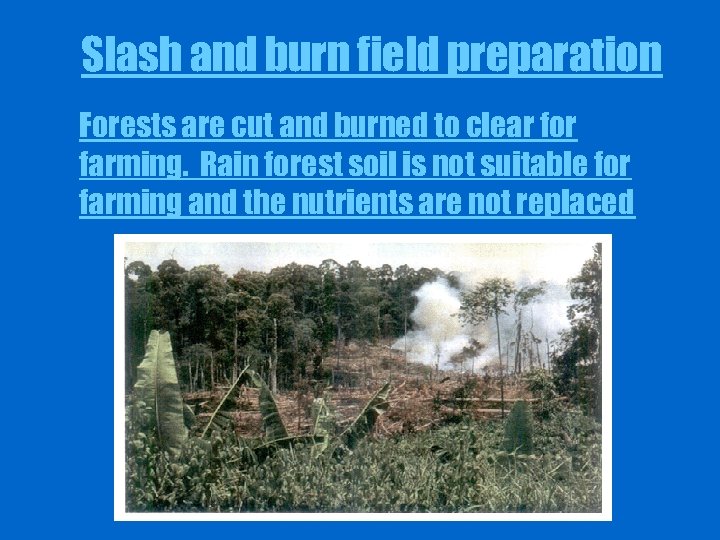 Slash and burn field preparation Forests are cut and burned to clear for farming. Rain forest soil is not suitable for farming and the nutrients are not replaced
 Overfarming- nutrients not returned to the soil; soil becomes less fertile • crop yield drops • fields abandoned => erosion - removal of soil by wind and water • eventually, fields are useless
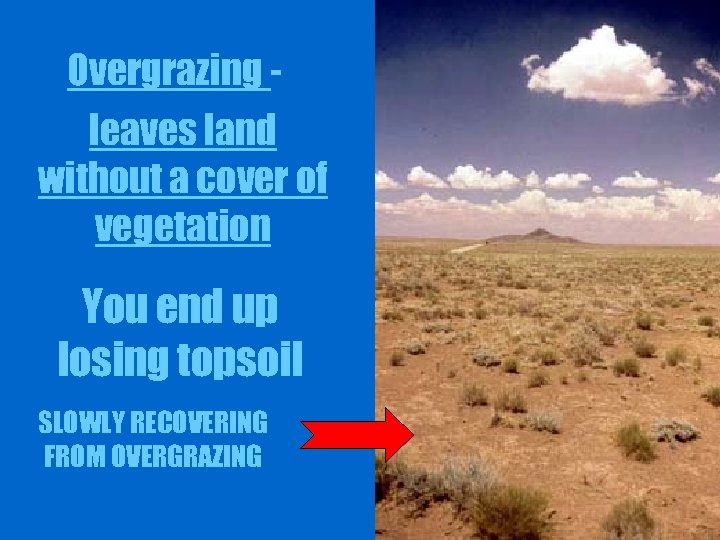 Overgrazing leaves land without a cover of vegetation You end up losing topsoil SLOWLY RECOVERING FROM OVERGRAZING
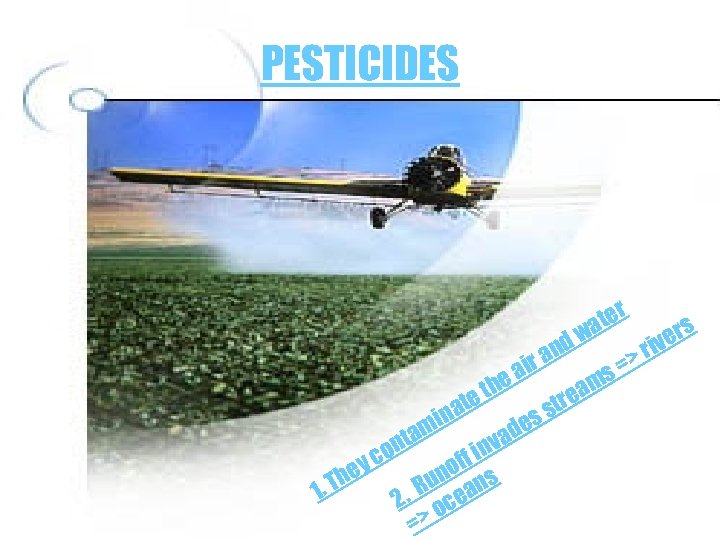 PESTICIDES ter a w ers nd riv > ir a a s= m the ea e t str na s mi de nta nva o ff i yc o e un ans Th R 1. 2. oce =>
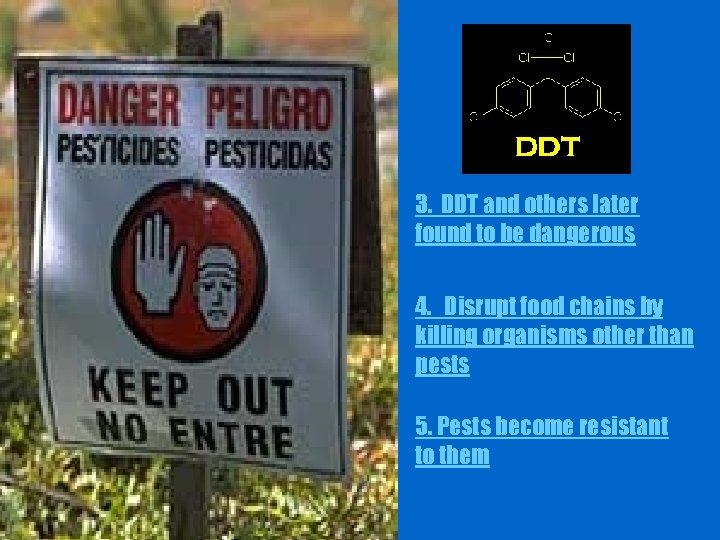 3. DDT and others later found to be dangerous 4. Disrupt food chains by killing organisms other than pests 5. Pests become resistant to them
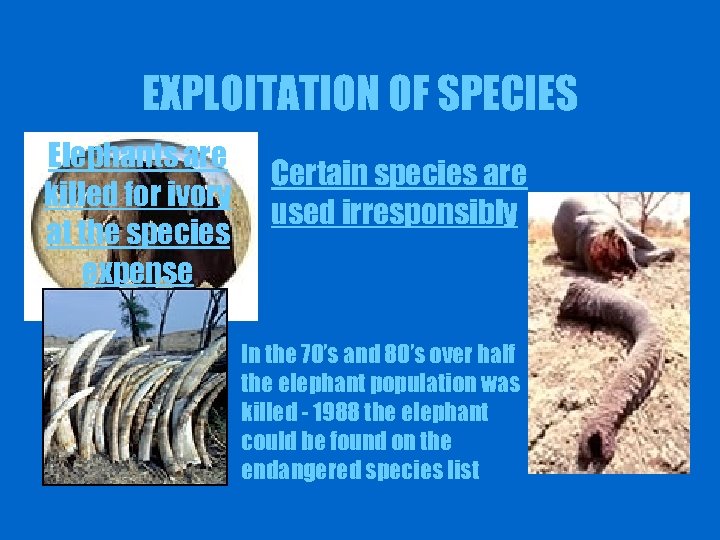 EXPLOITATION OF SPECIES Elephants are killed for ivory at the species expense Certain species are used irresponsibly In the 70’s and 80’s over half the elephant population was killed - 1988 the elephant could be found on the endangered species list
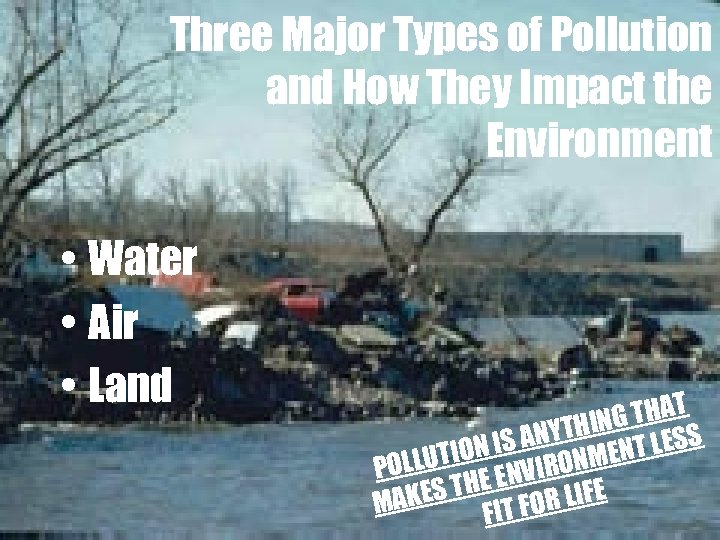 Three Major Types of Pollution and How They Impact the Environment • Water • Air • Land THAT YTHING LESS N IS AN NMENT LLUTIO NVIRO PO THE E MAKES FIT FOR LIFE
 1. Water Pollution: A. Can kill aquatic organisms B. Growth of algae can reduce size of lake C. Chemicals poisonous to humans D. Reduces food supply for humans E. Poison food supply for humans
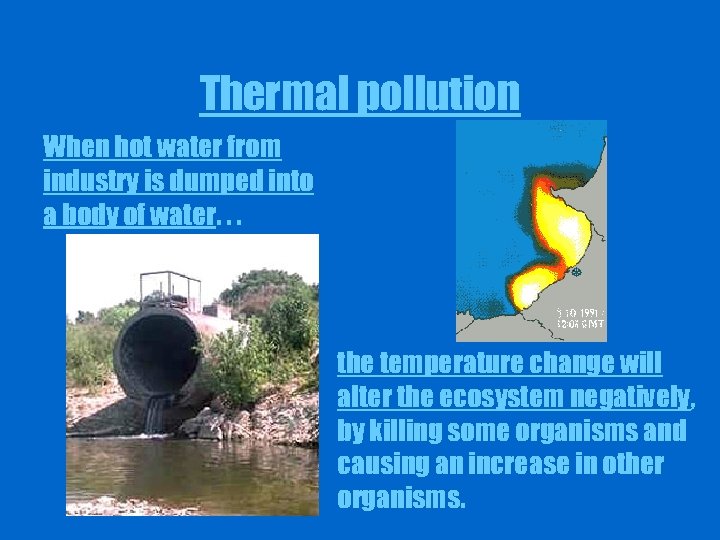 Thermal pollution When hot water from industry is dumped into a body of water. . . the temperature change will alter the ecosystem negatively, by killing some organisms and causing an increase in other organisms.
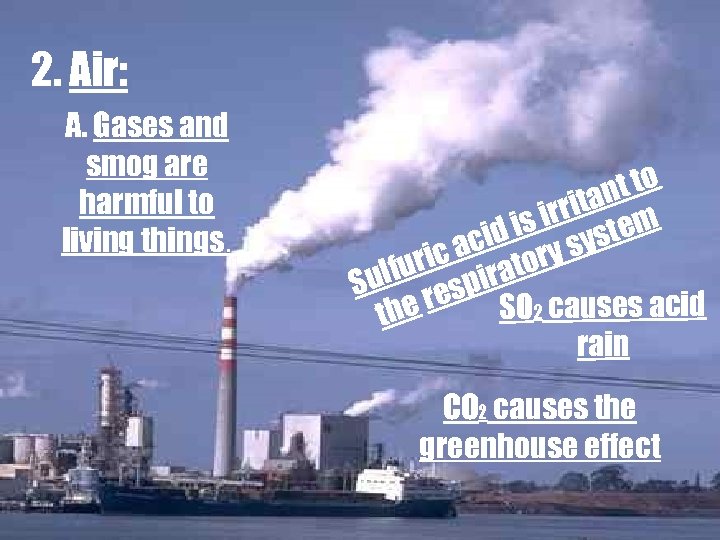 2. Air: A. Gases and smog are harmful to living things. nt to rrita em is i yst acid ory s uric irat Sulf resp SO 2 causes acid the rain CO 2 causes the greenhouse effect
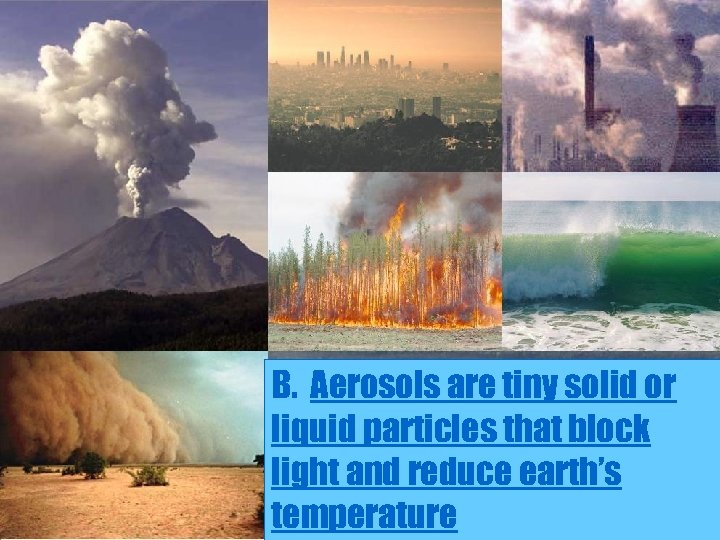 B. Aerosols are tiny solid or liquid particles that block light and reduce earth’s temperature
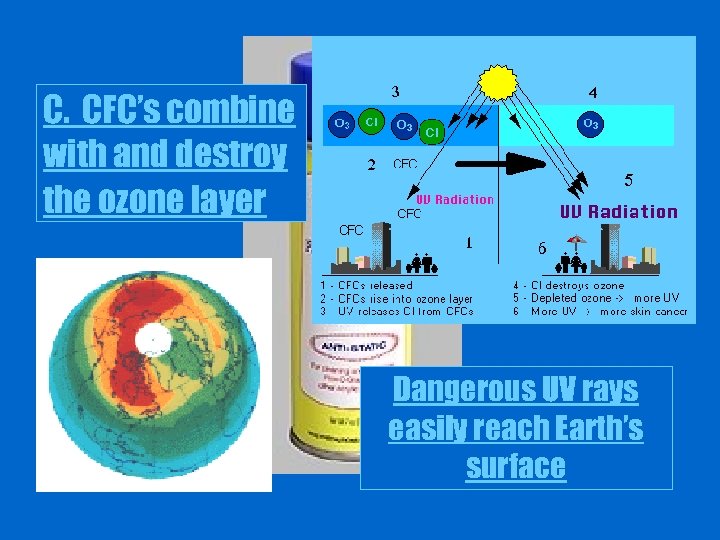 C. CFC’s combine with and destroy the ozone layer Dangerous UV rays easily reach Earth’s surface
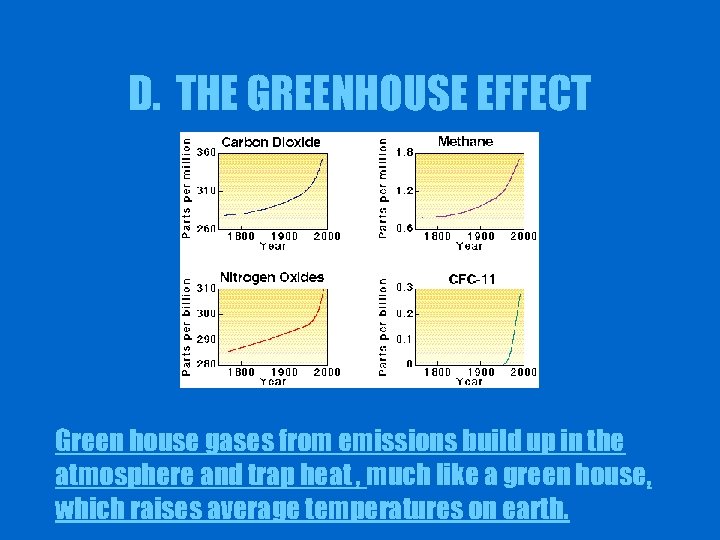 D. THE GREENHOUSE EFFECT Green house gases from emissions build up in the atmosphere and trap heat , much like a green house, which raises average temperatures on earth.
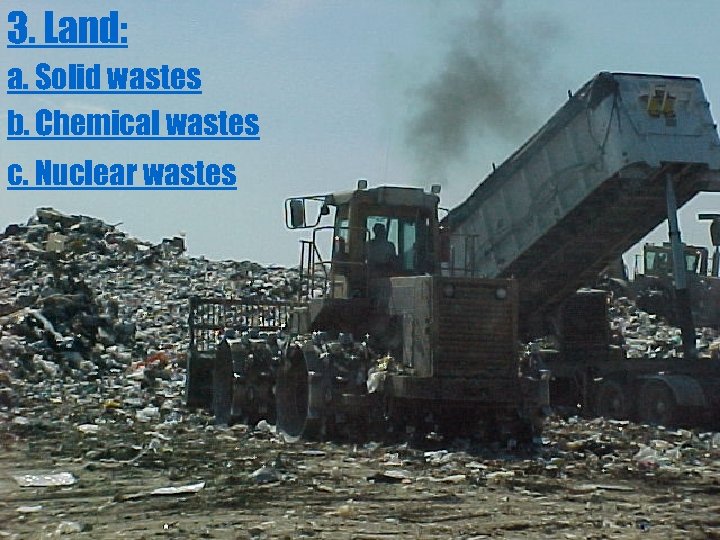 3. Land: a. Solid wastes b. Chemical wastes c. Nuclear wastes

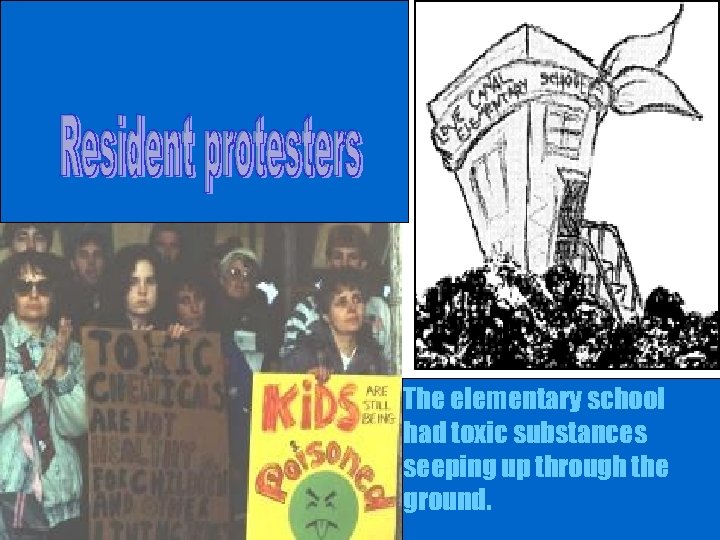 20, 000 tons of chemicals buried in Love Canal under the 900 home neighborhood. A study noted possible health dangers. Neighbors discovered that health problems and birth defects were common among the children of Love Canal. The school board and the health department assured that they were aware of the chemicals and that there was no problem. The Love Canal residents decided to fight the issue with science. Although they discovered that 56 percent of the children born at Love Canal had birth defects, the New York State Health Department initially dismissed the study. Later, the health department agreed the report elementary school The accurately described health problems but claimed the problems were not related to had toxic substances the chemicals. "They said we were a random clustering the of seeping up through genetically defective people, " Gibbs said. ground.