


 Скачать презентацию Human Identity and Environmental Challenges Tim Kasser Ph
2b99a7934c8e618e3b92ade682aec637.ppt
- Количество слайдов: 72
 Human Identity and Environmental Challenges Tim Kasser, Ph. D.
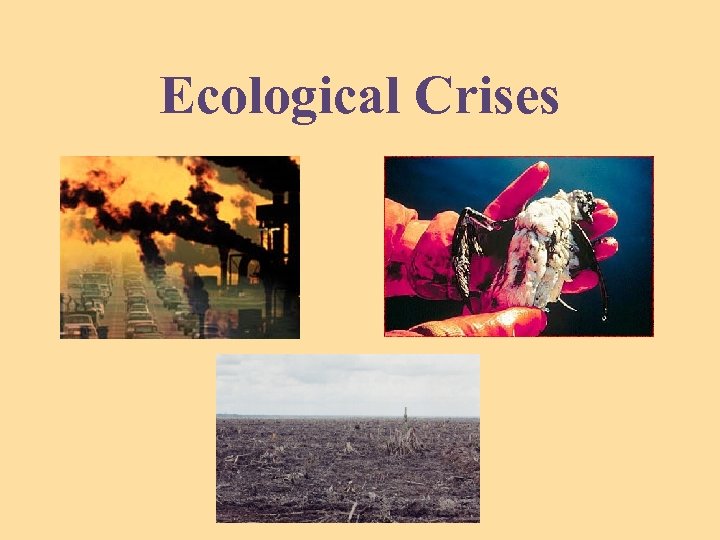 Ecological Crises
 Responses • More scientific research
 Responses • More scientific research • Public denial and apathy
 Responses • More scientific research • Simple behavior changes • Public denial and apathy
 Responses • More scientific research • Simple behavior changes • Public denial and apathy • Failure to spill-over into larger lifestyle changes
 Responses • More scientific research • Simple behavior changes • Policy proposals • Public denial and apathy • Failure to spill-over into larger lifestyle changes
 Responses • More scientific research • Simple behavior changes • Policy proposals • Public denial and apathy • Failure to spill-over into larger lifestyle changes • Tinkering due to low public demand institutional resistance
 Human Identity Crompton & Kasser (2009) Human Identity
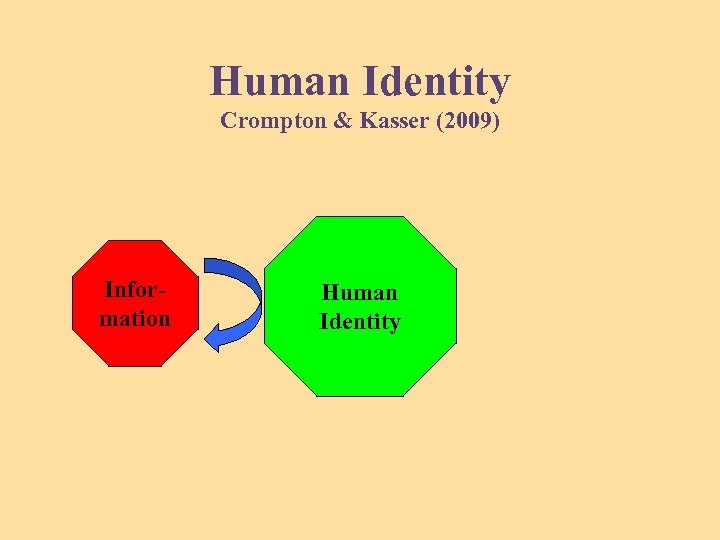 Human Identity Crompton & Kasser (2009) Information Human Identity
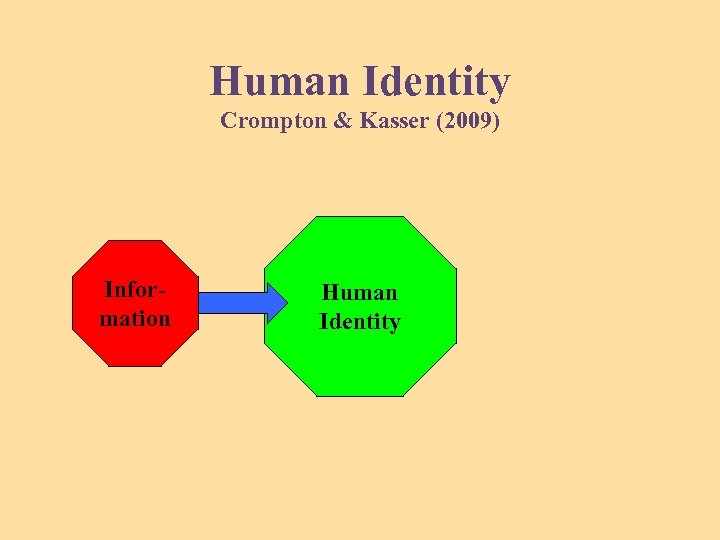 Human Identity Crompton & Kasser (2009) Information Human Identity
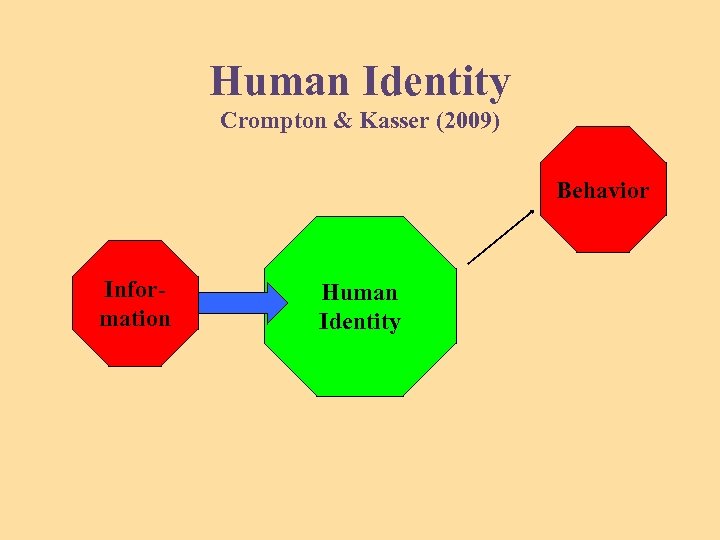 Human Identity Crompton & Kasser (2009) Behavior Information Human Identity
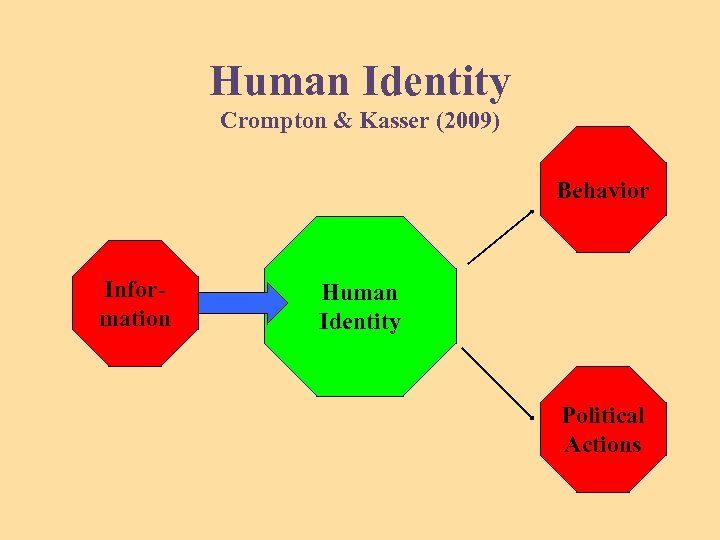 Human Identity Crompton & Kasser (2009) Behavior Information Human Identity Political Actions
 Human Identity Crompton & Kasser (2009)
 Human Identity Crompton & Kasser (2009) Group Identity
 Human Identity Crompton & Kasser (2009) Group Identity Coping Strategies
 Human Identity Crompton & Kasser (2009) Group Identity Coping Strategies Values & Goals
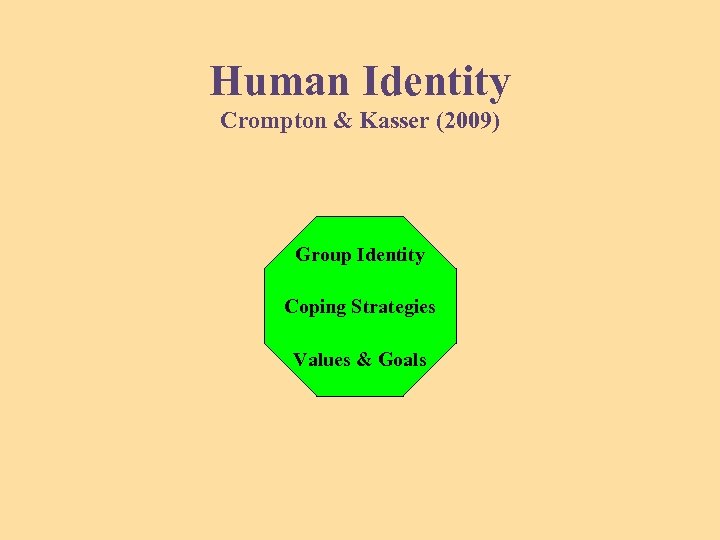
 Values & Goals • Guiding principles in life • Affect people’s attitudes towards particular objects and policies • Orient people to engage in particular behaviors • Many different types of values and goals exist
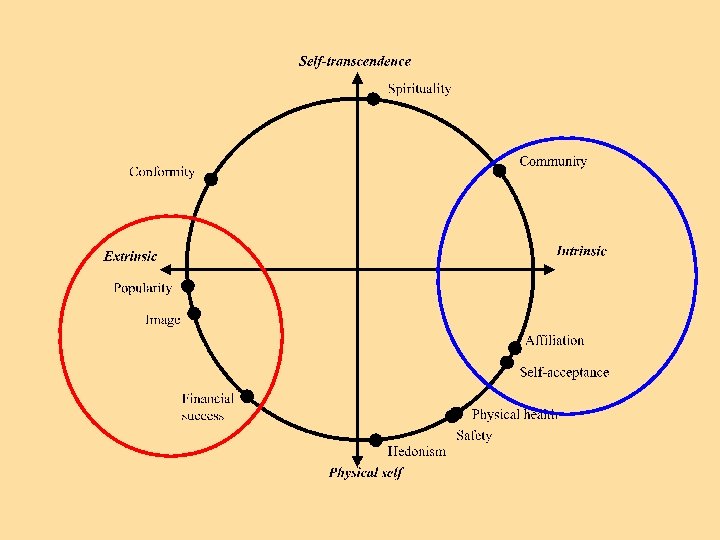
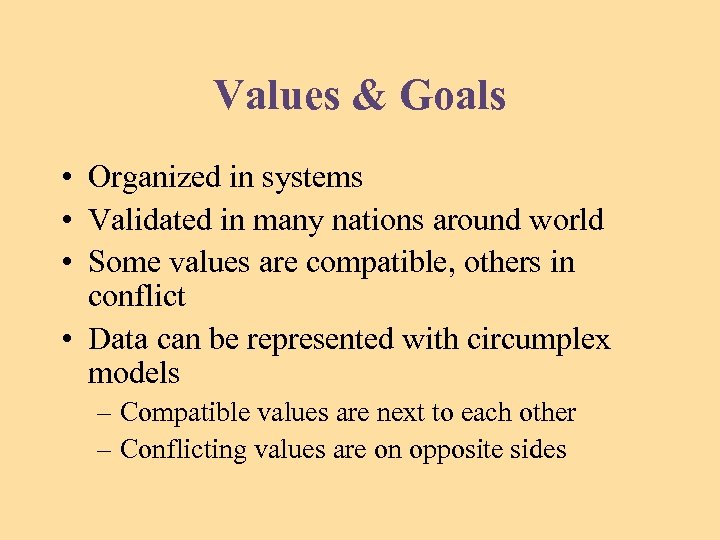 Values & Goals • Organized in systems • Validated in many nations around world • Some values are compatible, others in conflict • Data can be represented with circumplex models – Compatible values are next to each other – Conflicting values are on opposite sides
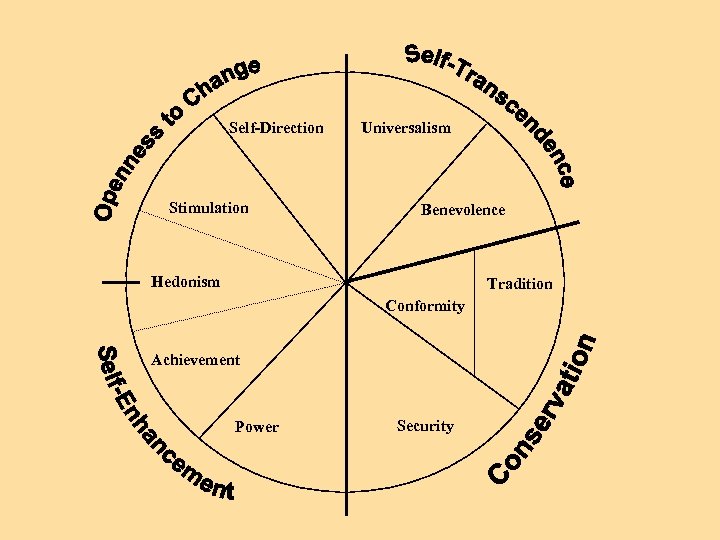 Self-Direction Stimulation Universalism Benevolence Hedonism Tradition Conformity Achievement Power Security
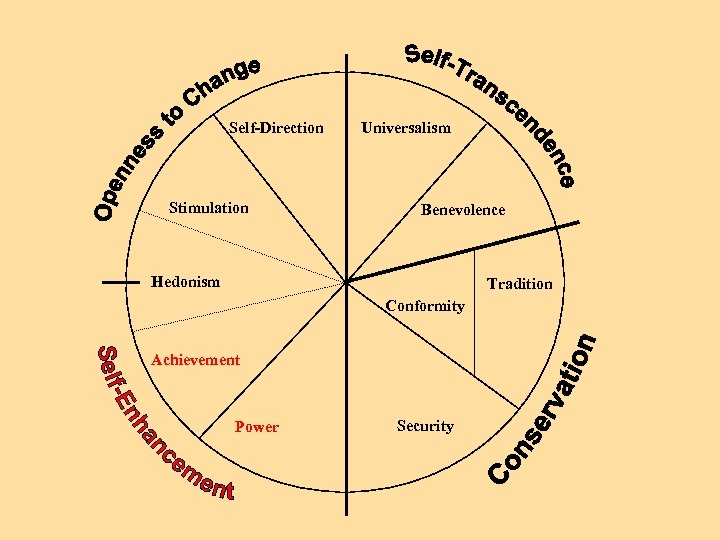 Self-Direction Stimulation Universalism Benevolence Hedonism Tradition Conformity Achievement Power Security
 Values Schwartz (1992) • Self-enhancing values – Social power, wealth, authority, successful, influential
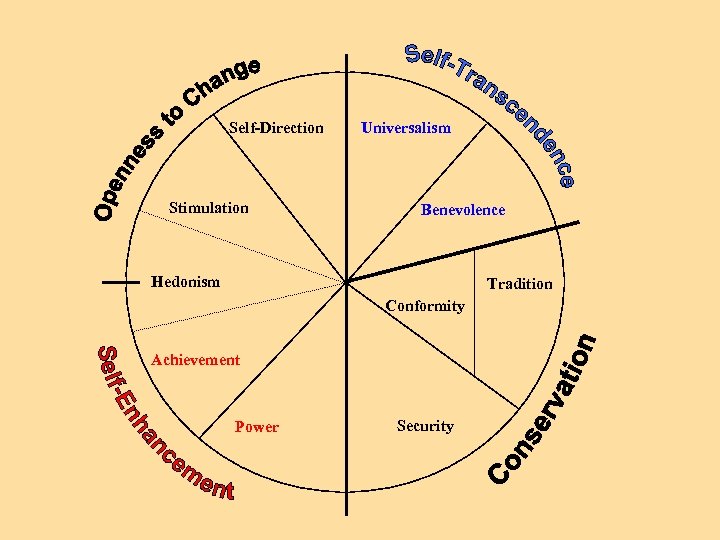 Self-Direction Stimulation Universalism Benevolence Hedonism Tradition Conformity Achievement Power Security
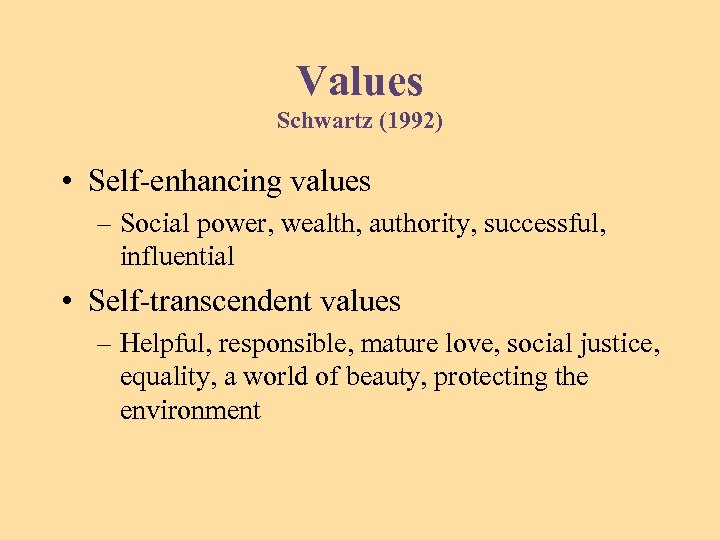 Values Schwartz (1992) • Self-enhancing values – Social power, wealth, authority, successful, influential • Self-transcendent values – Helpful, responsible, mature love, social justice, equality, a world of beauty, protecting the environment
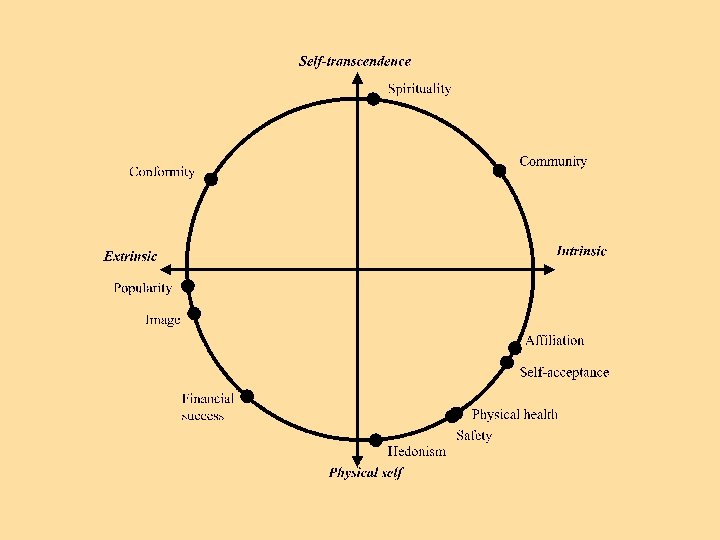
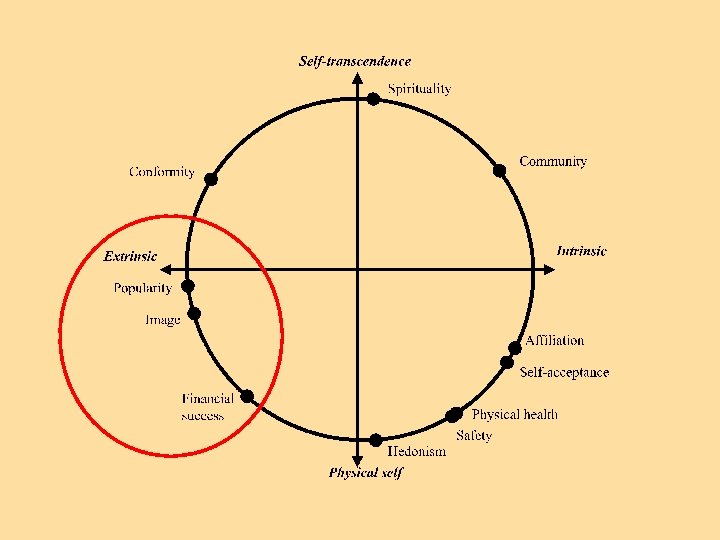
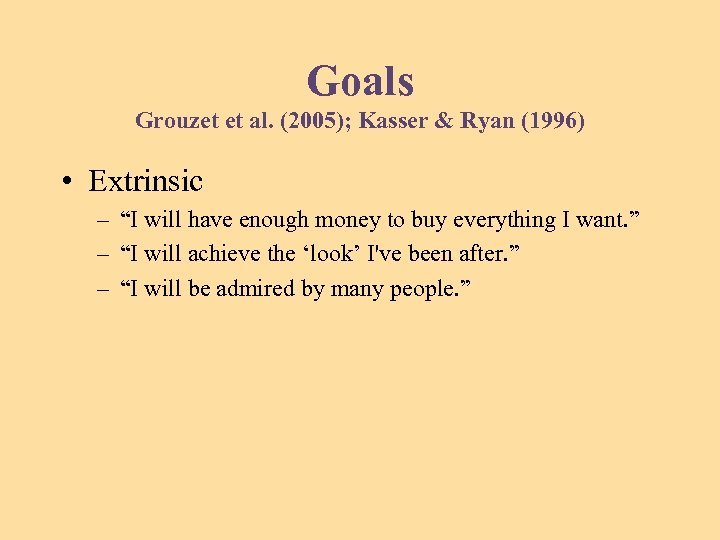 Goals Grouzet et al. (2005); Kasser & Ryan (1996) • Extrinsic – “I will have enough money to buy everything I want. ” – “I will achieve the ‘look’ I've been after. ” – “I will be admired by many people. ”
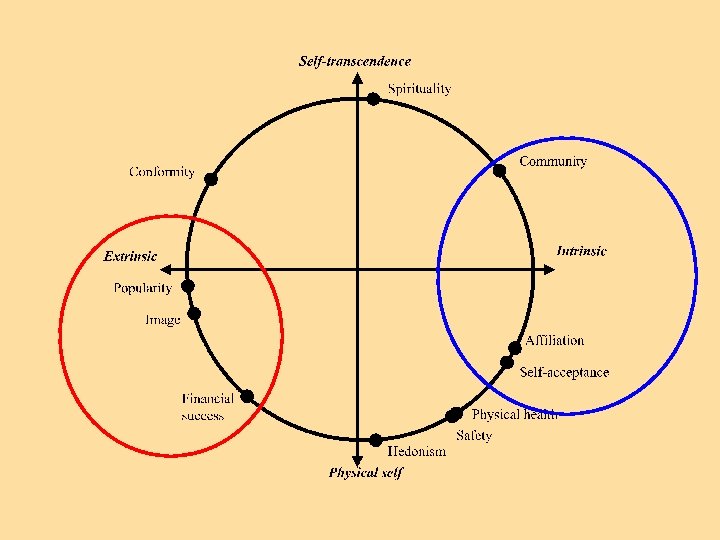
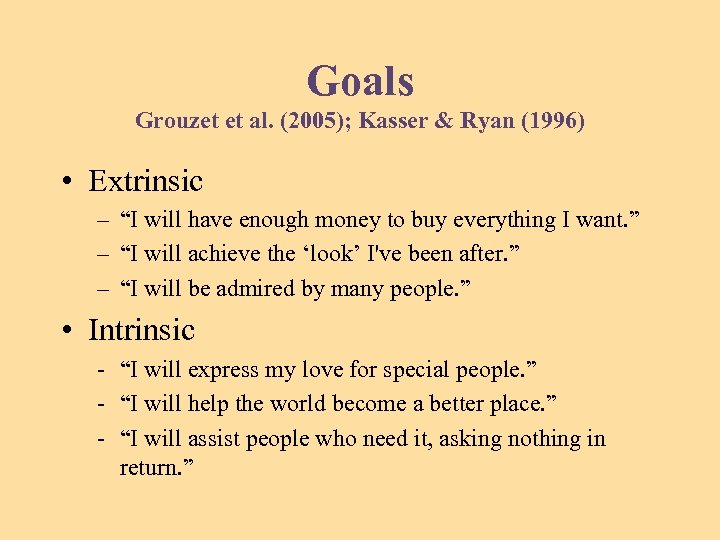 Goals Grouzet et al. (2005); Kasser & Ryan (1996) • Extrinsic – “I will have enough money to buy everything I want. ” – “I will achieve the ‘look’ I've been after. ” – “I will be admired by many people. ” • Intrinsic - “I will express my love for special people. ” - “I will help the world become a better place. ” - “I will assist people who need it, asking nothing in return. ”
 Two Applications • Dispositions – General priority placed on values in system – Stable over time
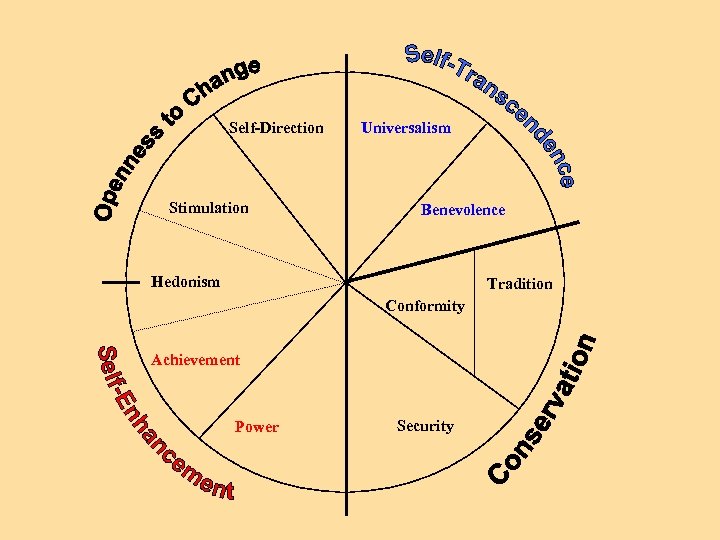 Self-Direction Stimulation Universalism Benevolence Hedonism Tradition Conformity Achievement Power Security
 Two Applications • Dispositions – General priority placed on values in system – Stable over time • Activation – Moment to moment changes in priorities – Varies across situations
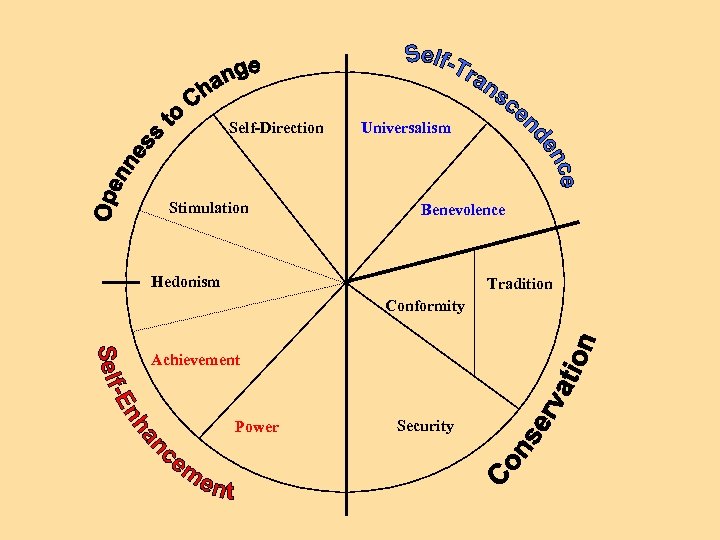 Self-Direction Stimulation Universalism Benevolence Hedonism Tradition Conformity Achievement Power Security
 Relevance to Science Educators • Personal value dispositions are differentially correlated with ecological attitudes and behaviors
 Eco-Attitudes • Attitudes towards the environment – Good (2007); Saunders & Munro (2000) • Concern about effects of environmental damage on other people, animals, and future generations – Schultz et al. (2005)
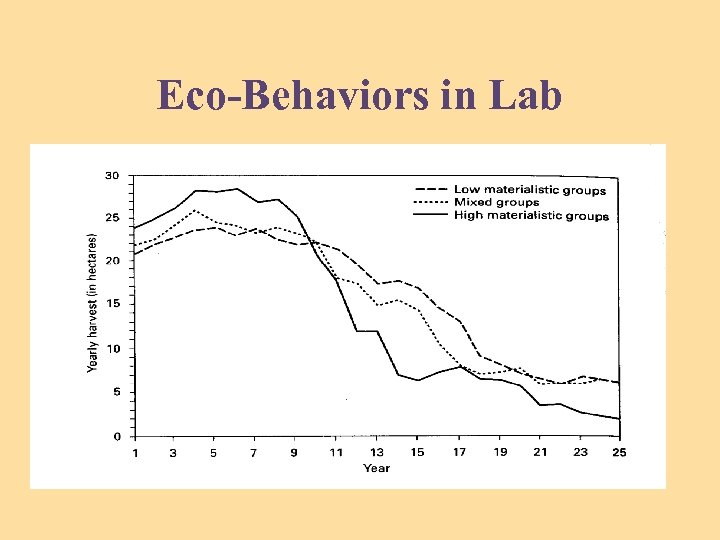
 Eco-Behaviors in Lab Sheldon & Mc. Gregor (2000) • Assigned people to one of three groups • Played forest management game • High extrinsic groups harvested forest at less sustainable rates
 Eco-Behaviors in Lab
 Eco-Behaviors in Life • Frequency of riding bikes, recycling, reuse, etc. – Gatersleben et al (2008); Kasser (2005); Richins & Dawson (1992) • Size of Ecological Footprint – 400 N Americans – transportation, housing, food – Brown & Kasser (2005)
 Eco-Behaviors in Nations Kasser (2011) • 20 wealthy nations • Citizens’ values for achievement, power, status, money vs. loyalty, helpfulness, social justice, a world of beauty • Associated with National CO 2 emissions – even after controlling for GDP/capita
 Relevance to Science Educators • Personal dispositions towards values are differentially correlated with ecological attitudes and behaviors
 Relevance to Science Educators • Personal dispositions towards values are differentially correlated with ecological attitudes and behaviors • Activating one set of values: – Supports and encourages attitudes and behaviors consistent with those values – Suppresses and discourages attitudes and behaviors in conflict with those values
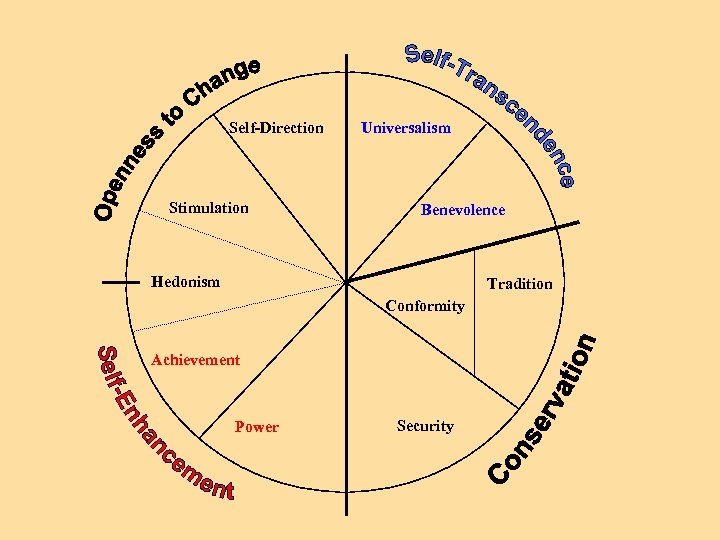 Self-Direction Stimulation Universalism Benevolence Hedonism Tradition Conformity Achievement Power Security
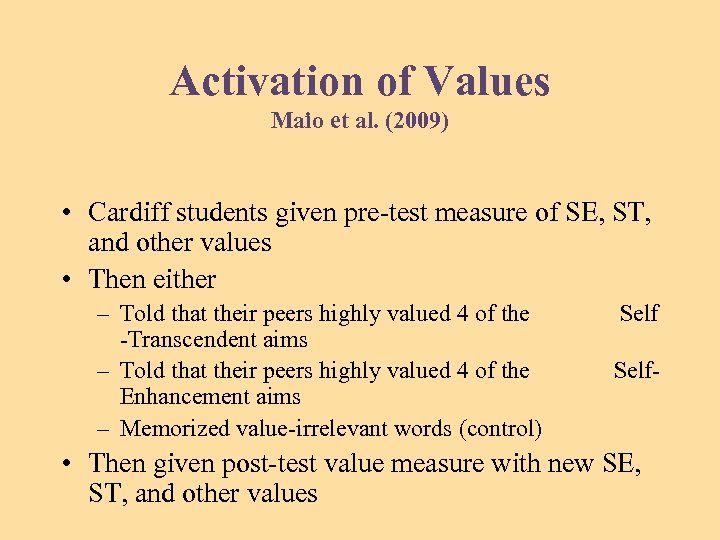 Activation of Values Maio et al. (2009) • Cardiff students given pre-test measure of SE, ST, and other values • Then either – Told that their peers highly valued 4 of the -Transcendent aims – Told that their peers highly valued 4 of the Enhancement aims – Memorized value-irrelevant words (control) Self- • Then given post-test value measure with new SE, ST, and other values
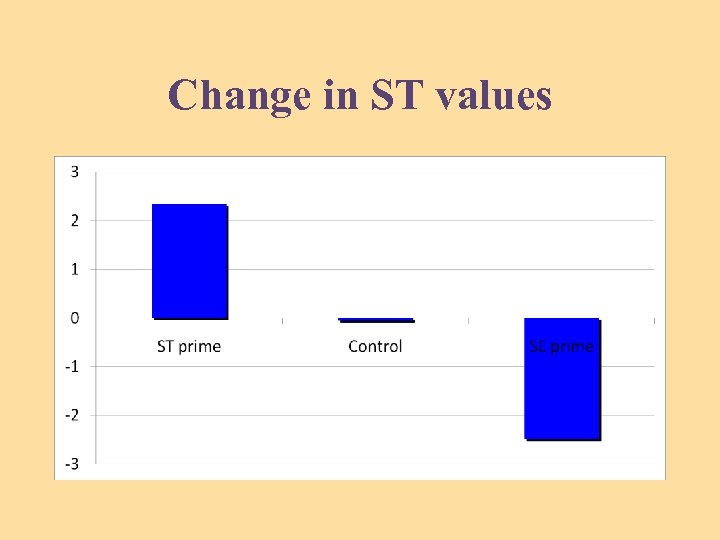 Change in ST values
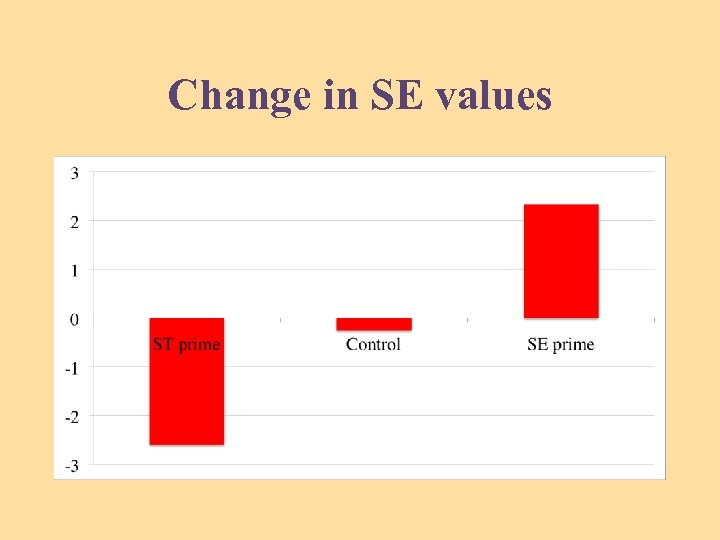 Change in SE values
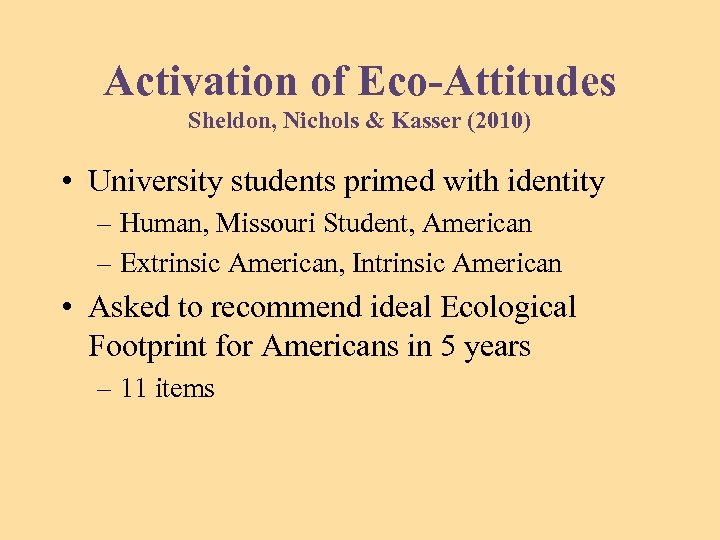 Activation of Eco-Attitudes Sheldon, Nichols & Kasser (2010) • University students primed with identity – Human, Missouri Student, American – Extrinsic American, Intrinsic American • Asked to recommend ideal Ecological Footprint for Americans in 5 years – 11 items
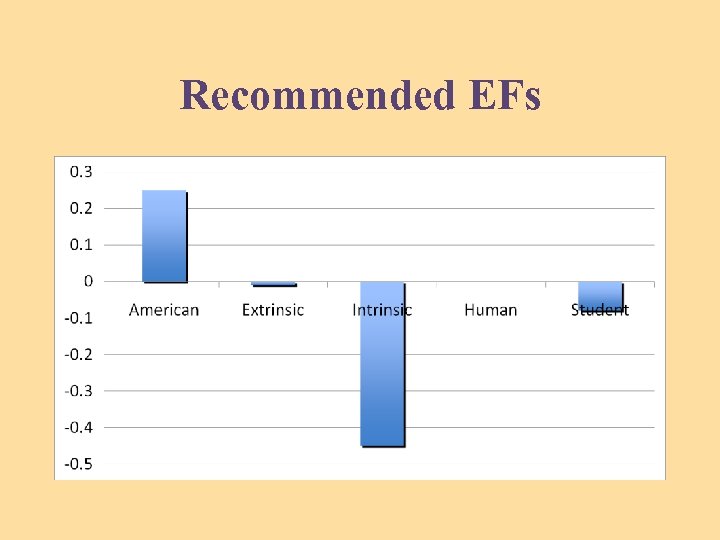 Recommended EFs
 Activation of Eco-Behavior Vansteenkiste et al. (2004) • Subjects - education students • Asked to read a text on recycling framed as: – Helping the community (intrinsic) – Saving money (extrinsic)
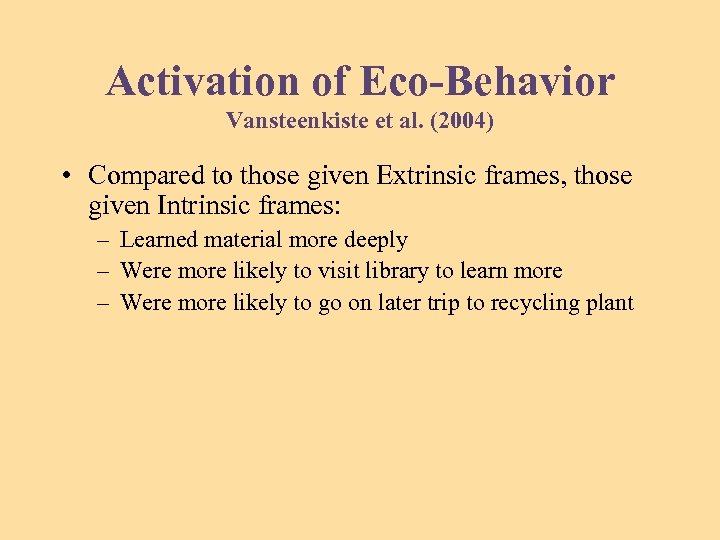 Activation of Eco-Behavior Vansteenkiste et al. (2004) • Compared to those given Extrinsic frames, those given Intrinsic frames: – Learned material more deeply – Were more likely to visit library to learn more – Were more likely to go on later trip to recycling plant
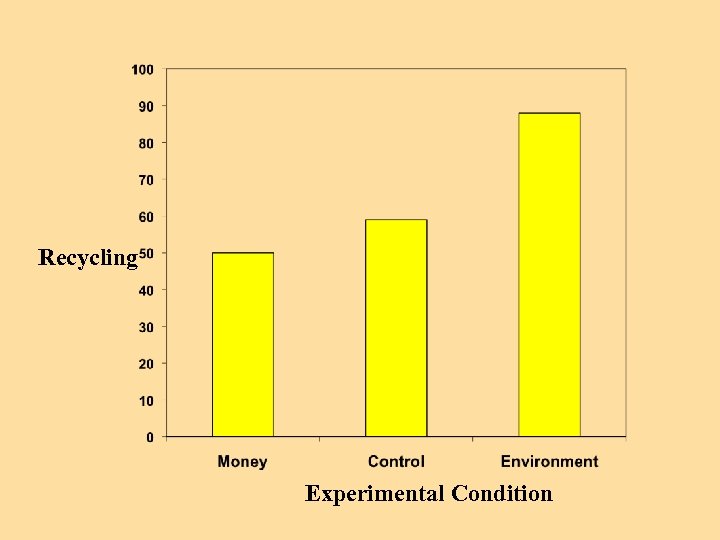
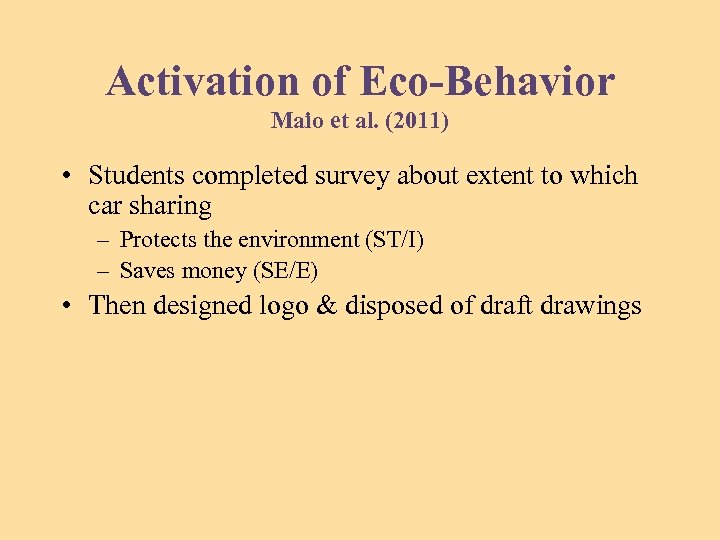 Activation of Eco-Behavior Maio et al. (2011) • Students completed survey about extent to which car sharing – Protects the environment (ST/I) – Saves money (SE/E) • Then designed logo & disposed of draft drawings

 Recycling Experimental Condition
 Implications for Science Educators • Avoid iatrogenic effects in environmental messages
 Possible iatrogenic effects • SE/E values are encouraged when communicators: – Make motivational appeals based primarily on selfinterested reasons – Focus primarily on the “business case for sustainability, ” “green consumption, ” and “fees for environmental services”
 Possible iatrogenic effects • Fear-based messaging • Insecurity shifts people towards SE/E values – Economic insecurity (Inglehart, 1977; Sheldon & Kasser, 2007) – Relational insecurity (Kasser et al. , 1995; Sheldon & Kasser, 2007) – Death (Kasser & Sheldon, 2000; Sheldon & Kasser, 2007)
 Implications for Science Educators • Avoid iatrogenic effects in environmental messages • Form coalitions with groups interested in related outcomes
 Well-being Correlates
 Measures of Well-being Kasser & Ryan, 1993, 1996, 2001; Sheldon & Kasser, 1995, 1998, 2001 • Distress: – – – Anxiety Depression Physical Symptoms Unpleasant emotions Drug & Alcohol Use • Happiness – – Self-actualization Vitality Life Satisfaction Pleasant Emotions
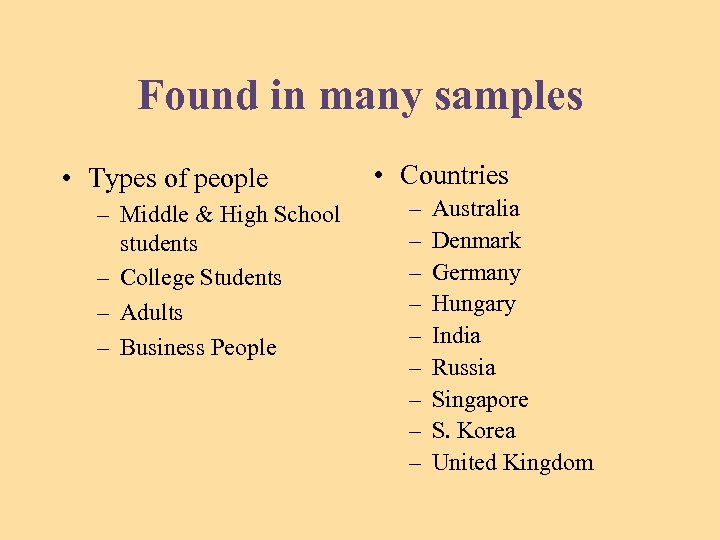 Found in many samples • Types of people – Middle & High School students – College Students – Adults – Business People • Countries – – – – – Australia Denmark Germany Hungary India Russia Singapore S. Korea United Kingdom
 Social Correlates
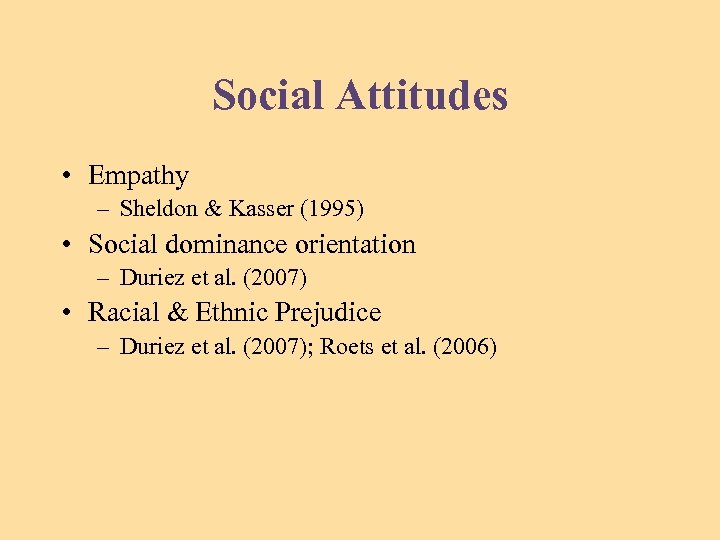 Social Attitudes • Empathy – Sheldon & Kasser (1995) • Social dominance orientation – Duriez et al. (2007) • Racial & Ethnic Prejudice – Duriez et al. (2007); Roets et al. (2006)
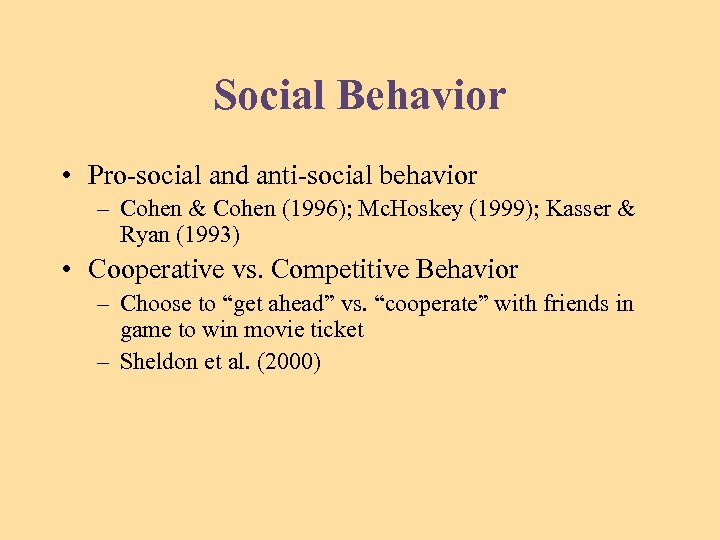 Social Behavior • Pro-social and anti-social behavior – Cohen & Cohen (1996); Mc. Hoskey (1999); Kasser & Ryan (1993) • Cooperative vs. Competitive Behavior – Choose to “get ahead” vs. “cooperate” with friends in game to win movie ticket – Sheldon et al. (2000)
 Implications for Science Educators • Avoid iatrogenic effects in environmental messages • Form coalitions with groups interested in related outcomes • Work to diminish causes of Selfenhancing/Extrinsic values and to encourage Self-transcendent/Intrinsic values
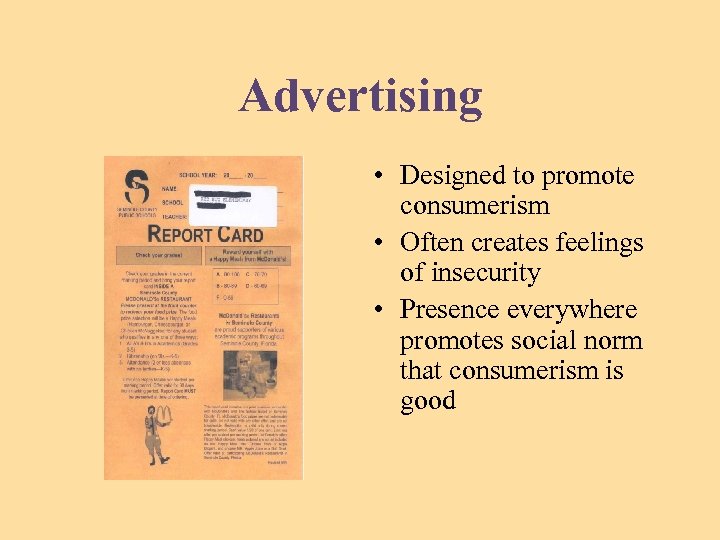 Advertising • Designed to promote consumerism • Often creates feelings of insecurity • Presence everywhere promotes social norm that consumerism is good
 Advertising Directions • • Remove ads from public places Ban advertising to children Tax advertising as a form of pollution Use revenue to promote intrinsic values
 National Indicators • Currently Gross Domestic Product is dominant • Promotes less sustainable policies and behaviors • Alternative indicators include metrics with intrinsic values in their computation – Bhutan’s Gross National Happiness – Happy Planet Index – Genuine Progress Indicator
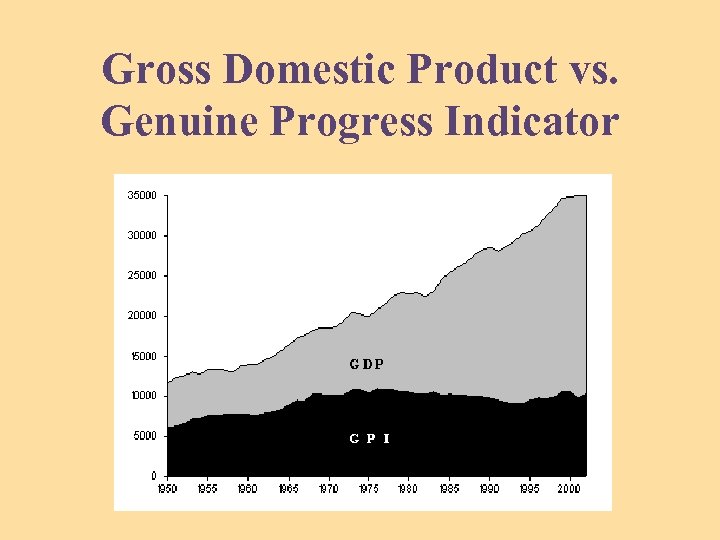 Gross Domestic Product vs. Genuine Progress Indicator
 National Indicators Directions • New social norms will be encouraged • New policies will be developed to maximize alternative indicators
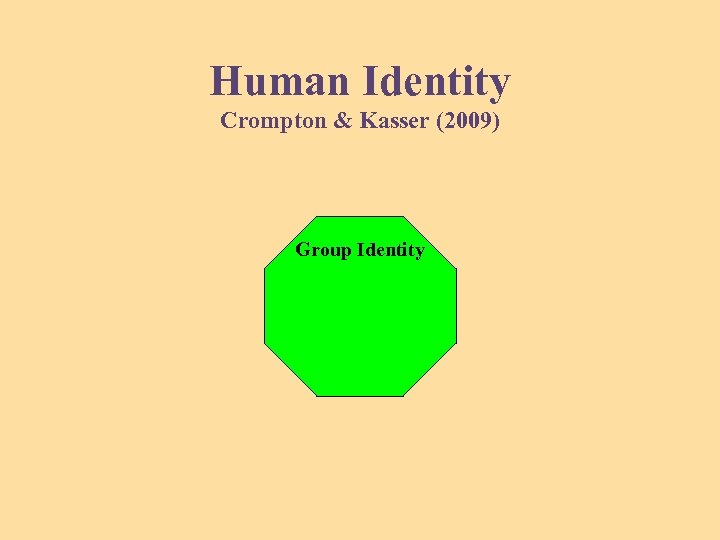
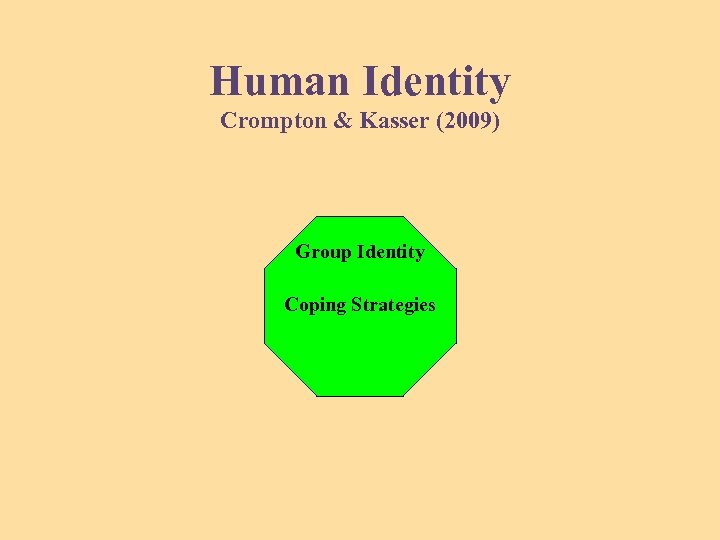
 Summary • Attention to aspects of Human Identity might improve ecological sustainability – Values & Goals – Social Identity – Coping Strategies
 Summary • Important implications for Science Educators • Beware Iatrogenic effects • Form Coalitions • Discourage damaging identities and encourage helpful identities
 Thanks! Up front are 12 free copies of Meeting Environmental Challenges: The Role of Human Identity Or download it for free at: www. wwf. org. uk/what_we_do/campaigning/ strategies_for_change/ E-mail me at: tkasser@knox. edu