


 Скачать презентацию Human capital Network Capital Social capital Client Structural
9b29f8b2230e9dc132e1af5e71215a8e.ppt
- Количество слайдов: 29
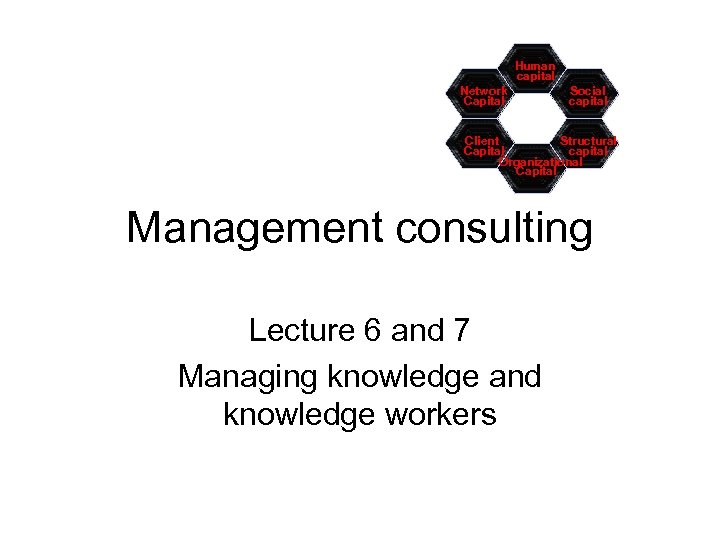 Human capital Network Capital Social capital Client Structural Capital capital Organizational Capital Management consulting Lecture 6 and 7 Managing knowledge and knowledge workers
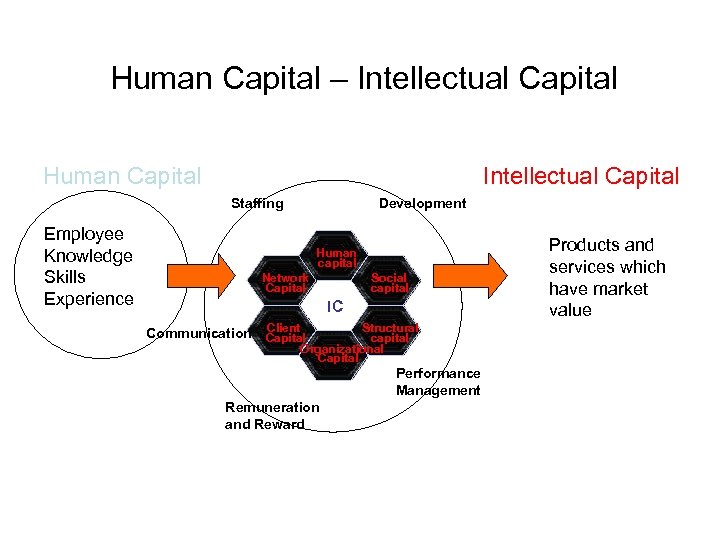 Human Capital – Intellectual Capital Human Capital Intellectual Capital Staffing Employee Knowledge Skills Experience Development Human capital Network Capital Social capital IC Client Communication Capital Structural capital Organizational Capital Performance Management Remuneration and Reward Products and services which have market value
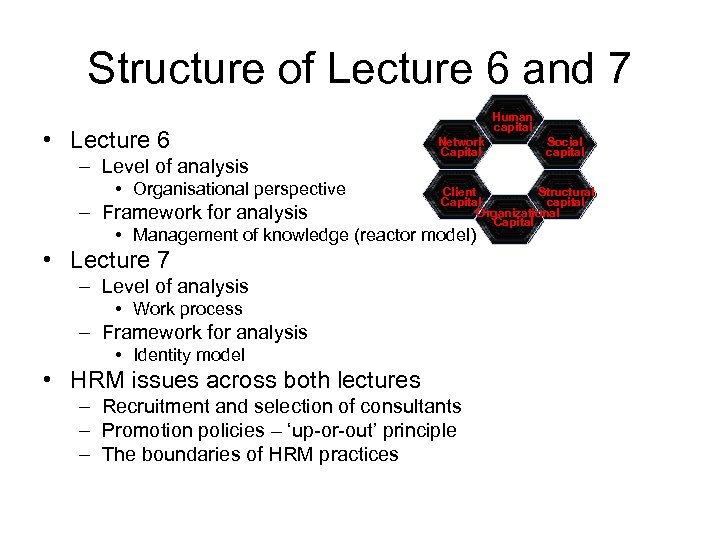 Structure of Lecture 6 and 7 • Lecture 6 – Level of analysis • Organisational perspective – Framework for analysis Human capital Network Capital Social capital Client Structural Capital capital Organizational Capital • Management of knowledge (reactor model) • Lecture 7 – Level of analysis • Work process – Framework for analysis • Identity model • HRM issues across both lectures – Recruitment and selection of consultants – Promotion policies – ‘up-or-out’ principle – The boundaries of HRM practices
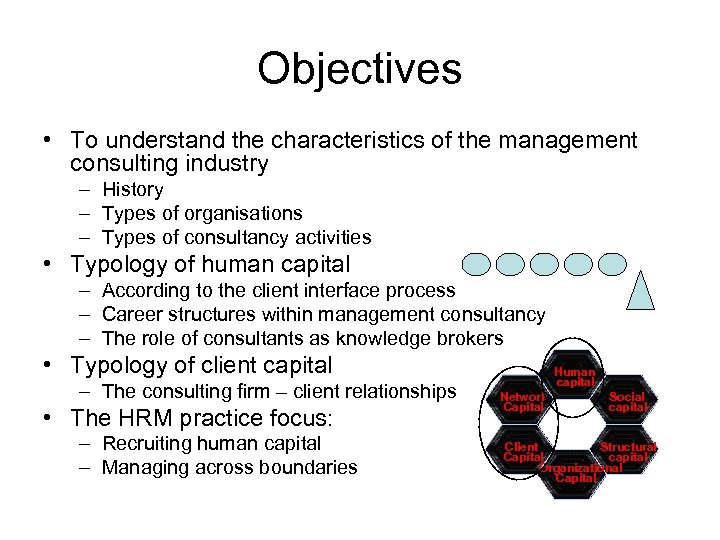 Objectives • To understand the characteristics of the management consulting industry – History – Types of organisations – Types of consultancy activities • Typology of human capital – According to the client interface process – Career structures within management consultancy – The role of consultants as knowledge brokers • Typology of client capital – The consulting firm – client relationships • The HRM practice focus: – Recruiting human capital – Managing across boundaries Human capital Network Capital Social capital Client Structural Capital capital Organizational Capital
 History • Management as a unique field of study • Arthur D. Little (1890 s) • Mc. Kinsey & Company – First management and strategy consultancy – Founded by James Mc. Kinsey in 1926 (Chicago) – Hiring of bright young MBAs • Rise of management consultancy after World War II – Development of tools for strategic management – Boston Consulting Group (1963), Mc. Kinsey&Co, Harvard Business School – Bain&Co - focus on shareholder wealth • Consulting within accountancy and technology firms – Pw. C and IBM • Niche consultancy firms – Corporate social responsibiity
 Types of firms in the industry • • • Accountancy firms offering consultancy Large non-accounting consultancies Small specialist boutiques Gurus Independents
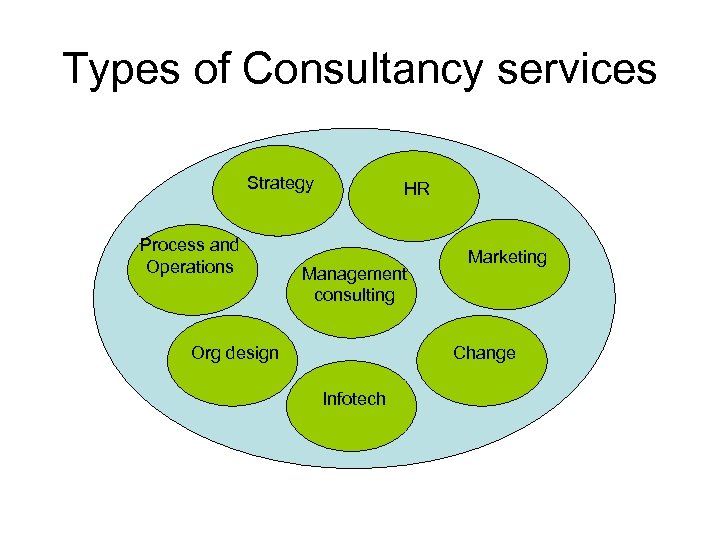 Types of Consultancy services Strategy Process and Operations HR Management consulting Org design Marketing Change Infotech
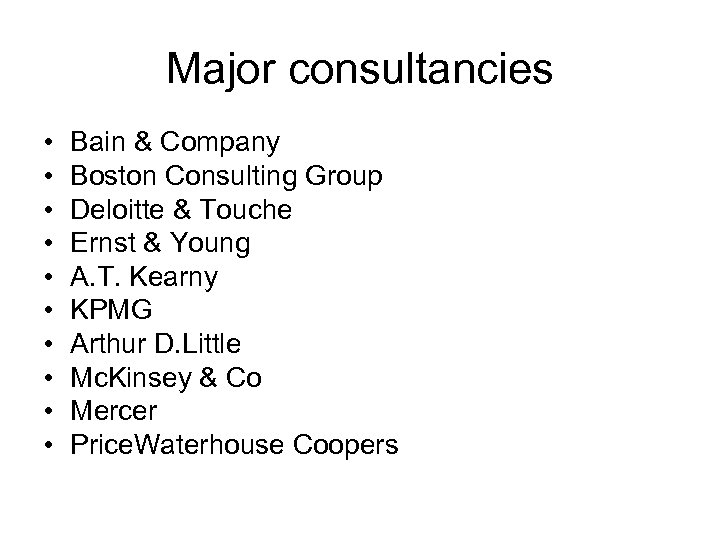 Major consultancies • • • Bain & Company Boston Consulting Group Deloitte & Touche Ernst & Young A. T. Kearny KPMG Arthur D. Little Mc. Kinsey & Co Mercer Price. Waterhouse Coopers
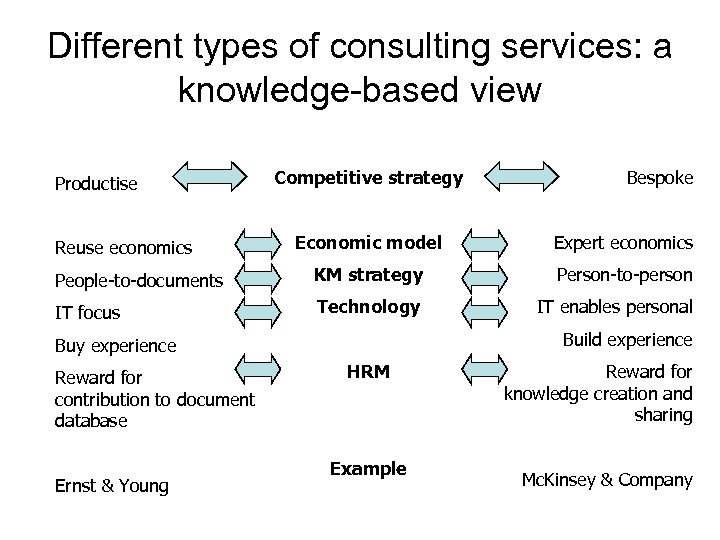 Different types of consulting services: a knowledge-based view Productise Competitive strategy Bespoke Economic model Expert economics People-to-documents KM strategy Person-to-person IT focus Technology IT enables personal Reuse economics Build experience Buy experience Reward for contribution to document database Ernst & Young HRM Example Reward for knowledge creation and sharing Mc. Kinsey & Company
 Typology of Human Capital • The consultancy process • Career structures • Consultants as brokers of human capital – Boundary spanning
 The consultancy process: Your experience • Paired assignment • Identify a consultancy experience that you have been part of. • Characterise the individual stages of the consultancy process • Interview your partner and identify: – Which skills were developed at each stage of the consultancy process – Which other knowledge resources did you rely upon during this process • Summarise your findings and be prepared to feed back to the group
 The career structure • • • Analysts Consultants Senior Consultants Business development managers Directors/Partners
 The Mc. Kinsey Facilitator case • Specific type of human capital • Across boundaries • How would you design the recruitment process to capture this human capital?
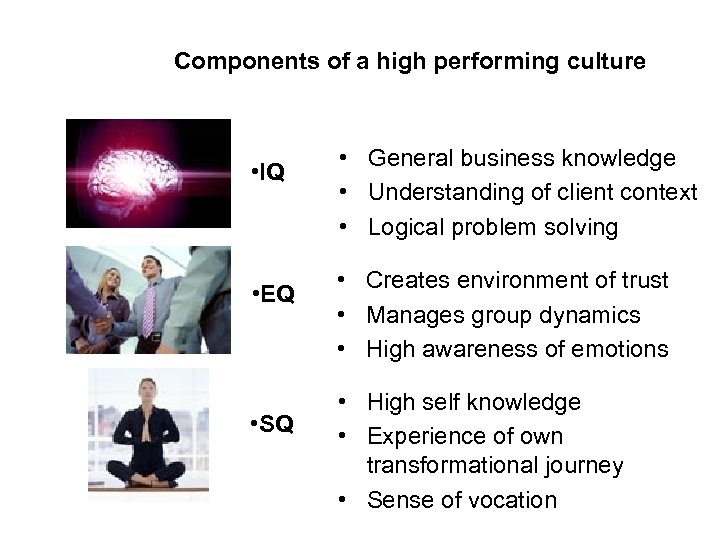 Components of a high performing culture • IQ • EQ • SQ • General business knowledge • Understanding of client context • Logical problem solving • Creates environment of trust • Manages group dynamics • High awareness of emotions • High self knowledge • Experience of own transformational journey • Sense of vocation
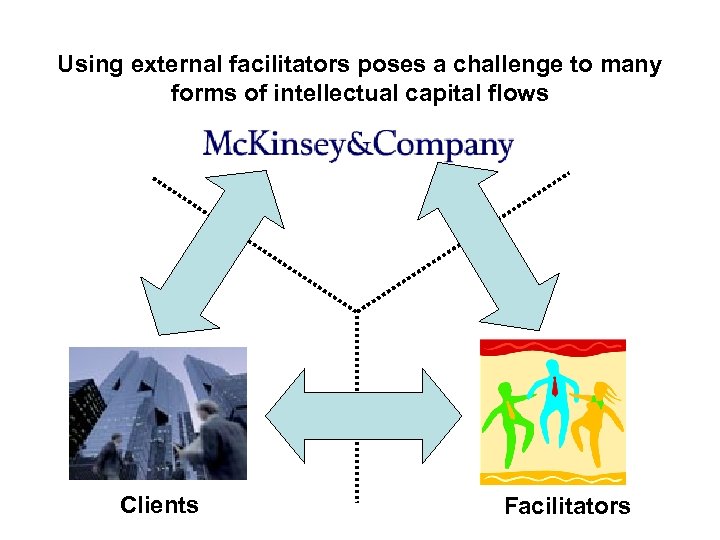 Using external facilitators poses a challenge to many forms of intellectual capital flows Clients Facilitators
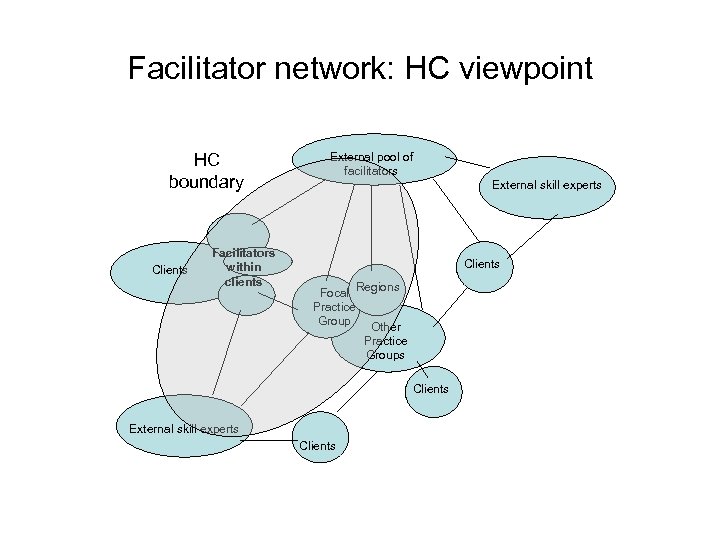 Facilitator network: HC viewpoint HC boundary Clients Facilitators within clients External pool of facilitators External skill experts Clients Focal Regions Practice Group Other Practice Groups Clients External skill experts Clients
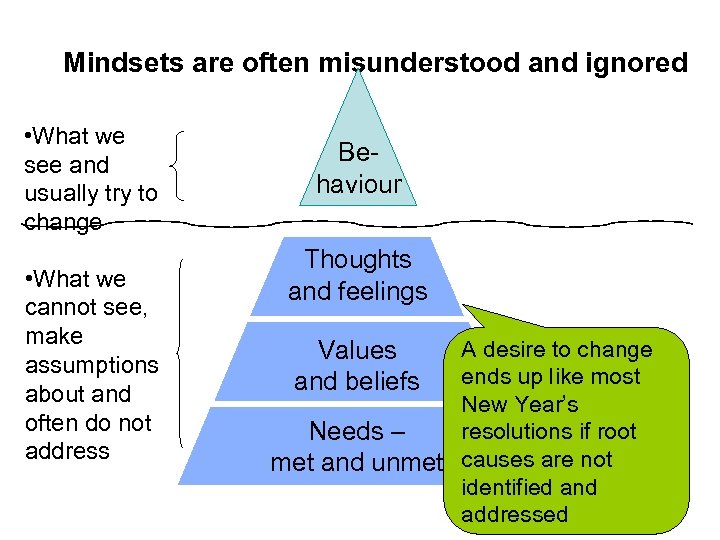 Mindsets are often misunderstood and ignored • What we see and usually try to change • What we cannot see, make assumptions about and often do not address Behaviour Thoughts and feelings Values and beliefs A desire to change ends up like most New Year’s resolutions if root Needs – met and unmet causes are not identified and addressed
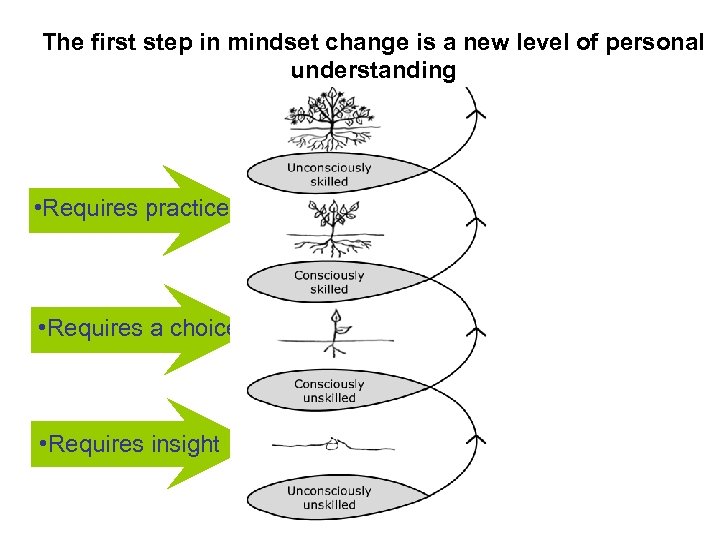 The first step in mindset change is a new level of personal understanding • Requires practice • Requires a choice • Requires insight
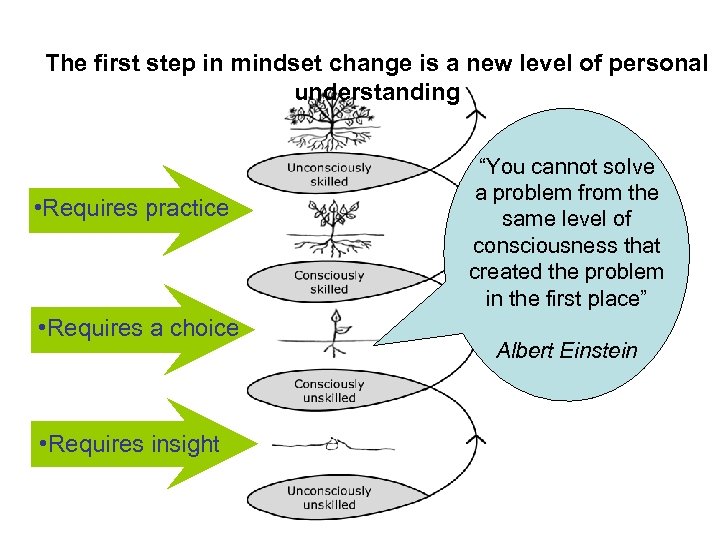 The first step in mindset change is a new level of personal understanding • Requires practice • Requires a choice • Requires insight “You cannot solve a problem from the same level of consciousness that created the problem in the first place” Albert Einstein
 The Mc. Kinsey Facilitator case • How would you design the recruitment process to capture this human capital?
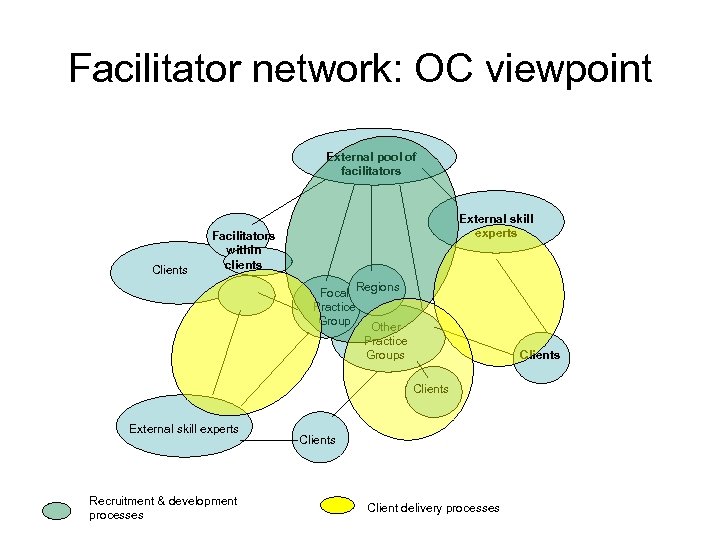 Facilitator network: OC viewpoint External pool of facilitators Clients External skill experts Facilitators within clients Focal Regions Practice Group Other Practice Groups Clients External skill experts Recruitment & development processes Client delivery processes
 Positioning in the lecture • Nature of the industry • Typology of human capital – Consulting process – Career structure – Knowledge brokers • Now we turn to the human-client capital interface – We take a closer look at how clients perceive consultants?
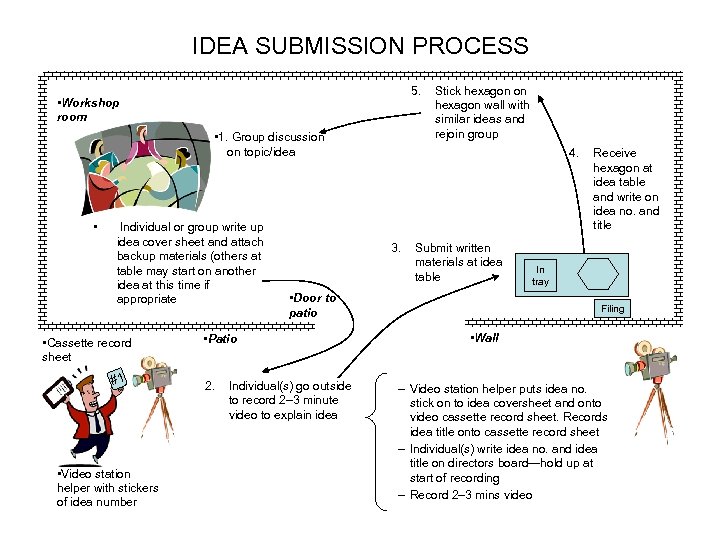 IDEA SUBMISSION PROCESS 5. • Workshop room • 1. Group discussion on topic/idea • Individual or group write up idea cover sheet and attach backup materials (others at table may start on another idea at this time if appropriate • Cassette record sheet #1 • Video station helper with stickers of idea number 4. 3. Submit written materials at idea table • Door to patio • Patio 2. Stick hexagon on hexagon wall with similar ideas and rejoin group Individual(s) go outside to record 2– 3 minute video to explain idea Receive hexagon at idea table and write on idea no. and title In tray Filing • Wall – Video station helper puts idea no. stick on to idea coversheet and onto video cassette record sheet. Records idea title onto cassette record sheet – Individual(s) write idea no. and idea title on directors board—hold up at start of recording – Record 2– 3 mins video
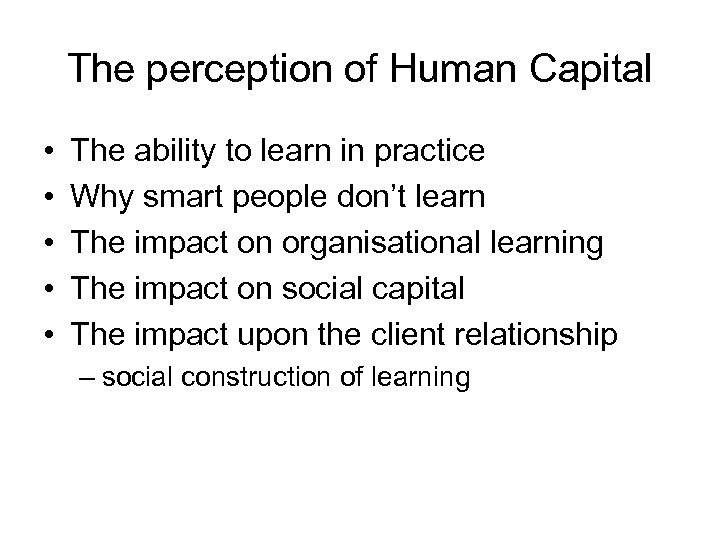 The perception of Human Capital • • • The ability to learn in practice Why smart people don’t learn The impact on organisational learning The impact on social capital The impact upon the client relationship – social construction of learning
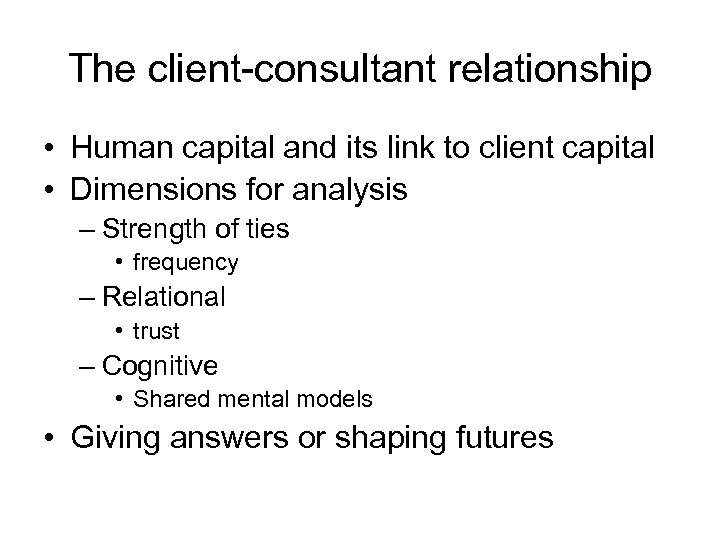 The client-consultant relationship • Human capital and its link to client capital • Dimensions for analysis – Strength of ties • frequency – Relational • trust – Cognitive • Shared mental models • Giving answers or shaping futures
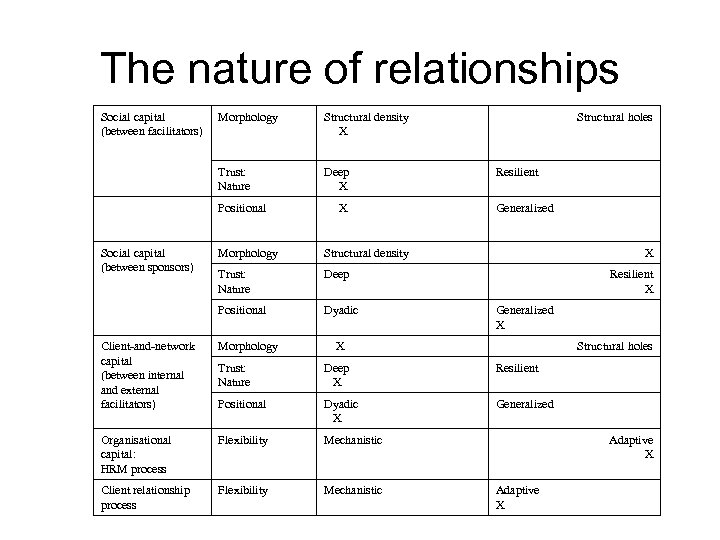 The nature of relationships Social capital (between facilitators) Morphology Structural density X Trust: Nature Deep X Positional Social capital (between sponsors) X Morphology Dyadic Generalized Deep Positional Resilient Structural density Trust: Nature Structural holes Client-and-network capital (between internal and external facilitators) Morphology X Resilient X Generalized X X Structural holes Trust: Nature Deep X Resilient Positional Dyadic X Generalized Organisational capital: HRM process Flexibility Mechanistic Client relationship process Flexibility Mechanistic Adaptive X
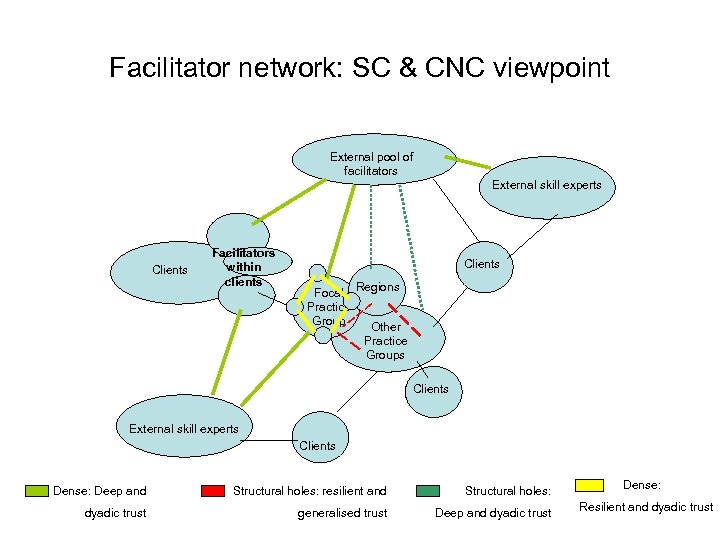 Facilitator network: SC & CNC viewpoint External pool of facilitators External skill experts Clients Facilitators within clients Clients Focal Regions Practice Group Other Practice Groups Clients External skill experts Clients Dense: Deep and Structural holes: resilient and Structural holes: dyadic trust generalised trust Deep and dyadic trust Dense: Resilient and dyadic trust
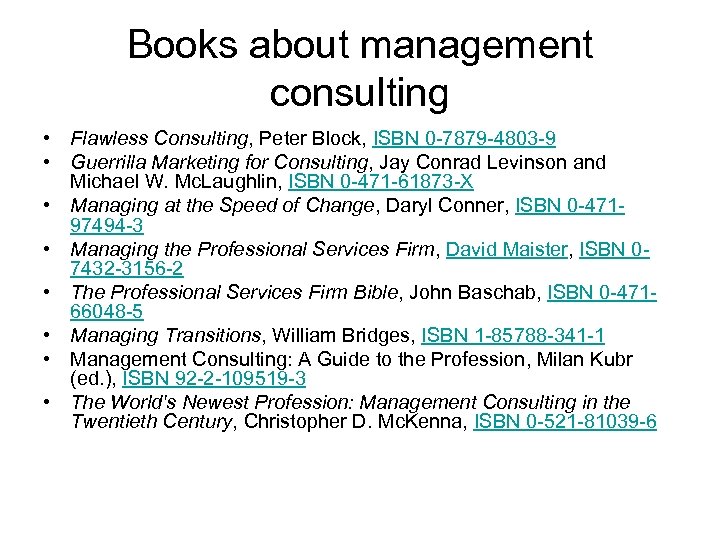 Books about management consulting • Flawless Consulting, Peter Block, ISBN 0 -7879 -4803 -9 • Guerrilla Marketing for Consulting, Jay Conrad Levinson and Michael W. Mc. Laughlin, ISBN 0 -471 -61873 -X • Managing at the Speed of Change, Daryl Conner, ISBN 0 -47197494 -3 • Managing the Professional Services Firm, David Maister, ISBN 07432 -3156 -2 • The Professional Services Firm Bible, John Baschab, ISBN 0 -47166048 -5 • Managing Transitions, William Bridges, ISBN 1 -85788 -341 -1 • Management Consulting: A Guide to the Profession, Milan Kubr (ed. ), ISBN 92 -2 -109519 -3 • The World's Newest Profession: Management Consulting in the Twentieth Century, Christopher D. Mc. Kenna, ISBN 0 -521 -81039 -6