 Скачать презентацию http www reksoft com Владимир Сергеевич Бегларян Java
Java Enterprise Edition.pptx
- Количество слайдов: 32



http: //www. reksoft. com Владимир Сергеевич Бегларян Java Enterprise Edition http: //www. oracle. com/technetwork/javaee
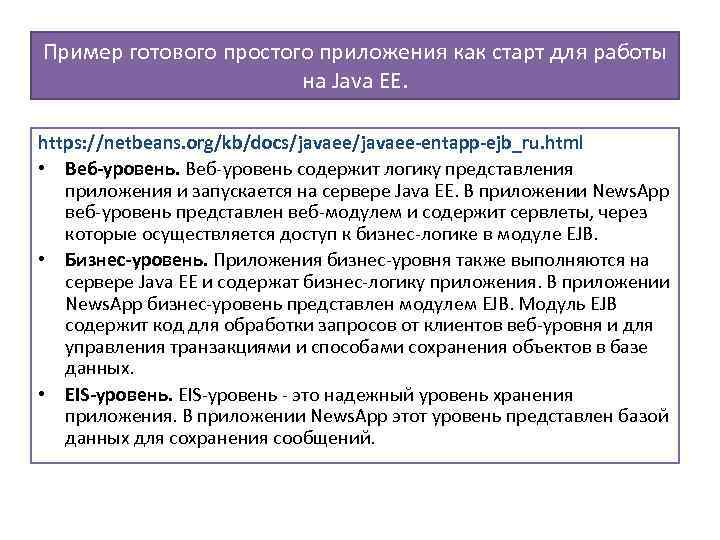
Пример готового простого приложения как старт для работы на Java EE. https: //netbeans. org/kb/docs/javaee-entapp-ejb_ru. html • Веб-уровень содержит логику представления приложения и запускается на сервере Java EE. В приложении News. App веб-уровень представлен веб-модулем и содержит сервлеты, через которые осуществляется доступ к бизнес-логике в модуле EJB. • Бизнес-уровень. Приложения бизнес-уровня также выполняются на сервере Java EE и содержат бизнес-логику приложения. В приложении News. App бизнес-уровень представлен модулем EJB. Модуль EJB содержит код для обработки запросов от клиентов веб-уровня и для управления транзакциями и способами сохранения объектов в базе данных. • EIS-уровень - это надежный уровень хранения приложения. В приложении News. App этот уровень представлен базой данных для сохранения сообщений.
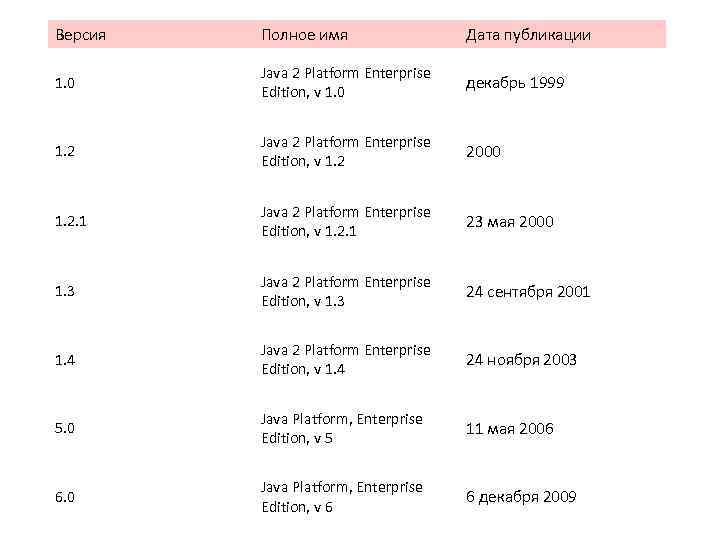
Версия Полное имя Дата публикации 1. 0 Java 2 Platform Enterprise Edition, v 1. 0 декабрь 1999 1. 2 Java 2 Platform Enterprise Edition, v 1. 2 2000 1. 2. 1 Java 2 Platform Enterprise Edition, v 1. 2. 1 23 мая 2000 1. 3 Java 2 Platform Enterprise Edition, v 1. 3 24 сентября 2001 1. 4 Java 2 Platform Enterprise Edition, v 1. 4 24 ноября 2003 5. 0 Java Platform, Enterprise Edition, v 5 11 мая 2006 6. 0 Java Platform, Enterprise Edition, v 6 6 декабря 2009
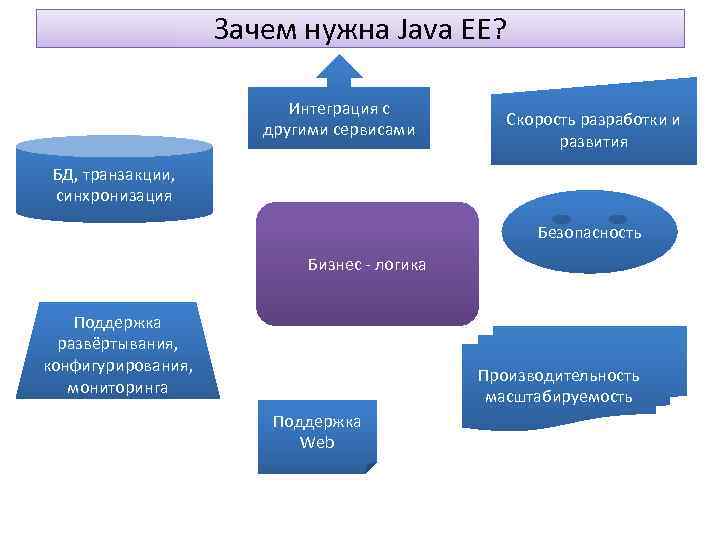
Зачем нужна Java EE? Интеграция с другими сервисами Скорость разработки и развития БД, транзакции, синхронизация Безопасность Бизнес - логика Поддержка развёртывания, конфигурирования, мониторинга Производительность масштабируемость Поддержка Web
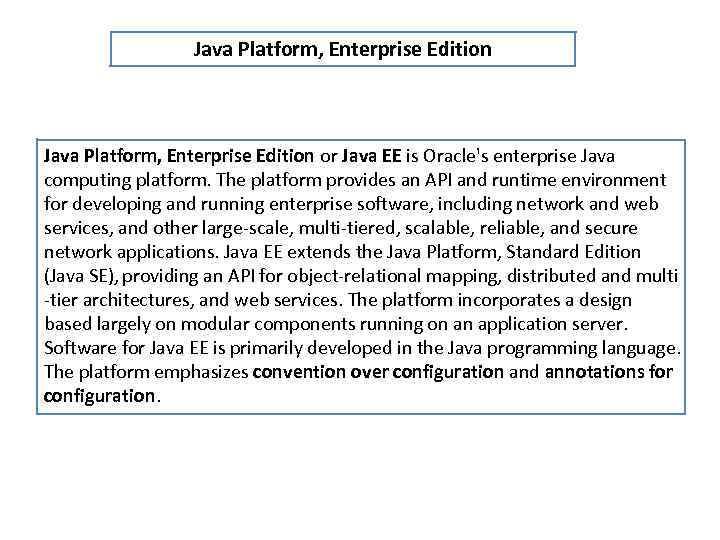
Java Platform, Enterprise Edition or Java EE is Oracle's enterprise Java computing platform. The platform provides an API and runtime environment for developing and running enterprise software, including network and web services, and other large-scale, multi-tiered, scalable, reliable, and secure network applications. Java EE extends the Java Platform, Standard Edition (Java SE), providing an API for object-relational mapping, distributed and multi -tier architectures, and web services. The platform incorporates a design based largely on modular components running on an application server. Software for Java EE is primarily developed in the Java programming language. The platform emphasizes convention over configuration and annotations for configuration.
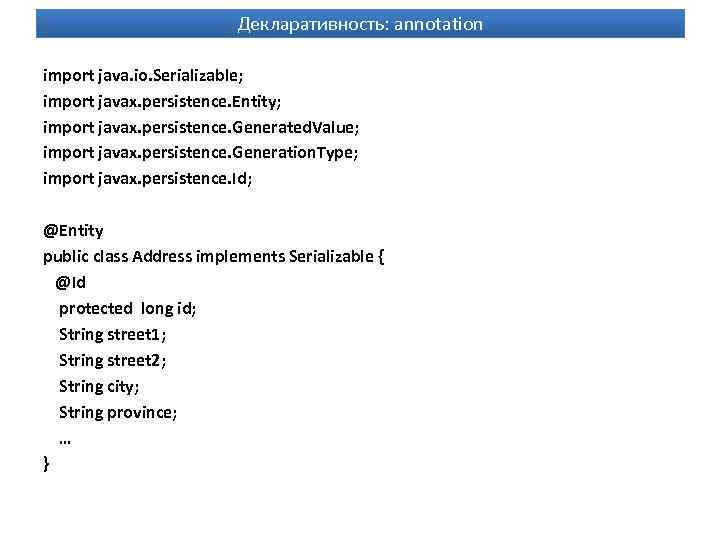
Декларативность: annotation import java. io. Serializable; import javax. persistence. Entity; import javax. persistence. Generated. Value; import javax. persistence. Generation. Type; import javax. persistence. Id; @Entity public class Address implements Serializable { @Id protected long id; String street 1; String street 2; String city; String province; … }
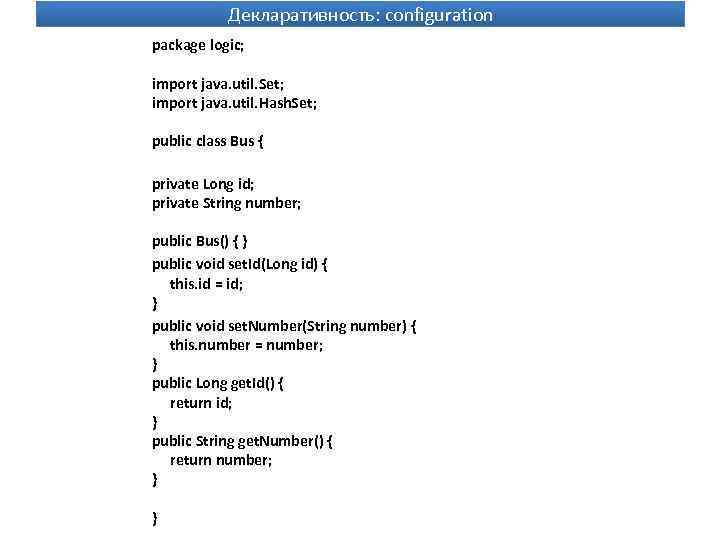
Декларативность: configuration package logic; import java. util. Set; import java. util. Hash. Set; public class Bus { private Long id; private String number; public Bus() { } public void set. Id(Long id) { this. id = id; } public void set. Number(String number) { this. number = number; } public Long get. Id() { return id; } public String get. Number() { return number; } }
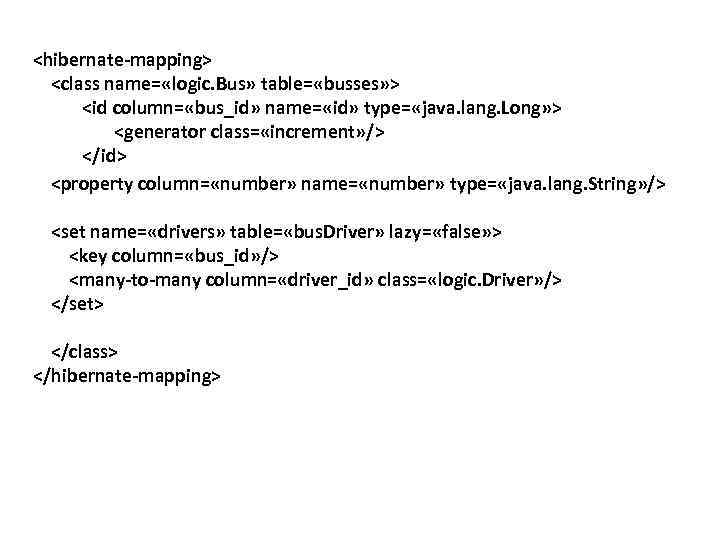
<hibernate-mapping> <class name= «logic. Bus» table= «busses» > <id column= «bus_id» name= «id» type= «java. lang. Long» > <generator class= «increment» /> </id> <property column= «number» name= «number» type= «java. lang. String» /> <set name= «drivers» table= «bus. Driver» lazy= «false» > <key column= «bus_id» /> <many-to-many column= «driver_id» class= «logic. Driver» /> </set> </class> </hibernate-mapping>
![Декларативность: dependency injection http: //www. ashep. org/2013/chto-takoe-dependency-injection/ public interface IOnline. Brokerage. Service { String[]](https://present5.com/presentation/3410508_184098055/image-9.jpg "Декларативность: dependency injection http: //www. ashep. org/2013/chto-takoe-dependency-injection/ public interface IOnline. Brokerage. Service { String[]")
Декларативность: dependency injection http: //www. ashep. org/2013/chto-takoe-dependency-injection/ public interface IOnline. Brokerage. Service { String[] get. Stock. Symbols(); double get. Asking. Price(String stock. Symbol); double get. Offer. Price(String stock. Symbol); void put. Buy. Order(String stock. Symbol, int shares, double bid. Price); void put. Sell. Order(String stock. Symbol, int shares, double offer. Price); } public interface IStock. Analysis. Service { double get. Estimated. Value(String stock. Symbol); } public interface IAutomated. Stock. Trader { void execute. Trades(); }
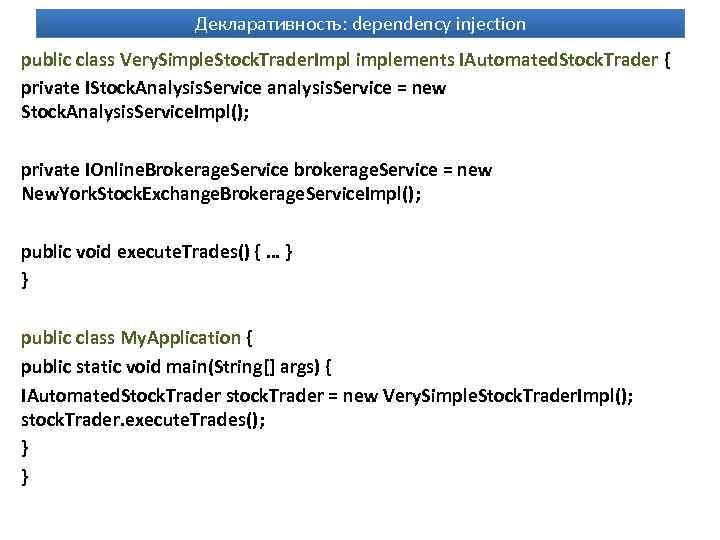
Декларативность: dependency injection public class Very. Simple. Stock. Trader. Impl implements IAutomated. Stock. Trader { private IStock. Analysis. Service analysis. Service = new Stock. Analysis. Service. Impl(); private IOnline. Brokerage. Service brokerage. Service = new New. York. Stock. Exchange. Brokerage. Service. Impl(); public void execute. Trades() { … } } public class My. Application { public static void main(String[] args) { IAutomated. Stock. Trader stock. Trader = new Very. Simple. Stock. Trader. Impl(); stock. Trader. execute. Trades(); } }
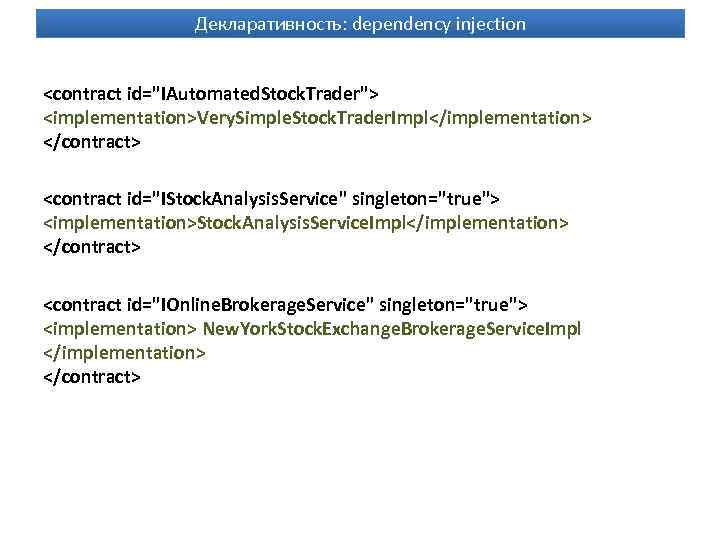
Декларативность: dependency injection <contract id="IAutomated. Stock. Trader"> <implementation>Very. Simple. Stock. Trader. Impl</implementation> </contract> <contract id="IStock. Analysis. Service" singleton="true"> <implementation>Stock. Analysis. Service. Impl</implementation> </contract> <contract id="IOnline. Brokerage. Service" singleton="true"> <implementation> New. York. Stock. Exchange. Brokerage. Service. Impl </implementation> </contract>
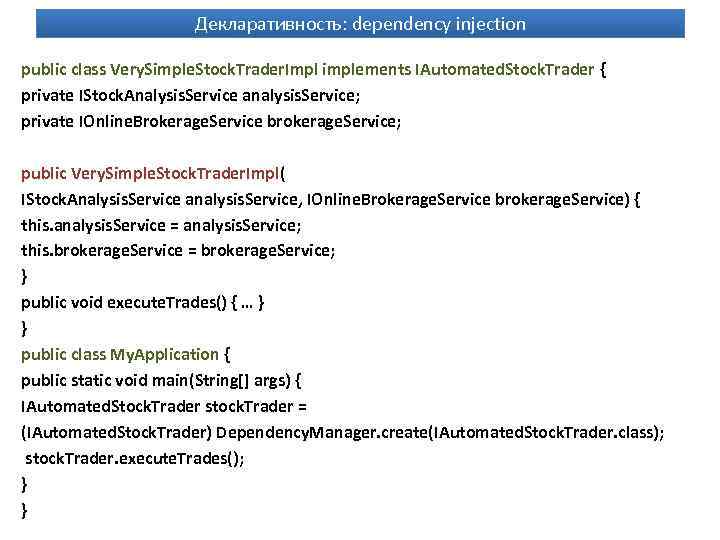
Декларативность: dependency injection public class Very. Simple. Stock. Trader. Impl implements IAutomated. Stock. Trader { private IStock. Analysis. Service analysis. Service; private IOnline. Brokerage. Service brokerage. Service; public Very. Simple. Stock. Trader. Impl( IStock. Analysis. Service analysis. Service, IOnline. Brokerage. Service brokerage. Service) { this. analysis. Service = analysis. Service; this. brokerage. Service = brokerage. Service; } public void execute. Trades() { … } } public class My. Application { public static void main(String[] args) { IAutomated. Stock. Trader stock. Trader = (IAutomated. Stock. Trader) Dependency. Manager. create(IAutomated. Stock. Trader. class); stock. Trader. execute. Trades(); } }
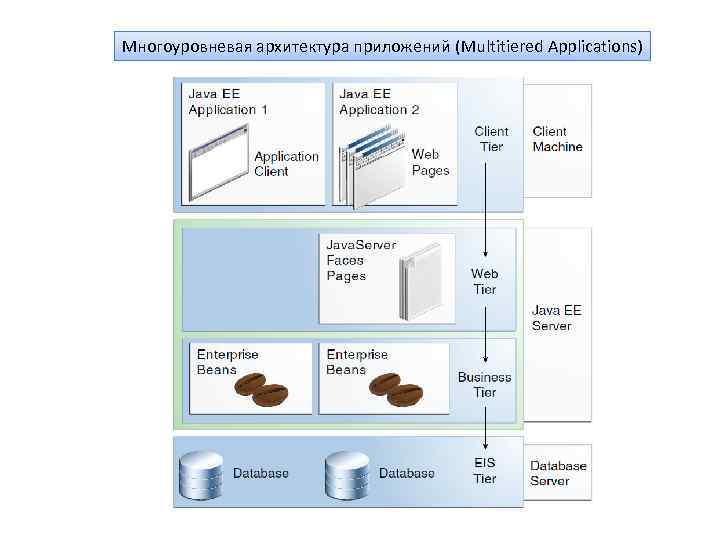
Многоуровневая архитектура приложений (Multitiered Applications)
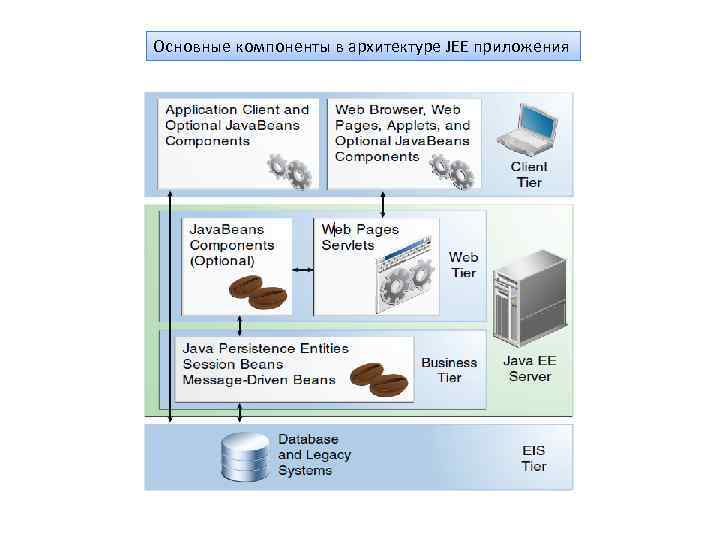
Основные компоненты в архитектуре JEE приложения
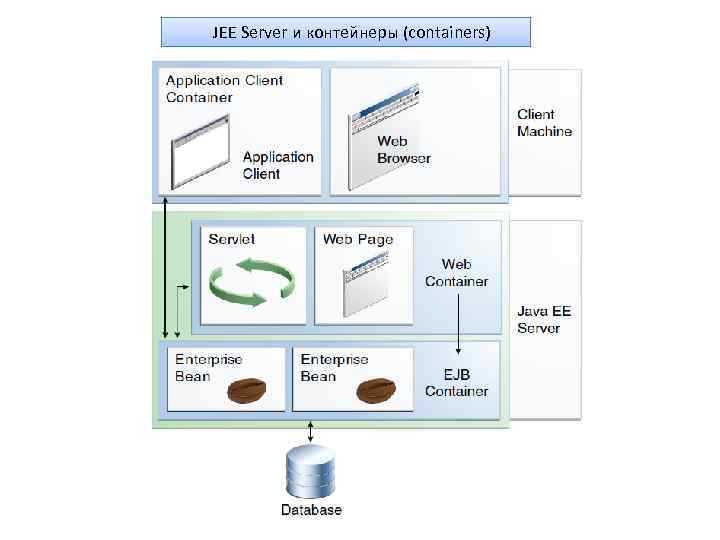
JEE Server и контейнеры (containers)
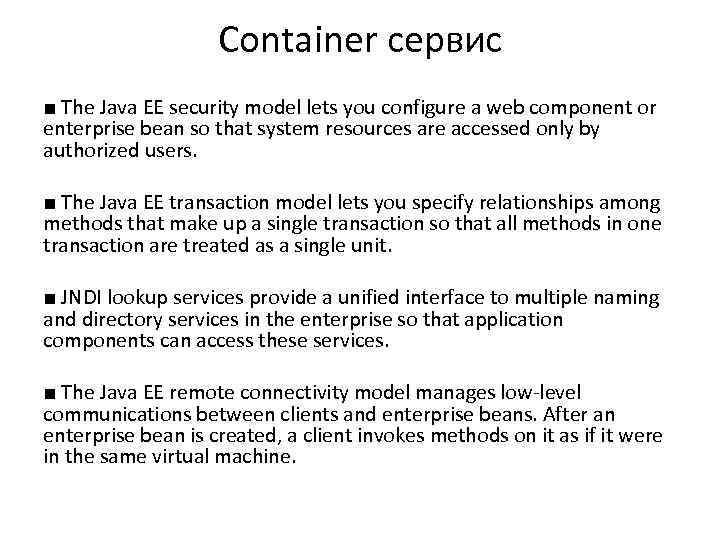
Container сервис ■ The Java EE security model lets you configure a web component or enterprise bean so that system resources are accessed only by authorized users. ■ The Java EE transaction model lets you specify relationships among methods that make up a single transaction so that all methods in one transaction are treated as a single unit. ■ JNDI lookup services provide a unified interface to multiple naming and directory services in the enterprise so that application components can access these services. ■ The Java EE remote connectivity model manages low-level communications between clients and enterprise beans. After an enterprise bean is created, a client invokes methods on it as if it were in the same virtual machine.
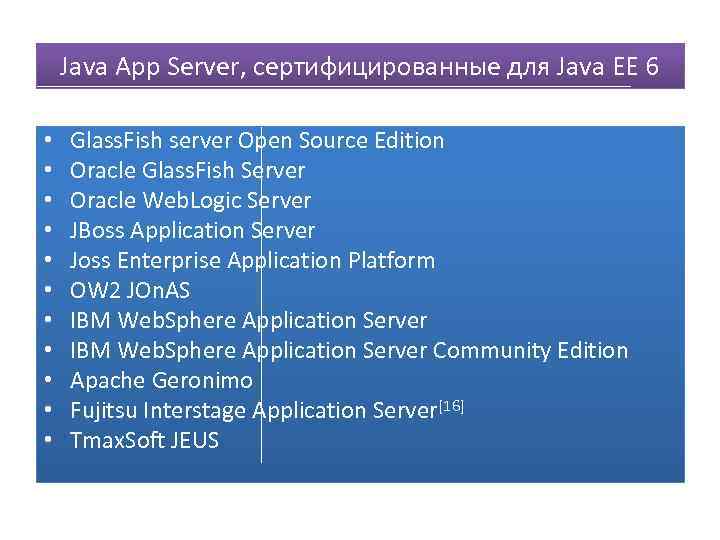
Java App Server, сертифицированные для Java EE 6 • • • Glass. Fish server Open Source Edition Oracle Glass. Fish Server Oracle Web. Logic Server JBoss Application Server Joss Enterprise Application Platform OW 2 JOn. AS IBM Web. Sphere Application Server Community Edition Apache Geronimo Fujitsu Interstage Application Server[16] Tmax. Soft JEUS
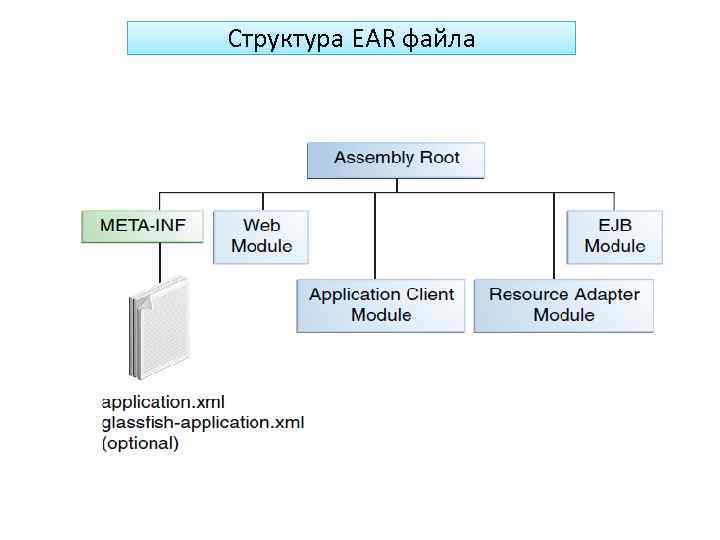
Структура EAR файла
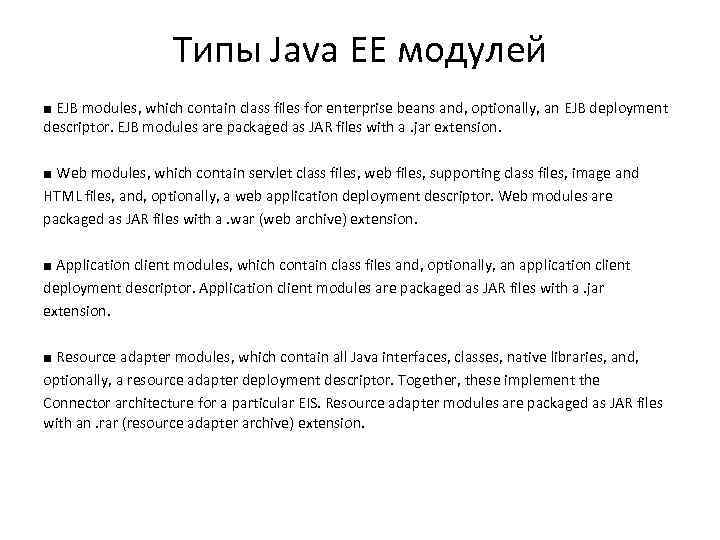
Типы Java EE модулей ■ EJB modules, which contain class files for enterprise beans and, optionally, an EJB deployment descriptor. EJB modules are packaged as JAR files with a. jar extension. ■ Web modules, which contain servlet class files, web files, supporting class files, image and HTML files, and, optionally, a web application deployment descriptor. Web modules are packaged as JAR files with a. war (web archive) extension. ■ Application client modules, which contain class files and, optionally, an application client deployment descriptor. Application client modules are packaged as JAR files with a. jar extension. ■ Resource adapter modules, which contain all Java interfaces, classes, native libraries, and, optionally, a resource adapter deployment descriptor. Together, these implement the Connector architecture for a particular EIS. Resource adapter modules are packaged as JAR files with an. rar (resource adapter archive) extension.
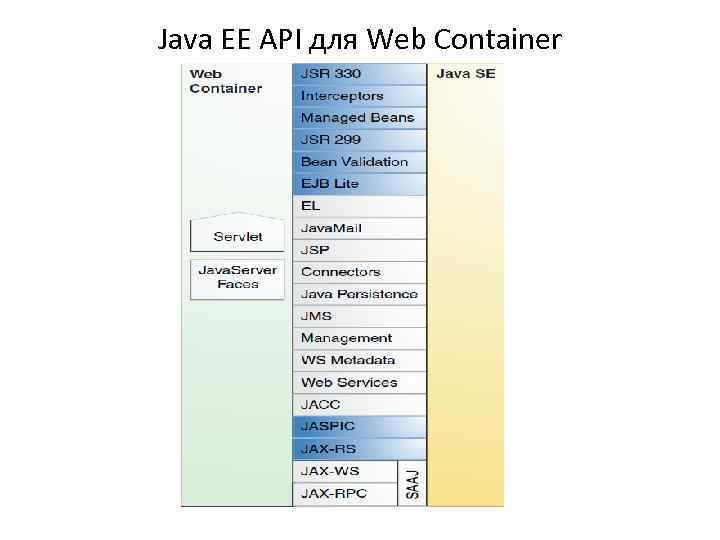
Java EE API для Web Container
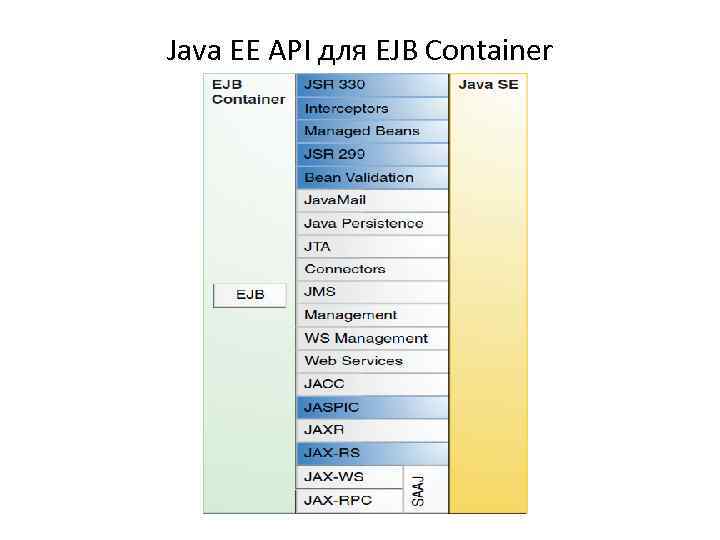
Java EE API для EJB Container
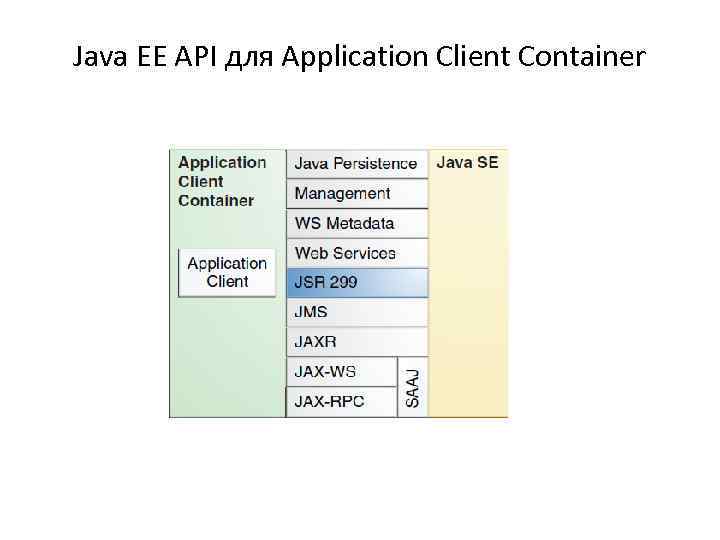
Java EE API для Application Client Container
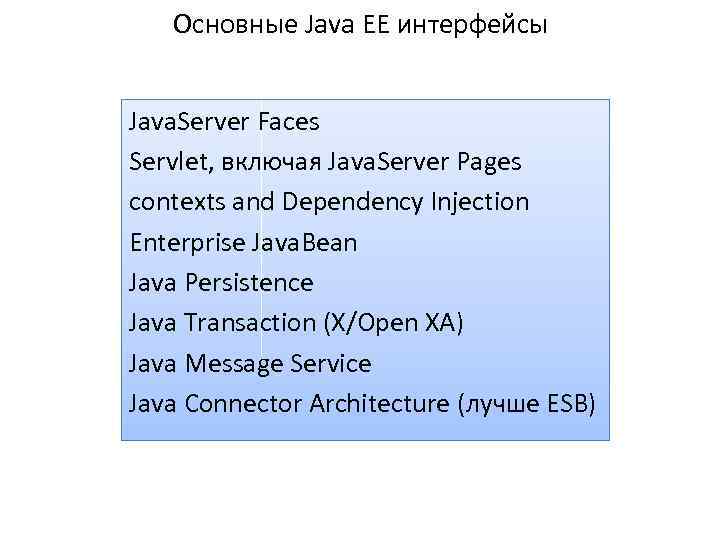
Основные Java EE интерфейсы Java. Server Faces Servlet, включая Java. Server Pages contexts and Dependency Injection Enterprise Java. Bean Java Persistence Java Transaction (X/Open XA) Java Message Service Java Connector Architecture (лучше ESB)
Web Tier A web application is a dynamic extension of a web or application server. Web applications are of the following types: ■ Presentation-oriented: A presentation-oriented web application generates interactive web pages containing various types of markup language (HTML, XML, and so on) and dynamic content in response to requests. ■ Service-oriented: A service-oriented web application implements the endpoint of a web service. Presentationoriented applications are often clients of service-oriented web applications.
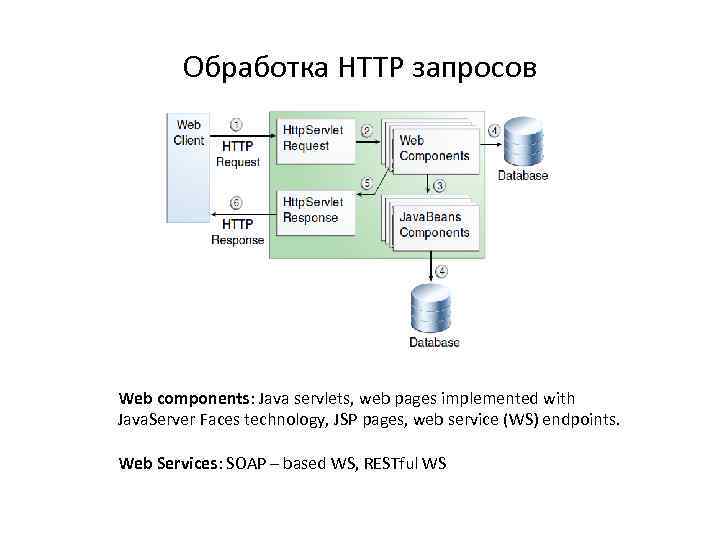
Обработка HTTP запросов Web components: Java servlets, web pages implemented with Java. Server Faces technology, JSP pages, web service (WS) endpoints. Web Services: SOAP – based WS, RESTful WS
Enterprise Bean Что даёт EJB: 1. Разработчик концентрируется на бизнес – логике. 2. Разработка клиентской части (Web) отделена от разработки бизнес – логики и работой с БД. Это особенно важно для малых устройств (смартфоны, планшеты). 3. Повторное использование кода.
Enterprise Bean Когда особенно следует использовать EJB: 1. Масштабирование. 2. Транзакционность. 3. Разнообразие типов клиентов.
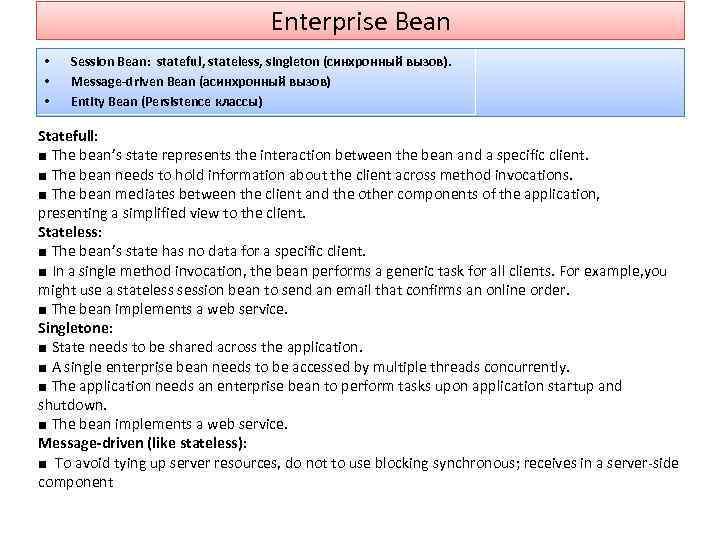
Enterprise Bean • • • Session Bean: stateful, stateless, singleton (синхронный вызов). Message-driven Bean (асинхронный вызов) Entity Bean (Persistence классы) Statefull: ■ The bean’s state represents the interaction between the bean and a specific client. ■ The bean needs to hold information about the client across method invocations. ■ The bean mediates between the client and the other components of the application, presenting a simplified view to the client. Stateless: ■ The bean’s state has no data for a specific client. ■ In a single method invocation, the bean performs a generic task for all clients. For example, you might use a stateless session bean to send an email that confirms an online order. ■ The bean implements a web service. Singletone: ■ State needs to be shared across the application. ■ A single enterprise bean needs to be accessed by multiple threads concurrently. ■ The application needs an enterprise bean to perform tasks upon application startup and shutdown. ■ The bean implements a web service. Message-driven (like stateless): ■ To avoid tying up server resources, do not to use blocking synchronous; receives in a server-side component
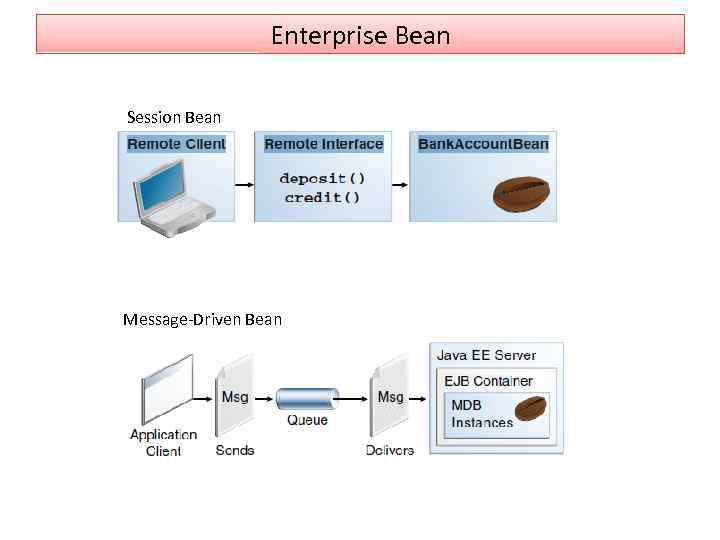
Enterprise Bean Session Bean Message-Driven Bean
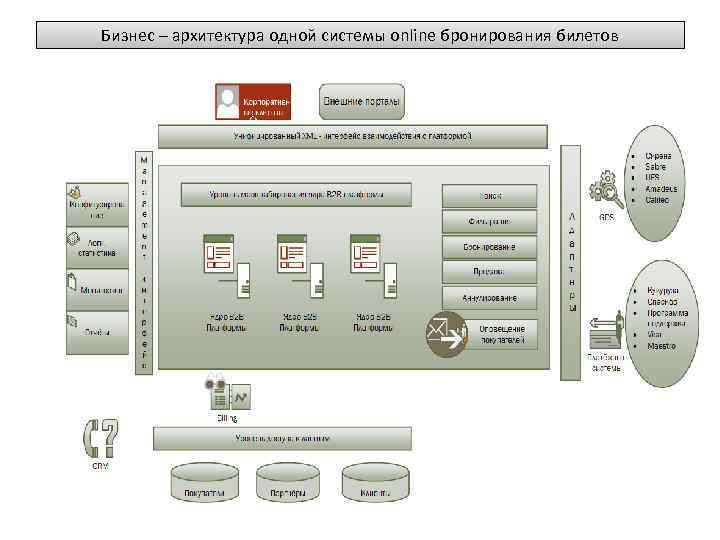
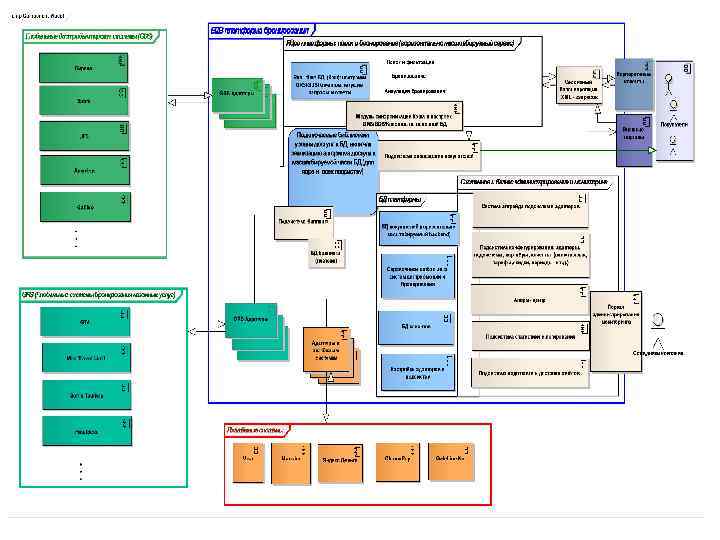
Бизнес – архитектура одной системы online бронирования билетов

Спасибо за внимание !
Скачать презентацию http www reksoft com Владимир Сергеевич Бегларян Java
Java Enterprise Edition.pptx