Скачать презентацию http videos howstuffworks com hsw 17711 america-from-1853 -to-1860 -an-era-of-reformvideo htm
e207338872aa5e173abb4fa31ecb1629.ppt
- Количество слайдов: 23
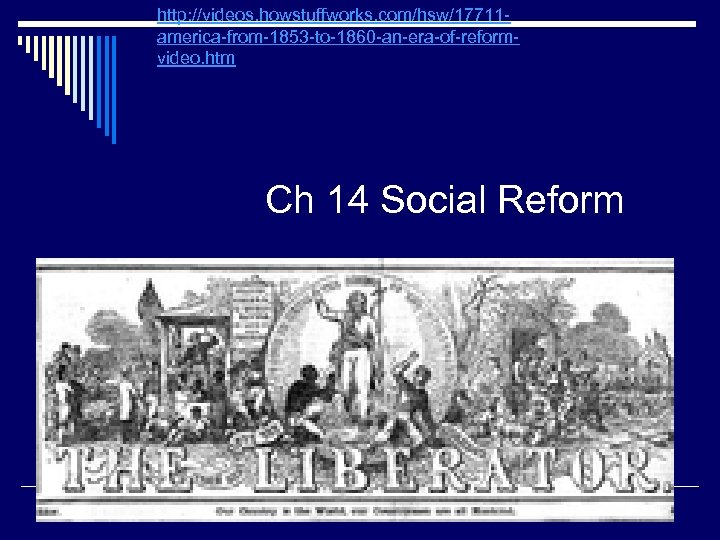 http: //videos. howstuffworks. com/hsw/17711 america-from-1853 -to-1860 -an-era-of-reformvideo. htm Ch 14 Social Reform
 Second Great Awakening o Religious movement/revival in 1800’s o Inspired people to become involved in missionary work & social reform
 Temperance Movement o People encouraged to drink moderately o Cause: 2 nd Great Awakening, break-up of families, poverty, crime o Result: Some states banned sale/manufacture of alcohol (prohibition)
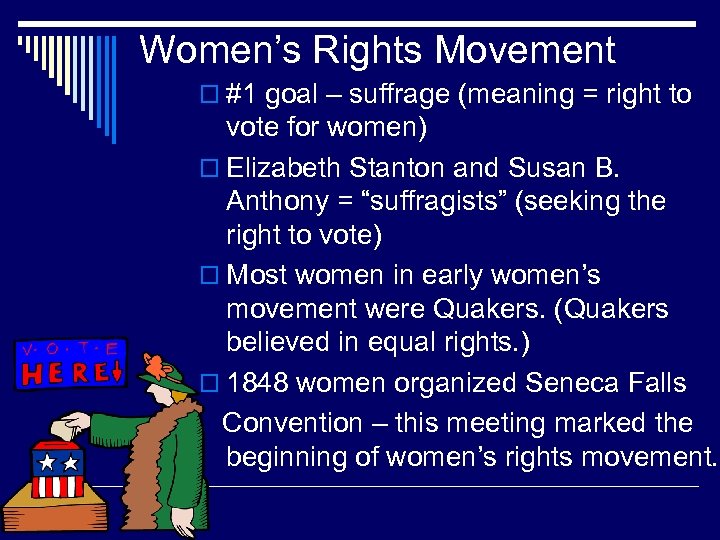 Women’s Rights Movement o #1 goal – suffrage (meaning = right to vote for women) o Elizabeth Stanton and Susan B. Anthony = “suffragists” (seeking the right to vote) o Most women in early women’s movement were Quakers. (Quakers believed in equal rights. ) o 1848 women organized Seneca Falls Convention – this meeting marked the beginning of women’s rights movement.
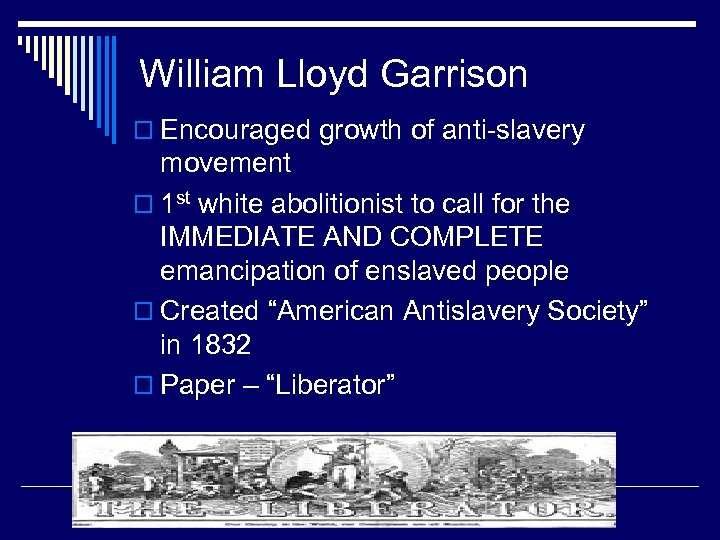 William Lloyd Garrison o Encouraged growth of anti-slavery movement o 1 st white abolitionist to call for the IMMEDIATE AND COMPLETE emancipation of enslaved people o Created “American Antislavery Society” in 1832 o Paper – “Liberator”
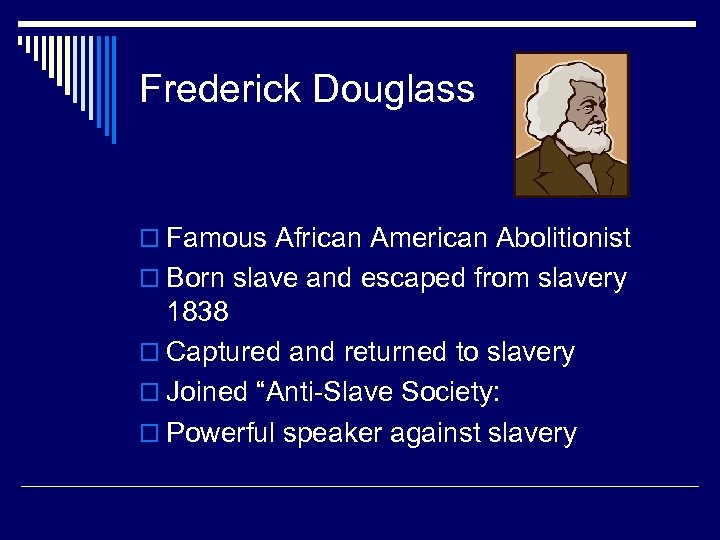 Frederick Douglass o Famous African American Abolitionist o Born slave and escaped from slavery 1838 o Captured and returned to slavery o Joined “Anti-Slave Society: o Powerful speaker against slavery
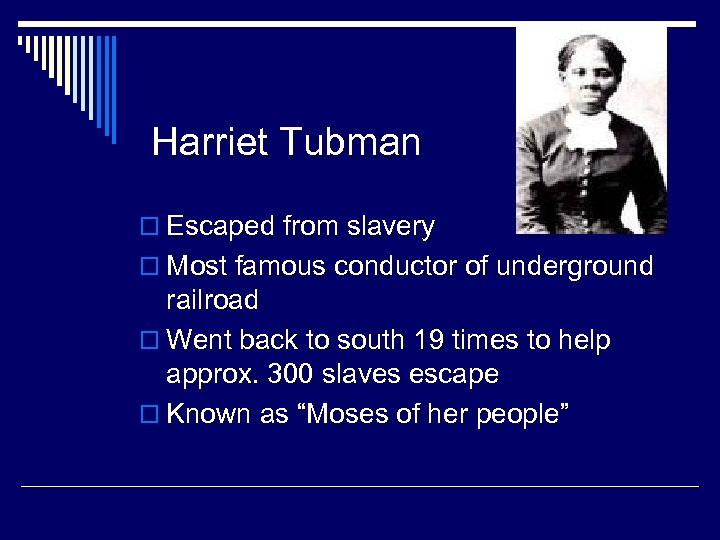 Harriet Tubman o Escaped from slavery o Most famous conductor of underground railroad o Went back to south 19 times to help approx. 300 slaves escape o Known as “Moses of her people”
 Underground Railroad o Network of safe house (south to north)
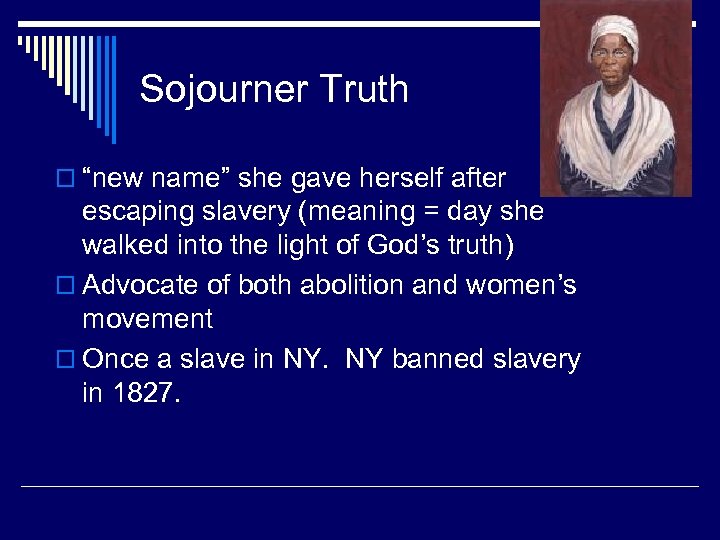 Sojourner Truth o “new name” she gave herself after escaping slavery (meaning = day she walked into the light of God’s truth) o Advocate of both abolition and women’s movement o Once a slave in NY. NY banned slavery in 1827.
 Seneca Falls Convention o Wrote “Declaration of Sentiments & Resolutions” (Similar to Declaration of Indep) o Listed women’s grievances against men o Goal = end all laws that discriminated against women o #1 goal = suffrage = extend the right to vote to women (19 th Amendment – 1920 –women got right to vote)
 Uncle Tom’s Cabin o Written by Harriet Beecher Stowe o Re: injustices of slavery (how bad slavery really was) o Stowe was a transcendalists = meaning she stressed the importance of following one’s innner voice (conscience) and breaking the bonds of prejudice
 Dorthea Dix o Fought against “mentally ill” being locked up in jail o Advocate for persons with mental disability
 Horace Mann - Leader of education reform - Lengthened school year to 6 months - Improved school curriculum - Doubled teacher’s salaries - Developed better methods to train teachers
 Public Education By 1850 – all states 1. School – free and supported by taxes 2. Teachers should be trained 3. Children should be required to attend school (“compulsory education”)
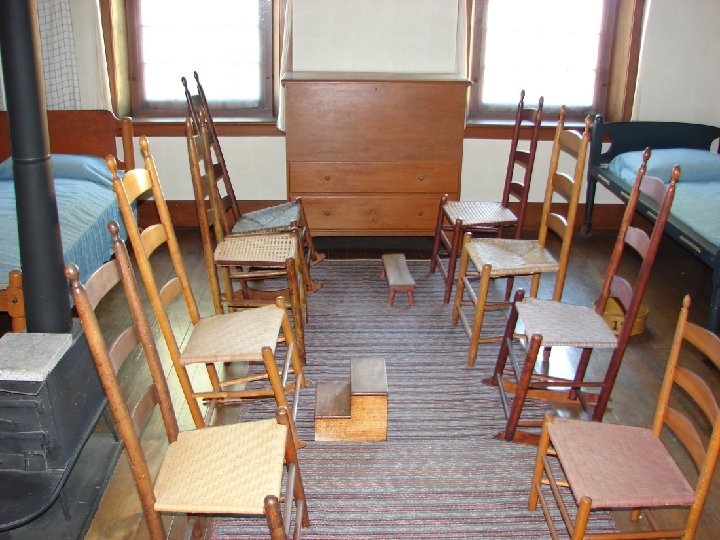
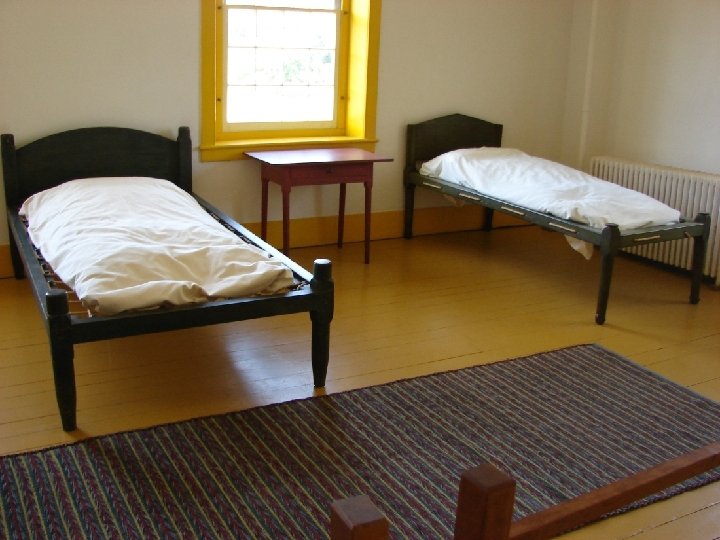
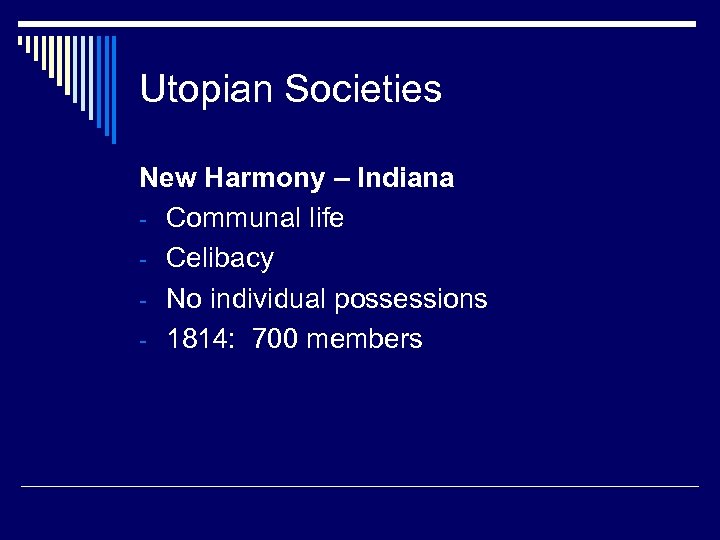 Utopian Societies New Harmony – Indiana - Communal life - Celibacy - No individual possessions - 1814: 700 members
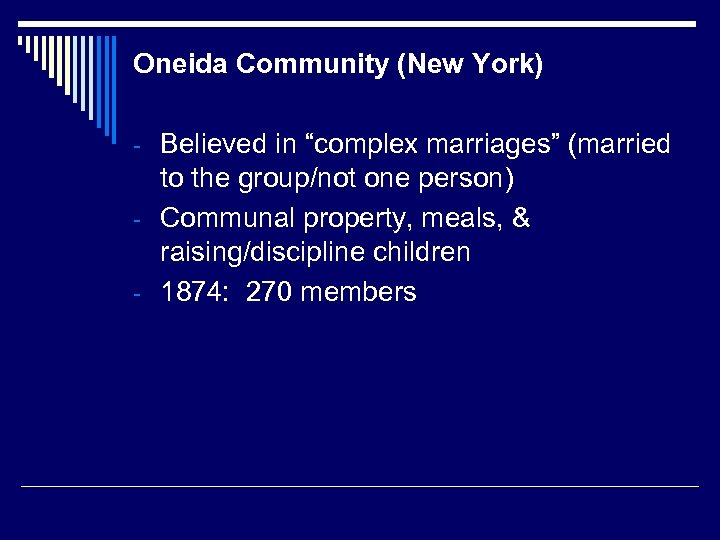 Oneida Community (New York) - Believed in “complex marriages” (married to the group/not one person) - Communal property, meals, & raising/discipline children - 1874: 270 members