


 Скачать презентацию HTM 2118 Hospitality and Culture Culture and its
India, hospitality and culture.ppt
- Количество слайдов: 57
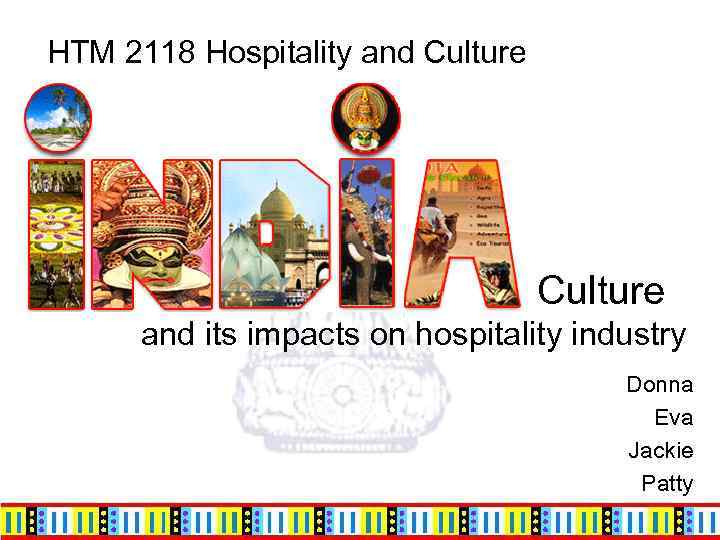 HTM 2118 Hospitality and Culture Culture and its impacts on hospitality industry Donna Eva Jackie Patty
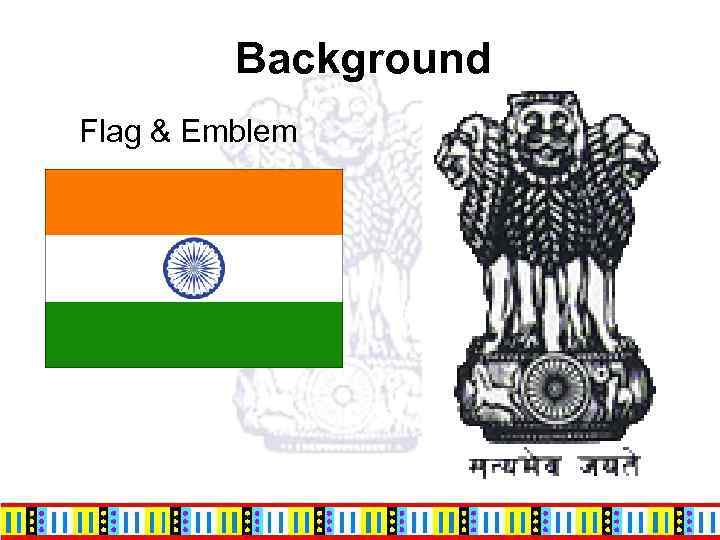 Background Flag & Emblem
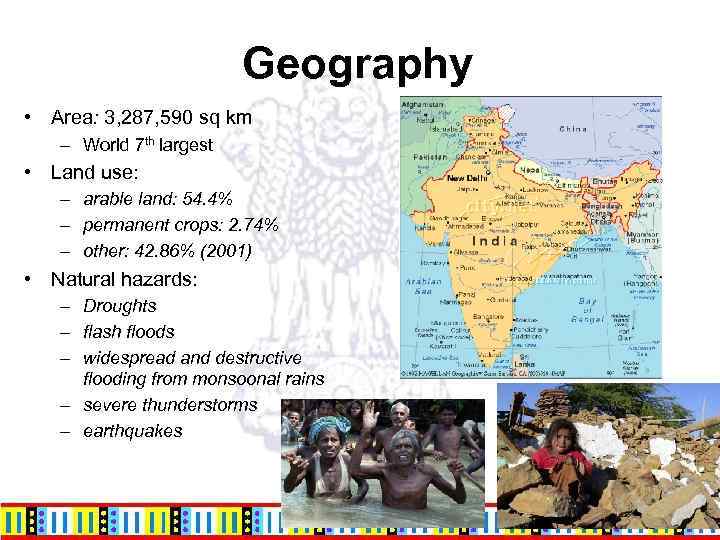 Geography • Area: 3, 287, 590 sq km – World 7 th largest • Land use: – arable land: 54. 4% – permanent crops: 2. 74% – other: 42. 86% (2001) • Natural hazards: – Droughts – flash floods – widespread and destructive flooding from monsoonal rains – severe thunderstorms – earthquakes
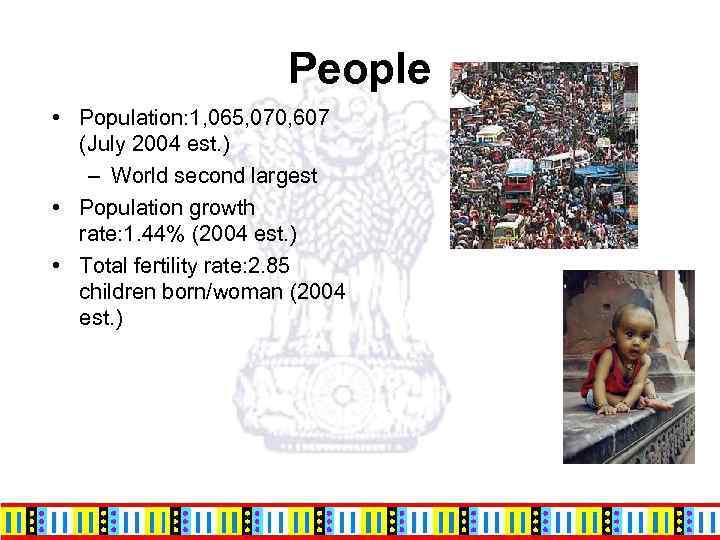 People • Population: 1, 065, 070, 607 (July 2004 est. ) – World second largest • Population growth rate: 1. 44% (2004 est. ) • Total fertility rate: 2. 85 children born/woman (2004 est. )
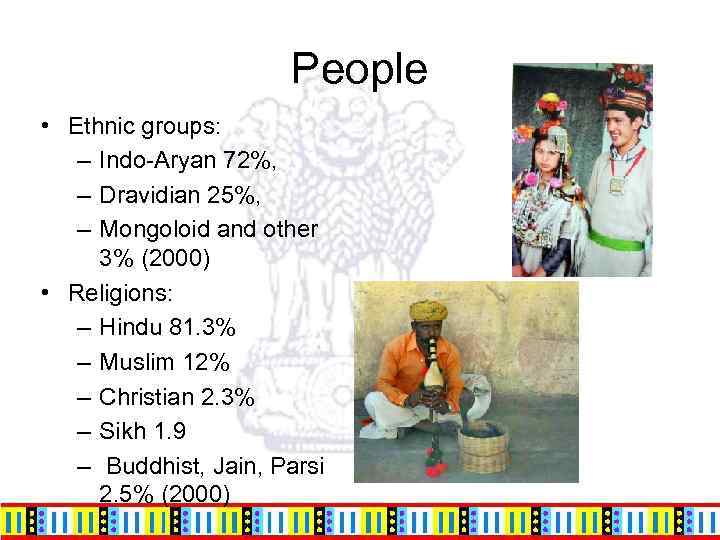 People • Ethnic groups: – Indo-Aryan 72%, – Dravidian 25%, – Mongoloid and other 3% (2000) • Religions: – Hindu 81. 3% – Muslim 12% – Christian 2. 3% – Sikh 1. 9 – Buddhist, Jain, Parsi 2. 5% (2000)
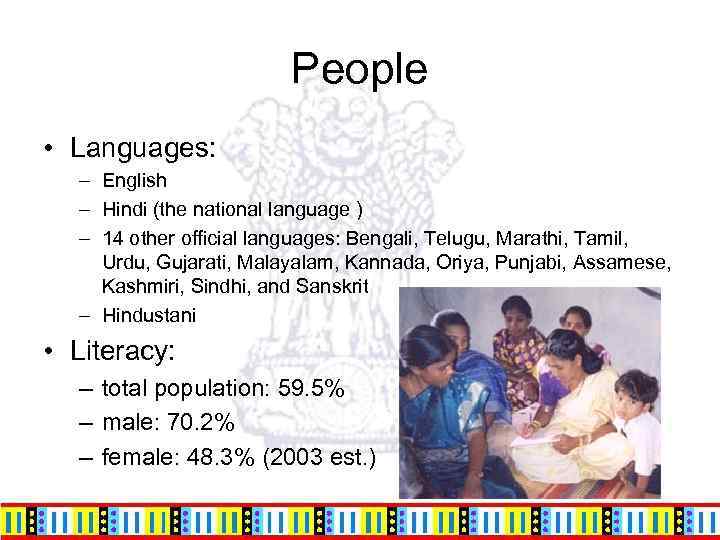 People • Languages: – English – Hindi (the national language ) – 14 other official languages: Bengali, Telugu, Marathi, Tamil, Urdu, Gujarati, Malayalam, Kannada, Oriya, Punjabi, Assamese, Kashmiri, Sindhi, and Sanskrit – Hindustani • Literacy: – total population: 59. 5% – male: 70. 2% – female: 48. 3% (2003 est. )
 Government • • Government type: federal republic Capital: New Delhi Independence: 15 August 1947 (from UK) National holiday: Republic Day, 26 January (1950)
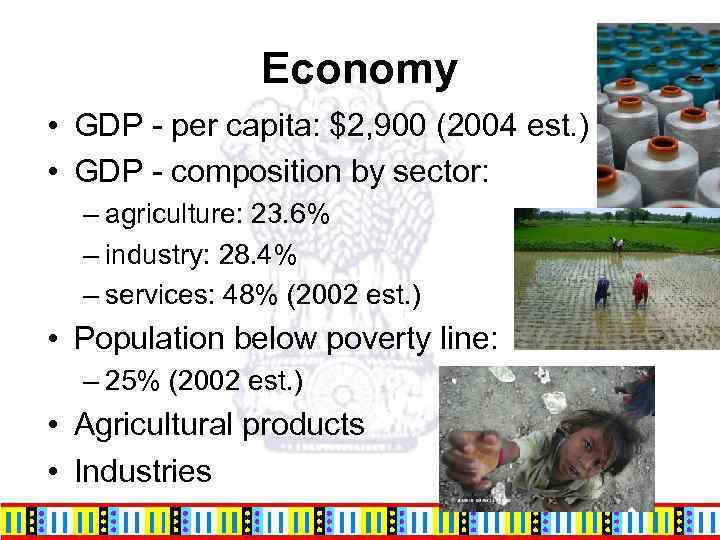 Economy • GDP - per capita: $2, 900 (2004 est. ) • GDP - composition by sector: – agriculture: 23. 6% – industry: 28. 4% – services: 48% (2002 est. ) • Population below poverty line: – 25% (2002 est. ) • Agricultural products • Industries
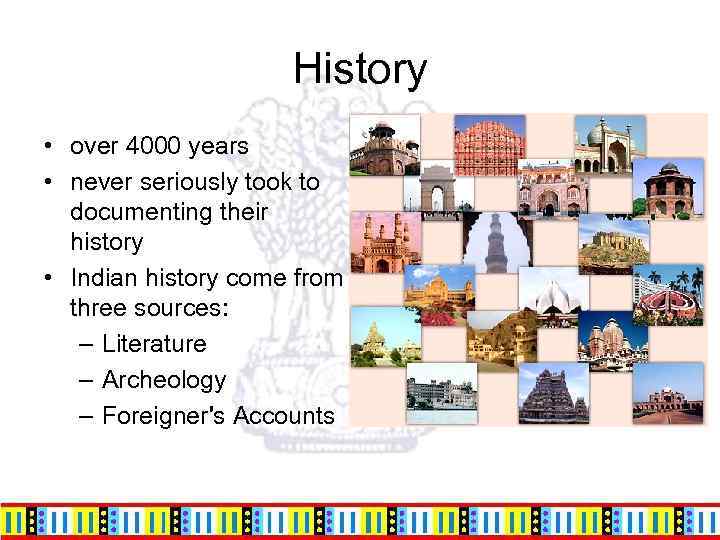 History • over 4000 years • never seriously took to documenting their history • Indian history come from three sources: – Literature – Archeology – Foreigner's Accounts
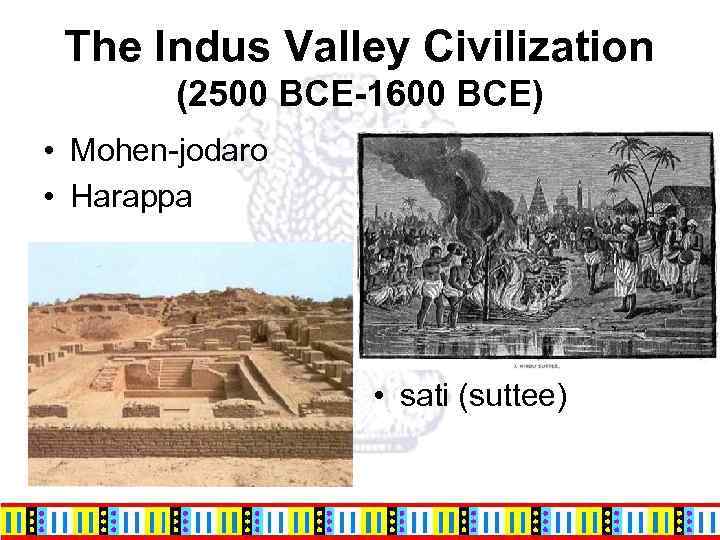 The Indus Valley Civilization (2500 BCE-1600 BCE) • Mohen-jodaro • Harappa • sati (suttee)
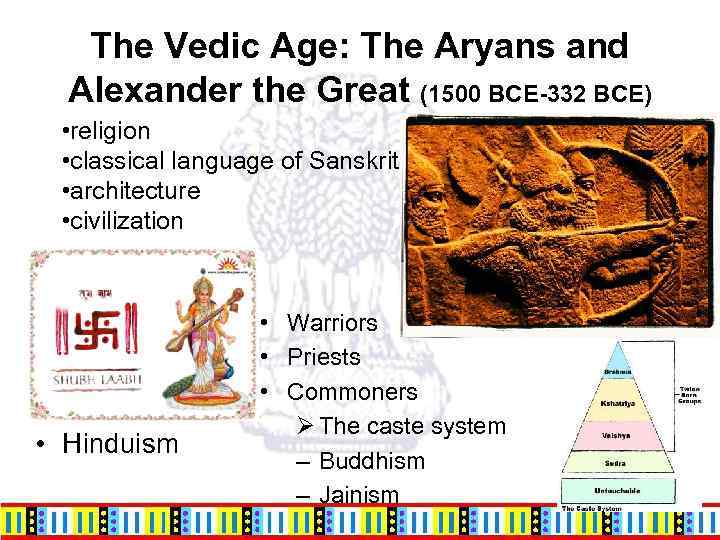 The Vedic Age: The Aryans and Alexander the Great (1500 BCE-332 BCE) • religion • classical language of Sanskrit • architecture • civilization • Hinduism • Warriors • Priests • Commoners Ø The caste system – Buddhism – Jainism
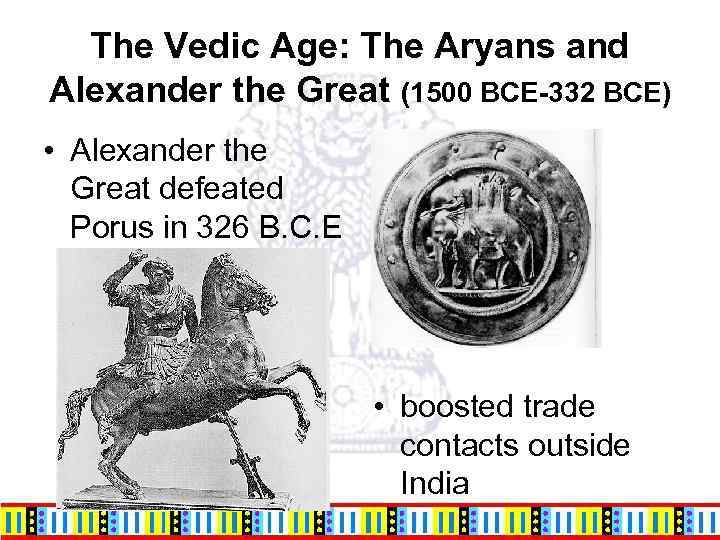 The Vedic Age: The Aryans and Alexander the Great (1500 BCE-332 BCE) • Alexander the Great defeated Porus in 326 B. C. E • boosted trade contacts outside India
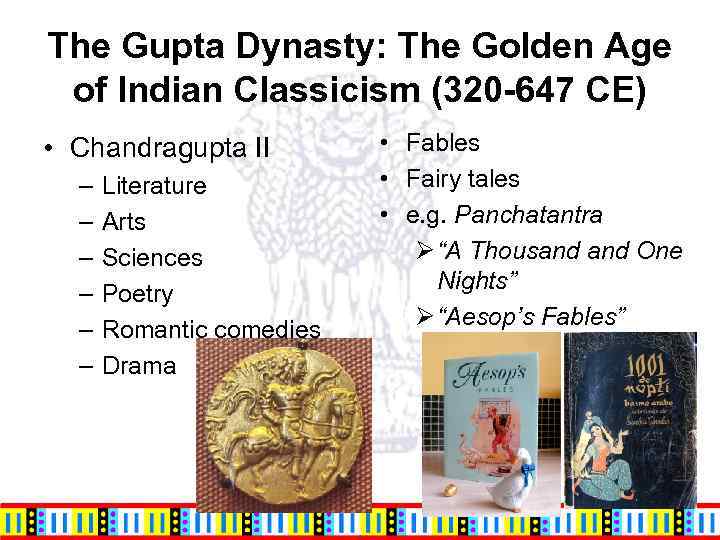 The Gupta Dynasty: The Golden Age of Indian Classicism (320 -647 CE) • Chandragupta II – – – Literature Arts Sciences Poetry Romantic comedies Drama • Fables • Fairy tales • e. g. Panchatantra Ø “A Thousand One Nights” Ø “Aesop’s Fables”
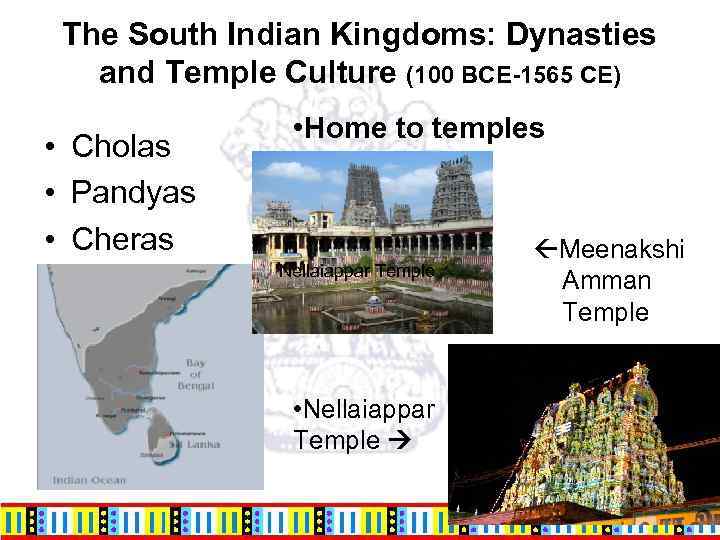 The South Indian Kingdoms: Dynasties and Temple Culture (100 BCE-1565 CE) • Cholas • Pandyas • Cheras • Home to temples Nellaiappar Temple • Nellaiappar Temple Meenakshi Amman Temple
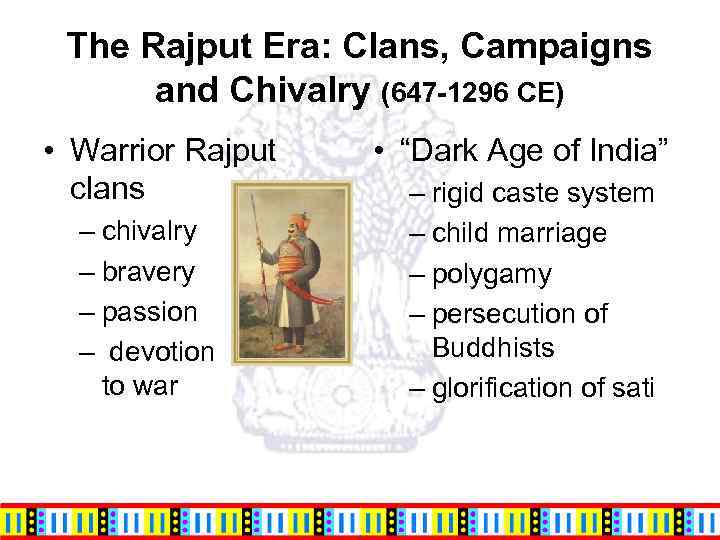 The Rajput Era: Clans, Campaigns and Chivalry (647 -1296 CE) • Warrior Rajput clans – chivalry – bravery – passion – devotion to war • “Dark Age of India” – rigid caste system – child marriage – polygamy – persecution of Buddhists – glorification of sati
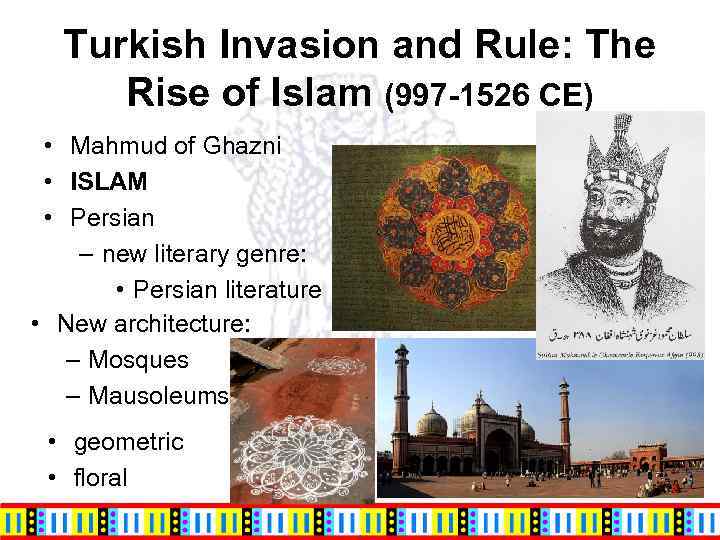 Turkish Invasion and Rule: The Rise of Islam (997 -1526 CE) • Mahmud of Ghazni • ISLAM • Persian – new literary genre: • Persian literature • New architecture: – Mosques – Mausoleums • geometric • floral
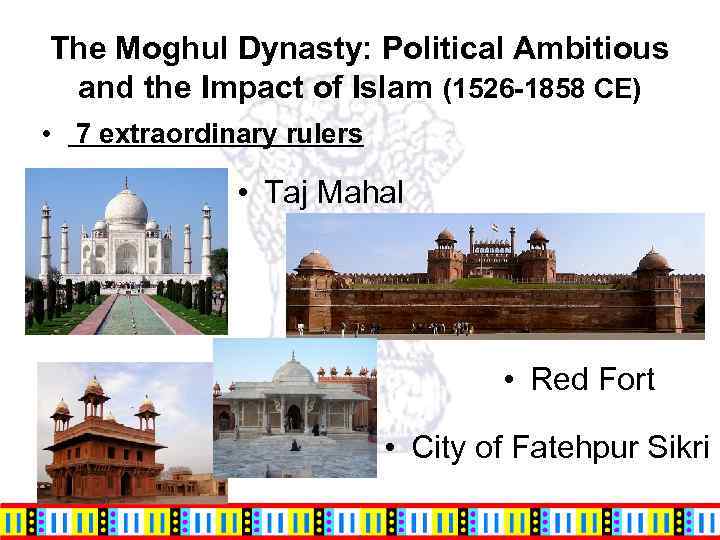 The Moghul Dynasty: Political Ambitious and the Impact of Islam (1526 -1858 CE) • 7 extraordinary rulers • Taj Mahal • Red Fort • City of Fatehpur Sikri
 The Moghul Dynasty: Political Ambitious and the Impact of Islam (1526 -1858 CE) • landscaped gardens, dress, food, and customs based on the teachings of the Koran – E. g. pork and alcohol were forbidden – surplus food always was to be shared with the poor.
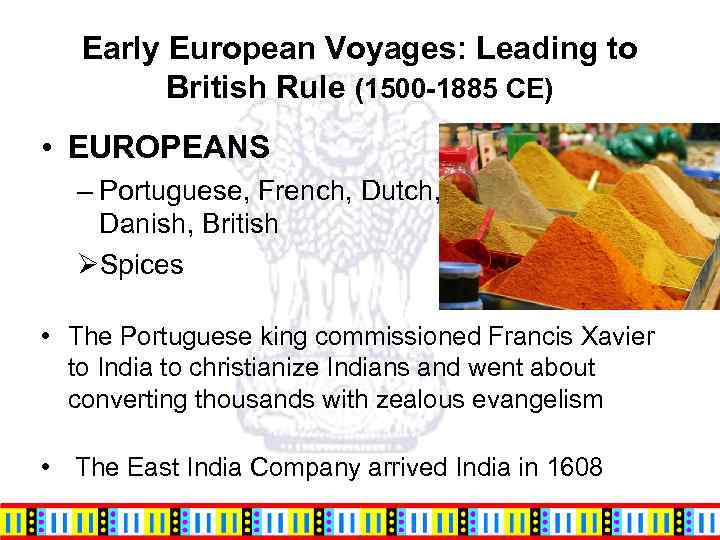 Early European Voyages: Leading to British Rule (1500 -1885 CE) • EUROPEANS – Portuguese, French, Dutch, Danish, British ØSpices • The Portuguese king commissioned Francis Xavier to India to christianize Indians and went about converting thousands with zealous evangelism • The East India Company arrived India in 1608
 The British Raj: From Trade to Dominion • Mission schools and hospitals • Missionaries study Indian languages • Bible printed in Bengali, Hindi, Tamil, Telugu, and Marathi • Grammar books and dictionaries in local language flourished • official language - English Ø vanishing of local languages • Westernization – spread of education 。Schools, universities, museums, libraries
 The British Raj: From Trade to Dominion • Delhi, new capital in 1911, still houses the government today. • Laws regulating inheritance, divorce, marriage and law of contracts were uniformly applied to all citizens of India. • Sati was prohibited in 1829 • Act of 1856 permitted widows to remarry, which was otherwise forbidden by Hindu law Ø These somehow raised the social status of Indian women.
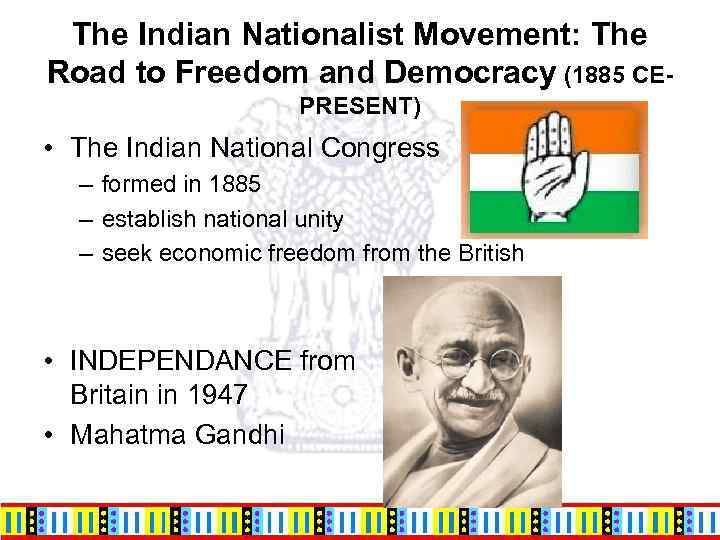 The Indian Nationalist Movement: The Road to Freedom and Democracy (1885 CEPRESENT) • The Indian National Congress – formed in 1885 – establish national unity – seek economic freedom from the British • INDEPENDANCE from Britain in 1947 • Mahatma Gandhi
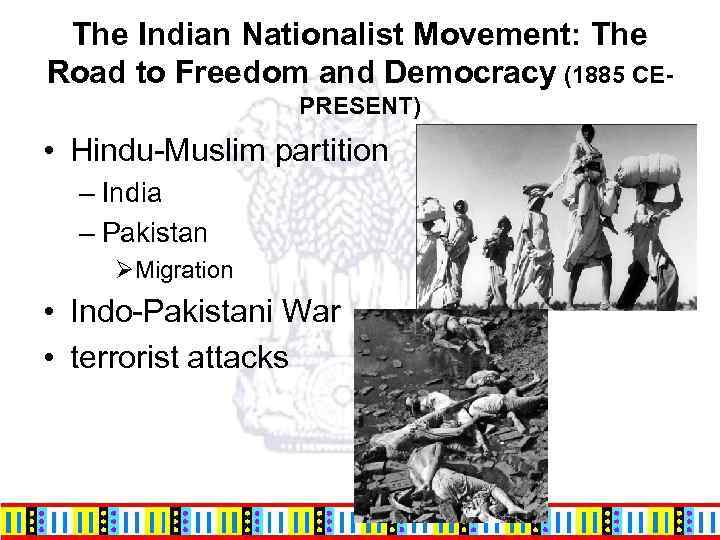 The Indian Nationalist Movement: The Road to Freedom and Democracy (1885 CEPRESENT) • Hindu-Muslim partition – India – Pakistan ØMigration • Indo-Pakistani War • terrorist attacks
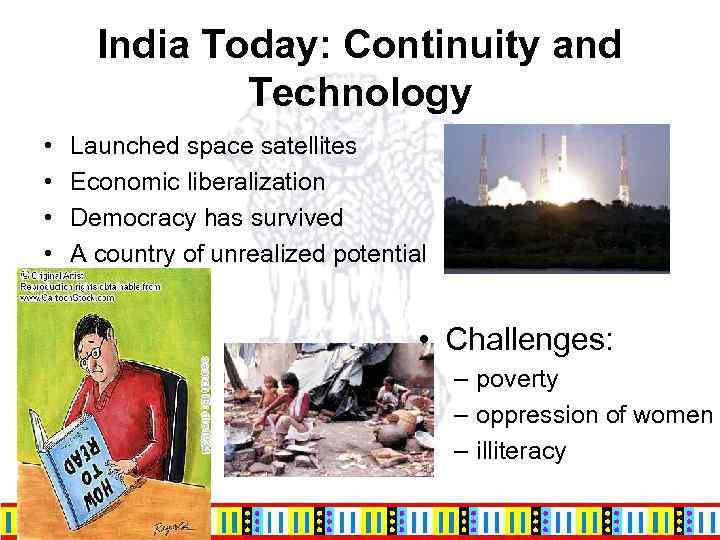 India Today: Continuity and Technology • • Launched space satellites Economic liberalization Democracy has survived A country of unrealized potential • Challenges: – poverty – oppression of women – illiteracy
 Impact on Culture • Non-violent Religion Ø never invaded any country in her history • The British influence inspired western education and thoughts: Ø Created a new educated class. Ø Created a common language – English Ø Inspired freedom and exchange of ideas – Religious tolerance and freedom of worship
 Impact on Culture • Religious tolerance and freedom of worship Ø Hindus and Muslims live side by side but interreligious marriages are rare • Gandhi’s non-violence movement for freedom appealed to the civilized world • Caste System – almost all Indians are associated--are ranked
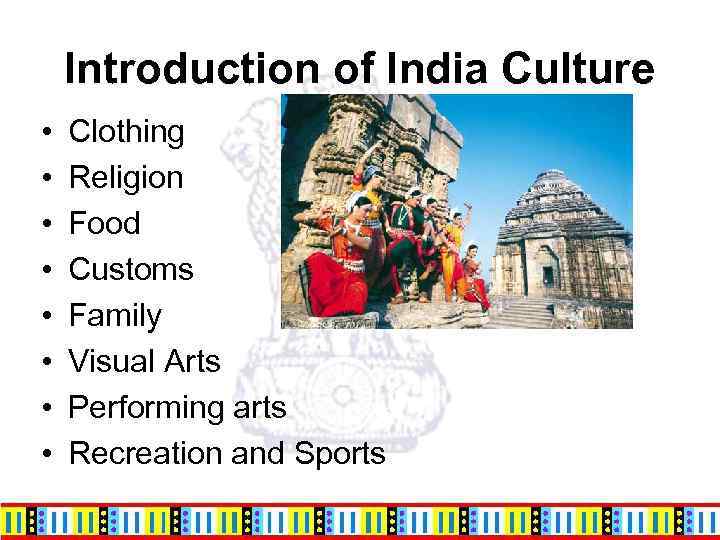 Introduction of India Culture • • Clothing Religion Food Customs Family Visual Arts Performing arts Recreation and Sports
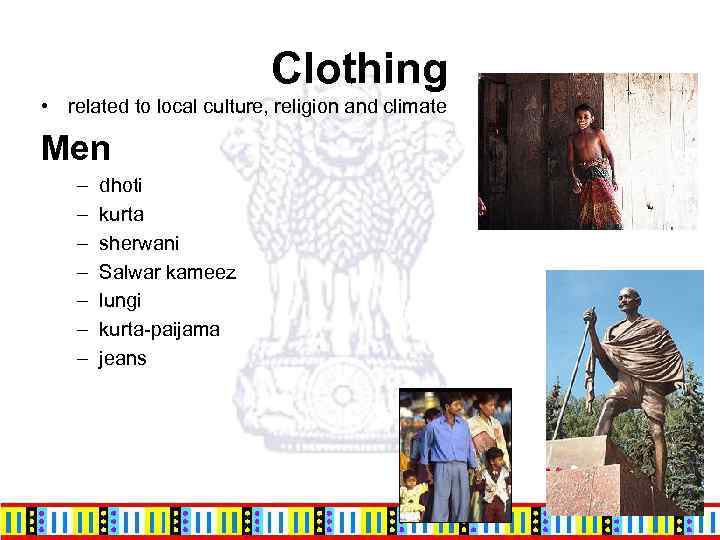 Clothing • related to local culture, religion and climate Men – – – – dhoti kurta sherwani Salwar kameez lungi kurta-paijama jeans
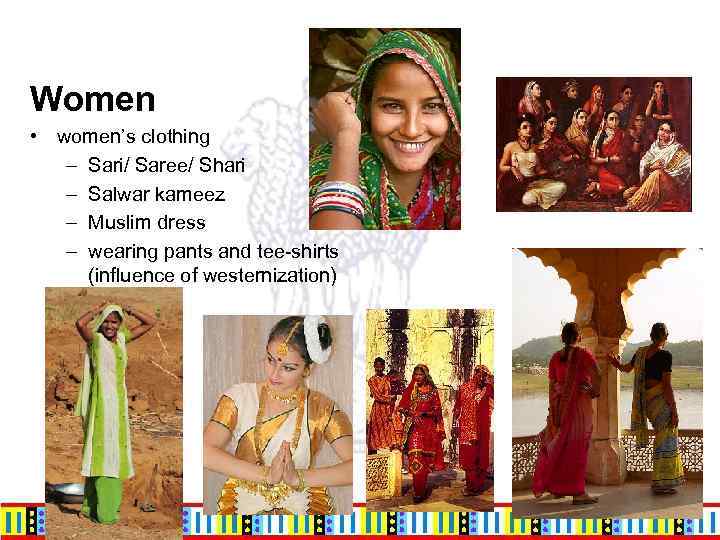 Women • women’s clothing – Sari/ Saree/ Shari – Salwar kameez – Muslim dress – wearing pants and tee-shirts (influence of westernization)
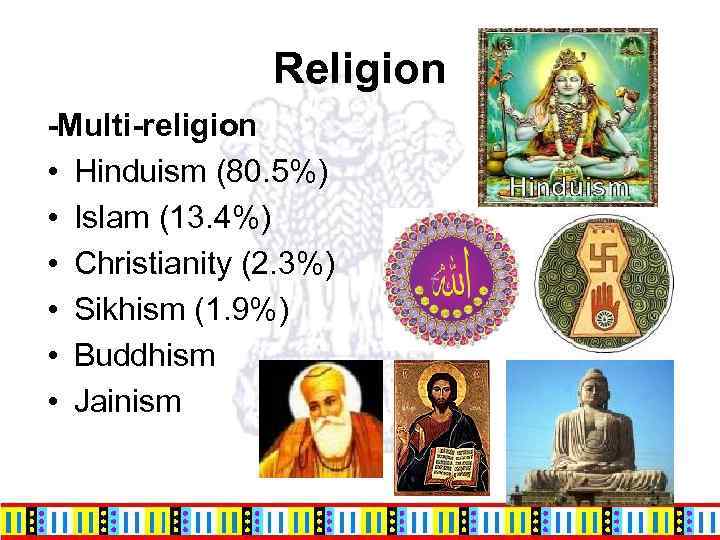 Religion -Multi-religion • Hinduism (80. 5%) • Islam (13. 4%) • Christianity (2. 3%) • Sikhism (1. 9%) • Buddhism • Jainism
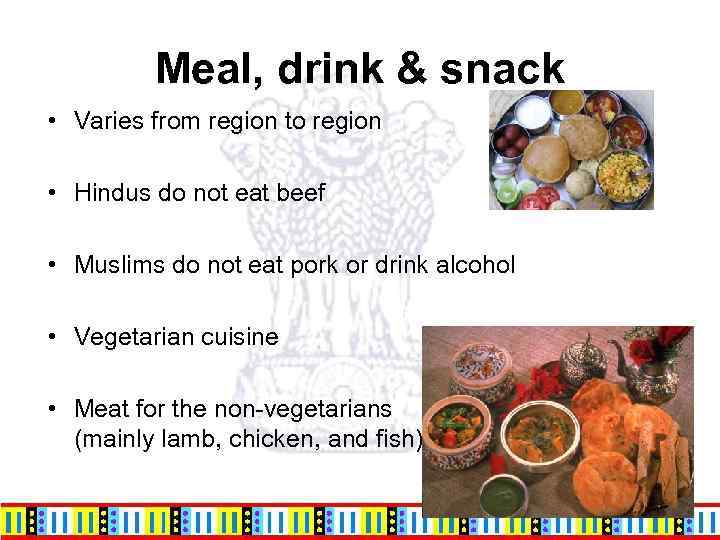 Meal, drink & snack • Varies from region to region • Hindus do not eat beef • Muslims do not eat pork or drink alcohol • Vegetarian cuisine • Meat for the non-vegetarians (mainly lamb, chicken, and fish)
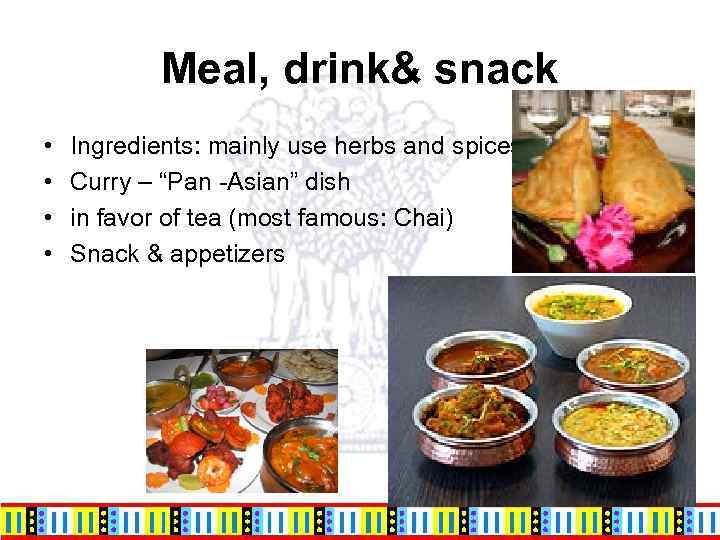 Meal, drink& snack • • Ingredients: mainly use herbs and spices Curry – “Pan -Asian” dish in favor of tea (most famous: Chai) Snack & appetizers
 Custom • • Respect elderly and touch their feet for blessing Eat with fingers Always use right hand to eat Wash hands immediately after and before eating a meal • Removes footwear while entering a private residence or temple • Can't Say No • Shaking hands
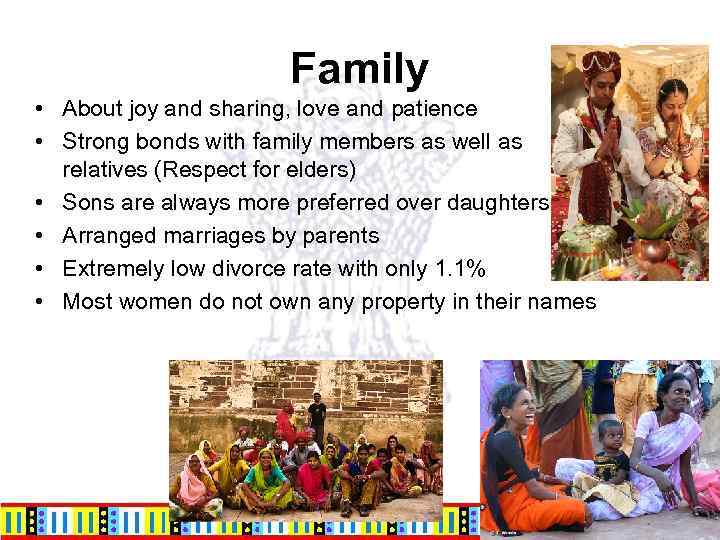 Family • About joy and sharing, love and patience • Strong bonds with family members as well as relatives (Respect for elders) • Sons are always more preferred over daughters • Arranged marriages by parents • Extremely low divorce rate with only 1. 1% • Most women do not own any property in their names
 Women Status • • • Have fraction of freedom Sends husband to the grocery store No freedom to pursue leisure activities Low participation in sports, music and arts Home maker
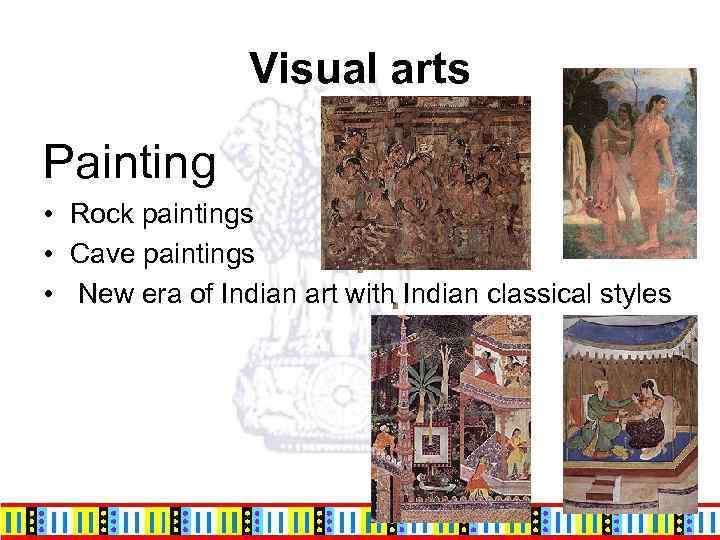 Visual arts Painting • Rock paintings • Cave paintings • New era of Indian art with Indian classical styles
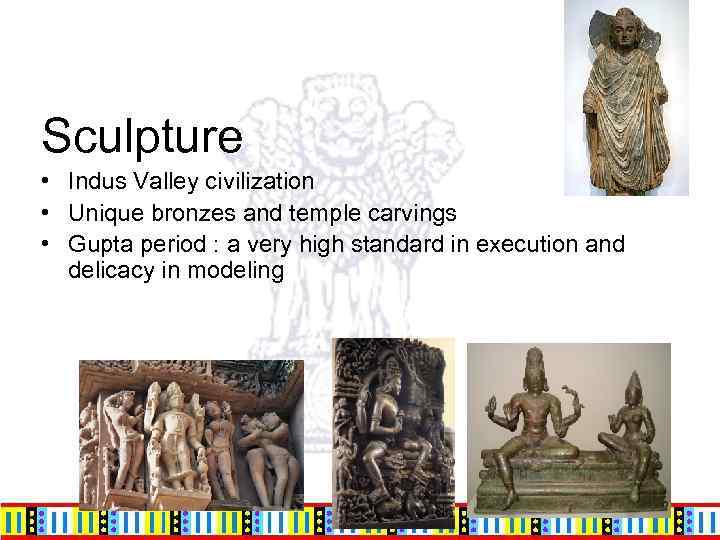 Sculpture • Indus Valley civilization • Unique bronzes and temple carvings • Gupta period : a very high standard in execution and delicacy in modeling
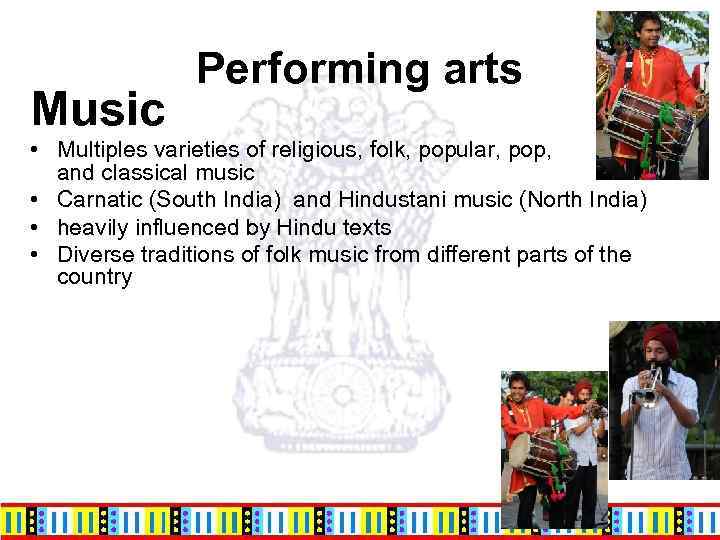 Music Performing arts • Multiples varieties of religious, folk, popular, pop, and classical music • Carnatic (South India) and Hindustani music (North India) • heavily influenced by Hindu texts • Diverse traditions of folk music from different parts of the country
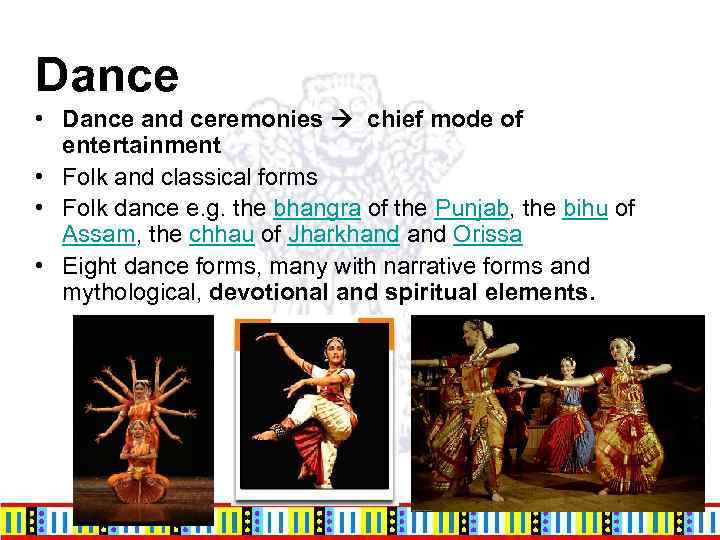 Dance • Dance and ceremonies chief mode of entertainment • Folk and classical forms • Folk dance e. g. the bhangra of the Punjab, the bihu of Assam, the chhau of Jharkhand Orissa • Eight dance forms, many with narrative forms and mythological, devotional and spiritual elements.
 What is India famous for? • The palatial palaces, fantastic forts, impressive art and architecture, frescoes Havelis, magnificent temples • amazing diversified culture
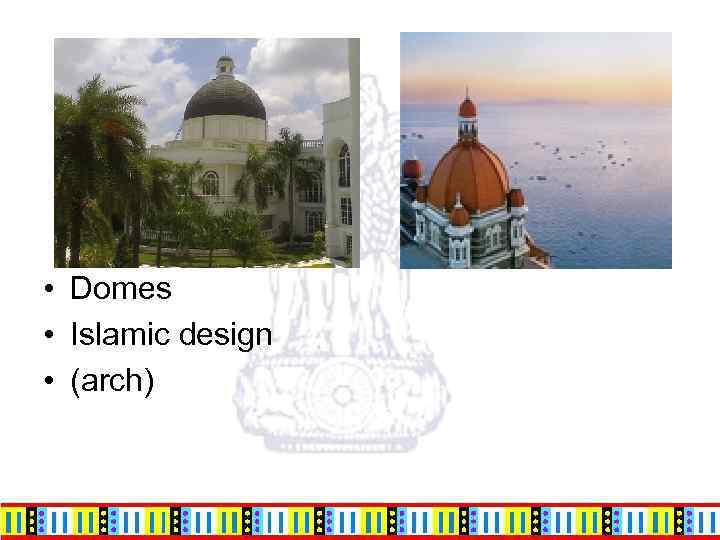 • Domes • Islamic design • (arch)
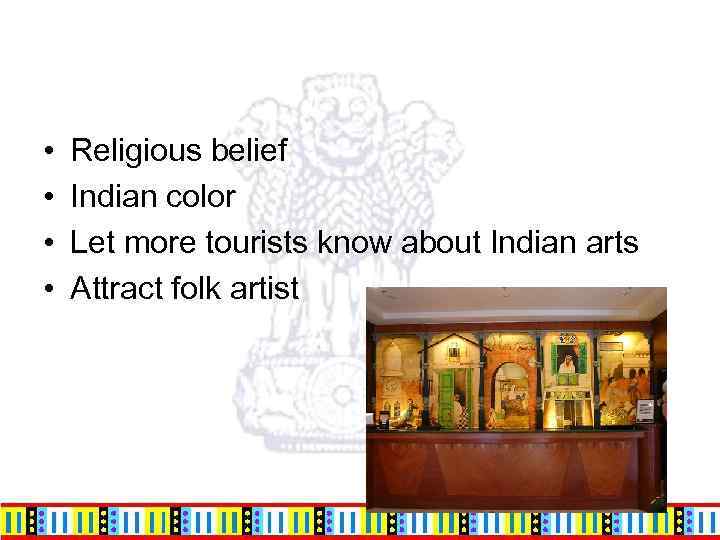 • • Religious belief Indian color Let more tourists know about Indian arts Attract folk artist
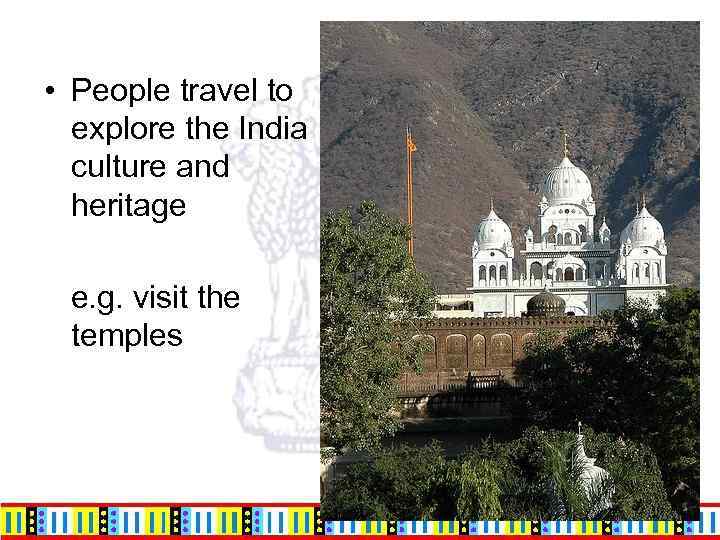 • People travel to explore the India culture and heritage e. g. visit the temples
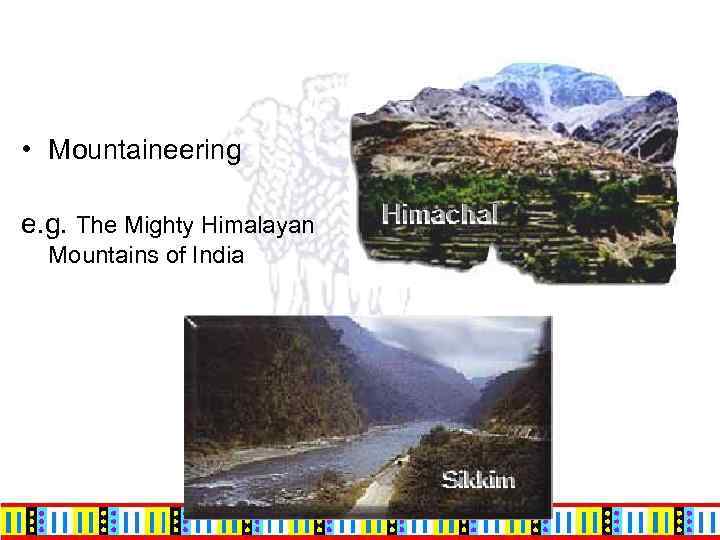 • Mountaineering e. g. The Mighty Himalayan Mountains of India
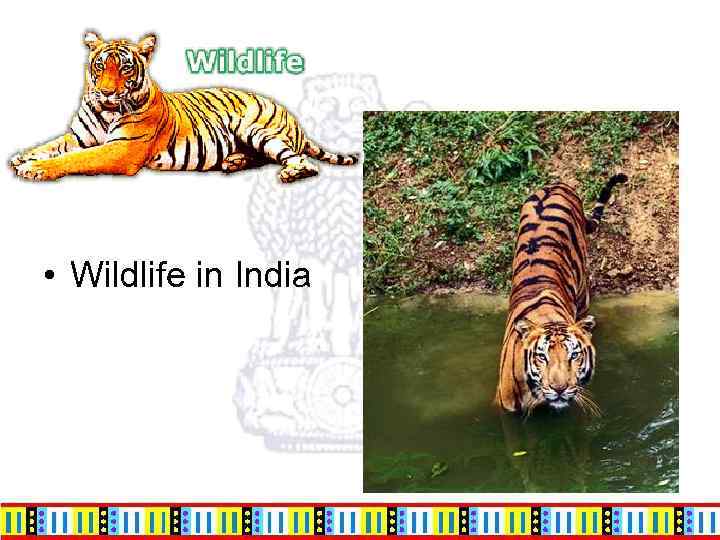 • Wildlife in India
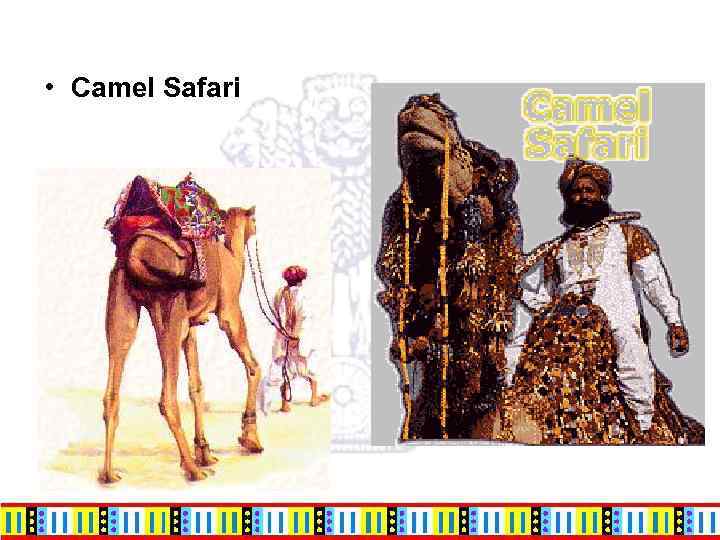 • Camel Safari
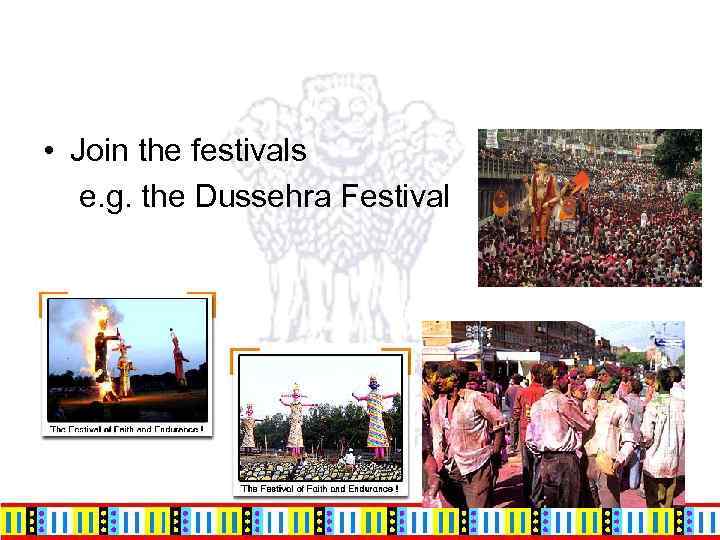 • Join the festivals e. g. the Dussehra Festival
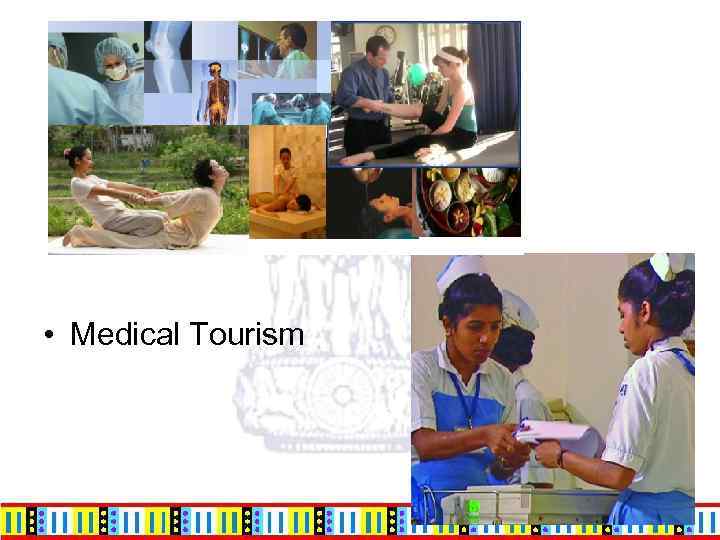 • Medical Tourism
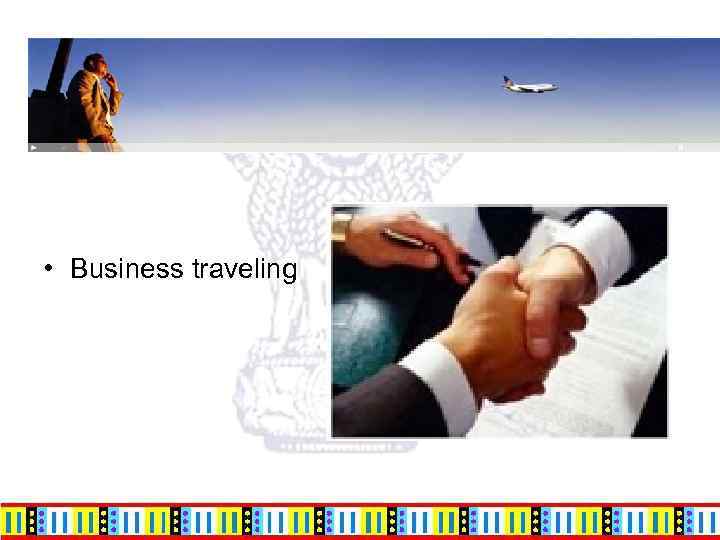 • Business traveling
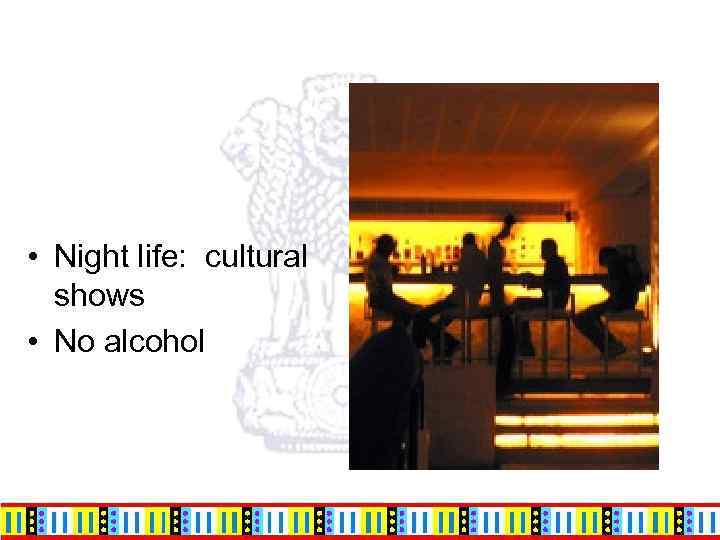 • Night life: cultural shows • No alcohol
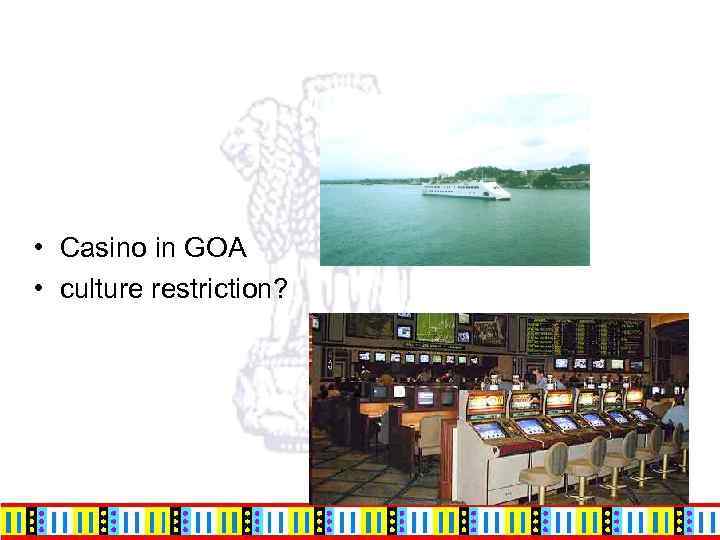 • Casino in GOA • culture restriction?
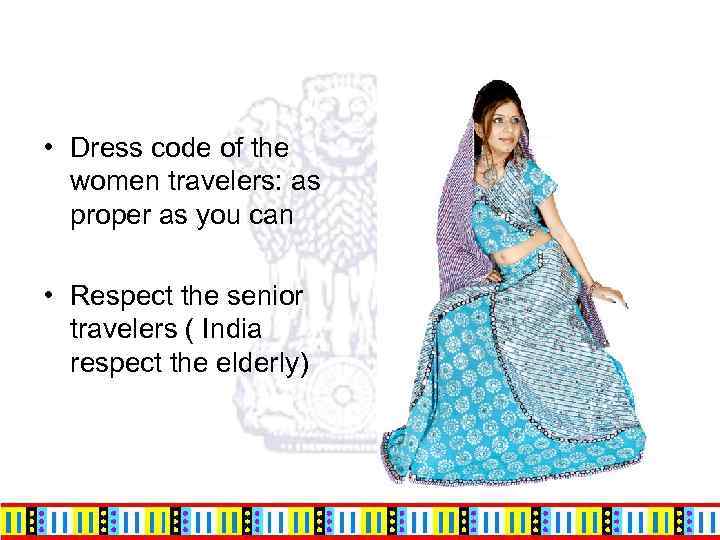 • Dress code of the women travelers: as proper as you can • Respect the senior travelers ( India respect the elderly)
 Impact of Culture on India Food and beverage business • What to eat when traveling to India? • Spicy • combat the flu virus • healing and magical qualities – – more valuable than gold or precious stones trade of spices : an extraordinarily influential factor in history add flavor and nutrients to dishes without fat or calories offer significant health benefits
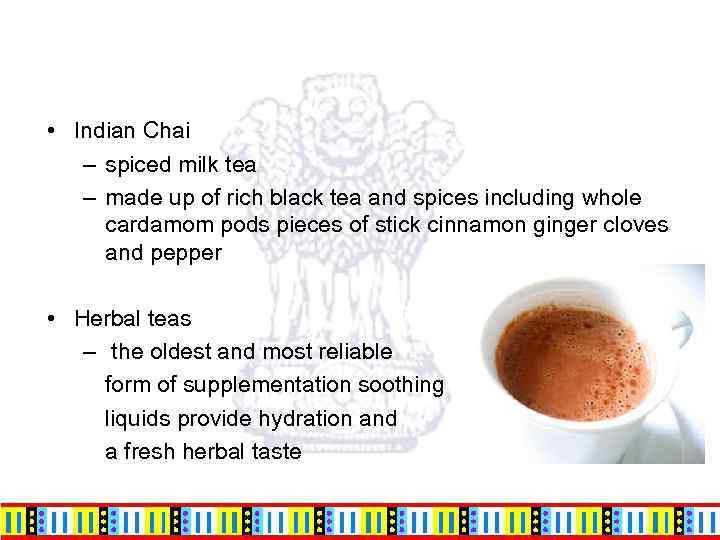 • Indian Chai – spiced milk tea – made up of rich black tea and spices including whole cardamom pods pieces of stick cinnamon ginger cloves and pepper • Herbal teas – the oldest and most reliable form of supplementation soothing liquids provide hydration and a fresh herbal taste
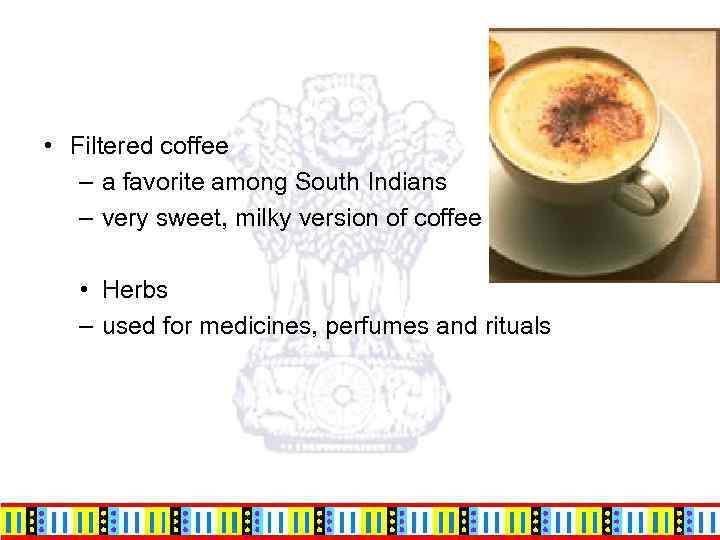 • Filtered coffee – a favorite among South Indians – very sweet, milky version of coffee • Herbs – used for medicines, perfumes and rituals
 Reference • Quinn, Brian. (1992 -1993). World Travel Guide. : London, Columbus Press. P. 403 -421 • Hotel Overseas Jul-Sep 2007 • BMI India Tourism Report Q 4 2009. : Business Monitor International LTD. • Carol E. henderson (2002). Culture and Customs of India, : Westport, CT: Greenwood Press. • India Chai Recipes, Retrieved October 17, 2009 from http: //www. indianfoodsco. com/Recipes/hotbev_images/Chai. Recipes. htm • Krannich, ronald L & Krannich, Caryl Rae (2000). Traveling smart. In The treasures and pleasure of India: Best of the Best (pp. 23 -56). : Manassas Park, VA. Impact Publication.