


 Скачать презентацию How to use remifentanil in general anaesthesia ULT SLK 05 19768 2
fe9813760d1dba93c9198e473ebc7262.ppt
- Количество слайдов: 19
 How to use remifentanil in general anaesthesia ULT/SLK/05/19768/2 August 2005
 How to use remifentanil in general anaesthesia • • • Properties of remifentanil Intra-operative control Recovery Reconstitution Dosing protocol for general anaesthesia Hypnotic sparing effects in general anaesthesia Post-operative pain management Summary References Prescribing information
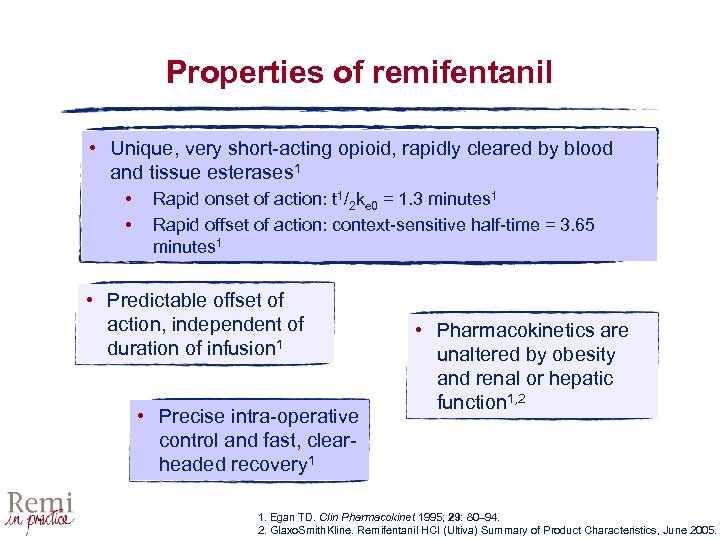 Properties of remifentanil • Unique, very short-acting opioid, rapidly cleared by blood and tissue esterases 1 • • Rapid onset of action: t 1/2 ke 0 = 1. 3 minutes 1 Rapid offset of action: context-sensitive half-time = 3. 65 minutes 1 • Predictable offset of action, independent of duration of infusion 1 • Precise intra-operative control and fast, clearheaded recovery 1 • Pharmacokinetics are unaltered by obesity and renal or hepatic function 1, 2 1. Egan TD. Clin Pharmacokinet 1995; 29: 80– 94. 2. Glaxo. Smith. Kline. Remifentanil HCl (Ultiva) Summary of Product Characteristics, June 2005.
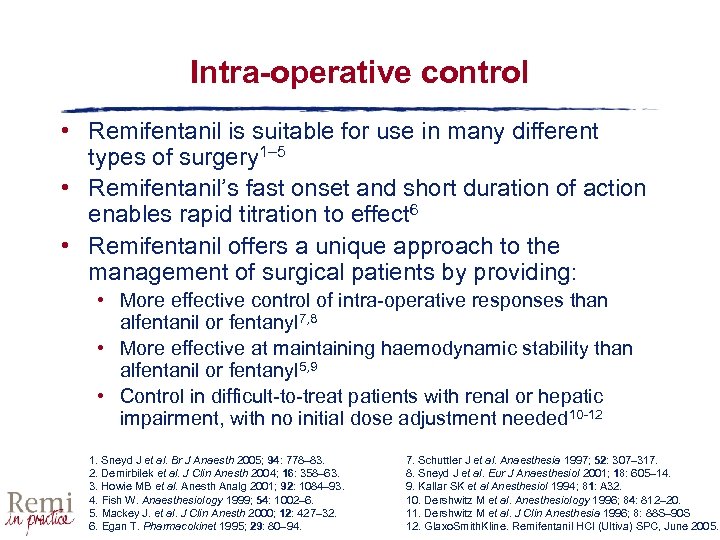 Intra-operative control • Remifentanil is suitable for use in many different types of surgery 1– 5 • Remifentanil’s fast onset and short duration of action enables rapid titration to effect 6 • Remifentanil offers a unique approach to the management of surgical patients by providing: • More effective control of intra-operative responses than alfentanil or fentanyl 7, 8 • More effective at maintaining haemodynamic stability than alfentanil or fentanyl 5, 9 • Control in difficult-to-treat patients with renal or hepatic impairment, with no initial dose adjustment needed 10 -12 1. Sneyd J et al. Br J Anaesth 2005; 94: 778– 83. 2. Demirbilek et al. J Clin Anesth 2004; 16: 358– 63. 3. Howie MB et al. Anesth Analg 2001; 92: 1084– 93. 4. Fish W. Anaesthesiology 1999; 54: 1002– 6. 5. Mackey J. et al. J Clin Anesth 2000; 12: 427– 32. 6. Egan T. Pharmacokinet 1995; 29: 80– 94. 7. Schuttler J et al. Anaesthesia 1997; 52: 307– 317. 8. Sneyd J et al. Eur J Anaesthesiol 2001; 18: 605– 14. 9. Kallar SK et al Anesthesiol 1994; 81: A 32. 10. Dershwitz M et al. Anesthesiology 1996; 84: 812– 20. 11. Dershwitz M et al. J Clin Anesthesia 1996; 8: 88 S– 90 S 12. Glaxo. Smith. Kline. Remifentanil HCl (Ultiva) SPC, June 2005.
 Recovery • Remifentanil provides fast, clear-headed recovery 1– 3 • Recovery with remifentanil is more rapid than with fentanyl or alfentanil 2, 3 • Remifentanil facilitates rapid extubation and reduces the need for ICU admission 1– 5 • Remifentanil enables early post-operative neurological assessment 1– 3 • Post-operative pain can be effectively managed 6 1. Wilhelm W et al. Br J Anaesth 2001; 86: 44– 9. 2. Kovac A et al. J Clin Anesth 1997; 9: 532– 41. 3. Bekker A et al. Anesth Analg 2000; 91: 117– 22. 4. Park G et al. Eur J Anaes 2000; 17: 111– 19. 5. Eberhart L et al. Eur J Anaesthesiol 2004; 21: 107– 14. 6. Minkowitz H. Can J Anesth 2000; 47: 522– 28.
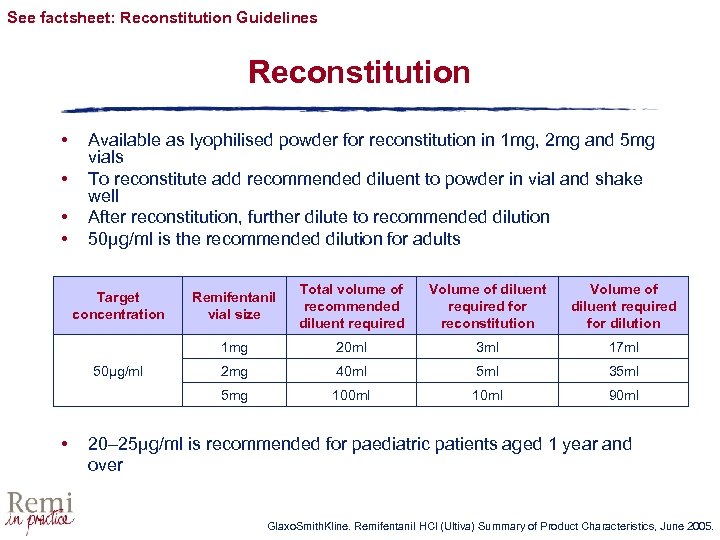 See factsheet: Reconstitution Guidelines Reconstitution • • Available as lyophilised powder for reconstitution in 1 mg, 2 mg and 5 mg vials To reconstitute add recommended diluent to powder in vial and shake well After reconstitution, further dilute to recommended dilution 50µg/ml is the recommended dilution for adults • Total volume of recommended diluent required Volume of diluent required for reconstitution Volume of diluent required for dilution 20 ml 3 ml 17 ml 2 mg 40 ml 5 ml 35 ml 5 mg 50µg/ml Remifentanil vial size 1 mg Target concentration 100 ml 10 ml 90 ml 20– 25µg/ml is recommended for paediatric patients aged 1 year and over Glaxo. Smith. Kline. Remifentanil HCl (Ultiva) Summary of Product Characteristics, June 2005.
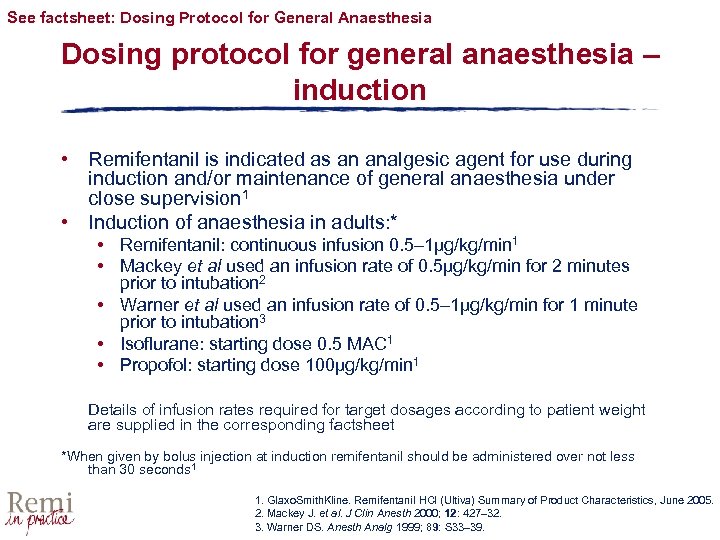 See factsheet: Dosing Protocol for General Anaesthesia Dosing protocol for general anaesthesia – induction • Remifentanil is indicated as an analgesic agent for use during induction and/or maintenance of general anaesthesia under close supervision 1 • Induction of anaesthesia in adults: * • Remifentanil: continuous infusion 0. 5– 1µg/kg/min 1 • Mackey et al used an infusion rate of 0. 5µg/kg/min for 2 minutes prior to intubation 2 • Warner et al used an infusion rate of 0. 5– 1µg/kg/min for 1 minute prior to intubation 3 • Isoflurane: starting dose 0. 5 MAC 1 • Propofol: starting dose 100μg/kg/min 1 Details of infusion rates required for target dosages according to patient weight are supplied in the corresponding factsheet *When given by bolus injection at induction remifentanil should be administered over not less than 30 seconds 1 1. Glaxo. Smith. Kline. Remifentanil HCl (Ultiva) Summary of Product Characteristics, June 2005. 2. Mackey J. et al. J Clin Anesth 2000; 12: 427– 32. 3. Warner DS. Anesth Analg 1999; 89: S 33– 39.
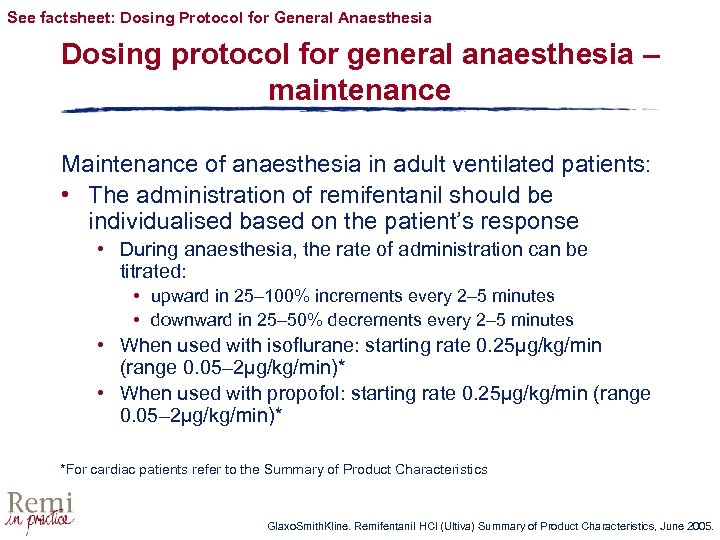 See factsheet: Dosing Protocol for General Anaesthesia Dosing protocol for general anaesthesia – maintenance Maintenance of anaesthesia in adult ventilated patients: • The administration of remifentanil should be individualised based on the patient’s response • During anaesthesia, the rate of administration can be titrated: • upward in 25– 100% increments every 2– 5 minutes • downward in 25– 50% decrements every 2– 5 minutes • When used with isoflurane: starting rate 0. 25µg/kg/min (range 0. 05– 2µg/kg/min)* • When used with propofol: starting rate 0. 25µg/kg/min (range 0. 05– 2µg/kg/min)* *For cardiac patients refer to the Summary of Product Characteristics Glaxo. Smith. Kline. Remifentanil HCl (Ultiva) Summary of Product Characteristics, June 2005.
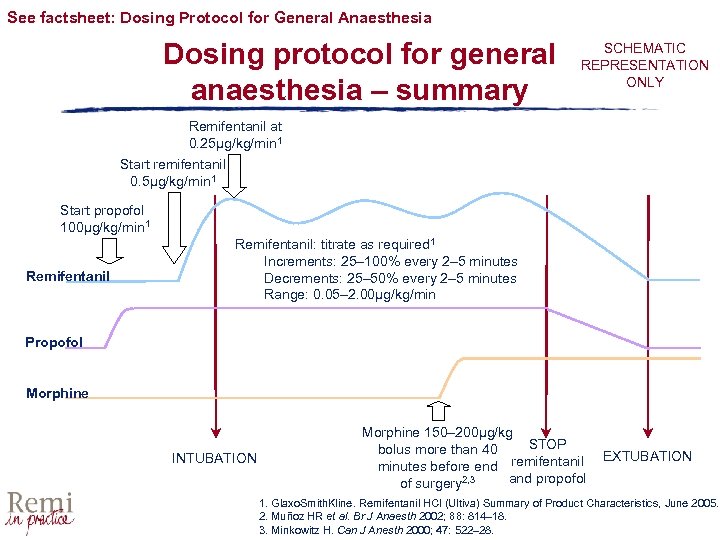 See factsheet: Dosing Protocol for General Anaesthesia Dosing protocol for general anaesthesia – summary SCHEMATIC REPRESENTATION ONLY Remifentanil at 0. 25μg/kg/min 1 Start remifentanil 0. 5μg/kg/min 1 Start propofol 100μg/kg/min 1 Remifentanil: titrate as required 1 Increments: 25– 100% every 2– 5 minutes Decrements: 25– 50% every 2– 5 minutes Range: 0. 05– 2. 00μg/kg/min Propofol Morphine INTUBATION Morphine 150– 200μg/kg STOP bolus more than 40 minutes before end remifentanil and propofol of surgery 2, 3 EXTUBATION 1. Glaxo. Smith. Kline. Remifentanil HCl (Ultiva) Summary of Product Characteristics, June 2005. 2. Muñoz HR et al. Br J Anaesth 2002; 88: 814– 18. 3. Minkowitz H. Can J Anesth 2000; 47: 522– 28.
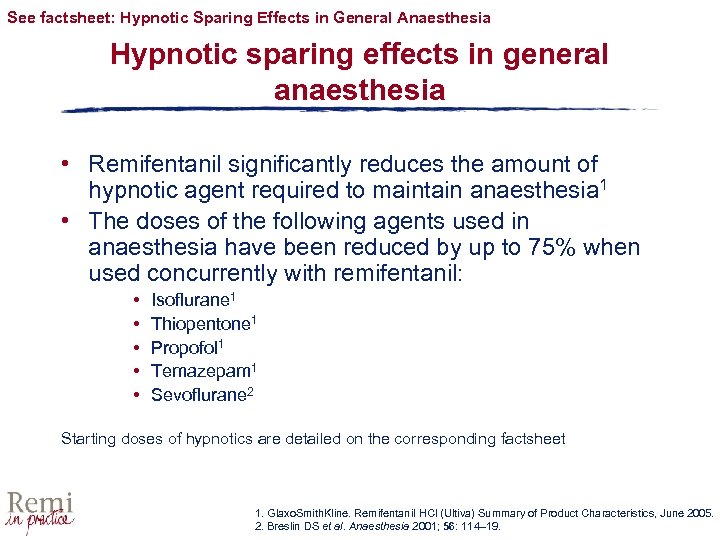 See factsheet: Hypnotic Sparing Effects in General Anaesthesia Hypnotic sparing effects in general anaesthesia • Remifentanil significantly reduces the amount of hypnotic agent required to maintain anaesthesia 1 • The doses of the following agents used in anaesthesia have been reduced by up to 75% when used concurrently with remifentanil: • • • Isoflurane 1 Thiopentone 1 Propofol 1 Temazepam 1 Sevoflurane 2 Starting doses of hypnotics are detailed on the corresponding factsheet 1. Glaxo. Smith. Kline. Remifentanil HCl (Ultiva) Summary of Product Characteristics, June 2005. 2. Breslin DS et al. Anaesthesia 2001; 56: 114– 19.
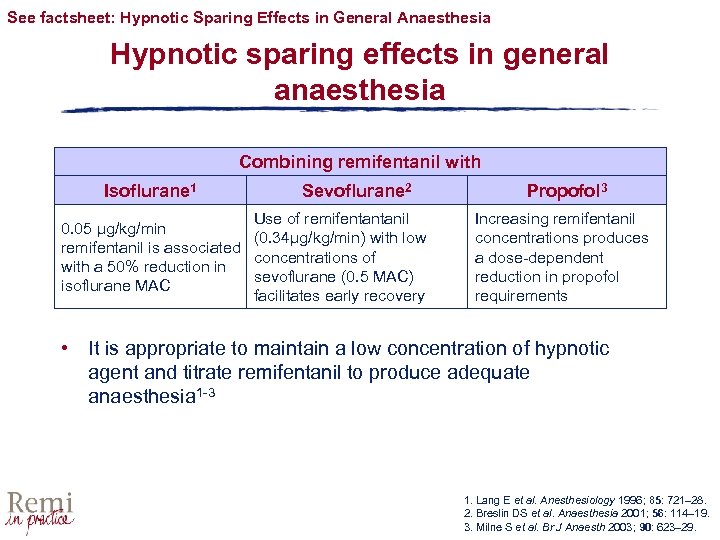 See factsheet: Hypnotic Sparing Effects in General Anaesthesia Hypnotic sparing effects in general anaesthesia Combining remifentanil with Isoflurane 1 Sevoflurane 2 Use of remifentantanil 0. 05 µg/kg/min (0. 34μg/kg/min) with low remifentanil is associated concentrations of with a 50% reduction in sevoflurane (0. 5 MAC) isoflurane MAC facilitates early recovery Propofol 3 Increasing remifentanil concentrations produces a dose-dependent reduction in propofol requirements • It is appropriate to maintain a low concentration of hypnotic agent and titrate remifentanil to produce adequate anaesthesia 1 -3 1. Lang E et al. Anesthesiology 1996; 85: 721– 28. 2. Breslin DS et al. Anaesthesia 2001; 56: 114– 19. 3. Milne S et al. Br J Anaesth 2003; 90: 623– 29.
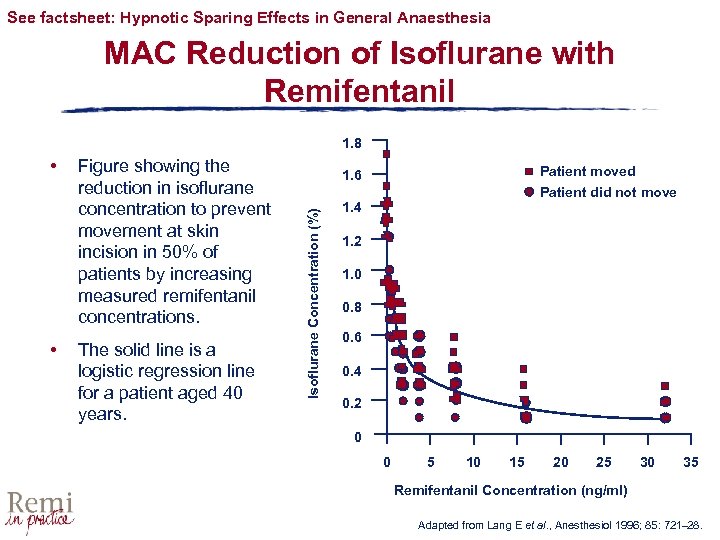 See factsheet: Hypnotic Sparing Effects in General Anaesthesia MAC Reduction of Isoflurane with Remifentanil 1. 8 • Figure showing the reduction in isoflurane concentration to prevent movement at skin incision in 50% of patients by increasing measured remifentanil concentrations. The solid line is a logistic regression line for a patient aged 40 years. Patient moved 1. 6 Isoflurane Concentration (%) • Patient did not move 1. 4 1. 2 1. 0 0. 8 0. 6 0. 4 0. 2 0 0 5 10 15 20 25 30 35 Remifentanil Concentration (ng/ml) Adapted from Lang E et al. , Anesthesiol 1996; 85: 721– 28.
 See factsheet: Post-operative Pain Management Post-operative pain management • Due to the very rapid offset of action of remifentanil, no residual opioid activity will be present within 5– 10 minutes after discontinuation, regardless of duration of infusion • Post-operative analgesia, including choice of agent, dose and time of administration must be planned well in advance of remifentanil discontinuation • Analgesics should be administered prior to discontinuation of remifentanil • Sufficient time must be allowed to reach the maximum effect of the longer-acting analgesic • The choice of analgesic should be appropriate for the patient’s surgical procedure and the level of post-operative care Glaxo. Smith. Kline. Remifentanil HCl (Ultiva) Summary of Product Characteristics, June 2005.
 See factsheet: Post-operative Pain Management Post-operative pain management • The dosage and timing of administration of the alternative long-acting analgesic agent should be considered to allow therapeutic effects to become established 1 • Minkowitz et al. achieved adequate post-operative pain management with a 150 or 200μg/kg bolus of morphine sulphate administered 30 minutes before the end of surgery 2 • Muñoz et al. used 150μg/kg morphine and showed a reduction in the number of patients requiring morphine in the post-anaesthesia care unit, when morphine had been given more than 40 minutes before the end of surgery 3 1. Lane M et al. Care Crit Ill 2002: 18: 144 -45. 2. Minkowitz H. Can J Anesth 2000; 47: 522– 28. 3. Muñoz HR et al. Br J Anaesth 2002; 88: 814– 18.
 Special precautions for use • Due to the very rapid offset of action of remifentanil, postoperative analgesia must be planned well in advance of remifentanil discontinuation • Care should be taken to avoid inadvertent administration of remifentanil remaining in IV lines and cannulae • Muscle rigidity induced by remifentanil must be treated in the context of the patient's clinical condition with appropriate supporting measures including ventilatory support. • Remifentanil should only be used in areas where facilities for monitoring and dealing with respiratory depression are available • Hypotension and bradycardia may be managed by reducing the rate of infusion of remifentanil or the dose of concurrent anaesthetics or by using IV fluids, vasopressor or anticholinergic agents as appropriate Glaxo. Smith. Kline. Remifentanil HCl (Ultiva) Summary of Product Characteristics, June 2005.
 Summary • Rapid and easy titration to effect titrate remifentanil rather than hypnotic • The rapid offset of action of remifentanil is independent of dose and duration • Post-operative pain is easily managed if planned in advance • Substantial hypnotic sparing effects • The pharmacokinetic profile of remifentanil offers precise intraoperative control of anaesthesia and fast, clear headed recovery
 References Bekker A et al. The recovery of cognitive function after remifentanil-nitrous oxide anesthesia is faster than after an isoflurane-nitrous oxide-fentanyl combination in elderly patients Anesth Analg 2000; 91: 117– 22. Breslin DS et al. Sevoflurane--nitrous oxide anaesthesia supplemented with remifentanil: effect on recovery and cognitive function Anaesthesia 2001; 56: 114 9. Demirbilek S et al. The effects of remifentanil and alfentanil-based total intravenous anesthesia (TIVA) on the endocrine response to abdominal hysterectomy J Clin Anesth 2004; 16: 358– 63. Dershwitz M et al. Pharmacokinetics and pharmacodynamics of remifentanil in volunteer subjects with severe liver disease. Anesthesiology 1996; 84: 812– 20. Dershwitz M et al. The pharmacokinetics and pharmacodynamics of remifentanil in volunteers with severe hepatic or renal dysfunction. J Clin Anesthesia 1996; 8: 88 S– 90 S. Eberhart L et al. Fast-track eligibility, costs and quality of recovery after intravenous anaesthesia with propofolremifentanil versus balanced anaesthesia with isoflurane-alfentanil Eur J Anaesthesiol 2004; 21: 107– 14. Egan TD Remifentanil pharmacokinetics and pharmacodynamics. A preliminary appraisal. Clin Pharmacokinet 1995; 29: 80– 94. Fish W et al. Comparison of sevoflurane and total intravenous anaesthesia for daycase urological surgery Anaesthesiology 1999; 54: 1002– 6. Glaxo. Smith. Kline. Remifentanil HCl (Ultiva) Summary of Product Characteristics, June 2005. Howie MB et al. A randomised double-blinded multicenter comparison of remifentanil versus fentanyl when combined with isoflurane/propofol for early extubation in coronary artery bypass graft surgery. Anesth Analg 2001; 92: 1084 -1093. Kallar SK et al. A single, blind, comparative study of the safety and efficacy of remifentanil and alfentanil for outpatient anaesthesia. Anesthesiol 1994; 81: A 32.
 References continued Kovac A et al. Remifentanil versus alfentanil in a balanced anesthetic technique for total abdominal hysterectomy J Clin Anesth 1997; 9: 532– 41. Lane M et al. The use of remifentanil in the critically ill Care Crit Ill 2002: 18: 144 -45. Lang E et al. Reduction of isoflurane minimal alveolar concentration by remifentanil Anesthesiology 1996; 85: 721 8. Mackey J. et al. Effectiveness of remifentanil versus traditional fentanyl-based anesthetic in high-risk outpatient surgery J Clin Anesth 2000; 12: 427– 32. Milne S et al. Propofol sparing effect of remifentanil using closed-loop anaesthesia Br J Anaesth 2003; 90: 623 9. Minkowitz H. Postoperative pain management in patients undergoing major surgery after remifentanil vs. fentanyl anesthesia. Multicentre Investigator Group. Can J Anesth 2000; 47: 522– 8. Muñoz H et al. Effect of timing of morphine administration during remifenanil-based anaesthesia on early recovery from anaesthesia and postoperative pain. Br J Anaesth 2002; 88: 814 -8. Park G et al. Reducing the demand for admission to intensive care after major abdominal surgery by a change in anaesthetic practice and the use of remifentanil Eur J Anaes 2000; 17: 111– 9. Schuttler J et al. A comparison of remifentanil and alfentanil in patients undergoing major abdominal surgery. Anaesthesia 1997; 52: 307– 317. Sneyd J et al. Comparison of propofol/remifentanil and sevoflurane/remifentanil for maintenance of anaesthesia for elective intracranial surgery Br J Anaesth 2005; 94: 778– 83. Sneyd J et al. Remifentanil and fentanyl during anaesthesia for major abdominal and gynaecological surgery. An open, comparative study of safety and efficacy Eur J Anaesthesiol 2001; 18: 605– 14. Warner DS. Experience with remifentanil in neurosurgical patients Anesth Analg 1999; 89: S 33 -9. Wilhelm W et al. Recovery and neurological examination after remifentanil-desflurane or fentanyl-desflurane anaesthesia for carotid artery surgery. Br J Anaesth 2001; 86: 44– 9.
 Prescribing information PRESCRIBING INFORMATION: Ultiva (remifentanil hydrochloride). The following is for guidance only. Refer to Summary of Product Characteristics (Sm. PC) before prescribing. Ultiva is a very short acting opioid for injection/infusion. Indications: General Anaesthesia. Analgesia/sedation in ICU. Dosage: tailor to individual. Anaesthesia: Adults: Dilute to e. g. 50 mcg/ml (2 mg in 40 ml). Induction (not sole agent): 1 mcg/kg bolus administered over not less than 30 seconds then 0. 5 – 1 mcg/kg/min. Reduce to 0. 25 mcg/kg/min (using e. g. propofol or isoflurane). Maintenance: 0. 05 – 2 mcg/kg/min with 0. 5 – 1 mcg/kg bolus or alter infusion rate as needed. Due to rapid metabolism, no residual opioid activity will be present 5 - 10 minutes after discontinuation. Where postoperative pain anticipated, analgesics should be administered prior to discontinuation of Ultiva. Spontaneous ventilation: Respiratory depression likely; ventilatory support may be required. Avoid inadvertent administration of Ultiva remaining in IV lines and cannulae. Elderly (over 65 years): initiate half adult dose. Children: see Sm. PC. Cardiac surgery: See Sm. PC. Intensive Care: Adults: 0. 1 to 0. 15 mcg/kg/min. Increase by 0. 025 mcg/kg/min. If inadequate sedation at 0. 2 mcg/kg/hr add sedative. Elderly (over 65 years): No initial dose reduction required. Children: not recommended. Renal/hepatic impairment: No dosage adjustment necessary. Severe hepatic impairment may be slightly more sensitive to respiratory depressant effects. Contraindications: Epidural and intrathecal use. Known hypersensitivity to any ingredient or other fentanyl analogues. Not for use as sole induction agent. Warnings and Precautions: Administer only in appropriate setting. Interactions: As with other opioids, remifentanil decreases the requirements for inhaled and IV anaesthetics and benzodiazepines. Pregnancy and lactation: No adequate and well-controlled studies. Use only if potential benefit justifies potential risk to the foetus. Caution in nursing mothers. Insufficient evidence to recommend use during labour or Caesarean section. May cause respiratory depression in neonate. Undesirable effects: Acute respiratory depression, bradycardia, hypotension and/or skeletal muscle rigidity all resolve within minutes of discontinuation or decrease in the administration rate. Post-operative shivering, apnoea, hypertension, hypoxia, pruritus, constipation, aches, sedation, nausea and vomiting have also been reported. Very rarely, allergic reactions and bradycardia leading to asystole. As with other opioids remifentanil may produce dependency. Basic NHS Costs: Available as 1 mg, 2 mg and 5 mg vials containing white/off-white powder for reconstitution to provide 1 mg/ml remifentanil hydrochloride. 1 mg vial x 5, £ 25. 58, 2 mg vial x 5, £ 51. 15, 5 mg vial x 5, £ 127. 88. Legal category: CD POM. Product Licence numbers: Ultiva 1 mg PL 19494/0026, Ultiva 2 mg PL 19494/0027, Ultiva 5 mg PL 19494/0028. Marketing Authorisation holder: Glaxo. Smith. Kline UK Ltd, 980 Great West Road, Brentford, Middlesex TW 8 9 GS. Prescribing Information updated: February 2005.