


 Скачать презентацию How to transfer Jaleh Gholami Eshlaghi MD MPH
5cde7311c590406ee8cbff54f526a020.ppt
- Количество слайдов: 40
 How to transfer Jaleh Gholami Eshlaghi MD. MPH. Ph. D Candidate in Epidemiology
 ﺍﻫﺪﺍﻑ آﻤﻮﺯﺷی ﺍیﻦ ﺑﺨﺶ • • آﺸﻨﺎیی ﺑﺎ ﺍﺻﻮﻝ کﻠی کﻪ ﺩﺭ ﻫﻨگﺎﻡ ﺍﻧﺘﻘﺎﻝ ﺩﺍﻧﺶ ﺑﺎیﺪ ﺩﺭ ﻧﻈﺮ گﺮﻓﺖ آﺸﻨﺎیی ﺑﺎ ﺑﺮﺧی ﺍﺯ ﺭﻭﺵ ﻫﺎی ﺍﻧﺘﻘﺎﻝ ﺩﺍﻧﺶ ﺑﺮﺍی گﺮﻭﻩ ﻫﺎی ﻣﺘﻔﺎﻭﺕ ﻣﺨﺎﻃﺒیﻦ آﺸﻨﺎیی ﺑﺎ ﺭﻭﺵ ﻫﺎی ﻣﻮﺛﺮ ﺍﻧﺘﻘﺎﻝ ﺩﺍﻧﺶ ﺗﻮﺟﻪ ﺑﻪ ﺍﺛﺮﺑﺨﺸی ﺭﻭﺵ ﻫﺎی ﺍﻧﺘﻘﺎﻝ ﻫﻨگﺎﻡ ﺗﺪﻭیﻦ ﺍﺳﺘﺮﺍﺗژی ﺍﻧﺘﻘﺎﻝ
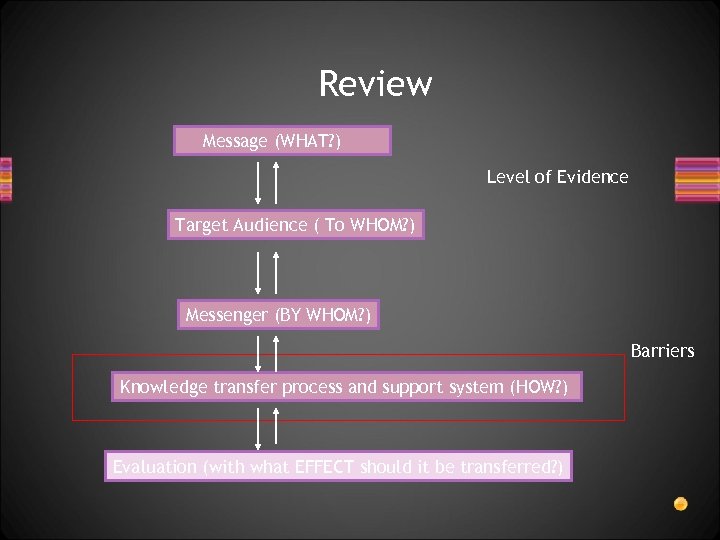 Review Message (WHAT? ) Level of Evidence Target Audience ( To WHOM? ) Messenger (BY WHOM? ) Barriers Knowledge transfer process and support system (HOW? ) Evaluation (with what EFFECT should it be transferred? )
 Consider the audience • Knowledge sharing requires an understanding of the problems audiences face, the level of detail they need, and the style of thinking they use. • The message must be one that is valuable to an audience based on their needs, delivered by a messenger they can trust, in language they are comfortable with.
 Use Plain Language • Researchers, service providers, and policymakers may talk about their work in diverse ways. Researchers may communicate with one another in highly technical terms, whereas service providers may discuss similar issues in language based on their daily work, and policymakers in political jargon. If a community of people sharing knowledge spans several disciplines and contexts, a common language is needed.
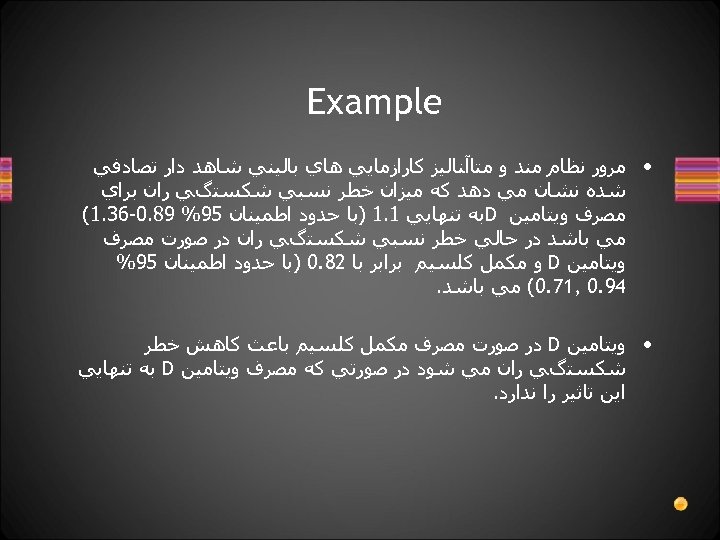 Example • ﻣﺮﻭﺭ ﻧﻈﺎﻡ ﻣﻨﺪ ﻭ ﻣﺘﺎآﻨﺎﻟﻴﺰ ﻛﺎﺭﺍﺯﻣﺎﻳﻲ ﻫﺎﻱ ﺑﺎﻟﻴﻨﻲ ﺷﺎﻫﺪ ﺩﺍﺭ ﺗﺼﺎﺩﻓﻲ ﺷﺪﻩ ﻧﺸﺎﻥ ﻣﻲ ﺩﻫﺪ ﻛﻪ ﻣﻴﺰﺍﻥ ﺧﻄﺮ ﻧﺴﺒﻲ ﺷﻜﺴﺘگﻲ ﺭﺍﻥ ﺑﺮﺍﻱ ﻣﺼﺮﻑ ﻭﻳﺘﺎﻣﻴﻦ D ﺑﻪ ﺗﻨﻬﺎﻳﻲ 1. 1 )ﺑﺎ ﺣﺪﻭﺩ ﺍﻃﻤﻴﻨﺎﻥ 59% 98. 0 -63. 1( ﻣﻲ ﺑﺎﺷﺪ ﺩﺭ ﺣﺎﻟﻲ ﺧﻄﺮ ﻧﺴﺒﻲ ﺷﻜﺴﺘگﻲ ﺭﺍﻥ ﺩﺭ ﺻﻮﺭﺕ ﻣﺼﺮﻑ ﻭﻳﺘﺎﻣﻴﻦ D ﻭ ﻣﻜﻤﻞ ﻛﻠﺴﻴﻢ ﺑﺮﺍﺑﺮ ﺑﺎ 28. 0 )ﺑﺎ ﺣﺪﻭﺩ ﺍﻃﻤﻴﻨﺎﻥ 59% 49. 0 , 17. 0( ﻣﻲ ﺑﺎﺷﺪ. • ﻭﻳﺘﺎﻣﻴﻦ D ﺩﺭ ﺻﻮﺭﺕ ﻣﺼﺮﻑ ﻣﻜﻤﻞ ﻛﻠﺴﻴﻢ ﺑﺎﻋﺚ ﻛﺎﻫﺶ ﺧﻄﺮ ﺷﻜﺴﺘگﻲ ﺭﺍﻥ ﻣﻲ ﺷﻮﺩ ﺩﺭ ﺻﻮﺭﺗﻲ ﻛﻪ ﻣﺼﺮﻑ ﻭﻳﺘﺎﻣﻴﻦ D ﺑﻪ ﺗﻨﻬﺎﻳﻲ ﺍﻳﻦ ﺗﺎﺛﻴﺮ ﺭﺍ ﻧﺪﺍﺭﺩ.
 Evidence based medicine should be complemented by evidence based implementation. Richard Grol
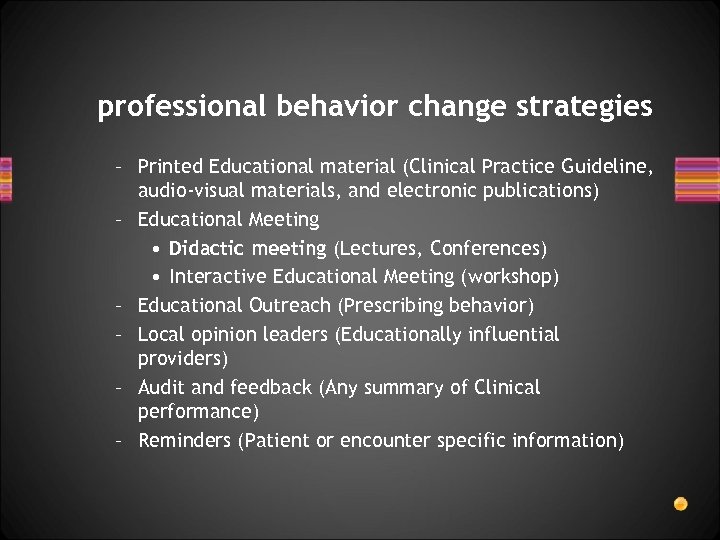 professional behavior change strategies – Printed Educational material (Clinical Practice Guideline, audio-visual materials, and electronic publications) – Educational Meeting • Didactic meeting (Lectures, Conferences) • Interactive Educational Meeting (workshop) – Educational Outreach (Prescribing behavior) – Local opinion leaders (Educationally influential providers) – Audit and feedback (Any summary of Clinical performance) – Reminders (Patient or encounter specific information)
 Clinical Practice Guideline • Evidence-based clinical practice guidelines are knowledge tools defined as systematically developed statements that help clinicians and patients make decisions about appropriate health care for specific clinical circumstances. • clinical practice guidelines should facilitate high-quality practice informed by evidence,
 How are clinical practice guidelines developed? essential elements • • • Establish multidisciplinary guideline team Identify clinical question that explicitly defines the patients, intervention/exposure, comparisons (if relevant), outcomes of interest and setting Conduct a systematic review of evidence Appraise and interpret evidence and come to consensus on its meaning Draft guideline recommendations that align with evidentiary base Complete an external review of draft report among intended users and key stakeholders Revise the guidelines in response to external review Read the final guideline report for distribution and dissemination Prepare implementation strategy
 How do we determine the quality of clinical practice guidelines? • Appraisal of Guidelines Research and Evaluation (AGREE) • Guideline Implementability Assessment (GLIA) tool • The ADAPTE tool that provides criteria to evaluate the clinical fidelity of recommendations and their link to evidence.
 Local opinion leaders • local opinion leaders are “providers nominated by their colleagues as educationally influential”. • Opinion leadership is the degree to which an individual is able to influence other individuals’ attitudes or overt behavior informally in a desired way with relative frequency.
 Local opinion leaders This informal leadership is not a function of the individual’s formal position or status in the system, it is earned and maintained by the individual’s – Technical competence, – social accessibility, and – conformity to the systems norms. opinion leaders have more: – external communication, – higher social status, – innovative.
 Local opinion leaders characteristics in Iran • • 1) 2) 3) 4) High level of knowledge Communication skills Taking into account stakeholders Professional ethics
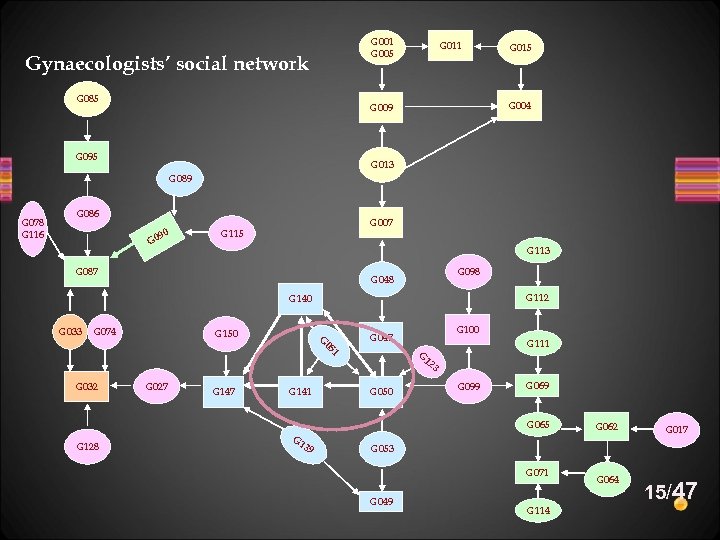 G 001 G 005 Gynaecologists’ social network G 085 G 011 G 004 G 009 G 095 G 013 G 089 G 078 G 116 G 086 0 09 G G 007 G 115 G 113 G 087 G 098 G 048 G 112 G 140 G 033 G 074 05 G 027 G 141 G 111 G 12 3 1 G 032 G 100 G 047 G G 150 G 099 G 065 G 128 G 1 3 9 G 062 G 017 G 053 G 071 G 049 G 114 G 064 15/47
 Effectiveness of professional behavior change strategies – Printed Educational material (Clinical Practice Guideline, audio-visual materials, and electronic publications) – Educational Meeting • Didactic meeting (Lectures, Conferences) • Interactive Educational Meeting (workshop) – Educational Outreach (Prescribing behavior) – Local opinion leaders (Educationally influential providers) – Audit and feedback (Any summary of Clinical performance) – Reminders (Patient or encounter specific information)
 strategies focusing on patients • Patient decision aids • Personalized risk communication (Uptake for screening test) • Interactive Health Communication Applications (Information packages for patients that combine health information with at least one of social support, decision support, or behavior change support) • Interventions to enhance medication adherence (Instruction, Automated telephone monitoring and counseling, manual telephone follow-up, Reminders, special ‘reminder’ pill packaging, dose-dispensing units and medication charts, appointment and prescription refill reminders, direct observation of treatments, …)
 Patient Decision Aids A review of 2500 treatments found that only 17% had adequate scientific evidence to be classified as black or white; the majority were “grey” either because of insufficient evidence or because the balance between benefits and harms was close. – birth control, – options for menopause symptoms, – back pain, – osteoarthritis, – end-of-life care, – genetic testing, – breast and prostate cancer treatment,
 What are patient decision aids? Patient decision aids translate evidence into patient-friendly tools to inform patients about their options, help them clarify the value they place on benefits versus harms, and guide them in the process of decision making. Formats for decision aids are: • paper-based booklets, • video/DVDs, • decision boards, • and internet-based materials
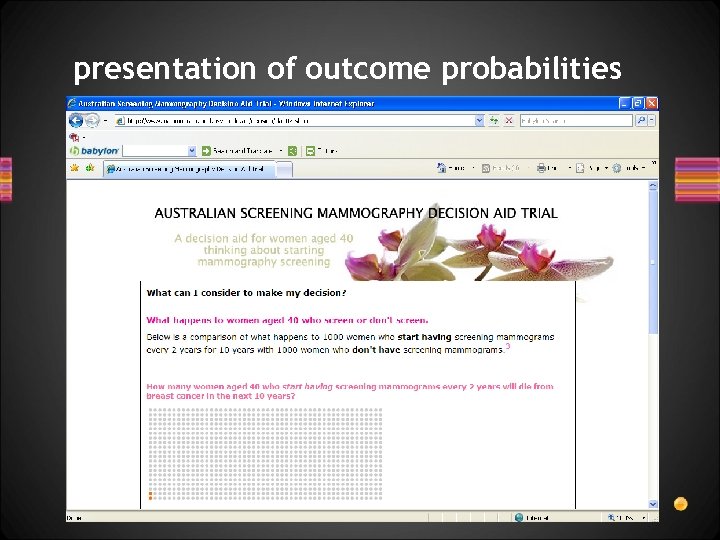 presentation of outcome probabilities
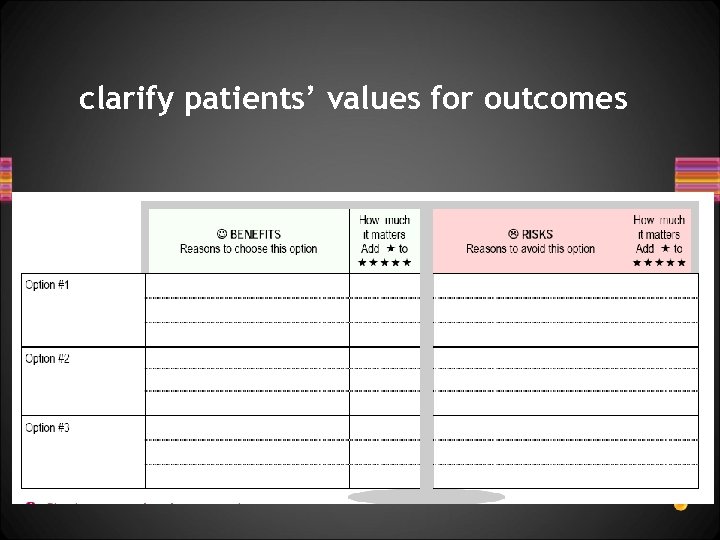 clarify patients’ values for outcomes
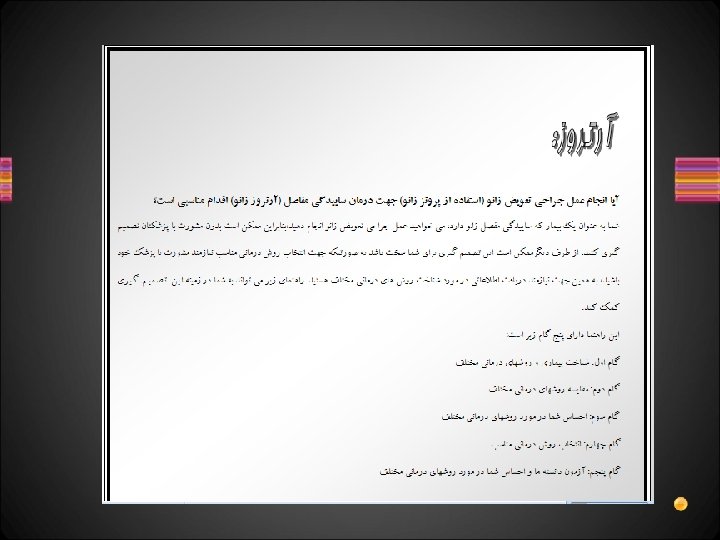
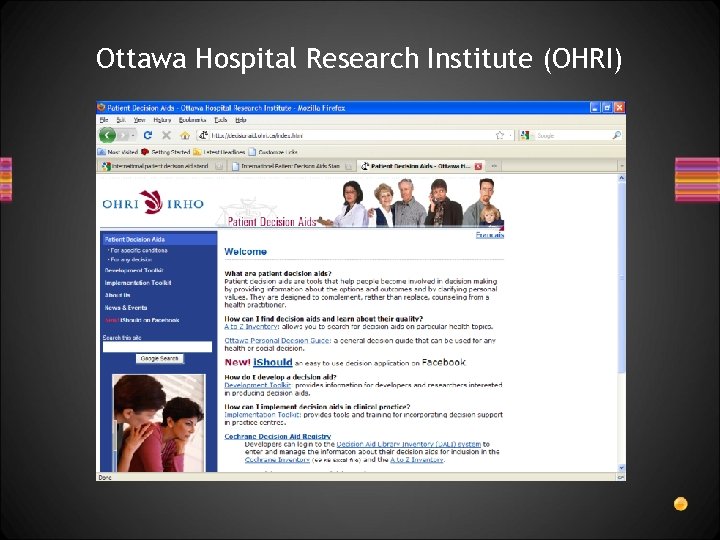 Ottawa Hospital Research Institute (OHRI)
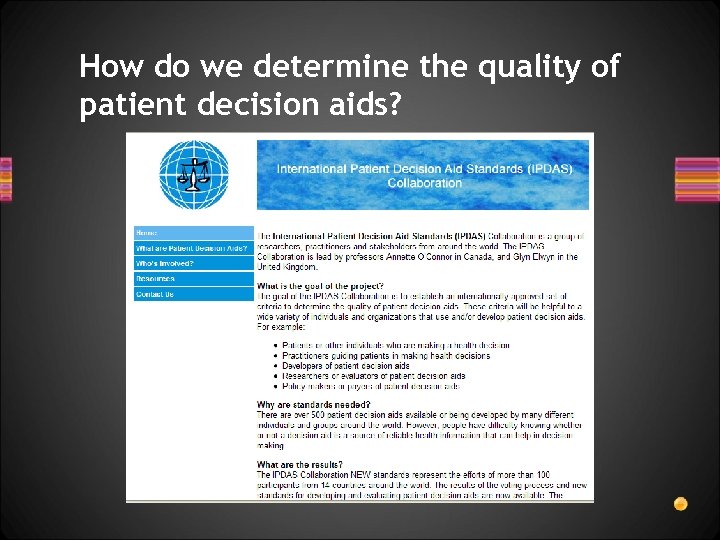 How do we determine the quality of patient decision aids?
 Effectiveness of knowledge translation strategies focusing on patients • Patient decision aids • Personalized risk communication (Uptake for screening test) • Interactive Health Communication Applications (Information packages for patients that combine health information with at least one of social support, decision support, or behavior change support) • Interventions to enhance medication adherence (Instruction, Automated telephone monitoring and counseling, manual telephone follow-up, Reminders, special ‘reminder’ pill packaging, dose-dispensing units and medication charts, appointment and prescription refill reminders, direct observation of treatments, …)
 Do patient decision aids work? PDAs improve: • patients’ participation in decision making, • knowledge of options, • agreement between patients’ values and the subsequent treatment or screening decisions. • realistic expectations of the chances of benefits, harms, and side effects • More use of conservative options, • without apparent adverse effects on health outcomes or anxiety.
 Effectiveness of knowledge translation strategies focusing on policy makers and senior health service managers • In contrast to the substantial evidence base on the effectiveness of knowledge translation strategies targeting health care professionals and patients, we are not aware of any experimental studies evaluating the effects of knowledge translation research that focused on policy makers or senior health service managers.
 “Reader Friendly Writing” Writing for health policy makers, planners and managers (Canadian Health Service Research Foundation) 1: 3: 25 1: Main message 3: Executive Summary 25: The Report
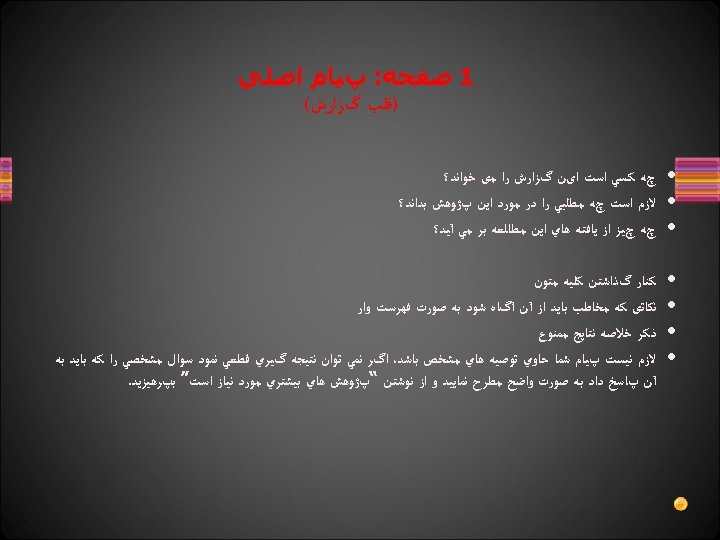 1 ﺻﻔﺤﻪ: پﻴﺎﻡ ﺍﺻﻠﻲ )ﻗﻠﺐ گﺰﺍﺭﺵ( چﻪ ﻛﺴﻲ ﺍﺳﺖ ﺍیﻦ گﺰﺍﺭﺵ ﺭﺍ ﻣی ﺧﻮﺍﻧﺪ؟ ﻻﺯﻡ ﺍﺳﺖ چﻪ ﻣﻄﻠﺒﻲ ﺭﺍ ﺩﺭ ﻣﻮﺭﺩ ﺍﻳﻦ پژﻮﻫﺶ ﺑﺪﺍﻧﺪ؟ چﻪ چﻴﺰ ﺍﺯ ﻳﺎﻓﺘﻪ ﻫﺎﻱ ﺍﻳﻦ ﻣﻄﺎﻟﻌﻪ ﺑﺮ ﻣﻲ آﻴﺪ؟ ﻛﻨﺎﺭ گﺬﺍﺷﺘﻦ ﻛﻠﻴﻪ ﻣﺘﻮﻥ ﻧﻜﺎﺗی ﻛﻪ ﻣﺨﺎﻃﺐ ﺑﺎﻳﺪ ﺍﺯ آﻦ آگﺎﻩ ﺷﻮﺩ ﺑﻪ ﺻﻮﺭﺕ ﻓﻬﺮﺳﺖ ﻭﺍﺭ ﺫﻛﺮ ﺧﻼﺻﻪ ﻧﺘﺎﻳﺞ ﻣﻤﻨﻮﻉ ﻻﺯﻡ ﻧﻴﺴﺖ پﻴﺎﻡ ﺷﻤﺎ ﺣﺎﻭﻱ ﺗﻮﺻﻴﻪ ﻫﺎﻱ ﻣﺸﺨﺺ ﺑﺎﺷﺪ، ﺍگﺮ ﻧﻤﻲ ﺗﻮﺍﻥ ﻧﺘﻴﺠﻪ گﻴﺮﻱ ﻗﻄﻌﻲ ﻧﻤﻮﺩ ﺳﻮﺍﻝ ﻣﺸﺨﺼﻲ ﺭﺍ ﻛﻪ ﺑﺎﻳﺪ ﺑﻪ آﻦ پﺎﺳﺦ ﺩﺍﺩ ﺑﻪ ﺻﻮﺭﺕ ﻭﺍﺿﺢ ﻣﻄﺮﺡ ﻧﻤﺎﻳﻴﺪ ﻭ ﺍﺯ ﻧﻮﺷﺘﻦ “پژﻮﻫﺶ ﻫﺎﻱ ﺑﻴﺸﺘﺮﻱ ﻣﻮﺭﺩ ﻧﻴﺎﺯ ﺍﺳﺖ” ﺑپﺮﻫﻴﺰﻳﺪ.
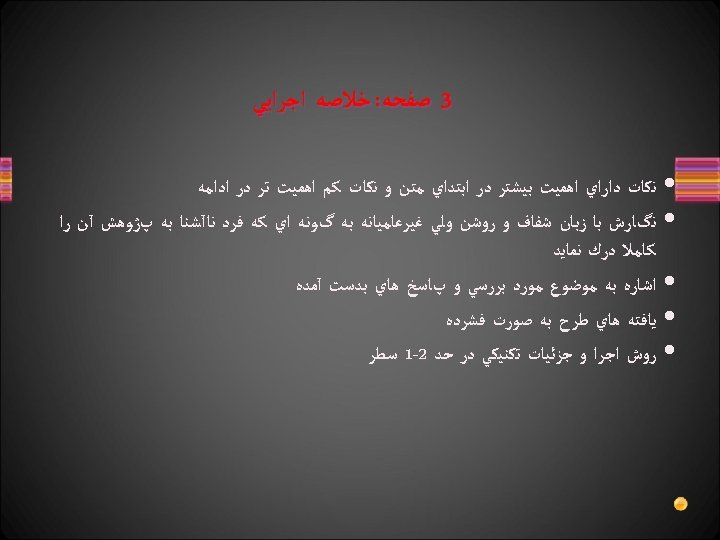 3 ﺻﻔﺤﻪ: ﺧﻼﺻﻪ ﺍﺟﺮﺍﻳﻲ ﻧﻜﺎﺕ ﺩﺍﺭﺍﻱ ﺍﻫﻤﻴﺖ ﺑﻴﺸﺘﺮ ﺩﺭ ﺍﺑﺘﺪﺍﻱ ﻣﺘﻦ ﻭ ﻧﻜﺎﺕ ﻛﻢ ﺍﻫﻤﻴﺖ ﺗﺮ ﺩﺭ ﺍﺩﺍﻣﻪ ﻧگﺎﺭﺵ ﺑﺎ ﺯﺑﺎﻥ ﺷﻔﺎﻑ ﻭ ﺭﻭﺷﻦ ﻭﻟﻲ ﻏﻴﺮﻋﺎﻣﻴﺎﻧﻪ ﺑﻪ گﻮﻧﻪ ﺍﻱ ﻛﻪ ﻓﺮﺩ ﻧﺎآﺸﻨﺎ ﺑﻪ پژﻮﻫﺶ آﻦ ﺭﺍ ﻛﺎﻣﻼ ﺩﺭﻙ ﻧﻤﺎﻳﺪ ﺍﺷﺎﺭﻩ ﺑﻪ ﻣﻮﺿﻮﻉ ﻣﻮﺭﺩ ﺑﺮﺭﺳﻲ ﻭ پﺎﺳﺦ ﻫﺎﻱ ﺑﺪﺳﺖ آﻤﺪﻩ ﻳﺎﻓﺘﻪ ﻫﺎﻱ ﻃﺮﺡ ﺑﻪ ﺻﻮﺭﺕ ﻓﺸﺮﺩﻩ ﺭﻭﺵ ﺍﺟﺮﺍ ﻭ ﺟﺰﺋﻴﺎﺕ ﺗﻜﻨﻴﻜﻲ ﺩﺭ ﺣﺪ 2 -1 ﺳﻄﺮ
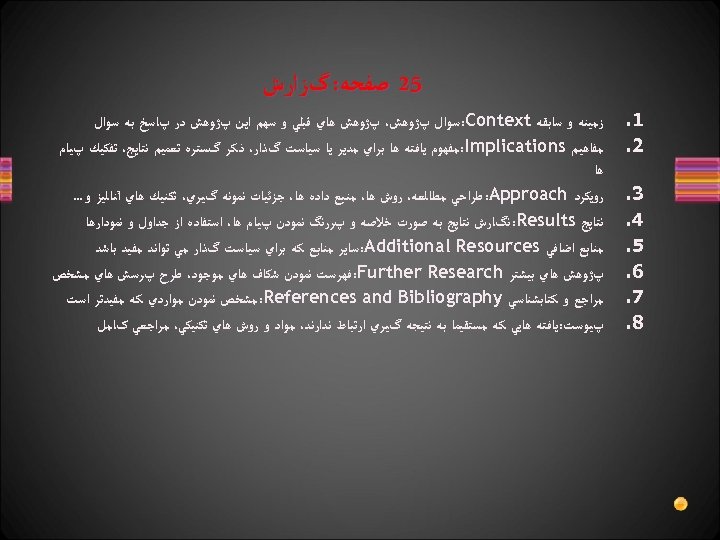 52 ﺻﻔﺤﻪ: گﺰﺍﺭﺵ 1. 2. 3. 4. 5. 6. 7. 8. ﺯﻣﻴﻨﻪ ﻭ ﺳﺎﺑﻘﻪ : Context ﺳﻮﺍﻝ پژﻮﻫﺶ، پژﻮﻫﺶ ﻫﺎﻱ ﻗﺒﻠﻲ ﻭ ﺳﻬﻢ ﺍﻳﻦ پژﻮﻫﺶ ﺩﺭ پﺎﺳﺦ ﺑﻪ ﺳﻮﺍﻝ ﻣﻔﺎﻫﻴﻢ : Implications ﻣﻔﻬﻮﻡ ﻳﺎﻓﺘﻪ ﻫﺎ ﺑﺮﺍﻱ ﻣﺪﻳﺮ ﻳﺎ ﺳﻴﺎﺳﺖ گﺬﺍﺭ، ﺫﻛﺮ گﺴﺘﺮﻩ ﺗﻌﻤﻴﻢ ﻧﺘﺎﻳﺞ، ﺗﻔﻜﻴﻚ پﻴﺎﻡ ﻫﺎ ﺭﻭﻳﻜﺮﺩ : Approach ﻃﺮﺍﺣﻲ ﻣﻄﺎﻟﻌﻪ، ﺭﻭﺵ ﻫﺎ، ﻣﻨﺒﻊ ﺩﺍﺩﻩ ﻫﺎ، ﺟﺰﺋﻴﺎﺕ ﻧﻤﻮﻧﻪ گﻴﺮﻱ، ﺗﻜﻨﻴﻚ ﻫﺎﻱ آﻨﺎﻟﻴﺰ ﻭ. . . ﻧﺘﺎﻳﺞ : Results ﻧگﺎﺭﺵ ﻧﺘﺎﻳﺞ ﺑﻪ ﺻﻮﺭﺕ ﺧﻼﺻﻪ ﻭ پﺮﺭﻧگ ﻧﻤﻮﺩﻥ پﻴﺎﻡ ﻫﺎ، ﺍﺳﺘﻔﺎﺩﻩ ﺍﺯ ﺟﺪﺍﻭﻝ ﻭ ﻧﻤﻮﺩﺍﺭﻫﺎ ﻣﻨﺎﺑﻊ ﺍﺿﺎﻓﻲ : Additional Resources ﺳﺎﻳﺮ ﻣﻨﺎﺑﻊ ﻛﻪ ﺑﺮﺍﻱ ﺳﻴﺎﺳﺖ گﺬﺍﺭ ﻣﻲ ﺗﻮﺍﻧﺪ ﻣﻔﻴﺪ ﺑﺎﺷﺪ پژﻮﻫﺶ ﻫﺎﻱ ﺑﻴﺸﺘﺮ : Further Research ﻓﻬﺮﺳﺖ ﻧﻤﻮﺩﻥ ﺷﻜﺎﻑ ﻫﺎﻱ ﻣﻮﺟﻮﺩ، ﻃﺮﺡ پﺮﺳﺶ ﻫﺎﻱ ﻣﺸﺨﺺ ﻣﺮﺍﺟﻊ ﻭ ﻛﺘﺎﺑﺸﻨﺎﺳﻲ : References and Bibliography ﻣﺸﺨﺺ ﻧﻤﻮﺩﻥ ﻣﻮﺍﺭﺩﻱ ﻛﻪ ﻣﻔﻴﺪﺗﺮ ﺍﺳﺖ پﻴﻮﺳﺖ: ﻳﺎﻓﺘﻪ ﻫﺎﻳﻲ ﻛﻪ ﻣﺴﺘﻘﻴﻤﺎ ﺑﻪ ﻧﺘﻴﺠﻪ گﻴﺮﻱ ﺍﺭﺗﺒﺎﻁ ﻧﺪﺍﺭﻧﺪ، ﻣﻮﺍﺩ ﻭ ﺭﻭﺵ ﻫﺎﻱ ﺗﻜﻨﻴﻜﻲ، ﻣﺮﺍﺟﻌﻲ کﺎﻣﻞ
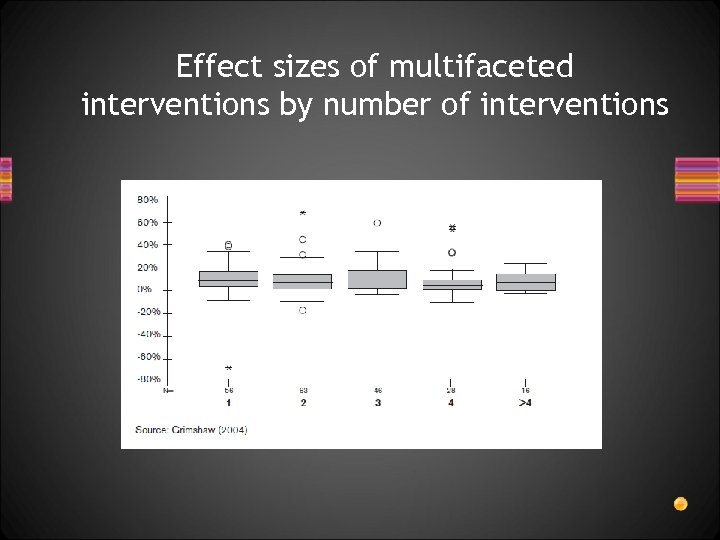 Effect sizes of multifaceted interventions by number of interventions
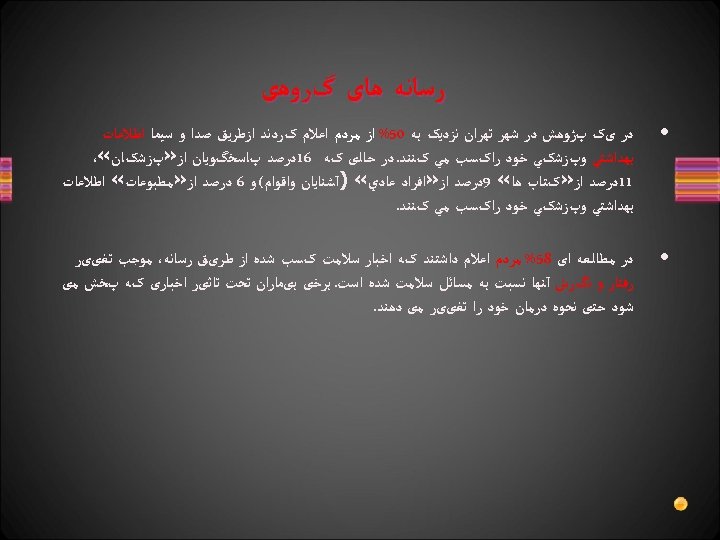 ﺭﺳﺎﻧﻪ ﻫﺎی گﺮﻭﻫی • ﺩﺭ یک پژﻮﻫﺶ ﺩﺭ ﺷﻬﺮ ﺗﻬﺮﺍﻥ ﻧﺰﺩﻳک ﺑﻪ 05% ﺍﺯ ﻣﺮﺩﻡ ﺍﻋﻼﻡ کﺮﺩﻧﺪ ﺍﺯﻃﺮﻳﻖ ﺻﺪﺍ ﻭ ﺳﻴﻤﺎ ﺍﻃﻼﻋﺎﺕ ﺑﻬﺪﺍﺷﺘﻲ ﻭپﺰﺷکﻲ ﺧﻮﺩ ﺭﺍکﺴﺐ ﻣﻲ کﻨﻨﺪ. ﺩﺭ ﺣﺎﻟی کﻪ 61ﺩﺭﺻﺪ پﺎﺳﺨگﻮﻳﺎﻥ ﺍﺯ» پﺰﺷکﺎﻥ «، 11ﺩﺭﺻﺪ ﺍﺯ» کﺘﺎﺏ ﻫﺎ « 9ﺩﺭﺻﺪ ﺍﺯ» ﺍﻓﺮﺍﺩ ﻋﺎﺩﻱ « )آﺸﻨﺎﻳﺎﻥ ﻭﺍﻗﻮﺍﻡ( ﻭ 6 ﺩﺭﺻﺪ ﺍﺯ» ﻣﻄﺒﻮﻋﺎﺕ « ﺍﻃﻼﻋﺎﺕ ﺑﻬﺪﺍﺷﺘﻲ ﻭپﺰﺷکﻲ ﺧﻮﺩ ﺭﺍکﺴﺐ ﻣﻲ کﻨﻨﺪ. • ﺩﺭ ﻣﻄﺎﻟﻌﻪ ﺍی 85% ﻣﺮﺩﻡ ﺍﻋﻼﻡ ﺩﺍﺷﺘﻨﺪ کﻪ ﺍﺧﺒﺎﺭ ﺳﻼﻣﺖ کﺴﺐ ﺷﺪﻩ ﺍﺯ ﻃﺮیﻖ ﺭﺳﺎﻧﻪ، ﻣﻮﺟﺐ ﺗﻐییﺮ ﺭﻓﺘﺎﺭ ﻭ ﻧگﺮﺵ آﻨﻬﺎ ﻧﺴﺒﺖ ﺑﻪ ﻣﺴﺎﺋﻞ ﺳﻼﻣﺖ ﺷﺪﻩ ﺍﺳﺖ. ﺑﺮﺧی ﺑیﻤﺎﺭﺍﻥ ﺗﺤﺖ ﺗﺎﺛیﺮ ﺍﺧﺒﺎﺭی کﻪ پﺨﺶ ﻣی ﺷﻮﺩ ﺣﺘی ﻧﺤﻮﻩ ﺩﺭﻣﺎﻥ ﺧﻮﺩ ﺭﺍ ﺗﻐییﺮ ﻣی ﺩﻫﻨﺪ.
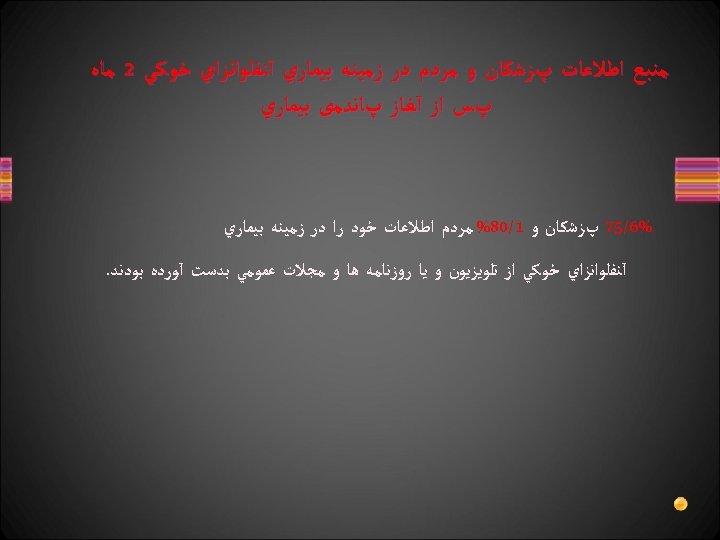 ﻣﻨﺒﻊ ﺍﻃﻼﻋﺎﺕ پﺰﺷﻜﺎﻥ ﻭ ﻣﺮﺩﻡ ﺩﺭ ﺯﻣﻴﻨﻪ ﺑﻴﻤﺎﺭﻱ آﻨﻔﻠﻮﺍﻧﺰﺍﻱ ﺧﻮﻛﻲ 2 ﻣﺎﻩ پﺲ ﺍﺯ آﻐﺎﺯ پﺎﻧﺪﻣی ﺑﻴﻤﺎﺭﻱ %6/57 پﺰﺷﻜﺎﻥ ﻭ 1/08% ﻣﺮﺩﻡ ﺍﻃﻼﻋﺎﺕ ﺧﻮﺩ ﺭﺍ ﺩﺭ ﺯﻣﻴﻨﻪ ﺑﻴﻤﺎﺭﻱ آﻨﻔﻠﻮﺍﻧﺰﺍﻱ ﺧﻮﻛﻲ ﺍﺯ ﺗﻠﻮﻳﺰﻳﻮﻥ ﻭ ﻳﺎ ﺭﻭﺯﻧﺎﻣﻪ ﻫﺎ ﻭ ﻣﺠﻼﺕ ﻋﻤﻮﻣﻲ ﺑﺪﺳﺖ آﻮﺭﺩﻩ ﺑﻮﺩﻧﺪ.
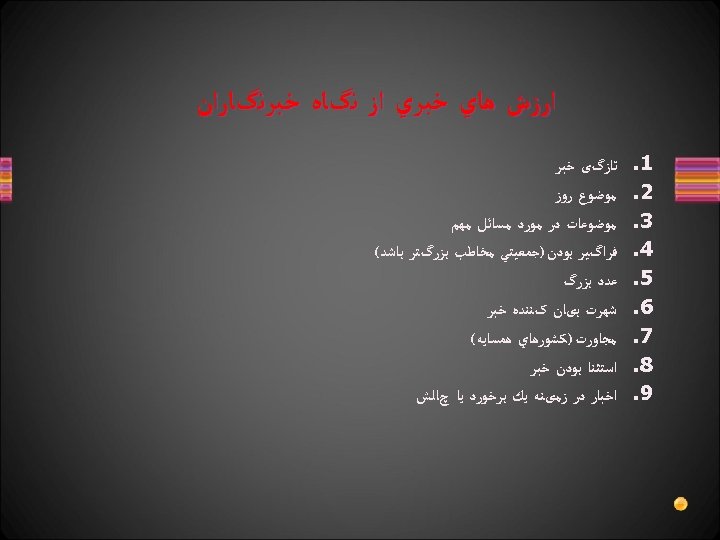 ﺍﺭﺯﺵ ﻫﺎﻱ ﺧﺒﺮﻱ ﺍﺯ ﻧگﺎﻩ ﺧﺒﺮﻧگﺎﺭﺍﻥ 1. 2. 3. 4. 5. 6. 7. 8. 9. ﺗﺎﺯگی ﺧﺒﺮ ﻣﻮﺿﻮﻉ ﺭﻭﺯ ﻣﻮﺿﻮﻋﺎﺕ ﺩﺭ ﻣﻮﺭﺩ ﻣﺴﺎﺋﻞ ﻣﻬﻢ ﻓﺮﺍگﻴﺮ ﺑﻮﺩﻥ )ﺟﻤﻌﻴﺘﻲ ﻣﺨﺎﻃﺐ ﺑﺰﺭگﺘﺮ ﺑﺎﺷﺪ( ﻋﺪﺩ ﺑﺰﺭگ ﺷﻬﺮﺕ ﺑیﺎﻥ کﻨﻨﺪﻩ ﺧﺒﺮ ﻣﺠﺎﻭﺭﺕ )ﻛﺸﻮﺭﻫﺎﻱ ﻫﻤﺴﺎﻳﻪ( ﺍﺳﺘﺜﻨﺎ ﺑﻮﺩﻥ ﺧﺒﺮ ﺍﺧﺒﺎﺭ ﺩﺭ ﺯﻣیﻨﻪ ﻳﻚ ﺑﺮﺧﻮﺭﺩ ﻳﺎ چﺎﻟﺶ
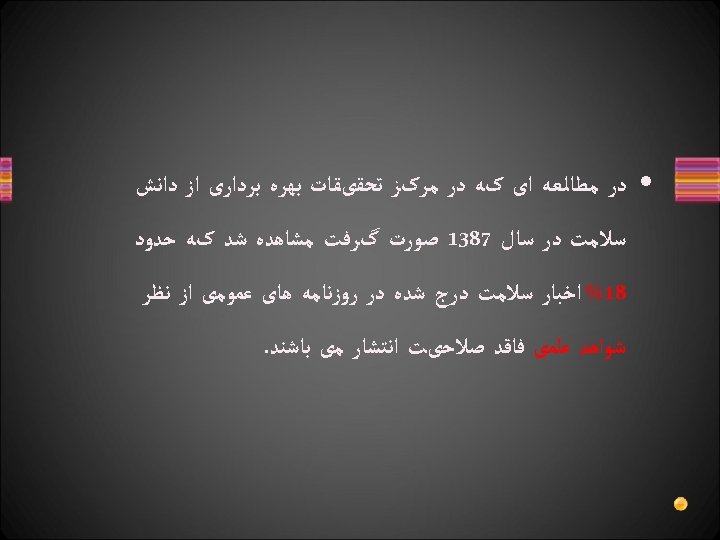 • ﺩﺭ ﻣﻄﺎﻟﻌﻪ ﺍی کﻪ ﺩﺭ ﻣﺮکﺰ ﺗﺤﻘیﻘﺎﺕ ﺑﻬﺮﻩ ﺑﺮﺩﺍﺭی ﺍﺯ ﺩﺍﻧﺶ ﺳﻼﻣﺖ ﺩﺭ ﺳﺎﻝ 7831 ﺻﻮﺭﺕ گﺮﻓﺖ ﻣﺸﺎﻫﺪﻩ ﺷﺪ کﻪ ﺣﺪﻭﺩ 81% ﺍﺧﺒﺎﺭ ﺳﻼﻣﺖ ﺩﺭﺝ ﺷﺪﻩ ﺩﺭ ﺭﻭﺯﻧﺎﻣﻪ ﻫﺎی ﻋﻤﻮﻣی ﺍﺯ ﻧﻈﺮ ﺷﻮﺍﻫﺪ ﻋﻠﻤی ﻓﺎﻗﺪ ﺻﻼﺣیﺖ ﺍﻧﺘﺸﺎﺭ ﻣی ﺑﺎﺷﻨﺪ.
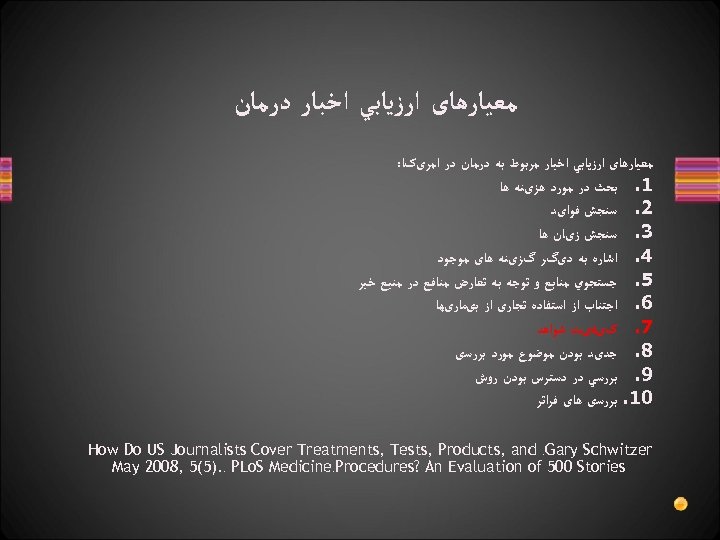 ﻣﻌﻴﺎﺭﻫﺎی ﺍﺭﺯﻳﺎﺑﻲ ﺍﺧﺒﺎﺭ ﺩﺭﻣﺎﻥ ﻣﻌﻴﺎﺭﻫﺎی ﺍﺭﺯﻳﺎﺑﻲ ﺍﺧﺒﺎﺭ ﻣﺮﺑﻮﻁ ﺑﻪ ﺩﺭﻣﺎﻥ ﺩﺭ ﺍﻣﺮیکﺎ: 1. ﺑﺤﺚ ﺩﺭ ﻣﻮﺭﺩ ﻫﺰیﻨﻪ ﻫﺎ 2. ﺳﻨﺠﺶ ﻓﻮﺍیﺪ 3. ﺳﻨﺠﺶ ﺯیﺎﻥ ﻫﺎ 4. ﺍﺷﺎﺭﻩ ﺑﻪ ﺩیگﺮ گﺰیﻨﻪ ﻫﺎی ﻣﻮﺟﻮﺩ 5. ﺟﺴﺘﺠﻮﻱ ﻣﻨﺎﺑﻊ ﻭ ﺗﻮﺟﻪ ﺑﻪ ﺗﻌﺎﺭﺽ ﻣﻨﺎﻓﻊ ﺩﺭ ﻣﻨﺒﻊ ﺧﺒﺮ 6. ﺍﺟﺘﻨﺎﺏ ﺍﺯ ﺍﺳﺘﻔﺎﺩﻩ ﺗﺠﺎﺭی ﺍﺯ ﺑیﻤﺎﺭیﻬﺎ 7. کیﻔیﺖ ﺷﻮﺍﻫﺪ 8. ﺟﺪیﺪ ﺑﻮﺩﻥ ﻣﻮﺿﻮﻉ ﻣﻮﺭﺩ ﺑﺮﺭﺳی 9. ﺑﺮﺭﺳﻲ ﺩﺭ ﺩﺳﺘﺮﺱ ﺑﻮﺩﻥ ﺭﻭﺵ 01. ﺑﺮﺭﺳی ﻫﺎی ﻓﺮﺍﺗﺮ How Do US Journalists Cover Treatments, Tests, Products, and. Gary Schwitzer May 2008, 5(5). . PLo. S Medicine. Procedures? An Evaluation of 500 Stories
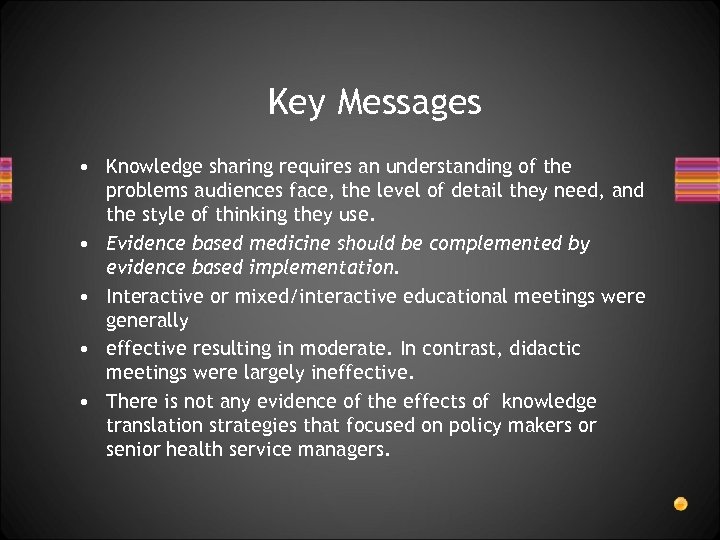 Key Messages • Knowledge sharing requires an understanding of the problems audiences face, the level of detail they need, and the style of thinking they use. • Evidence based medicine should be complemented by evidence based implementation. • Interactive or mixed/interactive educational meetings were generally • effective resulting in moderate. In contrast, didactic meetings were largely ineffective. • There is not any evidence of the effects of knowledge translation strategies that focused on policy makers or senior health service managers.