 Скачать презентацию How to make a literature search Introduction about
cc680057b9ea15e91b29c12b26a35e61.ppt
- Количество слайдов: 34



How to make a literature search Introduction about basic search methods and how to use catalogues, databasses and other internet sources
Content 2
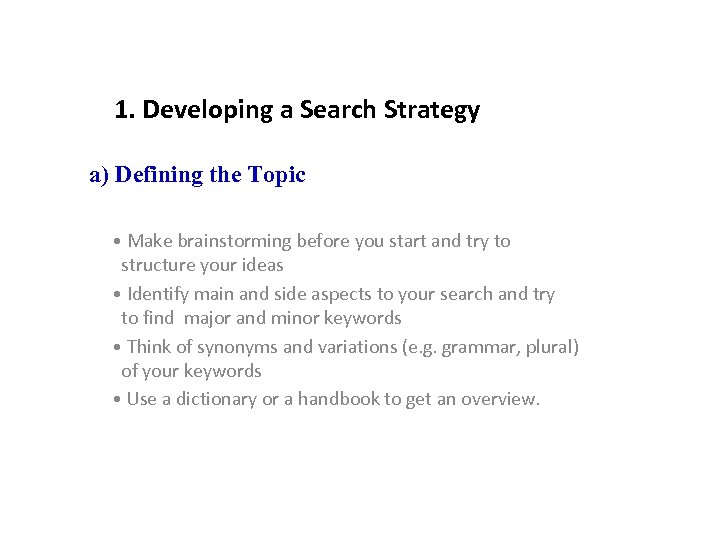
1. Developing a Search Strategy a) Defining the Topic • Make brainstorming before you start and try to structure your ideas • Identify main and side aspects to your search and try to find major and minor keywords • Think of synonyms and variations (e. g. grammar, plural) of your keywords • Use a dictionary or a handbook to get an overview.
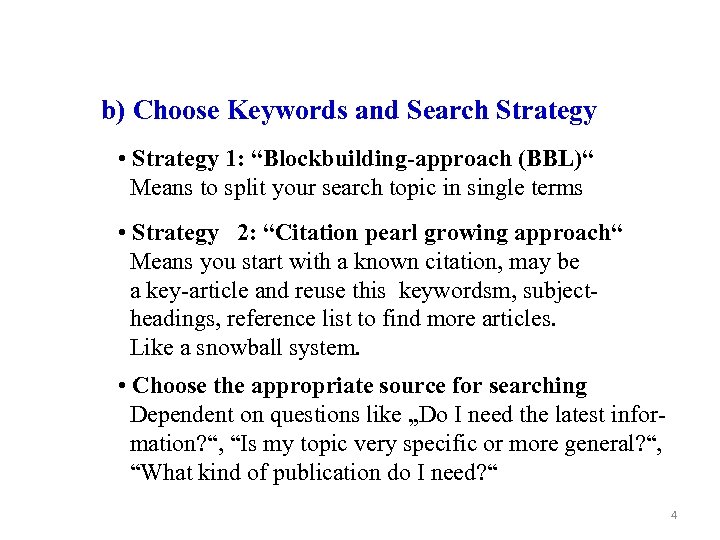
b) Choose Keywords and Search Strategy • Strategy 1: “Blockbuilding-approach (BBL)“ Means to split your search topic in single terms • Strategy 2: “Citation pearl growing approach“ Means you start with a known citation, may be a key-article and reuse this keywordsm, subjectheadings, reference list to find more articles. Like a snowball system. • Choose the appropriate source for searching Dependent on questions like „Do I need the latest information? “, “Is my topic very specific or more general? “, “What kind of publication do I need? “ 4
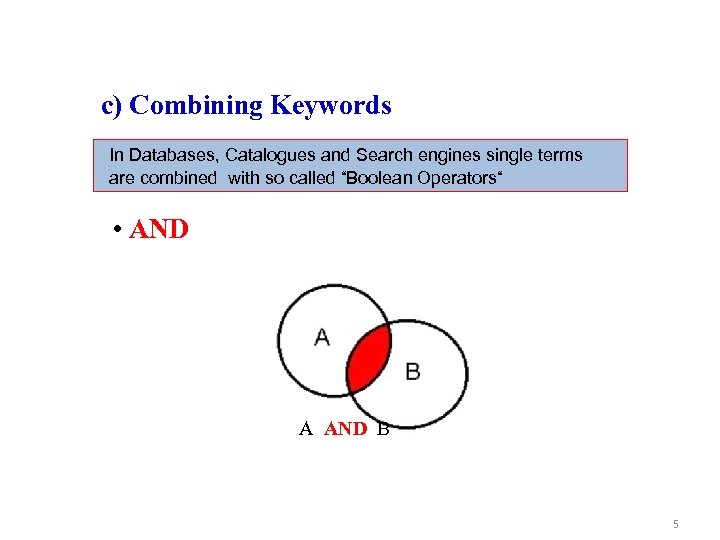
c) Combining Keywords In Databases, Catalogues and Search engines single terms are combined with so called “Boolean Operators“ • AND A AND B 5
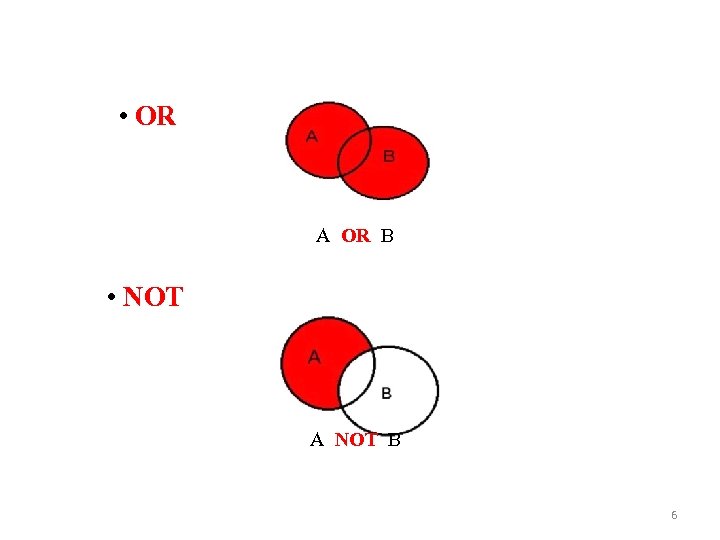
• OR A OR B • NOT A NOT B 6
d) Vary your Search • Depending on your result you have to vary your search with different search terms • A search means always a brinkmanship of finding too much or too less • Rule: The more complete your search should be, the more irrelevant hits will be included. On the other hand, in case all hits are relevant, then it is likely that there are more hits which are excluded by your search strategy. 7
2. Databases a) What is a database? • An organized collection of information to a special field or subject • Organized means all documents are indexed with special descriptors or subject headings }Bibliographic databases contain descriptive information about publications }Fulltext databases are including them 8
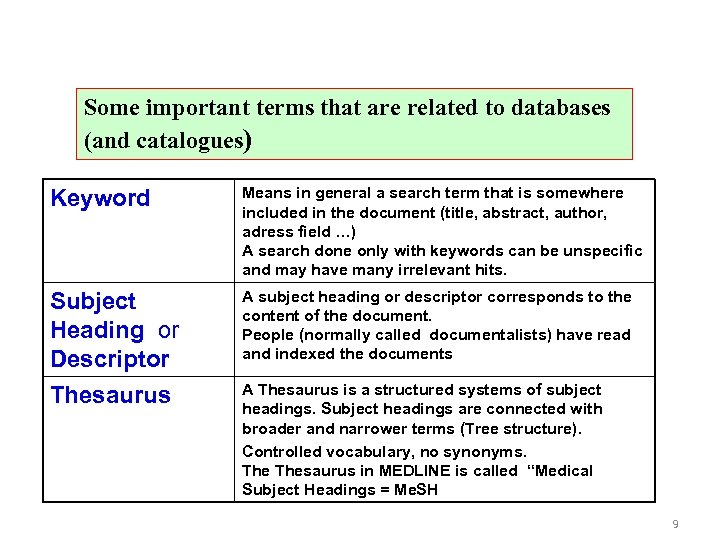
Some important terms that are related to databases (and catalogues) Keyword Means in general a search term that is somewhere included in the document (title, abstract, author, adress field …) A search done only with keywords can be unspecific and may have many irrelevant hits. Subject Heading or Descriptor A subject heading or descriptor corresponds to the content of the document. People (normally called documentalists) have read and indexed the documents Thesaurus A Thesaurus is a structured systems of subject headings. Subject headings are connected with broader and narrower terms (Tree structure). Controlled vocabulary, no synonyms. Thesaurus in MEDLINE is called “Medical Subject Headings = Me. SH 9
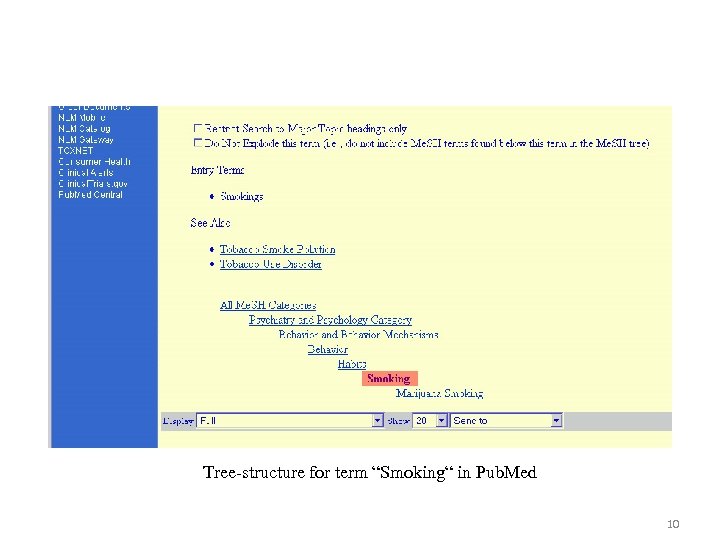
Tree-structure for term “Smoking“ in Pub. Med 10
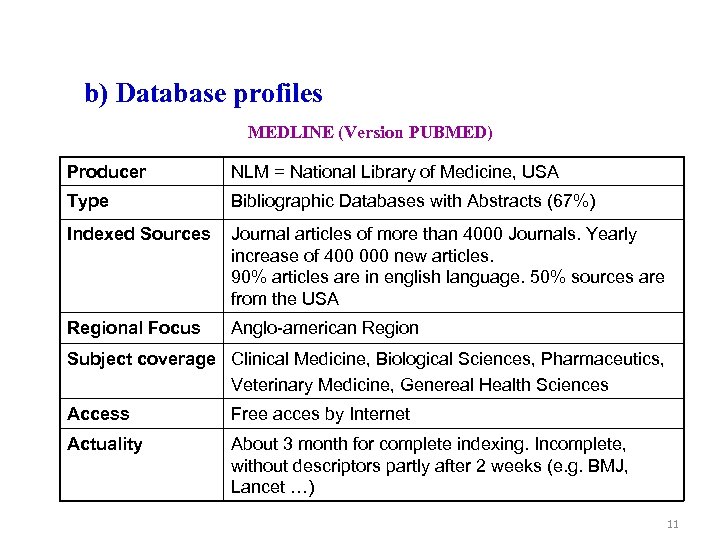
b) Database profiles MEDLINE (Version PUBMED) Producer NLM = National Library of Medicine, USA Type Bibliographic Databases with Abstracts (67%) Indexed Sources Journal articles of more than 4000 Journals. Yearly increase of 400 000 new articles. 90% articles are in english language. 50% sources are from the USA Regional Focus Anglo-american Region Subject coverage Clinical Medicine, Biological Sciences, Pharmaceutics, Veterinary Medicine, Genereal Health Sciences Access Free acces by Internet Actuality About 3 month for complete indexing. Incomplete, without descriptors partly after 2 weeks (e. g. BMJ, Lancet …) 11
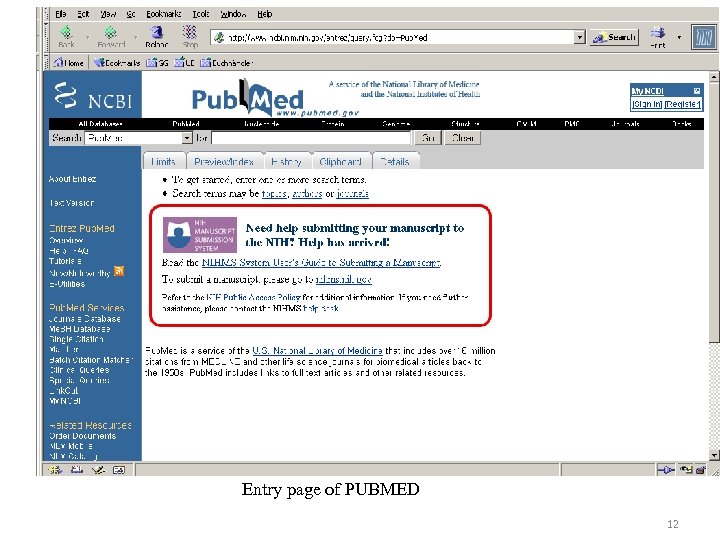
Entry page of PUBMED 12
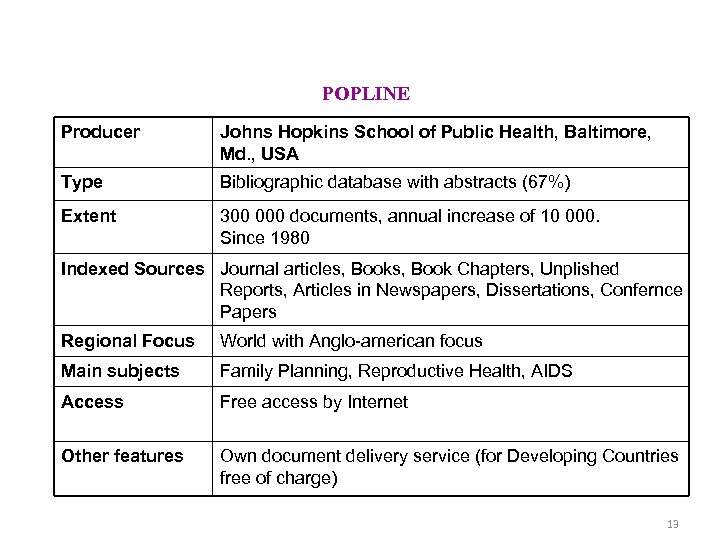
POPLINE Producer Johns Hopkins School of Public Health, Baltimore, Md. , USA Type Bibliographic database with abstracts (67%) Extent 300 000 documents, annual increase of 10 000. Since 1980 Indexed Sources Journal articles, Book Chapters, Unplished Reports, Articles in Newspapers, Dissertations, Confernce Papers Regional Focus World with Anglo-american focus Main subjects Family Planning, Reproductive Health, AIDS Access Free access by Internet Other features Own document delivery service (for Developing Countries free of charge) 13
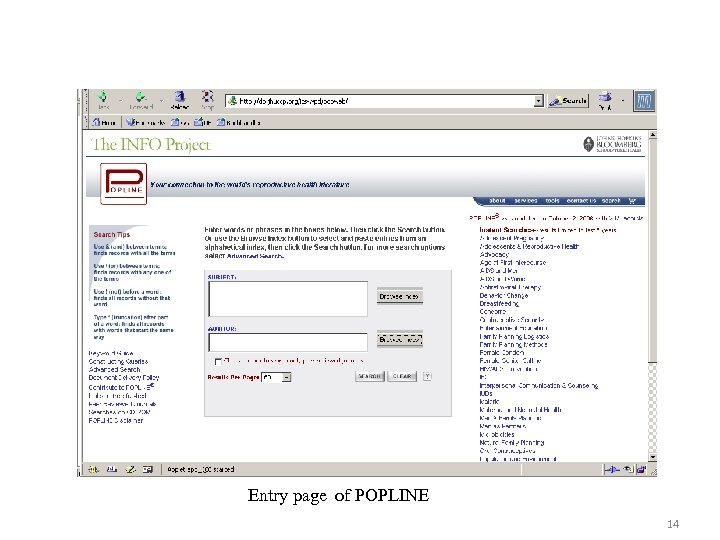
Entry page of POPLINE 14
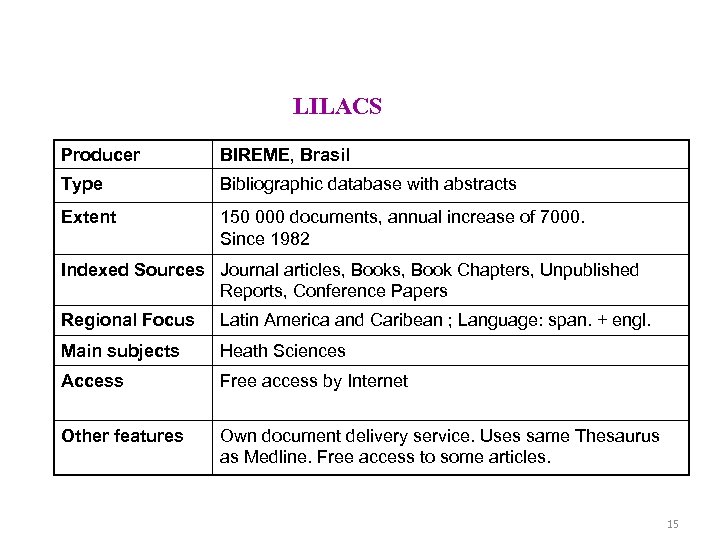
LILACS Producer BIREME, Brasil Type Bibliographic database with abstracts Extent 150 000 documents, annual increase of 7000. Since 1982 Indexed Sources Journal articles, Book Chapters, Unpublished Reports, Conference Papers Regional Focus Latin America and Caribean ; Language: span. + engl. Main subjects Heath Sciences Access Free access by Internet Other features Own document delivery service. Uses same Thesaurus as Medline. Free access to some articles. 15
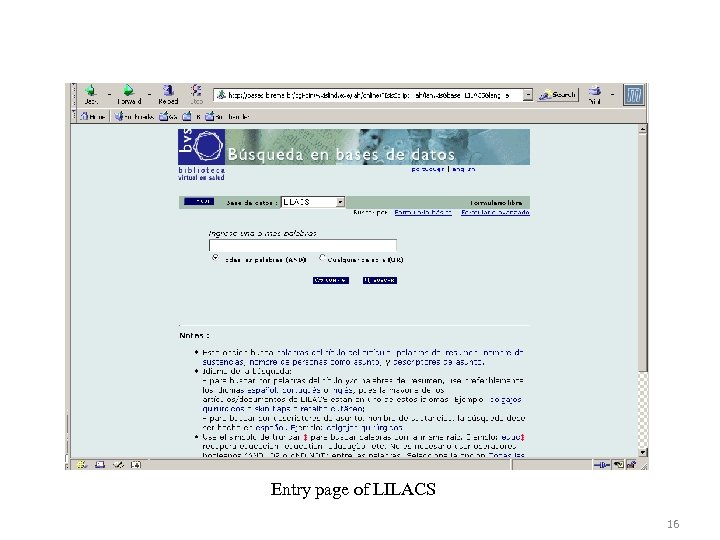
Entry page of LILACS 16
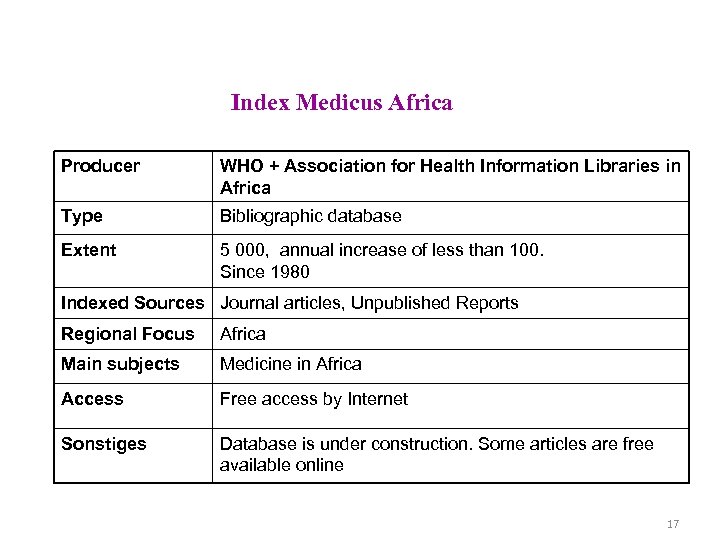
Index Medicus Africa Producer WHO + Association for Health Information Libraries in Africa Type Bibliographic database Extent 5 000, annual increase of less than 100. Since 1980 Indexed Sources Journal articles, Unpublished Reports Regional Focus Africa Main subjects Medicine in Africa Access Free access by Internet Sonstiges Database is under construction. Some articles are free available online 17
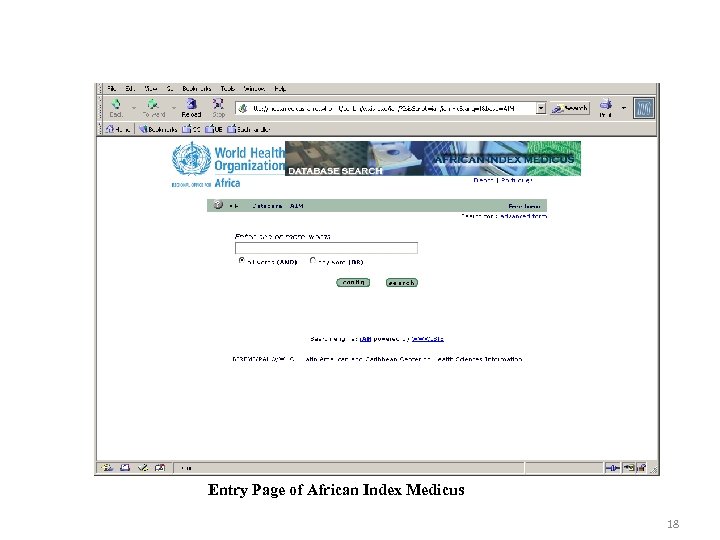
Entry Page of African Index Medicus 18
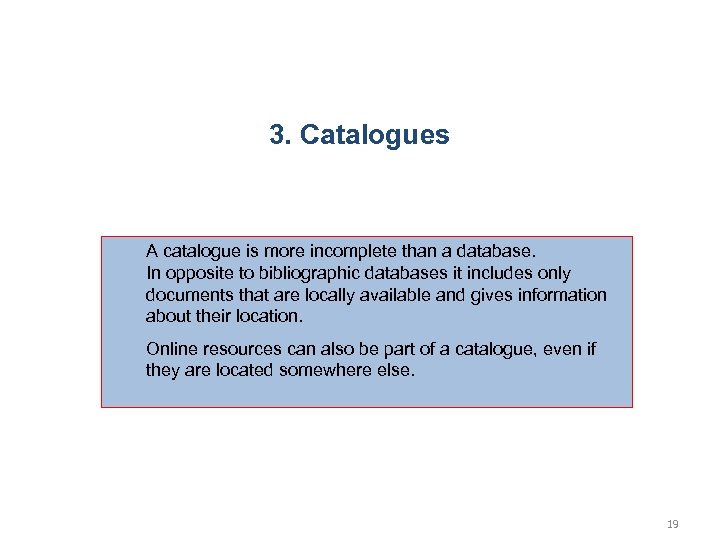
3. Catalogues A catalogue is more incomplete than a database. In opposite to bibliographic databases it includes only documents that are locally available and gives information about their location. Online resources can also be part of a catalogue, even if they are located somewhere else. 19
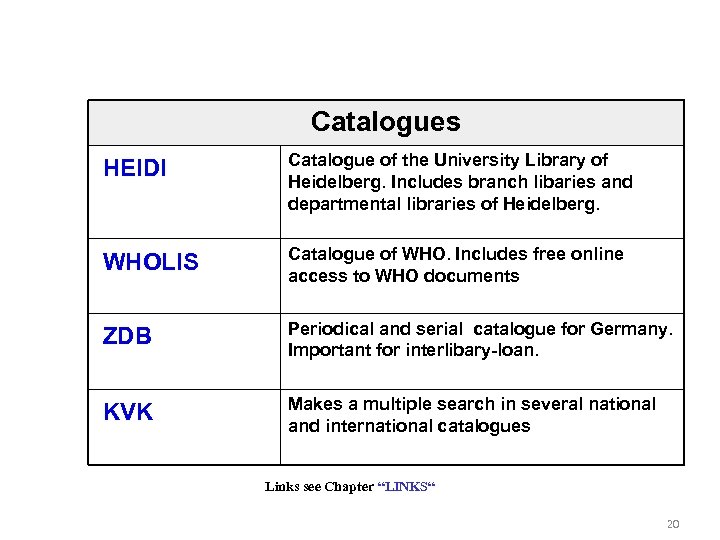
Catalogues HEIDI Catalogue of the University Library of Heidelberg. Includes branch libaries and departmental libraries of Heidelberg. WHOLIS Catalogue of WHO. Includes free online access to WHO documents ZDB Periodical and serial catalogue for Germany. Important for interlibary-loan. KVK Makes a multiple search in several national and international catalogues Links see Chapter “LINKS“ 20
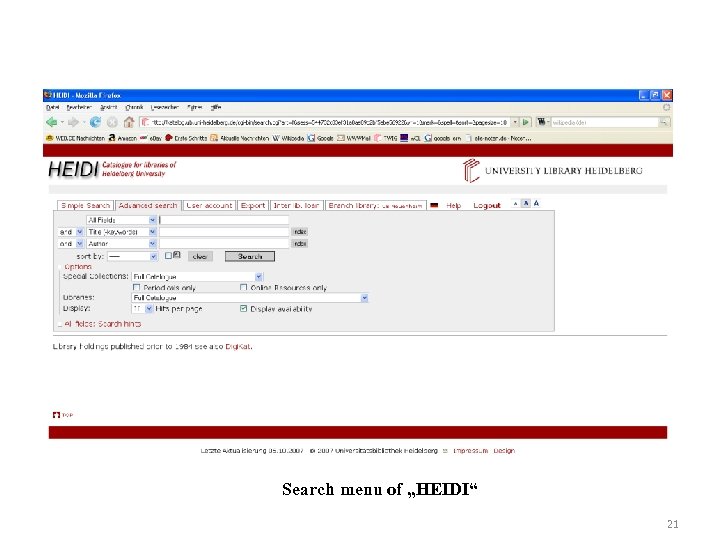
Search menu of „HEIDI“ 21
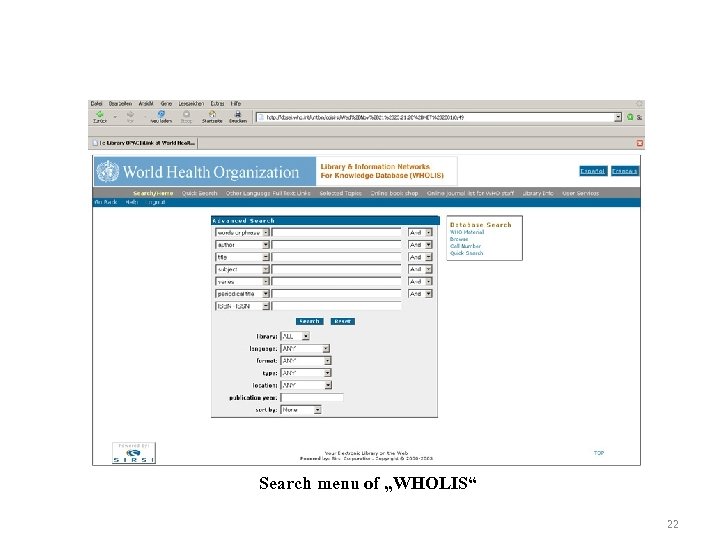
Search menu of „WHOLIS“ 22
4. Internet Sources a) Search engines are programmes that are searching the World Wide Web and finding and indexing sites. In spite of the enormous number of hits, it is estimated that search engines are only finding 5% of the complete WWW (the rest ist so called Deep or Invisible Web). Not searchable are: }In Databases and Catalogues stored information }Protected Websites }Dynamic Websites 23
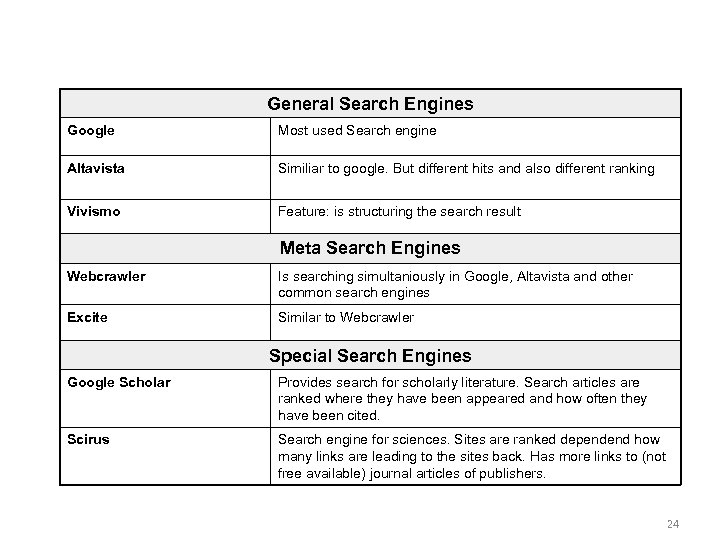
General Search Engines Google Most used Search engine Altavista Similiar to google. But different hits and also different ranking Vivismo Feature: is structuring the search result Meta Search Engines Webcrawler Is searching simultaniously in Google, Altavista and other common search engines Excite Similar to Webcrawler Special Search Engines Google Scholar Provides search for scholarly literature. Search articles are ranked where they have been appeared and how often they have been cited. Scirus Search engine for sciences. Sites are ranked dependend how many links are leading to the sites back. Has more links to (not free available) journal articles of publishers. 24
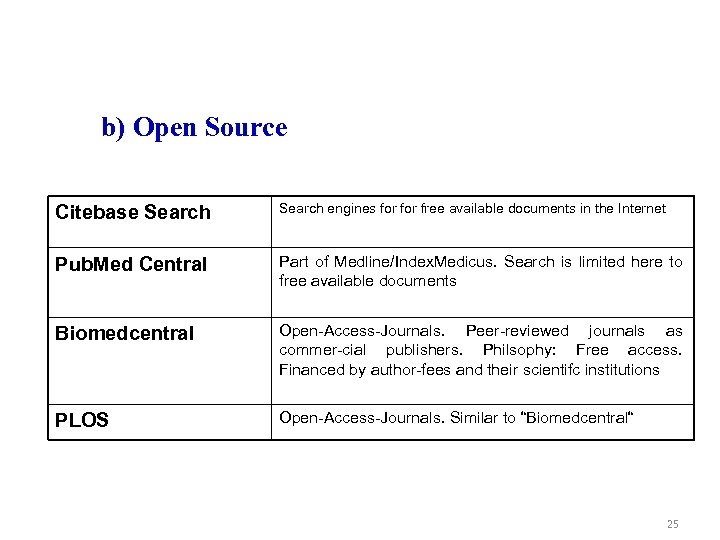
b) Open Source Citebase Search engines for free available documents in the Internet Pub. Med Central Part of Medline/Index. Medicus. Search is limited here to free available documents Biomedcentral Open-Access-Journals. Peer-reviewed journals as commer-cial publishers. Philsophy: Free access. Financed by author-fees and their scientifc institutions PLOS Open-Access-Journals. Similar to “Biomedcentral“ 25
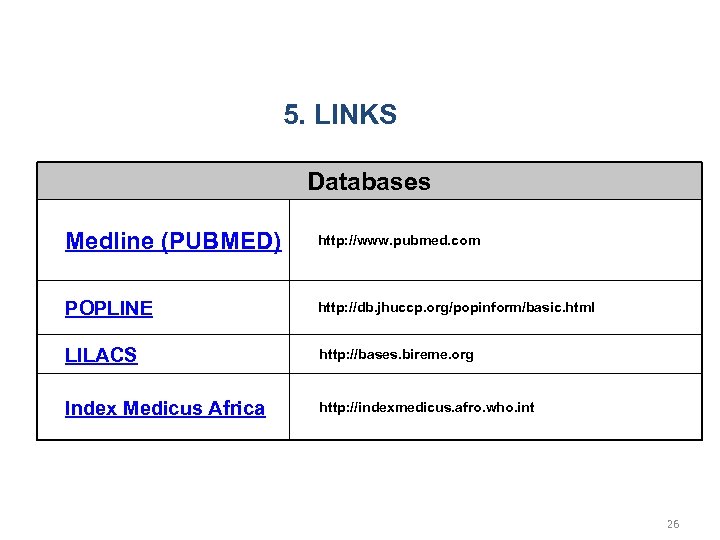
5. LINKS Databases Medline (PUBMED) http: //www. pubmed. com POPLINE http: //db. jhuccp. org/popinform/basic. html LILACS http: //bases. bireme. org Index Medicus Africa http: //indexmedicus. afro. who. int 26
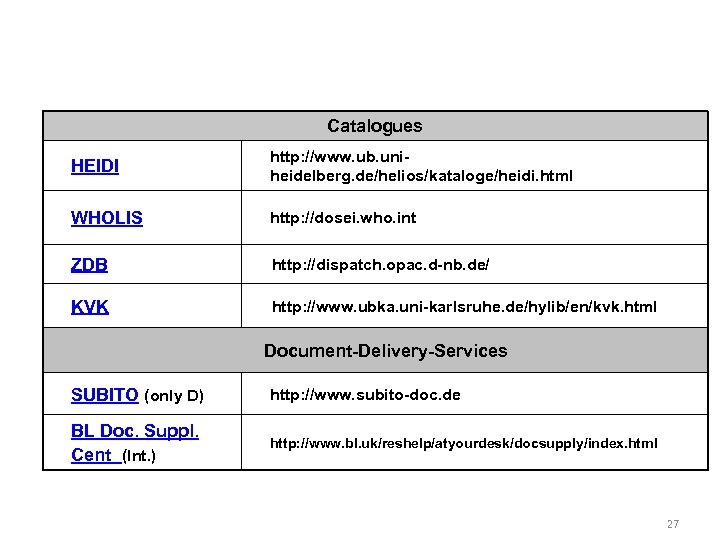
Catalogues HEIDI http: //www. ub. uniheidelberg. de/helios/kataloge/heidi. html WHOLIS http: //dosei. who. int ZDB http: //dispatch. opac. d-nb. de/ KVK http: //www. ubka. uni-karlsruhe. de/hylib/en/kvk. html Document-Delivery-Services SUBITO (only D) http: //www. subito-doc. de BL Doc. Suppl. Cent (Int. ) http: //www. bl. uk/reshelp/atyourdesk/docsupply/index. html 27
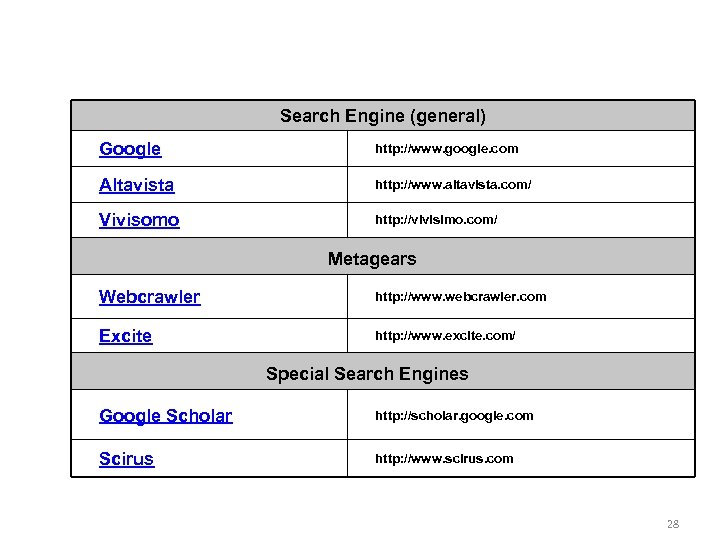
Search Engine (general) Google http: //www. google. com Altavista http: //www. altavista. com/ Vivisomo http: //vivisimo. com/ Metagears Webcrawler http: //www. webcrawler. com Excite http: //www. excite. com/ Special Search Engines Google Scholar http: //scholar. google. com Scirus http: //www. scirus. com 28
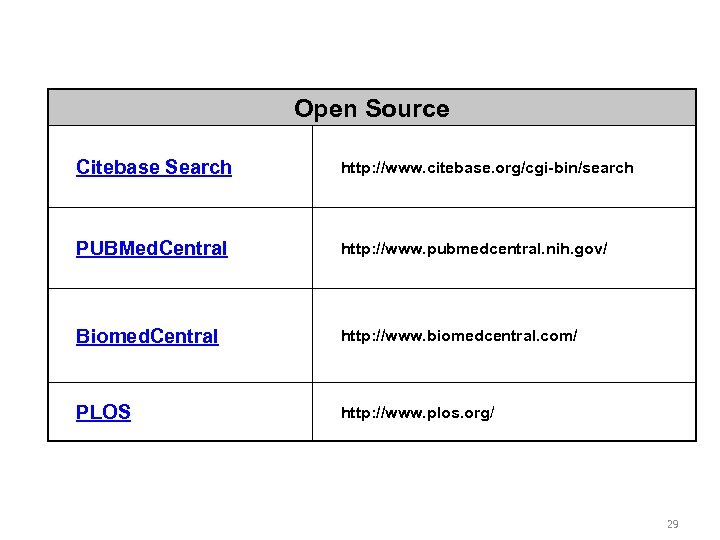
Open Source Citebase Search http: //www. citebase. org/cgi-bin/search PUBMed. Central http: //www. pubmedcentral. nih. gov/ Biomed. Central http: //www. biomedcentral. com/ PLOS http: //www. plos. org/ 29
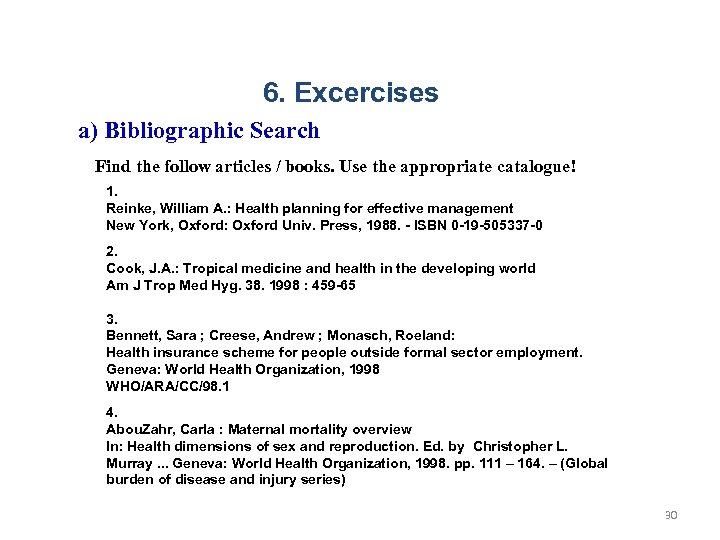
6. Excercises a) Bibliographic Search Find the follow articles / books. Use the appropriate catalogue! 1. Reinke, William A. : Health planning for effective management New York, Oxford: Oxford Univ. Press, 1988. - ISBN 0 -19 -505337 -0 2. Cook, J. A. : Tropical medicine and health in the developing world Am J Trop Med Hyg. 38. 1998 : 459 -65 3. Bennett, Sara ; Creese, Andrew ; Monasch, Roeland: Health insurance scheme for people outside formal sector employment. Geneva: World Health Organization, 1998 WHO/ARA/CC/98. 1 4. Abou. Zahr, Carla : Maternal mortality overview In: Health dimensions of sex and reproduction. Ed. by Christopher L. Murray. . . Geneva: World Health Organization, 1998. pp. 111 – 164. – (Global burden of disease and injury series) 30
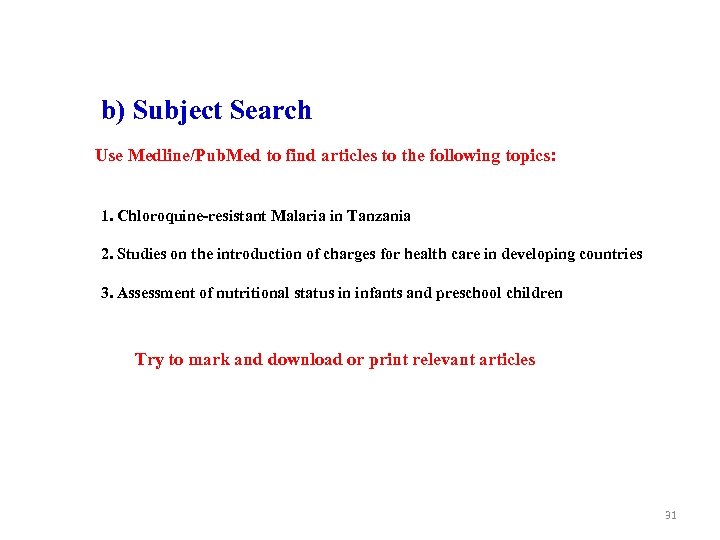
b) Subject Search Use Medline/Pub. Med to find articles to the following topics: 1. Chloroquine-resistant Malaria in Tanzania 2. Studies on the introduction of charges for health care in developing countries 3. Assessment of nutritional status in infants and preschool children Try to mark and download or print relevant articles 31
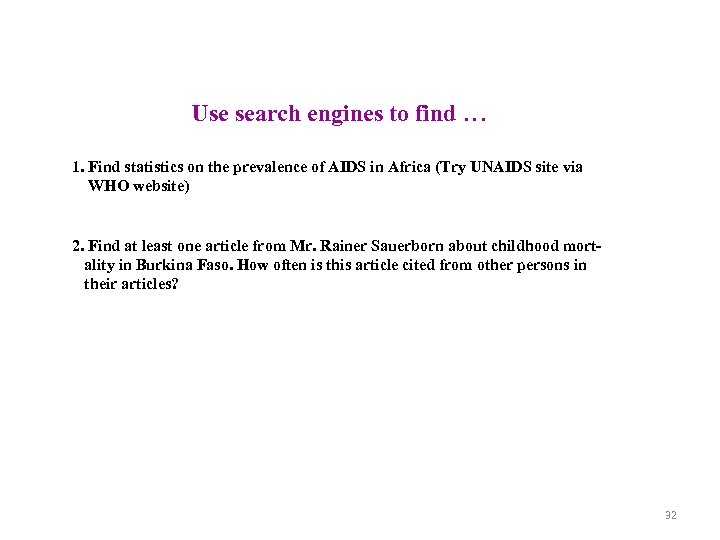
Use search engines to find … 1. Find statistics on the prevalence of AIDS in Africa (Try UNAIDS site via WHO website) 2. Find at least one article from Mr. Rainer Sauerborn about childhood mortality in Burkina Faso. How often is this article cited from other persons in their articles? 32
Search example Cost-effectiveness of immunization programmes in Africa Ideas what can be part of this topic: Search terms: 33
References Guistini, D. ; Barsky, E. A look at Google Scholar, Pub. Med and Scirus: comparisons and recommendations. JCHLA / JABSC. 2005: 26: 85 -89 Steinbrock, R. Serching for the right search – reaching the medical literature. New Engl J Med. 2006; 354(1): 4 -5 Eyers, J. E. Sources of information in tropical medicine. In: Cook, G. C. (ed. ) Manson‘s tropical diseases, 21 st. ed. London: Saunders, 2002 : 1807 - 1815 Eyers, J. E. How to do (or not to do)… Searching bibliographic databases effectively. Health Pol Plann 1988; 13(3): 339 -342 34
Скачать презентацию How to make a literature search Introduction about
cc680057b9ea15e91b29c12b26a35e61.ppt