


 Скачать презентацию How to Give a Food Demonstration Recommended to
e50351aa1a3ab74829e3968c36a1b6a1.ppt
- Количество слайдов: 34
 How to Give a Food Demonstration Recommended to Arkansans by Easter H Tucker Associate Professor – Family and Consumer Sciences Specialist Originally developed by Barbara Brown, Ph. D. , R. D. /L. D. Food Specialist Oklahoma Cooperative Extension Service 1
 Keys to a Good Demonstration • • Know what you want to accomplish Research Demonstrate to reinforce the objective Organize and practice 2
 Keys to a Good Demonstration • • • Be sure everyone can see Introduce the topic Involve the audience Review objective(s) Make it your own 3
 Know Your Goal • Educate – Awareness – Knowledge – Action 4
 Know Your Goal • Promote – Programs – Products • Combination 5
 Number of Points to Cover • Time available • Audience – Age – Background • Your own knowledge level – Research – Experience 6
 Research: The Topic • Topic – Information accurate & current – Usable by audience – Not already known – Builds on past meetings – Narrowed to fit audience & time 7
 Research: The Audience • The more you know the better • Age, gender, skill & knowledge level, economic status 8
 Research: Location • Type of setting – Formal or relaxed • How far away – May impact food safety • Get directions • Audience – Hear and see presenter Food Demo Today 9
 Research: Help Available • Presentation help – Will they need training • Help to unload – Before – After 10
 Research: The Equipment • What is available &/or usable on site – Water, refrigeration, electricity, gas, table, oven, etc. – Audio Visual – Presentation Easels • Place to hang teaching materials 11
 Food Demonstration • Reinforce key points – Choose techniques & recipes to get point across (Ex: Don’t premeasure when teaching measuring is the goal) • Keep it simple 12
 The Food • Should smell great – Try to let participants sample • Should taste wonderful • Be colorful & garnished • Show finished product 13
 Be an Example • • Safe food handling behavior Good nutrition choices Good posture Speak clearly & slowly Use good grammar Avoid nervous twitches & habits How you eat 14
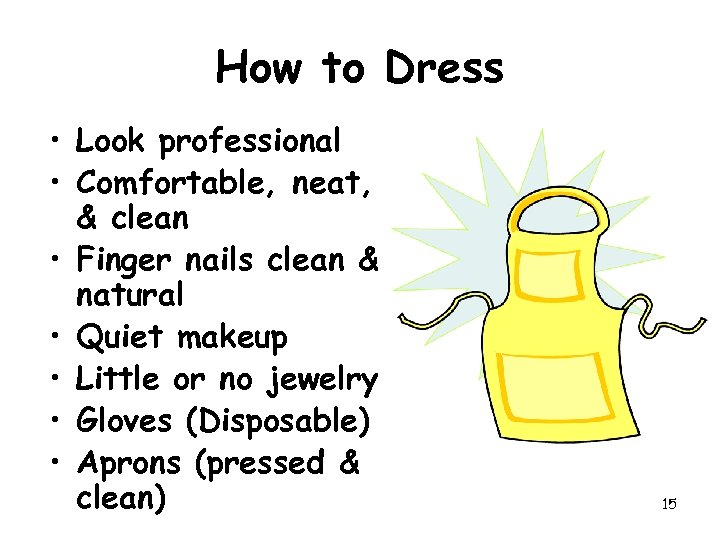 How to Dress • Look professional • Comfortable, neat, & clean • Finger nails clean & natural • Quiet makeup • Little or no jewelry • Gloves (Disposable) • Aprons (pressed & clean) 15
 Organize Training Materials • Select recipes & techniques to demonstrate – Done ahead – In stages – All at once • Make lists of items needed – Equipment and supplies – Notes and handouts – Food 16
 Organizing Food Items • Buy food day before the training • Consider the food safety factors 17
 Often Forgotten • • • Potholders Timer Spoons/knives Cutting board Serving equipment Extension cord and adapters • Appliance cords • Sampling utensils/plates/ cups • Tablecloth • Trays • Paper towels 18
 Equipment • Know how to use it • Will audience have access to same equipment at home – Suggest substitutions 19
 Demonstration Tips • Use correct equipment for each task • Use clear bowls & pans when possible • Use trays – Notes on tray include: • Recipes • Talking points • Cover table 20
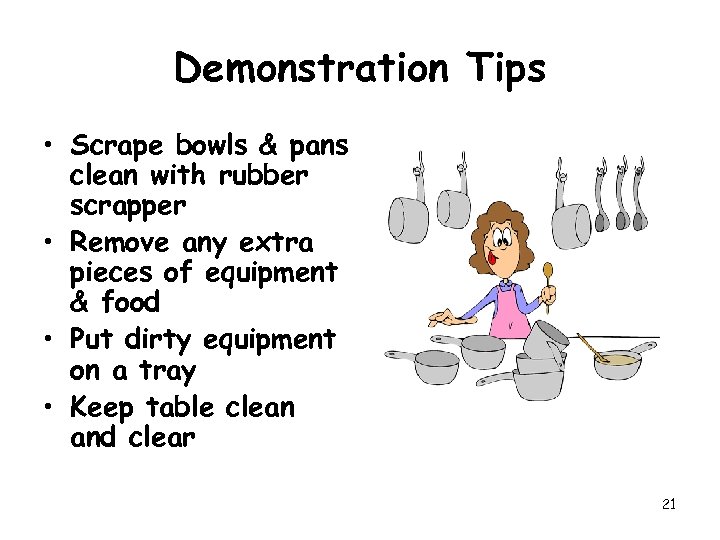 Demonstration Tips • Scrape bowls & pans clean with rubber scrapper • Remove any extra pieces of equipment & food • Put dirty equipment on a tray • Keep table clean and clear 21
 Demonstration Tips • Wooden spoons are quieter than metal • A damp cloth under bowls holds them steady & cuts noise • Tip bowls & pans for viewing – Hold bowls from bottom – Be careful not to spill • Don’t talk while using noisy equipment • Spill it? Don’t use it 22
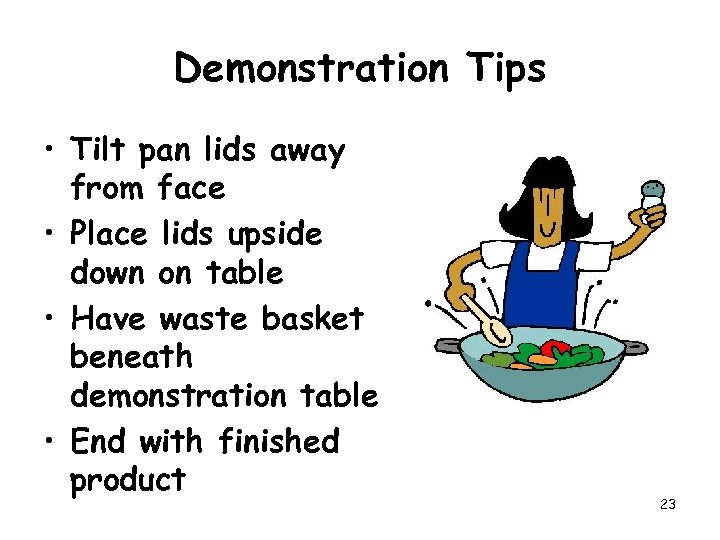 Demonstration Tips • Tilt pan lids away from face • Place lids upside down on table • Have waste basket beneath demonstration table • End with finished product 23
 Double Check, Triple Check • During practice • Before you leave • Before the demonstration 24
 Practice • • • Frees mind to do 2 things at once Posture Grammar Vocabulary Facial expressions 25
 How much practice? • As often as you can: – With food & equipment – Before a mirror – Get critiqued 26
 Everyone Needs to See • • • Tilted bowls & pans Small groups up close Posters Video camera connected to monitor Pictures on Power. Point Other ideas? 27
 The Demonstration: Involve the Audience • Make eye contact • Use humor • Smile • Ask for help: • Talk while – With timing working – Following • Ask questions recipes • Answer questions – Distributing handouts 28
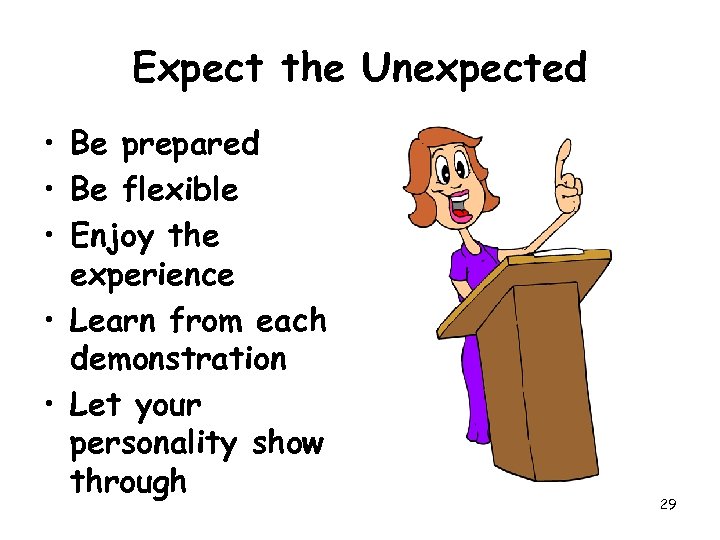 Expect the Unexpected • Be prepared • Be flexible • Enjoy the experience • Learn from each demonstration • Let your personality show through 29
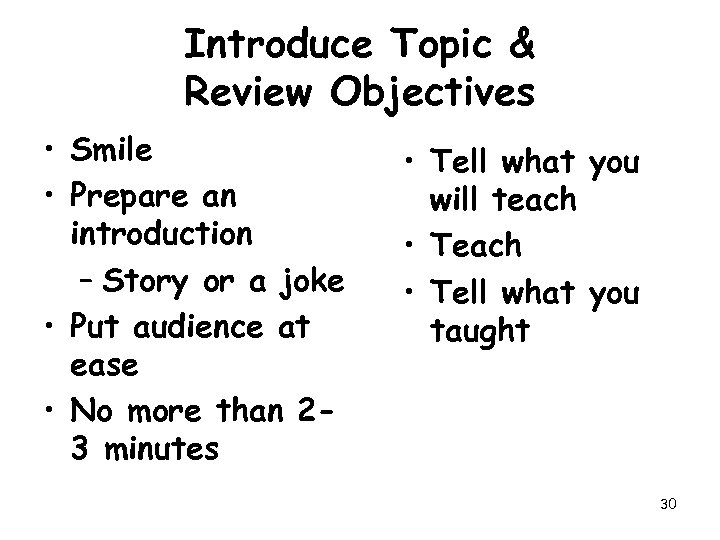 Introduce Topic & Review Objectives • Smile • Prepare an introduction – Story or a joke • Put audience at ease • No more than 23 minutes • Tell what you will teach • Tell what you taught 30
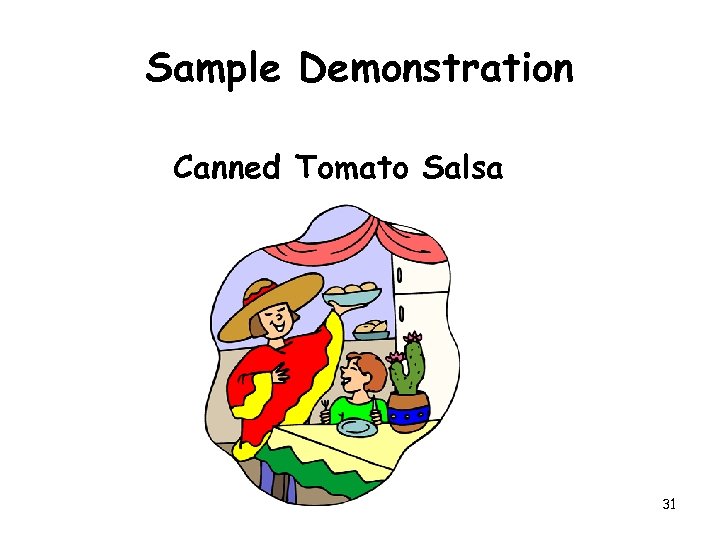 Sample Demonstration Canned Tomato Salsa 31
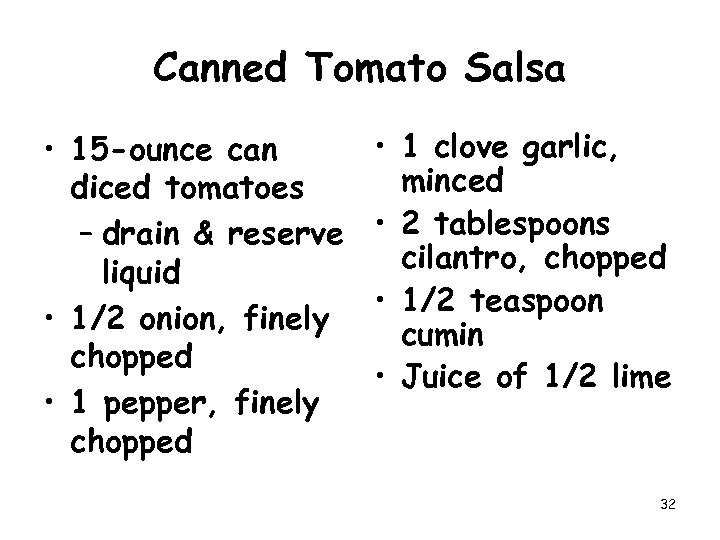 Canned Tomato Salsa • 15 -ounce can diced tomatoes – drain & reserve liquid • 1/2 onion, finely chopped • 1 pepper, finely chopped • 1 clove garlic, minced • 2 tablespoons cilantro, chopped • 1/2 teaspoon cumin • Juice of 1/2 lime 32
 Review • Know what you want to accomplish • Research • Demonstrate to reinforce the objective • Organize • Practice • Be sure all can see • Introduce the topic • Involve the audience • Review the objectives • Make it your own 33
 Any Questions? ? Recommended to Arkansans by Easter H Tucker Associate Professor – Family and Consumer Sciences Specialist Originally developed by Barbara Brown, Ph. D. , R. D. /L. D. Food Specialist Oklahoma Cooperative Extension Service 34