


 Скачать презентацию How the National Science Foundation NSF Supports Scientists
f262a10ef457a6c4ec0d199677bf2f66.ppt
- Количество слайдов: 20
 How the National Science Foundation (NSF) Supports Scientists and International Collaborations National and European Research Funding Opportunities in the Social Sciences for Young Researchers Florence, February 8 -9, 2017 Sonia Ortega, Ph. D Head Europe-Eurasia Office National Science Foundation
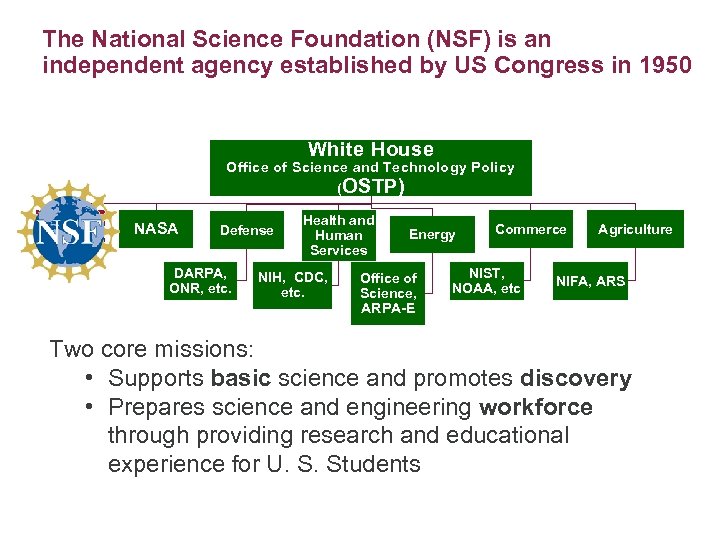 The National Science Foundation (NSF) is an independent agency established by US Congress in 1950 White House Office of Science and Technology Policy ( OSTP) NSF NASA Defense DARPA, ONR, etc. Health and Human Services NIH, CDC, etc. Energy Office of Science, ARPA-E Commerce NIST, NOAA, etc Agriculture NIFA, ARS Two core missions: • Supports basic science and promotes discovery • Prepares science and engineering workforce through providing research and educational experience for U. S. Students
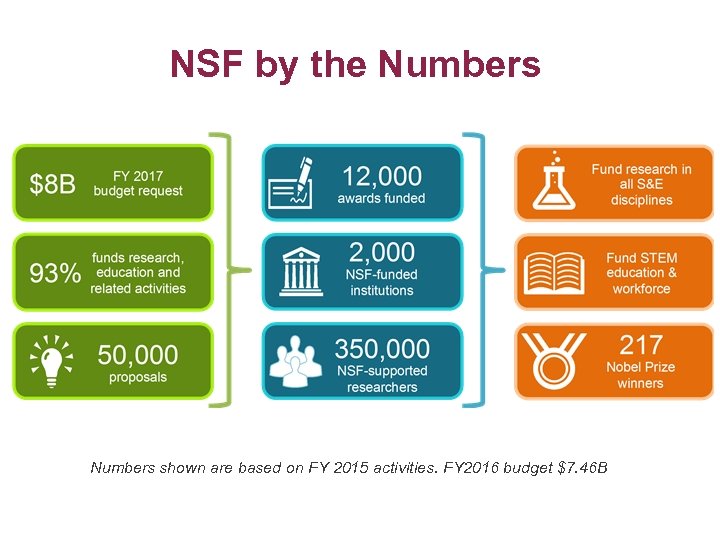 NSF by the Numbers shown are based on FY 2015 activities. FY 2016 budget $7. 46 B
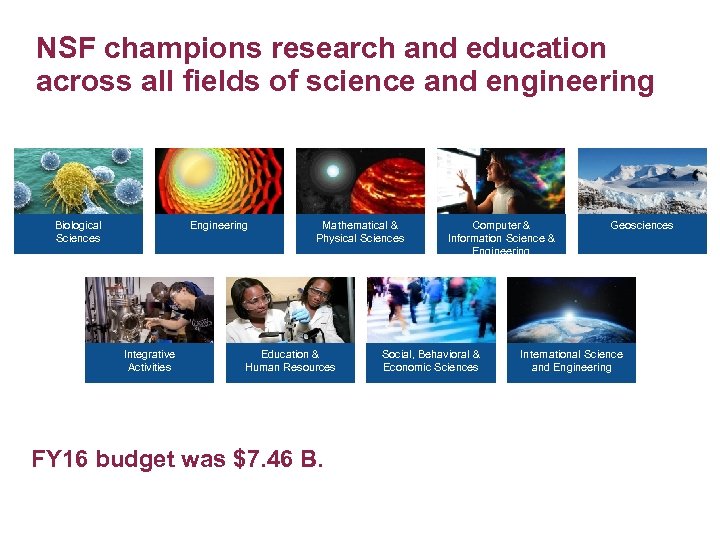 NSF champions research and education across all fields of science and engineering Biological Sciences Engineering Integrative Activities Mathematical & Physical Sciences Education & Human Resources FY 16 budget was $7. 46 B. Computer & Information Science & Engineering Social, Behavioral & Economic Sciences Geosciences International Science and Engineering
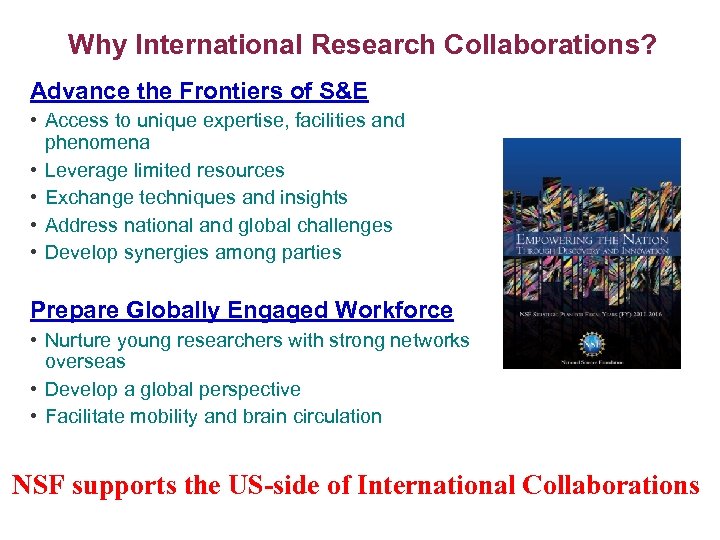 Why International Research Collaborations? Advance the Frontiers of S&E • Access to unique expertise, facilities and phenomena • Leverage limited resources • Exchange techniques and insights • Address national and global challenges • Develop synergies among parties Prepare Globally Engaged Workforce • Nurture young researchers with strong networks overseas • Develop a global perspective • Facilitate mobility and brain circulation NSF supports the US-side of International Collaborations
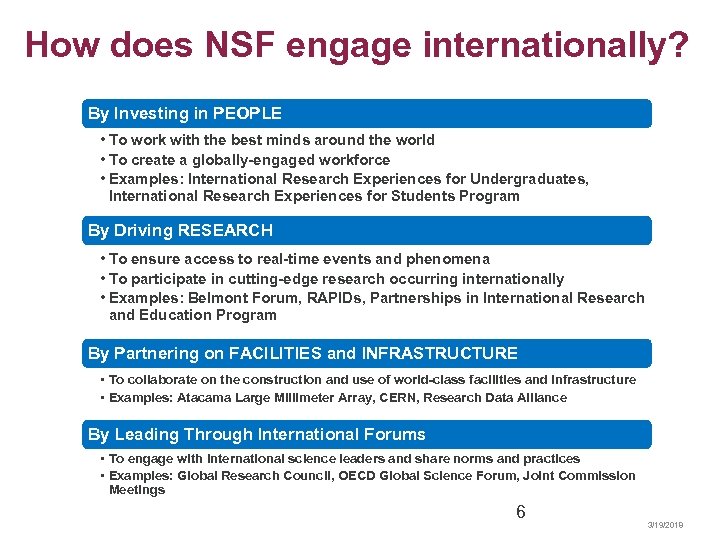 How does NSF engage internationally? By Investing in PEOPLE • To work with the best minds around the world • To create a globally-engaged workforce • Examples: International Research Experiences for Undergraduates, International Research Experiences for Students Program By Driving RESEARCH • To ensure access to real-time events and phenomena • To participate in cutting-edge research occurring internationally • Examples: Belmont Forum, RAPIDs, Partnerships in International Research and Education Program By Partnering on FACILITIES and INFRASTRUCTURE • To collaborate on the construction and use of world-class facilities and infrastructure • Examples: Atacama Large Millimeter Array, CERN, Research Data Alliance By Leading Through International Forums • To engage with international science leaders and share norms and practices • Examples: Global Research Council, OECD Global Science Forum, Joint Commission Meetings 6 3/19/2018
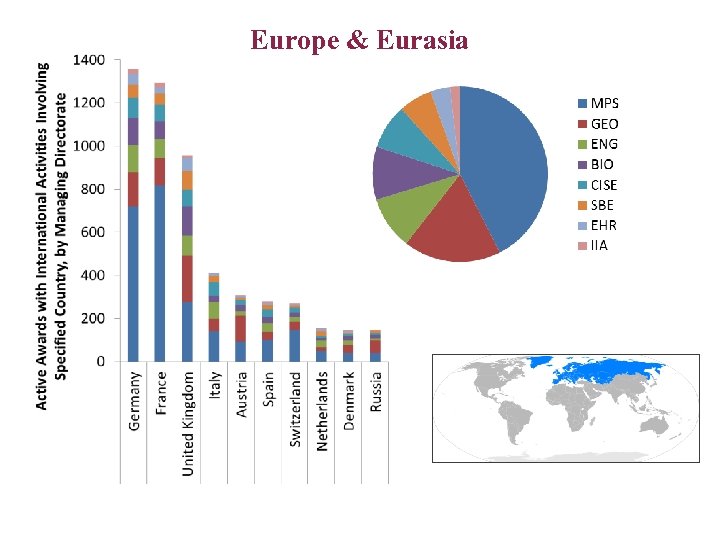 Europe & Eurasia
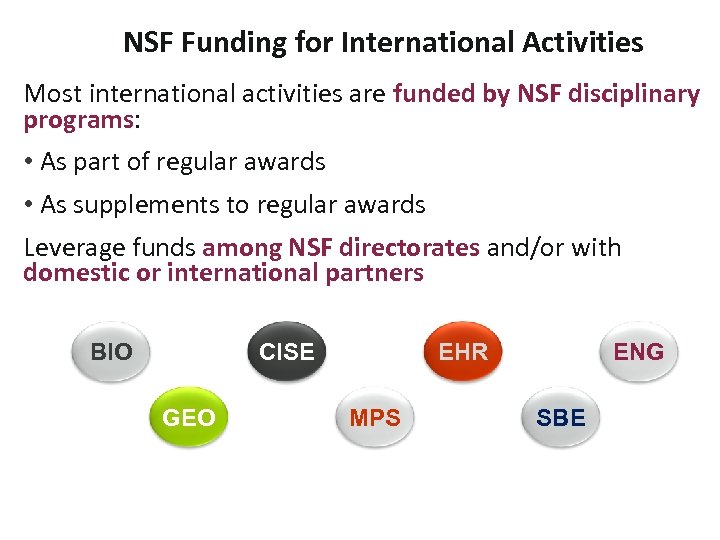 NSF Funding for International Activities Most international activities are funded by NSF disciplinary programs: • As part of regular awards • As supplements to regular awards Leverage funds among NSF directorates and/or with domestic or international partners BIO CISE GEO EHR MPS ENG SBE
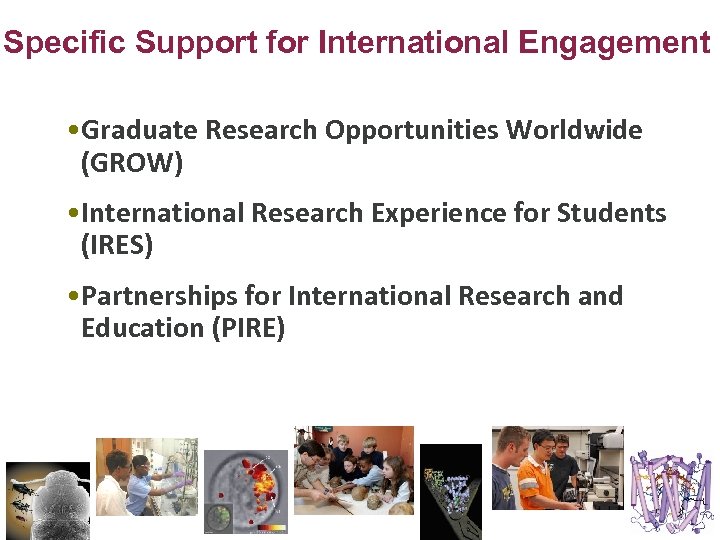 Specific Support for International Engagement • Graduate Research Opportunities Worldwide (GROW) • International Research Experience for Students (IRES) • Partnerships for International Research and Education (PIRE)
 • 3 -12 month international research collaborations for US-NSF Graduate Research Fellows • Partnerships between NSF and 18 Foreign Partner Agencies: Australia, Austria, Brazil, Chile, Colombia, Denmark, Finland, France, India, Ireland, Japan, Korea, Mexico, the Netherlands, Norway, Singapore, Sweden and Switzerland • Contact: grow@nsf. gov
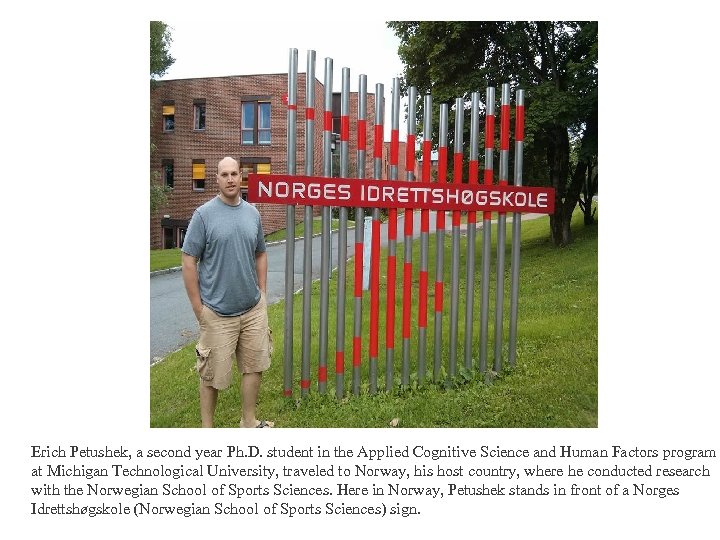 Erich Petushek, a second year Ph. D. student in the Applied Cognitive Science and Human Factors program at Michigan Technological University, traveled to Norway, his host country, where he conducted research with the Norwegian School of Sports Sciences. Here in Norway, Petushek stands in front of a Norges Idrettshøgskole (Norwegian School of Sports Sciences) sign.
 International Research Experience for Students (IRES) • Develop a more globally engaged S&E workforce • Supports small group of students for focused research experience overseas • Graduate and/or undergraduate students • $250, 000 maximum budget for up to three years
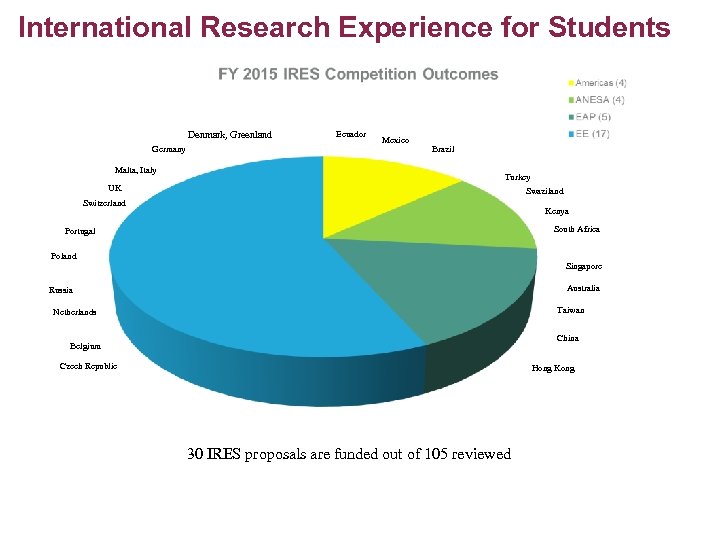 International Research Experience for Students Denmark, Greenland Germany Malta, Italy Ecuador Mexico Brazil Turkey UK Swaziland Switzerland Kenya South Africa Portugal Poland Singapore Australia Russia Taiwan Netherlands China Belgium Czech Republic Hong Kong 30 IRES proposals are funded out of 105 reviewed
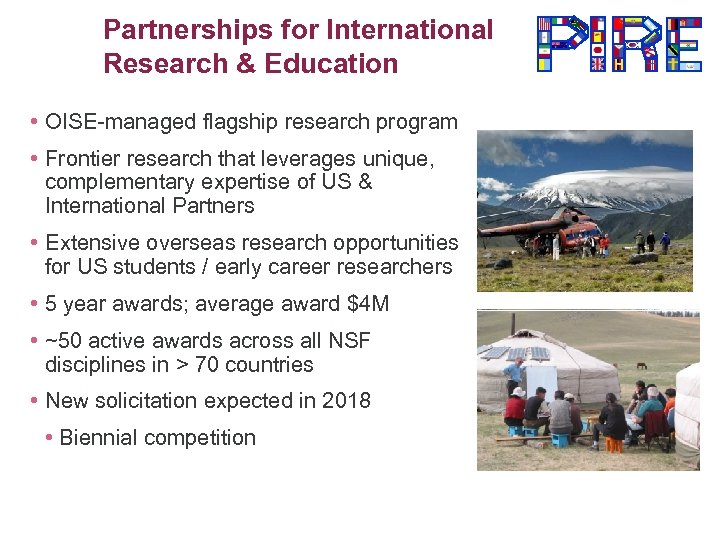 Partnerships for International Research & Education • OISE-managed flagship research program • Frontier research that leverages unique, complementary expertise of US & International Partners • Extensive overseas research opportunities for US students / early career researchers • 5 year awards; average award $4 M • ~50 active awards across all NSF disciplines in > 70 countries • New solicitation expected in 2018 • Biennial competition
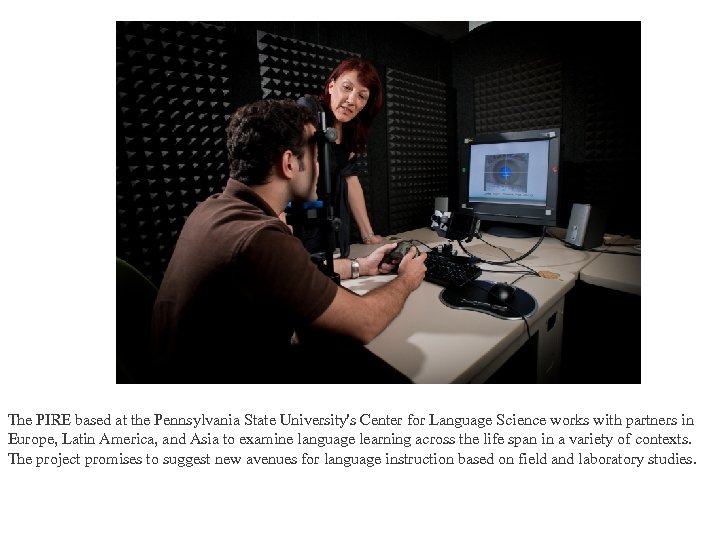 The PIRE based at the Pennsylvania State University's Center for Language Science works with partners in Europe, Latin America, and Asia to examine language learning across the life span in a variety of contexts. The project promises to suggest new avenues for language instruction based on field and laboratory studies.
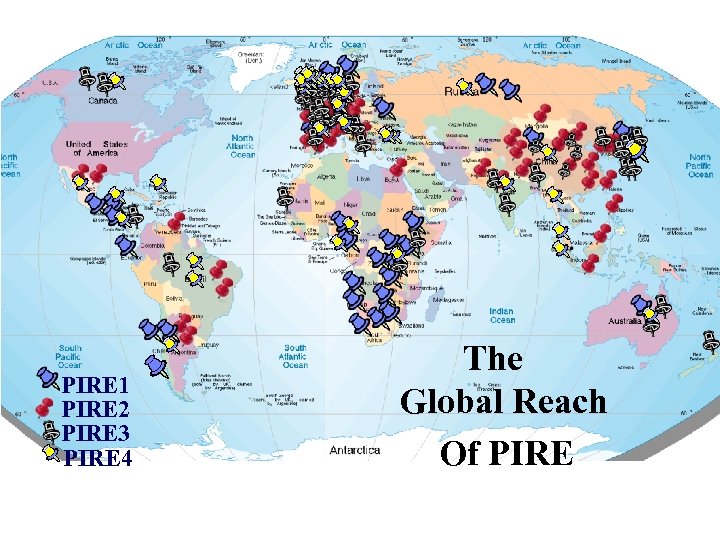 PIRE 1 PIRE 2 PIRE 3 PIRE 4 The Global Reach Of PIRE
 ERC-NSF: CAREER and Postdoctoral Research Fellowships • NSF-EC signed an implementing arrangement in July 2012 • ERC researchers host NSF CAREER or Postdoc grantees. ERC identifies researchers wishing to host US researchers • NSF solicits proposals for the collaborative opportunities • US researchers work with ERC funded teams and are supported as any other ERC team member • NSF covers travel costs for 6 -12 month visits
 NSF provides funding for International Workshops • NSF can support workshops that immediately precede or follow a conference when they add an international dimension focused on building new research collaboration (see NSF Grant Proposal Guide II. D. 8 & 9). • NSF will not support participation of U. S. scientists and engineers in international conferences. NSF rarely supports travel costs of foreign investigators • Workshop requests can be done through supplements to existing grants Name of your presentation
 Additional Opportunities for International Collaboration • H 2020 signed agreement between US-EU • Funding Opportunities through the Office for Naval Research • Funding Opportunities through Fulbright Program • PEER (Partnerships for Enhanced Engagement in Research) program if there’s involvement with developing countries. Funded by USAID • Newton’s List- CRDFGlobal- A tool for funders and grant seekers interested in collaborative international research (www. newtonslist. crdfglobal. org) Name of your presentation
 Thank You! Contact: sortega@nsf. gov